Food truck festival will help make wishes come true for local children with critical illnesses

Last year’s Wish Upon a Food Truck Festival

A local group is getting ready to truck in good food for a great cause.

On Sept. 18, Make-A-Wish Foundation of Philadelphia, Delaware and Susquehanna Valley will hold a food truck fundraiser on City Island in Harrisburg to support children with critical illnesses.

Since its founding, the local Make-a-Wish chapter has granted over 7,000 wishes for children from the region.

“For kids who have critical illnesses, studies show that, when a wish is granted, it not only helps them emotionally, but physically,” said Emily Reading, coordinator for the festival. “Wishes bring hope and optimism and gives them hope to push through.”

It hasn’t been an easy year for the organization, as many children’s wishes had to be postponed and they had to find alternative ways to stay connected to families during COVID.

But things are looking up, Reading said, as they soon plan to start granting travel wishes again.

The goal of the Wish Upon a Food Truck Festival is to raise $30,000, enough to grant wishes for three children, as the average wish costs $10,000.

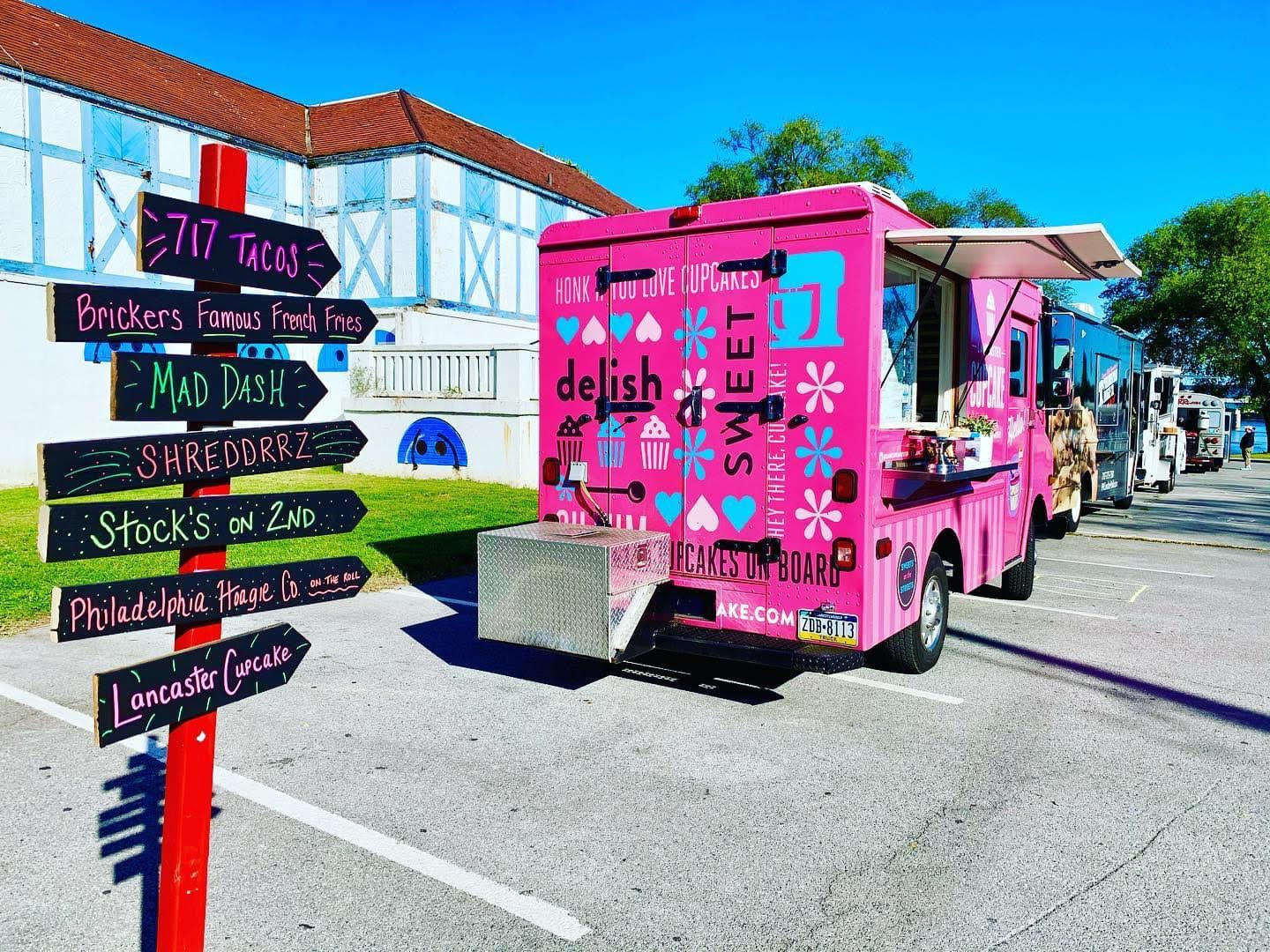
At the festival, there will be over 25 food trucks, local breweries and wineries. At each truck, there will be tip jars for those who want to donate to Make-a-Wish. People can give online by using QR codes posted at the event.

There will be live music from over 10 bands and musicians, as well as kids’ crafts and activities and retail vendors. Proceeds from raffle baskets will also support the organization.

As part of the program, Make-a-Wish will interview some of the children and families that they support, to allow the public to hear their stories.

Earlier in the day is the Harrisburg Young Professionals’ “5 Miler for 5 Charities” race. The local Make-a-Wish chapter is one of the charities they will raise funds for.

According to Reading, the organization is still looking for volunteers to help on the day of the festival, as she expects there will be even more attendees this year than last.

“Hopefully, we will get more people to come out, and it’ll be a nice family event,” Reading said.

The Wish Upon a Food Truck Festival is on Sept. 18 from 10 a.m. to 4 p.m. on City Island in Harrisburg. For more information about Make-A-Wish Foundation of Philadelphia, Delaware and Susquehanna Valley, visit their website.

If you like what we do, please support our work. Become a Friend of TheBurg!


Continue Reading

Harrisburg-area musicians will bring tunes to Midtown as part of upcoming Jazz Walk

Raise your jazz hands if you’re ready for some outdoor music.

On Sept. 10, Central Pennsylvania Friends of Jazz will host a Jazz Walk in Midtown Harrisburg, featuring musicians at various locations across the neighborhood.

The event will kick off a weekend of jazz, as Dauphin County’s Jazz & Wine Festival will run from Sept. 11 to 12 at Fort Hunter Park.

Organizers hope Jazz Walk will draw in visitors and locals who are coming to the festival. But they also want to create an accessible way for those who may not be big jazz fans to get a taste of the musical style, said Andy Herring, executive director of the friends of jazz.

“I think a lot of people like jazz,” he said. “They just don’t know it yet.”

Musical artists will perform at 13 locations in Midtown including restaurants, art galleries and venues.

Herring said that all the musicians are either local or have a local connection.

He described the event as “choose your own adventure,” since attendees can either jump around to visit many of the venues or choose one location and stay put.

Herring highlighted one of the performances, which will be at Good Brotha’s Book Café. There, one of Friends of Jazz’s oldest and youngest musicians will make music together. Ronnie Waters has been playing jazz since the 1950s, while Justin Bowden is a high-schooler who is part of the organization’s youth band. They will be accompanied by John Gingerich.

The word Herring used to describe Jazz Walk is “approachable.”

“You can come and go and try listening to a lot of different types of musicians,” he said. “You can kind of experience it on your own terms.”

Since many of the locations are at restaurants and other businesses, Herring encouraged attendees to support them, noting the negative impact COVID had.

Sponsors for Jazz Walk include Faulkner Subaru Harrisburg and Members 1st Federal Credit Union. The event is presented as a partnership with Dauphin County’s Parks and Recreation Department.

Herring encouraged people to keep an eye out for information coming about Friends of Jazz’s fall concerts.

Until then, jazz fans can get their fill of live music at Jazz Walk.

The locations for Jazz Walk are listed below:

Café 1500
1500 N. 6th St.
Jonathan Ragonese, Peter Paulsen and Chris Hanning

Crawdaddy’s
1500 N. 6th St.
Nancy Reed and Spencer Reed

Note Wine Bar
1530 N. 2nd St.
Katie Rudolph

Zeroday Brewing- Outpost at Midtown Cinema
250 Reily St.
Gavin Horning, Fred Griggs and Adrian Moring

Millworks
340 Verbeke St.
Steve Rudolph, Bill Perbetsky and Hassan Shakur

Susquehanna Art Museum
1401 N. 3rd St.
tgDivergence (Tom and Greg Strohman)

Good Brotha’s Book Café
1419 N. 3rd St.
Ronnie Waters, John Gingerich and Justin Bowden

Vivi on Verbeke
258 Verbeke St.
Andy Roberts and Nicole Roberts

La Cultura
214 Verbeke St.
Emmanuel Nsingani, Andy Alonso and Logan Bedard

H*MAC
1110 N. 3rd St.
Kirk Reese and Kevin MacConnell

Startup Harrisburg
922 N. 3rd St.
Brian Magg Duo

TheBurg
920 N. 3rd St.
Mark Hunsberger, Scott Edmunds and Nathan Pence

Sturges Speakeasy
400 Forster St.
Musician TBD

Jazz Walk will be held on Sept. 10 from 6 to 9 p.m. For more information about the Central Pennsylvania Friends of Jazz, visit their website. 

Support quality local journalism. Become a Friend of TheBurg!

Continue Reading

Weekend Roundup with Sara Bozich

Plan your weekend with my weekly list of things to do around Harrisburg and central PA! Scroll down or use the menu links to find ideas for your weekend.

Need something NEW to do? Check out Durand Jones & The Indications at The Englewood on Saturday night.

(Still) Worth noting: Check out my private Facebook community, Cheers Harrisburg. You can join the convo here.

Things on my agenda this weekend: Heading out of town briefly (stay tuned to my IG!), pool day with friends

Don’t forget to support your local brewery! Click here to find one near you.

For your weekend planning:

Below are options for your weekend.

Things to Do in Harrisburg + Central PA | Weekend Roundup | Sara Bozich

Be in the know.
Sign up to receive news and updates from Sara Bozich.
Nicely done. ??
 

Top Weekend Recs

  1. WIN tix to a summer concert in Riverfront Park
  2. Last call for my Summer Bucket List
  3. Try one of LBC’s fall beers
  4. Explore the best local markets
  5. Pick up a new-to-you local 6-pack and stream ? episodes of Poured in PA: The Series

COVID-19 Disclaimer: Masking and social distancing policies may vary per business, venue, and event. Please be considerate, follow the rules, and be nice. And tip extra!

Thursday

Friday

Saturday

Sunday

Labor Day


What are you doing this weekend around Harrisburg? Let us know on Facebook, Twitter, or Instagram.

Like this content?

If you like what we do, please support our work. Become a Friend of TheBurg!

Continue Reading

As lengthy eviction ban ends, tenant activists ponder situation, assess next steps

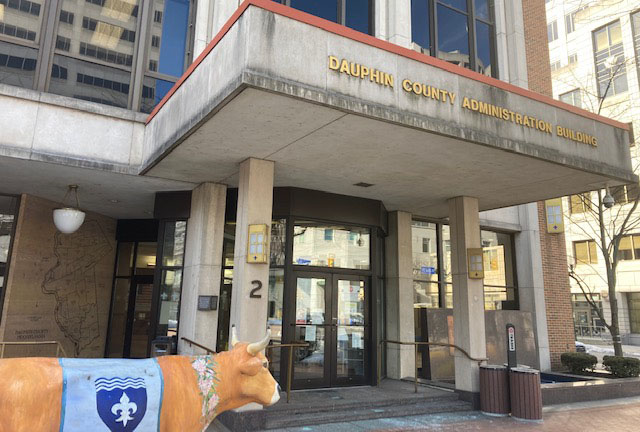
Dauphin County Administration building

The federal evictions ban has come to a screeching halt, leaving some advocates wondering what comes next for the tenants they represent.

Darrel Reinford, executive director of Christian Churches United of the Tri-County Area (CCU), expects the lifting of the eviction moratorium to make an already bad situation even worse for lower-income tenants.

“There’s no question in my mind that we are going to have an eviction crisis,” he said.

For over a year, CCU has been working with Dauphin County to distribute federal Emergency Rental Assistance Program (ERAP) funds, which helps qualified tenants pay rent when the eviction ban was in place.

However, the U.S. Supreme Court last week nullified the federal evictions ban, which wasn’t due to expire until early October. State and local eviction moratoriums, put in place to prevent displacement of renters from their homes during the health crisis, had already expired.

In Dauphin County, officials have been busy since March distributing over $18 million in federal and state money to tenants behind on rent.

Throughout the nation, distributing those funds, which were passed as part of the federal American Rescue Plan, hasn’t been a speedy process. According to a New York Times article, about 89% of the funds have not yet been distributed.

It’s been a similar situation in Dauphin County, which, by Aug. 20, had distributed only about 27% of the funds to a little over a quarter of the 3,062 applications received.

“This program is more than just money,” said Dauphin County Commissioner George Hartwick. “We are finding out what services can help people become housing stable after the program is no longer able to pay rent and utility costs.”

According to a spokesperson for the county, applicants are receiving, on average, 40% more money than they requested as staff work with them to determine what they are eligible for.

The money can be used on back rent, future rent or utility payments of up to 12 months.

Reinford said that the process has been slower than he would’ve liked.

“It’s definitely an issue getting money out to people,” he said. “The infrastructure isn’t easily in place to ramp up programs like this quickly.”

Reinford said that it’s been even harder since CCU is a small nonprofit. Although the process of distributing the ERAP money has improved from when they distributed a previous round of rent relief, he said.

Federal reporting requirements can be cumbersome, as well, he added.

CCU has been interacting with applicants over the phone and by email, prioritizing those who are at a higher risk of eviction.

While some people are just one or two months behind on rent, others are much further behind, Reinford explained.

“There are a lot of people who have been struggling for a long time,” he said.

Many residents may not be affected immediately, however, due to a backlog of eviction cases in the courts, Reinford said.

However, Kay Pickering, a housing counselor at the Center for Peace and Justice in Harrisburg, said that she actually isn’t expecting a big spike in evictions, only because she doesn’t think they’ve stopped.

“I haven’t seen that landlords and tenants were paying much attention to [the moratorium],” Pickering said. “I don’t think we’ll see a marked difference. Most landlords have been doing what they’ve wanted to do.”

From what she’s seen, some landlords have ended leases or found other loopholes in the eviction ban. Having said that, most landlords that she has been working with through the ERAP have been receptive, she said.

But the county noted that, since the moratorium has ended, landlords may be less likely to wait for the assistance and instead file for eviction, said a county spokesperson Brett Hambright.

Reinford added that CCU is trying to assure landlords that the money is coming soon.

“We are certainly understanding that landlords have been hurting for a long time,” he said.

According to Scott Dunwoody, executive director of Bethesda Mission in Harrisburg, there was always a large demand for shelter in Harrisburg, but he expects homelessness to increase even more as the moratorium ends.

“It will add to the number of people who will be looking to find someplace to stay,” he said. “We will probably see more men wanting to come into our men’s shelter and women coming to our new women’s shelter.”

For those waiting for funds who are facing eviction, an ERAP processor, who asked to remain anonymous, said, “If you have applied online and heard nothing back from anyone, or your case seems to be going nowhere, you need to be as proactive as possible to initiate intervention.”

The processor recommended emailing the county or calling 211 to notify them that they may be getting locked out soon. That way staff can prioritize their application.

Pickering has seen ERAP funds help some of her clients; she believes it’s necessary. The problem is whether those who are still waiting will get what they need in time.

“It’s taking much too long,” she said. “It takes a toll on the tenant and the landlord.”

For more information on Dauphin County’s Emergency Rental Assistance Program, visit their website.

If you like what we do, please support our work. Become a Friend of TheBurg!


Continue Reading

Harrisburg names Ana White as community relations director for the police bureau, introduces community service aides

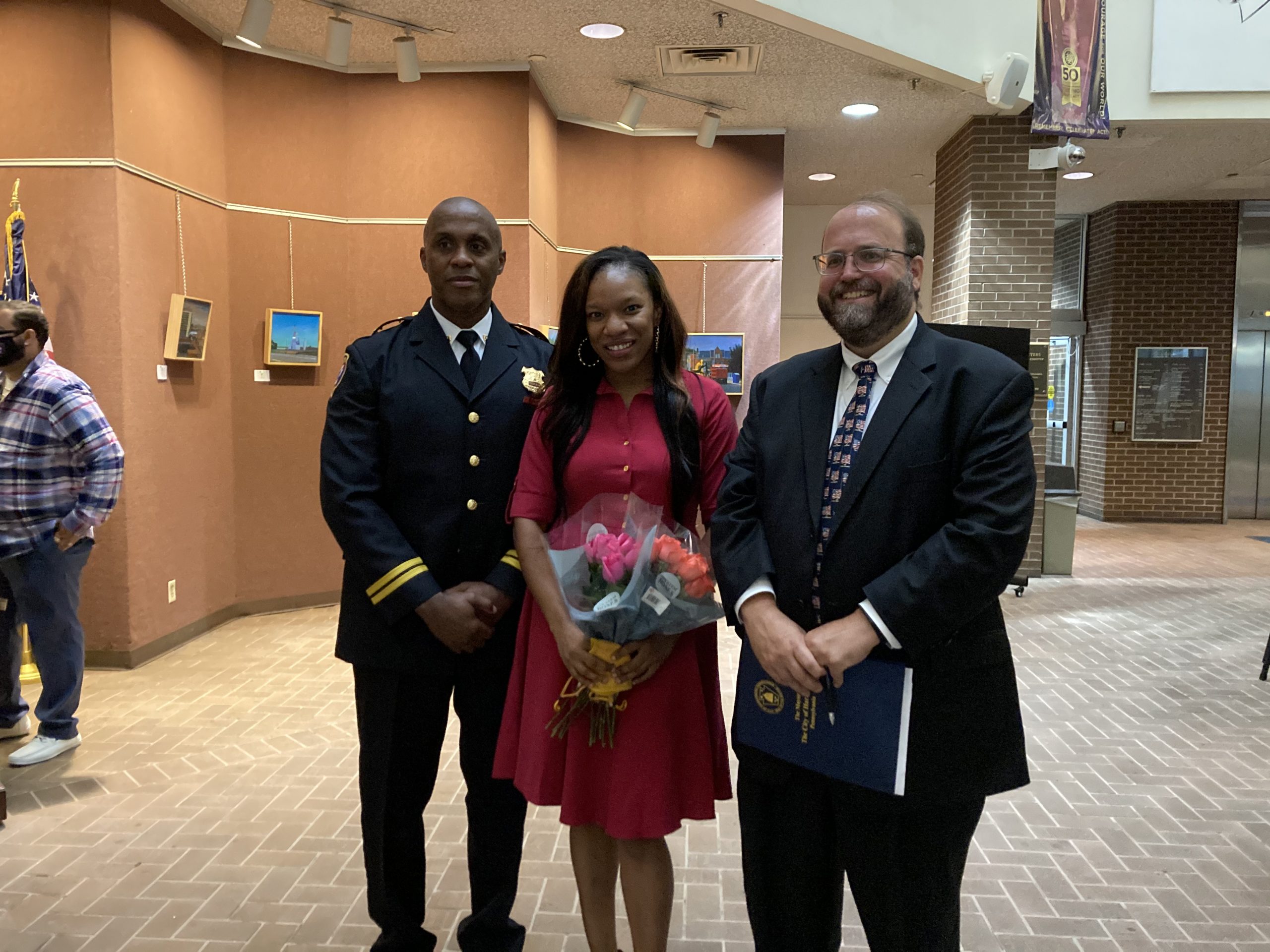
Ana White, along with Capt. Milo Hooper (left) and Mayor Eric Papenfuse, on Wednesday

A key member of the Harrisburg Police Bureau was introduced on Wednesday, tasked with creating conversations and enhancing understanding between the bureau and residents.

At a press conference, Mayor Eric Papenfuse announced Harrisburg native Fiordaliza “Ana” White as the bureau’s new director of community relations and engagement.

“We are really pleased to be introducing Ana White,” Papenfuse said. “She really brings a wealth of knowledge around topics such as community policing, crisis management, public relations, strategic partnership and mental health.”

White’s position was previously held by Blake Lynch, who recently left the bureau after three years for a position with public media organization, WITF.

White graduated from Harrisburg High School. She earned a bachelor’s degree in educational studies and sociology from Denison University. She currently serves as the director of programming for Bro2Go, Inc., a youth and adult reentry intervention and prevention program.

According to Papenfuse, he and White developed a relationship over the past year, having spoken many times about police reform.

“Ana was one person who took the time to meet with me regularly,” he said. “We discussed ways that we thought we could work together.”

In her new role, White will oversee the six new community service aides (CSAs) hired by the bureau to build relationships with residents, as well as assist officers with quality-of-life issues.

White will report to Capt. Milo Hooper in the bureau’s community services division.

“I’m excited for the opportunity to engage with both law enforcement and citizens to work towards the necessary goals of creating and maintaining safe streets, while protecting and honoring our community,” White said.

White speaks both English and Spanish, which Papenfuse said will add to the city’s ongoing efforts of inclusion.

White also said that she plans to bring her mental health expertise to the table. Improving trauma-informed care in the bureau is one of her main goals.

In addition, she plans to focus on education within the community and the bureau. White said that she wants to improve communication with residents around resources they may need. She also hopes to implement more training for officers, specifically around cultural competency.

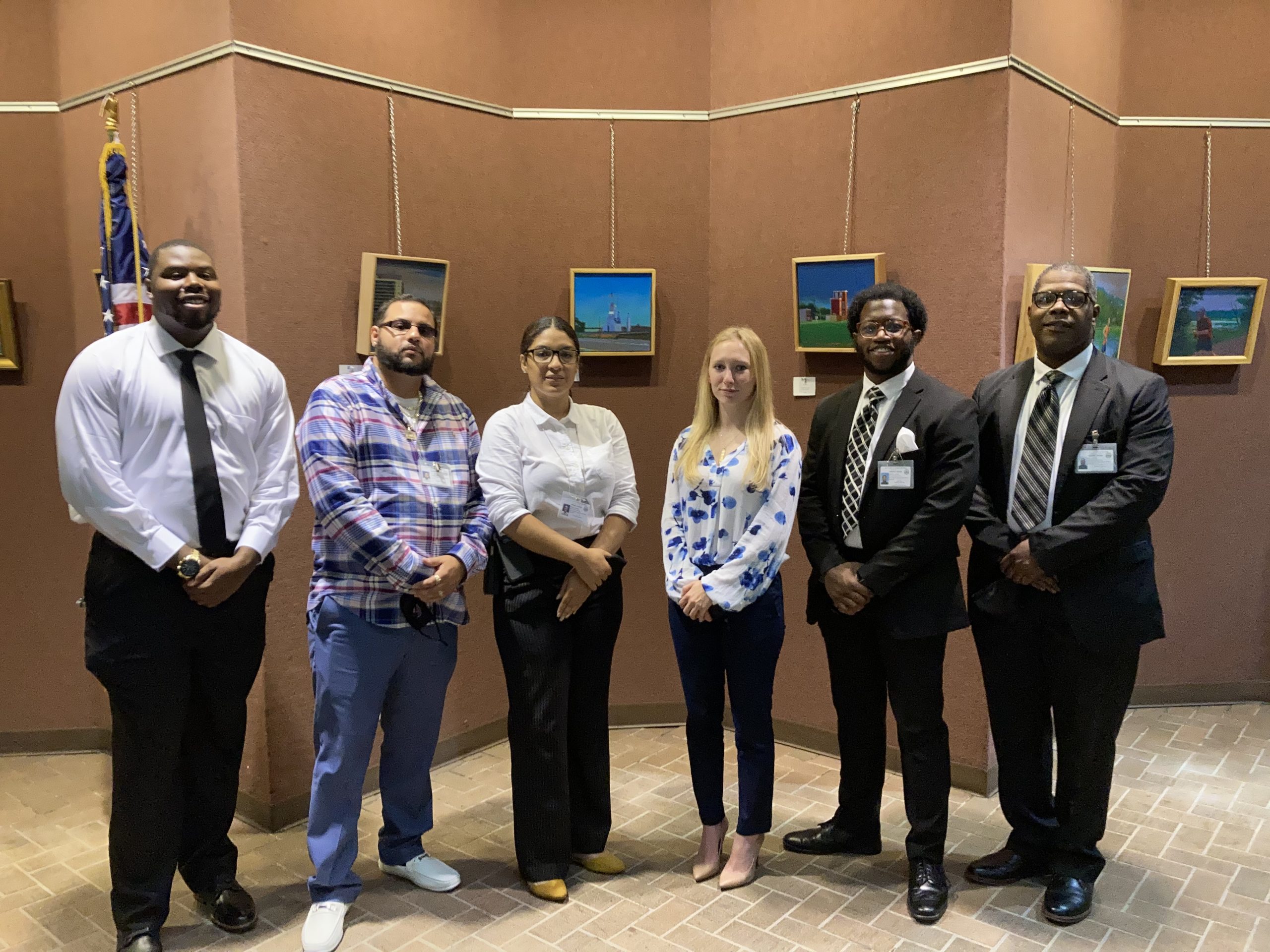
White has the bureau’s six new community service aides to assist her in her job of connecting with residents and helping out officers. Papenfuse also introduced them on Wednesday.

The group includes:

  • Vanessa Bowers
  • Myron Brooks
  • Rayshawn Brown-Donald
  • Malachi Holmes
  • Jeret Spears
  • Sierra VanSickler

From left: Rayshawn Brown-Donald, Myron Brooks, Vanessa Bowers, Sierra VanSickler, Malachi Holmes and Jeret Spears

Four of the CSAs were born and raised in Harrisburg. VanSickler is from Dillsburg and Bowers is from Steelton, but now resides in Harrisburg.

Three of the CSAs have or are pursuing degrees in criminal justice. Others have experience working in the Harrisburg School District, and some were previously employed by the city in parking enforcement and in the parks and recreation department.

The police bureau is currently recruiting for a seventh open CSA position.

Hooper said that the CSAs have undergone hands-on training including ride-alongs, speaking with different departments and organizations in the city and attending events like National Night Out.

CSA Myron Brooks reflected on his first month with the bureau and his passion for the job.

Brooks said his experience having parents in the prison system was hard on him and affected his behavior, but when he learned he was going to become a father in 12th grade, he “shaped up.”

“Having those down moments helped propel me,” he said. “I wanted to come and give something back to the community.”

With all of the new additions to the department, Papenfuse said that he hopes to better unify the city and create conversations between the community and law enforcement.

“If there’s one thing I’ve learned this past year it’s that we live in a fractured community,” he said. “Through an honest exchange of emotions and feelings, we can come to reconciliation, and we can heal the trauma that holds us back as a city.”


Support quality local journalism. Become a Friend of TheBurg!

Continue Reading

Harrisburg Mural Festival rolls into September with its largest project yet

Artist Gloria Jean Martin stands in front of her mural, “The Pollinators,” in the Patrick Alley pocket park.

Harrisburg’s largest mural project yet—spanning the Mulberry Street Bridge—will launch this weekend by the nonprofit Sprocket Mural Works as part of the continuing 2021 Harrisburg Mural Festival.

Simultaneously, a Steelton mural project will begin this week, as two community murals wrap up—one in Penbrook and the other in a Midtown Harrisburg pocket park.


Mulberry Street Bridge

Mural work is set for Sept. 4 to 10, with murals spanning 230 feet across the eastbound side of the bridge—and measuring 7 feet high—in this apprenticeship-type project led by prominent New York City muralist and Harrisburg native Ian Potter.

“With the city’s and PennDOT’s permission, we have been planning and anticipating this project for years,” said Meg Caruso, Sprocket co-founder and president. “Not only is it our most ambitious project ever, but it’s groundbreaking in many ways—using a unique artistic method and process. And we are thrilled to welcome Ian Potter back to Harrisburg, in what feels like a full-circle collaboration, as he mentors several Harrisburg-based artists as apprentices.”

Potter will use an electro pounce machine, similar to an electric pen, to create the metal bridge’s mural artwork. No Harrisburg murals have ever been created using this method.

“Growing up in Harrisburg in the ‘90s, I didn’t see the presence of a mural community, so it’s really cool to come back home and have the opportunity to work with some of the younger generation—giving them some of the literal as well as figurative tools,” said Potter, whose employer, Colossal Media, is donating paint for the project, while Sprocket is providing apprentice kits. Professionally, Potter got his start creating sets and scenic design for the city’s Gamut Theatre.

Mulberry Street bridge murals are sponsored by M&T Bank, the Pennsylvania College of Art & Design, and grant funding from The Foundation for Enhancing Communities (TFEC).

“The new mural for the Mulberry Street Bridge between downtown Harrisburg and South Allison Hill will be an amazing addition to our city and that important thoroughfare,” said Brittany Brock, M&T Bank vice president and business banking senior relationship manager in Harrisburg. “I drive across the bridge many times a week, and I can’t wait to see the vibrant colors and montage of people that will help to bring that walkway to life. M&T’s contribution for the Mulberry Street Bridge mural is another way we’re showing our support for efforts to improve the communities where we live and work.”


Steelton Mural

After several weather-related delays in August, Sprocket will create its first mural in Steelton, beginning Sept. 1, or as soon as the remnants of Hurricane Ida clear. Sponsored by and located at Mid Penn Bank, 51 S. Front St., a giant mural wall (124 feet in length, standing 10 feet high) will pay homage to themes chosen by surveyed residents—history, diversity and the people of Steelton.

“As the only bank in Steelton, we are dedicated to supporting the community in many different ways, and we see this mural as a way to honor Steelton’s history and inspire its bright future,” said Heather Hall, Mid Penn Bank executive vice president and market president.

Muralist Matt Halm of Allentown has experience creating community murals, and he invites the public to come help paint the mural—tentatively set for Labor Day weekend—with updates and times posted on Sprocket’s social media.

“It’s an extremely exciting coincidence that two of our largest-scale mural projects—the Mulberry Street Bridge and Mid Penn Bank in Steelton—will be created simultaneously,” Caruso said. “It’s rewarding to reach into neighboring Steelton to extend our mission of uplifting people through art.”


Just Wrapped Up

Pocket park: Artist Gloria Jean Martin has completed “The Pollinators,” a mural sponsored by the state Department of Environmental Protection (DEP) to bring attention to the importance of bees and other pollinators, whose population is declining amid climate change. Located along Midtown Harrisburg’s Patrick Alley, the mural features floral designs, bees and butterflies, to match the pocket park’s gardens of native pollinator-friendly plants donated by Manada Conservancy and planted by community volunteers.

“The department is happy to support Sprocket’s environmental education project. The project’s mural component is an innovative tool to increase awareness about climate change,” said Kathleen Banski, DEP environmental education program coordinator. “The artwork, and the immersive local experience of walking through pocket park, helps deliver a meaningful message about the vital roles native plants and honeybees play in our environment—which project leaders hope will ultimately resonate in people’s hearts, minds, and habits.”

Additional funding for “The Pollinators” comes from Homeland Center, LINKBANK and the Auchincloss Family Fund at TFEC.

“Part of Homeland’s mission is investing in the communities we serve. The pocket park is a wonderful example of exemplary community service to the Harrisburg community. We are proud and honored to be able to support this endeavor. Kudos to Sprocket Mural Works for the important work they are doing,” said Wendy Shumaker, director of marketing, Homeland Center and Homeland at Home.

“LINKBANK is thrilled to support the Midtown Historic District through our contribution to Sprocket Mural Works. Our mission to ‘Positively Impact Lives’ becomes fulfilled as we continue to support our communities through projects like this,” said Cheryl Howard, LINKBANK regional president, Capital Region.

“The Auchincloss Family Fund at The Foundation for Enhancing Communities celebrates the energy and vitality of the Midtown Historic District. Contributing to Sprocket Mural Works assures us that this energy will become visible,” said Susan Auchincloss.

Penbrook Borough Building: Completed in August, a montage of Penbrook children’s faces comprises a mural painted by Sarah Fogg of Harrisburg. Located on the borough’s administrative building, 150 S. 28th St., the mural was funded by a generous community donor and faces the borough’s Elm Street Station Park featuring a children’s playground.


Upcoming Projects

Welcome back, Brandon Spicer-Crawley: A 2019 Harrisburg Mural Festival artist, Brandon Spicer-Crawley of the Philadelphia area returns to extend his mural on the Millworks Lumber Storage Building off N. 4th Street. Sprocket is proud to provide a platform for this both talented and intellectually disabled artist. His mural is sponsored by Pennsy Supply, Inc.

“Pennsy Supply, Inc. has been in the heart of Central Pennsylvania for 100 years. We believe that art is fundamental to our humanity to inspire us, foster creativity, and bring us all together—regardless of our differences. We’re excited to be a part of supporting Brandon’s artistic journey and we’re proud to sponsor the beautification of the city that Pennsy Supply calls home,” said a Pennsy Supply spokesperson.

Furry friends: The importance and joy of pet adoption will be highlighted in a mural funded by corporate sponsor Chewy, located at Anastacia’s Restaurant, 1535 N. 6th St., Harrisburg. This mural is also being produced in collaboration with—and to raise awareness of—the Humane Society of Harrisburg.

Strawberry Square: Two new murals will brighten the Strawberry Square shopping district, thanks to nonprofit real estate development organization and longtime Sprocket supporter Harristown.

Celebrating Black Lives: A steering committee of community members is developing a “Celebrating Black Lives” mural theme, identifying a location, and evaluating artist portfolios, from those who identified themselves as local Black artists during Sprocket’s call for artists.

Background: The 2021 Harrisburg Mural Festival is Sprocket’s third biennial summer festival. The majority of Sprocket’s 47 murals were created during the 2017 and 2019 Harrisburg Mural Festivals by local, regional, national and international artists. This year, rather than planning a concentrated 10-day mural festival taking place simultaneously at multiple locations, Sprocket is organizing continuous, summer-long mural projects popping up throughout the city.

The mission of Sprocket Mural Works is to uplift Harrisburg through art. Sprocket Mural Works is a citywide mural project that works with neighborhoods, artists and organizations to create vibrant community murals across Harrisburg, with creative action serving as a catalyst for increased community pride and civic engagement in Harrisburg. The organization’s roots go back to 2014; Sprocket Mural Works became a nonprofit organization in 2019.

For more information: sprocketmuralworks.com; @sprocketmuralworks on Instagram and Facebook; @SprocketMurals on Twitter.

If you like what we do, please support our work. Become a Friend of TheBurg!

Continue Reading

Harrisburg prepares for heavy rainfall, possible flooding headed this way

Barricades near the Market Street underpass, which often floods during heavy rain.

The remnants of Hurricane Ida will pass through the Harrisburg area tomorrow, leading the city government to take steps to prepare for potentially heavy rainfall.

The city is currently setting up barricades near flood-prone streets and clearing storm drains, among other efforts to keep residents safe, Mayor Eric Papenfuse said at a press conference on Tuesday.

“It’ll be a lot of rain, but we will get through,” he said.

A flash flood watch from Wednesday morning through Thursday morning has been issued for the Harrisburg area by the National Weather Service, which expects 3 to 5 inches of rain generally across south-central PA, with up to 7 inches possible in spots.

Low-lying areas of the city, like sections of N. Cameron and Maclay streets, may experience flooding, Papenfuse said. In areas like these, the city Public Works Department is setting up barricades that can be used to block off flooded areas, if needed, on Wednesday and Thursday.

According to the National Weather Service, the Susquehanna River water level at Harrisburg is currently around 4.5 feet. The river is predicted to reach 10 feet by Thursday. The flood stage in Harrisburg is 17 feet.

The city does not expect the river to flood, Papenfuse said.

“We are in a good place with regards to levels of the Susquehanna River, and that’s key,” he said. “The river will not flood.”

The Swatara Creek nearby around Hershey is, however, expected to experience moderate flooding by Thursday, according to the National Weather Service.

Papenfuse added that the Harrisburg Fire Bureau is preparing for emergency response situations.

The Dauphin County Department of Public Safety also released a list of recommendations for staying safe during the storm. It includes tips like avoiding driving or walking through standing water, charging cellphones and flashlights, removing essential items from your basement and checking sump pumps and exterior drains.

Papenfuse said that the city’s Kipona festival, scheduled for Sept. 4 to 6 in Riverfront Park and on City Island, will still take place. He does not expect the rainfall to greatly impact the event, although some aspects may be modified if necessary.

Support quality local journalism. Become a Friend of TheBurg!


Continue Reading

Faith & Fate: It’s been two years since many of Harrisburg’s Methodist churches were forced to close. What happened and where are they now?

Mary Waters

For as long as Mary Waters could remember, she went to church.

She remembers going to Sunday morning services with her mom who lived in the neighborhood. The congregation at Camp Curtin Memorial Mitchell United Methodist Church was a church family in a literal sense—many of the members were related. Waters’ grandmother attended since she was a teenager, her mom grew up in the church, and then she, her siblings and cousins attended.

“I wanted to get married there,” Waters said. “I wanted to raise my daughter there. I wanted to be buried there.”

When news hit in 2018 that the Susquehanna United Methodist Conference had plans to close 10 of Harrisburg’s churches in the denomination, Waters was devastated.

She couldn’t believe the church that had been so important to her family for so long, and that held so much history, would close.

Most church members wanted to remain in the building, Waters said. They didn’t want to close or join with another church, which were given to them as options. But in the end, the conference made its decision, and Waters found herself, along with her family and friends, attending their last service in the church.

“It’s not about the building—it’s about your religion and who you are,” Waters said. “But look at me. I’m 35, and they had the building since I was a baby, and even before that when my parents were kids. It was definitely a pillar of the community.”

Since then, the church members dispersed. Some went to other churches. Many older members passed away, and Waters started going to her father’s church with her daughter. But it wasn’t home.

Like Camp Curtin, nine other United Methodist churches in Harrisburg were faced with the same challenge, but not all faced the same fate.

It’s been over two years since Harrisburg’s real estate market suddenly experienced an influx of churches for sale. They have even been purchased since then, with some developers planning to turn them into apartment buildings.

Back then, the closure of so many large, historic churches in the same city seemed out of the ordinary. And there was a reason for that. Indeed, it was very unusual.


The Vision

The Susquehanna United Methodist Conference—the local branch of a global Protestant denomination—oversees seven districts in the area: York, Altoona, State College, Lewisburg, Williamsport, Scranton/Wilkes-Barre and Harrisburg.

In late 2018, the conference targeted one of those districts for church closures and consolidation—Harrisburg.

Rev. Barry Robison, the district superintendent for the Harrisburg area, was part of the process, an initiative that, he said, hadn’t been done before, not just on a local level, but in the United States as a whole.

“We’ve found places where the idea was implemented but not on this scale,” Robison said. “This is the first time this vision was given for an entire city.”

And while he said that this decision could’ve been made for other cities in their jurisdiction, it wasn’t. They chose Harrisburg and, so far, only Harrisburg.

The vision, called “Impact Harrisburg,” was to join all 10 churches, some of which had been around since the 1800s, and form one congregation with satellite campuses meeting in nontraditional spaces throughout the city.

The conference found that, on a Sunday, its 10 churches were averaging only 360 people across all venues combined, a number that Robison said a larger church in the conference may see on its own.

“The vision was that we could make better use of the people in those churches by bringing them together,” Robison said. “Individually, our congregations were limited in what they could do.”

When made aware of the plan, off the bat, one church, Grace Penbrook UMC, decided to close. Another, Rockville UMC, joined with Linglestown Life UMC in Lower Paxton Township. The Twenty-Ninth Street UMC accepted the merger, becoming The Journey Church, the place where, the conference hoped, all the Methodist congregations would join together as one.

But the other seven churches weren’t on board. They all voted to stay open, but it didn’t mean much in the long run. The conference had the power to make whatever decision it wanted.

Some of the churches created vitality plans, proposals for how they would improve if they were allowed to remain open, as requested by the conference. But in the end, in the summer of 2019, only one church’s plan swayed the conference to keep it open—Grace UMC on State Street.


Surviving to Thriving

You’d hardly believe that Grace UMC used to be known as a “snobby” church, as Sue Kompare, a member of 20 years, described it.

Rev. Michael Minnix hardly stopped smiling during our interview, gleefully pointing out the stained-glass windows and punching the keys on the organ. Kompare wore a T-shirt with a bunny on it and gave me a thorough tour of the sprawling building, including the children’s classroom with the closet full of crafts.

“Now I think we have a very friendly congregation,” Minnix said.

These days, that seems to be the main goal of the church—make room for everyone. They’ve specifically set their recruitment efforts on the LGBTQ community, rebranding as an open and affirming congregation.

But just two years ago, Grace, despite its view of the state Capitol and a history of housing the state legislature when the Capitol burned down in 1897, was fighting to stay open.

For years, it faced the exact difficulties that the Methodist conference saw as reason for the consolidation. It was a huge, costly three-story building, with a dwindling number of congregants filling seats and a slipping grip on relevancy in the city.

But Grace used to be a thriving part of the community. When Kompare started attending the church about 20 years ago, after leaving Camp Curtin UMC, Grace was flourishing. She remembers an Easter service where the crowded pews forced people to stand in the back while a full choir belted out the “Hallelujah Chorus.”

But for the majority of Kompare’s time there, the church was generally unstable, and the number of members declined. Over the course of 20 years, the church had seven pastors. Kompare was convinced that its last pastor, before Minnix, was sent by the conference to shut the church down.

But still, the friends she made and the beautiful building kept Kompare around, and, in 2018, she found herself fighting to save it.

It took a lot of pushing back against the conference, but eventually Grace was allowed to remain open, and Minnix was pulled out of retirement to lead it. Robison said that their vitality plan, which focused on inclusion and new outreach programs, was what gave them a second chance.

“Grace’s plan was well thought out, and there were benchmarks to meet,” Robison said. “They did a wonderful job with that.”

Within a few months, Grace’s congregation grew from about 35 to over 80 people, and the church began housing a women’s homeless shelter and a support group for parents of transgender children. Kompare and Minnix are excited about the future of the church, which finally seems to be brighter.


Over the Cliff

Whereas Grace seemed to be on its last leg before the consolidation plan in 2018, Derry Street UMC had been growing, explained Mack Granderson, the former pastor of the church.

When he was sent to Derry Street in 2013, Granderson said that the conference expected the church to close in a few months. There were only about 25 members, who were mostly “gray hairs,” he said.

Around five years later, the church drew in a multicultural congregation of over 100 attendees on Sundays. They had also partnered with Crossroads Baptist Church and its pastor, Martin Romain, to expand their reach.

But their community ministries were really where they shined. They had programs for the neighbors they served in Allison Hill, including an after-school program, a food pantry, clothing closet and ESL classes, among other ministries.

“What God led us into was something truly remarkable,” he said.

That’s why Granderson was shocked when he heard the news from the conference.

Like the members of Grace, Granderson and leaders from Derry Street had many meetings with Bishop Jeremiah Park, head of the conference. Unlike Grace, their persistence didn’t pay off. In fact, Granderson was stripped of his license as a Methodist pastor. At the time, a spokesperson for the conference cited Granderson’s talk of leaving the denomination as a reason for dismissal. Romain had his suspicions.

“That I know of, [Granderson] was the only one that happened to be a person of color that they took such an aggressive stance against,” he said.

According to Robison, Derry Street was one of the strongest churches of the 10. He recognized the connections they made with the Allison Hill community. But the conference felt they could still be more effective if they brought their resources and connections to The Journey Church, he said.

But Derry Street saw it another way.

“I think they were more interested in their survival than the survival of the churches,” said Romain. “They were the ones who benefitted from the selling of properties and receiving all the assets.”

This is something that Grace Church brought up, too.

“I wonder if they were looking at it as property rather than mission and ministry,” Minnix said.

Minnix has a unique view of the situation.

He used to be a district superintendent for the conference. During his time, he oversaw 99 churches, an immense load, he said. Plenty of churches across his district were struggling financially, and some were even across the street from each other. But still, he said that he never “pushed a church over the cliff.”

“There may be a reason why a couple of the churches just can’t make it, but to make the decision for all the churches in the blooming city?” he said. “I had immense trouble with that.”

It seemed that this wide-sweep approach was at the heart of the issue. Churches like Derry Street didn’t feel regarded for who they were and how closely tied they were to their corner of the city.

“Derry Street had so many outreach programs, but they [the conference] would not pay them any attention, even with all that they did,” Kompare said. “They had a Spanish-speaking service because they were out there where the Hispanic residents were living. Here we were, and nobody lives near us.”


New Chapter

After they emptied out, the seven closed churches went on the sales market.

Since then, several have been purchased by other religious organizations. Riverside UMC on N. 3rd St. was purchased by Kesher Israel to be a centralized synagogue for its members. Derry Street was purchased by the Anglican Church of the Pentecost. Others also were bought by churches.

Some will be adapted for nonreligious purposes. First United Methodist Church on Boas Street is slated to become an eight-unit apartment building, bought by developer Derek Dilks. Camp Curtin was recently purchased by developers Chris and Erica Bryce, who have discussed an apartment building transformation, as well.

There’s a future for these buildings, just not the one that many of the church members had wanted.

When I asked Robison if, looking back, he still thought the conference’s plan had been the right thing to do, he said “yes.” But, retrospectively, seeing that it caused severed ties and lost members, he believed that they didn’t go about it the right way.

“Ultimately, I still think it was the right decision,” he said. “Would we do it exactly the same way? No. I think we could’ve taken it a little more slowly. Had we taken more time, I think we could’ve gotten a little more buy-in.”

Robison also mentioned how the consolidation had a positive impact on some churches, like Grace, which is now growing and reaching the LGBTQ community, which the other churches hadn’t been reaching, he said.

Also, the Journey Church is attracting a diverse community of people that the denomination didn’t reach before, Robison said.

Members of Derry Street have moved forward too, but not without the lingering pain that many of those impacted by the consolidation still feel.

“What started as a tragedy became a triumph,” Granderson said.

After being booted as a Methodist pastor, Granderson was ordained as a Baptist pastor. Throughout the pandemic, Granderson and Romain’s church, Crossroads Christian Ministry, joined up with the Rock Church on Market Street, worshipping virtually or in outdoor spaces. Their community is closer than ever, they explained. The pair of preachers is excited about their future as they seek to purchase their own church building soon.

Hearing about these hopeful futures, the question could be asked—was it worth it? I don’t think those involved would go as far as to say yes, especially those like Waters, who still don’t see a bright road ahead, as do members at Grace and Crossroads. Suffering isn’t a fond memory, even if it made you stronger.

But what happened in Harrisburg is part of their stories now—and the conference’s. All they can control now is how they tell them and how they move forward.

“At Derry Street, we were just getting started,” Romain said. “But I’m glad that’s not the end of our story—it’s the beginning.”


Grace Church is located at 216 State St., Harrisburg. For more information, visit www.gracehbg.org.

Crossroads Christian Ministries is currently located in The Rock Church at 1501 Market St., Harrisburg. For more information, visit www.thecrossroadsministries.org.

If you like what we do, please support our work. Become a Friend of TheBurg!

 

Continue Reading

Gold-Plated Spaces: Who thought that $4-an-hour parking was a good idea?

Illustration by Rich Hauck.

Years ago, “Saturday Night Live” aired a commercial parody for a fictional product it called “Bad Idea” designer jeans.

In the commercial, SNL actors traded a series of terrible ideas, meant to illustrate the brand name of the jeans.

Actor 1: “We ripped up the pipes, wiring, having everything completely redone.”

Actor 2: “You’re renting, right?”

Actor 1: “Yeah.”

Cut to a shot of the jeans logo: “Bad Idea.”

The Harrisburg version would go something like this:

Actor 1: “Let’s raise the city’s already outrageous street parking rates by one-third.”
Actor 2: Are you serious?”
Actor 1: “Yeah.”

Cut to a shot of the jeans logo: “Bad Idea.”

Terrible, horrible, truly awful idea.

Harrisburg’s parking system is underperforming financially—that’s no secret. It’s struggled to meet projections ever since the insolvent city government, back in 2013, agreed to lease it out for 40 years as part of its financial rescue plan.

I won’t drag you through the tortured details of that deal again, except to say that the parking system now is under the control of an Atlanta-based asset manager, which runs it on behalf of the actual bond issuers—the commonwealth and Dauphin County.

I’m not here to re-litigate that complicated agreement, which did help the city pay off some of its crippling debt load, giving it a chance to regain its financial footing following the reckless Reed-era spending spree.

However, I am going to criticize the ludicrous decision to take an already wildly expensive system and make it even more wildly expensive, so that street parking downtown now clocks in at $4 per hour ($2 in Midtown). Parking in downtown Harrisburg is now much more expensive than in far larger cities like Philadelphia, Baltimore and Washington, D.C.

Bad, bad idea.

In part, the asset manager justified the huge price hike by stating that an increase was necessary to “provide sufficient cash flow to maintain expenses associated with the parking system.”

But will that indeed be the result? If you have slack demand at $3 per hour, will charging even more fix your problem? Park Harrisburg may have a monopoly on downtown parking, but customers have a second choice—to not come at all.

Let’s say, for instance, that you own an ice cream shop and have few customers willing to pay $5 a scoop. To stimulate demand, do you charge 33% more? No. You lower your price until customers perceive fair value and return.

This analogy is imperfect. Parking isn’t ice cream, even though the general principle still applies. In fact, I would say that parking is unique in a very special way.

If you own a scoop shop and stubbornly charge too much for your product, scaring off customers, you only hurt yourself. But, if you run a parking system and charge too much for your product, you hurt many other people—perhaps profoundly so.

Back in 2013, when the price of street parking downtown quadrupled under the new regimen, people were outraged. Pay $3 per hour? No way, they said.

And, in fact, people did stay away. Restaurateurs, shop owners and salons screamed loudly, as downtown streets, once bumper-to-bumper with parked cars, became barren virtually overnight. A few businesses even moved or closed, placing blame squarely on the high cost of parking.

And now the problem has been made yet worse, with the added insult that businesses were just beginning to regain their footing after the devastation wrought by the coronavirus pandemic.

Harrisburg’s parking masters need to understand that parking doesn’t exist for parking’s sake. People don’t consume parking as an end in itself, but as a means to an end. It’s part of an ecosystem, a web of hyper-local economic interdependence.

The parking vendor is a middleman between the consumer and the business, offering a temporary service so that one can access the other. In a perfect world, this system is in balance, with the parking operator, the businesses and the consumer all mutually benefitting.

Instead, with parking at $4 per hour, we have an out-of-whack system with the middleman recklessly steering the ship. His objective is to maximize revenue, which is fine except when the price becomes so prohibitive that it destroys demand. That is the situation here.

In my opinion, if Park Harrisburg wanted to stimulate demand, it should have lowered its street-parking rate, not raised it. I understand that the system has expenses, as well as bonds to pay off, but choking off demand—and killing the businesses around it—isn’t going to help anyone.

Our parking system does not exist in a vacuum. It exists within an integrated economic community, in a center of commerce already struggling. Many businesses rely on the parking system for their very survival, and the downtown relies on it to remain viable as a destination.

That future is now in peril, as a key player in the system has become unmoored from the economic realities of downtown Harrisburg.

Lawrance Binda is co-publisher/editor-in-chief of TheBurg.

If you like what we do, please support our work. Become a Friend of TheBurg!

 

Continue Reading

A Hundred Years, Musically: As TFEC hits the century mark, a group of musicians will play up their appreciation

Jeremy Gill

A self-described “poor kid from Lewisberry” wasn’t the type to come up with the 1990s-era dollars needed to study at the prestigious Eastman School of Music.

“In those days, Eastman cost about $20,000 a year,” said Jeremy Gill. “I didn’t have much. I had a lot of scholarship money from Eastman, which was really helpful, and the Steele Fund added to that. So, that at the end of all those years, I had very little student debt.”

Gill is a proud—and very appreciative—recipient of a scholarship from the selective Joseph L. and Vivian E. Steele Music Fund (now the Steele-Drane Fund).

This month, he will join several other awardees, who will return to Harrisburg to give something back, demonstrating musically how well they’ve used the money.

On Sept. 18, five past Steele recipients will put on a free concert celebrating the centennial of the Foundation for Enhancing Communities (TFEC), holder of the Steele scholarships. The concert features a piece commissioned by TFEC and composed by Gill, a freelance composer, conductor and pianist based in New York City.


Pride & Joy

Born of a bequest from classical pianist and music teacher Vivian Steele and her architect husband, the Steele Fund awards competitive scholarships to students from Adams, Cumberland, Dauphin, Franklin, Fulton, Juniata, Lancaster, Lebanon, Montour, Northumberland, Perry, Snyder and York counties who are studying classical music composition, teaching and performance.

Recipients can receive annual awards, traditionally up to $5,000 a year, throughout their studies. (Another fund created from the Steele bequest finances scholarships for young architects in honor of Joseph. He designed the Steele’s Camp Hill home with a dais in the living room where Vivian’s students presented recitals.)

Since the early 2000s, Gill has served on the committee awarding the scholarships. From a list of past and recent winners, he chose the most memorable, plus one local/native double bass player who never applied for the scholarship but who “easily would have won” had he applied, said Gill.

The resulting ensemble emerged from the powerhouses of music schools, including Curtis Institute of Music, New England Conservatory of Music and the Julliard School. The process yielded an unusual mix of instruments.

“I don’t know any other pieces that are for oboe, trumpet, viola, double bass and piano,” Gill said. “They’re very distinct but also a balanced ensemble. I wanted to write for these people I remember.”

In his piece, composer Gill weaves a tapestry, telling the Steele scholarship story.

The other part of the scholarship story woven into Gill’s work comes from Dr. Robert Lau, renowned composer, educator and longtime chair of the Steele Fund classical music committee—who just happens to be Gill’s first composition teacher. Gill based the work on themes from Lau’s “Cantilena,” originally a piece for solo organ.

When Lau responded to Gill’s request to send a few favorite compositions, he thought Gill wanted to study them from a theoretical perspective. He was “dumbfounded” when he learned Gill’s secret intent—to select a piece on which to base his TFEC commission.

“He’s my pride and joy,” Lau said. “He was the best composition student that I ever had. He just went from one thing to another. He had a very humble background. I just knew this boy had talent.”

Independent scholarships are rare in classical music, Lau said.

“It’s a tough field to get any scholarship money in,” he said.

The musical skill of Steele applicants “has gone higher and higher every year.”

“Sometimes, we feel our only negative is that we don’t have enough to give to everybody,” he said.


Kind of Incredible

TFEC was founded in 1920 as the Greater Harrisburg Foundation, heralding a post-World War I, pre-Great Depression wave of creation of Harrisburg’s enduring nonprofit and cultural institutions (e.g., Harrisburg Symphony Organization, Harrisburg Community Theatre/Theatre Harrisburg, Art Association of Harrisburg).

Today, TFEC owns $130 million in assets and manages another $50 million, serving Cumberland, Dauphin, Franklin, Lebanon and Perry counties, plus the Dillsburg area.

Among TFEC’s assets are 255 scholarship funds. The Steele Fund came about after the death of Vivian Steele in 1987, when her will’s executor, John Plesic, mentioned to then-foundation Executive Director Diane Sandquist that the Steeles wanted to start a scholarship fund with their $454,000 legacy.

“Diane jumped on it and said, ‘I can tell you how to get started,’” said TFEC Executive Director Janice Black. “A problem to someone is a fortune to us. We help them create the path they wanted to go on but didn’t really know how to do it.”

For the Steele Fund, Sandquist, Plesic and then-foundation Chair Lois Grass “put all the details together, and they did a fabulous job,” Black said. For each discipline, committees of professionals review submissions from students and award a total of about $30,000 in scholarships every year.

Presentation of Gill’s commissioned work was originally meant for TFEC’s 2020 centennial gala, but you know what happened to that year. This year, too. When pandemic conditions lingered, the TFEC board canceled the gala’s Sept. 18 makeup date, but by then, the peripatetic musicians had the date circled on their busy calendars. So, the decision was made to turn the night into a free concert, closing with Gill’s commissioned work.

Each musician selected a solo piece to play. Pianist, composer and conductor Chris Whittaker will play two world premieres he composed for solo piano and for oboe and piano.

“It’s a joy to have them coming back,” Black said.

Lau called the gathering of Steele winners “kind of incredible.”

“In a way, it’s something to show their gratitude,” he said. “They’re trying to say that they’re individual musicians, but TFEC made it possible for them to get somewhere. So, now they’re getting together to thank them. It’s a wonderful tribute.”

Black sees the concert as a gift to the community and a reflection of Vivian Steele’s passion for educating young classical musicians.

“It’s just wonderful to know that the wonderful work that the Steeles did is still going on through these young people and the gift of education they received through the fund that helped them to grow and be where they are today,” she said.

By convening local musicians who have scattered across the country and the globe—violist Maxwell Aléman is coming from the Netherlands—Gill said the concert will feel “like a coming together” in front of family and friends who were their first audiences.

“We’re all really happy to be able to come together and play a concert for the community from which we all came,” he said. “That feels really special, and to celebrate this wonderful foundation that supports musicians and architects. It’s really important that local organizations support young people who are aspiring to whatever they’re aspiring to. You support them and help give them the means to follow their dreams.”


TFEC Centennial Concert takes place on Sept. 18, 5 p.m., at Whitaker Center, Harrisburg. Free admission. A reception will follow the concert. Participating musicians are Alan Tolbert, trumpet; ToniMarie Marchioni, oboe; Maxwell Aléman, viola; Devin Howell, bass; Chris Whittaker, piano and composition; and Jeremy Gill, composition and piano. For more information on TFEC, visit
www.tfec.org.

If you like what we do, please support our work. Become a Friend of TheBurg!
Continue Reading