Tag Archives: Capital Blue Cross

The Helpful 8: This New Year, resolve to strengthen your mind to cope with stress

Each new year, Americans famously renew those promises to shed pounds and tone muscles, but some health experts say finding ways to strengthen our mental health is just as important as getting our bodies in shape.

“Stress can impact job performance, productivity, communication and other aspects of work life,” said Gina McDonald, senior health coach for Capital Blue Cross.

There are ways to help get the mind in shape to meet those mental health challenges, she added.

For example, McDonald and colleagues in the health, promotion and wellness team at Capital Blue Cross offer employer groups a presentation called “Healthy Mind Basics”—simple, scientifically based suggestions for strengthening the mind to better handle stress and anxiety.

“Think of it as a balanced ‘diet’ for mental health,” McDonald said. “There are ways to feed your mind with nutrients that will enhance your brain health. These are things that everyone can do, and that every employer can support in the workplace to help employees cope with stress.”

While not an exhaustive list, McDonald cited eight activities that can help strengthen the mind and lower stress levels.

  • Focus: Spend time each day on a special challenge that involves focus or stimulation. For example, prepare for a big presentation, lead a meeting, or plan an upcoming holiday event.
  • Play: Participate in hobbies and new experiences.
  • Connect: Take time to reach out to your inner circle to keep connections consistent.
  • Exercise: Move your body to increase your heart rate. Shoot for 150 minutes of moderate activity per week.
  • Reflect: Meditating in a quiet, calm place, even for five minutes, can help relieve stress.
  • Gratitude: Find a healthy way to express gratitude, such as journaling, writing thank you letters, or thinking about people who inspired you. Studies have shown that gratitude makes us feel happier and more content by altering neural structures in the brain.
  • Relax: Down time is important. Let your mind wander, whether it be watching television or a movie, scrolling your smart phone, or reading a book. Take time to unwind.
  • Sleep: Try for seven to nine hours each night. This is the time for the brain to rest and recover.

“Take notice where your mental health diet might need some more attention as well as where it strongly supports you each day,” McDonald said. “As our bodies need nutrients each day to thrive, so do our minds.”

For more information about Capital Blue Cross, visit www.capbluecross.com.

This column is sponsored by Capital Blue Cross.

If you like what we do, please support our work. Become a Friend of TheBurg!

Continue Reading

Mentorship Milestone: Big Brothers Big Sisters Capital Region celebrates 40 years.

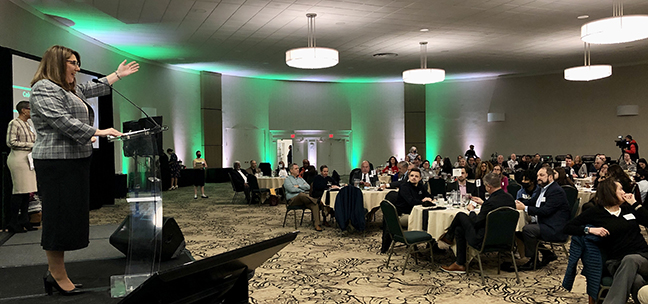
President and CEO Amy Rote welcomes attendees to Tuesday’s celebration of Big Brothers Big Sisters Capital Region’s 40th anniversary, held at the Penn Harris Hotel.

‘Tis the season—not only of holiday joy, but for college applications, admissions and acceptances.

And Rahina is a Harrisburg teen who just received the news of a lifetime.

She was admitted to the college of her choice—the University of Pennsylvania—but the news gets even better: She was granted a full scholarship, “a full ride” to the prestigious Ivy League school.

And her success gets even sweeter.

She was able to share her news from the stage Tuesday, before hundreds of Harrisburg-area business leaders gathered to celebrate Big Brothers Big Sisters Capital Region’s (BBBSCR) 40th anniversary.

Collective gasps, smiles, applause and even a few tears, rippled through those in attendance—especially when she gave full credit to her BBBSCR mentor.

“I have the best mentor ever—thank you Stacy and Beyond School Walls,” Rahina said. (The last names of youth participants in BBBSCR programs are not disclosed.)

Beyond School Walls is a BBBSCR initiative that pairs middle and high school youth with workplace mentors at Harrisburg-area businesses. It’s just one of many programs flourishing under the nonprofit’s umbrella and highlighted in Tuesday’s anniversary celebration held at Camp Hill’s Penn Harris Hotel.

“Every one of you is here because of a connection,” said Amy Rote, BBBSCR president and CEO, as she addressed attendees ranging from teens—“little brothers and sisters”—to community leaders serving as “big brothers and sisters,” board members and corporate sponsors.

Attendees at the Big Brothers Big Sisters Capital Region’s 40th anniversary celebration

The nonprofit BBBSCR’s mission is to “create and support one-to-one mentoring relationships that ignite the power and promise of youth” over a five-county area—Dauphin, Cumberland, Lancaster, Lebanon and Perry.

Dayna Smedley was seated around a full table of Deloitte’s Mechanicsburg employees involved in BBBSCR.

“I grew up in a household with a single mother, so for me, it’s very important to connect students with mentors to help guide them … it’s very helpful to their future,” Smedley said.

Additional community sponsors in attendance included Capital Blue Cross, The GIANT Company and Mid Penn Bank, among many others.

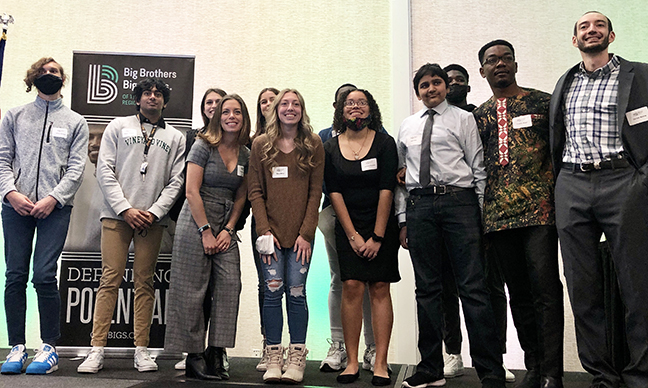
Throughout the celebration, “bigs” and “littles” took to the stage to share their stories, memories and testimonials. One of the highlights was the story of “big brother” Dylan Gallucci of Mechanicsburg, and his “little,” Josh, now 21.

“I have seen Josh’s ideas and interests evolve,” Gallucci said, reflecting on their 10-year relationship. “Coming into his life when he was 11 or 12 changed his vision for where his life was going.”

Through a taped video interview, Josh explained the impact Dylan and BBBSCR had on his life.

“Not having a father figure, I had challenges growing up, including feelings of abandonment,” said Josh. “I was a little bad ass kid. I feel like I would have been in jail had I not found Dylan—I would be dead probably.”

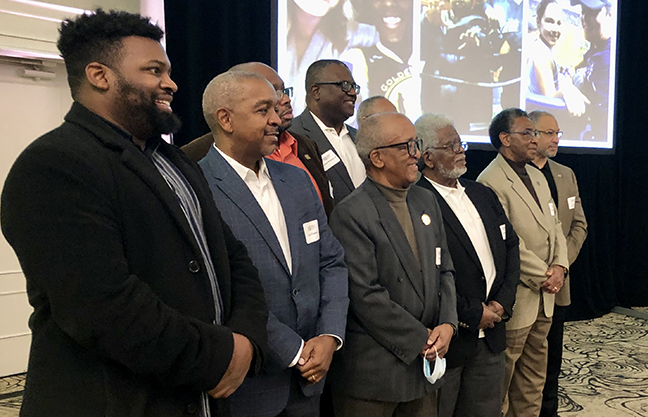
Attendees at the Big Brothers Big Sisters Capital Region’s 40th anniversary celebration

One attendee who has seen the nonprofit’s growth first-hand over the full range of its 40 years is Monica Gould of Mechanicsburg.

“I was a college student at Dickinson when I was first matched with a little … that was 1981 … the year the organization was founded,” said Gould, who went on to serve BBBSCR as a board member and develop its strategic plan—something that’s in her wheelhouse as founder and president of the Mechanicsburg-based firm, Strategic Consulting Partners.

Among all the success stories, the mentorships and matches, the programs and initiatives, BBBSCR board chair Eric Kiehl honed in on the underlying reason for the organization’s longevity.

“I’m dedicated to this organization,” said Kiehl, “because it makes such a difference in our lives.”

For more information on Big Brothers Big Sisters Capital Region, see https://capbigs.org/.

If you like what we do, please support our work. Become a Friend of TheBurg!

Continue Reading

Warning Signs: 5 steps could save a person from suicide

For Eileen Finkenbinder and others touched by suicide, there is unfathomable grief, anger, guilt and other emotional aftershocks.

“There are some dark days, and there are so many questions,” said Finkenbinder, a Carlisle resident who lost her 15-year-old son Britton to suicide on Oct. 25, 2018.

She is not alone in seeking answers.

More than 47,000 people died by suicide in 2019, according to the U.S. Centers for Disease Control and Prevention (CDC), making it the nation’s 10th leading cause of death. Suicide and suicide attempts cost the nation $70 billion annually in medical expenses and work-loss costs and exact an immeasurable emotional toll on survivors.

Health experts agree there is no single cause for suicide, but there can be warning signs.

  • Talk of suicide, feeling hopeless, having no reason to live, being a burden to others, feeling trapped or unbearable pain.
  • Actions such as increased drug or alcohol use, withdrawing from activities, isolating from family and friends, and giving away prized possessions and aggression.
  • Displays of depression, anxiety, loss of interest, irritability, humiliation and shame, agitation and anger, relief and sudden improvement.

The National Institutes of Mental Health recommends five steps that anyone can take if they know someone is in emotional pain.

  • Ask: “Are you thinking about killing yourself?” Studies show asking at-risk individuals if they are suicidal does not increase suicides or suicidal thoughts.
  • Keep them safe: Reduce a suicidal person’s access to highly lethal items or places.
  • Be there: Listen. Acknowledging and talking about suicide may in fact reduce rather than increase suicidal thoughts, studies show.
  • Help them connect: Share the National Suicide Prevention Lifeline number (1-800-273-TALK) and the Crisis Text Line (741741). Help them find a trusted family member, friend, spiritual advisor or mental health professional.
  • Stay connected: Stay in touch especially after a crisis.

Access to mental health resources is paramount.

Capital Blue Cross continued its emphasis on mental health by extending cost-sharing waivers through the end of 2021 for members with its Virtual Care benefit, which offers psychiatry and counseling services in addition to standard medical care.

Additionally, the insurer unveiled a behavioral health toolkit for employer groups, a new mental health and wellness page on its corporate website, and it helped bring the Neuroflow app to market. That mobile app helps users improve their mental wellness and better address anxiety, depression and other mental health needs.

Questions still haunt Eileen Finkenbinder. She leans heavily on her faith and help from supportive friends and family to cope in dark times.

Britton was an honors-caliber student athlete, a thoughtful kid who loved pets, cars and racing. His uncanny aptitude for electronics fueled a dream to study electrical engineering in college. There was no grim talk, unusual behavior, jarring mood swings or other warning signs.

“There are people who cry for help,” Eileen said, recalling an encounter she had with a young girl at the first Britton Finkenbinder Memorial Day Race held to raise money for suicide prevention.

“I could see she had scars from slashing,” Eileen said. “I just talked to her. I said, ‘You’re struggling with something here.’ That’s a cry for help. We can save those people.”

For more information about Capital Blue Cross, visit www.capbluecross.com.

This column is sponsored by Capital Blue Cross.

If you like what we do, please support our work. Become a Friend of TheBurg!


Continue Reading

Leveling Down: High cholesterol remains a quieter community health crisis.

COVID-19 is the ever-evolving public crisis we talk about daily. But there is another widespread, enduring and far-quieter potential killer still gripping our country and communities.

High cholesterol comes without symptoms until—if left untreated—it’s too late.

That’s part of the reason it continues to afflict nearly 40%, or roughly 93 million, of American adults, according to the U.S. Centers for Disease Control and Prevention (CDC).

So, despite a dramatic drop since 2000 in the number of Americans with high cholesterol—the CDC says about a third fewer Americans have high cholesterol now than in 2000—it’s clearly still a crisis impacting our communities. It’s not just an adult crisis, either. Though most common among men 45 and over and women over 55, 7% of U.S. children age 6 to 19 also have perilous levels of the plaque-like substance that can clog arteries and restrict blood flow.

Consequences can be dire. According to a 2020 America’s Health Rankings’ (AHR) report, elevated LDL—or “bad”—cholesterol doubles the risk of heart disease, the country’s leading cause of death. It’s also a major risk factor for stroke, the fifth-leading killer.

That’s because too much LDL can build up to eventually block a coronary artery and cause a heart attack or limit blood flow to the brain and trigger a stroke.

The CDC reports that heart disease and strokes combine to claim more than 868,000 American lives each year, deaths made all the more tragic by how preventable they are.

“We know with confidence that there are many steps we can take to help modify our cholesterol levels,” said Dr. Jennifer Chambers, chief medical officer at Capital Blue Cross. “Regular screenings, a healthier diet, weight loss, more exercise, and prescribed medications can all dramatically lower our cholesterol levels and our risk.”


Testing, Treatment

Because high cholesterol comes without symptoms until it’s sometimes too late, it too often goes untreated. An illustration: the CDC says that only 55% of adults who could benefit from proven cholesterol-lowering medications, the most passive approach to controlling the problem, actually take them.

That’s part of why the American Heart Association urges adults 20 and older to get bloodwork every four to six years to check cholesterol levels. Should screenings reveal dangerous ranges, experts across the board share certain recommendations to lower cholesterol:

  • Cholesterol-lowering medications when prescribed. These include those in the widely used statin family.
  • Diets low in saturated fats. Saturated, or “bad,” fats are the main culprits leading to high LDL.
  • Effective weight management programs. Excess body fat makes it harder for the body to eliminate bad cholesterol from the blood. So discuss with your doctor a food and fitness plan that gets you to, or keeps you at, your ideal weight.
  • Quitting smoking. Smoking makes LDL “stickier,” meaning it is more prone to cling and clog arteries. It also lowers HDL, or “good,” cholesterol, which tends to carry cholesterol away from artery walls. So, quitting helps on two levels.

Largely due to a marked increase in Americans who take cholesterol-lowering medication, watch their diets, and no longer smoke, the percentage of U.S. adults with high LDL more than halved from 1976 to 2010, reports the CDC, with those age 65 to 74 making the most progress. Just 30% of them had high LDL by 2010, down from 72% in the late ’70s.


Here to Help

Despite the dramatic progress over the past several decades, there’s still plenty of ground to cover in the fight against high cholesterol. Having health insurance that covers cholesterol screening, counseling and treatment can really help.

Capital Blue Cross, for instance, offers a variety of preventive services with no cost share to members who have standard benefit coverage. Services related to healthy cholesterol levels may include:

  • An annual preventive visit to review health, as well as family and personal risk factors.
  • Preventive medications such as statins. See a full covered medication list at capbluecross.com.
  • A lab test, called a lipid panel, to check cholesterol levels.
  • Blood pressure screenings.
  • Behavioral counseling for cardiovascular disease prevention.

“High cholesterol doesn’t have to remain the potentially deadly risk it is for so many,” Dr. Chambers said. “There’s a lot we can do to decrease dangerous levels relatively quickly if we recognize the danger in letting it go unchecked and make a commitment to managing it.”

For more information about Capital Blue Cross, visit www.capbluecross.com.

This column is sponsored by Capital Blue Cross.


If you like what we do, please support our work. Become a Friend of TheBurg!

Continue Reading

The Week that Was: News and features around Harrisburg

Members of The Bridge held a ground-breaking ceremony on Thursday.

It’s looking like a sunny weekend ahead, so get out and enjoy the weather! If you missed any news this past week, we have all our stories listed and linked below.

The “Black is Beautiful Expo” will take place in the Crowne Plaza on Friday and Saturday. The event will showcase over 40 local minority-owned businesses, our online story reports.

The Bridge Ecovillage held a ground-breaking ceremony on Thursday to celebrate moving closer to construction. They plan to begin work in spring 2021, our reporting found.

Capital Region Water proposed a small increase to its drinking water and wastewater rates for 2021, our online story reported. The new stormwater fee will remain the same.

Cocoa Creek Chocolates recently opened a new location in Camp Hill. Our magazine story tells how Owner Diane Krulac evolved into the chocolatier she is now.

COVID-19 infection rates continued to surge in Pennsylvania over the past week. The average new case count is nearing 6,000 per day, our reporting found.

Fosterthefoodie showcases 11 local flavors for food lovers in her Holiday Gift Guide. Make the foodies in your life happy while supporting local small businesses!

Harrisburg officials held a press conference to address the rash of recent shootings in the city, our online story reported. Police Commissioner Thomas Carter asked the community to work alongside the police if they want to see change.

The Harrisburg Police Bureau may see 12 new positions for “community service aides” to assist police and improve relations with the community. Mayor Eric Papenfuse said anyone from a recent high school graduate to a retiree could apply, our online story reported. The plan must be approved first by City Council as part of the 2021 municipal budget.

The Harrisburg School District announced it will postpone winter sports due to the pandemic, our online story reported. As COVID cases continue to spike, Acting Superintendent Chris Celmer worried student-athletes would be unsafe.

The Harrisburg School District partnered with Capital BlueCross to provide Thanksgiving meals for district families experiencing homelessness. Volunteers distributed over 200 meals to 50 families on Wednesday, our online story reported.

Harrisburg University added The Englewood in Hershey as another of its live music locations, our reporting found. This expands HU’s reach outside of Harrisburg.

Karen Hendricks shares her experience running 50 races for 50 causes while she was 50 years old, in our magazine story. Karen reflects on the races that helped her ease heartbreak and forge friendships, all while meeting inspiring people along the way.

Sara Bozich has your list of fun things to do this weekend in the Harrisburg area. Grab some takeout from a local restaurant or enjoy walking around at 3rd in The Burg.

Walnut and Chestnut streets will see substantial changes in the coming years, including added bike lanes, parking and sidewalk enhancements. The East-West Multimodal Connection Project aims to improve safety and multimodal access downtown, our online story reported.

Our wine columnist Steve Juliana has the perfect wines to pair with your Thanksgiving feast. Red or white wine goes perfectly with a turkey, so try out a few new flavors this holiday.

Do you receive TheBurg Daily, our daily digest of news and events delivered right to your email inbox? If not, sign up here! 

Support quality local journalism. Join Friends of TheBurg today!

Continue Reading

We All Profit: Our new Community Publishers are ensuring the future of the social good we call TheBurg.

The New Year brings a sense of re-birth, excitement and hope to Harrisburg and our region.

With a new mayor and a “Strong” plan for a new fiscal reality, there is a palpable sense of optimism in the air around town. As Dave Butcher points out in his excellent article in this issue, national demographic trends that favor the re-birth and renaissance of cities nationwide are also beginning to have a small, but perceptible, impact here at home. These trends, coupled with focused, effective leadership, a re-invigorated citizenry and a business community that believes in the promise of better days ahead, bode well for 2014.

This month, TheBurg turns 5, and we have much to celebrate. Larry Binda has led a transformation of our publication over the past year. Together with our lead writer Paul Barker, our designer Megan Davis, our sales manager Lauren Mills, our web designers and managers at WebpageFX (who will move their company and their 50-plus employees into the city in early 2104) and all of our many contributors, TheBurg has gone from good to great in under a year.

Equally important, leading individuals and businesses in the region have noticed our work. These community-minded leaders appreciate the importance of the public service TheBurg provides through engaged reporting.  More than noticing, they have agreed to join with me as “Community Publishers.” Their names include: Select Capital Commercial Properties, Integrity Bank, Greenlee Partners, Capital Blue Cross, Sutliff Chevrolet (who also continues to support 3rd in TheBurg), WCI Partners (where I am also a partner), Consolidated Scrap Resources, Buchanan Ingersoll & Rooney and RE/MAX Realty Associates Ray Davis and Wendell Hoover.

Inside this month’s front cover and inside the cover of every month and on our website, you will find these leading brands and individuals. Each month, they— along with our advertisers—will bring TheBurg to you, free of charge. Through their annual commitment to TheBurg, they will allow us to write the stories, publish the pictures and distribute the paper you have come to know and expect. 

In effect, these Community Publishers are joining with me to create an entirely new business model for a local monthly print publication. Implicit in their support is the realization that advertising alone is not enough to sustain a publication. At the same time, they understand that the entire community benefits from engaged news reporting—and that someone has to pay for it. The problem, in the age of the Internet, is that other media and venues are taking advertising dollars once directed to print. It is equally hard to efficiently mail or distribute paid subscriptions. The “free-rider” problem is endemic. Many, if not all, would like to see a quality product— particularly one that mentions their name and good work from time to time—but many more would prefer if someone else pays for it. Fortunately, these leaders have the vision to see and support this reality.

I call this new model the “all-profit” model, as in “we all profit” from having TheBurg around. Even though I have pledged to my fellow publishers to take zero profits (as in “none”) out of TheBurg personally, I know that I profit along with the community. Even though no one makes monetary profits, our lives are greatly enriched as we open and read the stories of our neighbors each month and follow along on the web and through blogs and social media.

In the end, our community life—and quite a bit of our personal lifestyle and standard of living—is greatly influenced by the stories we tell ourselves, about ourselves, in the public sphere. If those stories are undeservedly negative, as they have been in Harrisburg for some time, the community suffers. If we tell the real story—about the 95 percent that goes right every day instead of the 5 percent that goes wrong—we all benefit.

Let’s be perfectly clear: this is not about charity. This is enlightened self-interest that recognizes that doing well and living well are not measured by bottom-line profits alone. Conversely, it is the recognition that, while there are other measures of success, conducting a business that can pay all its bills is a necessary condition to ensure long-term sustainability.

Our community publishers “get it.” And, since they do, you too will continue to “get” TheBurg. We have room and, in fact, a need for more of them. You will know that we have reached our goal of financial sustainability only when each logo box is occupied by an actual logo. If you know anyone who shares our vision and loves TheBurg, please tell them about us and encourage them to join us. Most importantly, please join with me, as we say “thank you” to all of our community publishers for their wonderful support.

J. Alex Hartzler is publisher of TheBurg.

Continue Reading

Coming Together for Health Care Reform: A Q/A in partnership with INGROUP Associates.

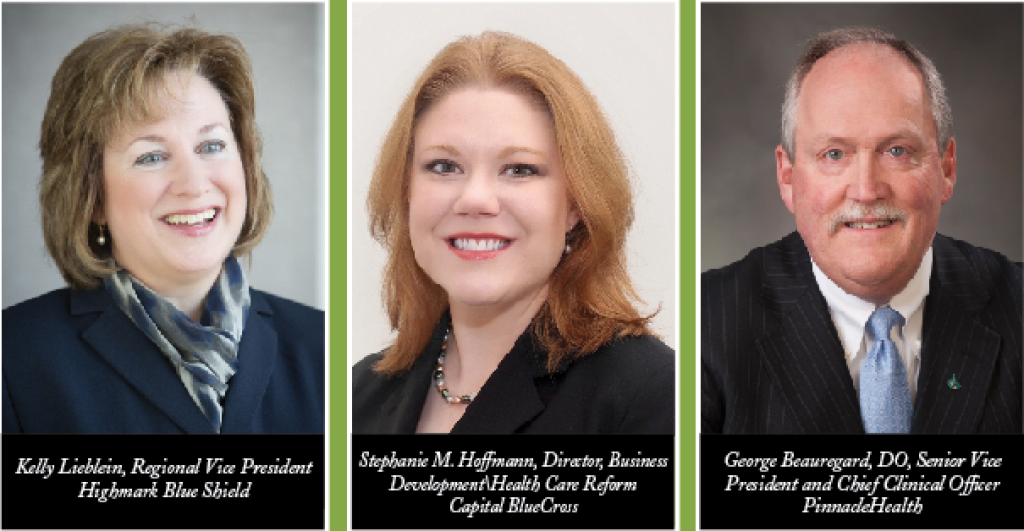
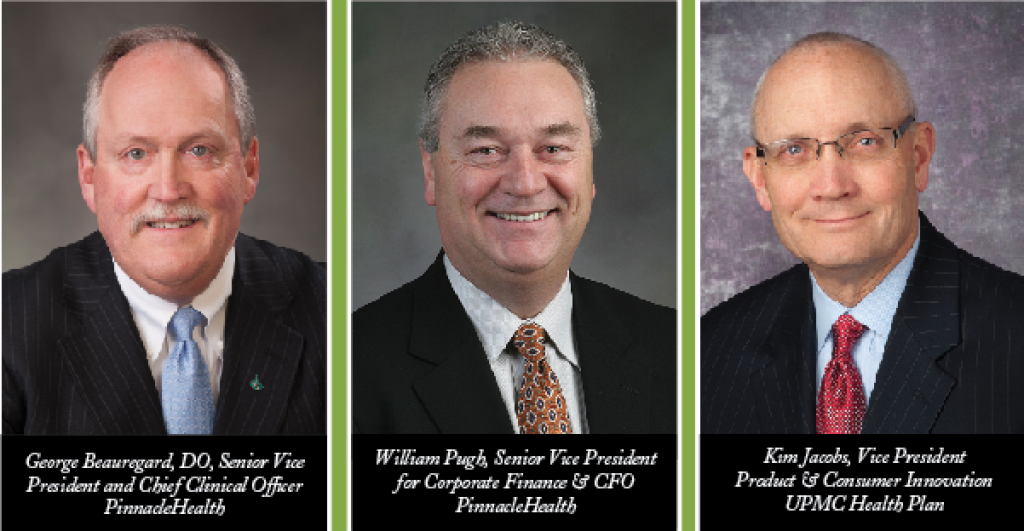
Screenshot 2013-10-30 20.41.16Screenshot 2013-10-30 20.41.30Screenshot 2013-10-30 20.41.48In the United States, the way that healthcare is consumed is changing rapidly. Just last month, people were able, for the first time, to sign up for healthcare coverage under the Affordable Care Act, a federal law that mandates health insurance for all Americans. Therefore, TheBurg, along with healthcare solution provider INGROUP Associates, asked several industry experts about those changes and how they impact consumers.


1.  Today more cost transparency tools are available to consumers.  These tools make the difference in cost for procedures between facilities more well known to consumers.  The same procedure can cost 35-40% more between facilities.  What are you doing to address these cost differences?

Highmark: Highmark Blue Shield provides easy-to-use quality and cost comparisons, along with other practical information, through a number of online transparency tools. By making cost and quality information transparent, we help members across all plan types make educated choices when deciding on physicians, hospitals, medical procedures and prescription medications.

Our transparency tools are simple to navigate and provide clear, up-to-date procedure cost and provider information. One of these tools is the care cost estimator which shows members what portion of a procedure they’ll be responsible for paying. This tool integrates provider allowances, deductibles, coinsurance and out-of-pocket information to calculate member cost-sharing on hundreds of inpatient and outpatient procedures. Estimates include the typical fee for a procedure plus the costs of related services, including facility, physician, lab tests, x-rays and more.

Capital Blue Cross: Capital BlueCross has been at the forefront of the industry in making costs transparent to our customers. They can sign on to our site at capbluecross.com and access the MyCareAdvisor tool to compare costs of health services at different facilities and make informed decisions about the care they choose and how much it will cost. We also provide consumers tools to make it easy to find providers in their area and with the specialties they need. Taking control of your health care doesn’t have to take a lot of your time.

UPMC Health Plan: Transparency will reveal variances in costs for the same procedures in different facilities. Many factors go into determining costs.  While we cannot comment upon factors used by other providers, we can say that we do whatever possible to keep costs as affordable as possible.  Additionally, we are committed to providing transparency not only on price, but also on quality. Every consumer must weigh all the factors that are important to them before they make their healthcare decisions. It is our intent to provide the tools and information to allow our members to make decisions that are right for them. 

PinnacleHealth: PinnacleHealth has always been concerned with providing the highest quality care while helping to contain healthcare costs. By working closely with area employers and key stakeholders, we can continue that trend, as well as encourage patients to receive the right care in the right setting with an emphasis on preventive care and better coordination of care — all with a singular focus on the patient.

True cost is not published rates or charges–it is the negotiated payment rates between the insurers and the providers. Medicare also pays different amounts based on regional wage differences and the cost of medical education in certain hospitals. The real difference is what the insurance companies have negotiated and what the hospital and or physician charge an uninsured individual, and that information is not very transparent yet.

PinnacleHealth launched a new web-based tool called the PinnacleHealth E$timator to help prospective patients and their families better understand the cost of their healthcare. Found on the PinnacleHealth homepage, prospective patients can complete a three-part form to obtain price information about a diagnosis or procedure.

Employers are asking their employees to share more of the cost of their healthcare through high deductible health plans. PinnacleHealth is providing them with a tool to make more cost-effective healthcare choices. The Estimator can be used in conjunction with information provided by health plans and physicians.

The software application uses “average reimbursements” (not charges or ranges of charges), generating dynamic results. Hospitals might have very similar charges/rates for a given service, but depending on insurance contracts the difference in what the hospitals are paid and what is billed back to patients can vary significantly.


2.  What are your perceptions of how the Affordable Care Act (ACA) will impact your industry and your company directly?

Highmark:  We have been preparing our products, our systems and our communications for reform since the law was signed in 2010. We are offering a variety of health plans to meet the diverse needs of individuals and families through the marketplaces. In Central Pa., we are offering 13 plans for sale on the marketplace, as well as two Blue Cross Blue Shield Association multi-state plans.

We’ve worked hard to price these plans affordably, given the many new requirements and fees under reform. We and the industry have made it clear that costs for some people may be lower, and for others, it may be higher than previously, as a result of the law. We encourage people to learn more about reform by visiting www.discoverhighmark.com, where they can explore how reform works, what it means to them personally and what their coverage obligations and options are.

Capital Blue Cross:  It is difficult to overstate what a change the ACA represents to the entire health care industry, let alone health insurance. While many employer-sponsored health insurance plans will keep their main features, insurers must adapt how they write insurance for individuals and small groups, how they manage risk across their consumers, and what kinds of services they cover. As a community insurer for 75 years, Capital BlueCross has always offered a variety of plans to meet the needs of our businesses and customers, and will continue to do so in the new health care environment.

UPMC Health Plan: There are approximately 200,000 uninsured individuals in our service area who will be able to purchase coverage on the marketplace. The Congressional Budget Office estimates that 20-30 percent of uninsured will purchase coverage in 2014. This equates to 40,000-60,000 new members on the marketplace, and the competition to insure those members will certainly have an impact on our company.

Overall, we expect one of the biggest impacts of the ACA will be that it will give an increasing number of consumers access to affordable coverage.  Additionally, it should also allow for increased competition and transparency in the market, which should greatly benefit consumers in the end.

PinnacleHealth: The ACA is already driving change in the healthcare industry through various penalties and incentives connected to Medicare payments.  Healthcare providers are brought into the driving force behind the ACA to improve the health status of America’s population and to reduce unnecessary costs through more coordinated care.

In addition, health systems are preparing and investing in additional providers, staff, HIT solutions and redesigning our care delivery model to implement community based care coordination.


3.   What would you recommend to employers to help them control their healthcare costs? Has anything really changed for most employers under the Affordable Care Act (ACA) as they attempt to control future costs of providing their employees healthcare?

Highmark: The Accountable Care Act will ultimately mean more people get health insurance coverage and that is a good thing. It probably does not go far enough when it comes to addressing the costs of care and we know that costs now are unsustainable.

We work closely with our customers to meet their specific needs and develop a customized strategy. Employers need to look at their health plan design for example, how much cost sharing for employees do they want to consider. Employers also need to encourage their employees to get engaged in wellness and other programs through financial incentives so employees take greater control and responsibility of their own health care issues and have a greater role in how their health care dollars are spent.

Capital Blue Cross: Most large employers already offered their employees health insurance coverage before the ACA, and will continue to do so now that it has been implemented. The law means there will be some changes in the type and cost of coverage they can provide their employees, but it also means that small employers and individuals will have greater access to coverage, as well. In the long run, the fact that everyone must have health coverage will also make for a healthier workforce overall.  While some of the mechanisms that have helped employers to manage health care costs have been significantly limited or even eliminated, such as preexisting conditions and waiting periods for coverage, there are still fundamental things employers can do to reduce the cost of coverage and increase the health of their employees.  Implementing a health and wellness program is one example.

UPMC Health Plan: Population health management, with a focus on wellness and prevention, is a key element for employers to control healthcare costs.  More than 50 percent of healthcare spending is on preventable illnesses due to unhealthy lifestyle habits.  With the growing obesity crisis and the associated diseases that come with it (such as diabetes and hypertension), a comprehensive health and wellness program coupled with incentives can have a major impact on employer healthcare costs. 

UPMC’s HealthyU products provide this type of program for employers by allowing employees who complete certain preventive and healthy activities to earn funds into a Health Incentive Account. 

PinnacleHealth: We would recommend wellness and prevention programs and incentives, health risk assessments, and defined contribution plans. PinnacleHealth has a corporate wellness program, CARES, that provides an array of corporate and community wellness programs that include disease risk assessment, nutrition and weight advice, seminars from leading health experts, health fairs and disease prevention education. These are provided onsite at the workplace. 

Employers now can choose whether and how they want to participate in providing health insurance to their employees. This is a game changer and will result in employer sponsored benefit reductions over time. New taxes, penalties and regulations have redefined the traditional role and given employers an out.


Continue Reading

Gaining Ground: Historically black Midland Cemetery was lost to nature, until a dedicated group of volunteers beat back the brush.

Screenshot 2013-10-30 20.51.54“In this cemetery, we have slaves,” said Barbara Barksdale. “Some who came off the ship, some who were born here.”

Barksdale was standing in the shade of a few trees near the entrance of the Midland Cemetery, a burial ground of six or so square blocks on the outskirts of Steelton. She wore gray sweatpants, a visor and a pink shirt that said “Cemetery Lady” over a woven insignia of a gravestone. She addressed a small crowd of volunteers, most of them employees of Capital Blue Cross, who had signed up for the United Way Day of Caring. It was early September.

“We also have Buffalo Soldiers,” she went on. “We also have Tuskegee Airmen. We have the men from World War I and World War II. We have a lot of our people who helped us start our area here, as far as the African-American communities. We have the slave who actually broke ground for the AME church that’s down on 2nd and Adams Street.”

To her right and left, over uneven land, stretched a few hundred graves and markers. Behind her, in a forested patch, were others, lost beneath weeds and trees.

Twenty years ago, the forest covered almost the entire cemetery. Barksdale, who is the president of Friends of Midland, a nonprofit she founded to restore the site, only knew the graves existed because of visits she had made as a child. “My parents would just park down at the bottom, across from that brown house over there, and then they would disappear into the woods to visit my grandfather,” she said. “I never knew and I still don’t know where he’s buried at.”

She recruited help from conservationists and local volunteers, and in a few years they managed to clear much of the overgrowth. But many of the headstones had sunken into the soil. Every year, with the help of an ancient map, she and her volunteers unearthed new gravesites. “It’s like a pimple on a face,” she said. “You keep on wiping it, something’s gonna pop out.”

With a warning to “watch out for lumps and bumps,” the volunteers dispersed over the grounds. Some, equipped with a pry bar, set about wresting markers from the weeds and propping them up with bricks. Others mowed. A few slopped sealant into little plastic buckets and began coating the cemetery’s wooden fence in preparation for winter.

Barksdale stayed near the entrance, setting up lunch, and spoke with one of her regular helpers. “He’s a descendant of some people out here,” she said. “He has kinfolk.”

The man nodded. “I grew up right over the hill, not even three minutes walking distance, and I never knew this was here ‘til I started here with her. Never knew it.”

“I call him one of my revolving door inmates,” Barksdale confided as he walked off. Early in the cemetery’s restoration, she had seen inmates operating mowers near the county prison and had asked the warden to loan her some laborers. They had been coming every year since. Some, like that day’s helper, continued helping after they’d been released.

“When he first came out,” Barksdale said, “all this side was filled with stumps. And he would get down in the holes, and I said, ‘Twist it out like a tooth!’”

Midland is one of a network of cemeteries involved in the Hallowed Grounds Project, a statewide effort to recover the neglected burial sites of African Americans, particularly members of the United States Colored Troops. “The United States Colored Troops (USCT) were segregated in death as they were in life,” a recent pamphlet explained. “Until recently, their final resting places were vanishing from the landscape.”

A few weeks before September’s Day of Caring, Barksdale met with Lenwood Sloan in the offices of Jump Street, an arts-education nonprofit on N. Cameron Street and a partner in Hallowed Grounds. Sloan—a “jack of all trades,” Barksdale said—is one of the project’s organizers, as well as a driving force behind various heritage initiatives in the region. They were preparing for Hallowed Grounds’ annual public meeting in October.

Sloan described the dramatic extent to which some cemeteries had been forgotten. One had been covered by the parking lot of an Applebee’s in Reading; another was under a playground in Carlisle. “Sometimes, the cemetery is sliding down the hill due to erosion,” he said.

Sloan, who speaks with a resonant, preacherly baritone, has a knack for the lively phrase. He referred to physical labor as “sweat equity” and described the Hallowed Grounds network as “an affinity group, a connect-the-dots, a constellation of advocacy.” The October meeting, he said, was a chance for conservationists and caretakers to share best practices, identify labor and funding sources and swap resources like bricks and mulch. “It’s more like a family reunion than a conference,” he said.

On the Day of Caring, an hour into their work, a small group of volunteers discovered a stone submerged in the grass. As they dug it free, they saw it was connected to another stone—which was in turn connected to another.

“It kept going and going and going,” one volunteer said. “Then we all jumped in and—”

“Went for it!” someone concluded. Soon, they had exposed an entire stone boundary, perhaps 16 feet square. No corresponding headstone was found.

A little ways off, another group of volunteers reclined on a shallow slope and reflected on the outing. “I think it’s just neat that, you’re looking at the year they were born, the year that they died, and, back then, they didn’t live very long,” one of them reflected. She pointed at a nearby pair of stones. “That one, the wife was covered up completely.”

Barksdale paused at the entrance, where medals from the Civil War through the Korean War were affixed to a granite memorial. “It’s rewarding,” she said. “It’s fun, it’s beautiful. You can look around and say, well yeah, I did something here. This is part of my dash.”

Her dash?

“The dash,” she repeated. Barksdale, ever the Cemetery Lady, was invoking the image of a headstone. “You know. I’m born in the 1950s, I’ll die in, uh—3000 and something, maybe.” She grinned.

“And that little dash represents what I’m doing here. That’s your lifeline. You got it? That’s my dash. Part of my dash was being born, part of my dash is going to school, becoming a nurse, being a teacher, having children, having grandchildren—that’s part of my dash. You know, meeting you, part of my dash. Taking care of this cemetery. It’s part of my dash. You know? Doing reenacting. Part of my dash. So, like, what did you do with your life? Look at my dash.”

For more information about the Hallowed Grounds project, contact Barbara Barksdale at [email protected].

Continue Reading