Tag Archives: David Morrison

Historic Harrisburg announces 2022 “Preservation Priorities,” focused on threatened, blighted properties

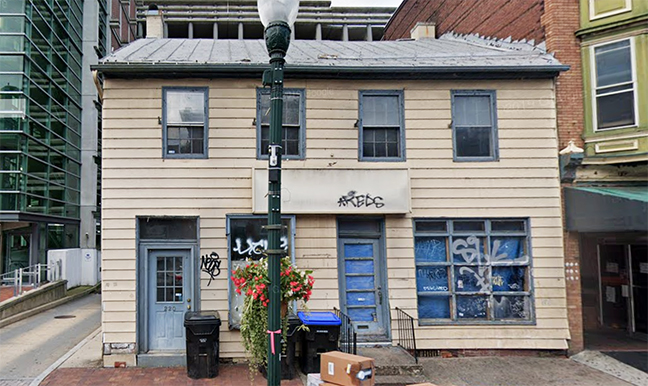
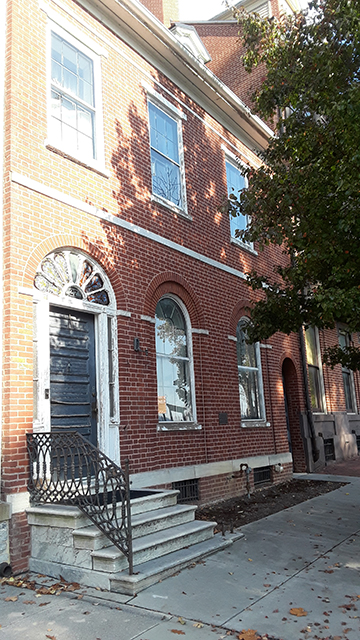
Balsley House in downtown Harrisburg

For a second straight year, Balsley House tops the list of threatened historic properties in Harrisburg, according to the city’s principal preservation organization.

On Monday, Historic Harrisburg Association released its proposed “2022 Preservation Priorities.”

Balsley House, a pre-Civil War double building, is on the list as it’s in danger of “demolition by neglect,” according to HHA.

The 2,590-square-foot building, located downtown at 220 N. 2nd St., also was HHA’s top preservation priority last year. Despite the designation, little seems to have been done to stabilize or restore the deteriorating structure.

David Morrison, HHA’s executive director, expressed encouragement on Monday, saying that, since last year, he has been in contact with the building’s owner, Dusan Bratic of Mechanicsburg.

“Since it went on the list last year, we’ve had a couple of conversations with the owner,” Morrison said. “I think we might be able to take this in a positive direction.”

Balsley House has housed many different businesses over its long lifetime, but has sat empty and increasingly blighted for many years.

The other priorities on HHA’s 2022 list are:

  • Beidleman House at 1225 Market St.
  • The former William Penn High School at Italian Lake
  • The former Harrisburg State Hospital
  • Prospect Hill Cemetery Gatehouse near the city line

Balsley House has actually been on the list since 2018. Beidleman House has been on since 2011, William Penn since 2017, and the former state hospital since 2014. The Prospect Hill Cemetery Gatehouse went on the list last year after a car hit the structure, severely damaging it.

William Penn has been on the sales market for many years. However, the owner, the Harrisburg School District, recently indicated that it may decide to retain and renovate the building.

HHA also listed two “preservation successes” of the past year: Grace United Methodist Church, a downtown church that has revived its congregation, and Derry Street United Methodist, an Allison Hill church that was sold and now houses the Anglican Church of the Pentecost.

HHA listed no “preservation losses” since last year’s report.

Moreover, HHA put about 30 structures in and around Harrisburg on its “watch list,” meaning that they’re historic properties of concern. These range widely, but include such landmark buildings as the Broad Street Market, the former Coca-Cola bottling works on Allison Hill, the Riverside firehouse and even HHA’s own Historic Harrisburg Resource Center.

“We want to keep these on our radar screen,” Morrison said. “This way, people can help us keep track of them.”

Morrison noted one pending success. The commonwealth-owned Dixon University Center in Uptown Harrisburg is on HHA’s 2022 “watch list.” The Jewish Federation of Greater Harrisburg recently put the site under contract for purchase, with plans eventually to move its operations to the sprawling property.

“That will be to us the great success of the decade, if not the millennium,” Morrison said.

HHA’s board is expected to approve the Preservation Priority list at its February meeting.

On Monday, Jan. 24, HHA’s Preservation Committee will hold a virtual presentation of its 2022 Preservation Priorities at 6 p.m. Tune in here. For more information about the Preservation Priorities, visit HHA’s website.

If you like what we do, please support our work. Become a Friend of TheBurg!

Continue Reading

PennDOT brings Market Street Bridge plans to community; activists, business owners raise concerns

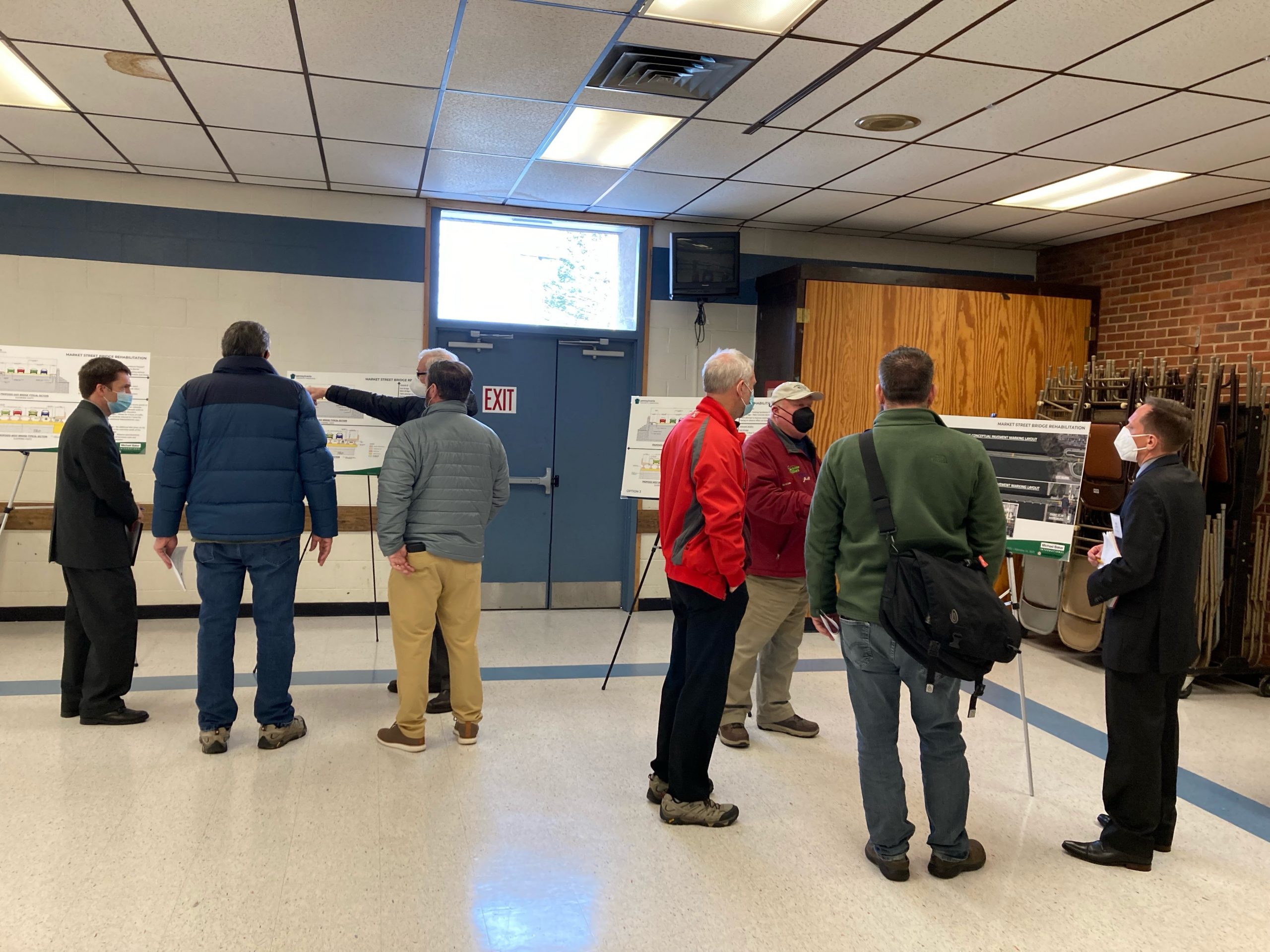
Community members talk to engineers about the Market Street Bridge project at an open house held by PennDOT.

On Tuesday morning, people filed into the Wormleysburg Borough Office with questions about a major bridge rehabilitation project proposed for Harrisburg.

With informational poster boards and engineers placed around the room, PennDOT welcomed the public to comment on its plan to make major improvements to the Market Street Bridge.

“We want to know what the public wants,” said Heidi Mertz, the project manager for the bridge rehab. “We are willing to listen and to see what we can come up with.”

Late last year, PennDOT announced its $63.8 million plan for the bridge, which spans the Susquehanna River, connecting downtown Harrisburg to Wormleysburg, as well as City Island in the middle.

According to PennDOT, the bridge is in “fair to poor” condition with cracking, rusting and drainage issues that they plan to address.

The project will include work on both the east side of the bridge, which connects Harrisburg to City Island, and the west side, which connects City Island to Wormleysburg. Under the plan, PennDOT will rehab the historic arches of the near 100-year-old east portion and replace the deck and cracking sidewalks. They also plan to construct a new superstructure (deck and beams) on the western side.

All of this work will address the structural issues that the bridge has and “maintain a safe and efficient way to cross the Susquehanna River,” according to PennDOT.

But there’s a lot more to the project, changes that would impact the users of the bridge, as well as the businesses around it. The project could include cutting out lanes, creating new bike lanes or widening sidewalks.

This is what PennDOT wants input on, and on Tuesday, Harrisburg area residents showed up to voice their opinions.

Kevin Kulp, president of the Harrisburg Senators, was one of those people. He heard about the project and was concerned about how it would affect traffic to City Island, where FNB Field, the Senators’ stadium is located.

“I’m really glad I came,” he said. “Seeing the options, it’s certainly important for us to stay informed.”

PennDOT is presenting three options to the public:

Option 1: Keep four lanes of traffic and two sidewalks on each side of the bridge, improving sidewalk surfaces. Only on the western side would sidewalks expand and 2-foot shoulders would be added to provide space for bicyclists. With this option, PennDOT would have the flexibility to re-stripe the roadway in the future to take out a lane and add additional bike/pedestrian space if needed.

PennDOT’s proposal for Option 1

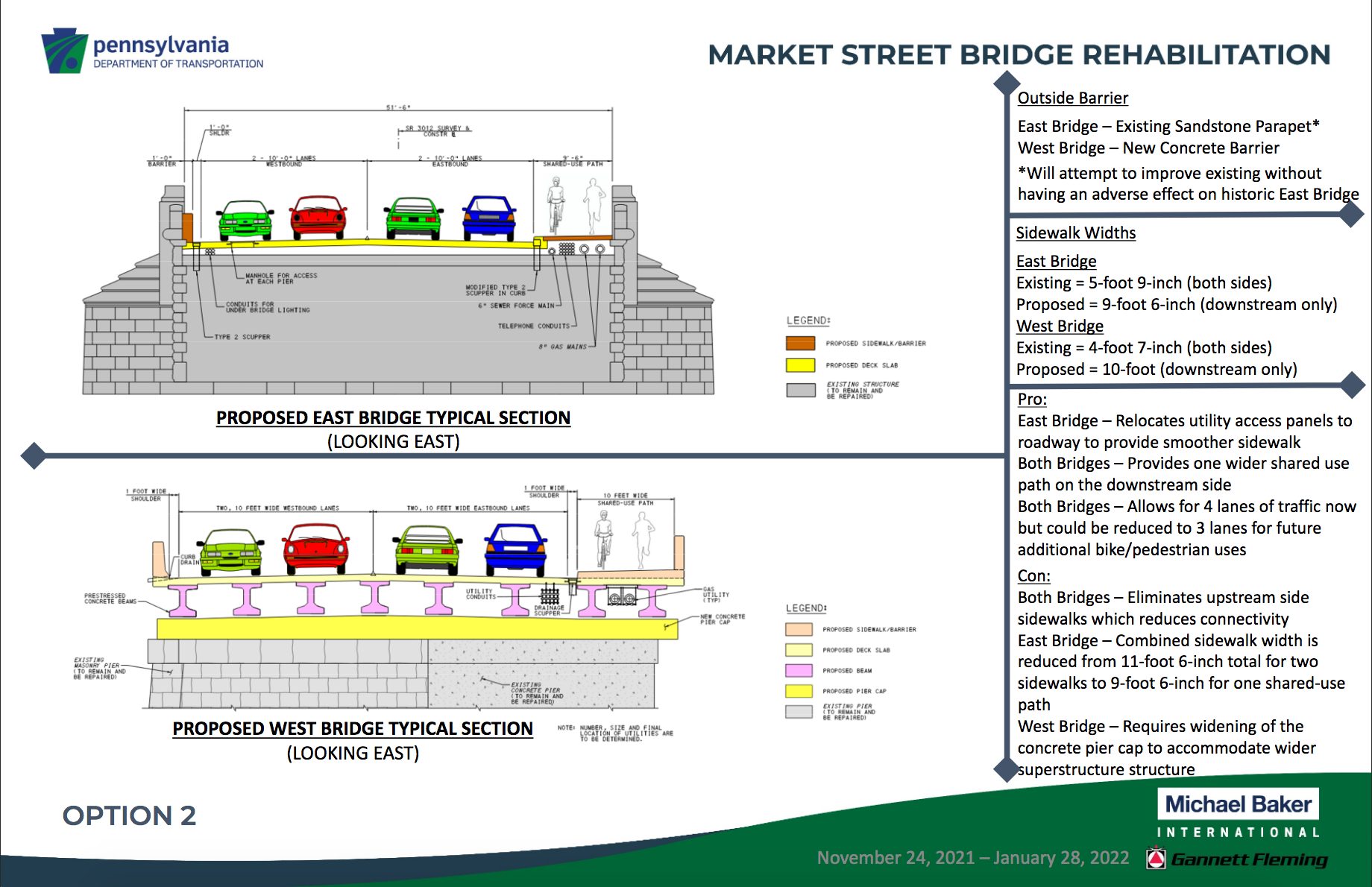
Option 2: Keep four lanes of traffic on each side of the bridge. Eliminate the upstream sidewalk on both to make room for a widened, near 10-foot, downstream sidewalk. This would be shared use for both pedestrians and bicyclists. Two 1-foot-wide shoulders would be created on the western side and one on the eastern side for additional space for bicyclists.

PennDOT’s proposal for Option 2

Option 3: Reduce to three lanes of traffic, eliminating one. PennDOT would make a wider upstream sidewalk for pedestrians and a wider, 10-foot downstream sidewalk for shared use. They would also add 2-foot shoulders between vehicle lanes and raised sidewalks—additional space for bicyclists.

PennDOT’s proposal for Option 3

According to Mertz, the Market Street Bridge sees “plenty” of pedestrian and bicycle use, warranting the multimodal upgrades.

David Morrison, executive director of Historic Harrisburg Association, has his concerns.

“I applaud them for the restoration of the historic eastern bridge,” Morrison said. “But they could just restore this as is and not try to make it a 21st-century recreational bridge.”

Morrison doesn’t see bicyclists using the bridge as much as PennDOT thinks they will. He pointed out what he sees as an unsafe crossing area once riders cross the bridge onto Front Street in Wormleysburg. He also cited the Harvey Taylor Bridge as an example of a failed multimodal attempt, saying how the pedestrian walkways, added in the early 2000s don’t get much use.

“I’m afraid we will get the same result,” Morrison said. “I’m afraid it’s going to be a waste of money.”

Morrison proposed that PennDOT explore an alternate option–restoring the western span of the Walnut Street Bridge and making that the primary non-vehicular passageway for cyclists, runners and pedestrians.

A few bicyclists showed up at the open house, including Dick Norford, a Capital Area Greenbelt Association (CAGA) board member. Norford thinks the pedestrian and bike lanes proposed for the Market Street Bridge will be used.

“There’s an ever-increasing number of people commuting on bicycles,” he said.

Norford had concerns about the safety of option two, which only has one shared sidewalk for bikers and pedestrians. But overall, he favored the idea of increasing access for bikers on the bridge.

“If we make it more inviting for bicyclists, they will use it,” he said.

PennDOT plans to begin construction on the Market Street Bridge in 2024. Mertz said that construction could take two to three years, plus additional time for the movement of utility lines under the sidewalks.

There is a possibility of that timeline changing depending on what happens with the South Bridge of I-83, which PennDOT has proposed widening and beginning to toll, Mertz explained. According to Mertz, they wouldn’t have construction taking place on both at the same time.

Throughout the Market Street Bridge construction, PennDOT said there will be access to City Island. They are still seeking public input and deciding on how traffic will be maintained and detours will be employed.

Kulp is nervous about the construction’s impact on allowing visitors easy access to the island’s amenities, including Senators games.

“We have to make sure people are going to be able to get to the island and get home in an efficient manner,” he said. “I want to look out for the interest of all the vendors on City Island.”

PennDOT is accepting public input on the Market Street Bridge project through Feb. 11. An additional open house will be held on Jan. 18, from 6 to 8 p.m. in the Wormleysburg Borough Office, Knisley Hall. Comments can also be made online.

For more information about the Market Street Bridge rehabilitation project, visit PennDOT’s website.

Updated on 1-20-22 to include a statement from David Morrison.

If you like what we do, please support our work. Become a Friend of TheBurg!


Continue Reading

Building owner mounts fight to prevent construction of 5G pole directly in front of historic King Mansion

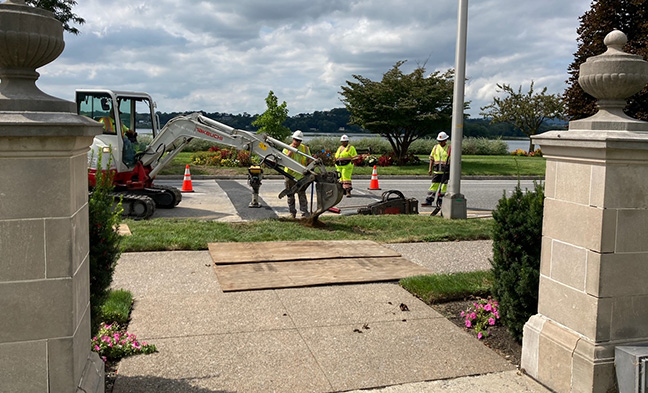
Verizon workers outside of the King Mansion’s front entrance last week

Big white tents went up in the front lawn of the historic King Mansion last Thursday morning in preparation for a weekend wedding.

That same morning, construction workers began digging up grass and dirt directly in front of the historic N. Front Street mansion.

Hearing the sound of the equipment, building owner Marc Kurowski peered out the window and was shocked by what he saw.

Verizon was beginning work to erect a massive 5G pole in front of the century-old King Mansion, one of Harrisburg’s grandest and most notable buildings.

To Kurowski, this added insult to injury. Earlier in the summer, Verizon had installed a 5G pole directly in front of his other building—his recently renovated house down the street on the 1400-block of N. Front Street. Where an inconspicuous street light once stood, a thick pole with a bulbous antenna on top now stood between his home and his riverfront view.

“It’s starting to feel a little personal,” he said. “It was a complete surprise.”

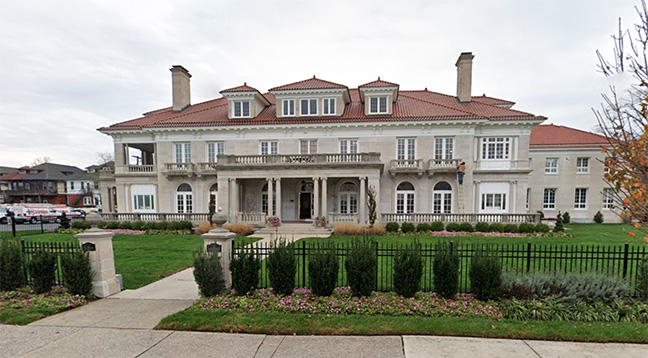
The exterior of the King Mansion

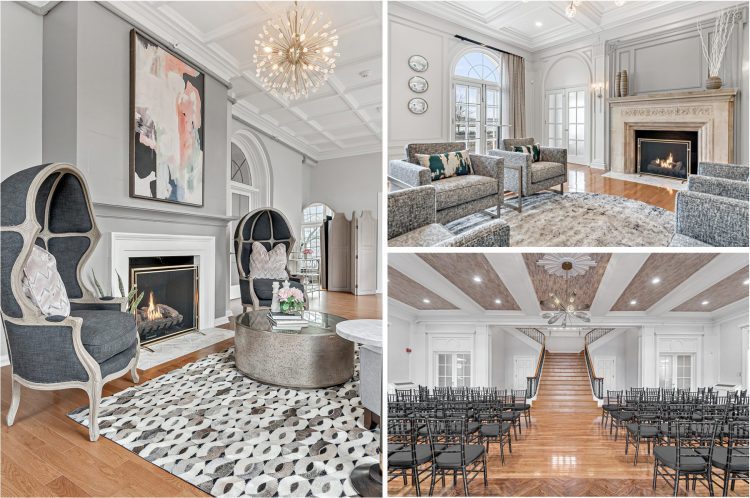
But it was more than personal to Kurowski–it was detrimental to this important piece of Harrisburg history, he explained. He recently renovated the King Mansion, which for decades had been carved up into an offices, transforming most of the grand space into an elegant wedding and event venue.

The 5G pole, if installed, would replace a street light located on the public right of way in front of the mansion.

“You couldn’t have picked a worse spot to put it,” he said. “I will chain myself to the pole out there. This can’t happen.”

Verizon’s “small cell” poles have popped up at locations around the city over the recent months. According to Verizon spokesperson Chris Serico, these provide Harrisburg residents with access to the 5G Ultra Wideband network, which improves downloading and streaming speeds.

After a pole was installed outside of Kurowski’s N. Front Street home, he contacted Verizon to make sure that the King Mansion wouldn’t be next, and Verizon told him they wouldn’t touch that location until possibly 2022, he said.

When construction began last week, Kurowski said that he felt blindsided.

“It wasn’t under the cover of night, but it felt that way,” he said.

The interior of the King Mansion. Photos by Elliot Samuel from Hommati Photography.

Kurowski contacted Verizon when he saw the construction outside the mansion, and Verizon has since halted work at the site. He said that he has not received word on whether Verizon has future plans to construct at that location.

When reached by email last week, Serico did not confirm that this had happened, but said that there were no current plans to install a small cell tower in front of the King Mansion.

According to Harrisburg City Engineer Wayne Martin, 101 permits have been issued by the city for 5G pole locations, with another 15 currently under review.

In late 2019, City Council approved a resolution that allowed Harrisburg to enter into an agreement with Verizon to use certain street lights and utility pole locations to install wireless equipment.

“Our engineers analyze our current network usage and data trends to determine placement for small cells, including 5G Ultra Wideband technology in Harrisburg,” Serico said.

Martin’s office surveys each proposed 5G pole location and must approve them, he said. However, they may only reject a location if there is a safety or design requirement concern, such as if it interferes with access to an ADA ramp.

Over 100 small cell sites that have been installed so far in Harrisburg, but Martin said that he has received only a handful of complaints from residents and business owners.

“It has not been a very hot issue,” he said.

But David Morrison, executive director of the Historic Harrisburg Association, sees it another way.

“It’s been an ongoing problem,” he said. “These poles are a nuisance.”

Seeing the poles go up around the city, especially along N. Front Street, Morrison said that he worries about how they may affect his historic tours. He often takes bus tours down the riverfront street, pointing out historic buildings. The King Mansion is one of his favorites, he said.

“I call Front Street the most beautiful street in America,” Morrison said. “When we begin to clutter it up with these poles, it’s not just bad for residents, but for tourism.”

Morrison said that he is planning to contact Verizon about the 5G pole possibly coming to the King Mansion along with a proposed installation on the 2900-block of N. Front, which he’s suggesting is a historic district.

A public notice was placed in the Patriot-News in early August, making note of 11 poles that Verizon recently installed and explaining where public comments “regarding potential effects from this project on historic properties” could be sent within 30 days.

Kurowski’s home was one of the 11 listed sites.

He’s submitted comments and said he was told that other options will be considered, but that no promises can be made.

As for the King Mansion, Kurowski said he’ll be waiting by the window, watching to make sure a 5G pole isn’t installed.

“Every part of this is wrong,” he said. “I’m not letting it go. I’ll just keep making noise.”

If you like what we do, please support our work. Become a Friend of TheBurg!

Continue Reading

Jewel in the Crown: After an extensive renovation, Harrisburg’s stately King Mansion opens for public use

Photos by Elliot Samuel from Hommati Photography. Courtesy of King Mansion.

When the traffic isn’t too heavy, David Morrison, executive director of the Historic Harrisburg Association, guides his bus groups down Front Street at a smooth 10 mph.

This gives him the chance to point out all the significant buildings that make up the streetscape. Morrison’s tour consists of the likes of the Harris-Cameron Mansion, Governor’s Row and—of course—King Mansion.

His focus on King Mansion makes sense. Built in the 1920s, the mansion may be the grandest privately owned residence in Harrisburg. Dressed in a red tile roof and surrounded by Mediterranean-style balusters, King Mansion’s presence is remarkable.

“It’s just an amazing feast for the eyes,” Morrison said.

About four years ago, an engineer named Marc Kurowski purchased the mansion as office space for his firm, K&W Engineers. But it wasn’t long before the new owner adjusted his focus. He restored some parts of the property to their original stature, redesigned others in a modern light, and, ultimately, enlivened the space as a whole.

Today, the second floor remains a K&W Engineering office. But for the first time in the mansion’s century-long history, the first floor is a space suited for public events like weddings, fundraisers and networking socials. With the gentlemen’s quarters, the salon space and the sprawling, well-lit ballroom that seats 160, the mansion is all dressed up, ready to host an extremely nice party.


Full Reign

Horace King, the original owner, didn’t have much of a personal impact on Harrisburg.

He was a businessman who lived in the city for just a brief time, walking to work every day from his home. His building, though, left a far larger footprint (even without the original bowling-alley-turned-shooting-range that King himself put in).

“It kind of proclaimed the peak of the extravagance of the roaring ‘20s in its size and its design,” Morrison said.

Kurowski isn’t the first business owner to claim the King Mansion. There were other offices before his, but he was the first to turn the mansion toward the public. Plus, he took out any traces of bland, office-style interior, giving the mansion’s grandeur full reign.

These days, most of Kurowski’s engineering team works remotely, but for those who do venture in, the staff feels a special kinship with their workplace. With Wi-Fi throughout the property, there’s no shortage of spots to get work done—a balcony, a terrace, you name it.

Kurowski’s effort to transform King Mansion is crucial in one key way. What was once a drive-by for Harrisburg locals and commuters is now a place where many people will get a chance to visit, if only for an evening.

With a quick glance of the interior, you’ll see that Kurowski has made sure to maintain and restore many historical parts of the mansion, but the work isn’t done.

“I have a good friend who does a lot of very detailed historic restoration up at the Capitol, and he’s been champing at the bit to get in here and kind of strip it down,” said Kurowski, pointing to painted-over cameos and molding.

Future Growth

Since opening the King Mansion to public use, demand for the space has been strong, especially for weddings.

In January, Gov. Tom Wolf even hosted a pre-presidential inauguration gala there, with hundreds of people under cozy, heated tents on the lawn that faces the river, smack-dab in the middle of a COVID-19 winter.

Mostly, Kurowski is glad that the King Mansion, which he bought in 2017, is no longer closed off, the exclusive province of the insurance and tech companies that once made it their headquarters.

With dozens of events planned throughout the year, you soon may find yourself sipping a cocktail while marveling at the interior restoration, a wonderful secret behind every corner. This includes functions by many nonprofit groups, including Historic Harrisburg, which itself plans an event in December.

In a broader way, Kurowski is pleased that he’s been able to contribute to his hometown in such a significant way.

“I still think that there are loads of unrealized potential in the city, in all kinds of ways,” Kurowski said, speaking like the engineer he is. “There’s growth to be done.”


King Mansion is located at 2201 North Front St., Harrisburg. For more information, visit, www.kingmansionpa.com. The mansion also will be a stop for the 30th Annual “Elegant Progressions” dinner, presented by the Historic Harrisburg Association and the Kidney Foundation of Central Pennsylvania, slated for Friday, Dec. 3 and Saturday, Dec. 4. For ticket information, visit www.elegantprogressions.org.

If you like what we do, please support our work. Become a Friend of TheBurg!

Continue Reading

Past & Praise: Salem UCC celebrates its history, considers new ways to serve

Clothing Closet

In May 1787, delegates gathered, argued and debated in Philadelphia at the Constitutional Convention.

At the same time, a log church was being built in Harrisburg, then a city of about 600 people, with land given to them by city founder John Harris Jr.—lot number 187 on Chestnut and 3rd streets.

“They brought their faith with them, and they worked hard,” said Rev. Sue Schmidt, Salem United Church of Christ’s pastor. “It was a group of hard-working people.”

Those early immigrants helped build Harrisburg, with the church originally serving both German Reformed and German Lutheran congregations. The present building, erected in 1822, today stands as the city’s oldest place of worship.

Over the years, the church has witnessed much history, even housing soldiers and serving as a hospital during the Civil War. At the war’s end, its bell pealed as President Abraham Lincoln’s body arrived on April 21, 1865 to lie in state at the Capitol.

Last December, Schmidt became the church’s new pastor, another part of the long and prestigious history of Salem serving worshippers and the Harrisburg community.

Meeting Needs

The church, steeped in history, large by any standard, could be inconspicuous among the tall buildings, traffic, construction and busyness of Harrisburg.

But looking up, one is jolted by the presence and beauty of it—the federal architecture, white-washed brick exterior and 110-foot bell tower with its domed, octagonal cupola, twinned by two, three-story towers.

The people of Salem are proud of this history and, in 1975, the church was added to the National Register of Historic Places.

“When you ask about Salem, the first thing people say is, ‘We’re historic Salem. In 1787, John Harris set apart some land for church, and so we got that land,’” Schmidt said.

Like with many urban congregations, church attendance has declined over the past decades. And because of this, some historic churches in Harrisburg have been put to other uses.

For instance, the First Church of God on N. 4th Street, originally built by a breakaway group from Salem, now is the home of Gamut Theatre.

“We’re very committed as a congregation to continuing to be open as a place of worship,” Schmidt said.

And, like many city churches today, Salem also uses its building to serve the community.

The second floor holds a clothing closet, with an entire room dedicated to children’s needs. The challenge with an old church like Salem UCC, according to Schmidt, is keeping it functional. Not just in the physical sense, but in the community sense

“How can we help our community flourish?” she said. “What resources, what opportunities, what parts can we offer downtown Harrisburg that aren’t already being offered?”

Groundwork

Salem’s cavernous basement offers another outreach opportunity.

The hall, with its soaring ceilings, has hosted many basketball games. An abandoned, net-less hoop hangs as a witness to the past.

The church is renovating this space with the goal of community use. Schmidt brainstormed that the space could be used as a tech center, nonprofit business or space for immigrant communities.

“God is doing the groundwork,” she said. “How can we bless the community with this space?”

These aged churches provide value to the community even beyond practical use.

“Throughout history, worship spaces have been the greatest examples of architecture, greatest expressions of craftsmanship, design and creativity,” said David Morrison, executive director of Historic Harrisburg Association.

Even as Schmidt and the congregation search for new ways to serve Harrisburg, the building holds something more than just usefulness.

“I think they [old churches] hold sacred space,” Schmidt said. “Not that God can’t be found everywhere. But there’s something about a community of people that follow God. And that is their heart for years and years and years of prayers for the city.”

For nearly 200 years, the Salem church has housed a worshipping community in Harrisburg. Its walls have supported many generations and, today, help tell the history of the people of Harrisburg.

“It’s a living testimony,” Schmidt said. “It’s a living witness.”

For more information about Salem UCC, visit www.salemuccharrisburg.org or tour the building at a future Historic Harrisburg Associations Candlelight House Tour.

Thanks to Salem UCC for lending the resource, “A History Salem United Church of Christ (German Reformed) Harrisburg, Pennsylvania from 1787 to 1989,” which was used for historical reference.


If you like what we do, please support our work. Become a Friend of TheBurg!


Continue Reading

We Re-Built This City: Harrisburg hasn’t experienced this much development in a century. What’s driving the trend?

The Hudson Building will become the Atlas 1923

In a world emerging from strife and disease, Harrisburg plants its flag. Grand buildings emerge. Neighborhoods fill with new homes. People congregate to celebrate life.

So, is it 1921 or 2021? Harrisburg has seen building surges in other ages, but right now, a perfect storm of trends is driving a renaissance that’s reshaping the cityscape for the 21st century.

 Waiting List

Twenty-seven projects. That’s the number of development projects planned or underway as counted by Harristown Enterprises, and the number keeps growing. Total investment in the city: $601 million.

Many projects are clumped in a few blocks of Midtown Harrisburg. Whatever could be going on there?

While the federal courthouse at 6th and Reily streets is not the sole reason for the surge, it is the catalyst that city leaders hoped for when they stopped the mighty U.S. government from gouging a gash in the heart of downtown, choosing instead to build in a once-blighted area about a mile away.

Historic Harrisburg Association recently talked with two federal judges who want to get to know their new neighborhood and “be a part of the community,” said Executive Director David Morrison.

“That’s what we think is spurring a lot of this development—federal employees wanting to live in that part of Midtown, as well as people who do business with the U.S. courts,” he said.

One major project clearly spurred by the courthouse is the Reily House—seven floors of apartments, retail, urban grocer and restaurant, with a 500-space garage for courthouse parking neatly disguised to the rear.

“That’s a really creative approach to killing a couple birds with one stone,” said historian Jeb Stuart.

Single causes have never driven Harrisburg’s historic “spikes in development and lulls in development,” said developer Derek Dilks. Some of today’s projects are “obviously” attributable to the courthouse, but others are like his—redevelopments of townhomes, offices and a Midtown church to satisfy demand for Class-A, market-rate apartments and retail spaces.

“For the best and the newest products, there’s a waiting list,” he said. “People in older apartments, paying the same or similar rent, are going to go from older stock to newer. Hopefully, that encourages the owners of those older buildings to redevelop.”

 Good Stock

With their historic perspective, Morrison and Stuart emphasize that the city has had multiple growth spurts.

The City Beautiful movement of 1901-02 was sparked by construction of the new state Capitol and a comprehensive plan to clean up a filthy city. In the 1920s, growth pushed northward, creating the Zembo Mosque, William Penn High School, Italian Lake and new homes. Municipal historic districts created in the 1970s—earlier than in many cities—protected priceless architecture from the wrecking ball. The “Harristown Plan” of the 1980s focused development on downtown.

For today’s resurgence, all of those phases add up to good bones. Harrisburg has a robust inventory of buildings sought by character-craving apartment-hunters and restaurateurs.

“We have some really nice architecture here,” said Harristown President and CEO Brad Jones. “No question about it. Two of our projects are that kind of adaptive reuse. I was showing that (27 projects) slideshow to someone from Philly recently, and he said, ‘Wow, you picked some nice buildings.’”

Increasingly, developers and community groups contact Historic Harrisburg to vet their ideas for adaptive reuse. Developers responding to market demands—driveways in the 1920s, walkability in the 2020s—are a key force in growth, said Morrison.

“The municipality is a helpful partner, but it’s not a monolithic domineering factor that prohibits things from happening,” he said. “It’s kind of a partnership that happened then and we’re seeing now.”

 At the Gateway

While the courthouse visibly represents Midtown development, people don’t see the interest that Harrisburg Director of Economic Development Nona Watson is fielding for projects citywide. She won’t cite the projects yet, but “wheels are turning in other parts of the city.”

“They’re using what’s happening to continue to branch further and further out,” she said.

From her perch, Watson tries to formulate “a holistic approach” that convenes existing assets, funding and multiple partners to revitalize not just buildings but entire neighborhoods. It worked organically for Mulder Square at Mulberry and Derry streets, she said, and now, it’s a model for such areas as Camp Curtin, to extend the courthouse’s redevelopment juice farther up the 6th Street corridor.

There at the Camp Curtin gateway, Adam Maust is redeveloping the long-abandoned Hudson Building at 6th and Maclay streets into The Atlas 1923. With no development experience, Maust dove into a massive project that, he hopes, will help smooth out the neighborhood’s “rough areas.” He has worked with neighbors and community groups to design the Atlas elements, aiming for a market or grocery store, and perhaps a community center for exclusive use by neighbors.

“I’m excited about saying we can come in here and really help foster a safe environment, a lit-up environment, with things that are just going to organically help the area,” he said.

Affordable housing is high on Watson’s agenda. At the direction of Mayor Eric Papenfuse, she is working with City Council members to develop an affordable housing plan that could incentivize developers to mix affordable housing with market-rate units. And as she notes, affordable housing means housing for moderate-income people as well as low-income.

“We have to have housing on all levels,” Watson said. “If you have too much affordable housing, especially in a particular area, then you have concentration of poverty. If you talk about all market-rate, then you have gentrification.”

Watson is seeing the difference that the development surge is making in—yes—grocery stores. Food chains that rejected her overtures before now want in on the action.

“Development is going to draw more investors, is going to draw more businesses, and with that, of course, you’re going to need more housing,” she said. “Everybody wants to be on the winning team.”

From a developer’s perspective, Harrisburg is “manageable,” said Maust. Out-of-state developers spooked by the cost points of redeveloping in big cities are stretching their budgets in Harrisburg.

“We have the Farm Show,” said Maust. “We have the Susquehanna River, which is gorgeous. You have the historical, long-term buildings and residences all around the area. It is a beautiful city that is actually very tangible, and that’s why you’re seeing all these big projects.”

 Value Proposition

Harrisburg real estate is “red hot,” said Jones. One of the reasons: The scrutiny that secondary and tertiary cities—the terms come up a lot—are getting from metropolis residents who have become work-from-home converts.

“There’s lots of flight from bigger, more expensive cities to places that offer a strong value proposition but still give you some of the things you loved about your urban environment,” said Jones, whose company is building more two-bedroom apartments in response. “If I only have to work in the office a couple times a month, I can live in Harrisburg.”

Big-city companies and people are looking for value in tertiary markets, agreed Dilks.

“If you’re in Chicago or D.C. or New York and you just want to get out of the city, you’re going to come to a smaller market, like a Philly or Harrisburg or Lancaster,” he said.

Dilks is tailoring his apartments to the remote-work trend, with bonus spaces or sliding walls to keep the dog from crashing Zoom calls. Such spaces could also be attractive to lobbyists and others who travel regularly to Harrisburg on state business. Once, they rented an office space and a hotel room. Now, they want a single space year-round.

Like Watson, Jones sees “more projects coming into the pipeline, all over the city. The more you see, the more there will be. One project’s success leads to the next one’s evolution.”

Dilks plans to wait for the pandemic’s after-effects to materialize before deciding on his next projects. In the meantime, he counts himself among developers who are “doing what we do because we love the city.”

“We love the architecture. We love development. There just happens to be a market here that supports what we’re doing,” he said. “Those are the ingredients you need. You need somebody who loves to do it, and you need a customer to appreciate what you’re doing.”

Support quality local journalism. Become a Friend of TheBurg!

Continue Reading

Historic Harrisburg Association to host discussion on Underground Railroad locally

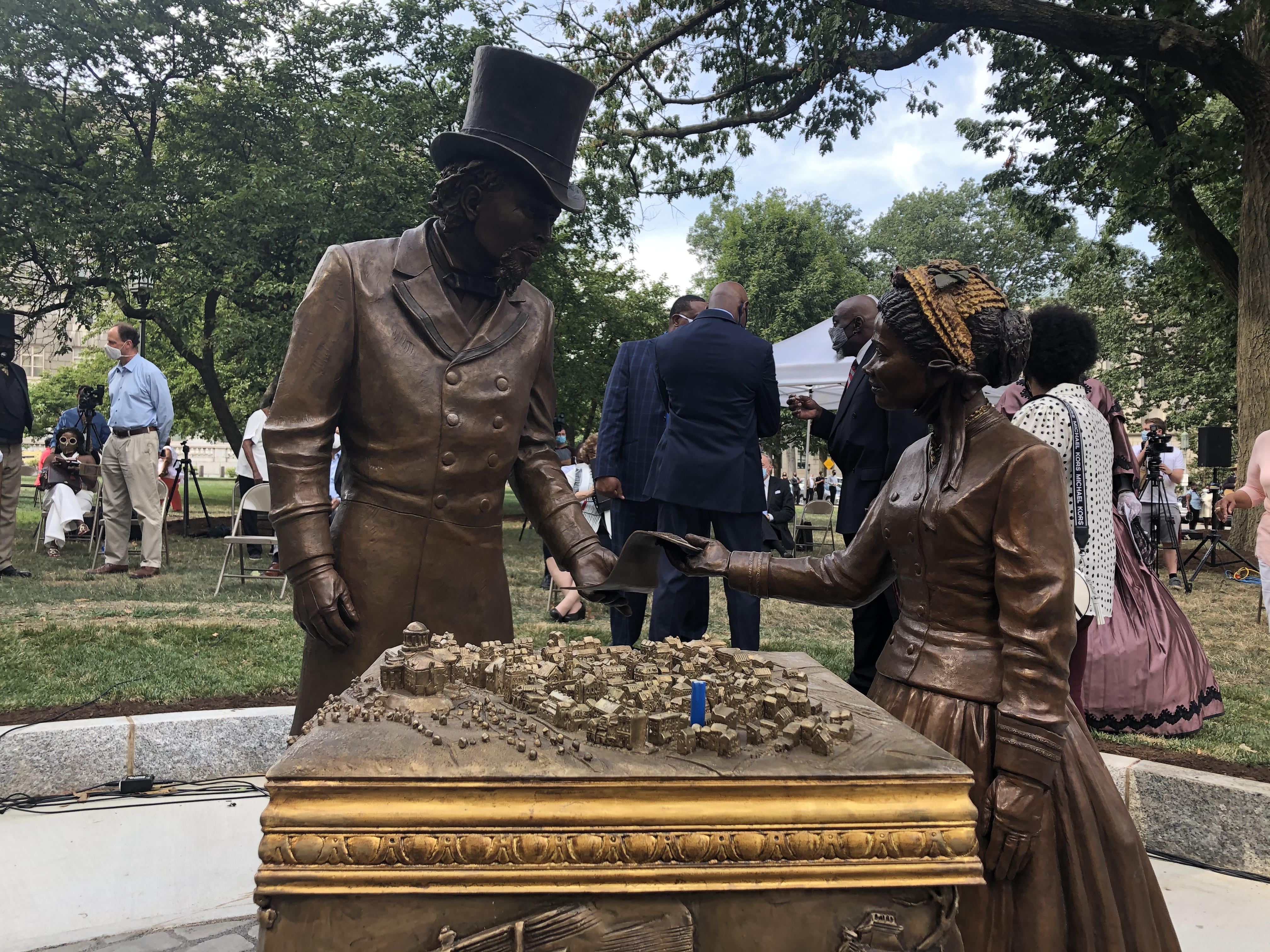
Local historians will discuss the Underground Railroad in Harrisburg. Pictured: The Commonwealth Monument, “A Gathering at the Crossroads”

Just in time for Black History Month, the Historic Harrisburg Association is giving the community the chance to reflect on Black history locally.

On Monday, HHA will host a free webinar on “The Underground Railroad in Harrisburg,” sponsored by The Foundation for Enhancing Communities.

The program will feature three prominent local historians—Barbara Barksdale, president of the Friends of Midland Cemetery; Calobe Jackson, longtime community leader, historian and author; and Norman Kelker, descendent of one of Harrisburg’s oldest families.

“Barbara, Calobe and Norman have been instrumental in helping Historic Harrisburg Association to expand its role in documenting, interpreting, publicizing and preserving Harrisburg’s rich African-American heritage,” said Dr. Dorothy King, retired professor of American Studies at Penn State Harrisburg and chair of HHA’s Education Committee.

These historians have worked for years on scholarly research and published writings, lecturing, reenactments of historical figures, and preservation of historic sites related to Harrisburg’s cultural heritage, HHA stated in a press release.

Barksdale’s Friends of Midland Cemetery is central Pennsylvania’s oldest known African-American cemetery and interment site of former slaves. U.S. Colored Troops from the Civil War and generations of community leaders are also buried there.

Last year, Jackson, at age 90, was honored by Historic Harrisburg for his lifetime of community service. He played a key role in creating Harrisburg’s first monument to Black heritage, the Commonwealth Monument at the Capitol Complex.

Kelker’s ancestor, Rudolph Frederick Kelker, was a leading abolitionist and operator of a “station” on the Underground Railroad in Harrisburg. Kelker Street in Uptown Harrisburg is named for Norman’s family, HHA said.

The three presenters will share stories from their research on the Underground Railroad in Harrisburg.

Additionally, February is the 48th anniversary of Historic Harrisburg Association’s founding, Executive Director David Morrison said. To celebrate, they plan to hold a campaign to raise money for the Midland Cemetery and the Commonwealth Monument.

“We are inviting HHA members and friends to honor Barbara Barksdale and Calobe Jackson by supporting their respective key initiatives to preserve African-American heritage,” said Morrison.

For more information, to access the Zoom presentation or to donate, visit HHA’s website.

Support quality local journalism. Become a Friend of TheBurg!


Continue Reading

Five buildings deemed “preservation priorities” by Historic Harrisburg

Balsley House in downtown Harrisburg

One of Harrisburg’s oldest structures is a top preservation priority for 2021, the city’s principal historic preservation organization has announced.

At a virtual presentation on Monday, Historic Harrisburg Association unveiled its top five proposed preservation priorities for the year.

The list includes Balsley House, a dilapidated, double building located downtown at 220 N. 2nd St. Dating back almost two centuries, Balsley House is one of the few remaining federal-period buildings in Harrisburg.

“It’s one of the oldest structures still standing in Harrisburg,” said Sara Sweeney, chair of HHA’s preservation committee. “It’s deteriorating. It’s in very bad shape, especially if you go around to the back.”

The 2,590-square-foot building, owned since 2006 by Dusan Bratic of Mechanicsburg, has housed many different businesses over its lifetime, but has sat empty and increasingly blighted for a number of years.

“We’re hoping to really raise awareness of this property over the next year,” Sweeney said. “With the revitalization that Harrisburg is really primed for, hopefully, we can make some strides to bringing this building back to life before we lose it.”

The other properties on the 2021 list are:

  • William Penn High School, Uptown Harrisburg
  • Camp Curtin Memorial Mitchell UMC, Uptown Harrisburg
  • Harrisburg State Hospital campus, Harrisburg/Susquehanna Township
  • Prospect Hill Cemetery Gate House, Allison Hill/city line

William Penn, Camp Curtin UMC and the Harrisburg State Hospital campus are all on the market for sale. Prospect Hill Cemetery Gate House was severely damaged last year when it was struck by a car.

Balsley House, William Penn, Camp Curtin UMC and Harrisburg State Hospital all appeared on the 2019 list, as well.

This year, the committee changed its ranking structure, reducing its preservation priorities to just five “key” properties then adding more buildings on a “watch list.” The proposed watch list properties are:

  • Dixon University Center
  • Donald Cameron Mansion
  • Riverside Firehouse
  • Cumberland Valley Railroad Bridge
  • Milestone Inn
  • Coca-Cola Bottling Works
  • Brinser Mansion
  • Grace United Methodist Church
  • Derry Street United Methodist Church
  • Christ Lutheran Church
  • Paul’s Methodist Church
  • Zembo Shrine Center
  • Paxton Firehouse
  • Beidleman House
  • Walnut Street Bridge
  • Historic Peace Church (Hampden Township)
  • Elks Theater (Middletown)
  • Bishop Bridge (near Bowmansdale)

The HHA board now must approve the list at an upcoming meeting.

Sweeney also offered updates for several properties that have been on HHA’s preservation priority list in the past:

  • Gerber’s Department Store, Midtown Harrisburg—proposed for conversion to an apartment building.
  • Sheepford Road Bridge, Lower Allen Township—transfer of ownership proposed
  • Brotherhood Relief & Compensation Fund Building, Uptown Harrisburg—new owner, proposed conversion to a mixed-use building
  • First United Methodist Church, Midtown Harrisburg—new owner, proposed conversion to an apartment building
  • Lemoyne Middle School—currently being converted to an apartment building
  • Bishop McDevitt High School—proposed redevelopment as an eco-village called The Bridge
  • Jackson Hotel, Midtown Harrisburg—recently collapsed and razed, now with plans to rebuild the structure
  • Ridge Avenue Methodist Church Parsonage (Swallow Mansion), Midtown Harrisburg—conversion to an apartment building nearly complete
  • Broad Street Market, Midtown Harrisburg—upgrades and restoration continue
  • Historic Harrisburg Resource Center—restoration continues
  • Harrisburg History Project—ongoing rehabilitation to historical markers around Harrisburg

Sweeney also noted several Harrisburg buildings that have been restored in recent years, calling them “wins.” These include the former Mary K mansions on Front Street, the former Fox Hotel in Shipoke, Locust Street Houses downtown and the former Moose Lodge in Midtown.

David Morrison, HHA’s executive director, said that he believes that the annual list has raised awareness of the need for historic preservation and has been essential in the rehabilitation of numerous structures in Harrisburg.

“As a result of this exercise each year, I can say that quite a few properties that were listed as priorities in the past have become ‘alumni’ of the list,” Morrison said. “In other words, they’ve been restored.”

For more information on Historic Harrisburg Association, visit their website.

Support quality local journalism. Become a Friend of TheBurg!

Continue Reading

House Call: One of Harrisburg’s oldest buildings undergoes “paneful” examination

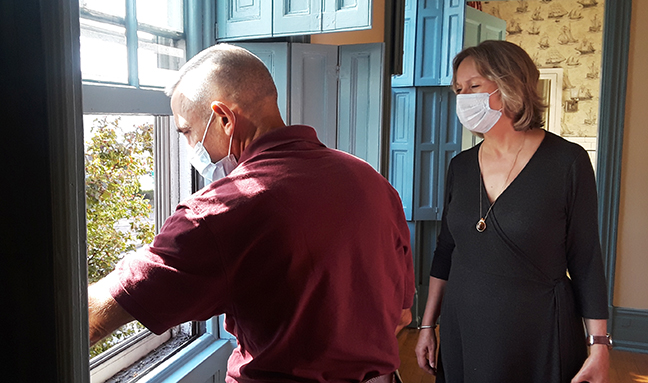
Restoration expert John Lindtner examines a window in the Haldeman Haly House as Karen Cullings, executive director of the Dauphin County Library System, looks on.

John Lindtner raised the question: Does it make sense to replace a window that has survived 200 years with one that might last 30?

“They say, in my world, that the greenest window is the window that’s already built,” he said as he diagnosed the health of a 200-year-old window. “It doesn’t make sense to fill up the landfill with these windows.”

The window restoration expert did, though, have a word about the storm windows that appeared to be approaching the half-century mark.

“You have my blessing to replace the storm windows, because I believe the storm windows can be improved,” he said.

Lindtner was inside the library of the Haldeman Haly House (pictured), the Governor’s Row home called by architectural historian Ken Frew one of Harrisburg’s top-five most historic buildings.

Lindtner’s visit on Wednesday was a “house call” sponsored by Historic Harrisburg Association, funded with a gift from the Auchincloss Family Fund. He was there to advise Dauphin County Library System on the feasibility of restoring the windows of the circa-1812 home that the library acquired in 2019 to expand its programming, community, and administrative space.

The 5,458-square-foot house at 27 N. Front Street was built by Stephen Hills, architect of the first Pennsylvania State Capitol, and was home to Sara Haldeman Haly, whose bequest in 1896 seeded the Dauphin County Library System. The library system is running a capital campaign to raise $3.5 million to renovate and link the building to its McCormick Riverfront branch next door–the original branch built on the site of Sara Haldeman Haly’s garden.

“This building came to us like manna from heaven in a lot of ways because not only is this, obviously, right next to our library, but there’s a really important shared history here,” said Dauphin County Library System Executive Director Karen Cullings.

The Haldeman Haly House’s soaring, arched front windows face the Susquehanna River, Market Street Bridge and City Island. The north-facing side windows overlook the library roof, buildings along and behind Walnut Street, and–peeking above it all–the dome of the state’s 1906 Capitol, the second replacement of Hills’ creation, burned in an 1897 fire.

With the exception of a north-side sill rotted by water damage from broken spouting, the windows definitely merit restoration, said Lindtner, founder of Chester County-based Building Preservation Services.

“There’s absolutely nothing wrong with this window,” he said. “There’s just a lot of paint on it from close to 200 years.”

With weather stripping and good storm windows, which can be custom-made to fit unique shapes such as the Haldeman Haly House’s arches, a restored window can achieve respectable energy efficiency, he said.

Historic windows endure because they were built with old-growth timber, he added. “To replace these windows would be very much a mortal sin.”

The library has been advised to cover the windows for the winter, said Cullings. Lindtner concurred–with one caveat. Don’t seal too tightly.

“You want to have some opportunity for it to vent in the event it gets wet,” he said. “If it gets wet and can’t dry out, you’re creating a bigger headache.”

When panes need to be replaced, the “wavy glass” of the handmade age can be replaced with salvaged historic glass or even glass new-made with characteristically wavy touches. As Lindtner and Cullings investigated a top-floor room under the home’s dormered windows, Lindtner decided not to try to open one that housed a wasp nest.

“See what you inherited?” he asked Cullings.

“I know,” she said. “It’s lovely.”

Historic Harrisburg Association Executive Director David Morrison called the Haldeman Haly House the most historic house on Governor’s Row for its history across multiple centuries.

Cullings declared the building in “not that bad” shape, in need of cosmetic work but otherwise stable. She promised to “make it beautiful again,” like the historic library next door. Restoring the windows suits that theme.

“We definitely want to be able to preserve as much of it as we can,” she said. “Obviously, we have to deal with budgets, and we’re a nonprofit, but we’re hoping we’ll be able to preserve all of it, if we can. I like to feel like I’m honoring the heritage of it. I don’t want to be doing things to it that are going to make it look asymmetric and out of whack with what the original designers had in mind.”

The Harrisburg Architectural Review Board will Zoom-meet at 6 p.m. Nov. 2 to consider the library’s request to remove some non-original additions and build a connector between the Haldeman Haly House and the McCormick Riverfront branch library.

Support quality community journalism. Become a Friend of TheBurg!

Continue Reading

School’s Out: The century-old William Penn High has long sat vacant. Will it ever turn the page?

Capital Rebirth team at the William Penn High School

Mae Sobczak was a relatively quiet student back in her high school days at William Penn High School. She had lots of friends and participated in the orchestra, her high school’s sorority and intramural sports after school. But she wouldn’t have labeled herself “Miss School Spirit.”

Sixty-four years later, however, things are different.

After graduation, Sobczak started organizing class reunions. Every five years, William Penn alumni get together, and, each six months, the class of ’56 catches up. On top of that, Sobczak and a group of women meet for lunch every Friday to reminisce on the old days and chat about the new.

In 2006, the class celebrated its 50th reunion. Sobczak, along with a committee, organized the event, which included a tour of the old William Penn building. The group went there excited to relive old memories, but left feeling like the building they toured was nothing like their beloved alma mater.

“When we came out to get on our bus, we were saying how it was so sad,” Sobczak said.

Over a decade later, it’s even sadder, as William Penn has sat, deteriorating, since. The classrooms, once full of students, are full of old rubble and garbage, and the halls display crude graffiti. Do a quick Google search of the old school, and you’ll find videos posted by thrill seekers, trespassers on the hunt for ghosts or just curious residents.

Over the years, many fires have been set in the building, requiring the Harrisburg Bureau of Fire’s attention.

“Structurally, that building is in phenomenal shape,” Fire Chief Brian Enterline said. “It’s more that the contents inside are burning, not the building itself. The problem is it’s a large, vacant school building. It’s very difficult to secure.”

All the while, William Penn has sat in the hands of the Harrisburg school district—too damaged to hold on to, too big and costly to give up easily.

People have wondered what will come of the grand old campus overlooking Italian Lake, the school that was once Harrisburg’s pride.

In the Day

It’s the early 1920s in Harrisburg. The city isn’t just growing; it’s thriving. Suburbanization hasn’t led to flight out of the city yet. There’s even a trolley car system. But one of the hottest topics in the city is education. People are looking for modern, quality schools.

David Morrison, president of Historic Harrisburg Association, paints the picture.

People were ready to send their kids to school in the city, but the city wasn’t ready for them, he said. Many city schools were built in the post-Civil War years—the 1870s and 1880s. Once the 1920s came roaring around, the school district needed to play catch up.

“By the ‘20s, the educational infrastructure of Harrisburg was pretty obsolete,” Morrison said.

In the early 1900s, Harrisburg Technical High School, located in the building now known as Old City Hall, was built on Walnut Street and served students for many years. But with people hungry for top-notch education, Harrisburg Tech became a government center and a new, larger high school was proposed.

“In those days, the public school systems were so advanced,” Morrison said. “In some cases, people who lived in the suburbs paid to have their children attend Harrisburg schools.”

Urban architect Charles Howard Lloyd, who would later claim fame for the Zembo Shrine, was busy designing schools. Harrisburg Tech and Simon Cameron School (1896) were formed in his signature gothic style. It was only fitting that the district called upon him for the new school they would call Hoffman’s Woods School (later William Penn), Morrison explained.

But Allison Hill families wanted a school of their own that their kids could walk to. So, the district decided on two separate schools—John Harris and William Penn.

William Penn building plans were scaled back to save funds for the second school on the Hill, but the new blueprints were hardly modest.

“They had huge halls,” local historian and William Penn alum Calobe Jackson recalled. “We would start track right after Christmas, and we would run through the halls for practice.”

Jackson graduated from the class of 1948. He remembers an indoor courtyard and a grandiose auditorium with a balcony. It was beautiful and well designed, he said.

In addition, there was a kitchen, cafeteria, housekeeping suite, science and lab rooms and shop spaces for tech courses, amongst other classrooms, according to “Building Harrisburg,” a book by historian Ken Frew.

“Years ago, they used to say William Penn was the largest high school campus in the U.S.,” Jackson said. “It was really a beautiful school.”

Jackson’s class had a little over 300 students, while the full school had about 1,200. Back then, high school lasted three years instead of four.

When William Penn was constructed in 1926, high school enrollment was swelling. Between 1900 and 1920, student enrollment in the United States quadrupled and then nearly quadrupled again by 1940, according to the public policy magazine, City Journal. But it was in that same decade that the school movement ended. City Journal ties that to segregation and racial discrimination, which had Blacks enrolling at lower numbers than whites.

By the mid-1950s, enrollment at William Penn had only declined slightly. Sobczak remembers that her class of ‘56 had about 264 students. Pride for their school was still strong among students, she recalls.

“We were proud to be city school graduates,” she said.

But the 1950s represented the high mark for William Penn. That decade, the city’s industrial companies began closing, and people started leaving Harrisburg for the suburbs. In 1972, John Harris absorbed William Penn students, the building morphing into a technical school before closing entirely.

Moving Forward

For most William Penn graduates, it’s been a long time since they danced at a sock hop or scored a goal in intramural sports. Most are parents, grandparents and even great-grandparents. Many have passed away. Sobczak’s alumni mailing list gets shorter by the year.

Just like many of the students that once walked its halls, William Penn is old. But that doesn’t mean it’s any less grand. The interior may be decrepit, but the building is still the columned mammoth that it was in the 1920s.

For some, that’s enough to see it ripe with potential.

Superintendent Chris Celmer said the school district is currently taking letters of interest and offers for the William Penn building.

“We want them to have local interest in the community, and they’re going to have to have experience,” he said. “It has to come with the ability to finance.”

Local nonprofit Capital Rebirth put in a $2.5 million bid in March and garnered over 7,500 signatures from the community on a petition of support for the plan they’re calling “The Rebirth Project.” The group wants to create a community center, including space for education, entertainment and wellness, explained founder Mikell Simpson.

“William Penn has always been a historic landmark,” he said. “We know what the needs of the community are and how everyone can benefit.”

Included in the building would be an indoor stadium, classrooms, an enclosed track and offices. Simpson estimates that the work would take three to four years and cost up to $175 million.

But others envision the building as something else entirely.

Jackson could see it as a retirement home with outdoor space for rehabilitation services. Morrison thought turning it into condos or apartments would be nice or even having it join forces with Zembo Shrine across the street for a national organization.

“It has the possibility to really enhance that whole part of Uptown Harrisburg if it’s done right, and that’s why we care,” he said.

There have been other successful school building conversion projects in the city, such as the old Simon Cameron School in Olde Uptown and the former Boas Street School at Green and Forster streets, which both are now apartment buildings.

At the beginning of the year, the redevelopment group, The Bridge, started renting the old Bishop McDevitt school with plans to build an eco-friendly community center. It also has put in a bid for William Penn, according to the developers.

So, builders have big plans for other big school properties in the city.

But William Penn isn’t just big—it’s enormous—including a 222,000-square-foot building and 25 surrounding acres of land.

As Superintendent Celmer said, taking on a project like this requires not only a heart for the community, but strong resources backing it.

The district, he said, continues to weigh all viable offers.

The William Penn building is located on the 2000-block of N. 4th St., Harrisburg.

For more information on The Rebirth Project, visit their Facebook page. To learn more about The Bridge, visit www.thebridgeecovillage.com.


 

Continue Reading