
Tag Archives: David Morrison

A Tale of Two Cities: In central PA, history is destiny

Illustration by Rich Hauck.

By all accounts, David Morrison is an optimistic guy.

His good nature was on full display recently as Historic Harrisburg Association marked its golden anniversary, having formed in 1973 to salvage and save the city’s Victorian-era built environment.

Before a large group assembled in HHA’s home, an 1893-era bank building in the heart of Midtown, a beaming Morrison kicked off a celebration of half-a-century of historic preservation.

“This is an unprecedented turnout,” he told over 100 people, describing the standing-room-only crowd as a “symptom of our success.”

And, indeed, he’s correct. HHA, along with a select group of activists, city officials and enlightened developers, has helped preserve large swaths of Harrisburg, including some of the city’s most historically significant structures. They deserve all the credit and kudos we can offer.

Unlike Morrison, though, I’m not really an optimistic guy. I’m not exactly a hard-bitten pessimist either, but no one would describe me as a ray of sunshine.

So, yes, I see what the preservationists see—a wonderfully restored Shipoke, rejuvenated Midtown and Uptown neighborhoods, seeds of hope in Allison Hill.

But I also can’t shield my eyes from how much has been lost. For all its impressive preservation, Harrisburg still suffers from a plague of empty lots, urban highways, dilapidated buildings and slumlords who just don’t give a damn.

Recently, a friend and his wife took a trip to spend the weekend in Lancaster. They returned with rave reviews for the Red Rose City: the dining, the shopping, the galleries, the crowds, the restored, walkable downtown.

When they told me of their little adventure down Route 283, they didn’t get the response they expected. Instead of curiosity, I gave them sass.

“Don’t talk to me about no freakin’ Lancaster!” I snapped.

I quickly told them that I was only joking—I also like Lancaster. But I explained that they were hardly the first people to sing the city’s praises to me.

They then asked the inevitable follow-up: Why is Lancaster so much more, um, vibrant than Harrisburg?

There’s a lot to unpack there, I responded. Lancaster has had less crippling floods, almost no population loss. Historically, it was less dependent on the doomed steel and railroad industries, and its civic leaders, investors and business class didn’t abandon the city when times got tough.

But, to me, Lancaster’s renaissance (the “Best Small City in America,” according to WalletHub) has been greatly aided by the fact that its Colonial and Victorian-era urban fabric remains largely in tact. This may have not seemed like an asset during the demo-crazed 1970s, but it is one today, as many people are drawn to historic downtowns and neighborhoods—like Lancaster’s—to dine, shop, socialize and settle in.

In contrast, Harrisburg is more like a big smile that’s lost a bunch of its teeth. For every Pancake Row (saved), there’s a Penn Harris Hotel (lost). For every Tracy Mansion (saved), there’s a Telegraph building and State Theatre (lost and lost). Downtown has become such a jumble of styles, periods, surface lots and parking garages that, looking at a postcard from a century ago, I can hardly tell it’s the same city.

Moreover, if I were a Lancaster city father, I would declare every Feb. 21 to be a municipal holiday. For on that day, in 1810, Gov. Simon Snyder signed legislation moving the state capital from Lancaster to Harrisburg.

Imagine, if you can, the heart of historic Lancaster ripped out to build a ring of half-empty office buildings, a huge park no one uses, a bunch of surface lots and garages and a dangerous, six-lane urban highway. That’s what happened in Harrisburg. One of its oldest, densest neighborhoods—29 acres worth—was flattened to expand the Capitol complex, and once-quaint Forster Street was turned into a six-block facsimile of the PA Turnpike.

People have told me that, without the state Capitol, Harrisburg would have nothing. I don’t buy that argument. Certainly, Harrisburg would have developed differently, but it’s impossible to know exactly how. My guess is—smaller, denser, retaining far more of its 19th-century fabric, like Lancaster or York or Carlisle, positioning it better as it emerged from its post-industrial funk.

But I don’t want to give in to too much pessimism. Yes, Harrisburg has lost a lot, but much has been saved, thanks to Historic Harrisburg and others who have dedicated themselves to historic preservation.

Since I’ve been in the city, some 15 years, numerous buildings that seemed headed for the wrecking ball have been restored and put back into use. Heck, I work in one, I get my coffee in another, and buy most of my groceries from a third. For all the damage done, Harrisburg still has a lot going for it and, in fact, hasn’t looked this good in many decades.

During the January gubernatorial inauguration, one out-of-town reporter remarked favorably on her visit to the city. She tweeted, “I was surprised by how charming Harrisburg is.”

Reading her comment, I smiled. I thought of all the work that has gone into saving Harrisburg—and all the work that still needs to be done.

Lawrance Binda is publisher/editor of TheBurg.


If you like what we do, please support our work. Become a Friend of TheBurg! 
Continue Reading

A Past Preserved: Historic Harrisburg Association celebrates 50 years of fighting, saving

Historic Harrisburg
Association Resource Center

When Tropical Storm Agnes descended on Harrisburg in 1972, the Shipoke home of Bob and Eileen Young flooded 8½ feet on the first floor.

“It strips wallpaper beautifully,” Young recalls today. “Let’s look at the positive side.”

The Youngs and their determined neighbors fished another positive from the floodwaters—the 1973 founding of Historic Harrisburg Association. Now celebrating its 50th anniversary as a catalyst for historic preservation and urban revitalization, Historic Harrisburg can say that it has saved significant buildings and lost a few, led formation of the city’s historic districts, and created a space where developers and preservationists alike can agree on the value of smart growth.

In Historic Harrisburg’s first days, the Youngs were in on the ground floor (yes, pun intended). The flooded homes of Shipoke were slated for demolition. Citizens rallied, canvassing door-to-door to raise awareness of the threat and packing City Council meetings. In response, the city adopted the first of its historic districts and created the Harrisburg Architectural Review Board to encourage historically sensitive maintenance of homes and businesses.

“I think Harrisburg was one of the first in the state to enact municipal legislation,” said Preservation Advisor Jeb Stuart, in those days a city Planning Bureau staffer fresh out of college.

Historic Harrisburg Association incorporated on Feb. 22, 1973. Some of the same people cross-pollinated the city’s planning bureau and this new historic preservation movement, bringing the two “together for a common purpose,” Stuart said.

Eileen Young got involved because she never wanted to look at a new development and wonder who once lived there.

“I wanted to see those old homes stay there because they were the root of the history of Harrisburg,” she said. “Even though they weren’t the elite of Harrisburg in our neighborhood—they were working-class steel workers and shop owners—they were still a key part of what happened here.”

At about the same time, the official association took shape over the fight to save the State Theatre movie palace on Locust Street in downtown Harrisburg. A battle raged, but the building came down in 1974. (“Poor choice for Harrisburg,” opined a blogger on www.cinematreasures.org. “It would have made a wonderful downtown performing arts center.”)

There were other losses. The original Penn Harris Hotel came down in 1973. But there were many wins, too.

Two historic Pine Street homes were saved, as City Council upheld the validity of HARB’s rulings against demolition. The Tracy Mansion on Front Street also dodged the wrecking ball. As for the Charles Howard Lloyd-designed Old City Hall on Walnut Street, now an example of adaptive reuse through its conversion into apartments, Historic Harrisburg “fought like hell to get that off the demolition list,” Stuart said.

As suburbanization was draining city centers, cities “realized they had to do something extraordinary,” said David Morrison, executive director of Historic Harrisburg.

“Of all the things that happened in Harrisburg, historic preservation wound up to be, in the long run, the most valuable strategy rather than redevelopment or urban renewal or any of those things tried around the country,” he said. “Historic preservation proved itself to be not only economically sensible but also kind of what the people preferred.”

But enough of the “wayback machine.” Today’s Historic Harrisburg leads partnerships and gets calls from developers and agencies seeking guidance on historically sensitive approaches to their projects. PennDOT sought input on options for blending an unsightly conduit for utilities into its rehab plans for the Market Street Bridge.

Historic Harrisburg’s independently managed Community Historic Preservation Fund— created from funds earmarked after an agreement with a developer to preserve the façade of the Senate Hotel literally crashed to the ground—distributes grants for preservation projects, initiatives and advocacy. A consortium of historic and environmental preservationists is tracking the fate of the Harrisburg State Hospital’s recreationally and historically significant grounds.

“Historic preservation started out as kind of a fringe element of investing in the city, sort of a novelty,” Morrison said. “Now, it’s a mainstream concept that’s embraced by government as something important that should be incorporated into comprehensive planning and individual development proposals.”

Changing Perceptions

Morrison, who began his second stint as executive director in 2014, has led Historic Harrisburg’s readiness to yoke preservation with urban revitalization. He credits a team effort of board members and volunteers in building membership, hosting events and “expanding our role and influence in the community.”

Today, Historic Harrisburg is leading a capital campaign to restore its own home, the former Central Trust Building in Midtown now known as the Historic Harrisburg Resource Center. Already a spot for history exhibits, community organization meetings and developers’ listening tours, restoration is expected to elevate the circa-1893 building, donated in 1993, into an income-producing venue for receptions and other gatherings.

Historic Harrisburg’s annual “Preservation Priorities” list draws attention to historic properties endangered by neglect or imminent demolition. Harristown Enterprises checks the list every year for potential projects, said president and CEO Brad Jones. Historic Harrisburg has inspired Harristown’s many adaptive reuse projects, which recently included the conversion of the Victorian-era Plum building downtown into three boutique apartments.

“If we don’t do that, maybe no one else will,” Jones said.

Preservation of yesterday’s buildings creates opportunities for today’s residential redevelopment amid the character that people crave, Jones added.

“People love the architecture of Harrisburg,” he said.

Jones credits one of Historic Harrisburg’s “most heroic efforts” in helping the Pennsylvania Housing Finance Agency expand while preserving a Front Street mansion and two small clapboard houses—charmers from a bygone era—on Locust Street.

“In the long run, everybody wins in that kind of situation,” Jones said. “They did it collaboratively and thoughtfully together, still maintaining the ability to do an important project to create more economic development for the city but also in a way that preserved a pretty block.”

Now that Historic Harrisburg’s original focus areas of downtown, Midtown, Shipoke and Olde Uptown “are far above and beyond crisis mode,” Morrison said that he hopes to focus “more of Historic Harrisburg’s energy” on the historically significant but maintenance-challenged Allison Hill. Historic Harrisburg has given tours to draw attention to the area and supported such projects as restoration of the Allison Hook & Ladder Company firehouse.

“The cultural tapestry of Allison Hill is just amazing,” Morrison said.

At 13th and Thompson streets, the breathtaking Christ Lutheran Church came to Historic Harrisburg’s attention around 2018 through a window restoration project. The pastor, Rev. Drew Stockstill, said that tours that Morrison gave raised awareness of “this gem of a church” and, just as significantly, its free medical and dental clinics serving between 10,000 and 22,000 people a year.

“David brought that whole community of the Historic Harrisburg board and people invested in Harrisburg and its architecture and its history, so we were able to showcase the physical building and the service it provides,” Stockstill said.

Gloria Vázquez Merrick, executive director of the Latino Hispanic American Community Center, serves on the Historic Harrisburg board and sees a place for preserving the built environment as a means toward teaching young people the stories and lessons of the past.

“We’re so busy trying to instill in our kids their heritage, their culture, but let’s talk to them about their environment, where they grew up, how things have changed, and let them know that this will not always look like this,” she said.

Fifty years ago, Historic Harrisburg’s first Candlelight House Tour—still going strong—attracted throngs of people pleasantly surprised that the once-flooded homes of Shipoke weren’t teardowns but were beautiful arguments for moving back to the city.

“Whatever little role Historic Harrisburg has played and continues to play in showcasing the city as something to embrace and not something to steer clear of is really something we’ve been doing from the get-go,” Morrison said. “It’s about changing people’s perceptions. I think we’ve been very good at changing perceptions for 50 years and getting people to view the future in an optimistic way.”


Historic Harrisburg Association Resource Center is located at 1230 N. 3rd St., Harrisburg. For more information, visit www.historicharrisburg.org.


If you like what we do, please support our work. Become a Friend of TheBurg!  

Continue Reading

Unsung Heroes of Harrisburg: A bonus edition of TheBurg Podcast

This special year-long podcast project reveals special people—unsung heroes—in our midst. For a whole year, podcast host and producer Karen Hendricks asked TheBurg Podcast guests the same question: If you could identify an unsung hero in the Harrisburg area, who would it be and why?

Except, instead of airing all their answers, we’ve been saving and compiling them, so that we could release them all collectively in this special Unsung Heroes of Harrisburg Podcast on Valentine’s Day.

Think of this show, released on Valentine’s Day, as an audio Valentine that shares some community love for Harrisburg!

Hosting: Karen is joined by Lawrance Binda, publisher and editor of TheBurg.

Many thanks to two podcast sponsors:

Hero in the Fight, whose mission is to break the stigma often associated with addiction, because living in active recovery is a heroic act, every day. For help, support and facts, visit herointhefight.org/.

Goodwill Keystone Area: And you probably know that the Goodwill store is a great community thrift store. But there’s a story behind the store that puts “goodwill” into action, advancing sustainability in our communities. Check out their story at yourgoodwill.org.

Guests include (but tune in to hear who they reveal as unsung heroes):

Kristin Messner-Baker of The Vegetable Hunter
Chad Eric Smith of Mural Arts Philadelphia
Speaker and historian John Maietta
Otis Harrison of OD’s Fish House
Soccer coach Toan Ngo of Eagle-FC’s USL W team
Kim Rice of the Harrisburg Area Riverboat Society
Local journalist-turned-teacher Dennis Reardon
Elle Lamboy formerly of the Gettysburg Foundation
Peter Leonard of Little Amps Coffee
Lt. Adam Reed of the Pennsylvania State Police
Josiah Peay of the Central PA Kings basketball team
Amy Kaunas of the Humane Society of the Harrisburg Area
Weston Kensinger of Penn State Harrisburg’s Douglas W. Pollock Center for Addiction Outreach and Research
Julie Fitzpatrick of the Pennsylvania Downtown Center
Ellen Min of the Harrisburg Asian American and Pacific Islander Community (HAAPI)
Carl Shuman, retiree-turned-children’s book author
David Morrison of Historic Harrisburg Association
Andrea Grove of Elementary Coffee
Greg Czarnecki of Pennsylvania’s Department of Conservation and Natural Resources
Jessica Rudy of Gettysburg’s Majestic Theater
Sue Kunisky of Visit Hershey and Harrisburg
Lesa Brackbill, newborn screening advocate
Karen Good, clinical nurse specialist with UPMC Harrisburg
Thomas Sweet, retired pastor of Market Square Presbyterian Church
Nathan Reigner, Pennsylvania’s director of outdoor recreation

Also see our February 2023 magazine feature, “Unsung Heroes of Harrisburg,” expanding several of our unsung heroes’ stories.

For more information on award-winning Harrisburg-area journalist Karen Hendricks, visit her website and subscribe to her free monthly writer’s newsletter at WriterKarenHendricks.com.

Every month, TheBurg Podcast expands stories from the pages of TheBurg magazine because “there’s always more to the story.” TheBurg is a monthly community magazine based in Harrisburg, Pennsylvania; Lawrance Binda, publisher/editor. TheBurg Podcast has received three prestigious podcast journalism awards over the past two years, including First place, Excellence in Journalism, Society of Professional Journalists, Keystone Chapter, 2021.

Interested in sharing your advertising message with TheBurg Podcast’s dedicated audience? Research shows that podcast sponsorships are one of the most effective forms of advertising! Contact Lauren ([email protected]) or contact Karen directly at [email protected].  

Subscribe to TheBurg Podcast on:
Apple | Spotify | Audible | Amazon Music | Google Podcasts | iHeart Radio

If you like what we do, please support our work. Become a Friend of TheBurg!



Continue Reading

Historic Harrisburg outlines “preservation priorities” for 2023; Market Street Bridge tops list

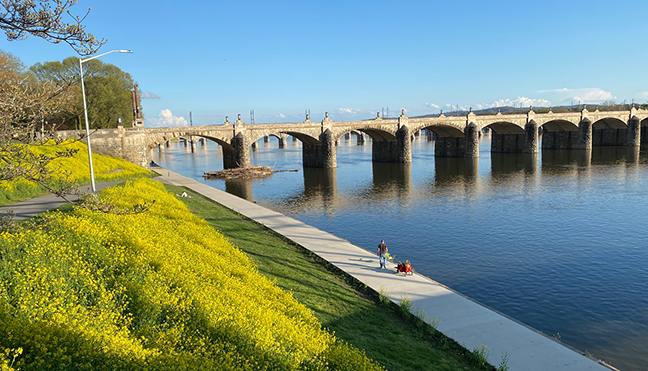
The Market Street Bridge in Harrisburg (file photo)

A Harrisburg-based historic preservation group has released its annual list of endangered and threatened area landmarks, and, this year, a century-old bridge tops the list.

Earlier this week, Historic Harrisburg Association (HHA) officials announced that its top “preservation priority” for 2023 is the Market Street Bridge, a 95-year-old stone arch structure that spans the Susquehanna River.

Last year, the Pennsylvania Department of Transportation unveiled a multi-year plan to restore the bridge, which includes constructing a separate utility bridge along the bridge’s southern façade.

Sara Sweeney, chair of HHA’s preservation committee, said that the organization has been in discussions with PennDOT regarding this proposal.

“We continue to applaud PennDOT for its plan to restore the bridge and hope that, in the process, the original design and features are maintained,” said Sweeney, during a Facebook Live presentation outlining HHA’s 2023 “preservation priorities.” “We will continue to monitor progress as the design progresses.”

A PennDOT rendering of the south facade of the Market Street Bridge, showing the proposed utility bridge addition

This is the first year that the Market Street Bridge has been a top priority for HHA. In 2022, the list was headed by Balsley House, a 2,590-square-foot building located at 220 N. 2nd St. According to HHA, the Federal-style building, one of the oldest structures in Harrisburg, continues to be threatened and, this year, is ranked second on the list.

However, according to HHA, there may be hope for the long-vacant, blighted structure in the heart of downtown.

“We have heard that there is actually some interest in the property by a private party, and we are hopeful for movement in 2023,” Sweeney said.

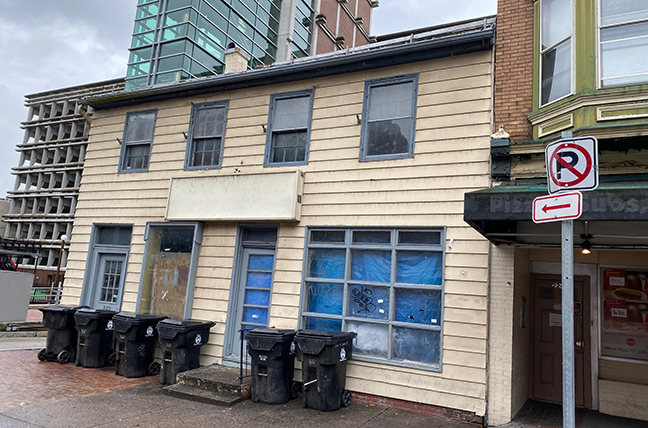
Balsley House in downtown Harrisburg

The remaining three “preservation priorities” also made last year’s top-five list. They are:

  • The former William Penn High School at Italian Lake
  • The former Harrisburg State Hospital complex
  • Prospect Hill Cemetery Gatehouse near the city line

Balsley House has been on the list since 2018, William Penn since 2017, and the former state hospital since 2014. The Prospect Hill Cemetery Gatehouse went on the list in 2021 after a car hit the structure, severely damaging it.

In the presentation, Sweeney also noted several recent preservation “successes” and two preservation “losses.”

The successes include:

  • The former Lemoyne Middle School, which has been renovated and converted into an apartment building
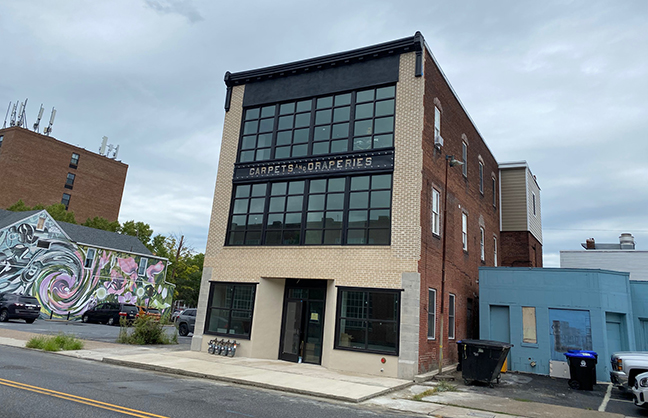
  • The former Gerber’s Department Store, also known as the “Carpets and Draperies building,” which was renovated into a mixed-used structure in Midtown Harrisburg
  • The former Milestone Inn, which now serves as headquarters for Dilks Properties in Uptown Harrisburg
  • The Harrisburg History Project, a series of historical markers in Harrisburg that needed replacement and updating

A win: The restored Carpets and Draperies building in Harrisburg

Sweeney also noted two recent “preservation losses”:

  • Beidleman House, an Allison Hill structure on Market Street that was razed last year
  • The Jackson Hotel on N. 6th Street in Harrisburg, which collapsed in early 2021

Moreover, HHA put about 30 structures in and around Harrisburg on its “watch list,” meaning that they’re historic properties of concern. These range widely, but include such landmark buildings as the Broad Street Market, the former Coca-Cola bottling works on Allison Hill, the Riverside firehouse and even HHA’s own Historic Harrisburg Resource Center.

Two new properties were added to the watch list this year.

The first, Myers House, at 213 N. Front St. in Harrisburg, made the watch list as the owner, the Dauphin County Bar Association, may no longer need such a large space, said David Morrison, HHA’s executive director. The second “watch list” addition this year is Buck’s Tavern, a nearly three-century-old structure located in West Hanover Township, which is threatened by blight and possible demolition.

HHA’s board is expected to approve the preservation priority list at its February meeting.

Historic Harrisburg Association is located at 1230 N. 3rd St., Harrisburg. To view the entire presentation, visit https://www.facebook.com/HistoricHarrisburgAssociation. For more information on Historic Harrisburg Association, which celebrates its 50th anniversary this year, visit www.historicharrisburg.org.

If you like what we do, please support our work. Become a Friend of TheBurg!
Continue Reading

Long-dilapidated Harrisburg mansion restored, will become apartments

(From left) Executive Director of Historic Harrisburg Association David Morrison, Justin Heinly of Midtown Property Management, Harrisburg’s Director of Building and Housing Development Dennise Hill and contractor Eli Valencia of Valencia Construction cut the ribbon on the renovated Donaldson Mansion.

On a hillside in Harrisburg, a long-forgotten, historic building has received a huge makeover.

Officials cut the ribbon on Tuesday at the Donaldson Mansion, a four-story building at 2005 N. 3rd St., that was recently restored after years of neglect and dilapidation.

Developer Justin Heinly, owner of Harrisburg-based Midtown Property management, purchased the over 5,000-square-foot building in 2018 and began construction and restoration work last year. The building will house six market-rate apartment units.

While crews are still putting the finishing touches on the property, Heinly expects a substantial completion by the weekend.

“It took a lot of effort to dig out the original history of this building,” he said.

The project will wrap up just in time for the “Old House Fair,” which will feature a tour of the Donaldson Mansion and other mansions on the block, along with a chance to talk with local restoration professionals. The event will take place on Saturday, Nov. 19, from noon to 3 p.m. and is hosted by the Historic Harrisburg Association (HHA) and Midtown Property Management, among others.

The mansion will also be part of HHA’s Candlelight House Tour on Dec. 11.

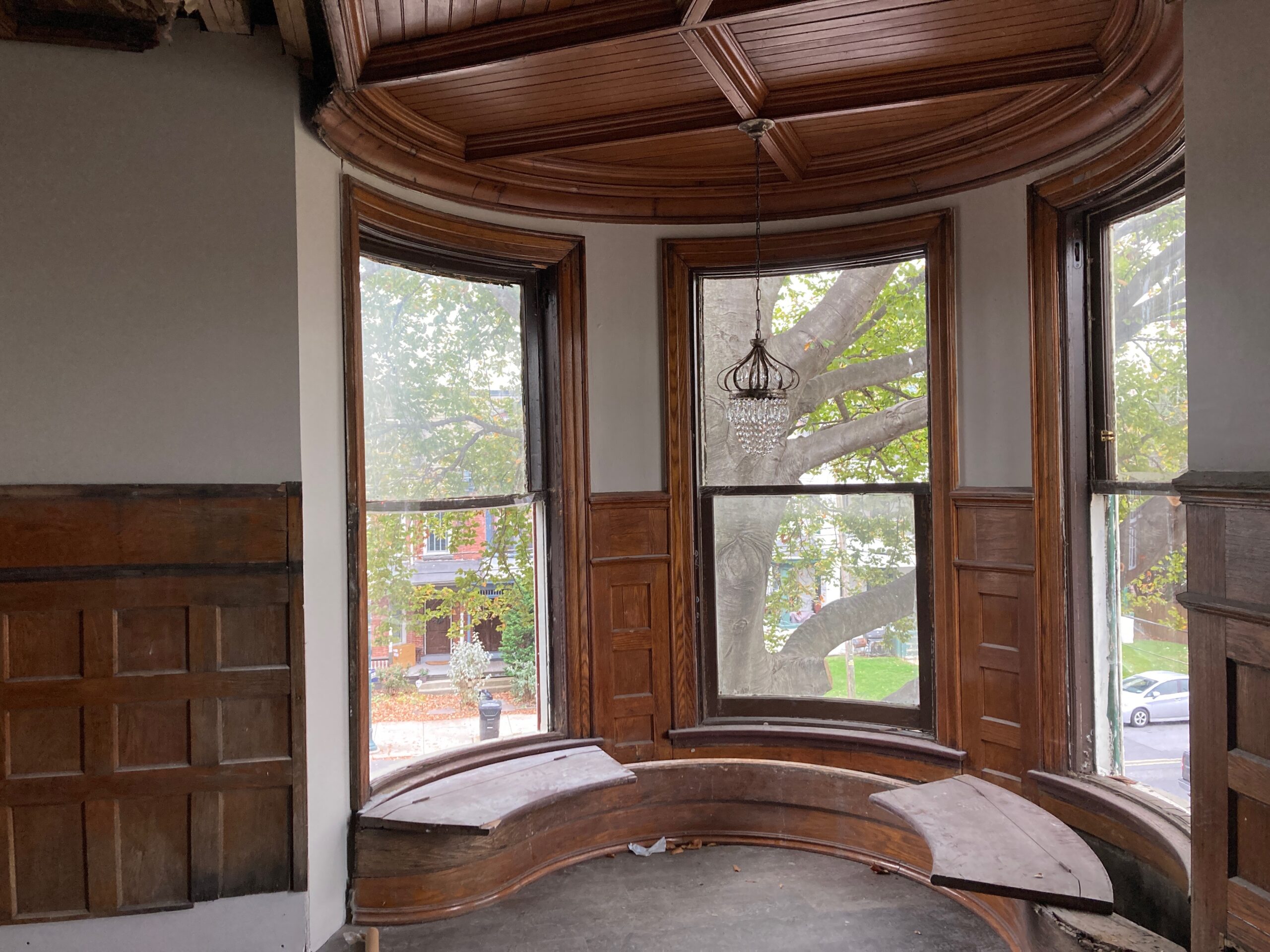
Inside the Donaldson Mansion’s turret.

The Donaldson Mansion dates back to 1887 and is part of a collection of four remaining historic mansions along the corridor known as “Cottage Ridge.” According to David Morrison, executive director of HHA, wealthy businessman and banker William Donaldson originally resided in the house. “Cottage Ridge” was one of the most desirable places to live in the city at the time because of its location on a hill with views of the Susquehanna River, Morrison said.

In the 1920s, the Donaldson Mansion was made into an apartment building and, since the early 2000s, has increasingly suffered more damage.

Heinly and his team worked to recapture the grandeur of the original mansion, completely restoring the façade, addressing structural issues and renovating the interior.

“Every piece of historical character left we tried to restore,” he said.

Heinly plans to begin renting out the apartments at the start of the new year.

The Donaldson Mansion is just one piece of what Heinly hopes is a larger revitalization of the neighborhood. He has already restored another of the “Cottage Ridge” mansions and has plans for other properties nearby.

“We are using it, hopefully, as an anchor of change,” he said.

For more information on Midtown Property Management, visit their website.


If you like what we do, please support our work. Become a Friend of TheBurg!


Continue Reading

The Menaker apartment building celebrates completion of renovation, historic preservation

Harristown Enterprises, local officials and community members cut the ribbon on The Menaker apartment building in Market Square.

Developers cut the ribbon on Wednesday on an apartment building with a rich history in Harrisburg.

The Menaker in downtown is officially complete with 28 apartment units and a first-floor retail space. The historic building in Market Square was completely renovated and restored over the course of this past year.

“This project took a lot of vision, a lot of creativity and determination,” said Julien Gaudion, vice president of Harristown Enterprises, the developer of the project.

Developers completely gutted the six-story, 33,809-square-foot building and renovated it, opting for an art deco style.

The building was originally constructed in 1906, built for the Johnston Paper Co., a Harrisburg-based paper products manufacturer. According to David Morrison of the Historic Harrisburg Association, President Theodore Roosevelt visited the building after it was constructed. The building was originally only four floors, but two more stories were added in 1912. Later, the building housed Beckley College and, most recently, Skarlatos Zonarich, a law firm, which moved its offices to Strawberry Square.

The Menaker was named after Mortimer Menaker, former chairman of the Harrisburg Redevelopment Authority, who oversaw a previous renovation in 1977.

“We have to credit Harristown for ushering in the 21st century with a wave of historic preservation projects in downtown Harrisburg, of which this is just the latest example,” Morrison said.

The Menaker offers both one- and two-bedroom apartment units. There is also a 2,000-square-foot retail space on the first floor, and according to Harristown President Brad Jones, they have a prospective tenant.

Camp Hill-based ByDesign Consultants was the architect for the project and Mechanicsburg-based Mowery Construction was the general contractor.

“We need more housing units,” said Ryan Unger, Harrisburg Chamber of Commerce and CREDC CEO. “We are appreciative and excited.”

The Menaker Apartments is located at 17 S. 2nd St., Harrisburg. For leasing information, visit www.hbgrealty.net.


Continue Reading

Prioritizing Revitalizing: TheBurg Podcast, June 2022

Revitalization is the focus of our June podcast, as we expand three stories from the pages of TheBurg magazine’s June issue:

Fifty years later, what’s Harrisburg’s legacy from Hurricane Agnes? David Morrison, executive director, Historic Harrisburg Association explains how revitalization efforts continue impacting the city today.

Revitalization is thriving in many Pennsylvania towns and cities, thanks in great part to the Harrisburg-based organization, The Pennsylvania Downtown Center. Executive Director Julie Fitzpatrick shares her insights—including downtown success stories—as PDC celebrates its 35th anniversary.

Philadelphia is considered the model city for one specific and unique type of revitalization, worldwide: murals. Chad Eric Smith, communications director for Mural Arts Philadelphia, explains how Philly’s murals “beautify, inspire and empower.”

June’s “most Harrisburg thing” could truly revitalize your life. Lawrance Binda, editor of TheBurg, issues a challenge, in his monthly feature. Tune in, to see if you’re up for it.

TheBurg Podcast is hosted and produced by award-winning Harrisburg-area journalist Karen Hendricks. Every month, TheBurg Podcast expands stories from the pages of TheBurg magazine because “there’s always more to the story.”

Backstories that coordinate with this episode include:

Agnes at 50 | Downtown Rebound | Mural Mecca

DYK? TheBurg Podcast has received three prestigious podcast journalism awards over the past two years, including First place, Excellence in Journalism, Society of Professional Journalists, Keystone Chapter, in 2021. 

Interested in sharing your advertising message with TheBurg Podcast’s dedicated audience? Research shows that podcast sponsorships are one of the most effective forms of advertising! Contact Lauren ([email protected]). 

Visit Karen Hendricks’ website for more of her writing, journalism and PR work. TheBurg is a monthly community magazine based in Harrisburg, Pennsylvania; Lawrance Binda, co-publisher/editor.

If you like what we do, please support our work. Become a Friend of TheBurg!
Continue Reading

Agnes at 50: This month marks five decades since the most devastating flood in Harrisburg history.

The Governor’s Residence and surrounding blocks of Uptown Harrisburg were among places where rescue by boat was necessary.

The rain had been coming down for three days, and the Susquehanna River kept creeping higher and higher.

Eileen Young was home alone in the orange brick house in the 300-block of S. Front Street in Shipoke that she and her husband Bob had lived in since 1969.

Bob was working in Wilkes-Barre, a city also getting pummeled by Tropical Storm Agnes.

“The river’s really getting high,” Eileen remembered telling Bob on the phone on that day in late June 1972. “It looks really bad.”

He kept telling her it would be OK, but then it got to the point when it wasn’t OK.

Their house was just across the street from the river, but the rising water from Paxton Creek, several blocks away, got to them first.

Eileen’s brother came to fetch her.

“At that point, there was not even any chance to save anything,” Eileen recalled. “Like an idiot, I put my curtains on the windowsill thinking that will save them. I grabbed what was essential like some insurance records”—and the family hamster.

First, she went to her mother’s house, then that was evacuated. Then she went to her grandmother’s house, which also was evacuated.

Eileen ended up at her uncle’s house. Driving home from Wilkes-Barre, Bob couldn’t believe how far the Susquehanna River had spread onto the normally dry land. He drove all over Harrisburg in a Jeep to all the evacuation points he could find, eventually tracking down Eileen.

On June 24, the river crested at 32.6 feet, breaking the previous record of 29.2 feet set during the 1936 flood. Flood stage for the Susquehanna at Harrisburg is 17 feet.

Eventually, the river receded enough so they could return home.

“We walked in the front door of our house, and it was just like somebody dumped tons of chocolate pudding everywhere, but it didn’t smell that good,” Eileen remembered.

Water had risen to 8½ feet on their first floor, which was “annihilated.” Pieces of their furniture had floated up the steps.

At first, the city wanted to bulldoze everything, their house included. The Youngs and other residents of Shipoke fought back and convinced the city to allow them to rebuild and restore.

They didn’t have flood insurance, almost no one did, Bob said. With their own money and a low-interest, federal loan, the Youngs moved back in and restored their home over the course of about a year.


A Great Place

The Youngs’ experience was just one story of what happened throughout Harrisburg in the wake of Agnes, considered at the time the greatest natural disaster ever in the United States.

Thousands of residents and business owners lost much, if not everything, in the flood. Some left the city forever; others vowed to rebuild.

Now, five decades later, the Historic Harrisburg Association (HHA) is devoting the entire month of June to what it calls a “Celebration of Resolve” to commemorate the 50th anniversary of Agnes.

It’s not really about the numbers: 15 inches of rain fell in three days, property damage totaled $3.5 billion, and 118 people died along the storm’s long destructive path. This data has all been cited repeatedly. The month-long commemoration is about something else, said David Morrison, HHA executive director.

“The story of the recovery and the resolve to recover from Agnes is really what the theme of our activities this year are all about,” he said. “We’re not going to get carried away with how high was the water, and did [Gov.] Milton Shapp really get evacuated in a motorboat. That has been covered over and over again.”

Agnes is worth remembering because it was such a “turning point” in Harrisburg, Morrison said.

Harrisburg was in decline in the 1960s, with people fleeing the city for the suburbs. Following Agnes, the destruction was such that some observers even called for relocating the state capital.

But the calls to write off Harrisburg ran head-on into what Morrison termed a “grassroots urban pioneer reaction”—people like Bob and Eileen Young, who resisted having their homes torn down against their will.

The city agreed to allow people to fix up their houses. In other cases, the city sold homes it acquired for $1,000 or less, under the condition that the new owners commit to fixing them up and living in them, Morrison said.

The massive amount of rebuilding and restoration led to the creation of neighborhood organizations in Shipoke and Midtown and, ultimately, to the formation of the Historic Harrisburg Association itself.

Morrison also credits Agnes with leading to the creation of historic districts in Harrisburg, which now total 11.

The neighborhood groups and the historic districts helped ensure a consistency to the standards and regulations governing the unprecedented rebuilding effort. The historic districts also provided a way for property owners to obtain tax credits to assist in the rebuilding.

Agnes changed the path that Bob and Eileen Young were on in their lives.

“We probably would have moved somewhere else,” Bob said, had it not been for Agnes.

Instead, the couple became more involved in the city and with Historic Harrisburg.

“I got on the Planning Commission,” Bob said. “It sort of tied us to the city after we went through all of that.”

After rebuilding, the Youngs stayed in their home in Shipoke until about 2005, when they downsized to a row house in the 200-block of Herr Street in Midtown.

To Eileen, Agnes was a devastating experience, yet, in the end, a positive one.

“Our neighborhood grew out of that,” she said. “People became much closer. We now had a common goal to bring our neighborhood back. You can see that, after 50 years, it’s a great place to live.”

The Historic Harrisburg Association Resource Center is located at 1230 N. 3rd St., Harrisburg. For more information, visit www.historicharrisburg.org or contact the organization at 717-233-4646 or [email protected].


After the Flood

This month, the Historic Harrisburg Association will hold several events, together called “A Celebration of Resolve,” to commemorate the 50th anniversary of Agnes.

  • Saturday, June 11: A free community celebration, ceremony and picnic, jointly sponsored by Historic Harrisburg and the Shipoke Neighborhood Association, noon to 2 p.m., Riverfront Park, Shipoke.
  • Sunday, June 12: Second annual “Secret Gardens of Historic Harrisburg” garden tour, featuring historic properties in Shipoke and other Harrisburg neighborhoods. Tickets required. 1 p.m. to 5 p.m.
  • Friday, June 17 (3rd in the Burg): “A Celebration of Resolve: 50 Years after Agnes,” exhibit and open house at Historic Harrisburg Association Resource Center, jointly hosted by Historic Harrisburg and the Shipoke Neighborhood Association, 5 to 8 p.m. Admission is free.
  • Monday, June 27: “Fourth Monday” program, “Shipoke, 50 Years After Agnes; A Celebration of Resolve.” The devastating flood of June 1972 triggered the historic preservation movement in Harrisburg. Co-sponsored by HHA and the Shipoke Neighborhood Association, 6 p.m. Admission is free.

If you like what we do, please support our work. Become a Friend of TheBurg!

Continue Reading

Historic Zembo Shrine off the sales market, organization opts to keep building, focus on events

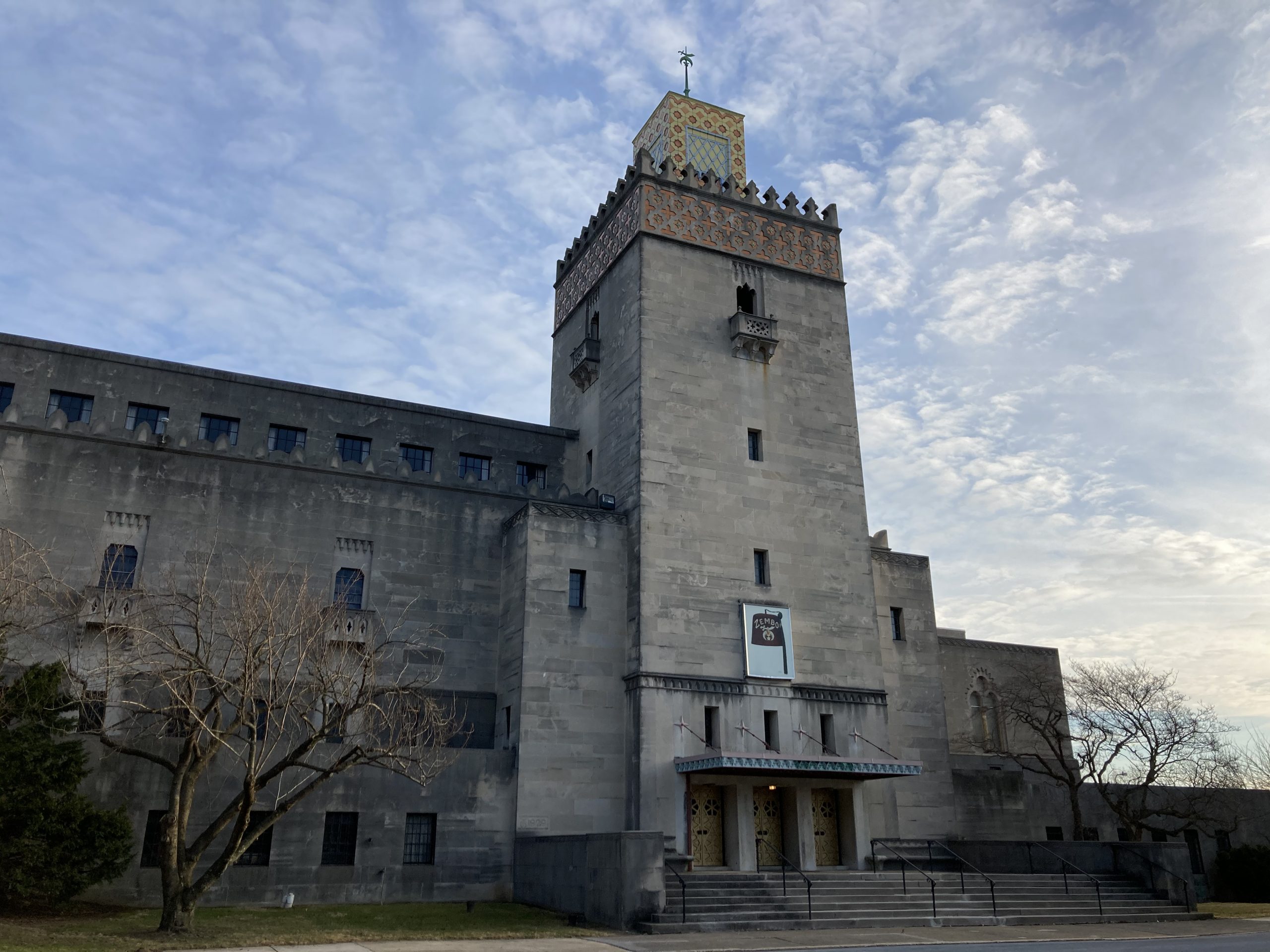
Zembo Shrine

Harrisburg’s historic Zembo Shrine is no longer for sale, as the fraternal organization has decided to keep and restore the building.

According to the Zembo Shriners, the group plans to retain its 92-year-old building and focus on reviving it as an event space for the Harrisburg area.

“The Zembo Shrine has always been a big part of the city, and we are interested in keeping it a part of the city and keeping that heritage alive,” said Seth Anthony, a Shriner board member. “We want to bring the building back to its former state as a premier events venue.”

The 62,621-square-foot building, at N. 3rd and Division streets in Harrisburg, was put on the market in 2017. The group determined that keeping the large building would be too difficult, considering declining membership and the increasing costs of taxes, maintenance and utilities.

Over the five years that it was for sale, the building received three offers, according to Mike Smith, potentate of the Zembo Shriners. It was originally listed at $950,000 and most recently lowered to around $700,000. One potential buyer came very close to purchasing the building, but all offers eventually fell through.

“We were left at the altar three times,” Smith said. “We were tired of that. We needed to focus on what we do.”

The Moorish Revival-style building will continue to serve as a meeting place for the Shriners and as an events venue.

Anthony said that some restoration and updates are needed, such as work on the roof of the building, which will take a few years to complete.

But overall, David Morrison, executive director of Historic Harrisburg Association, said that the building is in great shape.

“It’s been very well maintained,” he said. “I’m very optimistic that what they’re planning is very do-able. This building is one of a kind in Pennsylvania, not to mention Harrisburg.”

Morrison was happy to hear that the Zembo Shrine was pulled from the market.

“Retaining ownership is so much better,” he said. “They know their own building.”

According to Anthony, the Shriners have received increased interest in rentals of the event space. He believes that some of that is due to a “post-COVID bounce back” of people looking to host and attend events, he said.

Anthony also announced that the Zembo Shrine Circus will return to the building’s auditorium from March 24 to 27 after a pandemic break. There will be no animal acts in this year’s show, he said.

As the Zembo Shriners set off in a new direction, Smith hopes to find ways to generate revenue for the group in order to maintain the building. Membership dues will not continue to sustain the organization, Smith explained.

They are currently beginning the process of registering the building with the National Register of Historic Places, which would allow them to apply for grants.

“We are so excited and I’m so admiring of what they want to do,” Morrison said. “I know they’ll succeed.”

Zembo Shrine is located at 2801 N. 3rd St., Harrisburg. For more information, visit their website.


If you like what we do, please support our work. Become a Friend of TheBurg!

Continue Reading

History Assignment: As it enters its third decade, the National Civil War Museum has a new leader, with a fresh perspective

Jeff Nichols

Jeff Nichols tells this story about the impact that a museum can have in tumultuous times.

It was 2017, shortly after the infamous “Unite The Right” rally in Charlottesville, Va. Thomas Jefferson’s Poplar Forest, where Nichols was executive director, was holding an event on the meaning of monuments, focusing on Richmond where statues still stood honoring Confederate generals Stonewall Jackson and Robert E. Lee.

Some wanted the statues preserved; others wanted them taken down. It was a civil discussion, recalled Nichols, who became CEO of the National Civil War Museum in Harrisburg in September.

At the end of the event, a woman approached Nichols. She told him her grandfather fought in the war for the Confederacy.

She still revered his service, but told Nichols this was the first time she had ever thought about the other person’s side in any real way. She thanked Nichols for it.

“Whether you change their mind or anything—who knows—but it’s that kind of thing,” he said. “We can’t change the world, but maybe we can change a couple of minds and get people thinking, just to be critical thinkers.”

That Imagination

A Connecticut native, Nichols was a history major on his way to becoming a schoolteacher when he started volunteering at a local museum.

He immersed himself in cataloging and preserving artifacts for the historical society in New Haven. He enjoyed interacting with the public, giving walking tours and programs. From that, he realized he had found a new calling.

Nichols moved on to positions with the Barnum Museum in Bridgeport and the Mark Twain House & Museum in Hartford, eventually finding himself in charge of Poplar Forest, the site of Jefferson’s plantation and personal retreat.

His last job before coming to Harrisburg was with Georgetown Heritage, a group devoted to fundraising and advocating for national parks. It was behind-the-scenes work, he said.

Nichols said that he missed working in museums and being with visitors on a regular basis. So, when the National Civil War Museum position opened up, he saw it as a chance to get back into that world.

The museum also rekindled memories of his first exposure to history. He was a boy of about 6 years old when his parents took him on vacation to Hersheypark—and then to Gettysburg.

The battlefield and re-enactors “triggered that imagination for me,” he said.

“It’s almost like a gateway drug for historians,” Nichols said of the Civil War. “You enter the field in a lot of ways by studying the Civil War. I think the fascination is that old adage of brother against brother, how a nation could turn against itself and really slug it out the way they did.”

Visiting the museum in Harrisburg for the first time with his wife, Nichols was impressed that the exhibit in place since the museum’s founding twice mentions the year 1619—the first written record of Africans being transported to the New World to be enslaved.

“It wasn’t as common 20 years ago to really say, the cause of the war was slavery,” Nichols said. “This museum, to its great credit, did that, and I think it carries through to this day.”


Coming Back

Sitting atop a hill overlooking a majority minority city, it is important for the museum to engage with the surrounding local community, such as Allison Hill, Nichols said.

“We want to make sure we are telling stories and doing programs and events that are appealing to a wide range of people,” he said.

The museum closed for much of February in order to install technology upgrades that will enhance the visitor experience.

“The museum has continued to upgrade its technology under Jeffrey’s leadership and is committed to presentations in its galleries which maintain our balanced approach while evolving its technology to today’s standards,” said museum board chairman J. Randall Grespin.

Grespin added that the board has “been impressed” with Nichols’ focus on fundraising, as well as a commitment to history education and to programming for an “ever broader and diverse citizenry.”

Upon arriving in Harrisburg, Nichols faced the task of rebuilding attendance that had dropped sharply due to the area’s COVID-19 shutdown and slow, uneven recovery.

Lately, activity at the museum has been picking back up. Attendance began rising last fall to where the December numbers were off only by about 6% compared to pre-pandemic levels, Nichols said.

Before the pandemic, the museum attracted about 45,000 visitors a year, on average.

Attendance is always low in the first quarter of the year, but the museum hopes to have a great summer, Nichols said. “It’s still coming back.”

Grespin noted that Nichols has the museum on track to fulfill terms of a 2017 deal giving it five years to raise $5.25 million to buy the portion of its collection that is owned by the city. Grespin added the city plans to apply the repaid funds towards improving Reservoir Park.

David Morrison, executive director of Historic Harrisburg Association, met with Nichols shortly after his arrival here. Morrison was impressed with Nichols’ communication skills and his knowledge of history.

A self-described “big fan” and advocate of the National Civil War Museum since its inception, Morrison said the museum has “untapped potential” and that Nichols is “the right leader” to achieve that potential.

For his part, Nichols sees himself building on the progress of his predecessor, Wayne Motts, whom Nichols credits with doing much to increase activity at the National Civil War Museum during his 10 years as CEO.

“The best way we can do that is through public programs, lectures, different talks, different panel discussions, different student programming that can bring in diverse audiences but also expand how we tell the story,” Nichols said. “It’s important, I think, for historic sites like this to show the importance of the historic era to today.”

The National Civil War Museum is located at 1 Lincoln Circle, Reservoir Park, Harrisburg. For more information, visit www.nationalcivilwarmuseum.org.

If you like what we do, please support our work. Become a Friend of TheBurg!

Continue Reading