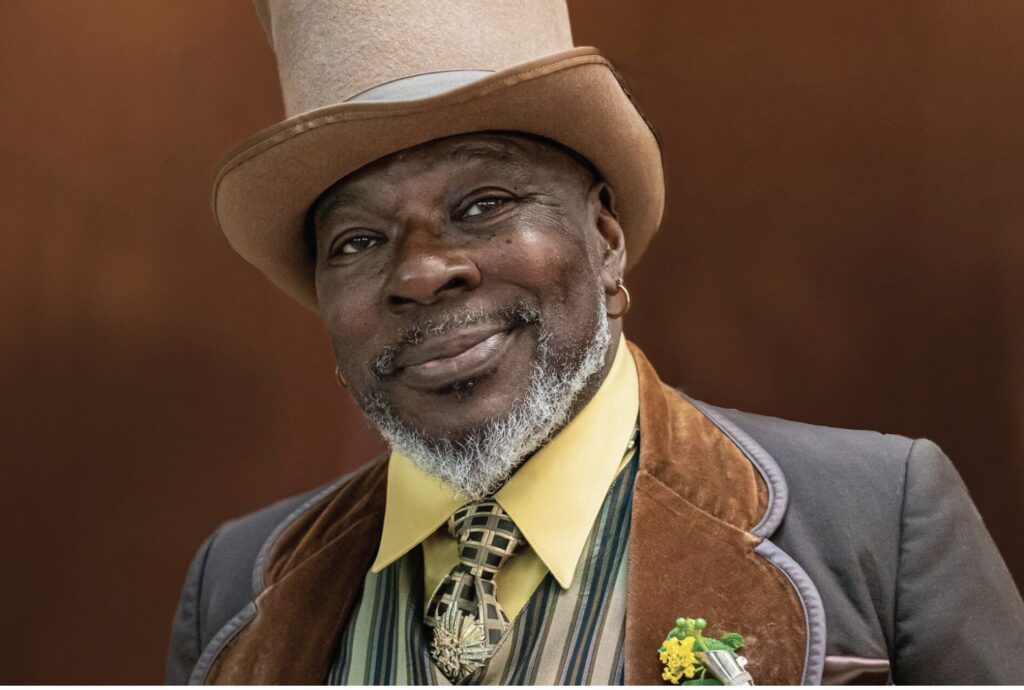
Photo by John Bivins
Visionaries always have their doubters. When Lenwood Sloan was collecting support for “A Gathering at the Crossroads” sculpture, naysayers sidled in to discourage potential donors.
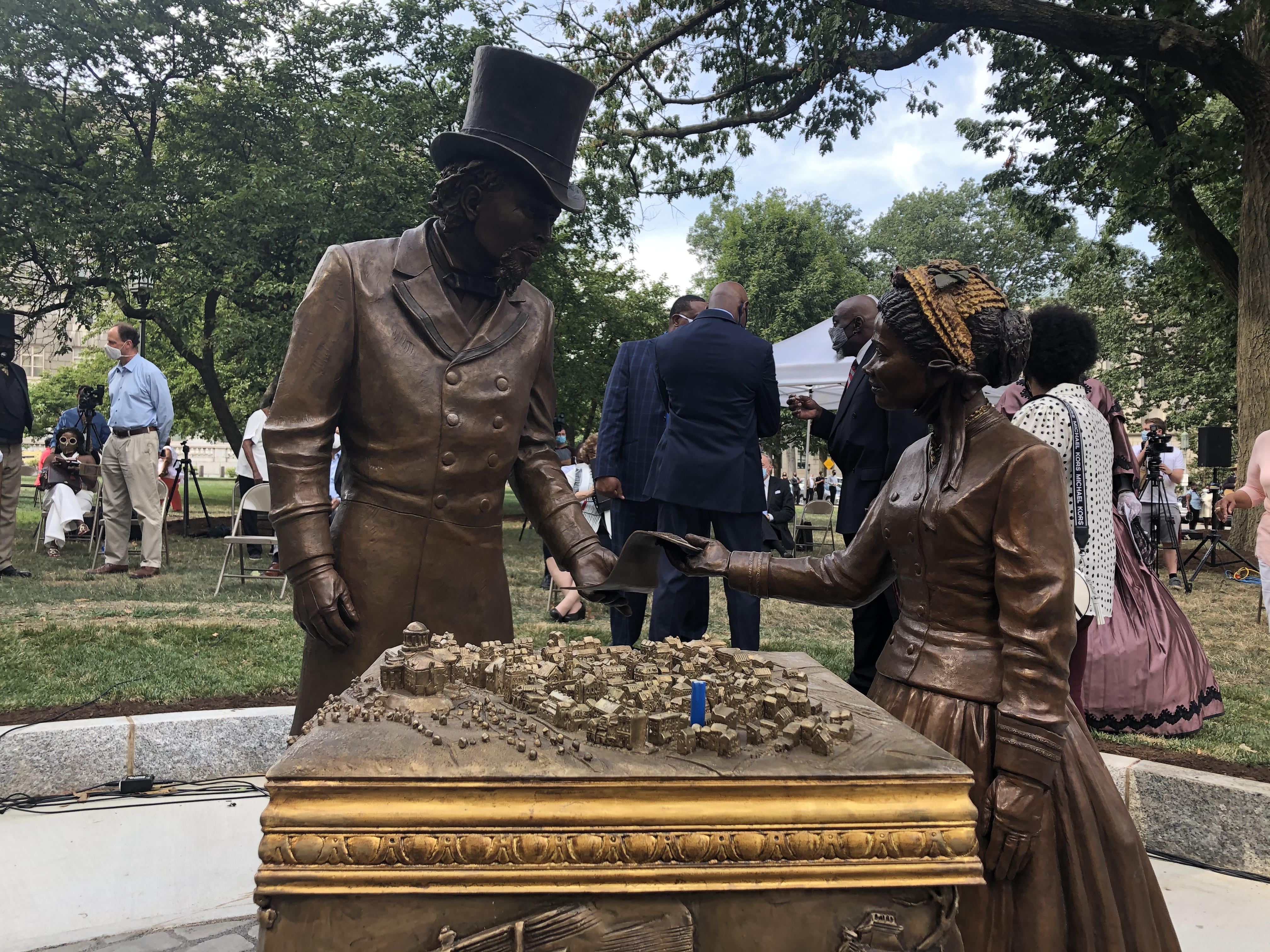
But guess what stands today in the Pennsylvania Capitol Complex? “A Gathering at the Crossroads Commonwealth Monument,” commemorating the civil rights victories of residents and visitors to the vanished Old Eighth Ward of 19th-century Harrisburg.
“He always kept his eyes on the vision, which meant that no matter what anyone was saying, no matter who was opposing him, he always rose above it, and he stayed focused on the goal,” said Yvette Davis, director of the Popel Shaw Center for Race & Ethnicity at Dickinson College in Carlisle. “No matter what point of the process we were in, he could describe that monument with such meticulous detail, you would think it had already been constructed.”
Sloan was a “catalytic agent.” He convened people and turned dreams into reality through his talents as public historian, reenactor, actor, dancer and leader in the National Endowment for the Arts and government arts and heritage offices in Pennsylvania, California and New Orleans.
Sloan died suddenly on Dec. 26 at age 77. He left behind countless grieving but grateful friends, family members and colleagues. Anyone ever on Sloan’s famous non-bcc emails had insight into the hundreds of people he could sweep into his orbit, one change initiative at a time.
Living His Purpose
This story is about what family and friends learned from Sloan. There isn’t enough room for all of his accomplishments. In addition to “A Gathering at the Crossroads,” now a Harrisburg landmark anchoring T. Morris Chester Way (yes, another Sloan ideation), here are a few:
- The Grand Review of the United States Colored Troops, a 2010 reenactment of Harrisburg’s 1865 Grand Review for Black troops shut out from the Union Army’s victory parade in Washington
- The Pennsylvania Past Players, skilled reenactors animating the lives of central Pennsylvania’s abolitionists, Underground Railroad conductors and early civil rights activists
- The International Institute for Peace through Tourism Peace Promenade in Harrisburg’s Riverfront Park
- Pennsylvania artisan and heritage trails
“He had an incredible eye to help people realize what they might have in their backyard and to frame what I would call the embarrassment of riches in Pennsylvania to residents and visitors alike,” said Michael Chapaloney, a former colleague in the Pennsylvania Department of Community and Economic Development’s tourism office.
Raised in Pittsburgh, Sloan trained and danced with the Alvin Ailey American Dance Theater and the Joffrey Ballet. He staged his own theatrical works—his “Vo-Du Macbeth” reimagining of Orson Welles’ “Voodoo Macbeth” must have been something to see—and recreated historical dances, leading to film and television consulting that included movement specialist for “12 Years a Slave.”
To Heather Williams of College Park, Md., her Uncle Leni always had a project underway.
“He was this big, huge presence as a vessel and a visionary, and yet, there was also this part of him which I call his humble heart,” said Williams, the daughter of one of Sloan’s sisters.
Part of her mother’s massive Black art collection is in Lancaster Art Vault’s February African American art exhibit, complete with descriptions that Sloan assigned family members to write, because he walked into the gallery, struck up a conversation, “and before she knew it, they were booking a date.”
“His purpose was to be a catalyst for change, and God gifted him with talents and with an interest in developing those talents to be able to live his purpose,” Williams said.
After Sloan learned that erecting “A Gathering at the Crossroads” in Riverfront Park, as originally intended, required buying insurance to cover maintenance, he pivoted by working to gift it to the state, “and the state would keep it up,” said Harrisburg historian Calobe Jackson Jr.
“He can finalize anything,” Jackson said. “Some can theorize, but he’s able to take a theory and put it together and get a final product. That’s what I like about Lenwood.”
Moving Forward
As a public historian, Sloan encouraged people to find the family stories and mementos hidden in attics and stashed under beds. When historian and genealogist Sharonn Williams learned that she is a great-niece of Jacob Compton, the Harrisburg coachman famous for spiriting Abraham Lincoln away from would-be assassins, Sloan told her, “Your work is not done.”
Today’s policies requiring immigrants to carry papers and deporting them to unfamiliar countries echo manumission and colonialism, when slaveowners shipped enslaved people to distant states, and the children of Native Americans were forcibly assimilated, said Williams.
“There are people around us who say, ‘That’s new. That’s different,’” Sharonn Williams said. “No, it’s not. It’s not new.”
In the wake of Sloan’s death, she added, “we need to keep moving forward, make sure that we are doing things for and in the public that will keep telling these stories.”
Davis, a Pennsylvania Past Players member and the Dauphin County Library System board president, was in awe of Sloan, “so touched and humbled and intimidated that he would take me under his wing as he would for so many other people.”
At one Pennsylvania Past Players event, Davis’ heart dropped when Sloan asked her, without warning, to explain Pennsylvania’s coverture laws that erased a married woman’s legal identity—a topic Davis hadn’t reviewed in months.
“Lenwood knew that I knew the answer to that question,” Davis said. “I didn’t know that I knew the answer. But in that moment, by God’s grace, it all came back, and Lenwood had such a smile on his face.”
Sloan met his husband, poet Byron Clement, through a mutual friend in New Orleans. Together for 22 years and married since 2017, they relocated to Harrisburg just before Hurricane Katrina.
“He was pretty self-propelled,” Clement said. “He had great talent for bringing people together. He had immense energy. It took a lot of pushing to get these things through, and he’d hang in there and fight for them.”
New Vision
Inspired by his parents’ activism and nurtured by his family, Sloan used and preserved history to generate change, even while he was the uncle who never missed a dance recital, said Heather Williams.
“Very few people know how to love and give equally,” she said.
Sloan was “always interested in what you were doing,” echoed Tom Weaver, former associate artistic director of Gamut Theatre Group.
Gamut was rehearsing its 2014 Free Shakespeare in the Park production of “Antony and Cleopatra” when Sloan made the steep trek to Reservoir Park—the non-driver walked everywhere—to address the cast.
Smartly dressed, as always, Sloan shared his support for the players offering a free event to the community.
“He was so inspiring and encouraging,” Weaver said. “I don’t think anyone in that cast knew him at the time. I remember seeing their faces just light up as he was talking to them, and it injected some inspiration and some strength into that rehearsal.”
Family and friends are discussing how to memorialize Sloan, but all agree that his greatest monument will be continuing his work.
Sloan was “adamant” that the Pennsylvania Past Players capture the spirit and humanity that drove oppressed people—of all races, ethnicities and colors—to overcome, said Davis.
“That increases the collective self, the collective esteem of basically any community, even if you were not among the oppressed,” she said. “There is a new vision to how you can partner with the oppressed to bring justice, which also increases that group’s self-esteem with a lens toward justice, power, strength, wisdom and persistence.”
Sloan, she added, was “the poster child for persistence.”
“It’s going to take hundreds and hundreds of feet to fill Lenwood’s shoes, and there will still be room in them. He left so many legacies. He lifted us in so many, many, many ways,” Davis said.
If you like what we do, please support our work. Become a Friend of TheBurg!