Tag Archives: M. Diane McCormick

Winning Ways: See which stories, photos, designs garnered awards for TheBurg this year

Award-winning photograph by Elena Jasic

Springtime brings us warmer weather, flowers galore and, if you’re a journalist in Pennsylvania, the year’s most anticipated press awards.

On Thursday, we learned that TheBurg received 17 individual and group Keystone Media Awards, a peer-reviewed contest sponsored by the Pennsylvania NewsMedia Association Foundation. According to PNA, it received more than 2,500 entries from 110 news organizations, with entries judged by working journalists in Virginia.

Our awards cover a wide range of areas, including reporting, writing, photography, illustration and design and include the prestigious “Sweepstakes” award for the best performance statewide in our category.

Of special note, our contributor, Diane McCormick, received the first-ever, “Freelance Journalist of the Year,” a specialty prize awarded to just one journalist throughout the entire commonwealth. So, be sure to click on her submission to read some of the highest-quality freelance writing work in Pennsylvania.

But let us delay no further. As I have in recent years, I have all the winners listed below, with links so you can see what the judges deemed to be some of the best work done statewide in 2021.


SPECIALTY AWARD

Freelance Journalist of the Year: M. Diane McCormick (a single, statewide award) 

Diane McCormick Freelance Journalist of the Year


REPORTING/WRITING AWARDS

News Beat Reporting: First Place, Maddie Gittens (Harrisburg government beat, 5 stories)

Harrisburg mayor proposes using federal funds on new pools; council members ask to be included in planning

Hop, Skip and Runoff: Harrisburg park is renovated to include to include stormwater management features, new playground

Harrisburg cleans up blighted properties, works to address illegal dumping

CARES Act funding under fire, Harrisburg School District loses students to cyber charters

Dauphin County to release rent relief money, could relieve large amount of tenant debt


News Feature Story: First Place, Maddie Gittens


News Feature Story: Honorable Mention, Maddie Gittens


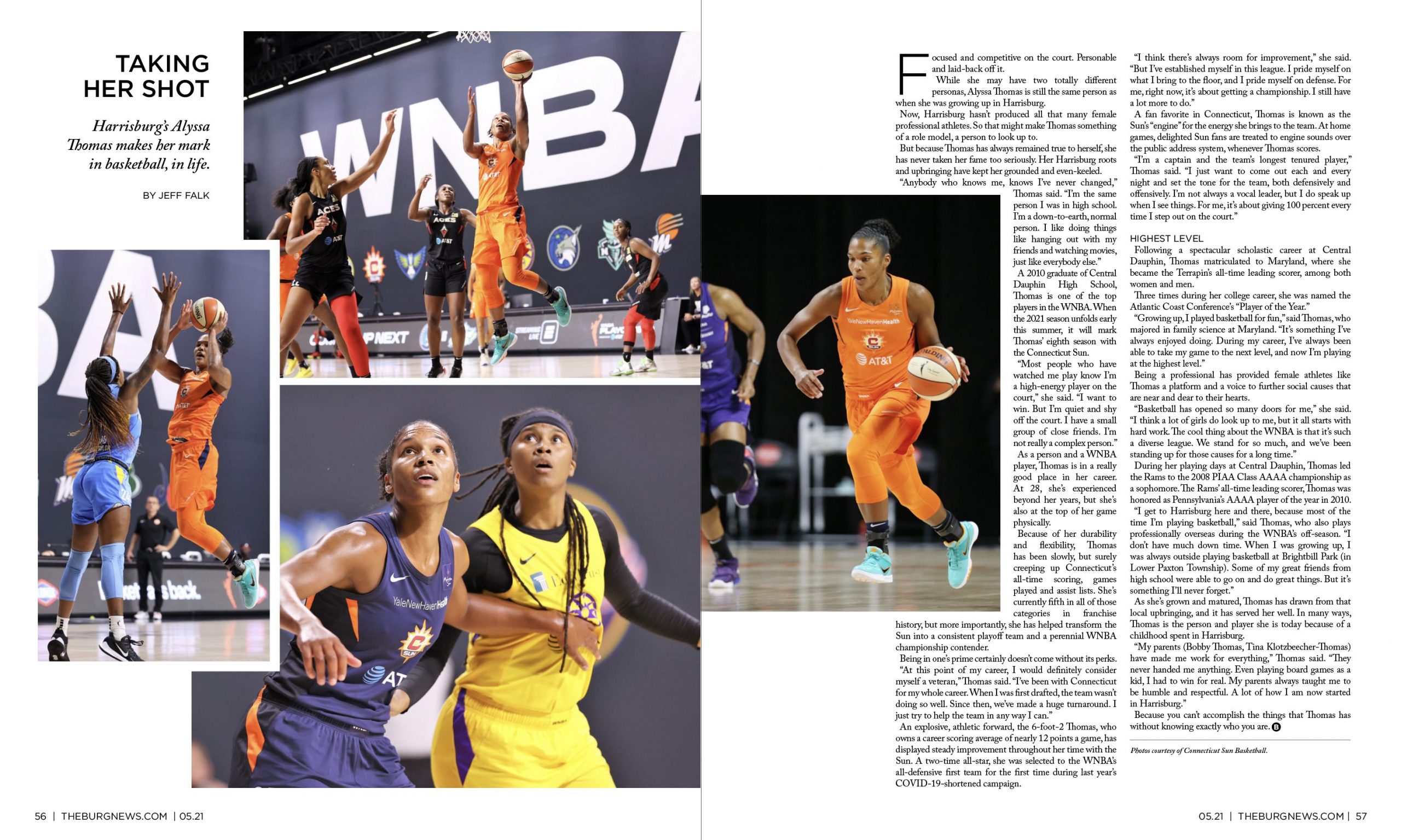
Sports Feature: Second Place, Jeff Falk


Sports Feature, Honorable Mention, Maddie Gittens


Personality Profile: Second Place, Karen Hendricks


Lifestyle/Entertainment Beat: Second Place, Maddie Gittens (6 stories)

Lifestyle Arts Beat


Lifestyle/Entertainment Beat: Honorable Mention, Stephanie Kalina-Metzger (6 stories)

Lifestyle Entertainment Beat SKM


Headline Writing: First Place, Lawrance Binda (3 headlines)

Burg Headline 4


Headline Writing: Second Place, Lawrance Binda and Maddie Gittens (3 headlines)

Burg Headline 1


Podcast: Second Place, Karen Hendricks (3 podcasts)

A Warm Welcome to 2021
Drama and Adventure
An Ice-Skater, Violinist and Illustrator


Diversity: Second Place: Susan Ryder, M. Diane McCormick, Maddie Gittens (3 stories)

Diversity 2


ART/DESIGN AWARDS

Feature Photo: Second Place, Elena Jasic


Photo/Essay Story: First Place, Meg Caruso


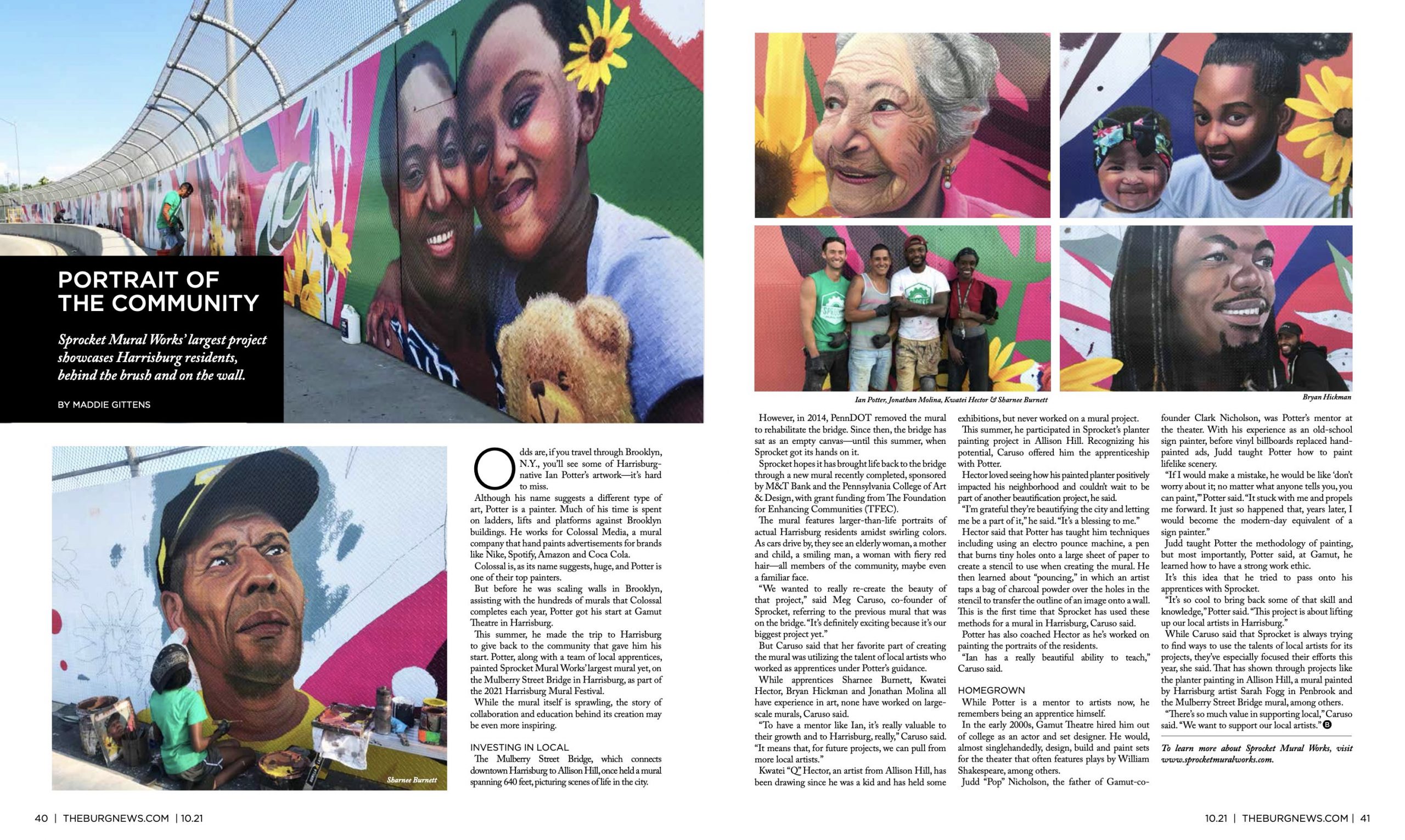
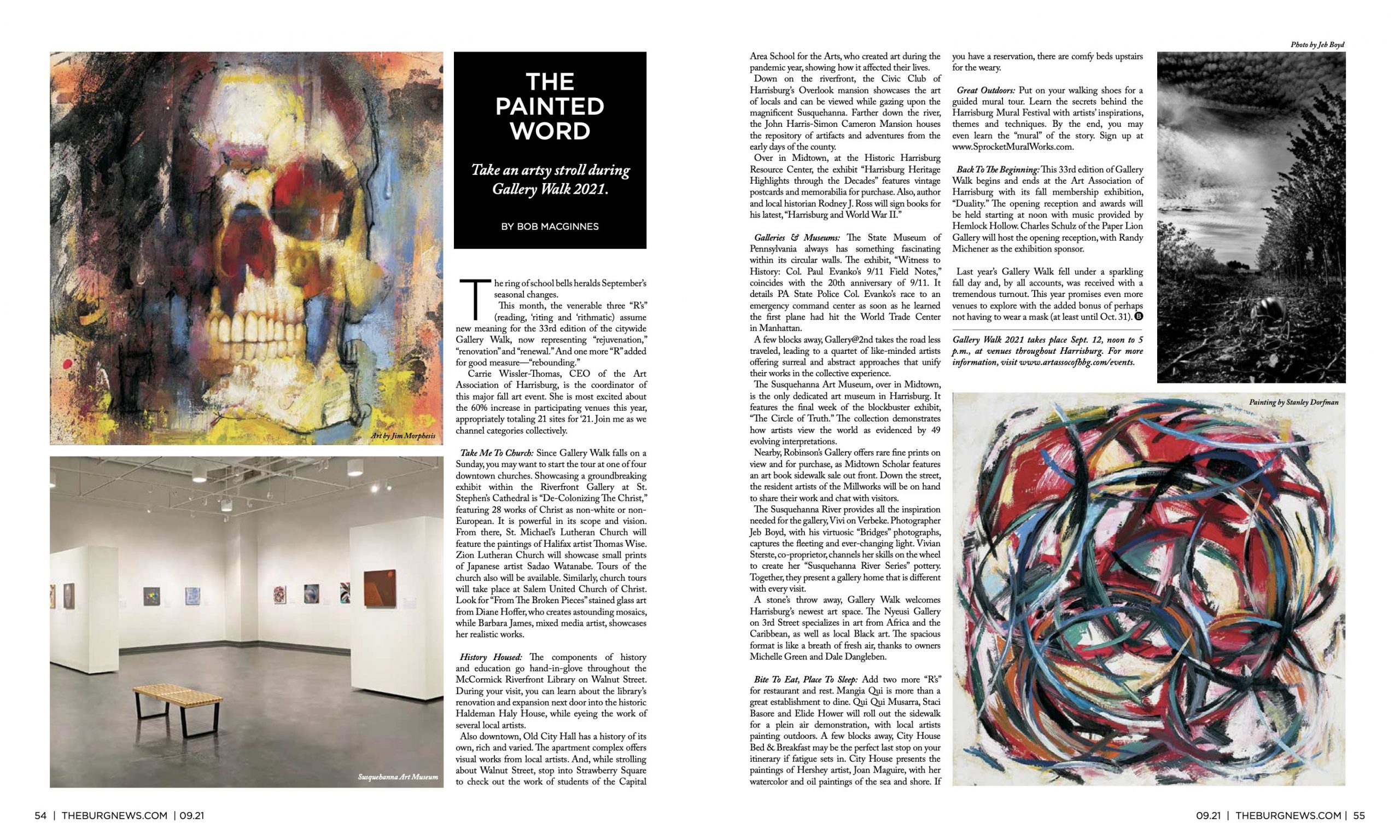
Feature Page Design: Second Place, Meg Caruso (3 designs)


Graphic/Photo Illustration: First Place, Rich Hauck


If you like what we do, please support our work. Become a Friend of TheBurg!


Continue Reading

Pandemic Perspectives: Four Burg writers share insights on the one-year anniversary of the COVID-19 pandemic

Pre-pandemic, four Burg writers regularly met for lunch at the Broad Street Market.
From left: Susan Ryder, Diane McCormick, Gina Napoli and Karen Hendricks.

Friday, March 13 is the date that many people pinpoint as “the day” that the pandemic started affecting their lives. It was that afternoon that Gov. Tom Wolf announced the first lockdown that would change every aspect of our lives—our jobs, schools, businesses and everyday habits.

Friday, March 13 was also the date that four writers for TheBurg gathered at the Broad Street Market for lunch. “Coronavirus” was the hot topic at lunch that day, but little did they know how far-reaching the pandemic’s impact would be upon the rest of the entire year—impacting their personal lives and professional work as writers.


Little Did We Know

By Karen Hendricks

They say that birds of a feather flock together. As four writers, the main reason we started gathering for an occasional lunch was to combat the otherwise lonely existence that freelance writing can be. Which is pretty ironic, because as we gathered on March 13, 2020, little did we know our idea of “lonely” was about to be redefined.

Leading up to that Friday the 13th, I was the one who sounded the alarm and suggested (gasp) that we cancel. Call me cautious or cynical, I was tuned into the national and international news reports describing the impending “coronavirus” as much more serious than the goofy memes featuring bottles of Corona (remember those?). I feared the worst, but, in true peer pressure fashion, my three fellow writers assured me we’d all be just fine—and I caved.

I remember our conversation alternating between laughs (there are always laughs), congrats (they were genuinely happy for my debut of TheBurg Podcast just the day before), and our doubts and fears about what was to come. The Broad Street Market was like a ghost town compared to the typical friendly Fri-yay atmosphere. Little did we know, it would be the last “normal” day of operations.

I remember how shockingly quiet our communities were, those first few weeks of lockdown. No traffic. It felt eerie—too quiet—even for someone used to working solo, from home, most of the time.

As journalists, we’re trained to ask questions, be curious and observant, and then explain what we’ve gleaned through our writing. I tried to describe the strange times we were living in, through several Burg Blogs, as well as my personal journal. But honestly, I stopped journaling for weeks at a time. The pandemic, layered with politics, then racism and hate, became too overwhelmingly painful. I didn’t want to capture those memories—I wanted to release and forget them.

Journalism became an outlet, and I focused on writing others’ stories—inspiring distillers-turned-hand sanitizer producers, food bank directors, runners and teachers. Amid a pandemic, I couldn’t cover news on the frontline, so phone and Zoom interviews became my lifeline.

Instead of beginning conversations with the usual, “How are you?” I learned from a pandemic-pivoting journalism webinar to add one more empathetic word to that sentence.

“How are you coping?” became my first question, because it acknowledged that we were all dealing with “stuff,” and it set the tone for honest, real conversations.

I tried to capture the spirit I heard in those early voices, as they described innovative, can-do resilience.

One of the joys of being a writer is learning something new every day, but by the summer, I began to resent some of the things I was learning. Because I also had to capture the hurt I heard in those voices. Little did we know how long, how hard, how ugly, how deadly this pandemic would be.

But lately, the tone across the phone lines has shifted. And I love what I’m hearing, because now, in 2021, I’m hearing a lot of hope.

On Dreams Deferred

By M. Diane McCormick

I was the one who suggested we cough when Karen, the COVID-19 scaredy-cat, arrived.

Some joke. Please forgive me. How could we know? We did normal things that day. Karen and I split a pizza. We four laughed over a lingering lunch.

But in my memory, the Broad Street Market already felt hollow. One vendor pointed to the burners on her stove, cold from lack of business.

At home that afternoon, I heard that Gov. Wolf was closing schools for two weeks. But my granddaughter was starring in her school musical! Postponed now, but not for long, I assured her. The show does go on.

Except that it hasn’t. Poor kid is still waiting in the wings. So is my singer-songwriter stepdaughter, verging on a career breakthrough. And my nephew, ready to transform from minor leaguer to Houston Astro.

Dreams put on hold really burn me up, but there was no escaping them. From that day on, every assignment started with, “Diane, can you write a story about the impact of COVID on . . .?” Fill in the blank. Animal rescues, restaurants, the holidays, fall getaways, the arts (two of those).

And that was just for TheBurg. I wrote so many “how we’re dealing with this” stories that I called myself “The COVID Whisperer.”

Then came the gut punch, a story for TheBurg on the pandemic in Harrisburg’s Black community. Learning about the departed greats of our city, I felt a new anger—resentment over talent lost and wisdom wasted. Gerald Welch, the school board member who never let a child fall through the cracks. Lisa Burhannan, the tireless advocate for girls, re-entrants, crime survivors, and anyone else who needed a friend.

They should still be here, transforming lives. I fumed, until I heard hope and gratitude in the voices of grieving friends and family. They rediscovered purpose. They rediscovered the core values somehow lost in the pre-pandemic grind.

That message, I realized, was woven through all my COVID-year writings.

“All those dreams we’ve had locked up,” the Rev. Brenda Alton told me. “It’s time to work on them and release them.”

So, dreams. Get off the “someday” list and take flight. Bring back a life of health and happy gatherings. And make sure that my assignments from here on start with, “Diane, can you write a story about the impact of recovery on . . .?” Fill in the blank. Hit me. I’m ready to be “The Post-COVID Whisperer.”

A Unique Time

By Susan Ryder

Our traditional Friday the 13th gathering felt a bit clandestine. Should we be meeting due to the rising concern of the coronavirus? Karen Hendricks expressed some concern, and I told her I thought we’d be “fine,” and pushed away the thought that we could be taking a chance.

A pall hung over this usually light and happy Broad Street Market lunch. Normally, there would be hugs all around, but social distancing had just arrived in our reality. As typical, we chatted about our stories and what was in the works.  I was working that day too, on a piece about how COVID-19 was affecting business there.

This excerpt from my story, published online March 13, summed up market that day:

“Bits of conversation about the coronavirus rose above the banter, as people purchased produce, waited to order fish at Tep’s Fresh Seafood, and greeted friends.”

I talked with a few patrons. One older gentleman, who used the market as his office, told me that he wasn’t going to live in fear. Another woman expressed concern about how this would impact local businesses.

Based on what was happening in Europe, I was quite anxious about how America would weather corona. For a minute, I thought this could be a rallying point for a conflicted country—that we could gather around a common enemy, COVID-19. That pipe dream lasted until Monday afternoon, when we locked down.

Then the vitriol around the virus swirled. People were scared, uncertain and overwhelmed, but instead of uniting, we argued via social media about whether it was real. That crushed me more than the threat of the virus.

However, like many folks, I received comfort and encouragement from my neighborhood! Early in the lockdown, I walked past the bay window of my bi-level home and saw something that made me burst into laughter. My neighbors had placed a paper hangman word game in their front window. For the next few days, we sent letter guesses, written on recycled printer paper, in an attempt to decipher the message—“Flatten the curve.”

Neighbors sewed and distributed masks, shared toilet paper, inquired about needs at the grocery store, delivered baked goods and books. In a small attempt to do my part, I hacked my potted palm tree on Palm Sunday and gave palms to my neighbors.

Journalistically, it’s been a unique time. I covered stories such as how COVID changed how we mourn, a personal story as my father-in-law died in June. And since racism’s ugliness once again let itself be known in a dramatic way, I felt compelled to shine a light on white supremacy, even as the fatigue of COVID weighed down the world.

How does a person sum up a year? With the most vivid memories. What I remember most are the good and kind things that arose from the chaos.

I look forward to the next time this writing quartet meets—enjoying spanikopita at Phyllo, and sharing not only stories but hugs all around.


On Grieving During COVID-19

By Gina Napoli

In my usual “denial style,” the pandemic gravity had not hit me by March 13, 2020. Back then, the CDC proclaimed COVID-19 a “once-and-done” disease. My immediate family felt certain the virus had already ripped through our household in December 2019. We complied with Gov. Wolf’s fluctuating rules to avoid becoming carriers, but like Alfred E. Neuman of MAD Magazine, we weren’t worried.

Then at the end of March, my 29-year-old cousin died. (At the time, it wasn’t deemed COVID-related, but now the CDC hints otherwise.) As I shoehorned my fat rolls into my black funeral dress, I wondered how to get through an Italian funeral for one of our youngest without anyone hugging me. I resolved to knuckle-bump, rub elbows and head-nod across the cemetery.

My resolve lasted 20 minutes. Even with limited attendance of just our big family and no friends, the Napoli’s turned a burial into a potential super-spreader event. What should have been a well-attended, four-part viewing + visitation + burial + face-stuffing event with affection everywhere devolved into a pared-down substitute. I realized then how much solace the familiar string of rituals provided. COVID-19 cheated my cousin out of the farewell party she deserved.

“Flattening the curve” was supposed to end when March did. Except it didn’t. My usual beat of writing theater reviews and offbeat local attractions went pffft. My articles awaiting publication were either postponed or killed, so it didn’t make sense to seek out new ideas. I grieved my personal change—the professional fulfillment I once felt from my freelance writing career.

Throughout 2020, several high school classmates’ parents passed away—moms and dads who had once served as my honorary parents. I would have ordinarily paid my respects in person, but every family either had private funeral arrangements or waived them altogether. Again, cheated by COVID-19.

Then my 95-year-old grandfather died New Year’s Day. In addition to the same crowd from March, several romantic indiscretions by the guest of honor yielded extra half-families around the casket. Not that this happens to me much (but it will probably, thanks to ancestry.com and an uncle who won’t quit swabbing us), but normally, when you meet new, long-lost family, there is an initial awkward moment spent stumbling over the handshake/hug decision. COVID made the decision for us to limit our interactions to a wave—way over there.

Graveside, supply chain issues (or scandal?) affected the availability of Catholic priests, so a Southern Baptist minister showed up instead. I never saw more side-eyes than when we heard his drawl. Then, when my great-aunt died less than a week later, similar protocol omissions followed: fabric chairs, guest-books, prayer cards.

My family already resembles the “Goodfellas” cast, so masks added an extra criminal-like element… symbolically apropos, because COVID-19 has robbed 2020 of normal grieving rituals. This loss is something to mourn all by itself.


From coverage of social justice issues to pivots in theater performances, attempts to interview booked-up mental health professionals and overworked teachers: What interviews, behind-the-scenes stories, facts and observations stand out from these writers’ pandemic assignments? These four writers continue the conversation on TheBurg Podcast’s March episode, available on Friday, March 12.

Support quality local journalism. Become a Friend of TheBurg!

 

Continue Reading

TheBurg Podcast: The Antidote, May 2020

Overwhelmed by pandemic news? This month’s podcast provides the antidote—we talk around “it” without focusing on “it.” Allow us to elaborate:

Behind the lens: Harrisburg-based photographer Dani Fresh shares her insights, from her photo essay of street scenes, “Silent City.”

Missing sports? Culture? Alice Anne Schwab of the Susquehanna Art Museum goes to bat for you, explaining how you can still catch the museum’s current exhibit “Separate and Unequaled” detailed in “Diamonds are Forever: SAM exhibit honors Negro Leagues centennial.”

Cat chat: Writer Diane McCormick expands upon her story “Pets & Pandemic” to share timely information for animal lovers.

And running along the Susquehanna River sparked the idea for editor Lawrance Binda’s monthly TMHT, “the most Harrisburg thing.”

Meet some of the Harrisburg area’s most fascinating people, and hear their own authentic stories, straight from every month’s issue—with a different twist—on TheBurg Podcast. Because there’s always “more to the story.” Hosted by Karen Hendricks. TheBurg is a monthly community magazine based in Harrisburg, Pa.; Lawrance Binda, co-publisher/editor.

Interested in sponsoring TheBurg Podcast? Contact Lauren ([email protected])

Karen Hendricks is a lifelong journalist; visit her website here.

Continue Reading

A Rebel Walks into a Bar: Rum, revolt in Pennsylvania history.

Editor’s Note: Midtown Scholar Bookstore will host “An Afternoon with Diane McCormick” this Saturday, Feb. 2, 4 to 6 p.m. Therefore, we’re re-featuring our interview with Diane from our November issue. Drop by to hear Diane speak about the rich history of rebellious behavior in Pennsylvania bars and taverns. Midtown Scholar is located at 1302 N. 3rd St., Harrisburg.

Good plots are often hatched in bars.

Those plots may be of the subversive type, or they may be of the book type.

Harrisburg author Diane McCormick discovered both in a tour of some of Pennsylvania’s most notorious watering holes, a journey she relates in her new book, “Well Behaved Taverns Seldom Make History: Pennsylvania Pubs Where Rabble-Rousers and Rum Runners Stirred up Revolutions.”

I recently sat down with McCormick, who told me how history often has been made when a dose of grievance met a dose of alcohol.


TheBurg: What was the origin of your idea?

McCormick: It came to me at Jean Bonnet Tavern in Bedford, Pa. My husband has family up there. So, we frequently travel up there and always make the stop at the Jean Bonnet, which has Whiskey Rebellion ties. Probably 2½ years ago, I was sitting there one day in this awesome tavern at the bar drinking a Sly Fox O’Reilly’s Stout and eating a grilled ham-and-cheese thing. I looked around, and I thought, “You know, a lot of pubs probably have rebellious ties. A lot of rebellions have pubs at their heart.” I just thought about it for quite some time, kept it to myself. Then, in the summer of 2017, around May, I started looking at my schedule, and I thought, “I might have some time to put into this, this summer.” I carefully walked up to my husband. He’s an excellent judge of topics and content. I said, “Well, what do you think of this idea?” He said, “I love it. It’s great. It could work.”


TheBurg: The topic of this book suits Pennsylvania very well. We’re pretty much synonymous with revolution and rebellion and drinking.

McCormick: Exactly. I said—Pennsylvania has pubs. Pennsylvania is famous for rebellions. You bring people with gripes to a public gathering place. You have some rum or beer or Madeira or applejack, and the flame torch is lit. So, people grab a pitchfork and go marching.

When I sat down and thought about my criteria, it came down to any sort of era in American history where people defied authority in some sort of way. So, yes, you had the American Revolution, but I also kind of skipped through eras. The last one I had was Prohibition because what’s more iconoclastic than a speakeasy? So, I ended up with the American Revolution, Whiskey Rebellion, a rebellion called Fries’s Rebellion, which is an absolute hoot, the canal-building era, the Battle of Gettysburg, the Molly Maguires and Prohibition. There are 12 pubs total. So, it was any time that Americans said, “We don’t like this law. So, we’re either going to ignore it or we’re going to defy it.”


TheBurg: So, you cut it off before the Harrisburg incinerator forensic audit?

McCormick: Yeah, that’ll be next [laughter]. If I could find a bar related to it.

TheBurg: I think all the planning went on in McGrath’s [laughter].

McCormick: I tried as much as I could to go with places where the ties are authentic. For instance, there is a bar called the Molly Maguires in Jim Thorpe. But it’s a tribute bar. So, I tried to avoid that. I went to places that definitely had clear ties to these events.

For instance, the Dobbin House in Gettysburg. It’s very hard to prove underground railroad tales, but the gentleman who built the Dobbin House as his home in 1776 was a minister. They were very abolitionist. His son was a known abolitionist. When the son became an elderly gentleman, he passed on the mantle of the underground railroad to a young man, who then wrote in 1911 his recollections. So, that’s pretty good documentary evidence. It’s not proof, but he did build a second floor with a space about 3½ feet high between them with a sliding panel. Why else would you do that? So, yes, I tried to go with places that have a direct connection and have that authentic piece of history involved.


TheBurg: What did you consider to be the most interesting place you visited?

McCormick: There were different aspects to each that were fascinating. City Tavern in Philly, even though it is a re-creation because the original was torn down in 1850-something, it is as meticulous a reproduction as the National Park Service could create, even down to the fact that City Tavern had this marvelous bell system that was very technologically advanced for its day, which was just bells with wires going through walls. If you were in the basement, and Gen. Washington’s oyster stew was ready, you would ring the bell and somebody would come down. The bell would be on the second floor, and it would ring up there, and they’d come down and get it. Plus, the food was tremendous there. I also loved the speakeasies. They were fun just because there was so much lurking underneath the surface.


TheBurg: Where were they?

McCormick: The Horse Inn in Lancaster. That is a must-go place. It actually has been in operation since it was a speakeasy. It’s called the Horse Inn because it was a loft to a horse stable.

In Easton, a speakeasy is now Two Rivers Brewing Co. That’s only been around a few years, but they bought this decrepit building at sheriff’s sale. The owner had to break into his own building. But the bar is still there that was put in during the ‘20s. Like in the middle of Prohibition, people just ordered bars from Sears and put in the bar. Easton was sin city. It was famous because people leaving the fights at Madison Square Garden would hear barkers say, “Going to Easton. Going to Easton.” And you would get in a car or a bus and go to Easton—and prostitution, gambling, booze, anything you wanted. There’s this whole alley that was nothing but brothels.


TheBurg: It makes it seem like we live in very tame times.

McCormick: Exactly. I think that, sometimes, we think of the past as this upright time of probity, and everyone was so genteel and dancing the minuet. George Washington chose his table at City Tavern so that he could see anyone coming into the room or into the building. An assassin could come after him at any time. So, he sat where he could see anything.


TheBurg: So much of civic life used to happen in taverns. People even voted in taverns.

McCormick: Taverns were the public gathering places—taverns and churches. In churches, you weren’t going to patronize prostitutes or drink or fight someone or debate politics. So, you went to your local pub for that. Pubs were also places of trials. With Jean Bonnet, I get into that. At the Jean Bonnet, there’s a longstanding story about a hanging right inside the tavern. It was a place where there were trials. There are several versions of that story, but one I heard was that a man burst into the tavern. He’s a white man, a local. He says, “The Indians are after me.” Of course, all the patrons are up in arms. They’re ready to fight. The Native Americans arrive and they say, “Yeah, we’re chasing the guy. He stole our horses!” So, they held a trial right there—guilty. Hanged from the stairwell.


TheBurg: Swift and unfair.

McCormick: Yes. There also was a legend that a body was found in the basement with a bullet hole in the head at the Jean Bonnet. Yeah, they were gathering places, and, sure, the fact that there was liquor there would make people get even more heated up about whatever their gripes might be.

Now Fries’s Rebellion was a doozy. At the time, there was a house tax imposed by the federal government to pay for defense. And these Pennsylvania German farmers who had fought in the Revolution said, “Wait, I thought we were fighting against unjust taxes.” So, they started protesting. Things reached a point where these guys one day just got totally drunk, took several of the tax collectors hostage.

First, they were at a pub called McCoole’s in Quakertown that I was in. Then they went into another pub, where they found out that some of their compatriots were being held at a pub in Bethlehem. That’s only about 15 miles away. So, totally drunk, they started marching toward Bethlehem. Well, lo and behold, it’s the Sun Inn, which is a famous inn with revolutionary ties, because all the founding fathers stopped there, because it was basically the only nice inn between Philadelphia and New York.

So, this drunken mob—100 people, 400 people, accounts differ—were on the march, but the marshal holding the place only had 15 or so men. So, he didn’t have much choice. My favorite part was when this mob was marching into Bethlehem. They got to a toll bridge, and the marshal told them, “Stop right there. We’re not gonna let you come in.” They said, “We’re coming in. We’re gonna take our friends. We’re gonna take these prisoners away from you, no matter what.” So, he paid the toll and crossed the bridge into the inn. So, I read that and said to myself, “He paid the toll?” But that made sense. That was a tax that made sense. It paid for the road that you used—a road farmers used to take their goods to market. So, they paid the toll to get across the bridge to continue the rebellion.

It was important to me to find standing taverns, standing bars. I didn’t want this to be a guide to places you could drive past and go, “Oh, that happened there.” So, I wanted to be sure that you could go there, eat the burger, drink the beer, drink the special drinks. So, I get into that in each chapter, as well. I talk about what they might specialize in, what their specialty drinks are and tell people what I tried. At Two Rivers Brewing Co., I had a peanut butter bacon cheeseburger. They said, “Best in the Valley.” And, sure enough, Lehigh Valley Live voted it their best burger, and it was the type that you had to hold the whole time with both hands, and it’s just dripping down your hands. They had an awesome burger. The Horse Inn in Lancaster had an awesome burger. The food everywhere I went was just great.


TheBurg: What was the most distant place you went to from here?

McCormick: Probably the Black Bass Hotel. That was one with ties to the canal-building era. It was a morgue for dead canal workers. They were dying, dropping like flies, mostly Irish, keeling over from malaria and typhoid and such. They needed a nice, cool, stone-walled building to keep the bodies. So, that’s literally on the Delaware River looking out over New Jersey on the other side. That was a fun place because I got into the canal era, the reputations of the canal-builders, a lot of workers’ rights issues came up, the exploitation of these workers. And they had a reputation for being such rowdy, dirty drunks. But they worked from sunup to sundown. There was a saying that went, “It’s easy to build a canal. All you need is a pick, a shovel, a wheelbarrow and an Irishman.”


TheBurg: And I’m sure the owners valued the pick and the shovel more than the Irishman.

McCormick: Very likely. There’s one thing I want to bring up, and it came up quite clearly at the Black Bass. The manager who showed me around, a Scottish man named Grant Ross, was very careful to make it clear that there is legend and there’s more legend. And he was not about to prove or disprove anything. I tried in the writing of this to make clear when I knew something was fact and something was legend.


TheBurg: But legends are fun, especially if you’re in a bar.

McCormick: What else are bars for, except to give birth to legends? So, I just tried to make it clear when I was getting into legendary territory, but those were the fun stories to tell. Sometimes, the factual story wasn’t as fun. But I would share that, OK, here’s what some people say really happened, but here’s the legend, because it’s a lot of fun.


“Well Behaved Taverns Seldom Make History: Pennsylvania Pubs Where Rabble-Rousers and Rum Runners Stirred Up Revolutions,” by M. Diane McCormick (Sunbury Press) can be found online and in select bookstores.

This interview was edited for length and clarity.

Disclosure: Diane McCormick is a freelance writer for TheBurg.

Continue Reading

Up by the Riverside: A close-knit community celebrates 100 years as part of Harrisburg.

Riverside Fire House, 1923.

You know the neighborhoods of Harrisburg. South Allison Hill. Midtown. Olde Uptown. Bellevue Park. Downtown. Riverside.

Back up there. What the heck is Riverside?

For those of us who live here, Riverside is our little secret. But since September marks the centennial of Riverside’s annexation into the city of Harrisburg, maybe it’s time to stake our claim as a distinct neighborhood with a unique quality of life. No, it’s not “walkable” to coffee shops and cinemas, but there are trees and backyards, parking and birdsong, quick commutes to downtown and quick getaways to highways.

First, to answer your question, Riverside is the last chunk of city land along the 2nd Street corridor. Imagine holding a Hershey chocolate bar in your hand and breaking off the far left squares. That’s Riverside, from Division Street to just north of Vaughn Street (call it Italian Lake to the Jewish Community Center) and from Front Street to 7th Street (Susquehanna River to the railroad tracks).  

“Riverside, before it was annexed, was known as a hamlet,” Howard Parker told me. “I’ve always wanted to live in a hamlet.”

New Age

We were meeting at the Olde Uptown Little Amps (like I said, we got no coffee shops). Parker, a New Jersey native who moved east and has lived in Riverside since 1980, is a history buff and president of the Riverside United Neighbors community group.

Archival records of that 1917 annexation, the year America entered the “Great War,” show that change never happens in Harrisburg without controversy and the occasional threat of fisticuffs. Riverside was still its hamlet self, home to 500 or 600 people who’d been attracted to the Susquehanna Township development since its launch in 1905 with promises of “sewer, water, light and river view.”

“One car-fare takes you from Riverside to any part of city, Steelton, Paxtang, Reservoir, Progress, Penbrook and Rockville,” pledged an ad from developer Lewis M. Neiffer.

Harrisburg had “briefly flirted with an industrial period in the 1890s,” said Historical Society of Dauphin County Librarian Ken Frew, but the ornate Beaux Arts Capitol built in 1906 ushered in a new age.

“Once the (original) Capitol burned down, and they built a new one, the whole tenor of Harrisburg changed,” said Frew. “It became a white-collar city.”

Those government workers found a bucolic escape in their Riverside homes.

“They were people who didn’t want to be down in the city,” said Frew. “They were a little more independent. They liked living up there, but they missed the city services.”

Parker confirmed that Riverside’s street paving was “not really fantastic,” and some residents were dissatisfied with schools that one resident of the day called “miserable.”

In September 1916, about 60 percent of Riverside homeowners petitioned for annexation by Harrisburg. This would be the city’s 12th annexation of adjoining lands, but money concerns intervened. Would annexation mean that “outlay on the part of the city will be far greater than the revenues derived from the Riverside section,” as the Harrisburg Daily Independent speculated? Sewer, lighting and fire hydrant upgrades would all cost money.

Despite the costs, the Harrisburg Telegraph considered the deal’s apparent collapse ill-advised.

“It was assumed that at no distant day the suburb would be taken over by the city and now, when it comes knocking at our doors, having fulfilled the requirements of the municipality and being one of the most desirable residential districts in all the country roundabout, we turn our neighbor away,” the Telegraph editorialized.

“One of the most desirable residential districts in all the country roundabout”? My Riverside? Sweet.

Wordy Battle

Back to 1917.

The Telegraph accurately predicted eventual annexation. This being Harrisburg, a backroom deal or two might have given this creature life. The plan’s sudden revival prompted a letter to the Telegraph editor signed “ONE OF THE EXPLOITED,” insisting that the so-called majority clamoring for annexation was actually a minority poised to gain, possibly through the city’s purchase of the hamlet’s sewers.

“There always has been, and never so violently as at present, a strongly voiced antagonism to annexation . . .,” complained “Exploited.” “It is a question of searching for the individuals who aim to profit at the community’s expense.”

By now, annexation was big news. City Council’s 3-1 vote to approve annexation shared banner headline space with news from the Great War in the Aug. 27, 1917, Evening News: “Riverside is Added to Harrisburg; Italians Capture 90 Square Miles.”

But then a Sept. 1 banner headline proclaimed “Riverside Citizens Oppose Annexation” (above a photo captioned “Uncle Sam Cocks His Big Guns for the Boches”). The fight to block codification of a City Council vote seen as “railroaded” seemed to be on, until the city solicitor announced that the ordinance had been signed into law, making it irreversible. With the painful news, some argued for withdrawing their opposition. Others wanted to keep up the fight.

And then things got heated. Professor George Hill, a teacher and annexation supporter, argued that “bugaboos” like the higher taxes feared by opponents might never materialize. A certain W.H. Bishop seemed to think that Professor Hill was calling Mr. Bishop and his fellow opponents “bugaboos.” A “wordy battle” ensued.

“Come out here in the hall and settle it,” Professor Hill suggested to Mr. Bishop. Mr. Bishop declined the offer but “politely went on with his criticism.”

Howard Parker shook his head as he shared news accounts of the near-altercation. “This is so frickin’ Harrisburg,” he said. “It just is.”

Wild Waste

In September 1917, the hamlet of Riverside joined the city of Harrisburg, and life went on.

A school that started as a one-room schoolhouse in 1905 grew into a modern school “heated by a furnace in the basement!” recalled one student. A fire company formed in 1915 and built its firehouse, long a community center, in 1923.

“It is situated in a northern part of the city in a district in which there are fine homes, hence they are always willing to do all they can for the welfare of the community,” the company boasted.

Corner drug stores served cherry cokes. There were barbershops and salons, churches and markets. The Riverside Baseball Team gathered for a team picture in 1921.

The “wild, wild waste” known as Italian Park, where gypsies encamped every year, became Italian Lake in 1919, beginning a string of up-and-down years for a park where residents today walk their dogs, admire azalea blooms in the spring, and jog up and down the hillside. By 2013, Riverside School had come down, making way for Chisuk Emuna’s beautiful synagogue, now a polling place and R.U.N. meeting spot.

The city’s northward march culminated in completion of the imposing, now vacant William Penn High School in 1926. The last anyone heard of plans for the school, a developer was considering its use for senior-living apartments. In the eyes of developers, classrooms make perfect apartments, said Harrisburg School Board Vice President James Thompson. But they found no uses for the auditorium, gym and the campus’ separate career school building.

“People will come in and look at it and try to make the numbers work,” Thompson said. “I’m always the optimist. Somebody will find the right use for it, but the building needs work.”

Plus, developers hungrily eye the acreage and sports fields on the William Penn campus, but the district “would like to preserve the land,” Thompson said. “I think we owe it to the community and to the neighborhood to preserve the land for current and future recreational needs.”

Life Changes

Keeping pace with the rest of the city, Riverside’s 2017 home sales have been brisk, said RE/MAX realtor Ray Davis. “Riverside” isn’t a name that prospective homebuyers instantly recognize, but just as in 1905, the neighborhood offers “a natural progression” in city dwelling, he said.

“You have buyers in Midtown who eventually want a yard, want the parking,” said Davis. “That causes them to move up because their needs change. The parking and the yard for the dog or the kids become a little more important than the walkability of downtown. Life changes.”

Another thought struck Davis, a realtor for 20-plus years. In many other city neighborhoods, houses are similar, and so, for instance, a young adult or middle-ager with durable knees can manage Midtown’s three-story rowhomes. Riverside, though, is “one of the few neighborhoods where you have some single-level homes. You have Cape Cods. You have two stories and three stories. You have some large homes. You have smaller homes.”

Diversity is a hallmark of all city neighborhoods, he continued, but Riverside’s is “a different kind of diversity.”

“The housing inventory there is really diverse, which I think adds to the diversity of the people who live there,” he said. “You have price, size, style. It’s as assorted as the people.”

That’s my Riverside. Curious? Cross Division Street and come explore for yourself. Just be sure to bring your own coffee.

To learn more about the Riverside neighborhood, visit the Riverside United Neighbors website at www.riversideunitedneighbors.com.

Author: M. Diane McCormick 

Continue Reading

Trash Can-Do: The reporters have long moved on, but the struggle against litter, dumping continues.

Johan Pacheco has worked enough trash cleanups to know the drill. When he sees something white amid the greenery, he reaches for it with his picker.


“This town, people say it’s old and dirty, but they just have to help,” Pacheco said during an Allison Hill neighborhood cleanup on a chilly Saturday morning. “If everyone helps, we can all do better.”

There is a battle going on in Harrisburg, a war of the cares vs. the don’t-cares. The don’t-cares dump giant mounds of trash anywhere they think they can get away with it. The cares mobilize to pick up the trash and, they hope, prevent dumping in the first place.

This is, of course, an issue that has its news cycles. Around 2013, it was top-of-mind, attracting reporters and cameras to trash-strewn alleys and vacant lots, especially after former Mayor Linda Thompson infamously pinned the problem on “some scumbag from Perry County.”

Eventually, the press lost interest, packed up and left. Since then, say the city’s trash-fighters, progress has been made, but the struggle never ends.

“I think it’s gotten a little bit better,” said Julie Walter, Tri County Community Action’s neighborhood revitalization coordinator. “We definitely see it’s still an issue. It’s improved slightly, but I think there is still a lot of room for improvement.”

Multiple Fronts

The trash problem boils down to two causes.

There is plain, old litter, tossed on streets by litterbugs, or spilling out from overflowing trash cans and uncovered recycling bins. And then there is dumping—the mounds of mattresses, diapers, TVs, tires and assorted junk that don’t make their way to the county waste facility.

Why all the dumping? It’s simple math. The city’s recovery plan imposed a $190-per-ton tipping fee on Harrisburg haulers using the Susquehanna Resource Management Complex, better known as the Harrisburg incinerator.

But in city neighborhoods where rentals dominate and turnover is high, some irresponsible junk-haulers don’t want to pay the tipping fee. Maybe they were called directly by homeowners; maybe landlords asked them to turn a blind eye. In any case, they find a quiet alley and empty their trucks.

“We clean a whole alley on a Monday, and it’ll look like we didn’t touch it by Thursday, because they’ll dump again,” said Harrisburg Public Works Director Aaron Johnson.

While the war is waged on multiple fronts, Tri County Community Action is a sort of clearinghouse. TCCA is coordinator for Keep Harrisburg Beautiful, an affiliate of Keep America Beautiful, and staffs Clean & Green Harrisburg, a broad-based coalition of organizations that have a stake in de-trashing the city.

Clean & Green is the driver behind the Great Harrisburg Litter Cleanup, scheduled for this month. Last year, the Earth Day event attracted 332 volunteers, who picked up 22.4 tons of trash. TCCA coordinates with incinerator owner Lancaster County Solid Waste Management Authority to waive some tipping fees to dispose of the trash collected.

“We want to get 400 volunteers this year,” Walter said. “You have more area you’re able to clean up. More hands, more work.”

New this year, volunteers will get T-shirts.

“So they can all be identified as working the same event,” Walter said.

TCCA also pilot-tested “Stop the Drop,” a homegrown initiative dreamed up by Fathom Studio to turn the city’s hulking home trash receptacles into public trash cans. In a short stretch of 6th Street, where trash receptacles sit out front anyway because they can’t squeeze behind the houses, orange trash can lids with holes signal that public use is acceptable. TCCA plans to expand the program to other city neighborhoods in the summer.

“The cans are already the homeowner’s can that they’re paying for anyway,” Walter said. “It’s part of the normal cleanup.”

An Example

While TCCA rallies the troops, South Allison Hill resident Jeremy Domenico is a one-man army in the fight.

He has, he said, personally removed more than 450,000 pounds of trash and 400 televisions from city streets in two years. As vice president of the South Allison Hill Homeowners and Residents Association, he has led efforts to remove another 200,000 pounds of trash.

“I was tired of coming out of my house every day of my life and seeing trash, so I cleaned up my street,” he said.

When trash blew in from Derry Street, he started cleaning Derry Street, and the effort radiated from there.

Today, Domenico and association President Shirley Blanton organize weekly cleanups throughout the neighborhood, distributing safety vests and needle- and cut-proof gloves. Domenico collects evidence that points to the dumping culprits and testifies in court—131 times, all successful, he said. He recruits parolees who fulfill their community service requirements by trash-picking, and “none have gone back to prison.”

Pacheco, the resident who wants to make the city better, was a DUI parolee who continued to join cleanups after completing his community service hours, no matter the weather.

“I want to make an example for my two daughters,” he said.

Domenico, too, looks to the future, encouraging children to help with summer cleanups. He used to offer candy as payment but has learned that kids mostly like wearing the vests.

“I really believe that you have to stop the mindset of Harrisburg now, and the only way you’re going to do it is through education,” he said.

In Harrisburg’s Camp Curtin neighborhood, resident Brian Mummau agrees.

“My wife and I and people we talk to ask how we change this culture where kids feel it’s OK to drop trash,” said Mummau, who helps flight blight with Camp Curtin Community Neighborhood United.

The coalition is leading the neighborhood’s April cleanup, while Mummau is starting to organize monthly, small-scale pickups.

Big cleanups make a difference, but they tend to attract volunteers from outside the area, Mummau said. The help is welcomed, but “it doesn’t give people who live here that ownership.”

His monthly cleanups are meant to target the worst sites and promote community-building, “with the thought that, if we keep it cleaned up, they may not dump or throw down as much.”

As citizens clean up or call in dump sites, the Harrisburg Public Works Department collects the trash and hauls it away, covering the tipping fee from its budget.

“It’s more of them than us right now,” said department Director Johnson. “We’re kind of losing the battle, but we’re better than we used to be because more people are paying attention to it. People are getting tired of it.”

A city enforcement officer often finds evidence of the offenders, but fines of only $50 are hardly a deterrent, said Johnson. A proposal going before City Council could create “some teeth to fine people” up to $1,000, he said.

“We need to put the word out there that the city is no longer tolerating this,” he said.

Johnson’s office also worked with the city’s Law Bureau to update littering ordinances. Offenders can get a warning and, for repeated offenses, citations to appear before the district justice. In a perfect world, Johnson said, he would have two cherry pickers constantly working in Uptown and Allison Hill, but his crew is also responsible for paving streets, which takes time during the summer.

“When we get calls (about dumping), we definitely go out and get it,” he said.

It’s Home

Another major player in this battle is Capital Region Water, which must implement pollution prevention efforts under the federal Clean Water Act. Basically, that means keeping trash out of the water system.

Since October 2015, CRW has cleared more than 115 tons of debris from inlets, but such items as rags and flattened bottles still flow into sewers and worm their way past screens in the wastewater treatment plant. In 2016, such debris had to be removed 76 times to prevent damage to pumps. A $5 million, two-year screening upgrade is underway to strengthen the system’s defenses against debris, said Community Outreach Manager Andrew Bliss.

CRW supports the work of Clean & Green Harrisburg, financially and with resources. Riffing on Clean & Green’s “2-Minute Tuesday” program (get out there and sweep up for a couple of minutes), CRW launched monthly cleanups in November 2014. Held at sites suggested by residents, each effort starts with door-knocking the week before. On the appointed day, CRW brings the tools, volunteers collect litter, and CRW hauls the trash away.

“Some months, we get just a few people and five to 10 bags of trash,” said Bliss. “There’ve been some cleanups in 30 minutes where we fill up two dumpsters of trash. It’s pretty amazing how much you can accomplish in just 30 minutes.”

On that chilly Saturday morning in South Allison Hill, the intrepid crew of Domenico, Blanton, Pacheco and a few other volunteers cleared a slope above Derry Street of its cigarette butts, plastic straws, Swiss Tea bottles, broken glass and jumbo-sized Speedway Club Chill cups. Domenico hauls the trash to the incinerator himself and has been known to use his pickup truck to block illegal haulers from getting away while he calls the authorities.

“It’s home,” Domenico said, explaining his devotion. “It’s home. We’ve got to try to do the best we can.”
The 5th annual Great Harrisburg Litter Cleanup is slated for April 22, 9 a.m. to 1 p.m., at sites throughout the city. For more information, how to participate and how to become a sponsor, visit www.cactricounty.org/great-harrisburg-litter-cleanup.

Author: M. Diane McCormick

Continue Reading

Downtown’s Town Hall: Brad Jones and the re-imagining of Strawberry Square.

The mayor of Strawberry Square is holding court on this Tuesday morning. From his soaring chamber, he greets his constituency.

Some passersby get a wave and a hello, as in “Hi, Mr. Regan,” who happens to be state Sen. Mike Regan. Others stop at his table for a quick word about their businesses or schools. When he notices grandparents and their preschool-aged grandson looking at the centerpiece Chockablock Clock, silenced for the moment, he obligingly takes out a key and turns on the clanking, whirring, Rube Goldberg-ian centerpiece of Harrisburg’s downtown mall.  

It’s all in a morning’s work for Brad Jones, president and CEO of Harristown Enterprises. He is, of course, not a mayor at all. But from a table at Little Amps Coffee Roasters—one of the new businesses in Strawberry Square—he sometimes presides over the moving pieces of Harristown’s ambitious plan to transform a dated, 1970s-era idea of urban renewal into a fresh, 21st century hub for live, work and play.     

“We’re trying to create community here,” he said. “This was always the town hall.”

A brief history: Under the aegis of Harristown, a private nonprofit created in 1974, urban revitalization bulldozed into downtown Harrisburg with demolition of the iconic, if distressed, Penn Harris Hotel, making room in 1979 for a retail-office complex along Strawberry Alley. By 1990, phase two incorporated historic 19th- and 20th-century buildings along Market Street, where retail once flourished.

Verizon rented much of the upper-level office space, but, despite the presence of such mainstay businesses as Auntie Anne’s, the Strawberry Patch and Ideas and Objects, Strawberry Square, with its massive atrium, seemed empty and lost in time.

The recession years were especially chilling, but Harristown’s volunteer board of directors had already launched a reinvention plan seeking revitalized retail, the addition of residential units and support for what Jones calls an “education corridor.”

The pending 2016 vacancy of the Verizon Tower was the launching point. Painstaking negotiations with the state relocated 900 Department of General Services workers into the heart of downtown from their old digs at the former State Hospital grounds at the edge of the city.

Getting that 17-year lease with the state, and its power to nearly erase $41.6 million in debt obligations on the facility, “was like breathing again,” said Jones. Those 900 workers didn’t displace existing bodies but filled a space where only about 250 people knocked around by then. As Jones put it, “Retail follows people.” And so does residential.

One of the first signs of new life was a childcare facility, immediately popular among office workers happy to drop off, visit and pick up their kids right where they work. New office tenants included highly desirable tech businesses and a health care consultant. A space accessed both from an interior corridor and the street was converted into the bright Market on Market, stocked with convenience-store fare like soda, Tastykakes and Hershey’s Ice Cream pints, plus millennial chow like okra chips and a bin of fresh onions.

In a survey, Strawberry Square workers, residents and patrons clamored for a drug store, so Harristown obliged by luring in Rite Aid from across Market Street, coming soon to 14,000 square feet in the same corner once occupied by a Thrift Drug.

“We’ve been working on this for 10 years,” said Jones, who declined to share Rite Aid’s lease length but promised it’s lengthy. “This is a business that is clearly going to prosper here.”

Reasons to Stay

Amma Johnson, who sells her bags and other boutique ware in her shop, Amma Jo, cheers the innovation of a mixed-use complex, in contrast to shopping malls where she would be “next to a million other people selling handbags.”

Today’s customers seek experiences, she said. For her, they include state workers on lunch breaks, attorneys on Dauphin County Courthouse business, contractors working in Pennsylvania’s capital city or Strawberry Square residents.

“People want to come downtown,” said Johnson, who opened in December 2015 then, last year, gobbled up the storefront next door. “They want to browse. They want to eat. They want to have a cup of coffee, and they want to have it all in one place.”

In short, they “need more reasons to stay,” she said, just before two browsing Amma Jo customers left the store with a cheery, “We’ll be back with money tomorrow.”

Not every vendor agrees with Strawberry Square’s new direction. Vendors who asked to remain anonymous said they worry that the one-stop shop convenience of Rite Aid, stocked with some things also sold at surrounding specialty vendors, will drain their customer pools.

But what “The Square,” as Jones often calls it, takes away, it also gives. Twenty-two upscale apartments, carved out of former office space, opened last year and filled immediately, bringing in full-time residents for the first time, all with their own need to eat and drink and buy. Many of the new tenants work at DGS or Harrisburg University or with a Harristown-tenant business, Jones said. Harristown pitches the residents’ easy access to retail, restaurants, entertainment and nature. In his usual energetic manner, he enthusiastically explained that tenants can stay entirely roofed during the course of a day: eating in the food court or at the Hilton Harrisburg, seeing a show at Whitaker Center, taking classes at Harrisburg University, working out at FitnessU. All are directly linked to the complex.

As for restaurants, Harristown is helping slake the city’s seemingly insatiable appetite for new eateries. From the owners of El Sol Mexican Restaurant, Fresa Bistro (“Fresa is Spanish for strawberry,” remarked Jones. “How cool is that?”) is slated to offer sandwiches and wraps, paninis and salads.

Harrisburg might not ever be an 18-hour city, but 12 or 14 hours of ceaseless activity seem feasible, Jones said.

“Some days, you might have a shot at a 16-hour city, but we’ve got to do more,” he said. “We’ve got a lot of density, but we’ve got to continue to do more and capitalize on the opportunity to help these corridors grow.”

In addition to Harrisburg University, the education corridor includes the Capital Area School for the Arts Charter School, for which Harristown recently added new music-room space, and Temple University, which offers undergraduate and graduate degrees, certificate programs and professional development. Harrisburg High School SciTech Campus is across the street.

Strawberry Square aligns with HU’s notion of city as campus by offering such amenities as eateries, banks and a fitness center.

“These are all important assets that we don’t have to provide,” said HU President Dr. Eric Darr.

HU interns have worked with Harristown entities, and WildFig, a data analytics startup that launched from HU and employs HU students, rents Harristown space. Jones also serves on HU’s board.

As in any marriage, there are occasional differences. Darr said he would like HU to be “THE university in the corridor,” but added that he recognizes the collaborative advantages of nearby university students and faculty.

“In general, we’re aligned with the direction Harristown is trying to take the corridor, particularly the more recent movement toward trying to attract technology businesses and analytics businesses, and providing nice, yet affordable housing for younger workers,” he said.

Future collaborative plans for HU and Harristown include an expanded, “more formal” business incubator and accelerator, to replace HU’s outgrown Blackberry Alley incubator, Darr said.

“We all know there’s a lot of work to do in the corridor,” he said. “Generally, as long-term players, we’re focused on some of the basics of trying to improve the basic corridor itself and the buildings and the facilities and the infrastructure, some of those basic pieces that have to be taken care of. Unfortunately, the city’s not in a position to do it themselves, and, so, we’re left as private entities to try to piece together ways to do this. When you’re talking infrastructure, that’s a pretty expensive proposition.”

About People

In all this, there is still the matter of Strawberry Square’s design, that living tribute to the disco era. Jones and Harristown are trying to give it new life.

A $16 million energy efficiency retrofit replaced every light fixture in the complex, saving money and brightening up the place. A $400,000 rebuild brought a wheezing escalator into the modern age (“As one who uses the escalator almost every day, I appreciate the undertaking,” said Darr). HVAC systems were revamped and bathrooms renovated. Badly needed elevator and skylight refurbs are on the 2017 docket, said Jones.   

Of course, nobody hangs around to admire light fixtures, but the Harristown board elected to tackle needed infrastructure upgrades first, “reinvesting in the systems of the buildings,” Jones said. Attention should turn to cosmetic improvements by 2018, the year when a Christmas tree, now on order and proportionally big enough for the atrium, will deck the halls for the holidays, he added.

In the meantime, the push is on to attract what Strawberry Square needs most—living bodies spending money. Among new businesses, Little Amps opened its third café in 2015, warming up the cold, open atrium and offering an attractive, central meeting place for workers, students and residents. Inside the vast space, the HBG Flea found a winter home for its monthly craft market, and pop-up events like craft beer tastings increasingly encourage mingling and socializing.

Jones said that Strawberry Square’s growth spurt originated with his predecessor, Russell Ford, and the Harristown board. Jones took over the helm in January 2015, 13 years after starting there as corporate director for public and community services. His career in economic development went from the state and federal levels to “nose right to the ground,” with oversight over “just about every brick, every fire hydrant, every tree.”

“I went from 10,000 feet to ground level,” he said. “I have to say, ground level is a lot more fun.”

To Jones, this is all perfectly natural. The son of Cliff Jones, legendary Pennsylvania Chamber of Business and Industry president and cabinet secretary for six governors, Brad Jones grew up with economic development, attending ribbon cuttings at 5 years old. “If you try to make somebody’s day every day,” Cliff Jones would say, “you’ll make your own day.” He also preached that, “It’s not about projects.”

“It’s about people,” Brad Jones said. “Helping people get jobs. Helping people find places to live. Helping people start businesses. Those kinds of lessons stuck with me.”

Jones is a Camp Hill resident with three children, one still in high school. He hopes that Harristown’s support for CASA and SciTech help create opportunities for more families to find quality schooling for their children. He is also a guitarist who once played with a band in Washington, D.C. Sitting at his de facto conference table by Little Amps, he says he is “the luckiest guy.”

“To me, this is the best job in the city,” he said. “It couldn’t get any more fun than this. You’re building your environment, adding to it every day. It’s exciting.”
For more information about Strawberry Square, visit www.strawberrysquare.com.

Author: M. Diane McCormick

Continue Reading

Past Ball: Negro League Conference comes home to Harrisburg.

“Giants Come Home,” a painting by Dane Tilghman, depicting Harrisburg Giants players throughout the history of the team.

“Giants Come Home,” a painting by Dane Tilghman, depicting Harrisburg Giants players throughout the history of the team.

In the late 1930s, Calobe Jackson, Jr., often went with his grandfather to City Island.

There, he saw players whose legends still live today—Josh Gibson, Roy Campanella, the colorfully named Double Duty Radcliffe. The baseball was tremendous, but even as a child, Jackson recognized the unjust premise behind it.

“We realized most of the Negro League players were good enough to make the Major Leagues, but we saw the discrimination,” he said.

As a Negro League baseball hotspot, Harrisburg hosted most of the greats, and, this July, the legacy will be relived as the city hosts the 20th annual Jerry Malloy Negro League Research Conference. Also known as the Society for American Baseball Research Negro League Committee Conference, it’ll be the event’s fourth appearance in Harrisburg—the original host city—since its launch in 1998.

Study of Negro League history reveals “the evil of segregation and discrimination,” said Ted Knorr, the Harrisburg-area resident who founded the conference. The conference agenda includes speakers on teaching Negro League history in K-12 education as part of American history, not separated into the category of African-American History Month subjects.

“No baseball fan can tell me with a straight face that they know baseball history in the first half of the 20th century unless they have a good working knowledge of the Negro Leagues,” Knorr said. “Forty percent of the game was outside of the Major Leagues. The audience for this conference is not a pigeonhole. It’s anyone who wants to know the rest of the story.”

Like many great endeavors, the conference was born late at night, over beer. Knorr and colleagues at a Society for American Baseball Research conference—all members of SABR’s Negro League Committee—were sharing Negro League stats and stories. It was the sort of sidebar meeting that happened at every SABR conference, and one of them said, “We really should have our own conference focused strictly on the Negro Leagues.”

Knorr took the ball and knocked it out of the park. He organized the first conference, in 1998, in Harrisburg. Since then, it has rotated among other cities, including Kansas City and Newark, and returned to Harrisburg in 2000 and 2003.

The conference includes a tour of notable Negro League sites in and around Harrisburg. At City Island, attendees will see the diamond and home plate on FNB Field, which haven’t changed location since 1890. On 16th Street, they’ll see the still-standing home of Negro League legend Oscar Charleston—player, manager of teams including the Harrisburg Giants, and husband to the daughter of a Harrisburg minister. They’ll visit the Steelton grave of Herbert “Rap” Dixon, the first African American to hit a home run in Yankee Stadium.

When it comes to Negro League baseball, Harrisburg is “not quite Kansas City or Homestead, but it’s on the map,” said Knorr. According to Jackson, the city’s place in Negro League baseball dates to 1867, when journalist and educator Thomas Morris Chester and his brother founded the Harrisburg Monrovians, named after the capital of Liberia, where Chester had studied.

The Monrovians played a game against the Philadelphia Pythians—Jackson has the box score—and the Pythians are famous for being denied an application to play in the Major Leagues of the day, “one of the first instances of discrimination against black ballplayers,” Jackson said.

As a regional transportation hub, Harrisburg found itself in a sweet spot for Negro League play, said Jackson. Teams now legendary—the Pittsburgh Crawfords, the Homestead Grays, the Philadelphia Stars, the Baltimore Giants, including Campanella—found it easy to come to the city and play in the ballpark by the river.

“They remembered it because of the flies and the bugs,” Jackson said. “Nothing changes.”

Negro League history deserves study because it shows “how things have changed through the years and the opportunities that have come about for us through their vigilance,” said Jackson.  

Although some 19th-century teams were integrated, a “gentleman’s agreement” late in that century blocked African Americans from Major League play, said Raymond E. Janifer, Sr., Shippensburg University professor of English and Ethnic Studies and a conference presenter. From there, Negro League history reflects the U.S. reliance on the Supreme Court’s “separate but equal” doctrine for legal cover that justified segregation, discrimination and Jim Crow laws.

Negro League games “were very well attended,” he said. “People went to those games saying, ‘Those guys should be in the Major Leagues.’”

American Literacy Corp. Executive Director Floyd Stokes worked with Knorr to develop a children’s activity book on Negro League history and will help present the conference. Negro League players “achieved great things,” he said. “Their stats, their history, their achievement is just as important as anybody else who played in the Major Leagues. They just didn’t have the opportunities because of the color of their skin.”

That, he added, is American history “that needs to be told. The stories need to be told because the young people just don’t know the great folks right here in our yard. Not just our backyard. In our yard.”

After panels featuring researchers, biographers and a 1950s Negro League player, the conference will wrap with an awards banquet, plus music by the Crawford All-Stars—a combo featuring a player whose father played Negro League baseball.

“This is family,” said Knorr. “Many of these people were there years ago, white and black, male and female, old and young. We still gather together to break bread and talk baseball.”  

The Jerry Malloy Negro League Research Conference takes place July 27 to 30 based at the Hilton Harrisburg. To learn more, visit www.sabr.org/malloy.

Author:  M. Diane McCormick

Continue Reading

Wheels Free: With new apartments and growing amenities in Harrisburg, some residents have parked their cars permanently.

screenshot-2016-12-28-09-58-45When Brett Comeau moved from Los Angeles to downtown Harrisburg to start a business and close the gap in a long-distance romance, he resisted giving up his wheels to join his girlfriend in her carless existence. Give it a month, she suggested.

“Within a month, I said, ‘I don’t ever want to own a car again,’” he said now, four years later. “It’s so much easier. The stress-freeness of it. I don’t have to drive through traffic.”

As the revitalized city offers new living and entertainment options, a new breed of urban dweller is attempting—and succeeding at—the carless life. They are walking, biking, busing, train-riding and Uber-ing to their destinations.

Oh, and some are keeping their personal vehicles but only for occasional use. We’ll get to them in a minute.

Of course, cities have long been home to residents who don’t own cars. In Harrisburg in 2015, the U.S. Census Bureau tells us, 3,266 people age 16 and over didn’t have a vehicle for getting to work. They commuted by bus, foot, bicycle, taxicab and carpooling.     

For most people, though, the thought of ditching the car is akin to cutting off a limb. Car ownership, we’ve grown up believing, is equivalent to freedom. But the return of upscale amenities to the city—dining, entertainment and rehabbed housing—has inspired more professionals to throw away the car keys, or at least, give the car long rests between rides. In the process, they’ve discovered a new form of freedom—an escape from the tyranny of the motorized machine.

No Place Like That

Several new, upscale apartment buildings opened last year, offering more living options in walkable downtown and Midtown Harrisburg. Of all the new (and old) buildings there, The Flats @ Strawberry Square may make the strongest case for the carless curious.

The units link directly, through an indoor walkway, to the Hilton Harrisburg, restaurants, Open Stage and Whitaker Center, in addition to the many shops and eateries in Strawberry Square itself.

“You don’t even have to go outside if you don’t want to,” said Brad Jones, president and CEO of Harristown Enterprises, which developed the building. “If you do go outside, you’re a block or two from another 35 or 40 restaurant establishments. There’s no place like that in central Pennsylvania.”

WCI Partners, busy rehabbing homes and apartments, finds that walkability attracts residents. City dwellers “generally want to live in the city to have easy access to restaurants, parks, shopping, theater, community involvement,” said Vice President, Director of Operations Lori A. Fortini.

When it comes to walkability and building community, “one feeds the other,” said Fortini, whose company recently opened the 33-unit Union Lofts building at N. 3rd and Boas streets.

“It’s a bounce back and forth,” she said. “The more you commute outside of the car, the more you are aware of your surroundings and able to connect with them. At the same time, that creates the safety to do that.”

As Comeau noted, spending goes where wallets go, and being carless, he and his girlfriend, Linda Walters, keep their wallets close to home.

“Linda and I spend about 90 percent of our money on local businesses,” he said. “We are part of this community.”

Spinning Wheels

ChuChi and Shadow inspired Scott Foulkrod to adopt a daily walking life.

The Harrisburg University professor had no one who could take the two small dogs for walks every few hours. So, he moved into a luxury apartment rehabbed by Vartan Group on Pine Street, just blocks from his workplace.

Always an outdoorsy type, Foulkrod “fell into the routine pretty quickly” of walking back and forth between home and work a couple of times a day. He also walks to downtown events and restaurants.

“It’s a simple way to live,” he said.

It’s a living arrangement that could change with a move to the country someday, but, for the time being, “It seemed like a no-brainer.”

Foulkrod didn’t entirely abandon the car—“a car I really like, a nice car.” His Audi TT convertible stays garaged for much of the time but comes out for grocery runs and getaways.

Like Foulkrod, Ian Kanski has a car but, most days, keeps it parked in a nearby lot since moving to Harristown’s Fifteen at Twenty-Two, or F@TT, apartments on S. 3rd Street in September. The apartment is across the street from his business, Integrated Agriculture Systems, the folks behind the hydroponic and aquaponic systems increasingly seen in schools.

“I couldn’t resist the opportunity to live right next to where we were putting our office,” he said. “It’s great for me to walk to meetings downtown.”

The car is handy for out-of-town meetings and driving to his company’s Susquehanna Township facility, but often, he takes the train to meetings in Philadelphia and New York. Even travel to Costa Rica, where his wife is from, is simplified by proximity to Harrisburg Transportation Center’s Amtrak station, for rides directly to Newark Airport.

“I get my baggage, walk over to the train station, and get to another country without getting into a car,” he said.

Asked if he doesn’t miss having a firewall between work and home, Kanski laughed. He gets that question a lot, it seems.

“Being in a startup, it’s hard to separate those two things, anyway,” he said. “In the startup world, work follows you anywhere. That’s inevitable.”

I’m Done

The freedom of carlessness, it seems, comes from making the car work around your life—not the other way around. Comeau said that he’s no longer “tempted to go somewhere for no reason.”

The hardest part of the adjustment, he said, was learning to plan ahead, but routine makes the lifestyle run smoothly. Groceries come from walks to the Broad Street Market or are delivered by Giant Food’s Peapod service. If he and Walters rent a car for some purpose, for a weekend every two or three months, they think of everything they need that a car facilitates and “cram everything in.”

About six months ago, to adopt a cat named Kinsey, Comeau and Walters rented a car, picked her up, bought all the food, took her home to their WCI apartment on Walnut Street, and, while she was adjusting, drove around for things that included a Troeg’s Brewery tour in Hershey.

“By Monday, when we dropped the car off, I said, ‘I’m exhausted. I’m done,’” he said.

Walters, the girlfriend who converted Comeau to carlessness, has always lived and worked along bus routes. The natural-born organizer knows all the routes and uses Capital Area Transit (CAT) updates to follow the progress of her buses. If a bus is late, she calls Uber to get her to work, “because Uber is pretty quick,” Comeau said.

“When she’s on the bus, she listens to podcasts, she listens to notes, she listens to books on tape, as opposed to having to drive and get all stressed out by traffic,” he said. “She just zones out and gets to do her thing, and she really enjoys that.”

Comeau and Walters hope that Zipcar comes soon to Harrisburg to replace their occasional car rental needs. Zipcar media relations did not return an email asking if Harrisburg is in their sights.

Great, Walkable

Like Walters, some who go carless find a transportation assist from the bus system. According to Jones, CAT and Harristown “have a long working relationship.”

“Service to various parts of the region are pretty good in this area, especially if you’re in the center,” he said. “You could literally go to 50 different locations by bus—Hershey, Hummelstown, Carlisle, Mechanicsburg, Holy Spirit. The new Pinnacle hospital now has a service. You can cover a lot of ground by bus.”

Many of CAT’s 10,000 daily riders don’t have cars, said CAT spokesman Bob Philbin. “Anyone living in Harrisburg can move from point A to point B within the city within about 30 minutes,” he said.

New routes include a loop from Shipoke to the Capitol and 2nd Street, and, at lunchtime, it expands to the Broad Street Market “so we can move that lunch crowd around the city apart from downtown,” he said.

Recently adopted bus tracker software lets riders check the CAT website to see their buses en route, with a separate link for mobile phones. CAT’s Twitter feed notifies users of delays. There’s no app due to the challenges of aligning ever-evolving bus routes with Google maps, Philbin said.

“We’re constantly evaluating routes in and out of Harrisburg and around Harrisburg,” he said. “The system was built with Harrisburg at its core.”

Harrisburg is not only a walkable city but a bikeable one. Therefore, some residents have replaced the auto through a combination of bike and bus. In fact, riders bringing bicycles to rack on buses have risen 10 percent to 15 percent, year over year, to reach the current level of about 15,000 annually, Philbin said.

So far, at least, Kanski, whose new home is above El Sol restaurant, hasn’t had to hop the bus much. He walks almost everywhere he needs to go.

“There’s good, diverse cuisine,” Kanski said. “There’s great arts and culture happening in Harrisburg as a whole. Everything is pretty close. It’s a great, walkable city.”

Disclosure: Alex Hartzler, a WCI Partners principal, is publisher of TheBurg.

Author: M. Diane McCormick

Continue Reading