
Tag Archives: John Harris High School

Harrisburg school officials discuss William Penn demo process, tax abatement

John Reedy Harrisburg School district

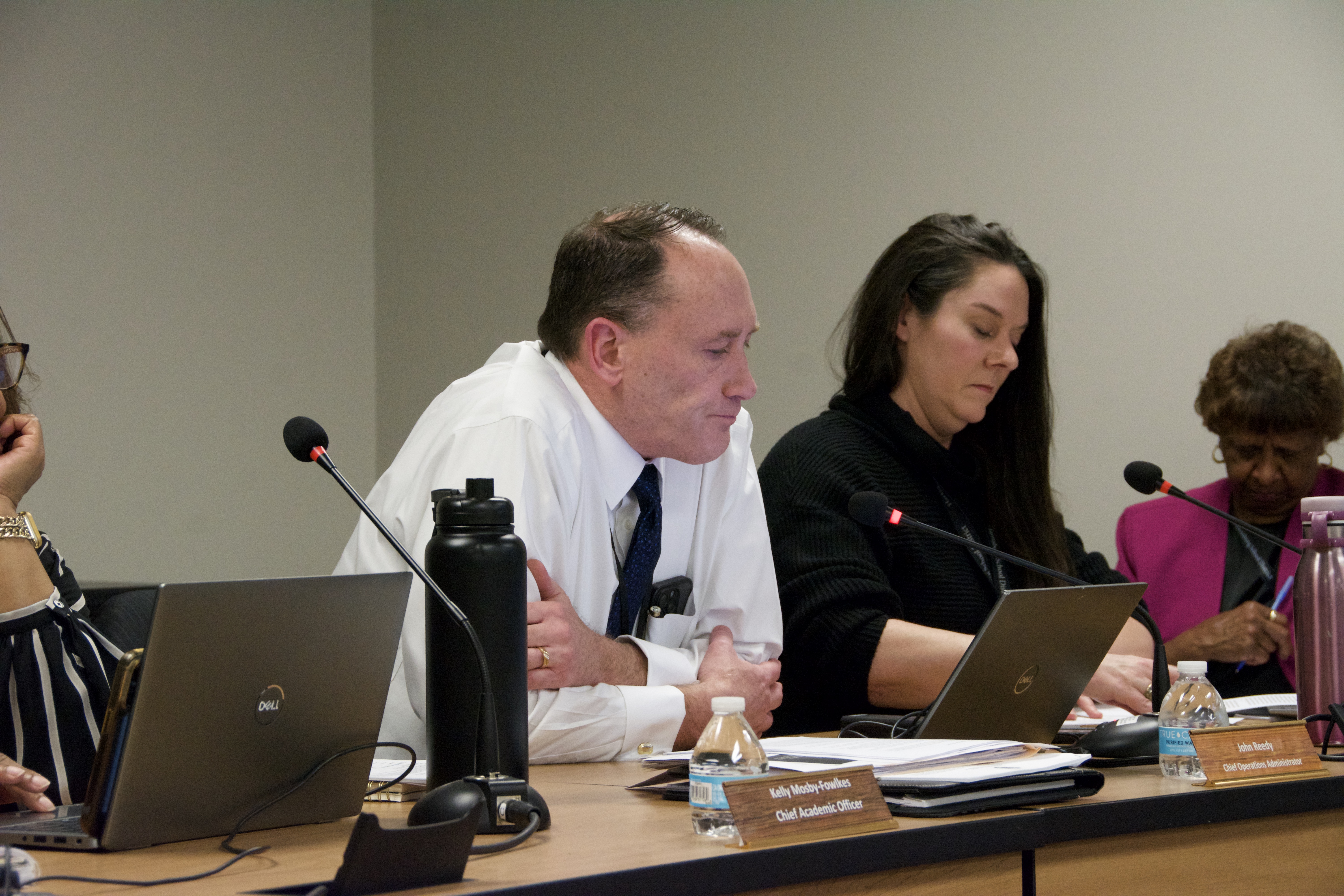
Chief Operations Administrator John Reedy speaks on William Penn demolition options

Harrisburg school officials discussed demolition contractor search options for William Penn at a meeting Tuesday night, after voting to demolish the building last month.

The 250,000 square-foot, 100-year-old, neoclassical building could be torn down as soon as this summer. It was last used as a technical school 15 years ago and has sat vacant, deteriorating, since.

Most board members voiced interest in hiring a demo contractor using a cooperative purchasing system, which would speed the process. 

The other option, public bidding, would push the demolition back to late 2026.

Chief Operations Administrator John Reedy explained to the board that the cooperative purchasing program the district has used over the last few years, Keystone Purchasing Network (KPN), “saves a tremendous amount of time” and has produced “high-quality work at a reasonable cost.”

It also allows the district to maintain control over the contractors used, he said.

“Our expectation would be that they are a local company that could get the job done in a timely manner,” Reedy explained.

In an informal 6-2-1 straw poll vote, with board member Brian Carter voting for neither option, the board asked the district to pursue the cooperative purchasing path, over public bid.
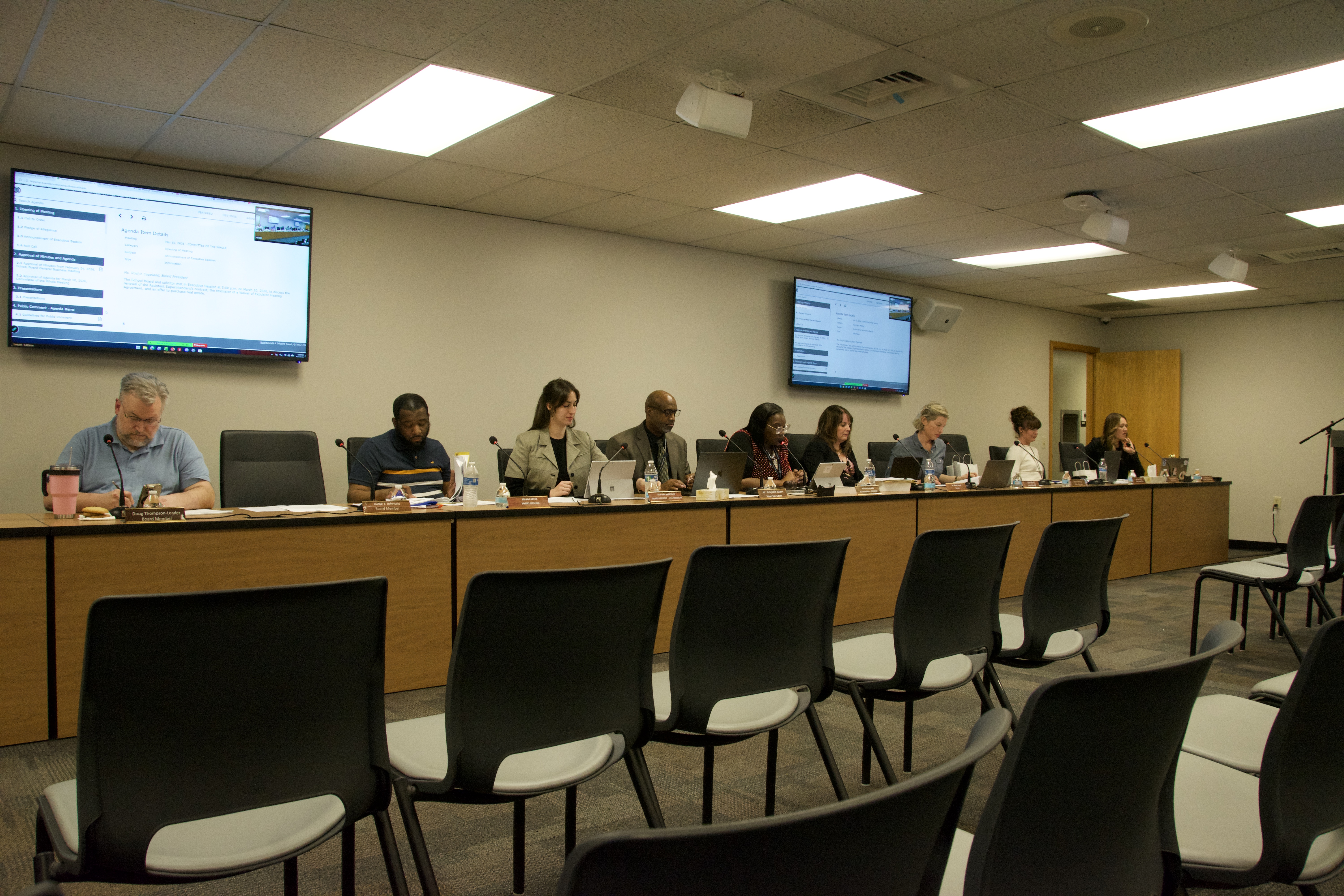
The Harrisburg School Board

No interest in one-year LERTA extension

The board indicated Tuesday night it has no interest in joining Harrisburg and Dauphin County in a one-year city tax abatement program extension.

“No one can say definitively if the program is positive or negative for the district,” explained Chief Financial Officer Marcia Stokes of the Local Economic Revitalization Tax Assistance Program (LERTA) program.

The program incentivizes development and property improvements in Harrisburg.

First implemented in 2015, it offers a 100%, 10-year tax abatement to developers for residential renovations and construction. Under LERTA, commercial and mixed-use projects are also eligible for 50% to 100% abatement.

In a straw poll vote, six out of nine board members said they would rather use 2026 to negotiate LERTA with the city and rejoin the program if it can be adjusted to better benefit the district moving forward. Only one member indicated interest in the one-year extension.

Stokes said 55 of the 73 properties the district has forgiven taxes on through the LERTA program are residential. She expressed concerns that the program may therefore be bringing more children to the district without additional tax dollars. She added that the district cannot determine whether developers would have pursued projects without the abatement in place.

“It is a big decision for the board to make, especially when you consider our position and our amended recovery plan, along with our declining assessed values that are taxable,” Stokes said, indicating that the district’s decision on LERTA will impact it financially at least 10 years into the future.

The district solicitor sent a letter to the city that it does not wish to extend the program and has since been contacted by developers to reconsider, according to board president Rosyln Copeland.

She also expressed concern that the district solicitor had said that the district’s heavy reliance on state aid might be disproportionately hurt by tax abatement programs. 

She cautioned the board that pursuing a one-year extension today would impact the amount of money the district collects from projects built this year for the next decade.

Stokes said that while the city, county and school district have historically been involved in LERTA — the other two are able to continue participating in the program without the district.

“We could do nothing, and they could move forward,” she said. 

At the end of 2025, the district declined to renew the program by issuing a one-year extension after city officials failed to respond in a timely manner to its requests for program changes, it said.

Stokes said the district asked to negotiate changes to LERTA that would make the program more beneficial to the district in December, but received no response.

In December, City Council defunded the position of Jason Graves, the city’s then-director of business development and its LERTA administrator.

Graves had said previously that Harrisburg was working on new LERTA legislation with the Harrisburg School District and, in the meantime, recommended extending the current LERTA program for another year. 

The city approved this extension in December, and Dauphin County approved it in February. The district however, never extended the program, letting its involvement lapse at the end of 2025.

Stokes said that most people’s greatest property tax burden comes from the district, so the city would be incentivized to negotiate with the district to create a more favorable program moving forward. This would involve district Superintendent Benjamin Henry, Stokes, and the district’s solicitor working with the city LERTA administrator and county commissioners to redesign the program.

“What’s the difference on how much we lose out on taxes versus the city and the county?” board Vice President Autumn Anderson asked. Stokes said it was substantially more.

“It wasn’t a benefit to the district. It really pretty much brought construction into the city, which then benefitted the city, but didn’t benefit the district at all,” said board member Danielle Robinson.

Meanwhile, Anderson clarified that the program was an economic development tool.

“The school district is essentially subsidizing development,” she said, questioning whether LERTA brings more people to the city or helps to “ignite or spark” future investments in a city that struggles with closing businesses and blighted buildings.
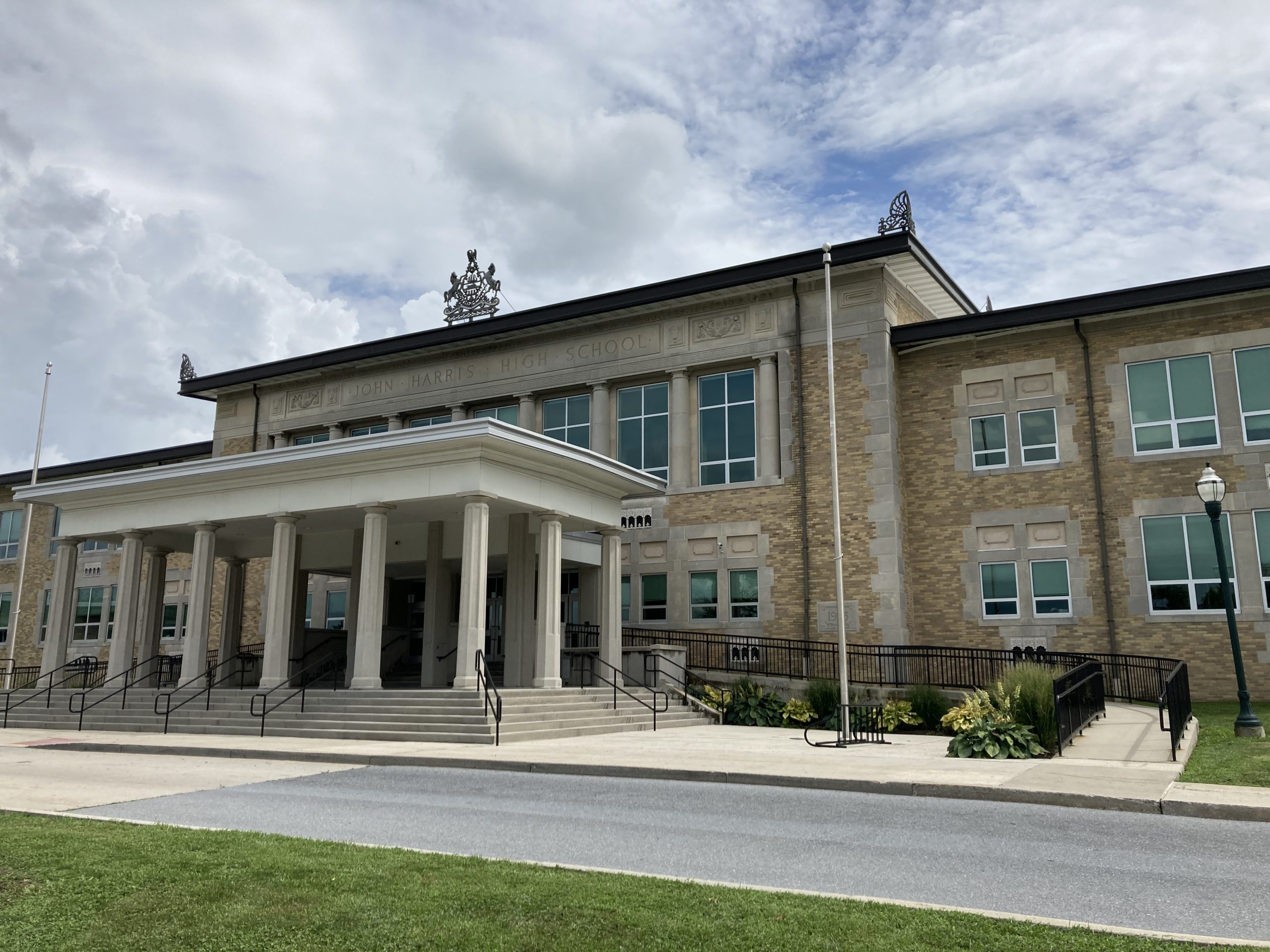
Harrisburg High School’s John Harris Campus.

More details wanted on potential high school program

The board tabled talk of a contract with a consultant that would help lay the groundwork for a multi-year plan to create a potential new flagship program for John Harris High School, after lengthy discussion.

“We’re not going to move this forward until we get some more information from our administrative team,” said Copeland.

The district asked for more details on plans to use a consultant to create a new business-related career and technical education program (CTE) at John Harris that would begin in the 2026-2027 school year. The idea was first proposed in spring 2025.

While the consulting contract would cost $10,000 or less, in line with the program, the district would also spend $25,700 to outfit a wing of John Harris. 

The area—currently a midsize office and a small classroom—would have a wall removed and be redesigned to be “more of a collaborative space,” according to the superintendent.

“We have kids be able to walk right out of algebra one and into a CTE class,” Henry explained, noting he thinks such a program could improve attendance and that he wants it to be highly visible to the high school’s students.

If you like what we do, please support our work. Become a Friend of TheBurg!

Continue Reading

Harrisburg School District begins search for “invested” principal for John Harris

Harrisburg High School’s John Harris Campus.

Harrisburg began its national search this week for a new principal for its main high school.

Superintendent Benjamin Henry said Thursday that the principal position at Harrisburg High School-John Harris Campus opened on Monday and that the district will be taking applications for at least three weeks. The district hopes to begin interviews for the role in March and introduce a candidate to the school board in April.

Henry said the ideal person for the role—which boasts a salary range of $116,990 to $156,063—has experience working in an urban school setting and can commit to the post for a minimum of three years.

“We can’t continue to have that revolving door of replacing a principal at the high school every year to two,” he said. “That’s one of the biggest parts we’re looking for is someone that’s committed to being here, that wants to be here in the city.”

John Harris has seen significant turnover with principals in recent years. Its most recent former principal, Christopher Sattele, left the district in December for another position after serving for roughly a year. 

Sattele began after Laquan Magruder, who served, beginning in 2023, for roughly a year as well  before he was arrested for violating a protection-from-abuse order and subsequently resigned

The principal prior to Magruder, Michelle Felton, held the post for about two years.

“When you have the revolving door that John Harris has had over the past few years, it’s hard to get going in a positive direction,” Henry acknowledged, adding that the school needs a principal who “really wants to be invested” in Harrisburg.

Per the job listing, the ideal candidate could also help the high school improve on student performance, attendance and school culture, as well as mentor younger teachers. 

“We need to lift instruction, especially when it comes to increasing our reading and math scores,” Henry said, acknowledging that a principal who could mentor younger, less-experienced teachers on instruction may be able to help with the necessary instruction to do so.

Currently, longtime school district employee Roma Benjamin is serving in the interim principal role.

For more information on the position, visit Harrisburg School District’s job listing.

 If you like what we do, please support our work. Become a Friend of TheBurg!

Continue Reading

Harrisburg school board hires acting principal for John Harris, reviews amended budget

The Harrisburg School District gathered Tuesday, Dec. 2 for a reorganization and general meeting.

At its last meeting of the calendar year on Tuesday, the Harrisburg School District Board hired an acting principal for Harrisburg High School-John Harris Campus.

Beginning Wednesday, longtime school district employee Roma Benjamin will temporarily fill the post, which has seen significant turnover in recent years.

Former John Harris principal Christopher Sattele, who began in October 2024, is leaving the district for another position. Superintendent Benjamin Henry said the district will conduct a national search this February for a permanent principal.

“We want to have a little bit more time to go through the process of finding a more permanent person for this role, versus moving someone in immediately,” Henry said of the appointment.

The district approved Benjamin’s employment contract, including a $138,000 salary, with an 8-1 vote. School board member Danielle Robinson voted no. She did not note her reason.

Prior to this role, Benjamin had been working as a support supervisor within the district. She served as principal at Rowland Academy last year, but was placed on administrative leave in February after being accused of harassment for allegedly shoving a 13-year-old student. The case has since been closed.

Board member Jaime Johnsen noted that at a community meeting with board members and the John Harris community, community members reacted to the idea of Benjamin filling the acting role “very” positively.

Board member Brian Carter confirmed with the superintendent that the board would get quarterly updates from Benjamin on the state of John Harris and expressed concerns about whether the high school needs to implement additional student safety measures, as its last principal indicated.

“We will have to have some tough conversations around safety at the high school,” Henry acknowledged.

Board vice president Autumn Anderson echoed this.

“I do think that it’s time for us to revisit that and start building out a plan of what the safety and security looks like. And the sooner we can do that, the better,” she said.

The board also used its last meeting of the year to review its general budget for 2025-2026 with updated state funding numbers. The district had previously estimated what state subsidies it expected to receive due to Pennsylvania’s lengthy budget impasse, explained Chief Financial Officer Marcia Stokes in a presentation during the meeting.

“This is really as a result of the state’s delay,” she said of the budget amendment.

Stokes further explained that the state budget, which passed Nov. 12, had added an additional $3.2 million to the district’s general fund budget, bringing its total to $216.3 million.

For the 2025-26 school year, the state gave Harrisburg $88.1 million for basic education, $8.7 million for special education, and $18 million in grant funding.

“This presentation actually makes me a little happy,” said Robinson.

One negative Stokes noted, however, was that because the budget did not pass in June, the district lost out on more than $400,000 in interest on the state money.

“That is definitely money we will never be able to recoup,” Stokes said.

She added that the Pennsylvania Department of Education has yet to release tuition rates for cyber and charter schools, which will ultimately impact the budget as well.

Prior to the board’s general meeting, the board moved unanimously to retain Roslyn Copeland as board president and Anderson as vice president at its annual reorganization meeting. They will serve in these roles through 2026.

Magisterial District Judge Hanif Johnson also swore in Carter, Copeland, Johnsen and Robinson for additional four-year terms. Board member Annie Hughes was sworn in for an additional two-year term. All were reelected to the board in the November general election.

School board member Brian Carter was sworn in for another four-year term.

As the school district exited state receivership in June, this school year marks the first time since 2019 that board members have full voting power.

For more information about the Harrisburg School District Board of Directors, visit their website.

If you like what we do, please support our work. Become a Friend of TheBurg!

Continue Reading

Harrisburg School District employees fight in front of students, officials address incident

Harrisburg School District Superintendent Eric Turman during a press conference on Wednesday.

Shortly after the school day started on Wednesday morning, two Harrisburg School District employees were involved in a fight. 

The district issued a statement today, confirming that a Harrisburg High School-John Harris Campus teacher and a safety monitor got into a verbal and physical altercation during a class period early this morning. 

“I want to make it clear that this incident is entirely unacceptable,” Superintendent Eric Turman said at a press conference. “This is highly unusual and is not at all representative of our faculty and staff who take responsibility as role models for our students very seriously.” 

According to the district, the safety monitor entered the classroom and confronted the teacher about a personal issue before the brief fight took place. Other safety monitors, staff and one student attempted to break up the fight, Turman said. 

No one was injured in the altercation.  

A video of the incident was posted on social media. 

The district escorted the staff members from the building and placed them on paid leave while they investigate the incident.  

According to Turman, the teacher worked for the district for two years and the safety monitor was employed by the district for the past seven years. Neither had prior issues recorded in their personnel files, Turman said.  

The high school principal spoke to students on Wednesday, and district social workers are on site to speak with students as well. 

“This is not what is expected for teachers or staff members of the Harrisburg School District,” Turman said.  

If you like what we do, please support our work. Become a Friend of TheBurg!  



Continue Reading

Harrisburg’s John Harris High School selects Michelle Felton as new principal

Harrisburg High School John Harris Campus

Harrisburg School District officials announced two new principal appointments at a board meeting on Monday night.

Both Melrose Elementary and John Harris High School will be under the leadership of new principals, both familiar faces in the district.

Michelle Felton, formerly the associate principal at Harrisburg High School John Harris Campus, will become the principal.

Felton has 22 years of service in public education, with 18 of those being in the Harrisburg School District, according to a bio on the district’s website. Felton, a Shippensburg University graduate, joined the district in 2003 as one of the founding teachers of Harrisburg High School SciTech Campus. She also spent time as a social studies teacher and department chair.

“It is my honor to be entrusted with leading Harrisburg High School John Harris Campus with a team of dedicated teachers, staff members and administrators in a manner that ensures all students have the opportunity to share their excellence,” Felton said in a statement.

Jaimie Foster, the former assistant principal at Camp Curtin Academy, will take on the role of principal at Melrose Elementary.

Foster was also previously the principal of John Harris before moving to Camp Curtin in early 2020.

“Both of these young ladies have been outstanding in terms of their presence in the district,” said Superintendent Eric Turman. “This is something Harrisburg should be very proud of. I’m very excited for what the future holds for both of them.”

For more information, visit the Harrisburg School District’s website.

If you like what we do, please support our work. Become a Friend of TheBurg!

Continue Reading

Heart in Harrisburg: As Dennis Green achieved greatness, he took his hometown with him

Dennis Green. Image courtesy of Minnesota Vikings.

He was a husband, an uncle and a role model. He was a coach and a competitor and a mentor.

Dennis Green was a great many things to a great many people. But most of all, Mr. Green—or Coach Green—was Harrisburg through and through.

Not only did he represent his hometown, he lived it. And boy, did he live.

Because he loved Harrisburg and always stayed true to himself, Green took Harrisburg with him wherever he went.

“A lot of people don’t come back when they make it. Dennis came back,” said Michelle Green, Dennis’ niece. “Harrisburg was important to him. He was proud of his city. For him, home was home. And he would always take the time to speak to everyone.”

It’s been five years since Green passed away at the age of 67. And while he continues to be sorely missed around the city, his legacy lives on.

“Dennis Green was an invaluable human being who truly cared about, not only those close to him, but what happened in the world,” said Marie Green, Dennis’ widow. “He was moved by stories of justice and fairness. We try to learn from him the way he wanted us to live. I miss him so much.”

Master Strategist

Green’s passion for life was best manifested through coaching. He coached 38 years on the professional and collegiate levels, including head coaching stints with the NFL’s Minnesota Vikings from 1992 to 2001 and the Arizona Cardinals from 2004 to 2006.

Green, a graduate of Harrisburg High, is one of a handful of coaches—and perhaps the only—from Harrisburg to become an NFL head coach. In 2019, the city dedicated a street in his name, Dennis Green Way, near his childhood home at Walnut and 12th streets, and the tombstone that adorns his gravesite reads, “Faith, Family, Football.”

“It was in that order,” said Marie Green. “Dennis was very competitive. On a scale of one to 10, it was 100. He didn’t even want to lose a flag football game. It was just his personality.”

When Green was hired as the head coach of the Vikings in 1992, he became only the second African-American head coach in the NFL’s history. During his 10 seasons in Minnesota, Green’s teams compiled an overall record of 101-72 and made the playoffs eight times.

Green’s best season as a head coach in the NFL was 1998, when the Vikings went 15-1 during the regular season and lost to Atlanta in the NFC Championship game.

“He was a master strategist,” said Marie Green. “Not only did he have a Plan A, B, C and D, he also had a Plan E, F, G and H. Football is not just a game of strength and force. It was a game of strategy to Dennis.”

But the fact that Green was a people person also made him a player’s coach. He gained a reputation around the NFL as a coach who made the people around him better, and because of that, players wanted to play for Green.

Mentally, physically and emotionally, Green was as tough as nails.

“Dennis made people want to do better at what they did,” said Marie Green. “He saw the potential in people. He was very supportive of me and helped me believe in myself. He saw my potential. He saw what I could do, and he coached me to fill my potential.”

In 1997, Green and the Vikings drafted another Harrisburg native, cornerback Robert Tate. Tate had never met Green before being drafted.

“You knew what to expect from him,” said Tate. “He believed in me, and when someone believes in you, you want to give it your all. Coach Green was a no-nonsense type of coach, but a fatherly type of coach. He held you accountable.”


Transformative

Green graduated from John Harris High School in the late 1960s, and he graduated cum laude with a degree in finance from the University of Iowa. He started coaching at Iowa as a graduate assistant, then went on to become the head coach at Northwestern in 1981 and the head coach at Stanford in 1989.

“He treated everybody equally,” said Tate. “He would tell you what he expected of you. He always said what he was going to do and did what he said he was going to do. He didn’t sugarcoat anything. He told you the way it was. He was a stand-up guy.”

From a close-knit family, Green was one of five brothers who grew up in Harrisburg. Many of his nieces, nephews and cousins still live in the Harrisburg area.

“One of the things I will always remember about him is how important family stayed to him when he reached success,” said Michelle Green. “A lot of times when people reach that level, they forget about where they came from.”

Two years after his passing, Green was inducted into the Minnesota Vikings’ ring of honor. When he died in 2016, the Vikings issued the following statement:

“He mentored countless players and served as a father figure for the men he coached. He took great pride in helping assistant coaches advance their careers. His tenure as one of the first African American head coaches in both college and the NFL was also transformative. Our thoughts and prayers are with the entire Green family.”

The way Green lived his life exemplified what it means to be from Harrisburg.

“Being from Harrisburg was very important to him,” Tate said. “He was always talking about Harrisburg. He had a crew from Harrisburg who would always come to the games. In meetings, he’d always bring up Harrisburg. His heart was from Harrisburg.”

Support quality local journalism. Become a Friend of TheBurg!
 

Continue Reading

Harrisburg School District to celebrate seniors with drive-up event and outdoor graduation

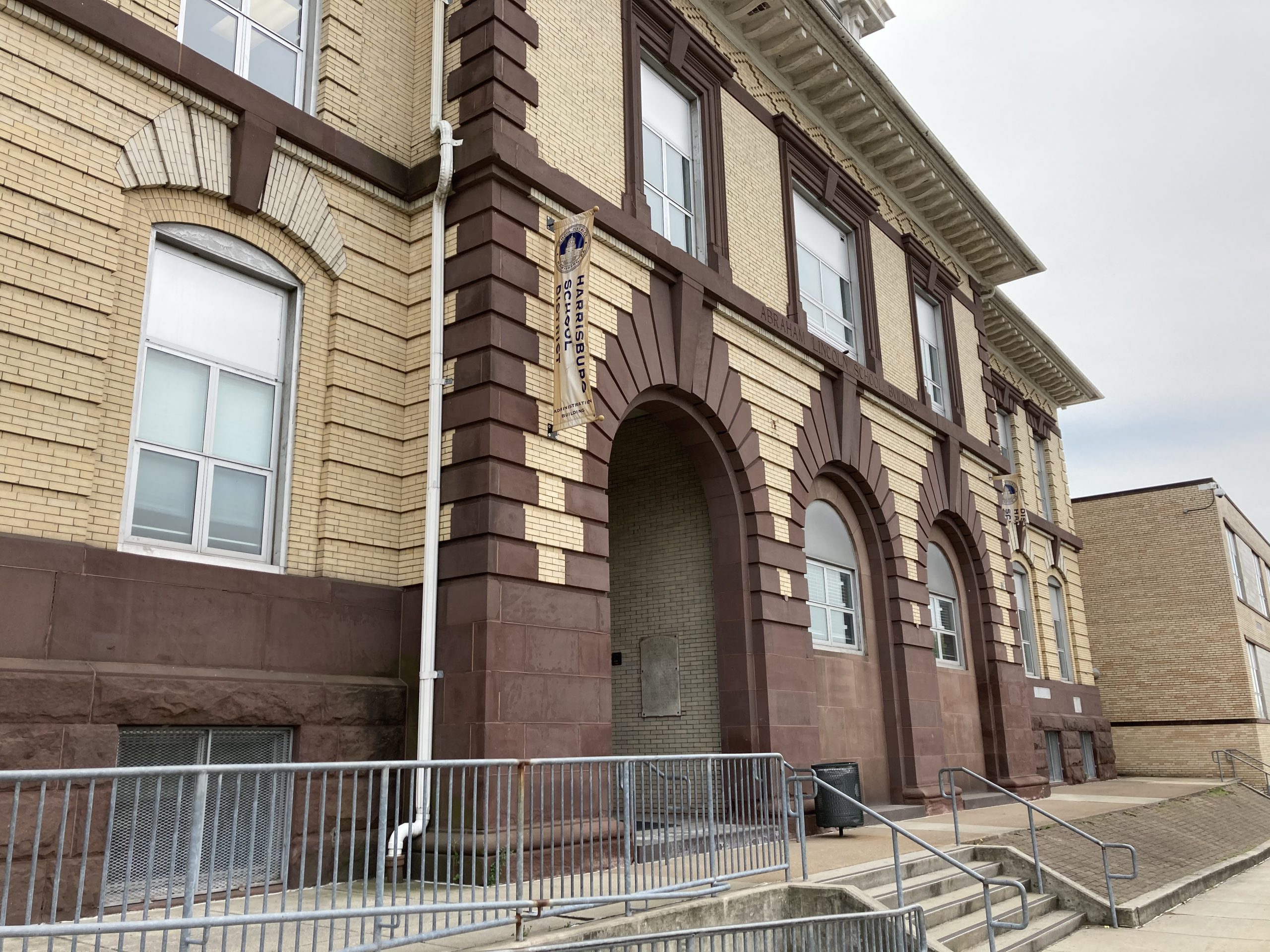
Harrisburg School District Administration building

Harrisburg will soon see its second class of seniors graduate high school during the COVID pandemic—but that won’t stop them from celebrating.

The Harrisburg School District is inviting its senior students and their families to a “Sign & Drive” event on May 8 to congratulate them from a safe distance.

“During this unprecedented time and a year of remote learning, it is imperative that we as educational leaders, a school district, student’s families and all residents of the City of Harrisburg, take time to acknowledge, celebrate and honor the hard work, steadfast perseverance, and outstanding accomplishments of our amazing students. Their academic tenacity, resilience, and determination to succeed is to be applauded,” said Harrisburg High School principals in a collective statement.

High school seniors and their families are encouraged to decorate their cars for the drive-up event, where the district will distribute complimentary Class of 2021 congratulatory signage. There will be music and gift giveaways, as well.

According to the district, only one car per graduate is permitted and students and families must stay in their vehicles.

The event will take place at Harrisburg High School’s John Harris Campus.

Also coming up is the high school’s red carpet and prom on May 22. It will be held outside on Severance Field at the John Harris Campus. In the case of rain, it will be moved to May 23.

On June 5, the district will hold a graduation ceremony at 11 a.m., also on Severance Field. Tickets will be required for entry and the ceremony will be live-streamed, as well. The rain date is June 6.

For more information, visit the Harrisburg School District’s website.

Support quality local journalism. Become a Friend of TheBurg!


Continue Reading

School’s Out: The century-old William Penn High has long sat vacant. Will it ever turn the page?

Capital Rebirth team at the William Penn High School

Mae Sobczak was a relatively quiet student back in her high school days at William Penn High School. She had lots of friends and participated in the orchestra, her high school’s sorority and intramural sports after school. But she wouldn’t have labeled herself “Miss School Spirit.”

Sixty-four years later, however, things are different.

After graduation, Sobczak started organizing class reunions. Every five years, William Penn alumni get together, and, each six months, the class of ’56 catches up. On top of that, Sobczak and a group of women meet for lunch every Friday to reminisce on the old days and chat about the new.

In 2006, the class celebrated its 50th reunion. Sobczak, along with a committee, organized the event, which included a tour of the old William Penn building. The group went there excited to relive old memories, but left feeling like the building they toured was nothing like their beloved alma mater.

“When we came out to get on our bus, we were saying how it was so sad,” Sobczak said.

Over a decade later, it’s even sadder, as William Penn has sat, deteriorating, since. The classrooms, once full of students, are full of old rubble and garbage, and the halls display crude graffiti. Do a quick Google search of the old school, and you’ll find videos posted by thrill seekers, trespassers on the hunt for ghosts or just curious residents.

Over the years, many fires have been set in the building, requiring the Harrisburg Bureau of Fire’s attention.

“Structurally, that building is in phenomenal shape,” Fire Chief Brian Enterline said. “It’s more that the contents inside are burning, not the building itself. The problem is it’s a large, vacant school building. It’s very difficult to secure.”

All the while, William Penn has sat in the hands of the Harrisburg school district—too damaged to hold on to, too big and costly to give up easily.

People have wondered what will come of the grand old campus overlooking Italian Lake, the school that was once Harrisburg’s pride.

In the Day

It’s the early 1920s in Harrisburg. The city isn’t just growing; it’s thriving. Suburbanization hasn’t led to flight out of the city yet. There’s even a trolley car system. But one of the hottest topics in the city is education. People are looking for modern, quality schools.

David Morrison, president of Historic Harrisburg Association, paints the picture.

People were ready to send their kids to school in the city, but the city wasn’t ready for them, he said. Many city schools were built in the post-Civil War years—the 1870s and 1880s. Once the 1920s came roaring around, the school district needed to play catch up.

“By the ‘20s, the educational infrastructure of Harrisburg was pretty obsolete,” Morrison said.

In the early 1900s, Harrisburg Technical High School, located in the building now known as Old City Hall, was built on Walnut Street and served students for many years. But with people hungry for top-notch education, Harrisburg Tech became a government center and a new, larger high school was proposed.

“In those days, the public school systems were so advanced,” Morrison said. “In some cases, people who lived in the suburbs paid to have their children attend Harrisburg schools.”

Urban architect Charles Howard Lloyd, who would later claim fame for the Zembo Shrine, was busy designing schools. Harrisburg Tech and Simon Cameron School (1896) were formed in his signature gothic style. It was only fitting that the district called upon him for the new school they would call Hoffman’s Woods School (later William Penn), Morrison explained.

But Allison Hill families wanted a school of their own that their kids could walk to. So, the district decided on two separate schools—John Harris and William Penn.

William Penn building plans were scaled back to save funds for the second school on the Hill, but the new blueprints were hardly modest.

“They had huge halls,” local historian and William Penn alum Calobe Jackson recalled. “We would start track right after Christmas, and we would run through the halls for practice.”

Jackson graduated from the class of 1948. He remembers an indoor courtyard and a grandiose auditorium with a balcony. It was beautiful and well designed, he said.

In addition, there was a kitchen, cafeteria, housekeeping suite, science and lab rooms and shop spaces for tech courses, amongst other classrooms, according to “Building Harrisburg,” a book by historian Ken Frew.

“Years ago, they used to say William Penn was the largest high school campus in the U.S.,” Jackson said. “It was really a beautiful school.”

Jackson’s class had a little over 300 students, while the full school had about 1,200. Back then, high school lasted three years instead of four.

When William Penn was constructed in 1926, high school enrollment was swelling. Between 1900 and 1920, student enrollment in the United States quadrupled and then nearly quadrupled again by 1940, according to the public policy magazine, City Journal. But it was in that same decade that the school movement ended. City Journal ties that to segregation and racial discrimination, which had Blacks enrolling at lower numbers than whites.

By the mid-1950s, enrollment at William Penn had only declined slightly. Sobczak remembers that her class of ‘56 had about 264 students. Pride for their school was still strong among students, she recalls.

“We were proud to be city school graduates,” she said.

But the 1950s represented the high mark for William Penn. That decade, the city’s industrial companies began closing, and people started leaving Harrisburg for the suburbs. In 1972, John Harris absorbed William Penn students, the building morphing into a technical school before closing entirely.

Moving Forward

For most William Penn graduates, it’s been a long time since they danced at a sock hop or scored a goal in intramural sports. Most are parents, grandparents and even great-grandparents. Many have passed away. Sobczak’s alumni mailing list gets shorter by the year.

Just like many of the students that once walked its halls, William Penn is old. But that doesn’t mean it’s any less grand. The interior may be decrepit, but the building is still the columned mammoth that it was in the 1920s.

For some, that’s enough to see it ripe with potential.

Superintendent Chris Celmer said the school district is currently taking letters of interest and offers for the William Penn building.

“We want them to have local interest in the community, and they’re going to have to have experience,” he said. “It has to come with the ability to finance.”

Local nonprofit Capital Rebirth put in a $2.5 million bid in March and garnered over 7,500 signatures from the community on a petition of support for the plan they’re calling “The Rebirth Project.” The group wants to create a community center, including space for education, entertainment and wellness, explained founder Mikell Simpson.

“William Penn has always been a historic landmark,” he said. “We know what the needs of the community are and how everyone can benefit.”

Included in the building would be an indoor stadium, classrooms, an enclosed track and offices. Simpson estimates that the work would take three to four years and cost up to $175 million.

But others envision the building as something else entirely.

Jackson could see it as a retirement home with outdoor space for rehabilitation services. Morrison thought turning it into condos or apartments would be nice or even having it join forces with Zembo Shrine across the street for a national organization.

“It has the possibility to really enhance that whole part of Uptown Harrisburg if it’s done right, and that’s why we care,” he said.

There have been other successful school building conversion projects in the city, such as the old Simon Cameron School in Olde Uptown and the former Boas Street School at Green and Forster streets, which both are now apartment buildings.

At the beginning of the year, the redevelopment group, The Bridge, started renting the old Bishop McDevitt school with plans to build an eco-friendly community center. It also has put in a bid for William Penn, according to the developers.

So, builders have big plans for other big school properties in the city.

But William Penn isn’t just big—it’s enormous—including a 222,000-square-foot building and 25 surrounding acres of land.

As Superintendent Celmer said, taking on a project like this requires not only a heart for the community, but strong resources backing it.

The district, he said, continues to weigh all viable offers.

The William Penn building is located on the 2000-block of N. 4th St., Harrisburg.

For more information on The Rebirth Project, visit their Facebook page. To learn more about The Bridge, visit www.thebridgeecovillage.com.


Continue Reading

“Harrisburg Houdini”: Bob Davies emerged from the local hardwood to become one of professional basketball’s most famous players.

screenshot-2016-12-28-10-01-16The year was 1938, and spectators at the annual John Harris-William Penn high school alumni basketball game didn’t realize that they were about to witness sports history.


At that game, 18-year-old Bob Davies unveiled the then-unheard of behind-the-back dribble, which he called the “dipsy doodle dribble.”

“Bob began to dribble down the court with his right hand,” wrote Bus Funk in his Harrisburg Patriot’s “Cruising Around” column. “And, when a guard closed in on him, he made a motion as though he would pass the ball backward to a mate, but instead of doing that, he twisted the ball around his back to his left side and continued to dribble down the court without missing a stride…. It was the slickest thing your motor man has seen on the hardwood for many a moon.”

That was just the beginning for Davies. A few years later, he debuted the maneuver before a national audience at the 1942 National Invitational Tournament (NIT) game in New York’s Madison Square Garden before going professional.

“You can take the whole Hollywood lexicon of superlatives and still be at a loss for words to describe the utterly fantastic operations of the Harrisburg Houdini,” remarked a New York Herald-Tribune sportswriter. “The things Mr. Davies does with a basketball have to be seen to be appreciated, but even then you don’t believe them. You think it is a mirage or some optical illusion made possible by side-show mirrors.”

Walter E. Kirker, assistant director of the Harrisburg Central YMCA, gets credit for introducing Davies to the sport. When Davies’ father lost his job after the 1929 stock market crash, however, the family could not afford the 25-cent Y weekly dues. So, he had to be resourceful to continue playing. He and his friends marked off a court in an alley, nailed a 5-gallon paint can to a board on a telephone pole, and used a tennis ball.

As a youngster, unable to afford a ticket to local high school basketball games, Davies peeked through a crack in a door in the Chestnut Street Market House’s second floor Madrid Palestra Ballroom.

“I’d see these great black players jump in the air, throw the ball, hit somebody with a pass, or shoot the ball,” he recalled. “And I guess that stuck in my mind.”  

Davies has also been recognized as a pioneer of the penetration game, driving into the lane and passing off to a teammate, and of the transition game, getting down court fast in superior numbers to get an easy shot.

Davies was John Harris High School’s second four-sport (basketball, baseball, football and track) letterman. The school’s outstanding athlete trophy used to have a lifelike statuette of him wearing a basketball uniform. Athletes at rival William Penn High School compared him to Jack Armstrong, the “All American Boy,” a fictional radio show character who often won games in the last minute for his high school team.

As a two-hand set shooting All-American, Davies led the Seton Hall College Pirates to 43 consecutive wins, tied for the sixth longest streak in NCAA Division I history. The Sports Illustrated book, “100 Years of Hoops,” ranks him as one of the eight most influential players in the first century of college basketball.

According to 1950s-era New York Knicks coach Joe Lapchick, Rochester Royals backcourt ace Bob Davies, Minneapolis Lakers center George Mikan and Philadelphia Warriors jump shooter Joe Fulks were the three stars who saved the early NBA with their crowd appeal.  Compared to today’s NBA icons, Davies was as popular as the Cleveland Cavaliers’ LeBron James and the Golden State Warriors’ Steph Curry and Kevin Durant.

Davies’ hometown appreciated him as a national sports hero and role model. On Feb. 1, 1950, the John Harris High School-Edison Junior High School Booster Club sponsored “Bob Davies Night” at the Philadelphia Arena. Three hundred Harrisburg residents made the journey to the event.

“We consider this night in your honor a small token of our appreciation in return for the aspirational hopes you have given to the youth of our city,” said Booster Club president Bob Holmes.

The ultimate moment in Davies’ professional career occurred on April 21, 1951, in Rochester’s Edgerton Park Sports Arena. With 44 seconds remaining in the seventh game of the NBA’s first final playoff series and the score tied, Davies drove to the basket, and New York Knicks guard Dick McGuire fouled him hard. A timeout was taken for medical attention. Davies responded by swishing two underhand free throws to clinch the championship.

On April 22, 1990, Davies, age 70, died of prostate cancer. Pennsylvania Gov. Robert B. Casey memorialized him “for not only his athletic achievements, but the joy he brought to others and his devotion to making God’s work here on earth truly his own.” In a proclamation, Harrisburg Mayor Steve Reed urged the city’s residents “to further strive to live their lives in as an exemplary manner as he did.”

Davies’ plaque in the Naismith Memorial Basketball Hall of Fame states that he was considered the “First Super Star Of Modern Pro Basketball.” The road to superstardom began with some tips in the Central YMCA, peeks through a crack in a ballroom door, and pick-up basketball in an alley in Harrisburg.

Barry S. Martin is author of “Bob Davies: A Basketball Legend,” recently published by RIT Press. To learn more about his book and order a copy, visit www.rit.edu/press/bob-davies-basketball-legend, Amazon.com or other bookseller.

Continue Reading

Learning Curve: It’s been an adjustment, but Harrisburg students have built new friendships, lives at DC Tech.

DC Tech students Cedrickia Hawkins, Mohammad Tanveer, Nila Cobb and Jeremiah Ellison.

DC Tech students Cedrickia Hawkins, Mohammad Tanveer, Nila Cobb and Jeremiah Ellison.

It’s been five years since Harrisburg students transferred to the Dauphin County Technical School, following the closure of the district’s Career Technology Academy.

So, how’s it going for city students?

Based on my informal survey, the answer seems to be, “Not perfect, but pretty well.”

Nila Cobb, an 11th-grade web design student from Harrisburg, said she was “so surprised” by the friendliness of students when she first came to DC Tech in the ninth grade.

“Everyone was so nice and polite, and you had so much support,” she said. “Coming here definitely made me a better person, but I’m still myself.”

Cedrickia Hawkins, a 12th-grade carpentry student, admitted that “it was tough” when she first came to the tech school.

“At Harrisburg, there wasn’t a dress code or a lot of rules,” she said. “But coming here was good. It was much friendlier here, especially with the seniors. It was ‘Hi, hi, hi’ whenever you passed somebody in the hall. The teachers were happy here, too.”


So Much Help

It all started in January 2011 when 12 carpentry students transferred to Dauphin County Tech after Harrisburg’s John Harris campus closed its vocational program. Four Harrisburg sophomores attended Tech’s morning session, with juniors and seniors attending in the afternoon.

“One of the students said that this was carpentry on steroids here,” said Dauphin County Technical School Director Peggy Grimm. “The (John Harris) program was dying financially,”

Preceding the Harrisburg students’ arrival was carpentry instructor Tim Carroll, who transferred to DC Tech in November 2010 after teaching 21 years at John Harris.

“We were thrilled that we were able to hire Tim Carroll,” Grimm said. “He was instrumental in our transition process. Everyone involved in that whole transition process had the kids in the forefront. It involved a lot of work.”

Carroll explained the differences between the two programs.

“Both places have their good points,” he said. “It’s so much easier here (at DC Tech) because we have so much help. Carpentry ran smoothly at John Harris; they just kind of left us alone. I worked by myself for so long that I had to get used to having aides.”

Today, 240 Harrisburg students attend DC Tech, with some enrolled in each of the school’s two-dozen programs. The school’s total enrollment numbers around 1,000, pulling students from much of the county.

Harrisburg students attend the tech school on a tuition basis, meaning that the district pays a flat rate per student. Member school districts pay annual fees based on a weighted five-year attendance average. Currently, administrators are considering upgrading Harrisburg’s status to a member school district.


High Expectations

Grimm said there were definitely “bumps in the road” when Harrisburg students first transferred to DC Tech.

“We had expectations for them, and they were high expectations,” Grimm recalled. “We had a few fierce conversations. A few students ended up going back to Harrisburg.”

In particular, some students objected to the uniform requirement.

In 2009, the school adopted a dress and grooming policy that requires students to wear “professional dress.” This involves shirts that clearly display the DCTS logo or an approved design or embroidery for individual programs. Programs such as food service, health assistants or diesel technology require additional garments like scrubs or coveralls.

“Our uniform requirement was a big thing for them, but, as time moved on, we stayed consistent with our expectations,” Grimm said. “Our expectations for respect stayed. Some Harrisburg students still have discipline problems, but so does every district.”

With time, Hawkins, a senior, said she came around to the requirement.

“I really understand now why they have a dress code here,” she said. “It’s more professional.”

Jeremiah Ellison, a 12th-grade drafting and design technology student, said he tended to stick with other Harrisburg students when he first came to the tech school in ninth grade, but began to mix with others after a while.

“As the year went by, I started to talk to more and more people, and it became easier for me,” he recalled.

So what does Ellison find different about DC Tech compared to Marshall Math Science Academy, which he attended in the Harrisburg district?

“There were only about 150 kids at the Math Science Academy,” he said. “It was very small and very quiet. In Harrisburg, we played around a lot more. Here (at DC Tech) we try to mix it up, you know, like with work and play.”

Mohammad Tanveer, a 12th-grade electronics technology student, moved here from Brooklyn, N.Y. He spent a year in the Harrisburg district before moving on to DC Tech. As with other Harrisburg students, it took some time before he got used to his new school.

“I was like, ‘Where are the metal detectors?’” Tanveer recalled with a laugh. “I saw a wide variety of people that I never saw before. I heard barking and said ‘What’s that?’ and then I realized that there’s a veterinary assistant course here.”

New students must get comfortable working not just with new faces but for the good of their team.

“Teamwork is a huge element of what we have here,” said Principal Jon Fox. “The kids have to work together.”

Carroll, the John Harris instructor who moved to DC Tech, views the situation with a philosophical edge.

“Kids all come here with different attitudes, but deep down, kids are just kids,” he said. “We get rid of the rough edges real quick. Over there (at John Harris), they had to act real tough. It was fight or flight there. Here, kids can relax a little bit.”


For more information about Dauphin County Technical School, visit www.dcts.org.

Continue Reading