Greater Harrisburg Area Tenants United
When the pandemic hit, all Bobby Mitchell wanted to do was stay home.
He would be considered at-risk for many reasons. He’s 61 years old and has various health issues, including diabetes and high blood pressure, not to mention the kidney transplant he underwent.
Mitchell was receiving Social Security disability benefits, but it wasn’t enough to cover rent, utilities and other expenses.
Before the pandemic, Mitchell collected aluminum, copper and other materials from nearby scrapyards to make up the difference. With help from his friend, he made around $500 in a “good month.”
As March ushered in COVID-19, he couldn’t collect anymore. His son was out of work, and his son’s mother wasn’t working due to mental health issues. Mitchell fell behind on rent.
“You’ve got to think about your family,” he said. “I had to take care of his needs, her needs and mine.”
All Mitchell wanted to do was stay home, but that grew increasingly uncertain as back rent piled up and an eviction notice loomed.
However, after working with Kay Pickering at The Center for Peace and Justice in Harrisburg, armed with a federal document, Mitchell was able to postpone his eviction.
COVID Chaos
When the pandemic hit in March, the Pennsylvania Supreme Court halted evictions, which Gov. Tom Wolf extended through the end of August. In September, the U.S. Centers for Disease Control picked up where the state left off, declaring a ban on evictions through Dec. 31. This applied to evictions for non-payment of rent, as in Mitchell’s case.
Although the moratorium protected these residents from a lockout, landlords could still file for eviction.
In Harrisburg, between Sept. 1 and Dec. 7, there were 528 evictions filed, according to data from the CREATE Lab at Carnegie Mellon University and Philadelphia Legal Assistance. Of those, 151 tenants were protected under the CDC’s declaration and could stay in their homes, at least through the end of December. There were 171 cases with scheduled hearings, and in 206 cases, landlords were granted possession.
Caleb Cossick, a volunteer with Greater Harrisburg Area Tenants United, which advocates for renter’s rights, explained the reason behind lockouts happening despite the moratorium.
“People aren’t being told their rights,” he said. “Information just isn’t shared.”
There were some people who weren’t aware of the moratorium or the declaration that they were required to fill out in order for it to apply, Cossick said. There were others who were evicted due to a month-to-month lease, in which the landlord can cancel whenever they want. Some were evicted because they only had an “oral lease,” which is less likely to hold up in court. Cossick calls these “loopholes.” With the declaration being relatively vague, he said that a magisterial district judge was often left to interpret the rules how they saw fit for each case.
“If a landlord wants to get around it [the declaration], they can try,” he said.
Throughout the pandemic, Greater Harrisburg Tenants United has set up tables outside court offices and at community events with the hope of stopping evictions by educating tenants of their rights.
In the declaration, the tenant had to certify that they had “used best efforts” to obtain all available government assistance, that they were unable to pay their full rent, but were paying as much as they could. They must also be facing homelessness if they are evicted, the declaration form said.
According to Harrisburg attorney Jordan Cunningham, this is one of the biggest issues. Renters are not paying anything even if they are able to.
“Zero isn’t what you can afford if you are still working,” Cunningham said. “My concern from the aspect of the landlord is, if we are going to have a moratorium in place, the landlord needs to have some way to enforce the lease and receive some rent, if not all of the rent.”
After all, landlords have obligations, as well. They have mortgages and taxes to pay. They also have a responsibility to keep up with the maintenance of the building, Cunningham said.
Planning Ahead
Angela Parker-Quarles’ phone has been ringing nonstop lately. She estimated that her phone calls have increased by 45% over the past months.
People call Parker-Quarles at The Fair Housing Council of the Capital Region frantic and desperate for help. When contacted recently, she was working with a 70-year-old resident in Steelton who was facing eviction.
The Fair Housing Council tries to bridge the gap between landlords and tenants, Parker-Quarles explained. They provide education on renters’ rights and responsibilities.
During the pandemic, she has tried to help clients think long-term. She’s afraid some people aren’t preparing for what happens after the moratoriums end.
“You can flash that declaration, but if you’re doing that without a plan, they’re just going to be at your door when it ends,” she said.
She’s been helping people find employment and other support services in order to get back on track with rent. However, rental assistance is in short supply, she said.
For people like Bobby Mitchell, that would make all the difference.
With no one in Mitchell’s household employed, they couldn’t pay their full rent. Eventually, his son and son’s mother found employment. While the family is able to keep up now, they have three months’ worth of back rent.
Christian Churches United of the Tri-County Area is able to help families facing homelessness find shelter, Executive Director Darrel Reinford said. They also have some funds for rental assistance through their homelessness programs.
In December, the city of Harrisburg also launched a rent relief program to provide funds for those struggling to pay rent. They offered up to $5,000 per household.
According to Sandy Ballard, public services coordinator for the Dauphin County Bar Association, one of the biggest issues is a lack of communication between landlords and tenants.
“What’s surprising is people get an eviction notice and won’t even call the other side and say, ‘Hey, can we talk?’” said Ballard. “It’s in both parties’ best interests to come up with a plan.”
Ballard worked with Matt Rich of MidPenn Legal Services, Reinford and others to come up with a plan to try to help stop evictions. They are hosting free mediation sessions for landlords and tenants.
Every Tuesday at 9 p.m. on Zoom, volunteer attorneys work with landlord-tenant pairs from Dauphin County to provide education and assist them in agreeing on a payment plan to avoid eviction. While there had only been a few sessions by early December, Ballard said that they are going well.
Uncertain Future
Mitchell has boxes packed around his house. He fills a few, here and there, “just in case,” he said. When I called to check in on him on a mid-December morning, he said he was “hanging in there.” But as a wet snow fell in Harrisburg, Mitchell said that he was worried. He still had around $4,000 of back rent to pay. “It’s cold out there,” he said.
That same night, Harrisburg City Council voted to impose a 30-day moratorium on evictions for non-payment of rent and lease expiration. Through mid-January, Mitchell was safe again, possibly longer, if the city or federal government chose to renew the ban on evictions.
“Prolonging this will probably help us,” he said. But in this case, time isn’t money, and Mitchell expected the debt would still be there once the moratorium ends, like the last one.
While moratoriums like the CDC’s and Harrisburg’s deal with the immediate need of shelter during a crisis, Cunningham said that extending them too long is “really just kicking the can down the road.”
Parker-Quarles expressed a similar sentiment, adding that a moratorium should go hand-in-hand with some sort of payment plan requirement for the tenant.
“I’d like to see some kind of plan in place to get these individuals out of the situation,” she said.
For now, Mitchell’s family will keep saving a bit of money from each paycheck and keep some boxes packed, just in case they need to find a new place to live.
“All we want to do is have a roof over our heads,” he said.
Eviction and Rental Assistance Resources
Center for Peace and Justice: 717-233-3072
Christian Churches United of the Tri-County Area: www.ccuhbg.org, 717-230-9550
Dauphin County Bar Association Mediation program: https://forms.gle/egB7ZQSXQU92zCeP8, [email protected]
Fair Housing Council of the Capital Region: www.pafairhousing.org, 717-238-9540
Greater Harrisburg Area Tenants United: www.harrisburgtenants.org, 717-461-2096
Mid Penn Legal Services: www.midpenn.org, 800-326-9177
Support quality local journalism. Become a Friend of TheBurg!













 Writer and Harrisburg University professor, Robert E. Furey, writes in his story titled “Ouroboros” that “… a monster slouched into the awareness of our lives. They told us it was coming.”




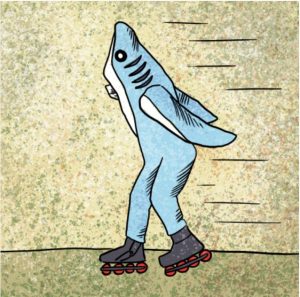 10. Land Shark. In this annus horribilis, let’s begin on an upbeat note—perhaps the one unalloyed, unexpected joy to come out of 2020. Naturally, I’m talking about Harrisburg’s one-and-only skating fish, Sharkman. Back in May, he glided into our lives, a vision in blue-and-white felt, offering fleeting comic relief for a pandemic-weary city. Before long, Sharkman sightings abounded, the costumed critter becoming a social media celebrity and even making a Burg cover. A few months later, a young musician named Jordan Dandy took up the inspirational cause in Harrisburg, holding up signs with messages like, “I value you” and “You’re so important.” When I look back on the chaotic, divisive, dark year of 2020, I hope that these two selfless people come first to mind.
 9. Crime & COVID. Now that I’ve built you up, let me bring you back down. Like in many U.S. cities, Harrisburg experienced a surge of gang activity, which, inevitably, led to turf battles, disputes and violence, especially in certain city neighborhoods. The pandemic seemed to play a big role, with jobs lost, schools closed and youth idle. The city and county responded by gearing up its anti-gang task force, but not before numerous young people took a wrong turn or even lost their lives.
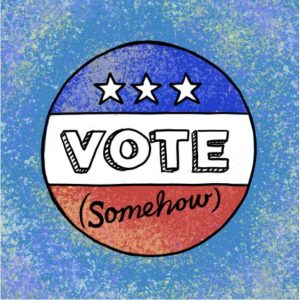 8. Vote, Somehow. In my annual list, I typically keep to stories exclusive to the Harrisburg area. The presidential election was not that, but the changes to our long-established ways of voting affected people in this political town tremendously. In Dauphin County, cautious voters cast more than one-third of their votes through the mail, while many others anxiously masked up and headed to their polling places. Kudos to our election officials for pivoting quickly to what amounted to an entirely new way of holding an election, doing so with speed and accuracy. In just months, they built a hybrid voting system, a legacy that is certain to stay with us, changing our voting habits, perhaps permanently.
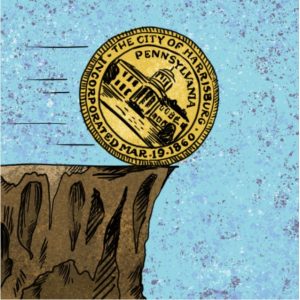 7. Off the Cliff. A late-year story squeezed into my Top 10 this year—the state legislature’s rather surprising decision in November to let Harrisburg retain its elevated earned income and local services tax rates. The average city resident may give this a shrug, as their tax bill will not change at all. But it’s a huge relief for city officials who feared falling off the “fiscal cliff” in a few years, when their extra taxing authority would have expired, forcing them to somehow make up $12.4 million in annual revenue. With this matter settled, the city now feels it can move beyond its decade-long fiscal nightmare, finally putting the profligate Reed years and resulting financial crisis behind it.
 6. Major Developments? The announcements began early in the year at the former Bishop McDevitt building, headed down to South Allison Hill, took a turn onto N. 6th Street and then bolted over to the red-hot Reily Street corridor. Italian Lake, downtown and the Shipoke area even got caught up in the frenzy. I’m referring to major building proposals in the city. From pro athletes to ambitious developers to several nonprofits, everyone, it seemed, wanted to build something—often something very large—in Harrisburg. While there was no lack of plans, there was a definite lack of hammers, nails, bricks and mortar. Will 2021 see anything more, um, concrete? I’ve been around this town long enough simply to wish everyone the best and then sit back and see what, if anything, develops.
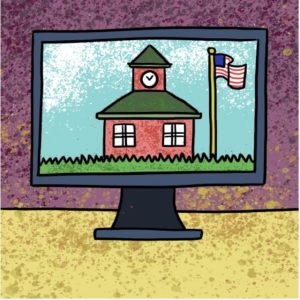 5. Home Work. The Harrisburg School District has been through the ringer in recent years: a discredited administration, a bitter school board race, state receivership and a whole new leadership team. Just as the dust began to settle, the pandemic hit, sending kids packing for home instruction. Nearly a year later, they still haven’t returned to the classroom. Credit the administration for quickly cobbling together a virtual program and the teachers for implementing it. However, all-Zoom, all the time has been a poor substitute for classroom learning, so much that even the kids yearn to return to school. If you look up the term “no-win situation,” you just might find a picture of the district’s stressed teachers, students and parents.
 4. Committee Compromise. Every year, Harrisburg has at least one policy issue that makes it onto my annual list. For 2020, that initiative was the Citizen’s Law Enforcement Advisory Committee. The city first proposed the legislation in June after weeks of Black Lives Matter protests, though the ordinance didn’t pass until November, following several public meetings, hundreds of public comments and numerous changes. For some residents, the legislation went too far; for others, it didn’t go far enough. We’ll now see how this compromise plays out as the committee is populated and begins its work in 2021.
 3. Year of Protest. I’ve long considered Harrisburg to be a sleepy capital city. Each morning, state workers zip in and, each evening, they zip right back out. Most of the time, that’s about the extent of the state’s impact on the city. Not in 2020, when Harrisburg became a magnet for protests. The year of outrage began in April, with noisy anti-lockdown protesters gridlocking city streets, then continued in May and June with demonstrations and marches in support of Black Lives Matter, before wrapping up in November with election-related protests and counter-protests. Along the way, there were some tense moments, especially in the neighborhoods near the Capitol. However, as they say, all’s well that ends well. Violent incidents were remarkably few given the thousands of people who participated in dozens of protest actions, even if police sometimes literally had to stand between opposing sides to keep the peace.
 2. Small Business Battered. The pandemic has wrought tremendous collateral damage (see several items above), but the impact on the small business community has been especially profound. Harrisburg is a unique place. Snubbed by major chains, local people have stepped in to fill the gap, with each restaurant, bar and shop its own individual, often quirky, creation. As of this writing, most have survived, though some have not, and many are teetering still. As I have before, I renew a call to support our wonderful small businesses and arts groups, which add so much life and character to this weird little city on the Susquehanna River.
 1. COVID Is Everything. In my three decades in journalism, I have never before seen a single story so dominate the news cycle and our lives, affecting everything from our health to our economy to our schools to our social lives to our housing. In fact, you can overlay the pandemic atop of each of the prior nine stories on this list. Since March, it’s been the stormy sea we’ve all been forced to swim in, and, here at TheBurg, we’ve slapped on our masks and tried to cover it from every possible angle. I hope we’ve been of service to our community during this time of trial, though I pray we’ll never have to endure anything like it again.