Bethesda Mission, local cafés bring back #iheartHBG campaign, more important this year

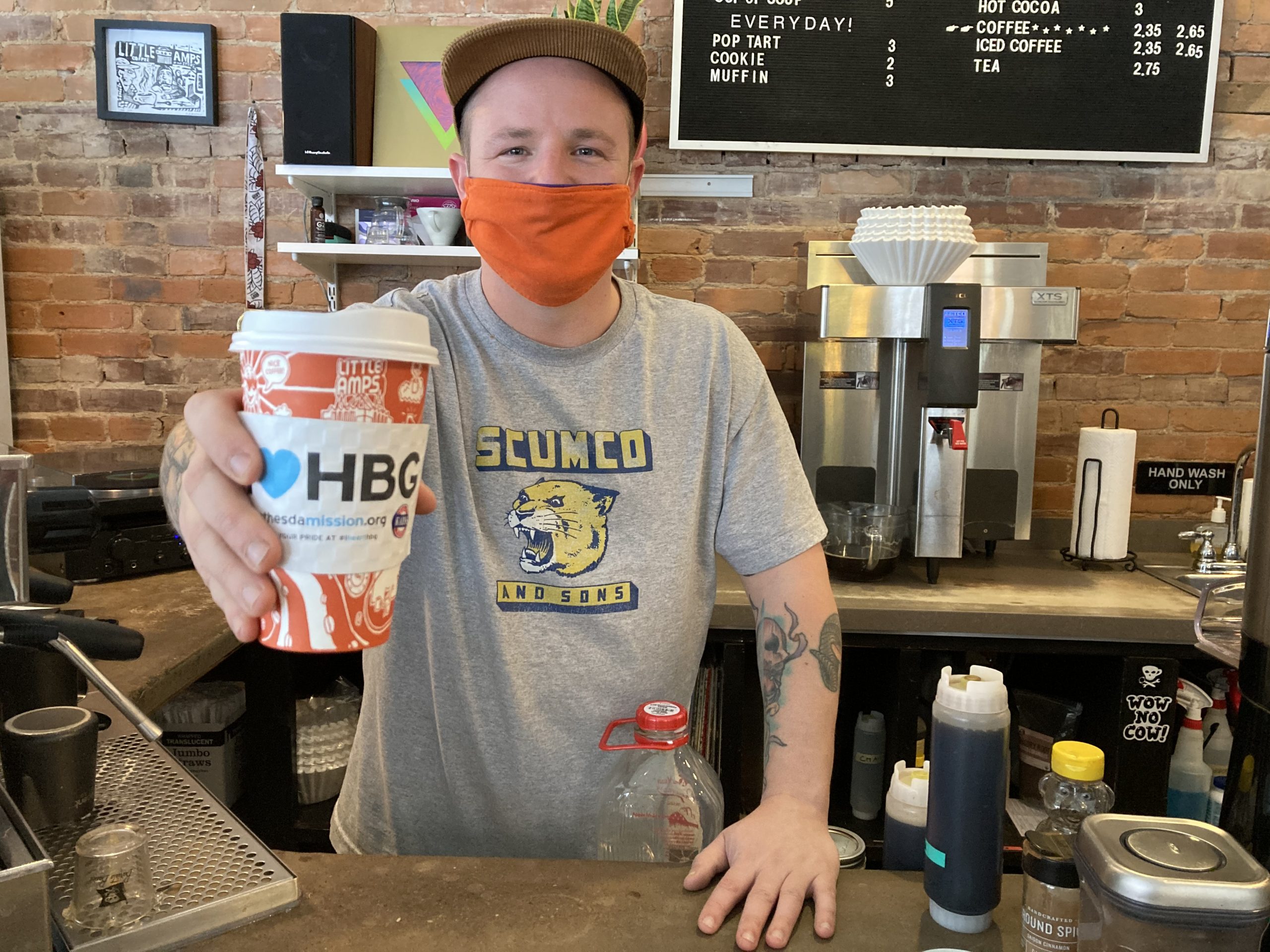
Barista Zac Brady at Little Amps serves a coffee with the message #iheartHBG to participate in Bethesda Mission’s campaign.

If you’re willing to venture out for coffee on this snowy day in Harrisburg, you may find not just a warm brew, but a warm message.

For the fourth year, Bethesda Mission and nine Harrisburg-area coffee shops are hoping to rally community pride and support for the mission through the #iheartHBG campaign.

Throughout February, each to-go cup will have a sleeve, at participating shops, with that slogan. Bethesda is encouraging patrons to post pictures of their cups on social media and tag the organization.

“In the work that we do Harrisburg, we are always trying to help the community,” said Jessica Henry, Bethesda Mission’s communications specialist. “We really wanted to extend that and bring awareness to the organization.”

There are donation jars at every location, and each cup sleeve has a QR code that directs people to an online giving option. Funds this year will support the Bethesda Women’s Mission Renewal Project.

Demolition began in June on the 120-year-old pair of buildings that make up the women’s mission on the 1900-block of Forster Street. The mission provides long-term and transitional living for women in crisis to seek restoration and growth.

The buildings currently are undergoing construction and renovation and should be complete in the fall, Henry said. She added that they are close to their fundraising goal and donations from this campaign could help with the last bit of money needed.

Bethesda hopes the campaign not only assists their efforts in the community, but supports local businesses, as well.

“We love that it incorporates small businesses and encourages people to be patrons of small businesses,” Henry said. “The need is greater now than ever for us and for them.”

Barista Zac Brady slipped a coffee in an #iheartHBG sleeve at Little Amps on Green Street on Monday morning.

“We are down for the city and know the mission is doing good things,” he said. “Any way we can help out.”

The following shops are participating in the #iheartHBG campaign:

  • Capital Joe, 36 West Main St., Mechanicsburg
  • Cornerstone Coffeehouse, 2133 Market St., Camp Hill
  • Elementary Coffee Co., Broad Street Market and 256 North St., Harrisburg
  • Little Amps, 1836 Green St. and 133 State St., Harrisburg
  • One Good Woman, 1801 Market St., Camp Hill
  • The Pennsylvania Bakery, 1713 Market St., Camp Hill
  • St. Thomas Roasters, 5951 Linglestown Rd., Harrisburg
  • Tomato Pie Café, 3950 Tecport Dr., Harrisburg
  • Urban Churn, 1004 N 3rd St., Harrisburg

For more information about the #iheartHBG campaign, visit https://www.bethesdamission.org/event/i-heart-hbg/.

Support quality local journalism. Become a Friend of TheBurg!

Continue Reading

Downtown Harrisburg retailer temporarily relocates as its store is expanded, renovated

The former Rite Aid store in downtown Harrisburg has become the temporary home of DTLR/Villa.

A downtown Harrisburg store has relocated temporarily as its space is remodeled and expanded.

DTLR/Villa recently moved down block for several months into 309-311 Market St., the former location of the downtown Rite Aid store.

Harristown Enterprises, the owner of both locations, stated that DTLR/Villa, a national fashion and sports apparel retailer, is expanding its store at 333 Market St. from 4,000 to 7,000 square feet, as well as upgrading its décor.

“We are excited to see retail expanding in the downtown,” said Brad Jones, president and CEO of Harristown. “With so much retail moving to an online presence, it is encouraging that DTLR is increasing and upgrading their store footprint.”

Harristown anticipates that the renovation and expansion will take 90 to 120 days, with completion in the spring.

“We were happy to accommodate them during this renovation in one of our available spaces along Market Street,” Jones said.

The space at 309-311 Market St. has been empty since Rite Aid moved across the street into larger space in Strawberry Square in 2017.

DTLR is a national retailer with 250 stores in 19 states. Its hours will be unchanged, Monday to Thursday, 11 a.m. to 7 p.m., Friday and Saturday, 11 a.m. to 8 p.m., and Sunday, noon to 5 p.m.

Support quality local journalism. Become a Friend of TheBurg!

Continue Reading

Harrisburg announces free garage parking during snowstorm

A Harrisburg street during today’s snowstorm

Harrisburg residents can park for free at the Locust Street Garage for the duration of the snowstorm, the city announced late on Sunday.

Starting immediately, residents can park at no cost at the garage at Locust and Court streets in downtown Harrisburg. The free parking will continue until noon on Tuesday, the city said.

The city also stated that it is deploying 16 trucks to assist in snow removal. To facilitate plowing, the Department of Public Works is asking residents to park as closely as possible to curbs and away from intersections.

The National Weather Service is forecasting an extended snowstorm for the Harrisburg area through Tuesday morning, with accumulations of six to 10 inches. The entire area is under a Winter Storm Warning.

Continue Reading

The Week that Was: News and features around Harrisburg

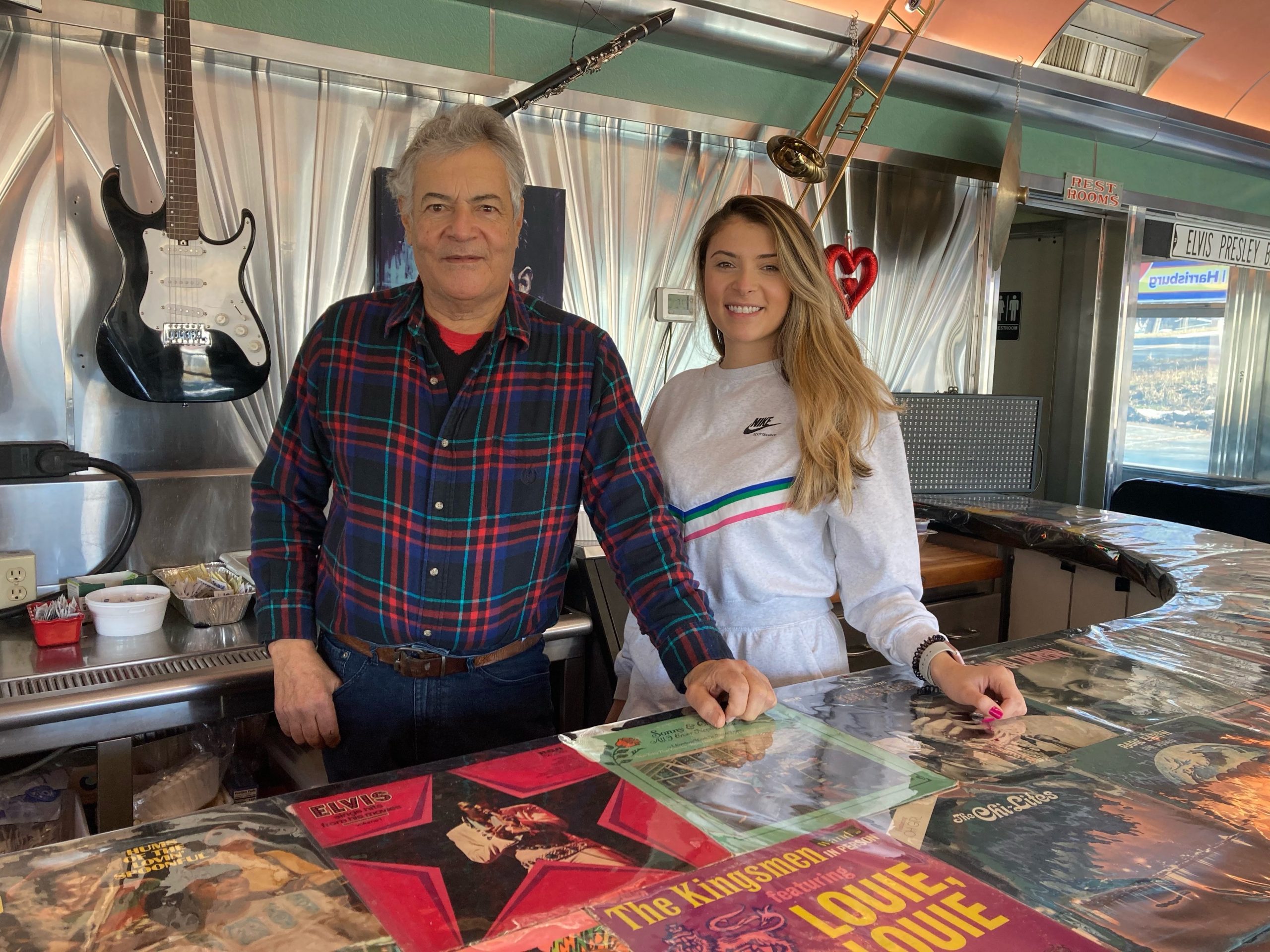
Lou and Anna Vazquez recently opened Harry’s Bistro in Harrisburg.

Our February magazine came out just in time for a cold, possibly snowy weekend—the best time to cuddle up with some good reads, in our opinion. This issue is packed with inspiring stories of Harrisburg community members who faced tragedy during the pandemic and business owners thriving despite the odds. Don’t forget to catch up on this past week’s news, listed and linked below.

An apartment conversion for the former First United Methodist Church at 260 Boas St. received zoning approval on Tuesday, our online story reported. A tiny house community for veterans was also approved by the zoning board to be built on vacant land along the Susquehanna River.

B’hold Beauty opened in Steelton, adding to the area’s growing number of Black-owned businesses. Our magazine article tells owner Brittny Holder’s story and her mission to help people meet their hair goals.

CARES Act funding faced some criticism from the Harrisburg School District’s acting superintendent, who said that cyber charters are getting too much of the money, our web story reported. Commonwealth Charter Academy officials had the opposite view.

The Civic Club of Harrisburg experienced vandalism at the end of December, which caused around $13,000 in damage. Club President Marybeth Lehtimaki said that community members have already stepped up to help, our online story reported.

Dave Schankweiler virtually announced his run for Harrisburg mayor on Friday. He outlined his top agenda items, including decreasing violent crime, increasing accessibility within the administration and supporting the school district. Read our online story for more information on his platform.

Our Editor reflects on the holiday-filled month of February and looks forward to the promise of spring in his Editor’s Note.

Gloria Martin was our January Artist in Focus. Her paintings and illustrations often combine the realistic with the fanciful, with a dreamlike quality to many of her pieces.

The Harrisburg Regional Chamber & CREDC hosted its annual Legislators’ Forum to allow local members of the PA General Assembly a chance to share their agendas and concerns. Many discussed the impacts of COVID on the Harrisburg area, our reporting found.

Harry’s Tavern lives on as father-daughter duo Lou and Anna Vazquez opened “Harry’s Bistro” in its memory. Lou, a past owner of the original tavern, hopes his new venture will be a fun, musically inspiring place for people to hang out, our online story reported.

The Historic Harrisburg Association unveiled its top five preservation priorities for the year, our online story reported. The list includes Balsley House, a dilapidated, double building located downtown; William Penn High School; Camp Curtin Memorial Mitchell UMC; Harrisburg State Hospital campus and Prospect Hill Cemetery Gate House.

“Ice in the Burg” will replace the city’s “Ice and Fire Festival,” still incorporating ice sculptures, but forgoing the traditional entertainment and vendors. Over 40 sculptures will be found around the city, our online story reported.

Sara Bozich has fun virtual events for what could be a snowy weekend at home. Check out her local listings, here.

Do you receive TheBurg Daily, our daily digest of news and events delivered right to your email inbox? If not, sign up here! 

Support quality local journalism. Join Friends of TheBurg today!


Continue Reading

Schankweiler announces run for Harrisburg mayor with a focus on public safety, communication

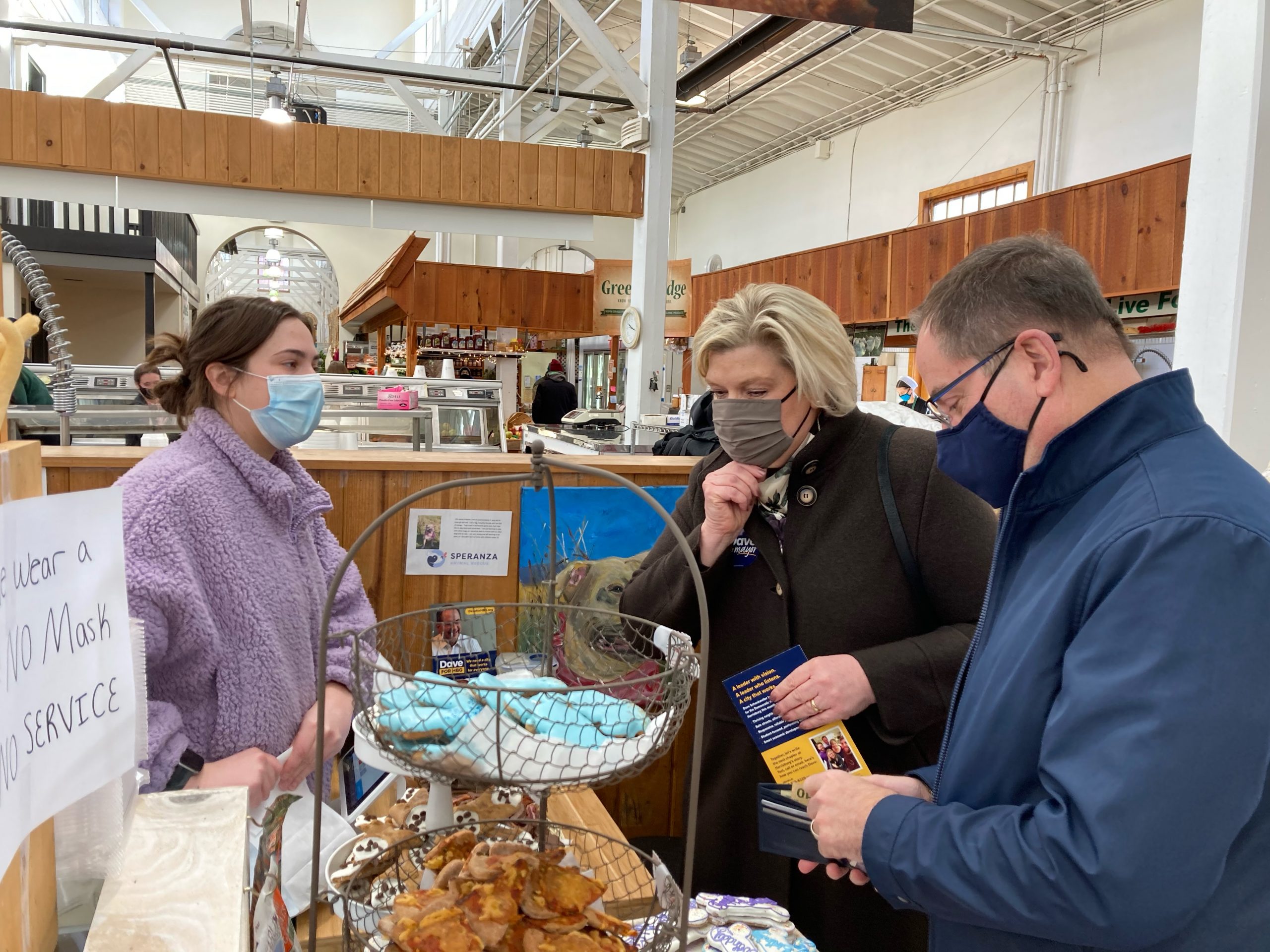
Dave Schankweiler (right) and his wife, Donna, visited “Doggie Delights” at the Broad Street Market on Friday.

On a cold, windy day in the Burg, the city’s mayoral race heated up.

Dave Schankweiler, founder of the Central Penn Business Journal, virtually announced his candidacy on Friday, also stopping at the Broad Street Market and canvassing Allison Hill and Uptown.

Schankweiler released his agenda, which includes an emphasis on decreasing violent crime, increasing accessibility within the administration, supporting the school district and empowering neighborhoods.

“I love this city,” Schankweiler said during a phone call with TheBurg. “The reason I’m running is that I’ve been seeing some things, as have many folks in Harrisburg, that we need to fix.”

Schankweiler will run for the Democratic nomination during the May primary against two-term Mayor Eric Papenfuse. Former city council member Otto Banks is expected to announce his candidacy on Monday at a private event, as well.

The retired business owner has not held a political position before, but believes his former leadership positions qualify him and give him a unique perspective. In addition to overseeing a publishing company, he was a founder and the first volunteer board member of Harrisburg University. Shankweiler also chaired the state-appointed Intergovernmental Cooperation Authority.

In December, Schankweiler launched a survey to hear from residents on their top priorities and said that he received hundreds of responses.

He said that these voices and those of the residents he spoke with in person shaped his platform.

Schankweiler promised that he would address violent crime from his first day in office by holding a Citywide Action Summit on Violence Prevention and adopting community policing efforts. He said that promoting racial and cultural competence is important, as well.

“I, like so many people, am heartbroken about the current violence in the city,” Schankweiler said. “That’s not our city. We have to fix the violent situation.”

He also pointed out the need to work on road infrastructure and street litter, both recurring concerns from those he spoke with.

While the mayor does not have oversight on the Harrisburg School District, Schankweiler said that he would actively work alongside the district to propose safety initiatives around the school buildings and create a task force to assist students with job training.

Due to the pandemic, many city businesses have taken a hit over the past year. Schankweiler said that he has a plan to support struggling businesses by establishing an Office of Minority Entrepreneurship & Small Business Growth to mentor, train and attract businesses to Harrisburg.

On the housing front, Schankweiler said that he plans to address affordable housing and blighted areas of the city by establishing a Commission on Housing and Home Ownership.

On his website, Schankweiler has posted an agenda of issues that he hopes to tackle and, on Friday, said that he believes he can get it all done.

“Let’s put these away once and for all and move on,” he said. “We need to set a new tone in city hall that says we are ready to take on these challenges. It takes something that the city hasn’t had.”

During his stop at the Broad Street Market, Schankweiler spoke with business owners and customers, one being Brielle Glumac of Doggie Delights.

“I know he has already been successful, and I know he will be great,” Glumac, who knows Schankweiler personally, said. “I think he really wants to help the area.”

For more information on Dave Schankweiler and his platform, visit https://daveforhbg.org/.

Support quality local journalism. Become a Friend of TheBurg!


Continue Reading

Tougher Times: COVID has been especially hard for those going through addiction recovery.

Addiction is like an abusive relationship. It thrives in isolation.

So, when COVID-19 hit, with the resulting lockdown and ensuing job loss, it was a perfect storm to upend those in recovery.

“Isolation is the biggest enemy to someone in recovery,” said Steve Barndt, executive director of Just for Today Recovery & Veteran Support Services (JFT), located in Lemoyne.

Rather than simply abstaining, recovery is an active approach of tackling the issues that caused the drug or alcohol use in the first place.

An integral part of that process is speaking with others who understand the struggle at Alcoholics Anonymous meetings, Narcotics Anonymous meetings, etc., or just hanging out with them. Faith organizations hold about 80 percent of the recovery meetings, and many continue to be closed.

“I go to the gym, work and meetings, and that was taken away,” said Meredith Thomas.

Single, Thomas spent most of her time alone during the shutdown.

“I didn’t feel in jeopardy of using, but I wasn’t OK,” she said.

Zoom meetings and telehealth became available, but online meetings are a tool, and, for many, not a replacement for in-person meetings.

“I connect one-on-one with people so much better than I connect with a large group,” said Thomas, sitting inside JFT’s cozy café, with a couple of guys chewing the fat in the background.

Side conversations and words offer encouragement after meetings and provide a necessary boost. Zoom doesn’t deliver that important social aspect.

“Fellowship is just as important, because you’re building new friendships, because you had to give your old ones up,” said Barndt.

In recovery himself, 18 years clean and a recovery specialist, Barndt understands the vital need for this social connection. When the shutdown happened he said, “We cannot close.”

Those at Gaudenzia, a Harrisburg-based treatment center, also recognized the danger.

“Stress, depression and anxiety are the three main triggers to relapsing or to start to use,” said Matt Null, Gaudenzia’s marketing manager.

Those triggers were in great supply, along with an abundance of isolation. The thought at Gaudenzia: “If we close, people die. Period,” said Null.


Place to Be

Barndt described people’s relief in knowing that JTF’s doors remained open to them.

Meredith Newman was one of those people. We talked in the meeting room in the basement of JFT, where she works in its clothing closet.

“I choose not to put in my mind what would have happened if it [JFT] wasn’t here,” she said. “It wouldn’t have been good.”

After the shutdown and losing her job, Newman came into the center, in tears, because she knew she was in danger of relapsing. She wasn’t alone. Many people came into JFT begging them not to close.

“You saw [relief] in the eyes of people, when they came in,” Barndt said. “[They said], ‘We have a place we can be.’”

Null pointed out that other things conspire against those in recovery, such as lack of accountability to family and friends, since people can’t visit, and it’s easy to say “I’m fine” on a text. Consequences of use such as eviction or job loss often lead people to treatment or away from relapse. But the moratorium on evictions and layoffs placed people in a position to use without those results.

Also, people had money, either from a stimulus check or unemployment, and drugs were readily available.

“Drug dealers don’t abide by COVID restrictions,” said Null.


Uphill Climb

These factors have led to a rise in drug overdoses. Numbers were rising to similar levels as the opioid epidemic in 2017, when 5,396 people died in Pennsylvania. The state last year had 3,954 overdose deaths as of this reporting. But, with a three- to six-month lag in registering deaths, those numbers could end up much higher.

Despite rising overdoses, Thomas said that the recovery community was divided about COVID and meeting in person. It placed people in a position of feeling like they were doing something wrong while reaching out for help, she said.

Some people even tried to get JFT shut down. Brandt said that he understood that COVID presents risks, but he felt that, for many, substance abuse posed a greater risk.

“We looked at it like, if you get COVID and you’re under 70, you have a 99% chance of surviving it,” he said. “You go out and shoot a bag of Fentanyl, you have a 99% chance of dying.”

COVID also created a perception that treatment wasn’t available or safe.

“But it is available, safe, and we care about you,” said Null.

At one point last year, Gaudenzia’s in-patient facility was at less than 60% capacity and, as of early January, was 70% full.

One bright spot is that COVID has bridged the east and west shore recovery community.

Barndt reported that people from Harrisburg have been attending the meetings, which wasn’t often the case before. People came out of treatment, with no place to go and ended up at JFT.

“It’s beautiful to see how far people have come,” said Newman.

Behind the numbers are people who are trying to survive this pandemic. But it threatens them beyond COVID-19. With added triggers and decreased resources, it makes the uphill climb of recovery seem like Everest with an unknown summit.

But organizations continue the work to help those struggling, blunting the seclusion and stress.

“No matter how vulnerable the world leaves you, you know you have a safe place to be,” Newman said.

For more information about Just for Today Recovery & Veteran Support Services, visit www.jft-rvss.org.

For more information about Gaudenzia, visit www.gaudenzia.org.

Find help for yourself or a loved one struggling with substance abuse at 833-976-(HELP).

Support quality local journalism. Become a Friend of TheBurg!

Continue Reading

Illness & Inspiration: COVID-19 has greatly impacted Harrisburg’s Black community, but some find hope amid the disease, the loss.

Kevin Dolphin and Lisa Burhannan

Kevin Dolphin once watched his friend, Lisa Burhannan, work her magic on a room of teenage girls.

Their nonprofit, Breaking the Chainz, teaches cognitive development in schools, but these particular girls were “having a bad day.” So Burhannan got them to draw how they were feeling.

“By the end of the day, you could see the light in their eyes,” said Dolphin. “They would always come to her for advice. They couldn’t wait for her to get there so they could ask her and talk to her about things. That is more priceless than anything.”

Burhannan is gone now. So is Gerald Welch, who never backed down if it meant keeping children from falling through the cracks.

COVID-19 has plowed through Black America, carving a gash in leadership structures and within families. In Harrisburg, those left behind are finding resiliency in the community and plumbing the legacies of lost loved ones for inspiration.


Dreams Released

The Rev. Dr. Brenda Alton no longer pastors her own church—she is system manager of spiritual care services at UPMC Pinnacle. But in the COVID year, she presided over more funerals than ever before.

Her job, though, still inspires hope. She gets to deliver “good news in bad times” to a community rediscovering its strengths.

“The pandemic has allowed the ‘neighbor’ to return to the ‘hood,’ so we have ‘neighborhood,’” said Alton, who lost dear friends to the pandemic while she and her family were “deathly sick” in March. “We have neighbors who check on each other. We have families that have restored a level of care. They pay more attention. There’s this heightened sense of protection for our elders and maybe even a return of respect for our seniors.”

Quarantines have not halted a renewed grassroots activism, Alton adds. Community leaders organized food distributions and holiday gifting for people suddenly facing the loss of livelihoods, businesses and retirement savings.

Black churches rarely trumpet their good deeds, so the role of the church in sustaining community has long been overlooked, said Ronald D. Holton, Sr., pastor of Lingo Memorial Church of God in Christ in Uptown Harrisburg. The pandemic has changed that. One young man Holton knows had frequently disparaged the church online but is now saying “Amen” to Holton’s virtual sermons.

“In difficult times, individuals turn to the church, and they begin to see the importance of the Black church in the Black community,” Holton said.

And, says Alton, old aspirations that had gone dormant in pre-COVID days are awakening as people collaborate to launch startups and patronize small businesses.

“All those dreams we’ve had locked up, it’s time to work on them and release them,” Alton said.

In the wake of COVID, the Black community is mobilizing on multiple fronts, addressing physical and mental health, economic upheaval and social justice, said Dolphin.

“Coming together has been one of our greatest strengths,” he said.


Essential

When you suddenly can’t smell Clorox, COVID-19 is calling.

Aaron Johnson blames his case on high-fives exchanged with fellow Steelers fans at a Dallas Cowboys’ home game. But the loss of taste and smell didn’t keep him from eating the Thanksgiving dishes that friends dropped off.

“What are we gonna do?” he said. “I’m still gonna eat. I know what it’s supposed to taste like.”

Kidding aside, Johnson’s wife also contracted COVID. So did his sister, who was hospitalized. He lost his stepbrother and several friends. One friend, a bus driver with underlying kidney disease, recovered, but only after being placed on a ventilator.

Through all of this, Johnson wonders—who’s watching out for sanitation workers? As director of Harrisburg’s Department of Public Works, he’s been juggling the schedules of the sick and quarantined. Contact tracing turns one possible case into four or five workers forced to isolate. Test results take days to come back, forcing people off work while they wait.

The people who pick up our trash, a largely Black and Brown workforce, should be classified as essential workers and given priority for vaccines, Johnson said.

“Public works and highway and sanitation, we’re emergency workers,” he said. “Ever since (the pandemic) broke out, sanitation is on the ground.”


A Void

Dolphin and Burhannan grew up together, the children of dysfunctional families from “the wrong side of the tracks,” in Dolphin’s words.

With her “giving and selfless heart,” Burhannan would reach out to help “anyone, anywhere,” especially after the death of her son. Locally, she led chapters of Mothers in Charge and Crime Survivors for Safety and Justice, ministered to hospital patients, and supervised a re-entry home for women. Her work took her nationwide.

“Those are a pair of shoes that no one in the city or wherever will be able to fill,” said Dolphin, the founder and president of Breaking the Chainz. “She definitely left something behind. There’s a void.”

Even from the ICU, Burhannan hosted Zoom meetings and helped family. She died from COVID-19 on June 11.

Harrisburg School Board Director Gerald Welch succumbed on April 15. For a man known for his brutal honesty, Welch was “a teddy bear,” says his wife, Donna. They met online. He proposed the first time they met in person. She said yes because “it just felt right.”

Moving to Harrisburg from New York after they married in 2008, Welch worked as a behavior specialist and drug and alcohol counselor. He also grew incensed about the school district’s dismal graduation rate. On his second run for school board, he won a seat, sharing a platform with a group that wanted to oust former Superintendent Sybil Knight-Burney.

When the pandemic arrived, he kept working, meeting patients one-on-one. Many joined a long line of mourners in a drive-by tribute on a cold, rainy day in late April. Welch’s ICU nurses displayed a banner saying that it was an honor to care for him. One woman he helped to sobriety made a sign—still in Donna’s yard—showing a black and a white hand coming together in unity.

“People would come and put balloons in my front yard, or candles,” said Donna.

In Gerald Welch’s memory, fellow school board Director Carrie Fowler founded Gerald’s Kids. The scholarship program focuses services on individual children transitioning from first to second grade—an often-overlooked time when children who are struggling to read or who lack adult attention risk lifetime consequences. The first child sponsored is the son of an imprisoned man who Gerald Welch had reached out to.

At Burhannan’s socially distanced service in Reservoir Park, Alton presided for her longtime friend. She reminded mourners to follow Burhannan’s example of a life transformed.

“Lisa gave it her all, 24/7,” Alton said. “There is a void, and I’m hoping that those who are still mourning will say, ‘She is still alive in my heart.’”

Tina Nixon has received “too many text messages and phone calls” informing her of deaths. An aunt died from COVID. So did a cousin.

“COVID has shined a spotlight on the health disparities on communities of color,” said the vice president, mission effectiveness, and chief diversity officer at UPMC Pinnacle. “We’ve been addressing it, but we can’t do it alone.”

UPMC Pinnacle is leveraging existing connections to share messages of staying safe against COVID and getting the vaccine, said Nixon.

The system’s Faith Community Health Connection, which includes many African-American churches, shares education on the impact of the virus. Hamilton Health Center, a UPMC Pinnacle partner, launched a free mobile testing center. UPMC Pinnacle also opened satellite testing sites and helped provide transportation there.

And the Healthy Harrisburg Initiative, planned in 2019 but launched virtually in 2020, targets the underlying conditions—specifically high blood pressure, chronic heart disease, and diabetes—that have intensified COVID’s deadliness in the Black community.

Gerald and Donna Welch

Live On

On Easter Sunday, Gerald Welch struggled to breath but kept procrastinating a trip to the hospital. He spent his time writing names on his “gazillion” beloved watches, instructing his wife to give them to the designees. She refused, insisting that he wasn’t going anywhere.

Since Gerald’s passing, Donna Welch has given watches to his sons and grandsons, but “there’s still a bunch left.” She is helping administer a church scholarship fund that he worked passionately for.

“I just remember him and how much he cared about people, especially children,” she said.

Aaron Johnson’s sister is slowly recovering. His Public Works Department is managing the impact on personnel, even as residential trash pickups rise with more people at home. He and his wife got through their illnesses with prayer and the help of help of family and friends.

“We couldn’t have done it without them,” he said. “For me, it’s sad because there’s a lot of friends and family that I lost.”

Dolphin won’t accept discouragement, especially when he recalls the tireless energy of Lisa Burhannan—the friend who rode with him to countless conferences nationwide.

“She’s always with me,” he said. “When I’m riding, she’s in the seat next to me. She was that spirit. As long as I’m alive, as long as Breaking the Chainz is around, she’ll definitely live on.”

For more information about UPMC Pinnacle’s Healthy Harrisburg Initiative, visit www.upmcpinnacle.com.

Support quality local journalism. Become a Friend of TheBurg!

Continue Reading

50 Ways to Bide Your Time: Still stuck at home? We have a little Harrisburg-themed distraction.

About once a year, I take a break from my usual conceit of trying to think great thoughts about our fair city and attempt to do something a little different.

So, one year, I tongue-in-cheeked it through a list of Harrisburg “gotta knows” for city newcomers and, another year, I set out to lure overwrought Washingtonians to our smaller capital city.

February seems as good a time as any to distract myself—and you—with more foolishness. So, I’ve compiled a list of 50 “very Harrisburg” items, events and nuggets. This list is designed with residents in mind, though anyone who’s spent time in the city should be able to answer a bunch. Please know that this isn’t a serious competition—it’s just some silly fun.

Award yourself two points for each one accomplished/answered then visit our Facebook page and tell us how you did.

If nothing else, this little exercise may allow you to chew up a few minutes as we all sit around and wait our turn at the vaccine.


The List (each item is worth 2 points)


Harrisburg & You

1)  You’re born and raised.
2)  You attended school here.
3)  You’ve taken a class at HACC (extra point for earning a degree).
4)  You’re a happy transplant.


Official HBG

5)  Identify the tropical storm that devastated Harrisburg in 1972.
6)  Name a Harrisburg mayor not Reed, Thompson or Papenfuse.
7)  Name more than one current member of City Council.
8)  Correctly name the entity that conducts city street sweeping.
9)  Name the entity that owns Harrisburg’s parking system.
10)  You own an artifact that once belonged to Steve Reed.


Down on the Corner

11)  You know how to properly pronounce “Muench” Street.
12)  You’ve almost been hit crossing Forster or State streets.
13)  You know the common name of the neighborhood that was destroyed to expand the Capitol complex (extra point for correctly naming the park that now dominates the area in back of the Capitol).
14)  You’ve never complained on social media about parking.
15)  You’ve been on a Harrisburg house tour (extra point for showing your house).
16)  You’ve heard shots fired (another point if you later realized it was duck hunters).
17)  What’s the nickname of the Walnut Street Bridge?


Chow Down

18)  You’ve eaten at all three: Mangia Qui, Suba and Rubicon.
19)  You’ve had pizza at Subway Café.
20)  You’ve patronized the taco truck at 15th and Market streets.
21)  You’ve brunched at Crawdaddy’s.
22)  You’ve held the door open at the Broad Street Market for a long, long line of strangers.
23)  You have memories of one of the following long-gone eateries: The Spot, Alsedek’s, Santanna’s or Harry’s Tavern.
24)  You can name one previous restaurant in the building that now houses Note Bistro & Winebar (extra point for naming a prior occupant of Ted’s; and yet another point for naming a prior occupant of Los Tres Cubanos).
25)  You dined in the street during 2020.


Parks & Rec

26)  You’ve picnicked in Reservoir Park (another 2 points for sledding in Reservoir Park).
27)  You’ve run an organized race along the Harrisburg riverfront.
28)  You’ve walked, run or biked the entire 3.1-mile loop in Wildwood Park.
29)  You’ve played Water Golf.
30)  You’ve biked the entire Capital Area Greenbelt (extra point if it was during the Tour de Belt; extra two points if you can identify the section of the Greenbelt that features the MLK Jr. Memorial).
31)  You’ve attended at least two summer festivals in Riverfront Park (extra point for naming two memorials or statues located in Riverfront Park; extra two points for naming the organization primarily responsible for the Peace Garden)


Harrisburg Critters

32)  You’ve waded through a cloud of mayflies (extra point if this happened at a Harrisburg Senators game).
33)  You’ve swallowed a gnat while running/biking on the river walk.
34)  You’ve had it already with all the spider webs!
35)  You’ve dodged geese in Riverfront Park or Italian Lake.
36)  You’ve dodged goose droppings in Riverfront Park or Italian Lake.
37)  You’ve had some type of mouse, groundhog or squirrel issue.
38)  You’ve posted on social media about a stray cat (extra 2 points for adopting the cat; another 2 points for visiting the Friends of Midtown Community Dog Park).
39)  You know about the Harrisburg beaver and its vital role in city history.


Hometown Tourist

40)  You’ve toured the state Capitol as an adult (add 2 more points for also visiting the State Museum as an adult).
41)  You’ve been inside the Harris Cameron Mansion (extra point for touring the Fort Hunter Mansion).
42)  You’ve attended at least two PA Farm Shows (extra point for going to “Food Court” day; another point for going in a snowstorm).
43)  You’ve explored Harrisburg Cemetery, for fun.
44)  You’ve attended a 3rd in the Burg event (extra point for hosting one).
45)  You have a favorite Harrisburg mural (extra point for naming the artist.)
46)  You’ve been on a pontoon boat on the Susquehanna.
47)  You’ve kayaked on the Susquehanna.
48)  You’ve sailed on the Pride of the Susquehanna.
49)  You have a regular spot where you pick up TheBurg magazine (extra point if you subscribe to TheBurg Daily and another point if you’ve listened to TheBurg Podcast; two extra points if your name has been in TheBurg).
50)  You heart Harrisburg.

Extra Credit: Award yourself two more big points if you’re a “Friend of TheBurg!”

How’d you do? We’ll link to this column on Facebook on the day the print issue drops (Jan. 29), so you can share your feedback with us. Sorry—there are no prizes, but I hope this column offered you a brief mental vacation. Now, where’s my vaccine already?


Your Score

Fewer than 20 points: What’s a Harrisburg?

20-30 points: You run the lights on Forster Street to vamoose.

30-40 points: You might show up—if the parking’s free.

40-50 points: Currently scrolling Trulia, hoping to find “deal.”

50-60 points: Asking around for “reliable” contractor.

60-70 points: You know where to get the best food at Kipona.

70-80 points: You eagerly anticipate each new issue of TheBurg.

80-90 points: You should have your own stand in the Broad Street Market.

90-100+ points: You’re John Harris.


Most responses are personal or subjective, but some items have actual answers. These include:

  • 5: Agnes
  • 6: There are too many to name here, but, believe it or not, there’s an informative Wikipedia page that lists all of Harrisburg’s mayors since the city incorporated—check it out.
  • 8: Capital Region Water
  • 9: The city technically owns the system but leases it.
  • 11: “Min-ick” Street
  • 13: Old 8th Ward and, for extra point, Soldier’s Grove
  • 17: Old Shaky
  • 30: The MLK Jr. Memorial is located on the Greenbelt’s Cameron Parkway.
  • 31: The local chapter of the Physicians for Social Responsibility spearheaded creation of the Peace Garden.

Lawrance Binda is co-publisher and editor-in-chief of TheBurg.

Illustrations by Rich Hauck.

Support quality local journalism. Become a Friend of TheBurg!

Continue Reading

Month of Movies: For a second year, the Jewish Film Festival comes to you.

“The Passengers”

A few decades ago, three covert operations airlifted more than 20,000 Ethiopians to Israel to escape hardship and danger.

More fraught with controversy is the struggle of the final community of Ethiopian Jews to immigrate. Had conversion a few generations back been done under duress? Did they always consider themselves Jews, as Jewish activist groups do? What is the position of the Israeli government? What happens to the thousands waiting to leave?

“The Passengers,” a feature documentary, relates the story of that final community. It follows two best friends representing a grassroots advocacy campaign to win American-Jewish support to their cause. The film, by Ryan Porush, is one of those featured in the next iteration of the Edward S. Finkelstein Jewish Film Festival, according to Julie Sherman, festival chair.

“Despite so many of the Jews in Ethiopia having to wait for several years, there remains hope—both for those who have made it, that their family and friends would join them, and also for those that are still stuck as ‘passengers’ in Ethiopia,” Porush said. “My sense is that this is an issue of politics and agenda-setting. Israel has a wonderful progressive history on the issue of Ethiopian Jewish immigration, and should be celebrated for that. [But] I think, as Jews, it’s also our responsibility to hold Israel to this high standard that it set for itself in terms of the lengths we will go to bring Jews home.”

The documentary is a part of the 11-film series, streamed virtually from mid-February to late March. Originally, it was set to run in the spring.

“But we decided to move our May festival up when we realized that this season, like the last, would have to be a fully virtual event,” Sherman said. “It seemed more fun to give our audience something to do, and to look forward to, in the coming cold, dark days.”

Films related to Israel inhabit a large part of the film festival repertory, in which the Holocaust is also a recurrent theme. In the fictional “Thou Shalt Not Hate,” a young doctor and survivor’s son must decide whether or not to treat a critically injured man with a swastika tattooed on his chest. His decision changes the physician’s life in unexpected ways.

“Love It Was Not” reveals an astonishing two-year love affair between a Jewish inmate at Auschwitz and one of her Nazi guards. Despite his brutality in other ways, Franz Wunsch is seen as sincerely loving Helena Citronova and saving her life. The affair ends when he is sent to the front, though he searches for her after the war. The next time they meet is 30 years later, when she testifies at his war crimes trial.

“This is an absolutely true story,” said Sherman. “Both the woman and the man involved were interviewed years later, as were a number of fellow Auschwitz inmates who witnessed the relationship throughout.”

There is also more lighthearted fare. “Herb Alpert” is a documentary about the legendary musician and music producer many don’t realize is Jewish. “Here We Are,” an Israeli dramedy, concerns a man who gave up his life for his autistic son, now a young adult.

“It’s a lovely road trip/buddy film, but ultimately a story about growing up and letting go,” Sherman said.

Another Israel-based documentary, “Double Income, Kids,” concerns a gay couple who engage an American surrogate to bear their twins.

“Neither gestational surrogacy or adoption are accessible for [gay couples] in Israel,” said director Hendrik Schaefer.

In addition to wanting to explore whether “gestational surrogacy is a viable and ethical path to parenthood,” Schaefer was struck by the fact that, in Israel, a country with a very high fertility rate, the desire of gay people to have children is also very high. Politics aside, the film is a personal one about a loving couple.

“The mission of the Edward S. Finkelstein Jewish Film Festival is to enrich the cultural life of the greater Harrisburg area by presenting films that reflect contemporary and historic Jewish and Israeli experiences,” Sherman said.

The Edward S. Finkelstein Jewish Film Festival runs from Feb. 14 to March 23. Individual tickets and all-access passes are available for purchase now on the festival’s website, www.hbgjff.com. Each of the 11 films will be available to stream for 72 hours, with a new film offered each Sunday and Wednesday throughout the series. Some films will be accompanied by guest speaker events that are included in the ticket price. For more information, visit the festival website.


Log On, Tune In
In addition to those mentioned in the main story, other films in this festival include:

“Aulcie,” a documentary about an African-American basketball player who found fame and fortune in Israel but whose personal demons nearly destroyed him.

“Golden Voice,” an Israeli dramedy that highlights the “stranger in a strange land” plight of many new immigrants

“Love in Suspenders,” a lighthearted Israeli comedy about second chances for love.

“Winter Journey.” In his last role, Bruno Ganz portrays an elderly German Jew interviewed by his son about his activities during World War II, before fleeing to the United States.

Support quality local journalism. Become a Friend of TheBurg!
Continue Reading

Pandemic Plot Twists: It’s a storyline with screen fatigue, “real” books and blue light glasses.

Illustration by Curt Roher.

There’s never been a better time to get lost in a book.

“An ironic positive side effect of the pandemic is that people are falling back in love with reading,” said Alex Brubaker, manager of Harrisburg’s Midtown Scholar Bookstore.

One downside of a work-from-home lifestyle is screen fatigue. But an upside of a stay-at-home lifestyle seems to be a return to reading—real, hold-in-your-hand, paper books.

“As people are staying inside more often, they are trying to find something to do away from their screens—activities and hobbies that don’t have to do with a computer screen,” Brubaker said. “Books are one thing people are coming back to. The pandemic is reigniting their love of books.”

Print sales are up 6% across the entire industry, he said, although indie bookstore sales are down 30%—a phenomenon he attributes to the popularity of Amazon.

Midtown Scholar has kept its doors closed since March, which has resulted in “an enormous hit on sales,” said Brubaker.

“On the flip side, online sales are up,” he said.

And the bookstore made creative pivots to online author discussions, outdoor sidewalk sales and curbside pickup.


Page Turners

So, what are people reading amid the pandemic?

“There’s been a great surge in book sales related to the Black Lives Matter movement and current events,” Brubaker said.

For others, real life is too real these days. They crave escapism, science fiction, fantasy, fiction and humor, including new books by David Sedaris and Jerry Seinfeld.

“Reading was my lifeline during the spring closure and the isolation resulting from the pandemic,” said Karen Cullings, executive director of Dauphin County Library System (DCLS). “Reading about issues became even more important to me, so I could understand and process my feelings about current events. And relaxing with a lighter book—I love mysteries—was an important escape when things got to be too much.”

DCLS circulation was down 43% in 2020, compared to 2019. Cullings said those numbers aren’t surprising, given the libraries’ closures and restrictions.

Meantime, online library services took off. Catalog searches were up 108%, eBook usage increased 29%, and use of eContent such as movies and music increased by 17%.

Personal touches at DCLS became more meaningful amid the pandemic. The libraries launched BookAdvisor, a personalized book selection service, and offered curbside pickup—books-to-go.

“Library members have been extremely supportive and expressed gratitude for the library and what it provides during the pandemic,” Cullings said.

She’s received numerous thank-you notes, some hand-written, even accompanying donations.

Many readers say they feel a more personal connection with the books they’re reading, in-hand.

“Reading books in print offers a deep reading experience,” Brubaker said. “Some readers say they can’t or don’t do eBooks because they hurt their eyes or have screen fatigue. Other people say they don’t like reading on their device, because the potential for distraction goes up when emails come in.”

So are real paper books healthier for our eyes?

“When you have real paper, there’s not a light source projecting from screen, and you’re definitely going to get less exposure to blue light,” said Dr. Alan McLin of Morrison Eye Associates, with locations in Harrisburg, Hershey and Dillsburg.


In Light of the Pandemic

Eye doctors nationwide are seeing an increase in patients reporting eye strain, due to greater numbers of people working from home and attending school online—then spending downtime on their phones. McLin’s patients are following these trends.

“Our exposure to blue light emitting devices is dramatically increasing,” said McLin, who’s been an eye doctor for 30 years.

So what exactly is blue light?

Within the visible spectrum of light, blue light is at the end of the spectrum of colors produced by shorter wavelengths, McLin said.

“That end of the spectrum has more energy per se, so the amount of it, and the energy of that blue light is what can potentially affect your eyes,” McLin explained.

While blue light is emitted from digital devices—computers and phone screens—it also naturally exists in sunlight.

“More research on blue light is needed to be conclusive,” McLin said. “But we know it does have some ill effects. It causes eye fatigue or strain and may contribute to macular degeneration. It affects your circadian rhythms—how you adjust to being awake and being asleep—and inhibits melatonin—your sleep hormone—which keeps you awake and alert.”

So, basically, staring at a screen all day can hurt your health, and McLin said many of us also have bad posture and other habits that contribute to pain and fatigue.


Sight for Sore Eyes

Following national trends, McLin is receiving more patient requests for blue light-blocking glasses, which have a special coating that inhibits blue light. McLin likens them to sunglasses that filter harmful ultraviolet light.

And just like sunglasses, blue light blocking glasses can be combined with a prescription—something McLin said he does every day—or they can be worn without prescription lenses.

“They’re rampant on the internet right now,” said McLin. “There’s definitely an awareness, and millennials are all over this.”

While some patients put them on and say their eyes immediately feel more comfortable, McLin calls that “a placebo effect.”

“You’re not going to have that effect right away, but when people say their eyes don’t feel as fatigued at the end of the day, that’s a real benefit,” McLin said. “That’s not imaginary, and it’s not a gimmick.”

And, after all, don’t we all want a happy ending?


Midtown Scholar Bookstore is located at 1302 N. 3rd St., Harrisburg and online at
midtownscholar.com.

Learn more about the Dauphin County Library System at dcls.org.

Dr. Alan McLin practices at Morrison Eye Associates, including a location at 235 Division St., Harrisburg, with more information at morrisoneye.com.


Support quality local journalism.
Become a Friend of TheBurg!
Continue Reading