Tag Archives: Steve Juliana

The Week that Was: News and features around Harrisburg

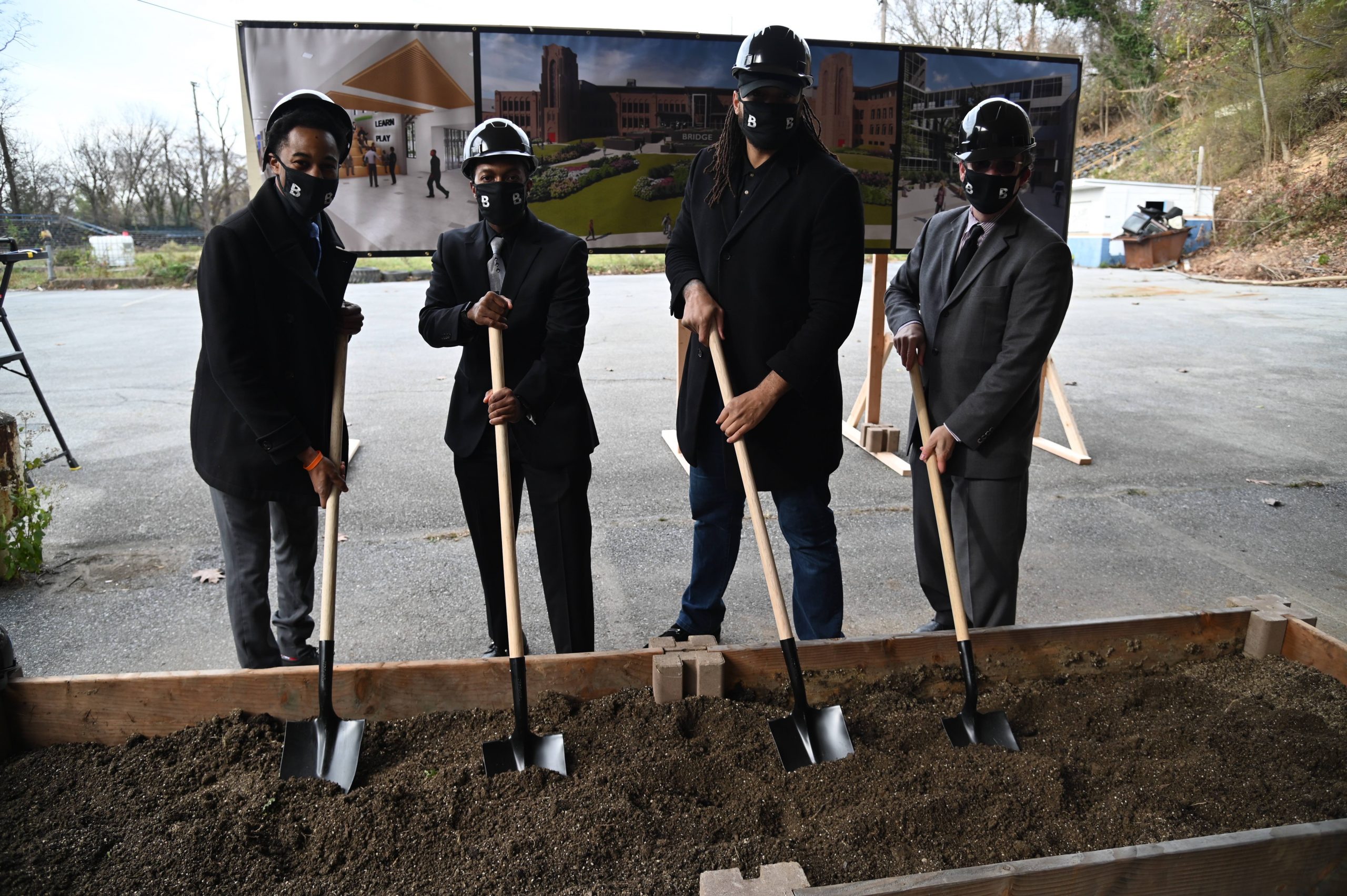
Members of The Bridge held a ground-breaking ceremony on Thursday.

It’s looking like a sunny weekend ahead, so get out and enjoy the weather! If you missed any news this past week, we have all our stories listed and linked below.

The “Black is Beautiful Expo” will take place in the Crowne Plaza on Friday and Saturday. The event will showcase over 40 local minority-owned businesses, our online story reports.

The Bridge Ecovillage held a ground-breaking ceremony on Thursday to celebrate moving closer to construction. They plan to begin work in spring 2021, our reporting found.

Capital Region Water proposed a small increase to its drinking water and wastewater rates for 2021, our online story reported. The new stormwater fee will remain the same.

Cocoa Creek Chocolates recently opened a new location in Camp Hill. Our magazine story tells how Owner Diane Krulac evolved into the chocolatier she is now.

COVID-19 infection rates continued to surge in Pennsylvania over the past week. The average new case count is nearing 6,000 per day, our reporting found.

Fosterthefoodie showcases 11 local flavors for food lovers in her Holiday Gift Guide. Make the foodies in your life happy while supporting local small businesses!

Harrisburg officials held a press conference to address the rash of recent shootings in the city, our online story reported. Police Commissioner Thomas Carter asked the community to work alongside the police if they want to see change.

The Harrisburg Police Bureau may see 12 new positions for “community service aides” to assist police and improve relations with the community. Mayor Eric Papenfuse said anyone from a recent high school graduate to a retiree could apply, our online story reported. The plan must be approved first by City Council as part of the 2021 municipal budget.

The Harrisburg School District announced it will postpone winter sports due to the pandemic, our online story reported. As COVID cases continue to spike, Acting Superintendent Chris Celmer worried student-athletes would be unsafe.

The Harrisburg School District partnered with Capital BlueCross to provide Thanksgiving meals for district families experiencing homelessness. Volunteers distributed over 200 meals to 50 families on Wednesday, our online story reported.

Harrisburg University added The Englewood in Hershey as another of its live music locations, our reporting found. This expands HU’s reach outside of Harrisburg.

Karen Hendricks shares her experience running 50 races for 50 causes while she was 50 years old, in our magazine story. Karen reflects on the races that helped her ease heartbreak and forge friendships, all while meeting inspiring people along the way.

Sara Bozich has your list of fun things to do this weekend in the Harrisburg area. Grab some takeout from a local restaurant or enjoy walking around at 3rd in The Burg.

Walnut and Chestnut streets will see substantial changes in the coming years, including added bike lanes, parking and sidewalk enhancements. The East-West Multimodal Connection Project aims to improve safety and multimodal access downtown, our online story reported.

Our wine columnist Steve Juliana has the perfect wines to pair with your Thanksgiving feast. Red or white wine goes perfectly with a turkey, so try out a few new flavors this holiday.

Do you receive TheBurg Daily, our daily digest of news and events delivered right to your email inbox? If not, sign up here! 

Support quality local journalism. Join Friends of TheBurg today!

Continue Reading

Red Meat, Red Wine: Bold flavors for bold summer menus.

Summers in Pennsylvania are three glorious months bracketed by two major holidays.

This is the time when meals move outside and the backyard grill takes center stage. To me, this means the menu turns toward beef in its many forms, and red wine is the perfect beverage to complement this style of culinary indulgence.

The naturally occurring tannins in the skin of the grapes match with the fat of the bovine to produce a flavor on the palate that, if not magic, is at least alchemy. My choices for this all-American meal are quaffs from the southern hemisphere. These wines are usually on the chewy side, but who needs elegance in a season where casual is the word and buttoned down is for serious dining?

Shiraz is the Aussie moniker for Syrah, the main grape in the Rhone Valley. Known for its fruit-forward personality, it deserves a place on everyone’s table to go along with the products of the grill. The biggest fruit bombs come from the Barossa Valley with their typically high-alcohol content. I prefer wine from the McLaren Vale, which is more nuanced and textured. Since most Shiraz comes from southeast Australia, look for bottles that have better balance and not so much bang for the buck.

Malbec started life as one of six grapes from France’s Bordeaux region, where it was blended to give more personality to mediocre vintages. It was taken to Argentina, where it thrives in the volcanic soils and high Andean altitude. In recent years, it has become an international superstar. Most bottles come from the Mendoza region, a huge geographical area, which means that there are many variations of this spicy quaff. Try to find young wines at reasonable cost, since the expensive reserves usually need aging. It may seem a difficult task with all the selections available, but, once you find one that suits the menu, it is a welcome addition to your outdoor feast. After all, this is the country that invented the asado, perhaps the ultimate cookout.

The country of Chile contributes two wines to our grilling meals. Cabernet sauvignon is known worldwide as the king of red wines. The ones from this narrow nation are simply wonderful. Situated on land between the Andes Mountains and the Pacific Ocean, the grapes develop in a way that makes for totally unique flavors with pronounced fruit and subtle tannins. My favorites are the ones from the Maipo Valley. Look closely on the bottles.

Carmenere is the grape that nearly vanished after the phylloxera plague destroyed the European vineyards in the 19th century. It was discovered again in the 1990s after DNA testing on odd “merlot.” It is one of Chile’s great wines with its own character of smooth fruit and lighter tannins. You should give it a try, especially with its reasonable pricing and unique character. In fact, try one now!
Keep sipping, Steve

Author:  Steve Juliana

Continue Reading

Red, Red Wine: The many ways, flavors of the classic sangiovese grape.

In the world of wine, there are but seven grapes that are designated “noble,” and only one comes from Italy.

Sangiovese is an aromatic and fruity red with unique acidity that often matches well with food and is also capable of long aging and amazing complexity. This well-known fruit develops into its finest variations in the region of Tuscany. Its name is derived from the Latin sangue di Giove, or “blood of Jove,” and has been written about since 1590.

Chianti is arguably the best-known sangiovese-based wine. With modern interpretations set down by Italian law, Chianti can be 100-percent sangiovese or even blended with French grapes. The prime grape-growing region is called Chianti Classico, and the best wines are those labeled “riserva.” In these bottles, we find the true idea of grace come to fruition.

Of all the Tuscan hill towns, Montalcino is one of the most famous. Here, Italy’s best red wine from sangiovese vineyards is bottled. And, of those, the Brunello clone produces the wine with the greatest stature. Never blended and aged for a minimum of four years, it has a reputation for power and longevity. Brunello—“the little brown one”—was isolated by the Santi family in the 1840s and has become unrivaled in reputation and price.

For those who wish to experience great wine without the great cost, Vino Nobile di Montepulciano is a reasonable alternative. Bottled either singly or blended, these wines are not aged as are other Tuscan quaffs and make for delightful drinking.

The region along Tuscany’s coast is known as the “wild west” as much for its isolation as for the independence of the winemakers and their philosophies. The central city is Scansano, where the clone known as Morellino—“the little black one”—takes root. As the “wild west” moniker implies, convention is mostly out the window with vintners blending and bottling as they see fit. The wines are unique and exciting with a dark richness that deserves a good look.

Between the beauty of Montalcino and the quaintness of Scansano lies the DOC of Montecucco, where the sangiovese may be best. The wines there have a richness and balance between deep fruit and nuance. The relative obscurity of this area makes the wine hard to find and also pricey. This all pales with your first sip. Of all the wine made in Tuscany, this is my favorite.

Tuscany is a region rich with types and styles of wine. It is well worth exploring, sampling the wonderful things done with the sangiovese grape.

Keep sipping, Steve

Author: Steve Juliana

Continue Reading

Bubbles of Love: What is Valentine’s Day without sparkling wine?

Screenshot 2017-02-03 10.49.04

For all its brevity, the month of February has more than its share of holidays.

From the vernal predictions of a penned-up ground squirrel to the birthdays of famous presidents, this shortest month shines in bleakest winter. My favorite is that celebration of ardor and romance that we call Valentine’s Day. Historical facts aside, in this modern time it centers around love, chocolate and Champagne.

The world’s most famous sparkling wine is named after the Champagne region in northern France. It is usually a blend of Chardonnay, pinot noir and pinot meunier. If all Chardonnay, it is labeled “blanc de blanc.” If only red grapes are used, it is called “blanc de noir,” which is a white wine from a black grape.

Besides the color, sparkling wine is also known for its bubbles, which get into the bottle through a secondary fermentation known as “methode champenoise” in the Champagne region of France, crèmant in the rest of France or “methode traditionelle” for sparkling wine from the rest of the globe. Wines labeled as such are of the highest quality.

Perhaps the most confusing aspect of bubbly is its dryness or sweetness, which refers to the amount of sugar in it. From sweetest to driest, sparkling wines are called doux, demi-sec, dry, extra-dry, brut, extra-brut and brut nature. I prefer my sparklers in the dry range with a little sugary finish and find that brut, for me, is almost bone dry. So, it’s important to read the label to ensure both quality and desired level of sweetness, especially if you’re pairing the wine with food.

A new direction in sparkling wine is the proliferation of rosé. This is a definite win-win as it allows the wine to match more styles of food. Not only is rosé a very attractive quaff, but, with added flavors and tannin, it stretches its legs over more entrees on the menu. This is a trend in sparklers from all around the globe, whether a Spanish cava, the bubblers from California or even the wines from France that are not labeled “Champagne.”

In many ways, we live in a golden age. Never before has so much good wine come to fore. Sparkling wine is made all over the world as well as locally. It lends itself to a dazzling variety of foods with a high level of acidity and also works well as a palate scrubber. In its sweeter versions, it is delicious to sip for any good reason—or none at all.

Legend says that Champagne was invented by the monk Dom Pérignon who famously said, “Come quickly, I am drinking the stars.” Like most legends, the story is a bit shaky, but the enjoyment of this most wonderful wine is something we can reach out and embrace every day. So, enjoy this beautiful quaff, on this unique day, with a special person. It will be one of your most amazing memories.

Keep sipping, Steve

Author: Steve Juliana

Continue Reading