Harrisburg faith leaders hold vigil to pray for a peaceful election

A screenshot from the community vigil.

On the eve of Election Day, it may be in one’s best interest to pray.

On Monday night, the Mayor’s Interfaith Advisory Council held a virtual community vigil to pray for a peaceful election and discuss the importance of unity despite the results.

“Voting is sacred,” said Chad Dion Lassiter, executive director of the Pennsylvania Human Relations Commission. “We are praying for healing for our nation. This aspect of prayer is so essential.”

Leaders of various religious organizations called for mutual respect from both political parties despite the results.

“Politics is about persuasion and conversion, yet one would hope with respect and a peaceful acceptance of the outcome of an election,” said Russell Goodman, who is part of the Interfaith Advisory Council. “We pray this evening for the latter.”

Unity instead of hatred and violence was a recurring theme amongst the remarks of the leaders. This comes after a few instances of hate activity took place in Harrisburg. A Black Lives Matter mural in Midtown was defaced with the logo of a white supremacist group, and there was vandalism at the Harrisburg LGBTQ Center. In August, a vigil was held by the council in support of the Kesher Israel congregation after swastikas were found painted on the building.

“Deepen our understanding that words matter, that our actions matter,” Rabbi Ron Muroff of Chisuk Emuna said. “What we say or do affects others.”

Just as the interfaith council unites despite differences in beliefs and perspectives, the members said that they hoped to see that among people identifying with different political parties.

There were also prayers said for law enforcement officials, national leaders and voters.

“Our community, especially in these uncertain times, now more than ever, we need to pull together and support each other with humility and compassion,” said Saima Mumtaz of the Ahmadiyya Muslim Community.

To learn more about the Mayor’s Interfaith Advisory Council, visit their Facebook page.

Support quality community journalism. Join Friends of TheBurg!

Continue Reading

The Week that Was: News and features around Harrisburg

Executive director of the Central Pennsylvania Food Bank, Joe Arthur, will receive a 2020 Catalyst Award.

Our November issue of TheBurg Magazine hit the racks and the web today! Make sure to pick up a copy, but in the meantime, here’s our summary of the past week’s news.

Capital Region Water and Harrisburg began improvement work at 4th and Dauphin Park, our online story reported. This is the final project of a years-long parks collaboration.

COVID-19 cases continued to spike this past week in PA with an average of 2,134 cases per day. Our weekly report has the numbers for each county.

Dania’s Kitchen opened on 2nd Street during the pandemic, offering Dominican and Puerto Rican cooking to the community. Read our magazine story to learn how owner Damiana Lopez made her way from Puerto Rico to Harrisburg and pursued her passion for cooking.

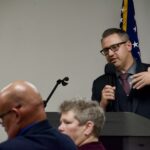
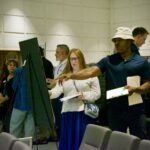
Dauphin County elections officials gave voters a behind-the-scenes look at what will happen on Election Day. Commissioner Mike Pries discussed new challenges and changes to the process with a majority of residents opting for mail-in ballots, our online story reports.

Our editor encourages people to vote in the 2020 election in his November Editor’s Note. In addition, he highlights the magazine’s focus on shopping local.

The Haldeman Haly House, one of Harrisburg’s top-five most historic buildings, received a visit from restoration expert John Lindtner last week. The Dauphin County Library System hopes to renovate and link the building to its McCormick Riverfront branch next door, our online story reported.

Harrisburg City Council made several more changes to a proposed Citizen’s Law Enforcement Advisory Committee on Tuesday. They also delayed a final vote on the bill to next month, our online story reported.

Harrisburg’s Riverfront Park was named a “2020 Great Public Space” by the Pennsylvania Chapter of the American Planning Association. The association noted the long-term success of the park, calling it a “vital city asset,” our online story reported.

The Harrisburg Symphony Orchestra welcomed Matthew Herren as its new executive director in June. After playing cello for HSO and later managing the Symphony of Northwest Arkansas, Herren returned to his roots in Harrisburg. Read more in our magazine story.

Housing in Harrisburg is thriving at a time when many big cities are struggling. People from New York, Philadelphia and Washington, D.C., are making their way to central PA! Read more in this month’s magazine article.

Joe Arthur, executive director of the Central Pennsylvania Food Bank, along with five others, received prestigious Catalyst awards from the Harrisburg Chamber this year. Arthur is being honored for his work to combat hunger during the COVID-19 crisis, our reporting found.

A Midtown Harrisburg Airbnb doubles as an exhibition space for local artists. Dustin Taylor hopes to give guests a “taste” of the region while promoting the artists’ work. Read more in our magazine story.

Sara Bozich has plenty of spooky fun for your Halloween weekend. Even if trick-or-treating is canceled for you, there are plenty of ways to celebrate the holiday.

UPMC Pinnacle is offering free flu shots to Harrisburg school district students in November, according to our online story. Parents and students can receive the vaccine at one of the weekly “Grab and Go” food distribution sites.

Do you receive TheBurg Daily, our daily digest of news and events delivered right to your email inbox? If not, sign up here! 

Support quality local journalism. Join Friends of TheBurg today!


Continue Reading

Weekly COVID-19 diagnoses reach new highs in PA, fatality rate fairly stable

COVID-19 cases and tests, over time. Source: PA Department of Health

New COVID-19 cases continued to spike in PA over the past week, with total confirmed cases now surpassing 200,000 since the pandemic began.

Since last Friday, the commonwealth recorded an average of 2,134 newly diagnosed cases per day, according to the state Department of Health.

This compares to an average of 1,641 new daily cases last week, and 1,397, 1,146 and 1,011 new daily cases per day for the prior three weeks, respectively. The department also reports that testing has increased substantially over this time (see chart).

Locally, diagnosed cases are now as follows since the pandemic began:

  • Adams County: 1,158 cases (prior Friday, 1,062)
  • Cumberland County: 2,526 cases (prior Friday, 2,391)
  • Dauphin County: 4,898 cases (prior Friday, 4,556)
  • Franklin County: 2,269 cases (prior Friday, 2,081)
  • Lancaster County: 9,764 cases (prior Friday, 9,205)
  • Lebanon County: 3,132 cases (prior Friday, 2,760)
  • Perry County: 370 cases (prior Friday, 347)
  • York County: 6,630 cases (prior Friday, 6,137)

Today, the department reported 2,641 newly positive cases throughout Pennsylvania for the past 24 hours ending at midnight, which includes 225 cases from previous days but reported today.

With today’s update, 205,517 Pennsylvanians have now been diagnosed with the coronavirus, an increase of 14,938 over the past week, according to the health department.

Statewide, Philadelphia County continues to have the most confirmed cases with 39,471 cases. Allegheny County ranks second with 15,622 cases, and Montgomery County is third statewide with 14,157 cases.

The department also reported an additional 159 deaths since last Friday, meaning that 8,784 Pennsylvanians have died from the disease since March. Fatalities totaled 168, 149, 129 and 98 over the prior four weeks, respectively.

Around central PA, COVID-19 fatalities now stand as follows:

  • Adams County: 28 deaths (prior Friday, 27)
  • Cumberland County: 79 deaths (prior Friday, 78)
  • Dauphin County: 196 deaths (prior Friday, 192)
  • Franklin County: 55 deaths (prior Friday, 54)
  • Lancaster County: 477 deaths (prior Friday, 472)
  • Lebanon County: 67 deaths (prior Friday, 66)
  • Perry County: 6 deaths (prior Friday, 6)
  • York County: 205 deaths (prior Friday, 199)

PA nursing homes and personal care facilities have been particularly hard hit by the virus. Of total deaths, 5,800, or 66 percent, have occurred in residents from nursing or personal care facilities, according to the health department.

In nursing and personal care homes, there are 26,013 resident cases of COVID-19, and 5,627 cases among employees, for a total of 31,640 at 1,064 distinct facilities in 63 counties, according to the health department.

In addition, about 12,373 of total cases in PA are in health care workers.

Statewide, 2,503,500 individuals have had coronavirus tests, with 2,297,983 people testing negative, according to the state health department. Last Friday, the state reported that 2,391,447 people had been tested for the virus.

The state reports a total of 4,006,017 PCR tests, which includes many people, such as health care workers, who have been tested more than once.

Of the patients who have tested positive to date, the age breakdown is as follows, according to the health department:

  • About 1 percent are aged 0-4
  • About 2 percent are aged 5-12
  • About 5 percent are aged 13-18
  • Nearly 14 percent are aged 19-24
  • Nearly 36 percent are aged 25-49
  • About 21 percent are aged 50-64
  • Nearly 21 percent are aged 65 or older.

Most of the patients hospitalized are 65 or older, as are most of the reported deaths, according to the state. However, the health department has emphasized that, increasingly, younger people are being diagnosed with COVID-19.

The health department continued to emphasize that Pennsylvanians should do the following:

  • Wash your hands with soap and water for at least 20 seconds or use hand sanitizer if soap and water are not available.
  • Cover any coughs or sneezes with your elbow, not your hands.
  • Clean surfaces frequently.
  • Stay home to avoid spreading COVID-19, especially if you are unwell.
  • Wear a mask whenever out of your house.

 For more information, visit the PA Department of Health’s COVID-19 website.

Currently, we are providing a COVID-19 update weekly, each Friday, or as breaking news warrants.

Support quality local journalism. Become a Friend of TheBurg!


Continue Reading

Up with People: I’m down for the count with Harrisburg’s draft comprehensive plan.

Illustration by Rich Hauck.

For a city nerd like myself, Harrisburg’s draft comprehensive plan is like Christmas morning meets a zoning board hearing.

And it’s not just the meat-and-potatoes of the plan—the various goals and guidelines and hopes and dreams—things that, honestly, may or may not happen over the next two decades or so.

When I open up the 246-page document—boom—a whole bunch of other fascinating stuff pops out, like I’ve just unwrapped a holiday gift from Harrisburg to me.

There are cool charts and graphs and beautiful skyline photos and tons of historical data. Does it get any better than this?

Seriously, I recommend that all Harrisburg residents try to spend some time with the draft plan, as they’ll inevitably learn something, perhaps many things, they don’t know about their city.

One data set that I keep circling back to is on page 01-7, Table 1-1: “Population Projections.” To my surprise, the chart shows no population growth in the city out to 2040. In fact, it shows a contraction—from just below 50,000 people today to 46,266 in two decades.

I keep thinking, “How can that be?”

The city cites the commonwealth’s “Population Projections Report, 2010-2040” for the figures but doesn’t offer the methodology. However, one thing’s for certain—they didn’t ask me.

I’m optimistic about Harrisburg’s future on some fronts, less so on others.

For instance, I don’t expect a lot of growth in terms of office workers. The city’s market for office space has been weak for some time, and the COVID-19 pandemic isn’t helping the situation. The virus likely will only accelerate the existing trend towards telecommuting among Harrisburg’s small army of white-collar workers.

I could be wrong, and I hope I am, but that’s what I see right now.

Residential, however, is a different story.

According to realtors I know, demand is very strong for residential real estate in Harrisburg. At one point last month, there was not single home for sale in Shipoke—the first time I’d ever seen that—and the same in Riverside. Most decent houses in nice neighborhoods were selling in just days, sometimes hours, after hitting the market.

But my optimism isn’t solely based on the current situation, with low interest rates spurring demand in many places. I feel that Harrisburg is well positioned to experience population growth over the next 20 years.

First, Harrisburg is a far more attractive city than when I decamped here a dozen years ago. The desolation I felt on my first long walk through Midtown has been replaced by bustle—new restaurants and venues, restored buildings, a vibrant Broad Street market and plenty of sidewalk traffic. Street improvements have made the city more pedestrian and bike-friendly, and more are coming.

Secondly, not only is the sales market strong, so is the rental market. According to a story in this month’s issue, the pandemic has led urban-dwellers to move to smaller cities, and Harrisburg seems to be benefitting. So, low interest rates aren’t the only thing juicing demand lately.

Thirdly, Harrisburg is a city that once had nearly 90,000 residents, most living in rowhouses and small apartment buildings. Today, the population is about half that. What does that mean? Empty land—and plenty of it.

You can find copious amounts of vacant land—places where buildings once stood—in almost every neighborhood in Harrisburg. From surface parking lots downtown to grassy fields Uptown, the city has a crazy amount of buildable property.

With just a few exceptions, no new, market-rate housing has been built in Harrisburg for decades. However, that’s beginning to change as rising residential demand and price appreciation have made the city’s vast empty fields more attractive, at long last, than just a place to watch the squirrels romp.

In fact, several developers recently began tussling over land on both sides of the coveted Reily Street corridor. Several major residential projects are planned for the area near the new federal courthouse, a mixture of apartments and single-family townhomes, with some commercial and office thrown in.

In 20 years, Harrisburg will be in the midst of drafting its next comprehensive plan. When that time comes, the city’s planning director will jetpack his way to work, sit down at his levitating desk and discover, on page 01-7 of the dusty old 2020 plan, a chart that projects that Harrisburg will have just 46,266 people in 2040.

He’ll probably chuckle and mumble to himself, “What the heck were they thinking?”

Lawrance Binda is co-publisher/editor-in-chief of TheBurg.

Support quality local journalism. Become a Friend of TheBurg!

Continue Reading

Headed to Harrisburg: As big cities fight to retain residents during COVID, Harrisburg attempts to keep up with the demand.

Illustration by Rich Hauck.

Aliyah Graves-Brown loved her row home in Washington, D.C. She lived with three friends and had her own room.

She was in D.C. for about nine years, going to school and then teaching at Georgetown University. It was her home, and the big city had so much to offer.

That is, until the COVID-19 pandemic hit, and her personal D.C. shrunk to the size of her shared house.

“The pandemic is impacting big cities in a way that doesn’t make them feel the same,” Graves-Brown said. “Being in D.C. doesn’t really matter if I’m in my home most of the time.”

All of the big city amenities that drew her in weren’t as accessible anymore. Not to mention, she was working her job remotely.

Graves-Brown works as the program coordinator for the Prisons and Justice Initiative at Georgetown University. Before the pandemic, she would regularly take trips to the D.C. Jail for her job. For months, she hasn’t been able to do that.

“I had to think through what the future looks like,” she said.

Graves-Brown decided it was time to find her own one-bedroom apartment and come back to where she grew up—Harrisburg.

“I’m excited to have a space that’s mine,” she said. “But I definitely wouldn’t have moved back to Harrisburg if it wasn’t for the pandemic.”

We’ll take it.

According to Wendell Hoover of Iron Valley Real Estate of Central PA, Graves-Brown’s story isn’t unique.

He has met a number of people moving out of cities like Philadelphia, New York and D.C. to come to Harrisburg. Some are moving for jobs, some because they can now work remotely, and others for family.

But this isn’t just a few out of a handful. This is a phenomenon many professionals in the real estate business are seeing.

In Philadelphia, rental prices have dropped by 6%, with some landlords even offering rental concessions—negotiating changes to a tenant’s original lease in an effort to keep them, said Meghan Okonsky, an Apartments.com representative for the Philadelphia and central Pennsylvania areas, including Harrisburg.

On the other hand, nearby, smaller cities like Harrisburg have seen residential demand rise, Okonsky explained. According to data from Apartments.com, apartment vacancies in Harrisburg (defined as places with a Harrisburg address) stand at just 3.6%, compared to 6.8% nationally and 5% in Harrisburg at this time last year.

“Philly is struggling, but places like Harrisburg are thriving,” she said.


Up to Speed

Like Graves-Brown, Brittnay White wouldn’t have made the choice to move out of the big city if it weren’t for the pandemic.

She and her son lived in a house in Queens, N.Y., and she loved the area.

But White missed her family, who mostly lived in Harrisburg. When some family members contracted COVID-19, it put everything into perspective for her. She knew it was time to move back.

Because she was working mostly remotely, the decision became much easier.

“I had been thinking about moving closer to family, but there was nothing pushing me,” White said.

White and her son are moving into Olde Uptown this month. She’s nervous for the transition to a smaller city, but knows she made the right choice.

“I feel like Harrisburg is really catching up to speed,” she said.

Not to mention all the money she’s saving on rent.

“We continue to see a high number of our residential tenants coming from out of state,” said Brad Jones, president and CEO of Harristown Development Corp.

He said that he’s encountered numerous people moving to Harrisburg because they can work remotely.

“We have a tremendous value proposition here,” Jones said. “You can save money and have a higher quality of life.”

In fact, Harrisburg recently was named one of U.S. News and World Report’s “2020-21 Best Places to Live.” Out of 150 top metro areas nationwide, the city placed 51, the highest-ranked city in Pennsylvania.

Jones cited the walkability, green spaces and access to amenities like restaurants.

Not only is Harrisburg a place where more people want to rent, but Hoover has seen an uptick in home sales, as well. The data supports his thesis.

According to the Greater Harrisburg Association of Realtors, area home sales have shot up since pandemic-related restrictions on the housing industry were lifted in late spring. For instance, in September, residential sales for the three-county region rose 19 percent compared to the same month last year, while the median sales price increased by 11 percent.

Hoover said that people are realizing that they can buy a house here for a fraction of the price of larger cities, a big selling point when you can work remotely yet still be an easy drive or train ride to several large metro areas. Meanwhile, he believes that remote work won’t end when the pandemic does.

“The working from home trend is not temporary,” Hoover said. “It’s permanent.”


City and Town

Doug White lived in Brooklyn, N.Y., for about 13 years, before recently taking a new job in Harrisburg. Out of three location options from the company, White and his partner landed on Harrisburg.

White’s move may have been for a job, but he knows many friends from Brooklyn who left before him because of the pandemic.

“There’s a mass exodus from New York,” he said. “People are breaking their leases.”

Like Graves-Brown, White attributed the “mass exodus” to the closure of many urban amenities, such as restaurants and cultural venues, coupled with often sky-high rents in New York.

“When all that is shut down, what’s the point of paying all this money?” he said.

That isn’t to say Harrisburg doesn’t have amenities like the bigger cities, explained David Black, president of the Harrisburg Regional Chamber & CREDC.

“People like the urban feel, but it’s a smaller urban feel,” he said.

He mentioned the easy access to the Broad Street Market, restaurants and retail.

Black said that, with more people moving to Harrisburg, demand for more amenities will increase, which could lead to additional retail and restaurant options.

So, if you’re looking to move, go ahead and check Zillow or Apartments.com, but best of luck. Things are moving fast.

For more information on Iron Valley Real Estate of Central PA, visit www.ironvalleyrealestateofcentralpa.com.  

To learn more about Harristown Development Corp., visit www.harristown.net.

For more on the Harrisburg Regional Chamber & CREDC, visit www.harrisburgregionalchamber.org.

Support quality local journalism. Become a Friend of TheBurg!

Continue Reading

In the Wings: Sidelined for now, two emerging theater companies dedicated to diversity plan 2021 comebacks.

Akeelah and the Bee

It’s been a tough year for performing-arts organizations—between the pandemic, the extra safety precautions required to reopen and the economic repercussions.

But two relatively new theaters in the Harrisburg area may have extra challenges.

“Because of the pandemic, we had to stop performing in the middle of the 2020 season,” said Frank L. Henley, artistic director of the Narcisse Theatre Co.

A community-based, nonprofit, Narcisse is dedicated to uniting the local arts community and developing artists “from outside the mainstream.”

“We probably won’t resume production till the summer of 2021, though it’s too far off to speak about specific plans,” Henley said.

The theater is committed to showcasing thought-provoking revivals, such as “Waiting for Godot” and “The Enemy of the People”—the latter done collaboratively with Gamut Theatre Group—but half of its productions are original plays by local playwrights. One example is “Lizophrenia,” an interactive one-woman show by Liz P. Curtis.

“Though I am African American, as is the majority of our board and past cast members, we are a multicultural organization dedicated to all communities within Harrisburg,” Henley said.

Narcisse is not an African American theater company in the same sense as another relatively new theater, Henley said.

That organization is Sankofa African American Theatre Co. Sankofa’s mission is to engage audiences around the African American experience through telling stories that amplify that experience, “which is often excluded or actually flawed when included,“ said Sharia Benn, co-founder, president and executive artistic director.

Sankofa’s productions and programming are directed by African Americans, written by African Americans, centered on African American voices, and give access and support to African American talent.

“Yet, Sankofa is not an exclusive organization, but rather one that invites inclusivity to promote understanding, racial equity and community healing,” Benn said.

Because of its newness, Sankofa didn’t have the financial reserves or donor base of other arts organizations, nor did it qualify for pandemic relief like them. Sankofa was not eligible for grant funding because of eligibility requirements around staff size or operating budget, though its base of supporters and board members contributed, “some of them making a sacrifice… as they had lost jobs or had reductions in income.”

But Sankofa’s artistic director also attributed the financial woes, at least in part, to systemic racism.

“There are sustained conscious and unconscious racially based public policies and institutional practices that have resulted in inequities in access to funding and resources for education for theaters, artists and communities of color,” she said. “These institutional inequalities have existed for generations…and are clear when private philanthropic and public/government funding of black theater companies are examined.”


Still Here

Until performing arts groups can safely open, the two theaters are taking advantage of the involuntary break to remain visible and enhance their offerings.

Narcisse, for example, is reading plays for possible production and doing professional development. Henley is working on beefing up the theater’s educational program, which will include classes in acting, stagecraft and playwriting.

Sankofa is in the planning stages for some safe, socially distant programming during 2021, and Sankofa and Gamut Theatre Group—one of its collaborators—are doing more short-term planning by quarter, as opposed to an entire season. Sankofa also works with Open Stage.

“Reopening will definitely be different, and virtual technology will be a part of that and the future of theater,” Benn said. “We are also updating our strategic plan and implementing processes to make our organization more effective administratively…”

Like Sankofa, Narcisse doesn’t get a great deal of funding because it uses small casts and a lot of local actors. Narcisse also has no permanent home. Generally, its productions take place at the Harrisburg Midtown Arts Center (HMAC), but the theater company would like to find its own space.

“But we’re starting small,” he said.

One space he’d like to occupy is the former Danzante building on Allison Hill. It is beautiful but also would fill a gap, Henley said—the area east of Cameron Street currently has no art gallery or theater.

Involving the community is another goal of Sankofa’s. “Voices of the Eighth” (V.O.T.E.) was an original, collaborative production performed in February, which included creative work from Sci-Tech, Central Dauphin East High School and Bishop McDevitt. It was attended by close to 800 students and more than 400 others in a public performance.

The play told the story of Black people who had lived in the Old 8th Ward in Harrisburg, a community razed to expand the Capitol Complex. It also highlighted the importance of the African American community being counted in the census—with the 2020 census team invited to be part of the performance talkbacks.

Sankofa and Narcisse also collaborate. “Voices of F.E.W.” was an original play by Benn that Henley directed. It is about the life and challenges of Frances Ellen Watkins-Harper, a 19th-century abolitionist, groundbreaking literary and oratorical figure and advocate for social change.

The two theaters also share hope for the future.

“We’re looking forward to getting back to our audiences of Harrisburg, completing our mission to the people of Harrisburg,” Henley said.

“We’re still here,” Benn said. “It’s important to say that Sankofa does not act in response to what’s happening, such as COVID and anti-black actions. We’re not a result but a recognition.”

For more information about Narcisse Theatre Co., visit www.narcissetheatre.org or call 717-777-1374.

For more information about Sankofa African American Theatre Co., visit www.sankofatheatrehbg.com or call 717-214-3251.

Support quality local journalism. Become a Friend of TheBurg!

Continue Reading

Watershed Event: Despite the trials of 2020, a new restaurant/pub opens in Camp Hill.

Scottish Poet Robert Burns once said, “The best-laid schemes of mice and men oft go awry.” It’s a phrase to which Josh Kesler can certainly relate.

Before opening the Millworks in Harrisburg, Kesler dealt with the vicissitudes of real estate. So, suffering the occasional setback was hardly a foreign concept to him.

But then came COVID-19, a wholly new challenge that hit the restaurant industry hard. Nonetheless, he continued to charge forward with plans to open a new restaurant in the heart of Camp Hill—The Watershed Pub. Kesler went so far as to put a sign out announcing a July 16 opening date.

But then the pandemic struck too close to home. An employee at the just-reopened Millworks tested positive, causing him to test all employees for the virus. When he discovered that he would have to wait two to three weeks for the results, he decided that it was time to pivot again. So, he put both restaurants on pause.

“I wanted to gain a little bit more of a comfort level,” Kesler said.

By the first week of October, the restaurateur was once again ready to host the grand opening of the Watershed Pub.


Science & Art

Kesler has long had a passion for preservation, rehabbing over a million square feet of historic properties over the years. So, when he heard that Creative Elegance Boutique was up for sale and that the building dated back to the 1800s, his interest was piqued. He made an offer, closed the deal, and got to work.

Customers will recognize the exterior.

“We worked hard to preserve the historic architectural integrity on the outside of the structure,” Kesler said.

Inside, things have changed quite a bit in the 3,500-square-foot building, which now seats 160. The pub features a bar on both the first and second floors, with white oak flooring throughout. Seating on both floors is a combination of tables and booths with lighting fixtures that vary from sconces to Edison bulb pendant lighting to colonial-style chandeliers. Kesler attributes the choice of wall color to his wife, who selected “Cushing Green,” a period hue for the building.

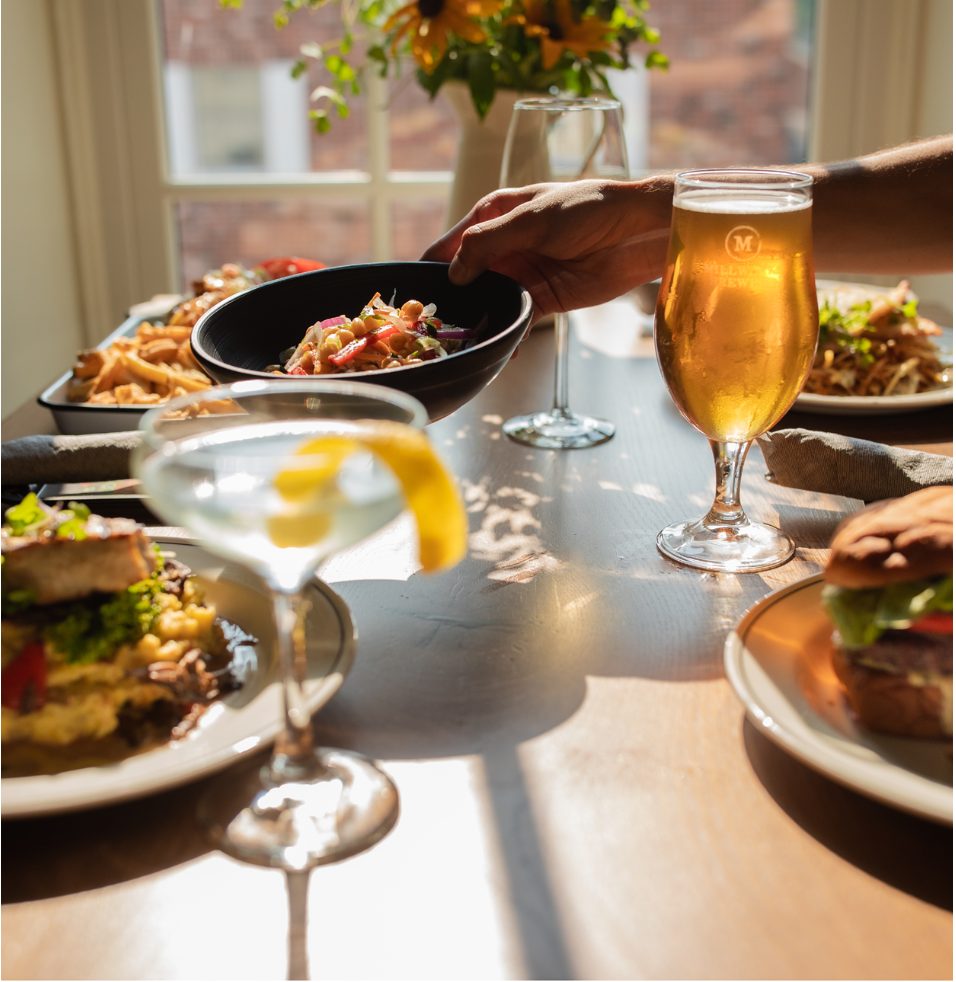
As for the cuisine, sustainability is infused into the heart of the menu.

“The Watershed Pub developed as we began to think about the impact of our region on the Susquehanna River Valley and, ultimately, the Chesapeake watershed,” Kesler said.

Diners have a choice of carefully selected seafood options that are regional, sustainably harvested and meet criteria from the NOAA fisheries guide, the Monterey Bay Aquarium’s Seafood Watch Guide and others. Selections hail largely from the mid-Atlantic region and include oysters, blue crab, mussels, clams, rockfish and even Maryland snapping turtle, along with non-seafood items like vegan ravioli and country fried steak.

Kesler said that he strives to be environmentally responsible.

“It’s important to me to work with the Chesapeake Bay Foundation to help support the organization’s mission to protect and restore the bay,” he said.

The Watershed Pub has something else that Camp Hill residents have longed desired for their downtown ever since they marched to the polls a few years ago to overturn the borough’s “dry” status—a place to get a drink.

The restaurant offers artisan cocktails crafted with Pennsylvania spirits, along with a selection of quality Pennsylvania wines and a wide selection of brews from the Millworks Brewery, with brew master Jeff Musselman at the helm.

“My passion for brewing is anchored in the fact that what we do is truly a combination of science and art, and there aren’t many careers where you get to combine those two things and make a product that customers are passionate about,” he said.

Sue Pera, owner of neighboring Cornerstone Coffeehouse, said that the Watershed Pub fills a need along Market Street.

“Camp Hill is super excited to welcome the Watershed Pub to the downtown business corridor,” she said. “It’s the first dining destination in Camp Hill since Prohibition to serve wine, spirits and beer, all locally sourced from PA.”


Homecoming

Unfortunately, the pandemic continues to hang like a specter in the air these days, especially for restaurants. So, Kesler took an action that he may not have considered a few years ago.

“I decided to install more sophisticated equipment in this restaurant,” said Kesler about the HVAC system that includes a UV purifier that kills up to 98.5 percent of airborne pathogens. “I started out with HEPA filters and began talking to contractors, who led me down the road to discovering this other system.”

It was expensive, he said, but worth the added “peace of mind.”

Otherwise, he’s happy to be contributing to downtown Camp Hill’s fabric, adding a food and drink option to the revitalized shopping district, and is optimistic about the changes being made to make the small community more walkable.

“When the weather warms again, we will also be able to accommodate an additional 90 customers who enjoy outside dining,” he said.

The restaurateur said that his family lived in Camp Hill for almost a decade.

“So, for me, it feels almost like a homecoming,” he said.


The Watershed Pub is located at 2129 Market St., Camp Hill. For more information, visit
www.thewatershed.pub or their Facebook page.

Support quality local journalism. Become a Friend of TheBurg!

Continue Reading

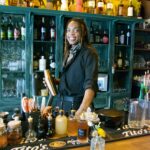
Passion & Profit: Black entrepreneurs in Harrisburg are making money doing what they love.

Danielle Williams models her earrings, also shown right.

Maisha Webb wants to be seen before she is heard. She has always been a little quiet, but when she makes an entrance, she’s determined to be noticed.

“Fashion was a way to express myself without having to say anything,” she said. “I knew when I walked into a room […] it’s going to turn heads.”

When you enter Mean Girl Style Boutique, the first thing you notice is pink—pink walls that Webb’s dad had contested when she pulled out the paint cans. But remember, she was going for head turns.

Racks of neon dresses, shimmering skirts and graphic tees with messages like, “Alexa. Block his number,” line the wall. Her outfits are for people who like to think outside the box when it comes to fashion, she said.

“I really like sparkly things,” Webb admitted. “I have a lot of sequins.”

Webb’s story reflects that of a growing number of Black shop owners and entrepreneurs in the Harrisburg area, who are taking something they love and turning it into a money-making venture. Whether it’s fashion, food or health, many new African American businesses have opened in recent years.

When she started her brand, Webb didn’t have a degree or business experience, she just wanted to sell shoes. She went through ups and downs, periods of stepping away from the business and name changes to her boutique. Webb took time for her family, working other jobs and caring for her three kids. But something was missing.

“When you have something you’re really passionate about and you step away from it, it’s like a void,” she said.

It was in 2016 when she decided to commit to her business. Webb was listening to a Jay-Z song, “Girls, Girls, Girls,” when the lyrics called out the perfect name for her boutique, Mean Girl Style. Hip-hop lyrics often speak to her like that. In 2018, she bought her store on N. Front Street in Steelton, painted the walls pink and, in her words, worked her butt off.

Webb’s daughter Ajia’s artwork decorates the walls of the boutique. Ajia even has a few shirts and jackets on the racks that she designed herself.

“My mom is an inspiration to me,” she said. “I’m trying to follow what she is doing.”


Like Mother, Like Daughter

Yolanda Maina learned everything she knows from her mother. Her skills of beading jewelry, carving wood and stone and sewing clothing came from her mother’s teaching.

At Jambo African Fashion and Design, she sells items just like the ones that she and her mother made and sold in Kenya years ago.

“We have bright colors, beautiful colors,” said Maina, who owns the enterprise with husband Edwin. “I try to make many different pieces.”

Until recently, their store was located in downtown Harrisburg, but recently turned to an all-online model.

Maina said that the couple brings a taste of African heritage to customers. Dresses, jewelry, men’s suits and kente head wraps are just a few of the items they sell.

She makes some of the jewelry and clothing herself, and some is sent from Kenya.

“I try to create employment for the ladies back home,” she said. “It’s about empowering them, and they are learning the skills, too.”

During the COVID-19 pandemic, things slowed down at the shop, except the owners. Maina continued working and studying in school to be a nurse, while running the store.

“There are some good days and bad days,” she said. “It’s about patience.”


Deep Breath

Owner of Ex•hale Candle Co., Aubrea Thompson, not only wants to make her customers happy, but healthier.

About four years ago, Thompson started experimenting with making aromatherapy candles.

“There was a lot of trial and error,” she said. “There’s a science to it. I had to learn a lot.”

Thompson loved a good candle—the way it made the room glow while creating ambience and a sense of relaxation. But through research, she found information on how paraffin wax candles, the most popular kind, could potentially cause health issues, she said.

Thompson decided to make her candles with soy wax and essential oils. They are all-natural, organic and vegan-friendly, and each is handmade by Thompson, who pours many hours each week into the craft.

One of her scents, perfect for fall, is a blend of blood orange and cassia (cinnamon) called “Bliss.” Another customer favorite is “Zen AF,” a mixture of lavender and vanilla.

Each candle has the name with a definition of the word underneath. “Pur•if•y,” “Pros•per•i•ty” and “Vibes” are among them. There’s one for almost every feeling or state of mind.

“I’m big on words and positive affirmations,” Thompson said. “My candles have a meaning of wisdom and purpose.”

In addition to candles, she has her own photography business, ATV Studios in Carlisle. Thompson currently sells her candles online, but hopes to find a storefront eventually to continue helping people live a healthier life.

One of Thompson’s candles recently sat on Webb’s desk at Mean Girl Style Boutique.

“I’m a Black-owned, small business so I get a lot of support from my community,” Thompson said. “Doing this makes me feel like I have purpose again.”


Making a Statement

When the pandemic hit, most people suddenly had a lot more time on their hands. Danielle Williams sure did.

Now that she had more time at home, she wanted to do something meaningful with it.

Williams started designing and making her own earrings. She was selling clothes on her small online boutique, The Beat Boutique, but wanted to expand to jewelry. YouTube helped her learn the technicalities, but the creativity was always there, she said.

“It started as a hobby,” she explained. “It was just something to do in quarantine. But then people started reaching out.”

It wasn’t long before Williams set up a room dedicated to earring making in her home in Midtown.

Every day, she spends time rolling and hand molding polymer clay, using a pasta maker to get the air bubbles out, and cutting out whatever shape she has in mind.

Some of her earring designs resemble a sunset, others a crescent moon. One pair is a swirl of pink, blue and purple pastels, another a simple, moss green that reminds her of her destination wedding in Iceland.

“I’m really big on loud colors,” Williams said. “I have darker skin and short hair, so I like statement earrings.”

Under the name Earrings by Dee, Williams has sold her jewelry at venues like Rubicon, La Cultura and the HBG Flea. She is grateful for the opportunity she has, while recognizing there is still often a lack of diversity among artists and makers showcased at festivals and pop-up shops.

“I think the community is working on giving a platform to people like me,” she said. “But I would love to see more people that look like me at these pop-ups.”

While Williams never expected her quarantine hobby to take off like it did, she is grateful for the ways she has grown because of it.

“I’ve learned to really believe in myself and grow outside of my comfort zone,” she said. “It’s a feeling of ‘wow, I’ve done this.’”

Mean Girl Style Boutique is located at 147 N. Front St., Steelton. For more information, visit www.mgsboutique.com or their Instagram (@meangirlstyle).

Jambo African Fashion and Design can be found at www.jamboafricanfashion.com or their Facebook page.

To order from Exhale Candle Co. or to learn more, visit www.exhalecandleco.com or see their Instagram page (@exhalecandleco).

To check out Earrings by Dee, visit www.thebeatboutique.shop or her Instagram (@earrings_bydee).

Support quality local journalism. Become a Friend of TheBurg!

Continue Reading

Lemons to Lemonade: COVID has slammed many businesses, but some have found unique niches, opportunities.

Ace Rhoad

A few months ago, Ace Rhoad lost his job, a casualty of the COVID-19 pandemic. He tried to occupy his time, but quickly grew tired of watching Netflix. He’s not a fan of sitting still for long.

Besides, all the bad news—the pandemic, political polarization, the recent deaths of Black men and women and the subsequent conflict—were getting to him.

“Everything was so depressing,” Rhoad said. “When I cook, I don’t have to deal with that.”

Although he was a salesman by trade, Rhoad was a chef at heart. With all the extra time on his hands, he could get back to what he loved.

He invested in a meat smoker and set up shop in his backyard in Harrisburg, cooking for neighbors and friends for fun. He served up ribs, chicken, pulled pork, pit beef and a slew of cookout favorites.

“You could smell it everywhere—the whole neighborhood,” he said. “People were coming out and wanted to know what was going on.”

His backyard barbecue got so big, Rhoad decided to put it on wheels and feed the masses in perfect COVID-19 style—out of a food truck. Smoking Ace’s BBQ was born.

“It blew up more than I thought it would,” he said. “It brought people together.”


Pets & Plants

During the pandemic, we’ve heard of businesses reducing capacity and temporarily or permanently closing. Rarely are there stories of businesses starting and growing because of the pandemic. But, just like Rhoad’s, they are there, blooming from a crack in the concrete—some quite literally.

“The houseplant business has blown up since COVID,” said Hannah Witwer, co-founder of The Vintage Vine HBG.

Witwer met Amie Ennist on Instagram after both had started accounts to post about life with pets and plants in Harrisburg. Over a glass of champagne, they decided to join forces and start a plant business.

Within a month, the pair held their first pop-up plant sale in front of Ennist’s home on Green and Kelker streets in Midtown. They set up tables of vintage vases full of green clippings and potted plants. Within a few hours, they were sold out.

“When we had our first sale, we didn’t know what it was going to be like,” Ennist said. “But people want their plants.”

The houseplant trend has been growing over the past few years, especially amongst millennials, reported Garden Center Magazine. According to the National Gardening Association, millennials were responsible for 31% of houseplant sales in 2018. During the coronavirus crisis, the Washington Post found that even more people have been purchasing plants.

Witwer and Ennist have noticed the same trend.

“People are saying how their mental health has taken a toll during COVID,” Witwer said. “They say tending to plants and having new life in their apartments really helps. It helps me, too.”

Since The Vintage Vine’s first sale, they have held another at Rubicon, a restaurant in downtown Harrisburg. That time, they almost sold out within the first half hour.

“We are doing this to have fun, and we hope it never stops being fun,” Witwer said. 


Work Her Magic

For some businesses, the coronavirus crisis gifted them with time—enough to get a dream off the ground. For other people, the pandemic gave them a problem for which, with innovation, they would find a solution, and subsequently, a business.

The Vintage Vine’s second pop-up shop was hosted by Jovana Sarver, a local artist who has also found a way to capitalize on the CDC’s guidelines. She started making facemasks.

Sarver had a lot of scrap fabric lying around from a T-shirt line she created for Little Amps. She and her friend, Hanniel Sindelar, decided they would make use of the fabric by making masks to sell and raise funds for the Young Professionals of Color—Greater Harrisburg.

“It felt tedious in the beginning,” Sarver said. “But they were selling fast, so we kept making them.”

After the fundraiser, she continued making masks and selling them. Now she has made and sold over 100.

But these aren’t just any old masks. Each one is a unique work of art.

Through an “ice dyeing” method, Sarver creates a swirl of colors on each mask—think tie-dye meets watercolor.

“I’ve always been interested in clothing as more than clothing,” she said. “I love that it is an art piece that people can wear.”

Seeing the success of her masks, Sarver has been dyeing clothes now, as well. People send her their white shirts, pants and dresses to work her magic on.

Making masks has pushed her art in a new direction. Sarver plans to take it from a side hustle to more of a full-time business.

“I feel more confident,” she said. “I’m fully committed to making this work.”


Silver Linings

Savon Poole is another entrepreneur committed to growing her business after newfound success through the pandemic.

She is the founder of Moving Handz LLC, a grocery delivery service for seniors in the Harrisburg area.

When Poole’s grandmother was diagnosed with stage-four cancer, she and her family spent a lot of time shopping and caring for her. This, she said, took away valuable time they could’ve spent with her.

“I felt like, why not start a grocery delivery service to fill that time gap?” Poole said.

Although Moving Handz was formed in February, it really picked up as the COVID-19 crisis hit, putting seniors most at risk.

Poole helps clients select groceries, shops for them and delivers to their homes. Customers can pay to receive a monthly service or pay by delivery.

As her business grew during the pandemic, Poole started to dream about what the next step may be. She hopes to partner with Medicaid, Medicare and the Pennsylvania Department of Aging.

“People really like this, and they say this is a service that is needed,” she said.

While the pandemic helped kick-start some of these local businesses, not one of the owners wishes the crisis was part of our current reality. They are, however, grateful that some good has arisen amidst so much bad.

“I guess this is the silver lining,” Sarver said. “You can really stop and focus on what matters to you.”

Smoking Ace’s BBQ is located outside of Boscov’s at the Colonial Park Mall, 4600 Johnstown Rd., Harrisburg. For more information, visit their Facebook page.

The Vintage Vine HBG will be at La Cultura, 214 Verbeke St., Harrisburg, on Nov. 21. For more information, visit their Instagram page (@thevintagevinehbg).

To purchase a facemask from Jovana Sarver, contact her through Instagram (@dirt.petal).

For more information on Moving Handz LLC, visit their Facebook page or call 717-425-4509.

Support quality local journalism. Become a Friend of TheBurg!

Continue Reading

Inspired Miles: Reflections on running 50 races for 50 causes while I was 50.

Karen Hendricks

It’s hard to run in a Santa suit.

Running up and over a steep bridge—if you have a fear of heights—is mentally challenging.

And if you’ve suddenly lost your beloved dog to canine cancer, it’s an emotional experience to participate in a race designed for dogs and their owners—minus your dog—two weeks later.

Those were some initial takeaways from a yearlong running challenge I recently completed.

I set out to run 50 races for 50 causes while I was 50.

I thought 50 race experiences would be a challenging, meaningful way to give back to others, while celebrating a banner year through something I love—running. My run buds caught my enthusiasm and joined in. Non-running friends thought I was insane. My husband worried I’d end up injured. (Spoiler alert: I miraculously did not.)

I want to make it clear that I consider myself a very average runner. Throughout the year, I achieved a few things, but my personal milestones were nothing compared to the trailblazing people dedicated to lifechanging causes that I met along the way. And like everything else in 2020, my plans were shaped by a worldwide pandemic—as much as I didn’t want them to be.

It all began last September with a mountainside 5K that helped at-risk youth, a beachy half marathon with a big bridge that benefitted volunteer firefighters, and York’s White Rose Run—a 5-miler through city streets that fought opioid addiction.

All year, I met incredible people, heard both heartbreaking and triumphant stories, and learned head-shaking-worthy statistics. For example, about 130 people die every day in this country due to opioid addiction. I met a woman—about my age—who battled to save her son from being one of those statistics. Because she ultimately couldn’t, she co-founded York County’s nonprofit chapter of Not One More. Now she’s working to save other families from her heartache.

More heartbreaking odds: One out of every three dogs will develop some type of canine cancer in their lifetime. My own beloved Jack suddenly became one of those statistics last fall, just two weeks before Gulliver’s Run. This 5K at Gifford Pinchot State Park has raised $66,000 for canine cancer research since 2013 thanks to its dedicated founder, who also lost his best friend to canine cancer. Running can indeed ease heartbreak.

Running also forges friendships. My friend Ali and I drove through the pouring rain—and questioned our sanity—to run the Spring Valley 4-Miler, part of the York Road Runners’ Winter Race Series, which supports the local running community. Dripping wet, we huddled under a tent by the finish line, mud swirling down the road, to enjoy the sweet victory of race donuts—and laughed.

The year took a somber turn for all of us in March. Life—and our plans—lurched. More than a dozen spring races I’d signed up for were canceled or postponed, and I wondered if I’d be able to continue—almost exactly at my halfway point. One thing I knew for sure. I needed running in my life more than ever before. Running was the best escape from the reality of this pandemic, and some days I just wanted to keep running and not return.

Slowly, races adapted and went “virtual,” meaning you could sign up, run the distance in your neighborhood or anywhere you’d like, and your race fees and donations still benefitted great causes—because let’s face it, nonprofits still needed help.

Running the Paterno Family Beaver Stadium Run 5K in my neighborhood didn’t provide quite the same atmosphere, but the event still supported Special Olympics of Pennsylvania during its 50th anniversary year.

As 2020 wore on, virtual races morphed into long distance challenges, like the One NY 500K (311 miles). My friend Joanne and I both ran 500K over two months to total 1,000K—the distance from Niagara Falls to the easternmost tip of Long Island. Every day, we logged our socially distanced miles, texted each other for support, and watched our little runner graphics move across a New York map.

Those miles, powered by our donations, raised money for COVID-19 relief efforts—a cause that didn’t even exist six months prior, when I began my race planning. As New York City began to emerge from the pandemic, it felt like our miles made a difference. Long-term running goals aligned with the long-term endurance we’d need to survive 2020. Running was therapy.

Additional challenges included the summer-long Runnsylvania 283 (the mileage across Pennsylvania)—also benefitting COVID-19 relief, Harrisburg River Runners’ June 100-mile challenge aiding the Central Pennsylvania Food Bank, 76 miles in July for Philadelphia’s homeless nonprofit Back on My Feet, and I contributed 50 of the nationwide Million Miles for Justice in the wake of George Floyd’s death.

I started to equate longer distances with deeper causes. If only I could run long enough to get to the roots of our society’s issues.

And so, running became a way for me to process the events of the past year. Through it all, I felt grateful to be alive, grateful to have the ability to run, grateful to be outside—often with my husband nearby on his bike, grateful for friends and family who donated to many of my causes. When people care enough to say they believe in you, it’s humbling. And empowering. My 50 races for 50 causes totaled 1,176 miles, raised thousands of dollars and even earned me a few race medals and PRs (personal records—at the age of 50!) along the way.

I couldn’t have done it without causes that motivated me to help make the wrongs of our society a little more right.

I logged many miles in Harrisburg, along the river or around the Greenbelt, including my final, 50th race. About 25 friends joined me on City Island to run the Brave Like Gabe 5K for rare cancer research. Do you remember how absolutely perfect and beautiful Labor Day weekend was? A bald eagle flew over the island as we gathered—a magical moment that captured the spirit of the entire past year.

Because the power of running also somehow generates magic over the miles. In between those split seconds when our feet touch the ground, there’s also a split second of hang time when they’re not. It’s the closest we’ll ever get to flying. My friend Marjorie took a picture of me at August’s socially distanced Harrisburg Mile—also on City Island—and magically, she captured that tiny sliver of time. Neither of my feet is touching the ground.

Running puts us in touch with hard realities that are sometimes cruel and unfair. But running also sets us in motion. It supports amazing people defying odds, overcoming challenges, researching diseases, innovating social change, striving for better.

Running puts our feet on the ground. But it also helps us fly. I have 50 memories to prove it.

Karen writes about her 50 races, and all 50 causes, at InspiredMiles.com—including why it’s hard to run in a Santa suit. She apologizes if you read this entire article thinking you’d find out here.

Support quality local journalism. Become a Friend of TheBurg!

Continue Reading