McNees law firm offers year of free legal services to local Black-owned businesses

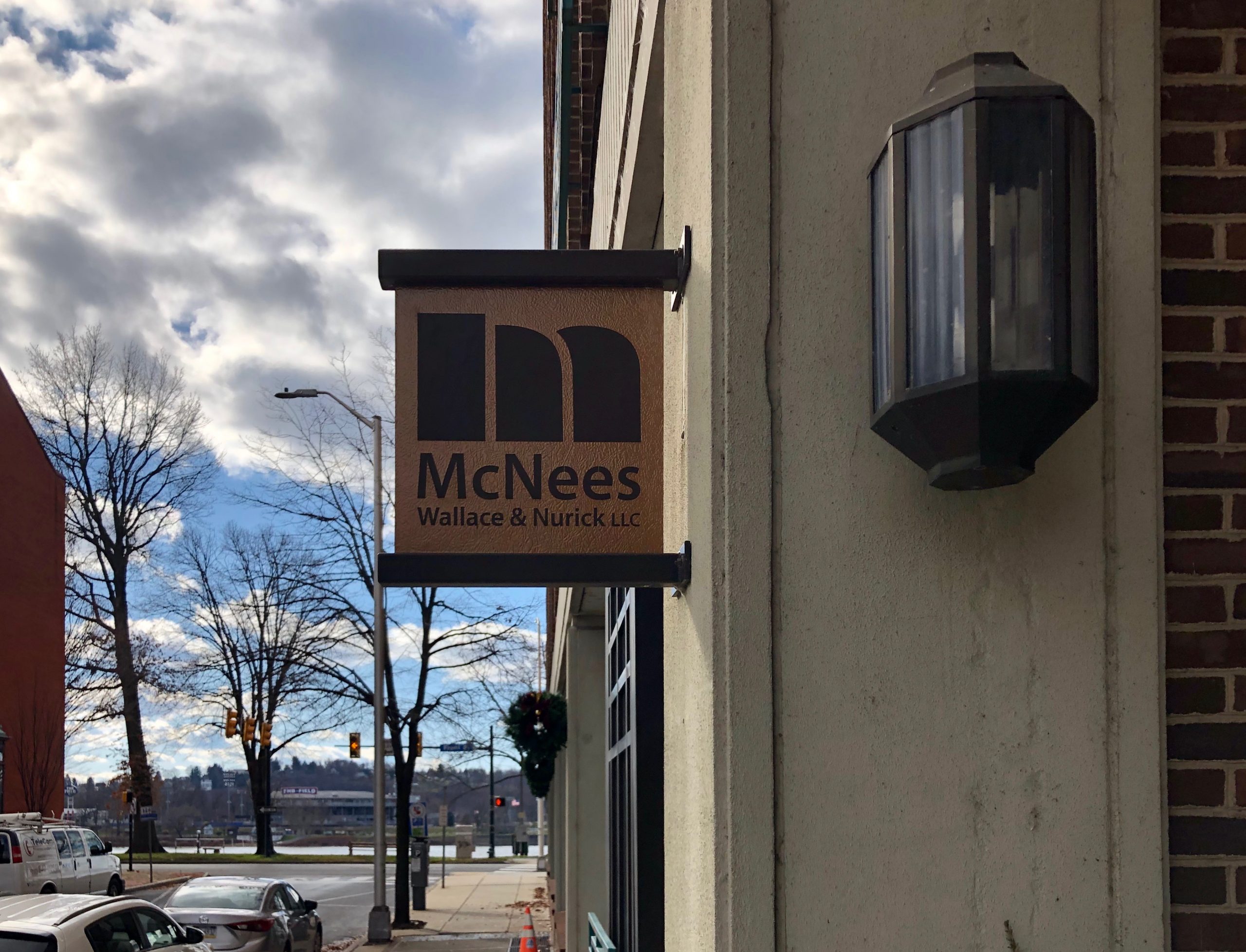
McNees law firm on Pine Street in Harrisburg.

When attorneys at McNees Wallace & Nurick LLC saw the events around the death of George Floyd unfold in Minneapolis, they knew they needed to do something.

“The firm was thinking about what we could do to bridge the gap and address systemic racism in our country,” said Adeolu Bakare, an attorney at McNees, a law firm based in Harrisburg.

This past summer, they created their Legal Equity Advancement Program (LEAP) to provide pro bono services to local Black-owned businesses.

Small businesses in south-central Pennsylvania that are more than 50% Black-owned and could not otherwise afford legal services are eligible to apply. McNees will choose five clients to take on.

McNees will provide a year’s worth of free legal assistance for anything from tax work to setting up entities or for insurance or real estate needs, said attorney Esch McCombie, who leads the LEAP program with Bakare. Each client will have a $50,000 retainer for services.

McCombie expects a wide range of businesses to apply. So far, he said that applications have come in from places like an auto repair shop, a nail salon and a mentoring organization. Each would have very different needs, he said.

Bakare said that they spoke with community groups such as the African American Chamber of Commerce and the Young Professionals of Color-Greater Harrisburg when designing this program. Local professionals such as a realtor and civil engineer also offered their assistance to businesses chosen for the program, McCombie added.

“As attorneys, we have a moral obligation to do what we can to make sure everyone is provided with legal representation,” Bakare said.

Giving back to the community through pro bono work is a big part of McNees’ mission. Attorneys are allowed 50 of their work hours per year for pro bono work.

Bakare also explained a partnership the company has with the Dauphin County Bar Association to invite minority first-year law students to their summer internship program. This gives them a leg up, considering most law students don’t complete internships until their second year. The program, Bakare said, has been very successful.

Considering the work that McNees was already doing for local minority and low-income communities, the LEAP initiative was “a no brainer,” McCombie said.

Applications for the Leap initiative are open through Dec. 11 and Black-owned businesses are encouraged to apply.

“Our hope is that the program takes off and we can do this again next year,” McCombie said.

For more information about the Legal Equity Advancement Program or to apply, visit McNees’ website.

Support quality local journalism. Become a Friend of TheBurg!


Continue Reading

Medical marijuana dispensary slated to open in Allison Hill

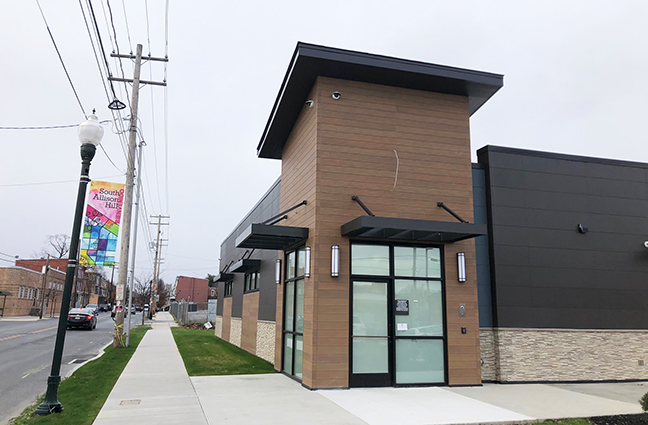
The new dispensary on S. 17th Street

Harrisburg’s second medical marijuana dispensary is slated to open on Wednesday, this one in the heart of Allison Hill.

Zen Leaf will open for business at 137 S. 17th St., across from Hamilton Health Center, the first of three retail locations that the company plans for Pennsylvania.

“We’re excited about our Pennsylvania debut, bringing the Zen Leaf dispensary experience to a new and thriving medical market,” said George Archos, founder and CEO of Chicago-based cannabis operator Verano, in a statement.

The new dispensary offers a range of cannabis products, including concentrates, infused products, vaporizers and flower, according to the company.

In December 2019, a Lehigh Valley-based company called Local Dispensaries LLC received city approval to build the 3,000-square-foot dispensary, about a year after the state granted it a permit.

At the time, City Council expressed dissatisfaction with the location of the facility, but voted 4-3 to approve the project as it conformed with city building requirements.

Reached by phone, representatives of Verano could not immediately state why their company, not Local Dispensaries, now is operating the facility. Verano operates 18 retail locations across 12 U.S. states.

This is the second dispensary located in the city. The first, Harvest of Harrisburg, opened last year on N. 6th Street in the former home of Camp Curtin Bar-B-Que. There are several other state-licensed dispensaries elsewhere in central PA.

For more information about Verano, visit their website.

Support quality local journalism. Become a Friend of TheBurg!

Continue Reading

Harrisburg plans for virtual New Year’s Eve celebration, countdown

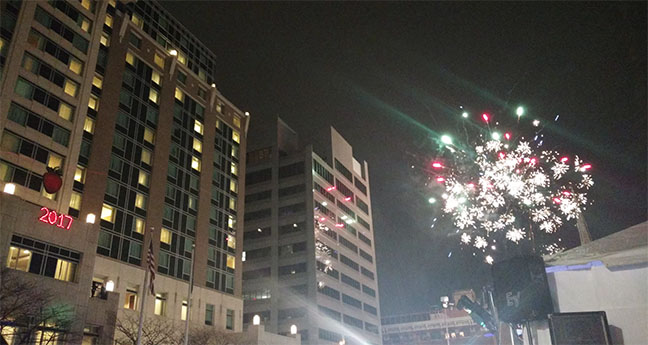
A past New Year’s Eve celebration. Photo: ExploreHBG

This year, Harrisburg is hoping residents ring in the new year at home.

The city’s in-person New Year’s Eve celebration was dropped this year, due to the COVID-19 pandemic. Instead, they’re opting for a virtual celebration.

There will be a virtual countdown to midnight featuring “iconic Harrisburg locations and organizations,” the city’s website said. They are inviting members of the community and businesses to submit short videos to be included.

There will be no live fireworks, but rather, a video compilation of fireworks from past years.

On Harrisburg’s website, families can reserve free balloon drop kits to celebrate with at home. There will also be a countdown video for the kids, featuring the Harrisburg Senators’ mascot, Rascal.

Harrisburg will compile a list of local restaurants’ dining and takeout options, as well as any specials they are running for the holiday, Megan Roby, the city’s director of special events said.

The event is sponsored by Visit Hershey & Harrisburg, Explore HBG and the Harrisburg Downtown Improvement District.

In past years the city would celebrate New Year’s Eve with a large gathering downtown, including music and dancing. The tradition was to drop a giant strawberry from the top of the Hilton Harrisburg, followed by fireworks.

This year, COVID changed the plans, as it did to many of Harrisburg’s other holiday celebrations. Most recently was the Reverse Holiday Parade on Nov. 21. In their vehicles, spectators drove by parade participants stationed on City Island.

For more information on Harrisburg’s New Year’s Eve Celebration, visit https://harrisburgpa.gov/nye/.

Support quality local journalism. Become a Friend of TheBurg!

Continue Reading

CheerNotes creates diverse greeting cards with underrepresented communities in mind

CheerNotes greeting cards.

Growing up in Harrisburg, Asha Banks would make her own greeting cards for friends’ and family’s birthdays and holidays.

She looked up and down the aisles of cards at stores, but she always struggled to find ones that represented her and the Black community.

Even as large greeting card companies rolled out card collections targeting diverse demographics, Banks said that she and her friends didn’t feel accurately represented.

“I wasn’t finding anything that resonated with me,” she said. “I was inspired to create CheerNotes initially out of frustration.”

Banks started CheerNotes in December 2019. Her company focuses on creating greeting cards reflective of communities that are often overlooked by mainstream corporations.

On the website, shoppers can find cards specifically catered to African American, Latinx, South Asian and LGBTQ+ communities.

It’s all about representation, Banks said.

She recalled one person reaching out because their friend’s sobriety anniversary came and went, and they hadn’t found a card with the words to express their congratulations.

“Those are the moments we are trying to stop from happening,” she said.

In response, CheerNotes will debut their “Sober Living” cards.

Banks said that she is constantly talking with members of different ethnic and cultural communities to see what they would like their cards to say.

“We are co-creating with their specific community,” she said.

CheerNotes’ makes some of its own cards, but also sources many of them from 22 artists across the country.

But besides the artists and the occasional intern, Banks is primarily a one-woman show.

Asha Banks

She hasn’t always been an entrepreneur, but her creative side has always been just below the surface.

Before founding CheerNotes, Banks worked as a chemical engineer at a manufacturing plant. Her love for business and creating was confined to her free time.

She decided to get her master’s degree in entrepreneurship and marketing and soon after, started CheerNotes.

While starting a company just before the COVID-19 pandemic hit hasn’t been easy, Banks considers herself lucky that CheerNotes is doing well and sales are good. She said it especially helped that the company was already exclusively online.

As the holiday season is in full swing, CheerNotes has Christmas and Hanukkah cards for sale and Banks assures, there’s something for everyone to identify with.

“People can count on our cards being made with their community in mind,” she said.

For more information or to shop from CheerNotes, visit https://cheernotes.com/.

Support quality local journalism. Become a Friend of TheBurg!

Continue Reading

Walls of Hope: Despite COVID, Harrisburg has five new murals to gaze upon

While COVID-19 and social upheaval continue to ravage the nation, Harrisburg artists are atop scissor lifts and three-story walls to restore joy through the city’s well-known medium: murals.

Most of 2020 has been a dry spell for art in Pennsylvania’s capital, but it was a matter of timing and opportunity.

Through collaborations with Make Something, Zeroday Brewing Co., Harristown Enterprises and the Harrisburg Downtown Improvement District (HDID), Sprocket Mural Works was able to produce five new murals between September and October.

“Public art has always been proven to be a sign of a healthy city,” said Megan Caruso, Sprocket president and co-founder. “The whole point of why we’re doing this is to make people feel good and make people proud.”

Artist Samantha Sanders kicked off the season in late September, painting a mural in the rear courtyard of Zeroday Brewing Co.’s future location in Midtown. October started with Steve ESPO Powers’ mural, an extension of his Early Bird Vote project with Make Something.

Then, as part of HDID and Harristown Enterprises’ partnership with Sprocket, three murals were painted along Blackberry Street by artists Dizz Gavins, Tara Chickey and Emily Matusz.

“As we become an even more attractive destination, these murals really add a level of interest that most communities don’t have,” said Brad Jones, president and CEO of Harristown.

The artists, some of whom have worked with Sprocket previously, had significantly different creative visions and were eager to undertake a new challenge.

Samantha Sanders

Found right off N. 3rd Street, Sanders’ mural for Zeroday Brewing Co. is an autumnal forest scene highlighted by a neverending creek that bends space and time.

The piece was Sanders’ first solo mural, presenting the opportunity to further explore her plant-based art style.

“It’s kind of like getting a college degree in all of eight days,” Sanders joked.

Sanders wants the mural to transport visitors beyond the courtyard. The creek, inspired by the hometown waters she played in with her niece, doubles as a trail, and all the elements are born from the sun, making the mural seem bigger than it is.

Steve ESPO Powers

Splashed along the 1000-block of N. 3rd Street is Powers’ mural. In contrast to the season’s other work, his piece is more of a community tribute.

“He’s a fickle cat,” said Aaron Rose, Make Something co-founder. “He doesn’t like to give up too much information about what he’s going to do before he does it.”

In an Instagram video posted by Juxtapoz Magazine, Powers explained how the mural became a diary of his conversations with the community. Specific elements, such as the hair clippers and Chinese takeout container, represent local businesses.

Dizz Gavins

Gavins’ mural is a melting, multicolored wall that stays true to his “dripped gawd” moniker.

Finding his niche through doodling, Gavins began experimenting with texture and the “drip-style” in 2008, and it took a life of its own.

Like much of his work, the mural isn’t intended to convey a specific message.

“It’s just there to help you explore your own creativity,” he said. “So, whatever I created is not necessarily what somebody else sees.”

Tara Chickey

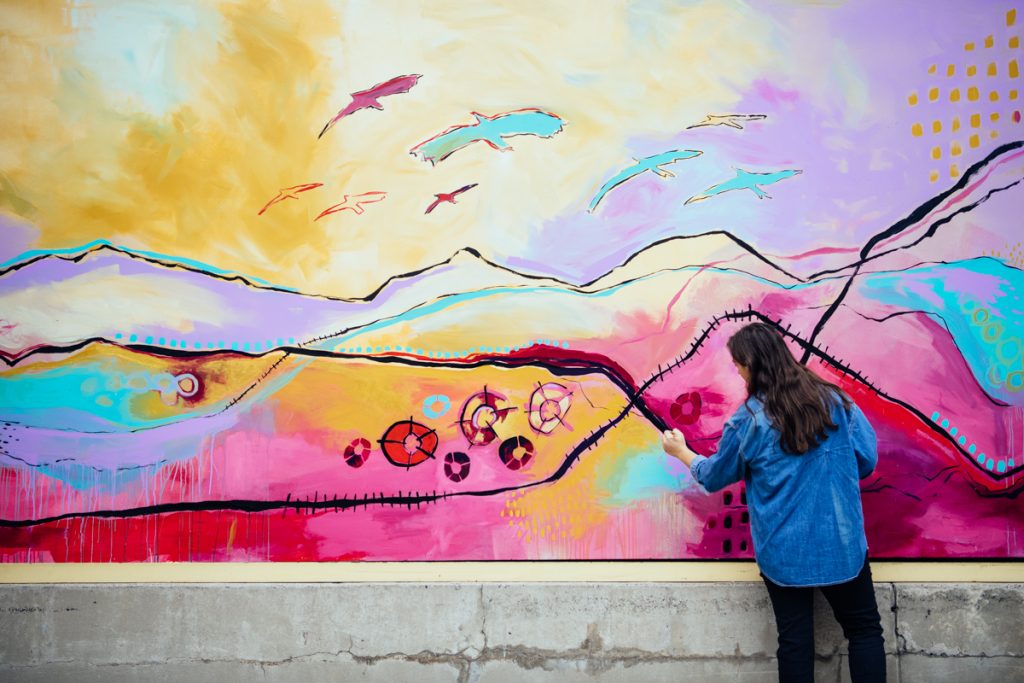
 Chickey’s mural is an abstract landscape inspired by dreams and travel memories.

For example, the geometric shapes at the bottom represent a motif she discovered on the edge of a cliff in Iceland.

She also reimagines landscapes through vibrant color selections.

“I think it’s because I have a 4-year-old daughter, and she’s just full of joy and vibrancy,” said Chickey “And even in this dark time, she brings such beauty to my life.”

Chickey hopes her mural holds the same joy for others.

 Emily Matusz

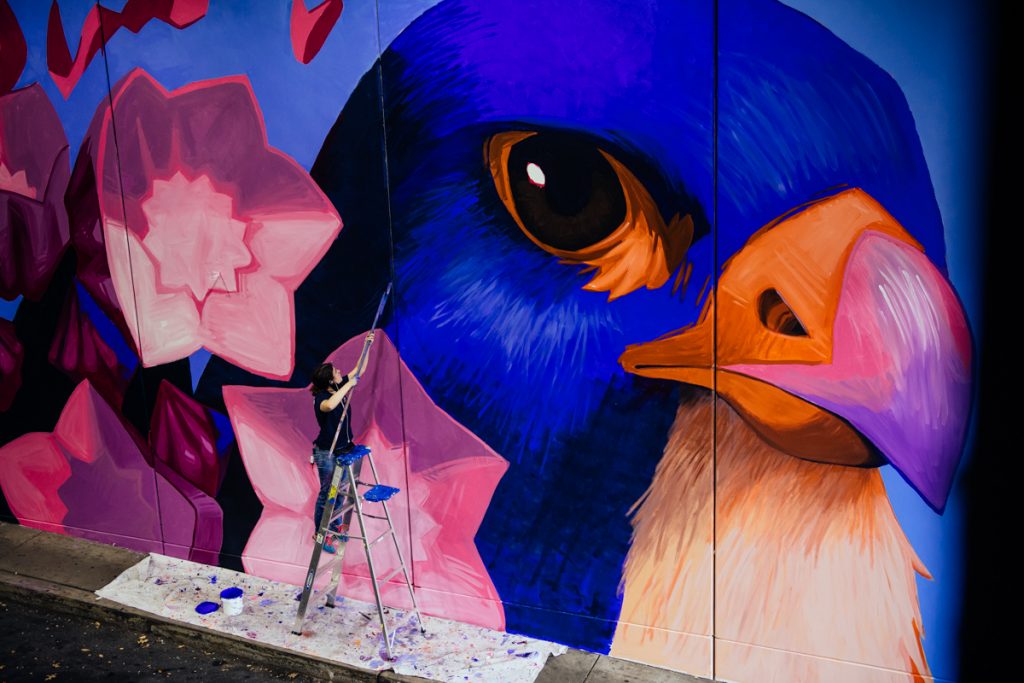
 Defined by the unwavering glare of a peregrine falcon, Matusz’s mural is an ode to a nearby treasure. For 20 years, falcons have nested in the same spot on the 15th floor of the nearby Rachel Carson building.

The mural is sharp, veering away from abstractions and reflecting Matusz’s background in realism and digital illustration.

However, she also hopes the mural raises environmental concerns.

“I just want [people] to feel at ease, more connection to nature,” Matusz said. “Who knows how long those falcons will perch out there?”

 Looking Ahead

Sprocket’s next project is an indoor mural at GLO-Harrisburg, a community resource center for LGBTQ+ men of color and trans women of color. The mural will be painted by Dionn Reneé, an artist who has been longing to create a larger piece with Sprocket.

Reneé’s approach to the GLO mural considers the community’s values first.

“I look at: Where’s their heart? What is their purpose?” she said. “Developing a concept and theme and color story for them is going to be based off of…the heroes. What are they fighting for?”

Aware of the exclusion that sometimes occurs among different sectors of the LGBTQ+ community, Reneé hopes her completed mural promotes inclusion, empowerment and encouragement.

Caruso explained that the remainder of 2020 will be dedicated to finding new walls and funding, then there will be a call for artists in spring for the 2021 Harrisburg Mural Festival.

The plan is for more murals to go up, but the process might look different due to COVID-19. An outdoor mural festival might not be possible because of the high number of attendees, and the small businesses that normally contribute to Sprocket are recovering from financial losses.

“So, our plan is to do our best, fundraise, shoot high, and see where we land,” said Caruso.

Sprocket Mural Works is planning a summer 2021 Harrisburg Mural Festival, with fundraising efforts beginning on Giving Tuesday, Dec. 1, with tax deductible donations welcomed. For more information about Sprocket or to contribute, visit www.sprocketmuralworks.com and follow @sprocketmuralworks on Instagram.

Support quality local journalism. Become a Friend of TheBurg!

Continue Reading

Virtually Acceptable: Online learning gets mixed grades from Harrisburg students, families

Nazier Taylor

Nazier Taylor was always goofing off in school, self-admittedly.

He liked to “mess with” his friends and teachers. As a teenaged boy, he enjoys having a little fun. Nonetheless, he did well in his classes, he said.

When the Harrisburg School District made the switch to online learning, Nazier was happy. He got to stay home and sleep a little later. But it didn’t take long before things started going downhill.

“I always did good in school,” he said. “I hate computers now.”

At home, Nazier couldn’t focus. He would fall asleep, he said, unless he was looking at his phone. One of the biggest challenges for him was that he couldn’t keep up with his teachers. They went too fast, he said, and his mom was unable to help him.

“I was going to fail,” Nazier said.

It was his first year in high school, and he was lost.

The experience with online education has been vastly different from student to student and family to family in the school district. A few are doing well in their new environment, while others are struggling.

In August, the district decided on a 100% virtual start to the academic year. Students could either attend the new Harrisburg Virtual Learning Academy (HVLA) and commit to online learning long-term or follow the “Pathway to Classroom Instruction,” with the hope of eventually returning to brick-and-mortar learning. Acting Superintendent Chris Celmer said that about 285 students enrolled in HVLA.

However, the options aren’t looking too different today, as benchmarks that the district set in order to bring students back to the classroom haven’t been met.

In order to re-open, the district requires a three-week period of sustained COVID-19 positivity rates from 3 to 4% and incidence rates per 100,000 people below a rate of 50 in Dauphin County. There also must be a decrease in community spread of the virus.

As of this writing, these benchmarks have been met. In fact, pandemic trends have been growing steadily worse since September.

“I don’t know when kids will be back,” Chief Academic Officer Susan Sneath said. “We are trying to make the most of the situation. Nobody knows the exact right thing to do here.”

It’s a complex and difficult decision that all school districts have had to make—in-person or online? But every student seems to experience the situation a little differently.

A Challenge

During the pandemic, Nicole Smith, a fourth-grade teacher at Scott Elementary School, has been adjusting to online instruction. It has taken innovation, she said, coming up with songs and activities to engage students through a computer screen.

But it’s still not easy.

Smith has called on students before to answer a question, only to see their screen freeze mid-response.

“How much is that kid receiving from me, if it’s not working on their end?” Smith wondered.

She explained that one of the biggest issues with online schooling in Harrisburg is internet access. Many families, she said, have multiple students sharing a Wi-Fi router, slowing down the system.

When students were in school, the district had an average of one device for every five students. Now, each student needs their own device. Additionally, the district developed a program to provide free internet to students. Even with these extra measures, the district is at about 87% average daily attendance.

“We have to assume that’s 87% with secure internet,” Sneath said. “It’s a challenge.”

To access the internet and electricity, families like the Hodges have had to pay.

“The kids are home all day, every day,” said Angela Hodges, a mother of two Harrisburg students. “We are paying twice the amount we would normally pay for utility costs.”

Angela and her husband Maurice said that the extra expenses have been difficult to bear. However, they are happy to have their kids home and appreciate the district’s attempt to keep them safe.

Smith said that other barriers to effective learning are the responsibilities and distractions that many students have at home. She recalled a student who had to hold her little sibling on her lap during a class session.

“You have to be understanding of those types of circumstances,” she said.

For Nazier, getting out of his house and having a quiet place to do work has been a lifesaver.

Every Thursday night, he goes to Center for Champions, a mentorship program in Allison Hill. When the staff found out Nazier was struggling with school, they offered a desk in their office for him to work during his classes from 8:30 a.m. to 2:30 p.m. They hope to be able to do that for more students.

Ever since, Nazier has been doing better.

Support System

Phylicia Carter’s son Josiah struggled in his special education classes in the school district. He was behind where he should’ve been academically for his grade level. When the district decided to go online, Carter moved Josiah to Commonwealth Charter Academy.

While still holding her full-time job, Carter has had to help her son catch up to the sixth-grade level he is in.

“The adjustment is very difficult,” she said. “I feel like I’m in class because they are asking me to do so much. But I’m glad I made the decision I made.”

According to Celmer, about 187 students moved to charter schools between March 13 and Aug. 31, due to the pandemic. He said that the district will be reaching out to those students to encourage them to return. Harrisburg’s virtual platform is expanding, and Celmer thinks students will want to come back.

Some students that stuck with the district are doing well in the virtual world.

Siblings Maurice Jr. and Mayah Hodges said that their grades have improved while learning online.

It was a hard adjustment at first, especially for Mayah who missed her friends. But, overall, they’ve had a positive experience and have felt supported by their teachers.

Sneath said that, for most students, grades have stayed relatively stable. She hasn’t seen an “overabundance of failures” or numbers that look much different from last year.

Smith said that the virtual platform has actually allowed her to connect better one-on-one with her fourth-grade students.

She said that students can privately message their teacher if they have a question, and a teacher can do the same if a student isn’t engaged with the lesson.

Although Nazier still hates going to school on a computer, he said that his teachers have been helpful.

“School is never going to be the same again after this,” Sneath said. “So, when students do come back, how can we keep the good parts from this?”

For more information on the Harrisburg School District, visit www.hbgsd.k12.pa.us.  

To learn more about Center for Champions or to volunteer, visit www.centerforchampions.org.  

Support quality local journalism. Become a Friend of TheBurg!

Continue Reading

It’s a Difficult Life: Hee-haw and Merry Christmas

Illustration by Rich Hauck

Since it’s December, I’m going seasonal this month, citing a scene from a film that you’re almost certain to stumble upon this holiday time.

In “It’s a Wonderful Life,” the evil Mr. Potter calls the movie’s troubled hero, George Bailey, into his office to offer him a job. Before doing so, they have a brief conversation about what happened to their town, Bedford Falls, during the recently concluded Great Depression.

“You saved the Building and Loan,” Potter tells him. “I saved all the rest.”

Responds Baily, “Yes, well, most people say you stole all the rest.”

In Harrisburg, thank goodness, we don’t have a Mr. Potter, a man who used the misery of the Depression as an opportunity to enrich himself, scooping up his town’s valuable assets for pennies on the dollar from desperate sellers. But we do have plenty of George Baileys.

What do I mean by that?

In “It’s a Wonderful Life,” Bailey is hyper-focused on one thing—steering his small business through the Depression, doing everything possible to survive. As I walk around Harrisburg, I see the same thing here, now.

It’s been eight, nine months since the pandemic hit, causing almost universal business closures, followed by uncertain re-openings. Most small business people have been hit and hit hard. To them, 2020 is a lost year, but you know what—they’re mostly still here, and they’re determined to make it to the other side of this nightmare.

Many have gotten creative simply to stay in business so they can pay the bills until better times return.

Home 231 extended into an adjoining parking lot, first setting out tables, then tents, then heaters. They even added a mural. Many other restaurants have done similar things, turning to outside dining and, as summer wound down, deploying the heat lamps.

Midtown Cinema began offering a catalog of movies to stream. Once their already-planned renovation was finished, they cautiously re-opened to small groups to ensure adequate distancing.

Gamut Theatre Group shut down for six months and, upon their return, had imposed strict masking, sanitizing and distancing requirements, among other precautions. Unfortunately, the resurgent pandemic forced them to close again, though they hope to reopen as soon as possible.

Radish & Rye turned to all-virtual ordering, spending gobs of time and money to establish a robust and reliable e-commerce system, until they feel confident enough to open their own brick-and-mortar store following their years in the Broad Street Market.

Those are just a few of many examples.

Here at TheBurg, we consider ourselves to be in “survival mode,” as well. We launched our membership program, Friends of TheBurg, early specifically to help us grind through the pandemic. To date, more than 300 members have joined, and we are eternally grateful.

So what now?

As I write this column, it seems that we’re headed for a difficult winter. Cold weather has descended, and, just as predicted months ago, COVID-19 cases have spiked to new heights. What will we George Baileys do?

Like our fictional hero, we will continue to persevere. Small businesses that have made it this far are a committed bunch and often are well run, to boot. The city’s die-hard small business owners do not scare off easily and, I’m certain, will do everything possible to survive until the cloud lifts.

Right now, there is a general expectation that 2021 will be better, presuming that one or more vaccines are approved and distributed. The optimistic take is that life will slowly grind back to normal as the year progresses—and business owners are nothing if not optimists.

In the meantime, I can only continue to urge one thing to our readers—please robustly patronize local businesses this holiday season. For many small businesses, particularly retailers, holiday sales make up half or more of their annual revenue.

So, strap on the old mask and visit “the shop around the corner” (another, more obscure holiday-themed Jimmy Stewart flick). Or visit their online stores or pick up the phone and call them. Then, after this is all over, you can honestly, proudly say that you, the people of greater Harrisburg, “saved all the rest.”

Lawrance Binda is co-publisher/editor-in-chief of TheBurg.

Illustration by Rich Hauck.

Support quality local journalism. Become a Friend of TheBurg!

Continue Reading

A Time to Give: Nonprofits depend on special holiday fundraisers and volunteers. What will they do this year?

Families, businesses and organizations will need to adapt this Christmas, putting aside long-held traditions, festivities and gatherings.

Local nonprofits also need to adjust, not allowing COVID-19 to eradicate what makes the season so special. And the community can play a big part in helping them.

“I never turn down a good idea,” said Gloria Vazquez-Merrick, executive director of the Latino Hispanic American Community Center (LHACC) in Allison Hill.

LHACC has loose plans for holidays, recognizing that things may have to change on a dime.

”We have to think outside the box, and that’s what we’re doing this year,” Vazquez-Merrick said.

Canceling the usual large party with Santa and a meal, LHACC wants to provide filled stockings to children and snack items to the seniors who visit the center. To that end, it’s asking for donations of snack items like fruit, beef jerky and Goya Maria cookies, a favorite of the older generation, Vazquez-Merrick said.

Also switching gears this Christmas is Brethren Housing Association (BHA) on Harrisburg’s Hummel Street. The women and children housed through BHA would usually share a meal with staff and their families and “shop” for Christmas gifts for their children via a shop set up with donated gifts.

“We won’t all be in a big room picking out presents,” said program director Marilyn Bellesfield.

Instead, people are signing up to purchase gifts that will be given to the families, and families will be provided food to create their own Christmas meal.

Donations of Christmas trees and trimmings were added this year as a morale boost for families who were already struggling, experiencing higher anxiety and depression caused by the pandemic.

“Almost every family lost their job, lost their childcare,” said Bellesfield.

People can help by providing cleaning supplies and gift cards or by sponsoring a night’s stay at BHA, budgeting classes or supplies for a youth program. Not very Christmas-y? Maybe, but cleaning supplies use up the little disposable income that many families have, and gift cards provide clothing for a newly housed family that has arrived with nothing.


Musical Gift

More traditionally, creating music is one way that people brighten Christmas for the guests at Paxton Street Home, part of Paxton Ministries. It houses adults of all ages with serious financial limitations, as well as long-term mental health or intellectual challenges. Music groups or choirs can perform in the outdoor courtyard, where residents can view the performance from inside.

“I think the acoustics would be outstanding for a brass band to play here,” said Jodie Smiley, executive director.

Usually, the house would have lots of volunteers during December, holding parties, special events and musical performances. COVID has changed all of that. It’s also grounded the home’s hand bell choir, which typically traveled for a few holiday performances. The group will still perform, however. A recorded performance will be available on YouTube.

Because Paxton Home is a licensed personal care facility, it’s required to restrict the comings and goings of its residents, as well as visitors because of COVID. A simple way to support them is through sending Christmas cards

“Everybody likes to get Christmas cards,” Smiley said. “People attach them to the door of their room.”

Looking forward to life after COVID, Smiley said that she would like to be able to provide outings, like to a Harrisburg Senators game or concerts for residents.

“It would be especially nice for people who have been as restricted as folks in facilities have been,” she said.

People can do this by designating their gifts to “resident’s needs” or “activities.”


Deeply Humbled

Food is another need that many nonprofits have, especially Bethesda Mission. It provides food to about 500 people a day. They have pivoted on their large, indoor Christmas meal and will provide it as a take-away.

“So, that [food] is our greatest need for Christmas,” said Executive Director Scott Dunwoody.

He said that Bethesda Mission has many food drop-off locations.

“But also cash, which allows us to purchase perishable foods, while the other food we are receiving is dry goods,” he said.

Bethesda Mission also will reach out to families by distributing food and holding some programs at its community center on Herr Street. The large gym will allow for gathering with proper social distancing.

Christmas, a time focused on family, poses additional challenges for those experiencing homelessness and separation from relatives.

“It’s the worst time of year for them,” Dunwoody said. “They’re suffering greatly. We try to provide the resources to help them get through that.”

The organizations and people on the receiving end of giving appreciate it very much. Dunwoody said that people are deeply humbled when they receive help.

“They will make statements over and over again, ‘I don’t know why in the world I would be blessed this richly,” he said. “‘I’m getting food. I’m getting clothing. I’m getting professional health care.’”

The sentiment is similar at BHA, which always appreciates donations.

“You’ve eased a burden in some capacity for a mom and child whose load is pretty heavy,” said Kait Gillis-Hanna, BHA’s executive director.

Indeed, many nonprofits need financial support right now. At this time of the year, they often receive donations from special seasonal church collections, but churches themselves are not meeting in person or attendance is down. Grant money also has been reduced.

“We need financial support even in the good times, but, especially now, that financial support is important,” Smiley said.

If nonprofits are any indication, COVID hasn’t killed the Christmas spirit. It has unearthed the knowledge of what matters most in life— friends, family, security, love—and the desire to help those doing without.

For more information and to contribute to the organizations in this story, visit:

Brethren Housing Association, www.bha-pa.org/donate
Bethesda Mission,
www.bethesdamission.org
Paxton Ministries,
www.paxtonmin.org
Latino Hispanic American Community Center,
www.lhacc.org

Support quality local journalism. Become a Friend of TheBurg!

Continue Reading

Beery Byway: Take the entrance ramp to Highway Manor Brewing

Johnny Compton

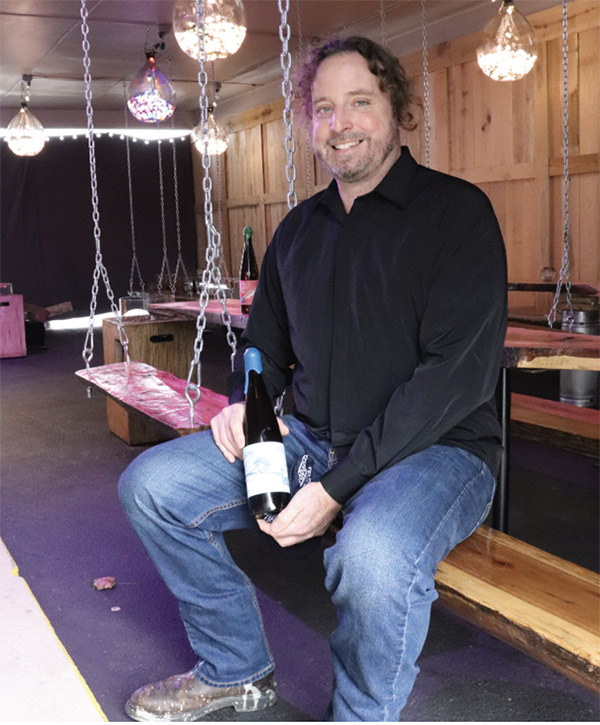
Johnny Compton’s new venture is sure to raise a few eyebrows. The Liverpool resident recently opened a bar, restaurant and taproom that’s as funky as the beers he brews.

The Highway Manor Brewing Co., located in Lower Allen Township, is anything but run-of-the-mill. Customers who patronize the place for the first time generally register amusement at the long benches attached by chains to the ceiling of the outside seating area.

Some have speculated about the safety of the swings after quaffing a few, but Compton, never one to take life too seriously, seems amused by the comments and may even be looking forward to the stories that ensue. Also hanging from the ceiling are 1970s-era terrariums, stuffed with strings of lights, which illuminate the cozy space after dusk.

If it happens to be a bright, sunshiny day, one’s eyes may have to adjust a bit to take in what is reminiscent of a Halloween fun house inside the bar. Black walls festooned with hand-drawn characters like walking grapes, strawberries, cherries and other bizarre graphics may cause some of a certain vintage to reminisce about the old days when psychedelia was the rage.

For Compton, it’s just his way of taking the road less traveled.

Game Changer

Compton’s no stranger to brewing, with about 19 years of experience under his belt. About five years ago, he began thinking about doing something a little different at his Georgian revival home in Liverpool that he calls “Highway Manor.”

“It dates back to 1840 and was built for a banker,” he said.

His travels took him to New York and Philadelphia, and, as he was visiting friends and seeking opinions, he was encouraged to take a deep dive into sours. Tom Peters at Monk’s Café in Philadelphia even sent him home with a few.

“That was a game changer,” he said. “I used to drink a ton of IPAs, but now I don’t like them that much.”

Compton began selling his sour and wild farmhouse beers in Philadelphia, New York, Maryland and Vermont, using yeast cultures from Liverpool. Things were going well until the sour beer trend began gaining momentum and shelf space became too competitive. Then COVID reared his ugly head, giving him some downtime to work on his taproom project.

“It’s been in the works for a while to open a retail space, and I finally had the time I needed to get it underway,” he said.

Those who are unfamiliar with sours may be surprised to hear that they’re the oldest style of beer.

According to Craig Alperowitz, owner of Bolide Communications, a marketing agency that services sour beer producers, the style is as complex as it is delicious.

“The acidity levels make it refreshing, unique and totally different than what most consumers expect out of a beer,” he said.

As a brewer, Compton appreciates the challenges that sours provide.

“There’s a lot of magic that needs to happen outside the realm of control, which is why we charge more for a beer at times because, sometimes when they go bad, you have to dump them,” he said.

Alperowitz agrees.

“Wild yeasts are often used in the production of sour, lambic or gueuze beers, and they’re wild for a reason,” he said. “They can be largely unpredictable and hard to control, which is why it’s so challenging to produce a really well-balanced sour beer.”

Another thing about sours—they’re exceptionally food friendly. Therefore, the taproom offers a number of complementary dishes, especially smoked foods like a lamb pita, pork barbecue, roast beef, turkey and mushrooms.

Beer People

Compton’s current lineup can be viewed on the website, but many are self-explanatory, such as Mr. Cherry, Mr. Kiwi, Mr. Blackberry, Mr. Apricot and so forth.

“We source our stone fruit from Adams County, our strawberries come from Florida, our blueberries from Jersey, and we use a tart and interesting cherry from Venezuela,” he said, adding that he brews 24 total brands, 18 of which are available now.

It’s also important to Compton to offer a little something for everyone. So, he also sells what he calls “guest drafts,” which include a double IPA, a pale ale, a dark beer line and a pilsner.

Wines from Mazza Vineyards and Presque Isle Cellars hail from Erie and are also on the menu, along with cocktails like mules and margaritas crafted with PA spirits.

Travis Daniel has been a regular since the opening of Highway Manor and said that the smoked sour root beer is one of his favorites.

“The food is also excellent and priced reasonably, and I keep going back because I want to try all of their great beers,” said the Hummelstown resident, adding that the people are very friendly.

Jacob Lewis of Mechanicsburg also mentioned the welcoming atmosphere.

“The brewers and bartenders are knowledgeable and helpful,” he said.

Among his favorites are “Mr. Pear” and a farmhouse ale called “Hong Kong SayJohn.”

“It has lemongrass and ginger in it, and it’s really good,” Lewis said.

Compton said that owning Highway Manor barely feels like work.

“I read in an article recently that most people stick with it due to how much fun it is,” he said.

Compton also treasures the many people he’s met along the way.

“What can I say? Beer people are great,” he said.

Highway Manor Brewing Co. is located at 2238 Gettysburg Rd., Camp Hill. For more information, visit www.highwaymanorbrewing.com or their Facebook page.

Support quality local journalism. Become a Friend of TheBurg!

Continue Reading

A Time for Gathering, Distantly, Virtually: Faith communities adjust, adapt as the pandemic shifts traditions

When the first candle burns on the Pennsylvania menorah outside the Capitol this year, a new, virtual audience will join those attending a commemoration normally held indoors.

“The message from the Capitol that goes out to the state is that we have to illuminate and make the world brighter, kinder, gentler,” said Rabbi Shmuel Pewzner, originator of the annual Hanukkah celebration. “That’s what Hanukkah is all about.”

This year, Harrisburg’s faith institutions are preparing for holidays like no other. They have learned from eight months of lockdown how to assure full inclusion of all who want to worship and celebrate. For the holidays, they will be sharing messages of overcoming a grim year through perseverance and hope.


Wide Net

Earlier this year, St. Francis of Assisi Catholic Church resumed Mass by opening its sanctuary, basement and gymnasium and broadcasting the service to all three places.

“We have some parishioners, they’re wonderful, and they came with the ideas for that part,” said Pastor Orlando Reyes of the Allison Hill institution.

The church also livestreams some Masses and added Friday and Saturday Masses, in both English and Spanish, to spread out the congregants. And like the church’s Lady of Guadalupe celebration this year, Christmas services and church access will extend from midnight to evening-time.

As pandemic restrictions took hold, Goodwin Memorial Baptist Church built a virtual outreach arsenal as leadership realized that different audiences and varied Sunday school and Bible study sessions required different platforms.

“Now we’re on YouTube, two Facebook pages, Instagram, GoToMeeting and Skype,” said James Jackson, pastor of the Olde Uptown-based church.

And young adults are meeting via Zoom.

“We threw the net wide to try to get a platform that worked for everyone, so everyone in the church could feel like they had their own community,” Jackson said.

In many African-American churches, a New Year’s Eve “Watch Night” tradition dates to Dec. 31, 1862, when enslaved people of the United States prayed through the night while waiting for Abraham Lincoln to sign the Emancipation Proclamation. Goodwin Memorial canceled this year’s black-tie New Year’s Eve party—“when everybody in their tux gets on their knees, and we light a candle and pray the New Year in”—but will celebrate Watch Night virtually.

Harrisburg’s annual early-December Kwanzaa celebration is considered a go, even as organizer Nate Gadsden, poet and pastor of Imani Redeemed Church of God, searched for a venue. Each night of Kwanzaa, Dec. 26 to Jan. 1, services will be held virtually. Participants will encounter speakers, poetry readings, guests explaining Kwanzaa’s seven principles, and interactive activities.

Since the early 1990s, Pennsylvania’s annual menorah lighting ceremony, at sunset on the first day of Hanukkah, has migrated in and around the Capitol Complex. It finally found an indoor home in the East Wing Rotunda. For 2020, the menorah will shine on the 3rd Street steps.

“In recent years, we’ve had a large crowd inside the Capitol,” said Pewzner. “You couldn’t social distance. We figure it’s much safer to move it outside and celebrate Hanukkah.”

The Jewish Federation of Greater Harrisburg has adhered all year to its mission as a unifier, offering its events and services in-person, virtually and in take-home versions. Each accommodates participants adhering to their COVID comfort zones.

Like other federation events, the annual “Family Chanukah Extravaganza” was to have been offered in live and take-home options. However, as COVID-19 rates surged and indoor capacity restrictions grew, the federation canceled the live version. Instead, every family that registers for the “At-Your-Leisure” program can pick up a party kit of treats and enjoy an at-home party with edible menorah, dreidel games, and Hanukkah crafts.

“We’re really trying to bring community together, to see that they’re part of something larger than themselves, but we’re also respecting everybody’s personal comfort level,” said Associate Executive Director Lori Rubin. “We want everybody to be a part of the story.”

Through all the changes, said Jewish Federation Executive Director Jennifer Ross, staff members have been “superstars.” The Jewish Federation also plans a Dec. 2 Hanukkah virtual cooking class with renowned chef Michael Solomonov. On New Year’s Eve, elderly members will get boxes of hats and noisemakers, for a virtual countdown at noon.


Be Not Afraid

Faith leaders have been amazed to see the reach of their virtual services. Goodwin Memorial found members who gravitated from Alabama, Georgia and North Carolina. St. Francis parishioners joined services from the countries where they were deported to, because “they have beautiful memories,” said Reyes.

But it’s the holidays. What about the decorations and the food?

When Reyes pared back on decorations for a Peruvian festival earlier this year, parishioners noticed. Hence, Christmas decorations will return.

“They pay attention to all those details,” he said.

Pewzner was still working out the details of this year’s menorah lighting—perhaps such traditional Hanukkah food as the latkes will be prepackaged—“but it’ll still be a great celebration.”

Goodwin Memorial would normally be decorated “from top to bottom,” said Jackson. Children would pick out gifts arrayed under decorated trees.

“How we do that, I’m not quite sure,” Jackson said. “But we’ll try to have the same wonder and awe about Christmas.”

Whether with or without trappings, the faith leaders of Harrisburg have holiday messages to share as a year roiling with progress and pain passes into history.

Work for peace, said Reyes. And in a year that has laid bare the needs of so many people and community institutions that are just trying to pay the bills, share your gifts, including monetary donations.

“To me, it’s do not be afraid,” said Reyes. “Not to be afraid. Life is so fragile. Life is so short. Just live our lives with dignity, with love, with unity. In this moment, we need to be instruments of peace and reconciliation.”

Gadsden expects to share a Kwanzaa message of survival and adaptation. Celebrate Kwanzaa 24/7, he will tell listeners.

“The principles are designed that they should be lived, every single day,” he said.

Pewzner will draw parallels between the Maccabees who took a spiritual stand and wouldn’t use defiled oil in the place of ritually clean oil to light the temple they had recaptured. COVID times offer impediments, he said, but “that soul that we have is a pure flask of oil deep within us, and if we reach a little deeper and search, we will find it.”

“This is a universal message,” he said. “A message of hope. A message of a bright future that we have to focus on that little brightness we can find within us, and make that shine and come forth and illuminate the world around us.”

This COVID year’s Hanukkah message reflects dedication and renewal, said Rubin, of the Jewish Federation. And perseverance, added Ross. “That does tie into the traditional story.”

Jackson fears that facemasks have become a tool for detachment from the needs of others. His holiday message will focus on shared humanity and a “hope that we’re going to get through this.”

“We, as Christians during these dark times, need to show more patience, need to show more love, need to show more consideration,” he said. “We’re still one nation under God, whichever God you serve. They call us to be kind to one another.”

Support quality local journalism. Become a Friend of TheBurg!

Continue Reading