People, Get Ready: Our post-pandemic life lies ahead

Illustration by Rich Hauck.

Empty.

In last month’s column, I used that word to sum up my life during our year of COVID. More than any other, “empty” seemed an appropriate description to me.

I’d now like to look ahead, not back.

As I write this column, vaccinations are proceeding, case numbers continue to fall, and spring is in the air. I think that’s fair cause for optimism, don’t you?

I believe it’s time to begin considering our post-COVID lives in Harrisburg. Normalcy won’t return all at once, but I can sense the pandemic beginning to loosen its grip on our lives and our city.

First, let’s take a look at where we are. How did Harrisburg make it through this profoundly challenging time?

I would say—better than I expected. If, in March 2020, someone told me that the pandemic would last for over a year, I would have predicted profound disaster. In fact, when COVID arrived here, even the initial, two-week lockdown seemed like more than most businesses, schools, governments and people could handle.

Now, for some, the worst did happen. People got sick; some died. Small businesses lost money and closed. I don’t want to minimize the suffering wrought by this horrible scourge.

But, as I look around town now, the overall landscape doesn’t look too terrible. Are we scarred? Absolutely. But I think we’ve also shown remarkable resilience.

Most restaurants and small businesses adapted, survived and appear poised to bounce back strongly. Some even opened during the past year. The real estate market has proven to be remarkably robust.

I think, over the past year, we may even have learned a thing or two about this city and where it’s headed. Gazing into my crystal ball, I see a few things up ahead, trends that I expect may have legs over the long term.

First, Harrisburg’s future as a place for people to live, as opposed to just work, seems strong. A friend recently forwarded me a list of some 30 building projects in the city, most residential. There are small projects, medium-sized projects, large projects—most market-rate, some affordable. Many are in Midtown, but there are proposals for Uptown, downtown and Allison Hill, as well. Harrisburg has not experienced this kind of residential development in 100 years. Yes, it’s that historic. People seem to be choosing smaller cities over large ones, and charming, well-located Harrisburg appears to be benefitting.

In my opinion, the city should lean into this trend, making it as easy as possible to get quality residential projects off the ground, finally putting people back into a city that lost half its population since the 1950s. Hey, there are numerous large, empty lots downtown and Uptown just begging to be developed. Let’s put some nice apartment buildings on them.

This development, in turn, will spur the neighborhood shops that so many city residents seem to want, which brings me to my second thought. Small, independently owned business is where it’s at, and will continue to be, in Harrisburg.

Now, I’m not hating on large companies or chains. However, I believe in swimming with the tide. Sure, we can always hope that a Google or Apple or whatever finds religion and locates to, say, the old state hospital grounds. However, I find that unlikely, especially as many large companies are downsizing their offices. Instead of a single behemoth, we’re far more likely to see dozens of small businesses—shops, restaurants, start-ups—locate throughout the city, employing and serving the growing local population.

And, speaking of behemoths, I suspect that the commonwealth’s influence on Harrisburg will wane over time, which is my final post-pandemic thought.

For decades, government has been about the only growth industry in Harrisburg, but it’s been a mixed blessing. The Capitol Complex may be nestled in the middle of the city, but it’s an uneasy fit. Sometimes, Harrisburg feels like two opposing sides—commuters and residents—staring at each other from across the asphalt canyon of Forster Street.

Now, state workers have learned that they can do some of their jobs without the daily trudge across the Taylor Bridge. Perhaps that’s for the best. As an employer myself, I’m a fan of workplace flexibility. As long-term readers of this column may know, I’m also a big fan of rescaling the city to serve the people who want to be here, as opposed to a workforce that often does not—and behaves accordingly by segregating itself on its hill.

Having said that: the state will remain a huge presence in this city for a long time. So, it’s vital that these two governmental entities learn how to cooperate and collaborate for the long-term good of the shared capital city.

Over a year ago, when the pandemic horror began, I recall people saying, maybe a little tongue-in-cheek, “See you on the other side.” Finally, that “other” side may be in view. So, let’s take a moment to reflect and take stock of where we’ve been—then head like hell to where we’re going next.

Lawrance Binda is co-publisher and editor-in-chief of TheBurg.

Illustration by Rich Hauck.

Support quality local journalism. Become a Friend of TheBurg!

Continue Reading

How Does Your Urban Garden Grow?: You may not need to leave the city to get what you need

Allison Hill Farmer’s Market

Harrisburg’s suburbs have some excellent garden stores and greenhouses, places that certainly will be packed this month with people claiming their spring plants and supplies.

But what if you’re a city resident looking to fill your (often) small backyard with some greenery and color? You also have options—and you may not even need to strap yourself into your car for a trip across the river.

First stop: the Broad Street Market, which has several ways to slake your gardening thirst.

In the brick building, Mel and Barb Glick of Floral Bouquet and Peach Ridge Produce sell a wide range of herbs, fruits, vegetables and fresh-cut flowers. For nearly a decade, the Glicks have provided the city with locally sourced crops from their 40-acre farm in Perry County.

Barb Glick has especially enjoyed sharing advice with city-goers who do not have the space for large gardens but still have a passion for sustainable living. She says that gardens do not have to be in the ground—planters, window boxes and small yards can all grow beautiful and edible goods.

“Now is the time to pick up seeds at your local hardware store and decide what you want to plant and where you’d like to plant them,” Glick said.

Starting this month, Peach Ridge will sell herb plants such as rosemary, thyme, cilantro, parsley, chives, lavender and sage, as well as, tomatoes, lettuce, cabbage and pepper plants.

Growing a garden does not need to be a complicated endeavor. Herbs provide easy, flavorful additions to any meal and can help lower regular grocery bills. Simply buying a small pot, picking a few herbs, and giving it daily attention can start you on the journey to sustainable living.

“In April, before the last spring frost [April 12], I plant peas, spinach, lettuces, radishes, carrots and my favorite, flowers,” Glick said. “After the frost, I plant tomatoes, cucumbers and peppers.”

In addition to perusing goods from several vendors inside the market, gardeners should pass through on a Saturday or two, when, on nice days, pop-up vendors often fill the courtyard with greenhouse blossoms.

A few blocks down 3rd Street, florist Shawn Durborow-Bowersox has set up several wooden stands outside of his new retail space, Paper Moon Flowers and Events. There, you can find a variety of plants for sale, perfect for a window box, container garden or small flower or shade garden.

Step inside to discover a number of decorative items for your garden, such as statuary, wind chimes and homemade birdhouses, all lovingly curated by the owner.

“In the city, it’s really all about courtyard gardening,” Durborow-Bowersox said. “You can get more real estate, so to speak, by using containers for your plants.”

Up on Derry Street, you’ll discover the Allison Hill Farmers Market, which returns for a second year thanks to sponsor and organizer Tri-County Community Action. There, amidst the farm-grown food for sale, you also may find items that you can grow yourself, as well as informative classes on growing and maintaining an urban garden.

Speaking of urban gardens, Green Urban Initiative is gearing up for another year of community gardening in Harrisburg. Those interested in one of their plots can find them on Facebook.

If you’re after garden supplies, Hornungs True Value is the city’s tried-and-true hardware store, carrying an array of gardening tools and seeds to get your project started.

“From soil and fertilizer to seeds, pots and gardening tools, we want to be a one-stop shop for our community,” said David Arnold, Hornungs store manager. “We even deliver locally for those who do not have the transportation or the ability.”

Hornungs is preparing for the summer months by filling their shelves with indoor and outdoor plants. Arnold shared that “their store, often times, has more of a variety and provides more products than the large retailers.”

Then, once you’ve gathered all your supplies, Barb Glick from the Broad Street Market has one final piece of advice for folks ready to earn their green thumbs.

“When prepping for your garden, remember, plant with a purpose,” she said. “Think about what your family eats on a regular basis and what will add value.”

The Broad Street Market is located at N. 3rd and Verbeke streets, Harrisburg. For more information, visit www.broadstreetmarket.org.

Paper Moon Flowers and Events is located at 916 N. 3rd St., Harrisburg. For more information, visit their Facebook page.

Hornung’s True Value is located at 223 N. 2nd St., Harrisburg.

For more information about Green Urban Initiative, visit their Facebook page.

For more information about the Allison Hill Farmers Market, visit www.cactricounty.org.

Support quality local journalism. Become a Friend of TheBurg!


Continue Reading

Bottle Basics: Brush up on your white wines before warm weather hits

As the spring weather greets us, we leave behind the red wines that have warmed our winter and look forward to drinking fresher and lighter wines. There is no better way to start than by choosing the Noble white wines.

From their humble beginnings in northern Europe, these quaffs have spread across the globe and are grown in all temperate zones in every hemisphere. To fully enjoy what’s in their glass, a freshman oenophile should have a good understanding of what these wines are and how they have shaped our world.

The first of this trio is Chardonnay, which first was planted in the French village of Chablis by Cistercian monks sometime in the 12th century. To this day, the wines of Chablis are regarded as the most pure expression of the grape, due in part to the lack of oak used in fermentation.

Chardonnay is probably the most neutral of white wines in the way that it reflects growing conditions and climate—what the French call terroir. It is also easily influenced by the winemaker to achieve desirable results by use of certain yeasts, types of fermentation and even barrels. California and the Burgundy region in France are the main growing areas, but this savory quaff can be found around the globe, as well as in Pennsylvania. I once had an amazing Chard on the shores of Keuka Lake in New York. Chardonnay is also used in the Champagne region of France. To taste this white grape at its sparkling best, look for “blanc de blanc” on the label.

Sauvignon Blanc is another white grape that deserves our attention. With origins in southwest France, this “savage white” has been known throughout the Loire Valley and Bordeaux regions since the 16th century. Found growing wild and then cultivated, it makes the freshest wines of all the Noble grapes. In northern climates, the wines are slightly herbaceous, with notes of gooseberry and elderflower wrapped up in bracing acidity that makes it very food friendly. The New World wines, especially those from New Zealand, can be heavier with more tropical fruit and a certain grassiness. The quaffs from Chile are somewhere in between but definitely should be explored.

Riesling is a German grape that makes wines from bone dry to honey sweet. The first written account is from the Rhine valley in 1402, and these wines were some of the most expensive in the world in the early 19th century. The grape since has been grown with great results in Australia, New Zealand and the Pacific Northwest and is a hallmark of the Finger Lakes. A soft quaff with a combination of fruitiness, food-friendly acidity and low alcohol, it is the drink for all occasions. Reading a German riesling label can be a bit daunting with quality levels based on when the grapes are harvested. In order of increasing sweetness, these are kabinett, spatlese, auslese, beerenauslese, eiswein and trockenbeerenauslese. It is perhaps a confusing system, but it’s worth the effort for this Noble wine.

Keep sipping,
Steve


4709
Louis Latour Pouilly Fuisse
$29.99

“The wine shows a green-gold color and delicate aromas on the nose that are disarmingly seductive. On the palate, there is a round and full herbal fruitiness that complements the crisp acidity leading to a satisfying finish.”

–Producer notes

4743
Kim Crawford Sauvignon Blanc Marlborough
$15.99

“A fresh, juicy wine with vibrant acidity and plenty of weight and length on the palate. Ripe, tropical fruit flavor with passion fruit, melon and grapefruit. Pairs brilliantly with fresh oysters, asparagus, lobster or summer salads.”

–Winemaker notes

4500
Schmitt Sohne Spatlese Piesporter Michelsberg
$13.99

“This moderately full bodied wine is lush and rich with flavors of ripe apricots and peaches. The mouth feel is well balanced and firm, giving it an intense and lingering finish.”

– Winemaker’s Notes

Support quality local journalism. Become a Friend of TheBurg!

Continue Reading

Game Changer: Erik Arneson—state official by day, board game guru by night

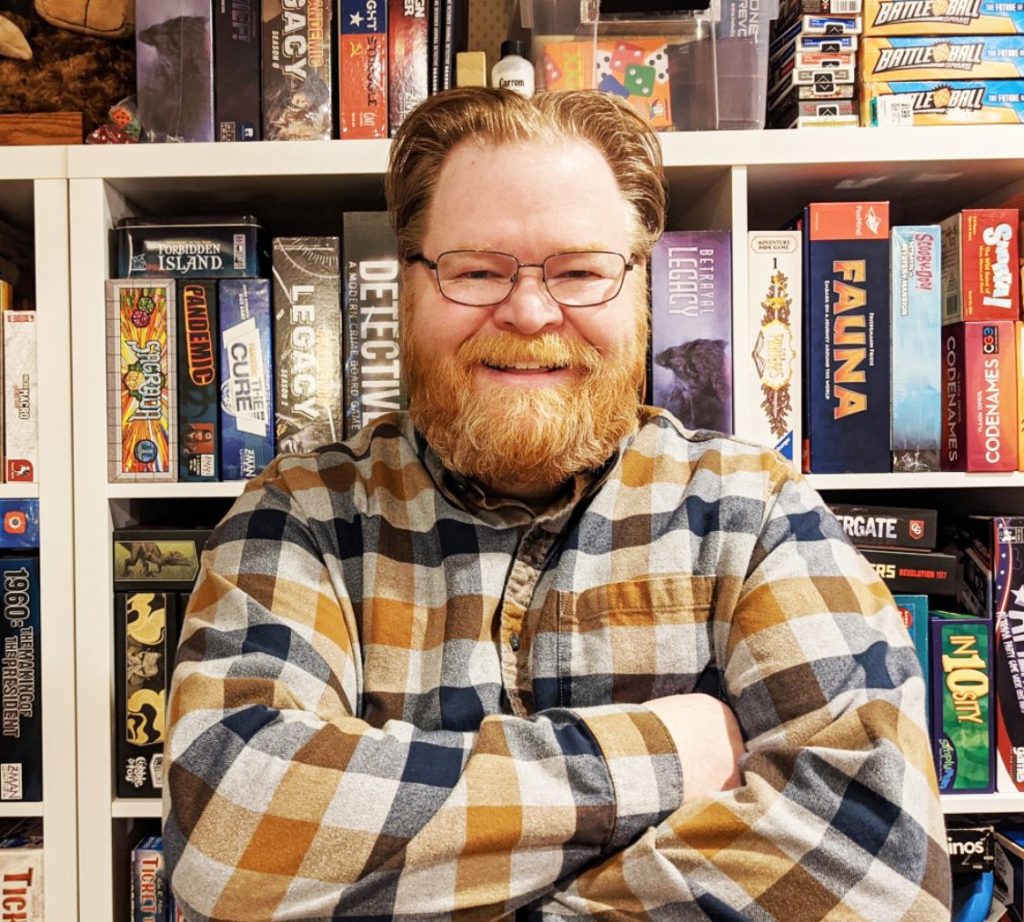
Erik Arneson isn’t a new name in Harrisburg.

You may have read about his high-profile job as the past executive director of the state Office of Open Records. He’s now the new deputy treasurer for communications at the Pennsylvania Treasury, so his public service continues.

But there is a secondary, underlying and perhaps more compelling side to Erik Arneson—as an internationally recognized expert on tabletop games and card games. His book, “How to Host a Game Night,” came fresh off Simon & Schuster’s press a few months ago.

“Tabletop Gaming Expert” isn’t some role-playing alter ego or even Arneson’s lifelong ambition. He started off as a typical kid raised in south-central PA (Christiana), playing in Little League, competing in wrestling, and playing the typical games from the 1970s and ’80s: Connect 4, checkers, Risk, Pictionary and Trivial Pursuit.

“I didn’t know what other games were out there,” Arneson said. “We didn’t have a game shop where we lived. We bought our games at K-Mart, Toys ‘R’ Us and Jamesway.”

While in high school, Arneson created his own play-by-mail wrestling game. Players from across the country created pro wrestling characters, and he programmed his Apple IIc computer to put matches together and decide the winners.

“That hobby helped me pay for incidentals [throughout] college,” he said.

Then in 1999, with a combined collection of two to three dozen games, Arneson began writing about tabletop games for about.com. Like any generalist writer with the mission to clearly explain unfamiliar things, he dove in headfirst.

“And then I became hooked,” he said. “I certainly didn’t know what I was getting into when I applied.”

As he wrote about tabletop games for the next 15 years, Arneson grew his collection to over 1,000 games. He played them with friends and family over his favorite format of social, pleasant evenings at his dining room table with his wife and a few other couples. He cultivated his hobby by organizing gaming conventions and weekends for longer tournaments and playing more complex, elaborate games.

He didn’t know it then, but he was collecting ideas and anecdotes for a book to be written decades later.

“I had thought about writing a book for a while, but I had no clear idea about what it would be,” he said.

Eventually, an editor from Tiller Press (a division of Simon & Schuster) approached him after finding some of Arneson’s old articles about board games and card games on about.com, and they fleshed out the idea from there.

“I didn’t want to present a dry how-to,” Arneson said. “I turned the book into my love letter for game nights—how much I enjoy them, how I enjoy sharing games with other people. Such a simple idea that hadn’t been done before.”


Break the Mold

“How to Host a Game Night” isn’t just an etiquette book of advice for someone hoping to plan the perfect gaming event. Through it, readers can see the story arc of how technology actively evolved tabletop games, from pre-printing press to today.

“Games reflect where we are as a society, like my parents playing bridge with their friends back in the ’70s,” Arneson said. “Games are a conduit for building community and enjoying each other’s company on a personal level.”

Technology boomed the tabletop gaming industry exponentially, moving from having a limited infrastructure for publishing (i.e. Hasbro, Parker Brothers and Milton Bradley) to having thousands of new board games published every year. The internet has made it possible for game creators to lucratively distribute board games via small press runs.

“There’s an amazing amount of technology involved to design games, sculpt plastic figures, create companion apps,” Arneson said. “There are wildly creative people making wonderful games. It’s impossible to keep up as it evolves.”

One exciting evolution is changing the traditional competitive paradigm of “I win/you lose.” Some newer games break that mold, requiring the players to collaborate to win. (If you’re the ultra-competitive type, think of it as “we win/game loses.”)

“Collaborative [board games] are only decades old,” Arneson said. “It’s exciting to see designers taking games to new and interesting areas.”

As an internationally accredited tabletop games expert, we might think Arneson is “the guy to beat.” He assures us he’s not.

“When you play a variety of games, you don’t become an expert on any one,” he said. “For example, I know the rules of chess, and I respect it, but I’ll never devote the hours it takes to be one of the greats or one of the pretty-decents.”

Instead, he prides himself on being the one to explain and teach the game and for keeping the atmosphere relaxed and welcoming, with lots of laughter.

The guy to beat?

“I have some great memories playing Trivial Pursuit,” Arneson said. “It was dad vs. everyone else, and dad would always win.”

Playing games imparts many dad-type lessons. Collaborate within a group. Don’t let egos drive decisions. Don’t fear unusual approaches to problem-solving. Train your brain to look at things from different perspectives. Enjoy the game for the experience itself. Be a good sport. Lose (and win) graciously. Hang out with your friends. And some modern dad advice—put your phone away.

Despite his credentials, Arneson considers himself a hobbyist.

“Back then, I wasn’t the most qualified person to write about board games,” he said. “There are plenty of people who work full-time at board games who know more than I do.”

For the future, Arneson predicts a modern resurgence in tabletop games.

“As we emerge from the pandemic, I think there’s a hunger from people to get back to in-person gatherings with friends,” he said. “I think society needs to get back to that.”

“How to Host a Game Night: What to Serve, Who to Invite, How to Play—Strategies for the Perfect Game Night,” by Erik Arneson, is available from online booksellers.

Support quality local journalism. Become a Friend of TheBurg!

Continue Reading

Green Scene: Hershey Gardens offers a colorful escape for these thorny times

As the months-long vaccine rollout chugs on, people continue to look for outdoor, distanced events and outings.

A favorite day trip locally lies just east of Harrisburg, and the staff there is gearing up for the busy growing season ahead.

Hershey Gardens is open year-round, but its visitor numbers accelerate once the spring annuals and perennials begin to bloom.

“There are so many things I love about working here,” said Amy Zeigler, senior director of Hershey Gardens. “The team here is so invested with their jobs. I think I love that the most, along with the gardens always looking so beautiful.”

The gardens’ story starts, not surprisingly, with local chocolate entrepreneur Milton S. Hershey, who was reputed to have quite the green thumb. His backyard gardens, filled with beautiful homegrown roses that he and wife Catherine lovingly nurtured each year, attracted sightseers from near and far.

The community needed, Hershey decided, gardens that the public could call its own.

In 1936, he commissioned plans for the construction of a 3.5-acre spread of rose gardens not far from the amusement park he created. Planting began that fall under the direction of horticulturist Harry Erdman. A completed facility was opened in June 1937 as the Hershey Rose Garden.

It wasn’t long before the garden began to grow bigger. In May 1938, a new section of terraced roses was added below the original flowerbeds. The following year, even more sections of roses took root, increasing the venue’s total size to more than six acres.

Over the years, the Hershey Rose Garden continued to expand. By 1979, the entire spread had expanded to six themed gardens and was formally renamed as Hershey Gardens. In 1989, the gardens were placed under ownership and operation of the nonprofit M.S. Hershey Foundation.

Today, Hershey Gardens’ operational costs are funded through grants, donations and memberships. However, 75 percent of the gardens’ annual revenue derives from guest admission fees, Zeigler said.

As for many, 2020 was a difficult year for Hershey Gardens, which was closed for four months. The pandemic caused financial hardship, resulting in an inability to purchase a full quantity of tulip bulbs. But, according to Hershey Gardens’ website, any gaps in the display will be taken up by other flowers.

Today, the busy staff is hard at work getting things back to normal for the busy spring and summer seasons.

Each morning, activity starts way before the facility opens to the public at 10 a.m.

“In the summer, we start at 6 a.m. In the off-season, we start at 7 a.m.,” said Alyssa Hagerman, Hershey Gardens’ horticultural specialist. “We do the messy work like watering and [cleaning up]. After opening, we do things like mulching, mowing and weeding. The guests see it all.”

Besides Hagerman, the gardens’ staff includes Zeigler, four full-time gardeners, up to 12 part-time gardeners, an operations manager, crew foremen and a network of volunteers.

Hagerman is responsible for designing the seasonal displays, and she “tries to make them look a little bit different each year,” she said.

She started out at the gardens 11 years ago as part of the grounds staff and “still goes out in the gardens and gets dirty,” she said. Her greatest on-the-job challenges? Weeds, pests on roses, and despite the staff’s best deterring efforts, deer as overnight visitors.

Job perks, however, appear to balance out any workday challenges encountered on the picturesque grounds.

“I really do like designing seasonal displays,” she said. “I enjoy being outside so much every day.”

The most popular season for visitors is summer, Zeigler said.

By then, 3,500 roses in the historic Hershey Rose Garden color the landscape in prime bloom, along with marigolds and other summer annuals. In autumn, mums, pumpkins, straw bales and seasonal annuals dot the grounds. In winter, visitors can stroll through the arboretum, Oak Grove and the most recent addition, the Milton & Catherine Hershey Conservatory. In total, the 23-acre venue boasts 10 themed gardens with intermittent seasonal displays.

Then there’s the year-round list of special events. For instance, on April 17, the gardens will host a virtual program, “The Nesting Needs and Behaviors of Bluebirds,” with Dean Rust, president of the Bluebird Society of Pennsylvania.

The most popular event each year takes place in May over Mother’s Day weekend, a Saturday/Sunday treat that offers free admission to all visiting mothers. Due to high demand, the event recently was expanded from being held on Sunday only. On the Friday before Mother’s Day, mom can tiptoe through the tulips with a special half-off coupon for her admission.

Hagerman strongly suggests visiting when the large, showy hydrangeas are in bloom later in the season, which are among her favorite flowers.

“They’re so big and just fantastic,” she said. “But I haven’t met a plant I don’t really like.”

Hershey Gardens is located at 170 Hotel Rd., Hershey. For more information, visit www.hersheygardens.org.

Support quality local journalism. Become a Friend of TheBurg!

Continue Reading

April News Digest

Primary Field Takes Shape

Harrisburg voters will have a large field of candidates to choose from in the May election, as six hopefuls have filed for the mayoral primary and another 13 residents have filed for City Council nominations.

By the mid-March deadline, the following candidates had filed to run for the Democratic nomination for mayor:

  • Otto Banks
  • Kevyn Knox
  • Eric Papenfuse (incumbent)
  • David Schankweiler
  • Wanda Williams

Banks later had his city residency challenged in court, though, at press time, a verdict had not yet been rendered.

In addition, one candidate, Timothy Rowbottom, filed to run in the Republican primary.

Thirteen candidates filed to run for the Democratic nomination for four, four-year seats on Harrisburg City Council. They are:

  • Vishal Bajpai
  • Lori Ann Beamer-Saulisbury
  • Roy Christ
  • Shamaine Daniels (incumbent)
  • Crystal Davis
  • Carrie Fowler
  • Sarah Gethers
  • Ausha Green (incumbent)
  • Lavet Henderson
  • Jennie Jenkins-Dallas
  • Robert Lawson
  • Jocelyn Rawls
  • Ralph Rodriguez

No one filed to run in the Republican primary.

Two of the four council seats are open as council Vice President Ben Allatt declined to run for re-election and President Wanda Williams, who has served on council since 2006, opted to run for mayor.

The Harrisburg school board race has fewer candidates this time than two years ago, when a dozen residents ran in the hotly contested race. This year, the Democratic candidates for four, four-year seats are:

  • Michael Balsbaugh
  • Brian Carter (incumbent)
  • Jorge Collazo
  • Roslyn Copeland
  • Jaime Johnsen
  • Ezra Match
  • Danielle Robinson (incumbent)
  • Mary Simpson

Match also cross-filed on the Republican ballot.

In addition, the school board has one two-year seat available. Just one Democrat, Terricia Radcliff, has filed to run for that seat. No Republicans filed for the office.

For city controller, only incumbent Charlie DeBrunner, a Democrat, has filed to run in the primary.

Harrisburg also has two competitive races for magisterial district justice seats.

Seven Democrats have filed for the District 12-2-04 seat primary:

  • Anthony Harrell
  • Sha’kira Jennings
  • Sonya McKnight (incumbent)
  • Ellis (Rick) Roy
  • Jennifer Smallwood
  • Brianna Smith
  • Leon Wilkerson

McKnight also cross-filed for the Republican primary.

Two Democrats filed for the District 12-2-05 seat:

  • Amechie Walker Sr.
  • Paul T. Zozos (incumbent)

Zozos also cross-filed for the Republican primary.

On the county level, incumbent Matt Krupp of Harrisburg filed for re-election as a Republican for prothonotary. Anju Singh of Hummelstown is running for the Democratic nomination.

Long-time county Coroner Graham Hetrick filed for re-election on the Republican ballot. He’s unchallenged for that office.

A two-year county controller seat is open following the election of Tim DeFoor as PA auditor general last year. Democrat Eric Epstein of Lower Paxton Township filed for the primary for that row office, as did Republican Mary Bateman of Lykens.

The municipal primary is slated for Tuesday, May 18.


Council Approves Building Projects

Several Harrisburg developers last month cleared the final city approval before being allowed to break ground on their projects.

City Council approved land development plans to convert a vacant church into an apartment building and another to build a six-story apartment and retail building, along with five other projects.

Developer Derek Dilks plans to transform the former First United Methodist Church at 260 Boas St. into an eight-unit apartment building. Previously, he had received zoning relief for the $1.2 million project in order to change the use of the 140-year-old church building.

Also approved were a range of renovation projects that Dilks plans for downtown. These include:

  • 25 N. Front St., converting an office building into an eight-unit apartment building
  • 321 N. Front St., converting an office building into a six-unit apartment building
  • 130 State St., converting an office building into a five-unit apartment building

With a unanimous council vote, Harristown Development can move forward on its project at 21 S. 2nd St. The company plans to construct a six-story, mixed-use building with apartments, offices and first-floor retail space. Harristown purchased the property in 2017, demolishing the blighted commercial building that then occupied the site.

Council also gave its OK to the renovation of the “Carpets and Draperies” building on the 1500-block of N. 3rd St., a long-blighted retail building that will be converted to five apartments and first-floor retail space.

Other approved resolutions last month included:

  • 1605-1609 Swatara St., consolidating and re-subdividing the parcels comprising the project site into three parcels and constructing three, single-family townhomes
  • Awarding up to $10,000 in funding to the Pennsylvania Environmental Resource Consortium to co-sponsor the Pennsylvania Environmental Justice Symposium

Council this month is expected to consider another large project in Midtown. It includes include 85 apartments, a grocery store and a parking garage, bounded by Boyd, N. 5th, Reily and Fulton streets.


Superintendent Search Begins

The Harrisburg School District is taking a major step to fill a top post in the administration.

The district announced last month that it will begin a national search for the next superintendent of schools as part of the next phase of its “Amended Recovery Plan.”

“We will seek a student-centered leader who will embrace our school community, lead with integrity, and pursue continual growth and improvement for the district,” according to the district.

In 2019, the district passed into state receivership after failing to meet the academic objectives in the 2013 recovery plan and the 2016 amended plan. The superintendent at that time, Sybil Knight-Burney, was fired.

Dr. Janet Samuels was appointed receiver of the district and, later, Chris Celmer was named acting superintendent, in collaboration with the Montgomery County Intermediate Unit (MCIU).

The district will move to reinstate a full superintendent now that it is more than halfway through its three-year, state-mandated receivership. According to its statement, the district may fill the position as early as this summer.

Samuels and the MCIU will conduct interviews, and the community will get to meet the final candidate before they are appointed, according to the district. Celmer will provide support for the new superintendent and continue to work with the district through June 2022.


Allison Hill Art Project

Harrisburg-based Sprocket Mural Works last month announced that it plans to bring more art to the Allison Hill neighborhood.

Volunteers from Sprocket, a nonprofit, plan to kick off the biannual Harrisburg Mural Festival by painting nearly 30 new planter boxes, in partnership with Tri County Community Action, on Derry and Market streets.

Their goal is to commission artists from Allison Hill, as well as artists from the city at large. Sprocket announced a call for artists to submit designs for these paid positions.

“We are looking forward to connecting with artists from Allison Hill—that’s what is so valuable about this community-focused project,” said Meg Caruso, co-founder of Sprocket. “More than a dozen planters will benefit and beautify the immediate Allison Hill neighborhood. Additionally, these planters will become works of art that uplift and recognize local artistic talent for years to come.”

Sprocket is looking for artists to highlight the culture and diversity of Allison Hill in the paintings, as well as what they love about their city. The deadline for artists to apply is April 30, and the painting will take place between May 22 and June 20.


Home Sales Dip, Prices Up

Home sales dropped a bit, but price appreciation was strong in the Harrisburg area in February.

The Greater Harrisburg Association of Realtors (GHAR) reported that home sales fell to 458 units last month compared to 500 units in February 2020 across its three-county coverage area. However, the median sales price rose to $190,950 versus $180,000 a year ago.

In Dauphin County, sales dipped to 236 units against 244 in the year-ago period, but the median price increased to $168,500 versus $164,900 last year, GHAR stated.

Similarly, Cumberland County saw a small drop in home sales—from 205 a year ago to 196 this past February—but the median price rose sharply, from $214,500 to $232,000, GHAR said.

In Perry County, sales dropped by three units, to 21 homes, as the median price rose to $154,900 compared to $147,500 a year ago, GHAR stated.

The organization also reported that homes were selling much faster than last year, as the “average days on market” dropped to 30 days versus 57 the prior February.


So Noted

Aaron Johnson last month announced his retirement as Harrisburg’s long-serving director of the Department of Public Works. Dave West, Johnson’s second in command, will replace him in the post.

Gateway Health opened a “Connection Center” last month at 1426 N. 3rd St. in Harrisburg. The facility will help connect members with services and also will offer space for education and seminars, for private consult/conference rooms and to help meet community needs.

Gov. Tom Wolf last month further loosened pandemic-related restrictions on numerous businesses, including restaurants, bars, gyms and entertainment venues. The new rules, which take effect April 4, allow bar service to resume and permit restaurants to serve alcohol without the purchase of food, among other provisions. Mask-wearing and distancing requirements are still mandated.

HACC’s parking lot is the site of a new mass vaccination clinic sponsored by Dauphin County and UPMC Pinnacle. The drive-through site is expected to dispense thousands of COVID-19 vaccinations daily when enough doses are available in the county.

Harrisburg last month extended its moratorium on evictions for another month, to April 16.  This is the third time that the city has extended the ban, which was enacted first in December to prevent evictions during the COVID-19 pandemic.

Mary Murphy has joined Big Brothers Big Sisters of the Capital Region as its new development director. According to the organization, she has extensive experience in marketing, communications, business and consulting for nonprofits and Fortune 500 companies.

Michael Karcutskie was named last month as president of Harrisburg-based Quandel Construction Group. In this role, Karcutskie is responsible for overseeing the firm’s operations and developing its corporate strategy. Previously, he served as vice president of pre-construction and estimating.

Strawberry Square last month began hosting a free COVID-19 testing site near the Walnut Street entrance in downtown Harrisburg. The walk-in site will run at least through April 10, Tuesdays through Saturdays, no appointment required.

Verber Dental Group last month announced that its new pediatric dentistry facility will open in May. The $1.5 million project, located at 201 St. John’s Church Rd. in Hampden Township, will include eight state-of-the-art dental suites, along with interactive spaces for children and a “tooth fairy booth.”

Whitaker Center partially reopened last month following a lengthy pandemic-related shutdown. The downtown Harrisburg arts and science center is now open Fridays and Saturdays, by appointment, in two sessions: 9:30 a.m. to 12:30 p.m. and 1 p.m. to 4 p.m.

Zeroday Brewing Co. last month opened its new taproom and restaurant at 925 N. 3rd St. in Midtown Harrisburg. The 150-person space features a large bar area, dining rooms, a courtyard and a small-batch, three-barrel brewhouse that can be closed off for special events. The menu focuses on contemporary, Mexican-style cuisine by restaurant partner La Catrina.


Changing Hands

Bailey St., 1302: H. Roberts to Global Supply Group LLC, $41,000

Berryhill St., 1623: M. Plancencia & L. Pichardo to A. Pichardo, $35,000

Berryhill St., 2437: C. Still to J. Martinez & M. Gomez, $38,000

Bigelow Dr., 1300: R. Shalhoub to M. Murphy & G. Neff, $58,800

Boas St., 418: D. & L. Engelhardt to W. Sechler & M. Ackerman, $123,715

Calder St., 523: A. Johnson to M. McNeils, $159,900

Camp St., 635: Integrity First Time Home Buyers LLC to J. Darling, $120,000

Chestnut St., 1832: Gilligan Realty LLC to G. Graham, $51,000

Cumberland St., 115: F. & J. Martin to J. Klinger, $127,500

Derry St., 2125: 37 Estate LLC to A. Miller, $95,000

Derry St., 2621: E. Chandler to Z. Soto, $99,900

Derry St., 2700: Rohrer Rentals LLC to Painted Sky Properties LLC, $243,000

Disbrow St., 88 & 90: H. & L. Bueno to D. Best, $35,000

Elm St., 1726: A. Williams Jr. to D. Chambers, $95,000

Evergreen St., 26 & 28: Round Rock Investments LLC to 101 S. 17th Street LLC, $104,000

Fulton St., 1404: T. Copeland to K. Shoaff, $125,000

Green St., 2313: N. Jacobs to E. Macas, $40,000

Greenwood St., 2507: F. & S. Ford to C. Everett, $39,900

Hanover St., 1318: A. Bawo to B. Ortega, $39,000

Herr St., 265: Rosegarden Properties to B. Staudt, $199,900

Holly St., 1914: SPG Capital LLC to M. Rodriguez, $59,900

Kensington St., 2255: D. & D. Ford to Men of Morals LLC, $52,000

Logan St., 2242: RT Propertiez LLC to RRMMM Real Estate LLC, $31,500

Market St., 1801: D.L. Weaver Enterprises LLC to Builders Property Management & Marketing Group LLC, $39,785

Market St., 1857: JMDM Properties LLC to Market Whitehall Property Holdings LLC, $110,000

Market St., 1859: Z. Reeves to Z. & S. Coombs, $100,000

Market St., 1910: JMDM Properties LLC to Market Whitehall Property Holdings LLC, $110,000

Market St., 1915: JMDM Properties LLC to Market Whitehall Property Holdings LLC, $110,000

Market St., 1941: A. Antoun to Royalty Tax Services LLC, $105,000

Mulberry St., 1837: A. Mohamed to Fine Line Real Estate LLC, $44,000

N. 2nd St., 933: C. Wise to D. Moore & K. Williams, $212,000

N. 2nd St., 1209: GO Trump Inc. to OK 3 Investments LLC, $365,000

N. 2nd St., 1333: C. Leavitt to R. Adams & K. Rasmus, $127,500

N. 2nd St., 1505: B. Bragg to S. & H. Westhafer, $78,000

N. 2nd St., 2436: D. Sanko to J. Belizaire, $247,000

N. 2nd St., 2832: WK Rentals LLC to K. Hill, $139,950

N. 2nd St., 2900: F. & B. Pinto to R. Lawson, $207,000

N. 2nd St., 3127: M. Stilo to Honest Home Solutions LLC, $56,375

N. 3rd St., 2104 & 2106: J. & D. Negron to S. Schlackman, $100,000

N. 4th St., 2609: RJ Shultz Enterprises Inc. to D. Markel, $80,000

N. 5th St., 1720: Principium LLC to S. Bustard, $172,000

N. 5th St., 1940: Neidlinger Enterprises LLC to M. Trieu, $149,500

N. 6th St., 2529: DL Weaver Enterprises LLC to A. Woodman, $60,000

N. 6th St., 3214: Mid Atlantic IRA LLC Donna Laubach IRA to AM Properties USA LLC, $66,500

N. 7th St., 2110 & 2115 Motke St.: M., M. & N. Barber to D. Montes, $59,000

N. 13th St., 142: 37 Estate LLC to Z. & S. Coombs, $75,000

N. 19th St., 36: J. & L. Carter to A. Nebbou, $74,900

N. 19th St., 712: C. Butler to A. Smith, $89,900

N. 19th St., 1004: R. Dressler & E. Knuth Jr. to A. Nebbou, $50,000

N. Cameron St., 1511: Note Purchasers LLC to D&F Realty Holdings LP, $375,000

N. Front St., 1525, Unit 505: G. & C. Francis to C. Hackett, $177,000

N. Front St., 2745: 2745 Limited LP to Jenga on Front, $771,000

Norwood St., 906: N. Moya to S. Pacley, $79,000

Penn St., 1812: Lancaster Real Estate Fund LLC to 2020 Real Estate Ventures LLC, $65,000

Race St., 548 & 550: M. Fox to Panda Real Estate LLC, $130,000

Radnor St., 403: T. Brown to TKO Rental Properties LLC, $110,000

Reel St., 2636: A. & R. Laracuenta to Neidlinger Enterprises LLC, $52,000

Rudy Rd., 1940: M. Heefner & S. Shrhart to S. Ludington, $55,000

Rudy Rd., 2141: M. McNelis to H. Fender, $190,000

Seneca St., 501: Dauphin County Property Investors LLC to Archie Group, $396,000

Showers St., 702: L. Rotegliano to M. Harrison, $169,900

S. 13th St., 1436: D. Weaver to A. Woodman, $45,000

S. 15th St., 320: Wells Fargo Bank NA to R. Gashi, $31,500

S. 16th St., 545: G. & Y. Garcia to PBBO Real Estate LLC, $42,500

S. 17th St., 544: G. & Y. Garcia to D. Montes, $41,500

S. 24th St., 702: Property Value Solutions LLC to M. Valverde, $90,000

S. 29th St., 738: J. & L. Guizado to J. Smith, $110,000

S. Cameron St., 1517 & 1540: A. & C. Quigley to New Vision Management LLC, $224,000

Spencer St., 1839: R. Farley to J. Rodriguez, $43,000

State St., 231, Unit 806: LUX 1 LP to A. Richie, $135,000

State St., 1520: R. Schwartz to G. Zehr, $75,000

State St., 1840: A. Alumbaugh to J. Tineo, $57,000

Walnut St., 1196: L. Alvarez to M. Hernandez, $68,900

Whitehall St., 1817: JMDM Properties LLC to Market Whitehall Property Holdings LLC, $110,000

Harrisburg property sales for February 2021, greater than $30,000. Source: Dauphin County. Data is assumed to be accurate.

Support quality local journalism. Become a Friend of TheBurg!

Continue Reading

3 Women, 1 Cause: A shared conversation about autism

Heather Zimmerman, Grace Long and Kelly Long.

In their own distinct ways, Kelly Long and Heather Zimmerman are seeking to understand what Long’s daughter Grace is living through. For her part, Grace Long is very much in tune with her life with a disorder.

The common denominator is autism—Grace Long has it and Zimmerman and Kelly Long want to know as much as they can about it. But while Zimmerman’s pursuit is much more analytical in nature, Kelly Long’s originates from the emotional place we call “the heart.”

Yet no matter how one perceives it, knowledge and understanding and empathy are the keys. For if we all knew more about autism, the world in which those afflicted with it—like Grace Long’s—would be a much better place.

“My hope for her is that she has peace within herself,” said Kelly Long of her daughter. “I hope she can acknowledge when something doesn’t give her joy and find a way to joy. I think the things I’m hoping for Grace are the same things all parents want for their children. You want your child to be able to survive in a world where they don’t necessarily fit.”

In earlier times, when children had developmental disorders, people would hide them away, Zimmerman said.

“People have learned more about autism, which brings it into the light,” she said. “It seems more common now, but I think people are just learning more about it. But unless you’ve had firsthand experiences with it, it’s difficult to understand.”

Zimmerman, Kelly Long and Grace Long are three motivated women at different stages of their lives, but all with strong voices. Their stories became intertwined during a chance meeting at the Hershey Pantry, where Zimmerman was working as a server and where Kelly Long was a customer.

A 36-year-old resident of Hummelstown, Zimmerman is currently attending the National University of California, where she is virtually pursuing a degree in applied behavioral analysis. Kelly Long, a 53-year-old novelist, is the mother of two grown autistic children who recently moved from the Hershey area to Lykens.

Grace, a recent graduate of Hershey High School, aspires to attend culinary school, and maybe, someday, medical school.

“I don’t want to say it was difficult growing up, as much as it was different,” Grace said. “But I don’t know how to live any other way. A lot of things that bother me don’t bother other people. It’s a lot of slowing down, and that makes it frustrating.”

Kelly Long described autism as “a gift.”

“I don’t wish that there was a cure,” she said. “I wouldn’t want my children to be anyone else than who they are. An autistic person sees the world differently than you and I do. Kids with autism are frequently non-verbal at a young age. But just because they’re not speaking English doesn’t mean they’re not speaking.”


Talk About It

Clinically speaking, autism is a developmental disorder characterized by restricted and repetitive behavior, as well as difficulties with communication and social interaction.

It’s estimated that about one in 60 children in the United States has autism, and boys are four times more likely to be diagnosed with the disorder than girls. Throughout the world, autism is believed to affect nearly 25 million people.

About half of the people in their 20s with autism are not employed.

“Everybody is different. Some people with autism need to have a routine,” Zimmerman said. “I’m really interested in it, because it’s a very predominant problem. It takes a lot of patience. I think it’s a very needed thing. I want to learn as much as I can about it.”

Grace Long was diagnosed with autism at the age of 10, years after her older brother had been diagnosed with it.

“I knew my brother had autism,” Grace said. “But it was kind of a shock to figure out I had it, too. When I first found out, I was in a bad place mental health-wise, so it was nice to have an answer.”

It has presented its share of challenges.

“It has made reaching goals, accomplishing things and learning difficult,” Grace said. “It makes it difficult to go to school. It makes it hard to go into crowded places because of the loud sounds. It makes it hard to stick to certain goals and times.”

Sometimes, people don’t see the potential in people with autism, Kelly said.

“I still think there’s a negative connotation associated with autism,” she said. “We don’t understand it, so we’re afraid of it. Kind of like, ‘Oh yeah, that’s nice, but I don’t want to be anywhere near you.’ If you learn, that fear lessens. I think it’s important to see people as people.”

Some studies have suggested that the rate of people with autism worldwide is increasing. Others contend that the methods for diagnosing have simply improved.

“When you go out in public and see someone different than you, sometimes you make a snap judgment,” said Zimmerman. “It’s 100-percent important for people with autism to function and have somewhat of a normal life. I think people know more about autism than they ever have, but unless you know someone who’s been diagnosed, you really don’t know. It’s most important to take the time out and understand what it is. These kids need help.”

In recent years, the understanding of mental health and autism has gone up, Grace said.

“But there is so much more to learn,” she added. “I think the general public has a very specific picture of what autism is. People with autism have trouble socially interacting with other people. It’s something that’s hard to pin down for other people. Your entire mind functions differently. It’s not really well-talked about.”

Grace Long hopes to start a conversation about it.

Support quality local journalism. Become a Friend of TheBurg!
Continue Reading

Lincoln’s Last Journey: Stone Gables Estate hosts funeral train re-enactment

Gettysburg isn’t the only local burg with a claim to important Civil War-era events.

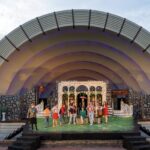
President Abraham Lincoln’s funeral train chugged through southcentral Pennsylvania on April 22, 1865, making stops in Harrisburg and Elizabethtown. Now 155 years later, Elizabethtown’s role in the well documented funeral train procession is re-enacted at Stone Gables Estate, site of the Star Barn.

Re-enactors at the upcoming two-day event aimed to make the event’s elements historically accurate, with only few variances.

According to records, the locomotive pulled in to Elizabethtown at 12:15 p.m. for a quick, 15-minute stop to refuel, using the wood and water from the “tender” car. Onlookers swarmed the platform to get a better view of the benediction, speakers and ceremonies. Then the train headed to Philadelphia for another casket viewing, stopping every 20 miles to refuel.

The “United States” was Lincoln’s private presidential train car, later carrying his casket. Unfortunately, the train was destroyed by fire in 1911, forever lost to history.

According to Shannon Brown, event coordinator, only two existing structures at Stone Gables Estate were around when the original train came through.

“Whoever lived in the old stone house on the knoll could have watched the funeral train from 400 yards away,” she said. “That, and a retaining wall.”

Brown served on the 30-person team that brought the replica train to life. David Kloke spearheaded the effort as an educational outreach. He spent 3½ years building it from scratch in his workshop in Illinois. Weighing 67,000 pounds and measuring 9-feet wide, 13-feet tall and 48-feet long, the replica can chug easily over U.S. standard rails that didn’t exist in 1865.

Of everything offered at the re-enactment, “the ambience of that car has the biggest wow factor,” Brown said. “It feels very period, which was the intention. It sets the mood. It sets the stage for what happens next.”

Quite Powerful

The passenger car smacks of opulence and attention to detail germane to yesteryear craftsmen unconcerned with schedules or cost.

Curtains, carpets and interior crimson silk fabrics were specially designed and hand-rendered. Painters matched the original paint colors, hand-lettering and drawing embellishments from photographs. Blacksmiths hand-forged the railings, and woodworkers carved countless details. Decorators hung period paintings and sconces resembling oil lamps on the walls.

“Walking through the Pioneer Coach passenger car, there are walkover seats flipped so you can ride in either direction,” Brown said. “When people get to the funeral car, the coffin is the last thing they see. It’s quite powerful—draped in mourning, black crepe, flowers. It’s incredible to see people’s reactions, wiping away tears.”

You’ll also find period artisans at the event, like a lady making lye soap, another making Victorian hair jewelry, and a metalworker forging all kinds of metal wares.

The second oldest municipal band in the nation, the New Holland Band, will play period music. The band can trace its history back to 1829 to a fife and drum corps for the 51st Regiment, Pennsylvania State Militia.

“In all the records I’ve seen, there was some type of music at the train stops,” Brown said. “Bands played dirges, and, if they didn’t have instruments, people sang hymns.”

Re-enactors and lecturers will roam the grounds, giving demos, giving wagon rides, doing drills in the encampments, and demonstrating what life was like in 1865. Some play a simultaneous role of re-enactor and lecturer.

“At the inaugural event, a gentleman who looks like General Grant was on horseback giving people a tour,” Brown said.

No Civil War re-enactment would be complete without a military presence. To keep the ranks well rounded, there’s a nice mix of infantry, artillery, dismounted cavalry, civilians and sutlers. Jeffrey Cohen, commander of the 6th New York Independent Battery, will return with his co-ed unit of 35 to demonstrate the drill, military protocol of that time, campsite cooking, how to use small arms, and even an authentic cannon that fires.

The cannon is an original model 1857 bronze Napoleon, weighing over a ton, with cannonballs the size of shot puts. Cohen recruits kids from the audience to put on uniforms, and he puts them in a popular scenario of the day, such as a 16-year-old running away to enlist. Observing all safety measures, the re-enactors encourage the kids to perform soldiers’ tasks: pulling the cannon by the rope, operating the sponge rammers, or throwing the cannonballs.

“You really get to teach the public. People are coming to see us, so you want people to see an accurate picture of everything,” Cohen said. “It’s been alleged that we hijacked the train. There were no photos, so it’s a lie.”

The Lincoln Funeral Train Commemoration takes place April 23 and 24 at Stone Gables Estate, 1 Hollinger Lane, Elizabethtown. For more information, visit www.stonegablesestate.com.

Support quality local journalism. Become a Friend of TheBurg!

Continue Reading

Your Own Italian “Search”: If you liked the Stanley Tucci series, you’ll love pasta alla Nerano

Many of you might have seen the actor, Stanley Tucci, on the CNN television series, “Searching for Italy.”

For those who love Italy and its food, the series is a lovely journey through regions in Italy: Naples and the Amalfi Coast, Rome, Bologna, Tuscany, Milan and Sicily, so far. The first season of the docuseries aired in February and March and reflected the actor’s love of the cuisine, culture and history of “Italia.”

Tucci explores many of Italy’s classic dishes such as pasta carbonara from Rome, Sicily’s pasta alla Norma, risotto Milanese, bistecca from Florence, ragu alla Bolognese and real pizza from Naples. At times, the shows ventured into less well-known corners of the cities or countryside and sometimes, surprisingly, some “political” threads were woven with culinary ones. But the actor’s love of the Italian people and his enthusiasm were contagious, as the local chefs shared their “secrets.”

I wanted to make everything I viewed on the shows! And I have a good friend, a former resident of Italy, who did just that. One recipe that intrigued her (and much of the internet world) the most was pasta alla Nerano. The pasta is said to have originated in a restaurant in Nerano, Italy, a small village near Sorrento. Tucci pushed the chef in the first episode to reveal the “secret” to making this seemingly very simple dish.

It relies on simple ingredients: pasta, cheese, basil and zucchini. But the cheese is special. In Italy, traditional pasta alla Nerano is made with provolone del Monaco, a large, semi-aged, sheep’s milk cheese that is very hard to find outside Italy. The suggested substitution is a cheese called caciocavallo. My “cooking friend” was able to find caciocavallo in the “strip district” of Pittsburgh, but I am still searching here. Internet cooking bloggers report that aged provolone, mozzarella and Parmesan Reggiano can stand in for these hard-to-find cheeses. Some authors suggest a mix of these cheeses to achieve the desired creaminess.

The zucchini must be small and sweet, so avoid those dark green characters that are “shipped” during cold weather months. The basil must be fresh. So, pasta all Nerano is a perfect dish to try when homegrown produce arrives at the market.

The recipe offered below is a composite of the many I found while researching pasta alla Nerano. It does include butter, which adds a nice richness. I plan on experimenting with different cheeses and continuing my search for caciocavallo.


Pasta alla Nerano

Ingredients

  • 1 whole garlic clove
  • ½ cup olive oil
  • 5 small zucchini, sliced into very thin rounds
  • Salt and pepper to taste
  • 1 cup grated Parmesan or caciocavallo cheese (mozzarella would be a last choice)
  • 1 “knob” of cold, unsalted butter (1 to 2 tablespoons)
  • A handful of fresh basil leaves
  • ¾ pound of pasta (12 ounces)

Directions

  • Bring a large pot of salted water to boil for the spaghetti.
  • In a wide skillet or sauté pan over medium high heat, add the garlic clove and olive oil so the mixture just sizzles. When the garlic clove turns golden (do not let it brown), remove it and add the zucchini rounds.
  • Fry the zucchini until tender and golden brown in color. (Add extra oil if needed to prevent sticking. Toss gently as they cook.)
  • Drain the zucchini on paper towels and season with a little salt and ground pepper.
  • Now take about one third of the cooked zucchini and place in a large bowl. Add about one quarter of the pasta water and mash or blend with a handheld immersion blender. Your goal is to make a sort of puree much as you would make a pesto.
  • When the pasta is cooked “al dente,” remove another one-half cup of the cooking water and drain.
  • Toss the spaghetti in the large bowl with the pureed zucchini, the sauteed zucchini, the grated cheese and the cold butter. Toss quickly.
  • Your goal is a silky pasta, not dry, but not watery. Add a few drops of the pasta water only if needed.
  • Top with the basil leaves and serve.

Stanley Tucci’s journey to the beautiful Amalfi coast shared with the viewing audience this pasta specialty from the little fishing village of Nerano. And, as always, I am so inspired by the food of Italy—a reflection of the people, the culture and food products that are really unlike any others in the world.

Hope you enjoy pasta alla Nerano as the season of re-birth arrives. And Buona Pasqua!

Support quality local journalism. Become a Friend of TheBurg!

Continue Reading

April Editor’s Note

Over the years, many people have mentioned to me that April is their favorite month.

That’s certainly understandable.

In the Harrisburg area, April is usually the month when winter finally relents to a sustainable spring.

Pretty flowers, warmer weather, longer days. What’s not to like?

For me, this April will be particularly welcomed. Not only are we slogging our way out of the cold and dark, but we continue to try to break free of the dreadful pandemic, which has been far bleaker than even the worst, longest central PA winter.

Looking ahead, we can expect months of being able to gather outdoors for dinners, drinks, games, barbecues, etc. By the time we’re forced back inside again on a chilly autumn night, we just may be comfortable being indoors with others. At least, that’s my hope.

Each year in TheBurg, we welcome April with spring-like stories and photos. Last year, we even featured an image of a bluish succulent, continuing our tradition of flowery covers, but one that, I thought, perfectly captured the mood of sorrow that had descended over us.

But not so this year! We’re delighted to bring back bright greens and vibrant colors to indicate that vitality and hope lay ahead.

In addition to spring-themed stories, our issue contains other indications that we’re finally moving forward. For the first time in forever, we have a story or two about live events (remember those?), and our issue also focuses on other ways that we, as a community, are progressing.

What’s the old saying—hope springs eternal? This year, I’d like to adjust that phrase slightly to emphasize the eternal hope of spring. Happy April everyone!

Lawrance Binda

Co-Publisher/Editor-in-Chief

Support quality local journalism. Become a Friend of TheBurg!

 

Continue Reading