Harrisburg YWCA gears up for “Race Against Racism” with a new educational component

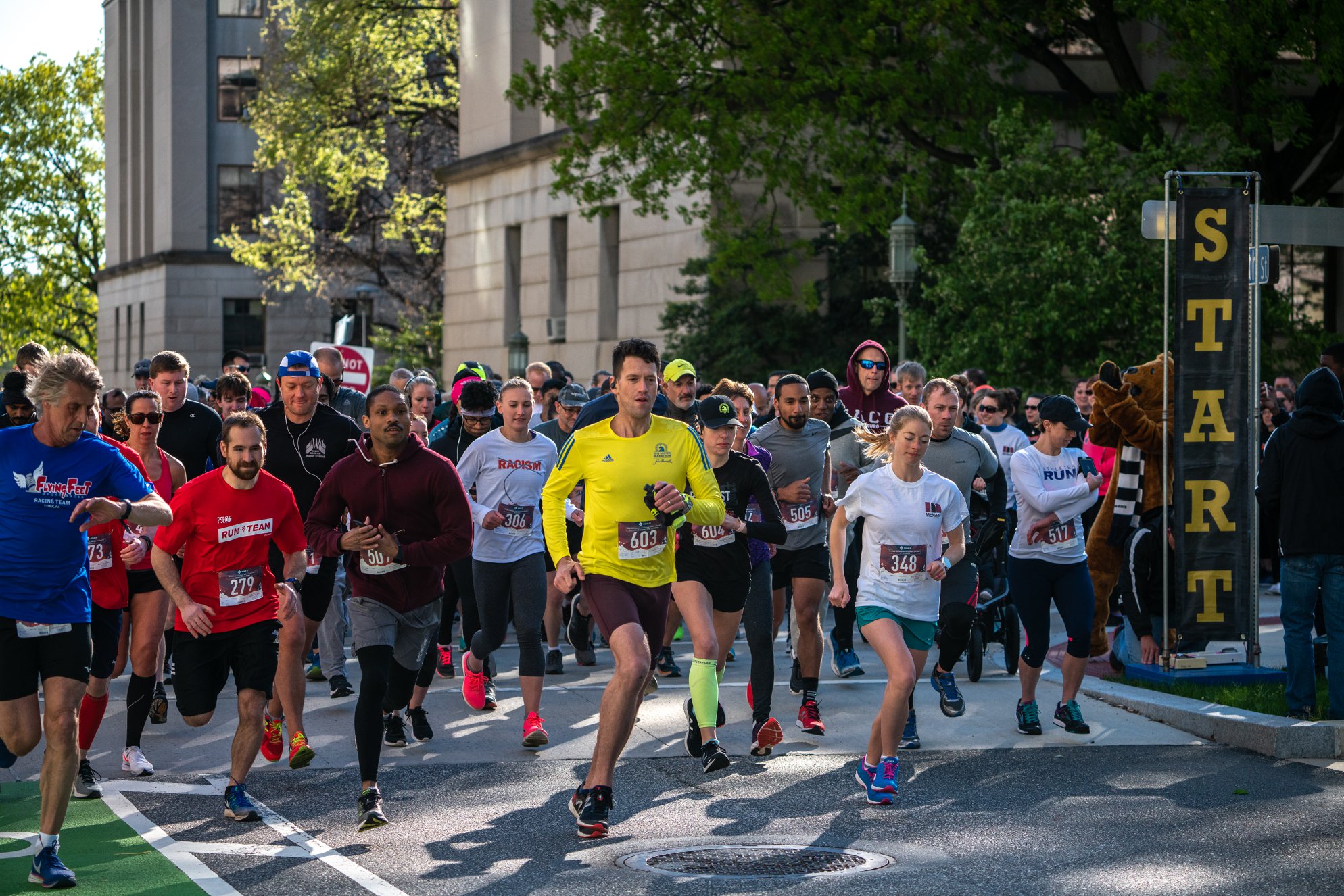
The 2019 “Race Against Racism.” Image courtesy of the YWCA of Greater Harrisburg.

Throughout the past year, many people have marched to bring awareness to racial inequalities.

The YWCA of Greater Harrisburg hopes a run will do the same.

For the 17th year, the local YWCA kicked off its “Race Against Racism” this week, a 5K event to support the organization’s racial justice programming, accompanied this year with an educational piece for runners.

The “21-Day Racial Equity and Social Justice Challenge” will provide registrants with daily educational experiences leading up to the race on April 24, which will be virtual due to the pandemic.

“Participation in an activity like our new 21-Day Racial Equity & Social Justice Challenge helps us to discover how racial injustice and social injustice impact our community, to connect with one another and to identify ways to dismantle racism and other forms of discrimination,” said YWCA Greater Harrisburg CEO Mary Quinn. “We’re so excited to launch this opportunity to dive deep into racial equity and social injustice issues with our community.”

Event coordinators are sending out articles, podcasts, videos and other educational tools on racial justice.

Quinn said that she saw a heightened awareness for social justice in the community this past year which inspired the event.

“People have a desire to have conversations about racial equality, but don’t know where to begin,” she said.

According to YWCA officials, individuals or groups will complete the 5K on their own time, running or walking wherever is convenient for them. Participants can run the race anytime between April 5 to 24, but YWCA is encouraging everyone to run on the 24th as a united front.

Additionally, a kids fun run will be held virtually.

Participants are encouraged to post about their experiences on FacebookInstagram, or Twitter, and tag the YWCA of Greater Harrisburg, using the hashtags #RARHBG and #VirtualRace.

Since the first year of the race, PSECU has been the primary sponsor of the event.

“We support the YWCA’s mission to eliminate racism, empower women and girls, and promote peace, justice, freedom, and dignity for all,” said PSECU President and CEO George Rudolph.

Around 600 people are registered for the 21-Day Challenge and community members can still sign up, Quinn said.

The YWCA of Greater Harrisburg, located on Market Street, has programs to assist the community with housing, violence intervention, economic development, veterans’ services and legal services, among others.

To register for the “Race Against Racism” and the “21-Day Racial Equity and Social Justice Challenge,” click here. For more information on the YWCA of Greater Harrisburg, visit their website.

Support quality local journalism. Become a Friend of TheBurg!

Continue Reading

Harrisburg’s Artsfest to bring back in-person artisan market, food truck experience

A scene from Artsfest 2019

Harrisburg artists and art lovers, rejoice! A taste of normalcy is returning to the city.

Artsfest, Harrisburg’s annual artisan market and food truck festival, will return for a hybrid in-person and virtual experience on May 29 through 31.

“While the traditional festival will be different this year, we look forward to welcoming back the talented artisans in a safe and modified way,” said Mayor Eric Papenfuse.

The festival, typically held at Riverfront Park, will move to City Island this year to facilitate social distancing. As in past years, it will feature vendors and their handcrafted works, along with local food trucks.

Last year, Artsfest went completely virtual due to the COVID-19 pandemic. For 2021, the city plans to keep aspects of the virtual event, including an online artisan market and virtual presentations. However, they plan to bring back some of the traditional in-person shopping experience.

Attendees can browse items for sale in 16 different categories, including ceramics, digital, drawing, fiber (decorative and wearable), furniture, glass, jewelry, leather, metal, mixed media, painting, photography, printmaking, sculpture and wood.

The event has historically hosted over 200 artists, but officials say the number of vendors will be reduced somewhat.

The HBG Flea, an organization that hosts pop-up markets in the city, will return as a partner in the event.

“We’re so excited that Artsfest is coming back,” said Mary Imgrund, HBG Flea co-founder.

“Our collaboration introduces dozens of local artists to a wider audience and emphasizes the importance of shopping locally to the lives of the incredible artists and artisans living in central PA,” she said.

Jazzfest, which usually goes hand-in-hand with Artsfest, is cancelled this year, and the Filmfest portion will livestream movies virtually. For families, the city will offer free take-home educational and artistic kits, replacing the usual KidsFest.

According to city officials, health precautions will be in place during the festival, including one-direction pedestrian traffic, capacity monitoring, hand-washing stations, vendors spaced 10 feet apart and social distancing markers. Masks will also be required.

The city plans to return Artsfest to Riverfront Park in 2022.

Artsfest is sponsored by Visit Hershey & Harrisburg, ExploreHBG and Capital BlueCross.

For more information on Artsfest, visit the City of Harrisburg’s website.

Support quality local journalism. Become a Friend of TheBurg!

Continue Reading

Open Stage delivers a bowler hat of fussy fun with “Poirot Investigates!”

“Poirot Investigates” has opened at Open Stage

Reprising roles from their earlier cozy Poirot mystery play in November, the Open Stage cast reunites to solve not one – but two – murders alongside Agatha Christie’s smuggest detective, Hercule Poirot.

Although you may recognize some of the gags as hearkening back to previous crafty slapstick, the second play presents a more intimate and poignant look at the cast and their process. Open Stage invites the audience into their world while still keeping us at a safe distance via video. If you saw the first play, you’ll be relieved to know that the second one stands alone in its own right. And if you didn’t see the first play, don’t worry. You won’t be lost.

Before the play proper begins, we voyeuristically follow Poirot (Director Stuart Landon) inside the communal dressing room, observing his rituals of shaving, applying his character’s signature Pringles mustache, then donning his tuxedo and bowler hat. Then he joins the rest of the cast arranging the stage props.

We also climb into another “backstage” of sorts, inside the mind of the story’s author herself. Agatha Christie (Rachel Landon) recounts how much she grew to loathe “that blasted Belgian” she created, describing the process of writing him so often as a “long marriage between Hercule and I.” Christie quipped, “If you place your head in a lion’s mouth, you cannot complain one day if he happens to bite it off.”

Storytelling through characters we love to hate is a device that works with Poirot. As Landon slips into character, Poirot presents as even more awkward, smug and finicky than the first go-round, yet holding his tongue in cheek throughout. The action of the play is mostly narrative, told through Poirot’s sidekick, Capt. Arthur Hastings (Chris Gibson), who serves as the target of Poirot’s constant corrections and outlet for gloating.

The structure of the play is melodramatic, obvious and delightfully absurd in the telling. Much like Christie’s writing style, her formula employs colorful characters of various nationalities and royal lineages functioning as caricatures of themselves. Rachel Landon and Benny Benamati once again prove their quick-change skills in playing a host of quirky people.

A special round of applause to Benamati for playing Cronshaw, a ridiculous-looking chap whose lines were written all in alliteration. When every keyword in the sentence began with the letter “H,” I worried something would spring from the back of their throat, but Benny made it through the lines with poise.

The murder suspects are members of a troupe who perform commedia dell’arte, showcasing a cavalcade of gorgeous and appropriately strange harlequin costumes and plague masks, much like a nighttime New Orleans parade (costumes by Rachel Landon). The play within a play adds to the eccentricity of the murder “Affair at Victory Ball,” so dubbed by the newspapers of the day.

In the midst of analyzing conclusive, case-cracking details unimportant to his cast-mates before bringing everyone together for the big reveal, Poirot doesn’t miss a single tea sandwich ritual, politely chewing while side-eyeing his guests who clink their ice in their glasses and dig into Poirot’s candy dish with no trace of subtlety.

A hearty “well done” to the entire cast for bringing new and amusing jokes to a familiar character. And even the segments that weren’t perfect later contributed to a hilarious blooper reel that the cast was generous, vulnerable and brave enough to share.

“Poirot Investigates!” runs through April 18. For a link to tickets for viewing on YouTube, visit www.openstagehbg.com. During this financially difficult time, please consider sending an additional tax-deductible donation.

Support quality local journalism. Become a Friend of TheBurg!

Continue Reading

The Week that Was: News and features around Harrisburg

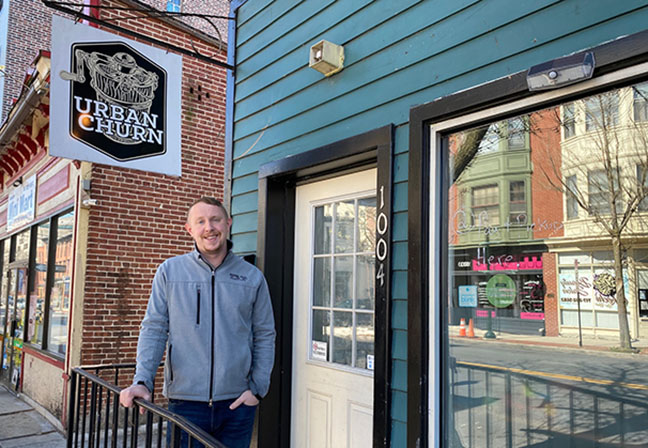
Adam Brackbill, owner of Urban Churn

Our April issue came out this week! If the cover isn’t sping-y enough for you, our special stories focused on home and gardening certainly will be. Pick up a copy at a distribution location near you. And, if you missed any of our original reporting over the past week, we have all our stories listed and linked below.

Our Artist in Focus for March was photographer Elena Jasic. Her striking work emphasizes bold colors and brash contrasts. View her work here.

Boneshire Brew Works is opening a taproom, “Taps@SoMa,” in downtown Harrisburg at the former “Sip@SoMa.” They plan to open on April 7, offering their line of craft beer from their main facility on Derry Street, our online story reported.

CASA Pennsylvania is an organization that caters to reworking the structures that serve—and don’t serve—Black and brown immigrants, especially those from Latin American countries. Volunteers seek to provide a long-term, not a temporary, solution. Read more in our magazine story.

The COVID-19 vaccine will be available to all Pennsylvanians by April 19, the state Department of Health and the COVID-19 Task Force announced this week. They plan to accelerate vaccine distribution and increase allocations to pharmacies, our online story reported.

Darius Davis, a local artist, recently opened Midtown Art Supplies, offering a range of artistic tools to those in the community, our online story reported. He hopes his shop, located inside L&L Beauty Supply, will fill a need for artists in the area.

Development in Harrisburg has taken off recently. What has spurred on the new trend? Read about the history of development in the city in our magazine story.

Our editor looks forward to post-pandemic life in his April City View column. Although the pandemic brought suffering, Harrisburg has shown resilience, he writes.

The “Environmental Justice in Pennsylvania” symposium will take place virtually on April 6. During the event, organizers plan to establish green “hubs” throughout the state to use as places for education and collaboration, our reporting found.

The Harrisburg Police Bureau touted its success last week with taking 1,370 guns off the streets since 2015. Members of the community policing department also said they are moving forward with hiring for seven community liaison positions, our online story reported.

The Harrisburg Symphony Orchestra celebrates its 90th anniversary this year. Check out our magazine story for a look back at the orchestra’s history and to learn more about its plans for the future.

Sara Bozich has your list of holiday events for the weekend. Need something fun to do in the Harrisburg area? Check out her suggestions. 

Tony Cheverez and his daughter Rosina Marie wanted to bring a taste of Paris to Mechanicsburg after a trip to the European city. They opened Chef de Crêpe, offering crepes, coffee, sandwiches and other food items, our magazine story reported.

Urban Churn Owner Adam Brackbill plans to reopen his Harrisburg ice cream shop and open a second location later this spring in the Silver Creek Plaza on the Carlisle Pike. He also has a plan to rebrand and revamp his existing shop, our online article reported.

Do you receive TheBurg Daily, our daily digest of news and events delivered right to your email inbox? If not, sign up here! 

Support quality local journalism. Join Friends of TheBurg today!


Continue Reading

Online, Lifelines: Dauphin County libraries seek funding to boost computer access, amid escalating need

Adults use Dauphin County library computer resources, pre-pandemic

Every morning, people are waiting in line outside Harrisburg’s three libraries.

They wait in line because they need to get online.

“What we’re seeing now, entering this pandemic recovery mode, is that computers continue to be a lifeline for the community,” said Karen Cullings, executive director of the Dauphin County Library System (DCLS). “During normal times, we provide people with access and help them with issues, but there are even more of them right now.”

Library staff began helping patrons complete Dauphin County’s online rental relief applications this week. That’s in addition to guiding library users through searches for online vaccine appointments, filing for unemployment, and navigating job searches. The city’s three libraries—Kline, Madeline L. Olewine and McCormick Riverfront Libraries, plus the East Shore Area Library—have the most heavily used computers within DCLS’s eight locations.

The problem is, computer access is at a premium.

Only 49 of the library system’s 128 traditional desktop computers are currently online. Due to social distancing guidelines, the remaining 79 computers are blocked off, with their screens remaining dark on a daily basis.

Laptops are somewhat of a stopgap—32 laptops are available for use within the libraries. Some of them were recently purchased thanks to funding from Dauphin County’s gaming grants.

But additional funding—between $40,000 to $50,000—is needed to reconfigure the layout of the PCs, Cullings said, not only to allow for safe social distancing, but for privacy reasons as many users enter personal, sensitive and medical information into their searches and applications.

Cullings is hoping DCLS can plug into federal, state or local COVID-19 grant funding—or a combination of those sources—to bring the otherwise unused computers back online.

If funding isn’t secured and reconfiguration doesn’t begin soon—some of which involves lengthy processes such as cutting through masonry in order to move electrical wiring—Cullings fears libraries won’t be able to meet residents’ escalating need for computer access.

“I believe good news is on the horizon thanks to the American Rescue Plan [recently passed by Congress],” said Glenn R. Miller, deputy secretary and commissioner for libraries, under the Pennsylvania Department of Education. “In that plan, there are a number of programs—one that speaks to this specifically is a connectivity fund–$7.1 billion—through the Federal Communications Commission.”

Miller believes guidelines for the relief program will be available in early May, followed by an application period for libraries and schools by early-to-mid-summer.

“In terms of vaccine appointments, the bad news is, it might not be soon enough for that [increased computer access],” Miller said. “But it’s still going to solve a lot of problems.”

According to the most current (2018) data, 83% of Dauphin County households have internet access. That leaves 17%–or nearly 19,000 households—disconnected.

“We knew the problem was there but the pandemic has accentuated the magnitude of it,” Miller said. “It’s highlighted the disconnect between the haves and have-nots, specifically around digital access… it’s having a more profound impact on kids and families who are in more disadvantaged economic circumstances.”

County agencies such as Dauphin County Human Services, along with area pharmacies, are referring residents without internet access to the libraries for computer access. Which puts DCLS in a tight spot that is only getting tighter.

“We’re trying to make it work, with what we have,” Cullings said, “And we’re very eager to help residents because we know the need is great, but as the vaccine rollout increases, we may have to go to an appointment-only arrangement [for computer use].”

DCLS recently lifted the one-hour time limit previously imposed upon library computer use, because many of the relief applications and searches are taking users longer than an hour to complete.

“This is a time of big transition,” Cullings said. “We recognize that public libraries are not just access points but part of the cultural fabric of our community, and we’re going to have to work through these issues such as equitable technology.”

For more information on DCLS, see dcls.org.

Support quality local journalism. Become a Friend of TheBurg!

Continue Reading

Weekend Roundup with Sara Bozich

If you’re looking for things to do this weekend around Harrisburg and central PA, I got you! Scroll down or use the menu links to find ideas for your weekend.

Need something NEW to do?

(Still) Worth noting: We revived our private Facebook group, Cheers Harrisburg. You can join the convo here.

Things on my agenda this weekend: Easter plans with my family.

Don’t forget to support your local brewery! Click here to find one near you.

For your weekend planning:

Below are options for your weekend.

Things to Do in Harrisburg + Central PA | Weekend Roundup | Sara Bozich

Are you on the email list?


Top Weekend Recs

  1. 15+ things to do this spring around Harrisburg
  2. Book a facial #selfcare
  3. Upgrade your bar cart with these local spirits + fave tools
  4. Some ideas for self-care
  5. Binge Poured in PA: The Series!

COVID-19 Disclaimer: As always, please click through the links or call ahead to get the most up-to-date information about venues and/or events below. It should also go without saying, but I’ll say it — Mask up, follow the rules, and be nice. And tip extra!


What are you doing this weekend around Harrisburg? Let us know on Facebook, Twitter, or Instagram.

Like this content?

Continue Reading

State announces all Pennsylvanians will be eligible for COVID-19 vaccine by April 19

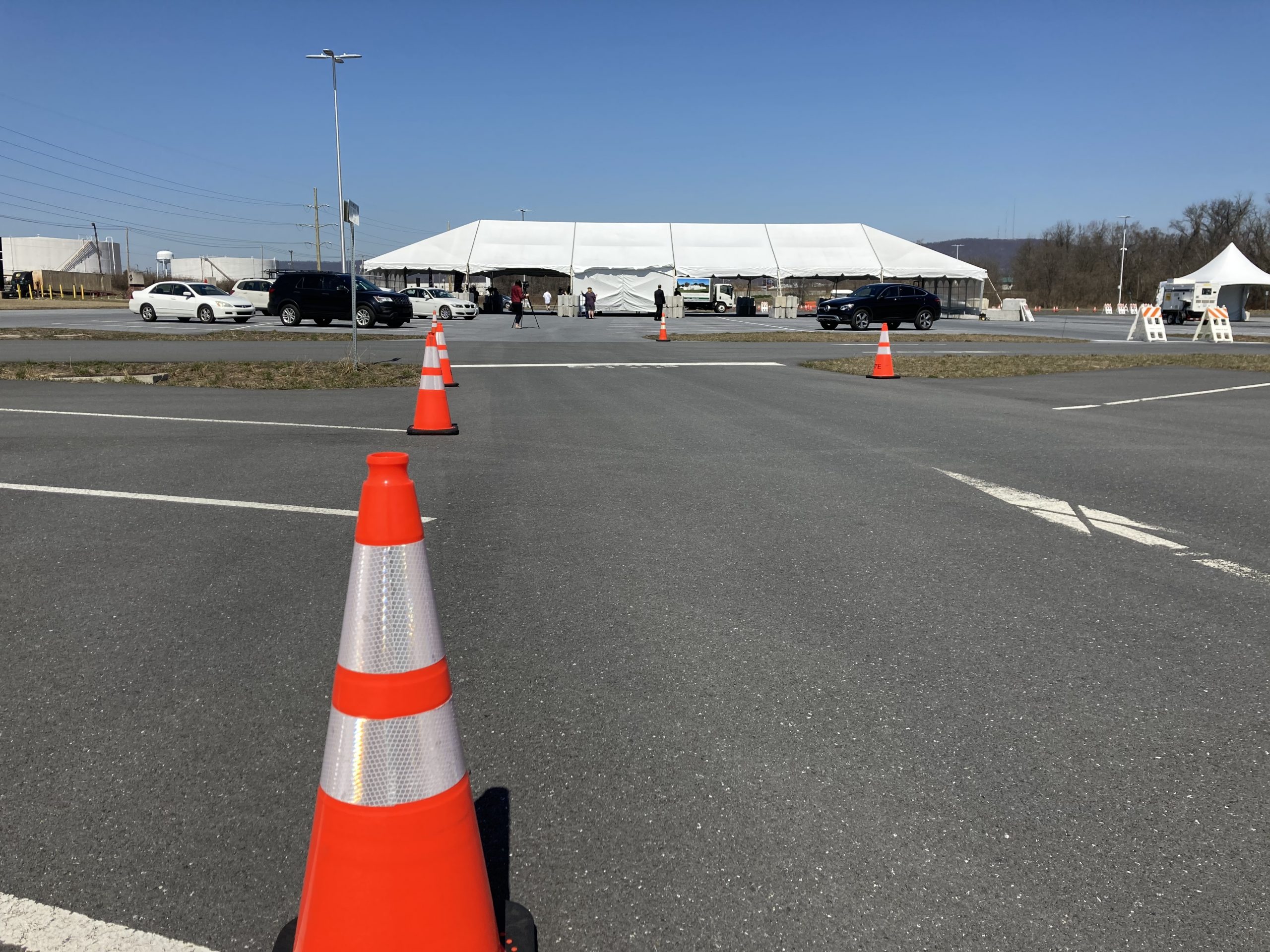
The Dauphin County/UPMC Pinnacle drive-through vaccination site at HACC in Harrisburg

Pennsylvanians are moving closer to the widespread availability of the COVID-19 vaccine.

The Pennsylvania Department of Health and the COVID-19 Vaccine Task Force announced today a plan to accelerate vaccine distribution, saying that all Pennsylvanians will be eligible for the shot by April 19.

“The vaccine landscape continues to evolve as the federal government is increasing allocations to more retail pharmacy chains across the country,” ​Acting Health Secretary Alison Beam said. “To ensure that vaccine continues to get to people efficiently and equitably, Pennsylvania is adapting its plan to allow workers in targeted industries to access any of the three vaccines available at providers throughout the state, and to accelerate our eligibility for remaining phases of the state’s vaccination plan.”

According to Beam, state vaccine providers have increased the pace of vaccinations to around 83,000 per day, allowing them to move towards completing vaccinating those in phase 1A.

Today, March 31, law enforcement officials, firefighters, grocery store workers and food and agriculture workers are eligible, the commonwealth announced.

On April 5, all other residents in phase 1B will be eligible, including U.S. Postal Service workers, education workers, clergy, public transit workers, manufacturing workers, certain caretakers and those in long-term care facilities.

Those in phase 1C can begin scheduling appointments for the vaccine on April 12. That includes workers in food service, housing construction, communication, legal services and public safety fields, among others.

Lastly, on April 19, all Pennsylvania’s will become eligible for the vaccine.

“It is important to remember that eligibility does not guarantee an immediate vaccination appointment,” Beam said. “Vaccine providers are ready and eager to get a shot in the arm of every person who wants one while we continue to aggressively advocate for more vaccine.”

This news comes just two days after President Joseph Biden announced that, by April 19, 90% of adults will be eligible for the vaccine. He also said residents will be able to get them within five miles of their home with expanded offerings at pharmacies and vaccination clinics.

“President Biden has asked us to make every adult eligible for vaccination with the vaccine he is providing,” said state Sen. Art Haywood (D-Philadelphia). “We can do it, we can make the change.  We can get more vaccine to Southeast PA and across the commonwealth and target vaccine, so no one is left out.”

Residents can use the Department of Health’s Vaccine Provider Map to find a provider near them. The department will update the map as the federal government increases the number of pharmacies receiving vaccines.

People without internet access can contact the Health Hotline by calling 1-877-PA-HEALTH (1-877-724-3258).

For more information, visit the Pennsylvania Department of Health’s website.

Support quality local journalism. Become a Friend of TheBurg!


Continue Reading

Environmental justice symposium to activate green community “hubs” around the state

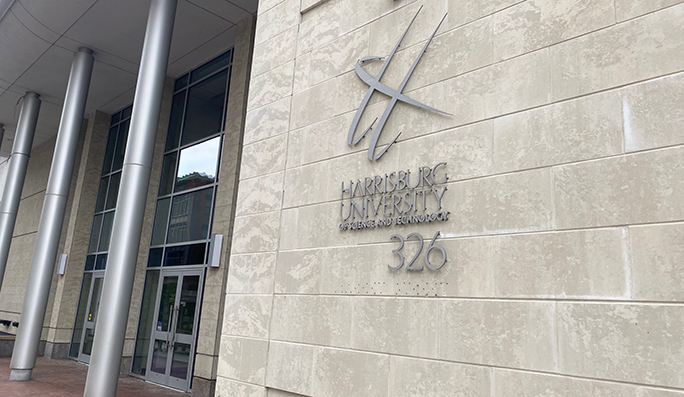
Harrisburg University

When it comes to environmental justice, a group of local activists are ready to create a climate of change.

Leaders of the “Environmental Justice in Pennsylvania” symposium plan to virtually bring together people from around the state on April 6 to spark action on the issue.

“This is for the people, said Rafiyqa Muhammad, co-chair of the event and a member of Harrisburg’s Environmental Advisory Council. “It starts with the people.”

The one-day event will focus on activating environmental justice “hubs” in different regions throughout the state in order to address each area’s specific issues.

“Environmental injustices are carried out in lots of parts of the state, but they don’t have the same face,” said Peter Buck of Penn State University’s Sustainability Institute, and co-chair of the symposium.

Harrisburg University, a host of the event, will serve alongside Dickinson College as the “Southcentral hub,” one of the six they plan to establish in the state.

Muhammad said that the hubs will be places where people in the community can go to learn more about environmental justice and collaborate with others with the same interest. She hopes the event will address issues around racism and the environment.

“People have a right to clean air,” Buck said. “That’s a right in Pennsylvania.”

Dr. Mustafa Santiago Ali, an international speaker and policymaker on environmental justice issues, will speak at the event. Local officials including Rep. Patty Kim (D-103), Harrisburg Mayor Eric Papenfuse, City Council member Westburn Majors and members of the city’s Environmental Advisory Council may make an appearance as well, Muhammad said.

Besides creating the hubs, Muhammad hopes the symposium will inspire attendees to make small changes in their lives to “clean up the planet and get people healthy.” It starts with people sweeping their front porch, picking up trash and maintaining their yards, she said.

Although it’s just a one-day event, organizers hope it energizes people to get involved in their communities. Buck said they plan to have follow-up events in the summer.

“One day can get people excited,” he said. “It’s on the organizers then to encourage people to keep connecting.”

The City of Harrisburg, Harrisburg University, the Pennsylvania Department of Environmental Protection, The Pennsylvania Environmental Resource Consortium and others are partners and sponsors for the symposium.

For more information on the Environmental Justice in Pennsylvania symposium, visit www.summits.harrisburgu.edu/ejp/.

Support quality local journalism. Become a Friend of TheBurg!


Continue Reading

We Re-Built This City: Harrisburg hasn’t experienced this much development in a century. What’s driving the trend?

The Hudson Building will become the Atlas 1923

In a world emerging from strife and disease, Harrisburg plants its flag. Grand buildings emerge. Neighborhoods fill with new homes. People congregate to celebrate life.

So, is it 1921 or 2021? Harrisburg has seen building surges in other ages, but right now, a perfect storm of trends is driving a renaissance that’s reshaping the cityscape for the 21st century.

 Waiting List

Twenty-seven projects. That’s the number of development projects planned or underway as counted by Harristown Enterprises, and the number keeps growing. Total investment in the city: $601 million.

Many projects are clumped in a few blocks of Midtown Harrisburg. Whatever could be going on there?

While the federal courthouse at 6th and Reily streets is not the sole reason for the surge, it is the catalyst that city leaders hoped for when they stopped the mighty U.S. government from gouging a gash in the heart of downtown, choosing instead to build in a once-blighted area about a mile away.

Historic Harrisburg Association recently talked with two federal judges who want to get to know their new neighborhood and “be a part of the community,” said Executive Director David Morrison.

“That’s what we think is spurring a lot of this development—federal employees wanting to live in that part of Midtown, as well as people who do business with the U.S. courts,” he said.

One major project clearly spurred by the courthouse is the Reily House—seven floors of apartments, retail, urban grocer and restaurant, with a 500-space garage for courthouse parking neatly disguised to the rear.

“That’s a really creative approach to killing a couple birds with one stone,” said historian Jeb Stuart.

Single causes have never driven Harrisburg’s historic “spikes in development and lulls in development,” said developer Derek Dilks. Some of today’s projects are “obviously” attributable to the courthouse, but others are like his—redevelopments of townhomes, offices and a Midtown church to satisfy demand for Class-A, market-rate apartments and retail spaces.

“For the best and the newest products, there’s a waiting list,” he said. “People in older apartments, paying the same or similar rent, are going to go from older stock to newer. Hopefully, that encourages the owners of those older buildings to redevelop.”

 Good Stock

With their historic perspective, Morrison and Stuart emphasize that the city has had multiple growth spurts.

The City Beautiful movement of 1901-02 was sparked by construction of the new state Capitol and a comprehensive plan to clean up a filthy city. In the 1920s, growth pushed northward, creating the Zembo Mosque, William Penn High School, Italian Lake and new homes. Municipal historic districts created in the 1970s—earlier than in many cities—protected priceless architecture from the wrecking ball. The “Harristown Plan” of the 1980s focused development on downtown.

For today’s resurgence, all of those phases add up to good bones. Harrisburg has a robust inventory of buildings sought by character-craving apartment-hunters and restaurateurs.

“We have some really nice architecture here,” said Harristown President and CEO Brad Jones. “No question about it. Two of our projects are that kind of adaptive reuse. I was showing that (27 projects) slideshow to someone from Philly recently, and he said, ‘Wow, you picked some nice buildings.’”

Increasingly, developers and community groups contact Historic Harrisburg to vet their ideas for adaptive reuse. Developers responding to market demands—driveways in the 1920s, walkability in the 2020s—are a key force in growth, said Morrison.

“The municipality is a helpful partner, but it’s not a monolithic domineering factor that prohibits things from happening,” he said. “It’s kind of a partnership that happened then and we’re seeing now.”

 At the Gateway

While the courthouse visibly represents Midtown development, people don’t see the interest that Harrisburg Director of Economic Development Nona Watson is fielding for projects citywide. She won’t cite the projects yet, but “wheels are turning in other parts of the city.”

“They’re using what’s happening to continue to branch further and further out,” she said.

From her perch, Watson tries to formulate “a holistic approach” that convenes existing assets, funding and multiple partners to revitalize not just buildings but entire neighborhoods. It worked organically for Mulder Square at Mulberry and Derry streets, she said, and now, it’s a model for such areas as Camp Curtin, to extend the courthouse’s redevelopment juice farther up the 6th Street corridor.

There at the Camp Curtin gateway, Adam Maust is redeveloping the long-abandoned Hudson Building at 6th and Maclay streets into The Atlas 1923. With no development experience, Maust dove into a massive project that, he hopes, will help smooth out the neighborhood’s “rough areas.” He has worked with neighbors and community groups to design the Atlas elements, aiming for a market or grocery store, and perhaps a community center for exclusive use by neighbors.

“I’m excited about saying we can come in here and really help foster a safe environment, a lit-up environment, with things that are just going to organically help the area,” he said.

Affordable housing is high on Watson’s agenda. At the direction of Mayor Eric Papenfuse, she is working with City Council members to develop an affordable housing plan that could incentivize developers to mix affordable housing with market-rate units. And as she notes, affordable housing means housing for moderate-income people as well as low-income.

“We have to have housing on all levels,” Watson said. “If you have too much affordable housing, especially in a particular area, then you have concentration of poverty. If you talk about all market-rate, then you have gentrification.”

Watson is seeing the difference that the development surge is making in—yes—grocery stores. Food chains that rejected her overtures before now want in on the action.

“Development is going to draw more investors, is going to draw more businesses, and with that, of course, you’re going to need more housing,” she said. “Everybody wants to be on the winning team.”

From a developer’s perspective, Harrisburg is “manageable,” said Maust. Out-of-state developers spooked by the cost points of redeveloping in big cities are stretching their budgets in Harrisburg.

“We have the Farm Show,” said Maust. “We have the Susquehanna River, which is gorgeous. You have the historical, long-term buildings and residences all around the area. It is a beautiful city that is actually very tangible, and that’s why you’re seeing all these big projects.”

 Value Proposition

Harrisburg real estate is “red hot,” said Jones. One of the reasons: The scrutiny that secondary and tertiary cities—the terms come up a lot—are getting from metropolis residents who have become work-from-home converts.

“There’s lots of flight from bigger, more expensive cities to places that offer a strong value proposition but still give you some of the things you loved about your urban environment,” said Jones, whose company is building more two-bedroom apartments in response. “If I only have to work in the office a couple times a month, I can live in Harrisburg.”

Big-city companies and people are looking for value in tertiary markets, agreed Dilks.

“If you’re in Chicago or D.C. or New York and you just want to get out of the city, you’re going to come to a smaller market, like a Philly or Harrisburg or Lancaster,” he said.

Dilks is tailoring his apartments to the remote-work trend, with bonus spaces or sliding walls to keep the dog from crashing Zoom calls. Such spaces could also be attractive to lobbyists and others who travel regularly to Harrisburg on state business. Once, they rented an office space and a hotel room. Now, they want a single space year-round.

Like Watson, Jones sees “more projects coming into the pipeline, all over the city. The more you see, the more there will be. One project’s success leads to the next one’s evolution.”

Dilks plans to wait for the pandemic’s after-effects to materialize before deciding on his next projects. In the meantime, he counts himself among developers who are “doing what we do because we love the city.”

“We love the architecture. We love development. There just happens to be a market here that supports what we’re doing,” he said. “Those are the ingredients you need. You need somebody who loves to do it, and you need a customer to appreciate what you’re doing.”

Support quality local journalism. Become a Friend of TheBurg!

Continue Reading

Special Time, Special Needs: COVID has impacted families with special needs children in unique ways

Jayla with her augmentative and alternative communication device.

Schooling children adequately during COVID-19 has been an immense challenge, but especially for special needs children, their parents and educators.

Six-year-old Jayla, with her pixie haircut and smart-looking eyeglasses, chewed on her sleeve as she watched her mom talk on Zoom. Her mother, Hampden Township resident Stephanie Lane, spoke about schooling Jayla during COVID-19.

“She doesn’t want to get online, and getting her to sit in front of a screen and follow along is hard,” Lane said.

That would describe many students in this year of alternate schooling. But “Miss J,” as her family calls her, has what her family tells her are “special genes.”

Those genes cause Poirier-Bienvenu neurodevelopmental syndrome, resulting in a cocktail of symptoms, such as low muscle tone, developmental delays, severe speech disorders and learning disabilities.

And they make schooling during COVID-19 a challenge that sometimes seems impossible.

Lane has to sit with Jayla constantly because she won’t stay in her seat alone, she can’t unmute herself in the Zoom, and she is often completely lost during class.

Jayla receives pullout services for math, reading and writing, which, when school is in-person, would take her to a different classroom. But when school is virtual, it means going to a different Zoom session.  But coordinating all of these sessions is often unachievable.

“It doesn’t all work,” Lane said. “She ends up missing the wrong parts of class.”

So, she’s often in class with non-special-needs children. With a pinch of frustration on her face and a crack in her voice, Lane described math class.

“The last time we went virtual, she was in a regular class for math,” Lane said. “But the math she doesn’t understand because she can’t count past 10. So, they were doing teens and 20s, and she’s just not comprehending it.”

Lane said that the teacher did the best she could, but Jayla can’t write the numbers. There are times when Lane can coordinate getting into the best class for her daughter, but some of them overlap, and she feels like she’s between a rock and a hard place.

“It’s like a big juggling act,” Lane said.

COVID prevented Jayla from having an updated individual education plan to start her kindergarten year of school.

When school began in September, Lane was beside herself because the school was unaware of Jayla’s disabilities.

“How comfortable does a parent feel sending their child to school, who can’t even verbalize they need to use the bathroom?” Lane said.

Not the Same

Unlike Jayla, 17-year-old Evan Book enjoys his Zoom lessons. With an impish spark in his eye, he’s happy to pop onto the screen to see what’s happening.

Evan’s medical condition is what the ICD-10 Code Book, which categorizes medical illnesses for insurance purposes, calls “other neurologically impaired.” Evan experiences severe apraxia, a motor planning disorder, intellectual developmental disabilities, epilepsy and severe lack of muscle tone. But his mother Abby described him as extremely social. So, Zoom is a fun event for him.

But it’s still not the same.

“It’s really, really, really hard for him to be in the house all day and to not interact,” Book said.

Evan relies on his parents, in their Boiling Springs home, for his social time and can be demanding when not entertained.

“I sit and read to him, play with him, and he can be like a golden angel child,” Book said. “But I have to work and my husband has to work.”

Evan has been in and out of school many times since September, and the transition between virtual and in-person is taxing. The interruptions have interfered with learning and the therapies that he receives.

“The thing is, with many kids with special needs, the inconsistency is really hard,” Book said. “So it’s like, two steps forward, 10 steps back. It’s not like you can just make that up.”

Book and Lane would both like special education students’ needs managed separately from the typical students during the pandemic.

The West Shore School District (WSSD) has tried to do that with its “low incident” special education students, those who have more severe disabilities, like Jayla and Evan. These students meet five days a week. But that decision wasn’t an easy one.

“It’s important that the community knows that, when we make decisions, we don’t make them lightly,” said Geraldine Ryan-Washington, director of special education for the WSSD. “And that we really do care about their kids, and we want to keep them safe.”

She described the first months into the pandemic as shifting sands, decisions being made, then reversed within hours of making them, due to changing COVID mitigations.

“We’re lucky that we have such a strong admin team here so that we were all able to get it done,” said Ryan-Washington. “And you can count on the teachers to do what they need to do.”

Return to Routine

Both Lane and Book feel that the schools and teachers are working hard to help their children.

“It’s not even the school district’s fault,” Book said. “I mean everybody’s trying to do the best they can in it.”

Lane said that Jayla’s school has been phenomenal, but is frustrated with some of the district’s decisions and having to fight so hard to get Jayla what she needed.

“They’re trying to do everything, but it seems like, through this whole thing, the special needs kids have been left behind in some way or another,” she said.

Book suggested that school districts “red shirt” special education children. She said they’ve lost a year of “normal” schooling and that an extra year could help these kids make up lost progress.

Jayla wants normal school back in session. Because of the constant shifting from in-person to virtual learning, she’s never sure what to expect. After a frustrating day of virtual school, Jayla will ask, in a way that only her mom could likely comprehend, “Am I going back to real school yet?”

A return to routine is what these parents of special needs children want for the new school year. What do educators hope for these students?

“That is the full components of their high school, whatever school experience…everything that they can gather from it,” Ryan-Washington said. “So basically, what we want for kids with significant disabilities is the same thing we want for all kids.”

Support quality local journalism. Become a Friend of TheBurg!

Continue Reading