Joined at the HIP: Harrisburg Independent Press covered major city events in the ‘70s, built a community lasting 50 years

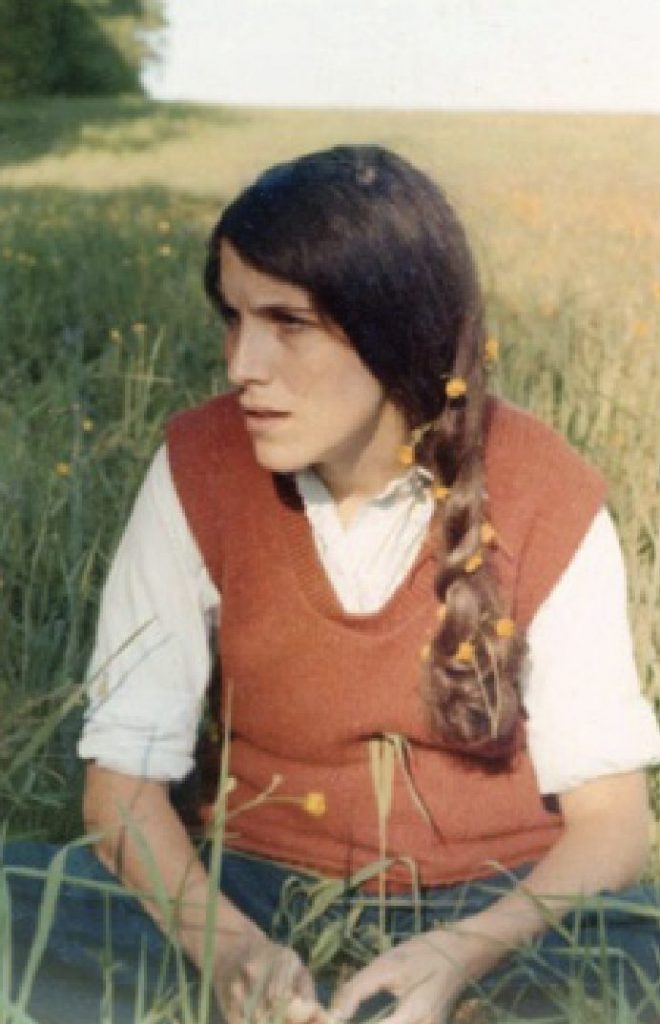
Anita Harris, 1970

Over the past few years, staffers for a long-defunct Harrisburg newspaper began documenting their history online. A few former reporters made it their mission to create a digital archive of all the papers, which were printed between October 1971 and August 1980.

It’s been 42 years since the Harrisburg Independent Press (HIP) ceased publication, but those who were a part of the alternative paper haven’t let go. They haven’t been able to, nor do they want to. For many of them, their time with HIP launched their careers, shaped their character, and offered lifelong friendships.

“It’s such a community that has stayed around all these years,” said Anita Harris, a former reporter for HIP. “Maybe it’s something about being a part of a small paper and community.”

Around the same time that Bill Keisling and Jim Zimmerman, former HIP reporters, were creating the online archive, Harris was writing a book about her experience from 51 years ago. She published “The View from Third Street: Ani and the Harrisburg Independent Press” in June, explaining that she felt the need to “understand what had happened all those years ago, and why.” Harris only spent about a year in Harrisburg writing for HIP, but it was one that, she said, impacted the rest of her life.

Harris remembers her first meeting with the founding members of HIP. Fred Solowey was the driving force behind the paper, recruiting his Cornell University buddy Ed Zuckerman and then Harris, who also attended Cornell.

Originally, HIP was started to cover the anti-Vietnam War movement. More specifically, the founders were interested in the almost-too-crazy-to-be-true national news story that was taking place locally—the Trial of the Harrisburg 7.

In this case, the FBI accused a group of anti-war activists, including nuns and priests, of plotting to kidnap then-National Security Advisor Henry Kissinger and blow up underground heating tunnels in Washington, D.C. The National Defense Committee for the Harrisburg 8 (there were originally eight defendants before one was moved to a separate trial) was formed, and Solowey led its local activities, which included starting HIP. Zuckerman would take on most of the reporting for the trial.

Reporting on the anti-war movement was crucial to young activists like Zuckerman and other HIP staffers.

“Back then, if you were a young man, you could be drafted,” he said. “That fueled the anti-war movement. It was personal. You could die.”

Starting HIP was a way to get involved in the movement, while also launching Zuckerman’s career as a journalist.

Like Zuckerman, Harris wanted to make a difference. Growing up, she had faced sexism and gender role expectations from a family that assumed she wouldn’t have a career. But when she started at HIP, she faced a completely different environment amongst her colleagues.

“Everyone was accepted and could play the role that he or she wanted,” she said. “There was no sexism, which was very unusual in my world. It showed me I could do it. It gave me the opportunity. It gave me the courage.”


Brought to Light

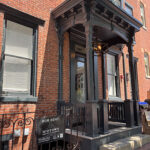
HIP’s office was located at 1004 N. 3rd St., now the site of the Urban Churn scoop shop. The stretch of a few blocks in Midtown “passed as that town’s sleepy bohemia,” said former HIP member Jim Wiggins in his write-up on the paper’s website/archive. Wiggins remembers a “hippie” woodworking shop, a pornographic movie theater and former Harrisburg artist Toni Truesdale’s art studio.

HIP’s modest office was “a chaotic place full of life and laughter,” as Wiggins described it. It housed several typewriters, desks and “stuff tacked up everywhere.” There was a light table, which the staff used to lay out each issue of the weekly paper—cutting and pasting sections and articles together to create each page. Staffers came and went at all hours of the day and night.

At the time, the Harrisburg Center for Peace and Justice also was housed in the building. Activist and director of the center, Kay Pickering, worked closely with HIP for years. The paper gave voice and publicity to the issues Pickering and other activists advocated for. When the center moved to a new office at 315 Peffer St., HIP moved with them.

“Our common mission has always been one of truth and justice,” Pickering said.

Beyond reporting on the Vietnam War, which Wiggins described as the “defining issue” that motivated HIP, the paper covered issues of racial injustice, poverty, criminal justice reform, women’s rights and gay rights. The team tackled subjects that other papers often wouldn’t touch at the time.

“I think we brought certain issues to light that wouldn’t have been covered,” Wiggins said.

In 1972, HIP reported on Hurricane Agnes and the devastating flood it caused in Harrisburg. Harris remembered surveying the city with Wiggins after the disaster struck. In their “Special Flood Issue,” headlines read, “The Quick Brown Flood and Its Aftermath,” “Man Vs. Aberrant Nature,” and “What to do with a Drowned Car.”

Three Mile Island was another hot topic in the paper, as many at HIP were firmly opposed to the nuclear power plant. By 1978, the paper had transitioned to a monthly magazine format and, in August, the front page read, “Tomorrow’s Disaster at T.M.I.: Meltdown.” It was a scenario piece, Keisling, the son of the founder of Harristown Enterprises, explained. Less than a year later, the power plant suffered a partial meltdown, and some credited HIP for predicting the future.

“HIP was really important in fighting TMI,” Keisling said.

Harris saw her chance to make a difference with her reporting—her goal from the start—when she interviewed several migrant workers who were held as slave laborers at a farm in Schuylkill County. After Harris visited the camp and saw the awful conditions, HIP published her story. Eight months later, the Pennsylvania Department of Employment Security told her that they shut down the camp.

“Because we were an alternative newspaper, we were able to cover some of the most amazing stories,” she said. “You could really make a difference.”


End of the Beginning

Finances were always a struggle for the small paper.

HIP relied heavily on advertising revenue from the city’s adult movie theaters, which created its own controversy. Some saw the ads as demeaning to women, while others regarded it as a free speech issue. In the end, HIP continued printing the ads, not sure they could survive without the funds, Wiggins explained on the paper’s website. Eventually, HIP was met with financial decline caused by unpaid ads and accrued debt and was forced to become a monthly publication in 1977. Three years later, HIP shut down entirely.

It may have been the end of the road for HIP, but many staffers went on to further the careers that they had started in journalism.

After the Harrisburg 7 trial ended, Zuckerman went on to cover the 1972 Republican and Democratic conventions for the Village Voice in New York and The Real Paper in Boston. Later, Zuckerman wrote the first episode of the TV show “Law and Order,” and many following episodes over the next 20 to 30 years.

Harris reported for Newsday, WRFM Radio and MacNeil Lehrer (now the NewsHour) of PBS. She taught journalism at Harvard, Yale and Simmons universities and authored two nonfiction books before serving as managing director of the Harris Communications Group in Cambridge, Mass. Keisling later authored many books, and Wiggins became a press spokesman in the administration of Gov. Richard Thornburgh. He then became a corporate communications executive for Merrill Lynch and Morgan Stanley.

While most reporters only spent a fraction of their careers at HIP, these short tenures left a tremendous impact.

During his time reporting on the Harrisburg 7 trial, Zuckerman made connections that would later help him in his reporting and TV writing career.

“My whole life goes back to Harrisburg,” he said.

For Keisling, HIP helped develop his sense of ethics as a writer.

“Wiggins drilled on me to be fair and accurate—to really get it right,” he said. “That stayed with me my entire life.”

But ultimately, it’s the community that has stayed with them all these years. There was something that bonded many of the staffers for life. Zuckerman is the best at keeping up with everyone, Harris said, and she acts as a “den mother” of sorts.

It seems like that bond was destined from the start.

When Zuckerman hired Wiggins to take his place as editor of HIP in 1972, he remembers saying something to the effect of, “The paper’s yours, goodbye. I’m out of here. Good luck.”

Ten years later, Zuckerman was living in New York City when a former HIP colleague wrote him.

“Are you aware that Jim Wiggins is living across the street from you?” the letter said.

“I went over, rang the doorbell, and there he was,” Zuckerman said.

Another 40 years later, Wiggins and Zuckerman are still good friends.

“If you’re lucky, you look back on your youth with great fondness and memories,” Wiggins said. “I felt lucky to be part of [HIP]. It gave voice and form to a vibrant minority at the time.”

To learn more about the Harrisburg Independent Press and to view its archives, visit www.harrisburgindependentpress.com.


If you like what we do, please support our work. Become a Friend of TheBurg!

Continue Reading

A Lifetime in Healthcare: A Q&A with Phil Guarneschelli, the retiring president of UPMC in Central Pa.

Phil Guarneschelli

Let’s call it a career.

This month, President Phil Guarneschelli retires after nearly 38 years with UPMC of Central Pa. and its predecessors, as Lou Baverso assumes the reins of the rapidly growing, regional healthcare provider.

We decided to use this occasion to ask Guarneschelli a few questions, both reflecting back on his long career and offering a glimpse of what comes next.

TheBurg: Please introduce yourself to our readers with some background information. For instance, where did you grow up, and how did you get into the healthcare field?

Guarneschelli: I’ve spent my whole career in healthcare and with various entities of UPMC now, Pinnacle before. I grew up in Harrisburg; I spent my childhood in the suburbs of Harrisburg. My whole family, we all are literally a mile apart on Linglestown Road. So, we’ve all stayed local, which is strange, and we’re all in healthcare, which is probably even stranger.

My dad influenced my decision on healthcare at the time. He was chairman of the Blue Cross board. His advice was: do what you love and it’ll all come. And don’t worry about what your pay is initially—pick something you like. I always liked helping people—that was my M.O. So, my parents thought that would be a good route for me to go.

I got my first job with the Capital Health System, or it might have been the Harrisburg Health Foundation at the time. I was in the planning department. I went in as a facilities-type planner. It was when we were starting to expand the primary care network 38 years ago. So, I started there and then I really enjoyed it and moved through the progression. I think it was 13 promotions up to now being the CEO.

TheBurg: Please highlight a few milestones of your career.

Guarneschelli: At one time, John Cramer was the CEO of Capital Health System and was responsible for forming Pinnacle. That was when we merged with Polyclinic Medical Center and later on with Community General Osteopathic. Prior to that, we were basically Harrisburg Hospital and Seidle Memorial Hospital. John created Pinnacle and assigned me basically the project of bringing two rivals together. At the time, Polyclinic was a 500-bed acute care hospital literally 2.8 miles down the street, and there was fierce competition between us. So, we had to form the Pinnacle Health System, bringing those two entities together. That was definitely a milestone of my career. It was a humungous project, probably one of the largest projects in Harrisburg at the time.

My second biggest milestone wasn’t that long ago, and it was when I got the assignment from our board to merge with UPMC. We had gone through several attempted mergers that we were not successful. The first one was with WellSpan, and that did not work out for various reasons. The second one was with Hershey Medical Center. We took that right up to the end when we were challenged, and we ultimately lost the challenge to merge, because of the competition. Then our board, after many iterations of planning, decided that we would search for a partner, and the partner that we landed on was UPMC. As you know, UPMC has a health plan, a very large, well-run health system. We felt we would do best with them.

My role was to integrate the two systems over the next five years. So, that was 2017, and we are today on the milestone of our fifth year of coming together. I believe we accomplished it. I would give it “A’s.” The management team is incredible at both places. We worked very well with Pittsburgh and UPMC, and our team here did a stellar job at bringing the two organizations together. So, those are my two milestones.

TheBurg: During your long career, the healthcare landscape has changed significantly in central PA. Could you describe some of those changes?

Guarneschelli: For the longest time, to win in healthcare, you had to differentiate yourself. We differentiated ourselves on quality. If you run a high-quality organization, financials will follow, everything will follow. Scale became very important. What you saw happening in this area was a lot of mergers and acquisitions. It was basically growing, but growing with thought, not just growing for growth’s sake.

At that time, there were five or six hospitals for sale. At the same time that we were merging with UPMC, we were acquiring five hospitals. And history will show that we ended up meeting the commitment of the York community by building a new hospital, which has been an absolute home run success. Prior to our growth and expansion, we built the West Shore Hospital. Prior to that, we had no inpatient presence on the west shore. So, we built the West Shore Hospital, which subsequently has grown in size because of its success. We added onto that a year ago. Through the acquisition of the CHS hospitals, we got Carlisle, which, at the time, was a sleepy, little hospital running at 30 beds. Today, it’s a 100-bed hospital, thriving, and a really nice success story.

In the Lancaster market, we bought two hospitals. We bought the Heart of Lancaster, which was in Lititz, and we bought the downtown hospital, which was the old St. Joe’s. We knew we’d have to consolidate, so we made the decision to close the downtown hospital and consolidated everything at Lititz. You can see the markets that we’re in. It’s truly a central Pennsylvania footprint.

So, that change has been a lot of mergers and acquisitions, a lot of scale building and really developed into, I’d say, three competitive health systems in the area. This community, let’s face it, is blessed with incredible health care. I don’t know many communities that you can say there are three health systems, the quality, the size of the three that we have here in central Pennsylvania.


TheBurg: Could you touch more upon the Pinnacle/UPMC merger, specifically why it happened and how it’s going?

Guarneschelli: In choosing a partner, it was very well thought out. UPMC happened to be in the growing mode, and we knew that, and we knew it was a very well run organization. They were very quality-focused and quality-driven, as well. And we felt their culture was the closest to ours. We wanted the health plan component, and we got all that from them. We felt this was the right choice, and it turned out to be that it was the right choice.

Bringing a large health system into an even larger health system is very difficult to do. Everybody worked very hard. We had the normal issues—you know, “Oh, we’re being taken over by UPMC.” All those things occurred, but, because we had so much experience at doing this prior, we went through that stuff relatively well. We let people grieve. We let people do what they need to do and, now, you just don’t hear it anymore. It’s just—we’re UPMC, that’s what we are. We’re happy to be UPMC, and we’re happy to spread the UPMC differentiation in the market, which is very high quality, life-changing medicine, on the cutting edge of things and really what the community needs and will need going forward.

TheBurg: Looking ahead, how do you see healthcare changing for our area over the next five or 10 years?

Guarneschelli: I personally believe that you’ll see a slow change in technology. So, we all learned from the COVID pandemic that there are other ways to deliver medicine that are probably more efficient, and the outcomes are just as good. So, during the pandemic, we ramped up from having about 10 physicians doing telemedicine to having over 600 physicians doing telemedicine, from maybe 50 visits a week to thousands of visits a week. From that, we learned that, first, it can be done, and, second, it can be done in a quality way that we will only deliver quality care, and the outcomes are great. So, we want to continue that change. The younger population today works from the iPhones and their iPads, and they want convenience. So, I see healthcare really going through a revolution of more technology.

The second thing is the workforce. It is a very competitive workforce. It will continue to be a very competitive workforce. These are highly skilled people, highly skilled physicians, highly skilled nursing, clinical and administrative staff, and they will have options.

So, these are the biggest changes you’re going to see—more technology introduced into healthcare, and you’re going to see a movement again more towards around the patient, the whole circle of continual care around the patient and not around us. The patient is the driver. They want convenience. They come to an appointment when they want to, not us dictating when they come to an appointment, not us dictating where they go. So, it’s a real patient-focused approach.

TheBurg: What’s next for you? What are your personal plans upon retirement?

Guarneschelli: I promised my family and myself that I would retire in decent health, so we could have some fun and do some things. I always had in my head (age) 62. So, I decided months ago that I was going to meet that commitment. You kind of miss the kids’ football games, you miss the cheerleading, because, in this job, you’re 100% with it. But now I’m going to make it up with the grandkids, and I’m going to do a lot of family-oriented activities. I’m still going to do something. I can’t just sit still. So, I will look for something that is rewarding for me to do. I’ll continue to work with the foundation and continue to promote UMPC in Central Pa. I think it is the best, not just because I’m here, but it really is incredible healthcare. And I believe that a community deserves state-of-the-art, A-grade healthcare, and you’re getting that here.

So, bluntly answering the question, up until Christmas, I’m just going to relax. I’m going to do the honey-do list that I have been waiting to do for many years. So, I’ll work on some of those things. And then I’m going to look for something to do that is fun and rewarding. I don’t know what that is yet. I do know that I’m staying here in the community that I’ve lived in my whole life.

This interview was edited for length.

For more information on UPMC in Central Pa., visit www.upmc.com.

If you like what we do, please support our work. Become a Friend of TheBurg!
Continue Reading

Donations for Dignity: Groups help battle “period poverty,” promote health, equity, confidence

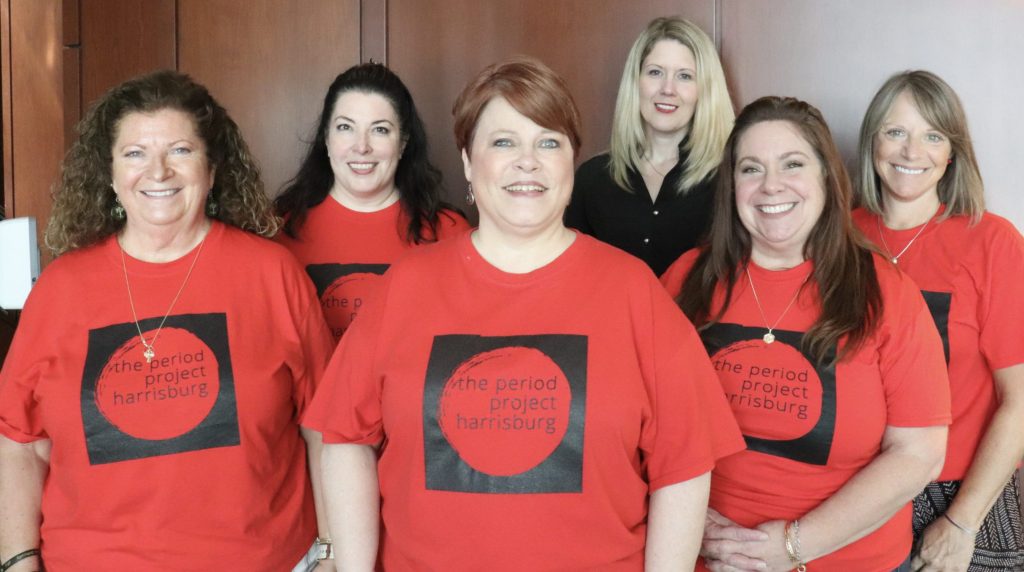
From left: Deb Marks, Tracy Varano-Garrison, Megan Swope, Addeline Alaniz Edwards, Kathleen Frascona, Nicolee Hiltz

In Jessica Deetz’s household, the month’s supply of period products from the Healthy Steps Diaper Bank doesn’t go to waste.

“There’s different sizes in each pack,” said Deetz, of Marysville. “My 13-year-old uses the smaller ones, my 17-year-old uses the next step up, and I get the bigger ones.”

Period poverty can pull a curtain over the lives of women and girls who can’t afford supplies month after month. Now, Harrisburg-area women are joining a movement to distribute period products in the city and throughout the region, all in the name of dignity and empowerment.

“They may miss school,” said Nicolee Hiltz, a backer of The Period Project Harrisburg. “They can’t go to work. All of the things we want to use to empower people can hold them back in a very basic way.”

In the United States, one woman in four has struggled to afford period products. Without proper protection, one low-income woman in three misses work, school or social interaction. One girl in five misses all or part of her school days due to her periods.

“Imagine 25% of your life not being able to be comfortable and go out and have confidence,” said Kathleen Frascona, a board member of the Period Project Harrisburg.

The dope-slap realization that period supplies can’t be taken for granted motivates local volunteers to help get period products to women who need them. Supplies are fundamental to health and well-being, but Medicaid and food assistance don’t cover the costs. In some states—thankfully, not Pennsylvania—sanitary supplies are taxable.

On top of everything, tampon prices have spiked nearly 10% since mid-2021. For Deetz, whose husband works while she stays home with their four kids—ages 3 to 17 and all with special needs—period supplies are “definitely a help. The extra money, we can put towards other bills.”

Feel Safer Now

Megan Swope is a nurse who wrote a paper on period poverty while earning her bachelor’s degree. With a startup grant from Community Health Outreach at her then-employer, Penn State Health Hershey Medical Center, she launched the Period Project Harrisburg in spring 2021.

“It was such a dignity issue,” Swope said. “These are simple things we take for granted, and in the middle of the pandemic, you could see how difficult things had become for people.”

At the first Period Project Harrisburg event, volunteers—“tons of volunteers”—formed assembly lines to compile bulk supplies into individual period packs. Swope saw a movement emerge, and the Period Project now delivers packs to Harrisburg agencies, healthcare providers and shelters for distribution to their clientele—about 5,000 packs in 2021.

Around the same time, the Healthy Steps Diaper Bank, based in Linglestown, added period products to its services. The fit was a natural, surfacing when 78% of the chapter’s diaper recipient families surveyed said they would be interested in receiving period products.

“We believe that every woman and girl menstruator deserves to be able to participate fully in her daily life, and they deserve to be clean, comfortable and healthy,” said Executive Director Amanda Barnes.

Diaper Bank partner agencies can now receive period packs in different configurations of tampons, pads and liners. Packets for teens are assembled in opaque zipper bags—ladies, donate those Clinique freebies!—for discreet tucking into purses and clear backpacks.

The diaper bank also offers postpartum pads for new moms.

Jessica Deetz, three years past the birth of her youngest, prefers the thick pads for managing a monthly flow made constant by blood thinners.

“I can feel safer going out,” she said. “When I have all these doctors’ appointments and meetings I have to go to, I’m not worried those days.”

Since beginning in July 2021, the Healthy Steps Diaper Bank has distributed 29,541 period products in 1,345 packets that went to 442 unique users.

“It’s something we all have to deal with,” said Barnes. “How can we meet everybody where they are?”

There for Them

Education weaves throughout the movement, starting with the health risks associated with improper period care. Use of alternatives such as rags and toilet paper can cause urinary tract and yeast infections. Overextended use of tampons can heighten the risk of toxic shock syndrome—a topic the Period Project addresses with flyers in its period packs.

L.O.O.P. Ministries, based in Harrisburg, was already providing hygiene classes for girls when Swope offered feminine products, said Melisa Burnett, whose husband founded the youth programming provider. The combination of education and available period products helps girls “with feeling comfortable about their bodies, being able to deal with and get rid of that stigma and shame they may have, and knowing someone is there for them,” Burnett said.

For women impacted by sexual exploitation and living in hotels or experiencing homelessness, products from the Period Project Harrisburg is “one way to offer some hope,” said Andrea Myers, executive director of She’s Somebody’s Daughter outreach.

“When you’re in a transient lifestyle, the things for those recurring needs are harder to keep on hand,” Myers said. “It’s humanizing to know that you don’t have to worry about that, and to not have that become a barrier to being out and about and engaging in the community.”

At the Beacon Clinic in Uptown Harrisburg, products from the Period Project Harrisburg are among the clinic’s most highly sought items, said Executive Director Debra McClain.

“If women don’t have access to pads or tampons, then they’ll use other things, and they will get sick,” McClain said.

In Harrisburg’s Allison Hill neighborhood, women living in Brethren Housing Association apartments, as they transition away from homelessness or domestic violence, can pick up essential needs in the BHA donation closet. While shampoo, conditioner and cleaning supplies are donated regularly, getting donors to think of feminine supplies “is a hard one,” said Marilyn Bellesfield, director of program, policy and development. “We can serve 22 women at one time, and that’s a lot of tampons.”

The Period Project Harrisburg helps fill the need, she said.

“The less they have to worry about with their period, the more we can focus and concentrate on things that are in their control, things that they can do to better themselves,” Bellesfield said.

Quality, Value

During a recent Day of Impact at the Hilton Harrisburg, about two-dozen women arrived to assemble packs for the Period Project Harrisburg. Alice Kirchner came from the Zonta Club of Harrisburg-Hershey, whose mission is empowering women and girls.

“The minute you hear about period poverty, you start to think about your own circumstance and how privileged you are, that you don’t have to ask, ‘What don’t I buy this week or this month so I can buy these things that give me the dignity of being a woman who’s menstruating?’” Kirchner said. “It really does impact the dignity and quality and value that people put on themselves.”

The first time 15-year-old Maura Campbell, of Lower Paxton Township, learned about period poverty, she thought, “That’s kind of crazy.” Since then, she and her fellow Girl Scouts from Troop 10235 have volunteered with Healthy Steps Diaper Bank to assemble period packs and run donation drives.

“Nobody likes having their period, and it’s terrible that sanitary products are so expensive in the first place,” said Campbell. “It’s just a basic need. It’s not something fun to buy. It’s something that every girl needs.”

Period poverty is an issue of health and social equity, said McClain.

“Women are the ones who lose the most in life from wages, education and opportunities not only because of their period but because we’re caring for our families,” she said. “We need to do everything we can to give these women who are menstruating an opportunity to continue in the progress of their lives without it being impacted by not having the products they need to care for their monthly cycles.”

For more information on the Period Project Harrisburg and Healthy Steps Diaper Bank, or to volunteer or donate, visit www.theperiodprojectharrisburg.com or www.healthystepsdiaperbank.com. Both also are on Facebook.


If you like what we do, please support our work. Become a Friend of TheBurg!
Continue Reading

50 Years of Feeding Harrisburg: Ecumenical Food Pantry commemorates serving more than 1 million clients

Deidre Lenker packs bags for clients.

In the summer of 1972, Hurricane Agnes flooded the Susquehanna River, destroying many Harrisburg houses and leaving families homeless and hungry.

In response, a group of local church volunteers sprung into action to deliver emergency food to victims. The merging of these faith-based organizations started an ecumenical movement—later founding and naming their organization, the Ecumenical Food Pantry (EFP).

Fifty years later, EFP has served more than 1.2 million people in the greater Harrisburg area. The pantry has expanded from individual donations and grocery store overstock to participating in the State Food Purchase Program within the Central Pennsylvania Food Bank. Each week, EFP estimates that it receives between 4,000 to 6,000 pounds of food from the supplier, which serves more than 27 counties across the region.

“The 11 original volunteers had no idea that their efforts would lead to an organization spanning decades and meeting the needs of 25 households, representing more than 95 individuals, each day,” said Deidre Lenker, EFP executive director. “We have been a reliable resource during devastating natural disasters, crushing inflation, record unemployment and a worldwide pandemic, providing for those facing food insecurity.”

Unlike other food pantries in the area, EFP is open five days a week and every third Saturday. No appointments or vouchers are necessary. The operation sustains its hours through its 175-plus volunteers who stock, bag and distribute food throughout the year.

One volunteer, Lori Knittel, has been with the organization for four years and now sits on the board of directors. As a retired school counselor, Knittel understands the importance of food security to low-income families.

“Today, approximately one out of every three Harrisburg city residents live below the poverty line,” Knittel said. “The need for our services is still very real in our community after 50 years of service. Last month alone, we served nearly 1,900 people at the pantry.”

Clients are typically given a three-day supply of food every 30 days based on the size of their family. Pre-packed bags can include canned and packaged items such as cereal, juice, soup, peanut butter and more. Frozen and refrigerated items are added to the order at the time of pickup and can include fresh produce, meats, cheese, eggs and butter. The organization has recently expanded its offerings to meet dietary and cultural needs by having halal meat available and vegetarian options.

To commemorate their 50th anniversary, EFP plans to hold a celebration in September at its home in Messiah Lutheran Church in Harrisburg with live entertainment, refreshments, games and pantry tours.

“It is an opportunity to let the community know who we are and how they can get involved,” Lenker said. “We want to honor the thousands of volunteers who have donated their time and the community donors who have helped our organization stay afloat.”

Interested in giving back? Donors can make a $50 donation in honor of their anniversary year as part of a “50 for 50” campaign.

“Monetary donations are the best way to support us as we can leverage low-cost options for the essential items we need,” Lenker said. “We also love to get donations of personal care items such as soap, shampoo, deodorant, toothpaste, toothbrushes and toilet paper.”

As EFP looks toward the future, they’re excited to move to a choice-pantry model where clients can shop their shelves for food. This opportunity will further their mission to respond to each client’s needs and maintain sufficient food options for all, including those who are homeless and need special accommodations.

To help overcome language barriers, EFP also is looking for volunteers who are able to offer language services for its diverse client base. To this end, some dedicated volunteers are even taking online language courses.

“The EFP has been privileged to serve Harrisburg for a half-century, becoming one of the largest front-line distributors of emergency food assistance in the midstate,” Lenker said. “However, our volume has doubled, and we need our community’s support now more than ever as food prices increase alongside our clients’ needs.”

The Ecumenical Food Pantry is located at Messiah Lutheran Church, 901 N. 6th St., Harrisburg. For more information or to volunteer, visit www.efoodpantry.org.


If you like what we do, please support our work. Become a Friend of TheBurg!
Continue Reading

September News Digest

Harrisburg Targets Dumping

Harrisburg is taking additional steps to fight illegal dumping in the city.

Last month, the city said that it has hired additional public works staff, bringing the department total to 63 employees.

According to Dave West, the director of public works, more workers will allow the department to increase its illegal dumpsite cleanups.

The city also plans to install 12 cameras at illegal dumping “hot spots” around the city. According to West, the department has used a few cameras previously, which proved successful. However, the new cameras will offer better quality images, with about four times as many deployed.

West is hopeful that these will deter dumping.

“My belief is that the same word of mouth that says you can dump in Harrisburg is the same word of mouth that will say you can’t dump in the city,” he said.

The city can fine people who illegally dump up to $1,000, West said.

Just in July, sanitation picked up 7.23 tons of illegally dumped trash from 20 locations. So far in 2022, they’ve collected 49.58 tons at a cost to the city of $10,622. Crews devote time to cleaning up illegally dumped trash about four days a week, West said.

Typically, dumpsites are on commercial properties, and crews may find anything from couches to pianos to mattresses and wood. West said that he believes that the dumping comes from both people living outside and inside the city.

Residents can call Harrisburg’s hotline at 3-1-1 to report illegal dumping.

“We have to continue to keep the city clean,” West said. “It’s a very large issue here.”


Signs Warn Trucks from Bridge

Harrisburg last month announced that it had installed new signage, in partnership with PennDOT, to stop trucks from driving beneath the rail bridge on Front Street.

At least several times a month, trucks get stuck beneath the low-clearance bridge in Shipoke, near the UPMC Harrisburg Hospital.

The new signs are at the intersection of Front and Chestnut streets, as well as near Verbeke Street. They state that vehicles over 12-feet, 6-inches in height are prohibited from traveling further.

To avoid getting stuck, trucks traveling south on Front Street should turn onto Forster Street or the Harvey Taylor Bridge, Market Street or the Market Street Bridge, or Chestnut Street as a last possibility, according to the city.

With the new signage, the city expects enforcement to increase, said Matt Maisel, city communications director.

The use of the word “prohibited” gives traffic enforcement more safe, legal grounds to fine drivers who find themselves stuck under the bridge, he said. Under state law, drivers can be fined up to $500.

“We needed something more visual to drivers that indicated this was prohibited to travel,” Maisel said. “Having a sign which explicitly states that going any further is prohibited, we hope will stop drivers from going any further.”


Bike Share Program Set

Harrisburg-area residents soon will be able to rent a pair of wheels at spots around the city.

The SusqueCycle Regional Bike Share will roll into Harrisburg, providing another method of transportation for residents and visitors to the city.

“It’s going to be really exciting,” said Lauren Weaver, a planner at Tri-County Regional Planning Commission (TCRPC), the catalyst behind the program.

A previous bike share in Harrisburg ran from 2017 to 2020, organized by Communities in Schools of Pennsylvania and operated by Boston-based Zagster. The program ceased operations when Zagster closed in 2020, due to the pandemic. TCRPC has picked up the initiative and will use Michigan-based Tandem Mobility for its operations.

Initially, there will be nine bike share locations in Harrisburg. SusqueCycle will have bikes for rent at the following locations:

  • City Island
  • Market Square Transfer Center, downtown
  • Strawberry Square, downtown
  • State and 2ndstreets, downtown
  • North and Commonwealth streets, downtown
  • Broad Street Market, Midtown
  • Harrisburg Transportation Center (Amtrak station), downtown
  • 13th and Derry streets, Allison Hill

According to Weaver, TCRPC hopes to have the bike share up and running by early September.

Users can rent bikes for $1.50 per 30 minutes or purchase a subscription for around $25 to $30 annually.

In the future, TCRPC hopes to expand the service across other local counties.

The Harrisburg Area Transportation Study (HATS) and the UPMC Pinnacle Foundation are partners in the bike share initiative.


Showers for Unhoused

The nonprofit, Amiracle4sure, last month began offering its office building on State Street in Allison Hill as a place for people experiencing homelessness to take showers.

“We need to meet people where they are,” said Marsha Curry-Nixon, the organization’s director. “We came into this business to serve, and this just creates another opportunity.”

Curry-Nixon, a member of the Capital Area Coalition on Homelessness (CACH), is partnering with other organizations affiliated with CACH to provide the shower service, “Showers on State.”

According to Randie Yeager, Dauphin County human services director and a member of CACH, the need for showers has been exacerbated by the pandemic, when some nonprofits that provided shower services closed or reached maximum capacity.

Within its building, Amiracle4sure, a re-entry program, has two showers and several bathrooms that can be used. Anyone in need of a shower is welcome to come to the office, located at 1735 State St., Curry-Nixon said. They are open on Monday, Wednesday and Fridays, from 8:30 to 11 a.m.

Curry-Nixon expects that the facility will service around 15 to 20 people each day. Towels, soap and other showering items are provided.

In addition to showers, CACH offers snacks and drinks. There also is a laptop for checking emails and an electronic device charging station. Amiracle4sure will also wash clothes for those in need.

Currently, CACH, along with Dauphin County and the city, is weighing a proposal to turn the long-vacant Paxton Fire House in Shipoke into a showering and service center for the city’s unhoused. According to Yeager, they are still seeking funding and an organization that can manage the facility.

For now, “Showers on State” will assist in providing what Curry-Nixon described as a basic need for residents.

“I want to put action behind words,” Curry-Nixon said. “You’re either part of the problem or part of the solution.”


Apartment Project Approved

A mixed-use building project planned for downtown Harrisburg has the go-ahead to proceed with construction.

At a legislative session last month, Harrisburg City Council approved a land development plan for the five-story residential and retail structure at 512-514 N. 2nd St. The resolution passed with a vote of 6-0, with council member Dave Madsen recusing himself due to a conflict of interest.

Developer Derek Dilks plans to demolish the two dilapidated buildings that currently sit on the property and build a new, 5,000-square-foot building with first-floor retail space and seven apartments above.

According to Dilks, his company will construct six one-bedroom units and a penthouse suite on the top floor. Rents are expected to range from $800 a month to $1,900 a month for the penthouse.

The project received approval from the Harrisburg Architectural Review Board in 2021 for its contemporary design.


So Noted

Dave West has been rehired as Harrisburg’s director of public works. West held the position until late last year, when he retired. He re-assumed the job after Mayor Wanda Williams dismissed his replacement, Nate Spriggs.

Girls on the Run has a new office, leasing about 3,000 square feet of space at 123 Enola Dr., Enola, from City Limits Realty. The nonprofit organization is dedicated to inspiring girls to be healthy and confident, using an experience-based curriculum that integrates running.

Harrisburg Academy announced that its Primary Years Programme has received full authorization by the International Baccalaureate Program (IB). The authorization affirms that the academy’s curriculum meets the high, internationally recognized IB standards for students from preschool to grade five, according to the Wormleysburg-based school.

Harrisburg Coin Club will celebrate its 60th annual coin show this month at the Scottish Rite Cathedral in Harrisburg. About 45 coin dealers from 11 different states are expected to attend the Sept. 16 to 17 event. For more information, visit www.harrisburgcoinclub.com.


Changing Hands

Argyle St., 43: L. & E. Keefer to Neidlinger Enterprises LLC, $47,900

Berryhill St., 1315: Integrity First Home Buyers LLC to R. O’Connell, $137,500

Berryhill St., 1321: M. & G. Medaglia to M. Serpe, $85,000

Berryhill St., 1409: Integrity First Home Buyers LLC to A. Sigorelli, $136,250

Briggs St., 1504: A. Almonte to Neidlinger Enterprises LLC, $57,000

Brookwood St., 2172 & 2170 Getty’s Alley: R. & Y. Barros to G. Pluyer, $95,950

Clark St., 2713, 2723, 2729, 2731 & 2733: J. & S. Tang to Luce St Warehouse LLC, $195,000

Cumberland St., 209: M. & C. Ritchey to M. Ballinger, $169,900

Derry St., 1153: Integrity First Home Buyers LLC to H. Watarai, $129,995

Derry St., 1625: R. Dirocco to D. Boyle, $49,000

Duke St., 2520: H. Barka to A. Biessar & S. Gharib, $45,000

Elm St., 1644: D. Boyle to M. Martinez, $50,000

Emerald Ct., 2460: A. Plaza to M. Owusu, $130,000

Forster St., 1917: Neidlinger Enterprises LLC and T&E Property01 LLC to RA Love Homes LLC, $149,900

Forster St., 2006: N. & L. LeGrand to A. Cooksey, $140,000

Fulton St., 1421: J. Robinson to C. Geary, $102,000

Fulton St., 1939: P. Sisemore & K. Hugo to D. Gunter, $120,000

Grand St., 933: E. Thomas to A. Wooditch & I. Jordan, $162,000

Green St., 1016: T. Duszak to Streatery LLC, $135,000

Green St., 2243: W. Jackson to VRAM Holdings LLC, $57,000

Green St., 2309: G. Dutan to C. Rosario, $155,000

Hunter St., 1617: MLP LLC to S. Scott, $52,500

Kensington St., 2109: S. Chatman to J. Hutchinson, $125,000

Kensington St., 2304: Tassia Corp. to D. Boyle, $55,000

Kensington St., 2327: PA Deals LLC to Lansanah Home Services Group LLC, $69,900

Lewis St., 200: VRAM Homes LLC to A. Buell, $192,500

Lexington St., 2624: A. Naoui to D. Boyle, $43,000

Lexington St., 2726: S. Marouf to T. Mallard, $84,999

Maclay St., 243: Trip Aces 243 LLC to BLTN Properties LLC, $100,000

Mercer St., 2431: J. Alibrio to Lynn & Ryan Investment Properties LLC, $60,000

Naudain St., 1420: D. Hather to A. Perias & J. Ballinas, $54,000

North St., 1911: NJR Group LLC to Integrity First Home Buyers LLC, $95,000

N. 2nd St., 1704: R. & A. Allan to C. White, $225,000

N. 2nd St., 2229: P. & C. Ambrose to M25 Capital Investments LLC, $229,900

N. 2nd St., 2537: N. Banting to M. Strickler, $300,000

N. 3rd St., 2230: C. & J. Dellmuth to C. O’Leary, $65,000

N. 4th St., 2148: NA Capital Group LLC to S&O Investments LLC, $52,500

N. 4th St., 3312: B. Yonkin to K. Bertin, $170,000

N. 5th St., 2652: PI Capitol LLC to M. Lopez, $165,000

N. 6th St., 2017: K. Masood to Mahalo Mart LLC, $500,000

N. 6th St., 2642: K. Hugo to E. Weaver, $65,000

N. 6th St., 3129: A. Brown to E. Ewing, $114,500

N. 14th St., 14: S. Shaunte & Habitat for Humanity to Y. Rojas, $99,000

N. 16th St., 26: K. Wansley to J. Mabu, $75,000

N. 16th St. 83: J. Tettah to El Gamwo LLC, $40,000

N. 16th St., 521: J. Gulbin to 523 N 16 Street LLC, $55,000

N. 16th St., 1105: N. Gutierrez to R. Jimenez, $125,000

N. 17th St., 709: A. Lee to JAF Group LLC, $50,000

N. 18th St., 44: M. & I Ripa to Concrete Rose Beauty Co. LLC, $107,000

N. 20th St., 34: S. Chambers to J. & M. Thompson, $100,000

N. Cameron St., 1007 & 1021 and 1105 Herr St.: F. & E. Karnouskos and DF Herr LP to DF Herr LP, $740,000

Penn St., 1309: Keystone Properties Solutions LLC to Next Level Opportunity LLC, $64,500

Penn St., 1508: C. Bury to Z. Bricker & E. Serre, $200,000

Penn St., 1721: L. Myers to Z. Paul, $155,500

Penn St., 1922: H. Shonk to A. Hibbard, $190,000

Penn St., 2114: Integrity First Home Buyers LLC to J. Chappel, $119,995

Radnor St., 551: Neidlinger Enterprises LLC to J. Tabacco, $220,000

Regina St., 1721: Integrity First Home Buyers LLC to D. Airhart, $144,995

Regina St., 1814: D. Ionni to D. Santos, $58,000

Rolleston St., 1244: Whitestone Development LLC to JHK Properties LLC, $100,000

Rudy Rd., 2221: Top Notch Homes LLC to V. Perry, $240,000

S. 2nd St., 316: A. Radford & N. Towne to M. Russell, $120,000

S. 12th St., 1527: L. Robinson to M. Rostad, $84,000

S. 15th St., 320: R. Gashi to J. Abdi & I. Asbaa, $85,000

S. 16th St., 9: M. Santiago to D. Vigilante, $80,000

S. 16th St., 20: Vogelsong Investment Properties LLC to 2020 Real Estate Ventures LLC, $40,000

S. 25th St., 708: D. & Y. Aquayo to B. Gordon, $128,000

S. Cameron St., 43, 59 & 105: 99 South Cameron LLC & D. Piccoli to 2017 Real Estate Corp. LLC, $100,000

State St., 1406: Aish Partners LLC to J. Hamilton, $100,000

State St., 1928: L. & E. Keefer to Ruell Rentals LLC, $179,900

Swatara St., 2109: Great Row LLC to Swatara St LLC, $58,000

Swatara St., 2411: W. Allen to IUGNAP Investments LLC, $175,000

Sycamore St., 1807: R. & V. Thompson to Z. Hailu, $90,000

Tuscarora St., 119: J. Kaldy to S. Evina, $180,000

Verbeke St., 232: Afterkey Property Solutions LLC to M. Meyer, $194,500

Vernon St., 1407: Jimruz LLC to D. Boyle, $45,000

William St., 1423: P. Bayer to Stoute Housing Inc., $42,000

Harrisburg property sales, July 2022, greater than $40,000. Source: Dauphin County. Data is assumed to be accurate.


If you like what we do, please support our work. Become a Friend of TheBurg!

Continue Reading

Market Makers: Two new businesses open in the Broad Street Market, focused on health and nutrition

Cup of Joy tea offerings

Two new stands in the Broad Street Market share one common theme—a healthier Harrisburg.

Within the past several months, Manderolas and Cup of Joy have set up shop in the stone and brick buildings, respectively. While they may be unique in what they offer, the stand owners both hope to give shoppers healthy options.

Manderolas opened in the market’s stone building earlier this year. Owner Medina Manderola’s “healthy Italian Mediterranean fusion” incorporates ancient herbs into today’s cuisine.

Manderola, a wellness chef of 15 years, uses the recurring theme of health and the concept that “food is power” in all of her cooking. Born in the Middle East, she has cooked since she was a child, learning techniques from her family.

The chef initially considered opening her stand in Miami, Fla., but moved back to Harrisburg, where she first came in 1998, to be with family during the pandemic. Here, she felt like she could make a change.

“We were lacking wellness chefs in our community, and no one knew what a wellness chef was nor the importance of having a wellness chef in our community,” she said.

According to Manderola, there are five elements that wellness chefs bring to their community: physicality, biochemistry, intellectualism, emotional intelligence and spirituality. She incorporates these in her cooking styles and the wellness workshops that she hosts.

“I take the best that the world has to offer, using old medicine techniques with local ingredients and international spices, and I use the oldest method of cooking,” Manderola said. “I pray and meditate on the food and use the five elements in what I make.”

Part of Manderola’s focus on wellness comes from her belief that it’s her responsibility, as a U.S. citizen, to create healthier food, she said. She hopes that her stand can help make a change.

Manderolas’ menu blends four different styles of cooking—Mediterranean, keto, nomad and fusion—and links one to each blood type on the basis that items from that menu will benefit people with that blood type best, Manderola said.

“This is the new age of food,” she said.

On the menu are items such as dips for bread and vegetables, artisan drinks and coffees, various salads, mac and cheese and a lasagna that took Manderola 20 years to perfect.

Manderolas is all about giving back to the community, she said. That’s why, if a customer has recently given blood, she will offer them a free meal. It’s also the reason that she set up her stand in the Broad Street Market.

“Harrisburg needs the vibration of healthier options with an education,” she said.

Joyful

Shoppers making their way to the brick building of the market will find the second new business, the Cup of Joy coffee stand.

The stand is run by the same Lancaster-based family that runs the Green Ridge Acres stand, also in the market. The Lapps have been in the food business for 13 years.

“We got into the food business because we had a desire to share nutrient-dense food,” owner Ruthie Lapp said.

Cup of Joy opened in the market earlier in the summer, after Lapp’s daughter and one of Green Ridge Acres’ longtime employees, Jess, came up with the idea.

“We wanted to add more diversity to the market and offer more healthy and organic choices,” Jess said. “And try to source more locally.”

Lapp said that the transition from a food stand to coffee stand came “easily and automatically,” having taken classes on how to run a coffee shop.

“We have good help, but we’re still learning,” Lapp said.

The stand sells both coffee and tea. Jess recommended the summertime tea and the caramel blast flavored latte.

“We make all of our syrups,” Jess said. “They are all natural and organic.”

All of Cup of Joy’s teas can be served hot or iced, with options such as peppermint, jade oolong and raspberry. For their lattes, they offer flavors such as vanilla and maple, and serve chai, Earl Grey and Lady Grey tea. Their iced tea is a hit during the heat, Lapp said.

As for their future, Lapp can’t wait to see people enjoy their hot teas in the winter months.

“I’m excited to see people respond to good teas,” she said.


The Broad Street Market is located at 1233 N. 3rd St., Harrisburg. For more information, visit
www.broadstreetmarket.org.


If you like what we do, please support our work. Become a Friend of TheBurg!
Continue Reading

September Editor’s Note

Our arts writer, Bob MacGinnes, once remarked that everyone in Harrisburg seemed to be an artist.

I don’t believe he meant this literally, and the circle of creators he regularly hangs with may have swayed his judgment.

Still, I understand where he was coming from. In recent years, Harrisburg seems to have gone from art-starved to art-stocked. Dedicated galleries still have a tough time here, but art seems to be everywhere else—from Allison Hill to Midtown to the waterfront.

This month, Harrisburg residents and visitors will have ample opportunity to see for themselves what old Bob was talking about.

First, Kipona returns over the Labor Day weekend, featuring, among other elements, an artist market. A week later, it’s again time to lace up those sneakers for Gallery Walk, which is back for its 34th year.

Here at TheBurg, we like to think we play a small role in the month’s burst of color. Each September, we have a special art focus or, as I’m apt to say, even more art than usual.

In our section, you’ll discover a wide variety of artistic endeavors and the folks doing them—painting, pottery, writing, theater and music all take a bow. Of course, we still have our usual “Culture” section where you’ll find, yes, more art!

Beyond the local art world, the wonderful, warm month of September promises more great fun. Since June, I’ve attended each SoMa block party and have been impressed by the crowds, the music, the food and, most importantly, the sense of community. The next one is slated for Sept. 29 at S. 3rd and Market streets—I highly recommend attending.

Speaking of both community and parties, our Friends of TheBurg bash takes place on Sept. 8 at the historic King Mansion. We at TheBurg hope to see all of our dedicated “Friends” and fans there.

Happy September, everyone—in Harrisburg, surely one of the best months of the year.

Lawrance Binda
Co-Publisher/Editor-in-Chief

Click here to access the digital edition of the September issue.


If you like what we do, please support our work. Become a Friend of TheBurg!

Continue Reading

Can as Canvas: Local breweries increasingly tap artists for funky, bright, bold label designs

Amie Bantz

With all the beer options these days, choosing a beverage isn’t just about the taste, but about the overall vibe—the name and the can design.

It’s not an easy decision when you’re standing at a store’s shelf or fridge, scanning the rows of rainbow-wrapped aluminum. Maybe for the craft beer connoisseur, the choice is easier, based on the type or flavor. But for a sucker for good packaging, like me, the brighter and wilder the label, the better.

For many local brewers today, the can needs to be a work of art, almost as important as the product inside.

“We just want really cool things on our cans,” said Scott Richardson, director of operations and market development for Spring House Brewing Co. in Lancaster. “There is so much good beer out there, so packaging is important.”

Every year, Spring House works with local and national artists to create the label designs that make their cans pop. It’s something that more and more breweries are doing—turning cans into canvases.

But for Richardson, it’s about more than just selling additional six-packs—it’s an active choice to support artists by showcasing their work.

For five years now, Spring House has run its “Artist Collaboration Series,” featuring 12 new beers with cans wrapped in original work from local and regional artists. The 2022 series received around 500 submissions, Richardson explained. Spring House will accept various mediums, as they’ve chosen fabric art, sculptures, photographs and paintings, among others. Typically, at least half of the submissions come from central PA, and all selected artists are paid and retain the rights to their work, something Richardson is proud of.

Once it’s time to sift through it all, Spring House brewers, family members and friends gather to voice their opinions—over a beer, of course.

“Some immediately stand out,” Richardson said. “It’s sort of a gut reaction.”

Spring House’s class of 2022 definitely stands out, fitting with the brewery’s aesthetic, which Richardson describes as “eclectic, a little off-center and wonky.” There are several animals doing un-animal-like things—a photo of a chipmunk playing a piano, a sculpture of a smiling fish with legs, and a painting of a DJ-ing otter. If these don’t catch your eye in the beer fridge, I’m not sure what will.

When Zack Rudy, one half of the Harrisburg art duo, The Huckle Buckle Boys, applied for the series, he didn’t expect to hear back. But not long after, the pair’s piece, “Blah. Blah. Blah. Day and Night,” a painting of crows on a telephone wire, was chosen.

“It’s awesome when our art is recognized,” Rudy said. “We’ve spent our lives doing artwork.”

The collaboration hasn’t stopped there, as Spring House commissioned the Huckle Buckle Boys for a large mural inside their brewery and has plans to use their art for future can designs.

“Our promise is to get artists additional work and exposure,” Richardson said. “This is one of the best things we’ve done in the past couple of years.”


Idea Brewing

Much like how Richardson selects art for cans based off a gut reaction, Harrisburg artist Amie Bantz does the same when designing cans for Rubber Soul Brewing Co. in Hummelstown.

Based on her immediate response to the name and ingredients of the beer, she digitally illustrates a graphic that she thinks represents it. It typically only takes 10 to 30 minutes to think up an idea, she said.

“I create designs that I would like to pick up,” she said.

The labels tend to be colorful, light and fun, sometimes with a retro feel. Her label “Giggle Guts,” for an India pale ale, uses squiggly lettering with cartoon hands tickling the word “Guts.” Another, “South Paw,” shows an animated hops flower wearing a boxing glove.

“People love them,” said Jamie Mowery, marketing manager for Rubber Soul. “They’re always excited to see what the next funky thing is.”

For the most part, Bantz has complete freedom when it comes to designing labels. The same was true for Bryan “King Prolifik” Hickman when Harrisburg’s Harris Family Brewery tapped him to do the art for a beer collaboration with Zeroday Brewing Co., also in the city.

The two brewing companies concocted a limited edition beer to release for the Juneteenth holiday this year to celebrate Black culture and heritage. To Tim White of Harris Family, Hickman, a Harrisburg artist, was the perfect pick to design the label. Hickman typically includes elements around African and African American culture into his work.

While Hickman is known for his striking paintings, large-scale murals and fire art demonstrations, designing for a can was a unique experience.

“I had to make sure it translates well on a beer can,” he said.

Hickman’s design for the blackberry cream ale, “Blackr Tha Berry,” features a woman wearing a blackberry-shaped headscarf with a city skyline behind her.

“You’ve got to be really creative to stay ahead of the game and put out a product that gets a lot of attention,” White said. “[Hickman] always surpasses what we give him.”


Creativity, Community

What is it about beer and art that go so well together? To Bantz, it’s simple.

“Drinking beer is fun. Art is fun,” she said. “I think it’s a very natural partnership between those two things.”

The way Richardson sees it, brewing is an art form in itself. Crafting a beer is a process of finding the perfect combination of color, haze, carbonation and flavor. It takes a lot of creativity.

“Coming up with new recipes can be similar to approaching a piece of artwork,” he said.

According to Chris Trogner of Tröegs Independent Brewing in Hershey, the beer and art creation processes are closely linked. Brewers make decisions around flavors and bring their ideas to the artists, who begin fleshing out a design. The beer and art at Tröegs are not separate. It’s all interrelated.

“It’s a total package,” he said. “People have to love the beer to keep coming back, but the name and illustrations, the brand, people can fall in love with, as well. It’s equally important.”

While Tröegs has its own in-house designer, the brewery still partners with artists from the community on can designs, murals and other packaging. Supporting local in all aspects is important to the company, Trogner said.

That sentiment holds true for all of the brewers mentioned, who find value in working hand-in-hand with others in the community. Spring House goes beyond just featuring the winners of their “Artist Collaboration Series” on the cans. They sponsor artists’ shows, donate beer for their events and promote them in other ways. It’s all part of their mission to be “the community’s brewery,” according to Richardson.

“We want to support the people around us,” he said. “If you invest in the community and people around you, it just feels good.”

To the artists behind the can labels, it feels pretty good, too.

“Dreams are really hard to go after,” Bantz said. “Sometimes, you need other people to tell you you’re doing a good job. There’s something really beautiful about supporting someone from the community.”


Spring House Brewing Company is located at 209 Hazel St., Lancaster. For more information, visit www.springhousebeer.com.

Rubber Soul Brewing is located at 136 S. Hanover St., Hummelstown. For more information, visit www.rubbersoulbrewing.com.

For more information about Harris Family Brewery, visit www.harrisfamilybrewery.net.

Tröegs Independent Brewing is located at 200 Hersheypark Dr., Hershey. For more information, visit www.troegs.com.

For more information on artist Amie Bantz, visit www.amiebantz.com.

Find out more about The Huckle Buckle Boys on their Facebook page.

Find artist Bryan “King Prolifik” Hickman on Instagram @kingprolifik.


If you like what we do, please support our work. Become a Friend of TheBurg!

Continue Reading

Now Playing: Historic West Shore Theatre celebrates reopening after renovation, modernization

Images courtesy of Chris Dawson Architect (CDA) and Halkin Mason Photography.

Local movie producer Brandon Keeton has heard many people tell stories about their time at the West Shore Theatre in New Cumberland.

“It’s such a historic place,” Keeton said. “Everyone in the community had a date there.”

That’s why, to him, it was such a big deal that his movie, “Turbo Cola,” which was filmed in New Cumberland, premiere at the theater during re-opening weekend in May.

“It was definitely a dream come true,” he said.

Keeton is just one of many people excited for the return of the West Shore Theatre.

The theater, built in 1939, closed in 2015 after it could not financially keep up with changes in the industry. Local fans refused to see the town staple close. So, in 2018, business owners and other community members formed the nonprofit, Friends of the West Shore Theatre. By August 2021, they were able to raise $2.5 million to renovate and remodel the theater, which held a soft opening on May 7.

“It’s a place that has generational memories for so many, which is why I think it was so important that the community wanted to save this theater in a day and age where theaters are going in the other direction—sitting empty or being demolished,” said Dustin LeBlanc, West Shore Theatre’s managing director. “For one to be saved and restored as beautifully as this one has, I think is something to be celebrated.”

Prior to its reopening, the theater needed significant updating—first, concerning its programming.

In today’s digital world, single-screen movie theaters tend to not be successful, LeBlanc explained. That’s why the West Shore Theatre now does more than just show movies.

“We’ll always show movies, but it’s now music, arts, comedy,” LeBlanc said. “It’s a little bit of everything, and it’s a mixture of regional acts and community-focused.”

The theater has since partnered with groups like the West Shore School District on a cabaret performance and Capital Area School for the Arts on a film festival. Lots of local bands and ensembles have also rehearsed and performed at the West Shore Theatre.

In order to house all of the theater’s new programming, Friends of the West Shore Theatre had to do a lot of work on the building itself.

Harrisburg-based Chris Dawson Architect took on the project with the goal of keeping the nostalgic feel while updating the building as a modern, multi-use space.

“I think the appeal to a younger patron is part of the reason why the new work isn’t trying to look historic—it’s trying to look fresh and modern,” Dawson said. “It’s a 21st-century program for the community, and the building should tell you that.”

The project included changes both big and small.

“It was pretty rundown,” Dawson said. “Seats were falling apart. The wall fabric was peeling off. The concession stand was right in your face, and there was not enough space.”

The redesign included making room for modern-day technology and ensuring that the theater could be used for more than just movies. The biggest additions were acoustic paneling for better sound quality, ADA-accessible bathrooms, a stage and new seating options. Along with the usual movie theater seating, there is now lounge seating and high-top tables.

The construction took about nine months to complete, but work is far from over. Only “phase one” has been completed, according to Dawson. Phase two includes constructing an addition, including a backstage area with dressing rooms, a green room and a catering kitchen.

Dawson said that his firm has loved working on the theater since modernizing older buildings is their specialty.

“We love doing contemporary things with historical buildings and breathing new life into them in terms of how the community can use them,” Dawson said. “We love contrasting new and old.”

According to LeBlanc, the best thing about reopening the theater has been listening to the crowds walk in and reminisce over their memories there.

“Their eyes just light up—the number-one word has been ‘wow,’” he said.  “People come in and say, ‘Oh, I had my first date here,’ or, ‘Oh, I had my first kiss here.’ That was the reason this was able to happen, because people care and have those memories.”

The West Shore Theatre is located at 317 Bridge St., New Cumberland. For more information, visit www.westshoretheatre.org.


If you like what we do, please support our work. Become a Friend of TheBurg!

Continue Reading

Empower Play: Steven Williams’ passions feed his fantastical creations

Steven Williams

Imagine a world in which trolls, dwarfs, dragons and city council members work collectively to try to stop an advocate for the disenfranchised.

That may sound a tad far-fetched, yet maybe not so much as we see the villains as stand-ins for real-life power-mongers.

That’s how Steven Williams frames it. These are just a few of the many creatures that try to thwart his heroine in his first published work of fiction, “Skadi,” which came out last year. His second book in that series, “Thyra,” just dropped on Aug. 31.

Skadi and Thyra are names that fit with the Norse mythology that Williams wraps his stories into, which might seem random for a writer born and raised in the Harrisburg area.

Yet it makes perfect sense for Williams, who, by day, is the associate director for the Pennsylvania Statewide Afterschool Youth Development Network (PSAYDN) and, by night, serves as a director on the Harrisburg School Board.

A trip to Iceland in 2016 proved to be so magical for Williams and his future wife Danielle that they returned in 2017 to be married in a historic Black church in the tiny settlement of Budir, which sits on a lava field in the western region of Iceland.

While affirming their own love, they fell in love with the place and its history. They visited the Saga Museum, where Williams was pulled in by the myths and stories. Although “Skadi” was his first published novel, Williams has been writing a book a year for nearly 10 years, and what he discovered in Iceland was a vehicle for the stories he was trying to tell—stories of advocacy with ancient characters standing in for marginalized communities.

“I tried to hide that theme inside a setting I thought was interesting that people could connect with,” he said.

A common approach in storytelling is to write what you know. That’s where it gets tricky for Williams. He knows the themes he explores through Norse mythological tales, but also knows that, to be an authentic voice true to Norse mythology, he had to do his research. He read the “Prose Edda,” an Icelandic textbook from the 13th century thought to be the most complete source on Norse mythology. He also spends a lot of time researching online.

“Skadi” presents as an allegory as it tells the tale of a mother trying to protect her son from the evils of the Viking world before realizing that she must work to save all children and parents if she is to be successful in saving her son. She battles dragons, trolls and a creature called a “jötunn,” which has been killing the children of Fensalir. Those are just the fantastical villains. The real villains are the city council members of the town who sell their souls to gain special powers.

Hmmm. Now we start to see the connection to real life. Williams has a passion for advocacy for the vulnerable.

“The core story of ‘Skadi’ is about being an agent of change or advocate for a community or folks who have been disenfranchised by society or larger power structures,” Williams said. “The town is a stand-in for lots of communities, like Harrisburg, where bad things have happened historically.”


Perfect Analogy

Williams, 32, lives what he writes. His family emphasized education, and he sees education as an agent for change in a community.

“What I saw happening in Harrisburg was shortchanging of students,” he said. “I’m not a teacher, nor a parent, but I had a background in policy having worked at the Capitol for a time. There is a collective positive impact and result from having an educated population.”

Williams now serves as vice president of the Harrisburg School Board.

“We see him as a leader in the community,” said fellow board member James Thompson. “One thing about Steven is his positive attitude. You sort of need that. The funny thing on the school board is what we need more than anything else is consistency. It’s very difficult to do that unless you’re pure of heart because you have to embrace the mission.”

Another mission Williams embraces is advocacy for afterschool programs, which he advances by helping schools and groups find grants through his job at PSAYDN. His predecessor there, Laura Saccente, who now serves as strategic initiatives director at the Center for Schools and Communities, said that Williams doesn’t do anything he doesn’t believe in.

“It’s a perfect analogy to compare his book and his work,” she said. “With his work, he really is the voice for the state in serving youth and children.”

Before joining PSAYDN, Williams worked for the state General Assembly. Those connections led to his current position and help him there to form partnerships throughout the state government.

The partnership he’s forging with Boiling Springs-based Sunbury Press has allowed him to pursue this Norse series. Publisher Lawrence Knorr saw potential in Williams’ book, not only because he was a local author, but because he thinks the work is very visual and descriptive in a popular genre. Think “Game of Thrones,” “Thor,” and other Marvel movies. Knorr sees potential for Williams’ stories as a miniseries.

“Steve has the personality, the energy, the drive, the confidence to be successful,” Knorr said. “I think he and I were just meant to work together.”

“Thyra” returns to the same world, but takes place a few months before the events of “Skadi.” He created the character Thyra as a stand-in for people from marginalized communities. Williams hopes that readers will “recognize that she, too, has power, belongs and has value.”

“It’s a bit more of an introspective story,” he said.

“Thyra” is available beginning Aug. 31. For more information and to order the book, visit www.sunburypress.com, local bookstores and online booksellers.

If you like what we do, please support our work. Become a Friend of TheBurg!

Continue Reading