Tag Archives: Andrea Grove

“Support Us”: Facing a tough landscape, Harrisburg’s small businesses ask for your understanding, your patronage

Chantal Nga Eloundou

Counting Parmesan scoops. When Burger Yum owner Milan Naramcic first made the hard call to raise prices, this is what it came to—measuring and costing out the price of every ingredient used to make his burgers and fries.

“We literally broke it down to every single ingredient, including how much the sauce would cost us per bun,” said Naramcic.

As Small Business Saturday approaches, Harrisburg’s small biz community wants you shop local-ers to know that they love you. Plus, running a small business is exacting and draining. Costs? Through the roof. Margins? Razor-thin. But they love what they do and do what they love. With resilience and spunk, they keep quality up and prices down.

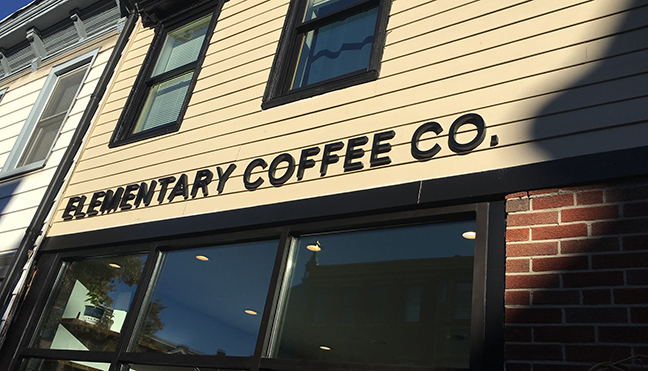
Many people dream of the leap from passion to business. They’re experts at brewing beer, roasting coffee or making pottery. But then come “all the things you’re supposed to know,” said Andrea Grove, owner of Elementary Coffee Co. Accounting, budgeting, supply chain, HR, competition, marketing, licensing, taxes, signage, product mix.

“The business aspect always takes people by surprise,” Grove said. “Most people are very shocked by the amount of endless, endless work that’s involved.”

Starting and scaling up a business “takes a different kind of personality,” agreed Jay Jayamohan, executive director of Harrisburg University’s Center for Innovation & Entrepreneurship. “It’s not like a job with regular pay. It’s a rollercoaster up and down.”

There are unexpected economic disruptions to manage (pandemic, anyone?), technology to keep pace with, and skilled, reliable people to hire, he said.

Then again, Jayamohan added, small businesses benefit from the trends launched and nurtured by the corporate ecosystem’s big fish—athleisure wear, pumpkin spice.

“You are riding the wave and marketing dollars of somebody big,” he said.


Prices Up, Profits Down

Without prompting, small business owners will share what their basics cost a year or two ago—and what they cost now. Potatoes, from $20 a case to $60. Chicken breasts, from 89 cents a pound to $3.99. Gloves for food handling, from $30 a case to $100. Gloves!

Business owners respond by raising prices, but only when they have to, they say. Otherwise, they’d price themselves out of business.

“We can’t just keep notching it up,” Grove said. “We really try to provide stability with our products and what we offer and what people can rely on, and that includes pricing.”

What’s left, they agree, is absorbing the increases without sacrificing quality.

“The portions never changed,” said Burger Yum’s Naramcic. “I learned that people won’t care if the price is higher, but they’ll notice if the portions are smaller and the prices are higher.”

Supply chain disruptions have turned small business owners into scroungers. Abdul Moosa, owner of 717 Tacos, has had to scramble for paper boats, diced tomatoes and mayonnaise. Any old alternative won’t do because customers expect consistent quality.

“Every day right now, when you go shopping, it’s a challenge,” he said. “You can’t even plan for it. You don’t know if this little cup is going to be there tomorrow. Then you begin hoarding.”

The costs of getting those pricier supplies also skyrocketed.

“My shipping went up 40%,” said Chantal Nga Eloundou, owner of Nyianga Store in Midtown Harrisburg, retailer of African-made and sourced clothing, jewelry, décor and lotions. For the sake of her customers and for sending her stock home with them, she hasn’t increased prices.

“I want people to come in and not just have inventory sitting out,” she said. “What am I going to do if everything is stuck here? I just have to take it in my little profit margin.”

Eloundou spends her days inspecting the quality of fabric samples sent from her supplier in Africa—and these are not flimsy Joann Fabrics cottons. She chooses designs. She coordinates with sewists in Africa who make dazzling skirts, dresses and dashikis. Her niece gathers the finished products and ships them to Harrisburg.

“All the time, I’m on the phone,” said Eloundou with a laugh. “Over there at 6 o’clock in the morning, over here it’s midnight, and that’s when they start their seaming. I love doing it, until I’m tired. I don’t sleep. I don’t get enough of it.”

And unlike restaurants where regulars order the same dish every time, retail must be constantly restocked with new items to entice customers back, she added.

“My mind is constantly thinking of, ‘What next? What next?’ that is a little bit different from what I have now,” said Eloundou.


People Part

People. They cost money to hire and time to manage. In a buyer’s market where job candidates have choices, business owners say that respect is the key to retention.

Moosa gives his staff the autonomy to implement their ideas, because they can “absolutely make a difference” just by streamlining the kitchen layout or serving salsa from a squeeze bottle instead of a tub.

“They take ownership,” he said. “They want to serve a good product.”

Just like the boss, employees want predictable hours and time with family, Moosa noted, so he doesn’t take jobs on most Sundays and Mondays, and holidays are removed from the schedule well in advance.

“That gives them a better quality of life,” he said. “If you talk to anybody in the restaurant business, that’s what they’re looking for.”

At Burger Yum, Naramcic’s staff of 15 includes people who have been with the cozy, comfort-food restaurant since it opened in 2016. Employees are “happy with the pay,” he said, and with the camaraderie he tries to build through events and trips.

“They like the job,” he said. “They like the environment. It’s fun. I try to keep it fun.”

And, he added, “If the employees are happy, the customers will be happy.”

Still, small business owners have their people struggles. Tiny profit margins might not accommodate such perks as health insurance, making state government and healthcare companies hefty competitors for talent.

Eloundou wants to beef up her online sales capabilities, but there’s no room in the budget for a reliable web master.

Grove worries about a future where small business owners simply “wear out.” Jayamohan advises that owners pivot to capitalize on the business trends shifting around them.

“People talk about experience more than buying things,” he said. “Can you create an experience? The keyword I would advise small businesses to think is innovation. How do you compete against a bigger player? The biggest advantage a small business has at the end of the day is they are nimble.”

Here’s what small business owners want you to know.

Supporting small business through a social media shout-out and a friendly greeting is free, said Grove, who maintains a Broad Street Market stand and her North Street shop.

“There’s always the ‘spend your dollar there,’ but I also think a lot of places want to be remembered and recognized,” she said. “At the market, something we all love is when someone comes by and waves hi.”

“It’s all about people,” said Naramcic. “The costs are very high right now. Labor’s worth it 100% because, if it weren’t for the employees, we wouldn’t be here. So, that’s definitely something I’ll never complain about. There’s a lot going on behind the scenes, but as long as the customers are happy, it’s worth it.”

The artwork Eloundou commissions for her store depicts happy African families and individuals going about their days, showcasing “that part of African culture I want to take wherever I go and be authentic.” The bills are always coming in, but she loves her work for the business impact, the cultural impact, and “a challenge that comes with a reward.”

Now that the holidays are looming, shop local before you go online, she added.

“Any type of business, support us, support us, support us,” she said. “Harrisburg and the surrounding area, we have enough small business that we can really do amazing things.”

Shopping Local

This holiday season, we urge you to support Harrisburg’s small, independent shops, restaurants and other businesses. The businesses mentioned in this story include the following:

717 Tacos
Various places in central PA
www.717tacos.com

Burger Yum
400 N. 2nd St., Harrisburg
www.burgeryum.com

Elementary Coffee Co.
Broad Street Market and 256 North St., Harrisburg
www.elementarycoffee.co

Nyianga Store
1423 N. 3rd St., Harrisburg
Facebook: Nyianga Store

If you like what we do, please support our work. Become a Friend of TheBurg!

Continue Reading

Bob’s Art Blog: It’s Elementary and 3rd in the Burg highlights

“The best laid plans of mice and men oft go awry,” wrote Scottish poet, Robert Burns, centuries ago.

And such was the case for the “case” ahead. This blog or some variation like it was to run exactly two years ago to the day. It has been changed, updated and is now even more to the point since the pandemic sidelined the original blog on March 13, 2020.

Andrea Grove, owner of Elementary Coffee Co., in her North Street cafe

Elementary Coffee Co. had opened its doors a mere six months before to standing-room-only crowds, and, for 3rd in The Burg Fridays, patrons spilled out onto the city blocks surrounding it. We could not even get close to the “scene.” My trusted friend and constant companion, Dr. Watson (actually my photographer and wife, Jana) and I wanted to track down the mystery and allure of Elementary. All we had to do was follow our noses to 256 and its North Street headquarters. It’s a café that beckons early morning “need my caffeine-ers” until it closes at 3 p.m., all seven days of the week. And that is just one of many reasons why Elementary stands apart from the pack.

When life handed owner Andrea Grove lemons, she felt it was time to expand every aspect of what goes in to brewing a superlative cup of Joe. Having to close its physical building for some time proved to be a challenge. Andrea shared from the heart, “The team was headed home to their own corners of the city, and the key was how to keep that Elementary spirit going.”

Elementary videos provided tutorials on a wide array of coffee-related topics, from home-brewed methods to stove kettle brewing to the variations in grinders. Using those videos as a jumping off point led to options beyond beverages. A new series encompassed interviews with city personalities represented from every field. Even City Council candidates were part of the process. This blog is as much about the human spirit as it is about anything else. It is defined by the perseverance and resilience that one person holds within, demonstrating the wherewithal that Andrea embodies in overcoming obstacles. In other words, there would be no art without the heart at Elementary.

Back in November 2019, when Elementary Coffee opened, art was one of the many components offered, highlighting local artists and their creations. With guest artists changing the scenery within on a regular basis, the art makes for great conversation and is much more than just a pretty face. The art has resurfaced now that the café is back in full swing.

Painting by Michael Julian D’Ambrosio

Recently, Luis Cuevas brought his recycled materials fantasy masks to its walls. Currently, Michael Julian D’Ambrosio, abstract expressionist painter, offers explosions of ideas, ink blots of colors left for exploration, explanation and interpretation. Describing his art, Ambrosio states “working in layers of paint, time and space…in acrylic and ink and water color and ink that speak to nature and the human form. The paintings reflect chaos as well as an organized sense of space with a residue of mark making, serving as a time line and a visual map of memory.”

Looking back to that March two years ago, Andrea learned the importance of taking service to the next level through product innovation and commitment to her customers. Delivery to the customers’ doors may be her best marketing plan yet. It’s a service that is hard to beat. Andrea spoke to its coffee continuum.

“Talking to people over coffee is truly what makes the world go round which gets smaller by the moment,” she said.

As for us, Watson was hankering for a cup of their Teapigs Chi tea, while I recalled a quote from Sherlock Holmes: “It has long been an axiom of mine that the little things are infinitely the most important.”

Just ask Andrea Grove about the little things; they all add up to success. And she is the first to acknowledge the operation is percolated to perfection due to the team at North Street and The Broad Street Market outpost, brewing on all four burners. After all, it’s Elementary.


Art March Events of Note

Photography by Beth Hager

Arts on the Square at Market Square Presbyterian Church features the work of Beth Hager as one of its 3rd in the Burg highlights this Friday, from 6:30 to 8:30 p.m., and again on Sunday, March 20, from noon to 1:30 p.m. Beth is an accomplished photographer as well as the museum director for the State Museum of Pennsylvania. Works on paper, canvas and glass speak to her diversity-capturing images that “tell a story which allow for an appreciation of the commonplace.” In addition, Kari Hultman, craftswoman extraordinaire, will showcase exquisite examples of woodworking, leather making and miniature houses with her wares. The church provides parking in the Market Square garage by entering the church at 20 S. 2nd St. from the garage’s first level.

Miniature Grist Mill by Kari Hultman

March Madness at the Art Association of Harrisburg runs through March 31. No basketball but an incredible art show, and you would be mad if you missed it. Probably as mad as a March hare. Artists Pamela J. Black and Jessie Waite bookend their amazing paintings around the potent and powerful photography of Ashley Moog Bowlsbey. Black and Waite manipulate proportion and color in their own stylized manners. Bowlsbey creates a genre by photographing models and friends swathed in used makeup remover pads. The sensation is heightened to a hypnotic state in her visual presentation as the resultant photographs are two-dimensional in scope and scintillation. Bowlsbey’s works prove that true beauty goes well beyond skin deep as the audience peels away the layers in its mind.

Wearin’ O’ the Green through March 26 at 126 East King Street in York. No need to be green with envy, there is still time to catch the HIVE artspace latest exhibit for the month, aptly named “Shades of Green.” Owner Susan Scofield waxed enthusiastically about the pot o’ gold artists represented that include Jen Simon, Mark Broomell, Andrew Smith, Michael Hower, Charlie Hubbard and Kelly Nevin.

If you like what we do, please support our work. Become a Friend of TheBurg!

Continue Reading

Coffee & A Cause: The Fix Café collecting Christmas gifts for Harrisburg kids

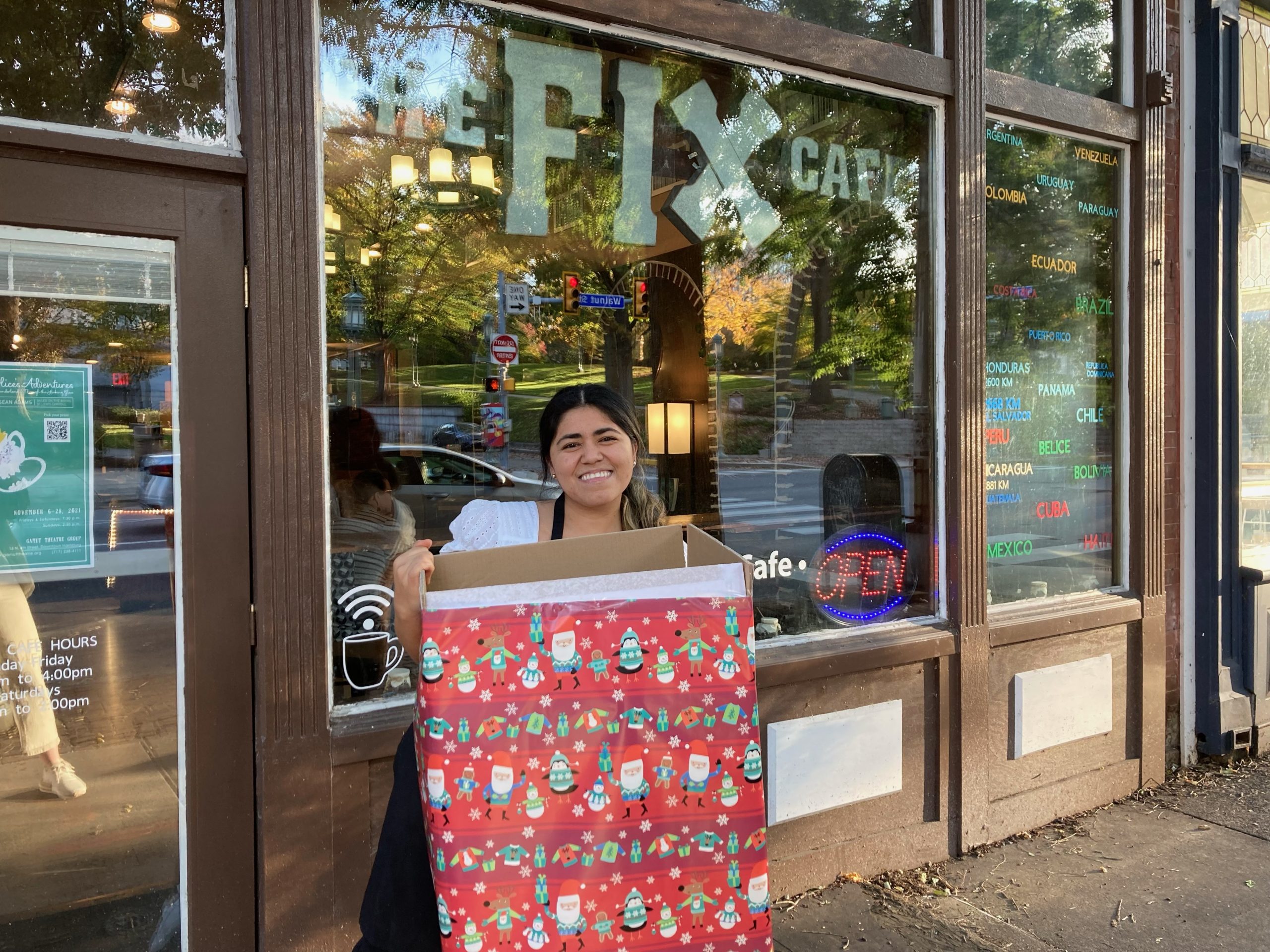
Liz Albayero, co-owner of The Fix Café, is looking for Christmas toy donations for families in need.

What would you do for coffee?

The Fix Café in Harrisburg is hoping you’ll donate a Christmas gift for a child in need in exchange for 25% off a steaming cup.

From now until Dec. 12, the coffee shop is collecting new, unwrapped toys to give to low-income families in the city, explained The Fix co-owner Liz Albayero.

“There are so many kids that aren’t going to have access to Christmas toys because of the pandemic,” she said.

She hopes will people donate with their community in mind, but the discounted coffee is a nice incentive.

“Everyone drinks coffee,” she said. “It’s a way to give back to the community.”

The Fix Café opened during the pandemic and despite the challenges, has managed to make it work. Business has been picking up, Albayero said.

“We were able to survive a whole year because of the support of the downtown Harrisburg community,” she said. “That meant a lot to us and that’s the reason we made it through. That’s why we continue to give back.”

After posting on social media about their “Caffeinated Santa” toy drive, Albayero received a message from Andrea Grove, owner of Elementary Coffee Co. She said that she would love to participate and collect donations at her coffee shop on North Street, as well.

“It meant a lot that another coffee shop wanted to do it too,” Albayero said.

The goal is to collect 60 toys at each drop-off location. The Fix will distribute toys, with help from the Latino Club at Penn State Harrisburg, to children in Allison Hill. Elementary will distribute in Uptown Harrisburg.

Albayero said that they have already received toys, and she expects to exceed the goal.

“I think because of how people have supported us, they will support the kids,” she said.

The Fix Café is located at 403 Walnut St., Harrisburg. Elementary Coffee Co. is located at 256 North St., Harrisburg.

If you like what we do, please support our work. Become a Friend of TheBurg!

Continue Reading

The Big Short: As the holidays near, local businesses struggle with, adapt to a broken global supply chain

“Topless” cold drink from Elementary Coffee Co.

 Cup, meet lid.

Or not. The world’s supply shortage has oozed down to the lowliest essentials at your friendly, albeit slightly frazzled, local business. As the holiday shopping season nears, watch for imaginative workarounds.

“We’ve had to get super creative,” said Andrea Grove, owner of Elementary Coffee Co. in Harrisburg. “For a long time, we couldn’t get cold cup lids. So, on our Twitter posts, we said, ‘Yeah, we’re going topless, and please bear with us.’ People loved that.”

Local business owners are an overworked but agile sort. They tend to tell the same story, managing fairly well in COVID’s first wave, but getting hobnailed by the second.

Diane Krulac, owner of Brittle Bark in Mechanicsburg and Cocoa Creek Chocolates in Camp Hill, first called her bevy of suppliers in March 2020.

“Everybody felt we would be OK, but it slowly degraded,” she said. “By far, it has been the worst impact this year.”

For Krulac, there are the chocolate slowdowns caused by barriers of shipping across borders and the Atlantic Ocean. And then there is packaging. Krulac’s boxes hold truffles in quantities from a few to a few dozen. One supplier has delivered them for years.

“All of a sudden, he’s out of stock and doesn’t know when he’s going to make them,” Krulac said.


What the Heck?

When nationalist trends of, ahem, four or five years ago drove supply chains from global to domestic, the U.S. economy had time to adapt, said Penn State Smeal College of Business economist Fariborz Ghadar. Then came the COVID tsunami. Manufacturers shut down or restricted operations. Customers kept available supplies for themselves.

Things smoothed out, but then COVID returned. The same shortages bedeviling computer chips began haunting supplies of boxes, packaging, whatever. Plus, aging workers in the logistics and other high-risk sectors “basically said, ‘The hell with it, I’m retiring now,’” Ghadar said.

Take away port workers to unload containers and truck drivers to haul the goods, and let the logjam begin.

“To top that off, the big guys have more power to get first in line,” said Ghadar. “If you’re Amazon, you have priority in the eyes of the manufacturer. If you’re poor Joe and Nancy who’s got a shop, you have no priority.”

Those conglomerates further aggravated the supply chain by preordering for the holiday shopping season. Krulac, for one, followed a supplier’s advice to “order big” this fall.

“It puts you at the head of the line,” she said. “That’s just the packaging. That’s not even the chocolate. I order much earlier in anticipation of waiting, and that’s worked really well, too.”


 A Stinking Lid

Grove has built her business on a philosophy of sustainability.

She seeks out higher-end, compostable or recyclable to-go supplies. When her regular line of cold cups, lids and combos petered out, she found a substitute—at about four times the price. To fill the gap, she was ordering two boxes at a time, “which lasts about a week and a half.”

“Oh, my goodness, we’re already struggling for funds,” she would think. “This is going to run us into the ground.”

Talking with her team, they agreed to impose a 35-cent cup charge, while encouraging customers to bring reusable cups because, after all, “COVID’s not really spread that way.”

In Linglestown, St. Thomas Roasters also struggles to find matching lids and, in the words of owner Geof Smith, “gosh-darn cups.”

“The customers have been very understanding,” Smith said. “They all get it. Whatever job they do is probably affected. But you want to put a stinking lid on somebody’s drink cup so they don’t spill it on their lap in the car.”

Coffee supplies have been only minimally problematic for Smith, but in packaging, food and shipping, he confronts one snafu after another. Unsealed packages of gluten-free cookies that had to be returned. Sara Lee running out of cinnamon buns. The shipment of products mistakenly sent to Florida, turning a two-day delivery timeline into two weeks.

“And then, two shipments later, they sent it to Maryland,” he said. He attributes that little “fubar” to untrained newbies called up to fill staffing shortages.

And here in the age of store signs declaring, “Due to a shortage of . . .”, Smith posted a sign of his own, along the lines of, “If you’re staying in the shop, please don’t take a lid. We’d like to give the lids to people in their cars.”

Not every small business is feeling the pinch, so far. You can still get your sugar fix with a red velvet or Georgia peach cobbler cupcake in a jar from Alisha Perry, aka That Cupcake Lady. She finds her ingredients online or at local grocery and restaurant supply stores.

“I’m grateful that I’m not in that boat,” she said.


Night Owls

The search for alternatives, plus the brain-wracking accounting needed to avoid price hikes for customers, drain time that small business owners can’t delegate to their nonexistent underlings.

“It’s a huge mess of energy that gets expended,” said Grove.

Krulac’s husband wondered why she was on the computer until midnight. Her challenge, she said, is finding supplies that mirror those pictured on her website, for online orders. A change in packaging would require new photos. Even a search for 1-inch red ribbon demanded finding a supplier with a quality product.

“Invariably, and I’m sure it happened to other businesses like me, you don’t have a relationship with those suppliers,” she said. “You’re not buying in volume because you don’t know what your volume might be, because you might not be getting your original stuff from your original people.”

It’s all for the customers.

“You don’t want to disappoint them,” Krulac said. “They’re going through this whole pandemic, too. They want some normalcy. They want a good-quality product in a beautiful box for the price they’ve been paying all along. They want everything to be the way it was. We’ve tried to do that and have been pretty close to accomplishing that.”

Early Birds

Ghadar sees an end in spring 2022, when businesses adjust to their workforce challenges and the ports clear up. But he has advice for 2021’s holiday shoppers.

“Do your Christmas shopping early, and get whatever is there,” he said. “If you want something, you better not wait for a price change. If you don’t like this color, and you want another color—well, that other color is just not going to come.”

Krulac recently bought 50 cases of chocolate, saving more than $1,000, and prompting groupthink on finding storage in every nook and cranny. She is now committed to building her arsenal of supplier relationships.

“Absolutely!” she said. “Absolutely! We have great relationships with multiple suppliers that we never had before. That’s good because we have a backup. Every single thing we use, I now have a backup, and that took hours and hours of time, but that’s OK, because I have a backup.”

Grove, of the topless cold cups, sees a societal wake-up call. In this idyll, consumers bring their own cups, and businesses dream up incentives for BYO cups and bags.

“Maybe it’s getting people to plan more about what to do with their day, ideally,” she said. “It’s hard. It’s a struggle like everything else. In a world based on single-use products, it’s not easy to change that mentality overnight.”

In the meantime, she’s smiling through.

“Now,” she said, “there are shortages in hot cups.”


Learn More
To find out more about the businesses in this story, visit the following websites:

Brittle Bark Co.: www.brittlebark.com

Cocoa Creek Chocolates: www.cocoacreekchocolates.com

The Cupcake Lady: www.thatcupcakelady.com

Elementary Coffee Co.: www.elementarycoffee.co

St. Thomas Roasters: www.stthomasroasters.com

If you like what we do, please support our work. Become a Friend of TheBurg!

Continue Reading

Harrisburg businesses weigh $15 minimum wage amid statewide, national proposals

Elementary Coffee Co. in Harrisburg pays its employees above minimum wage.

Andrea Grove is no stranger to working for minimum wage.

But when she started Elementary Coffee Co., she wanted things to be different for her employees. She wanted their wages to reflect the value of their work.

So, she took a risk and began paying far above minimum wage.

In a way, you could say that Grove was a trend-setter locally, since the conversation recently has turned to the inadequacy of the statewide and national minimum wages and the efforts to boost both.

Gov. Tom Wolf proposed a $12/hour minimum wage with an annual 50 cent increase until the state’s minimum wage is at $15/hour. On the national level, President Joe Biden has proposed a federal $15/hour pay floor. The current minimum wage in the commonwealth and nationally is $7.25 an hour, both set in 2009.

Several Harrisburg small businesses said that increasing wages is a very complicated decision. Grove said that her choice to pay employees above minimum wage has come with sacrifices.

“Valuing people’s work is one of the first goals of our company,” she said. “But as a company, we often move slower because a lot of our resources are poured back into the team.”

From the beginning, Grove paid employees around $9/hour and since then has increased to the current pay of $12.75 for starting positions and over $14 for manager positions. Manager positions include over half of her staff and all employees can, on average, make up to $17 or $18/hour with tips, she said.

Grove said that she pays herself less than many of her employees.

“I want to be able to offer $20/hour, but there are still restrictions of what we can do,” she said.

Likewise, Dusty James, co-owner of Harrisburg-based Radish & Rye Food Hub, said that they always strive to pay their staff as much as they can. But, he said, there are limits to what a small, specialty grocer can afford, especially as so much of their work is done by hand, in contrast to large companies with more standardization and automation.

“We’re working in a system under which larger, more automated businesses will have an even bigger competitive advantage over smaller, more labor-intensive businesses,” he said.

Some workers, he added, see other advantages to working for a small, locally owned business, such as a welcoming, family-oriented work environment.

“There are people who prefer to work for a small business and then don’t feel like a cog in a wheel,” he said. “That’s worth the tradeoff for them.”

Locally, UPMC Pinnacle is one of the area’s largest employers, and, in fact, they just announced a minimum starting salary of $15/hour. This includes employees at UPMC Pinnacle Harrisburg, as well as many of their other sites on the West Shore, Carlisle, Lititz and Hanover.

According to UPMC Pinnacle, they have 92,000 employees across their facilities, making them the largest non-government employer in Pennsylvania and the first healthcare employer in the state to commit to a $15/hour minimum wage by 2021.

“We review the market each year to ensure that our salary ranges are competitive, and we are committed to rewarding our strong-performing employees with merit increases on an annual basis,” said Philip Guarneschelli, president of UPMC Pinnacle, in a statement.

With benefits, UPMC employees making $15/hour can earn the equivalent of $24.97/hour, according to the health care company.

At an annual Legislator’s Forum in January hosted by the Harrisburg Regional Chamber & CREDC, local PA General Assembly members discussed the effects of a minimum wage increase.

Rep. Patty Kim (D-103) has been an advocate of raising the pay floor for years. In fact, in 2019 she met with Grove at the Broad Street Market to discuss their initiative in paying above minimum wage.

At the forum, she plugged her bill that would raise the minimum wage in the state by 50 cents each year until reaching $15/hour, similar to Wolf’s proposal.

But some Republican members of the General Assembly weren’t convinced by her argument, saying it would be too hard on small businesses and that social services wouldn’t be able to keep up with the change.

As a small business owner, Grove understands the hesitation.

“I’ve never met an employer who doesn’t want to pay their workers well,” she said. “It’s just hard. Everything costs a lot.”

According to the Associated Press, a federal minimum wage hike now seems unlikely to pass as part of Biden’s COVID-19 relief bill. Similarly, Wolf’s minimum wage proposal has not passed.

For her part, Grove said that she supports an incremental increase to the minimum wage, but that she may have to raise the prices of her products in order to make it work.

“It’s necessary [to raise minimum wage], but it’s going to be extremely hurtful, including for us,” Grove said.

Support quality local journalism. Become a Friend of TheBurg!


Continue Reading

In the Shadow of the Dome: It’s been an unprecedented year of protests in the backyard of residents, businesses near the Capitol

An armed man stands in front of the PA Capitol during a pro-Trump rally. Photo by Jelani Splawn.

Every Sunday morning, Kevin Burrell walks a few blocks from his downtown Harrisburg home, where he’s lived for 20 years, to Market Square Presbyterian Church. There, he serves breakfast to those in need. He loves his church and is very involved.

But on one particular Sunday, Burrell stayed home. It was the weekend before the U.S. presidential inauguration and state capitals around the country were preparing for what the FBI warned could be armed protests by supporters of then-President Donald Trump.

“I was very concerned as a person of color,” said Burrell, who is Black. “I didn’t leave my house. I’ve never felt this way in my community and my neighborhood.”

State, Capitol and city police, along with Pennsylvania National Guard troops, patrolled the Capitol grounds and surrounding roads, hoping to deter anyone with violent intentions from coming. And it worked. Hardly anyone showed up.

But that wasn’t much consolation to Burrell, considering what he witnessed in the past months. Neither were local officials’ promises that they would keep the city safe during that inauguration week reassuring, not when Burrell had already seen men strapped with guns and Confederate flags parading the streets of his neighborhood.

Burrell described his feelings with words like “unsettling” and “unnerving.” His partner, Jon Podany, who is white, jumped in, as we do when we feel those we love are minimizing their experience, saying that Burrell was being too polite.

Podany, painted a picture of chaos, fear and white privilege on display.

For this Harrisburg couple, the string of protests that began in April wasn’t something they could switch off with a remote or scroll past on their Facebook feed, not when it was happening in their own backyard.

Such was the case with many residents, businesses and organizations in the neighborhoods surrounding the Capitol. And while everyone interviewed supported the right to gather and voice an opinion, they weren’t happy that some people purposely intended to invoke fear among those who call the city their home. Each was directly impacted by the large protests, especially the ones that weren’t kept to the Capitol steps.

“I love my neighborhood,” Burrell said. “It’s usually very peaceful and predictable. I’m very connected to this place. But now I’m feeling I need to be more mindful of my comings and goings.”

Block Crashers

In April, a large group of people arrived in downtown Harrisburg for a “ReOpen PA” rally, kicking off what would be months of protests, some tense, many peaceful, by both left- and right-wing groups.

A string of Black Lives Matter protests began in May, the first of which led to clashes between some marchers and police. There were additional anti-lockdown rallies, and, during November and December, numerous “Stop the Steal” protests that opposed the U.S. presidential election results.

At the first “Reopen PA” rally in April, people gathered to show their opposition to Gov. Tom Wolf’s orders to shut down nonessential businesses and to stay at home to try to fight the COVID-19 pandemic. Many brought pro-Trump flags and homemade signs saying things like “Freedom is essential,” or “Honk to reopen.” Others drove their cars and trucks around the Capitol honking and gridlocking streets.

Podany remembers people racing cars down the streets.

Pam MacNett, head of the Capitol Area Neighbors group, has video footage from her security camera of a man walking past her house with an assault rifle. She also recalls seeing an armed person walk by the Harrisburg Catholic Elementary School’s State Street campus.

“I really wish they would stay at the Capitol grounds,” said Dave Rushinski, principal of the school. “There are people whose livelihoods depend on these small neighborhoods.”

Andrea Grove is the owner of Elementary Coffee Co. on North Street in Harrisburg, about two blocks from the Capitol steps.

Grove said that one of the reasons why she chose to open up shop downtown in 2019 was specifically for its proximity to the Capitol. She wanted Elementary to be a safe space for protesters, especially Black Lives Matter protesters, to refuel and receive help, if needed.

In fact, Grove participated in some of the Black Lives Matter rallies this past summer.

While she recognized there was definitely passion and strong emotion fueling the BLM, ReOpen PA and “Stop the Steal” rallies, something about each felt different to her.

“The tone changes quickly when there are guns,” Grove said.

After the ReOpen PA rally in April, Grove and employees began internal discussions about how to stay safe and respond to future protests like that one. She said that they talked about de-escalation and workers’ comfort levels.

Grove had a feeling that Elementary could be a target for right-wing protesters. She isn’t shy about making her political stance part of her business. Social media posts and signs on their shop windows reflect their views. Grove said that Elementary had been “trolled” on social media by some “Proud Boys,” a far-right group, before.

But when armed men wearing “Proud Boys” jackets showed up outside their North Street shop on the day the U.S. Capitol was stormed in January—that was scary, Grove said. The group of men yelled and shouted racist slurs at Elementary Coffee while employees remained inside.

Grove could see neighbors looking out their doors and walking by the scene, which made her feel a little bit better.

Band Together

By the time the state brought in troops and police during pre-inauguration weekend, local residents and businesses had already witnessed their fair share of rallies. They already knew what was possible.

The Philadelphia Inquirer published a story that weekend, as well, quoting Harrisburg residents on what they were expecting.

“Harrisburg, Pa., is not Washington D.C.,” wrote reporter Anna Orso. “The ornate state Capitol building is smack in the middle of the city’s downtown. There is no two-mile National Mall lined with monuments leading up to it. It’s surrounded by shops and cafés, and hundreds of people live a football field’s distance from the stairs.”

She was right.

Podany remembers a Saturday he spent outside painting his and Burrell’s porch steps. It was a quiet weekend morning until the protesters arrived. He described the noise and yelling that he could hear from his house and the air that felt thick with tension.

On the days before the inauguration, some businesses closed or boarded up, like Mangia Qui and Rubicon, both under the same ownership. Some residents chose to stay home, including Burrell and MacNett.

People asked Grove if it was time to erase the “Black Lives Matter” sign written on the windows. She had her concerns like they did, but she couldn’t stand the thought of giving into fear.

“If we don’t stand for these things now, when do we stand for them?” Grove said. “We decided to just keep doing our thing and there’s a strength in that.”

Burrell described his experience with the protests as seeing a genie let out of a bottle—something coming to the surface that had been lingering underneath. But the division that Burrell witnessed has given him a renewed strength in the work he does with the Harrisburg Human Relations Commission.

“We are not done with these issues,” he said. “We need to work.”

For Grove, the experience included exchanging phone numbers with people who live near the shop, in case anyone needed to call on each other. Ultimately, she believes it all drove conversation and strengthened neighborhood bonds.

“The downtown community is strong,” she said. “People are going to look out for each other.”

Support quality local journalism. Become a Friend of TheBurg!


Continue Reading

Small Businesses, Big Problems: The pandemic forces owners to adapt, get creative to survive

Elementary Coffee’s Andrea Grove makes a delivery in Harrisburg.

About eight months ago, Andrea Grove, the owner of Elementary Coffee Co., was sitting in her newly opened storefront in Harrisburg’s Capitol district.

It capped a years-long process of searching for a location—then building out the space—to add to her growing business in the Broad Street Market.

Little did she know what lay ahead—that’s she’d be forced to close just months later.

With the COVID-19 crisis hitting small businesses hard, many owners found themselves in Grove’s position, offering limited services or having to close completely.

“We weren’t on our feet yet with opening up the shop,” Grove said. “I love to take care of the community, and, if I can’t in some way, that’s really terrifying for me.”

Stuck in a similar situation, El Rancho Restaurante and Pupuseria opened less than a year ago. Husband and wife team Manuel Ambrocio and Maria Ramirez dreamt of opening their own place—and they had. But they now faced an unusual, completely unpredictable situation.

“When this started [the crisis], I got really worried,” Ambrocio said. “We just started so not a lot of people knew about us.”

One of the few restaurants in the area specializing in Salvadoran cuisine, El Rancho was still building up its reputation. The owners wanted to be known for their authentic dishes and welcoming atmosphere.

Now, they’ve had to find alternative ways to do that with takeout boxes and deliveries.


Online Switch

The coronavirus crisis has forced many small businesses to get creative—very creative. Things had to operate differently than before, whether that meant limiting hours, moving sales online or closing completely.

Grove decided to close both Elementary locations in the Broad Street Market and the new North Street shop. She furloughed all of her employees and applied for a loan from the federal Paycheck Protection Program.

Now, each day, Grove gets up early, deals with online orders, and works on a roasting schedule. She still brews coffee regularly, sometimes fueling those still working at the market or sharing with friends at Knead Pizza.

“It’s essentially just me doing everything,” Grove said.

Online wholesale orders remained strong. Fortunately, Elementary already had a substantial online presence before the crisis.

The switch to online didn’t come as easily for other businesses.

Emily Drobnock, owner of Knock Knock Boutique in Hershey and Elizabethtown, was never a fan of online shopping.

“I love the experience of shopping, being able to see items in person and touch them,” Drobnock said.

She had a limited amount of her jewelry and beauty items online, but, with her shops closed, she needed to add more.

So, now, Drobnock photographs and uploads products to Knock Knock’s online store every day. It’s tedious work and takes time, but it’s worth it.

“I’m thrilled we have any online sales,” she said. “I’ve felt supported by customers and the community since we had to close.”


Really Cool

At the beginning of the crisis, Ambrocio was worried. Hardly anyone came to El Rancho and, with state government offices closed, a large chunk of their customer base was gone.

With slowing business, Ambrocio and Ramirez closed their dining room and resorted to takeout and curbside pickup. They adjusted their hours to mainly dinner only, but kept their full menu available.

Ambrocio understands that many people are facing unemployment, and money is tight. He began offering discounts on family meals and promoted specials to help customers.

Mobile ordering platforms like Grubhub, Doordash and Uber Eats have handled much of El Rancho’s deliveries. Ambrocio thinks this has helped increase their capacity for delivery and will extend beyond the crisis. However, nothing can substitute for the sit-down dining experience.

“I’ve been seeing a lot of familiar faces, but I miss seeing everyone from lunch,” he said. “We got used to seeing the same people every day.”

Keeping in touch with customers has been more important than ever for these businesses. For all three, social media has played a big role in communicating with patrons.

“What we are going through right now is actually really cool,” Grove said. “We have the opportunity to serve the community even if we aren’t serving coffee.”

Elementary broadcasts “brewing sessions” on Instagram Live to showcase their own baristas and guest hosts. Artists, poets and local leaders from Harrisburg and around the country have joined the sessions.

“Spreading positivity is our underlying purpose,” she said.

Knock Knock Boutique has been posting on social media often, as well. Drobnock utilized Facebook Live to interview one of their vendors, a candle-maker.

“We have so many products that are handmade,” she said. “I love encouraging people to shop small.”

Being a small business during this time has caused restaurants, coffee shops and retailers to worry. What will business look like when they can fully open again? How long will it take for customers to come back?

While the wellbeing of their business has remained a concern for all of them, they’ve been able to hold on to hope.

“You can only put your best foot forward, and that has to be good enough,” Grove said.

Elementary Coffee Co. is located in the Broad Street Market and at 256 North St., Harrisburg. Visit www.elementarycoffee.co.

El Rancho Restaurante and Pupuseria is located at 210 N. 3rd St., Harrisburg. Visit www.el-rancho-restaurante-y-pupuseria.business.site.

Knock Knock Boutique has locations at 110 W. Chocolate Ave., Hershey and 8 S. Market St., Elizabethtown. Visit www.shopknockknock.com.

Continue Reading

May News Digest

Businesses Receive Stabilization Grants

More than 300 Harrisburg-licensed businesses last month received $5,000 grants to help them survive the economic fallout from the coronavirus pandemic.

The city and Impact Harrisburg announced the awards from a pool of money funded by both entities.

“We wanted to fund as many businesses as we possibly could across the broad spectrum,” said Sheila Dow-Ford, executive director of Impact Harrisburg, a nonprofit set up following the city’s financial crisis to help spur economic development. “So we are hoping we hit the mark in that regard.”

The program allowed businesses to request up to $10,000, but, given the large number of applicants, Impact Harrisburg decided to give $5,000 grants to all qualified applicants.

Initially, both the city and Impact Harrisburg were to contribute $500,000 to a $1 million fund, with the city’s portion originating from its dormant “revolving loan fund.”

However, qualified applications exceeded the initial funding, so Impact Harrisburg kicked in another $750,000. The city now is considering adding money for a second round of funding.

“Our goal is to keep these businesses afloat so, when it is time to reopen, they have a fighting chance of surviving and bouncing back, hopefully stronger than ever,” said Mayor Eric Papenfuse.

Recipient Angel Fox of Fox’s Wash and Go said that the grant will allow her to repair washing machines in her Allison Hill laundromat, as customers have been “over-stuffing” the machines to try to stretch their own limited financial resources.

Elementary Coffee Co.’s Andrea Grove said that, beyond the money, she appreciated that care was taken to distribute the grants to all deserving, qualified applicants.

“We desperately need this money, but so many other people need it as well,” she said. “That is a beautiful testament to the care that this community has for each individual business and the position that they are in.”

For recipient Lori Reese, the money will help her sustain her personal organizing business, Consider It Done LLC, and it will help offset additional costs brought on by the crisis. Like many companies, she’s been forced to do more business online, which has meant extra, unanticipated costs to expand her virtual presence, capabilities and security.

Reese also mentioned a non-financial benefit of the program. Much like Grove, she said that she appreciates the effort, caring and the creativity that her city and Impact Harrisburg showed for the small business community here.

“I feel valued as a city business and a city resident,” she said. “Because it’s local, it means more to me.”


Harrisburg Area Enters Yellow Phase

Most of the Harrisburg area last month entered the less-restrictive “yellow” phase of the state’s phased reopening plan.

In south-central PA, Cumberland, York, Perry and Adams counties were the first to transition from the red phase to the yellow phase in late May. A week later, Dauphin and Lebanon counties joined them.

On June 5, Lancaster County, along with the remainder of “red” counties in the commonwealth, will transition to yellow, Gov. Tom Wolf announced.

Wolf credited the policies of the state government for helping to cut the number of new cases of COVID-19 in the commonwealth. Cases peaked in early April at almost 2,000 new cases a day and gradually fell to fewer than 1,000 new cases a day.

“We know not only that we succeeded in slowing case growth, but that our actions, our collective decisions to stay at home and avoid social contact—we know that saved lives,” Wolf said. “My stay-at-home order did exactly what it was intended to do. It saved lives, and it bought us valuable time.”

The state government uses a tri-color red/yellow/green system to guide re-openings in the commonwealth.

Under the red phase, people are supposed to observe strict “stay-at-home” orders, and “non life-sustaining” businesses cannot operate from their physical locations. Under yellow, these restrictions are eased, but limits remain in place. For instance, schools must remain closed, bars and restaurants are stilled banned from offering sit-down dining, and gatherings of more than 25 people are prohibited.

Under the green phase, most restrictions are lifted, though large crowds remain prohibited. Late last month, 17 mostly rural counties in the northwest and north-central parts of the state entered the green phase.


Allison Hill Project Gets Go-Ahead

One of the largest housing developments on Allison Hill in recent years is slated to move forward, as Harrisburg City Council last month approved a plan for a multi-building project just off of Market Street.

Council unanimously approved the land use plan by TLC Cornerstone Renewal to construct 26 townhouses, a 24-unit apartment building and a community center in a five-block area bounded by N. 15th Street, Walnut Street and Crabapple Street.

“This is such a blighted area,” council President Wanda Williams said during a council work session. “It certainly will enhance this area.”

At that work session, developer Tarik Casteel, president of TLC, told council members that he hopes to break ground in the early fall on the $14.7 million affordable housing project on the 2.1-acre site.

“This project will be big in this community,” he said. “It’s definitely needed, not just in this community but in several areas of the city of Harrisburg.”

Nearly two years ago, TLC cut the ribbon on its first big project, the 20-unit Harrisburg Uptown Building (HUB) and the HUB Veteran Housing Campus.

Casteel told council that the new Allison Hill project would be just the first phase of a three-phase project for the area. He expects a 16-month construction period for the first phase.

“In Allison Hill, there is definitely a need,” he said. “This was one of the worst areas of the city. That’s why we wanted to come into this area, because it is the worst.”


Council Approves CDBG Disbursement

Harrisburg City Council last month approved the disbursement of annual federal housing funds.

The city set aside money from its share of Community Development Block Grants (CDBG) for use by nonprofit “sub-recipients.” These included: 

  • A Miracle for Sure: $13,810
  • Center for Employment Opportunities: $13,810
  • Communities in Schools: $13,810
  • Heinz Menaker Senior Center: $14,000
  • Latino Hispanic American Community Center (LHACC): $13,810
  • Neighborhood Dispute Settlement: $13,810
  • Pennsylvania Immigrant and Refugee Women’s Network: $13,810
  • The Salvation Army Harrisburg Capital City Region: $25,000

The city also distributed federal Emergency Solutions Grant (ESG) funding to the following organizations:

  • Capital Area Coalition on Homelessness: $24,000
  • Christian Churches United of the Tri-County Area: $63,000
  • Shalom House: $43,100
  • YWCA Greater Harrisburg: $50,000

These funds originate from the federal Department of Housing and Urban Development, and, every year, the city sets aside some of the money for use by community nonprofits.


Harrisburg Plans Cyber School

Come fall, Harrisburg school district students will have another way to learn, as district officials have announced a new, full-time cyber school.

Last month, officials unveiled the Harrisburg Virtual Learning Academy, which is meant to broaden educational options and offer an alternative to cyber charter schools.

“Early on, we asked our teachers to make calls to get feedback from our families. This was way back in March,” said Susan Sneath, chief academic officer for the district. “They were already telling us there was no way they were going to send their children back to [the brick-and-mortar] school.”

Sneath knew the district needed to have another option for students. Thus, the Harrisburg Virtual Learning Academy (HVLA) was established.

According to the district, the HVLA will be full-time and free to Harrisburg students. The program offers K-to-12th grade enrollment, in which each student is provided a Chromebook.

This differs from the district’s existing Cougar Academy, which is a “blended” cyber program that requires that students also spend time inside the classroom. In contrast, HVLA is fully remote.

Students will receive recorded instruction from teachers with additional meetings as needed. While the school is primarily online, there are face-to-face tutoring options, including English language arts and math. Special education teachers, English as a second language teachers and reading specialists will be available to provide support.

Sneath explained that students will continue to receive academic advising through an assigned counselor and can expect outreach from a social worker to aid with social and emotional needs. Technology support will be readily available, as well, during school hours.

The school district plans to use trained educators from the Montgomery County Intermediate Unit, an entity that supports local school districts. Additional faculty, such as counselors and academic advisors, will come from Harrisburg staff.

Students in HVLA can participate in academic advancement such as Advanced Placement courses and “gifted” programs. They will also be tied to their neighborhood’s school, which will allow access to all special events and extracurricular activities such as picture day, athletics and prom.

All HVLA students are considered Harrisburg Cougars, and they will receive a diploma from the Harrisburg school district.

In the past, students in the district seeking online education have often looked to cyber charter schools, but Sneath hopes that this option curbs that.

“We want to keep our kids, and we want to provide the very best for our kids,” she said. “We developed HVLA with that in mind.”

HVLA will not take the place of the district’s remote learning plan for students in the case that students can’t return to school buildings in the fall. The cyber-school is only for those who enroll.

“The intent for the people who enroll in HVLA is that they are going to stay in HVLA,” Sneath said.


Development Projects Approved

Two significant development projects in Harrisburg should soon break ground after receiving final approval by the city.

City Council last month unanimously approved a land development plan by the Hudson Companies to build a 130,000-square-foot office building on the 2500-block of N. 7th Street, the site of the former headquarters of D&H Distributing.

The Hermitage, Pa.-based company plans to demolish D&H’s low-slung building and construct a new, three-story, brick-and-glass building on the site. Hudson then will enter into a long-term lease with the commonwealth, which plans to locate about 850 Department of Human Services and Office of Administration workers there. Most will move from the former Harrisburg State Hospital grounds, which the state is trying to sell.

Hudson hopes to break ground on the project in several months, with completion in late 2021.

City Council also approved a land development plan for the construction of four new townhouses on the 600-block of Woodbine Street. The nearby Camp Curtin YMCA plans to undertake the $1 million affordable housing project on vacant land currently owned by the Harrisburg Redevelopment Authority.

Jamien Harvey, the Camp Curtin YMCA executive director, said he hoped that this project would just be the first phase of building more affordable housing in the area.

Harvey said that the houses, which will cost about $175,000 apiece to build, will sell for $70,000 to $80,000.

“We are looking to change the look of our neighborhood,” he said. “We’re looking to eliminate blight. We’re looking to cut down on the drugs and the violence in our neighborhood, and we’re looking to building a community with pride. This is one of many projects to come.”


Preliminary School Budget Approved

The Harrisburg school district last month approved a preliminary budget for next school year, using federal aid to close a substantial budget gap.

District Receiver Janet Samuels accepted the $157.6 million spending plan, which does not raise school taxes for the 2020-21 year.

The district took a $4.2 million hit due to the COVID-19 pandemic and resulting economic crisis. Unexpectedly, the district had to lower anticipated revenue from earned income taxes, PILOT tax payments, real estate taxes and increases in the state’s basic and special education subsidies.

To help close the deficit, the district was awarded a $4.7 million grant from the federal Coronavirus Aid, Relief and Economic Security (CARES) Act. However, those funds expire Sept. 30, according to Acting Superintendent Chris Celmer.

“It’s going to take time to work through logistics of how we are able to spend that,” he said.

Celmer said that, if additional state funding doesn’t eliminate the deficit, a staff realignment may help, along with the CARES Act funding.

The 2020-21 budget is $8.6 million higher than the current, 2019-20 school year’s projected final budget. Employee salaries and benefits, along with other higher expenses, are causing the increased spending, according to the district.

Another virtual budget workshop is scheduled for June 15. A final decision on a 2020-21 spending plan is expected on June 22.

The proposed completed budget will be available to the public on the district’s website for 30 days before the last meeting in June.


School Board Appointment

The Harrisburg school district has named Nora Carreras to its board of directors, filling an open seat following the death of Gerald Welch.

District Receiver Janet Samuels last month appointed Carreras, who works for the PA Department of Human Services, due to her “long history as a public servant along with her wealth of knowledge of resources that support children, families and the broader Harrisburg community.”

Under state code, Samuels had 30 days to fill the seat, which was left open after Welch died of COVID-19 complications on April 15.  Welch was elected last year to the nine-member board and was in the first year of a four-year term. Carreras’ appointment runs through next year.

“It is a pleasure to welcome Ms. Nora Carreras to the Harrisburg school board of directors,” said Acting Superintendent Chris Celmer. “Ms. Carreras has a proven track record of providing advocacy and support for at-risk families through the commonwealth of Pennsylvania.”

Carreras expressed excitement for the opportunity.

“I am honored to join and support the district’s effort to bring increased educational quality and fiscal accountability,” she said. “Every student in the city of Harrisburg deserves the opportunity to thrive, to learn in a supportive environment and reach their full potential.”


Home Sales Down, Prices Up

Sales dropped but prices rose in the Harrisburg area, as the realtor’s association released its first report during a full month of COVID-19 restrictions.

In April, 455 homes sold in the three-county area, compared to 619 in April 2019, but the median price increased to $200,000 compared to $180,000 a year ago, according to the Greater Harrisburg Association of Realtors (GHAR).

In Dauphin County, 212 houses sold at a median price of $173,000, versus 294 houses at a median price of $167,000 in the year-ago period, GHAR said.

Cumberland County saw 222 houses change hands compared to 296 a year ago, while the median price rose to $235,000 from $202,500. Perry County bucked the trend, with 21 houses selling for a median price of $173,000 compared to 29 houses for $200,000 a year ago.

For the three-county region, days on the market dropped to an average of 50 days versus 53 days the previous April, according to GHAR.


So Noted

TheBurg received 16 individual and group 2020 Keystone Media Awards in the annual peer-reviewed contest sponsored by the Pennsylvania NewsMedia Association Foundation. These awards cover a wide range of categories, including for reporting, editorial writing, column writing, illustration, photography and design. TheBurg also won the coveted “Sweepstakes” award for best performance in its category statewide.


Changing Hands

Benton St., 607: D. Thomas to Neidlinger Enterprises LLC, $60,000

Brookwood St., 2462: K. Boyer to CR Property Group LLC, $47,000

Calder St., 321: R. & F. Armetta to 1037 Maclay St. LLC, $70,000

Chestnut St., 1810: CR Property Group LLC to C. Blodgett, $91,500

Derry St., 2531: J. Hocker to J. Einzig, $72,500

Edgewood Rd., 2315: I. & A. MacFarlane to E. Shaner, $214,000

Edward St., 260: J. Dudick to Realm Properties LLC, $97,000

Fulton St., 1707: K. Herbe to A. Murray, $124,900

Fulton St., 1714: N. Smith to N. Pachella & M. Pickup, $127,500

Grand St., 920: M. & A. Bukowski to E. Fisher, $115,000

Green St., 1710: M. Della Porta to B. & B. Hinnenkamp, $210,000

Green St., 1931: N. Condon to S. Agbaw, $204,900

Green St., 2003: S. Biray to B. Maurer & M. Zia, $194,500

Green St., 2043: R. Shokes Jr. to D. & T. Schutt, $214,900

Green St., 2328: J. & L. Leahy to Moxie Properties LLC, $41,000

Holly St., 1815: CR Property Group LLC to B. Nevid, $105,000

Kelker St., 317: Wilmington Trust NA to BDS Property Group LLC, $62,000

Lexington St., 2619: CR Property Group LLC to A. Bertschmann, $105,000

Logan St., 2247: CR Property Group LLC to J. & A. Oates, $101,000

Logan St., 2305: B. & K. Saltzgiver to C. & R. Herr, $42,000

North St., 242: J. & S. Wesley to J. Lucia, $105,000

N. 2nd St., 2525: P. & A. Ramos to A. Arturet, $205,000

N. 3rd St., 1604: C. Overbaugh to A., P. & T. Bair, $124,000

N. 3rd St., 2435: D. & G. Laninga to D. & M. Lambert, $149,900

N. 4th St., 1336: R. & F. Armetta to 1037 Maclay St. LLC, $80,900

N. 4th St., 2442: M. & N. Godfrey to Graevel Holdings LLC, $50,000

N. 4th St., 3111: B. Redman to D. Miller & M. Strouse, $138,000

N. 6th St., 2446: J. Urena to R. Contreras & Y. Vargas, $230,000

N. 14th St., 226: W. Cruz to J. Bowen, $66,000

N. 15th St., 1336: M. Smith to J. Valverde, $50,000

N. 16th St., 814: D. Boyle to E. Reyes, $30,000

N. 16th St., 1105: K. Drayton to N. Gutierrez, $50,000

N. 16th St., 1219: L. Wolf to J. Cruz, $42,000

N. Front St., 2509: Pennsylvania Builders Association to Morning Star Pregnancy Services, $475,000

Parkway Blvd., 2509: A. & L. Smith to J. & M. Torres, $135,000

Penn St., 1208: R. Christ & D. Cole to Wheatland Restore LLC, $88,501

Pennwood St., 3202: CR Property Group LLC to A. Bertschmann, $110,000

Revere St., 1720: Atlantic NorthStar Properties LLC to N. de los Santos, $49,000

Race St., 542: N. Fenstermacher to A. Dullebawn & A. Ditzler, $140,000

Reily St., 206: D. Burnham to Fratelli Property Investments, $135,439

Rudy Rd., 2339: W. MacMichael to L. Kurutz, $169,900

Seneca St., 623: Atlantic NorthStar Properties LLC to J. Thieu, $44,000

S. 18th St., 1033: Secretary of Housing & Urban Development to F. Ramos, $30,100

S. 25th St., 448: K. & M. Stone to G. Bedasa, $115,000

S. 25th St., 616: P. & L. Brown to R. Reyes & F. Nunez, $65,000

S. Front St., 601: R. & L. Firestone to J. Shen, $184,900

Swatara St., 1913: G. Amador & C. Vargas to J. Tejada, $62,000

Sycamore St., 1726: Ocwen Loan Servicing LLC to D&F Realty Holdings LP, $30,000

Harrisburg property sales for April 2020, greater than $30,000. Source: Dauphin County. Data is assumed to be accurate.


Continue Reading

“Fighting Chance”: More than 300 Harrisburg businesses receive grants under “stabilization” program

Elementary Coffee Co. shop, temporarily closed, on North Street in Harrisburg

Until mid-March, Lori Reese felt optimistic about her small, growing Harrisburg-based business.

Then COVID hit.

As a professional personal organizer, Reese could no longer meet with her clients, much less visit with them to help get their houses, businesses and lives in order.

So, she was excited when she read about the Neighborhood Business Stabilization Program, a $1 million-plus pool of money funded by the city of Harrisburg and Impact Harrisburg, a nonprofit set up to help spur economic activity in the city.

“I’ve had a drop in business obviously because a lot of what I do is hands-on, face-to-face work with clients,” said Reese, owner of Consider It Done LLC, who runs her business from her home office in the city’s Riverside neighborhood. “When I saw the news (about the program), I thought, ‘Wow, this a great opportunity.”

She quickly applied and just learned that she received a $5,000 grant from the program, which, she said, will help her weather the economic crisis caused by the coronavirus pandemic.

Reese was one of 313 city-licensed businesses to receive $5,000 grants from the program’s first funding round.

According to Sheila Dow Ford, executive director of Impact Harrisburg, all qualified businesses that applied received $5,000 grants.

“We wanted to fund as many businesses as we possibly could across the broad spectrum,” she said, during a virtual press conference today. “So we are hoping we hit the mark in that regard.”

She added that Impact Harrisburg still has to notify some recipients, so applicants who haven’t heard yet “shouldn’t be discouraged.”

A screen grab from today’s virtual press conference

The program allowed businesses to request up to $10,000, but, given the large number of applicants, Impact Harrisburg decided to give across-the-board $5,000 grants to all qualified applicants.

Even that exceeded the initial $1 million fund, so Impact Harrisburg kicked in another $750,000. Tonight, Harrisburg City Council is expected to vote to contribute an additional $500,000, which would bring the total fund to $2.25 million.

The city’s $1 million share originates from two sources. The first $500,000 came from its revolving loan fund, a dormant program started under former Mayor Steve Reed that once leant money to city-based businesses. The second $500,000, if approved by council, originates from federal funding the city will receive as part of the Coronavirus Aid, Relief and Economic Security (CARES) Act.

Mayor Eric Papenfuse said that, with the additional money, a second funding round will be opened to encourage more applicants.

“Our goal is to keep these businesses afloat so, when it is time to reopen, they have a fighting chance of surviving and bouncing back, hopefully stronger than ever,” he said.

To illustrate the community impact, today’s virtual press conference featured three small business owners who received grants: Andrea Grove of Elementary Coffee Co., Angel Fox of Fox’s Wash and Go and Hector Ortiz of Roots of My Land, an Ecuadoran restaurant.

Fox said that the grant will allow her to repair washing machines in her Allison Hill laundromat, as customers have been “over-stuffing” the machines to try to stretch their own limited financial resources.

Grove said that, beyond the money, she appreciated that care was taken to distribute the grants to all deserving, qualified applicants.

“What has been so beautiful about this grant program is that everybody I know got this,” she said. “We desperately need this money, but so many other people need it as well. That is a beautiful testament to the care that this community has for each individual business and the position that they are in.”

For Reese, the money will help her sustain her business, but will also help offset additional costs brought on the crisis. Like many companies, she’s been forced to do more business online, which has meant extra, unanticipated costs to expand her virtual presence, capabilities and security.

Reese also mentioned a non-financial benefit of the program. Much like Grove, she said that she appreciates the effort, caring and the creativity that her city and Impact Harrisburg showed for the small business community here.

“I feel valued as a city business and a city resident,” she said. “Because it’s local, it means more to me.”

For more information about the Neighborhood Business Stabilization program, visit the Impact Harrisburg website.


Continue Reading

Harrisburg’s small business owners worry, brace for hit as coronavirus anxiety mounts

Owner Adam Brackbill stands behind his counter at Urban Churn.

Running a small business is never easy, with daily concerns over everything from staffing to inventory to finances.

However, the coronavirus outbreak has turned an already tough road to success into possibly a matter of survival.

In Harrisburg, many small business owners have just begun to assess what the epidemic means for them.

“We just can’t ride the waves in the same way as a larger business can,” said Andrea Grove, owner of Elementary Coffee Co.

The challenge is two-fold, business owners say.

In the short term, small businesses are taking measures to continue to operate in the safest way possible for both their customers and their employees. In the long-term, they’re hoping simply to make it, trimming their sails and strategizing to survive the duration of the epidemic.

To that end, Grove decided on Friday afternoon to cut back the hours at her North Street shop, which just opened a few months ago. For now, the café will close at 3:30 p.m. Monday to Friday, two hours earlier than usual, as business already has slowed down.

“We feel we’re cinching our belts a little tighter and a little tighter,” she said.

For Grove, it’s a one-two punch, as,  just last month, a water-main break forced her to close down for several days.

Up N. 3rd Street, Adam Brackbill, like Grove, opened a brick-and-mortar shop recently after finding success in the Broad Street Market. As a craft ice cream producer, he was just beginning to feel better now that winter had passed, with warmer weather usually leading to better sales.

But, now, the coronavirus—and people’s response to it—has him nervous.

“For the first time in my life, as a business owner, I am concerned about how the panic over the virus will impact business,” he said.

In the late afternoon, his scoop shop actually looked pretty busy, with a line of customers waiting their turn to order creative flavors like honey banana, pista mint and dirty chai.

Still, worry hung in the air—you might call it anxiety of the unknown, over both the outbreak itself and when life, and commerce, will return to normal.

“I fear that we might be at the point where we might start feeling a slowdown,” he said. “It’s a matter that you just don’t know.”

Brackbill is urging the community to stand behind Harrisburg’s small businesses, so that they survive past the health and now, the resulting economic, crisis. Even if you don’t want to visit the shop in person, you can order via a food delivery service like Grubhub or Uber Eats, he said.

Likewise, Grove said that she’d be happy to deliver coffee right out to your car if you call or text ahead. Another way to support Elementary, she said, is to buy whole coffee beans, enjoying her small-batch coffees even if you’re self-isolating at home.

Brackbill suggested purchasing gift cards to use later, which will help businesses survive a short-term cash crunch.

“In Harrisburg, there are a lot of regulars,” Brackbill said. “If they know they’re going to use them eventually, buying gift cards will really help.”

Some businesses have decided to close altogether, including Gamut Theatre Group and Midtown Cinema, which just announced that it will shut down through March 27. Open Stage has announced several show cancellations and plans to scale back its annual performance of “The Diary of Anne Frank.” Late on Friday, Whitaker Center said it would close through March 20, and Harrisburg University is switching to all-online instruction through the end of the semester.

Many businesses that are remaining open are emphasizing that they’re re-doubling efforts to provide the cleanest and safest possible environments for customers.

Little Amps Coffee Roasters, for one, has stopped using mugs and has gone exclusively to single-serve cups.

“We’re being as proactive in our cleanliness and sanitation as possible,” said CEO Peter Leonard. “We want people to feel comfortable in our stores.”

Little Amps in Strawberry Square

Both Grove and Leonard lamented that the virus has another pernicious effect, keeping people away from places, like coffee shops, that play a unique social role in the community.

“We’re doing our best to continue to serve our community,” Leonard said. “So, we’ll adapt as needed.”

Another coffee hotspot, Midtown Scholar Bookstore, also announced on Friday that it would use only disposable vessels and utensils, would increase cleaning of tables and other high-touch areas, and would have hand sanitizer available.

Similarly, Zeroday Brewing Co. stated on its Facebook page that it is taking extra safety precautions. For instance, menus will be sanitized after each use, and staff will only fill new growlers.

Over at Outside the Box Escape Room, manager Sean Michael Kelly said that some room availability has been cut, as staff is taking more time to “clean and sanitize” rooms between groups. That includes the escape room’s “Outbreak” game, in which players try to prevent a deadly virus from spreading—in a bizarre case of fiction turning into reality.

“We want people to be safe and healthy and happy,” he said.

While it’s not giving refunds, Outside the Box is allowing people to reschedule without a penalty, Kelly said.

And, in another weird twist, one group had to cancel its Escape Room adventure this past week. The state Department of Health had scheduled a team-building exercise, Kelly said, but then attendees had to deal with a genuine virus outbreak.

“They suddenly had to disperse around the state,” he said. “We definitely understood.”

Click here for a related story on businesses at the Broad Street Market.

Continue Reading