A Soap Story: Looking good, smelling great in Shipoke

Screenshot 2014-04-30 10.17.37Writing for TheBurg, I’ve had some interesting experiences.

I’ve gotten friendly with a few hungry goats; enjoyed some great beer; hung out with some bands passing through Harrisburg on tour.

This time around, I was ushered in, plopped into a chair, lathered up and given a haircut and a shave.

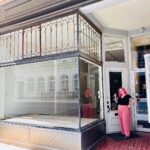
Mind you, not just any haircut, but one that would impress a 19th-century dandy, one reminiscent of a bygone era, a throwback to a golden age of men’s styling. Currently operating out of the historic Pancake Mansion in Harrisburg’s Shipoke neighborhood, Chops Barbershop’s rustic wooden floors, rich colors and walls displaying traditional grooming products immediately reminded me of the “Portlandia” sketch called “Dream of the 1890s.”

Chops himself looks the part, and his technique and approach to his craft also recalled a time when a barbershop offered a brief respite of pampering to men of almost all economic classes.

The thing is: I wasn’t really even there to visit with Chops (or the shop’s two enthusiastic Boston terriers, Tank and Lucy). I primarily was there to see Ashley Merris, Chops’ partner in business and life and the owner of the American Gentleman Soap Co.

It was a soap story I was after.

Sudsy Start

You really can’t separate the story of the Soap Co. from that of Chops, since they’ve long been connected.

“We started in a ‘homebrew’ group called ‘Addicted to Pomade,’ where we developed our signature hair product,” said Ashley. “We also needed a good shave soap for the shop. Since both turned out well, we decided to sell our pomades and soaps, along with beard butter and mustache wax, about two years ago. We are a little different from most ‘homebrewers’ because we have the barbershop as well, so we have a great place to test and sell our products.”

However, the American Gentleman Soap Co. has moved well beyond its modest, hobbyist roots. Despite being listed exclusively on Etsy.com (an online store and network of sellers of crafts, handmade products and art), wholesalers began contacting Ashley. The wholesale market now connects the company to an international customer base.

“Beyond most of the country, we have our products being sold in Indonesia, and we’re entering into a partnership with beard enthusiasts in Poland,” she said.

The concept of Polish beard enthusiasts struck me as odd enough, but it was the success in Indonesia that I felt needed further comment.

She responded with a shrug, adding, “Our pomade stands up well in the heat.”

Even as Ashley’s company blossoms, it is impressive that production still remains, quite literally, “in-house.”

“We make everything in the kitchen,” she said. “Production takes place during the week, whenever I have time. I use the stovetop, a double boiler and our pomade kettle. Everything is very simple.”

This is part of the appeal. Everything can be produced at home because every product boasts a short ingredient list.

“Our products are very simple. We put a lot of good stuff in it. Organic whenever possible. And we have vegan pomades that don’t contain beeswax.”

Ashley’s wholesalers often request large orders, leaving her and Chops struggling to keep up.

“We are definitely going to need to hire someone in the near future to help us fill all the orders that are coming in,” she said.

Traditions Live

As Ashley talked, with Chops occasionally chiming in, I tried to focus on the experience.

Conducting an interview while getting a haircut is certainly a challenge. Before long, we transitioned to a shave, meaning it was time for me to be quiet and let the man with the straight razor work his magic.

As Chops lathered my face with their signature shave soap, I was struck by the scent. In fact, the longer I sat in the chair, the more I realized that this might be the greatest appeal of the American Gentleman Soap Co.

I was instantly transported to fond memories of my childhood, when I would go to the neighborhood barber for a summer buzz cut. I remember having my prepubescent neck and sideburns superfluously shaved then patted with talcum powder. As I sat in Chops’ barber chair, awash in nostalgia, I wondered why we men abandoned these classic smells in exchange for the garish, hyper-masculine odors of Axe and Old Spice.

Chops spun me around to face the mirror. My face was smooth and my hair markedly shorter. I was very pleased as I stood up and brushed some residual cut hairs off of my shirt. Customers had begun to come in, and I feared that I had occupied the chair a little longer than expected, forcing Chops to run behind schedule for the rest of the day.

But, as I thanked my gracious hosts and made my way back to my car, pomade and shave soap samples in hand, I was grateful for the opportunity to travel back to my childhood when men’s grooming had a class and subtlety that I fear has been lost in this age.

And I was equally grateful that, between the American Gentleman Soap Co. and Chops Barbershop, these traditions are being maintained right here in Harrisburg.

Chops Barbershop and the American Gentleman Soap Co. are located at 331 S. Front St., Harrisburg. Call 717-379-5993 or visit www.chopsbarbershop.com. You can find the Soap Co.’s products at numerous sites online, including www.etsy.com.

Chops and Ashley also are raising money to move into a permanent home in Harrisburg. You can locate their fundraiser and contribute at www.gofundme.com/chopsbarbershop.



Continue Reading

What’s in “God’s Pocket?”: First-time director takes a bleak view of life in South Philly.

Illustration by Liz Laribee, lizlaribee.com

Illustration by Liz Laribee, lizlaribee.com

The world is made up of firsts, and the film reviewed here is no exception.

John Slattery, who has directed a handful of episodes of “Mad Men,” has taken his first crack at a feature film with “God’s Pocket,” an adaptation of another first, a novel by Pete Dexter. “God’s Pocket” depicts a section of South Philadelphia where uneducated, brawl-happy people are the norm, and everybody knows everybody’s business.

Renowned columnist Richard Shelburn (Richard Jenkins) narrates, “Everyone here has stolen something from somebody else, or, when they were kids, they set someone’s house on fire… And no matter what anybody does, they’re still here. And whatever they are is what they are. The only thing they can’t forgive is not being from God’s Pocket.”

Except for Mickey Scarpato (Philip Seymour Hoffman). Mickey only came to the Pocket through his wife, Jeannie (Christina Hendricks), but has fitted himself quite well into society, mostly because he’s just a plain decent guy. He scrapes up a living, albeit a slightly illegal living, selling meat out of the back of a truck, and Jeannie… well, Jeannie looks out of place, being the prettiest woman around, and doesn’t do much with her time other than serve as a blue-collar trophy wife. Her son, Leon (Caleb Landry Jones), works at a local construction site, and his tendency to pick fights and sling racial slurs leans toward the sociopathic. When Leon threatens a coworker, the man retaliates and lays a fatal blow to the back of his head. Choosing to side with anyone over Leon, the other construction workers cover for the man, claiming that “something fell” and struck Leon.

Jeannie becomes ill with grief at the news of her son’s death, leaving Mickey to make the funeral arrangements. But, when she hears the claims that his death was an accident, she won’t believe it—she just knows that something’s not right. She asks Mickey to investigate. Richard Shelburn has also been sent to get the real scoop on Leon, having become something of a local legend in God’s Pocket. But Shelburn is not the put-together writer he used to be; he passes the time nursing his alcoholism and traipsing after women, and, upon arrival in the Pocket, he immediately becomes infatuated with Mrs. Scarpato.

And so the plot unfolds. Mickey gets his friend, Arthur (John Turturro), to try to scare some details out of the boys at Leon’s work, and Shelburn tries to woo Jeannie into sleeping with him. Meanwhile, Mickey has financial troubles that cause some awkward things to happen at the morgue.

The tone of the film differs greatly from the book, which is a dark comedy. Not that the film doesn’t have its darkly comedic and absurdist moments, but it would be better described as a harsh glimpse into a whirlpool of hopelessness. Hopefully, this switch in tone was a conscious decision, and I almost wish that the film had carried the theme all the way to the end, but, instead, it ended with a moment of minute happiness, trying to wrap things up for our man, Mickey. The clinch of the story is how the inhabitants of God’s Pocket are continually pulled into the whirlpool, and the ending detracts from that somewhat.

The problem with a story whose characters internalize their bleak outlook is that the cast doesn’t quite have the chance to show off its theatrical prowess. It is almost a shame that the likes of Philip Seymour Hoffman and Christina Hendricks didn’t have more emotional range to work with. That being said, each character is very much realized and has the potential to tug at your heartstrings.

All in all, I’ve got to give Slattery credit for his first feature.God’s Pocket” is definitely worth watching, and I’ll be interested to see what lies in store next for him.

“God’s Pocket” will be playing at the Midtown Cinema in May. Come experience it for yourself.

Sammi Leigh Melville is a staff member and film reviewer at the Midtown Cinema.


May Events at Midtown Cinema

1st Sunday Brunch & a Movie
5/4 10:30 a.m. brunch and 11:00 screening of Mel Brooks’ “Spaceballs”

1st Sunday Foreign Series
5/4 7 p.m. Jean Cocteau’s 1946 French romantic fantasy “La Belle et la Bête” (“Beauty and the Beast”)

2nd Saturday
5/10 Saturday Morning Cartoons 9:30-11:30 a.m.

2nd Sunday AFI Top 100 Series
5/11 7 p.m. “Psycho”—watch the Hitchcock classic for Mother’s Day. Bring your mom or dress up as Norman to get a prize!

3rd in the Burg $3 Movie
05/16 9:30ish “Blazing Saddles” celebrates its 40th anniversary! BYOB

5/17-5/21 Jewish Film Festival

3rd Sunday Down in Front! Comedy riffing w/Jennie Adams
5/18 7 p.m. “The Horror of Party Beach” (1964) BYOB

4th Sunday Documentary Series
5/25 7 p.m. “Paper Clips” (2004)

5/29 7 p.m. Oliver Stone’s “JFK”—watch the 1991 docudrama to celebrate John F. Kennedy’s birthday

Continue Reading

Getting Unstuck: Perry County Literacy Council helps set people on new paths.

Illustration by Meg Davis

Illustration by Meg Davis, megan-davis.com

Ashley is a single mother on public assistance with two small children, but highly motivated to get off of assistance and into a job and career.

“I don’t want my kids to see all this,” she said, referring to what goes on in her economically struggling neighborhood.  “I want them to have a better life.”

So, she made a decision. She recently turned to the Perry County Literacy Council, which stepped in to help her start anew.

“Our formal mission statement is to provide educational programs for Perry County residents and families,” said Executive Director Kathleen Bentley.  “But the truth of the matter is that my job is to help motivated men and women get unstuck.”

Ashley came to the office about seven months ago. Not being a high school graduate, she first needed to obtain a GED.  That’s where the challenge began. To take the GED, she had to obtain a photo ID. But she had no way to get to a place to get that photo ID.

Stuck.

The next problem: to get a photo ID, she needed a birth certificate and a Social Security card.  And, to set up transportation and make appointments, she needed a cell phone. 

Stuck again.

Transportation is a huge problem in a rural county like Perry. Public assistance housing is outside of town, so, with almost no public transportation, it’s difficult to get around.

The council staff helped Ashley get her ID and the other material she needed to begin work on her GED. But Ashley needed months of tutoring (six hours a week) to pass the test. Again, with no transportation, she couldn’t get to the office for classes.

The council staff arranged transportation through the Volunteer Drivers Project, a group of local drivers. So, Ashley was able to travel to the classroom to work with tutors and study for her GED. 

But, as a single mother of two, Ashley needed childcare. The council staff was able to work with the Public Assistance Office, and Ashley was approved for subsidized childcare.

Unstuck.

“The point I’m making,” Bentley said, “is that there are huge barriers for people trying to get off of public assistance. For many, these barriers are too high, and they give up. I look on it as my job to bust through those barriers and give highly motivated people like Ashley a chance. With our help, many are able to make it off of public assistance and on to a brighter future.”

Ashley worked hard and completed her GED. She wanted that job. She wanted her independence. The next step for Ashley was to begin work with the council’s partners.

Web of Services

Once Ashley received her GED, she needed training for employment. She enrolled with the Title I Workforce Investment Act career manager and was referred to classes that prepared her to take the WorkKeys tests. 

Developed by the American College of Testing (ACT), WorkKeys measures the skills that are crucial for job success. Postsecondary schools and businesses then could evaluate Ashley’s potential for success and know what they were getting when they hired her.  

“I learned in my years working in nonprofits that you need a team in order to obtain funding to help people,” Bentley said. “Here in our building, we have Tech Bridge, which helps at-risk youth ages 16 to 21 with pre-employment training, job search and transition to postsecondary training and employment.” 

The council also offers Experience Works, which provides placement for low-income residents, ages 55 and over, to train for employment in not-for-profit agencies.

“We can help place almost anyone once they have attained the workforce certification,” Bentley said.

Moreover, this web of agencies resides under one roof, working together to help ensure an applicant can quickly and easily move from one to the other, minimizing the need for transportation.

“When we moved in to our current building, I wanted a joint operation with all of the organizations—an opportunity for one-stop shopping,” Bentley said.

Not Over Til It’s Over

Once Ashley completed her workforce certification testing, she interviewed and searched out a career opportunity as a pharmacy tech. 

She will take the courses online, but needed transportation to get to a job, so she needed a car.  Before she could get a car, she needed a driver’s license. Before she could get a driver’s license, she needed driver’s training. 

Stuck once more.

The council was able to help her with all of that. She soon will enter training and an internship program with a large drug company. And, with a car, she can work while attending training.

“My concern is that Perry County is replete with people like Ashley,” Bentley said. “They don’t want to be on public assistance or go back to jail or get hooked on drugs again, but the barriers for these people are enormous.”

Each year, the council helps 100-plus dedicated people make the journey out of poverty and onto the employment rolls, said Bentley, “but it requires teamwork among a number of agencies and an agency like ours to drive the program.”

“We believe that every person who walks through our door must be treated as a person and not just a number,” said Dawn Beaver, the council’s tutor coordinator.  “If a client is willing to do his part, we will do everything possible to help that person be successful.”

The Perry County Literacy Council is at 133 S. 5th St., Newport. Call 717-567-7323 or visit www.perryliteracy.com.


Race For Reading

Over its 30 years, the Perry County Literacy Council has helped hundreds of residents increase their literacy levels or obtain GED credentials to improve their standard of living.  While government funding, private foundations and cost-sharing strategies support the bulk of the programs, the council must raise about 35 percent of its own budget every year.

The Race for Reading, the council’s annual fundraiser, greatly helps that effort. It’s held on Kentucky Derby Day, this year at the Little Buffalo State Park Reception Hall on Saturday, May 3. Doors open at 5 p.m., and guests are treated to a buffet dinner and a silent and live auction for $35.

“It’s a beautiful thing to see the community rally in support of the Literacy Council,” said Leslie Heimbauch, the council’s office manager. “They know how important it is that we are able to continue these innovative programs to help Perry County residents get off assistance and earn a living wage.”


Continue Reading

Mother’s Day, Italian Style: Brunch gets a Mediterranean makeover.

Screenshot 2014-04-30 10.21.58May arrives this year as a welcome relief from a harsh, cold winter. And as I write this in early April, spring hasn’t been much better. May is the month of soft breezes, lilacs, lilies of the valley, pink dogwood blooms, graduations, weddings and first Communions—and, of course, Mother’s Day.

When our parents and aunts were living, it was our Mother’s Day tradition to go to the Hotel Hershey for an early evening dinner. Those were wonderful times, if a little crazy, with so many Italians talking at once. One year, upon arrival, my husband told our server to bring him two martinis and talk to no one but him.

In more recent years, I’ve taken to entertaining my own small family on Mother’s Day. My husband would suggest this is due to my natural propensity for suffering. But I love to cook, and Mother’s Day is always a happy occasion for me.

Brunch, with its endless menu possibilities, is a great way to do Mother’s Day. You can eat early and still have time for a lazy walk along the river. Try beginning with a light and fresh mimosa (fresh orange juice and champagne), a spicy bloody Mary or maybe a Bellini (fresh peach puree and Prosecco). And, rather than traditional scrambled eggs or eggs Benedict, try a “frittata,” the Italian version of an omelet.

Like many Italian dishes, a frittata lends itself to variations and can be served hot, cold or at room temperature. Eggs can be mixed with your filling of choice, including fresh spring vegetables, Italian meats, all types of cheeses and even leftover, plain cooked pasta. Frittatas are begun in a skillet and finished in the oven, which, to me, is so much easier than trying to fold and flip an omelet.

But a few words of caution: a heavy, non-stick skillet that can go under the broiler must be used, and don’t overcook. Scorched fritattas aren’t very good.

The following frittata recipe comes from Giuliano Hazan, son of Marcello Hazan, known as the “queen of Italian cooking.” He advises mixing the sautéed vegetables with the eggs in a bowl, while other chefs simply pour the eggs right over the vegetables in the skillet. Either way works. His version combines several traditional Italian flavors: prosciutto, pecorino cheese, tomato and sweet basil. Remember, if you try this recipe, many different ingredients can be substituted. Aim for seasonal asparagus in spring or red peppers and eggplant in late summer.

Frittata with Onions and Prosciutto

  • Slice 2 large sweet onions into thin rings (look for Vidalias this time of year). Place them in a 10-inch, non-stick skillet and sauté along with 1½ tablespoons of sweet butter over medium heat until soft and lightly browned (about 10 minutes). Add a little salt and pepper.
  • Slice 1/8 of a pound (2 ounces) of prosciutto into thin strips and, when the onions are brown, add them to the skillet. Sauté for another minute.
  • Add a teaspoon of chopped fresh marjoram leaves to the skillet and cook 10 minutes more until the onions are completely wilted. Substitute fresh oregano if you prefer.
  • While the onions cook, dice a large (about 10 ounces) ripe tomato into ¼ inch pieces and add to the skillet. Cook about 10 to 15 minutes more until all the tomato liquid evaporates.
  • Beat 5 large eggs in a bowl and add 6 to 8 fresh, chopped basil leaves, ¼ cup grated pecorino Romano cheese and salt and pepper to taste. (Use a large bowl.)
  • Empty the contents of the skillet into the bowl with the eggs and mix thoroughly.
  • Pre-heat the broiler and melt an additional ½ tablespoon of butter in the same skillet. 
  • Pour the egg mixture back into the skillet when the butter is hot. Cook the eggs over medium heat for 6 to 8 minutes until the bottom is lightly browned. The top will still be runny.
  • Then place the skillet under the broiler until the frittata is firm and golden brown. Be careful not to burn. (Use one of the oven racks that is not so close to the heat.)
  • Remove the skillet from the oven and place it on a heatproof surface. Lightly run a plastic knife or spatula along the edges to loosen the eggs and then slide the frittata onto a plate. It will look like an “egg pie!”
  • As noted above, the frittata can be served warm or at room temperature, allowing time to get your other dishes on the table.

The frittata is usually cut into wedges and served with lightly dressed arugula salad. You also can toss fresh fruit with a little limoncello to serve alongside. A simple slice of melon would also be lovely.

Harrisburg has several restaurants serving delightful brunches. Mangia Qui, Home 231, Raspberries at the Hilton and the Federal Taphouse are among them. But, if you want to try your hand serving brunch at home, I know you will enjoy making frittatas. They do take a little practice but are so versatile. Try them for dinner, too, along with some rosemary roast potatoes.

Happy Mother’s Day to all readers of TheBurg!

Continue Reading

Ancient Vines, Modern Wines: These grapes offer a taste treat and a history lesson.

Screenshot 2014-04-30 10.21.17In the world of wine, it is not uncommon for the traditions of the past and the ideas of the future to collide. Time continues its path toward the unknown, and things that were once set in stone are pushed out of the way.

For instance, the modern invention of the screwtop has finally made inroads against the age-old cork, though that controversy looks to continue for a long while.

Sometimes, though, new technologies help us to discover secrets of the past. DNA testing in Italy, for example, has brought grapes that were once thought to be extinct a new popularity. This, coupled with modern winemaking, has made it possible for us to enjoy wines that were available 2,000 years ago. 

Three of these grapes are from the Campania region, one of the places the Greeks settled in ancient times—a hop, skip and jump from the island of Capri and with a beautiful harbor at what is now Naples.

The three grapes are Greco di Tufo, Fiano and Falanghina. These are not names that one hears very often or even sees in print when discussing white wines (the French and the Germans seem to have that pretty well covered).

There are certain similarities in these varietals. They are light in body and color, delicately aromatic, nicely acidic and don’t seem to age well. These are wines that match well with summer foods and with summer temperatures. Each one has its own characteristics and should be sought out by the wine drinker who is looking for something unique, as well as a bit of a history lesson in ancient Italian culture. Just remember that our modern refrigeration is light years ahead, and you can believe these quaffs were imbibed at room temperature. 

The name Greco di Tufo translates into “the Greek from Tufo.” This is a town named after the volcanic rock (tufa) that it sits on. It gives the wine a wonderful, minerally nuance that shows in the first sip.

What I like best about this Greek is the way it coats the inside of your mouth. The taste of the grapes seems to fill every nook and cranny. It has a nice long finish and also works well as a palate scrubber, making the next bite of food as delectable as the first. It’s well worth a wine-lovers search. 

The name Falanghina is thought to derive from the Latin word phalanga, meaning stake or pole. This is a reference to the early Greek method of training the vines onto poles or large stakes. This is a real workhorse grape used in sparkling, still and late-harvest dessert wines. It’s wonderful in all its permutations. 

Fiano is known as the “pesto” wine. It has a nutty, herbal flavor that does taste remarkably like the popular green sauce. Poured at a meal with pasta covered in this traditional way is a true gourmands treat. It is a match made in heaven.

Three ancient grapes, three wonderfully modern wines. Can it get any better?

Keep sipping, Steve.

Continue Reading

Community Corner: Notable Events in May


Governor’s Breakfast

May 1: Hear Gov. Tom Corbett speak about his plans going forward at the breakfast sponsored by the Harrisburg Regional Chamber & CREDC. For more information, visit www.harrisburgregionalchamber.org/events.

Spring Auction

May 2: St. Stephen’s Episcopal School will hold its annual Spring Auction featuring live and silent auctions. All proceeds will benefit the school. Tickets are available online or at the school office. For more information, visit www.sseschool.org.

Aromatherapy Class

May 3: Emma’s on Third will hold an aromatherapy class, 1-3 p.m. In addition to the class, you’ll have a chance to check out the new salon at 1419 N. 3rd St., Harrisburg. Visit www.emmasonthird.com or call 717-233-3662.

Great Harrisburg Cleanup

May 3: The Great Harrisburg Cleanup is back for a second year. Projects will take place throughout the city, 9 a.m. to 1 p.m. To volunteer, organize a project or make a donation, visit www.historicharrisburg.com. 

Derby Day

May 3: Watch the Run for the Roses in style at the 13th annual Derby Day, which benefits the arts group, Jump Street. This year, the event gallops back to the Harrisburg area, taking place at the Mount Hill Tavern, 2120 Colonial Rd. Information can be found at www.jumpstreet.org.

Community Yard Sale

May 3: Riverside United Neighbors will host a yard sale at the firehouse at N. 4th and Lewis streets, Harrisburg. Various organizations and non-profits will be present. For more information, call 717-238-3712.

Pancake Breakfast

May 3: Members of the Keystone Capital Chorus will hold a pancake breakfast at the Christ Presbyterian Church, 421 Deerfield Rd., Camp Hill. Pancakes will be all-you-can-eat. There will also be a bake sale and live music. The breakfast is 7 a.m. to 11 a.m. with tickets $6 for adults and $4 for kids 6 to 12. For more, call 717-766-8127.

Trash to Treasure

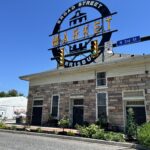
May 3: Learn to transform your garden using sustainable ideas while utilizing the concepts of re-use and up-cycling. The free event will start at the Broad Street Market in Harrisburg at 10 a.m. with a clean up beginning at 9 a.m. For more information, email [email protected].

Half-Price Days

May 3, 4: This weekend, the National Civil War Museum holds half-price days on all ticket admissions, including for adults, seniors and students. For more information, visit www.nationalcivilwarmuseum.org.

Garden Faire

May 4: Make the most of spring at Fort Hunter Park’s Garden Faire. Browse through plant sales and craft tents and enjoy the exhibits on Victorian life. The event is free to the public, 10 a.m. to 4 p.m. For more information, visit www.dauphincounty.org.

Harrisburg Walks Together

May 4: Join a 2.5-mile walk through Harrisburg’s Riverfront Park, beginning at the Jewish Community Center and ending at the Pennsylvania Holocaust Monument, to support tolerance and raise money to repair and maintain the monument. The walk begins at 2 p.m. For more, visit www.holocaustmonument.myevent.com.

Cinco De Mayo Mixer

May 5: Members from various chambers of commerce will be on hand at this regional mixer fiesta at the Conference Center at Shippensburg University. Ethnic foods and refreshments will be offered, and there is no cost to attend. For more information, visit www.wschamber.org.

Commonwealth Interfaith Service

May 5: Observe National Day of Prayer at the Pine Street Presbyterian Church in Harrisburg. A diverse group will be present, and many forms of prayer will be offered starting at 5:30 p.m. For more information, visit www.pachurchesadvocacy.org.

Project 20

May 8: The debut of Project 20 will be held at the Kunkel Lounge at the International House on Chestnut Street in Harrisburg, 5:30 to 7:30 p.m. It will feature unique pieces of art by local and international artists, as well as live music, wine and cheese and chances to mingle. For more, call 717-236-5061 or email [email protected].

Vintage and Vineyards

May 9: A wine festival featuring more that 100 wineries will be held at the Antique Automobile Club of America Museum, 161 Museum Dr., Hershey. Hundreds of wines will be available for sampling, and there will be a Wine and Good Spirits Store on-site. Visit www.aacamuseum.org.

Midtown May Market

May 10: Have something to sell? Then join Friends of Midtown for their annual community-wide yard sale, 8 a.m. to 4 p.m., throughout Midtown Harrisburg. At the same time, Second City Church, 251 Verbeke St., will host an indoor market. For more, visit www.friendsofmidtown.org or their Facebook page.

For the Love of Chocolate

May 10: Learn about the rich history of chocolate and the Hershey story with Sharon Cin, supervisor of Chocolate Lab. You also can learn how to prepare chocolate in various ancient ways. The event will be 2 to 4 p.m. at the Fredricksen Library in Camp Hill. Visit www.fredricksenlibrary.org.

Tea at the Harris-Cameron Mansion

May 10: A Mother’s Day weekend tea will be held at the Harris-Cameron mansion in Harrisburg. A portrayal of Margaretta “Maggie” Cameron, played by re-enactor Elizabeth Dillion, will host the tea and share stories of the Cameron family’s travels across Europe. Tickets are $20 and $15 for Historical Society members. Please visit www.dauphincountyhistory.org.

Annual Golf Outing

May 12: Network while enjoying a relaxing sport with the West Shore Chamber of Commerce. Silent auctions and prizes will be awarded, and each golfer will get a boxed lunch, 18 holes of golf and dinner. The event starts at 11 a.m. and will cost $165 per golfer. For more information, visit www.wschamber.org.

Fredricksen Reads

May 13: Join the Fredricksen Library for a book discussion about Louise Erdrich’s “The Round House,” a story that takes place on the Ojibwe reservation. The discussion begins at 7 p.m. Visit www.fredricksenlibrary.org.

German Jackson House

May 13: Historian Calobe Jackson leads a talk on the importance of the German Jackson House in Harrisburg history. Presentation begins at 6 p.m. at the Historic Harrisburg Resource Center, 1230 N. 3rd St., Harrisburg. RSVP to [email protected] or call 717-233-4646. Visit www.historicharrisburg.com.

Stress Relief Walk

May 14: Hike away your troubles at Wildwood Park with a three-mile, slightly vigorous walk along easy trails. Bring water and wear sturdy shoes. For more information on this free event, visit www.dauphincounty.org.

Candidate Debate

May 14: Harrisburg Hope will sponsor a candidate debate between state Rep. Patty Kim and her Democratic primary challenger Gina Johnson-Roberson. The event starts at 6 p.m. at Midtown Scholar Bookstore, 1302 N. 3rd St., Harrisburg. 

Jewish Film Festival

May 15-22: The Harrisburg Jewish Film Festival returns to Midtown Cinema this year for most of its movies, which range broadly in subject and sensibility. In addition, the State Museum will host several unique events on May 18, including a showing and discussion of the classic film, “Good-Bye Columbus,” and the presentation, “Jews in Toons,” by long-time Simpsons’ writer/producer Mike Reiss. For more, see our feature story in this issue or visit https://hbgjff.wordpress.com.

Town Band

May 16: The New Cumberland Town Band will hold a concert at Cedar Cliff High School in Camp Hill at 7 p.m. along with the school’s band. For more, visit www.nctownband.org.

Plein Air Competition and Festival

May 16-18: The annual festival features art and photography from dozens of artists from five states, exhibiting art in and around Willow Park in Camp Hill.  There will be an art competition in addition to the free workshops, lectures, live music and food. Much of the festival is free. For more information, see our feature story in this issue or visit www.pleinaircamphill.org.

Greek Fest

May 16-18: The annual Greek Fest returns to Holy Trinity Greek Orthodox Cathedral in Camp Hill. Enjoy some of the area’s finest Greek food, in addition to music, dancing and vendors. Visit www.pagreekfest.org for more information.

Girls on the Run

May 17: 500 girls from grades 3 to 8 will represent schools from Dauphin, Cumberland and Perry counties in the Capital Area Girls on the Run 5k. The run begins at the Milton Hershey School campus at 10 a.m., with registration starting at 8 a.m. All proceeds benefit the Capital Area Girls on the Run. Visit www.CapAreaGirlsontheRun.org.

Walking with Color Guard

May 17: Support more than 45 non-profit organizations at the Highmark Walk for a Healthy Community. On-site registration will be available at HACC starting at 7:45 a.m. The walk begins at 9 a.m., and the 1-Mile Fun-Walk is at 9:15 a.m. For more information, visit www.walkforahealthycommunity.org.

Adaptive Reuse

May 20: Frank Dittenhaffer of Dittenhaffer and Murphy will offer tips on how to make environmentally responsible decisions for homeowners seeking to combine a vintage feel with green sensibilities in their historic homes. Talk begins at 6 p.m. at the Historic Harrisburg Resource Center, 1230 N. 3rd St., Harrisburg. RSVP to [email protected] or call 717-233-4646. Visit www.historicharrisburg.com.

Artsfest & Filmfest

May 24-26: Produced by Jump Street, Artsfest returns to the Harrisburg waterfront, featuring an arts competition, art sale, vendors, food and entertainment. In addition, Moviate marks its 16th year hosting the Artsfest Film Festival, with locations around Harrisburg. For more information, visit www.jumpstreet.org and www.moviate.org.

Pinterest Party

May 25: Make use of the projects on Pinterest involving up-cycled wood scraps at the Fredricksen Library in Camp Hill. You will be able to make decorations such as personalized signs, coat hook boards and more. Basic supplies are provided. For ages 16 and up; the cost is $5. Visit www.fredricksenlibrary.org.

Ladies Who Lead

May 29: The Harrisburg Regional Chamber & CREDC will hold a half-day conference encouraging women to lead in any career. There will be a luncheon, keynote presentation and various sessions. For more, visit www.harrisburgregionalchamber.org/events.

Continue Reading

April News Digest


Grand Jury Probes City Finances

A state grand jury has been empaneled to investigate the various dealings that led to Harrisburg’s financial crisis.

Mayor Eric Papenfuse last month confirmed that he recently testified before the grand jury, which reportedly is meeting in Pittsburgh. He would not give specifics of his testimony.

City officials and former receivers William Lynch and David Unkovic all have supported criminal investigations into how the city wound up on the verge of bankruptcy, largely due to crippling debt tied to the city incinerator.

Dauphin County District Attorney Ed Marsico turned the matter over to state Attorney General Kathleen Kane after citing a possible conflict of interest in the case.

The grand jury probe appears to be wide-ranging. Investigators have taken large quantities of documents both from City Hall and the school district, according to sources.

In City Hall, many of the documents were discovered in locked filing cabinets and in locked closets that were opened once Papenfuse took office in January, sources said.

After its investigation is complete, the grand jury will recommend whether to file charges in the case. The prosecutor then determines whether or not to issue indictments.


Councilwoman Eugenia Smith Dies

Councilwoman Eugenia Smith died suddenly last month at age 53.

Smith, a lifelong city resident, died at Harrisburg Hospital after suffering a heart attack. She had begun her second term on City Council in January and was chair of the council’s Public Safety Committee.

“This is deeply shocking,” said Mayor Eric Papenfuse. “I share the pain and loss that people throughout our city assuredly feel as we try to absorb this sudden news. Our thoughts and prayers are with her family at this time.”

Council now must fill the open seat. City residents have until May 2 to submit applications, and a brief, public interview will follow. After nominations by council members, a final vote is slated for May 12. The new council member will serve until January 2016.

Judith Hill, Harrisburg’s first African-American councilwoman, also died last month.


Firefighter Contract Approved

Harrisburg City Council last month approved an agreement with the firefighter’s union designed to save the city about $70,000 a month.

The contract sets up a 14/1 shift, meaning that 14 firefighters and one commander will be on duty across the city at all times. Previously, the department operated with 16 firefighters and one commander for each shift.

The contract changes should significantly reduce firefighter overtime, a key element in city and state efforts to bring Harrisburg’s budget into balance.

The city last month also proposed closing the aging Paxton Fire Co. station in Shipoke. This proposal, an outgrowth of the new contract, caused concern among some residents, leading the Papenfuse administration to hold a community meeting to explain its plan.

Former Mayor Linda Thompson also had proposed closing the station, but dropped the idea after encountering resistance.


Mayor Moves to Replace Veno

Mayor Eric Papenfuse has asked the state to replace Gene Veno as chief recovery officer for the school district.

Papenfuse last month said he met with state Secretary of Education Carolyn Dumaresq to “express his alarm at the lack of progress at improving academic standards” in city schools and request that Veno be replaced.

“My concern is that Mr. Veno does not believe Harrisburg schools will meet academic benchmarks under the plan he devised,” he said. “This is unacceptable and compromises the future of our children.”

Papenfuse also came out in support of Key Charter School, which wishes to locate in the old Bishop McDevitt High School at 2200 Market St. The school board, which has rejected many charter school applications in recent years, must approve Key’s application.

“There should be a sense of urgency about these under-performing schools,” Papenfuse said, “and parents ought to have other possibilities to ensure their children are well educated and ready for the workplace. Harrisburg’s economic recovery won’t succeed unless we have an educated workforce ready to claim the jobs that will be created.”


“Mary K” Mansions Sell

A decade-long saga came to a close last month as the “Mary K mansions” sold at auction for a total of $756,000 to two buyers from the west shore.

On a sunny, cool day, multiple bidders dueled for about 2 1/2 hours at the outdoor auction, held on one of the four lots near the corner of Front and Manor streets.

In the end, Mike and Sally Wilson of Lisburn paid $361,000 for two of the properties at 2909 and 2917 N. Front St. Rob Edwards of Dillsburg paid $395,000 for 2901 N. Front St., which includes a large house and a parking lot off of Division Street.

Mike Wilson, the owner of Integral Construction, said that he and his wife intend to renovate and live in the mansion at 2909 N. Front, but he wasn’t sure what they’d do with 2917 N. Front, a dilapidated building that long served as an office building.

Edwards said he had no plans yet for his properties. He said he often buys and sells properties at auction and was attracted to these houses because of the location on the river.

Previous owner Mary Knackstedt bought the properties in 2004, planning to raze them and build a 32-unit condominium development. However, her land use plan met fierce resistance in the neighborhood, and City Council ultimately rejected it.

She later defaulted on her mortgages and declared bankruptcy. A last-ditch effort last year to sell the properties for $2.5 million failed, leading to the auction.


Illegal Gun Project Launched

Harrisburg and Dauphin County are teaming up to increase penalties for carrying illegal weapons.

Under the “$100K Illegal Gun Project,” Harrisburg police officers and the county district attorney’s office will request that courts set bail at a minimum of $100,000 for anyone charged with illegally carrying a firearm.

The bail amount would be recommended for felons who are prohibited from carrying a gun and for anyone carrying one on themselves or in their vehicle without a license, according to a joint city/county announcement.

In addition, police and prosecutors will request juvenile detention for any juvenile older than 15 who is charged with illegally carrying a firearm.


Historic Train Moved

The historic GG1 Pennsylvania railroad locomotive No. 4859 was temporarily moved from its spot at the Harrisburg Transportation Center last month to a siding 1,000 feet west of the station.

Rail enthusiasts gathered to watch and take photos of the GGI locomotive and caboose, which were moved so that Amtrak could continue its $36 million project to improve power, signals, track and switches in the station.

An Amtrak locomotive pushed the GGI and caboose to a siding near the 7th Street garage about ¼-mile away. The locomotive then was “shrink-wrapped” to protect it from the elements until it can be moved back to its current location.

The GG1 served the Harrisburg station on service to Philadelphia and New York between 1938 and 1981. It was located at the station as a memorial to that service in 1986, designated as the official state locomotive and is listed on the National Register of Historic Places.

The Harrisburg Chapter of the National Railway Historical Society maintains both No. 4859 and the caboose.


Changing Hands

Calder St., 211: T. Chapin to I. Blynn, $165,000

Charles St., 232: L. Milner & A. Lee to R. Gosnell, $120,000

Chestnut St., 2048: Secretary of Housing & Urban Development et al to S. Reyes, $70,875

Disbrow St., 97: J. Handy Jr. to J. Hobbs, $45,000

Duke St., 2452: PA Deals LLC to M. & D. Graeff, $68,000

Harris St., 230: Fannie Mae to Klimke Holdings LLC, $51,000

Jefferson St., 2241: Kirsch & Burns LLC to LMK Properties LLC, $45,000

Manada St., 1918: K. & J. Frobenius to 2013 Central PA Real Estate LLC, $55,000

Market St., 1827: K. Frobenius et al to 2013 Central PA Real Estate Fund LLC, $55,000

North St., 231, 233, 235: F. Galiardo Realty Management Associates LLC to Murphy & Laus Real Estate LLC, $325,000

N. 2nd St., 817: R. Baker to HCH Investments LP, $127,000

N. 3rd St., 1633: B. Jones & C. Heintzelman to J. & S. Compton, $38,000

N. 4th St., 2737: M. Horgan & Innovative Devices Inc. to T. Murphy, $37,000

N. 5th St., 3024: S. Zerbe to J. Olan, $89,000

N. 6th St., 2013: Sixth Street Clover Club to Victor Ventures, $30,000

N. 16th St., 921: J. & V. Waid to Equity Trust Co., $38,250

N. Front St., 1107: J. Farrell to M. Perrone, $184,900

Parkway Blvd., 2507: R. Zogby & L. Sfier to B. & B. Reid, $120,000

Peffer St., 214: BFI LP to M. Magaro et al, $51,000

Penn St., 1424: R. Benton to R. Essig, $30,000

Penn St., 2315: BFI LP to M. Magaro et al, $36,000

Regina St., 1849: J. Vogelsong to D. Moore Sr., $40,000

Rolleston St., 1315 & 1411: S & R Estates LLC to Keystone RH LLC, $890,000

Rudy Rd., 2400: Secretary of Housing & Urban Development to J. & M. Caulfield, $90,000

S. 14th St., 361: J. Rodriguez to Urena Diaz Property, $33,000

S. 15th St., 438: J. Vogelsong to D. Moore Sr., $30,000

S. 16th St., 336: Harrisburg Redevelopment Authority & Tri-County HDC to L. Wilson, $101,000

S. 20th St., 1226: G. & H. Fabiankovitz to R. & G. MacWhinnie, $110,000

S. 25th St., 713: Fannie Mae to S. Mosley, $50,500

S. 26th St., 710: Fannie Mae to S. Mirenda, $62,500

S. 27th St., 724: E. & R. Kolp to S. Armstrong & P. Hudson, $125,000

Walnut St., 1261: JP Morgan Chase Bank NA to G & G Property Services LLC, $35,000


Continue Reading

Giving Trees

tree_before

Tuesday morning, around 9 a.m., a bright-orange track hoe rolled down N. 3rd Street, trailing behind it a brief pileup of cars. Abruptly, it pulled over, releasing the traffic, and dug a sewer-lid-sized hole in the grass between the sidewalk and road.

“In Harrisburg, you never know what you’re going to find,” said Dan Quinn, the plant manager of NRG Energy Center Harrisburg, whose logo was emblazoned beneath the track hoe’s cab. “Walls, old foundations.” The hoe tore up another chunk of earth, which turned out to contain some pieces of asphalt and an old brick.

It was Earth Day, and NRG had donated equipment, plus Quinn and a colleague, to a tree-planting event Uptown. The hoe had been digging since 8 o’clock, leaving a trail of holes that stretched back a block, skipping the odd extant oak before forking up Wiconisco. Beside each hole lay a scraggly tree sapling, its roots bundled in plastic, like a bagged witch’s broom.

Somewhere at the end of the trail was Jean Cutler, the vice-president for programs and development for the Covenant Community Corporation (“Motivate. Educate. Initiate!”) and the tree-planting project’s lead. Cutler had corralled the event’s volunteers, including graduates from an environmental leadership training program she helped to spearhead last year. For the moment, though, she was out of sight. “Tell her she’s lagging!” Quinn joked. “We’re way up here and haven’t seen any of her planters.”

As it turned out, Cutler was around the corner, completing a TV interview behind the headquarters of the Valley of Harrisburg. The Valley, a consistory of the Scottish Rite of Freemasonry, Northern Masonic Jurisdiction, was acquiring 14 trees along its perimeter in exchange for a few man-hours of labor. As Cutler spoke on camera, Valley members shuffled a tree out of its bag and stood it in its hole. Then someone opened a leveling app on a smartphone.

“They try to make sure the trees don’t have a ‘gangsta lean,’” said James, a volunteer picking up service learning hours for a sociology class at Penn State. He pointed to a fully grown oak nearby that tilted slightly towards the street.

The volunteers checked the depth of the hole, then started refilling it with soil. Some of them took up hunks of displaced sod, stooping beside the newly planted trunk to whack the dirt free. “Don’t move,” said a mustached man in a light jacket. He leaned his shovel against a bent-over compatriot, from whence it tumbled to the ground.

Cutler, wrapping up her television spot, headed off to catch up with the track hoe. “It took a lot of organization to make this work,” she said. She put together notebooks of specifications on tree varieties and went around asking neighbors what they’d like to see planted. She also gathered cash donations, in addition to in-kind services and commitments from volunteers, to match a grant from the TreeVitalize program, a partnership of the state Department of Conservation and Natural Resources. The grant had helped pay for the 43 trees for that day’s planting—a mix of oaks, cherries, and autumn brilliance serviceberries. (There was also one European hornbeam and one gingko.)

Back on 3rd Street, the planting had picked up. Two graduates from the environmental leadership program, Don Schwab and Pat Buckley, worked with DCNR’s Ellen Roane, who gave her title as “forest training and partnership specialist” and then whittled it down to “urban forester.” Schwab, who wore a wool sweater and a black ball cap from the Department of Rehabilitation and Corrections (“Got it at a garage sale,” he said), is currently in the planning phase of another tree planting for his own neighborhood, Riverside. Both he and Buckley had completed an online tree-tending course through DCNR the previous year. “Trees die,” Schwab explained. “And then you need to plant again or just have a barren lot.”

The trees had come from Schichtel’s Nursery, near Buffalo, N.Y. They were transplanted via the “bare root” method, as opposed to the “ball and burlap” method, or “B & B.” B & B involves keeping a ball of soil intact around the roots, Roane explained. It extends the length of time a tree can be kept out of the ground, but it’s more labor intensive than going bare root—for the five-foot sapling they were currently planting, the root ball could weigh perhaps 200 pounds. “For volunteers, this makes a lot more sense,” she said.

The downside of bare root was, well, the bareness of the roots. To keep them moist, the nursery applied a hydrogel, developed by researchers at Cornell University, that would buy planters two or so weeks to get the trees into the ground.

“A lot can be done to train trees when they’re young that pays off big time when they’re older,” Roane said. She snipped back a curiously vertical branch that was competing with a serviceberry’s central leader. Correct pruning, she said, mimicked nature: “When a tree is properly pruned, you can’t tell, because it looks natural.”

In 2013, the Harrisburg Authority (now Capital Region Water) partnered with DCNR, the Chesapeake Bay Foundation and the Pennsylvania Urban and Community Forestry Council to commission a tree inventory for Harrisburg. (The project was the subject of a November feature in TheBurg.) By the time it was completed, in late July, the survey had identified more than 6,800 trees, along with 1,800 sites suitable for new plantings.

Cutler, in a press release before Tuesday’s event, had recited the benefits cities could expect from trees: they reduce storm runoff, increase property values, absorb carbon dioxide and, more loftily, may also reduce “stress, blight and criminal activity.” On Tuesday she suggested the project had another indirect benefit—bringing people together to take of their community.

tree_after

Continue Reading

Mary K Properties Sell at Auction

MaryKWeb

Two of the three mansions formerly owned by Mary Knackstedt that sold today at auction.

A decade-long saga came to a close today as the “Mary K mansions” sold at auction for a total of $756,000 to two buyers from the west shore.

On a sunny, cool day, multiple bidders dueled for about 2 1/2 hours at the outdoor auction, held on one of the four lots near the corner of Front and Manor streets.

In the end, Mike and Sally Wilson of Lisburn paid $361,000 for two of the properties at 2909 and 2917 N. Front St. Rob Edwards of Dillsburg paid $395,000 for 2901 N. Front St., which includes a large house and a parking lot off of Division Street.

Mike Wilson, the owner of Integral Construction, said that he and his wife intend to renovate and live in the mansion at 2909 N. Front, but he wasn’t sure what they’d do with 2917 N. Front, a dilapidated building that long served as an office building.

“We wanted it for the river view,” Wilson said of his future home.

Edwards said he has no plans yet for his properties. He said he often buys and sells properties at auction and was attracted to these houses because of the location on the river.

“It’s so beautiful here and so serene,” said Edwards, a retired builder who developed Montadale Crest, a 49-lot development outside of Dillsburg, in the 1980s.

Previous owner Mary Knackstedt attended the auction, shielding herself from the sun under a large umbrella as she paced about, keeping track of the bidding. She bought the properties in 2004, planning to raze them and build a 32-unit condominium development. However, her land use plan met fierce resistance in the neighborhood, and City Council ultimately rejected it.

She later defaulted on her mortgages and declared bankruptcy. A last-ditch effort last year to sell the properties for $2.5 million failed, leading to today’s auction.

The auction was unusually complicated because it was divided into two rounds. In the first round, parties bid on individual parcels. In the second round, they bid on multiple parcels, which included every possible property combination.

Harrisburg Mayor Eric Papenfuse, who lives nearby, dropped by and then stayed as the bidding escalated. He said he was pleased with the result of the auction.

“We are glad to get these properties back on the tax rolls,” he said.

According to Dauphin County, property taxes for the parcels are about $220,000 in arrears.

Want to know more? Read senior writer Paul Barker’s award-winning feature on the Mary K story from June 2013.

Continue Reading

The Roll of a City: Family, racial changes staged with humor, grace in “Clybourne Park.”

ClybourneParkWeb

A scene from “Clybourne Park”

Russ eats Neapolitan ice cream straight out of the carton while his wife and maid pack boxes.

Tilted portraits on the mantel and a trunk that needs to be moved reveal not just a change of residency but a move towards a different society. This placid moment, the “calm before the storm,” is broken by Open Stage of Harrisburg’s talented and hilarious ensemble in Bruce Norris’ “Clybourne Park,” a comedic drama presented with humor and passion on opening night last weekend.

In the middle of the Civil Rights movement, a white family leaves the boastful Clybourne Park neighborhood in this precursor to “A Raisin in the Sun.” Fast-forward half a century to the same house (with the same actors playing different characters), as the home changes hands back to a white family, and not many of the issues between races have been fully resolved.

The ensemble of seven plays authentically off one another cohesively to form the two acts that feel not like line delivery on stage, but eavesdropping on one’s living room conversation.

Set in the home of Russ and Bev, a couple whose son committed suicide two years prior to the scene, the first act manifests the trepidation and fear surrounding racial divide in a late-1950s Chicago neighborhood. As the couple and their black “help” pack boxes, neighbor Karl and his deaf and pregnant wife Betsy enter the scene in an attempt to convince homeowners Russ and Bev that selling 406 Clybourne Park to a black family is a terrible mistake. This is clearly the adaptation of a minor character in “A Raisin in the Sun” who tried to buy the Youngers (the couple moving into the home) out of their move.

Karl (Stuart Landon), a peculiar and close-minded character, creates tension and awkwardness, while Kimorie Cherry’s Betsy plays up the stereotype of a deaf woman, with exaggerated hand gestures and words not quite formed. Embarrassing and uncomfortable conversations ensue that grip the audience.

Valerie Rae Smith as Bev relays the apprehension surrounding racism and acceptance so prevalent in the time period, as well as the stereotype of a housewife. A complex character presented as a basic white woman with light-hearted, surface- level interests, Smith brings out the complexities that naturally would accompany loss of an adult son to suicide.

The second act opens on a group discussing the legality of Steve and Lindsey’s home renovation. Lena, the niece of the home’s first black owner, ruffles proverbial feathers when she questions Steve concerning gentrification of the now predominantly black Clybourne Park. Though Jennette Harrison’s characters embody less emotion than her costars’ lively expressions and gestures, her timing and line delivery build the drama. The group gets into a heated discussion about racial jokes in which lawyer Tom (Benjamin Koontz) reveals that he is gay, yet not offended by a gay joke. The entire cast delivers awkward banter and talks over one another in a realistic portrayal of conflict between acquaintances.

As the play briefly returns to 1959, the audience sees Bev’s son writing what appears to be a suicide note. The lights dim, and the overarching conflict lingers—has the Civil Rights movement really solved the issues between black and white? Or, more, has the fine line between what was once taboo blurred into a thick, grey area of offense and defense?

“Clybourne Park” is fast-paced enough that, at its close, this reviewer wanted more. These excellent actors animated their characters’ flaws humorously while engaging the audience, as the cast tackled the tough racial divides that remain today.

“Clybourne Park” by Bruce Norris runs through May 3 at Open Stage of Harrisburg, 223 Walnut St., Harrisburg. The difficult topics and harsh language are more likely suitable for an adult audience. For more information, visit https://openstagehbg.com or call 717-232-OPEN.


Continue Reading