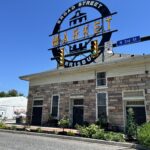
Appetite for Risk: Investors should honestly assess their tolerance for ups and downs.

Screenshot 2014-09-30 00.26.04If you’re traveling down an open road, you may feel quite comfortable driving 10 miles per hour over the speed limit.

The ride is smooth and uneventful. You can look in your rearview mirror and see the road you’ve just traveled, and you can look straight ahead and feel confident that you are safe continuing at that speed. But then you see something in the distance—it looks like you are approaching some twists and turns, and you see the brake lights of other cars. What do you do? Do you continue on your course, full speed ahead, believing that you’ll get to your destination more quickly? Or do you hit your breaks, feeling uncomfortable with the uncertainty that lies ahead?

During these uncertain economic times, it is more important than ever to understand how you feel about risk.

“Market risk” is the risk of losses in your investments arising from movements in market prices. It often seems that people are very comfortable with risk, as long as they are making money. Some investors have a tendency to justify their comfort level with risk by looking in their rearview mirror at stellar returns from prior years. But, when the pendulum swings in the other direction and investors experience extreme volatility, they may discover that they aren’t as comfortable with risk as they once thought.

For the portion of your portfolio that is exposed to market risk, there are two basic approaches to dealing with the winding road.

1. I’m not changing my speed; I’ll take the risk through these twists and turns.

You may get into more crashes than the more cautious cars, but, over the long term, you very well may be one of the first to reach your destination. In theory, this approach makes sense—you are in it for the long haul, so who cares about a crash or two? Sticking with an aggressive and passive investment strategy is a viable approach, but be prepared to stomach the worst parts of the markets.

2. I’m changing my speed as the road changes; I don’t want to risk having a fatal accident.

If you slow down, you reduce your risk of being involved in a terrible crash. This approach is not about timing the market; it is about recognizing uncertain conditions and proceeding with caution. Reducing risk can provide peace of mind because you are less exposed to a crash. Managing volatility is also a viable approach, but be aware that reducing risk and volatility may mean reducing potential returns.

As an investor, you really need to ask yourself how you would feel about losing 20 percent, 30 percent, even 40 percent of your investment portfolio. Really, really think about it. Imagine your 401(k) statement, succinctly conveying your hard work of scrimping and saving with just one number: $100,000. Now, as you look at your new statement, it reads just $60,000. If you don’t think you’d react well to this volatility, or if you are nearing retirement and can no longer afford huge investment losses, you may want to consider exploring your options for reducing risk within your portfolio.

It is important to talk to your financial advisor about your risk tolerance, but it is much more important for you to look within yourself and understand how you feel about risk.  Don’t wait until you’ve experienced volatility to decide if you can bear it.

Alison Bach is a certified financial planner for Conte Wealth Advisors in Camp Hill. Visit their website, www.contewealthadvisors.com.

Registered Representative Securities offered through Cambridge Investment Research, Inc., a Broker/Dealer, Member FINRA/SIPC. Investment Advisor Representative Cambridge Investment Research Advisors, Inc., a Registered Investment Advisor. Cambridge and Conte Wealth Advisors are not affiliated.  2009 Market Street, Camp Hill, PA 17011.

Continue Reading

TheBurg Podcast, Sept. 26, 2014

verbeke stone

Welcome to TheBurg Podcast, a weekly roundup of news in and around Harrisburg.

Sept. 26, 2014: The Broad Street Market, which marks the 150th anniversary of its opening on Nov. 1, was the subject of a tense exchange this week in city council chambers. In this podcast, senior writer Paul Barker interviews Ken Frew, the author of “Building Harrisburg: The Architects and Builders, 1719-1941.” Ken’s piece about the history of the Broad Street Market, “Market Milestone,” will appear in the October issue of TheBurg.


Continue Reading

Applicants for City Treasurer

On Tuesday morning, the city clerk released the applications and resumes of six applicants for city treasurer. Individual applications are linked to the names below, listed in the order in which they were received from the city and excluding contact information the city redacted. City Council will interview applicants at a public meeting in city hall on Monday, Sept. 29, at 5:30 p.m.

1. Daniel C. Miller

2. Timothy R. East

3. Peter V. Marks, Sr.

4. Karen M. Balaban

5. Joseph M. Gilpatrick

6. Tyrell Spradley


Continue Reading

Bed & Breakfast Planned for Front Street Mansions


2909 N. Front St.

2909 N. Front St.

2917 N. Front St.

2917 N. Front St.

The zoning hearing board will consider tonight at 6 p.m. a plan to develop two of the so-called “Mary K” mansions, at 2909 and 2917 N. Front St., into a combined bed and breakfast establishment, following an application by new owners who acquired the properties at auction earlier this year.

The city’s planning commission, which reviews applications before sending them on to the zoning hearing board, recommended approval of the plan by unanimous vote at its Sept. 3 meeting.

At 2909 N. Front, owners Michael and Sally Jo Wilson plan to create six guest bedrooms, a first-floor common area and kitchen, and a dining room, library, rec room and sunroom, according to a summary of the planning commission meeting.

The 2917 N. Front St. property will initially serve as home and office space for the Wilsons, though it will later be refurbished to include additional guest bedrooms in a second phase of the project, the summary says. A bed and breakfast must be owner-occupied under the current zoning code.

The Wilsons do not plan to alter the exterior of either property, though they do plan to install a pedestrian walkway linking the 2909 property to a parking lot behind the property at 2917, the summary says. The 2909 property also includes a lounge area, courtyard and indoor swimming pool.

The zoning code also requires adequate off-street parking for guests. The parking lot behind 2917, with 20 spaces, is more than adequate to meet the requirement for the initial units as well as the units contemplated in the eventual expansion, according to a planning bureau report.

To garner support for the project, the Wilsons attended the June meeting of Riverside United Neighbors, a neighborhood association, the report notes. The association’s July newsletter includes a brief statement welcoming the Wilsons and wishing them good luck with their plans.

The previous owner, Mary Knackstedt, sold the properties at public auction last April as part of a Chapter 13 bankruptcy plan. Knackstedt, who bought the 2909 and 2917 properties in 2004 for $512,000 and $585,000, respectively, had planned to develop a luxury condo on the site but was blocked by neighbors. The Wilsons bought the two properties at April’s auction for a combined price of $361,000.

At the same auction, Knackstedt also sold two additional parcels, at 2901 and 2905 N. Front St., to Robert Edwards of Franklin Township for $395,000. The parcels comprise a parking lot, garage and a private residence that was home to Knackstedt and her interior design business, Knackstedt, Inc.

The property at 2917, which the planning bureau report says was built in 1920 in a neo-Georgian style, has rented office space to a variety of businesses over the years, most recently to a computer networking company. The 2909 property, a Tudor Revival building constructed in 1916, once housed a children’s services provider but has sat vacant for several years, according to the report.

Continue Reading

Fieldwork

On Monday, around lunchtime, the reporter left the Harrisburg Hilton and started walking towards the Hall Manor pool.

He had no idea how long it would take to walk there. The farthest he’d gone south on foot from city hall was to a fire at Paxton and Cameron. On the map, which he poached via the Hilton’s Wi-Fi, it looked pretty far.

He passed the historical society and the shuttered Paxton fire station. At the I-83 off-ramp, he headed left over the railroad tracks, which for the moment carried no trains.

He was surprised at how accommodating the route was to pedestrians. Everything in sight seemed designed for cars: used car lots, a gas station, the wide-laned roads. It was a car’s, car’s, car’s world, as some Paul Simon-James Brown hybrid might have sung.

And yet the paint was bright on the crosswalks, and drivers respected the walk signal. At 13th, where the overpass crosses the highway, a dump truck with a sputtering diesel engine stopped dead on the ramp, yielding the right of way.

Why was he walking to the Hall Manor pool? Because the new mayor was going to get wet there. Who doesn’t want to see the new mayor get wet?

The pool had been closed for several years. It was leaking. Earlier that summer, though, the mayor scraped together money from a federal grant program for repairs. The pool was supposed to open in August, and the city put out feelers for contractors, but nobody bid. The opening was delayed.

The reporter was not good at predicting these things. In July, he wrote a story about how the pool would soon be open. To help tell the story, he went to the other city pool, east of the Broad Street Market. He drifted through the empty bathhouse, bought a sno-cone, and stood around the perimeter, creeping people out.

The reporter crossed over the highway and was very suddenly on unfamiliar ground. To his right was a grid of barracks-like apartments, connected by pale tributaries of sidewalk. Clotheslines were strung up between them. In the middle distance, a woman swept her stoop. To his left was a school.

He headed up Hanover Street into Hall Manor proper. More barracks, more hanging clothes. He walked up a vein of gold dirt, worn down by people cutting over the grass to save time. The grass was strewn with hundreds of empty potato chip bags, glittering like candy.

At last, he arrived at the pool, where news crews were setting up cameras. He wasn’t sure how, but he planned to record video on his phone, take photos and take notes in his notebook. He hoped he had enough attention left over to actually experience what was going on.

Soon the mayor arrived, in gym shorts and a T-shirt. The T-shirt, not really surprising, was still a relief. A shirtless mayor could be traumatizing.

The mayor and a member of his cabinet, similarly attired, chatted warmly with the gathered officials and members of the media. Two buckets were filled with water, then with ice, and left to chill. Everyone gave speeches, about the buckets and about the pool. Then the council president climbed a ladder.

“Eenie, meenie, miney, moe,” the council president said. She dumped one bucket on the cabinet member, whose note to himself seemed to be, A man shows no emotion. Then she dumped a bucket on the mayor, whose note was, It’s OK to scream.

They jumped in the pool. They toweled off. The mood was festive. The pool would reopen officially next year.

The reporter wanted to go back by a different route. He headed north to Sycamore, finding himself all at once in a lovely, tree-lined neighborhood. He came upon a corner bar, neon beer signs in the window of a brick-colored, split-block façade.

He went inside. Three ladies at the bar, nursing Miller High Lifes, looked him over. He took a stool and ordered a lager. One of the ladies suggested he was FBI.

He was not FBI, he said. He was a reporter. He was up here for the event at the pool. Where the mayor was getting wet—

They were not concerned about the wetness of the mayor. They were concerned about the pool. Kids had drowned in that pool, they insisted. The fence was too low.

“Drain that motherfucker. Drain it,” one of the ladies said.

The bartender did not think the city should drain it. He thought it should put barbed wire on the fences and a tarp over the water, or else it would freeze in the winter and kids would sneak in and break through the ice and drown.

The woman nearest the reporter, who wore a leather jacket and glasses, said she used to put a pool out in front of her Hall Manor apartment, even though it wasn’t allowed. “You’d think I had the Hall Manor pool,” she said. “Kids would come from all around.”

On the wall of the bar was a list of barred people. PINEAPPLE JUICE FOR MIX DRINKS ONLY, a sign underneath the list said.

The bartender began to reconsider his position. Perhaps a tarp would not be so good, he reasoned. Kids could walk out on it, get tangled up, and drown. “Yep, a tarp is more of a problem,” he concluded. “But that’s just one man’s opinion.”

What was the reporter trying to achieve here, crouched with his preposterous notebook in the middle of the afternoon in a corner bar? He thought about it and couldn’t come up with an answer. He settled up, stepped out into the sunshine, and headed down the hill.

Continue Reading

TheBurg Podcast, Sept. 19, 2014

Welcome to TheBurg Podcast, a weekly roundup of news in and around Harrisburg.

Sept. 19, 2014: Burg editor-in-chief Larry Binda and senior writer Paul Barker discuss the conversion of Front St. to two lanes (and one bike lane!), a bed & breakfast proposal for the Mary K mansions, a new renter at the debt-laden Verizon Tower and a homeownership incentive for PinnacleHealth and city employees.


Continue Reading

State To Rent in Downtown Verizon Tower, Helping Relieve Unfunded City Debt

The so-called Verizon Tower in downtown Harrisburg, which the phone company plans to vacate in early 2016.

The so-called Verizon Tower in downtown Harrisburg, which the phone company plans to vacate in early 2016.

The state Department of General Services signed off this week on a 17-year lease of office space in downtown Harrisburg, in a deal that is expected to relieve the city of most of the $41.6 million in debt obligations associated with the facility, state officials confirmed Friday.

The office space, in the so-called Verizon Tower in Strawberry Square, threatened to become vacant upon the expiration of the phone company’s lease in early 2016, leaving the city on the hook for payments on the bonds issued to acquire the building.

The new lease, between DGS and the Harristown Development Corporation, the developer of Strawberry Square, is for a base amount of $65 million over the 17-year term, said Troy Thompson, a DGS spokesman.

That amount will rent office space for close to 900 workers to be relocated from what is known as the DGS Annex, an office complex occupying the grounds of the former state hospital above Cameron Street, Thompson said. Among the state workers to be relocated are employees from the Department of Public Welfare, the Department of Transportation, the state police and DGS itself, he said.

Though DGS signed the documents yesterday, the lease still requires the signature of the attorney general’s office to be fully executed. Thompson said Friday he did not know when the AG’s signature was expected. A spokesman for the state Board of Commissioners of Public Grounds and Buildings confirmed Friday that the board had approved the lease, pending the AG’s approval.

Steve Goldfield, a financial advisor who worked on the lease negotiations, said on Thursday that the rental agreement was made possible in part by the city’s parking deal last fall, which served as the keystone of the state-sponsored plan to resolve Harrisburg’s historic debt crisis.

“The state doesn’t usually do this, because parking usually kills the deal,” Goldfield said of the commonwealth’s decision to move workers downtown. But, after factoring in savings from a discounted parking contract that DGS signed as part of the recovery plan last fall, the state stands to save significantly on the office rentals, Goldfield said.

That contract, a 30-year agreement to lease 4,306 parking spaces in the downtown parking system, was a critical component of the recovery plan’s parking deal, a long-term lease of city parking assets that Goldfield also worked closely on as an advisor to Harrisburg’s state-appointed receiver.

Under the contract, the state agreed to pay an increasing amount per month for each space, starting at $130 per month early this year and climbing to $180 per month in 2016. But the contract also includes the automatic addition of 765 spaces by 2016, of which 344 will be rented at a discounted rate of $100 per month.

Those rates, according to Goldfield, helped achieve the savings realized in the DGS lease, which he estimated at around $1.6 million per year. Other factors in the cost savings are the rental price itself as well as a guaranteed energy savings contract that will accompany the lease, he said.

The current cost of housing employees at the DGS Annex is around $6.3 million per year, according to Thompson, the DGS spokesman.

Thompson described the DGS lease Friday as “mutually beneficial” for the state and the city, noting that, in addition to saving tax dollars on office rental costs, the lease also moves the state closer to being able to sell the old state hospital grounds.

Harrisburg is exposed to the office building’s debt because of how its acquisition was financed. In 1998, the Harrisburg Redevelopment Authority issued $23.6 million in revenue bonds to fund the purchase from the city of land and facilities in Strawberry Square.

Of these, $6.9 million, the Series A bonds of 1998, were to be repaid solely with rents paid for office space in the building. But the city also guaranteed the debt, such that if rents were insufficient to cover debt service, the city would be obligated to make up the difference.

Debt service on the Series A bonds starts coming due in the fall of 2016, with an initial payment of $930,000. The semiannual payments climb thereafter, from a total of $1,880,000 due in 2017 to $2,320,000 due in 2032. A final payment of $6,175,000 must be made on Nov. 1, 2033.

With the departure of Verizon, whose lease expires on Feb. 28, 2016, the Harrisburg Redevelopment Authority would have no way to meet the debt service, and the city would be left holding the bag for $41.6 million, Goldfield said.

After operating costs and other expenses are taken out, rent paid under the DGS lease will not provide total coverage of the debt obligation, Goldfield acknowledged. Those expenses include about $1 million per year in real estate taxes, $900,000 per year in utilities and $800,000 per year in common-space charges applied to occupants in Strawberry Square, according to Neal West, senior vice president and legal counsel for Harristown Development Corporation.

These costs leave about $750,000 per year for debt service under the DGS lease, West said. When asked why, even with its offices full, the building could not adequately cover debts as anticipated in the 1998 bond issue, West said he could not speculate about the calculations made at the time. He did observe, however, that the downtown real estate market had remained essentially flat since the late 90s, whereas the bond financing may have rested on the assumption it would grow.

Goldfield also noted Thursday that the DGS lease includes an option to purchase the building at the end of the term, at a price of around $4 million. If the state exercises the option, he said, the deal would bring the city’s total exposure down below $10 million. The debt can then be refinanced, in part through negotiations with Assured Guaranty, which insured the 1998 bonds, he said.

A 2012 report by the Patriot News described the city’s use of proceeds from the 1998 sale as follows: $10.3 million was used to repay hotel bonds previously issued by HRA; $4.7 million was placed in a “capital projects fund” for projects across the city; and $501,861 was used to repay bonds from the Harrisburg Leasing Authority.

The city’s then-finance director, Robert Kroboth, could not account for how the remaining $4.7 million in proceeds was spent, according to the report.

Continue Reading

Programs Launched to Boost Homeownership in Harrisburg

HousesWeb

These houses in Uptown Harrisburg are looking for buyers.

Attention renters: Two new programs were announced today to encourage homeownership in Harrisburg for people who work in the city.

PinnacleHealth announced “Home in Harrisburg,” which will provide up to $5,000 in financial assistance to encourage its employees to purchase homes in the city. Funds would be payable at settlement on the home purchase.

“The program was launched to our employees earlier this month, and we’ve already had several employees interested in participating,” said Michael Young, PinnacleHealth’s president and CEO.

In addition, the Papenfuse administration presented its “Walk to Work” initiative, which will offer $2,000 to municipal employees to help with a down payment or with closing costs for home purchases. Under the program, the Pennsylvania Housing Finance Agency will provide up to an additional $8,000 in 10-year, no-interest loans to city workers.

Mayor Eric Papenfuse said the city had enough money budgeted to allow as many as 50 of its employees to participate in the program.

The programs are limited to workers who don’t already own houses in Harrisburg. Papenfuse said he hopes other businesses will offer their employees financial help to buy homes in the city.

At the same press conference, PinnacleHealth presented Papenfuse with a PILOT (Payment in Lieu of Taxes) check of $300,000, about double its annual contribution in recent years. PILOTs are paid on a voluntary basis by nonprofits that are not required to pay property taxes.

Continue Reading

City Receives 11 Applicants for Treasurer

Harrisburg has received 11 applications for city treasurer, the city clerk’s office said in an email Tuesday morning.

Applications were due by the end of the day yesterday.

The city is now reviewing the applicants’ eligibility, city clerk Kirk Petroski said in the email. To be eligible, an applicant must be 21 years old and a resident of the city, and must also have some accounting experience.

Once applicants have been screened for eligibility, they will be invited to a public City Council meeting on Monday, Sept. 29, at 5:30 p.m., where they will be interviewed by council members.

The meeting was originally to take place this Thursday, Sept. 18, but was postponed, the clerk’s email said. Asked by phone about the reason for the postponement, Petroski said it was to allow additional time for the city to conduct background checks on the applicants.

Following the interviews, each council member will nominate one applicant for a second round of interviews at the same meeting. Council will then vote to select the new city treasurer, who will be sworn in that night.

Petroski also said Tuesday that he hoped to release the applications publicly by next Monday.

The city treasurer position, which pays $20,000 per year, is normally filled by general election. But the position was left vacant earlier this month after the former treasurer, John Campbell, resigned following an investigation into his alleged theft of around $8,500 from a charitable program unrelated to city government.

Campbell, who has subsequently been charged with the additional theft of around $2,700 from a local political action committee, is awaiting a preliminary hearing.

In the meantime, Paul Wambach, who retired in 2012 after serving as Harrisburg’s treasurer for 20 years, has volunteered to fill the role in an interim capacity.

This story has been updated with additional information from the city clerk.

Continue Reading

TheBurg Podcast, Sept. 12, 2014

Welcome to TheBurg Podcast, a weekly roundup of news in and around Harrisburg.

Week 1, Sept. 8 – 12, 2014: Burg editor-in-chief Larry Binda and senior writer Paul Barker discuss personnel changes in city hall, the ongoing controversy over the Civil War Museum funding, and the 14th St. sinkhole.

Continue Reading