Step Right Up: Sundae Best Variety Show wears something bawdy, something blue.

Screenshot 2015-06-27 12.27.45There’s a place in Harrisburg where the drinks flow, everyone is invited, and the popcorn is always free. Oh, then there’s the vaudevillian floorshow, which is probably unlike anything you’ve seen this side of the Susquehanna.

Whether you’re looking for a place to show off your underappreciated talents or you’re more of a spectator wondering where all the fun people are, the Sundae Best Variety Show at Stallions Club in Harrisburg is the place to be on the first Sunday night of every month.

The inaugural show kicked off in March and has been drawing a growing crowd since. The show’s hosts and creators, who go by the names of Felicia O’Toole and Maxwell Treats, have lovingly curated a night to remember, welcoming any and all who wish to participate. The variety show features a mélange of as many as eight acts loosely competing for top prizes.

O’Toole explained that the concept for the variety show came to her after seeing a similar show at the Blue Moon Bar in Pittsburgh.

“I thought it would be a good idea to start something like that in Harrisburg,” she said. “There are a lot of people that don’t do drag and don’t have an outlet for what they do.”

Acts have ranged from drag and standup comedy to burlesque and pole dancing. And then there’s the halftime show that often includes off-the-wall slapstick routines by O’Toole and Treats, along with gloriously campy musical numbers and special guest performances.

For a $5 cover, the audience also can vie for some of the spoils by participating in random games throughout the night. Anything goes, short of nudity or fire.

“We just started a partnership with Athena’s by Jim, which is a sex toy and other retailer,” said Treats. “We’ve also been giving out tchotchkes like piggy banks or a 99-cent pregnancy test.”

Similar Wavelength

For the Treats and O’Toole, Stallions is the perfect place to mount a show like this, as the club’s patrons tend to be open to their kind of humor and entertainment. Besides, the pair met while O’Toole was performing there.

“I feel like we’re on a similar wavelength with the style of drag that we do, which is a little bit out of the box for this area,” said Treats. “I try to do things that are fun and silly, but also kind of perverse in an unexpected way.”

Treats described drawing inspiration from older strains of drag like the gender-bending Cockettes, a California-based avant-garde group from the 1960s and ‘70s that worked with director John Waters and his muse, Divine, at one point.

“When I put my makeup on, that kind of decides who I’m going to be that evening,” said Treats.

For O’Toole, inspiration comes from all over—and when least expected.

“I never know when it’s going to hit me,” she said. “When I started drag, I really wanted to be larger than life. I wanted to be over the top, like huge hair, huge boobs, huge shoes, eyebrows up to Jesus. I’ve branched out from there, definitely. It just depends on the audience, the crowd, how I’m feeling.”

Immersive Experience

Audience members are encouraged to dress in their Sunday best and compete in a “Look Contest,” which is wide open to interpretation and may or may not match the night’s theme.

Everyone is invited to take part in the wide array of games and activities during intermission and after the show, which has included a photo booth with props, a can toss, giant Jenga and limbo.

O’Toole and Treats are also looking for artists and filmmakers to reach out to the show. One night’s theme, called “Out of the Toy Box,” featured an installation reminiscent of artist Mike Kelley’s work, in which hundreds of stuffed animals were sewn together and then mounted to the wall and ceiling.

“We want to create an immersive experience for people,” said O’Toole. “Not just a show every month. We try to take it to the next level. And we always have a movie showing that goes with the theme.”

“That’s what I’m hoping to expand on,” added Treats. “It would be amazing if someone had a short that they wanted to screen, and then we could screen it the whole night.”

The variety show has been gaining traction, developing a loyal crew of helping hands along the way. The show’s resident photographer, Billy Hicks, shot the first month for free just because he wanted to be involved.

“There are a lot of really great spaces in Harrisburg that are accessible to people who want to perform, but they’re very specific,” said Treats. “This show is nice because it gives you the freedom to experiment and workshop new ideas. But also, you have a wider audience range.”

“We want to turn into more of a collective,” explained O’Toole of their vision for the show’s future.

“I love performance art,” said Treats. “Just come on stage and do a weird ritual or shave your head or whatever you want to do in front of people. Confess your undying love to someone. I want people to know that everyone is welcome and everyone will be supportive of whatever it is you want to do.”

The Sundae Best Variety Show is held the first Sunday of the month at Stallions Club, 706 N. 3rd St., Harrisburg. For sign up and information, e-mail [email protected] or visit Facebook.com/SundaeBestVariety. Doors open at 8 p.m.; show at 9 p.m. Post-show activities go until 2 a.m.

Continue Reading

Good Dog, Big Dog: Mastiffs to Mutts focuses on the rescue, placement of large breeds.

Screenshot 2015-06-27 12.22.30Adopting a dog from Mastiffs to Mutts is not as simple as asking, “How much is that doggie in the window?”

Mastiffs to Mutts is an all-volunteer organization committed to placing mastiffs and other giant-breed dogs with families who will commit to them.

“You’re not just adopting a big dog, you’re adding a really large member to your family,” said Peg Benoit, president of the non-profit, which is based in Chambersburg.

Why large-breed dogs?

“Because many rescues only take small- and medium-breed dogs,” said Benoit. “Giant-breed dogs have special considerations. They cost more to feed and medicate than small dogs. And with groomers and boarders charging by the pound, it’s critical that adopters know the expenses they’re accepting responsibility for.”

Giant-breed dogs weigh 100 to 280 pounds, are 23 to 38 inches high, and cost upwards of $124 per month for food and flea/heartworm preventative medicine. They may need basic training, but they definitely need to continue to socialize with people and animals to prevent them from becoming overprotective.

Large dogs do not necessarily need a large, fenced yard, but they do need daily exercise to suit the individual dog’s need. For example, a senior English mastiff may simply need a daily walk around the block. A younger cane corso mastiff (Italian mastiff) may need several long walks per day or a good session of more vigorous activity.

No matter which giant breed you adopt, the dog needs to be kept indoors. Any dog that is isolated and tied outside can become aggressive. Dogs thrive when they spend time with their people, as they consider their family to be part of their pack.

What to Expect

Not just anyone is allowed to adopt a giant dog from Mastiffs to Mutts.

Each adoptive family is thoroughly researched prior to placement, as are the foster families who open their homes to the dogs temporarily. A volunteer will inspect the potential home for safety and pet-friendliness. The careful screening process involves background checks and proof of homeownership.

Volunteer investigators also verify from local shelters and pounds that the applicant hasn’t relinquished animals to them and that there is no record of “dogs at large” or similar violations. They also talk to the person’s references, veterinarian and neighbors.

“You can find out a lot of information from neighbors,” said Benoit. “It’s amazing what they’ll tell you. If an owner is away for weeks at a time or their current dogs are already constantly barking, that’s not a good sign. It’s important to know what kind of people want one of our dogs.”

Applicants who have previous experience with giant breeds is a positive, said Benoit.

“They already know what to expect and how to accommodate,” she said. “It speaks well of an applicant if their vet knows their name without looking at their records. It’s likely they have an ongoing relationship with that vet office.”

The Mastiffs to Mutts adoption committee reviews each adoption application and the details of each investigation. On the list of applicants ineligible for placement are minors, families with children under 6 years of age, renters and residents outside the mid-Atlantic area.

“If the committee believes, for any reason, that the dog would not be served by that family or individual, we deny approval,” said Benoit.

With a low 2-percent return rate, the process used at Mastiffs to Mutts has proven itself to be effective, she said.

Adoptive families pay $150 to $500 in adoption fees. All fees collected and donations accepted are reinvested into rescuing more dogs. Each dog receives food, preventative medicine and medical care (which includes spaying or neutering).

The rescue also regularly purchases bedding, toys, collars, leashes and crates. Some funding goes toward fostering and kenneling if no fosters are available. Other funding is used for more severe medical issues such as orthopedic surgeries, heartworm treatment, medical X-rays and diagnostic testing.

Both adopters and foster families will experience growth in their human families as a result of their new additions, said Benoit. Mastiffs to Mutts makes its wide network of pet support available: veterinarians, trainers, classes, pet-sitters, behavioral experts and other resources.

Together, the Mastiffs to Mutts network helps to make the placement successful and the transition as smooth as possible. Trainers volunteer countless hours via email and telephone to work with families whose dogs have behavioral issues.

“Dog people stick together,” said Benoit. “Rescuers, animal control—we all work together for the best interests of the dog. We’re available during and after the adoption to help the families and give guidance.”

If you think you have what it takes to add a giant-breed dog to your family, check out www.mastiffstomutts.com. You can view profiles and pictures of dogs eligible for adoption. You can also donate funds online. For additional information, you also can email [email protected].

Continue Reading

STEM Sell: Rubber bands today, engineers tomorrow.

Screenshot 2015-06-27 12.26.40

Maurice Cable

Maurice Cable held the glider in his hands. Hardly more than a foot in length, it had a measuring-stick fuselage, a red clay nose and Styrofoam wings cut to look like an eagle’s. “I know that eagles are really good at flying,” Cable explained. “They can glide, like, 20 minutes without flapping their wings.” He was similarly direct about the inspiration for the plane’s decal motif, of basketballs wearing crowns. “Basketballs are popular,” he said, “and kings used to get respect from people.”

Cable, a risingfifth grader, is one of nearly 300 Harrisburg-area students who participated last month in Summer Engineering Experience for Kids, a free, three-week summer camp held at Marshall Math Science Academy. The program, run by the National Society for Black Engineers, aims to attract minority students to the so-called STEM disciplines—science, technology, engineering and math—with a hands-on curriculum taught by mentors.

“Minorities are obviously severely underrepresented in STEM fields,” said Franklin Moore, the program’s national director. “We had to create a STEM pipeline.” Moore founded the program in 2007, with the first camp taking place in Washington, D.C. It has since expanded to 16 cities, including San Diego, Detroit, Chicago and, for the first time this year, Harrisburg.

On a Friday in June, at the end of the camp’s first week, a dozen or so students sat around a podium in a hallway at Marshall, intermittently smiling for the cameras. “The statistics prove that STEM fields are growing,” said Cheryl Capozzoli, who was hired last year as the school district’s STEM coordinator. “By 2018, there’s going to be an influx of STEM professions that we need to fill here in the United States.” She gave a quick sketch of the camp curriculum, which was built around three engineering projects—gliders, fuel-cell cars and “gravity cruisers,” simple vehicles powered by a weighted lever and fulcrum. At the end of each week, students would test their designs in competitions. “We could probably ask them,” Capozzoli said. “Are you having fun this week?”

Yeeeesss,” the students said in unison.

Each camp is staffed with between 40 and 50 mentors, whose stipends are paid, along with other program expenses, by a mix of national and local benefactors. Moore said that Gene Veno, who headed the state intervention in district finances until his resignation in the spring, was “instrumental” in raising money from sponsors, among them Siemens, PNC Bank, McClure Co. and PNG Energy.

“I love seeing the kids strive for excellence and seeing how excited they get about learning,” Joshuah Davis, a four-time mentor and the site director this year for the Harrisburg program, told me. Like most mentors, Davis has a science background—he holds a mathematics degree from Fort Valley State University and is completing a mechanical engineering degree at the University of Arkansas. “My first year as a mentor, I had a lot of kids start crying the last day of camp because they didn’t want to leave,” he said. “We didn’t realize, you know, we really touched the kids like that.”

“It’s important for these young people to see that there are other African-American men and women out there who came from the same kinds of backgrounds that they come from and yet have taken that extra step to engage themselves in this rigorous study of engineering and sciences,” said Joseph Robinson, Jr., president of the Martin Luther King, Jr. Leadership Development Institute, a local nonprofit that helped bring the program to Harrisburg. “I don’t know whether we’ve got a George Washington Carver sitting here on the floor,” he said, “but I know we’ve got some future scientists and engineers sitting right here at this press conference.” On the floor, students straightened their backs and refreshed their smiles.

Later that afternoon, the cafeteria reverberated with the din of some hundred or so students in team colors—red, yellow, blue and green. They took turns firing their gliders from a rubber-band launcher into a landing strip marked off with tape on the tile floor. A series of contests tested the gliders for distance, height, hang time and accuracy. As the green team fitted its aircraft into the launcher, a prayer wafted up from the red team’s benches: “Please don’t make it go so far.” The first shot was a dud: the rubber band snagged, the glider tumbled down, and the young man operating the launcher looked profoundly disappointed. But on the second shot, his teammate sent the glider nearly to the opposite wall. The room erupted.

“We try to teach them with having fun,” said Sierra Butcher, a first-time mentor from Wilmington, Del. She beckoned to Cable, who came over to explain how he resolved his glider’s early design flaw—too much clay. She engaged him in a brief, Socratic exchange:

“What force is the clay?”

“Weight,” Cable said.

“OK. And what is another name for weight?”

“Mass.”

“So, what happened when you took the clay off?”

“It got lighter and it flew farther.”

Butcher said that students had learned the NSBE mission statement, which Cable rattled off on demand: “To increase the number of culturally responsible black engineers who excel academically, and succeed professionally, and positively impact the community.” Asked whether he wanted to become a scientist, though, his answer was more informal. “Yeah, I guess so,” he said. “I’m still working on it.”

Continue Reading

Driving Change: Will Harrisburg ever get a reliable mass transit system?

Screenshot 2015-06-27 12.17.41After five years of city living as a pedestrian, I got a car.

It was not a purchase I made willingly. In fact, it pains me that I had to give in to acquiring a convenient mule for my travels. I was triumphant years ago when I sold my previous one, delighted to be able to walk most places I needed to be. I thought nothing of a 20-minute trip by foot, there and back. If I had to get somewhere outside of that range, I begged a ride or took the bus, but, over time, the challenge of getting from A to B to A to C to B to A has become greater.

The most frustrating part of having to get a car is that I don’t need it to go to places outside of the city since I don’t really do that often.

No, I need it to trek around the city.

That’s because Harrisburg has such inconvenient means of travel if you don’t have access to a vehicle (see my previous “Road Ramble” article [TheBurg, March 2014] to hear what I think of driving improvement needs around here. All of these one-way streets? This city needs to reconfigure!).

Sure, there are buses, taxis and the recently added Uber service. However, those are not the most efficient or most cost-effective ways if I need to get from my upper Midtown office to downtown to Midtown to Allison Hill and back to my starting point, which is exactly how my days are increasingly going. Never mind what any naysayer says—there are many things to do, see and engage in all around the city.

Okay, so I may have more complicated travels than the average person. While I wouldn’t be so sure of that, the city’s deficient transit system is glaringly obvious even in simpler journeys.

Say, for instance, a person wants to go from Uptown to Allison Hill, there and back, for a visit to Hamilton Health Center or Matangos Candies. To walk it is a crisis of crossing Cameron Street, going up hill, and battling broken sidewalks and steps.

These perils are similar for bike riders and skateboarders. This is even more so if said cyclists and skaters are attempting to share the road, which is where we all know they should be—on the street. However, the take-one’s-life-into-one’s-own-hands element of trying to travel alongside vehicles around here results in these un-motorized wheels on the sidewalks. And the result of that is another peril for pedestrians.

A bus trip requires a transfer, which means getting on one bus, going to the Market Square Transfer Station, and getting on another bus. The only circuit route in the city goes from City Island and circles the downtown Central Business District. It’s clear that route isn’t designed for residents as much as it is for commuters.

Then there’s just the plumb unreliability of the bus system. We’ve all seen the people standing in the middle of the street, peering down the road for an anticipated bus running late. It’s also worth pointing out that it can be quite uncomfortable for riders to wait on a bus. Few bus stops have benches or even trees to cut the heated wait.

A taxi cab? Uber? Yes, those are options and ones that can be expensive, especially if these are the only means of travel, especially for work. And, quite frankly, although these services are increasing and getting better in regard to reliability, they don’t make up for the lack of reliable, safe, convenient and inexpensive options in Harrisburg.

In fact, these options can be so expensive and so unreliable that employers will sometimes ask prospective employees about their means of travel to and from work. If someone doesn’t have a vehicle or access to one, chances of being hired can be adversely affected.

Of course, I’m not the first person to call for better mass transit, for safer shared roadways or for a better pedestrian setting. I’m certainly not the first to write about it, and I’m also not the only one to point to other cities and say, “Come on! What’s the hold up? Look at what they’re doing there, and Harrisburg is such a small city. Let’s fix this broken system and provide the residents with better transportation options. We’re a city after all.”

When I do say that, I hear a gamut of reasons why things haven’t changed—from federal bureaucracy to union issues to lack of money to lack of desire.

Bollocks, I say. All of those things can be overcome.

So, it begs the question, what will drive change? Yes, pun intended.

Tara Leo Auchey is the creator and editor of today’s the day, Harrisburg. www.todaysthedayhbg.com

Continue Reading

A Clickbait History of Harrisburg

Screenshot 2015-06-30 07.39.37Recently, the website ask reddit asked the following question: What clickbait titles would you give to major historical events? That question inspired us to give Harrisburg its own clickbait chronology.

10 Facts You Never Knew About Glaciation

Harris’ Ferry: Smooth Sailing Or DEATH TRAP??

15 Ways to Get Rid of Your Indians

This Whiskey Rebel’s Story Will Shock And Move You

Trending: John Harris Jr.’s TOP-SECRET Plan (Hint: It’s A Capital Idea!)

Take Our Survey For A Chance To Win Hair From Charles Dickens’ Hotel Bed Sheets

Which Whig Candidate Are You Most Like? Take Our Quiz!

Bigger Mutton Chops In Just 2 Minutes!

Patriot-News Founded

Your Top 5 Stocks For The Coming Confederate Invasion

This Woman Showed Her Ankle On State Street. Outrage?

10 Nutritious Meals From Slag Waste

The Newest Front Street Mansion. We Have The Tintypes!

You Won’t BELIEVE What We Saw In Harrisburg After The Wind Briefly Cleared Away The Factory Smoke

Adorable Pics From Cameron School’s 6th Grade Graduation/First Day Of Work

10 Lessons In Life From Harrisburg’s Plutocrats

State Capitol Burns: Wrath Of An Angry Christian God, Says Our Reader Poll

Which Black Neighborhood Should The State Government Demolish Next? You Decide!

Is That Vomit Cholera Or Tuberculosis? We Let You Know!

SHOCKER: One Of The People Behind City Beautiful Is A WOMAN!!

Only 8 Bodies Dumped Outside City Speakeasies Last Night. Progress?

Trending: Top 10 Reasons Why Trolleys Stink

War Is Over: 5 Harrisburg Steel and Rail Companies To Invest In NOW

Can You Believe It? This Man Just Named A Bridge For HIMSELF!

You’ll Never Guess Which City Streets Will Become Speedways

Our Favorite Looted Items? We Asked The Rioters.

Why This Tropical Storm Is Blowing Up

Slideshow: 10 Suburbs To Flee To Now

Our Shopping Picks: Harrisburg’s Top 5 Closed Department Stores

Don’t Watch This Footage If You Love Nuclear Power!

Reader Poll: You Voted “The Spot” The Only Restaurant In Harrisburg

What Used To Be In That Empty Lot? Take Our Quiz.

5 SHOCKING Schemes to Fix The City Incinerator

Playtime: Match The Artifact To The Museum

Steve Reed’s 7 Terms—Ranked!

PennLive Founded

She Called Them Scumbags. They Made Her a Pizza. What Happened Next
May Surprise You.

Can You Spot The Differences Between The 2 City Receivers? Neither Could We!

5 Ways To Make Your Comb-over Say, “I Can Lead”

Paul Barker contributed to this silly exercise.

Continue Reading

Summer Loving: Playing outside is fun, but warm weather also brings unique challenges for dogs.

Screenshot 2015-06-27 12.22.12

Illustration by Matt Fogarty.

While your dog’s favorite summer activity might be hanging his head out the window on long car rides, it’s an adventure your veterinarian likely hates to see.

“It’s one of those things that nearly everyone does, but no one realizes the dangers that can be involved,” said Dr. Deborah Keim of Capitol Area Animal Medical Center.

Including pets in favorite summer activities is a great way to burn off some energy and bond with our creatures. But unlike humans, our furry family members can’t say when they get tired, too hot or something hurts.

“We have to be aware of the things that make them tick,” Keim said. “It can be the difference in them getting to enjoy summer with us or having to make an emergency trip to the animal hospital.”

Car Safety

While most people put down the window to let Fido get some air, it can be a dangerous practice.

Sure, he looks excited as he sticks his head into the breeze, tongue hanging out of his mouth, but are those moments of joy worth the chance of catastrophe?

Dr. Linda Stern of Healing Creatures Animal Hospital in Camp Hill said pets should be restrained just as humans are with seatbelts.

“Anything from a quick slam on the brakes to the animal getting excited and jumping out the window can lead to terrible things,” Stern said.

Besides getting tossed around the car in a crash, anything flying around in the air could hit the dog, getting in its eyes, nose or ears and causing injury or pain, Stern added. Also, if a crash is severe and emergency personnel have to respond, an unrestrained dog could get protective of its owner while others try to help.

Besides a crate, an owner can buy dog-specific restraints, similar to a seatbelt. For larger dogs, owners can put gates up to keep the animal from jumping between rows of seats.

And the golden rule of all pet owners: Never leave an animal in the car alone, Stern said.

Temperatures can rise to dangerous levels in just minutes, she said, causing severe heat exhaustion that can even lead to death.

On Vacation

For long car rides, there are some medications that can help animals relax or get over motion sickness, Keim said.

Do some prep work by making sure any resort or hotel is pet-friendly and that areas nearby are welcoming to pets, too. Not all beaches or state parks allow dogs, Keim added.

If the vacation destination is pet-friendly, it’s still a good idea to keep a dog on a leash until it gets accustomed to the beach or park. Whenever it’s time to go, check the dog’s paw for anything that could be in between its toes, including sand, which can cut the skin, Keim said.

Summer also is when pets are most likely to get bitten by mosquitoes or ticks, which can carry harmful diseases or parasites.

While topical or oral medications do a great job of keeping pets healthy, please make sure that the dose is proper for your dog, Stern said.

Avon’s Skin So Soft, a spray bug repellent safe for humans, also works on animals, she said. Just be sure not to spray it around the animal’s eyes or mouth.

There also are several citronella packets that can be hung around or inserted in an animal’s collar during nights in the backyard or out on the trail.

“The big thing is to always check pets for ticks after long periods outside,” Keim said.

A fine-toothed comb can make the process a little easier, she said.

Too Much Heat

Pets don’t sweat like humans to help them stay cool during the summer, so it’s important that owners keep an eye out for the signs of heat exhaustion.

Keim recommends collars that can go in the freezer and be used later to help cool down a pet, as well as gel-filled beds that are more comfortable for sleeping.

Dogs especially will begin to pant a lot as a way to try to cool their bodies down. If the panting becomes excessive, Keim said, it’s important to get the animal as cool as possible by wetting it down. Don’t use iced water, however. Keim said that the goal is to cool the animal down slowly, so cool water is best.

Stern agreed that heat exhaustion is a big concern during the summer.

“Dogs especially will run until they drop,” she said.

Carry a source of water on long walks and make sure the animal takes frequent, small drinks. Too much water at once when a dog is overheating can cause additional problems, she said.

Natural electrolyte drinks other than sports beverages that can be found in the grocery store also can be diluted and given to pets when it’s too hot, Stern added. Pop a few in the freezer as ice cubes, and they make a great cold snack for animals.

“Summer can be a great time to connect with your pet,” Stern said. “If everyone is safe and healthy, it can be a great season of fun.”

Continue Reading

Adult Oasis: Bacco aims to meet the nightlife needs of a maturing downtown clientele.

Screenshot 2015-06-27 12.26.14It’s been said that Harrisburg’s Restaurant Row is playing to an older audience these days, with crowds that demand quality over quantity.

After all, the area has been a popular playground for the region’s 20-somethings for many years now. So, it only stands to reason that the 2nd Street crowd would mature.

Enter Bacco Pizzeria and Wine Bar, housed in a downtown building that has been through many incarnations over the years, including Privado, the late-night lounge with the sexy vibe.

Owner Max Randazzo now is switching gears to appeal to the discerning tastes of today’s older demographic. To do so, he’s fashioned a rustic Italian menu, along with a premium selection of wine, beer and craft cocktails.

But don’t mistake this restaurant for some retirement castle. After all, the place is named for Bacco, the Roman god of wine, a deity synonymous with joy and merrymaking.

Sicilian Inspired

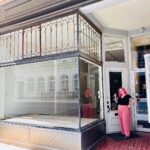
If you’re driving down 2nd Street, you may miss the black awning sporting the large, cursive “B,” but that’s where the understatement ends. Large doors lead the way into the 100-year-old building, which once served as a bank.

Inside, marble walls, highlighted by ornate pilasters, give an upscale feeling to the space. Oversized windows usher in natural light, and wooden tables are placed far enough apart to give patrons plenty of room to dine and socialize. The long bar provides more seating for those interested in stopping in for a drink and, on nice days, patrons can choose to dine al fresco at six tables positioned out front.

The one-page menu featuring locally sourced products is simple, but diverse. Diners can choose from six different salads, four types of cheese, cured meats like duck prosciutto made on site, and pasta dishes like lasagna and veal spinach cannelloni. Small plates are a nod to the popular sharing trend and include bruschetta, lollipop lamb chops and roasted vegetables.

Of all the choices, pizza emerges as the standout favorite.

Randazzo’s family hails from Sicily, and years of pizza-making experience were passed down to the offspring. Diners can choose from 11 pies, which are cooked in a 700-degree, gas-fired oven.

Traditionalists will enjoy classics like the margherita, comprised of crushed tomato, olive oil, mozzarella and basil, while spice-lovers will savor the fiery flavor of the “Inferno,” which includes crushed tomato, red pepper flakes, hot soppressata, Parmesan flakes and mozzarella.

During my visit, I chose to sample the “funghi,” which was suitable for sharing and was topped with wild mushrooms, béchamel and pine nuts. I particularly enjoyed the hint of rosemary, which I was told came from an infused olive oil.

Diners who save room for dessert can choose among six sweet selections, like crème brûlée, lemon gelato and cannoli.

Drinks to Perfection

Dry or sweet? Light or full-bodied? Whatever your preference, you’ll likely find a choice that’s right for you on the page-long list of wines.

If you prefer a cocktail, beverage director Tommy Pavlovic aims to please. The mixologist takes his craft seriously, having worked for six years at a world-famous, classic cocktail bar in Los Angeles.

“I worked with the best in the industry,” said Pavlovic, whose eyes light up when he launches into the history of classic cocktails and his perfectionist approach.

“Everything we’re doing here right now dates from 1900 to 1920,” he added, presenting the pre-Prohibition cocktail list he created.

Pavlovic works diligently behind the scenes before the drinks hit the table, a point he proves when he pulls out a huge bowl filled with raw fruit strips and demerara from behind the bar. The large-grained, raw sugar, with origins in Guyana, is slowly making inroads into the United States from Europe.

Pavlovic explained that he is in the process of making an oleo-saccharum, a technique used in 19th-century bartending to infuse alcoholic beverages with a citrusy flavor.

He also informed me that ice is a “thing.” He is not one who is content to purchase his ice. He insists upon making it, taking steps to ensure crystal clarity, then carving a 40-pound block down into spheres for the cocktails he crafts.

“Surface area and core temperature dictate whether the drink will taste anything like the first sip on the last sip,” he said.

As I perused the cocktail menu, I recognized my stepfather’s favorite Manhattan. Pavlovic’s includes orange essence and an Italian cherry, which I’m betting doesn’t contain Red Dye #2 like the ones available at our local supermarket.

The classic old fashioned tops the list on the menu and in patrons’ hearts, according to Pavlovic. Other notable drinks include the sazerac, a whisky-based concoction, which some claim is one of the oldest known cocktails, and the Negroni, comprised of gin, vermouth, Campari, Gran Classico and orange essence and the house sangria, to name a few.

Pavlovic is an affable gent who will craft a drink to your liking if nothing on the menu strikes your fancy. Just don’t request anything remotely related to the flavors found in “whipped” vodka. Ever.

For beer aficionados, Pavlovic selected 13 different types of Pennsylvania beers.

“A lot of excellent beer is being made right here in PA,” he said.

Future plans are in the works to create a downstairs cocktail room as word about the restaurant spreads.

“It’s exciting to serve people who want to see things done properly, and we as a team of professionals are just aiming to be as good as we can,” said Pavlovic.

Bacco Pizzeria and Wine Bar is located at 20 N. 2nd St., Harrisburg. To learn more, call 717-234-7508 or visit www.baccopizzeriawinebar.com.

Continue Reading

Better Shape: Ivan Black brings his passion for fitness to a struggling corner of Harrisburg.

Screenshot 2015-06-30 07.39.12Last month, on a not-too-hot Wednesday morning, I found myself hanging from a pull-up bar in Riverfront Park, doing something called a “scap pull,” while Front Street’s southbound traffic whizzed by. “Awesome,” said Ivan Black, a fitness instructor who was standing beside me, adding (generously, I thought) “good stuff.” Minutes before, I had done a series of forward, sideward and backward lunges, teetering on my feet like a cardboard skeleton. Now Black was talking me through some verbs that, in theory, corresponded to what I was doing with my shoulders. I drove, I squeezed, I pinched, I pulled. Then he had me drop from the bar and run in place. “So,” he said when I was finished, “that was our warm up.”

This month, Black will open a fitness studio, Next Step Performance, at the corner of 3rd and Herr streets in Midtown. The studio will focus on calisthenics and training that relies on the exerciser’s own body weight. It will look like a “typical CrossFit studio,” he says, referring to the high-intensity fitness regime, with lots of open space and some minimal equipment, like medicine balls and a pull-up bar.

Black, a former college baseball player, moved to Harrisburg with his wife three months ago from Washington, D.C. There, he taught classes at Reformation Fitness, an area gym, and launched a personal fitness website. When he arrived here, he had already formed plans for the studio, but he also wanted to get involved in something while he ironed out the details. “To sort of ground myself and find some normalcy, I had to start playing baseball,” he said. He joined the East Hanover Braves in the amateur Pennsylvania Midstate Baseball League, where, as of this writing, he was batting .375 in 16 at-bats. “The guy that runs the team is awesome,” Black said. “His name is Harry Hitz. Perfect name for baseball, you know?”

Next Step Performance will take up residence in a block that has struggled to find a stable mix of businesses. Across the street is Pastorante, a sleek fresh-pasta restaurant, but also a recently vacated corner property. The studio will occupy the site of the former T-Mart convenience store, which was evicted by the landlord late last year after repeatedly running afoul of neighbors and city officials. “It was an absolute wreck, but there was something charming about it,” Black said of the space. “I had a bat hanging from the ceiling. I took a picture of that.” When he learned that vocal neighborhood opposition had helped lead to his predecessor’s eviction, he found it encouraging. “That made me feel good, because the sort of business I have, I need the community involved,” he said. “I knew if I did the right thing, I’d be OK.”

My post-warm-up workout with Black in Riverfront Park proceeded in two stages. The first was a seven-minute rotation through a sequence of reverse lunges (hands behind my head, in “prisoner position”), crawling in a pushup stance down a rope ladder he’d laid out on the pavement, and a set of six chin-ups on the bar. I am to upper body strength as Escalades are to fuel efficiency, and when the chin-ups weren’t working out, Black switched me back to scap—short for “scapular”—pulls. While I toiled, he would dole out snippets of encouragement interspersed with philosophical reflections. “There’s that unconscious, like, boost in your, not to say your ego, but just how you feel, how you walk around, how you approach everything in your day-to-day, just because you’ve got—there you go—a little bit of added mental and physical strength,” he said. After the seven minutes, he joined me for a leg stretch. “Whoooo!” he cried. “Hamstring City. Hamstring City.”

After that, Black led me to another station for something he called “tabata intervals,” which, when Googled, returns as the top hit a page titled “The 4-Minute Fat-Burning Miracle.” The routine involved timed pushups on an incline, followed by jumping jacks with a rubber resistance band wrapped around my ankles. “Ready to bring it home? Let’s get her done,” Black said, as I went into my final 20 seconds of jumping. “So much work behind you, so little in front of you.”

Whether he was reacting to the pace of my breathing or the fact that the park drinking fountain was malfunctioning, I don’t know, but after the intervals, Black decided it was time to “Zen it out a little bit.” We sat on a bench facing the river and did some yoga stretches. “I went on a cruise with my wife about a year and a half ago, and the yoga instructor was awesome,” he said. “Young kid, and just, like, more excited about yoga than anybody I’d seen. And I’m in fitness. And then bring it down. He taught the same class every day. Said the same thing—everything.

“I can definitely remember saying to my wife a couple times, ‘You know, this is the same class every week, it’s hard to get excited about this. It’s just sort of something we’re doing.’ Right now, we’re just gonna keep it going, from there just bring it down right in between the legs, big stretch through the lower back. And so, at the end of the cruise, the last class we were in, I go into that class with that same sentiment in my mind. And, like, the first portion of the class I’m doing profoundly better at everything. So I’m like, all right. There is something to doing the same routine. You learn from that.”

The morning of our workout, Black was a few weeks from putting the final touches on his studio. He still had to install the flooring and the pull-up bar. He had already started to lock down some clients, though, including a high-school baseball player from Susquehanna Township. He was excited about the prospect of working with young athletes “with potential and a brand-new, like, love for the game,” at “that point where taking it seriously makes sense, you know?”

“I’m all about progression,” he said. “That’s why I train. That’s like the poetic side that I love. You come out of it a different person. Even if you give just a decent effort. And you learn so much about yourself—not just the physical, beyond the physical. You learn about what you can stand mentally. How much pain you can take. All of that resonates with the person you are.”

Next Step Performance will open soon at 1100 N. 3rd St., Harrisburg. For more information, visit https://www.nsp.fitness or call 717-382-6398.

Continue Reading

Best in the Business: For 2 years running, Harrisburg businesswomen are honored for their success.

Screenshot 2015-06-27 12.21.34

Jessica Meyers

Screenshot 2015-06-27 12.21.21

Char Magaro

Is it something in the water—or the air?

Or just maybe, there’s a certain spirit in this community, a spirit of diversity, appreciation of culture and support.

For the second straight year, a Harrisburg woman has been selected to receive the Woman-Owned Small Business of the Year honor from the district office of the U.S. Small Business Administration.

In May, Jessica Meyers, owner of JEM Group, a downtown-based construction firm, received the 2015 award. A year earlier, restaurateur Char Magaro was presented with the 2014 award.

“For the same city to win in the same category two years running does seem a bit like lightning striking twice in the same spot. It’s certainly something for Harrisburg to be very proud of,” said Tony Leta, director for the SBA’s Eastern Pennsylvania District Office. “Harrisburg firms have definitely been successful in winning these awards.”

The awards are given each year by Leta’s office, which covers 40 counties, totaling 727,000 small businesses. Award criteria include the firm’s staying power, growth in number of employees, innovativeness of product, response to adversity and contributions to community-oriented projects, to name a few.

“It was so gratifying that the huge struggle to make my vision manifest had been recognized,” said Magaro, owner of Char’s at Tracy Mansion on N. Front Street in Midtown. “I likened this project to trying to fly a kite with a thousand strings without any wind.”

Meyers was delighted that her firm was recognized for a focus on building quality buildings, creating jobs and benefiting the community economically.

“For us, it’s great recognition for my team of our hard work and dedication for what we’ve given to the community,” said Meyers, who accepted the award in one her firm’s recently completed projects, the new Susquehanna Art Museum in Midtown Harrisburg. “It’s nice to have that formal recognition.”

Meyers, who began JEM Group in 2003, said that she chose Harrisburg as a home for her business due to her history in central PA and the revitalization she witnessed happening in the region, such as the restaurants along N. 2nd Street.

“I began my career working in the city. I was really able to see the revitalization and development from early in my career,” she said. “I wanted to be a part of that, not only by building buildings but by personally investing in the city.”

Meyers was nominated by Melissa McLaughlin, director of business finance at the Harrisburg Regional Chamber & CREDC, for her ability to break down barriers and stereotypes to conquer the construction industry. McLaughlin also recognized her energy, professionalism and community-mindedness as she served as a role model for female entrepreneurs in the community.

Indeed, mutual support among businesswomen is a core strength in Harrisburg, said Meyers.

“Harrisburg is really fortunate to have so many great women leaders and entrepreneurs. We are just flush with a lot of talent,” she said. “There is an openness in Harrisburg and in our region and a willingness to recognize talent and leadership regardless of whether someone is a man or a woman. It’s a great place for women leaders or entrepreneurs to grow a business.”

Other Harrisburg businesswomen agree. The co-owners of Stash Collective point to the city’s spirit of entrepreneurship and community support as major contributors to their success over the past two years.

“We see the Harrisburg small business scene as being very supportive, positive and growing, with businesses always looking for ways that they can boost each other up through cross-promotion or simple word of mouth,” said co-owner Jen Merrill. “It’s an inspiring time to be a business owner here, and we hope to see more and more women taking the leap to work for themselves.”

To underscore their success, Stash Collective last month moved into new, larger retail space at the corner of Walnut and Court streets downtown.

When Meyers was asked what advice she gives to women daydreaming of launching their own business venture, she responded that women shouldn’t be overly risk-averse.

“Don’t be afraid to take chances and step outside of your comfort zone,” she said. “If someone told me I’d own my own business—let alone a construction business—19 years ago, I would’ve thought they were crazy.”

Meyers also suggests spending time on personal and professional development and surrounding oneself with the right people who will be honest when giving feedback.

“Be visible. Get out there and get involved in the community,” she said. “It’s incredibly rewarding to spend time with organizations you’re passionate about. People will also know who you are and know what you’re capable of doing.”

Recognizing talent regardless of gender is something that the Stash co-owners also see within their business, one in which people presume that it must be difficult for three women to work together.

“We do, quite frequently, field questions and comments assuming that, because we are three women, it must be, in some way, hard for us to work with one another,” said Merrill. “That couldn’t be further from the truth.”

She added that each partner brings unique strengths to the business, and they try to use those strengths as effectively as possible.

“We see it as a major perk that, after over two years of owning the business together, our friendships with one another have continued to grow,” she said.

Continue Reading

Run, Residents, Run: Memo to City Council hopefuls: Serious candidates win elections.

Screenshot 2015-06-30 07.33.34

Illustration by Rich Hauck.

So, you say you want to run for Harrisburg City Council.

The long meetings, the low pay, the sniping, the late-night constituent phone calls—it’s all very glamorous.

Still, some people wish to serve, perhaps from a sense of civic duty or for their own egos or maybe the $20,000 a year really does mean something to them.

But first you need to get elected, which is the obstacle that stands between you and stardom on WHBG TV 20. How are you going to do that?

Here’s a little secret—it’s not terribly difficult.

Every two years, three or four seats come up for election to the seven-member body. Over the past few cycles, about a dozen candidates have thrown in for them. Those odds may seem long, but they’re not nearly as daunting as they appear.

Why? Because most local candidates are—how shall I put this?—terrible at politics, with no good plan of how to win. So, they put out some lawn signs, attend a few candidate forums, say a prayer and hope for the best. That’s a one-way ticket to spending Tuesday nights on your sofa, watching the proceedings on Comcast.

If you run a competent, well-organized campaign, you will greatly increase your odds of victory. This statement may seem obvious, but based upon the ill-planned, phoned-in campaigns over the past few election cycles, I believe it must be said. So, here are a few tips on how to go from council hopeful to council member.

1. Attend Council Meetings

Every two years, I bite my lip as 10 people who I’ve never seen before in council chambers boldly declare that they want to serve there. After they announce for a seat, they still don’t show up. It drives me mad. Start attending council meetings. You don’t need to speak, but go, take in the vibe, observe the goings-on and learn how things are done. In the end, you may decide you don’t want anything to do with this mess, which is a valuable thing to know before you make the effort. If you still decide to run, you’ll be ahead of the rest of the pack—knowledgeable and conversant on the issues, which will help immeasurably when you’re on the stump. You’ll also understand council procedures, the dynamics between council members and the role of the administration, among other vital things. And don’t just watch the meeting on cable or YouTube. You’ll miss half of what goes on, as much of the action takes place beyond the camera. Your time commitment: about four hours a month. If you can’t spare that, you shouldn’t run at all.

2. Fill Out Your Petitions Correctly

Each election cycle, some would-be candidate gets tripped up because he hasn’t filled out his nominating papers correctly. He’s then challenged and, inevitably, loses the challenge. This isn’t rocket science. Follow the instructions to the letter. And, for Pete’s sake, don’t notarize your own petitions.

3. Raise Some Money

You’re going to need a bunch of stuff—campaign signs, literature, postcards, postage, etc.—so you need money. It will take at least $5,000 to run a serious City Council campaign. Sometimes, a popular incumbent and/or someone with deep community support can get by with less (for instance, incumbent Jeff Baltimore spent less than $1,000 on his campaign this past primary). But, if you’re starting with limited name recognition, you’ll have to raise and spend money. If you can’t raise enough from family and friends and find going hat in hand to the usual PACs and powerbrokers distasteful, you can always self-finance (assuming you have access to funds). If you win, consider the first few months of your council salary to be your payback. If you’re an incumbent, you should set aside a small portion of your salary for a re-election fund. It will be money well invested.

4. Hit the Streets

I can’t stress enough the importance of identifying likely voters and knocking on their doors. In the window between the March start of the campaign and the May Democratic primary (where most council candidates win or lose), super-voters should be visited twice, those visits reinforced with direct mail. If you have more time, spend it in high-vote precincts or where lots of people gather (such as the Broad Street Market). Be bold, engage people, ask for their vote. Exude energy, optimism and concern. Don’t run a lazy campaign or rely too much on your social circle or on candidate nights or the Internet or powerbrokers. Also, don’t allow yourself to get sidetracked. Don’t obsess over your competition or your press coverage or whatever silly thing the county party is doing (do you know anyone who’s ever cast a vote based upon a county party endorsement?). Stay focused, use your time wisely and show voters you want it. Despite the march of technology, you still can’t beat old-fashioned, shake-the-hand, kiss-the-baby retail politics.

The next council primary election is a distant two years away. But, if you have a notion to run, get started now. Put out some feelers, attend council meetings, get to know the actors. By this time next year, you should be gearing up to raise money and mount a serious race.

In the interim, chat up recently nominated candidate Cornelius Johnson. A young man with little name recognition a few months ago, Johnson blasted out of the starting gate and lapped the field—even the incumbents—by running one of the best campaigns I’ve seen in Harrisburg. He’s now a shoo-in to win in the general election in November.

Sure, Johnson was endorsed by Mayor Eric Papenfuse, which helped his case with some voters. However, make no mistake—Johnson earned his council seat. That’s what preparation, a plan, some money and a lot of energy and hard work will do for you.

Lawrance Binda is editor-in-chief of TheBurg.

Continue Reading