
Happy Weekend!
Andy and I have a mini-date night tonight — we’re taking dinner recs over on IG. The weekend is low-key for us otherwise.What are you doing this weekend?
(more…)Continue Reading

Greater Harrisburg's Community Magazine




Vintage Vault Gallery in Cumberland has numerous rooms of vintage and used items, displayed here and below.
Vintage Vault Gallery has provided customers with vintage finds without the prices of big city vintage shops for the last several years.
Now, the Middletown-based store is serving even more customers with the opening of its second location in New Cumberland.
“I don’t want to just be a single-generational store,” said David Morrison, co-owner of Vintage Vault Gallery. “This store is diverse. There’s a little bit for everybody.”
Morrison originally started the shop when he realized he had an overflow of vintage objects. After outgrowing his original, Mechanicsburg location, Morrison moved his store to Middletown.
“I was collecting stuff that just sat in my house, and so everybody told me to open up a store,” he said. “I think it becomes an addiction when you start collecting stuff.”

The multi-room New Cumberland location mostly holds items from the mid-20th century, differentiating it from the more antique-centered Middletown store. Morrison sells a wide assortment of objects, including furniture, clothing, dishware, décor and collectable items, for affordable prices. The store also offers delivery.
Morrison says that he finds items from real estate clean-outs, auctions and out-of-state businesses. Although he runs a car dealership full-time, he said that, as soon as he’s out of work for the weekend, he’s on the road searching for new finds.
“I love the thrill of the chase, and it’s fun finding really cool stuff that other people don’t have,” he said.

According to JoLynn Weist, chair of the New Cumberland Business and Professional Group and the owner of Weist Hardware, small businesses like Vintage Vault Gallery are revitalizing New Cumberland, filling abandoned properties with galleries, restaurants and other businesses.
“I think this store has a great potential to bring in a lot of different people, and younger people,” Weist said. “People who maybe might not have been to New Cumberland before might come into this store, and it’s part of a unique mixture of stores that we have in town right now.”
Currently, Morrison has a Carlisle Vintage Vault Gallery in the works, but he said that he someday hopes to expand his business to about seven or eight stores.
“Obviously, I’m a local business,” Morrison said. “Small businesses are making a comeback. The small guy who doesn’t have a big overhead like me can run a big space like this, and the real estate prices are going down because so many big-box stores are going out of business. I encourage everybody to support small businesses.”
Vintage Vault Gallery is located at 300 Bridge St., New Cumberland. The Middletown store is located at 17 S. Union St., Middletown. For more information, visit https://vintagevaultgallery.net/.




Thanks to SAM and Midtown resident Kurt Knaus, this car is about to become a work of art, in the style of the Picasso painting below.
This Saturday, the Susquehanna Art Museum is taking art to the outdoors–and to the car doors.
The museum recently opened its new exhibit “Picasso: A Life in Print” and celebrated with a gala in June. There, attendees assisted in painting a large canvas with a Picasso-inspired image. This got Chris Carvell, the general sales manager for Faulkner Subaru, thinking creatively, and he came up with the idea to have Faulkner sponsor a family event.
Soon after, Carvell found the perfect canvas—one of their brand new white cars.

“Guess what guys, we are going to paint a big white Subaru,” Alice Anne Schwab, executive director of SAM, remembers saying to her co-workers.
However, since it was a brand new car, Schwab had some concerns, like how the paint would come off when they were finished.
Luckily, longtime SAM member Kurt Knaus was looking to make a donation to the museum—one in the form of a 20-year-old Subaru Impreza.
“I was like, ‘If you need a Subaru, why don’t you just take mine?’” said the Midtown Harrisburg resident. “I’m so excited that my car is, in a way, going to be part of the exhibit.”
As chance would have it, Knaus had actually purchased the car from Faulkner Subaru in 1999, from a woman who still works there today.
Now, the old Subaru will serve as a free community art project.
“Families can come out and pick up a paint brush and paint,” Schwab said.
Board member Nancy Mendes will be painting a guide on the car to help give the art direction. Schwab related it to a paint-by-number project. The car will be parked in the garden just north of SAM’s building (3rd street between Calder and Reily streets), and painting will begin at noon on Saturday.
While the museum always has exhibits and showings, community involvement activities like these are a special treat.
“Anytime you can have a hands-on experience with an artist […] that’s positive,” Schwab said.
Schwab is not sure what is going to happen with the car after it has been painted, but Knaus jokingly mentioned that maybe he’ll buy it back.
“When this is all said and done, people will recognize my car as I always have seen it—as a piece of art,” Knaus said.
The Susquehanna Art Museum is located at 1401 N. 3rd St., Harrisburg. The car-painting project begins at noon on Saturday, Aug. 3. For more information, call 717-233-8668 or visit www.susquehannaartmuseum.org.


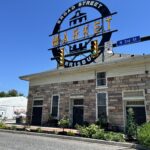
The Broad Street Market in Harrisburg
The Broad Street Market has been named a “2019 Great Public Space,” joining two other places statewide in receiving the designation.
Harrisburg’s historic, 19th-century market was one of three places statewide honored this year by the PA chapter of the American Planning Association as part of its “Great Places” program.
The association cited the market’s “unique mix of vendors,” “diverse array of ethnic cuisine” and its history of acting as a business incubator as among its strengths. It also lauded the market, which consists of two market buildings, for its important role in fostering community and for participating in community events, such as 3rd in the Burg, the city’s monthly arts and nightlife event.
“With its unique characteristics, diversity of vendors, entrepreneurship and employment opportunities, and community engagement this ‘Great Public Space’ is a treasure that contributes to the increasing vitality of the Midtown neighborhood,” the association said in a statement.
In addition to the Broad Street Market, the association named Ligonier Diamond Park in Ligonier (Westmoreland County) and Main Street Bethlehem as “Great Public Spaces.” It also named the South Bethlehem Greenway in Bethlehem for its “Great Transformation.”
Each year, the association honors places in Pennsylvania that it says have a “sustainable vision for the future and serve as a model for other communities.” Last year, it cited Buhl Park in Hermitage, Central Park in Doylestown Township, Emmaus Triangle Park in Emmaus, the Susquehanna Riverfront in Lock Haven and the Village of Boiling Springs as “Great Public Spaces.”
For more information on the “Great Places” program, visit www.planningpa.org.

Joshua Cincotta, an incoming senior at Commonwealth Charter Academy, doesn’t seem to mind spending part of his summer tending to plants at school.
Then again, the Midtown Harrisburg teen isn’t dealing with your typical potted seedlings found on classroom windowsills.
Cincotta, 17, is one of many CCA students in grades K-12 pitching in to run AgWorks at CCA, the largest public educational aquaponics facility in the United States, located right at CCA’s Capital Campus in Harrisburg.
This state-of-the-art learning laboratory provides students at all grade levels with hands-on experience in aquaponics, a form of hydroponics—growing and sustaining plants in water—that utilizes aquatic life waste as fertilizer.
In total, AgWorks comprises 3,000 plants and 400 fish, with plans for further expansion. The facility also includes several student research labs funded through various grants.
“Every student has to clean, harvest and plant,” said CCA’s Samantha Johnson. “Some require teamwork, some work alone. It’s very important that students run this facility. They need to make mistakes and learn from that.”
Since CCA operates as a cyberschool, most of its full-time students access AgWorks during the school year on a remote basis. These students obtain virtual learning experiences through live cameras, high-tech water monitoring sensors and an online digital dashboard that processes real-time data.
Students like Cincotta who live near the school often pop in to do lab tasks in person. Earlier this year, he and lab partner Kenya Mitchell, an incoming CCA senior from Steelton, began designing an AgWorks fish autofeeder as an independent study project under the tutelage of math tutor Daniel Friess. The project remains ongoing, Cincotta said.
CCA also has developed a fully functional, smaller-scale mobile version of AgWorks that travels throughout the state to provide remote students with the same hands-on opportunities as pupils living near the campus.
For now, the sprawling, 6,100-square-foot AgWorks facility, designed by Harrisburg-based INTAG Systems, grows everything from banana trees to butter lettuce to palm trees and a cornstalk patch meticulously hand-pollinated by a student.
Overhead lights throughout the lab are set to just about every color of the rainbow to meet the needs of varying plant species. Plants are fertilized with processed waste derived from the hundreds of colorful fish seen darting through the lab’s three towering, 690-gallon tanks. Raw fish waste is processed by nearby clarifying tanks before being piped into plant waters.
“The students test the waters here every week with meters. It’s the same as the state Department of Environmental Protection,” said Johnson, AgWorks’ director of the aquaponics program. “Our students come out career-ready. They test for nitrates, ammonia, pH and alkalinity.”
AgWorks also is noted as a sustainable, zero-waste ecosystem. Its plants are fertilized by fish, resulting in higher yields than traditional agriculture. In addition, bio-controls are used in place of pesticides, ensuring that the GMO-free produce is free of contaminants. Solar panels located on the roof of CCA’s Capital Campus supply 100 percent of the energy needed to power the overall facility.
Produce harvested at AgWorks at CCA is donated to community food banks or is sold to local retailers and restaurants, including the Hilton Harrisburg and Harvest Seasonal Grill and Wine Bar. AgWorks directors also plan to sell the facility’s harvested tilapia, koi and prawn but first must obtain a processing license from the USDA, Johnson said.
For Dave Magrogan, Harvest’s CEO and founder, food freshness is “a big deal.” Thanks to AgWorks, Magrogan doesn’t question the freshness of the micro-greens it supplies to his farm-to-table restaurant at The Shoppes at Susquehanna Marketplace. In fact, customers have complimented the freshness and taste of AgWorks produce, he said.
“The big thing about Harvest is serving our customers the best produce at the best time of year,” said Magrogan, who said he’s considering adding AgWorks as a supplier to other Harvest Grill locations.
Most importantly, the controlled environment agriculture center gives CCA students first-hand experience.
Cincotta said that he enjoys learning about all of the different plant systems—hydroponics, aeroponics and aquaponics.
“I like working in the lab,” he said. “I’m working on Mondays (this summer) to dose the plants. It’s challenging to have the patience for this because dosing isn’t the most entertaining thing to do. But all in all, aquaponics is super awesome.”
AgWorks at CCA is located at 1 Innovation Way, Harrisburg. For more information, visit www.agworks.ccaeducate.me.



Illustration by Rich Hauck.
This summer, as you gaze out across the Susquehanna River, you might see a familiar sight.
There she is, the iconic, red-and-white Pride of the Susquehanna riverboat, chugging upstream, then circling around and heading back to her home base on City Island.
Harrisburg, give yourself a hand, pour yourself something nice. You made this happen.
Last year, after three decades afloat, the Pride almost had her final sail. As the weather warmed, the teeming rains came, raising the waters, flooding the dock and making operations impossible. The Pride lost one-third of her sailing days, putting the boat in financial straits.
The Harrisburg Area Riverboat Society put out the call for help, and the community responded, in force, donating nearly $90,000 over just a few months.
“People stepped up to the plate and made a difference,” Jason Meckes, executive director of the Harrisburg Area Riverboat Society, told me. “A lot of people love this riverboat and wanted it to return. It means a lot to a lot of people.”
And, today, you can see the evidence with your own eyes—it’s right there on the water.
This kind of public generosity is hardly an exception.
At a recent City Council meeting, Scott Dunwoody, executive director of Bethesda Mission, beamed as he told me how people had donated, to date, $2.3 million so the social service group could build a new community center in North Allison Hill.
At the time, the project’s first phase was wrapping up, and plans were afoot for phase two, which will require another $700,000 to $1 million in fundraising, giving Bethesda Mission 20,000 square feet of new space for children and families to gather, play, learn and just be together.
He didn’t think he’d have any problem meeting that goal.
“We do believe in the next year, we’ll be able to accomplish that,” he said.
Harrisburg, take another bow.
I could go on and on. The Salvation Army of Harrisburg is building an entirely new facility after raising $12 million; Gamut Theatre raised $2.2 million (and counting) to create its permanent home from the vacant, historic First Church of God; Urban Churn crowd-sourced $10,000 to renovate an old, rundown storefront for its new retail location.
Indeed, without the incredible generosity of we, the people, there may be no riverboat, no scoop shop, no Bethesda Mission community center, no amazing new home (and second stage!) for Gamut Theatre.
Likewise, TheBurg would not exist without this community digging deep, since community journalism—always a tough slog—gets harder to pay for all the time.
At the end of this month, Sprocket Mural Works will kick off the second Harrisburg Mural Festival, a 10-day celebration that will raise some 15 new murals throughout the city.
As you watch the amazing artists at work, pause for a moment and think about what it costs to make that happen.
There are the artist fees (yes, they get paid), transportation and lodging (Sprocket brings in world-class artists to Harrisburg), the high cost of the special paint that’s used, the lifts, the various events, etc., etc.
Have you ever wondered how that’s paid for?
Sprocket has been raising money for nearly a year to make it all happen. It has received substantial donations from everyone from a brewer (Tröegs) to a solid waste company (LCSWMA) to an eye care company (Premier Eye Care Group), as well as many other organizations, foundations and individuals.
These folks regard murals as a public good—just like the riverboat, the community center, the theater, TheBurg—and are willing to donate to make Harrisburg a more beautiful, engaging and livable place.
I realize that, to an outsider, this all just seems to magically happen. Suddenly, the city is bedecked with a dozen stunning paintings, the kids of Allison Hill get a new place to study and play, and a wonderful, free magazine falls from the sky.
But, of course, that’s not what happens. Profound community generosity underlies (and underwrites) it all.
So, yes, Harrisburg, pat yourself on the back. You deserve a huge thank -you for making your city a better place.
But while you’re writing that love note to yourself, perhaps you can also write a check? There’s always another worthy local cause to support.
Lawrance Binda is editor-in-chief of TheBurg.


Ricky Clark tried to retire once, but that didn’t work.
For 12 years he worked overtime practically every day. That’s if you can even call it overtime when a 13-hour day is the norm. When he was gone, people would call wondering if he was OK. Although he dreamt about moving down to Florida, he just couldn’t leave.
You would think Clark is some sort of doctor, transplanting hearts or probing brain matter. He must be saving lives with those long hours and that high demand.
Well, those who know him may say he’s doing just that. Not through transplants or surgeries, but through punching bags and boxing gloves.
“Some would say boxing is their therapy,” said Clark, owner of Cameron Street Boxing Club in Harrisburg.
Clark starting boxing when he was 11 years old and a student at Benjamin Franklin School on N. 6th Street.
“This girl kept beatin’ me up in school,” Clark said. “So, my mom put me in boxing. She didn’t know the girl was boxing too.”
He fought until he was 50, when he decided to open his own gym and train up-and-coming boxers.
Beginning in an old warehouse and jumping “basically all over the city,” Clark explained, the boxing gym moved in May to the skeleton of an old Goodwill store. You can still make out the thrift store’s faded blue name on the sign above the two large glass windows. Driving by, you wouldn’t even know what was going on inside. But if you happened to walk up, having heard of the gym or thinking you were still going to go get some bargain clothes, you may be met with a surprise.
If not training in the ring, Clark (most likely the one in the bandana) will greet you from his white folding table situated under a framed, black-and-white photo of Muhammad Ali in the ring. You will get a big smile and a “how you doin,” putting your nerves about entering a facility that trains people to beat you up at ease.
Respect, acceptance and camaraderie are the primary values Clark works to instill in fighters. He wants his gym to be unique.
“When you walk into another gym, people barely speak to you. They got this persona, they gotta be tough,” Clark said. “But not these guys. These guys will greet you at the door.”
Cameron Street Gym is home to boxers from all walks of life, Clark explained. You may find a kid swinging at a bag or senior fighting in the ring. There are 89 members from a range of demographics and even countries. Italy, Jamaica, Morocco and the Dominican Republic are a few of the flags waving from the ceiling around the ring. Boxers at Cameron Street are all at different levels as athletes, some boxing for recreation, others for sport—most boxing to fulfill a passion.
“I would say for about 90 percent of the boxers here, it’s a dream,” Clark said.
Hardest Sport
Cory Dandy, a 22-year-old from Harrisburg, has been involved in martial arts since he was 12, when he wanted to become some hybrid of a Power Ranger and a Ninja Turtle. It was only 1½ years ago that he made the switch from kung fu to boxing.
“Fighting always intrigued me,” Dandy said. “I thought it was cool to be able to use my skills—the skills I learned in kung fu—well. It’s the ultimate form of competition.”
Just eight months after picking up the gloves at Cameron Street Boxing, Dandy decided he was ready to pursue his dream—winning the PA Golden Gloves.
At his first fight in Scranton in March, Dandy stood in front of a crowd of 250 people, a majority of them wearing shirts with his opponent’s name on the front, cheering for the Marine that Dandy was about to face.
“That fight was probably the worst I ever felt fighting,” Dandy said. “I think it was just like the nerves of my first amateur boxing bout.”
But he won and traveled to Philadelphia’s 2300 Arena for the championship fight in April. In a second round TKO, Dandy claimed his shiny gold trophy and title as 2019 PA Golden Gloves Eastern Region heavyweight champ.
Although Dandy may have made his win look easy, the athletes at Cameron Street Gym were quick to explain that boxing is no game.
“My first week in the gym, I walked in like I can fight anyone—boy, was I wrong,” said boxer Hanif Johnson. “Three minutes in the ring is a very long time. It’s the hardest sport I ever did.”
New to the gym, Johnson needed to earn his reputation. He quickly made a name for himself once he started sparring with other boxers.
Johnson remembers one of his first times sparring. Walking up the stairs before ducking under the ropes of the ring, he began yelling ‘Hanif Bomaye’—a reference to the chant fans used to hype up boxer Muhammad Ali.
“Since then, everyone calls me Bomaye,” Johnson said.
A Rarity
For others, making a name isn’t as easy. You can chant all you want and come up with the cleverest fighting name. But if you’re a woman, you’re going to be at a disadvantage.
Twenty-five-year-old Da’sha Ragland has been fighting since she was 13.
“It’s kind of crazy to say you like a sport you get beat up in, but I don’t feel like I get beat up,” Ragland said with a smirk.
According to New York Public Radio, female boxers didn’t begin to gain recognition until the 1970s. It wasn’t until then that women were finally issued boxing licenses, but they were limited in the number of rounds they could fight and even the clothes they could wear while fighting. Women began to fight professionally only in 1996.
Ragland is a rarity at Cameron Street Boxing and in the sport as a whole. She’s often stuck sparring with male boxers at the gym because there aren’t other women to fight. She gestured to her cheekbone and up to her eye, explaining how she will sometimes go home “all busted up” from training with men.
“I wish they would remember they’re fighting a female,” she said.
While training with the guys hasn’t always been easy, Ragland admitted it has paid off, helping her win fights and advance.
On June 1, she got her first pro fight. But that was just a few months ago. She’s been at the gym for years.
“She’s one of the best fighters we have in here, but she’s a female so she can’t get fights,” Clark explained.
But Clark doesn’t give up on her—even though there are not always other women for her to fight and she’s pressured to balance her time between her job and boxing.
“He [Clark] will stay here until I get here after work,” Ragland said.
Ring & Bags
Coming in usually at 11 a.m., Clark rarely heads home before midnight. Through Harrisburg’s ups and downs, he’s been in that gym training fighters.
He recalled tragedies that the gym has faced over the years. For instance, boxer Johnisha Wright was shot in 2009, leaving her unable to walk to this day.
“Our city has been through a lot, but boxing has remained constant,” Clark said.
Over the years, Cameron Street Club has maintained the feel of a traditional gym. There are five trainers at the gym, but Clark and Felix Pacheco are the main coaches—the ones usually wearing the boxing pads and calling punches in the ring. They are old-school trainers, slightly different from their more modern counterpart, Capital Punishment Boxing Club down the street.
“All you need is a ring and some bags,” Clark explained.
Nonetheless, Clark believes this is the best shape the gym has ever been in. They’ve got the essentials: a new ring to fight in, bags to punch and a fresh coat of paint. Not to mention local, state and national champs in their midst.
But it’s not the trophies or awards keeping Clark around all these years—it’s the people.
“Probably about half of the gym has been here over 10 years,” Clark said. “I’ve pretty much watched them grow up.”
In the ring, Clark, Dandy, Johnson and Ragland all seem the same—tough, aggressive, even violent. They’re fighters, the perfect image of what a boxer is supposed to be. But take off the gloves and you have Clark, the man who fought cancer, Dandy the up-and-coming music artist, Johnson, the youngest elected magisterial district judge in Pennsylvania, and Ragland, the single mom. They’ve all had their uphill fights, ones they couldn’t punch their way through.
“These guys come from all different walks of life, but boxing is their thing,” Clark said.
You never know who you’re going to meet when you step into Cameron Street Boxing Club. It could be a doctor, a judge, a lawyer or a teacher. It may be a group of people who don’t have much in common besides boxing.
But that’s what has kept coaches and boxers around for so long. It’s a community and a family, but also a melting pot—an example of what can happen, if instead of seeing differences, we find one thing in common. Who knew fighting people could unite people?
Cameron Street Boxing Club is located at 627 N. Cameron St., Harrisburg. For more information, visit their Facebook page.


Aaron Lucas
Aaron Lucas thought back to when the floor in his childhood house in Etters was covered in lava.
At least that’s what he and his siblings pretended it was. They would jump around from bed to couch to chair, making sure not even the smallest pinky toe touched the ground—it could be fatal!
He wasn’t necessarily known as a sporty kid, at least not in the mainstream football or baseball way. But that didn’t matter to Lucas, who was dodging lava left and right. How many other kids could move with the same precision and strength that he did?
But Lucas was just 4-foot-8 and 68 pounds when he started high school. He was discouraged from many traditional sports because he was always known as “the small kid.”
“People didn’t give me the time of day,” he said. “I had coaches that would sit me on the sidelines and basically tell me I would never be good. It was a reoccurring theme—people just doubting me.”
Instead, he took up sports like pole vaulting, ultimate Frisbee, diving and golf.
“People telling me I was too small my entire life was just motivation for me to succeed,” he said.
Never being the traditional athlete, as Lucas got older, it just made sense for him to try out the sport of his TV idols. It was time to become a ninja.
Fit for a Ninja
Soon after the NBC TV show “American Ninja Warrior” first aired in 2009, it became a hit.
If you haven’t seen it, people from all over the country swing, jump and climb their way through a course that only those in tip-top shape can tackle. They compete to make it to the red buzzer at the end and continue on to the finals in Las Vegas for a chance of winning up to $1 million.
But the show has done more than just provide millions with entertainment and award prizes to reigning ninja warrior winners—it has created a sport of its own. Small ninja gyms have popped up all over the country, and regular fitness gyms are installing ninja obstacles. A National Ninja League (NNL) was even created to give a place for worldwide competition.
Tim Dexter watched “American Ninja Warrior” when it was still the Japanese TV show “Sasuke.” He began building his own obstacles in his backyard—replicas of ones from the show. He caught the bug and, in August 2018, competed on season 10 of “Ninja Warrior.” But he had a bigger goal in mind—to open his own ninja gym.
“It’s been a dream of mine since I was in high school,” Dexter said.
With a little alliteration and the perfect-sized space in Camp Hill, Dexterity Depot became the first gym in central Pennsylvania dedicated solely to ninja and parkour training. Dexter paired up with co-owner Tara Brown and, on March 22, Dexterity Depot held its first open gym, and ninja classes followed in the beginning of April.
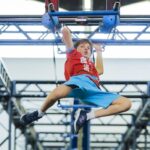
The gym features endless numbers of obstacles, as many of them can be moved around or reconfigured to create a new challenge. The salmon ladder, unstable bridge and floating doors are just a few. There’s also a foam pit with a trampoline at one end and a hanging rope at the other—a challenge for any Tarzan willing to try.
Lucas started volunteering with Dexter by helping build obstacles and painting.
“I was like, ‘I would love a place to be able to train. I would love to be able to help get this up and running,’” Lucas said. “In return, I got to train for free and, eventually, he ended up hiring me as the assistant instructor.”
Dark Horse
While working on the gym, Lucas kept training and eventually started competing in NNL competitions. However, he had bigger plans.
“I started watching the show when I was young, and I had always wanted to be on it, but you had to be 21,” Lucas explained. “In the back of my mind I was like, ‘I’d love to do it—but is the show even going to be around when I’m 21?’”
His dream got closer when “American Ninja Warrior” lowered its qualifying age to 19 this past year. Now, he could apply. But with 70,000 applicants and only 600 callbacks, Lucas still faced slim chances.
It took almost four months from his Jan. 1 application date until he heard back from the show in April that he would be competing on season 11 in Tacoma, Wash.
Lucas flew out on May 9 and competed the next day.
“It was pretty surreal, to be honest,” Lucas said. “The fact that, the year before, I was sitting on the couch watching the show thinking, ‘That would be cool.’”
The episode was packed full of ninja superstars who were not at all new to the show. Lucas was ready—this was what he had been training for. But he couldn’t escape his nerves.
“To be idolizing certain ninjas and then to be competing next to then, and not just competing, but contending with them, was just so crazy to me,” he said.
Lucas made it to the fifth obstacle before losing his grip and falling into the pool below.
He knew that only the top 30 ninjas out of 100 would move on to the finals in Las Vegas. In the end, Lucas came out 31st. He was just two seconds short of qualifying.
Even as he watched his name crossed off the list of qualifiers, he was still proud of what he had accomplished.
He called himself the dark horse.
“No one thought I could do well, but I surprised them,” he said.
Lucas plans on reapplying this January. Until he gets that shot at his second chance, he will be training even harder than before.
Obstacles
Ninja training isn’t just about the sport for Lucas. It has helped him emotionally by building his confidence—a similar story to Dexter’s.
“Parkour and ninja saved me from depression and anxiety,” Dexter said. “I want to inspire others to overcome obstacles in their lives, too.”
Both Lucas and Dexter love coaching young ninjas—being by their side when they take that first leap, hop or swing out of their comfort zone.
Dexterity Depot holds classes for anyone ages 6 and up, as well as open gyms, private events and summer camps. They also host competitions in their gym.
According to both Lucas and Dexter, having an open mind is the number-one thing it takes to be a ninja.
“Anyone can do it,” Lucas said. “It just takes that first step and being willing to fail.”
Dexterity Depot is located at 75 Utley Dr., Suite 102, Camp Hill. For more information, visit www.dexteritydepot.com.
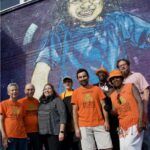


Two summers ago, Sprocket Mural Works painted 18 murals over the course of 10 days.
Those murals are now part of our landscape, as much a part of Harrisburg as some of the city’s most famous buildings and monuments.
Late this month, Sprocket will be at it again, giving us the second Harrisburg Mural Festival, with plans to mount more than a dozen works of art. In anticipation, we thought we’d share some works from the previous mural festival.
According to co-organizer Megan Caruso, the ultimate goal is to create a mural walking trail that begins at the train station and extends up the 3rd Street corridor. So, visitors can hop off the train and make a day of it.
Sprocket, though, isn’t limiting itself to downtown and Midtown. Murals also are planned for Allison Hill and even along the Capital Area Greenbelt.
So, over 10 days, check out the gifted painters creating amazing art, then join Sprocket for one of their numerous community events and parties. After all, it’s not just about art. It’s also a celebration of Harrisburg.
The Harrisburg Mural Festival runs Aug. 30 through Sept. 8 in many locations around Harrisburg, wrapping up with a block party on State Street near the Capitol building. For more information, visit www.sprocketmuralworks.com.
 In 1974, three artists were searching for a place to exhibit their latest creations.
After some thought, they decided to display their work in their local, fairytale-like Mount Gretna forest. They shared the news about the exhibit with friends and family members, so, when the show date finally came, they only expected a few familiar faces. The artists were shocked to see hundreds of people show up to the serene borough in Lebanon County.
“It sounds just like Woodstock—they had no idea that so many people would show up,” said Linda Bell, the previous director of the show. “Then the Pennsylvania Chautauqua, which is a cultural organization, took over the art show, and it has grown.”
Today, the 45th annual Mount Gretna Outdoor Art Show, held each August, has grown to host 260 artists from around the state and the country. The show also now includes live entertainment, gourmet food vendors and a kids’ art show.
“It is a national show tucked into our little mountain community,” said current director Kerry Royer.
Artists will display and sell handmade artwork in 16 categories, including two- and three-dimensional forms such as pottery, printmaking, wood and painting. As part of the juried show, judges will rank the art within the various categories. However, it’s not easy to snag a spot, as the judges select only a handful of applicants to participate.
Potter Pam Cummings, who will participate for her 21st straight year, said that Mount Gretna is one of her favorite shows and that she’s grateful and surprised that she’s gotten a spot for the past two decades.
“It’s put on by a group of volunteers who really appreciate and support the arts,” Cummings said. “They’re really friendly to us during the show, but they also promote the arts throughout the year and in doing that, they really reach a wide audience of craft and art appreciators.”
One of the original artists, Frederick Swarr, has participated consecutively for the past 14 years. He does acrylic mixed media pieces, painting famous musicians over their sheet music. Swarr, a retired art teacher and designer, said that the show has grown significantly since its 1974 debut.
“The first year, they had a couple pieces of snow fence that they put in the ground, and you pulled up with your stuff in your car and hung your artwork on the snow fence,” he said. “It’s really evolved nicely over the years.”
This year’s food lineup includes six gourmet food vendors and local restaurants, including the Hershey Pantry, Porch and Pantry and the Jigger Shop. New this year in the Hall of Philosophy is Mount Gretna Craft Brewery, which will provide a glimpse into the artistry of food with demonstrations on the making of craft beer, and Red Canoe General Store coffee.
Seven bands and artists will hold stage performances. New this year is the Mountain Road Band, which will perform in the Mount Gretna Playhouse. Other performers include Don Johnson, the Carmitchell Sisters and the Jayplayers.
Additionally, two street performers will be at the show, including Trist’N Shout Balloons, a mother-daughter balloon-artist duo that has performed at the White House three times.
The Kids’ Art Show will be held both days of the show on the Chautauqua playground. It will include face painters, a magician, caricature artists and a craft stand. Joyful Vibrations of York will lead drum circles for the kids.
“We’re really proud of the Kids’ Art Show,” Royer said. “The purpose of the Chautauqua is to promote the arts, and so this is an opportunity for children to get involved. They can create their art and sell it at their own vendor stand.”
The show also features an emerging artists section, in which the judges select 10 applicants to receive a space in the show free of charge.
“These artists range from somebody just out of art school who’s thinking about being an exhibiting artist to a senior citizen who’s now retired, and they would like to get into art,” Bell said.
Proceeds from admissions will be used to fund other Mount Gretna community programs and cultural events, many of which are free of charge.
In addition to the art and entertainment, attendees also come to the show to enjoy the scenery.
“It’s a beautiful setting,” Cummings said. “A lot of it is under trees, and it’s really a magical little gem of a place. So, people get inspired.”
Bell, who was the director of the show for 20 years before Royer took over, said that she is excited to see the show grow each year.
“It’s a way for us to promote the arts,” she said. “We’ve changed by getting food that’s actually worth coming here for, more entertainment, more things for children. We’ve just expanded everything.”
The 45th annual Mount Gretna Outdoor Art Show runs Saturday, Aug. 17, and Sunday, Aug. 18, at the Chautauqua section of Mount Gretna. Admission is $12 for adults and free of charge for children under 12. There’s a $2 discount with an Art Show postcard. For more information, visit www.mtgretnaarts.com.