At a Crossroads: Last year, numerous Methodist churches closed. Here’s what happened with one congregation.

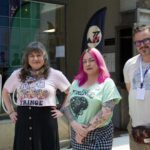
Pastor Mack Granderson & Pastor Martin Romain

It was the Friday before Easter last year when Pastor Mack Granderson was called into the office of Bishop Jeremiah Park.

Before this meeting, Granderson had already caught wind of the Susquehanna United Methodist Conference decision to close and consolidate Harrisburg’s Methodist churches. What he didn’t know was that his Derry Street church was one of them.

After the bishop told the pastor that the Derry Street United Methodist Church (UMC) was slated to close, Granderson had a series of meetings with the church’s administrative council to mull over the future of their congregation.

They decided to write a letter and distribute it to members of their church. The letter explained that the church had no choice but to close and listed three options. The could join the new Journey church on 29th and Derry streets, join another Methodist church or stay as a congregation and co-worship at the Rock Church on 15th and Market streets.

The congregation voted overwhelmingly to stay together.

“God stepped in. He did not allow us to splinter,” Granderson said. “He gave us a place to worship in this place called the Rock Church, which opened their arms to us in the most loving fashion.”

Now, members of the former Derry Street UMC and some other Methodists who have lost places of worship call the Rock Church their home. Along with a new location, Granderson and his congregation also have a new name: Crossroads Christian Ministries.

“We have a dynamic congregation,” said Granderson. “When you walk through the door, you feel the love here.”

Days after their original meeting, the bishop handed Granderson a letter stating he was no longer licensed as a Methodist pastor. A week later, Granderson was ordained as a Baptist pastor by Pastor Martin Romain of the Crossroads Baptist Church and was able to start worship at the Rock Church.

“Glory be to God and all celebration, we have never stopped worshipping,” said Granderson. “We have never stopped doing our ministries, we have never stopped our Bible study, we have never stopped learning, we have never stopped teaching. We have continued to go forward, and we never stopped growing.”


Heartbroken

Granderson started at Derry Street UMC seven years ago, but the church has been around since the late 19th century. During Granderson’s time, they had a small congregation but many food and clothing programs for their community.

Though the majority of worshippers were Latino, there were members from many countries, including parts of Africa and Asia.

Crossroads Baptist Church was founded in 1989 in Uptown Harrisburg but spent 20 years on the side of the Derry Street property in the children’s chapel. At one point, they moved out of the city to Lemoyne, but Granderson invited Pastor Romain and his congregation back one week for a service. Then another and another.

“Something about Pastor Mack Granderson clicked between the two of us,” Romain said. “The next thing you know, we’re in shared ministry.”

Every week, the two alternated services—one week Romain would preach and then Granderson the next. With two services, the church started growing, gaining more members from different cultures and denominations. One year, they were even recognized by the United Methodist Conference as one of the most inclusive churches out of all 880 churches that were invited.

According to Granderson, the church was just gaining momentum when the conference decided to consolidate Harrisburg’s Methodist churches. Though they are still growing as a new congregation, they lost many original members after moving to the Rock Church.

“I think another thing that was really painful for the congregation was the fact that generations of families were faithful to that church regardless of how the city itself changed,” Romain said. “For many of them, that was their family church, and they were heartbroken when it was closed.”


Join Them

Granderson said the Rock Church has been nothing but welcoming, and they fell into an easy cohabitation. They even collaborated on summer programs together and for the Rock Church’s annual Christmas dinner.

Even though they love their new location and the people in it, some members are still worried about the community they left behind. Claude Phipps was a volunteer for Derry Street UMC’s Meals on Wheels and other food preparation programs. In 2018, the church fed almost 40,000 people.

“Where do they get their food at now?” Phipps asked.

Romain, Granderson and their council even put in a bid for the Derry Street church property not long after they were told they had to leave. They were denied for reasons the pastors still do not know. Recently, they put in another bid, but are also looking at other properties.

But right now, Crossroads Christian Ministries is happy where they are and encourage others who have lost their place of worship to join them.

“God made that possible, us being right here, and he’s not finished with us yet,” said Granderson. “The best truly is yet to come.”

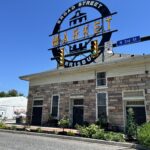
Crossroads Christian Ministries is co-located with the Rock Church, 1501 Market St., Harrisburg. For more information, visit their Facebook page.
Continue Reading

Women in Business: Allison Zang

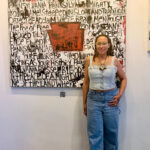
Allison Zang
Owner/ Instructor
Absolute Pilates
https://absolutepilates.co/
717-585-2592


Why did you want to start your own business?

I think I wanted to start a business before I knew I wanted to start a business. I went to the University of Pittsburgh and got a business degree thinking I wanted to work for a business. Then I got a master’s degree in exercise physiology thinking I wanted to do research. All along, I taught Pilates for fun! Life brought me home to Harrisburg to be with my then-sick mother, and family has kept me in the Burg. My husband and I bought a home in Walden, and I think I knew then that I would open a Pilates studio in our mixed-use neighborhood, even though I did have what I called a real job. Back in 2008, Pilates was the new kid in the Harrisburg fitness community. I wanted to bring the Pilates that I know and love to this community.


What makes your business unique?

Absolute Pilates has four locations in the Harrisburg area. We bring high-quality instruction to the area. All of our instructors are comprehensively trained, meaning they have done more than 500 hours of training. Most have gone on to get specialty training in areas that interest them, like pre- and postnatal, MS and neurological conditions, traumatic brain injures, back pain, dance fitness and breast cancer. We believe we can help people fall in love with Pilates no matter their current health situation or wellness goals. We help clients look their best on a wedding day or help you move, even though you think you can’t.


Whats the most fun or gratifying part of what you do?

For me as the studio owner, this is a two-part answer. I have been able to help clients feel better, move better and be healthy. I love working with people who think they cannot. I have clients that, due to chronic disease or injury, have not moved in up to 10 years. We get them on the Pilates machines, and it is a game changer. They can build strength and stamina. Currently, the inspiration around the studio is a woman with MS who came in and was headed for a wheelchair. We have been working together to rebuild strength in her legs, and she is strong enough to drive to her own sessions now.

Also, I have been able to give so many people careers. We host an annual teacher training in the studio. This has provided careers to military wives, recent college grads that have no idea what they want to do with their degree, recently divorced moms who need to get back to work, and retirees looking for a fun second career. Seeing the clients and the teachers light up and move in my spaces is the most gratifying part of my day.

Continue Reading

He’s Got a Song: Local guitarist leaves L.A. music scene and embraces Harrisburg’s.

Eight years ago, Peter Stone was in high school at Harrisburg Academy.

When they didn’t have class, he and his friends would head to their music teacher Randy Gutwein’s room. All day, they had sat in classes, working, listening, but now was their chance to make some noise.

“He let us come to his room when we didn’t have class and just play really loud electric guitar and bang on the drum sets and stuff,” Stone said.

Just over a month ago, Stone and Gutwein chatted over the phone for the first time in years.

“He was like ‘sorry, I’m a little deaf now, thanks,’” Stone said. “He was making fun of me for causing his deafness. Which is probably actually true.”

Today, listening to his soft folk songs, you could hardly guess that this same man once caused his music teacher’s hearing loss from rocking out too hard.


Likes It

Most days, Stone sits in an office on Front Street in Harrisburg overlooking the Susquehanna River. He’s a software engineer for the design company, andculture. He’s had lots of jobs here and there, but this is his first time doing this.

The New Cumberland native has been in Harrisburg for over a year now. It bears little resemblance to Boston and Los Angeles, the two cities where he spent his late teens to early 20s, but he likes it.

Over the short time he’s been here, Stone has already woven himself into the music scene in Harrisburg, one he says he was “pleasantly surprised by.”

He has already played at H*MAC, Midtown Scholar Bookstore, Cornerstone Coffeehouse, Little Amps and other venues around the city.

He’s released two songs, “Fells Reservoir” and “Sparks,” on Soundcloud, which will be part of a collection of songs about water. Some, he said, will be named after local bodies of water. Soon enough, you may be able to listen to music inspired by the Yellow Breeches Creek and the Susquehanna River.

Stone draws inspiration for his lyrics from nature as well as the social and political issues he’s passionate about.

“I’m a pretty radical person,” he said. “Very anti-war, anti-racism, pro-tolerance and acceptance. There are songs I’m working on about that, and I’ve been using my music to do stuff about that.”

He explained how, through concerts, he has raised money for Extinction Rebellion, an international movement to bring awareness to climate change issues.

No matter the message, Stone has one underlying goal for his music.

“I want to express myself and help other people express themselves,” he said. “I just want to be a positive influence.”

His songs allow him a platform to speak his mind and feel confident in his work. But that wasn’t always the case. Stone’s come a long way in realizing his long-held vision.


Move Home

It all started when Stone was studying at Tufts University in Massachusetts and saw an advertisement for a band called the Rare Occasions. They were looking for a guitarist, and well, Stone was just that. Singer Brian McLaughlin, drummer Luke Imbusch, bassist Jeremy Cohen and Stone made up the band, initially playing at colleges, bars and parties.

Along the way, they amassed followers and played on local radio stations and at music festivals. Their early song, “Dysphoric,” won them the “Song of the Year” award in the prestigious John Lennon Songwriting Contest, and they began touring the country.

Most of the band’s songs were about relationships—friendships and romance. They made songs about what mattered to them, with a sound that they liked.

Life began changing as two of the band members graduated, the drummer moving to Los Angeles, leaving Stone with a decision of what to do next.

For four months, he and his girlfriend at the time traveled around the country, exploring, sleeping in tents and even staying at a llama farm, all with the goal of ending up in Los Angeles. Eventually, the singer and bassist met them there too.

The band reached a high with their album, “Into the Shallows,” in 2018, but Stone began hitting tough times when his relationship, finances and well-being took a turn for the worse.

“In order to keep doing what I was doing at that time, to make the band work, I was sacrificing my health,” Stone said. “I couldn’t sacrifice the way that I was to make it work when it wasn’t my baby.”

He decided to leave the band and move home.


An Impact

Now back in Pennsylvania, Stone is making music that’s his. He’s not getting lots of money, or really any, but he’s growing his fan base.

He gets off work, packs up his car and heads to whichever coffee shop or restaurant he’s playing that night. A one-man band, getting set up only requires a trip or two to the car.

“It’s lonely though,” he said. “It’s hard to work on recording stuff because I get lonely, and I live alone for the first time ever. So, it’s been taking me a long time to finish my record.”

However, Stone hopes to begin releasing more songs in spring.

“One of the reasons why I like being a musician is because you get a loud microphone to talk to people, and they hear what you say,” he said. “I know how much music influences people. I want to have an impact on the youth in a way that helps them the way music helped me.”

For more information and upcoming concert dates, visit Peter Stone’s website at www.peterstonemusic.com.

Continue Reading

Screen Time: Colorectal cancer prevention–what you need to know.

Illustration by Brad Gebhart

Colorectal cancer is the second leading cause of cancer-related deaths for both men and women combined in the United States. However, the cure and even prevention of colorectal cancer is possible with the appropriate screening.

Unfortunately, only 60 percent of people actually get screened. Doctors, cancer organizations, and others are working to reduce the embarrassment and encourage open communication about colon and rectal health.


Can colorectal cancer be prevented?

Colorectal cancer usually develops from pre-cancerous polyps. Several screening tests detect these polyps including stool studies for blood and DNA, a flexible sigmoidoscopy and a colonoscopy.

Unlike other screenings, a colonoscopy allows your doctor to detect and remove pre-cancerous polyps at the same time.


Myth:  No one in my family has colorectal cancer so I am not at risk.

While it is true that a family history of colorectal cancer or colorectal polyps increases the risk, that is not the only risk factor. In fact, the majority of colorectal cancers discovered during a colonoscopy are found in people with no family history who are of average risk.


Myth:  I have no symptoms so my colon is fine.

Screenings exist to find the disease before you develop symptoms. Small colorectal polyps and early colorectal cancer produce no symptoms. Early detection of colon polyps or early colorectal cancers is the only way to prevent or cure colorectal cancer.

Once a cancer has grown to a size where it causes symptoms such as “bowel problems” or bleeding, the chance for a cure is greatly reduced.


Who needs to be screened for colorectal cancer?

  • Any patient with a positive screening test for colon cancer other than colonoscopy (i.e., Cologuard, FIT, etc.) must have a colonoscopy.
  • Men and women who have no symptoms and no family history of colorectal cancer should start screenings between the ages of 45 to 50. African Americans have a higher incidence of colon cancer and average risk screening should occur at age 45.
  • Adults of any age who have symptoms of abdominal or rectal pain, rectal bleeding, or a change in bowel habits should receive a screening.


Who needs to be screened before age 50?

  • Patients experiencing symptoms such as abdominal or rectal pain, bleeding, change in bowel habits.
  • Adults who have symptoms as described above or who have a family history. A family history is a first-degree relative (parent or sibling) who has had colorectal cancer or polyps.
  • Patients with a family history of colon or rectal cancer or polyps. In this case, you should be screened 10 years earlier than the age of the family member when he or she was diagnosed, or at age 40—whichever is younger.

While the incidence of colorectal cancer is declining in patients 50 years or older, there is a notable increase in patients younger than 50. Consequently, the American Cancer Society recommends screening all patients of average risk at age 45, but this is not uniformly accepted by all medical societies.


Will I ever need another colonoscopy?

  • A repeat colonoscopy is recommended every 10 years for patients without polyps who are of average risk.
  • High-risk patients with normal colonoscopies should have a follow-up screening every five years.
  • Patients found to have pre-cancerous polyps should typically have a repeat screening within three to five years of the polyp removal.


Other than screenings, what else should I do?

  • Know what’s normal for your body—track your bowel movements and abdominal symptoms.
  • Check your stool for signs of cancer. One of the biggest signs is rectal bleeding or blood in your stool.
  • Lifestyle changes reduce the risk of colorectal cancer and include:
  • Stopping smoking
  • Maintaining a healthy weight with an active lifestyle
  • Avoiding excessive consumption of alcohol or red and processed meat
  • Consuming a high-fiber diet, including whole grains, fruits and vegetables


What does a colonoscopy screening entail?

A colonoscopy is the single best screening exam for colorectal cancer.

colonoscopy examines the colon by using a long, flexible, lighted tube called the colonoscope, giving the doctor full view of the entire colon and rectum. During this same exam, the doctor can also remove pre-cancerous polyps.

The procedure itself takes about 45 minutes, and usually involves sedation. It’s rarely uncomfortable.


The prep for a colonoscopy

Patients switch to a clear-liquid diet the day before and use laxatives or a cleansing preparation to ensure the procedure is accurate. A colonoscopy is well worth any temporary discomfort to protect your health and your life.

To schedule a colonoscopy, talk to your primary care provider about when to schedule your first colonoscopy.

Jadd Koury, MD, FACS, FASCRS, is a physician with UPMC Pinnacle Colon and Rectal Surgery. For more information, visit www.UPMCPinnacle.com.

Sponsored Content

Continue Reading

Sew Much Talent: Stitch by stitch, Dyanna Crosson patterns her future.

Dyanna Crosso

One night, as her hair lay wild across her pillow, Dyanna Crosson had an idea. Instead of going to the closest beauty supply store for a bonnet or headscarf, she would make her own.

This was the beginning of Dyanna’s Designs and Novelties. Over a year later, the 15-year-old SciTech High student has created and sold numerous bonnets, scrunchies and phone holders with bold patterns and colors. The patterns range widely from elephants and polka dots to bold African prints and Disney characters.

“The way I pick it is, whatever I’m feeling at the time,” Crosson said. “If I want to create something that’s really colorful and bold, I go with a bold color. If I know you and I know how you act and how you feel, then I will feel like, ‘Oh, this is you. This is the type that you like.’”

Sewing seems to be in Crosson’s blood. Her grandmother sewed, as did her mother. It was inevitable that Crosson would fall into it, too.

When Crosson was 8 or 9, her grandmother gave her one of her old sewing machines and taught her how to use it. She started fiddling with it in her free time until she finally got the groove. She started creating things like pillows, purses and clothing for her dolls.

She created her first bonnet a year ago with the help of a YouTube tutorial. She watched the video three times before she finally had a finished product. The Minions Christmas-themed bonnet turned out to be a little too large, but that didn’t stop her. She kept going until she got it right.

“After I made it a couple of times, I was like ‘Oh, yeah. I like this,’” she said. “I started making some for my family members, and they were like, ‘Ohhh, I like this.’ That really boosted me up.’”

She started giving her creations away as birthday and holiday gifts. Her first sale came from her sister, which motivated her to start her own mini-business.

“I felt kind of cool because I said, ‘I can go with this,’” she said. “I can make money from this and have fun with this.”

Of her three primary products, she most likes to create bonnets. They come in small, medium and large sizes, selling for $12 to $25. The large bonnets fit box braid and dread hairstyles, the medium sizes are good for those who like their cap close to their heads but not too tight, and the small sizes are for people with short hair or children.

“When I make [a bonnet], I want to keep it for myself, but I know I can’t,” she said. “Each one, I’m just like, ‘I would wear this. I would totally wear this.’ I just really love making them, it’s so fun.”

Crosson mostly sells her creations through word of mouth, or on Instagram. However, she did have her own table at the Kwanzaa festival last December in the Harrisburg Mall. She crafted African print bonnets that mixed cool and bright colors

Even though she was the youngest seller at the festival, she said that she was not intimidated and that everyone was welcoming.

“When customers came in, I was the first face they saw, and everyone seemed to surprised by how young I was,” she said.

Starting up a business so young can be difficult. Besides creating her products, she attends school, does homework, goes to volleyball practice and finds time to socialize with her friends.

“It’s very hard balancing everything,” she said. “It’s stressful and time-consuming.”

Crosson said that her goals and her support system keep her going. Her greatest supporters, she added, are her family. Her grandmother often helps her collect fabrics or the materials she needs to create her own patterns, her mother sells Crosson’s items at her job, and her father helps her on the business side.

“It’s lovely because everyone supports me, and no one is negative towards me,” she said. “They’re all very supportive. I love it.”

She is currently in the process of creating a website and even securing her own section in a local beauty supply store.

Over the next few years, Crosson sees herself in college, either in Arizona or Florida, while still running Dyanna’s Designs and Novelties.

“I see myself doing really well, making a whole bunch, getting my fan base together, getting my Instagram booming,” she said. “It’ll make me really happy to see that. I see myself in college. If I’m in college, and I see someone with my stuff on, I think I might melt.”

For more information on Dyanna’s Designs and Novelties, check out her Instagram @dyanna_design_novelty.

Continue Reading

Women in Business: Latino Connection

Back row L-R: Leslie Ruiz, Niurka Valle, Conchita Merino, Nitza Mercado, Michelle Connett-Bergstein, Rosa Martinez, Katherine Marulanda
Front row L-R: Eunice Espinosa, Ashleigh Aviles, Zuiry Gaytan, Jean Cubilette, Christiane Delgado, Vedsaida Lorenzo, Katherine Vargas, Rossmary Cabral


Ashleigh Aviles, Senior Project Manager
Michelle Connett-Bergstein, Senior Graphic Designer
Christiane Delgado, Project Manager of Health Events

Latino Connection
717.963.7218
Latinoconnnection.org

Photography by Claudia Maguffee, Latino Connection

Why did you decide to go into your profession?

Ashleigh: I had been searching for an opportunity to do more community-focused work that would be in line with my degree in public relations. Choosing to work at a small business, I knew I would be able to see the road to building a business up. I believe Latino Connection is truly a brand that genuinely cares about the lives we touch every day. It is not just a marketing company. This is a company dedicated to improving the quality of life for families in Pennsylvania. Knowing that we are making a difference is what motivates me to continue developing in my profession and searching for more ways to bridge the gaps.

Michelle: I was looking to be in a role that would allow me to learn more about different things and help others broadcast their messages and ideas while being able to create! I was captivated by the idea of communicating and reaching a variety of different audiences with visual impact, especially when it comes to encouraging positive change in communities, our environment and beyond.

Christiane: It was a responsibility to not only my mother and myself, but to my nieces and nephew. Bringing health equity and promoting diversity and inclusion in central Pennsylvania would guarantee that my nieces and nephew would grow up in an area where they would not only feel welcome but experience success in their lives.


What makes your approach to your job different or unique?

We’ve learned to approach our work by first considering the perspectives of our stakeholders. We have a dual approach: to help organizations reach the number-one growing demographic in the country and to connect communities to resources that will help improve their wellbeing and their families. Therefore, when we approach a project or initiative, we first need to consider the values of all those involved and how it would be mutually beneficial to both the client and the audience.

Our varying life experiences, bicultural upbringings and struggles define and inspire us to view and solve problems in ways that separate us from other firms in the area. We approach our work that aims to improve lives in underserved communities with great empathy, determination and attention to detail.


What’s the most fun or gratifying part of what you do?

The most gratifying part of the job is seeing our work positively impact communities. The look of happiness and relief on the faces of community members who have been connected to multiple resources they need or have been educated on how to live a healthier life reminds us of the importance of our work. Our projects and initiatives are aimed to address the social determinants of health that exist for many people throughout the United States..

Visiting 50-plus cities with our mobile wellness units and providing wellness activities and resources have shown us firsthand the need and the barriers that exist for disadvantaged Latino families. We are grateful to be able to have authentic interactions with people where they live, to hear their appreciation for our presence and services, and to know we are making a difference in their lives.

Our annual, statewide Latino Health Summit gathers hundreds of health care professionals who directly and indirectly affect the public health of the Latino community. The conference has grown to welcome over 1,200 decision-makers and community members from all over Pennsylvania and beyond. This event is our largest and truly allows us to be proud of our energy and work, knowing we are helping organizations understand how to effectively reach these populations and the ways and reasons why they should be doing so.

Our nontraditional work environment allows us to be inventive and think outside the box. We have fun incorporating our own experiences and using our own skills and talents to create bold, in-your-face messaging, engagements and initiatives. Working at a small business has allowed us invaluable exposure into the details of growing a business and the tremendous opportunity to build a brand.

Our team is colorful, lively, diverse and enthusiastic! We are consistently improving, expanding and learning from one another. A day at the office is never the same as the next or the one before. We are always everywhere at once, getting the job done and we wouldn’t have it any other way!

Continue Reading

The Madness & the Magic: Julia Mallory takes inspiration from the sublime, the tragic.

Julia Mallory. Photo by Dani Fresh.

Julia Mallory was in the blue waters of Puerto Rico with her best friend and her best friend’s niece when a piece of seaweed touched the niece’s leg. Between Mallory and her friend’s laughter and the niece’s screams, someone asked, “What if it was a mermaid?”

Years later, Black Mermaids stands as Mallory’s brand, which houses her clothing, accessories, books and more. Her T-shirts and hoodies include the words Black Mermaids in bright, vivid colors, messages of encouragement that randomly popped into her mind and names of iconic black women in literature like Toni Morrison and Audre Lorde.

Mallory also wrote six books under her Black Mermaids brand, including four poetry collections and two children’s books.

“My work seems to invoke a sense of cultural pride, and also connects with individuals that recognize its universal themes such as love, grief, displacement, dreams and purpose,” she said.

Mallory says she’s written all her life but didn’t consider herself a poet until her senior year of high school. Around this time, the Harrisburg native won a poetry contest that was sponsored by the African American Museum of Harrisburg. That was all she needed to keep going.

She then became active on the poetry scene. She and a group of friends would travel city to city and perform or listen to poetry readings at universities and other venues. As she dove deeper into the world of poetry, she saw more and more people publishing their books, so she decided it was time for her to do the same.

She started pulling all of her work together and outlining and figuring out the theme for the book. After a few bumps in the road, her first poetry collection, “Black Mermaids,” came out in 2016.

Though the idea of “Black Mermaids” originated from that moment in Puerto Rico, the idea goes much deeper than that. Mallory thought of her ancestors who were enslaved and forced on to boats and away from their homelands. What if those who jumped or were thrown overboard then became mermaids?

“So, this reimagining of life after death and linking it to modern day, and all the things that were made to destroy us and yet we still persevere,” she said. “We even turn what is absolute madness in our lives into something that is magical.”

Mallory was taken aback by all level of support she got from the book.

People would tell her how much her poetry spoke to them. Many people also came up to Mallory and told her how much her kids loved mermaids, that we need more mermaids of color and asked her if this was a children’s book. She laughed it off and said no, but it got her mind rolling.

A month later, she finished her children’s book called “Kareemah and the Black Mermaids.” The book follows a young girl named Kareemah who is rescued by a trio of mermaids.

“I let my daughter read it and she was like, ‘Wow, this is really good. Almost like a real writer wrote it,’” she said laughing.

Mallory sent the book to her friend and illustrator Taqiyya Muhammad, who also illustrated the cover of her first book. Muhammad said she would need three months to create her designs, so Mallory planned for the book to come out in May 2017, but then her life was turned upside down.


Choose to Live

On May 30, 2017, Julian, Mallory’s oldest son, was shot while trying to break up an argument between his friend and her family members. He died in the hospital four days later.

During this time, Mallory felt like time stopped but was accelerated at the same time. The last thing on her mind was anything related to Black Mermaids, her career, or anything other than her son. But she knew she needed to anchor herself and try to find some goodness to cling on to.

“My son’s tragic death made it plain for me how fleeting life is,” Mallory wrote in a blog post on her Black Mermaids website. “Julian’s earthly absence has made my choices exceptionally clear—either I renew my commitment to living daily or I offer myself as a sacrifice to grief. I am unwilling to do the latter. And so I choose to live.”

She threw herself back into Black Mermaids and created three more T-shirts. She created calendars and buttons with random phrases that popped into her mind such as, “Nah, this lifetime,” a play on Erykah Badu’s song “Next Lifetime.”

By the end of 2017, she published her children’s book, “Kareemah and the Black Mermaids,” and an anniversary edition of “Black Mermaids.” Her second children’s novel, “Breathe,” was published the following year, as well as a chapbook edition of “Black Mermaids.”

Black Mermaids was becoming much more than Mallory had imagined.

“Black Mermaids is slowly evolving and becoming its own thing,” she said. “I am continuously looking for ways to not just be in the pursuit of what’s next, but how I can deepen my relationship to the work that I already created.”

Throughout this time, she was working on another book that would later become her most recent collection, “Survivor’s Guilt,” which was published in October.

The death of her son amplified the survivor’s guilt Mallory was already grappling with from losing childhood friends and family members.

“I think my son’s death really gave me the language to be able to articulate what I had been feeling, and so the closest thing I could come up with that describes that feeling is the concept of survivor’s guilt,” she said.

In the book, she talks about not only her experience with grief but how grief affects communities, especially black communities, and how she learned to heal.

Along with poetry, the book includes the victim impact statement that she gave to the court the day the woman who killed her son was sentenced, letters to her son, uncle and grandmother and photographs.

“I think there is something about being here and being able to talk so boldly about my son’s death that will also be healing to other folks,” she said. “It was obviously healing to me too. Like, I’m not going to hide in this pain. I’m going to talk about it.”

And Mallory continued to talk about her experience with grief either through her work or actually speaking about it.

Aside from raising her kids Kareen and Jaya and working at Perry Media Group, she has a few creative projects going. She’s nailing down a courier poem she has been working on for over a decade, another children’s book and a book related to her “Do Your Work” phrase.

“Hell, that’s enough,” she said, “And that’s just what I’m planning to do. Black Mermaids feels like what I’m supposed to do, but I could literally get another assignment and go off doing something else.”

For more information on Black Mermaids, visit www.blackmermaids.com.

Continue Reading

Life of Service: Through her actions, Kathy Speaker MacNett shows her love of neighborhood, of Harrisburg.

Kathy Speaker MacNett

Kathy Speaker MacNett credits her parents for sparking her lifelong passion of public service.

“The way I was raised was to help other people,” said Speaker MacNett, who grew up in New Jersey before downtown Harrisburg became her home nearly 50 years ago. “My father was a volunteer firefighter, and my mother did a lot of volunteering around the community, as well.”

Today, Speaker MacNett, a labor relations attorney and a managing member of the Harrisburg law firm of SkarlatosZonarich, is known as a virtual powerhouse around the city, serving the community through a myriad of paths.

How so? Let’s count the ways.

In 2019, Speaker MacNett was appointed to a five-year term on the Intergovernmental Cooperation Authority, the state body that oversees Harrisburg’s finances. The ICA since has approved the city’s five-year financial plan, bringing Harrisburg closer to exiting Act 47, the state’s program for financially distressed cities.

She also sits on the steering committee of Capitol Area Neighbors, which meets to discuss issues and projects that affect the downtown Harrisburg neighborhood.

Then there’s her position on the board of the Harrisburg Catholic Elementary School, where a capital campaign is underway for a $5.7 million project that will renovate the circa-1950 Harrisburg Catholic Elementary School on Liberty Street and the adjacent, 109-year-old Shanahan Center on North Street.

“I very firmly believe in Catholic education,” Speaker MacNett stated. “We do it with limited fund-ship and give every student the attention they deserve. My daughters (Pamela and Colleen) graduated from Catholic schools, and so did I.”

It also doesn’t hurt that Speaker MacNett lives directly across the street from the Shanahan Center. She characterizes the upcoming school project as another step forward in the continued redevelopment of the Capitol neighborhood.

There’s that word again. Neighborhood. For all intents and purposes, you’d be hard-pressed to find a bigger advocate of Harrisburg than Speaker MacNett.

“I like the access here,” she explained. “I like walking around the city. I like it so much that I’m notorious for letting my car sit for a week. I walk to and from work. I like looking out the window and seeing the energy that’s here.”

Another downtown advocate, Harristown’s Brad Jones, has known Speaker MacNett for “15 or 20 years.”

“Kathy is like a bright ray of sunshine,” said Harristown’s president and CEO. “She’s always looking at the bright side of the city. She’s very observant about the things that need to be changed and really cares about this city.”

Savvy
Speaker MacNett first came to Harrisburg as an Immaculata College (now University) student during the summer of 1968. She was a recipient that year of the prestigious James A. Finnegan Foundation Fellowship and spent the interim between her sophomore and junior years working in Harrisburg with the Republican State Committee.

It was the start of her long-term love affair with the city.

“One of the great things about Harrisburg is the river,” she said. “I love walking along it. It gives the city a sense of openness that other cities don’t have.”

After earning a bachelor’s of arts in history from Immaculata, she moved to Harrisburg full-time in 1971. Today, she sits on the board of the Finnegan Foundation. Her daughters haven’t moved far, living in separate homes just across the street, and Speaker MacNett recently purchased and renovated another house on the block to improve the neighborhood.

“Harrisburg is history,” she said. “I’ve worked to save 10 buildings in Harrisburg on my own and with my daughters.”

After settling in Harrisburg, Speaker MacNett worked on a political campaign before becoming research director to the state House Labor Relations Committee. She then went on to clerk at the Pennsylvania Supreme Court and serve as assistant counsel at the state Labor Relations Board.

In the meantime, she earned a master’s degree in government administration from the University of Pennsylvania and a master’s in industrial relations from St. Francis College. She went on to earn a law degree from Dickinson School of Law (now Penn State) in 1981. She first became a mother two weeks before her third-year finals at Dickinson.

In 1983, Speaker MacNett became an associate counsel for the Pennsylvania Labor Relations Board. After that, she served as an associate or partner for several law firms, focusing on management-side labor relations, employment law and related legislative and regulatory developments. In 2003, she began at SkarlatosZonarich, where she’s now a managing member.

SkarlatosZonarich counsel Jim Cawley has known Speaker MacNett “as a lawyer and as a friend” for around 40 years, he said.

“Kathy does what is right and advises other people to do what is right,” Cawley said. “She backs up her intelligence with a great deal of savvy. She’s a delightful individual and a darn good hard-nosed lawyer when she needs to be.”

Continue Reading

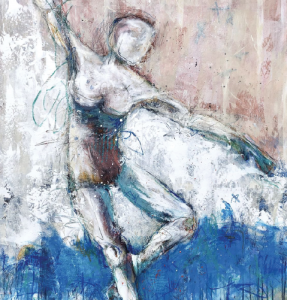
Artist in Focus: Peg Belcastro

Sometimes, you have to leave home to gain a fresh perspective.

That’s what Peg Belcastro did, choosing to live in Alaska for a decade. When she returned to central Pennsylvania, her art had changed, deeply influenced by her time spent in America’s “last frontier.”

“The people who live in Alaska have a particular way of thinking, which is essential for surviving in the far north,” she said. “It’s the attitude of courage to be true to yourself, to honor your passions and to live life to the fullest—no matter what anyone else thinks.”

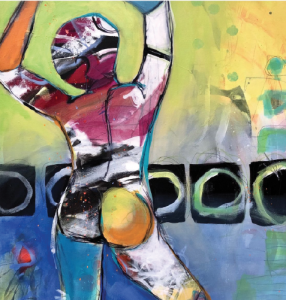
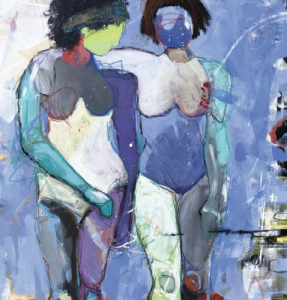
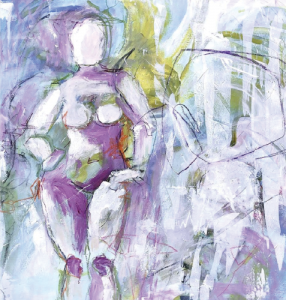
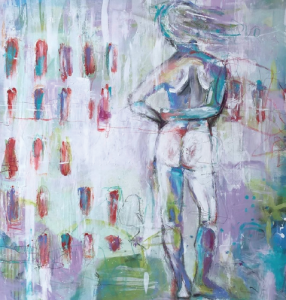
For Peg’s art, the result became an abstract expressionism that represents joyful exploration, a variety of mixed media, bold brushstrokes and exuberant colors.

Since returning in 2012, Peg has shown throughout the state, including at the Bethlehem House Contemporary Art Gallery in Bethlehem, Garth Gallery in Columbia, CALC in Carlisle and the Art Association of Harrisburg. She is represented by PURE Gallery of Mechanicsburg.

To see more of Peg’s work, visit www.PegBelcastro.com.

Continue Reading

Lend a Hand: A beginner’s guide to helping the homeless.

Bethesda Mission

“A kind ear, a hot meal, and someone that’s caring.”

That was the response of Art Miles when asked, “What do the homeless need most?”

Miles works at Susquehanna Harbor Safe Haven (SHSH), a program of Christian Churches United, which houses homeless men with mental health challenges and operates a winter men’s shelter.

More important than his answer was the question. The first step in sustainable, impactful relief to those experiencing homelessness is asking questions.

Darrel Reinford, executive director of Christian Churches United of the Tri-County Area, said people should begin by “educating yourself about what’s being done and asking, ‘what’s missing,’ rather than assuming…what the needs are.”

Those who call the streets home generally need food, clothing and some type of temporary shelter such as a tent, and Harrisburg hosts many organizations that meet those needs.

If people are interested in giving or serving this way, contacting one of those agencies (G2:10 Outreach, Bethesda Mission, Downtown Daily Bread) is a great beginning. When donating to organizations, keep in mind that one man’s trash is not always another man’s treasure.

Angela Parker-Quarles, services director of Shalom House, said that those donating should “avoid bringing anything that they would not use for themselves.” Such goods include soiled or torn clothing or damaged items.

Also, donating through an agency, rather than dropping off bags of clothing or containers of food in places the homeless frequent, prevents a buildup of trash and rotting food.

“The best way to meet the need is in a coordinated way,” Reinford said.

Beyond the basic necessities, the homeless need a more permanent place to stay, support getting back on their feet, and meaningful experiences with people who care.

At the SHSH overnight men’s shelter, in a cafeteria-style room that sleeps about 23 men, Reinford explained that the organization needs volunteers.

“To take guys out to social things, the social things we take for granted,” he said. “They often don’t have either the funds or the positive people to do them with.”

Those things may include attending a baseball game, watching fireworks or dining out for pizza. He explained further that the greatest needs come from loneliness and feeling that no one cares.

Parker-Quarles agreed on both accounts.

“Exposure is powerful,” she said, adding that donations of tickets to the movies, Hershey Zoo or Whitaker Center can show the women and children at Shalom House that life can be different.

Other out-of-the box ways to help include bus and Uber passes to get to work or appointments, money for a shower at the YMCA, a bucket of cleaning supplies for those who move into an apartment, or mentoring time.

She added that, sometimes, we don’t need to offer the person on the corner anything other than a smile and a “hello” to make them feel valued enough to be spoken to. The homeless are often ignored.


Great Stewards

According to the Capital Area Coalition on Homelessness (CACH) “Point in Time Report” for Harrisburg and Dauphin County, there were 418 homeless individuals in 2019. Of that number, 40 people were living and sleeping on the streets and 370 were in some type of emergency or long-term shelter.

Organizations that assist the homeless in shelter settings (Bethesda Mission, Interfaith Shelter for Homeless Families) or transitional housing (Brethren Housing Association, Family Promise of the Capital Region) have a variety of needs, with limited resources to run them.

To that point, Parker-Quarles’ office resides in the basement of Shalom House’s 15th Street building. The walls consist of floor-to-ceiling donations of shampoo, blankets and soap.

House repairs show up regularly on the wish list, as well as office supplies and office furniture. Much of what they have now is ancient, verified by the office chair sporting a shiny coat of black duct tape.

With as many as 10 women and 12 children living at Shalom House at one time, the common area furniture is heavily used—and it shows. The couch is pushed up against the bookshelf to keep the arm from falling off.

“We are great stewards of the resources we receive,” said Parker-Quarles.

Another obvious resource that nonprofits need—money.

Jennifer Wintermyer, board member of CACH, said that many 501(c)(3) organizations receive grant money that has stipulations. She said that unrestricted funds allow more flexibility to purchase items like pens and notebooks for street outreach volunteers or to fund shoes for someone in immediate need.

Aid agencies appreciate service through office administrative help because it frees up staff to work directly with those they serve. The gift of professional training shores up staff in professions with high burnout rates.

Training and office tasks may not be the first thing someone thinks of when talking about aiding the homeless, but Quarles said, “Ask [yourself] what do you feel you have to offer?”

Wintermyer said, “We probably have a committee where your, ‘I’m really good at,’ would be helpful.”

That help also could come in the form of a rental property. Wintermyer pointed out that folks who have subsidized housing vouchers are waiting in shelters due to lack of landlords willing to rent to them.

Many avenues to assist the homeless exist, some more direct and tangible than others. Those with boots on the ground advise that help given is best preceded by the question, “What do those experiencing homelessness need?”

According to Quarles, there’s an answer.

“Connection, to be trusted, to be heard,” she said. “To be understood, to learn to heal, to feel valued and have opportunities.”


Taking Action

To find out more about how to help the area’s homeless population, visit the websites of the groups mentioned in this story, including:

Bethesda Mission: www.bethesdamission.org

Capital Area Coalition on Homelessness: www.cachpa.org

Christian Churches United of the Tri-County Area: www.ccuhbg.org

Downtown Daily Bread: www.pinestreet.org/ministries/downtown-daily-bread

Shalom House: www.shalomhouse.net

Continue Reading