Watershed Event: Despite the trials of 2020, a new restaurant/pub opens in Camp Hill.

Scottish Poet Robert Burns once said, “The best-laid schemes of mice and men oft go awry.” It’s a phrase to which Josh Kesler can certainly relate.

Before opening the Millworks in Harrisburg, Kesler dealt with the vicissitudes of real estate. So, suffering the occasional setback was hardly a foreign concept to him.

But then came COVID-19, a wholly new challenge that hit the restaurant industry hard. Nonetheless, he continued to charge forward with plans to open a new restaurant in the heart of Camp Hill—The Watershed Pub. Kesler went so far as to put a sign out announcing a July 16 opening date.

But then the pandemic struck too close to home. An employee at the just-reopened Millworks tested positive, causing him to test all employees for the virus. When he discovered that he would have to wait two to three weeks for the results, he decided that it was time to pivot again. So, he put both restaurants on pause.

“I wanted to gain a little bit more of a comfort level,” Kesler said.

By the first week of October, the restaurateur was once again ready to host the grand opening of the Watershed Pub.


Science & Art

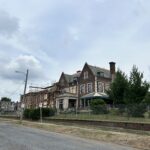
Kesler has long had a passion for preservation, rehabbing over a million square feet of historic properties over the years. So, when he heard that Creative Elegance Boutique was up for sale and that the building dated back to the 1800s, his interest was piqued. He made an offer, closed the deal, and got to work.

Customers will recognize the exterior.

“We worked hard to preserve the historic architectural integrity on the outside of the structure,” Kesler said.

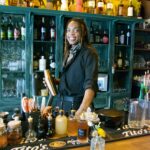
Inside, things have changed quite a bit in the 3,500-square-foot building, which now seats 160. The pub features a bar on both the first and second floors, with white oak flooring throughout. Seating on both floors is a combination of tables and booths with lighting fixtures that vary from sconces to Edison bulb pendant lighting to colonial-style chandeliers. Kesler attributes the choice of wall color to his wife, who selected “Cushing Green,” a period hue for the building.

As for the cuisine, sustainability is infused into the heart of the menu.

“The Watershed Pub developed as we began to think about the impact of our region on the Susquehanna River Valley and, ultimately, the Chesapeake watershed,” Kesler said.

Diners have a choice of carefully selected seafood options that are regional, sustainably harvested and meet criteria from the NOAA fisheries guide, the Monterey Bay Aquarium’s Seafood Watch Guide and others. Selections hail largely from the mid-Atlantic region and include oysters, blue crab, mussels, clams, rockfish and even Maryland snapping turtle, along with non-seafood items like vegan ravioli and country fried steak.

Kesler said that he strives to be environmentally responsible.

“It’s important to me to work with the Chesapeake Bay Foundation to help support the organization’s mission to protect and restore the bay,” he said.

The Watershed Pub has something else that Camp Hill residents have longed desired for their downtown ever since they marched to the polls a few years ago to overturn the borough’s “dry” status—a place to get a drink.

The restaurant offers artisan cocktails crafted with Pennsylvania spirits, along with a selection of quality Pennsylvania wines and a wide selection of brews from the Millworks Brewery, with brew master Jeff Musselman at the helm.

“My passion for brewing is anchored in the fact that what we do is truly a combination of science and art, and there aren’t many careers where you get to combine those two things and make a product that customers are passionate about,” he said.

Sue Pera, owner of neighboring Cornerstone Coffeehouse, said that the Watershed Pub fills a need along Market Street.

“Camp Hill is super excited to welcome the Watershed Pub to the downtown business corridor,” she said. “It’s the first dining destination in Camp Hill since Prohibition to serve wine, spirits and beer, all locally sourced from PA.”


Homecoming

Unfortunately, the pandemic continues to hang like a specter in the air these days, especially for restaurants. So, Kesler took an action that he may not have considered a few years ago.

“I decided to install more sophisticated equipment in this restaurant,” said Kesler about the HVAC system that includes a UV purifier that kills up to 98.5 percent of airborne pathogens. “I started out with HEPA filters and began talking to contractors, who led me down the road to discovering this other system.”

It was expensive, he said, but worth the added “peace of mind.”

Otherwise, he’s happy to be contributing to downtown Camp Hill’s fabric, adding a food and drink option to the revitalized shopping district, and is optimistic about the changes being made to make the small community more walkable.

“When the weather warms again, we will also be able to accommodate an additional 90 customers who enjoy outside dining,” he said.

The restaurateur said that his family lived in Camp Hill for almost a decade.

“So, for me, it feels almost like a homecoming,” he said.


The Watershed Pub is located at 2129 Market St., Camp Hill. For more information, visit
www.thewatershed.pub or their Facebook page.

Support quality local journalism. Become a Friend of TheBurg!

Continue Reading

Passion & Profit: Black entrepreneurs in Harrisburg are making money doing what they love.

Danielle Williams models her earrings, also shown right.

Maisha Webb wants to be seen before she is heard. She has always been a little quiet, but when she makes an entrance, she’s determined to be noticed.

“Fashion was a way to express myself without having to say anything,” she said. “I knew when I walked into a room […] it’s going to turn heads.”

When you enter Mean Girl Style Boutique, the first thing you notice is pink—pink walls that Webb’s dad had contested when she pulled out the paint cans. But remember, she was going for head turns.

Racks of neon dresses, shimmering skirts and graphic tees with messages like, “Alexa. Block his number,” line the wall. Her outfits are for people who like to think outside the box when it comes to fashion, she said.

“I really like sparkly things,” Webb admitted. “I have a lot of sequins.”

Webb’s story reflects that of a growing number of Black shop owners and entrepreneurs in the Harrisburg area, who are taking something they love and turning it into a money-making venture. Whether it’s fashion, food or health, many new African American businesses have opened in recent years.

When she started her brand, Webb didn’t have a degree or business experience, she just wanted to sell shoes. She went through ups and downs, periods of stepping away from the business and name changes to her boutique. Webb took time for her family, working other jobs and caring for her three kids. But something was missing.

“When you have something you’re really passionate about and you step away from it, it’s like a void,” she said.

It was in 2016 when she decided to commit to her business. Webb was listening to a Jay-Z song, “Girls, Girls, Girls,” when the lyrics called out the perfect name for her boutique, Mean Girl Style. Hip-hop lyrics often speak to her like that. In 2018, she bought her store on N. Front Street in Steelton, painted the walls pink and, in her words, worked her butt off.

Webb’s daughter Ajia’s artwork decorates the walls of the boutique. Ajia even has a few shirts and jackets on the racks that she designed herself.

“My mom is an inspiration to me,” she said. “I’m trying to follow what she is doing.”


Like Mother, Like Daughter

Yolanda Maina learned everything she knows from her mother. Her skills of beading jewelry, carving wood and stone and sewing clothing came from her mother’s teaching.

At Jambo African Fashion and Design, she sells items just like the ones that she and her mother made and sold in Kenya years ago.

“We have bright colors, beautiful colors,” said Maina, who owns the enterprise with husband Edwin. “I try to make many different pieces.”

Until recently, their store was located in downtown Harrisburg, but recently turned to an all-online model.

Maina said that the couple brings a taste of African heritage to customers. Dresses, jewelry, men’s suits and kente head wraps are just a few of the items they sell.

She makes some of the jewelry and clothing herself, and some is sent from Kenya.

“I try to create employment for the ladies back home,” she said. “It’s about empowering them, and they are learning the skills, too.”

During the COVID-19 pandemic, things slowed down at the shop, except the owners. Maina continued working and studying in school to be a nurse, while running the store.

“There are some good days and bad days,” she said. “It’s about patience.”


Deep Breath

Owner of Ex•hale Candle Co., Aubrea Thompson, not only wants to make her customers happy, but healthier.

About four years ago, Thompson started experimenting with making aromatherapy candles.

“There was a lot of trial and error,” she said. “There’s a science to it. I had to learn a lot.”

Thompson loved a good candle—the way it made the room glow while creating ambience and a sense of relaxation. But through research, she found information on how paraffin wax candles, the most popular kind, could potentially cause health issues, she said.

Thompson decided to make her candles with soy wax and essential oils. They are all-natural, organic and vegan-friendly, and each is handmade by Thompson, who pours many hours each week into the craft.

One of her scents, perfect for fall, is a blend of blood orange and cassia (cinnamon) called “Bliss.” Another customer favorite is “Zen AF,” a mixture of lavender and vanilla.

Each candle has the name with a definition of the word underneath. “Pur•if•y,” “Pros•per•i•ty” and “Vibes” are among them. There’s one for almost every feeling or state of mind.

“I’m big on words and positive affirmations,” Thompson said. “My candles have a meaning of wisdom and purpose.”

In addition to candles, she has her own photography business, ATV Studios in Carlisle. Thompson currently sells her candles online, but hopes to find a storefront eventually to continue helping people live a healthier life.

One of Thompson’s candles recently sat on Webb’s desk at Mean Girl Style Boutique.

“I’m a Black-owned, small business so I get a lot of support from my community,” Thompson said. “Doing this makes me feel like I have purpose again.”


Making a Statement

When the pandemic hit, most people suddenly had a lot more time on their hands. Danielle Williams sure did.

Now that she had more time at home, she wanted to do something meaningful with it.

Williams started designing and making her own earrings. She was selling clothes on her small online boutique, The Beat Boutique, but wanted to expand to jewelry. YouTube helped her learn the technicalities, but the creativity was always there, she said.

“It started as a hobby,” she explained. “It was just something to do in quarantine. But then people started reaching out.”

It wasn’t long before Williams set up a room dedicated to earring making in her home in Midtown.

Every day, she spends time rolling and hand molding polymer clay, using a pasta maker to get the air bubbles out, and cutting out whatever shape she has in mind.

Some of her earring designs resemble a sunset, others a crescent moon. One pair is a swirl of pink, blue and purple pastels, another a simple, moss green that reminds her of her destination wedding in Iceland.

“I’m really big on loud colors,” Williams said. “I have darker skin and short hair, so I like statement earrings.”

Under the name Earrings by Dee, Williams has sold her jewelry at venues like Rubicon, La Cultura and the HBG Flea. She is grateful for the opportunity she has, while recognizing there is still often a lack of diversity among artists and makers showcased at festivals and pop-up shops.

“I think the community is working on giving a platform to people like me,” she said. “But I would love to see more people that look like me at these pop-ups.”

While Williams never expected her quarantine hobby to take off like it did, she is grateful for the ways she has grown because of it.

“I’ve learned to really believe in myself and grow outside of my comfort zone,” she said. “It’s a feeling of ‘wow, I’ve done this.’”

Mean Girl Style Boutique is located at 147 N. Front St., Steelton. For more information, visit www.mgsboutique.com or their Instagram (@meangirlstyle).

Jambo African Fashion and Design can be found at www.jamboafricanfashion.com or their Facebook page.

To order from Exhale Candle Co. or to learn more, visit www.exhalecandleco.com or see their Instagram page (@exhalecandleco).

To check out Earrings by Dee, visit www.thebeatboutique.shop or her Instagram (@earrings_bydee).

Support quality local journalism. Become a Friend of TheBurg!

Continue Reading

Lemons to Lemonade: COVID has slammed many businesses, but some have found unique niches, opportunities.

Ace Rhoad

A few months ago, Ace Rhoad lost his job, a casualty of the COVID-19 pandemic. He tried to occupy his time, but quickly grew tired of watching Netflix. He’s not a fan of sitting still for long.

Besides, all the bad news—the pandemic, political polarization, the recent deaths of Black men and women and the subsequent conflict—were getting to him.

“Everything was so depressing,” Rhoad said. “When I cook, I don’t have to deal with that.”

Although he was a salesman by trade, Rhoad was a chef at heart. With all the extra time on his hands, he could get back to what he loved.

He invested in a meat smoker and set up shop in his backyard in Harrisburg, cooking for neighbors and friends for fun. He served up ribs, chicken, pulled pork, pit beef and a slew of cookout favorites.

“You could smell it everywhere—the whole neighborhood,” he said. “People were coming out and wanted to know what was going on.”

His backyard barbecue got so big, Rhoad decided to put it on wheels and feed the masses in perfect COVID-19 style—out of a food truck. Smoking Ace’s BBQ was born.

“It blew up more than I thought it would,” he said. “It brought people together.”


Pets & Plants

During the pandemic, we’ve heard of businesses reducing capacity and temporarily or permanently closing. Rarely are there stories of businesses starting and growing because of the pandemic. But, just like Rhoad’s, they are there, blooming from a crack in the concrete—some quite literally.

“The houseplant business has blown up since COVID,” said Hannah Witwer, co-founder of The Vintage Vine HBG.

Witwer met Amie Ennist on Instagram after both had started accounts to post about life with pets and plants in Harrisburg. Over a glass of champagne, they decided to join forces and start a plant business.

Within a month, the pair held their first pop-up plant sale in front of Ennist’s home on Green and Kelker streets in Midtown. They set up tables of vintage vases full of green clippings and potted plants. Within a few hours, they were sold out.

“When we had our first sale, we didn’t know what it was going to be like,” Ennist said. “But people want their plants.”

The houseplant trend has been growing over the past few years, especially amongst millennials, reported Garden Center Magazine. According to the National Gardening Association, millennials were responsible for 31% of houseplant sales in 2018. During the coronavirus crisis, the Washington Post found that even more people have been purchasing plants.

Witwer and Ennist have noticed the same trend.

“People are saying how their mental health has taken a toll during COVID,” Witwer said. “They say tending to plants and having new life in their apartments really helps. It helps me, too.”

Since The Vintage Vine’s first sale, they have held another at Rubicon, a restaurant in downtown Harrisburg. That time, they almost sold out within the first half hour.

“We are doing this to have fun, and we hope it never stops being fun,” Witwer said. 


Work Her Magic

For some businesses, the coronavirus crisis gifted them with time—enough to get a dream off the ground. For other people, the pandemic gave them a problem for which, with innovation, they would find a solution, and subsequently, a business.

The Vintage Vine’s second pop-up shop was hosted by Jovana Sarver, a local artist who has also found a way to capitalize on the CDC’s guidelines. She started making facemasks.

Sarver had a lot of scrap fabric lying around from a T-shirt line she created for Little Amps. She and her friend, Hanniel Sindelar, decided they would make use of the fabric by making masks to sell and raise funds for the Young Professionals of Color—Greater Harrisburg.

“It felt tedious in the beginning,” Sarver said. “But they were selling fast, so we kept making them.”

After the fundraiser, she continued making masks and selling them. Now she has made and sold over 100.

But these aren’t just any old masks. Each one is a unique work of art.

Through an “ice dyeing” method, Sarver creates a swirl of colors on each mask—think tie-dye meets watercolor.

“I’ve always been interested in clothing as more than clothing,” she said. “I love that it is an art piece that people can wear.”

Seeing the success of her masks, Sarver has been dyeing clothes now, as well. People send her their white shirts, pants and dresses to work her magic on.

Making masks has pushed her art in a new direction. Sarver plans to take it from a side hustle to more of a full-time business.

“I feel more confident,” she said. “I’m fully committed to making this work.”


Silver Linings

Savon Poole is another entrepreneur committed to growing her business after newfound success through the pandemic.

She is the founder of Moving Handz LLC, a grocery delivery service for seniors in the Harrisburg area.

When Poole’s grandmother was diagnosed with stage-four cancer, she and her family spent a lot of time shopping and caring for her. This, she said, took away valuable time they could’ve spent with her.

“I felt like, why not start a grocery delivery service to fill that time gap?” Poole said.

Although Moving Handz was formed in February, it really picked up as the COVID-19 crisis hit, putting seniors most at risk.

Poole helps clients select groceries, shops for them and delivers to their homes. Customers can pay to receive a monthly service or pay by delivery.

As her business grew during the pandemic, Poole started to dream about what the next step may be. She hopes to partner with Medicaid, Medicare and the Pennsylvania Department of Aging.

“People really like this, and they say this is a service that is needed,” she said.

While the pandemic helped kick-start some of these local businesses, not one of the owners wishes the crisis was part of our current reality. They are, however, grateful that some good has arisen amidst so much bad.

“I guess this is the silver lining,” Sarver said. “You can really stop and focus on what matters to you.”

Smoking Ace’s BBQ is located outside of Boscov’s at the Colonial Park Mall, 4600 Johnstown Rd., Harrisburg. For more information, visit their Facebook page.

The Vintage Vine HBG will be at La Cultura, 214 Verbeke St., Harrisburg, on Nov. 21. For more information, visit their Instagram page (@thevintagevinehbg).

To purchase a facemask from Jovana Sarver, contact her through Instagram (@dirt.petal).

For more information on Moving Handz LLC, visit their Facebook page or call 717-425-4509.

Support quality local journalism. Become a Friend of TheBurg!

Continue Reading

Inspired Miles: Reflections on running 50 races for 50 causes while I was 50.

Karen Hendricks

It’s hard to run in a Santa suit.

Running up and over a steep bridge—if you have a fear of heights—is mentally challenging.

And if you’ve suddenly lost your beloved dog to canine cancer, it’s an emotional experience to participate in a race designed for dogs and their owners—minus your dog—two weeks later.

Those were some initial takeaways from a yearlong running challenge I recently completed.

I set out to run 50 races for 50 causes while I was 50.

I thought 50 race experiences would be a challenging, meaningful way to give back to others, while celebrating a banner year through something I love—running. My run buds caught my enthusiasm and joined in. Non-running friends thought I was insane. My husband worried I’d end up injured. (Spoiler alert: I miraculously did not.)

I want to make it clear that I consider myself a very average runner. Throughout the year, I achieved a few things, but my personal milestones were nothing compared to the trailblazing people dedicated to lifechanging causes that I met along the way. And like everything else in 2020, my plans were shaped by a worldwide pandemic—as much as I didn’t want them to be.

It all began last September with a mountainside 5K that helped at-risk youth, a beachy half marathon with a big bridge that benefitted volunteer firefighters, and York’s White Rose Run—a 5-miler through city streets that fought opioid addiction.

All year, I met incredible people, heard both heartbreaking and triumphant stories, and learned head-shaking-worthy statistics. For example, about 130 people die every day in this country due to opioid addiction. I met a woman—about my age—who battled to save her son from being one of those statistics. Because she ultimately couldn’t, she co-founded York County’s nonprofit chapter of Not One More. Now she’s working to save other families from her heartache.

More heartbreaking odds: One out of every three dogs will develop some type of canine cancer in their lifetime. My own beloved Jack suddenly became one of those statistics last fall, just two weeks before Gulliver’s Run. This 5K at Gifford Pinchot State Park has raised $66,000 for canine cancer research since 2013 thanks to its dedicated founder, who also lost his best friend to canine cancer. Running can indeed ease heartbreak.

Running also forges friendships. My friend Ali and I drove through the pouring rain—and questioned our sanity—to run the Spring Valley 4-Miler, part of the York Road Runners’ Winter Race Series, which supports the local running community. Dripping wet, we huddled under a tent by the finish line, mud swirling down the road, to enjoy the sweet victory of race donuts—and laughed.

The year took a somber turn for all of us in March. Life—and our plans—lurched. More than a dozen spring races I’d signed up for were canceled or postponed, and I wondered if I’d be able to continue—almost exactly at my halfway point. One thing I knew for sure. I needed running in my life more than ever before. Running was the best escape from the reality of this pandemic, and some days I just wanted to keep running and not return.

Slowly, races adapted and went “virtual,” meaning you could sign up, run the distance in your neighborhood or anywhere you’d like, and your race fees and donations still benefitted great causes—because let’s face it, nonprofits still needed help.

Running the Paterno Family Beaver Stadium Run 5K in my neighborhood didn’t provide quite the same atmosphere, but the event still supported Special Olympics of Pennsylvania during its 50th anniversary year.

As 2020 wore on, virtual races morphed into long distance challenges, like the One NY 500K (311 miles). My friend Joanne and I both ran 500K over two months to total 1,000K—the distance from Niagara Falls to the easternmost tip of Long Island. Every day, we logged our socially distanced miles, texted each other for support, and watched our little runner graphics move across a New York map.

Those miles, powered by our donations, raised money for COVID-19 relief efforts—a cause that didn’t even exist six months prior, when I began my race planning. As New York City began to emerge from the pandemic, it felt like our miles made a difference. Long-term running goals aligned with the long-term endurance we’d need to survive 2020. Running was therapy.

Additional challenges included the summer-long Runnsylvania 283 (the mileage across Pennsylvania)—also benefitting COVID-19 relief, Harrisburg River Runners’ June 100-mile challenge aiding the Central Pennsylvania Food Bank, 76 miles in July for Philadelphia’s homeless nonprofit Back on My Feet, and I contributed 50 of the nationwide Million Miles for Justice in the wake of George Floyd’s death.

I started to equate longer distances with deeper causes. If only I could run long enough to get to the roots of our society’s issues.

And so, running became a way for me to process the events of the past year. Through it all, I felt grateful to be alive, grateful to have the ability to run, grateful to be outside—often with my husband nearby on his bike, grateful for friends and family who donated to many of my causes. When people care enough to say they believe in you, it’s humbling. And empowering. My 50 races for 50 causes totaled 1,176 miles, raised thousands of dollars and even earned me a few race medals and PRs (personal records—at the age of 50!) along the way.

I couldn’t have done it without causes that motivated me to help make the wrongs of our society a little more right.

I logged many miles in Harrisburg, along the river or around the Greenbelt, including my final, 50th race. About 25 friends joined me on City Island to run the Brave Like Gabe 5K for rare cancer research. Do you remember how absolutely perfect and beautiful Labor Day weekend was? A bald eagle flew over the island as we gathered—a magical moment that captured the spirit of the entire past year.

Because the power of running also somehow generates magic over the miles. In between those split seconds when our feet touch the ground, there’s also a split second of hang time when they’re not. It’s the closest we’ll ever get to flying. My friend Marjorie took a picture of me at August’s socially distanced Harrisburg Mile—also on City Island—and magically, she captured that tiny sliver of time. Neither of my feet is touching the ground.

Running puts us in touch with hard realities that are sometimes cruel and unfair. But running also sets us in motion. It supports amazing people defying odds, overcoming challenges, researching diseases, innovating social change, striving for better.

Running puts our feet on the ground. But it also helps us fly. I have 50 memories to prove it.

Karen writes about her 50 races, and all 50 causes, at InspiredMiles.com—including why it’s hard to run in a Santa suit. She apologizes if you read this entire article thinking you’d find out here.

Support quality local journalism. Become a Friend of TheBurg!

Continue Reading

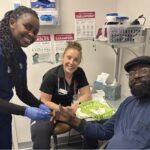
Ounce of Prevention: Flu shots remain key to keeping Harrisburg healthy.

This year’s flu season coincides with the lingering COVID-19 pandemic.

Both infections can be, at the least, uncomfortable and, at the worst, deadly. And the combination of the two has some public health experts calling this fall a possible perfect storm of infectious illnesses.

“We’re really headed into uncharted territory with a global pandemic converging with the annual flu season,” said Dr. Jennifer Chambers, chief medical officer at Harrisburg-based Capital BlueCross. “Fortunately, some of the same preventive practices for COVID-19, such as hand washing, mask wearing and social distancing, could help keep our flu rates down.”

While there is still no vaccine for COVID-19, there is a flu vaccine, and the U.S. Centers for Disease Control and Prevention (CDC) recommends people over the age of six months receive it.

“Getting a flu shot can prevent the flu or at least reduce the severity of its symptoms,” Dr. Chambers explained. “And this year, it also could help ease the strain on a healthcare system still coping with a lingering pandemic.”

While family physicians and pharmacies play a major role in encouraging people to get flu shots, insurers like Capital BlueCross are doing their part to help with flu vaccine education and outreach in the Harrisburg region and beyond.

For example, Capital BlueCross is making it easier for local employers to promote flu shots with their employees, even as many of those employees continue to work remotely. Instead of traditional onsite visits to mid-state businesses, Capital BlueCross’ health education consultants offer virtual education sessions for employees about flu prevention. The consultants explain the differences between the cold and the flu, when to seek medical attention, and key prevention techniques.

The company also is providing a toolkit to Harrisburg-area businesses to raise awareness about the need for flu vaccines among their employees, with timely messages that can be used starting in the fall and continuing through January as the flu season progresses.

In September, the message is awareness: flu season is here, and it’s time to plan. In October, the focus is on encouraging people to get vaccinated and offering guidance on where flu shots are available.

In December, Capital BlueCross is reminding people to maintain healthy behaviors even after they’ve received the flu vaccine, including tips on how to access care, such as the use of telehealth resources like Capital BlueCross’ own Virtual Care platform. And in January, the prevention message continues, but with an emphasis on encouraging others—friends, family members, coworkers—to get a flu vaccine as well.

“The flu season always brings an element of uncertainty, in that we never really know how fast or far it will spread,” Dr. Chambers said. “But having a flu season plan—and following it—can help each of us feel safer, and that in turn helps keep our family and friends safer.”

For more information, visit www.capbluecross.com.

Support quality local journalism. Become a Friend of TheBurg!

Continue Reading

Hometown Soul: Rubber Soul Brewing Co. is reborn in Hummelstown.

Hometown pride is something that touches your soul.

That’s what Donovan (“Dono”) Krebs felt when he met longtime Hummelstown resident Mike VanGavree. And that’s why he accepted VanGavree’s offer to become head brewer at Rubber Soul Brewing Co.

Most of all, he loved VanGavree’s idea to do something big in a small town.

“This opportunity came up out of nowhere,” Krebs said. “He [VanGavree] wanted to bring something back to a small town, and that’s what I wanted to do—I’m from Shamokin, also a small town. So I said, ‘Yes, let’s revamp a small town, make good beer and serve the community.’”

And what better location, to capture hometown vibes, than a former borough building?

“We knew the structure and integrity, and we knew we could take the building back 100 years to its original layout,” said VanGavree.

Renovations included the removal of five layers of paint from the brick exterior of the South Hanover Street landmark.

Inside, fresh new paint sets a playful, retro tone. A mural lets visitors relive their childhood memories of swinging on a tire swing, via a seat built into the “tire”—the “O” in Rubber Soul’s invitation to “refuel your sOul.” It was created by local students, led by a Lower Dauphin High School art teacher


Soul, on Tap

VanGavree is one of Rubber Soul’s three owners, who comprise Ghost Brewing LLC. They saw the potential for Rubber Soul to bounce back from Chapter 11 bankruptcy, from its original ownership in Salisbury, Md.

It was founder and head brewer Jesse Prall of Harrisburg who named Rubber Soul for his love of biking. The connection to the 1965 Beatles album, “Rubber Soul,” didn’t hurt either. Prall recently returned to the mid-state to begin brewing for The Englewood, which recently opened just outside Hummelstown.

Rubber Soul’s beer menu will integrate new brews by Krebs with those you could call “old souls.”

“The whole key to brewing and distilling is the water source,” VanGavree said.

So, although Rubber Soul’s new owners retain the rights to the brewery’s original beers, he said, “they’ll taste different than the originals because we’re using Hummelstown water.”

Two of the eight taps on early October’s opening night featured original Rubber Soul brews, updated—Garage Racer 2020 and Dropout 2020.

Krebs’ contributions include Awake My Soul—a coffee porter conditioned on Harrisburg’s Elementary Coffee Co.’s cold brewed coffee—and Soul Searching, an IPA infused with blood orange puree.

“I really want to focus on IPA’s because it’s where the [craft beer] trend is going,” Krebs said. “But really, I want to know what Hummelstown likes and then cater to that—to make Hummelstown proud.”

Krebs’ resume includes plenty of noteworthy Philadelphia-area breweries—Manayunk, Neshaminy Creek and Nodding Head breweries.

But beer isn’t the only beverage flowing at Rubber Soul. There’s a creative cocktail menu, including the “Dono Dew Ya Good,” concocted with Tullamore DEW Irish Whiskey, house-made lemonade and Rubber Soul’s pale ale, Fresh Dew.

Creativity in the kitchen is led by Diana Aragon, who previously worked at Harrisburg’s Mangia Qui, Suba and Char’s.

Brick oven pizzas include a pie piled with figs, prosciutto, gorgonzola, onion, arugula and a balsamic drizzle. Crispy Brussels with chili lime sauce, and “Devils on Horseback” (bacon-wrapped dates stuffed with pecans) are just two of the “sharables.”

Teresa Fortney of Hummelstown said that she’s happy to be on staff as a “refueler,” Rubber Soul lingo for servers. A bartender for 26 years, she was laid off from her previous job on March 17.

What did her October start date feel like at Rubber Soul?

“I feel like I want to cry, because people don’t realize what it does to your mental health [being without a job],” Fortney said. “I’m a people person—I’ve been in the restaurant industry since I was 13. It’s in my blood. It’s something that’s good for my soul.”


Morning Souls

Long before the dinner hour, Rubber Soul’s giant, nine-foot doors open at 6:30 a.m. Monday through Saturday (11 a.m. on Sundays), to welcome those who love beverages of another kind—the coffee crowd.

“Beer is a niche industry, but for some reason, it got bogged down with hipsters, with males, with homebrewing, and it’s really so much more than that—that’s why we brought in a coffee element with Elementary Coffee,” said Jamie Mowery Lewis, Rubber Soul’s “soul marketing officer.”

Beer and coffee, she said, have a lot in common.

“Elementary—they’re local and very similar to us in vibe. Even if you don’t drink beer, you can still come in, in the mornings for coffee, with plenty of workspace. So, we really offer something for everybody,” said Lewis, who is VanGavree’s niece.

In addition to Rubber Soul’s relationship with Elementary, they did a collab available at Middletown’s Tattered Flag, and they’ve joined Visit Hershey and Harrisburg’s Brew Barons Beer Trail.

“That’s what’s awesome about this industry,” Lewis said. “The competition is not the competition you’re used to in a business atmosphere—people want you to do well. Everyone wants you to win.”

To which VanGavree replied, “It’s beautiful—there’s no politics.”

“Just good beer,” Lewis added.

Rubber Soul Brewing is located at 136 S. Hanover St., Hummelstown. For more information, see www.rubbersoulbrewing.com.

Support quality local journalism. Become a Friend of TheBurg!

Continue Reading

November’s News Digest

Forster Street in Harrisburg


Advisory Committee Amendments Pass

A proposed Harrisburg police advisory committee inched closer to a final vote last month, after several amendments to the bill were passed by City Council.

Most significantly, council approved a change giving administrative subpoena power to the committee, something that many community members asked for repeatedly at town hall and council meetings.

In addition, the statement of general intent of the bill was amended to better communicate the board’s role in exercising accountability over the Harrisburg Police Bureau rather than serving as a liaison between the police and community.

Council member Ausha Green also proposed removing the police commissioner and the chair of council’s public safety committee as non-voting members of the board. They would be replaced with two voting members from the city at large. The nine committee members would serve three-year terms, she added. Both of these amendments passed.

Council voted in favor of requiring that all board members undergo orientation by the city’s law bureau within six months of their appointment. The bill previously required members to be trained at the city’s police academy and complete a police ride-along.

Among other amendments was one to encourage police compliance with requests from the advisory committee for information. If the police bureau doesn’t provide the information within 14 days of a request for information—or if the response is deemed unsatisfactory—the board can recommend that City Council suspend funding for hiring new officers.

Council ended up taking no action on another proposal, changing the name of the body from an “advisory committee” to a “review board.” City Solicitor Neil Grover said that Harrisburg doesn’t have the authority to create a review board under state legislation.


Improvements for Forster Street

Pedestrian-friendly changes are afoot for Forster Street, as the city announced that it will receive a federal grant to remake a stretch of the dangerous road.

Mayor Eric Papenfuse said the city will receive $832,437 to reduce the width of Forster Street between the Harvey Taylor Bridge and N. 2nd Street, among other changes.

He said that the Harrisburg Area Transportation Study (HATS), a regional transportation planning body, voted to fund the project construction, which will take place next year.

The actual cost of the project is nearly $1.1 million. In its 2021 budget, the city will provide its 20-percent match of $245,818 by taking on the pre-construction design and inspection process, Papenfuse said.

“There will be a reduction in the amount of distance in which pedestrians have to go in crossing the street,” he said.

Besides narrowing the road, the project will create new pedestrian crossings, replace curbs, build bump-outs and install landscaping.

The city applied in June for the money, which originates with federal Department of Transportation funds. At the time, city Engineer Wayne Martin said he was optimistic about receiving the grant because prior HATS studies already had identified the area as currently unsafe for motorists, pedestrians and bicyclists. It also is a regional connector between the city and suburbs, as well as a major commuter route.

According to city data, the Front and Forster area is the most dangerous roadway in Harrisburg, with 47 vehicle crashes recorded between 2015 and 2018 within 250 feet of the intersection.

Earlier this year, the city received word that the Pennsylvania Department of Transportation had agreed to substantial improvements to another dangerous commuter route—State Street on Allison Hill.

“Both of those projects are now going to be able to move to construction,” Papenfuse said. “Indeed, we’ll have construction completed in 2021.”

These projects both align with the city’s “Vision Zero” program to eliminate pedestrian fatalities.

In addition, the city plans to begin work in the spring on returning N. 2nd Street to two-way traffic between Forster and Division streets, as well as work to improve N. 7th Street. Both of those projects should extend into 2022.

“There’s going to be a lot of Harrisburg under construction for sure next year in 2021,” Papenfuse said.


Greenhouse Plans Advance

The Reservoir Park Greenhouse Project continues to blossom in Harrisburg, as the working group steering the restoration seeks community input and participation.

Last month, members of the project held a town hall to discuss plans for the greenhouse and to update the public.

“We want to make sure we are doing things that people in the city agree with,” said Christopher Nafe, the city’s sustainability manager.

The project includes the restoration of a 1,500-square-foot greenhouse built in 1929 and about a half-acre of garden space surrounding it. This area on the south side of Reservoir Park sits just off Whitehall Street.

The Reservoir Park Greenhouse Project is an initiative of the Harrisburg Parks Foundation, a project of the Foundation for Enhancing Communities. They are working to make it function again, after it sat idle for 20 years.

“A lot of people are excited to see something being done,” said Rafiyqa Muhammad, a member of the City’s Environmental Advisory Council and the owner of Sustainable Human Environment, who has been a member of the greenhouse renovation working group since its inception. “It’s an educational site, and we will always learn something when we come up there.”

Muhammad said the gardens and greenhouse will provide access to healthy fruits and vegetables for residents in the surrounding Allison Hill community, as well as teach them how to grow their own food.

“The Black community really deserves a state-of-the-art greenhouse,” she said.

The project will focus on landscaping, preparing garden beds and planting seeds first, with work on the greenhouse to follow, Muhammad explained. Eventually, the group hopes to renovate the Brownstone Building near the greenhouse for use as a food demonstration kitchen, Nafe said.

Homegrown Harrisburg Community Gardens Network, Tri-County Community Action, Messiah University Center for Sustainability, Harrisburg Young Professionals of Color, Sustainable Human Environment, LLC, and Harrisburg Urban Growers are some of the organizations in the Greenhouse Working Group.

Funds for the project are already coming in through private donors like the Whitt Family Foundation, which has given $50,000, and the Rotary Club of Harrisburg, which donated $5,000.

Nafe said they are looking into applying for grants, as well. They have already received a $25,000 “Better Food, Better Access, Better Together” grant from the Central Pennsylvania Food Bank.

While planting won’t begin until spring, Muhammad and Nafe said that they will be hosting community workshops on topics like composting.


Urban Meadow Expansion Eyed

A strip of green space in Midtown Harrisburg would be lengthened under a plan to extend the “Urban Meadow” to the new federal courthouse area.

City Council recently approved a resolution allowing the submission of a grant application for up to $3 million to the state Department of Community and Economic Development’s Multimodal Transportation Fund Program.

If the grant is received, half of the funds would go to the Urban Meadow extension construction and the other half to area streetscape improvements. The project also includes adding about 50 angled parking spaces on Reily Street between Logan and Fulton streets.

A Dauphin County gaming grant already has fully paid for about $75,000 worth of design fees for the project.

The current Urban Meadow runs along Boyd Street from N. 3rd to Fulton Street. The new project would extend pavers from Fulton to N. 6th Street, said city Engineer Wayne Martin.

“As the name indicates, it is kind of an oasis in the city,” said Harrisburg project manager Ambrose Buck.

The path extension would be a dedicated pedestrian and bicycle route, including lighting and landscaping. It would connect the federal courthouse currently under construction on N. 6th Street to the Midtown area, Martin said.

He said that, with the forthcoming courthouse requiring about 400 to 800 parking spaces, the city is looking to increase transportation options.

“The goal is economic development through multimodal transportation,” he said.

If the grant is received, construction on the Urban Meadow is expected for early 2021, Martin said.

Harrisburg also plans to add sidewalks and new bus stops on N. 6th Street by the courthouse.


New Hires for Fire Bureau

The Harrisburg Fire Bureau last month swore in new firefighters, setting a record high for the number of personnel in over a decade, Chief Brian Enterline said.

At the bureau’s virtual 2020 Awards Ceremony, 10 new hires joined the ranks, bringing the total number of officers in the bureau to 88.

“That represents the real, true growth for the Harrisburg Fire Bureau,” Mayor Eric Papenfuse said. “We have brought this bureau back, and now we are growing again.”

The new firefighters include Timothy Wolcott, Nicholas Hurst, Austin Howard, Nathaniel Barbolish, Brayden Byers, Jared Day, Justin Barnes, Cody Durham, Joseph Kuhn and Conner Davis.

Hurst, Kuhn and Wolcott previously served in the U.S. Armed Forces.

The 10 new firefighters underwent much of their training through online classes due to the COVID-19 pandemic, Enterline said.

“They remained committed and flexible even though that may not have been a popular choice on any given day,” he said.


“Reverse” Holiday Parade Planned

Harrisburg last month announced big changes to its annual Holiday Parade. The show will still go on, just in reverse.

In this year’s format, participants in the parade will remain stationary, while spectators will drive by in their vehicles to watch. It also will take place on City Island, as opposed to the streets of downtown.

“We wanted to do something where we could still keep the holiday spirit alive for the community, but in a safe way,” said Megan Roby, marketing and events manager for Harrisburg.

Although it’s a different format, Roby said there will still be decorated floats, candy and, of course, Santa. The parade takes place Nov. 21, from 10 a.m. to 12 p.m. People must arrive before noon to participate in the drive-through.

In place of the typical candy tossed for children, the first 150 cars will receive free goodie bags at the end of the parade route.

Roby expects around 40 to 50 entrants in the parade. There will be something fun around each turn on the route, she said.

The event is free to the public, and spectators are also encouraged to join the fun by decorating their cars.

The theme of the parade is “Hometown Holiday,” inspired by the months of quarantining and staying at home, Roby said.

Entrants will receive scores from a panel of local celebrity judges, with the highest score winning a $100 Amazon gift card.

The Reverse Holiday Parade is sponsored by Visit Hershey & Harrisburg, Explore HBG and the Harrisburg Downtown Improvement District.


Home Sales, Prices Rise

Home sales and prices rose strongly in the Harrisburg area in September, continuing a months-long trend.

For the three-county capital region, residential sales shot up to 799 units compared to 672 units in September 2019, according to the Greater Harrisburg Association of Realtors (GHAR). The median sales price also increased substantially—to $200,000 from $180,000 last year, GHAR said.

In Dauphin County, sales totaled 373 units in September versus 333 in the year-ago period, while the median price rose to $178,000 from $166,000, according to GHAR.

Cumberland County saw sales of 376 homes compared to 309 last year, as the median price increased to $226,250 from $209,950. In Perry County, 50 houses sold last month versus 30 in September 2019, as the median price jumped to $180,000 from $149,900, GHAR said.

Meanwhile, houses took an average of 33 days to sell, compared to 44 for the prior September, according to GHAR.

In the Harrisburg area, home sales data has been strong nearly every month since pandemic-related restrictions were lifted on the industry in late spring.


So Noted

Civic Club of Harrisburg last month received the 2020 Stewardship Award from Preservation Pennsylvania for its century-long history of community work and its efforts to preserve “Overlook,” the Civic Club’s stately home on the Susquehanna River.

Dyan McAlister has been named chief financial officer of Dillsburg-based Presbyterian Senior Living. McAlister has been with the not-for-profit since 1998, most recently serving as vice president of finance. She replaces Jeff Davis, who retired last month.

Good Brotha’s Book Café expects to open this month along the 1400-block of N. 3rd Street in Midtown Harrisburg. The café will be the second recent business venture for owner Stefan Hawkins, along with his fiancé Laquana Barber, the first being the House of Vegans restaurant directly across the street.

Harrisburg last month announced it had received a $70,000 grant from the U.S. Food and Drug Administration to help the health office enhance its operations. The funds will be used to increase the number and types of food establishment inspections and help provide safe, healthy and affordable food in the community, according to the city.

M&T Bank last month named Nora Habig as president of its central and western Pennsylvania region, which includes 10 counties from Dauphin through Allegheny. Habig, a Carlisle resident, has been with the bank since 1990. She replaces Stephen A. Foreman, who retired earlier in the month.

R.G. Hummer Quality Meats
opened last month in the West Shore Farmers Market in Lemoyne. It’s the second location for fifth-generation butcher Ryan Hummer, who will retain his longstanding stand inside the brick building of the Broad Street Market in Harrisburg.

UPMC Pinnacle,
along with the Peyton Walker Foundation, last month donated 18 automated external defibrillators to the Harrisburg Police Bureau. The units, valued at about $40,500, are designed to help save the lives of people suffering sudden cardiac arrest.

UPMC Pinnacle Harrisburg is slated to open its comprehensive inpatient pediatric unit this month. The unit is a 26-bed unit, including 11 new, private rooms, with each new room designed for universal use, meaning children stay in one room throughout their hospital stay.


Changing Hands

Adrian St., 2418: R. Ivey to H. Brown, $30,000

Allison St., 1505: M. Turner to Integrity First Home Buyers LLC, $40,000

Bellevue Rd., 1907: D. Boyle to C. & M. Diaz, $30,000

Bellevue Rd., 2306 & 2318: M. Kerrigan to J. Winand & T. Walton, $295,000

Benton St., 543: L. Shoffner & T. Samsel to V. Towindo, $84,900

Berryhill St., 1212: S. Little to Parcview 135 Corp., $35,000

Berryhill St., 2140: PA Deals LLC to A. Matthews, $76,900

Berryhill St., 2144: H. Alcantara & M. Wilson to M. de Munoz, $71,500

Berryhill St., 2330: C. Zheng to J. Solis Corps, $75,000

Boas St., 215: J. Barnaby to L. Davis, $90,000

Boas St., 426: N. Spence to Z. & M. Zook, $190,000

Brookwood St., 2433: M. Osevala to A. Hanson, $65,000

Camp St., 525: J. & D. Carroll to A. Rashid, $45,000

Camp St., 535: E. Prunty to Easymyth Real Estate Developments LLC, $40,000

Chestnut St., 1846: R. Wagner & T. Christopher to Dreams2Reality Services LLC, $30,000

Conoy St., 108: D. Noll to D. Wendling Jr., $156,000

Cumberland St., 256: A. & L. Kanagy to S. & J. Toole, $105,000

Derry St., 1248: M. Murphy to Jackson Investment Properties LLC, $37,200

Derry St., 2143: 4880 East Prospect LLC to J. & D. Holland, $55,000

Emerald Ct., 2456: PA Deals LLC to J. Seelbinder, $114,900

Emerald St., 214: K. Petroski to J. Maneri, $90,172

Emerald St., 216: R. Jones & A. Hohnson to J. Knesis, $106,000

Emerald St., 245: D. & C. Aquino to SPG Capital LLC, $42,000

Fulton St., 1621: J. & C. Mondschean to R. & F. Hamid, $132,000

Girard St., 739: H. Hughes to M. & T. Fickett, $80,000

Green St., 1108 & 228 Herr St.: C. Peguese & D. Hoffman to L. Mills Jr., $312,000

Green St., 1309: L. Oberly to E. Hower & R. Musarra, $129,300

Green St., 1509: A. & K. Tyson to W. Hughes & I. Wright, $172,500

Green St., 1518: J. Bowser to M. Pfautz, $130,000

Green St., 1709: Mussani & Co. LP to Fratelli Property Investments LLC, $115,000

Green St., 1828: W. Peffley Jr. to M. Vaccarella, $80,000

Harris St., 342: D. Shelley to N. Dreikorn, $139,900

Hoffman St., 3130: R. Louer to Equity Trust Co., $36,000

Holly St., 2017: Y. Patterson to V. Belliard & L. Quintanilla, $40,000

Hummel St., 357: J. Vogelsong to C&P Property Management Inc., $37,000

James St., 1329: J. & M. Walker to V. Paredes, $30,000

Jefferson St., 2720: RJ IBA LLC to S. & T. Jefferson, $62,500

Kelker St., 622: C. Moon to A. Bakare & A. Allen, $65,000

Kensington St., 2238: J. & A. Sullivan to N. Matthews, $45,500

Kensington St., 2248: J. & A. Sullivan to N. Matthews, $45,500

Lexington St., 2754: L. Hammer to A. Kohl, $80,000

Lewis St., 235: G. & C. Williams to D. Borowsky, $195,500

Logan St., 1619: C. Grim to W. McKelvey, $125,000

Logan St., 1713: C. Enright to J. George, $139,000

Logan St., 2226: CR Property Group LLC to PA Property Rental LLC, $105,000

Market St., 1021: S. Pearlman to Great Scott Productions LLC, $425,000

Market St., 1907: KBH Properties LLC to J. Alvarado, $60,000

Moore St., 2113: Blue Door Management LLC to J. Mercedes, $70,000

Muench St., 271: C. Halpert to C. & S. Roe, $120,100

Mulberry St., 1807: G. & A. Rucker to R. Bobb, $90,000

N. 2nd St., 1301: H. Rothrock to E. Rothrock, $131,000

N. 2nd St., 2615: E. Smith & H. Williams to B. Clark, $213,900

N. 2nd St., 2727: W. Stabler to J. Jayamohan, $256,000

N. 2nd St., 3108: B. Lock to N. & D. Leppo, $219,500

N. 3rd St., 1014: O’Sullivan Realty to Kaysay Management LLC, $675,000

N. 3rd St., 1111: M. Bernas to S. Goodyear, $148,000

N. 3rd St., 1126: BCG Holdings LLC to WCI Partners LP, $582,450

N. 3rd St., 1200: Keuka LLC to WCI Partners LP, $1,182,550

N. 3rd St., 1617: T. & J. Hoy to PDI Properties LLC, $150,000

N. 3rd St., 2011: M. Goldberg to S. & K. Weinstock, $300,000

N. 4th St., 1410: Next Level Opportunity to A. Grant, $105,200

N. 4th St., 2430: T. Brown & M. Cvetko to E. Rodriguez, $67,000

N. 6th St., 2712: Goldstein Couriers LLC to Integrity First Home Buyers LLC, $52,500

N. 6th St., 3205 & 3209: SBN LLC to SMNHAS 1 LLC, $375,000

N. 14th St., 1305 & 1309 and 1311 Augusta St.: A. & A. McBarnett to J. & J. Stalker, $90,000

N. 15th St., 238: D. Whittaker to Dima Properties LLC, $47,000

N. 15th St., 1120: D. & D. Costanza to Top Notch Rentals LLC, $50,000

N. 15th St., 1609: T. & D. Yuncker to Top Notch Rentals LLC, $51,000

N. 16th St., 911: S. Sprinkle to Y. Alvarez, $102,000

N. 16th St., 1219: J. Cruz to C. Harvey, $109,900

N. 16th St., 1221: J. Alvarado to A. & M. Sattar, $105,000

N. 18th St., 64: A. Greenwood to HBK Properties 1 LLC, $53,000

N. Front St., 17: Harrisburg Building & Grounds Co. to State Street Holdings LLC, $895,000

N. Front St., 1525, unit 609: C. Yastishock to D. Lucas & S. Stinson, $185,000

Parkway Blvd., 2437: K. Davis & K. Prowell to Integrity First Home Buyers LLC, $60,000

Peffer St., 415: L. Blanton to S. & H. Westhafer, $84,000

Penn St., 1818: C. Schroll to A. Mione, $115,000

Penn St., 2113: Green Mosca Associates LLC to Gold Key Properties LLC, $48,000

Penn St., 2149: Three Dog Properties LLC to M. Spicher, $60,000

Race St., 604: A. Heinzel to K. Konkle, $170,000

Reel St., 2447: G. Henein & A. Habeeb to Integrity First Home Buyers LLC, $55,000

Rolleston St., 1244: P. Phillips to Integrity First Home Buyers LLC, $52,000

Rumson Dr., 290: M. & C. Parker and M. Richardson to T. & W. Baka, $63,000

Rumson Dr., 331: L. Taleb to J. Crespo, $99,501

Schuykill St., 331: Scarn LLC to Pork Chop Properties LLC, $139,500

S. 2nd St., 300: M. Trucco to B. Bose, $149,900

S. 13th St., 14: B. Crews to A. Hallagher & C. Barr, $71,000

S. 13th St., 441: C. Keyes to Shutter Real Estate LLC, $40,000

S. 13th St., 1462: L. Jack to C. & C. Abukari, $41,000

S. 15th St., 441: E. Prunty to RRMMM Real Estate LLC, $41,000

S. 17th St., 137: WH RE LLC to 137 South 17th Street LLC, $230,000

S. 19th St., H. & C. Thompson to J. Serrano, $90,000

S. 19th St., 1200: C. & J. Scott to M. Martinez, $105,000

S. 21st St., 738: D&L Development Group Inc. to J. & F. Cervantes, $61,000

S. 25th St., 614: L. Phuong to Landmark Holdings Group LLC, $43,000

S. 25th St., 640: D. Hoffman & J. Regalado to L. Stewart, $64,400

S. Front St., 623: G. Schwab to A. Yockin, $148,000

S. Front St., 703: H. Jones & T. Imslwiler to J. Barnaby, $165,000

State St., 217: D. & J. Ragland to 217 State Street LLC, $195,000

State St., 1925: T. Keefer to J. & A. Camacho, $80,500

Susquehanna St., 1212: Integrity First Home Buyers LLC to J. Tanzer, $82,000

Verbeke St., 217: A. Ackley to E. Heath, $154,900

Verbeke St., 219: T. Park to H. & L. Stuckey, $219,000

Walnut St., 1814: CR Property Group LLC to J. Meredith, $104,995

Walnut St., 1822: S. Jackson to E. Morales & A. Ayala, $48,000

Washington St., 105: PinnacleHealth System to BD Property Management LLC, $116,000

Yale St., 220: G. Domon to A. Gutierrez, $49,000

Harrisburg property sales for September 2020, greater than $30,000. Source: Dauphin County. Data is assumed to be accurate.

Support quality local journalism. Become a Friend of TheBurg!

Continue Reading

Monumental Issues: Gettysburg’s Confederate monuments tie into today’s racial reckoning.

Thirty armed militia members started walking down a hill, across the Gettysburg Battlefield, toward him.

It was the 4th of July, and it was the first time all day that Scott Hancock felt his heart beating out of his chest.

“That feeling of possible harm kept escalating,” said Hancock, 58, of Gettysburg.

As it turns out, they marched past him, without incident, but Hancock believed it was an intimidation tactic. What prompted it? What was Hancock, a history professor, and a ragtag group of friends doing to provoke them?


It Was a Sign

They were standing with posterboard signs, along Confederate Avenue, where southern soldiers fought in the 1863 battle considered the turning point of the Civil War that eventually led to Union victory. It’s lined with 11 Confederate monuments, arguably the most controversial of Gettysburg’s 1,300 monuments.

Perhaps those militia members were protecting the Confederate monuments—and therefore, their version of history.

Hancock believes there are facts missing from the words chiseled into the Confederate monuments, from the stories printed on the National Park Service’s interpretive signs, from our conversations about American history and the very roots of America’s racial issues.

So, for five years, he’s been arming himself with signs bearing those missing facts, neatly printed by his wife Patty. He’s usually joined by a few friends or family members. Some are white. Others, like Hancock, are Black. The signs usually stimulate conversations, but on the 4th of July, they sparked confrontations—some of which were captured by documentary filmmaker globalstory2 on a YouTube video viewed more than 17,000 times.

“One of the signs we held by the North Carolina monument was about [sculptor] Gutzon Borglum who also did Mount Rushmore, and things he said about the KKK, because he was a big supporter of the KKK,” said Hancock.

He thinks visitors should know about Borglum’s background. Hancock also thinks visitors should know how Confederate General Robert E. Lee, perched atop the Virginia monument, treated slaves. And he takes issue with the language on Mississippi’s monument, which refers to soldiers who “fought for their righteous cause.”

That cause, Hancock said, was slavery, and by extension, white supremacy and racism.

Those facts are missing from the current landscape across the 6,000-acre Gettysburg National Military Park (GNMP)—and arguably, from our collective understanding of American history. But that’s changing.


Signs of the Times

“History is evolving,” said Jason Martz, acting Gettysburg National Military Park spokesman.

“The men who died… some of their lasting legacy is in these monuments, and what was going on at the time in our country [when the monuments were installed] harkens back to the Civil Rights and Jim Crow era,” Martz said.

That’s why the National Park Service is installing new interpretive signs adjacent to each one of the Confederate monuments this fall.

“These [new] panels will provide more context,” said Martz. Park historians, in consultation with Hancock and others, are developing the text.

While the timing of the signs might appear to be a direct response to our nation’s racial reckoning following the death of George Floyd, Martz said that the signage has actually been in development for a number of years, as part of a larger project overhauling nearly 100 interpretive signs across the battlefield through the spring of 2021.

Hancock believes the additional signage is a step in the right direction.

“The reality is—removing all the Confederate monuments—it’s not going to happen, so I think we need to face the reality they’re going to be here for a long time, maybe for centuries. So what do we do with them? I would say we educate the public about why they’re here,” Hancock said.


Monumental Debates

Are all Confederate monuments symbols of racism? There are gray areas.

There are those who want to remove all Confederate monuments across the United States and those defending the stone sentinels. Location is a factor. Generally, Confederate monuments in U.S. town centers are being toppled, removed or reevaluated due to their glorification of Confederate “heroes,” while Confederate monuments on federal lands such as Gettysburg serve as site-specific markers.

In August, The Association of Licensed Battlefield Guides at Gettysburg discovered language, buried in legislation that passed the U.S. House, HR-7608, that calls for all Confederate monuments to be removed from federally owned lands. That would include Gettysburg, Civil War battlefields and historic sites.

“This would severely hamper our ability to interpret the battlefield,” said Les Fowler, president of the association, which represents about 125 active guides. “We use the monuments as springboards for conversation.”

Fowler, originally from Texas, believes Confederate monuments at Gettysburg and other historic sites should stay. Even though the legislation is not likely to pass through the Republican-controlled Senate, the guides are lobbying U.S. senators to remove this provision.


Monumental Momentum

Meantime, Hancock’s enterprising efforts are gaining momentum, and historians are rallying.

“We recognized the value of what Scott was doing… as an innovator—and evidence-based, engaging rather than confrontational,” said Gregory P. Downs, a professor of history at University of California-Davis, and co-editor of “The Journal of the Civil War Era.”

Downs, Hancock and two fellow history professors organized a “history action day” in September that mobilized hundreds of history lovers at 15 historic U.S. sites containing Confederate markers, from New York City to Richmond, Chicago to Gettysburg.

Their goal? “To emancipate our battlefields and other public spaces from a biased history that has sanitized and glorified the Confederacy’s fight to keep four million African Americans enslaved,” as written on the journal’s website.

Downs joined Hancock and 60 supporters in Gettysburg.

“There was a clear sense of purpose,” said Downs. “We want people to understand as they approach the Civil War, they should approach it with a fuller understanding. Many Confederate memorials… covered up the centrality of slavery to U.S. history, and in the process there are a lot of pieces conveyed to people that misshape people’s understanding of our country and our past.”

Their rallying cry can be summarized in two words: more history.

“I get accused of trying to erase history,” Hancock said. “But I say I don’t want to erase history—I want more history.”

For more information, visit the GNMP website at nps.gov/gett/index.htm, the Association of Licensed Battlefield Guides at gettysburgtourguides.org, The Journal of the Civil War Era at journalofthecivilwarera.org, and see the YouTube video of Scott Hancock on July 4, 2020 uploaded by globalstory2 by searching its title, “Scott Hancock—Gettysburg Monuments.”

Support quality local journalism. Become a Friend of TheBurg!
Continue Reading

November Editor’s Note

In our 12-year history, many things have changed at TheBurg.

Our design, our content, our online presence are all vastly different than when we launched in January 2009.

However, one thing remains the same—we don’t endorse candidates for office.

My co-founder and I made that decision early on. As veteran journalists, we saw the negative effect that endorsements could have on the reporting process and, perhaps even more importantly, felt that we had no business telling readers how they should vote.

Over the years, though, I haven’t shied away from encouraging people to participate in the voting process itself.

I believe that voting is essential to building and sustaining community. Of course, this is the way we select people to make important decisions on our behalf. But it also offers a rare chance for citizens to come together for a common purpose—even if they may disagree over their preferred outcome.

This political season has been fraught and, in many ways, unconventional, if not downright bizarre.

Given how the campaign has unfolded, many people say they’re highly motivated to cast their ballots. However, others may have found the spectacle so off-putting that they’re considering staying home on Election Day.

I urge these people to reconsider. As we saw in 2016, a relatively small number of votes can have a big impact, especially in a swing state such as ours. We need as much participation as possible to assure that the results truly reflect the will of the people. And, if you’re still on the fence, remember—your vote may decide not only the outcome in this state, but in the country itself.

Before you turn the page, I want mention that, as is our custom each November, this issue has a special focus on local shopping. This year, many retailers have been devastated by the pandemic. By patronizing local stores, you can show them how much you appreciate their products, their hard work and their presence in the community—and make sure they’re still around come November 2021.

On a personal note, I especially urge you to patronize our advertisers and supporters. They’re the reason we’re able to bring you TheBurg magazine, our daily reporting, TheBurg Podcast and our other products and services—all for free. Happy shopping!

Lawrance Binda
Co-Publisher/Editor-in-Chief

Support quality local journalism. Become a Friend of TheBurg!
Continue Reading

Inject to Protect: The importance of pediatric immunizations.

While we wait for a COVID-19 vaccine, we shouldn’t forget about the other life-saving immunizations kids need to protect them from serious disease and illness, as well as eliminating the spread to others.

The debate about immunizations remains, despite the research that has proven that there are no adverse or dangerous side effects in vaccinating children. In fact, the opposite is true. Vaccines contain important ingredients that cause the body to develop an immunity (or resistance) against preventable disease.

Diseases once believed to have been eliminated, such as measles, mumps and whooping cough, are on the rise, and pediatricians and organizations, such as the American Academy of Pediatrics and the U.S. Centers for Disease Control and Prevention (CDC), strongly support protecting children, family members and friends by following the vaccination guidelines.

Refusing or delaying vaccines makes everyone vulnerable because the bacteria and viruses that cause disease can spread. When you consider that situations such as travelling and gathering in large groups can serve as vehicles in transmission, it begs the question, why anyone would not want protection from and prevention of disease?

The U.S. Food and Drug Administration (FDA) assures that vaccines given in combinations—starting at birth—are as effective as spreading them out over time, and neither compromise the child’s immune system. Most children never experience side effects from receiving vaccines and, if they do, they are mild and not dangerous.

Common symptoms felt from vaccines may include mild tenderness, redness or swelling at the site of the injections, but more serious reactions are rare. The benefit of protecting children against a preventable disease outweighs any possible minor reaction to immunizations. Parents and caregivers should take comfort in knowing that vaccines save lives and have been studied for decades by medical experts and the federal government to ensure their safety.

Below are common vaccines that should be a part of your child’s wellness schedule.

  • DTaP combines protection against diphtheria, tetanus and pertussis. Tetanus happens when bacteria enter the body through a cut or sore and can cause lockjaw, spasms, paralysis, labored breathing and even death. Pertussis, or whooping cough, is a lung infection that makes it difficult to breath as a result of severe coughing. It’s life-threatening in babies under the age of 1. It also leads to pneumonia, seizures and labored breathing.
  • MMR combines protection against measles, mumps and rubella. Measles and mumps are highly contagious viruses involving the respiratory system. Measles can cause pneumonia, brain swelling and death. Those afflicted with mumps suffer swollen salivary glands, a fever, headache and muscle aches. Eventually, it can lead to loss of hearing or sterility in males.
  • Hib protects against haemophilus influenzae type B. There are no symptoms unless bacteria enter the blood and complications such as meningitis, epiglottis or pneumonia occur.
  • Influenza vaccine protects against the flu, which can lead to pneumonia and even death. Influenza is a highly contagious viral infection and spreads when an infected person coughs or sneezes. The flu kills more than 49,000 Americans each year. Those with asthma or diabetes, the elderly and pregnant women are at higher risk.
  • Varicella vaccine protects against the chickenpox, which can range from mild to life-threatening.
  • Hep A and B vaccine protects against exposure to either virus, which can lead to organ infection or failure, blood disorders and even cancers. Hepatitis affects the liver and can lead to long-term problems. Pregnant women can pass the disease to their babies during delivery. This is 100 times more infectious than HIV.
  • IPV protects against polio and is a viral disease living in the intestines. It causes muscle atrophy and weakness, as well as paralysis or death.
  • PCV, known as the pneumococcal vaccine, protects against pneumococcus and meningococcal disease. Pneumococcal disease is a bacterial disease that can cause pneumonia, which is deadly in persons over age 65, ear and blood infections. Meningitis affects nearly 1,200 people in the United States each year, and as many as 15 percent die, even with antibiotics.
  • HPV protects against human papillomavirus, which is common in people in their teens and early 20s. HPV infection can cause cervical, vaginal and vulvar cancers in women and penile cancer in men.

National guidelines for children from birth through late teens are available on the CDC website.

Melencio Chan Ventura, MD, practices from UPMC Children’s Community Pediatrics, York Memorial.

For more information, visit www.upmcpinnacle.com.

Support quality local journalism. Become a Friend of TheBurg!
Continue Reading