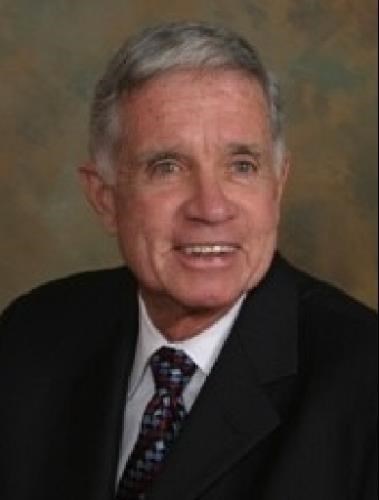
Community Comment: A tribute to Harrisburg attorney Joseph Gordon Skelly, who argued landmark religious liberty case before U.S. Supreme Court

Joseph G. Skelly

One of the many wonderful things about living in Harrisburg is being a part of a diverse community.

On Saturday, Dec. 11, 2021, Harrisburg lost a local attorney, an expert in mediation and professional ethics, who worked across cultural, political, racial, religious, and geographic boundaries ensuring sound law and policy. Particularly in central Pennsylvania and all across the United States, Old Order Amish and Mennonite communities owe a debt of gratitude to Joseph Skelly for his role as a litigator in the historic landmark U.S. Supreme Court decision Wisconsin v. Yoder, 406 U.S. 205 (1972).

This U.S. Supreme Court decision exempts Old Order Amish and Mennonite children from compulsory education laws, thus preserving Amish and Mennonite culture. Joseph Skelly, a Roman Catholic, advocated for religious freedom speaking out in defense of Evangelical Christians, Orthodox Jews, Old Order Mennonites and Amish, Native Americans, and many others. He worked with diverse individuals in a very effective and practical way. Joseph Skelly’s legal career focused on the preservation of parental liberty, alternative education and free religious exercise.

Born in 1935, Joseph Gordon Skelly grew up in Oil City, Pa. His father Daniel Skelly was the district attorney for Venango County. After graduating from the University of Notre Dame, Indiana, Skelly earned his law degree at the Villanova University School of Law. Attorney William Ball was Skelly’s constitutional law professor. William Ball left Villanova Law School, moving to Harrisburg and taking the position of general counsel and executive director of the Pennsylvania Catholic Conference.

Skelly’s law partner and mentor, William Bentley Ball (1916-1999), from Rochester, N.Y., graduated from Western Reserve University in 1940. While a college student, he served in a 107th Cavalry Unit of the Ohio National Guard. Ball served in combat with the U. S. Navy during World War II and eventually retired as a lieutenant commander in the U.S. Naval Reserve. In 1948, Ball earned his law degree from Notre Dame. Ball practiced corporate law in New York first as an in-house attorney for W. R. Grace & Company and eventually for Pfizer, Inc. Beginning in 1955, Ball devoted his career to constitutional issues, particularly related to religious freedom.

After graduating from Villanova Law School, Skelly returned to Oil City, engaging in private practice as an associate in a small firm. Three years later, Ball invited Skelly to join him at the Pennsylvania Catholic Conference as assistant counsel, focusing on educational matters. In 1968, Ball and Skelly left the PCC, forming their own private practice: Ball & Skelly (later to become known as Ball, Skelly, Murren & Connell). Ball and Skelly concentrated in litigation for religious freedom. As managing partner of the firm, Skelly concentrated on general civil practice. When Ball died in 1999, Skelly undertook extensive mediation skills training and set up his own practice for alternative dispute resolution, the Skelly Dispute Resolution Center.

Skelly was interested in the ethics and professionalism of lawyers and the perception by many, both inside and outside of the legal profession, of the breakdown in civility among lawyers. Skelly lectured extensively on the subject, including presentations at continuing legal education courses. Skelly was an adjunct professor at the Harrisburg campus of Widener University School of Law, where he taught alternative dispute resolution as well as law practice management.

Skelly’s work concentrated as a mediator for special education disputes involving controversies between parents and school districts relating to special education services to children. In addition, Skelly served as a hearing officer in special education cases.

From a legal standpoint, the modern era of home education and alternative education, particularly for issues of religious freedom, began with the landmark U. S. Supreme Court decision Wisconsin v. Yoder (1972). After a string of unsuccessful battles in state courts, the 60-year struggle of the Old Order Mennonites and Amish against compulsory education culminated in Wisconsin v. Yoder (1972) argued by Ball and Skelly.

Mennonites and Amish are pacifists and, as conscientious objectors, they perform alternative service during times of military conscription. Some Americans disapproved of the Mennonites and Amish refusal to enlist or be drafted into the military during the WWI. In retaliation, in Ohio, in 1914, Mennonite and Amish fathers were fined, arrested, and convicted for refusing to send their children to Ohio public schools. Custody of Mennonite and Amish children was taken away from Mennonite and Amish parents. Farm equipment, livestock and farms were confiscated from Mennonite and Amish parents. Some Mennonite and Amish children were forced to attend state boarding schools, where Mennonite and Amish plain clothing was not permitted.

Starting in 1925, Mennonites and Amish in hostile jurisdictions began forming their own private religious schools. Some Mennonites switched from “unaccredited” home education to the use of “accredited” home-correspondence curriculum. Public educators were not placated. Public educators obtained the State v. Hoyt, 146 A. 170 (N.H. 1929), decision and implemented the precedent aggressively. Two Mennonite defeats were particularly devastating: State v. Hershberger, 144 N.E.2d 693 (Ohio App. Ct. 1955), and State v. Garber, 419 P.2d 896 (Kan. 1966), cert denied, 389 U.S. 51 (1967).

In an effort to reduce unemployment during the Great Depression, Roosevelt’s New Deal cooperated with the states in raising compulsory school attendance ages and enacting labor laws prohibiting youth apprenticeships. This became a problem for Mennonite and Amish communities where students attended schools until the eighth grade and then engaged in youth apprenticeships, learning necessary skills for operating in the local Mennonite and Amish agricultural and cottage industry economies. In 1948, in the case McCollum v. Board of Education, 333 U.S. 203, the U. S. Supreme Court eliminated public school prayer and public school Bible study. After a protracted and unsuccessful legal battle to reverse the court’s decision, many Protestants, and especially Evangelicals, turned to alternative education.

In 1965 in Olwein, Iowa, public school officials physically herded terrified Mennonite and Amish children onto school buses, forcing them into state-prescribed public education. The Rev. Dr. William C. Lindholm, a Lutheran pastor in Iowa, was horrified when he saw photographs of terrified Amish children running from truant officers in cornfields. Dr. Lindholm founded the National Committee for Amish Religious Freedom and became aware of the plight of Jonas Yoder of Wisconsin.

The Yoder family’s troubles began when the local Old Order Amish opened their own elementary school, resulting in the transfer of 37 children out of the Wisconsin government-grade schools. Kenneth J. Glewen, the local school district administrator, decided to stop his school district’s loss of $18,000 in tax revenue by filing a truancy complaint. The complaint included 15-year-old Frieda Yoder and presented the threat of criminal prosecution and other measures if her father Jonas Yoder refused to cooperate. Glewen spoke to the local newspapers about the danger of “dirty, barefoot Amish kids,” and told both the press and legal authorities how the teenagers would become “delinquent” dangers to the community unless public education intervened to prevent this growing menace to society.

On Christmas Eve 1968, Dr. Lindholm contacted Harrisburg’s law firm of Ball & Skelly, asking them to represent Jonas Yoder of Wisconsin. Ball and Skelly were contacted because they were in the forefront of the Roman Catholic Church’s efforts blocking the Kennedy and Johnson administrations from denying federal funding to parochial schools. Ball was admitted to practice before the U. S. Supreme Court in 1969 and argued nine cases relating to civil rights. He assisted in 25 other cases and practiced on the federal district and appeals levels, as well as in state courts. U. S. Supreme Court Justice Harry Blackmun told a group of law students who had just observed Ball present an oral argument at the U. S. Supreme Court how they were “privileged to see one of the finest oralists this court has ever had, Mr. Ball of Harrisburg, Pennsylvania.”

Ball & Skelly agreed to take the case, sending a formal letter dated January 20, 1969, to Dr. William C. Kahl, Wisconsin superintendent of public instruction, requesting that the threats against Jonas Yoder be discontinued on the grounds of how Yoder’s “home vocational school” qualified for the “legal excuse” exception in Wisconsin’s compulsory attendance statute. The prosecution of Jonas Yoder was handled by the Wisconsin State Deputy Attorney General Robert D. Martinson, who was assisted by local District Attorney L. A. Koenig. A bench trial was held before Judge Roger L. Elmer.

Ball & Skelly’s tactics are now a familiar part of the playbook for any knowledgeable attorney who has been involved in legally defending alternative education or parental liberty. Ball pointed out how the truancy complaint appeared to be motivated by concerns about tax revenue, not about serving the best interests of the Old Order Mennonite and Amish children. Ball and Skelly’s examination of various local government leaders proved not one Mennonite or Amish person in Green County, Wisc., was unemployed, or accepting public assistance, or involved in an illegitimate birth, or suffering from alcoholism. Thus, the evidence showed how Wisconsin’s defamations against Yoder and his community were unsubstantiated, as was the professed concern about the possible tax burdens inflicted upon Wisconsin taxpayers by the allegedly backward Mennonite and Amish communities.

Ball & Skelly also utilized a respected expert witness, Dr. John A. Hostetler, a sociologist and anthropologist professor from Temple University in Philadelphia. Hostetler ably explained why public education would destroy Amish culture. A former member of the Amish community, Hostetler was key to Ball’s strategy of placing critical facts in the record for later use on appeal. Similarly, Dr. Donald A. Erickson, associate professor of education at the University of Chicago, testified how “the current education system is detached from the real world” and Wisconsin’s government education would not help the Mennonites and Amish.

Jonas Yoder was found guilty by the trial judge and fined, but he refused to pay the fine as a matter of conscience. Ball and Skelly appealed the Yoder case, eventually all the way to the U.S. Supreme Court. An interfaith coalition, attorneys from Jewish, Seventh-Day Adventist and Church of Christ organizations rallied behind the cause, filing friend-of-the-court briefs supporting the two Catholics from Harrisburg, representing Mennonites and Amish at the request of a Lutheran pastor. But despite all of the effort and laudable ecumenical cooperation, a dejected Ball wrote Skelly a note at counsel table immediately after oral arguments had concluded: “We have LOST.”

Fortunately, Ball’s darkest fears were not realized. The U.S. Supreme Court held, 6 to 1, arguing how requiring Mennonite and Amish children to attend public school violated their constitutional right to freedom of religion. The court held that an individual’s interests in the free exercise of religion under the First Amendment outweighed the state’s interests in compelling school attendance beyond the eighth grade. In the majority opinion by Chief Justice Warren E. Burger, the court found the values and programs of secondary school were “in sharp conflict with the fundamental mode of life mandated by the Amish religion,” and argued how an additional one or two years of high school would not produce the benefits of public education cited by Wisconsin to justify the law.

Wisconsin v. Yoder (1972) proved to be one of the most important U. S. Supreme Court decisions in the history of the United States. In a decisive victory for alternative education, parental liberty, and religious freedom, the Court reaffirmed Meyer v. Nebraska (1923) and Pierce v. Society of Sisters (1925). Yoder (1972) curtailed the campaign waged against the Mennonites and Amish and other similar demographic minorities. Ball became vice chairman of the National Committee for Amish Religious Freedom.

Thanks to Ball and Skelly, Wisconsin v. Yoder (1972) also ushered in the “modern” era of alternative education and home education for non-Mennonites and Amish. But the battle was just beginning. Just as they had in the 1920s, public educators resisted implementation of the U.S. Supreme Court’s decisions. Public educators and some state courts argued how Yoder (1972) merely created a narrow “Amish exception” that did not apply to Native Americans, Mormons, African-Americans or anyone else. This legal strategy did not succeed in stopping families outside the Mennonite and Amish communities from joining the home education movement.

In 1986, U.S. Secretary of Education William Bennett suggested that private and home schools were guilty of “educational abuse” of children if compliance with government education standards did not occur (Bennett has subsequently become an advocate of home education). At the forefront of the opposition from the judicial bench were Judge Robert H. Bork, Justice John Paul Stevens, and Justice Antonin Scalia. In Troxel v. Granville, 530 U.S. 57 (2000), Justices Stevens and Scalia teamed up once again to advocate for the total elimination of constitutional protection for parental liberty, including the practical reversal of Meyers, Pierce, and Yoder. The attempt by four justices to eliminate or severely curtail parental liberty was narrowly turned back by a five-justice majority consisting of Chief Justice William Rehnquist, Justice Sandra Day O’Connor, Justice Clarence Thomas, Justice Ruth Bader Ginsberg and Justice Stephen Breyer.

At the present time, the perilous battle for the future of parental liberty and alternative education continues unabated. For over three decades, Ball and Skelly were preeminent litigators in the fight for parental liberty, alternative education and free religious exercise. Ball’s argument before the court, with Skelly’s assistance, made the case how the government must prove a compelling public need for actions affecting religious groups. Subsequent court decisions weakened this doctrine, causing Congress to pass the Religious Freedom Restoration Act of 1993 to enshrine the “compelling reason” doctrine.

Since Wisconsin v. Yoder (1972), all states must grant the Old Order Mennonites and Amish the right to establish their own schools (should they choose) or to withdraw from public institutions after completing the eighth grade. This landmark U.S. Supreme Court decision has significantly contributed to the preservation of Old Order Mennonite and Amish communities in Pennsylvania and across the nation. This was made possible because of the legal expertise of the Harrisburg law firm of Ball and Skelly. Recently, we lost Joseph Gordon Skelly, Esq., and we should pay tribute to his vocation and calling for preservation of parental liberty, alternative education, and free religious exercise. We should recognize Joe Skelly’s working across cultural, political, racial, religious, and geographic boundaries, ensuring sound law and policy. Joe Skelly represented everything that is great about our community in Harrisburg.


Jean-Paul Benowitz
is the Director of Prestigious Scholarships and Fellowships at Elizabethtown College, where, for 28 years, he has been teaching courses about local Pennsylvania Dutch history and culture. He was a scholar in residence at the college’s Young Center for Anabaptist and Pietist Studies. He has lived in Harrisburg for two decades and has served with the Historic Harrisburg Association.

If you like what we do, please support our work. Become a Friend of TheBurg!

Continue Reading

Burg Blog: There’s a Catch, 2022

Photo by Cristian Escobar on Unsplash

It feels like a case of December déjà vu.

The holiday season is once again a backdrop for COVID-19 complications. A new variant is here, adding a new wrinkle to our lives, less than two weeks from “Auld Lang Syne.” It’s a pandemic-weary wonderland.

How do we handle holiday gatherings and hoopla? What are the latest protocols, and are all of our friends and family members adhering to them? How safe are restaurants, flights, etc.? It’s a Christmas conundrum, all over again.

I’ve always been fascinated by déjà vu. It’s a sensation that’s somehow both creepy yet cool, haunting yet familiar. Kinda like Scrooge and his ghost of Christmas past. As déjà vu chills run down my spine, I usually enjoy the challenge of trying to figure out why the situation feels familiar.

But this season’s déjà vu is one I could do without. I don’t want to slide backwards, revisiting restrictions and lockdowns, but I fear that’s where we’re headed. I hope I’m wrong.

Every new year feels a little déjà vu-ish. A time of new beginnings, fresh starts, a clean new calendar. Dream a new dream, set a new goal, make a New Year’s resolution. But dare we dream about 2022? Dare we dream about an end to the pandemic?

It feels like some dreams and goals are on hold, amid the pandemic. On the flip side, other dreams have actually been inspired by the pandemic—innovative new businesses, creative WFH opportunities, brave relocations as some of us redefine “home.” How great is it, to focus on these positive stories, glimmers of hope and the resilient human spirit?

Living life “on hold” is no way to live—it’s like holding your breath for a really long time.

What I really want to do in 2022 is exhale. When will it be safe to let out our collective breath, and turn the page on the pandemic? Will that day ever come?

I’m tired of focusing on the dangers associated with inhaling a potentially deadly virus. Aside from the obvious health threat, it’s inciting fights over vaccines and masks, in political circles, within cities and towns, on school boards, among families and neighbors—as our very lives hang in the balance. Cancel culture kicks in when leaders or businesses come down on one side or the other.

As we careen toward the New Year, 2022, there’s one more complication. A catch.

Part of our society is facing the music, attuned to reality, truths and facts. And another segment of society seems to be living in an alternate reality, choosing to believe conspiracies and lies. Differences of opinion are normal and natural, but the division we’re experiencing now feels more and more hateful. We have forgotten how to respect one another. We have forgotten how to listen to one another. We have forgotten how to love one another.

That’s the creepy aspect of this year’s December déjà vu. December—and its holiday seasons—is a time when we’re especially supposed to be focused on peace on earth, joy, and love for our neighbors. I don’t pretend to have all the answers. Personally, I’m still trying to erase the memories of hate-filled signs on neighborhood lawns. Maybe you are too. Peace, love and joy can be challenging amid a politicized pandemic.

How ironic (or appropriate) that we’re approaching 2022, because these challenges—at times—feel like a catch-22. An impossible situation, like its namesake novel. It’s also ironic that Joseph Heller chose the number 22 for his novel’s title because the repeating digits have an uncanny similarity to the phrase, “déjà vu.”

Here’s another ironic twist: As we enter January 2022, it will be the 22nd month of our pandemic era. You just can’t make this stuff up. The truth is always stranger than fiction. Oh, wait—different segments of our population currently have different ideas of what is truth and what is fiction. Yikes.

How can we shake ourselves free of this nightmarish déjà vu?

Don’t worry—as a realist who’s also an eternal optimist—I’m going to end on a somewhat positive, hopeful tone. Just as the characters in the novel Catch-22 try to maintain their sanity within a war, I feel as though we too need to dig deep and do the same. We are waging war against a pandemic, but we are also engaged in wars for the truth and, some say, for our very democracy.

How can we maintain our sanity? Dare to dream into 2022 and beyond?

During this pandemic era of journalism, there are several common themes—pieces of advice—I’ve heard from sources, as I’ve interviewed all kinds of people, from all walks of life, during the past nearly two years:

  • We need to listen more and talk less.
  • Have open, rather than closed, minds.
  • Adhere to our weary medical experts’ advice.
  • Seek facts and truth.

Déjà vu is French for “already seen.” We have already seen enough of the alternatives.

I, for one, will strive to live by these seemingly simple, yet vital, “catch phrases” in 2022. I want out of the catch-22. That’s the truth. 

Karen Hendricks is a regular contributor to TheBurg and host of TheBurg Podcast.

If you like what we do, please support our work. Become a Friend of TheBurg!

Continue Reading

The Week that Was: News and features around Harrisburg

Harrisburg City Council approved a 2022 budget on Tuesday.

Only one more week until Christmas, Harrisburg! Finish wrapping those gifts and icing the cookies. While you wait on Santa’s arrival, catch up on this week’s local news.

Bob’s Art Blog previewed the last 3rd in the Burg event of the year. Two of the longest-standing civic institutions in Harrisburg will participate and offer two different looks at identity.

“C’mon C’mon” is a black and white film that takes you on a journey through the allure of introspection and vulnerability, our magazine story reported. The film debuted this month at Midtown Cinema in Harrisburg.

Dauphin County commissioners passed a $278.5 million budget, which is 2.5% less than the 2021 budget, our online story reported. The county will hold the line on property taxes once again.

Harrisburg City Council approved a 2022 budget that will serve as a placeholder until Mayor-Elect Wanda Williams takes office and likely reopens the spending plan, our reporting found. Council also approved two substantial development projects in Midtown and Uptown.

The Harrisburg School District announced its plans to use federal COVID relief money, our online story reported. Superintendent Eric Turman said that they hope to reopen William Penn School and Steele Elementary.

Harrisburg University Professor Steven Jasinski has participated in naming and describing two newly discovered dinosaurs within the past year, our magazine story reported. The Sierraceratops turneri is the seventh dinosaur species he has named, on his own or as part of a team.

Holiday events are on display this weekend as we round the corner to Christmas. Sara Bozich has all the festivities, here.

Home prices were strong even as sales overall were flat in the Harrisburg area in November, according to the latest report from the Greater Harrisburg Association of Realtors. Find data specific to your county in our online story.

The Lancaster Symphony Orchestra has a lot on its plate as it recovers from the pandemic, our magazine story reported. This season marks the orchestra’s 75th anniversary and it is in the search process to identify a new conductor.

Mifflinburg’s Christkindl Market just finished its 32nd year as a staple holiday tradition. In our magazine story, read about the history behind the popular outdoor market that draws crowds of up to 10,000 people.

MLK Day will be full of ways to serve the community this year, our online story reported. The Central Pennsylvania MLK Day of Service committee will spotlight the need for affordable housing and accessible healthcare through its volunteer opportunities.

The U.S. Marine Corps Reserve Toys for Tots program serves underprivileged children in many areas within Dauphin County, as well as Camp Hill and Mechanicsburg in Cumberland County, our magazine story reported. The program is based in Uptown Harrisburg at the Echo Co., 2nd Battalion Marine Reserve unit headquarters on N. 2nd Street.

Do you receive TheBurg Daily, our daily digest of news and events delivered right to your email inbox? If not, sign up here! 

Support quality local journalism. Join Friends of TheBurg today!


Continue Reading

Service Spotlight: Local group will provide volunteer opportunities on MLK Day

Volunteers at a previous MLK Day of Service.

As you wrap gifts for family and friends this holiday, a local organization hopes you will consider giving back to your community, as well, in the coming year.

The annual Central Pennsylvania MLK Day of Service will commence on Jan. 17, providing those with the holiday off from work a chance to volunteer locally.

“The legacy of MLK is so big,” said Heather MacDonald, a board member for the day of service committee. “You can show up and be a part of something bigger.”

Every year, on Martin Luther King Jr. Day, the committee encourages people to spend the holiday serving. Last year, the event was largely virtually due to the pandemic.

This year, their theme is “The Beloved Community: Ensuring Affordable Housing and Accessible Health Care.” Activities will be in-person and virtual.

“Housing and health is the perfect theme,” MacDonald said. “After COVID, that is what we are all thinking about. Shining a spotlight on it is going to be really important.”

The day will kick off with an opening ceremony at 9 a.m. at Hamilton Health Center at 110 S. 17th St. in Harrisburg, which will also be live-streamed on Facebook. Then, groups will split off to volunteer around the central PA region in various capacities related to housing and healthcare needs.

Volunteer projects include tasks like creating packs of essential items for the unhoused, creating care packages for children in the hospital and working to prepare people’s homes for the winter weather.

Organizations can also sign up to have volunteers assist them with a project.

Throughout the day, the Day of Service committee will hold virtual and in-person workshops and webinars on topics such as first-time home buying and aging in place.

A vaccine clinic and blood drive will take place, as well.

Giant is a sponsor for the event, and MacDonald said that they are still looking for more sponsors and donors.

“It’s going to be a really good use of your time,” MacDonald said. “It amplifies and grows every year.”

To view volunteer opportunities or for more information about the Central Pennsylvania MLK Day of Service, visit their website.


If you like what we do, please support our work. Become a Friend of TheBurg!

Continue Reading

Burg Blog: To Publish or Not to Publish?

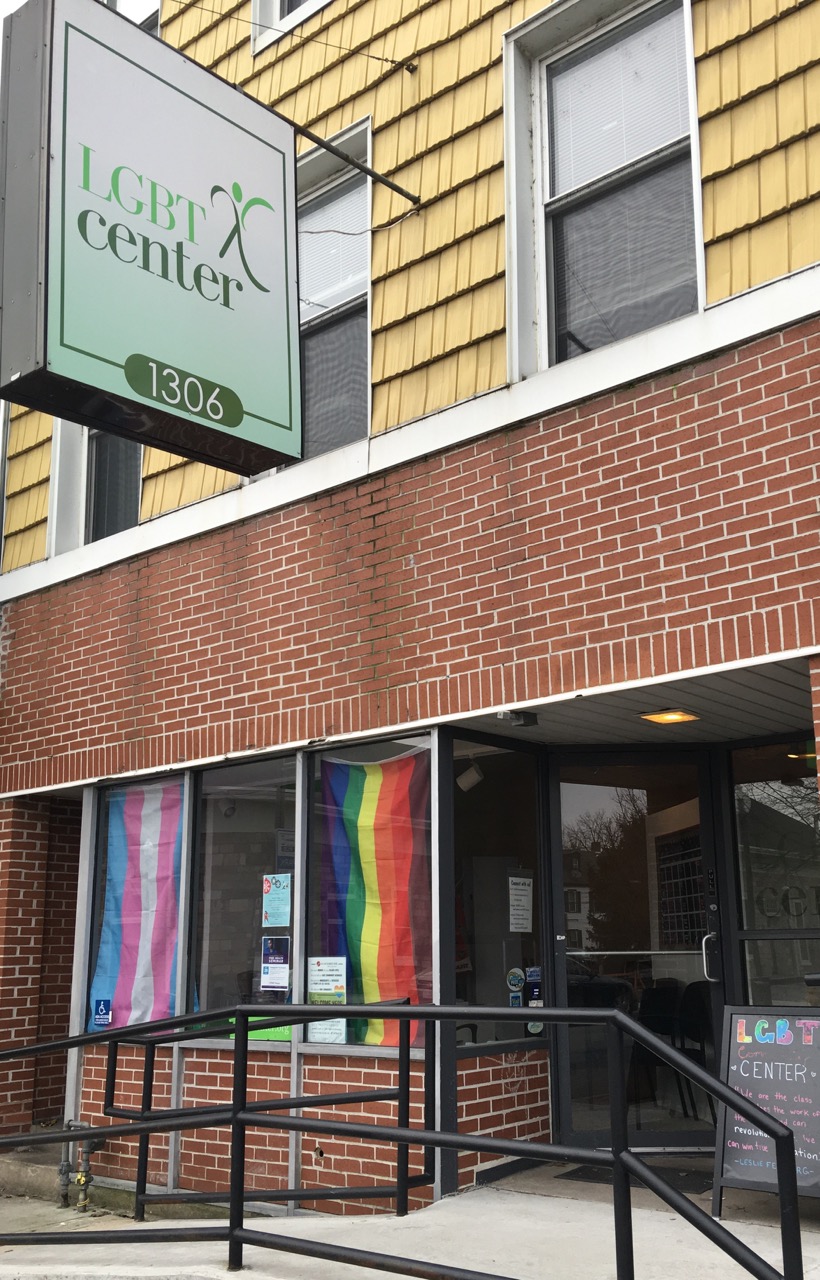
The former LGBT Center of Central PA

In journalism, some stories are much tougher to judge than others.

Most stories are obvious in terms of news importance. But some aren’t.

Take, as a good example, our story on Thursday about a dispute between the LGBT Center of Central PA and Harrisburg Mayor Eric Papenfuse.

In that story, Amanda Arbour, the center’s executive director, in a widely circulated press release and social media post, leveled certain charges about a building the mayor owns, where the center used to be located.

It was a follow up to a story from October, when we reported that the center had left its long-time home. Thursday’s story offered a lot more detail over what had allegedly happened.

Now, this is a landlord/tenant dispute at its core, so it’s something we typically would not consider newsworthy, unless perhaps there was a broader community concern or issue involved.

However, to me, this story’s importance was elevated by the prominence of the two parties involved: the city’s mayor and one of our area’s foremost nonprofits—as well as what the LBGT Center was claiming.

So, in the end, I decided it was newsworthy and should be published.

It wasn’t an easy call, and, after it was published, some people disagreed with my decision, emphatically starting with the mayor, who believed that we targeted him because of his position.

I might add that, for the story, we contacted Papenfuse for comment, which he provided and we incorporated. So, he knew we intended to publish a story based on what the LGBT Center said had occurred.

Now, the story doesn’t reach a definitive conclusion over who’s right. How could it? We weren’t there, but the two disputing parties were—and they’re saying very different things about what happened. So, we presented the center’s claims and Papenfuse’s response to them.

Many news stories are like that, of course. A reporter asks one side for their view, then the other side for theirs. It’s an imperfect method of discerning a “truth,” but it’s sometimes the best tool we have, especially when that “truth” is in dispute.

Papenfuse now believes that what we published was so egregious as to constitute irresponsible journalism at best, defamation at worst.

I continue to believe that we made the correct call.

So, what would you have done? Would you have published the story?

Lawrance Binda is the co-publisher and editor-in-chief of TheBurg.

Continue Reading

LGBT Center left headquarters following dispute with Harrisburg mayor over building

Former location of the LGBT Center of Central PA on N. 3rd St.

Last October, the LBGT Center of Central PA abruptly left its long-time headquarters in Midtown Harrisburg.

At the time, Amanda Arbour, the center’s executive director, said that “a number of factors have aligned to indicate that now is the right time to make this move.” They would work remotely out of GLO-Harrisburg, located several blocks away, until they find another, larger home, she said.

However, center officials have now publicly released a lengthy statement explaining in greater detail why they left the building at 1306 N. 3rd St. They had to leave due to unaddressed, potentially harmful, environmental factors, they said.

In their statement, center officials placed blame for the departure squarely on the landlord, who also happens to be the city’s mayor. For his part, Mayor Eric Papenfuse thoroughly disputes their version of events.

In a lengthy press release, the center claims that they found mold and asbestos in the basement of their leased building and brought up these concerns with Papenfuse. According to Arbour, the center brought in inspectors who identified the mold as “a serious issue requiring remediation,” she said.

According to Arbour, Papenfuse was resistant to follow the remediation treatment proposed by inspectors that the center brought in. Instead, she said, he proposed an alternate treatment, which Arbour did not believe would address the issue.

In the meantime, the center closed off impacted areas of the building, she said.

While the center did not rent the basement of the facility, Arbour said that Papenfuse allowed them to use it for storage.

“It was a stressful, frustrating, and exhausting process trying to address these serious issues in our building with no support or acknowledgment of the potential impact on our health and safety from our landlord,” Arbour said. “We wish our departure had been under different circumstances, but with the lack of response and subsequent non-action from Eric Papenfuse, we had no other option.”

However, Papenfuse, responding to TheBurg via text message, said that he wasn’t against remediation, but rather wanted to hire his own contractor, stating that Arbour’s suggested company would’ve cost $10,000.

“We never said we wouldn’t remediate the mold in the basement,” he said. “A lot of Harrisburg basements are unfinished and have areas where water penetrates. It was simply a matter of cost and approach.”

According to Arbour, Papenfuse asked them to remove their items from the basement so that they could do a walk-through with him. Papenfuse said that they shouldn’t have been using the basement.

“He did not address any of our specific requests or the documentation that we had provided,” Arbour said in a statement on the center’s website. “This response indicated to us that he had no intention of addressing these serious health and safety issues in his property.”

The center requested an early lease termination, which Papenfuse said he honored.

“They were not forced out,” he said. “The situation was handled professionally at all times.”

Papenfuse said that he has since remediated the mold in the basement.

He added that he saw the public statement, which was also posted on social media, as a fundraising tactic by the center.

“It’s a viciously slanderous email that uses hate as a fundraising tool,” he said.*

The LGBT Center stated that they decided to wait to share their experience until after the recent 2021 municipal election, in which Papenfuse ran as a write-in candidate for mayor and ultimately lost to Democratic nominee Wanda Williams. Arbour said that they wanted to avoid the appearance of involvement in a political campaign which could have affected their tax-exempt status as a nonprofit.

“We feel it is important to hold Eric Papenfuse publicly accountable for how he treated us as a tenant, and to do our part to ensure that other tenants or potential tenants aren’t put in the same position as we were,” Arbour said. “We will not be silent in the face of injustice and mistreatment.”

As part of their statement, the center added that for those who would like to help offset the costs associated with the mold, the move and the ongoing operations that have been affected, they welcome donations.

* This story was updated with an additional quote from Mayor Papenfuse.

Support quality local journalism. Become a Friend of TheBurg!


Continue Reading

Weekend Roundup with Sara Bozich

Plan your weekend with my weekly list of things to do around Harrisburg and central PA! Scroll down or use the menu links to find ideas for your weekend.

Need something NEW to do? #shoplocal, 3rd in the Burg

(Still) Worth noting: Check out my private Facebook community, Cheers Harrisburg. You can join the convo here.

Things on my agenda this weekend: A teeny tiny holiday fête, a playdate (with Santa!), a date night (to Amorette!)

Don’t forget to support your local brewery! Click here to find one near you.

For your weekend planning:

Below are options for your weekend.

Things to Do in Harrisburg + Central PA | Weekend Roundup | Sara Bozich

Be in the know.
Sign up to receive news and updates from Sara Bozich.
Nicely done. ??
 

Top Weekend Recs

  1. My #shoplocal Holiday Gift Guide is here
  2. The perfect stocking stuffer
  3. How to gift a brewery tour
  4. Book your holiday party — for 2022
  5. Best gift for music + beer lovers
  6. Wine gifts + holiday prep in one – check!
  7. Totally stumped? Find (the best) practical gifts here.

COVID-19 Disclaimer: Masking and social distancing policies may vary per business, venue, and event. Please be considerate, follow the rules, and be nice. And tip extra!

Thursday

Friday

Saturday

Sunday


What are you doing this weekend around Harrisburg? Let us know on Facebook, Twitter, or Instagram.

Like this content?

If you like what we do, please support our work. Become a Friend of TheBurg!

Continue Reading

Dauphin County commissioners pass budget, hold line on taxes for 2022

The Dauphin County commissioners finalized their 2022 budget on Wednesday.

Dauphin County will hold the line on property taxes again this year, as the commissioners on Wednesday finalized the 2022 budget.

In a unanimous vote, the three commissioners passed a $278.5 million budget, which is 2.5% less than the 2021 budget.

The county portion of the property tax will remain unchanged for a 17th consecutive year at 6.876 mills.

“This was truly a team effort,” commission Chair Mike Pries said, in a statement. “Our residents demand accountability. We go over line by line and make tough cuts where we have to.”

Despite the good news for county taxpayers, the commissioners warned of “looming challenges” ahead.

Commissioner George Hartwick said that human services departments are struggling to recruit and retain staff because salaries are not competitive.

Commissioner Chad Saylor mentioned unfunded mandates. As an example, he cited changes to the commonwealth’s voting processes that caused the county’s budget for its Voter Registration and Elections Office this year to double.

“We cannot continue to hold the line without some funding from the state,” Saylor said.

If you like what we do, please support our work. Become a Friend of TheBurg!

 

Continue Reading

Harrisburg School District outlines plan for federal relief funds, may reopen William Penn, Steele Elementary schools

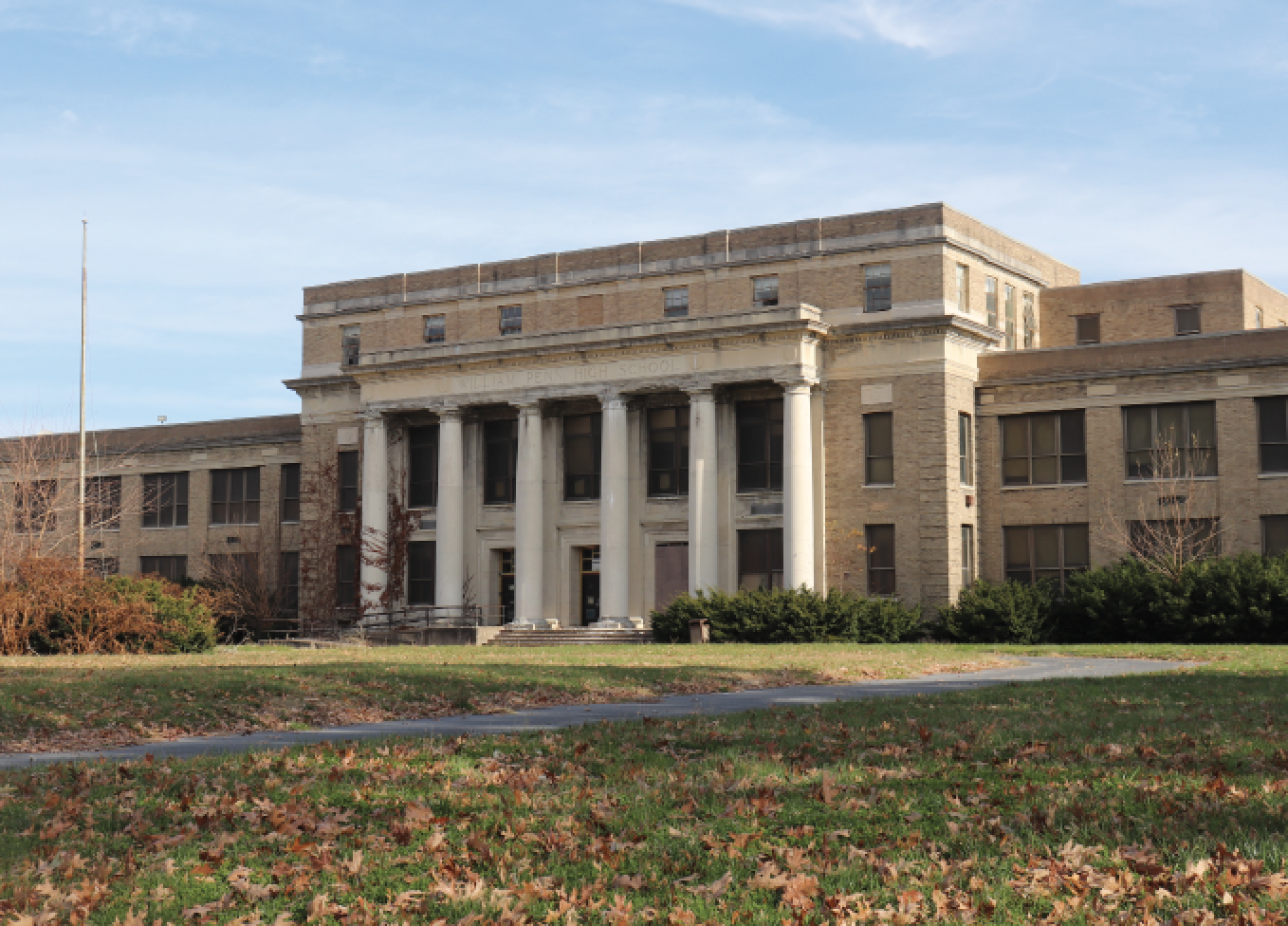
William Penn High School

The Harrisburg School District has announced a plan with big implications, potentially reopening two of its former buildings and restructuring its classrooms.

During a virtual informational session on Tuesday, Superintendent Eric Turman introduced a four-year plan to help the district recover in the wake of the pandemic and to grow.

“We want to be as transparent as possible so that everybody knows what the potential plan can be and everybody knows where we are taking this,” Turman said.

A substantial aspect of Turman’s plan would include rehabbing the former William Penn High School, near Italian Lake, which has sat vacant and deteriorating for years.

While the district has considered selling the building over the years, with several local developers and organizations offering bids, Turman explained a new plan to transform the building. Under his plan, it would become a magnet school for 6th- to 8th-grade students in the district.

The 28 total acres of property would provide space to expand, he said.

The William Penn reopening is just one of several changes that Turman hopes to make with the district’s possibly $83 million total share of federal COVID relief funds. The district has already received two previous rounds of this Elementary and Secondary School Emergency Relief (ESSER) funding and is in the process of submitting an application with their plans to secure $50.3 million third-round funds.

The money will help the district address impacts that the pandemic has had, including a widened achievement gap, increased mental/social-emotional needs, health and safety concerns, strain on family supports and financial instability, Turman said.

“You’re talking about $83 million that, when you step away from this, must be life-changing for this community that we serve,” he said.

In addition to William Penn, the district is considering reopening Steele Elementary School, on N. 5th Street, to spread out elementary students. This would allow for 520 students to be moved from current buildings and for 26 classrooms to open, Turman explained.

Under the plan, Cougar Academy, the district’s virtual/in-person hybrid school, along with Harrisburg Virtual Learning Academy, the cyber school option, would expand, as well. They may move into the Lincoln building on State Street, which currently houses the district’s administration.

Some grades will also be moved around and curriculums expanded as the district works to address negative impacts of COVID on students’ learning.

Turman noted that data shows that 58% of Harrisburg kindergarten students were below their grade level in math in 2021, a jump from 36% in 2019. Those below their grade level in reading jumped 17% as well, he said.

Kindergarten and pre-K classrooms may open in the Lincoln building. Turman said that they also hope to open a pre-K site at each elementary school.

Under Turman’s plan, 5th-grade students would be impacted, as well, as the district is considering transitioning the grade from the middle school level back to elementary.

Based on the school’s data, there have been significant increases in behavioral and educational issues that arise when students transferred from 4th to 5th grade. Daily attendance dropped and suspensions rose significantly between the grades, Turman explained.

“When you look at the data […] we have some concerns for our 5th-grade students in the environment that they’re currently in,” Turman said.

At the high school level, Turman explained that there will be more career readiness education implemented as part of the plan.

Overall, Turman said that Harrisburg is looking to continue setting the foundation for the plan and conducting studies this school year. In the 2022-23 school year, the district anticipates starting construction and revamping curriculum for the magnet schools and career academics. By 2025, they hope to open Steele Elementary, William Penn, new pre-K classrooms and the new administration resource center.

The district has released a survey to solicit feedback from the community on the plan.

“You can let your past become your future if you’re going to focus on your past,” Turman said in closing. “But if we focus on the future and what we can do moving forward, we can become very strong and partner together and work together and do what’s best for all students.”

If you like what we do, please support our work. Become a Friend of TheBurg!



Continue Reading

Harrisburg City Council passes 2022 budget, approves substantial development projects

Harrisburg City Council legislative session on Tuesday.

Harrisburg City Council ended its session for the year with a lengthy agenda, including the approval of a budget and substantial development projects.

Council took a step in the city’s budgeting process, passing a 2022 budget that will serve as a placeholder until Mayor-Elect Wanda Williams takes office and likely reopens the spending plan.

The $79.2 million general fund budget, which includes no property tax increase, essentially mirrors the 2021 budget.

The administration proposed the placeholder budget in anticipation of Williams reopening it in the new year. The final budget must be adopted by Feb. 15.

Additionally, council gave the go-ahead to two large development projects in Harrisburg.

Developers Chris and Erica Bryce, along with Matt Long of Harrisburg Commercial Interiors, can begin work on their mixed-use building on the 1600-block of N. 3rd and Logan streets. It includes a community center and 12 apartment units. They also plan to construct eight townhouses nearby. The project is one phase of many planned by the developers for the Midtown area.

At a work session last week, council President Williams expressed concern with what she saw as not enough affordable single-family housing in the plan. At the time, Long told council members that affordable housing would be part of subsequent phases.

However, on Tuesday, Williams and other council members said that they met with the developers privately to address their concerns. Council then unanimously approved the project.

A plan for the historic Hudson building on N. 6th Street in Camp Curtin was also brought before council. Developer Adam Maust plans to transform the long-abandoned building into The Atlas, which may include office and retail space for local, specifically Black-owned businesses, he said.

However, city Solicitor Neil Grover stated that the project technically already had received automatic approval. A vote by council on each land development plan is required within 120 days of an application being submitted. According to Grover, a series of delays on the city’s part led to the project not going to council for a vote until after that deadline, rendering it legally approved.

Many council members were not happy with that result, expressing that they felt the city had made a mistake.

“How did we let something with so much public comment slip through the cracks?” council member Ausha Green asked. “It’s completely ridiculous.”

During public comment, some residents expressed concern with the transparency of the project, stating that there should be more collaboration with local neighborhood groups and residents.

Maust said that he has been working with local groups such as La Cultura and Young Professionals of Color-Greater Harrisburg to conduct surveys and outreach to the community.

“I’m really encouraged with what we are putting together that I believe will set a foundation for how projects like this should go,” Maust said.

In addition, the Atlas recently received a $2.5 million grant from the commonwealth’s Redevelopment Assistance Capital Program (RACP), prompting additional questions from council members.

Although the project was deemed approved, council still voted on it, passing the land development plan by a vote of 6-1, with council member Shamaine Daniels voting against it.

Council also approved three new Zoning Hearing Board appointees, and one alternate board member. Matthew Pianka, Claude Phipps, Anna Bianco and James Hobbs (alternate) will serve, creating a quorum for the board.

Finally, council passed the 2022-2025 Basic Labor Agreement between the city and the local labor union for city employees, Local 521, American Federation of State, County & Municipal Employees (AFSCME), District Council 90. It includes 3% raises for workers for each year for the next four years. Members will also receive a $3,000 bonus in 2022, $1,500 in 2023 and $1,000 in each of the following two years.

Of note, Tuesday was council Vice President Ben Allatt’s last meeting on council, as he declined to run for re-election this year.

Next up: Harrisburg City Council will reorganize on Jan. 3, with two new council members—Ralph Rodriguez and Jocelyn Rawls—joining. Also on Jan. 3, Williams will make the move from council president to Harrisburg mayor.

If you like what we do, please support our work. Become a Friend of TheBurg!



Continue Reading