Highmark Wholecare, local organizations kick off program to encourage healthy habits for seniors

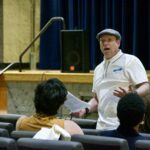
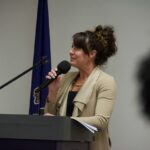
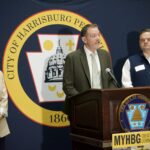
Highmark Wholecare and local officials cut the ribbon on the Healthy Steps program.

This summer, local organizations hope residents take a step in the right direction towards healthy living. 

On Wednesday, Highmark Wholecare, Harrisburg Housing Authority and Latino Connection kicked off their Healthy Steps Walking Program with the goal of encouraging people to create healthy habits this summer.

“We get folks more active,” said Erin Moore of Highmark Wholecare at a kick-off event at the Jackson Tower. “It is preventative for diseases down the line.” 

The 12-week program encourages participants to incorporate three specific habits into their daily lives: walking, healthy eating and addressing health concerns quickly.

During the 12 weeks, participants can attend seven engagement events at the Harrisburg Housing Authority that will include giveaways, classes, demonstrations and tips. Some of these presentations include the importance of mindfulness and sun safety. 

Most of the classes will take place at the Jackson Tower, one of the Harrisburg Housing Authority’s residences for low-income senior residents. Several seniors have already signed up for the Healthy Steps program, whether it be for dance classes or the healthy snack presentations.

According to George Fernandez, founder and chief executive officer of Latino Connection, the organization has a long history of working with others in the community to improve the health of Harrisburg residents.

“We bring the resources to our residents,” Fernandez said. “It is important to reach the communities often forgotten about.”

Rep. Patty Kim (D-103) was also in attendance and showed her gratitude for the organizations behind the program that are making an effort to get people healthy. 

“These are my residents,” Kim said. “Thank you for caring for them.” 

For more information about Highmark Wholecare, visit their website.

If you like what we do, please support our work. Become a Friend of TheBurg!

Continue Reading

HIP History: Former Harrisburg journalist publishes book about the city in the ’70s, in time for anniversary of historic flood

An issue of the Harrisburg Independent Press from 1971

Anita Harris hasn’t lived in Harrisburg for years, but the memories of her time here have always had a hold on her.

Harris’ experience as a young reporter in the city during the 1970s shaped her career and life and is a story she constantly revisits. It’s a tale that Harris recently released in her memoir, “The View From Third Street: Ani and the Harrisburg Independent Press.”

“These are stories that I’ve always wanted to write,” she said. “It was a very important part of my life, and I learned so much. I wanted to return to that.”

The book follows Harris as a 23-year-old reporter with the Harrisburg Independent Press (HIP), which she and her college friends founded in 1971 and ran until 1980. The publication’s office, as alluded to in Harris’s book title, sat at 1004 N. 3rd St., now the site of the Urban Churn scoop shop.

Within her book, Harris shares stories of reporting on local issues like poverty, housing, criminal justice and politics. She also discusses historic events that HIP covered at the time, such as the Vietnam War, Hurricane Agnes and the Trial of the Harrisburg 7. The latter refers to an incident in which a group of nuns and priests stood accused of conspiring to kidnap then-U.S. National Security Advisor Henry Kissinger and blow up underground heating tunnels in Washington, D.C.

The book release coincides with the 50th anniversary of the 1972 flood in Harrisburg, which HIP reported on extensively during the time.

Beyond memorializing historic incidents in Harrisburg’s history, Harris shares her own experience at a time when societal norms for women’s roles were changing. She recalled dealing with sexism and navigating varying expectations placed on women from different generations.

“This was a very formative period in my life and in the lives of many women,” she said. “I needed to explore that.”

Anita Harris

After her time in Harrisburg, Harris went on to report for Newsday, WRFM Radio and MacNeil Lehrer (now the NewsHour) of PBS. She taught journalism at Harvard, Yale and Simmons universities and authored two non-fiction books. She currently serves as managing director of the Harris Communications Group in Cambridge, Mass.

The similarities that Harris sees between the current political climate and that of the 1950s were a driving force behind her inspiration for the new book.

“It struck me that there were parallels with divisions in society between now and then,” she said. “By examining the past, I thought I could help find some answers and solutions to what’s happening now.”

Readers can dive into Harrisburg’s history, as seen through Harris’ youthful eyes, in her book. She hopes that those outside of the city will find the stories helpful, as well. She believes that Harrisburg served as a microcosm of what was happening around the nation at the time.

Within the pages of the book, Harris gives readers a look at some of the news that HIP covered and its impact on the community. She explained that, since HIP was an independent paper, residents were more willing to entrust them with sensitive stories.

Third Street in Harrisburg in 1972. Photo by John Serbell, published in the Harrisburg Independent Press.

“You could really make a difference,” she said. “We were able to cover some of the most amazing stories.”

While much of Harris’ reason for writing the book was to flesh out her own experiences and get them down on paper, she hopes that her book also influences readers. Harris hopes that her story of making a difference encourages younger generations and serves as a way for them to use lessons from history to inspire future progress.

“I’m hoping this will be of interest to future generations to help them understand what it was like then and to give them energy to stand up,” she said. “If we can understand what happened, it may provide insight needed for each of us to move forward.”

To purchase “The View From Third Street,” find the book on Amazon.


If you like what we do, please support our work. Become a Friend of TheBurg!


Continue Reading

Tri-County Housing Development to move office, offer new homeownership classes

The TCHDC has announced that they are moving offices to Front Street, as well as offering a new program.

Tri-County Housing Development Corporation (TCHDC) has good news for Harrisburg-area residents, as well as for the future of the organization.

Last week, TCHDC announced that it will move its operations to a new office on N. Front Street in downtown Harrisburg on Wednesday and become a partner in a state homeownership counseling program.

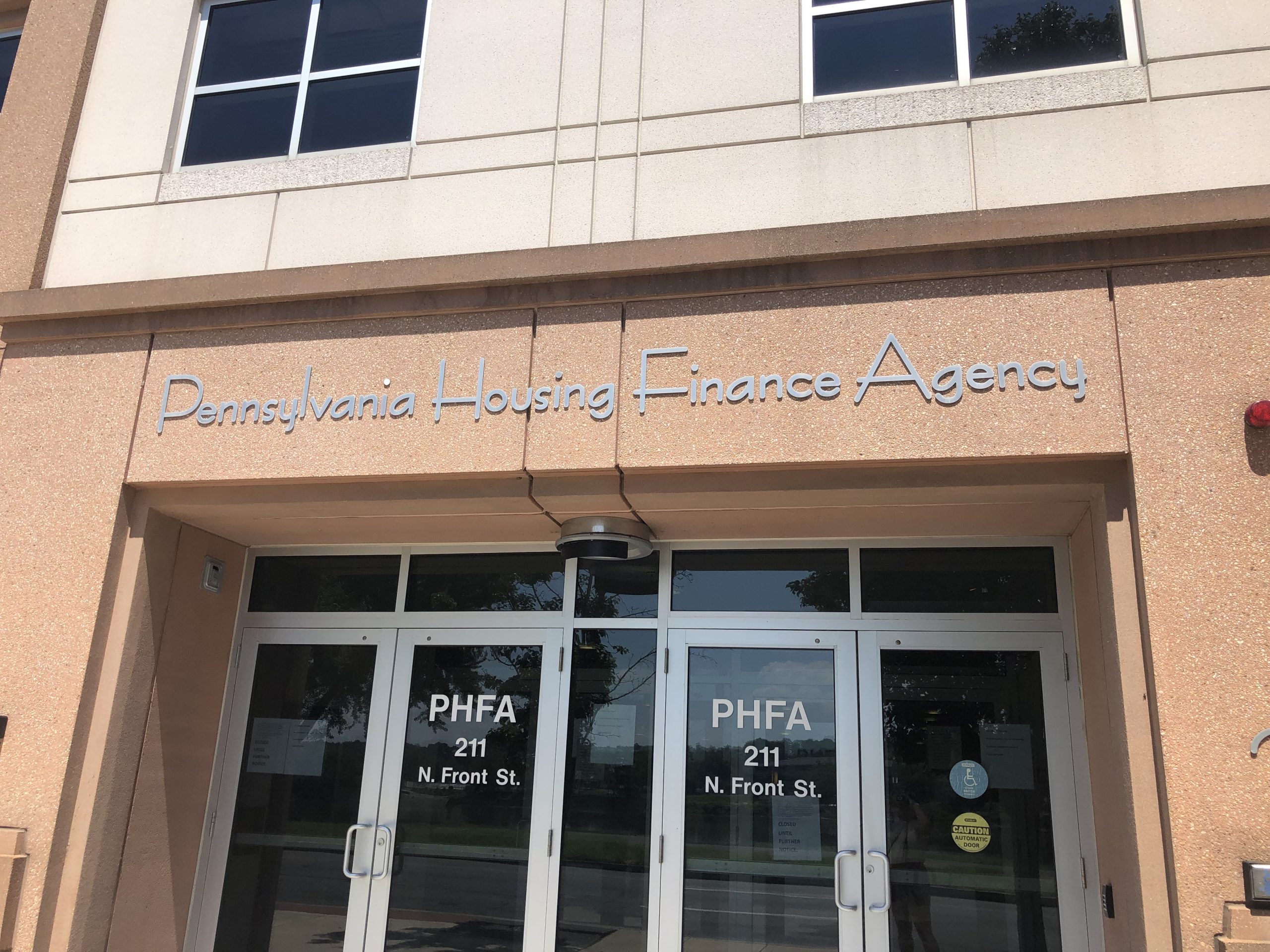
The organization will move from its current location on the 1500-block of Derry Street to a first-floor office in the Pennsylvania Housing Financing Agency (PHFA) building at 201 N. Front St.

PHFA also approved TCHDC to join its Comprehensive Homeownership Counseling Network in its Level Up Program. The program works with nonprofit organizations to help them create their own housing counseling programs. 

For years, Harrisburg-based Tri County Community Action offered a similar service to nonprofits, until ending it this past June. PHFA’s program now fills that gap in services.

“We’re actually the first organization in the program,” said TCHDC Executive Director Gary Lenker. 

Lenker said that he is happy to have a service like this return to the area. 

“It will provide another opportunity for homebuyer counseling,” Lenker said. “There is a real need for it, and we’re excited to provide that service.”

According to Lenker, the office’s move to the PHFA building goes “hand-in-hand” with TCHDC’s decision to participate in the homeownership program. 

“They have a really nice community room that we can use for homebuyer counseling,” Lenker said.

The schedule for the homebuyer counseling classes has yet to be finalized.

Lenker said that the courses will fit with the organization’s mission “to provide affordable housing to persons and families throughout the city and in surrounding areas.”

To learn more about Tri County Housing Development Corporation, visit their website.

If you like what we do, please support our work. Become a Friend of TheBurg!


Continue Reading

Burg Review: Hats off to Sankofa’s “Crowns”

An off-Broadway production by Regina Taylor, Sankofa African American Theatre Company’s “Crowns” is more than a hats-off to an icon of the cultural experience that is the Black church. “Crowns” is a high-energy, foot-stomping, clapping, hum-along gospel musical that will have you fanning yourself once it heats up the house.

In this fish-out-of-water story, we first meet our protagonist Yolanda (Jasmine Graham), who has been transplanted from Brooklyn to South Carolina to live with her grandmother, Mother Shaw (Regina Gail Malloy) after the murder of Yolanda’s brother, Teddy. Yolanda wears Teddy’s red baseball cap in remembrance of him.

Although this is the main plot, a secondary story emerges as a frontrunner–the tradition of Black church hats and the strong women who wear them. These same women embrace Yolanda as an extension of the larger church family.

“Crowns” unfolds in vignette form, rotating narratives between characters. The hats become the vehicle for telling the story, which isn’t so much plot-driven as it is an archetypal study. The narratives bring out a microcosm of Black church archetypes situated around their hats, a veritable pecking order of the First Lady pastor’s wife, the Elders and on down the line.

These women treat church as an important event. They stress looking your best to go meet the King, imparting an involved set of “Hat Queen Rules” to strut their “hattitude.” Church hats are a competitive status symbol, setting an example of modesty, hearkening back to wearing headdresses worn in the fields and to African women adorning their heads. Hats are a connection to becoming one with all that was and ever will be.

The sternest (and funniest) delivery of the rules comes from the pastor’s wife, Mabel, (Diane Hetes), who would sooner lend out one of her children than to lend a hat.

Executive Artistic Director Sharia Benn invites us “to hear stories about our culture that center, uprise and uplift communities, with a goal to educate, to be real about the issues that confront us.”

As part of our education, we learn that the tumultuous Civil Rights movement led to hats falling out of everyday fashion. But they are a must for special occasions. The hats we wear to weddings and funerals carry the history of the milestones in our lives. We find as much joy as we do sorrow in the tapestry of the hats themselves. The hats represent sacrifices, becoming cherished family heirlooms the ladies pass down before they pass on.

The hats become personified, whether they are nodding approval, flailing with the Holy Spirit, or swaying to heavenly hymns—28 hymns, to be exact. You would find any song in the score of “Crowns” in any church with threadbare hymnals with yellowed parchment pages.

In no definitive order, these are the standout songs:

All the cast collaborates in the rollicking “Battlefield” and “Yonder Come Day,” the latter of which is a dance-in-the-aisles song to get converted to.

Like a cross between a funeral dirge and a jazzy nightclub, “Wade in the Water” is an outpouring of love by the entire congregation for one mourning parishioner. “Take My Life and Let it Be” has such lovely harmonies, and the cast sings all the verses. “I Got a Crown” and “Amen” are two hymns that pull your emotions from the floor up.

Velma (Latoya Dallas) belts out the classic, “His Eye is on the Sparrow,” with a look and style reminiscent of Whitney Houston from her early career. The arrangement is beautifully unpredictable.

Jeannette (Breanne Sensenig) sings a touching rendition of “Take Me to the Water,” sporting eyelashes thicker than the velvet on her Bergère hat.

For a woman of a certain age, Malloy has some pipes to match her glamorous hats, delivering solos “In the Morning” and “None but the Righteous.”

Although the poster would have you believe differently, there is a “Man” (Steven Ross) in “Crowns.” He sports a fedora and intones his bass range in “Mary Don’t You Weep.”

I tip the brim of my own black feathered hat to the talented cast, whose singing blew me away. My only tiny issue is that the two-hour show has no intermission. (This old church lady needs one.)

My plus-one and I wore our own church hats to the opening night of “Crowns,” sitting in the front row for the full experience. I stand at about 5-foot-nothing, so I doubt I blocked anyone’s view. Director Sharia Benn said to us, “You’re gonna be all up in it performing, just like church.” Worry not, dear readers. My vocal competence lies somewhere between the caterwaulings of Yoko Ono and Ethel Merman with a head cold, and I would never do anything to publicly embarrass TheBurg.

Even if you don’t own a hat, or (like me) “only have one hat because I ain’t got but one head,” the theater will still welcome you. In the words of Mother Shaw, you can strut yourself on in.

Sankofa African American Theatre Company’s “Crowns” runs through June 26 at Open Stage, 25 N. Court St., Harrisburg. For more information and tickets, visit www.openstagehbg.com/show/crowns.

If you like what we do, please support our work. Become a Friend of TheBurg!

Continue Reading

Cycle Sites: There’s plenty to stop and see while breezing around the Capital Area Greenbelt.

Fort Hunter Mansion and Park

Harrisburg’s best-kept secret may be a 20-mile trail first conjured up by City Beautiful planners in 1902 that finally became a reality over nine decades later.

Today, the Capital Area Greenbelt takes riders and walkers not only through nature, but also through cultural landmarks, past sports fields, near restaurants and coffee shops, and by a myriad of historical landmarks.

The Tour de Belt returns this year on June 5 to celebrate the trail while also raising funds to help maintain and improve the Greenbelt. While it’s exhilarating to join hundreds of riders (nearly 1,000 typically ride) on the loop around the city, the secrets of the trail can be discovered more easily on solo or small group rides.

The adventures can kick off from a number of trail locations, but a good starting point is the trailhead off of Derry Street near the City Line Diner. It’s just a few blocks down from The Tiger Eye Coffee Shop (3418 Derry St.), which welcomes Greenbelt traversers with a bike rack, outdoor seating and a variety of tasty drinks and treats.

Most of the trail is either paved trails or gravel roads, so bicyclists, joggers and hikers can largely avoid city streets. Beginning at Derry Street, riders encounter some hills, particularly on the ascent into Reservoir Park that starts out gently, but gradually becomes steeper and steeper until—gasp! The Civil War Museum and various statues and fountains welcome riders to the summit. From there, it’s literally downhill for a bit.

One of the more “secret” areas on and near the Greenbelt includes the East Harrisburg Cemetery off of Herr Street and Edgemont Road. The trail winds to the west of that, bringing riders out near the former Harrisburg State Hospital grounds, where they have a choice to take a short detour to Veterans Park in Susquehanna Township off of Elmerton Avenue. Along with a playground, sports fields, and tennis courts, the park also has monuments to World War II, Korean War and Vietnam War veterans.

Take some time to tour around the former hospital campus, which first opened in 1845 and is now listed on the National Register of Historic Places. It’s as pleasant as it is creepy with interesting architecture, climbing kudzu and flashbacks from the psychological thriller, “Girl, Interrupted,” which was filmed there in 1999, launching Angelina Jolie’s career.

Depending on when one is riding, it might be possible to take a brief stop to enjoy some cricket at the Lower Field park at 2301 N. Cameron St., where Pennsylvania United Cricket Association matches are played.

A pedestrian tunnel takes riders under Cameron Street, coming out in front of the Farm Show Complex, where the Greenbelt parallels the busy thoroughfare until turning onto Wildwood Park Drive, then through the HACC campus before following Industrial Road to Wildwood Park.

Not only does the trail become more scenic with the lake, cattails, croaking frogs and singing birds, but it also gets hillier and more challenging as it wraps around the lake with installations from the outdoor exhibit, “Art in the Wild.” The exhibit surprises trail users with splashes of color, unusual shapes and creative integrations with nature.

Soon after exiting Wildwood Park and cruising down Linglestown Road, riders have a choice to detour off the original loop onto a recently completed expansion that follows N. Front Street on a paved path along the river to historic Fort Hunter Park.

Bikers can stop for food at multiple mini-markets and fast food restaurants as well as bar food at The Boro and steaks at the Glass Lounge along this stretch. Getting back on track on Linglestown Road, bikers will take a right onto Kaby Street by the Donald B. Stabler Memorial Park and enjoy the quiet residential streets of Susquehanna Township before returning to the hubbub of Front Street along the river.

Views of wildfowl and bridges, art and sculptures, and historic buildings like the state Capitol—as well as the possibility of a side trip to City Island via the Walnut Street Bridge—are well worth the busyness of the path as trail users travel south through Harrisburg, eventually coming out by the PennDOT building.

Phoenix Park rises along the river past the building, including a construction site that will be the home for the future Tiny Homes Veterans Village. Gravel trails then loop riders near the Lochiel Hotel, a big, yellow curiosity with a checkered historic past. From there, the Greenbelt parallels Cameron Street until it crosses over just past 13th Street by the Dauphin County Recycling Center.

This area of the trail that follows Spring Creek between 19th and 28th streets offers wild solitude in the middle of urban chaos. The trail here (and also off Derry Street) includes StoryWalk cards sponsored by the Dauphin County Library System, offering children playful interaction. It also provides the only access to the Dr. Martin Luther King Jr. Memorial, an 11-foot jet-black obelisk in a memorial garden.

Sculptures, flowers and native plants sprout up in the Five Senses Garden off N. Harrisburg Street. Not far after drinking in the garden’s splendor, the trail challenges bikers to safely cross over Paxton Street and wraps along City Park Drive and Derry Street before depositing them back onto the safety of a dedicated trail at the Paxtang Parkway.

That riders can escape to nature hidden along the river, through parks and within the city proper, is a treasured legacy from the early 20th century planners. This emerald necklace is a true urban gem.

For more information on the Capital Area Greenbelt, visit www.caga.org. The Tour de Belt takes place June 5, beginning from the HACC campus at 9 a.m.


Bike It, See It

Numerous sites and stops dot the 20-mile Capital Area Greenbelt loop. Long-time CAGA and Bike Harrisburg member Dick Norford, who offers tours around the Greenbelt, drew up a list of 39 interesting things to see along the way.

    • Paxtang Park
    • Reservoir Park
    • National Civil War Museum
    • Harrisburg East Cemetery
    • Harrisburg State Hospital
    • Farm Show Complex
    • HACC
    • Wildwood Park
    • Fort Hunter
    • McCormick Island
    • Jewish Community Center
    • Italian Lake
    • Scottish Rite Cathedral
    • Harrisburg Obelisk
    • Governor’s Mansion
    • Pennsylvania National Fire Museum
    • Broad Street Market
    • Riverfront Park
    • Peace Garden
    • Myra Lloyd Dock House
    • Little Roundtop Rock
    • Sunken Gardens
    • YMCA
    • Civic Club of Harrisburg
    • Kunkel Plaza
    • City Island
    • Market Street Bridge
    • Pennsylvania State Capitol
    • Old Governor’s Mansion
    • Dauphin County Courthouse
    • Harris Cameron Mansion
    • John Harris Gravesite
    • UPMC (Harrisburg Hospital)
    • Dock Street Dam
    • Lochiel Hotel
    • Martin Luther King Jr. Memorial
    • Five Senses Garden
    • Spring House
    • The Rutherford House

Dick Norford offers private bike tours of the Capital Area Greenbelt. You can reach him at [email protected].

If you like what we do, please support our work. Become a Friend of TheBurg!

Continue Reading

A Lasting Legacy: Why did the Jewish Federation decide to buy the former Dixon Center–and what comes next?

The Jewish Federation of Greater Harrisburg envisions a lap pool and convertible ‘gymatorium’ for Duncan Hall on its new Grass Campus.

“It takes one second to walk on the campus and be inspired by what’s happening here, and a lot of people felt that immediately.”

Abby Smith, president of the Jewish Federation of Greater Harrisburg, is giving TheBurg a tour of the Alexander Grass Campus for Jewish Life. Seen through her eyes and ebullience, the reimagined but still-vacant space—most recently known as Dixon University Center—truly does seem to hum with activity.

Abby Smith

“Our current campus just doesn’t reflect who the Jewish community is,” she said. “We didn’t look on the outside how we are on the inside—this very philanthropic, community-minded set of organizations in this not-that-spectacular space. This lives up to who our community is.”

The Jewish Federation is “planting a seed” that will radiate throughout central Pennsylvania, said Benedict Dubbs, president of the campus designer, Murray Associates Architects.

“It is not just limited to the Jewish culture,” Dubbs said. “That opportunity for education, that opportunity for engagement, that sense of community is so much more now because of the size and the relationship of the campus to the surrounding neighborhoods and the surrounding community.”


Past and Future

The Jewish Federation of Greater Harrisburg encompasses several initiatives supporting Jewish life and overall community wellbeing, including the Jewish Community Center and Brenner Family Early Learning Center. Other groups, including Jewish Family Service of Greater Harrisburg, rent space from the federation as they carry out collaborative missions.

Since 1958, the center of the region’s Jewish community has been the JCC at 3301 N. Front St. Today, the building buzzes, beehive-like, with yoga classes, childcare, Jewish education, music recitals, lectures, film festivals, senior lunches, summer camps, religious observances, board meetings and busy staff.

And like a beehive, the space is crammed beyond capacity. News in August 2020 that Pennsylvania’s State System of Higher Education was selling its six-acre, underutilized Dixon University Center three blocks down Front Street set off a cascade of activity. Calls to backers. Board votes. Dialog with tenants and stakeholders. Preparing a bid. Finally, accepting the gift that made it all possible—backing from the Alexander Grass Foundation to help buy the $4.56 million site.

The foundation president, Elizabeth Grass Weese, and her brother, Roger Grass—children of the late Rite Aid founder and philanthropist Alex Grass—appreciated the site’s self-sustaining business model, said Smith. They also liked “the idea that their dad’s legacy could be connected not just to such a beautiful campus and Harrisburg’s Jewish community but to future generations, as well. Alexander Grass was a huge part of how Jewish Harrisburg was on the map nationally, and this puts us back on the map.”

Sandy Cohen, past president of the JCC and the Jewish Federation, is co-chairing fundraising for the new site. He attended kindergarten in the JCC, when the building was new and marked a new era for Harrisburg’s Jewish community as it moved from the Midtown building that now houses H*MAC.

Cohen “grew up in that building,” the social hub where kids bowled and danced, he said.

“Someone built that for us,” he said. “It’s now 65 years later, and our current building—it needs a lot. The Grasses did this for us. Giving back to the community, I can’t say no. If someone did it for us, I want to do it for that next generation, for generations to come.”


Room to Grow

With the October 2021 announcement that the federation had submitted the winning bid for the site, the Grass Campus was born.

“While we did not have requirements for the use of the property, we believe the Jewish Federation’s plans are a good fit for the location and the community,” said PASSHE spokesman Kevin Hensil.

Programs Director Terri Travers envisions a space that strengthens community ties through expansion in fitness and recreation, summer camp, children’s theater and senior living.

“We’ve already been able here at the ‘J’ to have some intergenerational programs, but I really see us being able to expand our offerings,” she said. “The sky’s the limit. We want to make sure we’re serving the needs of the community for generations to come.”

A vision of better serving the entire community is driving the transformation, said Smith. Plans tuck existing uses and programs into the campus buildings constructed, mostly, in the early 20th century for the original site developer, Harrisburg Academy:

  • Education. The early childhood center, currently in the JCC basement, will no longer flood with tropical storm mud but with light flowing through tall windows into rooms made more spacious by knocking down walls. Silver Academy, Harrisburg’s Jewish day school, will move to Duncan Hall, across 2nd Street from the main campus.
  • Senior and wellness programming. Clinical space already equipped with sinks and floor drains—and in one room, an eye wash station—create possibilities for partnering with a health care organization.
  • Spaces campus-wide for conferences, meetings and gallery showings. An ornate hall could host recitals and lectures. Duncan Hall’s “gymatorium” will have a sleek stage and backdrops that convert a new basketball court into event space.
  • Office space for federation staff. Travers said that she finally will have separate storage for the program detritus cluttering her current office—water bottles, boxing equipment, keychains and a Slip ‘N Slide “that looks pretty darn fun.”
  • A 15,000-square-foot fitness center on the administration building’s second floor. Whether on cardio equipment or the balcony just meant for yoga and tai chi, members will have serenity-inducing views of the quadrangle and river. A lap pool will be part of the gym complex in Duncan Hall.
  • Jewish Family Service in the former PASSHE chancellor’s home. JFS offerings include clinical counseling and therapy, adoption and foster care, refugee resettlement and food assistance. Clients will be invited to wait in a glass-enclosed solarium that is Smith’s favorite room on the campus. “When you’re coming in for social services, to be in a home is just special,” she said.

The grassy quadrangle bordered by campus buildings and Front Street will remain unspoiled. For one thing, there’s a parking garage underneath. For another, it’s just beautiful, and the Jewish Federation likes it that way. Smith envisions neighborhood residents walking their dogs. Dubbs sees outdoor lectures and movie nights. A volunteer committee of landscapers and arborists is developing plans for the site, including the early learning center’s garden-to-table curriculum.

“Within Judaism, there are so many values that connect back to the earth,” said Smith, citing the Tikkun Olam teaching of a “responsibility to heal the world. It is within our tradition to care about the spaces that we inherit on the earth.”

Other volunteers are offering their expertise to develop IT schemes or address security. “I think they just need to be asked,” said Smith, a volunteer whose day job is president and CEO of Team Pennsylvania. “Just give them the opportunity to step up.”

Within that volunteer cadre, Cohen and his wife, Marcia—who led development of the JCC’s childcare in the early 1980s—see young leaders emerging.

“I’m now the old guard, but I’m happy to see that younger people are stepping up to take leadership roles,” Cohen said. “They’re enthusiastic about it. They’re excited about it.”

Much of the office space will be ready for occupancy this year. Completion of the early learning center and the gym will stretch into 2023, but “hopefully, early 2023,” said Smith. Programs are expected to continue uninterrupted through the transition.

The master plan allows flexibility to meet current needs while adapting to future, unseen developments, said Dubbs.

“If this is a very large book, I think we are in the early chapters of something that will write itself over many years and decades, and it will become better and better,” he said.

Just like the JCC today, much of the Grass Campus will serve the non-Jewish community, said Smith. After all, the conversion also embodies the Jewish value of tzedakah, “an obligation to giving back.”

“We’re here for generations to come, but in a way that better serves the community, that better connects to the community,” she said. “To me, with what we’re able to do on this campus, it changed the future.”

For more information on the Jewish Federation of Greater Harrisburg, visit www.jewishharrisburg.org.

If you like what we do, please support our work. Become a Friend of TheBurg!

Continue Reading

Major Impact: A unique organization finds itself at a crossroads.

Illustration by Rich Hauck

Back in 2013, Harrisburg had a first hint that its future might be better than its recent past.

Late that summer, the state-appointed receiver released a financial recovery plan designed to return some measure of fiscal sanity to the insolvent city.

Sanity came at a high price.

To pay back creditors, Harrisburg had to monetize two of its most valuable assets, the city incinerator and its parking system, to raise almost $400 million. That was the headline news.

Several other important elements were buried deeper in the “Harrisburg Strong” plan. One called for the creation of a new nonprofit, Impact Harrisburg, which would try to right another wrong created by decades of derelict leadership.

In Harrisburg, it wasn’t just borrowed money that financed such extravagances as museum artifacts, a sports stadium and a waste-to-energy experiment. For years, Harrisburg’s core infrastructure was ignored so that funds could be spent on one man’s fantasy of turning the city into a tourist mecca.

As the mayor dreamed and schemed, Harrisburg’s roads and sewers fell apart.

I remember the first time I drove into Harrisburg, off of I-83. The trip up 2nd Street was like the world’s least fun bumper car ride—vehicles meandering all over the wide road, nearly crashing into each other as the lane lines had long disappeared. I thought to myself, “Can’t this city afford some paint?” Turns out, the answer was “no.”

Impact Harrisburg was meant to be a start in repairing the broken capital city, in the most literal sense.

I bring this up now because Impact Harrisburg is at a crossroads. In 2014, the financial recovery plan seeded the nonprofit with $12.3 million, half marked for infrastructure and the other half for economic development—pots of money designed to help the city play catch-up after years of neglect.

Eight years later, those funds have been nearly exhausted.

Recently, I sat down with several Impact Harrisburg officials to reflect back on what’s been done and where the organization goes from here.

Board chair Gloria Martin-Roberts and vice-chair Doug Hill, as well as Executive Director Sheila Dow-Ford, were pleased with the work done so far. They rattled off a long list of achievements—from street repaving to sewer upgrades to grants that helped keep businesses afloat during the pandemic.

I knew about those projects. We’ve reported extensively on them, and I can see some of the roadwork just by looking out my office window.

But others were more under the radar. For instance, about $4.1 million went to fund projects for community groups like the Salvation Army, the Camp Curtin and East Shore YMCAs and Tri-County HDC for housing development. Other monies paid for playground rehabs, software for city workers and, most recently, a disparity study to determine how the city can offer more opportunity for diverse businesses.

For Harrisburg, these funds were critical, as the city has been cut off from the credit markets for over a decade, unable to borrow money. This would stagnate or sink most cities, but Harrisburg has experienced tremendous redevelopment over the past half-dozen years, including major work to main thoroughfares like 2nd, 3rd, 7th and 17th streets.

Much of this was seeded by Impact Harrisburg, which provided direct grants and, perhaps as importantly, attracted matching funds from other sources.

“We are absolutely on fire over meeting our mission and improving the health status of the city,” Martin-Roberts told me. “And, what I mean by health status, I’m talking about infrastructure and economic development because it all impacts on the health status of our city.”

So, where does Impact Harrisburg head from here? That’s the question at hand, as its initial funding has nearly run dry.

In a nutshell, they’d like to stay in business, focused on economic development. Indeed, the city may need assistance in this area, as its economic development director currently serves just one day a week.

“We want to stay active,” Martin-Roberts said. “We want to stay involved.”

To make this happen, Impact Harrisburg will need to find new funds. Hill mentioned several possible sources, including both private donors and city-controlled monies, such as Community Development Block Grant funds and a slice of Harrisburg’s $48 million American Rescue Plan Act funding.

“We are going back to the city and going out to the philanthropic community and saying, ‘Here’s a remarkably unique need and a remarkably unique position that we can fill,’” Hill said.

If its coffers were replenished, Impact Harrisburg could continue its economic development mission. This might include continuing its small-business grant program, its help for minority and disadvantaged businesses and its focus on training, education and identifying additional financial support for young and emerging entrepreneurs.

“The city is not equipped to do that,” Martin-Roberts said. “I’m not casting aspersions against them. They don’t have the people to do it. We can get it done, and we know we can get it done. It just makes for a healthier community.”

Impact Harrisburg was a novel idea born from a profound crisis.

Over the years, this unique nonprofit has proven its value in identifying critical needs and making a visible difference, whether in normal times or in COVID times. I also like that it employs the talents of some remarkable and dedicated people outside of government who want to continue their service to our community.

As I write this, the city is announcing its plan for American Rescue Plan monies. Ultimately, that’s up to the administration and City Council, with public meetings slated for this month. But a strong case can be made for re-equipping Impact Harrisburg, which has a track record of strategically injecting funds where they’re greatly needed.

Lawrance Binda is co-publisher/editor-in-chief of TheBurg.

If you like what we do, please support our work. Become a Friend of TheBurg!

Continue Reading

Agnes at 50: This month marks five decades since the most devastating flood in Harrisburg history.

The Governor’s Residence and surrounding blocks of Uptown Harrisburg were among places where rescue by boat was necessary.

The rain had been coming down for three days, and the Susquehanna River kept creeping higher and higher.

Eileen Young was home alone in the orange brick house in the 300-block of S. Front Street in Shipoke that she and her husband Bob had lived in since 1969.

Bob was working in Wilkes-Barre, a city also getting pummeled by Tropical Storm Agnes.

“The river’s really getting high,” Eileen remembered telling Bob on the phone on that day in late June 1972. “It looks really bad.”

He kept telling her it would be OK, but then it got to the point when it wasn’t OK.

Their house was just across the street from the river, but the rising water from Paxton Creek, several blocks away, got to them first.

Eileen’s brother came to fetch her.

“At that point, there was not even any chance to save anything,” Eileen recalled. “Like an idiot, I put my curtains on the windowsill thinking that will save them. I grabbed what was essential like some insurance records”—and the family hamster.

First, she went to her mother’s house, then that was evacuated. Then she went to her grandmother’s house, which also was evacuated.

Eileen ended up at her uncle’s house. Driving home from Wilkes-Barre, Bob couldn’t believe how far the Susquehanna River had spread onto the normally dry land. He drove all over Harrisburg in a Jeep to all the evacuation points he could find, eventually tracking down Eileen.

On June 24, the river crested at 32.6 feet, breaking the previous record of 29.2 feet set during the 1936 flood. Flood stage for the Susquehanna at Harrisburg is 17 feet.

Eventually, the river receded enough so they could return home.

“We walked in the front door of our house, and it was just like somebody dumped tons of chocolate pudding everywhere, but it didn’t smell that good,” Eileen remembered.

Water had risen to 8½ feet on their first floor, which was “annihilated.” Pieces of their furniture had floated up the steps.

At first, the city wanted to bulldoze everything, their house included. The Youngs and other residents of Shipoke fought back and convinced the city to allow them to rebuild and restore.

They didn’t have flood insurance, almost no one did, Bob said. With their own money and a low-interest, federal loan, the Youngs moved back in and restored their home over the course of about a year.


A Great Place

The Youngs’ experience was just one story of what happened throughout Harrisburg in the wake of Agnes, considered at the time the greatest natural disaster ever in the United States.

Thousands of residents and business owners lost much, if not everything, in the flood. Some left the city forever; others vowed to rebuild.

Now, five decades later, the Historic Harrisburg Association (HHA) is devoting the entire month of June to what it calls a “Celebration of Resolve” to commemorate the 50th anniversary of Agnes.

It’s not really about the numbers: 15 inches of rain fell in three days, property damage totaled $3.5 billion, and 118 people died along the storm’s long destructive path. This data has all been cited repeatedly. The month-long commemoration is about something else, said David Morrison, HHA executive director.

“The story of the recovery and the resolve to recover from Agnes is really what the theme of our activities this year are all about,” he said. “We’re not going to get carried away with how high was the water, and did [Gov.] Milton Shapp really get evacuated in a motorboat. That has been covered over and over again.”

Agnes is worth remembering because it was such a “turning point” in Harrisburg, Morrison said.

Harrisburg was in decline in the 1960s, with people fleeing the city for the suburbs. Following Agnes, the destruction was such that some observers even called for relocating the state capital.

But the calls to write off Harrisburg ran head-on into what Morrison termed a “grassroots urban pioneer reaction”—people like Bob and Eileen Young, who resisted having their homes torn down against their will.

The city agreed to allow people to fix up their houses. In other cases, the city sold homes it acquired for $1,000 or less, under the condition that the new owners commit to fixing them up and living in them, Morrison said.

The massive amount of rebuilding and restoration led to the creation of neighborhood organizations in Shipoke and Midtown and, ultimately, to the formation of the Historic Harrisburg Association itself.

Morrison also credits Agnes with leading to the creation of historic districts in Harrisburg, which now total 11.

The neighborhood groups and the historic districts helped ensure a consistency to the standards and regulations governing the unprecedented rebuilding effort. The historic districts also provided a way for property owners to obtain tax credits to assist in the rebuilding.

Agnes changed the path that Bob and Eileen Young were on in their lives.

“We probably would have moved somewhere else,” Bob said, had it not been for Agnes.

Instead, the couple became more involved in the city and with Historic Harrisburg.

“I got on the Planning Commission,” Bob said. “It sort of tied us to the city after we went through all of that.”

After rebuilding, the Youngs stayed in their home in Shipoke until about 2005, when they downsized to a row house in the 200-block of Herr Street in Midtown.

To Eileen, Agnes was a devastating experience, yet, in the end, a positive one.

“Our neighborhood grew out of that,” she said. “People became much closer. We now had a common goal to bring our neighborhood back. You can see that, after 50 years, it’s a great place to live.”

The Historic Harrisburg Association Resource Center is located at 1230 N. 3rd St., Harrisburg. For more information, visit www.historicharrisburg.org or contact the organization at 717-233-4646 or [email protected].


After the Flood

This month, the Historic Harrisburg Association will hold several events, together called “A Celebration of Resolve,” to commemorate the 50th anniversary of Agnes.

  • Saturday, June 11: A free community celebration, ceremony and picnic, jointly sponsored by Historic Harrisburg and the Shipoke Neighborhood Association, noon to 2 p.m., Riverfront Park, Shipoke.
  • Sunday, June 12: Second annual “Secret Gardens of Historic Harrisburg” garden tour, featuring historic properties in Shipoke and other Harrisburg neighborhoods. Tickets required. 1 p.m. to 5 p.m.
  • Friday, June 17 (3rd in the Burg): “A Celebration of Resolve: 50 Years after Agnes,” exhibit and open house at Historic Harrisburg Association Resource Center, jointly hosted by Historic Harrisburg and the Shipoke Neighborhood Association, 5 to 8 p.m. Admission is free.
  • Monday, June 27: “Fourth Monday” program, “Shipoke, 50 Years After Agnes; A Celebration of Resolve.” The devastating flood of June 1972 triggered the historic preservation movement in Harrisburg. Co-sponsored by HHA and the Shipoke Neighborhood Association, 6 p.m. Admission is free.

If you like what we do, please support our work. Become a Friend of TheBurg!

Continue Reading

Some Like It Odd: Oddities museum exhibits the wacky, the macabre.

Artifacts at Jeremiah Crow’s House of Oddities and Curious Goods

Sometimes, you find things in the strangest of places. Take, as a very good example, Jeremiah Crow’s House of Oddities and Curious Goods.

This unusual museum may share its DNA with the traveling sideshows of yore. But it’s actually located in an unassuming storefront in quaint Elizabethtown Square, where a town planner might logically plunk down a coffee shop or upscale apparel boutique.

You won’t find a carnival barker outside or a huckster inside trying to sell you poppycock. But, within its storefront of only 600 square feet, you will find a lot of strange displays that will make you wonder “WTF?”

You’ll also find a soft-spoken and humble host, because, well, it’s always the quiet ones, isn’t it? Owner Jeremy Crowther describes the eclectic collection in his oddities museum as “chamber of horrors and ‘Peewee’s Playhouse’ mixed into one.”

An impressive number of the bizarre collectibles represent a range of animal and human medical souvenirs. For example, a lock of Charles Manson’s hair and a stuffed, two-headed piglet share space in the display case with a can of Pringles re-purposed into an urn. The urn holds the ashes—drumroll, please—of the man who designed the Pringles packaging tube.

The movie “Freaks” from 1932 inspired several museum pieces, including Crowther’s most prized acquisition: a model of a carnival wagon handmade by sideshow performer Johnny Eck, “The Amazing Half-Boy.” Eck had a congenital disorder that prohibited his lower half from developing.

“He still approached life filled with humor, saying he never had a pair of pants to press,” Crowther said. “He was also a well-respected screen painter and created folk art unique to Baltimore.”

A handful of Crowther’s oddities have haunted backstories, like his monkey’s paw or the creepy clown doll with a murderous past.

“He hasn’t killed me yet, so I’m a bit skeptical,” Crowther said.

One eerie souvenir, a glass bottle found on the property of serial killer Edward Gein, disappeared in the museum for a week and reappeared a week later in the same spot. Let’s admire that one from a distance.

The artifacts representing the dark arts plant their roots into the grimier side of American folklore. Some are original works of art in their own right, incorporating skulls, Ouija boards, and voodoo masks tacked to the walls. Then there are mythical creatures of nightmares, like Grendal, Belsnickel and the Jersey Devil.

Surrounded by all the monsters and freaks, some visitors feel compelled to share their own encounter stories.

“Lots of Bigfoot stories, UFO sightings and ghost stories coming from around Pennsylvania,” Crowther said. “Stories from the other side, the darker side of folklore, which may or may not be true.”

To balance out the dark, several items have a lighter side that might appeal specifically to kids, like the Halloween masks, all the boxes of Count Chocula, and the description of the man who can fart on command, called “The Flatulist.”

In the gift shop, which is sort of plunked among the objects not for sale, kids can take home a few differently styled ornaments of squirrels wearing “tighty whities,” prank props to play on their friends, or an inflatable beard of bees.

Crowther is still figuring out what appeals to adults.

“I spent thousands on a red-haired giant from Lovelock Cave, Nev.,” he said. “But the life-sized cardboard cutout of Danny DeVito gets the most attention, and I only spent $60 on that. So who knows?”


Some Escapism

The museum spurs the same level of curiosity about the owner as the kooky objets d’art. After all, who would accumulate such an assortment of voodoo accoutrements?

Crowther’s path to Elizabethtown included stints as a patina artist, an ornamental plasterer, and an intern at a funeral home in Oregon. While on a road trip on the Pacific Coast, he visited Marsh’s Free Museum in Long Beach, Wash. Meeting Jake the Alligator Man served as the turning point in his story, inspiring him to collect oddities. By 2005, Crowther was a full-fledged collector.

He met fellow collector Mark Kosh at Kosh’s museum in Gettysburg in 2018. The two shared a love for “B” horror movies, historic oddities museums and Count Chocula. Kosh wanted to bring the lowbrow to the public eye, like the display featuring Abraham Lincoln’s last bowel movement. When Kosh closed his museum, Crowther acquired some of his displays.

“My collection got to the point where my home was a museum. That’s when I decided to unleash my curiosities onto the general public,” Crowther said. “The best part about having a place like this is meeting curious folks who have an appreciation of things outside of social norms. We can provide some escapism.”

Admission is free so that no one is excluded from visiting.

Crowther’s collection isn’t limited to sensing with the eyes. If you check out his website, you can sample his alter ego Jeremiah Crow’s disturbing oeuvre of musical compositions or his “Insufferable One-Man Show.” Categorized in the dark roots subgenre, the songs feature what the artist describes as “Appalachian murder ballads, stories of sorrow, and tales of horror.”

Jeremiah Crow’s House of Oddities and Curious Goods is located at 6 N. Market St., Elizabethtown. It’s open Fridays and Saturdays, 12 to 6 p.m. For more information, visit www.jeremiahcrow.com or the Facebook and Instagram pages.

If you like what we do, please support our work. Become a Friend of TheBurg!
Continue Reading

Mural Mecca: How Philadelphia became “mural capital of the world.”

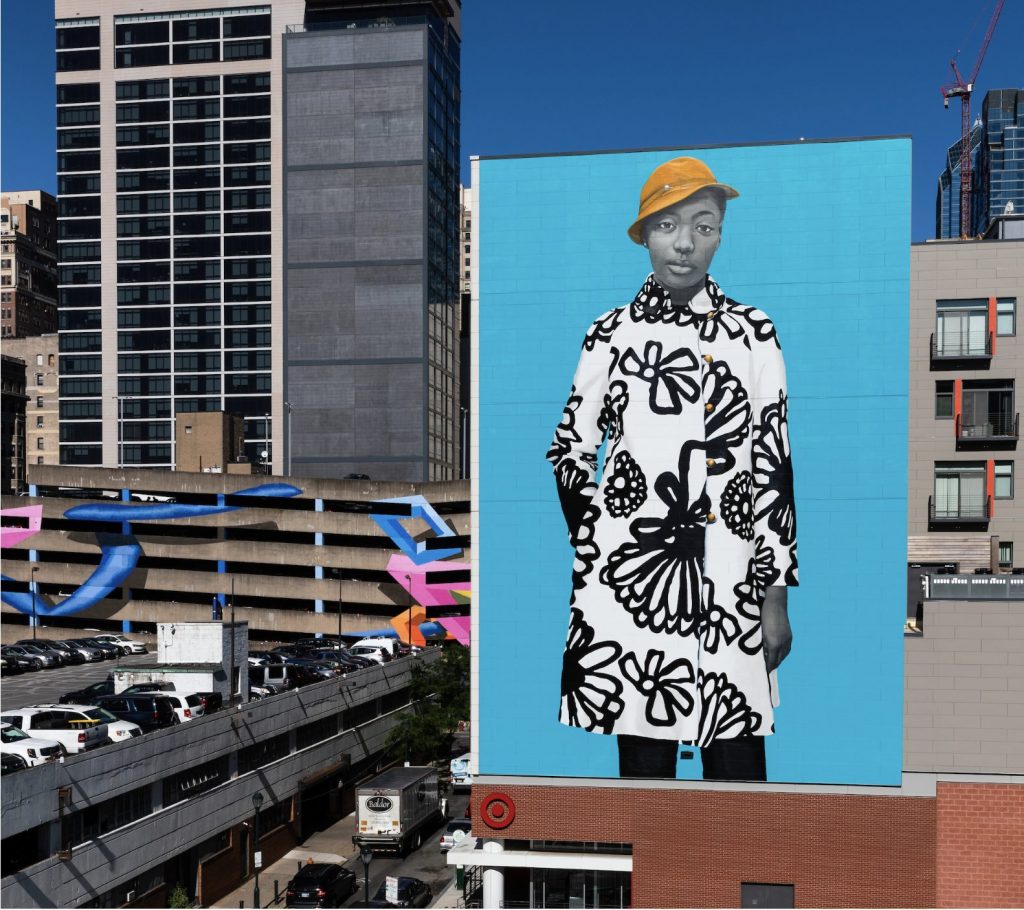
“Untitled” by Amy Sherald. Image courtesy of Mural Arts Philadelphia.

Chances are, when you think about Philadelphia, certain icons come to mind: Independence Hall and the Liberty Bell, soft pretzels and cheesesteaks. You may even hear a strain of the theme song from “Rocky.”

But there’s one more colorful symbol to add to the list: murals. The organization Mural Arts Philadelphia is considered the nation’s largest public art program, credited with creating the world’s biggest outdoor art gallery—with a tally over 4,000.

“It’s a visual treat to come into the city and see the diversity of the City of Brotherly Love reflected back,” said Chad Eric Smith, Mural Arts’ director of communications.

Just 100 miles from Harrisburg, Philly’s murals brighten every corner of the city, ranging from beautiful butterflies, scattered alphabet letters for children to discover, tributes to Philly’s sports teams and stunning abstract murals. In Center City, a soaring 22-story mural by the artist MOMO showcases his methodology for creating abstract design, using practical geometry.


Murals with a Message

There are even murals in nontraditional or unexpected places.

“A Love Letter for You: Brick Valentines on the Philly Skyline” is a series of 50 rooftop murals best seen by elevated train. Created as a collective, giant love letter, the murals’ words are not only from a guy to a girl, but from an artist to his beloved hometown. That artist is Philadelphia native Steve Powers, who also created one of Harrisburg’s murals.

Many murals honor famous Philadelphians: Julius “Dr. J” Irving, Smokin’ Joe Frazier, John Coltrane, Kevin Hart, Frankie Avalon, The Roots. Others are dedicated to causes: veterans’ issues, the impact of incarceration, the vital nursing profession and the soaring youth suicide rate.

Smith led me to a Center City underpass where two “Point of Triangulation” murals depict nine previously incarcerated people. To our right, under the words, “Once Stigmatized,” men and women are painted in plain prison garb. To our left, under the words, “Always Resilient,” the same people—returning citizens in colorful clothing—appear transformed.

“It asks the observer to question their own perspective on how people look,” said Smith. “While that can be a topic that’s deep, it allows for you to have a very visual and not antagonistic experience. Seen through art, what does it mean to you?”

And that’s been a primary tenet of Mural Arts Philadelphia since its 1984 founding—to use the power of art to inspire change in people and places.

“When a person is moved from the inside out, it’s more transformative,” Smith said.


Power in the Paint

Philly’s Mural Arts movement was birthed out of anti-graffiti efforts, “transferring the energies and talents of artists who were tagging, into public participatory artwork,” Smith said. Jane Golden is the organization’s first and only executive director—a position she continues to hold today, as the nonprofit, partially supported by the city, creates between 100 and 150 murals annually.

One of the city’s newest murals, dedicated in May, covers a long wall at Yards Brewery. The innovative “Electric Philadelphia” murals integrate colorful tubes of light into underpass art. “Cecil B. Moore Freedom Fighters” honors young Philadelphians who successfully desegregated Girard College in 1965. Currently, the Climate Justice Initiative is creating murals about climate change in the Lenapehoking neighborhood, originally Native American Lenape land.

“There are people whose lives have changed as a result of the artwork,” Smith said.

And he’s not just talking about you and me, visitors and residents. He’s talking about the artists and apprentices, many of whom express their life situations—maintaining sobriety, overcoming homelessness, being marginalized—through brushstrokes.

Taking the time to understand the complexities, issues and people behind the paint on the surface of each wall reveals deeper context.


Murals Are a Draw

Guided weekend mural tours along nine routes, on foot and via trolley, tell the stories behind murals in Center City, historic Germantown, South and West Philly. A self-guided tour puts mural stories in the palm of visitors’ hands, via smartphones.

“It’s empowering for people to choose murals at their own pace and have access,” Smith said.

Just text the word, “mural,” to 215-608-1866 to book a guided tour or access the GPS-driven self-guided tour.

“Visitors are often surprised at the number of murals we have, and knowing their stories adds to our arts and culture,” said Rachel Ferguson of the city’s tourism organization Visit Philadelphia.

While the depth and breadth of Mural Arts Philadelphia is staggering (more than 50 full-time employees; an annual budget of $13 million; 131 artists employed; 24,000 participants—all in fiscal year 2020), the city’s murals have far-reaching impact well beyond Pennsylvania’s largest city.

“We think cities all over the country can use it as a model, can see the power of the arts,” said Smith, who notes the organization has shared its artistic wisdom with city leaders nationwide.

Why have murals been so successful in Philadelphia?

“Jane Golden is probably one of the most tenacious people I’ve met, as far as holding firm to the belief that art ignites change,” Smith said. “Being the visionary she is, understanding murals’ value as not superficial but impactful.”

In a city known as the birthplace of America, freedom and independence, it makes sense that Philadelphia also birthed America’s artistic mural culture and expression.

“Public art can move the needle in our hearts and minds, and expand our thinking about the world. I tend to think the arts can foster empathy, which is sometimes deficient in our culture,” Smith said. “Jane Golden once said, ‘Art is like oxygen—it should be everywhere and available to everyone.’ And that has stuck with me.”

For more information on Mural Arts Philadelphia, see muralarts.org.

If you like what we do, please support our work. Become a Friend of TheBurg!

Continue Reading