Jess Myers
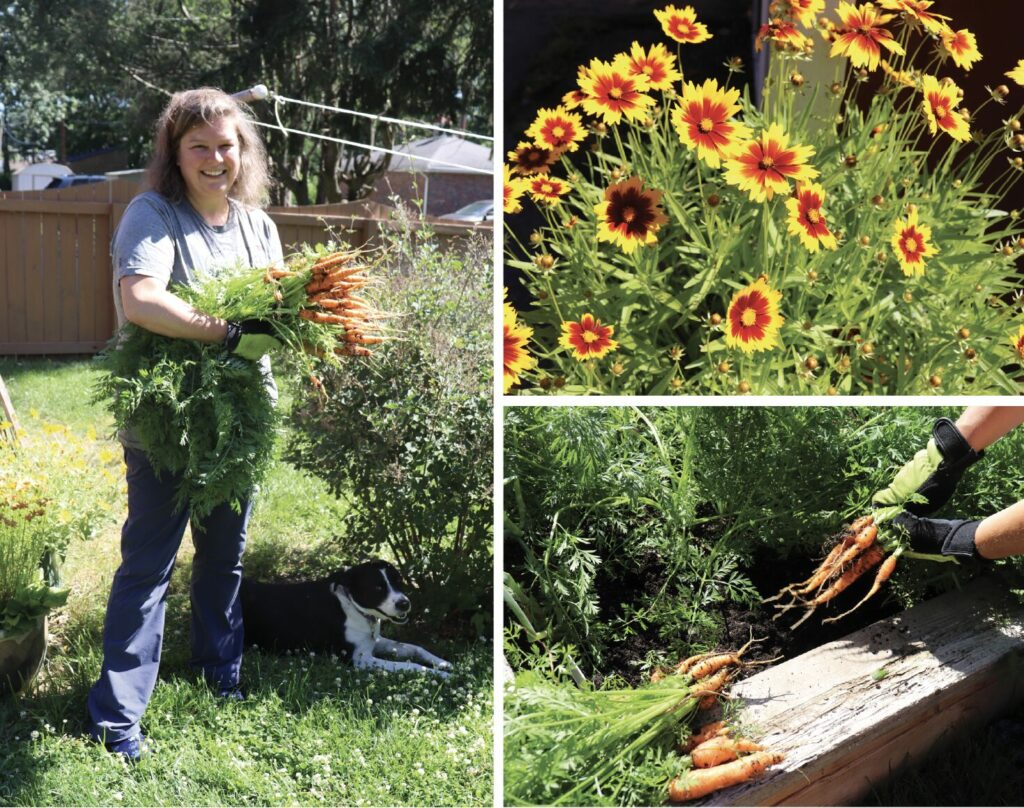
The robins are squawking insistently in Jess Myers’ backyard. Myers doesn’t know why they’ve been feuding, but it’s just nature doing its thing in the habitat cultivated around her Susquehanna Township home.
“I love my yard,” she said. “It doesn’t look like professional, fancy landscaping, but there are plants that have lots of flowers and lots of benefits for wildlife. They help out all of the pollinators, which we need so we can have food, but they also help out all of the other things that live in our ecosystem.”
In and around Harrisburg, homeowners are turning their lawns and sidewalks into battlegrounds in the fight against climate change. Like Myers’ tidy but boisterous space, these intentionally designed, eco-friendly havens are feeding pollinators and sheltering wildlife.
Myers moved into her home in the Montrose neighborhood in August 2018. Since then, she has populated the front and back yards with mostly native plants. Several types of coreopsis make birds, bees and butterflies happy. The roses are non-native, but the bees like them. Plantings bloom at different times of the year for constant snacking, and the coneflower and milkweeds sprout autumn seeds for birdie feasts.
“The whole thing with the wildlife habitat is that you provide shelter, you provide water, and there are food sources,” Myers said.
Myers’ Merlin app—Cornell University’s addictive bird-identification tool—has picked up the songs of typical suburban dwellers, such as robins and cardinals, but also tufted titmice, chimney swifts and vireos. Red-wing blackbirds and bluebirds apparently extend their territory from nearby Wildwood Park on their way to Susquehanna River islands.
“They clearly come because there’s something here for them,” she said. “When they can have a place to stop, even if it’s a layover to get out to McCormick Island, I’m like, ‘This is fun.’”
Sidewalk Forest
Even in 2007, Jen Hirt knew that too much concrete in the world was bad for the environment. She and her partner, Paul, had just bought a row home in Midtown Harrisburg. Pulling up the sidewalk wasn’t practical—pedestrians, utilities—so she resolved to greenify.
“I wanted to have that area completely filled with plants in a layered sort of way,” she said.
With a horticultural background from her family’s greenhouse business, Hirt set out to plant a dense, English-style container garden. Her first plant was an indigo, she recalled.
Today, the front of her home is packed with native and non-native plants. An elderberry thrives, courtesy of a Pasa Sustainability Initiative tree giveaway. Forget-me-nots and culver’s roots attract butterflies. Bugs and beetles entice a neighborhood skunk “to come in and wiggle around.”
And there is the fully grown, potted Siberian elm, a non-native Midtown staple. Hirt couldn’t bear to pull up her “volunteer tree” when it was a seedling, so she just keeps replanting it in ever-larger pots.
“The tree’s incredible,” Hirt said. “It attracts a lot of birds. The Carolina wrens. The cardinals. The catbirds. That’s what I wanted to do. It’s not just about aesthetics or nice-looking pots. It’s actually a habitat. I found a baby praying mantis out there yesterday.”
Hirt uses no pesticides or chemicals. Water comes from a hose attached to a backyard rain barrel. Even in a home without a traditional yard, planting anything matters, she said. “It’s terrible to say that, but we’re in such a dire situation with the climate and the planet. It’s amazing how quickly the beneficial insects and critters find the area.”
To her eyes, “it’s way more beautiful to look at a chaotic garden than a careful suburban kind of garden. It’s more interesting. You can look at it and constantly see different things going on.”
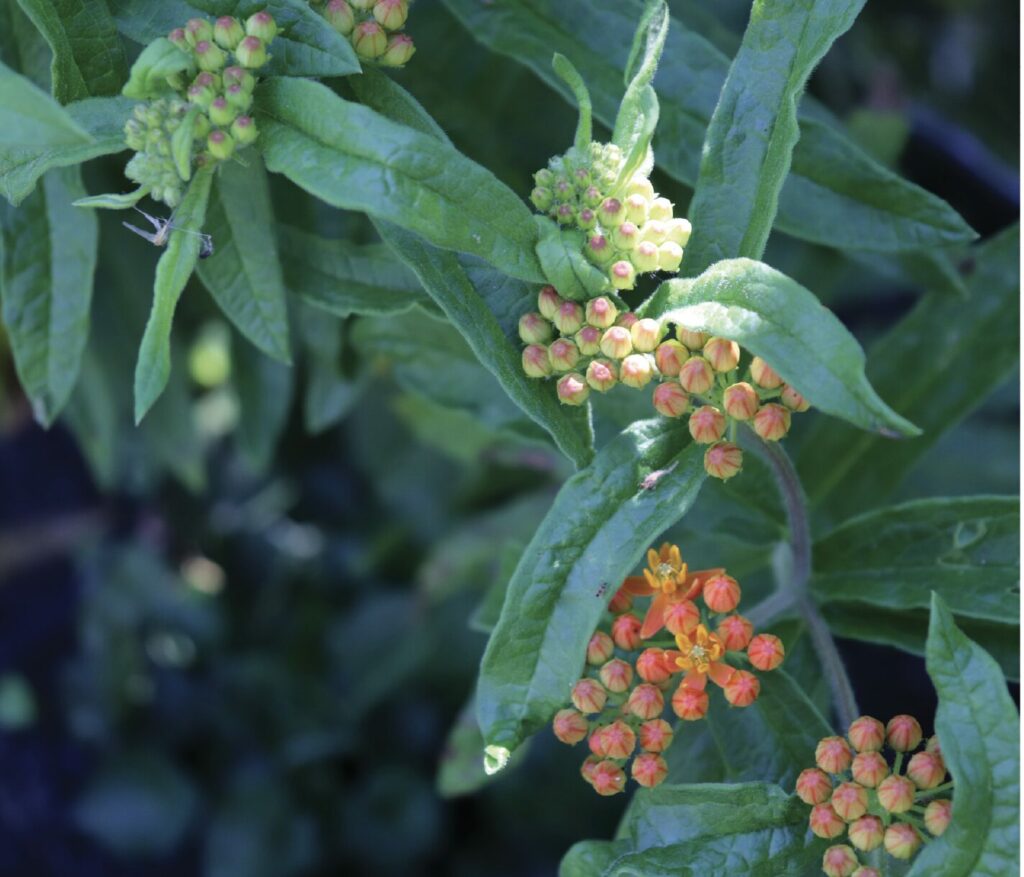
Pushing back against centuries of cultivation that didn’t account for the feeding, sheltering and reproductive needs of wildlife takes planning. Like Hirt, Myers rethought an overlooked space and transformed it into a sanctuary. It’s behind the back fence, along an alley—a three-row extravaganza of lavenders, day lilies, and butterfly weed varietals that are catnip for egg-laying monarch butterflies.
Going forward, Myers hopes to introduce plants that offer seeds for longer spans. Her yard constantly offers new discoveries, such as the cardinals that arrive as couples every spring.
“One of the groups of Mr. and Mrs. Cardinal, Mrs. Cardinal sits on the fence while Mr. Cardinal goes and checks out new things,” she said. “It’s just been fun, and it makes me feel like I’m living with what’s around me, not trying to change what’s around me. I feel like living with nature isn’t a bad thing.”
Roots of Greening
Myers admits that her untreated lawn is “not as nice as a golf course lawn,” but it’s not poisonous to wildlife, either. Violets purpling up the lawn feed early-spring pollinators. Clover planted in the backyard is migrating to the front, encouraged by a regimen of mowing the backyard in the morning dew, letting the clover stick to the blades before mowing the front.
In Midtown Harrisburg, Patrick Wright wants people to know that “grass is not a natural thing.”
“You don’t find a manicured lawn out in the middle of the woods,” he said.
Over 15 or 20 years, Wright converted the lawn of his former Camp Hill home to native perennials. When he moved to Midtown last year, he brought along some of them. Today, they spill out in pots from the entrance of his Green Street home.
And there are herbs. Lemon thyme. Oregano. Tarragon. Basil. Chives. Cilantro. Chocolate mint and regular mint.
“When you cook with herbs, things taste better,” Wright said. “One of my favorite things to do, I go out in the morning—oh, rosemary, too—and I get some fresh rosemary and chives and make an omelet.”
Wright’s wife, Stevie Wright, often uses the lavender in dishes she crafts as executive chef of Note, the Midtown restaurant.
Wright is learning that pots need to be watered regularly. His rooftop tomato garden lost its appeal when he found himself climbing out a window twice a day to keep up with the heat. Otherwise, maintenance is simple, and a bistro table amid the sidewalk greenery adds an inviting touch.
“All of a sudden, you have four or five people out there chatting, just because you decided to sit out there for a couple of minutes,” he said.
A few doors up from Wright, Kristyn Nichols has been on a mission since moving to Midtown from Colorado in December 2021.
“Since the 1970s, we’ve lost 3 billion birds in the world,” she said. “I’m on my own personal quest to make life more habitable for them with trees and native plants.”
In front of her Green Street home, a cottage garden combines annuals and perennials to attract birds while also “creating a little oasis in the city,” Nichols said. “Temperatures are rising, and it’s important for the city to be cooler. There’s too much asphalt and not enough trees.”
Her yard and bird feeders are devoted to “basic stuff” that attracts and sustains typical urban birds—robins, gray catbirds, a beloved downy woodpecker. Mountain mint is a “fantastic native plant for bees, but it was taking over, so now he’s in a pot.” The hostas that were a disaster in dry Colorado love the Pennsylvania humidity.
“A lot of it is trying things out,” she said. “Sometimes, they work even though you don’t think they’re going to, or you think this is definitely going to work, but no, and then it dies. They’re not always that cooperative.”
Greening is contagious, Wright said. He has watched neighbors step up their gardening games.
“Even across the street, people are starting to put plants and flowers out,” he said. “It’s really made a difference. You can walk down the street and have a nice experience.”
Nichols agrees. As a volunteer city Tree Tender, she has convinced two people to have trees planted in front of their homes.
“I’m trying to get Green Street to be a little more green,” she said.
But in the face of overwhelming odds, can one person make a dent in climate change?
“I don’t know,” Nichols said, “but I’m gonna try.”
Stories on environmental subjects are proudly sponsored by LCSMWA.
If you like what we do, please support our work. Become a Friend of TheBurg!