Tag Archives: Rabbi Elisha Friedman

Next Chapter: Harrisburg synagogue moves from long-time location to new home

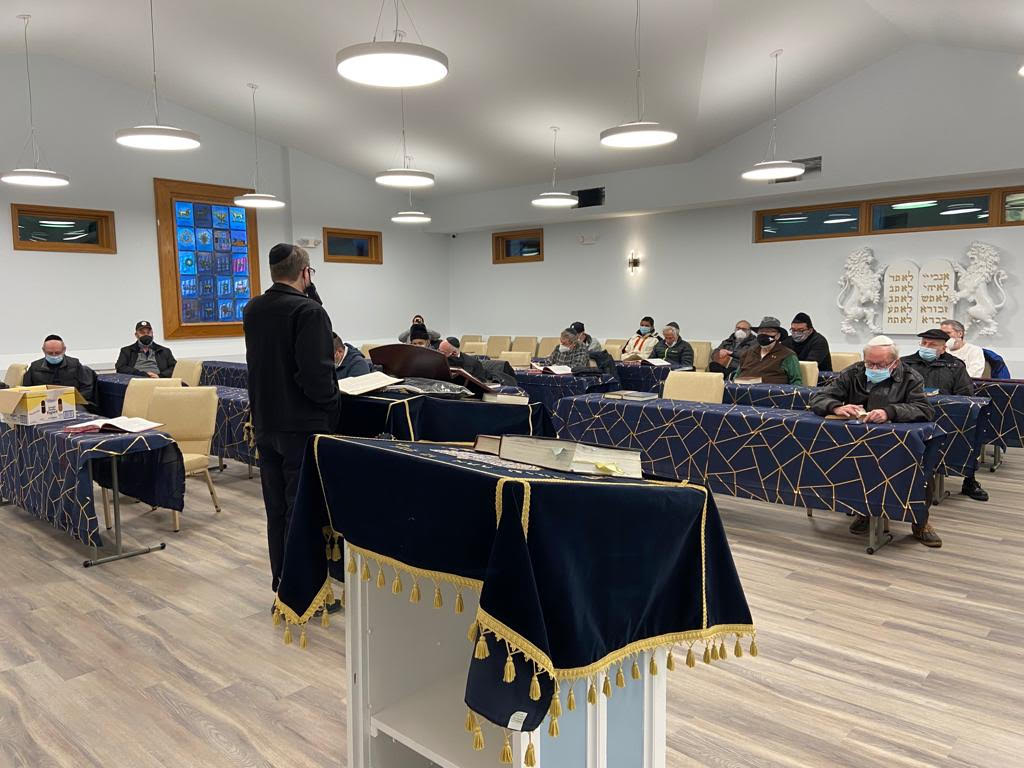
Rabbi Elisha Friedman leads a service in Kesher Israel’s new building.

A Harrisburg synagogue made the move last week from its mid-century building to a new place of worship.

Kesher Israel renovated and officially opened its new synagogue in the former Riverside Methodist Church on the 3000-block of N. 3rd Street.

The congregation purchased the building in January 2020 and sold its former home on the 2500-block of N. 3rd Street—where it was located for over 70 years.

“The new building came out beautifully,” Rabbi Elisha Friedman said. “The old building was way too big for us. This building works really well.”

Since purchasing the property, Kesher Israel completed extensive renovations to modernize the space and constructed an addition onto the building with a new sanctuary.

There are offices, conference rooms, a room to display the synagogue’s historical artifacts, a prayer chapel and a main chapel, among other rooms.

The building is far more manageable for the congregation, which, during COVID, has seen about 30 to 40 regular attendees, Friedman said. However, it’s still plenty of space for the congregation to grow.

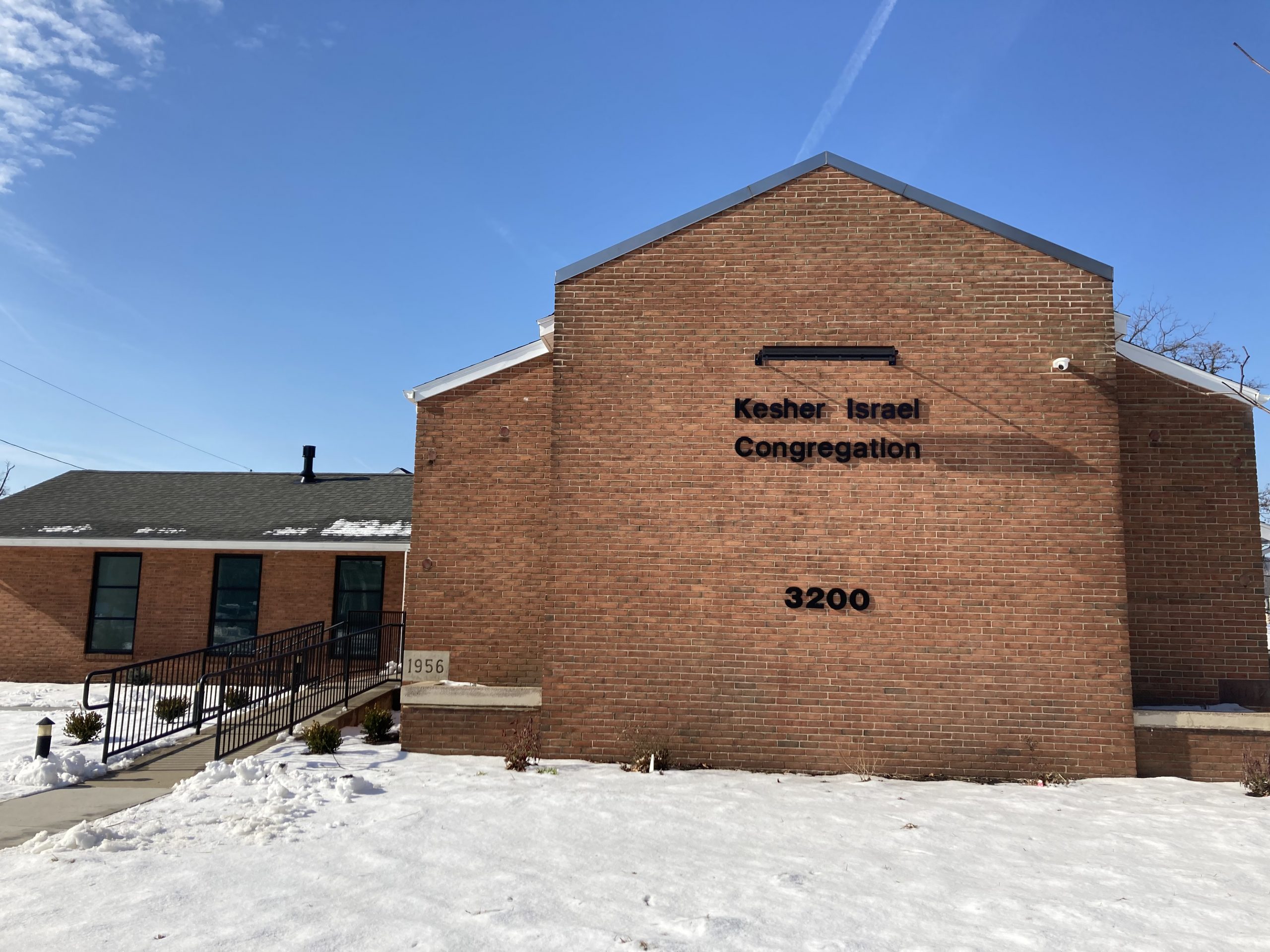
Kesher Israel’s new building

According to Friedman, the new building is in a much more convenient location for congregants. At the old building, members had to walk anywhere from one-half to two miles from home to a service on Shabbat, the Sabbath day, on which driving is restricted. This new location cuts down that walking time for many.

“It will make it easier for people to come,” he said.

While it wasn’t an easy transition for all members to leave their former building, people are excited now to be in their new space, Friedman said.

“Our hope is always to grow,” he said. “Moving into this building shows that we plan to be here for awhile.”

Kesher Israel is located at 3200 N. 3rd St., Harrisburg. For more information, visit their website.

If you like what we do, please support our work. Become a Friend of TheBurg!


Continue Reading

The Week that Was: News and features around Harrisburg

People gathered at Kesher Israel Congregation on Wednesday to support Harrisburg’s Jewish community.

The COVID-19 crisis has shown us just how connected we all are. This week’s stories mirror that, demonstrating how community members and leaders are pulling together to support one another. In case you missed any of our coverage, we have it all listed and linked below.

Bob’s Art Blog highlights how local artists spent their summer. Find out how and from where painters, sculptors and photographers are drawing their inspiration.

Café 1500 and food blogger Corinne Foster have teamed up for a fundraiser to support Feeding Pennsylvania. Their special menu item will be available from Aug. 19 to Sept. 6, with part of the proceeds going to the organization to help with relief during the COVID-19 crisis. Find out more in our online story.

“Chairapy” is a new YouTube series featuring a Mechanicsburg barber and the stories his clients share while in his chair. His main client base–emergency service personnel–tells stories of bravery and struggle, our online story reports.

A community vigil was held to show solidarity with Kesher Israel Congregation. Local faith leaders spoke out against the hatred shown towards the Jewish community when swastikas were found painted on the synagogue. Read our online story for more on the event.

COVID-19 cases increased in the state this week with an average of just over 800 new cases daily. Our weekly pandemic reporting has information on testing, total deaths and cases per county.

Free internet access will be given to about 1,500 families in the Harrisburg School District through the school’s partnership with Tri County Community Action. Acting Superintendent Chris Celmer described the initiative as an effort to help close the digital divide for district students, our story reports.

Gamut Theatre announced its fall season show schedule on Monday. The theater will feature three live productions, with pandemic-related precautions in place, our online story reports.

The Harrisburg School District finalized plans for a 100% virtual start to the school year. Our online story has the details of what parents can expect and the options they have to choose from.

The March on Washington is later this month, and local resident Karla DeJesus plans to host a bus trip to D.C. Our online story discusses the impact that George Floyd’s death had on a group of residents and why they want to march for racial justice. 

Midtown Redevelopment LLC proposed a project for Midtown Harrisburg that includes building nearly 100 townhouses. Their project would fill long-empty lots just north of the Broad Street Market, our online story reports.

TheBurg Podcast for August is out! This month, organizers of the Black Lives Matter mural in Midtown explain their motivation for the project. Tim Eller of the Commonweath Charter Academy and Mary Smith of Visit Hershey & Harrisburg provide updates on their organization, as well. Listen to the podcast here.

The “Weekend Roundup” is full of events to keep you busy. Sara Bozich lists the best places for takeout, virtual entertainment and outdoor fun in her blog.

Do you receive TheBurg Daily, our daily digest of news and events delivered right to your email inbox? If not, subscribe here!

Would you like to support our journalism and get some great benefits to boot? If so, become a Friend of TheBurg!


Continue Reading

Harrisburg community, leaders hold vigil to show unity, support for Kesher Israel

Community gathers for a vigil at Kesher Israel on N. 3rd Street.

On Monday, Rabbi Elisha Friedman stood outside of his synagogue, looking at a pair of swastikas that had been painted on the building—a symbol of hate.

Today, he stood in that same place seeing signs of love.

A diverse crowd gathered outside of Kesher Israel on Wednesday evening to stand in solidarity with the Jewish community.

“The response from this community has been really incredible,” Friedman said. “Each person by being here today is making a statement that this is unacceptable to go on in this area. We are not going to allow this kind of behavior to happen again.”

The vigil was held by the Mayor’s Interfaith Advisory Council. Police Commissioner Thomas Carter, Rep. Patty Kim (D-Harrisburg) and local faith leaders were among those who spoke.

“What I see here is love,” Carter said. “It took some cowards under the shield of nighttime to paint a swastika. But it didn’t drive a fork in any of our hearts. It brought us together.”

Friedman said that Harrisburg police arrived minutes after he called them on Monday morning. He added that the state troopers and FBI were helpful, as well.

Rabbi Elisha Friedman of Kesher Israel Congregation speaks at the vigil.

Pastor James Jackson of Goodwin Memorial Baptist Church was one of the many faith leaders who spoke at the event.

“We members of the Goodwin Memorial Baptist church, who are your closest neighbors of faith, want to say to whoever did this, this is not acceptable,” he said.

This act of anti-Semitism is just one of many related incidents in the state, said Russell Goodman, who is part of the Interfaith Advisory Council.

The negative impact the swastika has on the Jewish community mirrors that of the confederate flag on the Black community, said Tameka Hatcher of the Pennsylvania Human Relations Commission.

“Symbolism matters,” she said. “As a person who believes in the dignity and the sanctity of lives of all people, we the Black community stand with our brothers and sisters of faith in the Jewish community.”

In closing, Jackson prayed for peace and unity in the community.

“The thing that we leave here with will be a renewed determination to see that this city, this community and this nation, turns into a place where all of our kids can grow up in an atmosphere of love and peace,” Jackson said. 

Kesher Israel Congregation is located at 2500 N. 3rd St., Harrisburg. For more information, visit their website. To learn more about the Mayor’s Interfaith Advisory Council, visit their Facebook page.

Continue Reading

Community rallies around Jewish congregation after swastikas found painted on synagogue

Kesher Israel Congregation in Uptown Harrisburg

Members of the Kesher Israel Congregation heading to morning services on Monday were met with a disturbing surprise.

Swastikas had been painted on the front of their synagogue, said Rabbi Elisha Friedman.

“My security antenna went up,” he said. “People were worried about safety.”

Friedman quickly called the police. Local officers, state troopers and the attorney general came to the synagogue, he said.

Finding no sign of a threat to safety, Kesher Israel could continue services, and by the afternoon they had power-washed off the symbols of hate.

According to Friedman, the only other time something similar happened to their congregation was about 30 years ago.

By Tuesday morning, over 30 local people and organizations expressed their support for Kesher Israel and denounced acts of hatred in the community.

“An attack on one Jewish institution is an attack on all Jewish institutions, and we are here for you as your neighbors and friends to fight anti-Semitism wherever it exists and to support you at this difficult time,” said Rabbi Peter Kessler and President Rob Teplitz of Temple Ohev Sholom on N. Front Street in their statement.

Other Jewish leaders in Harrisburg stepped up to reiterate the sense that what happens to one congregation affects them all.

Rabbi Arianna Capptauber of Beth El Temple explained how the swastika personally impacts her, being the granddaughter of a Holocaust survivor.

“I feel personally the sting of the swastika, as it represents the deadly hatred that killed many members of my family,” she said. “Yet I will not cower in the face of this weaponized symbol, for I know that we are held by a resilient Jewish community and a caring community of allies here in Harrisburg.”

Friedman said many people have been calling and reaching out to him to ask how his congregation is doing and to express their solidarity.

“It’s encouraging,” he said. “There’s this huge outpouring. It was every part of our community and all types of different religions in Harrisburg.”

Local churches, mosques and temples reached out to support the Jewish faith community, as well.

“We at Pine Street Presbyterian Church condemn this criminal act of hatred directed towards our Jewish brothers and sisters,” said Pastor Russell C. Sullivan Jr., in a statement. “With the people of Kesher Israel Synagogue and the Jewish community, we stand in solidarity and support.”

The Harrisburg Mayor’s Interfaith Advisory Council will hold a vigil outside of Kesher Israel’s synagogue at 2500 N. 3rd St. on Wednesday at 5 p.m. Local government, law enforcement and faith leaders will speak in support of the Jewish community.

“The person was intending to make us feel unwelcome and like a small minority in the community, but it backfired and the opposite impression was given,” Friedman said.

Kesher Israel is located at 2500 N. 3rd St., Harrisburg. For more information on their congregation, visit their website.

Continue Reading

Celebration & Isolation: Faith leaders, congregants adjust, adapt during this sacred month

The Hadee Mosque in Uptown Harrisburg

Faith communities are figuring out how to stay connected to their members in the midst of a crisis that is changing the way people gather.

This week is especially challenging as three major religions are forced to celebrate their symbolic holidays differently this year.

Wednesday brings Passover for the Jewish faith; on Sunday, Christians observe Easter; and April 23 marks the beginning of the month-long Ramadan observance for Islam.

While Secretary of Health Rachel Levine suggested on Monday that religious ceremonies be held online, even recommending a “virtual Seder,” the ritual feast that starts Passover, it isn’t that easy for some in the Jewish community.

Rabbi Elisha Friedman of the Kesher Israel congregation explained that Saturdays and festivals are sacred days when the use of technology is prohibited in the Orthodox Jewish tradition. While some rabbis are making exceptions to allow Zoom calls, others are not.

“Some families are divided,” he said. “A lot of people are really upset. Some people are even going to be celebrating by themselves.”

To help with the loneliness an isolated Seder meal and Passover may bring, Friedman’s family has been making art and delivering the Seder food items to individuals living alone.

Fortunately, the Kesher Israel congregation has been able to stay in contact during the crisis.

“A lot of us live in the same neighborhood,” he said. “So, we see each other, and that’s nice.”

Harrisburg’s First Church of the Brethren has a relatively small congregation with around 100 people attending on a given Sunday, Associate Pastor Josiah Ludwick said. Without prior experience streaming services online, they have had to adjust quickly.

The church now uploads weekly videos for their congregation, including music, preaching and Bible study. Their Easter service will take this format, as well.

Ludwick explained that the Church of the Brethren denomination also participates in a “Love Feast” the Thursday before Easter. This event typically includes feet washing, confession, communion and a shared meal. This year, they will be joining others from the denomination online for an alternative version with scripture reading, prayer and singing.

“In some ways, COVID is bringing us together even more than before,” Ludwick said. “We don’t have to physically be together to be together in spirit.”

Ahmad Hameed, public affairs director for the Hadee Mosque, expressed a similar sentiment as area Muslims’ plans for Ramadan also will look different this year.

“It is important for us to stay connected to our community,” he said.

The mosque on Division Street in Harrisburg is closed for all but essential services, but meetings and sermons are hosted regularly through YouTube and Zoom.

While Ramadan fasting is usually opened by a gathering at the mosque, Hameed said fasts will need to be opened in peoples’ homes. The required five prayers each day will remain, along with fasting until sundown.

“It is disappointing not to go to the mosques and participate in congregational activities,” Hameed said. “But I totally understand why we are doing it.”

Members of the mosque have been reaching out to older people to assist with getting them groceries, medicine and other necessary items. They have also offered their mosque for any state or local agency’s use.

“With Easter, Passover and Ramadan all at the same time, it’s important for people of faith to feel they can still be connected, but ensure everybody’s safe and healthy,” Hameed said.

Kesher Israel is located at 2500 N. 3rd St., Harrisburg. For more information, visit their website. Harrisburg First Church of the Brethren is located at 219 Hummel St., Harrisburg. Visit their website for more information. The Hadee Mosque is located at 245 Division St., Harrisburg. For more information, visit their website.

Continue Reading

New home planned for Kesher Israel, as congregation purchases former Riverside Methodist church

Rabbi Elisha Friedman stands in front of the future home of Kesher Israel Congregation in Riverside.

Last year, the Susquehanna United Methodist Conference closed many of its churches, and now one has been bought by another religious organization.

Kesher Israel, an Orthodox Jewish congregation in Uptown Harrisburg, is moving from its home of 72 years to the former Riverside United Methodist Church on the 3000-block of N. 3rd Street.

“It’s really exciting,” Kesher Israel’s Rabbi Elisha Friedman said. “People feel like we’ve got the perfect building.”

Friedman explained that they’re moving because members felt the old synagogue on the 2500-block of N. 3rd Street was not located centrally enough for their community.

Most families live anywhere from one-half to two miles away from Kesher Israel, he said. That may not seem far, but for a congregation whose observation of Shabbat, the Sabbath day, restricts driving on a Saturday, it entails a lot of walking to and from services and prayers.

“Walking a mile with two or three little kids on a Saturday can be really difficult,” Friedman explained.

Kesher Israel was interested in the location of the church building for a while, but the sale and consolidation of the Methodist Churches in Harrisburg allowed them to begin negotiations. The synagogue purchased the church building last month for $176,000.

The new building is significantly smaller than the current synagogue, so Friedman believes the congregation will save money in the long run. However, with a congregation of about 125 families and individuals, some members are concerned about the size and have proposed an addition.

Other renovations may include work on heating and air conditioning, electricity and bathrooms.

And what about their current building?

Friedman explained they have received offers for it, but have not yet decided when to sell. He is also not certain when the congregation will move into the new building, but hopes to at least transition Friday evening and Saturday afternoon services to the space soon.

The new building will place Kesher Israel in close proximity to another synagogue, Chisuk Emuna, which is just next door.

“One of the nice things is we are going to be close to this conservative synagogue,” Friedman said. “We are hoping that the relationship will develop a little more.”

Kesher Israel also is working heavily to market their congregation and the Jewish community generally in Harrisburg. Friedman believes the community they built in Harrisburg is unique.

“We are really trying to grow our community,” he said. “We are the only legit small town in the U.S. where you can live a full Jewish life. Our hope is that this move is going to contribute to that.”

Kesher Israel is located at 2500 N. 3rd St., Harrisburg, and is moving to 3200 N. 3rd St. For more information, visit https://www.kesherisrael.org/.

Continue Reading

Kosher in the Burg: The Harrisburg area’s options expand to fill a growing need.


Judith Schulder

Keeping kosher can be a challenge.

In addition to the foods that are forbidden outright—think ham and shellfish—other foods that could be kosher, like chicken, need to be prepared a certain way. Except for fresh fruits and vegetables, most require rabbinic certification.

Food isn’t kosher because it’s been blessed by a rabbi, which is a common belief. But, yes, dairy and meat foods must be consumed separately and have their own dishes, pots and utensils.

Judith and Dan Schulder know the complexities of observing kashruth—Jewish dietary laws. But it was only recently that the couple realized a truly trouble-free kosher kitchen, in the process getting the kitchen of their dreams. 

They now have two dishwashers, two sinks and a double stove, and all appliances are on “Shabbat mode.” In recent decades, manufacturers of electrical appliances have inserted a fire-prevention safety feature that automatically shuts off the heat after a number of hours, which renders the appliances useless under certain religious laws. “Shabbat mode” allows an override of the feature.

Since Judith Schulder is an accomplished cook and the couple entertains often, they added a peninsula for a “better working environment,” she said.

The remodeling was “something we’ve wanted to do for a long time,” she said. “Having more space is more accommodating for kashruth.”

Excel Interior Concepts and Construction in Lemoyne did the remodel.

“This was not our first kosher kitchen, but it’s not something we do every day,” said Jim Mirando Jr, president of Excel. “Working with the Schulder family involved a deeper understanding of the kosher laws for food handling.”

This included keeping all meat and dairy separate, as well as understanding how these requirements affect the materials, the appliances and design layout of the kitchen.

“Together, we created a design that was beautiful and functional, while honoring their sacred commitment to maintain a kosher kitchen,” Mirando said.

The Market, the Park

For those who enjoy eating out, there are further challenges.

Harrisburg has no full-fledged kosher restaurant or even pizzeria. But the resourceful Jewish community has increasingly found ways to get around the limitations.

A few local grocery chains, like Giant and Weis, carry many kosher products. That number has grown as more and more food companies seek kosher certification.  

“It makes more sense to be kosher if you’re a national brand,” said Rabbi Elisha Friedman of Congregation Kesher Israel, Harrisburg’s modern Orthodox synagogue.

“The bakery of the Linglestown Road Giant is entirely kosher dairy, except for the pareve (neither dairy nor meat) breads,” he added. “The Weis Market on Linglestown Road has a lot of kosher meat. I’ve found products from David Elliot (kosher poultry farm), I hadn’t seen elsewhere.”

You can even keep kosher during that annual family trip to Hersheypark. Aside from the Hershey’s candies you can sample or buy at Chocolate World, most of which are already kosher, the amusement park has a kosher stand right in front.

Founded in 1995 and run by Sally Gerstein, the stand was a response to “numerous requests” from groups inquiring about kosher catering, she said.

Under Star-K (kosher certification) supervision, the stand has three kitchens—meat, pareve vegetarian and dairy, as well as a catering area for private events. Among the available favorites are chicken on baguettes, pizza and, of course, falafel. 

The stand is open during the regular park season, but Gerstein also initiated the annual Sukkot private-park event—complete with the traditional sukkah booths and food.

“On average, we attract 8,500 people from the tri-state area,” she said.

Young & Old

People throughout the greater Harrisburg area desiring kosher meals for special events and celebrations often turn to Norman Gras, an independent caterer who also supplies food services to the Jewish Community Center.

“Many times, clients request our services because they like what they had at a previous event we catered, or they specifically ask for kosher food because they or their guests want it,” said Gras. “We have also collaborated with many caterers and venues to bring our kosher food services to clients throughout central Pennsylvania.”

On the college front, Dickinson and Franklin and Marshall both now have kosher dining facilities.

The Dickinson Kove, station, within the larger dining hall, serves kosher and vegan lunches and dinners six days a week. Louise Powers and Ricki Gold of Harrisburg serve as mashgichot (kashruth supervisors), but certification is under the Star-K.

“The Kove opened in 2010 and is busier than ever,” said Gold. “The kids love us. We’re also sustainable—plates and utensils are combustible or recyclable—which is important to many people.”

The latest kid on the block is the Jewish Home Café, off the lobby of the Jewish Home of Greater Harrisburg.

The café serves staff at the home but is also open to the public, offering breakfast, lunch and dinner, as well as snacks and drinks, Monday to Thursday 7 a.m. to 7 p.m., Fridays 7 a.m. to 3 p.m., and Sundays, 11 a.m. to 7 p.m.

Rabbi Chaim Schertz, rabbi emeritus of Kesher Israel, is the kashruth authority for the café. Niema Schertz is the onsite kosher supervisor, called a mashgicha.

“The café is doing well,” Niema Schertz said. “People are happy to have a kosher option to eat out. A group of people from the community uses it almost daily.”

To learn more about eating kosher in the Harrisburg area, visit the Kesher Israel website, www.kesherisrael.org, then click on the “Welcome to Harrisburg” section, which includes a section listing kosher resources.

Author: Barbara Trainin Blank

Continue Reading

New Kid in Town: Rabbi Friedman brings youth–and fresh ideas–to Kesher Israel.

screenshot-2016-11-29-12-00-18Congregation Kesher Israel has experienced a rabbinic changing of the guard.

Rabbi Akiva Males, who shepherded the Uptown Harrisburg Modern Orthodox congregation for nine years, accepted a position this past summer at a synagogue in Memphis, Tenn. Enter Rabbi Elisha Friedman.

This is a first full-time pulpit for the 29-year-old Friedman, who received his rabbinic ordination at Yeshiva University’s Rabbi Isaac Elchanan Theological Seminary in June 2013.

Some might find a smaller community like Harrisburg daunting, but Friedman, a native of West Hartford, Conn., is like a fish in water. After his engineer father changed fields to the rabbinate, the family lived in various places in New York and Israel.

“So, I grew up in very small Jewish communities,” Friedman said.

And, coming here, it wasn’t the first time that he had spent time in Pennsylvania’s capital city.

“Years ago, my father came to Kesher Israel as a scholar-in-residence, and I was with him,” Friedman said.


Obvious Strengths

Founded in 1902, Kesher Israel is based on the “observance and study of Torah, prayer and acts of loving-kindness,” according to its website.

“The people are warm and down to earth and really care about heir shul (Yiddish for ‘synagogue’) and community and appreciate what the rabbi does,” Friedman said. “Unlike in some larger communities, I really feel I am making a difference in Jewish life and playing an important role in the [wider] Jewish community.”

He also acknowledges that he’s taken on a lot of responsibility.

“Considering my young age, it’s something I wasn’t sure I’d be trusted with for a few more years,” he said.

Friedman’s sentiments are reciprocated.

“I’ve been hearing repeatedly from many congregants how pleased they are with our choice, that we definitely made the right one,” said Dan Grabenstein, synagogue president. “People appreciate Rabbi Friedman’s friendly and upbeat personality, in addition to his interesting and meaningful divrei Torah (Torah teachings).”

And Friedman appreciates the small city where he’s landed. He points to “obvious strengths” in central Pennsylvania—beauty, affordable housing and “all the amenities a religiously observant person would need,” including kosher food, a Jewish day school and a ritual bath, not to mention proximity to New York, New Jersey and Baltimore—and other major Jewish centers.

“The community also has a lot of unity between the various synagogues and rabbis,” he said.

But Friedman derives enjoyment, too, from the quiet lifestyle.

“There is almost nothing I can imagine I would prefer doing than being an out-of-town rabbi,” Friedman said. “You can ask my wife. I say it all the time.”

His wife, Yamit Friedman, was a charter school teacher in New York and is now working on a master’s degree at Penn State Harrisburg in urban education. She is also a graduate assistant at Penn State.

Of course, there are challenges, as well. Kesher Israel’s “major one” is membership.

“Both building our membership more generally, and, specifically, attracting young families to the area,” Friedman said.

The Harrisburg Jewish community overall is aging, so attracting younger members to the synagogue is a high priority.

“Many of KI’s members have passed away or are getting older and less active,” he said. “We’d like younger families, which would also greatly help the Silver Academy”—the community day school founded by the late Rabbi David L. Silver in 1944.


Natural Fit

The attempt to attract new residents to Harrisburg predates Friedman’s tenure, as

Kesher Israel has been conducting a project called “KI Recruiting.” It seeks employers who might offer job opportunities for Jews relocating to Harrisburg and assists their integration into the community.

Friedman believes these efforts will tally well with Mayor Eric Papenfuse’s program to attract people to Harrisburg, since Orthodox Jews need the amenities the city offers.

Plus, there’s the rabbi’s age.

“Part of the reason KI chose me is my relative youth and the hope I can use it to connect with younger families,” he said.

Friedman’s career choice was influenced by his father, but not exclusively.

“I’ve always been very into my Judaism and kind of obsessed with religious and theological themes,” he said. “So, the field seemed a natural fit.”

He also loves rabbinic “multitasking.”

“The rabbinate requires public speaking, programming, quiet study and erudition, schmoozing, writing and, of course, some politics,” Friedman explained. “It feels like a field that exercises and challenges a lot of talents, which I think is somewhat rare in this age of specialization.”

Not to mention counseling, which Friedman embraces due to his affinity for psychoanalysis.

“I consider it one of the great truths that guides me,” he said.

On a lighter note, Friedman also likes pop music, which helps pass the time while he drives.

“Some of the songs can be moving in a kitschy way,” he said, laughing.

Kesher Israel Congregation is located at 2500 N. 3rd St., Harrisburg. For more information, visit www.kesherisrael.org.

Author: Barbara Trainin Blank

Continue Reading