Tag Archives: Josh Kesler

The Week that Was: News and features around Harrisburg

Impact Harrisburg officials announced a grant program for small businesses.

It’s been a washout of a week, weather-wise, but, as always, there has been plenty of local news. Catch up on all of it, listed and linked, below.

Art can be found just about anywhere we look, even in the produce aisle, says our arts blogger Bob in his column. Veering from his typical art show and gallery reviews, Bob reflects on the beauty of nature’s bounty.

Capital Region Water commented on the need for innovation in city infrastructure to handle extreme weather. An authority official explains what CRW has already done to address this issue and what their plans are for the future.

Cook to impress with this summery tomato bread appetizer recipe. Give your guests a taste of this Spanish take on a traditional Italian dish.

Dogs, like humans, have social needs, especially coming out of the pandemic. Our magazine story provides advice from the experts on how to socialize your dog and get that tail waggin’.

Gamut Theatre will have you laughing with its new production, “Thumbelina.” The Popcorn Hat Players, the children’s outreach arm of Gamut Theatre, incorporate plenty of audience participation with enormous enthusiasm and silliness aplenty. Read our review of the show, here.

Home sales showed continued strength in the Harrisburg area in June, our online story reported. The Greater Harrisburg Association of Realtors (GHAR) reported that 819 housing units sold last month, compared to 530 in June 2020.

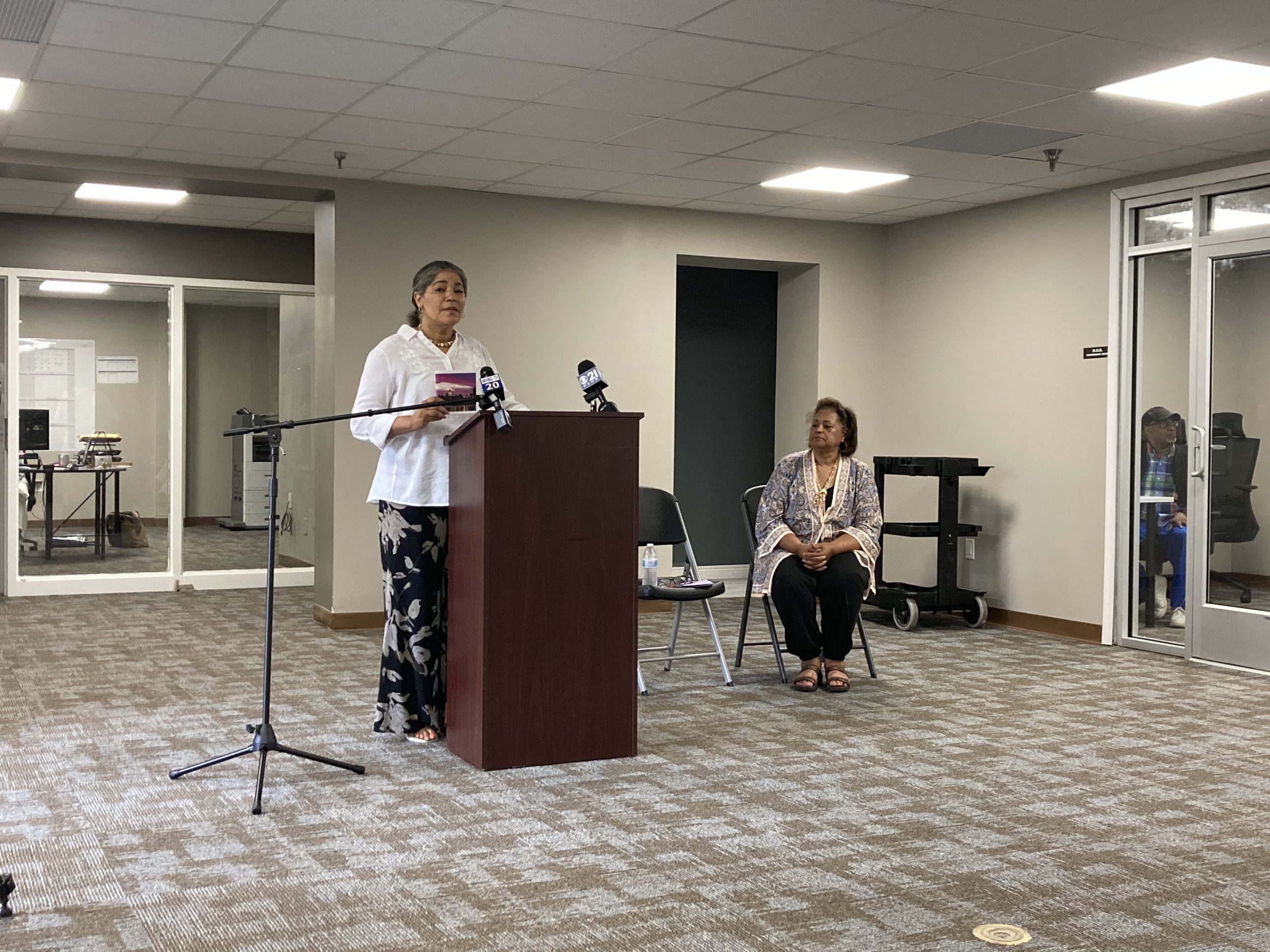
Impact Harrisburg introduced a new grant program to support small businesses in the city, our reporting found. The program will distribute $300,000 to eligible businesses and nonprofits, with a focus on often overlooked organizations.

Kipona festival will return to Riverfront Park and City Island in Harrisburg, our online story reported. The three-day event will feature food trucks, fireworks, an artist market and Native American and Indian cultural performances.

Midtown Scholar Bookstore reopened recently after a lengthy, pandemic-related closure. Our feature story shares how the bookstore adapted and continues to navigate through this time.

Two Midtown bars have been sold to restaurateur Josh Kesler, our online story reported. He bought 1400 N. 3rd St., which most recently housed the Third Street Café. The building next door, which once housed another bar, sold separately and is slated to be remodeled into apartments.

Sara Bozich has fun ideas for your weekend including live music, yoga, trivia and outdoor movies. Take a look at her Weekend Roundup, here.

Sprocket Mural Works recently worked with local artists to paint a number of planters in Allison Hill. In our magazine story, hear from artists on the impact the beautification project had on them and their community.

Summer reading programs are in full swing in Harrisburg, our magazine story reported. Local organizations like Tri-County OIC’s BookyMobile are working with underserved children who are struggling to regain lost academics, due to the pandemic.

Do you receive TheBurg Daily, our daily digest of news and events delivered right to your email inbox? If not, sign up here! 

Support quality local journalism. Join Friends of TheBurg today!

Continue Reading

The Millworks is set to reopen, with new air filtration system, pandemic measures in place

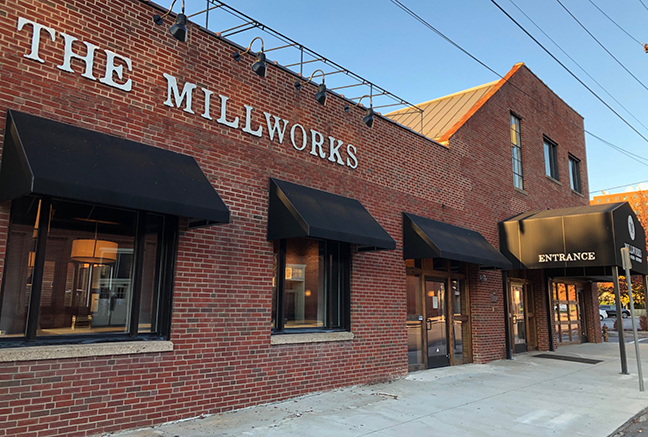
The Millworks in Midtown Harrisburg

There’s a rare ray of light on the Harrisburg restaurant scene, as The Millworks plans to reopen on Wednesday.

Owner Josh Kesler said that the Midtown restaurant, brewery and art space would reopen for the first time since early July.

“We are doing our best to give our customers the full dining experience and a sense of normalcy in this strange time,’’ Kesler said. “As we go into the holiday season, brunches and gatherings are important, and we want to support those traditions safely.’’

The Millworks closed in March, along with many other businesses, after the COVID-19 pandemic struck. It reopened in June only to close again on July 8 after a worker tested positive for the virus.

Since then, The Millworks has invested some $10,000 in a new HVAC filtration system that removes airborne pathogens, Kesler said. Patrons also will have their temperatures taken at the door, staff will wear facemasks, and tables have been spaced apart to ensure greater distancing.

Kesler said that he is putting into practice some of the measures currently in place at The Watershed Pub, a new restaurant he opened last month in Camp Hill.

“We’ve learned a lot over the past couple months about how to protect our staff and customers,’’ Kesler said. “The Millworks is such a large space, we can seat the current maximum of 50 percent and still exceed the state’s social distance guidelines.’’

The re-opening of the 24,000-square-foot Millworks will put about 50 staff members back to work, Kesler said.

The Millworks’ reopening is a rare bright spot in an otherwise bleak year for Harrisburg’s once vibrant and growing restaurant scene. Last week, Bricco, a pioneer of fine dining downtown, announced it would close on Nov. 21 after 14 years, saying that the pandemic made it impossible to continue in business.

“This has been a tough year, and I think it is important that friends and family have a way to get together in a safe, responsible way,’’ Kesler said. “We are committed to providing that experience at both The Millworks and The Watershed Pub.”

The Millworks is located at 340 Verbeke St., Harrisburg. For more information, call 717-695-4888 or visit www.TheMillworksHarrisburg.com. Due to pandemic-related seating restrictions, reservations are highly recommended.

Support quality local journalism. Become a Friend of TheBurg!


Continue Reading

Watershed Event: Despite the trials of 2020, a new restaurant/pub opens in Camp Hill.

Scottish Poet Robert Burns once said, “The best-laid schemes of mice and men oft go awry.” It’s a phrase to which Josh Kesler can certainly relate.

Before opening the Millworks in Harrisburg, Kesler dealt with the vicissitudes of real estate. So, suffering the occasional setback was hardly a foreign concept to him.

But then came COVID-19, a wholly new challenge that hit the restaurant industry hard. Nonetheless, he continued to charge forward with plans to open a new restaurant in the heart of Camp Hill—The Watershed Pub. Kesler went so far as to put a sign out announcing a July 16 opening date.

But then the pandemic struck too close to home. An employee at the just-reopened Millworks tested positive, causing him to test all employees for the virus. When he discovered that he would have to wait two to three weeks for the results, he decided that it was time to pivot again. So, he put both restaurants on pause.

“I wanted to gain a little bit more of a comfort level,” Kesler said.

By the first week of October, the restaurateur was once again ready to host the grand opening of the Watershed Pub.


Science & Art

Kesler has long had a passion for preservation, rehabbing over a million square feet of historic properties over the years. So, when he heard that Creative Elegance Boutique was up for sale and that the building dated back to the 1800s, his interest was piqued. He made an offer, closed the deal, and got to work.

Customers will recognize the exterior.

“We worked hard to preserve the historic architectural integrity on the outside of the structure,” Kesler said.

Inside, things have changed quite a bit in the 3,500-square-foot building, which now seats 160. The pub features a bar on both the first and second floors, with white oak flooring throughout. Seating on both floors is a combination of tables and booths with lighting fixtures that vary from sconces to Edison bulb pendant lighting to colonial-style chandeliers. Kesler attributes the choice of wall color to his wife, who selected “Cushing Green,” a period hue for the building.

As for the cuisine, sustainability is infused into the heart of the menu.

“The Watershed Pub developed as we began to think about the impact of our region on the Susquehanna River Valley and, ultimately, the Chesapeake watershed,” Kesler said.

Diners have a choice of carefully selected seafood options that are regional, sustainably harvested and meet criteria from the NOAA fisheries guide, the Monterey Bay Aquarium’s Seafood Watch Guide and others. Selections hail largely from the mid-Atlantic region and include oysters, blue crab, mussels, clams, rockfish and even Maryland snapping turtle, along with non-seafood items like vegan ravioli and country fried steak.

Kesler said that he strives to be environmentally responsible.

“It’s important to me to work with the Chesapeake Bay Foundation to help support the organization’s mission to protect and restore the bay,” he said.

The Watershed Pub has something else that Camp Hill residents have longed desired for their downtown ever since they marched to the polls a few years ago to overturn the borough’s “dry” status—a place to get a drink.

The restaurant offers artisan cocktails crafted with Pennsylvania spirits, along with a selection of quality Pennsylvania wines and a wide selection of brews from the Millworks Brewery, with brew master Jeff Musselman at the helm.

“My passion for brewing is anchored in the fact that what we do is truly a combination of science and art, and there aren’t many careers where you get to combine those two things and make a product that customers are passionate about,” he said.

Sue Pera, owner of neighboring Cornerstone Coffeehouse, said that the Watershed Pub fills a need along Market Street.

“Camp Hill is super excited to welcome the Watershed Pub to the downtown business corridor,” she said. “It’s the first dining destination in Camp Hill since Prohibition to serve wine, spirits and beer, all locally sourced from PA.”


Homecoming

Unfortunately, the pandemic continues to hang like a specter in the air these days, especially for restaurants. So, Kesler took an action that he may not have considered a few years ago.

“I decided to install more sophisticated equipment in this restaurant,” said Kesler about the HVAC system that includes a UV purifier that kills up to 98.5 percent of airborne pathogens. “I started out with HEPA filters and began talking to contractors, who led me down the road to discovering this other system.”

It was expensive, he said, but worth the added “peace of mind.”

Otherwise, he’s happy to be contributing to downtown Camp Hill’s fabric, adding a food and drink option to the revitalized shopping district, and is optimistic about the changes being made to make the small community more walkable.

“When the weather warms again, we will also be able to accommodate an additional 90 customers who enjoy outside dining,” he said.

The restaurateur said that his family lived in Camp Hill for almost a decade.

“So, for me, it feels almost like a homecoming,” he said.


The Watershed Pub is located at 2129 Market St., Camp Hill. For more information, visit
www.thewatershed.pub or their Facebook page.

Support quality local journalism. Become a Friend of TheBurg!

Continue Reading

Travels in Beer: Harrisburg, Bavarian breweries collaborate, innovate–and you can taste the result.

Sure, you know pilsner. It’s that watery stuff stocked in beer coolers every Super Bowl Sunday, right?

Think again. When University of the Sciences beer professor Matthew Farber walks into a brewpub, he orders a pilsner as a test “because it’s a simple, clean, difficult-to-master style.”

“Because it’s so simple and clean, it becomes very elegant,” said Farber, director of the Philadelphia school’s brewing science certificate program. “Any flaws or problems are very apparent. To make it well means that a brewer has really good control of his or her process and raw materials.”

Now, a flavorful pilsner and an Oktoberfest beer steeped in Bavarian tradition are on tap in Midtown Harrisburg, while a 160-year-old German brewery prepares to launch an IPA to a cautiously curious market back home. All are products of a two-way collaboration between the Millworks Brewery and Keesmann Brewery of Bamberg, Germany.

It all started with Millworks owner Joshua Kesler.

Ancestry-wise, Kesler is typically American—“a little bit of this and a little bit of that,” he said.

He studied German in college because Spanish was booked up. Or because German was later in the morning. Whichever, he made it an avocation for the chance to “engage with people in their mother tongue. That was the one I picked, and I’m sticking with it.”

Through a friend in Germany, Kesler met Stefan Keesmann, owner of Keesmann Brewery in northern Bavaria. Kesler (German translation: “cheesemaker”) suggested a brewing and cooking collaboration to Stefan and his son Lukas Keesmann (also “cheesemaker”). The Keesmanns had entertained similar thoughts.

Thus, Stefan and Lukas Keesmann came to Harrisburg for a consultation in early July. Kesler and Millworks brewmaster Jeffrey Musselman returned the favor and ventured to Germany later in the summer.

The Millworks’ first resulting pour was its “Collaboration Pilsner,” a delicious take on the classic lager that’s dreamy with the kale salad, the cheeseburger and probably anything else on the Millworks’ menu. Musselman, 10 years in the business, said he increasingly appreciates a “well-made, simple beer, and that’s the way the Germans approach their beers.”

Putting a Millworks spin on a classic German pilsner included dry hopping a newish German hops called mandarina Bavaria, for a “marriage between an old-school pilsner but also using a hop variety that’s relatively new and more pleasing to the modern American craft drinker,” Musselman said.

The German purity law, the Reinheitsgebot, decrees that only beverages brewed with barley (or wheat), yeast, water and hops can be called “beer.” A malty imperial stout tastes nice, the Keesmanns told Kesler and Musselman, but it’s not beer.

“If you drop a cherry in it, you can’t call it beer,” said Kesler.

Musselman certainly loves the American arms race for the craziest tap in town, but his Germany visit affirmed the Millworks philosophy of beer as social catalyst.

“Beer over there is not seen as a luxury item,” Musselman said. “It’s part of their daily routine. It’s part of living a good life. That was the really cool thing I took home from the trip. It was neat to see people just enjoying a beer with friends at a beer garden and hanging out and talking and enjoying the good life.”


Traditional as Possible

American beer is deeply rooted in German traditions and techniques, brought to the New World by early immigrants.

By the mid-19th century, the city of Lancaster earned the nickname “Little Munich” for its profusion of breweries catering to German-Americans thirsty for home-style lagers instead of English ales.

Prohibition and post-World War II industry consolidation severed many of those ties.

Today’s American brewers can learn a thing or two from their German counterparts, said Farber. The United States is poised to reach 7,000 breweries this year, with two opening per day since 2012, and an emphasis on quality is now sharing priority with the rush to innovate.

“There’s such great attention to the technical aspects of brewing in Germany,” Farber said.

That combination of German tradition and American innovation now is also on tap at the Millworks, which recently released its Oktoberfest, a beer actually closer to a German springtime marzen.

A true German Oktoberfest beer is a light-colored lager, but Americans expect autumn color. Musselman said it’s “malt-forward” for “those bready, caramel notes.” All ingredients, including the hops, are German, hewing to a brew “as traditional as possible and also appealing to the American demographic.”

“When I have a sip of that beer, it immediately transports me to southern Germany,” Kesler said. “I start looking for the closest wurst I can find.”

Germany’s beer culture is “baked into their way of life,” he added. “It’s not that someone’s a beer drinker. Everyone’s a beer drinker.”


Both Ways

In Germany, new beers encounter skepticism, and yet, brewers must innovate incrementally to differentiate in a market where all brewers make the same products with the same ingredients, under the same rules.

Younger Germans are “picking up this IPA bug” in their travels, Kesler said, and American craft brewers are making inroads in the market. So the Keesmanns weren’t cautious about collaborating, but they were taking a risk. They approached the collaboration “trying to figure out what type of American-style microbrew would resonate with their very traditional customer base,” Kesler said.

The Keesmanns told Musselman they wanted to brew an IPA. The resulting New England IPA will reach German stores and restaurants next April. Juicy in taste and hazy in appearance, it allows Keesmann to reach that younger demographic while hewing to German brewing traditions.

And because Keesmann Brewery, like the Millworks, is food-oriented, the collaboration brings new dishes to each establishment, Kesler said. German dishes on the fall menu pairing with Millworks’ Oktoberfest include a schweinshaxe.

And that means?

“I hate to say it out loud, because it doesn’t sound great, but it’s pork knuckle,” Kesler said. “It’s this fantastic presentation of a huge hock. It’s pork tender with crispy skin on the outside. It feeds two people. It’s fun to pick away at while you’re drinking a big beer.”

And what else would the Millworks offer on the culinary side but smoked brisket? The Keesmanns and their families loved their taste of the Millworks specialty, and next year, chef Lance Smith will travel to Keesmann Brewery, guiding setup of an “American-style barbecue blowout in their beer garden.”

That visit also will go both ways, as the Keesmanns return to Harrisburg in March to help create a to-be-determined beer. Aiming for release with the Millworks’ rooftop beer garden opening on May 1, Kesler welcomes suggestions for the new beer’s style.

Farber knows of just a few other intercontinental collaborations, one being between the 2SP Brewing Co., in Delaware County, Pa., and a brewery in Japan, where there are “some interesting trends.” He also noted that Sierra Nevada collaborated with the world’s longest-operating brewery, the Bavarian Weihenstephan, to produce its Braupakt hefeweissbier.

The Millworks-Keesmann collaboration is “a great idea,” he said. “Innovation meets tradition.”

Musselman and Kesler hope to make the initiative a regular effort, with each team regularly crossing the ocean to swap brewing and culinary notes. Musselman, for one, is wondering about his hefeweizen, declared good by the Keesmanns, but not a true German hefeweizen.

“There absolutely is a lot to learn to really dial these beers into the German tradition,” he said.

The Millworks is located at 340 Verbeke St., Harrisburg. For more information, visit www.millworksharrisburg.com.

Continue Reading

Burg Blog: Credit Is Due

Who should take credit for the resurgence of Midtown, which includes the beautiful space that is now home to st@rtup Harrisburg?

Last weekend, some good friends from Washington, D.C., came up to Harrisburg for a visit.

They’d been here before, but not in awhile, so I took them on a little “renovation” tour—the historic buildings that had been rehabbed and reoccupied since their last visit.

We walked through st@rtup’s glorious new space at 3rd and Boas, then checked out H*MAC, had a drink in the Millworks. I showed them the buildings now occupied by the Susquehanna Art Museum, modernrugs.com and Zeroday Brewing.

Later, thinking about it, it struck me that not once did I utter the words, “Eric Papenfuse.”

I mention this only because all four challengers for the mayor’s office have, to varying degrees, built their campaigns around giving the sitting mayor the credit (or perhaps the blame, I’m not quite sure) for the dramatic redevelopment of Midtown Harrisburg over the past few years.

I’m not here to defend Papenfuse, as TheBurg does not endorse candidates. But I am here to defend reality, as I believe that credit for the transformation of Midtown should go to the people who deserve it.

Now, Papenfuse, as a businessman, is among that group. His Midtown Scholar Bookstore helped anchor redevelopment at the heart of the neighborhood ever since it opened at N. 3rd and Verbeke. He subsequently bought and renovated the buildings that house the LGBT Center and Yellow Bird Café and is completing renovations of three buildings on the 1400-block of N. 3rd Street. Those are solid contributions.

However, he should not be the sole recipient of the honors or arrows, depending upon your perspective, of what has become of Midtown Harrisburg.

Recognize also Josh Kesler, who, through enormous risk and millions of dollars, gave us the Millworks.

Recognize also John Traynor who, through enormous risk and millions of dollars, gave us H*MAC.

Recognize also Zachary Nitzan, who through enormous risk and millions of dollars, is giving us the modernrugs.com buildings.

Recognize also developers like GreenWorks, Brickbox, WCI, Lift Development and the Vartan Group, which all have completed major projects in Midtown.

Recognize also small business owners like Ruth Prall, Adam Porter, Adam Brackbill, Ivan Black, Samra Alic, Theo and Brandalynn Armstrong, Steph and Ammon Perry, the vendors in the Broad Street Market and many others who have given Midtown vibrancy, customers and a resurgent economy.

Now, there are two significant things that Papenfuse, as mayor, has tried to do in Midtown that are worth noting. The first was the creation of the Broad Street Market Task Force, whose recommendations, I hope, will help the market further its progress and secure its future. The second was his attempt to close down the Third Street Café, a battle that has been criticized simultaneously for attempted gentrification and for ignoring troubled bars in other neighborhoods (you may notice a contradiction there). So, yes, he tried, but failed, in an effort spanning two years and counting.

Owners of the Third Street Cafe show their preference for mayor and City Council.

Meanwhile, Papenfuse’s detractors have ignored where priorities and money actually have been focused during his term: the LED streetlight project (citywide), the multi-modal project (several neighborhoods), the MulDer Square project (Allison Hill) and the sinkhole project (South Harrisburg).

Years ago, a friend, now deceased, warned me not to get my hopes up for Midtown Harrisburg. Then in his 70s, he told me he had seen the neighborhood do a two-step forward, almost two-step backward routine too many times.

I wish he had lived to see this day, that he could have shared a drink with us last weekend, as I believe that Midtown has finally reached a tipping point, a place of sustainable progress.

In this heated election season, it’s important to understand how that happened. It didn’t happen because Papenfuse waved a magic wand and showered the neighborhood with money. It happened because developers took extraordinary risks to restore this and that building, then business people took extraordinary risks to open this or that restaurant, brewery, shop. Ignoring that reality is a profound disservice to those who have actually rebuilt Midtown Harrisburg.

I would like to be charitable and believe that candidates have honestly confused correlation with causation or simply don’t understand how business or development work. However, it’s election season, and charity is hard to come by, especially when giving credit where credit is due.

Lawrance Binda is editor-in-chief of TheBurg.

Disclosure: TheBurg’s publisher, Alex Hartzler, is a principal with WCI Partners.

Continue Reading

TheBurg Podcast, March 13, 2015

Welcome to TheBurg Podcast, a weekly roundup of news in and around Harrisburg.

March 13, 2015: This week, Larry and Paul talk about Gov. Wolf’s proposed state budget and its possible pluses for Harrisburg, the incremental movements in the lawsuits over the city’s gun laws, and the fateful decade when Harrisburg city government went into the hotel business.

Special thanks to Paul Cooley, who wrote our theme. You can listen to Paul’s own podcast, the PRC Show, on SoundCloud or in the iTunes store.

TheBurg Podcast can be downloaded by clicking on the date above or by visiting the iTunes store. You can also access the podcast via its host page, here.

Continue Reading

Judgment Call: Before condemning Harrisburg, opinion-writers might want to pick up the phone.

Screenshot 2015-01-27 23.42.27

In case you missed it, I took a month off from my publisher’s column to start 2015, in favor of Paul Barker’s excellent analysis of the research skills that are a necessary part of honest and engaged journalism. Apparently, though, local media took little notice of Paul’s story.

Instead, our area’s largest paper started off 2015 where it left off in 2014—with a continued assault on all things Harrisburg, this time with claims about a supposed negative business climate.

In an editorial, PennLive’s opinion-writers attempted to link three unrelated decisions, two of which took place at least two years apart and one that has been under discussion for decades. The first, Harrisburg City Council’s refusal to sell the Keystone Products building on Cameron Street to Appalachian Brewing Co. (ABC) for $1, took place in 2012 under the Thompson administration.

The second was the Harrisburg Zoning Hearing Board’s December 2014 refusal to grant a variance to a proposed distillery in Midtown. (See Larry Binda’s Jan. 7 blog post at www.theburgnews.com.)

The final knock was directed at Mayor Papenfuse and the fulfillment of his campaign promise to update the city zoning code. The zoning code update had, in fact, been in process for decades under three administrations and countless reviews.

From these unrelated stories, the writers concluded that Harrisburg was hostile to entrepreneurship and that somehow Mayor Papenfuse and other city officials were to blame. This argument struck me as contrary to my observations and experience over the past year. So, taking Paul’s advice, I did a bit of research and called the affected parties.

First, I spoke to Adam Meinstein who owns Transit Park on the site of the old U.S. Post Office. Adam said he is “thrilled” with his investment in Harrisburg, has more than 450 daily users of his “low-cost” commuter lot (mostly Amtrak commuters) and is expanding capacity to nearly 900 spots, some of which will be under cover. In addition, he has active interest from commercial/industrial tenants for the renovated building on his site. His initial concern with the new zoning code involved a technical matter that his current use is permitted as a “pre-existing condition” and not as a “right” under the code that could theoretically impact value down the road. Nonetheless, the code does not impede his current business, his plans for further investment or his enthusiasm for his first time doing business in our city.

Next, I spoke to Alan Kennedy-Shaffer about his plans for a distillery. Not unexpectedly, Alan and his partner were not pleased with the zoning board’s decision, but Alan said that he remains personally “as committed as ever” to Harrisburg. Knowing Alan’s commitment to the city, my guess is that he will keep working hard on his plans and try to come back again at another city location.

I also spoke to a member of the zoning board who confirmed Larry’s reporting that—far from a rash rejection of the distillery—the board (made up of citizen volunteers) stressed their duty for a thorough review to make sure that the plans comply with the law. They encouraged the pair to re-submit their plans with additional detail with the hope for an eventual approval at the proposed site or another.

Finally, the 2012 ABC issue revolved around the value of a parcel of real estate. Regardless of past decisions by former government officials, the Papenfuse administration confirmed to me that it is now willing to sell the property for $1. City economic development officials and the mayor also told me that they are in active discussions with ABC about jointly seeking outside grants for the necessary site work and expanding their brewing operations, something that would create “scores of jobs” if successful.

I find it ridiculous to pin a two-year-old decision on the new mayor or new council. Moreover, editorial writers should realize that a business that starts in the city and then expands to the suburbs (like ABC) is not a sign of city weakness, but can be (and in this case is) the sign of a strong brand being built here and then taken on the road to greater heights for the mutual benefit of both.

There are many other signs of robust entrepreneurial spirit throughout the city.

Just to the north of ABC at Cameron and Herr streets, Moran Industries stepped in last year to buy a building on a formerly failed development site. Moran is now investing millions to finish the building and grounds, turning a former eyesore into a handsome new operating complex for its trucking and logistics business.

Likewise, since the Papenfuse administration took office last January, there are at least five new restaurants representing several million dollars in total new investment throughout the city (underscoring also that the new parking rates have had little impact in the decision-making of new restaurant openings).

One of these is Josh Kesler’s complete renovation of the long-vacant Millworks building across from the Broad Street Market. Josh told me that the Millworks will house 23 artist workspaces, a new indoor/outdoor beer garden and farm-to-table restaurant when it opens in early March.

Several other new businesses with good paying jobs, such as WebpageFX, have moved their employees into the city. Co-owner Bill Craig said that his move to the city has greatly helped with recruiting. He said he’s received about 500 more applications for his rapidly growing company, up 20 percent from the year before.

“We grew 50 percent last year, so finding technical marketing talent is one of our keys to maintaining our current growth trajectory,” Craig told me. “Many of the applicants are from other cities and from outside of central PA, which we would not have received if we didn’t move to Harrisburg.”

The company has grown tremendously since its move just 11 months ago, and the 70-plus employees “love the city,” Craig said.

Demand for apartments and condos is also rising. Brickbox opened its new for-sale condos at LUX (3rd and State streets) and is more than half sold out. WCI Partners (where I am a partner) has noticed increased demand for apartments and townhomes and a new willingness on the part of many people to “give the city another try” after moving out during the Thompson administration, in the words of several of our new residents.

Much more remains to be done, and a half-century of population decline will not be reversed quickly or without great effort or smart policies that encourage investment. However, this renewed enthusiasm points to business confidence in the Papenfuse administration.

A modest suggestion for those who get paid to give opinion about the city would be to actually talk to business owners before writing about city business. It may just give pause enough before reflexively propagating inaccuracies about our little city from across the river.

J. Alex Hartzler is publisher of TheBurg.

Continue Reading

An Optimist Strikes Back: Good things are happening right before our eyes. So, what’s with all the cynicism?

I meet people every day who love living and working in Harrisburg.

Often, just having a coffee at Little Amps or grabbing lunch at Café Fresco, I enjoy the fun and excitement of urban spontaneity. One meeting leads to two or three other conversations as people have unplanned interactions throughout the course of the day.

The essence of urban living and working is being out and about, walking around, meeting new people and reconnecting with friends and colleagues. Some of the best ideas spring from these chance encounters and enriching conversations, occasionally leading to actions and projects, both large and small.

This past month, a major new business joined Harrisburg when the Philadelphia Macaroni Co. took over operations at the former Unilever plant on S. 17th Street. This is but one of numerous new businesses and residents in Harrisburg recently. While this news was surprising to some (who generally have a cynical outlook of the city), it should not be a surprise to anyone who has been following all of the positive activity going on over the last year. Here is a list of just some other projects (and folks to talk to) if you want to hear the story of what is really happening this summer in Harrisburg.

WebpageFX recently moved 65 employees into a renovated, 9,000-square-foot building at 1705 N. Front St. Bill Craig and Karie Shearer have led the company since its inception. They said that moving to Harrisburg from a business incubator in Carlisle was a natural next step in the growth of their company and was essential for their recruitment efforts. WebpageFX has generally young and tech-savvy employees who prefer city amenities—like the beautiful view of the Susquehanna River right out their front window. (My company, WCI Partners is the developer and landlord of WebpageFX’s building.)

Speaking of views, Char’s Tracy Mansion, just up Front Street from WebpageFX, is having a record-breaking year. I spoke to Char Magaro this week, and her business is outperforming all the expectations that she had when she expanded from her prior location in Shipoke. At the time, many were skeptical that any restaurant on Front Street would be successful. However, her food and setting are as good as any in the region and state.

While I’m talking about restaurants, Harrisburg boasts not one but several national-class dining experiences. Qui Qui and her partner Staci, the long-time owners of Mangia Qui and Suba, are set to more than double their restaurant space when they open Rubicon this summer. Sitting in the shadow of the Capitol dome at N. 3rd and North streets, Qui and Staci have re-invested substantial new capital into their business and are excited to expand their offerings in the city.

Derek Dilks recently gave me a tour of the LUX condominium building that he and Dan Deitchman redeveloped at N. 3rd and State streets in Harrisburg. Consisting of 44 units, about half of which are already reserved prior to their opening, the building is a terrific redesign and conversion of vacant, rundown office space. Formerly a non-profit association headquarters, the building sat empty for years. Dan and Derek are working on a restaurant for the first floor and offer amazing views of the Capitol building and downtown for their residents from the building’s rooftop. When fully occupied, the building will add vibrancy and foot traffic in the downtown.

Josh Kesler recently gave me a tour of his ambitious new project across from the Broad Street Market. Over the winter, Josh and his team sandblasted and refinished the old wood timber in the historic Millworks building, which had sat empty for years. Now, they are putting finishing touches on 23 workspaces that have been 100-percent pre-leased to artists who will both make and market their wares in the new space. Josh and his wife are also adding a farm-to-table restaurant and beer garden inside the space. By removing part of the roof, they have created a very unique indoor/outdoor space unlike any other in the region. It is sure to be a new hot spot when it opens this fall.

Nick Laus is opening a new wine bar and upscale brick-oven pizzeria called Cork & Fork at the corner of N. 2nd and State streets this fall. Expanding on his already very successful city businesses at Café Fresco and Home 231, Nick’s additional investment shows his continued faith in Harrisburg. (WCI will be the landlord for Cork & Fork.)

And the reasons for optimism keep on coming:

  • Emma’s on Third recently opened an organic spa and yoga studio on 3rd Street in Midtown near the new Susquehanna Art Museum.
  • Yellowbird Café was packed this weekend when I swung by for take-out for some friends visiting from out of town.
  • Aaron Carlson at Little Amps tells me that his business has had its best three months running since it opened.
  • The team at The MakeSpace continues to impress with all their artistic and community endeavors.
  • Dan Webster (with an assist from Liz and Dani Fresh) recently produced a Harrisburg version of their magazine, Local. If you haven’t picked up a copy, please do—it is worth the read.
  • Out-of-town investors recently purchased the long-vacant properties previously owned by Mary Knackstedt and have started work, vowing to be the latest residents to make their home on N. Front Street.

I could go on and on, but you get the picture. This is truly an exciting time for Harrisburg. There is much more to be done, but our worst days are behind us and many terrific things are happening, if you just look and walk around.

Unlike the cynics, don’t be surprised. Just read TheBurg every month (and daily on the Web) to hear about the stories you won’t find elsewhere.

J. Alex Hartzler is publisher of TheBurg.

Continue Reading

Broad Street Market Hires New Interim Manager

The Broad Street Market.

The Broad Street Market.

The Broad Street Market has hired Ashlee O. Dugan, a member of the market corporation’s board and the founder of a local food-recovery organization, as its newest full-time interim manager, market board members confirmed Friday.

Dugan, who will assume her role on June 18, will be leaving her current job at the Pennsylvania Downtown Center, where she worked as a membership and marketing coordinator. She will be replacing Len Cobosco, from the Camp Hill accounting firm Carey Associates, who came on as an interim manager in June of 2013.

Cobosco will remain employed by the market as a part-time financial manager, board members confirmed.

Officially, Dugan said Friday, the position is transitional, since the market’s operations and organizational structure are still under review by the Broad Street Market Task Force, which Mayor Eric Papenfuse appointed shortly after his inauguration in January. The market may open the search for a permanent manager again following the task force’s recommendations, she said.

Amy Hill, a volunteer board member doing public relations outreach for the market, noted Friday that Dugan has a “legacy connection” to the market. Dugan’s great-grandfather, Gilbert S. Miller, operated a butcher stand at the market from the mid-1950s to the mid-1970s.

“She’s just such a dynamic young lady. She represents the best the market has to offer,” Hill said. “It’s exactly what the market needs right now.”

Jonathan Bowser, president of the market’s board, applauded Dugan’s hire, noting her “extensive background” in agriculture, food systems and urban revitalization. “She has a diverse skill set that is much needed at the Broad Street Market,” he said.

Dugan is also familiar with the market’s operations. Her wife, Erin, is the manager at Harvest, a sustainable farmer’s co-op in the market’s brick building. Dugan was also one of three founders of the Broad Street Market Alliance, which publicized a proposal last October for an overhaul of the market’s management and operations. The alliance, whose other founding members were Josh Kesler and Julia James, still maintains an active website where that proposal can be viewed.

Kesler, also a market board member, is the developer of the Millworks building next door to the market, soon to be home to artists’ studios, a beer garden and a farm-to-table restaurant.

For the past two weeks, Dugan has worked part-time for the market as a social media consultant, following the expiration of the market’s contract with tla Communications, a public relations firm owned by today’s the day Harrisburg founder Tara Leo Auchey.

Dugan is also the founder of The Greenhouse, an organization she created in August of 2012 with the goal of locating and saving food that might otherwise go to waste.

The Greenhouse’s mission, according to its Facebook page, is “transforming Harrisburg, Pennsylvania from a food desert into a food oasis by recovering food that would have otherwise been wasted, preserving it in healthy and creative ways and then distributing it to the community.”

For more about the Broad Street Market’s history and the efforts of the task force, read our full-length feature in the April issue of TheBurg.

The packed first public meeting of the Broad Street Market Task Force, held at the market's stone building in March.

The packed first public meeting of the Broad Street Market Task Force, held at the market’s stone building in March.

Continue Reading

A Simple Plan: Twenty years ago, the city tried and failed to fix the struggling Broad Street Market. Does the latest effort stand a better chance?

Aerial view of the Broad Street Market neighborhood, believed to have been taken in the 1920's/

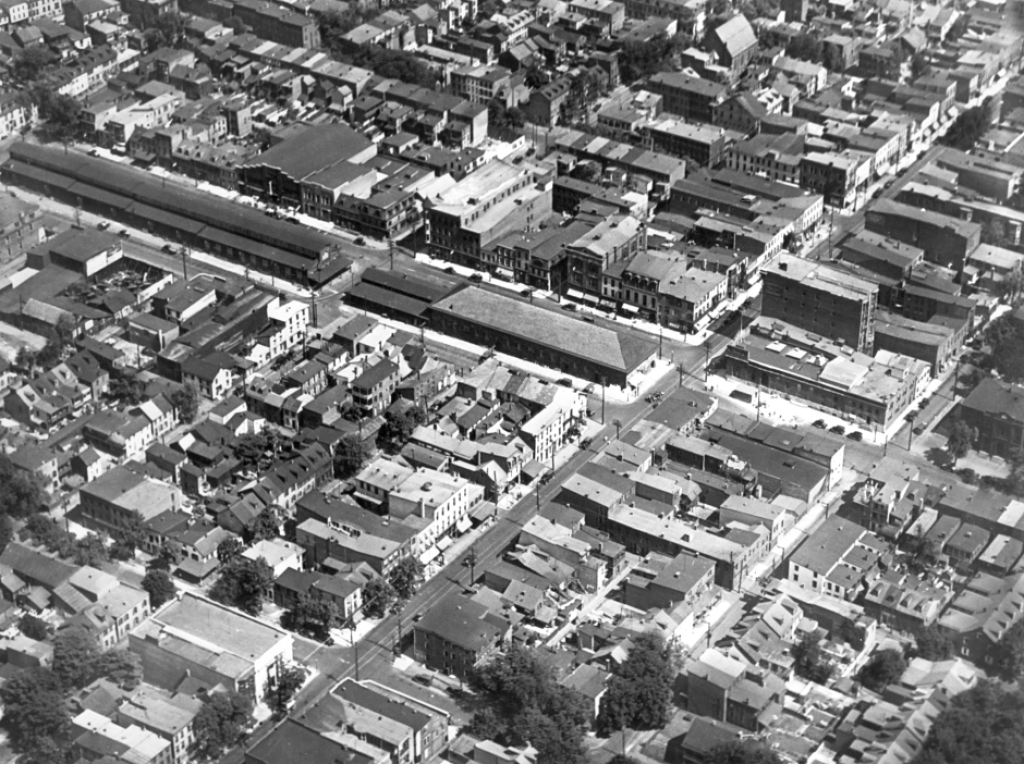
Aerial view of the Broad Street Market neighborhood, believed to have been taken in the 1920s.

In the plaza of Harrisburg’s Broad Street Market, between the eastern building, made of brick, and the western one, made of stone, is an echo of something that used to be.

Years ago, a wooden frame structure stood on this spot, running from the end of the stone market house to Capital Street, where trolleys passed by throughout the day. Built in 1869, the wooden market, as the building was sometimes called, witnessed a century of growth and decline: the erection of the brick market house, in the 1870s and ‘80s; the swelling of the market’s occupancy through the 1920s, to hundreds of vendors; the emptying out of the inner city and the rise of the supermarket, the suburb and the automobile.

The wooden market was demolished in 1979, but you can still see its image preserved in the plaza stones. In the 1990s, as part of a $2.5 million renovation, a design team came up with a way to, in the words of Bret Peters, a Harrisburg architect and the project’s manager, bring back the wooden building “as a memory.” Darker stones correspond to the wooden market’s posts, while lighter ones trace its outline; raised ledges in the plaza correspond to the original market’s bays. At the end of one row of ledges, a ladder of dark granite, like a trilobite fossil, records the location of one of the old structure’s staircases. (On top of each ledge is another kind of fossil—a concrete cast derived from photos of a cornfield after harvesting.)

On a Friday in late January, the city’s new mayor, Eric Papenfuse, passed through this plaza on the way to lunch, tailed by a couple of reporters. Moments before, at a podium in the brick building, he had introduced the members of his Broad Street Market Task Force, assembled to address what he called the market’s “unacceptable” status quo. The previous month, in an appearance as mayor-elect before the PennLive editorial board, Papenfuse had critiqued a “crisis of the market’s own making”: hemorrhaged vendors, a stagnant board of directors, a complex dual-management structure and repeated battles with the city over maintenance of the buildings. Now, as one of his first undertakings as mayor, he was making good on a pledge to turn things around.

“There’s a lot positive going on at the market,” Papenfuse said from the podium, flanked by members of the task force. “That’s not what this is about. This is about saying that the market could be even more. It could be much greater than it is. It could have a role in fundamentally helping the economic development for the entire city of Harrisburg.” He suggested that, under proper management, the market could become a vehicle for developing “not just the city, but also the neighborhood in which the market is situated.” As he spoke, a handful of Amish vendors at Fisher’s Bakery, in aprons and bonnets, stood behind display cases of ice cream and shoo-fly pies, watching and talking among themselves.

The task force is not the only recent effort to overhaul the market’s operations. As Papenfuse took his seat in the stone building, over a bowl of Vietnamese noodle soup, he was joined by Josh Kesler, a market vendor and a local developer. Last July, Kesler and a business partner opened Harvest, a stand selling produce and other goods with a focus on locally sourced food. More recently, he bought the Stokes-Millworks building across the street from the market, with plans to convert it to a restaurant and studio space for artists.

Kesler is now a member of the mayor’s task force, but, in the fall, he helped launch the Broad Street Market Alliance, a separate and ongoing initiative focused on reform. Like Papenfuse, the Alliance critiqued the market’s management structure, under which a for-profit manager, the Broad Street Market Corporation, is accountable to its sole shareholder, a preservation non-profit called Historic Harrisburg Association. (This structure is what Papenfuse referred to as “dual management.”) The Alliance proposal, dated Oct. 10, recommended replacing this structure with a new non-profit, governed by a board representing the market’s key constituents: vendors, city government, residents and the “farm and market communities at large.”

Neither the Alliance proposal nor Papenfuse’s task force announcement made any reference to Bret Peters, the architect who oversaw the 1990s renovation. This was a noteworthy omission, given that the city, at the time of that renovation, commissioned and paid Peters to come up with a master plan for the market’s long-term success. The strategy drew upon input from several experts, including an acclaimed consultant on farmers markets, David K. O’Neil, who oversaw the turnaround of Philadelphia’s Reading Terminal Market in the 1980s. Like Papenfuse, the plan expressed a vision of the market as an anchor for development in the surrounding neighborhoods.

Peters updated his plan in 2010, when the market revisited the need for a long-term strategy. The new plan includes an ambitious expansion of the stone building’s hours, so that, in Peters’ words, it becomes a “seven-day engine for the whole market.” It also includes a strong emphasis on filling market stalls with abundant, high-quality produce, which the original plan’s research had shown to be the keystone of any successful farmers market.

In the weeks since the January press conference, the task force has started addressing questions about the market’s future. Will it also learn from the market’s past?

—– 

This is a biased story about the Broad Street Market. I want the Broad Street Market to succeed. I want there to continue to be a place in the middle of Harrisburg where, in a single lap of a 140-odd-year-old building, I can buy smoked gouda, grapes, Brussels sprouts and mushrooms, a loaf of fresh bread and a quart of fresh milk, a barbecue sandwich and a bouquet of flowers, and a tub of sweet pickle slices packed so tight that the lid swells like the skin of a balloon.

I can get these things, minus the historic architecture, at my supermarket across the river, but, there, I have to battle with careening grocery carts, along with what you might call the abstracted quality of supermarket commerce. At the grocery store, you don’t buy things from somebody; you just buy things. I like that, at the market, the person accountable for the goods I’m buying is within arm’s reach. Like the old men shooting the breeze over coffee at a table on the market floor, it makes me feel like part of a social enterprise. As D. H. Lawrence wrote in the 1920s, in his essay about the bustling weekly market of Oaxaca, Mexico, the market is a place to “buy and to sell, but above all, to commingle.”

In an earlier era, the Broad Street Market fulfilled this role spectacularly. Oral histories in the Highmark Blue Shield Living Legacy Series, a digital archive of interviews from 2010, portray the market as the anchor of a vibrant commercial district. In one interview, Joseph H. Kleinfelter, a former president judge of Dauphin County who died in 2011, recalled that, within two or three blocks of the market, “you could find just about anything you wanted”: a drugstore, a jewelry store, a movie theater, a furniture store, a candy shop, a dentist, an eye doctor and, among others, “a bar about every third or fourth establishment.”

The market was also an anchor in another sense—its weekly rhythms served as a kind of cultural and generational glue. David Wise, a former president of the Summit Terrace Neighborhood Association, recalled dragging a wagon on Saturdays from his Steelton home to offer chauffeur services to shoppers: “[W]e would put up our finger indicating to the visitor that we would like to carry her basket in the market…we made good money there.” Wise, who was born in 1923, is African-American; Kleinfelter, who was white, and born 15 years later, had much the same childhood experience. “We would park our wagons there along the curb outside the house,” Kleinfelter recalled. “‘Waiting for a haul,’ we called it.”

The Broad Street Market remains a community anchor today, but, by any measure, there’s a good deal less commingling than there used to be. As late as 1960, the market was home to around 250 vendors. Depending on how you count them, there are now around 23. To a large extent, the market’s fortunes have mirrored the city’s—especially in recent years, when the market, like the city, seemed stuck in a state of unending crisis. The market has gone through five managers in four years. It has closed multiple times over health violations, most recently in the summer of 2012. Last year, someone broke into the market and robbed the ATM machine. Because of the high cost of liability insurance, the market subsequently went without an ATM, to the frustration of customers and vendors.

“I have customers every day who ask about it,” David Lapp, the owner of the market’s Green Ridge Acres stand, told me. “A farmers market has to have an ATM.”

When you look at an aerial photo of Midtown from the 1920s, with the market lying in the middle of a grid crammed with businesses and homes, it’s not hard to grasp the reason for the decline. In the photo, just north of the market, is a series of awnings along 3rd Street; the area is now an empty field.

The more difficult question is why, when the city tried to jump-start the market 20 years ago, the revival didn’t take hold. What does it take for an urban market to thrive?

—– 

Around the time of the renovations in the mid-‘90s, the city, under the leadership of former Mayor Stephen Reed, sought proposals to take over the market’s management. Since 1974, the market’s operations had been in the control of a municipal authority, apparently with unsatisfactory results. In a July 11, 1995 memo to City Council, Reed expressed his displeasure with the existing arrangement. “As we know, the Market has been operating at a loss for years and therefore subsidized by the City,” he wrote. He listed three possible courses of action: close and sell the market, continue subsidizing its operations, or “undertake an extensive historic rehabilitation, coupled with upgraded product and operational policies, and institute a daily, on-going new management and marketing of the Market, with the Market required to be on a self-supporting basis.”

If those choices seem weighted, it’s because the city, in addition to having long since selected the latter option, had already selected a new manager—Historic Harrisburg Association. At the time, HHA was experiencing a surge in prestige and activity. In 1992, the organization had appointed David Morrison, a former executive assistant in the Thornburgh administration, as its first full-time executive director. Under Morrison’s leadership, HHA’s income and base of supporters had swelled; in 1993, the organization relocated to a new headquarters, in the old Pennsylvania National Bank building, across from the market on 3rd Street. “We didn’t want to be in center city, in a professional building,” Morrison told me. “Midtown was where the storefronts are.”

Morrison said that, in large part, the idea of HHA assuming management of the market emerged through conversations with the design team for the renovations, including the market consultant, David O’Neil.

“David specifically said to me, ‘You know, Historic Harrisburg would be ideal. You’re right across the street, you’re an established organization, this fits with your mission, you’ve got volunteers, you’ve got some momentum to get something going.’ And we were kind of looking for more to do at the time.”

O’Neil, when I spoke to him, told me much the same thing. “The fact that they were right there—they had a civic interest, plus an organizational interest. They were invested in the neighborhood, and had a lot of volunteers and a lot of contacts. It put them in very good stead.”

Peters also encouraged Morrison, at least initially. In January of 1994, the pair met at Jeffrey’s Parkside Café at the top of State Street. According to Peters, over dinner and drinks, Morrison expressed a strong interest in HHA’s involvement in the market’s future. Though Morrison’s tone struck him as “brazen,” Peters agreed that HHA could be a perfect fit for the market’s new management. But he advised Morrison that HHA should change its charter and become a community development corporation, or CDC, a legal designation that provides eligibility for various funding streams. (Morrison says he doesn’t remember the meeting, though he does recall discussions about a CDC that “never went anywhere,” in part because of HHA’s personnel limitations.)

As the months progressed, though, Peters felt that he and his team’s plan for the market were increasingly edged out of the frame. On March 7, he received a stop-work order from the city. A couple of weeks later, he was told to re-start the design, but with the scope of work diminished. In particular, though the city wanted to keep Peters’ architectural work on the buildings, it wanted his team to stop developing strategies for market operations—things like desired vendor mix, design guidelines for vendors’ stalls and marketing strategies.

It’s not clear why the city changed course, though some amount of vendor resistance seems to have been involved. That winter, the city began presenting its plans to the market’s existing vendors. One of the plan’s suggestions, based on recommendations from O’Neil, was that the market should place a high priority on fresh produce vendors, which typically drive the most traffic, and a low priority on non-food vendors, which drive the least. It so happened that, in the Broad Street Market, this suggestion wound up being interpreted along racial lines. Rafiyqa Muhammad, who had owned her stand, Creations of Family Muhammad, since the early 1980s, said that she and other vendors sensed a plan to “move black vendors out to make way for white vendors.”

“They felt our stands were not high-end enough,” Muhammad, whose own stand sold African clothes, incense, oils and herbs, told me. On one occasion, her husband returned from a vendor meeting and told her someone had said they didn’t want “none of that black stuff at the market.” When I asked for someone who could corroborate this, she gave me the name of Karen Hasan, another vendor, whose stand sold clothing and jewelry. Hasan said she didn’t recall any explicitly racial language, but that she, too, felt that “everybody who wasn’t white” was being asked to leave. Muhammad and other vendors circulated a protest petition and appeared before City Council; ultimately, they secured a pledge that all the existing vendors would be allowed to stay.

When I asked O’Neil about this, he said that the charge of racism was “ridiculous.” “Markets are best tenanted by local people,” he said. “The more diverse, the better.” He suggested that, perhaps, the vendors who weren’t selling food felt threatened by the promised changes. One of the duties of good management, he added, is to turn down the abundance of non-food applicants. “People selling non-food are relying on traffic that is food-driven,” he said.

“The city, in my mind, panicked,” Peters told me. “They decided to spend all the money on the building and didn’t do anything about the tenants.” In his binder, he has a copy of HHA’s initial management proposal, dated Sept. 30, 1994. Several pages in, under a section about the planned capital improvements, HHA expresses a wish “to collaborate with the City in a prompt review and analysis” of the master plan, “to ascertain if there are any features of the plan which merit change or reconsideration.” On top of Peters’ copy of the proposal is a sticky note, addressed to him and signed by David Morrison: “Our final proposal for your information,” it says. “Thanks for your encouragement and advice.”

—— 

On Sept. 12, 1996, the Broad Street Market launched a three-week long festival to celebrate its grand reopening. An article in the Patriot catalogued the renovations. In addition to the new plaza, the buildings had new doors, windows and lighting, a huge backlit circular sign on the roof, facing down Verbeke Street, and, on the perimeter, colored banners on 30-foot steel poles and fold-down tables for rent by outdoor vendors. The article quotes liberally from Morrison, who, at one point, describes the mayor’s hope that the market will be part of the city’s revitalization: “The mayor’s thinking is that just restoring a white elephant won’t do us any good,” he is quoted as saying. “It’s got to thrive.”

For a time, the market did thrive. Barbara Skelly, who served as market manager from 1997 to 2005, said that, in the years following the renovation, the market saw steady improvement under the guidance of an energized, cohesive board. “I was excited, and they were excited,” she said.

The prior management had grown lax about collecting rent, and one of Skelly’s first directives was to set up payment plans to get all vendors up to date. She orchestrated a deep clean of the stone building’s interior, purchased new tables and chairs, recruited vendors to sell on the outdoor tables and bought new custodial equipment. She also installed ATM machines, which she said were “like gravy”—they increased business for the stands, in addition to bringing in fees for the corporation. In her first year, the market broke even. In the years that followed, it even turned a profit. Skelly recalls giving a check to Mayor Reed on two separate occasions. “I think it was, like, $3,000,” she said. “And the mayor said, ‘I knew it. I knew it could be done.’”

After the initial burst of activity, however, the market once again found itself in decline. No one is exactly sure when the trouble started. A photograph from the summer of 2001 shows a bustling stone market, with vendors occupying both the center and the periphery of the building, and customers crowding the aisles. Skelly thinks the dip began a few months later, following the Sept. 11 terrorist attacks; others have attributed it to a loss of customers to the West Shore Farmers’ Market, which reopened in 2000 after its previous location burned down.

Recently, some observers have suggested that the city’s management agreement with HHA can partly explain the market’s decline. Part of HHA’s proposal included the idea of a philanthropic arm, called Friends of the Broad Street Market, that would help fund improvements through “annual giving” campaigns. Though HHA did secure occasional contributions, according to Morrison, the Friends program never materialized. In later years, as HHA’s own fundraising momentum stalled, it’s possible that its association with the market became more burdensome than useful.

“You could get a lot of people to support a ‘Friends of the Broad Street Market,’ something like that, a charity,” Gregg Fetterman, who served as chairman of the market board from 2007 to 2010, told me. “But the subset of people who would support HHA is a lot less than that. So it was just incompatible. Two completely different organizations. Two completely different missions.”

Peters thinks the problem was that the management was not so much structurally inappropriate as simply lax. “There was such a level of bizarre negligence, of basic issues like merchandizing,” he said. “Is the collection of people in this market a collection of vendors that the public is going to respond to, by coming here and buying stuff?”

In his view, the market has also let itself be dominated by concerns other than the most basic one: selling good food. “There’ve been these other layers of agenda that people have been wanting to get out of it…They use this thing as a vehicle for personal gain and self-importance, rather than using it as a place to sell and distribute first-quality food to the citizens of Harrisburg, Pennsylvania.”

Morrison attributes any decline to factors outside management’s control. I asked him, at one point, if he thought HHA had been a good steward of the market. “As the circumstances have evolved, yes,” he said. “Sure. I think that the system that we created worked very well, really until the time that we decided that it was time to separate it.” He acknowledged that there might have been a period in the 2000s “where the stewardship was a little nebulous,” but suggested that was because the market’s own leadership “was increasingly being trusted to do things on its own and wasn’t looking for HHA to provide more stewardship.”

—–           

In 2009, the market revisited Peters’ plan. That summer, a group including Peters, several of the market’s board members, and an urban planner for the city met one evening in the stone building to discuss the market’s future. The market was understaffed, due to funding shortfalls, and was $70,000 in debt from unpaid heating bills. Fetterman, then chairman of the board, warned of an impending major expense: the market would need to replace its heating system, because the provider was planning to abandon the steam line before the upcoming winter.

The group also discussed the market’s long-term vision. At some point, Peters produced a copy of the master plan from the mid-‘90s. It was the first time most of the group had seen it, including Fetterman. Peters explained that the foundations of the plan were even stronger than before, in part because of the presence of HACC on Reily Street, which provided a second Midtown anchor and an additional source of foot traffic. (Muhammad, who was also in attendance, and who objected to a perceived criticism of the neighborhood north of Reily, told me she raised her hand and said, “Excuse me, but there are families there.”)

In the months after the meeting, Fetterman, along with several other board members, began looking for ways to incorporate Peters’ expertise into the planning process. “Bret knew more about the market than anyone,” Fetterman told me.

Initially, they invited Peters to join the board, but he declined. Instead, he sent them a proposal to create an “architect of the market”—retaining him to update the master plan and to address building and design problems as they arose. “They didn’t have any money,” Peters told me. “I said, ‘I understand. But you need what I do.’” In particular, to be eligible for various forms of funding, the market needed a long-term business strategy. Ultimately, Peters agreed to a deferred-compensation contract, agreeing not to be paid until the market secured its funds. He would, however, require what he called a “token payment” of $500 per month.

In the meantime, the market’s financial situation plummeted further. In the course of a year, the market lost its manager, business manager and treasurer. The heating system, which had not been replaced, failed that winter, costing the market another $70,000 in repairs and in bills for excessive use. In February, the state Department of Agriculture inspected the market and shut it down, citing both the detection of rodents and the failure of the market’s hot water supply. This cost the market another $30,000 in lost rent, out of an annual budget of around $300,000. Board members assumed a greater role in operational duties; on several occasions, Fetterman used his own money to pay the market’s bills.

In the summer of 2010, Fetterman petitioned the city to reimburse the Broad Street Market Corporation for amounts spent maintaining the facilities. For years, he had been insisting that the management agreement was explicit about the city’s obligations: while the corporation was charged with “routine maintenance,” the city, which owned the buildings themselves, was responsible for major repairs. Yet the city’s response was to deny the market funding—not only declining to reimburse repairs, but also withholding previously awarded grant funds, demanding that the market first produce financial documents and a business plan. Fetterman turned to Peters, who produced a draft of a business strategy so the city would release the money.

That 15-page document starts from the premise that, because of the city’s financial difficulties, in the long term the market ought to plan to fund its own maintenance needs. “2011 must be a year of significant change for the market,” it says. The plan goes on to outline a strategy for increasing revenues, primarily by aggressively pursuing high-quality vendors of prepared and specialty foods. These vendors would occupy a reconfigured stone market, whose hours would be expanded to seven days per week; the brick building’s hours and occupants would continue unchanged. The plan also notes that, in past market practice, individual vendors were “encouraged to negotiate their position” without regard for the success of the market at large. To remedy this, the plan recommends “regular, structured communication” between management and vendors, including a leasing manual with rules for stand design and maintenance.

In the months that followed the drafting of the plan, however, board members began to question the market’s commitment to Peters. In late 2010, Alan Kennedy-Shaffer, a new board member, became concerned that Peters’ continuing work on the market was creating bills the market couldn’t afford. “The contract itself was a ballooning payment, where it had a huge potential liability for the market down the road, for services that were not clear and were never provided,” Kennedy-Shaffer told me. He then discovered that Fetterman had signed the Peters contract without getting board approval. Fetterman acknowledged this, but said it was a procedural oversight—the board’s wish to contract with Peters, he said, had never been in doubt. Nonetheless, Kennedy-Shaffer led a successful effort to have the board rescind and repudiate the agreement.

To this day, Fetterman remains mystified as to why the board refused to reconsider the contract with Peters. Peters “has done more work for this market than anyone in the past 10 years,” he told me. He said Peters “had always been open, like, ‘Fine, let’s revisit the contract, let’s do it.’ And no one was ever willing to say, ‘Here’s why I don’t like the contract and here’s what it needs to be.’ It was just dead. It was done.” (Last February, Peters sued the corporation for payment for his services, and the matter is pending litigation.)

In Kennedy-Shaffer’s telling, the dismissal of the Peters plan was largely about insulating the market from a financial liability. But Jonathan Bowser, who joined the board in the midst of the dispute, has said that, in addition to the legal and financial concerns, board members also disagreed with Peters about the plan’s “target market.” “It was more focused on being a regional market that wanted to be more of a tourist attraction,” he said. Before pursuing that strategy, he added, he “needed more confirmation from the community that that’s what they wanted.”

—– 

On Thursday, March 20, at 6 p.m., the task force held its first public meeting. It took place in the stone building, where more than 100 chairs had been set out, facing a couple of tables for task force members, which flanked a projector screen. Gradually, the crowd swelled until the chairs were nearly at capacity. Another 70 or so people stood at the back and along the sides.

As members of the public filed in, a man from the Pennsylvania Downtown Center, whose president, Bill Fontana, is one of the task force members, handed out 100 remote clickers. Their purpose was to allow the public to take a poll on the market and see the results in real time.

Fontana took to the microphone and explained that Mayor Papenfuse had charged the task force with “looking at the future,” rather than dredging up the past. One of the things he’d learned in his career, he said, was that it’s “very easy to rehash what happened.” “If you spend all your energy on these kinds of efforts, you never advance to the next level,” he said.The task force’s desire to leave behind the past seems largely shared by the market’s current board. Both Fetterman and Bowser speak of the market having survived a “perfect storm” of challenges.

“I think we’re weathering that storm,” Bowser told me. “I think people would probably want things to happen a lot sooner than they are, and I understand that completely, me being number one on that list. But the reality is that where we came from, probably being a month to weeks away from being insolvent, to where we’re at today, where we’re showing a monthly surplus as far as operations, I think is commendable, for not just me but for the entire board.”

Vendors, too, seem eager to move on. I spoke with more than a dozen vendors, many of whom expressed the same handful of sentiments—that the market was headed in the right direction, that it wouldn’t help to focus on the negative, that things would get better, but not overnight.

“Leave back what’s back and move ahead,” David Lapp, from Green Ridge Acres, told me. Last December, Lapp, along with Leon Glick, the owner of Two Brothers’ BBQ, were elected to serve as vendor representatives on the market board, where they hope to provide a voice for vendor concerns. When we spoke, they had only attended one meeting, which Lapp said was productive, if a bit too short. “We didn’t cover everything we should’ve,” he said.

At the public meeting in March, the task force polled the audience on a variety of topics relating to the market’s future. Fontana would read a question from the screen; the audience would vote on the remotes, and a few seconds later a bar graph would appear with the percentages. The sample pool had a fair number of regular shoppers (38 percent coming once or twice a week, 35 percent two to three times per month), who came primarily for groceries (72 percent). One question asked whether they thought market vendors should sell food only, or “food and crafts.” Two-thirds voted “food only.”

As I watched the votes, I wondered how useful they would be. We have examples elsewhere of markets that work. The city already paid a team of professionals to tell us that, above all else, people will go to a market to buy fresh food; 20 years later, they’re saying the same thing, with 20 more years of evidence behind them. We can also guess, from past experience, that energetic, consistent management is part of the formula. Regardless of what the community says it wants, won’t a successful plan for the market have to incorporate these things?

When the survey was over, the meeting ended, but much of the audience stayed on to keep talking about what the market could be. During the meeting, topics of race and class had been invoked, and, as the audience split up into circles of chairs, they remained part of the conversation. I watched people in the center of the dark market hall, engrossed in discussion, and thought about something Peters had mentioned, about markets being the “ultimate de-militarized zone.”

“All these other barriers go down when there’s food,” he said. “Harrisburg needs that very badly. And the market doesn’t become the community’s heart and soul when you put community people in charge of it. It becomes the community’s heart and soul when it’s got great food.”


Continue Reading