Tag Archives: Gloria Martin-Roberts

Harrisburg hires interim housing director, engineer, filling vacancies

Gloria Martin-Roberts. Photo courtesy of the City of Harrisburg.

Harrisburg has two new top officials, replacing recently departed city employees. 

City Communications Director Matt Maisel told TheBurg that Building and Housing Development and Economic Development Department Director Dennise Hill has left her position and that Gloria Martin-Roberts, a former city council president, has become the interim director. 

Additionally, Harrisburg recently hired Joel Seiders as the City Engineer, filling a position that was left vacant when former engineer Dan Snow departed the city in March. 

Martin-Roberts started as the interim director of the city’s housing and economic development department on Monday and will retain the seat until Harrisburg hires a new director, she said. In her role, she will help administer federal American Rescue Plan Act (ARPA) funding for affordable housing projects, as well as federal Community Development Block Grant (CDBG) funds.

Hill, whose last day in her role was last week, served as the director since early 2022 and as the interim director before that. 

Martin-Roberts previously served as a Harrisburg City Council member for eight years and as council president for two years. She has also held positions as the director of prevention in the state’s Department of Drug and Alcohol Programs, the director of preventative health programs in the state’s Department of Health, the chief operating officer at Hamilton Health Center and as a workforce development and drug and alcohol consultant.  

“Building and housing and economic development are things I’ve been consistently involved in,” Martin-Roberts told TheBurg. “These were major priorities for me.” 

Seiders, a Perry County native, began as city engineer on May 20. According to Seider’s LinkedIn profile, he has worked as a PA bridge manager for Camp Hill-based Volkert, Inc., as a civil engineer consultant for the state’s Department of Conservation and Natural Resources and as a Civil Engineer Consultant for PennDOT, among other positions.  

When reached by phone, Seiders said that he took the position, hoping to be able to make a difference in the city and to bring together his various engineering experiences and skills into one role. His priority is to continue ongoing road projects, as well as promote additional safety improvements, he said.

Hill, the former housing department head for the city, became the most recent Harrisburg official to resign in recent months, following the departure of Snow and the announcement from city Business Administrator Dan Hartman that his last day would be on June 7.  

According to Maisel, the business administrator job has not yet been posted online, but Mayor Wanda WIlliams is in discussion with interested candidates.

Story was updated to include comments from Joel Seiders.

If you like what we do, please support our work. Become a Friend of TheBurg! 

Continue Reading

Dauphin County Library System names new director to lead operations

Ryan McCrory

The Dauphin County Library System has named Ryan McCrory as its new executive director.

McCrory holds an MLIS degree from Clarion University and has over 25 years of library experience, according to DCLS. He began in his new position on Monday.

“I am extremely excited to learn and absorb all of what makes DCLS unique,’’ McCrory said, in a statement. “Over the next few months, as I become familiar with the people and places that we serve, I will get to see how I fit in with that and how I can help carry us into what is possible.”

McCrory served as executive director of the Lititz Public Library for the last five years. Previously, he held key posts for the Boone Area Library in Birdsboro, Pa., and for the Seattle Public Library, according to his LinkedIn page.

“Ryan brings the height and breadth of expertise, emotional intelligence and integrity that the Dauphin County Library System needs in a leader,” said Yvette Davis, president of the DCLS board of trustees. “Having served in many roles integral to operating a public library, Ryan will not only be a support to our staff, he will be an extremely effective administrator with a solid understanding of the day-to-day systems required to build and maintain a strong organization.”

McCrory replaces Karen Cullings, who retired from DCLS last September following a 30-year career with the library system.

“We found Mr. McCrory to be most in line with the vision of the board of trustees,” said Gloria Martin-Roberts, chair of the DCLS board personnel search committee. “He possesses professional skills and competency in library management that eliminates a lengthy learning curve.”

If you like what we do, please support our work. Become a Friend of TheBurg!

Continue Reading

Harrisburg community leaders recognized through Riverfront Park tree planting

IIPT Harrisburg Peace Promenade officials and honorees in Exemplar’s Grove

Behind three new trees planted in Riverfront Park are three stories of Harrisburg community leaders. 

At a ceremony on Friday, the International Institute for Peace through Tourism (IIPT) Harrisburg Peace Promenade dedicated the trees in honor of community activists, artists and religious leaders. 

“Making history matter is our thing,” said Lenwood Sloan, director of the Commonwealth Monument Project and IIPT.  

The new trees were planted in Exemplar’s Grove, a portion of Riverfront Park near Verbeke Street, which includes several historical monuments, commemorative benches and 12 trees with plaques that recognize significant past and present Harrisburg area community members.  

On Friday, Sloan and other local officials recognized the new “exemplars of peace,” including the late Esther Popel, a notable Black Harrisburg poet, Gloria Martin Roberts, a former Harrisburg City Council president and Rev. Trey DuPont, pastor of Greater Zion Missionary Baptist Church.  

A maple tree and two gingko trees were planted in the grove in their honor. 

“I’m going to continue to do my work. I get my joy when I know I’m able to help the least of these,” Martin Roberts said.  

Additionally, officials at the ceremony dedicated Exemplar’s Grove in honor of Naomi King, Dr. Martin Luther King Jr.’s sister-in-law, who passed away in March and visited Harrisburg and designated the city as part of the IIPT at a ceremony in 2018.

Not only does Sloan hope to beautify the park with the tree plantings, but he also hopes that the monuments provide a sense of pride to the community as people see the names of leaders working to foster peace and unity in Harrisburg.  

“We have a lot here in Harrisburg,” he said. “We are making history mean something and keeping the spirit.” 

Additional trees honor the following Harrisburg leaders: 

  • Peggy Grove – Change Agent 
  • John and Anne Marie Judson – Thought Leaders  
  • Momin and Mahadmodra Bhatti  – Rising Inspiration 
  • K. Leroy Irvis  – Thought Leader 
  • Homer Floyd – Living Legend 
  • Dr. George and Mrs. Hette Love – Thought Leaders 
  • Judge Janeane Turgeon – Living Legend 
  • Rabbi Ronald Muroff – Thought Leader 
  • Maude Coleman – Change Agent (Yvonne Hollins – Steward) 

To learn more about the IIPT Harrisburg Peace Promenade, click here. 

Support quality local journalism. Become a Friend of TheBurg! 

Continue Reading

Grant to support diverse city businesses awarded to Harrisburg chamber, following disparity study

Harrisburg skyline (file photo)

A locally awarded grant will seek to increase contracting opportunities for minority-owned businesses in Harrisburg.

Impact Harrisburg has given The Harrisburg Regional Chamber & CREDC a $125,000 grant to implement recommendations from a disparity study the city completed.

In June 2022, Harrisburg launched a survey to help identify and develop a list of minority-, women-, disabled-, veteran- and LGBTQ-owned businesses in the city. The city, in partnership with nonprofit Impact Harrisburg, hired Econsult Solutions, Inc. to compare the availability of minority-owned businesses to how often they are used for contracting opportunities in the city.

The disparity study, completed in October 2022, also offered suggestions on how to better support diverse businesses. Recommendations included initiatives like creating a unified diverse supplier directory, hosting forums on the procurement process and holding networking events.

The grant that the chamber received is aimed at helping advance these efforts.

Grant funding will be used specifically by the chamber’s Capital Region Economic Development Corporation (CREDC) to support local businesses as they launch, develop and expand. The organization will also work to partner with the communities addressed in the study and help provide business training.

“We are proud and excited to work with Impact Harrisburg on their mission to provide all businesses with opportunities to succeed in the city of Harrisburg,” said chamber President and CEO Ryan Unger, in a release. “Our core values of being inclusive and collaborative are evident in this partnership. Harrisburg is a great place to live and work and we want to help everyone have the chance to thrive here.”

According to the release, Impact Harrisburg chose to award the grant to CREDC based on the organization’s experience providing businesses with economic resources.

“Our partnership with CREDC is an outgrowth of the recognition and concern identified within the Harrisburg Strong Plan, and Impact Harrisburg’s direct experience, that the city has lagged behind in creating economic development opportunities and growth across the diverse demographic spectrum that comprises the City,” said Impact Harrisburg Chairman Gloria Martin Roberts.


For more information about the Harrisburg Regional Chamber & CREDC, visit their website. To learn more about Impact Harrisburg, visit their website.


If you like what we do, please support our work. Become a Friend of TheBurg!  

Continue Reading

A Lawyer’s Life: Corky Goldstein has handled some of the highest-profile criminal cases in Harrisburg. After 50-plus years, he’s finally putting down his briefcase.

Corky Goldstein

Stephayne McClure-Potts and her husband Michael waited until after 5 o’clock, using the back door to avoid the throngs of news reporters camped outside.

They knew Corky Goldstein only by reputation—a pint-sized lawyer who stood up for people in trouble. He was active in their Jewish community and often took on criminal defendants whose cases seemed hopeless and who had no ability to pay him.

For years, the couple looked after a young Ukrainian immigrant named Artur Samarin, enrolled him in the local high school and secured welfare benefits to help him establish a new life. He became their surrogate son, adopting the name Asher Potts.

The problem: Artur was four years older than he let on, a fact that meant his dalliances with his classmates constituted sexual assault and which left his adoptive parents open to criminal prosecution.

“When this all hit, we needed someone to protect us,” McClure-Potts said. “And real fast.”

In the relative solitude of Corky’s Harrisburg office, the veteran attorney walked the couple through his usual debriefing: They needed to tell him everything—even the uncomfortable facts that made them unsympathetic to a jury—or else he couldn’t defend them. He explained the harsh penalties they faced, empathically, but plainly. Finally, he secured a safehouse they could call home until the media firestorm died down.

Before they departed, he left them with one final instruction.

“Anybody wants to know anything,” McClure-Potts remembers him saying at that first meeting, “they go through me.”

Now, on the eve of his retirement after five decades practicing law, it’s a conversation Corky’s having for possibly the last time. He’s guiding his last few clients through the complicated court system—one, a juvenile accused of sexual assault, and others nearing the final stages of probation or rehabilitation—and assisting younger attorneys.

“I treat clients with the same respect—the way I’d want to be treated—no matter what,” he said. “They’re scared. They’re stressed. And they’re the ones who’ll suffer the penalties.”


Like a Corkscrew

Anyone who’s ever spent any time with Corky is most familiar with the particular renown he’s earned in his hometown. On an ordinary Tuesday night, it takes at least 20 minutes for him to cross the 20 feet of the Subway Café dining room as he stops to greet three or more sets of acquaintances on his way to his table in the far corner.

For each group, he possesses an encyclopedic knowledge of their triumphs and tragedies. Corky soaks up the kinds of details most people forget, and he’s known to pick up conversations weeks later, right where he left off. The waitress, he also knows—from her previous job—and he knows the circumstances under which she departed that job, too.

“If you met Corky at a cocktail party, you had to put a time limit on him,” joked longtime Dauphin County DA Ed Marsico, now a Common Pleas judge, who’s known Corky for decades.

His own children often ribbed him for the amount of time it took to run errands across town as he stopped to speak to acquaintances at every stop.

“My dad would give the same respect and time to the check-out lady in the grocery store as he would to the governor of Pennsylvania,” said his daughter, Stacy, now the principal of School of the Future in New York City.

The fast-talking lawyer is a shopworn stereotype, but Corky’s personality is a bit different from the Billy Flynns and Vincent Gambinis of fiction. For him, conversation is more akin to tennis. After one volley—perhaps an anecdote about former Sen. Arlen Specter, for whom he worked as a young prosecutor in the 1960s—he’ll serve up a question to draw his partner deeper into the fray. Then he’ll redirect again to ask the person’s opinion about some recent event. In the process, he learns the intimate details of people’s lives: their hopes, ambitions and regrets.

But Corky doesn’t use the information for his own betterment. Despite his attention to detail and garrulous demeanor, he never seriously pursued a career in politics beyond stints on the Harrisburg school board and Harrisburg City Council in the 1970s and a couple abortive races for judgeships in the early ‘90s.

“There’s not a wedding or a funeral that Corky will not pay his respects at, but there’s no agenda to it,” said William Costopoulos, a friend and fellow defense attorney who’s known him for more than 50 years. “He’s not working the crowd for cases. He just does it.”

Instead, Corky’s curiosity seems rooted in a genuine interest in the lives of others and a desire to see them at their best.

It’s a trait he’s possessed since childhood.

Born and raised at 2617 N. 2nd St., just a few blocks from the home he resides in today, he developed a reputation for his boundless energy and unremitting curiosity from a young age. That’s how his actual name, Herbert, came to be replaced with Corky.

As his mother Evelyn would say: “He’s like a corkscrew. He’s up and down.”

The neighbors took to calling him Cork and then Corky. Based on his father’s advice, he tried to remake himself as “Herb Goldstein” when he left to study pre-law at Penn State University, but no one took his rebranding seriously. For example, he was asked to run for president of his class that first year using his nickname—the same moniker he’d use as president of his fraternity and in the Lion’s Paw Senior Society. Later in life, when newspapers referred to him by his birth name, it only served to confuse readers.

Eventually, he relented, petitioning the court to have his name changed permanently.

“I never felt like a Herbert,” he recalls. “When people called me Herbert, I felt like I didn’t know them. You can’t get everything in life—you just accept it—and I’m fine being Corky.”


Compassion & Grace

The Potts’ criminal case moved through the legal system for years, a chaotic period that left the couple’s finances in shambles. Michael’s health deteriorated, eventually requiring him to get a pacemaker. Stephayne, meanwhile, couldn’t find work despite holding a structural engineering degree.

Besides taking their case pro bono and putting the couple up at a safehouse, he’d meet them at a gas station to fill up their tank or provide them with gift cards to help pay for groceries, Stephayne said.

“He’d say, ‘Oh, I was just given this Giant gift card,’” she remembered. “He’d try to do it so Michael didn’t feel embarrassed—a little white lie to protect his pride.”

It’s the kind of gesture that Corky’s mother taught him at a young age.

When Corky was a child, he remembered his mother coaching him how to help a schoolmate whose family was struggling financially—without making it feel like charity.

“Why don’t you give those to him?” he recalled Evelyn, known as “Goldie” during her time as a Republican state committeewoman, saying to him. “Just say you’re not wearing them anymore, and he can have them if he wants them.”

Despite their party affiliation, the Goldsteins were known as a socially liberal Jewish family who channeled their middle-class privilege into all sorts of charitable activities. At home, Corky’s parents taught him to always look past the distinctions of race, class and even sexual orientation. “We are all in the same boat in life,” his mother often told Corky and his two brothers.

“They were very thoughtful about people,” Corky said. “Maybe that’s because they were Jewish, and they understood persecution. They understood that we, as a family, must be open to all people.”

Corky caught the attention of then-Philadelphia District Attorney Arlen Specter by happenstance during a criminal mock trial, when he was a student at the Penn State Dickinson Law in Carlisle. The leader of the defense team fell ill a few days before the event and Corky, who was president of the student bar association, stepped up to take his place.

Specter offered him a job the next morning.

As time went on as a young criminal prosecutor, however, Corky had a nagging feeling he was on the wrong side of the aisle—despite the close relationship he developed with his mentor, who would become a lifelong friend.

“Sometimes when I was prosecuting people, I felt that we were over-charging them,” Corky said. “We might be charging them with aggravated assault, and I didn’t think it was worth that.”

He brought Specter around to his view of such cases a few times. More often, he didn’t.

But an opportunity to stand on the other side of the aisle came in 1969, when he was asked to set up Dauphin County’s first legal aid office, now known as Mid-Penn Legal Services, as part of a program through President Lyndon B. Johnson’s war on poverty. At the time, poor people had even fewer options to access the courts, particularly in routine civil matters.

The toughest part of the job was earning the trust of those who most needed the help, as Corky and his two staff attorneys—all three of them white men—traversed the community to get the word out about what they were doing.

“Just because it’s there, that doesn’t mean people are coming in,” he said. “They’d been promised so much over the years that they don’t trust you, thinking it’s just window-dressing.”

In addition to building relationships with local Black leaders, the job led to Corky’s first foray into education—setting up programs in local schools to educate students about the law. Meanwhile, law students from Dickinson joined the staff after class and during the summer as the program expanded.

“We went out at night to speak to people directly,” he said, “and, little by little, they began to trust us.”

That, in turn, led to long-running shows on local TV and radio in which he answered the public’s questions about the law and how the courts operated. The programs, which at one point reached an audience of many thousands of listeners, were another form of outreach to people who ordinarily couldn’t afford legal representation—and for whom the American justice system was an intimidating force beyond their comprehension.

When he left legal aid, Gov. Milton Shapp appointed Corky as the state’s chief deputy insurance commissioner and, after that assignment, he went to work as a private defense attorney.

Corky, however, regularly took pro bono work and continued his outreach efforts. Both the Dauphin County and statewide bar associations recognized the work he did on behalf of low-income clients.

“When you’re in private practice, everything costs money, and your client may not have the money to do it,” he said. “That’s why, for me, pro bono is truly the purest sense of being a lawyer.”


No Lost Causes

People who have crossed paths with Corky across six decades of public life in and around Harrisburg describe a figure who’s often funny, sometimes infuriating and always fiercely loyal to the people and the principles he holds dear.

“He will not walk away from you when you’re down,” Costopoulos said.

And he knows firsthand.

In 1976, Costopoulos was arrested and charged with 12 counts of false swearing, perjury and conspiracy related to his defense of accused murderer Dennis Klinger. The charges—alleging Costopoulos conspired to have Klinger lie on the stand—were dropped two years later. In the heat of the moment, Corky was one of a steadfast few who stood behind him, offering to help his friend.

“He was one of the first people who reached out to express his outrage, and I appreciate that to this day,” Costopoulos said. “He wasn’t proactively involved but, emotionally, he was on my side. And when you’re down, that helps.”

Long before the Potts family came knocking, Corky developed a reputation for championing unpopular causes and pitching in to help former rivals.

In 1982, he’d served four years as city solicitor for Harrisburg’s last Republican mayor, Paul “Tim” Doutrich. That year, Doutrich engaged in a highly contentious campaign against an ascendant Democrat, future “mayor for life” Steve Reed. Corky immediately volunteered to help ease the transition for what would be the first of Reed’s seven terms and ultimately became a longtime friend of Reed’s.

Despite their political differences—it would be at least another two decades until Corky officially departed the GOP—the two carried on a personal and professional relationship that lasted the rest of Reed’s life.

“I did not leave the Republican Party,” Corky said. “The party left me. There was no room for a modern Republican anymore, so I became a conservative Democrat.”

In 2009, when Linda Thompson defeated Reed in the Democratic primary on her way to a divisive tenure as mayor, Corky once again stepped up to lend a hand—advising her on public relations matters, serving on her transition team and on a special team assembled to address issues in the school district.

“Corky spends time contributing wherever and whenever he can,” said former council President Gloria Martin-Roberts, another lifelong city resident who’s known Corky for decades. “That’s always been his personality—very kind and very caring.”

Martin-Roberts said that Corky doesn’t pay attention to whichever politician happens to be in charge at a given moment. He’s always there, she said, trying to do what’s best for the city.

And, despite his long history in city government, he brought humility to the Herculean task of trying to stabilize the finances of Harrisburg city schools.

“His style is participatory,” Martin-Roberts said. “He’s a good listener. He’s respectful of the experience and knowledge and commitment of others. He didn’t sit on that board thinking he knew everything because he’s an attorney.”

That’s a trait many of Corky’s colleagues have seen in action.

Precious few criminal cases ever make it to trial—Marsico puts the number at just 7% during his time as district attorney. The typical course of action is that defense attorneys and prosecutors reach a compromise long before that point, pleading to lesser charges on their clients’ behalf.

“He played upon his skills as a people-person,” Marsico says. “Corky used his ability to make friends with everyone in town to work out good deals for his clients. He knew which clients to beg for. If Corky said, ‘This is a good kid, he can turn himself around, please give him a second chance…’ Well, Corky had credibility in those situations.”

Marsico witnessed Corky argue cases both from the vantage point of a prosecutor and as a judge. In all that time, he said, he’s seen a grit in his colleague but also a genuine love and respect for the institution.

Whenever Corky was arguing a case—whether that was in court or behind the scenes, negotiating a plea deal—the prosecutors knew he’d done his homework.

“He’d been a prosecutor and, based on his experience and his knowledge of the law, that gave him the ability to walk into a prosecutor’s office with gravitas,” Marsico said. “That comes with experience . . . and not every lawyer has that.”


Non-Retirement

In a career practicing law that spanned at least 56 years—depending, of course, on when you start the clock—Corky has represented hundreds of people, some of them quite infamous.

There was the Carlisle prostitute accused of murdering a black madam, the honors student accused of plotting a bombing and mass shooting, the NFL player accused of DUI and assault… and the list goes on and on.

So many lives, so many futures, so much hanging in the balance. All of them sat down with Corky for the same frank conversation, and each of them received the same benefit of the doubt.

“People think their life is over,” Corky said. “They’re all over the news and they’ve lost their reputation and they think it’s the end. But I have to tell them—it’s not.”

For Stephayne McClure-Potts, her meeting with Corky came at a time when it felt like her whole world was falling apart. In some important ways, it was.

After years of legal skirmishes, she was ultimately sentenced to five months in federal prison on charges related to Social Security fraud and harboring an illegal alien. She ultimately served three months—in the same prison that once housed Martha Stewart, something McClure-Potts says Corky negotiated for her. Afterward, she spent five months under house arrest.

Her husband, Michael, never faced jail time due to his heart condition. He died about a year ago at age 64.

With their finances in shambles, Corky also negotiated a more reasonable monthly restitution payment—$50 per month—to pay back the welfare money they received on their adoptive son’s behalf.

Today, McClure-Potts ekes out a quiet living far from prying eyes and the media limelight. She’s convinced that, had it not been for Corky’s intervention, she’d still be in prison.

“The day we came to see him, that evening, emotions were very high for us with everything going on,” she recalled. “People were talking treason.”

Through it all—the accusations, the punishments, the tabloids and even a possible Hollywood treatment—Corky stayed by her side.

Every time she applies for a job, McClure-Potts knows that she’s a Google search away from rejection. She still routinely speaks to Corky, and he’s still lending her his steadfast encouragement. That’s helped her weather several fraught years.

“I’m working through my husband’s death now, still grieving,” she said. “Every now and then, I catch a breeze, though, and I just keep moving forward. Time heals all wounds, and I know eventually nobody will even care.”

On the prospect of Corky’s retirement, she chuckles to herself.

“He deserves it, but a lot of people are going to go to jail,” she said. “People doing some crimes better behave themselves.”

Corky’s been plotting a course toward retirement from his law practice for years, gradually resolving his outstanding cases and laying the groundwork for younger colleagues to ease into the stressful work of criminal defense.

He wants to spend more time with Linda, his wife of 50 years, his two daughters, their spouses and his grandchildren. Beyond that, he plans to spend more time in the classroom, teaching students and mentoring young lawyers on the criminal justice system.

But, at every step of the way, he’s also expressed great hesitance to let his life of 70-hour workweeks and after-hours phone calls come to an end.

“I think, at 81, it’s the right time,” he said, from a back table at the Subway Café.

He paused and considered that thought, a cockeyed smile spreading across his face.

“But I don’t think I’m actually going to retire. Not really. I have much more I want to try to accomplish.”


If you like what we do, please support our work. Become a Friend of TheBurg!

Continue Reading

Major Impact: A unique organization finds itself at a crossroads.

Illustration by Rich Hauck

Back in 2013, Harrisburg had a first hint that its future might be better than its recent past.

Late that summer, the state-appointed receiver released a financial recovery plan designed to return some measure of fiscal sanity to the insolvent city.

Sanity came at a high price.

To pay back creditors, Harrisburg had to monetize two of its most valuable assets, the city incinerator and its parking system, to raise almost $400 million. That was the headline news.

Several other important elements were buried deeper in the “Harrisburg Strong” plan. One called for the creation of a new nonprofit, Impact Harrisburg, which would try to right another wrong created by decades of derelict leadership.

In Harrisburg, it wasn’t just borrowed money that financed such extravagances as museum artifacts, a sports stadium and a waste-to-energy experiment. For years, Harrisburg’s core infrastructure was ignored so that funds could be spent on one man’s fantasy of turning the city into a tourist mecca.

As the mayor dreamed and schemed, Harrisburg’s roads and sewers fell apart.

I remember the first time I drove into Harrisburg, off of I-83. The trip up 2nd Street was like the world’s least fun bumper car ride—vehicles meandering all over the wide road, nearly crashing into each other as the lane lines had long disappeared. I thought to myself, “Can’t this city afford some paint?” Turns out, the answer was “no.”

Impact Harrisburg was meant to be a start in repairing the broken capital city, in the most literal sense.

I bring this up now because Impact Harrisburg is at a crossroads. In 2014, the financial recovery plan seeded the nonprofit with $12.3 million, half marked for infrastructure and the other half for economic development—pots of money designed to help the city play catch-up after years of neglect.

Eight years later, those funds have been nearly exhausted.

Recently, I sat down with several Impact Harrisburg officials to reflect back on what’s been done and where the organization goes from here.

Board chair Gloria Martin-Roberts and vice-chair Doug Hill, as well as Executive Director Sheila Dow-Ford, were pleased with the work done so far. They rattled off a long list of achievements—from street repaving to sewer upgrades to grants that helped keep businesses afloat during the pandemic.

I knew about those projects. We’ve reported extensively on them, and I can see some of the roadwork just by looking out my office window.

But others were more under the radar. For instance, about $4.1 million went to fund projects for community groups like the Salvation Army, the Camp Curtin and East Shore YMCAs and Tri-County HDC for housing development. Other monies paid for playground rehabs, software for city workers and, most recently, a disparity study to determine how the city can offer more opportunity for diverse businesses.

For Harrisburg, these funds were critical, as the city has been cut off from the credit markets for over a decade, unable to borrow money. This would stagnate or sink most cities, but Harrisburg has experienced tremendous redevelopment over the past half-dozen years, including major work to main thoroughfares like 2nd, 3rd, 7th and 17th streets.

Much of this was seeded by Impact Harrisburg, which provided direct grants and, perhaps as importantly, attracted matching funds from other sources.

“We are absolutely on fire over meeting our mission and improving the health status of the city,” Martin-Roberts told me. “And, what I mean by health status, I’m talking about infrastructure and economic development because it all impacts on the health status of our city.”

So, where does Impact Harrisburg head from here? That’s the question at hand, as its initial funding has nearly run dry.

In a nutshell, they’d like to stay in business, focused on economic development. Indeed, the city may need assistance in this area, as its economic development director currently serves just one day a week.

“We want to stay active,” Martin-Roberts said. “We want to stay involved.”

To make this happen, Impact Harrisburg will need to find new funds. Hill mentioned several possible sources, including both private donors and city-controlled monies, such as Community Development Block Grant funds and a slice of Harrisburg’s $48 million American Rescue Plan Act funding.

“We are going back to the city and going out to the philanthropic community and saying, ‘Here’s a remarkably unique need and a remarkably unique position that we can fill,’” Hill said.

If its coffers were replenished, Impact Harrisburg could continue its economic development mission. This might include continuing its small-business grant program, its help for minority and disadvantaged businesses and its focus on training, education and identifying additional financial support for young and emerging entrepreneurs.

“The city is not equipped to do that,” Martin-Roberts said. “I’m not casting aspersions against them. They don’t have the people to do it. We can get it done, and we know we can get it done. It just makes for a healthier community.”

Impact Harrisburg was a novel idea born from a profound crisis.

Over the years, this unique nonprofit has proven its value in identifying critical needs and making a visible difference, whether in normal times or in COVID times. I also like that it employs the talents of some remarkable and dedicated people outside of government who want to continue their service to our community.

As I write this, the city is announcing its plan for American Rescue Plan monies. Ultimately, that’s up to the administration and City Council, with public meetings slated for this month. But a strong case can be made for re-equipping Impact Harrisburg, which has a track record of strategically injecting funds where they’re greatly needed.

Lawrance Binda is co-publisher/editor-in-chief of TheBurg.

If you like what we do, please support our work. Become a Friend of TheBurg!

Continue Reading

Impact Harrisburg rolls out new grant program to small businesses in the city

Sheila Dow-Ford and Gloria Martin-Roberts with Impact Harrisburg announce a new round of small business funding.

Through a local grant program, some Harrisburg businesses have a chance at receiving financial support.

Impact Harrisburg is rolling out its “Making an Impact” funding to benefit projects that impact the city economically.

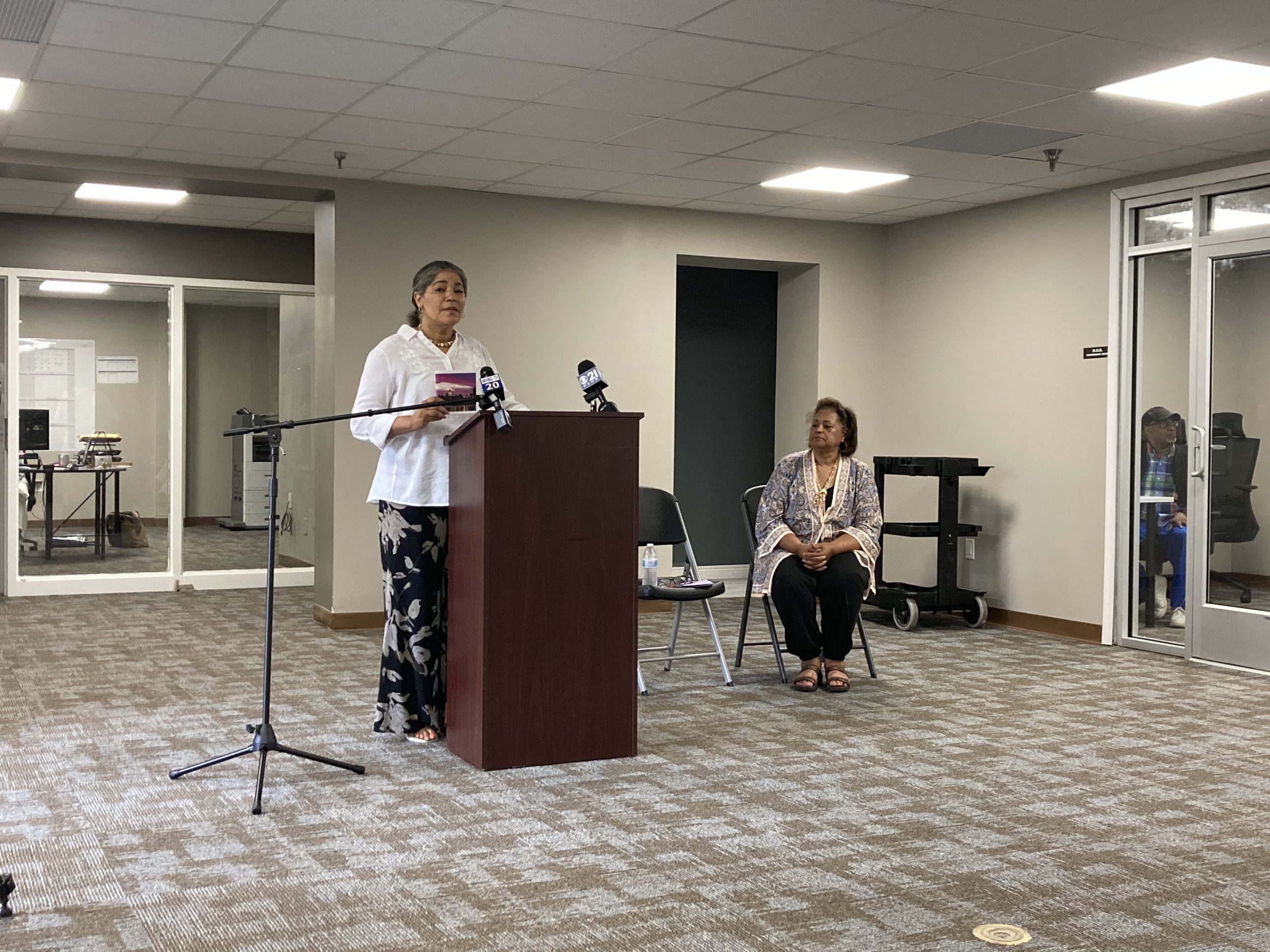
“We can affirm that access to our funding has been a benefit to the economic structure and overall wellbeing of our community,” said Gloria Martin-Roberts, board chair of Impact Harrisburg, at a press conference in the Harrisburg Uptown Building (HUB) on Wednesday.

The program will distribute $300,000 to eligible businesses and nonprofits. Eligible projects include those that wouldn’t have adequate funding otherwise and will be started immediately. Businesses must also contribute a match to the project, financial or otherwise and have annual net revenue of $500,000 or less.

The Impact Harrisburg board plans to focus on assisting minority-owned businesses, Martin-Roberts said.

Applicants may request up to $25,000 for activities such as minor construction, building façade improvements, equipment purchases, furniture and fixture purchases, installation costs and job training, explained Sheila Dow-Ford, executive director of Impact Harrisburg.

In May 2020, Impact Harrisburg, along with the city, distributed around $1.5 million in “Neighborhood Business Stabilization” grant money to 314 small businesses affected by the COVID-19 pandemic. That program allowed businesses to utilize funds for general administrative expenses like rent, mortgage and payroll. This new round of funding cannot be used for those purposes, Dow-Ford said.

Dow-Ford described the “Making an Impact” program as “small, but mighty,” with the possibility to uplift often overlooked organizations in the city.

“This is a good news story in Harrisburg,” she said.

The program application opened on Wednesday and will be available until 5 p.m. on Aug. 2.

Juanita Edrington-Grant of HUB said that they will be applying for the funding and explained the positive experience that they’ve had with Impact Harrisburg previously. TLC Construction & Renovations received a grant from a prior round of funding that allowed them to finish constructing the HUB building.

“I am very grateful for organizations like Impact Harrisburg,” Edrington-Grant said. “It pushed us over our [capital] campaign.”

Impact Harrisburg was created in 2015 as part of the Harrisburg Strong Plan to promote economic development and infrastructure improvement within the city. Dow-Ford said that the organization is nearing the end of its original funding pool of $12.3 million, so its future is uncertain.

For more information, visit Impact Harrisburg’s website.

If you like what we do, please support our work. Become a Friend of TheBurg!

Continue Reading

Mayor’s proposal to hire Martin-Roberts struck down by Harrisburg City Council

A screen shot of City Council’s virtual legislative session on Tuesday.

Council voted against entering into a contract with a former City Council president on Tuesday, with some members charging that the position was a campaign move by Mayor Eric Papenfuse.

The resolution was introduced at last week’s work session, when Papenfuse said he wanted to hire Gloria Martin-Roberts to facilitate communications between the administration and council, the Dauphin County commissioners and the public.

Several Harrisburg officials, including Police Commissioner Thomas Carter, joined Tuesday’s legislative session to express support for Martin-Roberts. But that was not enough to get council on board. Many members did not hold back in expressing their concerns with the resolution.

“This is something that members of council have all asked for and have been constantly told that this is something that wasn’t needed at the time,” council member Westburn Majors said. “It is very convenient, in my opinion, that this is something that is coming at this current time.”

Other council members brought up a similar issue with the timing of the position beginning just months before the 2021 mayoral campaign. Papenfuse is widely expected to run for a third term next year.

“Mayor, you should not have to hire a senior management consultant to repair damaged relationships within your own administration, with the Dauphin County Commissioners or with any other local stakeholders,” council member Danielle Bowers said.

Martin-Roberts, who attended the virtual meeting, responded to the concerns by saying that she would have no involvement in the mayoral election.

“I would think that for those of you that know me well, you know I’m honest and I’m ethical,” Martin-Roberts said. “I’m not in here to do anything dirty. The word ‘cronyism’ was mentioned; I take offense to that.”

However, her efforts to persuade council ultimately failed when members voted against the resolution 4-2, with Council President Wanda Williams and council member Dave Madsen voting in favor. (Council member Ben Allatt was not present.)

To watch past City Council meetings, visit Harrisburg’s YouTube channel.  


Continue Reading

The Week that Was: News and features around Harrisburg

The city is encouraging people to celebrate “Harrisburg Takeout Month” and support local restaurants.

Happy Labor Day weekend! Get ready for some sunny days ahead, but first, catch up on any news you may have missed this week, below.

COVID-19 cases rose again this past week in Pennsylvania. Our reporting found that there were just over 800 new cases each day, compared to last week’s daily average of 622.

Our editor reminisces on the time he was roped into acting as a vampire in his friend’s horror movie. Surprisingly, what he learned through playing the part applies to how we can feel during the pandemic. Read his monthly column, here.

Food and dining is the focus of our September issue of the magazine. Read what our editor has to say about the effect of COVID-19 on the restaurant business, as well as how to support TheBurg.

Harrisburg city council weighs the possibility of hiring former council president Gloria Martin-Roberts as a communications consultant for the city. Our online reporting discusses the reasons why Mayor Eric Papenfuse is advocating for this role.

“Harrisburg Takeout Month” is replacing Harrisburg Restaurant Week this year. The Harrisburg Downtown Improvement District encourages people try a new local restaurant this month from the safety of their home, our reporting finds.

Lead paint in old Harrisburg homes has been poisoning children for years. Our magazine story tells about the local groups trying to combat it and rid the city of the toxin.

The LGBT Center of Central PA opened its new traveling exhibit, “With Open Heart and Open Arms: LGBTQ Cuban Refugees and Our Community’s Response to the Mariel Boatlift.” In our online story, project manager Barry Loveland expresses his hope that the exhibit is an eye-opener for visitors.

Meet Peter Leonard, the visionary behind Little Amps Coffee Roasters, in this month’s magazine story. Find out how he went from barista to chief executive officer, all the while, creating that unique Little Amps vibe we know and love.

Sara Bozich has plenty of Labor Day weekend fun in store. Her weekend recommendations include Harrisburg’s traditional Kipona Festival. This year, the city opted for a virtual format with one day of in-person food trucks and fireworks on Saturday.

The Washington family rediscovered their love of art when they became members of the Art Association of Harrisburg. Now, as part of the association’s Community Exhibition Program, a gallery in Harrisburg City Hall displays their artwork. Read the family’s story in this month’s magazine.

Do you receive TheBurg Daily, our daily digest of news and events delivered right to your email inbox? If not, subscribe here!

Would you like to support our journalism and get some great benefits to boot? If so, become a Friend of TheBurg!


Continue Reading

Harrisburg council weighs hiring Martin-Roberts as communications consultant

Gloria Martin-Roberts. File photo.

Harrisburg is considering creating a new communications liaison post, a contracted position that would be filled by former City Council president and mayoral candidate Gloria Martin-Roberts.

At a virtual council work session on Tuesday night, Mayor Eric Papenfuse stated that he wanted to hire his 2017 electoral opponent for the role, which would facilitate communications between the administration and City Council, the Dauphin County commissioners and the public.

“Ms. Martin-Roberts is somebody who I have been interested in bringing into the administration for some time,” Papenfuse said.

He said that the opportunity to hire Martin-Roberts arose after council discussed, a few months ago, the need to facilitate communications between the administration and council, especially during emergencies like the COVID-19 pandemic.

That discussion led him to assess the city’s greater communications strategy, he said, broadening the concept to include communications both within the city government and with outside entities like the county and the public.

Papenfuse stated repeatedly that Martin-Roberts, a former council president, was the right person for such a job.

“She brings a wealth of experience, and I hope that she signals to the public a desire on the part of the administration to have a big tent and to work to bring this community together, which I think is more important now arguably more than ever amidst the current crisis that we are going through as a community,” he said.

Under the proposed resolution, the new position would pay $45 an hour, not to exceed $70,000. It would run through Dec. 31, 2021. As a contracted post, it would not include benefits.

The city already has a communications manager, Momin Bhatti. However, according to the resolution, the proposed position would go beyond communications and include public outreach, “strategic policy development and implementation,” and “marketing of city initiatives.”

Several council members had pointed questions about the proposal. Council member Ausha Green, in particular, asked how the position grew from a proposed intra-governmental communications post to one with a much broader scope.

“Some of it incorporates policy consultation,” Green said. “That doesn’t exactly seem like the role of a communications liaison.”

Papenfuse acknowledged that the position had grown beyond the initial discussion with council.

“It definitely expanded beyond what we were originally discussing before break, but that was, in part, due to Ms. Martin-Roberts’ input and communications when I talked to her about the position,” he said.

Several council members asked if any other people were considered for the post. Papenfuse said that no one else was considered because he wanted to hire only Martin-Roberts.

“I’m not prepared to separate the position from the person in that sense,” he said. “I think it was crafted and the position was expanded based on her skill set.”

Council member Westburn Majors asked if consulting contracts typically are awarded without a formal bidding process. City Solicitor Neil Grover stated that the city is not required to have a bidding process for most professional contracts, including this one.

Martin-Roberts was scheduled to participate in the virtual work session, but could not attend due to a family emergency, Papenfuse said. Several council members said that they would like to speak with her before voting on the resolution to enter into the contract.

“I think—this is once council person’s perspective—prior to moving forward on a vote, I definitely would want to have a conversation with Ms. Martin-Roberts,” Majors said.

Continue Reading