Tag Archives: Capital Blue Cross

Fighting Back: How One Man is Winning a 30-year Battle with Diabetes

Dan Nissley was in his 40s when his doctor told him he had Type 2 diabetes. The diagnosis was a surprise to Nissley, given he had no family history of the disease and no typical risk factors aside from having some struggles maintaining a healthy weight.

“For years since then, I had been told by my doctors that that there is no cure – that I would always be a diabetic,” said Nissley, now 76. “I assumed taking medications to control it was the best I could expect.”

But in August 2022, Nissley received a mailing from Capital Blue Cross about a new approach for dealing with diabetes – one that even made reversing Type 2 diabetes a possibility. Instead of focusing on regulating blood sugar through medications, as many diabetes treatments do, this program focused on improving metabolic health through a low-carb, high-fat diet that works to normalize blood sugar and reduce the need for medication.

At first, Nissley was skeptical.

“I’ve tried numerous things over the years to lose weight and improve my health, but none of them really stuck, so I didn’t have great expectations,” he said. “But it was offered at no additional cost with my Capital coverage, so I thought I have nothing to lose by trying.”

What he lost was more than 50 pounds – dropping his weight from 235 pounds to 182 over nine months. He also saw his A1c level plunge from 7.3% to 5.7%. Diabetes is diagnosed when the A1c level (a measure of average blood glucose level over 2-3 months) is 6.5% or higher, according to the American Diabetes Association.

As a result of these health improvements, Nissley has been able to safely reduce his daily medications for diabetes and eliminate his blood pressure medication.

“Physically, I feel a lot different,” Nissley said. “My knees and ankles aren’t complaining from all that extra weight like they did before. My waist size has gone from 46 inches to 38 inches.”

Like many who try to change their eating habits, Nissley was concerned about whether he could move away from the carbohydrate-rich foods he loved to a ketogenic diet that naturally reduces blood sugar.

“My wife and I did not expect to enjoy a keto diet, but we’ve been amazed at how good the food is,” Nissley said. “We keep a three-ring binder full of recipes and we add to it almost daily. It is certainly not a hardship for us to eat this way.” (Nissley’s wife is not diabetic, but decided to follow his nutrition regimen so they could share meals.)

To help Nissley stick to his diabetes control regimen, he has access to a nurse specially trained to guide him. The nurse receives daily updates on Nissley’s weight and blood pressure and can quickly counsel him if it looks like his numbers are moving in the wrong direction. The program also offers optional support groups so others battling diabetes can share their insights and advice.

The result has been life changing for Nissley, helping him fight back against a disease that has affected him for nearly half his life.

“Diabetes was something I just assumed I had to learn to live with,” Nissley said, “and now there’s a real possibility I can live without it.”

THINK (Trusted Health Information, News, and Knowledge) is a community publication of Capital Blue Cross. Our mission is to provide education, resources, and news on the latest health and insurance issues.

Continue Reading

Closing the Gap: Steps Toward Health Equity

Health disparities are a harsh American reality that increase illness and cost lives.

They are sicknesses and deaths the Centers for Disease Control and Prevention (CDC) attribute to socially disadvantaged populations’ struggle to equally access healthcare resources and achieve optimal health.

A recent study published in the Journal of the American Medical Association provides an alarming illustration, finding that an average of 74,402 more Black people than white people died each year from 2016 through 2018 in America’s 30 largest cities. That’s more than 223,000 Black deaths over white deaths in three years, and represents only a portion of the U.S. population.

“One of the most tragic elements of this issue is that many of the conditions leading to these outcomes are preventable,” said Capital Blue Cross Vice President of Population Health Shelley Grant. “These disparities arise because many groups have historically had less access to health resources.”

The latest statistics underscore the gap. A recent Kaiser Family Foundation study found:

  • Hispanics, along with nonelderly American Indian and Alaska Native (AIAN) people, were more than twice as likely as white people to be uninsured.
  • AIAN people had an 11.2-year shorter life expectancy, and Black people a 5.6-year shorter expectancy, than white people.
  • Black infants were more than two times as likely to die as white infants, and AIAN infants were nearly twice as likely to die as white infants.
  • Black and Hispanic children were roughly three times as likely to be food insecure as white children.


Big Dollars, Better Data

Health inequities take an enormous economic toll, costing the U.S. economy an estimated $93 billion in excess medical care and $42 billion in productivity losses each year, according to a study from the W.K. Kellogg Foundation and Altarum. If left unchecked, they could cost $1 trillion or more by 2040.

There’s no quick fix, but many efforts to diminish disparities are underway. Health advocates, policymakers, providers, academics, and insurers are coalescing around the concept that enhanced data collection can target and shrink gaps.

Capital Blue Cross supports the Blue Cross Blue Shield Association’s recently released recommendations to pinpoint data about race, ethnicity, language, sexual orientation, and gender identity to reach better health outcomes.

Collecting and leveraging data to build understanding is among Capital Blue Cross’ broader health equity strategy, which also includes:

  • Leveraging data with healthcare providers;
  • Establishing community-level partnerships that address inequities; and
  • Scaling effective programs that target improved health equity.

Capital acted upon health-gap information in 2021 to expand COVID-19 vaccination efforts, hosting pop-up clinics in minority and underserved neighborhoods to increase vaccine access.


Other steps

While better data is part of tackling health disparities, it will take more to tackle the problem.

Innovative technological tools also can help. Capital Blue Cross recently began offering its members a trio of family-planning apps to guide families through everything from planning conception and pregnancy to balancing life as a working parent. Maternal mortality and complication rates are significantly worse for certain minority and disadvantaged populations, and these apps may help narrow gaps in care.

Capital also works with area food banks and sponsors programs to increase health awareness and job training in underserved populations.

It will take a team effort to move toward more equitable health for all. Public health experts, policymakers, community advocates, providers, payers, industry leaders, and employers are all part of the solution.

“Health disparities are more than a problem for the socially disadvantaged,” Grant said. “They impact the public’s overall health, and that impacts the communities we all call home, making health inequities an issue for us all. That’s why we all must play our part in striving for the solution.”

THINK (Trusted Health Information, News, and Knowledge) is a community publication of Capital Blue Cross. Our mission is to provide education, resources, and news on the latest health and insurance issues.

If you like what we do, please support our work. Become a Friend of TheBurg!

Continue Reading

A Medical Milestone: Five things to know about the end of the COVID public health emergency

May 11 will mark a milestone in the fight against COVID-19, bringing an official end to the federal public health emergency (PHE) that started in early 2020 when the virus began its deadly spread.

So much about healthcare delivery and health plan benefits has changed since the onset of the COVID pandemic. Many healthcare consumers have found new ways to get needed care more efficiently. COVID also cast a spotlight on the importance of preventive care, specifically how vaccinations are a useful tool in slowing the spread of COVID.

The end of the PHE also will bring some changes to COVID-related coverage or out-of-pocket costs. For instance, the free at-home COVID tests offered by federal health agencies no longer will be available.

Here are five helpful things to know as the PHE ends:

  1. Telehealth remains a convenient option. The use of telehealth services surged after the onset of COVID. In the first three months of the pandemic alone, telehealth claims across the nation increased by 766%, according to the Journal of the American Medical Association. With many providers and health plans offering remote services and coverage, telehealth has solidified its place as a permanent—and effective—healthcare option in a post-pandemic world. Capital Blue Cross already was at the forefront of the telehealth movement, offering a full range of services pre-pandemic through its VirtualCare app. VirtualCare, whose use for medical care more than doubled from 2019 to 2022, is notable in that it offers access to mental wellness services—including psychiatrists, psychologists and counselors—in addition to physicians. These mental wellness resources became particularly important during the pandemic, as many struggled with social isolation, economic hardships, and even the loss of loved ones.
  2. An ounce of prevention equals a pound of cure. COVID vaccines and boosters are here to stay. COVID vaccinations will continue to be free for most healthcare consumers with private or government-sponsored insurance who go to in-network providers, while getting a vaccination from an out-of-network provider could result in out-of-pocket charges.
  3. COVID testing costs might change. During the pandemic, costs for over-the-counter and lab-based COVID tests were waived by the federal government. When the PHE expires, the cost of a COVID test will depend on your health plan—there could be shared costs, prior authorization requirements, or other factors that impact the cost. The office visit during which a test is conducted may also carry a cost depending on the health plan’s benefits. Until May 11, each U.S. household may get up to four free at-home tests from the federal government.
  4. Know your out-of-pocket costs. For individual healthcare consumers, costs for certain treatments might change depending on the type of coverage you have and whether you seek treatment from a provider in your healthcare network or opt for out-of-network care. It’s always a good idea to know your out-of-pocket costs beforehand and, if you have questions, contact your insurer.
  5. Medicaid changes. During the PHE, the standard federal practice of verifying people’s Medicaid eligibility was put on hold, ensuring no one would lose Medicaid coverage during the pandemic. With the PHE ending, those verification rules will be reinstated and more than 15 million Medicaid beneficiaries—including 6.7 million children—are projected to lose coverage as states begin this “redetermination” process. Those no longer eligible for Medicaid will need to purchase individual coverage or enroll in CHIP, Pennsylvania’s Children’s Health Insurance Program.

While the pandemic might be over, the risk of contracting COVID remains—and it will continue to bring increased risk to vulnerable populations like the elderly or those with certain chronic medical conditions.

Keeping up on your medical care is one way to help keep COVID at bay. Some basic things to consider:

  • Consult with your doctor to ensure you receive your annual physical or any other preventive visits or screenings your doctor recommends.
  • Take any prescribed medications as directed. Skipping or scaling back your medications can put you at greater risk of health problems.
  • Continue using the same basic hygiene tips advised during the pandemic. Wash your hands, cover your face when you cough or sneeze, stay home when you’re sick. These simple acts can go a long way to prevent the spread of viruses and help keep others healthy.

For more health and wellness news and information, visit thinkcapitalbluecross.com.

This column is sponsored content.

If you like what we do, please support our work. Become a Friend of TheBurg! 

Continue Reading

A Cancer Survivor’s Story: Putting off colonoscopy nearly cost him his life

Pat Kehoe was 52 years old in 2020 when he noticed a small amount of blood in his stool. Having no family history of colorectal cancer and no other medical issues, he wasn’t overly concerned, but checked in with his doctor just to be safe.

His doctor immediately scheduled a colonoscopy, something Kehoe had put off even though it is recommended starting at age 50.

“As soon as I wake up from the procedure, my doctor is there and says, ‘I’m 99 percent sure you have rectal cancer,’” Kehoe recalled.

“Hearing that news, I’m just trying to absorb it.”

A biopsy confirmed the doctor’s suspicion: Kehoe had stage 3 rectal cancer – a relatively late stage of cancer that requires more aggressive treatment.

Kehoe’s story is, unfortunately, becoming more common.

American Cancer Society research finds instances of colorectal cancer among adults under 55 increased from 11% in 1995 to 20% in 2019. And more cases of advanced colorectal cancer are being seen among younger age groups, with rates of advanced cancer increasing by about 3% annually in people under 50.

That troubling trend is one reason the U.S. Preventive Services Task Force – a panel of nationally recognized experts in prevention, evidence-based medicine, and primary care – has lowered the recommended age for colorectal cancer screenings from 50 years old to 45. The recommendation applies to those who have no signs or symptoms of colorectal cancer and who are at average risk, meaning they have no family history or other conditions that might make colorectal cancer more likely.

Kehoe sees himself as a cautionary tale for those who might put off getting screened.

After his diagnosis, Kehoe endured what he describes as a “very aggressive treatment” regimen that included three months of chemotherapy, followed by targeted radiation treatments every weekday for roughly two months and concluding with surgery to remove a portion of his rectum and temporarily put in a colostomy bag. It was a brutal process, he said.

“I was so sick between the radiation and the chemo pills,” he recalled. “The thing with the radiation is, even after you’re done with the treatment, it’s still affecting your body.”

He also notes his treatment required multiple CT scans and colonoscopies – an ironic twist considering he put off a routine colonoscopy when he turned 50.

“I try not to be preachy about it, but I do tell people that if I had gone in two years earlier like I should have, I might not have ended up going through all of this these last couple years,” Kehoe said.

Today, Kehoe is cancer free and is making some changes in the hopes of staying that way. He has cut back on red meat and processed foods, and is trying to exercise more and take better care of himself in general. As a preventive measure, he has bloodwork every three months and maintains routine doctor appointments.

He has blunt advice for anyone who might be putting off a colonoscopy because they don’t think it’s important: “Don’t mess around and don’t wait … go get it! If it’s caught earlier, it’s much easier to treat.”

Some common signs of colorectal cancer:

  • A change in bowel habits, such as diarrhea, constipation, or narrowing of the stool that lasts for more than a few days.
  • A feeling that you need to have a bowel movement that is not relieved by doing so.
  • Rectal bleeding.
  • Blood in the stool, which may make it look dark.
  • Cramping or abdominal (belly) pain.
  • Weakness and fatigue.
  • Unintended weight loss.

(Source: American Cancer Society)

THINK (Trusted Health Information, News, and Knowledge) is a community publication of Capital Blue Cross. Our mission is to provide education, resources, and news on the latest health and insurance issues.

Continue Reading

At ceremony, adaptive bikes donated, provided to children with disabilities

An adaptive bike recipient rolls through the atrium of Capital Blue Cross headquarters.

Eight central PA children are the new owners of adaptive bikes and strollers, which were distributed on Monday at a ceremony at Capital Blue Cross headquarters.

Capital Blue Cross, based in Susquehanna Township, and Pittsburgh-based Variety, the Children’s Charity joined forces to distribute the equipment during a ceremony in conjunction with Developmental Disabilities Awareness Month.

“Today was a touching and poignant reminder of how important it is for all of us to feel like we belong,” said Capital Blue Cross President and CEO Todd Shamash.

Variety, the Children’s Charity funds and delivers medical equipment and services to children who are sick, disadvantaged or living with a disability. Capital Blue Cross provided a donation for the bikes.

“Variety’s programs align wonderfully with Capital’s values and mission,” Shamash said. “Variety goes above and beyond to empower children with disabilities to live life to the fullest, and Capital goes the extra mile every day to improve the health and well-being not only of our members, but of the communities they call home.”

Former Gov. Tom Corbett and several area officials were also on hand during the presentation and donation.

During the ceremony, several children rode their new bikes and strollers around the Capital Blue Cross building atrium, as dozens of employees looked on.

In all, five children received bikes and three received strollers. Among the stroller recipients was 7-year-old Thomas of Elizabethtown. His mother, Charlotte, said the stroller will keep him safer.

“This is more suited to his needs,” Charlotte said. “Thomas runs off a lot when the opportunity arises, because he can get out of the stroller he currently uses. He needs something that will keep him safer as he grows, so the adaptive stroller will make a big difference.”

Variety the Children’s Charity began its adaptive bike program in 2012 and now serves 59 Pennsylvania counties. It has presented more than 6,100 adaptive bikes, strollers, and communications devices, and provides the equipment at no cost to qualifying children and families.

For more information on Capital Blue Cross, visit their website. For more information on Variety, the Children’s Charity, visit their website.

If you like what we do, please support our work. Become a Friend of TheBurg!

Continue Reading

HPV Vaccines are Vital for Adolescents and Young Teens

Five friends enjoying a hike in a forest, California, USA

Genital human papillomavirus (HPV) will afflict about 8 in 10 people during their lifetime and will cause more than 35,000 new mostly genital and throat cancers this year, according to the Centers for Disease Control and Prevention.

It is the most common sexually transmitted infection in the world, and while there is no treatment for HPV, there is a vaccine that can prevent 90% of HPV-related cancers if given at the right age, according to the American Cancer Society (ACS).

“Getting your 9-to-12-year-old son or daughter vaccinated now is the best way to prevent HPV cancers and can help keep them healthy well into adulthood,” said Kristy Houston, an educational consultant in Capital Blue Cross’ Health Promotion and Wellness department, and Capital’s representative in the cancer society’s HPV Learning Collaborative.

Though an effective HPV vaccine has been available since 2006, vaccine awareness has declined in the past several years, especially among minorities, rural populations, males, the poor, and those over 65, the CDC says.

While vaccinations have led to a decline in cervical cancer, especially in younger women, the Journal of the American Medical Association reports the rate of oral and anal/rectal cancer has increased among men.

Researchers at Johns Hopkins Medicine say flagging HPV vaccine awareness is due partly to concerns about vaccine safety and, to a much smaller degree, fears that vaccine protection could encourage sexual promiscuity.


Vaccine Facts

With more than 270 million doses distributed worldwide since 2006, including 135 million doses in the U.S., the HPV vaccine has a long and reliable safety record, and is proven to be highly effective, according to data from the CDC, ACS, and World Health Organization.

That vaccine led to an 88% decrease in infections of HPV types that cause most HPV cancers and genital warts among teen girls, and an 81% drop among young, adult women. The percentage of cervical precancers caused by HPV dropped by 40% in vaccinated women.

Ideally, the HPV vaccine should be given before potential exposure to sexual contact, according to the CDC:

  • Two doses for all children 9-12, with at least five months between the first and second shot.
  • Three doses for 15 to 26-year-olds with at least four weeks between the first and second shot, and five months between the first and third shot.
  • Unvaccinated adults aged 27 to 45 should speak to their doctor about the risk of new HPV infections and the benefits of vaccination.


THINK (Trusted Health Information, News, and Knowledge) is a community publication of Capital Blue Cross. Our mission is to provide education, resources, and news on the latest health and insurance issues.

Continue Reading

Employee Assistance Programs Can Help Calm Life’s Chaos

Close up of two business coworkers having coffee in a hotel lobby

There’s no getting around the numbers. Whether in their personal or professional lives, people are increasingly prone to mental health issues, substance abuse, financial challenges, and other stressors.

Consider:

  • According to Mental Health America’s 2022 data, some 50 million U.S. adults – or nearly a fifth of Americans age 18 and over – have a severe mental health issue.
  • A CreditWise survey found that 73% of Americans rank their finances as life’s No. 1 stressor, yet financial literacy among U.S. adults has fallen 19% over the past decade.
  • Johns Hopkins Medicine reports that more than 20 million Americans have a current substance abuse disorder.
  • Relationship problems, feeling overwhelmed at work, or struggling with time management can also spike stress and cause chaos in our lives.

Enter employee assistance programs, or EAPs. While people sometimes associate EAPs exclusively with behavioral health issues, they are more than that.

“As we all know in today’s world, many factors go into our having good mental health,” said Linda Burdge, who oversees employee benefits for Capital Blue Cross. “It is not only diagnosed health issues, be they physical or mental health, but also our relationships, our finances and even how we treat ourselves, such as through healthy eating. Our EAP vendor provides insight into all these issues and more.”

And the U.S. Department of Health and Human Services reports that “EAPs can identify and address a wide range of health, financial, and social issues.“

In other words, EAPs can help employees calm some of life’s chaos.


Proven Results

A National Behavioral Consortium study found 94% of EAP users reported satisfaction with EAP service, 86% showed clinical improvement after EAP assistance, work productivity increased 86%, and absenteeism declined 64%.

A study published by the National Institutes for Health echoed the findings, reporting that EAP use reduced employees’ psychological distress and absenteeism, and increased their life satisfaction, workplace productivity, and engagement.

That comes as no surprise to Heather Windemaker, Capital Blue Cross manager of leave administration.

“The overall value of EAPs is to holistically provide employees with resources to assist them,” Windemaker said, “and not just focus on the issue at hand.”

Capital Blue Cross offers wide-ranging EAP services also available to those residing in the employee’s home. All full-time and part-time Capital employees and their dependents – which include an employee’s spouse and any other member of the employee’s household – are eligible to use the program. Available services include general mental health, stress and anxiety, depression, grief, eldercare issues, financial wellness, substance abuse counseling, and more.


Their Best Selves

EAPs can help employees be their best selves, personally and professionally.

“We recognize that we’re all human and have outside factors that effect and impact our employees,” Windemaker said. “Having a good EAP allows the employee and family members to receive the help and support they need, so they have the ability to focus on daily living and activities.”

Life can get messy. EAPs offer employees the solace of knowing that when it does, their company can connect them to trained professionals who can help.

THINK (Trusted Health Information, News, and Knowledge) is a community publication of Capital Blue Cross. Our mission is to provide education, resources, and news on the latest health and insurance issues.

If you like what we do, please support our work. Become a Friend of TheBurg!

Continue Reading

How to Help Contain Thyroid Issues

For such a little gland, the thyroid sure causes some big problems.
We’re just past January’s Thyroid Awareness Month, but it’s never too late to talk about this potentially pesky, butterfly-shaped organ wrapped around the windpipe. The thyroid makes and releases hormones that keep your body humming along normally—metabolism control, for instance, is among its main jobs. When something is askew, it can release too many or too few of these hormones.

That can create havoc.

“Thyroid issues can put patients at risk for a broad range of conditions that can span everything from weight variation and exhaustion to cardiovascular problems, osteoporosis, even infertility,” said Dr. Jennifer Chambers, chief medical officer at Capital Blue Cross. “The good news is that most thyroid issues—while they’re usually life-long conditions—can be successfully managed through proper treatment, often including medication.”

The key, Dr. Chambers said, is getting to your doctor for the right tests that lead to the right diagnoses, which then ripple to the right treatments and medications.

Trouble is, roughly 12 million of the 20 million Americans with thyroid conditions don’t even know they have them, according to the American Thyroid Association (ATA). The ATA also reports that 10% of Americans will develop thyroid issues in their lifetimes, and that they’re far more prevalent—by a factor of 5 to 8 times—in women than men.


Two Main Types

While there are various subtypes of thyroid disease across a broad spectrum, there are two primary types: hyperthyroidism and hypothyroidism.

Hyperthyroidism is when the thyroid makes too much of its hormone, causing the body to burn energy more quickly than it should. This can exhaust you, accelerate your heartbeat, cause unintended or unwanted weight loss, and even spike nervousness.

Hypothyroidism is when the thyroid produces too little of its hormone. This also makes you tired, but may lead to weight gain and an intolerance for colder temperatures.

A wide variety of other symptoms specific to a particular thyroid condition also can signal thyroid disease, and these issues can affect anyone, though they’re more likely to afflict women, people with family histories of thyroid problems, those with certain conditions such as Type 1 diabetes, those on medication high in iodine, and people over 60.


How to Help

You can cope with and catch thyroid issues by educating yourself about the many signals and perils of the problems, and through proper screenings and exams.

While thyroid diseases can sometimes be difficult to diagnose because they mirror other conditions, blood tests, imaging tests and regular physicals can lead doctors to accurate conclusions. Of course, having health insurance that helps cover screenings and prescribed medications obviously goes a long way toward helping you contain any thyroid issues.

Capital Blue Cross offers many employer group and individual benefits that may cover a variety of thyroid screenings, treatments and medications when medically necessary.

“So, if you’re suffering from one or more thyroid-condition symptoms, see your doctor,” Dr. Chambers said. “Many times, the right medical recommendations or prescriptions can keep thyroid conditions in check, and keep them from impacting your quality of life.”


For more health and wellness news and information that can benefit your business and employees, visit thinkcapitalbluecross.com.

If you like what we do, please support our work. Become a Friend of TheBurg! 

Continue Reading

“I Like Myself Now”: How Capital Blue Cross, UPMC in Central PA are helping make Harrisburg healthier

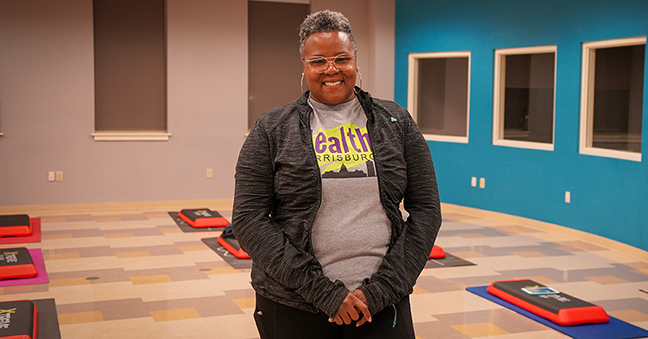
Xtreme Hip Hop class

Monika Ross wasn’t too high on herself in early 2020.

“I was 220 pounds,” Ross said. “I was hypertensive. I was pre-diabetic. My cholesterol was 265. So, I was looking for programs to help me manage that.”

What Ross found was Healthy Harrisburg, a UPMC in Central PA program piloted by the UPMC Pinnacle Foundation and generously supported by Capital Blue Cross. The foundation’s mission is, in part, to provide the resources to help UPMC’s most vulnerable patients, to promote health and lifelong wellness in our communities, and to support the workforce so the region can attract, train and retain the best and brightest talent.

What Ross rediscovered through Healthy Harrisburg was her health, her happiness and herself. More than two years into the program, she has lost 53 pounds, and her hypertension, pre-diabetes and cholesterol are all under control.

“So, I’m still doing it,” Ross said recently before an “Xtreme Hip Hop” class that is a regular part of her Healthy Harrisburg regimen. “And because I’m still doing it, emotionally, I like myself now. When you’re 220, and you’re not feeling healthy, you kind of look at yourself differently.

“But now that I’m healthy, I’m happier. I like myself.”


Standing Together, Making Things Better

Ross’ health journey is not unlike others who have joined Healthy Harrisburg, which offers regular line dancing, strength training, African dance and Xtreme Hip Hop step classes, along with an annual, citywide Juneteenth celebration.

And it’s all free, to all participants, thanks largely to Capital Blue Cross’ support.

“We’re so happy to hear stories like Monika’s,” said Capital Blue Cross President and CEO Todd Shamash, who recently joined UPMC in Central PA President and CEO Lou Baverso to visit Ross’ Xtreme Hip Hop Class and celebrate the program’s success.

“Monika’s results and those of so many others in Healthy Harrisburg exemplify why we so proudly support this program,” Shamash said. “It mirrors our mission to go the extra mile to improve access to healthcare and community health and well-being.”

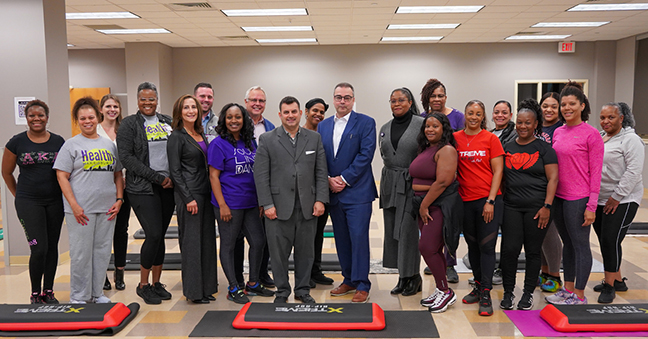
Capital Blue Cross President and CEO Todd Shamash, center left, and UPMC in PA President and CEO Lou Baverso are flanked by colleagues and program participants during a recent Xtreme Hip Hop class in Harrisburg.

“It was wonderful to see a Healthy Harrisburg class in action,” Baverso said. “We’re truly grateful to Capital Blue Cross for helping bring this program to the public. Healthy Harrisburg isn’t just about fitness. It’s about challenging health disparities, and addressing chronic disease in underserved populations.”


Healthy Numbers

Jankail Adams beams when discussing Healthy Harrisburg.

“We have incredible stories,” said Adams, UPMC in Central PA’s project manager of diversity, equity, and inclusion. “We have one participant who actually e-mailed me and said that she was in an extremely depressive state before she started classes, (having) really suicidal thoughts. Now, she just recently got her MBA.”

Healthy Harrisburg began in 2020 with 25 participants. As a sign of the program’s ballooning popularity, it now serves between 130 and 150 participants per quarter, with the most recent enrollment reaching 152. Adams expects that number to grow in 2023.

Jankail Adams

Thanks to regular health assessments of about 100 participants per quarter, Adams can rattle off additional stellar results: The last two cohorts have dropped over 250 combined pounds, and about 10% of participants have weaned off prescription medication.

“We’ve also seen numbers in diabetes drop,” Adams said. “We’ve seen numbers in hypertension drop, which is extremely critical, especially to the Black and brown communities, because heart disease is the No. 1 killer of black and brown women in particular.

“So, those victories are the things that we really look for.”

She said Capital’s contribution is key to keeping the program free, which in turn draws participants and, person by person, helps make Harrisburg healthier.

“We don’t turn anyone away,” Adams said. “So we’ve had people come as far as from York, Mechanicsburg and Hershey. And it’s those funds that allow us to open up this program and grow it.”


Sisterhood of Success

Nearly all Healthy Harrisburg registrants are women, and their closeness – through classes and other activities and conversation – builds a unique bond, said April Robles, another original member who started with the inaugural 2020 group.

“This is a sisterhood,” Robles said. “I love it.”

Classes like instructor Robin Marshall’s Xtreme Hip Hop – designed for all ages and fitness levels, and with a focus on both physical and mental health – are a big reason why.

“At my class,” Marshall said, “we have a good time.”

Instructor Robin Marshall

Which may explain why many participants have been with her since the program began. Robles is among them and is another case study in Healthy Harrisburg’s effectiveness.

She has lost 52 pounds since joining, lowered her blood pressure, and realized far more than physical benefits.

“I have anxiety, and this program has calmed it all the way down,” Robles said. “I’ve had no anxiety, no blood-pressure issues. Mentally, this is awesome.”

She said she’ll continue the program as long as it remains free.

“You meet a lot of good people in here, and it’s a very supportive group,” Robles said. “As long as this is open for me, I will be here and be a part of this. Because my whole life depends on this program, pretty much.”

For more health and wellness news and information that can benefit your business and employees, visit thinkcapitalbluecross.com.

If you like what we do, please support our work. Become a Friend of TheBurg!

Continue Reading

The More You know: Holiday season offers opportunity to discuss family health history

As the holiday season unfolds, families will be coming together to make and share memories. These family gatherings also provide a great opportunity to share your family’s health history as a way to both learn more about your ancestors and help you and your family be healthier.

In fact, Thanksgiving is designated as National Family Health History Day.

Most of us have a family history of at least one chronic disease – such as cancer, heart disease or diabetes – which makes us more likely to get that disease, according to the Centers for Disease Control and Prevention (CDC). And while medical experts acknowledge having a chronic condition in your family history doesn’t necessarily mean you’ll be afflicted, knowing about it can help you take steps to reduce your risk.

“When you know a disease runs in your family, you can use that knowledge to develop greater awareness of the warning signs and work with your doctor on better prevention,” said Dr. Jennifer Chambers, the chief medical officer at Capital Blue Cross. “If you have a family history of colon cancer, for example, your doctor might recommend colorectal cancer screenings more frequently or at an earlier age.”

Compiling a family health history can encompass more than just making a list of known diseases and health conditions in your family. Families also can discuss:

  • Shared patterns in diets or exercise habits.
  • The prevalence of potentially addictive behaviors, such as smoking or drug and alcohol use.
  • Common traits in environment, such as whether you live in the same areas where you might be exposed to shared risks.

To help guide the family discussion, the U.S. Surgeon General offers an online tool called “My Family Health Portrait.” This free resource can help you both collect your family health history and easily share it with your family members and doctor.

For some families, discussing personal health issues might seem uncomfortable. To help start the discussion, the CDC recommends ways to broach the topic:

  • If you have a newly diagnosed medical condition, let your family members know about it. By sharing yourself, they might open up about their own health issues.
  • If you’ve had genetic testing done, share the results with your family members.
  • If you’re among the older members in your family, you may know more about family diseases and health conditions, especially among deceased relatives. Share that history.

Dr. Chambers suggests families also should make sure the discussion touches on mental health issues, not just physical ones.

“We know some mental health issues, including depression, can run in families,” she explained. “Having candid family discussions can be a powerful way to break down the stigma around mental health issues, not to mention a way of offering support for loved ones who might be struggling. Learning and sharing our family health histories in this way can not only help make us healthier as individuals – it can bring us closer together as families.”

THINK (Trusted Health Information, News, and Knowledge) is a community publication of Capital Blue Cross. Our mission is to provide education, resources, and news on the latest health and insurance issues.


Continue Reading