March News Digest


New Parking Rates Go into Effect

The first of Harrisburg’s new parking meters went live last month, doubling street parking rates through much of downtown.

Street parking in the heart of downtown Harrisburg now costs $3 an hour, or 75 cents for every 15 minutes. In addition, enforcement hours have been extended to Monday through Saturday, 8 a.m. to 7 p.m.

The 40 new meters accept credit cards, meaning parkers, for the first time, do not have to manually feed the meters with change.

The new parking rates were agreed to as part of the long-term lease of the city’s parking system to Standard Parking. Outsourcing the parking system was a key part of the city’s financial recovery plan, which helped rid Harrisburg of its overwhelming debt load and, if revenue projections are met, should provide additional annual funds to the city.

Standard Parking still must install new meters in several locations, including in Midtown Harrisburg, where metered parking also will be extended up N. 3rd Street to around Reily Street.


Water Rate Hike Effective

The Harrisburg Authority last month began implementing its new rate structure that includes a 27 percent hike in combined water and sewer rates.

As a result, authority customers experienced an increase in their utility bills last month. Most customers saw their bills go up by under $15 per month, said the authority.

The rate hike will help ensure the long-term health of Harrisburg’s drinking water, wastewater and storm water systems, said Executive Director Shannon Williams, who added that, even with the increase, water rates are among the lowest in the region.


Brewery Headed to Midtown

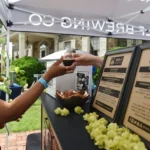
A brewery is headed to the heart of Midtown Harrisburg, as Alter Ego Brewing Co. last month received the OK to open a brewhouse at the rear of Midtown Cinema.

The city’s Zoning Hearing Board unanimously approved a special exception to permit the brewery and brew pub to operate in a residential zone.

Several dozen supporters—and some opponents—gathered in City Council chambers to voice their opinions. Supporters testified that the brewhouse would play an important role in continuing the revitalization of the area, while opponents cited possible traffic, noise, odor and parking issues.

Owners Theo and Brandalynn Armstrong expect to begin to build out the space at 250 Reily St. in May. If the renovation goes as planned—and assuming Alter Ego is granted its liquor license—the brewery should begin to serve customers around October.

When completed, the beer-making operation will take up about half of the 3,500-square-foot space, which is owned by Lift Development LLC. The other half will include a bar, tables and a small stage, which will be confined to acoustic acts and small bands.

In addition to serving their own beer in mugs and growlers (no bottles), Alter Ego will offer local Pennsylvania wines and a limited menu focused on small plates and finger foods. No spirits will be served.

Hours are expected to be Wednesday to Friday, 4 p.m. to 11 p.m. and Saturday and Sunday, 11 a.m. to 11 p.m.


Stadium to Undergo Upgrade

Harrisburg plans to undertake a major upgrade to the Skyline Sports Complex to significantly improve the soccer facility used by the Harrisburg City Islanders and youth soccer groups.

Mayor Eric Papenfuse last month said the project will double the seating capacity at the city-owned facility to 4,500. It also will create a new entrance plaza, install a new scoreboard and build new restrooms, locker rooms and a concession area.

No city funds will be used for the $14 million project on City Island, said Papenfuse. Instead, private funds will be pursued, in addition to a possible state matching grant, said Islanders President Eric Pettis, who expects work to be finished in 2016.

The upgrades will allow greater use of the venue, including for concerts, youth sports and other events, said Papenfuse.


More Downtown Housing Planned

Another downtown office building is going residential, as the 19-century Walnut Court building is slated to become a 21-unit apartment building.

The Harrisburg Zoning Hearing Board last month agreed to waive the parking requirements for the conversion by 210 Walnut LLC, which is made up of the partners of WCI Partners LP. City Council still must OK the land use plan for the project.

The developers plan to convert the four-story, 21,600-square-foot building into 15 one-bedroom units, three two-bedroom units and three lofts. Rents will range from $900 to $1,350 per month.

The building has housed many businesses throughout the years, including, most recently, the law firm of Keefer, Wood, Allen & Rahal, which relocated up the block. The women’s clothing store, The Plum, also long-occupied the large retail space at Walnut and N. Court streets. It has moved next door to Locust and N. Court streets.

The building will retain two commercial spaces. The first is the snug storefront at 206 Walnut St. that long has housed Alden, a men’s haberdashery. The second, at the corner, will probably house a restaurant, said Butcher.


Flood Insurance Hikes Rolled Back

Congress last month passed legislation watering down key elements of the Biggert-Waters Act, which had threatened to dramatically raise the cost of flood insurance.

The U.S. Senate and House both passed bills that will roll back hikes that, in many cases, would have increased federal flood insurance premiums by more than three-fold. In addition, many property owners now will be allowed to pass on below-market rates to people who buy their homes.

As of press time, the legislation was waiting action by President Barack Obama. The White House has indicated he will sign it.


Warfel Snags National Award

Warfel Construction last month received national recognition with a first-place award for its work on the new office building at N. 2nd and State streets in Harrisburg.

Associated Builders and Contractors (ABC), a leading construction trades organization, honored East Petersburg, Pa.-based Warfel with the first place Eagle Award in the category of commercial property, $5 to $10 million.

“The Excellence in Construction awards program is the industry’s leading competition, developed to honor innovative, high-quality merit shop construction projects,” according to ABC.

The project was selected from entries submitted from across the nation and judged first in terms of complexity, attractiveness, workmanship, innovation, safety, cost and completion time.

WCI Partners developed and owns the building. Major tenants include the Buchanan Ingersoll & Rooney law firm and First National Bank of Pennsylvania.


New Bishop Installed

Most Rev. Ronald W. Gainer was installed last month as the 11th Catholic bishop of Harrisburg at a Mass at St. Patrick Cathedral.

A native of Pottsville, Pa., Gainer was ordained in 1973 and previously served as bishop of Lexington, Ky.

He succeeds Bishop Joseph P. McFadden, who died last May.


Changing Hands: February Property Sales

Brookwood St., 2451: Fannie Mae to C. Wise & L. Stone, $41,000
Chestnut St., 2044: W. Bohn Jr. to M. Catania, $81,900
Chestnut St., 2304: M. & T. Bosak to M. & K. Johnson, $189,500
Duke St., 2622: J. Pierce to PI Capitol LLC, $51,031
Hale Ave., 377: H. & K. Le to I. Yolov, $49,000
Hale Ave., 412: Fannie Mae to T. Tran, $36,000
Herr St., 226: M. Kurowski to V. Wills & R. Moore, $160,000
Meadowlark Pl., 3028: C. Capitani to K. Clark, $73,000
North St., 244: S. Touloumes & J. Nye to E&S Properties LLC, $37,000
N. 2nd St., 511: C. Longyear to L. Eyler, $240,000
N. 2nd St., 1605: Freddie Mac to NR Group LLC, $42,000
N. 3rd St., 906 & 912: 3rd Street LLC to Nish Properties LLC, $285,000
N. 3rd St., 925: AIM Holdings LLC, CL Holdings LLC & Lam & Cheng Properties to 921 Home LLC, $715,000
N. 3rd St., 1724: G. DiCioccio to Y. Farzana, $91,500
N. 3rd St., 2103: WEC 97A 11 Investment Trust to Rite Partners LLC, $985,366
N. 3rd St., 3017: Deutsche Bank National Trust Co. Trustee to J. Crossett & M. Hochstetler, $80,000
N. 3rd St., 3221: Freddie Mac to PA Deals LLC, $39,250
N. 4th St., 1723: P. Laudermilch to R. Brock, $130,000
N. 14th St., 210: R. Rammouni & W. Othman to FBTB Group LLC, $48,900
N. 15th St., 1340: PA Deals LLC to MidAtlantic IRA LLC & James Yeager IRA, $56,500
N. Front St., 1525, Unit 409: P. Krantz to M. Anderson, $189,150
Penn St., 1338, 1340 & 1342: P. Sowers-Alton to T. Hanley & J. O’Neill, $36,000
Pennwood Rd., 3141: J. & P. Sandrock to C. Giba, $75,000
Rose St., 933: Rose Street Associates to F.A. Clark, $150,000
Rudy Rd., 2323: Fannie Mae to O. Saleh, $61,000
Rudy Rd., 2400: A. & J. Erby to Secretary of Housing & Urban Development, $156,008
Seneca St., 540: K. McCauley to E. Jefferies, $59,000
S. 13th St., 127 & 1304 Derry St.: S. Pak to Mount Pleasant Laundromat LLC, $1.2 million
S. 13th St., 301: 301 South 13th Street LLC to Skynet 301 LP, $360,000
State St., 1522: E. Stoute to C. Evans, $75,000
Susquehanna St., 1909: WCI Partners LP to L. Marven III, $149,900
Sycamore St., 1525: J. Moyer to P. Pham & T. Nguyen, $63,000
Valley Rd., 2300: E. & J. Schweikert to M. & R. Lewis, $208,000
Woodbine St., 245: J. & J. Nagy to J. & M. Harris, $52,800

Harrisburg property sales for February 2014, greater than $30,000. Source: Dauphin County. Data is assumed to be accurate.


Continue Reading

Beer for Midtown: Brewery Gets Nod from Zoning Board

AlterEgoWeb

Alter Ego Brewing Co. plans to call this building its home after the Harrisburg Zoning Hearing Board gave its approval.


A brewery is headed to the heart of Midtown Harrisburg, as Alter Ego Brewing Co. tonight received the OK to open a brewhouse at the rear of Midtown Cinema.

The city’s Zoning Hearing Board unanimously approved a special exception to permit the brewery and brew pub to operate in a residential zone. Two weeks before, the Planning Commission gave its unanimous consent.

Several dozen supporters—and some opponents—gathered in City Council chambers to voice their opinions. Supporters testified that the brewhouse would play an important role in continuing the revitalization of the area, while opponents cited possible traffic, noise, odor and parking issues.

“We do not feel comfortable with this proposal,” said Angie Logan, who lives nearby on Susquehanna Street. “Every day, we’re going to have to live with this.”

Most other attendees spoke in favor, including Tom Robel, who said he lives in the house closest to the proposed entrance off of Green Street.

“I think this is a good fit for the cinema. I support the idea of the brewery,” he said, adding that it would help the neighborhood move forward. 

The brewery, owned by Theo and Brandalynn Armstrong, expects to begin to build out the space at 250 Reily St. in May. If the renovation goes as planned–and assuming the owners are granted their brew pub liquor license–Alter Ego should begin to make beer and serve customers around October.

When completed, the beer-making operation will take up about half of the 3,500-square-foot space, which is owned by Lift Development LLC. The other half will include a bar, tables and a small stage, which will be confined to acoustic acts and small bands.

In addition to serving their own beer in mugs and growlers (no bottles), Alter Ego will offer local Pennsylvania wines and a limited menu focused on small plates and finger foods. No spirits will be served.

Hours are expected to be Wednesday to Friday, 4 p.m. to 11 p.m. and Saturday and Sunday, 11 a.m. to 11 p.m.

Continue Reading

A Sweet Dream of Peace

emilehassandyer

“I’m not going to speak for very long,” Donna Orbach said, “but I did want to take this opportunity to tell you a bit about why we’re doing this. And how weird is it, we’re having a birthday party for my dead son.”

It was Thursday night, a few minutes past 7:30 p.m., and Orbach stood before a crowd of 200 or so people at Chisuk Emuna Congregation, on Green Street in Uptown Harrisburg. The crowd had gathered to hear—or provide, really—a concert of vocal music with a global pedigree. There would be songs from West and South Africa, from the Tuscarora and Navajo people, from Aboriginal Australia. Proceeds from the event would benefit the REMember Foundation, a charitable organization established in memory of Orbach’s son, Reuben Eli Mitrani, who died of a sudden brain hemorrhage while studying international relations in Geneva, Switzerland, in September of 2012. He was 20 years old.

“But Reuben was a joy,” Orbach continued, “and he is a man to be celebrated. And his 20 years of life—boy am I glad he was born. And so this is his birthday, and I wanted to bring all that love back into the world that we all felt and feel for Reuben.”

The concert was the culmination of a day of community-singing workshops around town, at Londonderry School, which Reuben attended, and at Capital Area School for the Arts, a charter school downtown. The day’s final workshop took place at Chisuk Emuna itself, where many of the adults now gathered for the performance had learned, not much more than two hours prior, the songs they were about to sing.

The workshops’ leaders were Emile Hassan Dyer, a vocalist and percussionist, and the actress Maggie Wheeler, best known as the character Janice on the sitcom “Friends.” Last August, Orbach met Wheeler at the Omega Institute, a retreat center in Rhinebeck, N.Y., where Wheeler was offering vocal workshops of the sort she has taught for more than 15 years.

“I am completely and utterly tone-deaf,” Orbach said. “I have been told lovingly by other people, ‘Can you please mouth the words during ‘Happy Birthday’?’” But Wheeler had a way of putting people at ease, and Orbach soon found herself joining in songs that, as she put it, “resonate in your soul.” After the group learned of Reuben’s death, they decided spontaneously to hold a memorial and sang a Native American spiritual: “When you were born, you cried and the world rejoiced. Live your life in such a way that when you die the world cries and you rejoice.”

On Thursday evening, before the start of the adult workshop, Wheeler and Dyer stood at the front of the room, soothing their throats with thermoses full of tea. “That’s hot!” Dyer said. He unscrewed the lid and started blowing. Wheeler, tall and lean, with wavy brown hair and a wide, winning grin, told the attendees, who had just taken their seats, that it was already time to move.

“What we would really love is for all the men to move to this side of the room—”

“The lower voices,” Dyer said.

“—with the very lowest voices over here,” Wheeler went on, “and the middle voices—now, tenor, alto, soprano. If it doesn’t mean anything to you, don’t fret. So, the lowest voices over here, the higher men’s voices and the lower women’s voices over here…”

Within a few moments, the singers had sorted themselves by gender and range, more or less, into an ensemble of 40 or 50 women and an attachment of around 10 men on one wing. Wheeler introduced herself and Dyer and briefly described the inter-generational choir the pair directs in Los Angeles, an “ever-evolving, ever-growing, wonderful thing that we get to do together and that brings us a lot of joy.”

Then Wheeler turned to the men and started singing. “A-hooma, a-hooma, a-hooma, a-hooma…” Tentatively, the men waded in with their voices, and a rich baritone murmur swelled beneath her. Satisfied, Wheeler pivoted and, with a gesture for the men to keep going, invited the altos in with a line of harmony. She did the same for the sopranos, and then, a three-part texture established, she floated in with a new lyric: “Sha-la-la-la, sha-la-la-la, sha-la-la-la, sha-la-la…”

For the next four minutes, she swung from one section of the choir to the next, swapping in new parts and nudging errant voices back onto the path. Dyer supported with voice and drum. At first, the singing was timid, exploratory, but soon several smiles had broken out, and knees were bobbing. When the song was finished, Dyer swiftly introduced the next one, an aboriginal chant from Australia.

“The way it works is, when you’re coming to a village…before you get to the village, you start singing. And it’s a call and response. And the people coming to the village call, and they respond, and it keeps building and building, and they come together. And the interesting thing is, no business can happen, no celebrations can continue, until everybody’s in synch.”

The singing continued, through a Tuscarora migration song, which had the men mime paddling a canoe; a South African song of celebration; and an American peace song, “If Every Woman in the World”:

If every woman in the world had her heart set on freedom
If every woman in the world dreamed a sweet dream of peace

After learning several more pieces, and being coaxed periodically to stand up in closer quarters, in order to “feel the vibrations,” the group broke for dinner. Upon request, Wheeler offered a brief flash of a former role. “In the house of God, am I allowed to say that here?” she said, smiling. Then, in a nasally New York accent, she let fly the Janice catchphrase: “Oh, my, gawd!”

Over Utz chips, cookies and wraps, the newly trained vocalists discussed the event so far.

“Fabulous, absolutely fabulous.”

“It was very easy, very fun. I was singing in the alto section, though I’m really a soprano.”

“So many cultures use songs as a way of teaching. In African cultures, they teach by song.”

“Do they really?”

“A couple of times, I stopped singing just to listen.”

“To feel the vibrations.”

During the concert itself, Wheeler and Dyer summoned the members of each successive workshop from throughout the day, producing what amounted to a multi-generational revue. The Londonderry children went first, wide-eyed and readily volunteering; then the high-school students, with the added poise and inhibitions of young adulthood. Last of all were the adults from the evening workshop, carrying with them, at least at first, all the inertia of later life: stashing their hands in pockets, adjusting their sweaters, folding their arms.

Then the song began with a chant from the men: “Ee-yo, hey. Ee-yo, hey.” On the last syllable, they swept their arms as if paddling a canoe. Simultaneously, at the back of the audience, a group of middle-schoolers formed a circle. They had learned the same song in the morning, and they now canoed the air as well, singing and giggling.

One motto of the REMember Foundation is the question, “How long is a lifetime?” As the children at the back of the room sang and danced in concert with the adults onstage, the distance between them seemed not very far at all.


Continue Reading

Nose: Complex

ScotchWeb2


“You might want to take a good whiff of the trays before you start to drink,” said our waiter, Scott, as he put down the last of seven trays, each topped with a constellation of eight glasses.

He was serious.

Scotch is a drink of many senses. The dense, caramel-colored liquid, sitting at the base of a wide glass, light sparkling from it, is itself beautiful to see. Then you lift the glass, bring it to your nose, inhale deeply. You swirl the Scotch to release more of the aroma: the fruits, the woods, the spices. Finally, you’re ready to taste. You press the glass to your lips and let the liquid linger on your tongue, sensing the bite and the powerful lift into your sinuses, before finally letting it slide down slowly, warming your throat and stomach.

But Scott was suggesting a step before even that—that we take in the air settling above the trays, that we indulge in the potency of aroma released by so many filled glasses in such a confined space.

On Friday night, eight of us gathered in a private room at Zia’s Trattoria in downtown Harrisburg for the monthly ritual of good drink and good conversation known as Scotch in The Burg (aka, #ScotchInTheBurg). The group started meeting last June when one pretty-well-known Harrisburg guy named Ganesh and another pretty-well-known Harrisburg guy named Dan decided to see if others were interested in exploring two things they already liked and wanted a deeper understanding of: Scotch and the city’s restaurants.

So they spread word via Twitter (thus the hashtag) and quickly assembled a core group of other pretty-well-known Harrisburg guys. There’s Brian. There’s Bill. There’s Marc. There’s Eric. Several more have come and gone, and a few others pop in from time to time.

I’m an accidental participant. After work, on one of the many icy nights of January, my girlfriend Andrea and I climbed the steep steps to enjoy a cocktail and maybe some half-priced tacos at Suba, where we bumped into #ScotchInTheBurg. The group was just assembling and graciously asked us to join them.

How do I put this delicately? I don’t know squat about Scotch. Until then, my only exposure to whiskey had been an occasional late-night nip of Maker’s Mark at a place in D.C. called the District Chophouse and only then at the insistence of a British friend, who liked to end his evenings lingering over a glass.

#ScotchInTheBurg would never consider anything so mass market. At Suba, the brands were unknown to me, the flavors complex and surprising, and the ritual novel. Ganesh was patient, explaining how one approaches a new pour, the tasting regimen and the words used to describe it (fruity, peaty, leathery).

It turned out that, even within our small group, the tasters each liked something different. Whereas Brian preferred complexity, Ganesh liked sweet and, for Bill, the boggier, the better.

The Scotch, though, is only one part of the event, the organizing principle. Throughout the month, the core group uses Twitter to recruit, communicate, organize, all building up to the big night.

Marc took the lead for the March dinner, conferring repeatedly with Zia’s over details: the Scotch and food menus, where we’d sit, the time, the price. The first plan was a little too heavy on food over drink, the group decided. So, two small plates were removed and several Scotches added. All the details had been firmed as waiter Scott entered the small private room carrying trays of glistening snifters, their brown liquids swirling from the bottom.

“Gentlemen,” said Ganesh, “and,” gesturing towards Andrea, “lady.”

He paused for a moment, the brief silence appropriate for the start of something so anticipated.

“Shall we get started?”

Marc reached for the first set of glasses filled with 12-year-old MacCallen Scotch and passed them around the table. As everyone stared at the night’s first pour, he read from a note sheet to introduce the drink.

“Sweet taste of citrus, vanilla and coconut,” he said.

“Nose: Complex with a hint of fruit and heather honey.”

Brian interrupted. “I think you should read that as James Lipton.”

“Can I do Will Ferrell?” said Marc, who then continued without doing Will Ferrell.

“Palate: Medium, balanced with fruit, oak and spice.”

“Finish: Lingering with dried fruits, oak and spice.”

Everyone took a whiff, swirled, smelled again, sipped, slurped, swallowed.

The Scotch was relatively mild, fruity, flavorful.

“I like that,” Andrea said. “It’s very girly.”

The rest of the table—all men—laughed, but, despite that critique, that first pour was a crowd-pleaser, the only one of the night that everyone seemed to enjoy.

Soon afterwards, two additions were made to the table. Bruce, our eighth, finally showed after a long day at work, and our first course, a cheese plate, arrived.

Folks were clearly hungry, and everyone reached for the selection of mild and sharp cheeses. Some went well with the early rounds, some didn’t. (In addition to the MacCallen, we toasted and shared 1-ounce pours of 15-year-old Dalwhinnie and 12-year-old Balvenie.)

“That’s definitely smoky,” someone said of the Dalwhinnie.

Another piped in, “It’s a good smoky. It’s not campfire.”

Tongues loosened, and talk around the table came to include everything from the mayor’s big red shoes to the board game Operation to the TV show Key and Peele. A description that one of the Scotches “has wood” invoked exactly the commentary you’d expect from seven guys sitting around a table.

“Maybe girls shouldn’t be allowed here,” said Andrea.

Event veterans already shared an opinion that this evening matched the best—the best to that point being the very first #ScotchInTheBurg, held at Stock’s on 2nd.

“They did such a phenomenal job that it raised our expectations,” said Ganesh. “Since then, half have been very well organized and half have not.”

Organization does seem crucial to the event. Sure, the Scotch needs to be good and of enough variety, but that’s the easy part. What really makes #ScotchInTheBurg is good company, a level of privacy, nice food pairings and excellent service. Zia’s was passing on all fronts, a feeling confirmed when Scott ushered in the next dish, two trays of enormous Parmesan-encrusted shrimp with spicy marinara dipping sauce.

“This rivals anything we’ve had,” Ganesh repeated.

As people reached in, Marc declared that it was time for the next Scotch, a 14-year-old Oban. From our note sheet, Bruce read: “Smoky, malty dryness. Rich, full-bodied, smooth.”

Glasses clinked.

The Scotch was powerful, like inhaling deeply from a meat smoker.

“Holy Christmas!” said Ganesh.

“It wouldn’t be your first choice,” someone else piped in.

“It wouldn’t be my fifth choice,” said Andrea.

Conversations began to overlap. There was a fragment about Bruce’s long-ago trip to Denver and another about Bill’s fondness for the cream ale at Selin’s Grove Brewing Co. and another about Eric’s Jewish grandmother. We discovered that Brian has someone he thinks may be his girlfriend.

A 12-year-old Cragganmore followed, described in our notes as having odors of fruit salad, smoked almonds and stemmy hay.

“You can smell the stems,” someone joked (though you actually could).

To enhance the scent, Ganesh repeated a ritual he had begun the previous month. He poured a small amount of the Scotch into his hands, rubbed them together, brought them to his nose and inhaled deeply. This is a routine of serious Scotch samplers, he had explained, and part of his own education.

The talk next turned to cultures that eat animal heads and how, in the United States, we prefer not to picture the animals we’re eating. Appropriately, the main course arrived right then: sliced filet mignon with Parmesan potatoes, plated beautifully to share family style (no head attached). The presentation was stunning, enough to momentarily silence seven men and one woman who had consumed five pours of Scotch.

Brian took a picture and tweeted it. But, before we dug in, the next-to-last Scotch was announced—a 10-year-old Laphroaig (“hint of seaweed and a surprising sweetness”). We clinked glasses again and wished cheers and salutè and nostrovia and drank.

“Whoa, that one slaps you in the face and kicks you in your [delicate man parts],” said Ganesh.

“I’m gonna call this one Casper cause this s*** is gonna continue to haunt me,” someone else announced.

And another: “It’s the only Scotch I need a chaser for.”

The filet quieted everyone for maybe 10 minutes, as we each finished off several slices and reached in for seconds until it was gone. Waiter Scott then announced a bonus: Zia’s was throwing in dessert as a final course.

Before the night’s final pour, Scott brought out tiramisu—creamy, espresso-flavored sponge cake scooped into large wine glasses—and arranged goblets of 10-year-old Orangerie around them, with fresh fruit as a centerpiece. We paused for a moment to relish the sight, the assembled glasses shooting sparks of light throughout the snug room, and several of us pulled out cell phones to snap pictures.

The orange-infused Scotch itself was fruity and smooth and mild, a welcome change from the earthier, harsher whiskies we had just sampled.

“It’s not very Scotch-y,” said Eric. “It’s more like a cordial.”

I was uncertain whether he intended that as a compliment or criticism, but we all agreed it was an excellent choice to wrap up the evening, served with dessert almost as an aperitif.

“That was downright enjoyable'” stated Ganesh with a finality earned from his nine or so months as the unofficial leader of #ScotchInTheBurg.

He may have been referring to the tiramisu or the last Scotch or the evening in general. But it seemed likely that he meant all three, with great conversation and company, a perfect two hours passed in the city of Harrisburg.

Continue Reading

Heart and Soul

Rick Kearns, Harrisburg's poet laureate, speaks with an audience member Friday in city hall.

Rick Kearns, Harrisburg’s poet laureate, left, speaks with Nancy Mendes of the Historical Society of Dauphin County’s Board of Trustees after Friday’s poetry reading in city hall.

On Friday, at 20 or so minutes to noon, Rick Kearns, Harrisburg’s new poet laureate, sat in the city hall atrium and talked about jazz.

Since 2010, Kearns has performed with a Lancaster-based jazz ensemble, the Con Alma Quartet, whose renditions of established jazz tunes—Ron Carter’s “Little Waltz,” Miles Davis’s “Blue in Green”—he threads with readings of his poems. The poem-song matchup is determined in advance, but the pacing is improvisational, with the result that Kearns’ voice fits in like just another instrument, seamless and responsive.

“It’s stimulating, scary, maddening, and a lot of fun,” Kearns said. “It keeps me on my toes. And we have a CD!”

Kearns wore a black corduroy sports jacket, black corduroy slacks, and a blue button-down shirt, open at the collar. He has exactly the sort of voice (smoky, slow-going) you would want telling you, over, say, a seventh chord on electric guitar, that the “moon wants a good red wine and a woman who can dance.”

Friday’s event was the second of Mayor Papenfuse’s “brown bag cultural programs,” which city hall will host on the first and third Friday of each month “to help promote the arts in Harrisburg and help connect citizens with the government center.” Within a few minutes, the atrium would fill up with 20 or so observers. For the moment, though, Kearns sat in a sea of empty chairs and reflected on “Aurelio’s Vengeance, Puerto Rico, 1901,” one of the poems cited in the mayor’s press release earlier that week.

“That one was about Puerto Rico right after the Spanish-American War, after America had sort of taken Puerto Rico,” he said. “It was very much based on the historical record.” Years ago, Kearns, who is of Puerto Rican and European descent, spent several days in Hunter College’s Center for Puerto Rican Studies, in New York, going through Puerto Rican newspapers from around the turn of the century. There he encountered stories about a “rash of suspicious fires” in the estates that had been abandoned by the Spanish-Creole gentry after the war.

“The rumor was that the guys working there had torched them, taking vengeance,” he said. The poem imagines one such arsonist, “early in the morning in the wet bushes,” waiting to “torch the grand old house”:

These are
the flames of hell
you bastard you won’t
be back to enslave my family any
more nunca
jamás
nunca
jamás

“Hey hey hey, brother!” Kearns said suddenly. J. Clark Nicholson, the artistic director of the Gamut Theatre Group, had arrived. Lenwood Sloan, the newly appointed director of arts, culture and tourism, followed close behind, greeting the pair warmly. They chatted for a moment, and then Sloan took center stage.

“Greetings to you all. We are gonna get started,” he said. The mayor arrived, slipping into an open seat in the front row, and Sloan, spotting him, welcomed him as “a literary man in his own right.” There were no brown bags in evidence yet, excepting one sandwich in butcher paper. Sloan took a moment to point out the various art exhibits close at hand: a display of “150 years of recreation,” including an old Atari console; a four-part mural, conceived by students at John Harris High, depicting Frederick Douglass, Martin Luther King, Jr., Rosa Parks, and Nelson Mandela.

He also indicated a folding table, piled with wooden contraptions and labeled “FREE BIRDHOUSES.” “We’ve been graced by these bird cages,” Sloan said, “and I’d ask you each to take one as an omen that spring is coming.” Then, with a nod to the Con Alma Quartet—“If we were in another place, there would be a saxophone behind him”—he introduced Kearns.

Kearns began with a series of poems about Harrisburg. They visited North 6th Street (“hip hop swagger” on a “cool summer night”), a mambo dance on Allison Hill, and—in the obligatory light-hearted antipathy towards commuters—crows in Midtown defecating on state workers’ cars. In one poem, a long and compassionate tribute to an elderly couple Uptown, he reflected on “old-time Harrisburg”: the wife’s “crime watch through cigarette haze” on her porch, her husband “inconsolable” after her death, and his own death leaving behind $35,000 in credit card debt.

He continued with more tributes, to his Puerto Rican grandfather, to his mother, and to Martin Luther King. Papenfuse and his wife, who had slipped in, too, with the mayor’s lunch in tow, sat side by side in identical poses: legs crossed at the ankles, cupping take-out coffee.

“I don’t have a concept of time, so—how’m I doing?” Kearns said.

“Please keep reading,” Sloan said from the back of the house.

At the end of the reading, Kearns took a few questions. Nicholson, from Gamut, asked if he could talk about “the rich ground that Harrisburg is for so many poets.”

Kearns, nodding, credited Harrisburg’s “rich history.” “There was always music. That much I know. And my understanding is there were poets showing up off and on through our history.” By the time he became aware of it, Kearns said, he was running into poets “all over the place.” “There’s always been something about this town. There is an energy, there’s an artistic energy here.”

Joyce Davis, the mayor’s director of communications, asked if Kearns could discuss his vision for the role of poet laureate, especially in connecting with young people.

“There’s a couple things I’d like to do,” Kearns said. “And one is to help develop writing and poetry workshops in the city, one based in the Latino community, one based in the African-American community, open to everybody. And I think one of the great joys for me as a writer, as a person, as a community member, is being able to give young people that opportunity, to develop an artistic skill.”

“We have time for one more question,” Sloan said. “Yes ma’am.”

“I’m afraid I don’t have a question,” said a woman towards the back. “But I do have to thank you. Here I am on a Friday, in the middle of meetings, and phone calls, and text messages, and I didn’t expect for something to touch my heart. And I think I need to go home and write something for my mother.”

“Good! Great! I’m very glad to hear that,” Kearns said, as the room burst into applause.

“Can I borrow your words,” Sloan said. “Here, in the middle of the afternoon, with phone calls, and messages, and work, we can stop in the atrium of the city, in the center of government, for something to touch our hearts.”

He then asked Kearns to read a final poem. Kearns thought for a moment, then read “The Body of My Isla,” about protests he’d participated in against a military testing site on Vieques, an island off Puerto Rico:

5 million translucent tree frogs
singing as they must
aiming their love at the
murderous F-18s dropping
bombs and dripping poison
on Vieques, residential bombing site.

When he finished, there was another round of applause, and then members of the audience stepped forward to greet the poet, or to walk off with what Sloan, reminding them, called a “piece of spring”—a wooden birdhouse in a plastic bag.

To read “Verse Across Cultures,” TheBurg’s Q & A with Kearns, featured in this month’s issue, click here. You can listen to Kearns and the Con Alma Quartet at their SoundCloud page.

Continue Reading

The Latest Graze: These landscapers are efficient, green–and cute as a button.

Screenshot 2014-02-28 08.40.05Ironically, the idea for a story about a herd of goats originated not in rural Dauphin County but in Midtown Harrisburg.

Several residents had eyed a pick-up truck carrying goats in its bed. Naturally, curiosity led to a few questions, and it was discovered that the truck belonged to Brent Durborow, who had recently moved into the neighborhood.

It turned out that the goats belonged to the family business, Grazing Green Goats, run by Brent’s stepfather John Connelly. The herd is hired out to help property owners clear brush from their land. So, on a chilly morning, I drive out of the city into the open spaces that surround our capital; I am off to see a man about his goats.


Connelly’s Herd

As I pull into the Connelly’s farm, John is already at work. He greets me and then quickly ushers me over to the herd.

“We have about 20 goats, plus an additional dozen on another site,” says Connelly.

In addition to goats, which eat brush and woody overgrowth, Connelly also keeps sheep that eat grass.

The number and types of animals hired out depends on the needs of the property. After identifying the land that needs to be grazed, Connelly simply sets up a portable fence around the property and checks on the herd periodically until the job is done. Depending on the size of the property and the herd, the job usually takes between one and two weeks.

Connelly is marketing his herd as a green landscaping alternative. They help property owners by eliminating the need for herbicides while also removing invasive species. Plus, their droppings are very good for the soil. However, many times, Connelly’s goats are logistically the best option, green or otherwise.

“There are certain terrains that typical landscapers can’t tackle,” says Connelly. “My goats aren’t scared of steep slopes.”

As we chat, the animals make it clear that they aren’t shy. Goats approach me at the fence and nudge me, including an especially rotund female.

“She’s pregnant,” notes Connelly with a smile. “By the size of her, we suspect twins.”

As he pats the mother-to-be, named Tessie, I can’t help but notice the affection he has for his herd. After few more moments, he invites me inside to speak more.


Goat Appeal

We take a seat in the Connelly farmhouse with mugs of tea to stave off the chill. I’ve already been won over by the personality of Connelly’s goats, but I am interested in getting a sense of how customers react to having the herd on their property.

“Our herd is especially popular with families,” says Connelly. “The kids love playing with the goats. They get very sad when we bring the goats home.”

Durborow agrees. “People just love the goats. Kids will make up stories about them and their lives.”

Sometimes, Connelly takes unnamed goats to jobs with families so that children can name them. Children will often check in with the Connelly family to ask about the goats that they grew to love.

I was able to talk to Steve Bergstrom, a Lancaster County resident who works in medical sales, and a former client of the Connellys. Between the slope of his property and the amount of poison ivy present, Bergstrom was desperate to find a way to clear his land. The herd not only succeeded in doing its job, but won the hearts of the Bergstrom family—and the rest of their neighborhood—as well.

“We were the talk of the town,” says Bergstrom. “Everyone in the neighborhood was coming by to see the goats.”

The neighborhood continues to ask Bergstrom about the animals. Considering how well the goats did the first time around, Bergstrom plans on contracting the Connelly herd again.


Recovering from Tragedy

It is inevitable that people grow attached to these animals, and the Connellys are no exception. Unfortunately, tragedy struck the family this past October. While the herd was hired out to graze land near Conewago Creek, floodwaters suddenly rose. Brent and John rushed to rescue all that they could, but, by the time they arrived, they were too late for the majority of the herd.

“It was a big loss, it was terrible,” says Connelly.

In all, 23 goats were lost.

However, a few were rescued. Found buried in mud up to her head and forelegs, Tessie, the matriarch who greeted me at the fence, was pulled to safety.

“She actually got outside of the fence, which was lucky for her, since the fence was completely underwater,” says Durborow.

Adds Connelly, pointing to a picture of Tessie, “that was the joy right there.”

For Connelly and his family, Tessie’s pregnancy is especially uplifting.


The Growing Herd

It is a few weeks later when I check back in with Brent. He is at the state Farm Show promoting the business.

“Man, you need to come by again. The herd has grown!” says Durborow.

Tessie successfully gave birth to two kids, named Bonnie and Clyde. Another doe in the herd, Nina, gave birth to three kids as well, Holly, Nicholas and Noel.

While family members are still saddened by October’s tragedy, they are excited about the future. Like the herd, the business continues to grow. Come springtime, Connelly’s goats will once again be put to work clearing fields, one bite at a time.

For more information visit, www.grazinggreengoats.com.

Continue Reading

Road Ramble: Projects abound for Harrisburg’s new infrastructure money.

Screenshot 2014-02-28 08.34.24It’s no secret that the City of Harrisburg is in dire need of an infrastructure overhaul.

Like so many cities, its systems of water, sewer, roadways, bridges and streetlights were put in place in other eras. When these frameworks were installed, they were innovative and effective.

Now, they’re old and outdated.

This is not a new subject. As the capital city’s debt crisis has unfolded over the past few years, there has been extensive scrutiny and public discussion about the antiquated infrastructure neglected since the city’s diminishing heydays.

Fortunately, that talk has resulted in due attention to the problems of burnt-out streetlights, potholes, faded lane lines and paving.

In January, the secretary of the state Department of Transportation stood alongside state Rep. Patty Kim and Mayor Eric Papenfuse to announce that Harrisburg would receive $10 million over the next five years to fix its most broken streets.

Also, an integral part of the massive debt resolution set aside an initial $6 million for city infrastructure repair. It’s in a fund to be used exclusively for that purpose without the ability to touch it for other reasons. That seed money will undoubtedly go fast, but, luckily, the fund is designed to receive future parking revenues for long-term support of one of the city’s greatest needs.

The point is, for the first time in a long, long time, Harrisburg will have money to fix some of its flaws.

Thank goodness.

While the list of infrastructure problems is substantial, fortunately, the city’s not that big.

From city line to city line, north to south, Harrisburg is about 4.5 miles long. From east to west, it’s less than three miles wide. It’s a small place.

Therefore, conceivably, it shouldn’t be that difficult to venture around the city and comprehensively address what needs to be done.

Anyone’s list will include the roads riddled with potholes that can’t be mended with patches of macadam. It won’t take long to fill pages with an inventory of burnt-out streetlights. Then there are the faded lane lines that confuse and frustrate drivers, whether residents, commuters or visitors. Speaking of faded lines, crosswalks are desperately deficient, too.

The list also should include a re-evaluation of traffic signals, improved signage and a reconsideration of the directional framework of the city’s streets.

What do I mean by this?

Well, first, let’s deliberate traffic signals. Not only should the timing of some of these stoplights be re-calibrated—such as the back-to-back lights at Locust and Walnut streets that seem to create congestion rather than relieve it—but the city needs some traffic signal upgrades.

Most specifically, Harrisburg could use more left-turn signals and a few more “No Turn on Red” signs. Need an example? Forster and N. 3rd streets where cars turning left, each the opposite way, go head to head in the intersection waiting for a chance to make their moves. Head up to Market and 13th or State and 15th at rush hour to see similar battles of will and machine. A pedestrian takes life in hand to cross these places at certain times, not knowing which ways vehicles may be coming.

Then there are the one-way streets.

A cruise up and down Harrisburg’s main streets yields the discovery that one-way streets are abundant. While this is not unusual for a city, in Harrisburg’s case, there really doesn’t seem to be a rhyme or reason why so many one-way streets go in the same direction in a row. That is, the traffic patterns require a driver to travel several blocks before east or west is an option, which is definitely a hindrance to those who live in the city, even if the original intention was precisely to hinder flow into the neighborhoods.

Perhaps this is yet another leftover design element of a past rationale, but for those of us today, it ends up being a befuddling inconvenience.

As if that isn’t enough, too often there isn’t clear signage indicating which direction the road goes. This, despite the fact that the city’s code states, “A sign indicating direction of traffic shall be erected and maintained at every intersection where movement in the opposite direction is prohibited according to the traffic control maps or by temporary regulation.”

Speaking of one-way streets, on one prominent issue, I feel compelled to declare my position without belaboring points already made—yes, I agree that Front and 2nd streets should be changed from one-way to two-way streets.

On that same note of major renovations, Cameron Street could do with an entire revamp in order to tackle the excessive speeding. In fact, the Capital Area Greenbelt Association is working with PennDOT on this to add “traffic calming devices” near where the Greenbelt path crosses this dangerous thoroughfare. Projects like this allow even further alteration to add bike lanes, which would be a trailblazing step for the capital city. Yes, pun intended.

Last, but not least, on a wish list of things to accomplish: CAT should open up the public debate about redoing the transit patterns in the city. Let’s ponder taking the big buses off narrow 3rd Street and moving them up to wider 6th Street. Wish of all wishes would be a trolley/shuttle of some sort that offered reliable transport from points across the city east to west, north to south, clear stops along the way.

Since repair, rehabilitation and renovation are bound to happen, why not throw everything on the table?

Tara Leo Auchey is creator and editor of todays the day Harrisburg. www.todaysthedayhbg.com


Continue Reading

Let’s Roll–and Stretch and Dance: The Movement Center gets creative in keeping a body fit.

Screenshot 2014-02-28 08.43.28At 62, Kathy Weber looks 10 years younger than her age. And, she’s been taking classes at The Movement Center for 10 years.

Coincidence? Maybe The Movement Center didn’t stop time, but Weber’s doing something right.

“It’s taking care of my body so that I can continue to move into my 80s, my 90s,” said Weber, of Lower Paxton Township.

The Movement Center is that place you’ve driven by a million times—a brick Queen Anne on 2nd Street in Harrisburg, just north of the Governor’s Mansion. Beth Butler founded it in 1985 as a dance studio, but the facility has changed with the times.

Dance remains on the menu, but the addition of various yoga modalities reflects Butler’s perspective on wellness and “sustainability” of the body through movement and proper bone alignment. The Movement Center lures customers to Harrisburg as the region’s sole practitioner of Yamuna body rolling, foot fitness and yoga, which use balls and disks to promote alignment and ease of movement.

Customers range in age, but many have “aged with me” and are now in their 70s and 80s, said Butler.

“People do find us because we offer things they can’t always find at other places, so they make the effort to come here,” says Butler. “There are wonderful programs all over the place, except they don’t always offer this specialized focus.”

At The Movement Center’s winter open house, I joined six or so brave souls who ventured out on a cold, rainy morning to sample body rolling. I sat in a chair with two squishy balls under my sit bones. At Beth’s instructions, we shifted the balls father down our thighs, a couple inches at a time, letting the pressure create space between jammed-up bones. We rolled our bare feet and gripped our toes on spiked disks, because if “you work your feet, everything else above it is going to start to align,” Butler said.

We opened our hips by lying on our backs, putting soles of feet together, and moving the balls under our lower backs and femurs.

“This is really not about rolling around and working soft tissue,” Butler said. “This is about impacting that bone. You have to think differently about this. It’s not like soft-tissue work at all, but you will release some muscles, I guarantee.”

Weber, an old hand at Butler’s body rolling classes, said, “You know what I like? Beth gets to a spot and stays there a while. She has you breathe into it, and it really hits the bone.”

Someone asked, “Do you get into the neck at all with these?”

“Oh, yeah,” Butler said.

The whole room said, “Ooooh.”

“It’s a whole-body therapy,” Butler said. “This is not isolated. When you have back problems, you don’t always work your back. You have knee problems, you might work your shoulders.”

Shana Andreychek, of Lower Paxton Township, attended the open house to test The Movement Center’s range of courses. At 35, she endures chronic pain from a degenerative condition. Quick to laugh and willing to try as much as her body can take, she said she hoped to find the right mix of movement and personal sessions to ease her pain.

“I try to find different modalities that work,” said Andreychek. “It’s difficult, but I noticed that, here, each instructor has vastly different modalities, which doesn’t usually happen. Usually, you go to a yoga place, and they have the basic philosophy of yoga and the basic type that they do, but this is unbelievably diverse.”

Instructors have free rein to follow their passions and pursue their specialties. New instructor Rachel Benbow realized her first time at The Movement Center that she studied ballet there as a child. Now, she teaches tribal fusion dance—like “earthy, very avant-garde” belly dancing—and offers reiki massage and sacrocranial therapy.

“I’m very excited to have the opportunity to teach dance here,” she said. “They offer such a wide variety of things, geared toward your health.”

Butler said she strives to create a welcoming space.

“My husband calls it a mission, as opposed to a business,” she said. “It’s never been too much of a business model. This would be what not to do, but that doesn’t mean we haven’t had a great impact with people we’ve seen. From our beginning to this, with all the different types of modalities, has been great.”

The Movement Center is at 2134 N. 2nd St., Harrisburg. For more information, call 717-238-0357 or visit www.themovementcenter.net.

Continue Reading

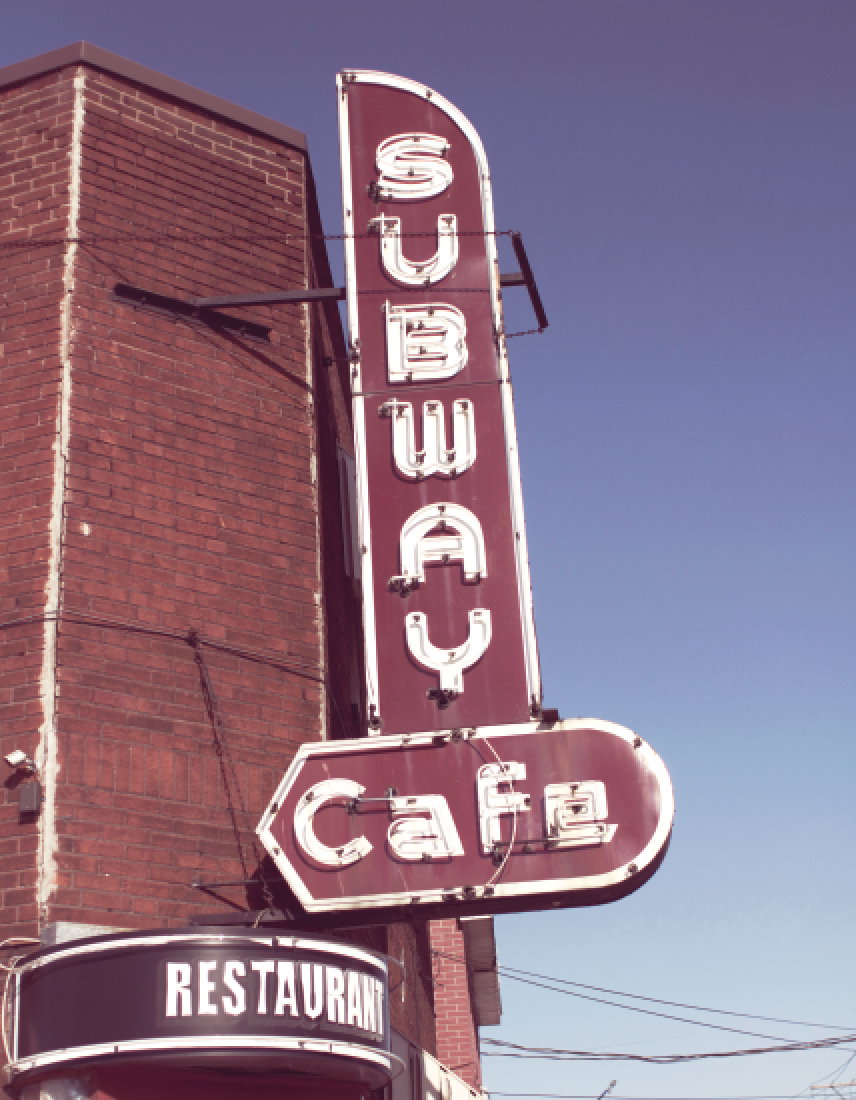
All Aboard for Lunch: For decades, locals have flocked to the Subway Cafe for great company, amazing pizza.

Screenshot 2014-02-28 08.39.26The sturdy, brick building known as the Subway Café is one of those few, iconic Harrisburg places that has withstood the test of time, operating for decades as a restaurant, bar and neighborhood hub.

Need proof? An ad in the Harrisburg Telegraph dating back to 1935 wishes readers “Seasons Greetings” from Subway Café owner Steve Costea and touts “homemade goulash” as the house specialty.

The cuisine wasn’t the only thing just a bit different back then.

The small establishment also featured live entertainment, as evidenced by another ad that ran that same year. Not lacking in hyperbole, the advertisement reads, “Dancing and entertainment your eyes have never seen before. Also the Balkan Knights. Tamburitsa Band. Radio Artists.”

Today, patrons may wonder how the Subway managed to fit live music and dancing into such a small space, which seats about 75. At the time, though, the focus was heavy on entertainment and light on food. Articles throughout the years refer to the business as a “taproom,” and, in 1942, the Telegraph referenced a bit of legal trouble stemming from a “gambling device” discovered on the premises.

Enter Liana and Donato Giusti.

When the Giustis purchased the café in 1948, they made a great effort to improve the reputation of the establishment, located smack-dab in the midst of Harrisburg’s industrial zone, up the block from the Herr Street underpass. Liana’s son Donato Giusti, Jr., recalls, “Two spittoons were the first things my parents eliminated when they took over.”

The couple aimed to elevate the business from a beer den and nightclub to a restaurant, serving up Italian favorites like lasagna, spaghetti and meatballs and their now-famous pizza. Working-class folks from nearby businesses packed the place during lunch and after work to enjoy the freshly made personal pies with the savory sauce and cracker-like crust.

“Harrisburg Steel Company was the main clientele during the World War II years. Their major product was bombshell casings, which were converted to pressurized gas cylinders after the war,” said Donato, Jr.

Business boomed for quite some time before a series of setbacks occurred.

Hurricane Agnes swept through the place in 1972, leaving only the ceiling of the café unscathed. Donato, Jr. said his mother’s repeated quote to the customers, in her thick accent, was “we leana butta we no falla!” This inspired the family to run a newspaper ad with the phrase, alongside a picture of the Leaning Tower of Pisa, to announce that the café was, once again, up and running.

Today, diners can see the remarkable high-water marks from both the 1972 and 1936 floods, which are memorialized on a wall near the entrance.

The 1980s ushered in more challenges. Liana lost her husband in 1984, and the nearby TRW plant burned to the ground not long after, taking with it patrons who no longer found it a convenient lunch or dinner stop. The subsequent closing of the steel mill didn’t help.

A woman of lesser strength would have sold the place and retired, but not no-nonsense Liana.

She credited her father, who owned an Italian café and macaroni manufacturing business near Florence, Italy, for her business sense and tenacity. Tall and stately, she glided through the dining room overseeing everything. Nothing got past her, often to the chagrin of the staff, but she had a soft side and a sense of humor, too.

Liana ran the café until she passed away in 2001 at the age of 90. Donato, Jr. and his wife Pat took over until 2004, when they sold it to Christina and Fotios Lamnatos, who decided to retain the loyal staff that patrons had come to know and enjoy.

Long-time bartender Scott Hohe, with his trademark smile and jocular personality, has been serving up drinks at the Subway Café for 38 years. “I love coming to work every day to meet old friends and make new ones. I’m the hostess with the mostest,” he boasts with a hearty guffaw. Reviewers on Foursquare and TripAdvisor seem to agree, often giving the popular bartender shout-outs.

Romano Premici, who retired in 2009, also was a long-timer, serving more than five decades as cook. Waitress Lisa Kettering has been a loyal employee, as well, serving up food with a smile for almost three decades now.

The current owners have made small adjustments to keep up with the times.

“The changes they made are good ones. They are now open on Saturday nights, and they take credit cards,” said Hohe.

They still serve the popular “fishy bowls” of beer (as Liana used to call them), and the food offerings differ only slightly. Salads now include Greek and Caesar, and they’ve added homemade eclairs, which are hugely popular. The age-old pizza recipe has been retained, earning The Subway Café the PennLive Pizza Party award as the best pizza in Harrisburg just last year.

Meanwhile, the restaurant’s loyal fan base continues to expand. “Three and four generations of family members are coming in now,” said Hohe, who entertains them all.

Bob Schott of Harrisburg has been a regular since 1985. “I’m there every week. Initially, it was because of the pizza, but then I started meeting people,” he said of the family-like atmosphere and camaraderie. Schott recommends not only the pizza, but the lasagna, too.

The Lamnatos have carried on the Subway Café tradition of valuing their loyal staff and customers, serving up good food and welcoming newcomers. For those who have yet to visit, now might be a good time to treat your taste buds to one of the best pizzas around.

The Subway Café, 1000 Herr St., Harrisburg, 717-412-7128, www.subwaycafepizza.com.

Continue Reading

Ear Infection Frustration: This common childhood ailment can be difficult to diagnose, treat.

Screenshot 2014-02-28 08.42.58On a busy winter evening at the clinic, I usually will have several parents come in with concerns that their children have ear infections.

This seemingly straightforward diagnosis can cause stress, confusion and frustration for physicians and parents alike. Below, I will clarify how ear infections happen and why it may be tricky to answer the simple question, “Does my child have an ear infection?”

Next to the common cold, ear infections are the most frequent reason for children to see their doctors. By 3 years old, 80 percent of children will have had at least one ear infection. Understanding ear infections is easier once you understand how the ear works.

The ear is made up of three major parts: the outer ear, the middle ear and the inner ear. Sound enters the outer ear, the visible part of the ear, and travels through the ear canal to the middle ear. The middle ear is made up of the eardrum (a thin layer of tissue) and three tiny bones called the ossicles. The eardrum vibrates in response to sound waves travelling through the ear canal. The ossicles amplify the eardrum’s vibrations and carry them to the inner ear. The inner ear transforms the vibrations into electrical signals that the brain interprets as sound.

For this system to work well, the pressure in the middle ear must be equal to the outside air pressure. This is managed by the Eustachian tube, a small passage between the middle ear and the back of the throat behind the nose.

When a child has a bad cold or allergies, the Eustachian tube may malfunction and fail to drain fluid from the middle ear. Instead of air, this space fills with fluid. Bacteria and viruses may become trapped from the malfunctioning tube and grow in the fluid, leading to an ear infection.

Children with ear infections often demonstrate fever, fussiness, pain and poor eating. However, many of these complaints are seen with the common cold and teething, as well. Just the pressure from fluid in the ear, without an infection, also may lead to pain.

Your child’s physician will gather the history and use this information, along with physical exam findings, to make a diagnosis. The exam typically involves inserting an otoscope, a small flashlight with a magnifying glass, into the ear canal to view the eardrum. Ideally, the physician should be able to see the entire eardrum and assess its color, mobility and position to make a diagnosis. Now, add the following complications—a crying, fighting child, wax in the ear canal, and a parent struggling to hold the child still—and this becomes tricky. The eardrum may look red just from a child crying. Removing large amounts of ear wax may further upset an already uncooperative child.

Your child’s physician then will make his or her best recommendation based on how your child looks at the time of the visit, your child’s history, and what is known about the natural course of ear infections. Treatment may involve antibiotics, holding an antibiotic prescription while waiting a couple of days (watchful waiting), or treating with supportive care measures only.

If the doctor cannot see the eardrum well or is concerned that fluid in the ear has a high potential to become infected, you may be asked to bring your child back for a repeat examination in a few days. Even the best assessment cannot predict the child who gets worse or fails to respond to an initial course of antibiotics. Your doctor also can provide guidance on when to call the office for worsening or continued symptoms.

As a parent, you can help your child’s physician make a good assessment about an ear infection. First, provide a clear history of the symptoms. Second, especially for small children, hold on tightly. A parent who gently, but firmly, holds a fighting child for an exam can make a big difference in the physician’s ability to see the eardrum and make an accurate assessment regarding infection.

The good news is that the majority of children fully recover from ear infections. Ear infections tend to become less frequent as children get older and their Eustachian tubes become longer and more vertically placed, improving fluid drainage and reducing the chance of infection. Accurate diagnosis really depends upon a team effort between physicians and parents to answer that seemingly simple question, “Does my child have an ear infection?”

Dr. Deepa Sekhar is a pediatrician at the Penn State Milton S. Hershey Medical Center.


Continue Reading