All The World Shall Park

parking angel

This week, Standard Parking, Harrisburg’s new parking operators, announced the creation of four distinct districts to help drivers keep track of the city’s new rates and hours. The system relies on multi-space meters whose brand, LUKE II, shares its name with the Biblical chapter about the birth of Jesus. At first, we thought it was just a coincidence. But then we found this dusty old scroll…

Luke 2: The Birth of the Parking Districts

And it came to pass in those days, that there went out a decree from Standard Parking, that all the parking spaces in Harrisburg should be divided into districts.

And all the Harrisburg drivers went to park their cars, every one into his own district.

Some of them went into the Central Business District, stretching between Chestnut and Forster, and between Front Street to the west and North 7th Street to the east.

And the ones who drove into this district were either great with hunger, for there were ranged along this district many a maker of food, or great with anger, for they worked for the state and yet, somehow, did not qualify for a space in one of the garages.

Parking in this district was $3 per hour. And lo, the color-coding of this district on the maps was lime.

Other parkers drove to the north and south, into the border districts. One such district was to be called Old Midtown, extending to Verbeke in the north and N. 2nd to the west.

And the parking in this district was to be mainly in front of homes and apartment towers, and the fee was to be $1.50 per hour. And the reason for the fee was to capture those parkers who sought to avoid paying fees in the other district, whom the decree did not exactly call “cheapskates” or “freeloaders,” although it sort of said it without saying it.

And lo, the color-coding of this district on the maps was salmon.

The other border district was to be called “South of the Central Business District,” and the hourly fee in this district was also $1.50. And the drivers who parked in this district looked upon its name and said unto themselves, “Yea, and by this logic, shall we now also christen our Commonwealth ‘West of New Jersey’?”

And lo, the color-coding of this district was up for debate. Some said it was aqua, and others said it was cyan, and still others said it was glaucous. And while they were debating, an angel came before them, saying:

“Why do ye doubt the color scheme of Standard Parking? Ye shall call it steel blue!”

And the parkers called it steel blue, and were sore afraid.

And the final district was almost no district at all. It was a narrow stretch along North 3rd Street, extending from the Midtown Scholar Bookstore to Harris Street.

And some of the places along this district were cafes and boutique stores, but many of the places were vacant buildings and empty fields, except towards Harris Street, where there was a church and an apartment building for the elderly.

And the fee for the privilege of parking in these places was to be $1.50 as well, but the first 15 minutes of the parking was to be free.

And the elderly folk looked at one another and said, “Let us get out of this district, and go somewhere our grandchildren can visit us for free!” But they could not, because the apartment bus service came once in the morning and once in the evening, and it was only 1 p.m.

And the name of this district was “New Midtown,” and the boundary this district shared with Olde Uptown was the source of much consternation. Some said it should be called “Olde Middleupton,” while others said the parts should cancel each other out, and it should simply be called “Town.”

And lo, the color-coding of this district was lavender.

And it came to pass that a reporter with questions about these districts referred to a portion at the bottom of the decree, which directed him to a “media contact” named Chris Sherman, Senior Vice President of Standard Parking.

And the reporter called the number provided for Mr. Sherman, and it took him to a central switchboard, which put him on hold.

And while he was on hold, the reporter heard a heavenly choir, and the music from the choir was upbeat, in an inoffensive, sanitized sort of way.

And after some minutes, the music ended, and a woman named Alicia answered, in Tennessee. And Mr. Sherman was unknown to this woman, who said she was to direct all media inquiries to another number, which was based in Chicago.

And the man in Chicago was out of the office until Dec. 10, according to his voicemail. And the reporter emailed Mr. Sherman instead, in the hopes of asking, “Why hast thou dealt thus with us?”

And lo, upon the close of business Friday, the email had not been answered.

Continue Reading

TheBurg Podcast, Dec. 5, 2014

Welcome to TheBurg Podcast, a weekly roundup of news in and around Harrisburg.

Dec. 5, 2014: Larry and Paul chat about the arrest of city Councilwoman Sandra Reid, the zone-ification of Harrisburg’s street parking, Paul’s story on the fall of the T-Mart convenience store and the resurrection of the Millworks building. There also may be a rant or two.

Note: This podcast was recorded prior to an interview with Councilwoman Sandra Reid, during which she provided comments on the week since the arrest. You can read the story from that interview here.

Theme music by Paul Cooley, host of the PRC Show podcast.

Continue Reading

Councilwoman Reid On Her Arrest: A “One-Sided Conversation”

City Councilwoman Sandra Reid, left, and Council President Wanda Williams.

City Councilwoman Sandra Reid, left, and Council President Wanda Williams.

The story of Harrisburg City Councilwoman Sandra Reid’s arrest will remain a “one-sided conversation” for now, Reid said Friday afternoon, during an interview in which the councilwoman declined to give her version of the events leading up to her arrest last week at a city gas station.

She did, however, partially dispute the description provided by District Attorney Ed Marsico yesterday as part of his announcement of a disorderly conduct charge for Reid, a lesser charge than the obstruction of the administration of law for which she was arrested after allegedly interfering with the work of Harrisburg police.

According to Marsico, Reid had “repeatedly berated” officers who were detaining a man allegedly involved in a harassment incident at the City Gas & Diesel station in the 1500-block of State Street.

Reid, who said she received law enforcement’s description of her actions for the first time yesterday, said it was “not completely accurate.”

She declined to elaborate further, however, saying she had been instructed by her attorney not to discuss an “open case.”

Reid spoke to two reporters for just under an hour Friday afternoon in a quietly arranged meeting at the abc27 studio on Hoffman Street uptown, in what was her first on-the-record interview since her arrest.

Although she declined to discuss the incident, the councilwoman did address her perception in the media, her interactions with officials since her arrest and her frustration with reactions from members of the public.

She also discussed her on-camera reference to the shooting of Michael Brown by a police officer in Ferguson, Mo., in city hall earlier this week, as well as several outstanding warrants she faced for a number of previous minor offenses.

Reid, upset by the intensity of reactions to what she emphasized was only a summary offense, said the past week has been “traumatic.” “I’ve been villainized as if I’ve committed murder,” she said.

She also said her experience had left her with a feeling that she was “guilty until proven innocent,” and described the events since her arrest as “one of the most trying things” she has been through.

Reid appeared calm and collected throughout the interview. She was not accompanied by her lawyer or any other party.

She said she had wanted to give a statement to the district attorney, but that her lawyer had advised against it. First Assistant District Attorney Fran Chardo confirmed Thursday that Marsico’s description of the incident relied solely on testimony from the police officers and video footage collected from both police dashboard cameras and surveillance cameras at the store.

Reid said she had not spoken since her arrest with Mayor Eric Papenfuse because he was the “CEO of the police department” and it would be a conflict to discuss an active case with him.

She acknowledged speaking with the police chief, Thomas Carter, in the days following the incident, but said they had not talked about it since the case was referred to the district attorney’s office at the end of last week.

She also said she had not seen the brief statement Papenfuse issued late on Thursday, which described her arrest as “an unfortunate incident that escalated too quickly.” Presented with the statement Friday, she declined to say whether she agreed or disagreed, saying that would be tantamount to making a statement about the details of the incident itself.

Reid also addressed a set of outstanding warrants she faced for a variety of low-level offenses, which had been featured in several news reports and which she claimed to have learned about for the first time following her arrest.

Three of the warrants were for unpaid fines for failure to file a local income tax return in 2002, 2007 and 2008. A fourth related to an unpaid 2012 parking ticket, while a fifth related to having been in Negley Park in Lemoyne late at night in violation of a park ordinance.

Reid said she paid the fines on all five warrants, which totaled around $250, earlier in the day on Friday.

An employee in the district court of Judge Marsha Stewart, where four of the five warrants were filed, confirmed on Friday that Reid’s fines had been “paid in full.” An employee in the Cumberland County district court, which held jurisdiction over the warrant for the Negley Park incident, also said Reid had paid her fine.

She expressed frustration at how the warrants were characterized in news reports and comments on news sites, saying people had treated her as if she was “some kind of criminal” out of proportion to the size of and reason for the fines.

Reid also explained her state of mind during an on-camera exchange with reporters in city hall earlier this week, in which the councilwoman said, “Hands up, don’t shoot,” in reply to a question about her arrest.

The remark was a reference to the series of protests this fall following the shooting of Michael Brown, an unarmed black teenager, in Ferguson, Mo., in which the phrase “Hands Up, Don’t Shoot” was often used to invoke the image of excessive police force, particularly against minorities.

“I was frustrated at the time,” Reid said of her use of the phrase. She said the national conversation about relations between police and minority communities was important, but declined to relate it to Harrisburg police in particular, saying they were a party in the case over her arrest.

Continue Reading

Councilwoman Charged With Disorderly Conduct

Harrisburg City Councilwoman Sandra Reid and Police Chief Thomas Carter at a May 9 press conference in city hall.

Harrisburg City Councilwoman Sandra Reid and Police Chief Thomas Carter at a May press conference in city hall.

Harrisburg City Councilwoman Sandra Reid has been charged with disorderly conduct following her arrest last week outside a city gas station, the Dauphin County district attorney’s office said Thursday.

Reid, 45, “unnecessarily inserted herself in an active arrest and ignored numerous requests to allow the police to continue their work at the scene of the arrest without interference,” according to the release.

The district attorney’s office has been reviewing possible charges since last week, including a misdemeanor charge of obstructing the administration of law, which a Harrisburg police log listed as the reason for Reid’s arrest.

Upon completing a review of the incident, however, Dauphin County District Attorney Ed Marsico said he determined her actions only warranted the lesser charge of disorderly conduct, a summary offense.

The obstruction charge would have required “proof of force, violence or similar unlawful act” and there was no evidence of such actions in the case, Marsico said.

The review of the incident incorporated surveillance footage from the gas station, City Gas & Diesel in the 1500-block of State Street, and video footage from police patrol cars, as well as descriptions from the officers involved.

It did not include statements from Reid, store employees or the man with whose arrest Reid allegedly interfered, according to First Assistant District Attorney Fran Chardo.

The footage was video only, and did not contain audio, Chardo said.

According to the release, police officers had arrested and were detaining a man who had been involved in an incident inside the convenience store at the station, allegedly preventing a woman from leaving, when Reid arrived in her car.

The man, Alain Ebele Dejin, 29, had no connection to Reid, Marsico said. He was charged Thursday morning with making terroristic threats, false imprisonment, defiant trespassing and harassment.

As she pulled up, Reid’s headlights “shone into the face of the arrestee,” Marsico said. Police asked Reid to turn off her lights, which she did “after a few requests.” She then “turned them back on, before finally turning them off again.”

Reid then allegedly asked the officers to move Ebele Dejin into the store, “presumably on account of the cold.” The release notes that the temperature at the time was 45 degrees Fahrenheit, and that Ebele Dejin “seemed comfortable and was cooperative with the two officers there.”

During her interaction with police, Reid allegedly demanded the name and badge number of one of the officers and “repeatedly berated” the police.

Reid “ignored numerous requests from the police to stop interfering” with Ebele Dejin’s arrest, Marsico said. After she was arrested, he said, she told police she was a member of city council and “indicated an intention to call the chief of police.”

The incident began late in the evening on Tuesday, Nov. 25. Both Reid and Ebele Dejin were arrested and released sometime after midnight on the morning of Nov. 26.

The police log and Ebele Dejin’s criminal docket list the arresting officer as Jeffrey Clark, a Harrisburg policeman. The district attorney’s description does not indicate whether Clark or another officer provided a name and badge number to Reid, nor does it identify Clark or any other officers involved.

Asked whether Reid was within her rights to ask for a name and badge number, Chardo said it depended on whether doing so interfered with an ongoing arrest. “It’s a matter of context,” he said.

Chardo also said the district attorney’s office would not be releasing the video footage, because he did not believe they were permitted to. If the charges against Reid go to trial, however, he said they would likely become an exhibit and would therefore be a public document.

Marsico also said in his release Thursday that his review included reading a report of a prior incident in which Reid allegedly interfered with a police investigation.

During that incident, which occurred on August 27 near the councilwoman’s home on Liberty Street, Reid is alleged to have confronted an officer whose police vehicle was parked on the street with its lights flashing.

Reid allegedly “ordered the officer to move his car,” Marsico said. When the officer told her he was investigating a car theft, Reid allegedly threatened to call the police chief and asked for his name and badge number.

She subsequently let the officer continue his investigation, upon learning from him that her neighbor’s car had been stolen, according to the release.

Late in the day Thursday, Mayor Eric Papenfuse’s spokeswoman sent out a press release that included a comment from Papenfuse on Reid’s arrest, which he called a “most unfortunate incident that escalated too quickly.”

The comment came at the end of an announcement for a planned series to air on WHBG Channel 20, in which the mayor will host discussions with various guests about easing tension between law enforcement and minority communities. The series is expected to begin this month and continue through next year.

Reid, who is one of seven members of Harrisburg’s City Council, took office in January 2012 and chairs the public works committee.

Prior to Thursday’s announcement of charges, Reid had told reporters she was waiting to make a statement until the district attorney had made a decision.

Asked about a statement Thursday afternoon, she wrote in a text message that she had no comment.

This story has been updated with comments from Mayor Eric Papenfuse.


Continue Reading

Video Footage of Councilwoman’s Arrest May Factor In Charges

City Councilwoman Sandra Reid, left, and Council President Wanda Williams.

City Councilwoman Sandra Reid, left, and Council President Wanda Williams.

Video footage taken at the State Street gas station where Harrisburg City Councilwoman Sandra Reid was arrested two days before Thanksgiving is among the evidence the district attorney’s office is using to determine whether to file charges, First Assistant District Attorney Fran Chardo confirmed Wednesday.

The footage includes video from both police dashboard cameras and store surveillance cameras, Chardo said.

The store’s footage, from cameras with views inside and outside City Gas & Diesel at 15th and State streets, was collected by law enforcement the day after Reid’s arrest, according to Nirmal Singh Gill, a man who identified himself as the business owner.

Gill said he was not present during the arrest and had not viewed the surveillance footage. He did not make available any employees who might have witnessed the incident at his store.

So far, few details have surfaced of the circumstances leading to the arrest of Reid, a first-term councilwoman with an often fiery demeanor who has actively campaigned to remove trash from city streets and crack down on illegal dumpers.

Since her arrest, late in the evening of Tuesday, Nov. 25, Harrisburg police have referred questions about the incident to the mayor’s office. Reid, meanwhile, has declined to give her version of events, saying she would wait to release a statement until after the district attorney had made a decision on the charges.

Most of what is known about the incident comes from a police log, available for download on the city’s website. The log records the arrest of two people close to midnight, one of them a 29-year-old black male and the other Councilwoman Reid.

The log is generated automatically from details entered by officers at the time of an arrest, said Paula Trovy, the police department’s public information officer. In the log, Reid is identified as Sandra Greene, a name from a previous marriage. Both Trovy and Chardo said that was consistent with the police records system, which logs subjects by the name under which they are first entered into the database.

According to the log, Reid was arrested for obstruction of justice, which Chardo said took place during the arrest of the other suspect. The man was arrested for making threats, physical harassment and false imprisonment, as well as for remaining on private property in defiance of an order to leave, the log says.

Officials have “no reason to believe” Reid and the man knew each other, Chardo said, but he added that he couldn’t be sure.

The counts against the man could be charged as three misdemeanors and one summary offense, Chardo said, while the count against Reid could be charged as a misdemeanor. As of midday Wednesday, no charges against either had been filed.

On Wednesday, the city denied a right-to-know request for the surveillance tapes, citing an exemption in the law for materials involved in either a criminal or noncriminal investigation.

Chardo later affirmed the exemption, saying the tapes formed part of the investigation. He did not say whether his office would release the tapes on its own, and referred to a law that restricts dissemination of investigatory materials to non-law enforcement entities.

He did say, however, that the tapes would likely be an exhibit in any case resulting from the investigation, at which point they would become public documents.

This story has been updated with information that an alternate surname identifying Councilwoman Reid was from a previous marriage, and to clarify a point about the names recorded in Harrisburg police logs.

Continue Reading

Turn the Corner: When a convenience store started to disturb a neighborhood, residents, backed by the city, did something about it.

Screenshot 2014-11-25 17.14.58On the afternoon of Friday, May 30, Dave Patton, Harrisburg’s codes administrator, walked into the T-Mart convenience store and asked to see its health license.

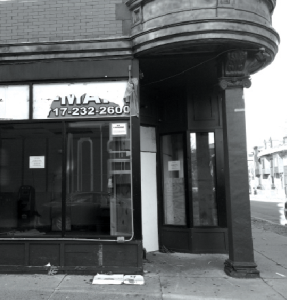
As a business, the T-Mart, at the corner of N. 3rd and Herr streets, was in some ways typical of its environs, the patchy commercial district north of Forster, in the city’s Midtown neighborhood. Across Herr Street is a new Moroccan restaurant; across 3rd, takeout Chinese. Further down the block is a diverse array of businesses, including a trendy pasta place, a greasy spoon, a barber and a pawn shop with red and yellow banners saying, “We Buy Gold.” The T-Mart was just one more business in the mix, carrying the usual corner-store fare: cigarettes, cell phones, candy, toilet paper, over-the-counter painkillers.

In other ways, though, the T-Mart stuck out like a sore thumb. Not long after it opened, in early 2012, the store erected a wooden produce stand along one of its exterior walls. Often, the stand was empty, but when it did have fruit, it was of questionable quality. “It looked like the stuff that fell off the back of the truck,” one neighbor told me. Then there were the windows. Initially, the owner filled them with flyers and ads, so that it was difficult to see into the store from outside. Then, starting sometime in 2013, they kept getting busted in. That October, and again in January and May of this year, police got reports of someone smashing the glass in the shop’s front door.

On May 12, someone threw a brick through one of the main windows, and, shortly afterwards, large plywood panels appeared, covering all the glass on both sides of the door. Now there were no views into the building whatsoever. As one neighbor put it in an email to the city, they made “an occupied store look abandoned.” (Cigarettes, other unnamed items and a total of $850 were reported stolen in connection with these break-ins, according to police reports.)

But the T-Mart’s most unusual feature was the traffic outside its door. Particularly beginning in the winter of 2014, neighbors frequently witnessed what they took to calling “curb service”—a car would roll up, and someone would come out of the T-Mart with what looked like a Styrofoam takeout tray in a plastic bag. The store, however, didn’t sell prepared food. The T-Mart also started to keep irregular hours, which led to another strange phenomenon. People would hover outside the entrance, waiting for it to open. Neighbors found this odd, because there were other convenience stores a few doors away, selling substantially the same items. “If you need a cigarette, it’s over there. If you need a Coca-Cola, it’s over there,” David Botero, a police department community liaison who monitored concerns about the T-Mart, told me. “Why are you waiting for this store to open, and why is there a line of people to come into the store?”

Prior to Patton’s visit, the T-Mart had already been cited a few times for various violations. In April 2013, the store was caught selling cigarettes without a license, while, more recently, earlier in May, it got nabbed for illegally selling individual cigarettes out of the pack, also known as “loosies.”

When Patton entered the store on May 30, the owner, a Nepali man named Tika Siwakoti, wasn’t there. But the man behind the counter, whom Patton took to be an employee, starting digging around in search of the license. “Nah, don’t bother,” Patton said after a moment. “I know you don’t have it.” In fact, Patton’s question was only a test; he’d looked up the T-Mart’s records at his office and knew that Siwakoti hadn’t renewed. In addition, the shop owed a couple hundred dollars in overdue mercantile taxes.

As it happened, another man in the store was on the phone with Siwakoti at that moment, and he passed the phone to Patton. “You have til Monday,” Patton told him. Siwakoti started to protest, but Patton held firm. “I don’t think you’re feeling me,” he said. He told Siwakoti that if he didn’t update his license and get current on his taxes, the city would shut him down.


One of Mayor Eric Papenfuse’s first actions in office was to promise a new approach to crime. He made Thomas Carter, a soft-spoken and courteous 26-year veteran of the force, the permanent police chief—he had been holding the position in an interim capacity—in a decision Papenfuse later called “the most important” of his first year. He also engaged Robert Martin, the longtime chief in Susquehanna Township, to consult Harrisburg in adopting “community policing” techniques. (Martin and those efforts were the subject of a profile in this magazine’s March issue.)

“Community policing” is an umbrella term for methods that are meant to improve a department’s relationship with the public. That might make it sound like a branch of marketing, and indeed, David Botero, whom Papenfuse appointed in January under the title of “community policing coordinator,” sometimes speaks of the police department’s “brand.” (In a past life, he worked at an ad agency.) But to its adherents, community policing is also about good police work. A department that has positive relationships with residents, they believe, will ultimately pick up better tips, catch more criminals and generally have an easier time doing its job.

In the case of the T-Mart, neighbors stepped up their involvement in mid-May. “People reported suspicious activity there,” Botero told me recently. “Then, when we looked into it; ‘suspicious’ turned out to be pretty legit.”

Jonathan Hendrickson, the president of Midtown Square Action Council, one of the neighborhood groups that corresponded with Botero, said that, in the preceding weeks, the situation outside the store had worsened dramatically. “We kind of called an emergency meeting, because there were some things that just had been getting really shady,” he told me.

One neighbor complained she’d been solicited for sex in front of the store. Another neighbor, fed up with what he saw as blatant evidence of drug dealing, had created around a dozen flyers advertising an “Open Air Drug Market,” which he posted on telephone poles in the neighborhood. The flyer showed a skeleton figure hawking “diesel” and “hard”—nicknames for heroin and crack cocaine, respectively—and provided T-Mart’s name, address and phone number. (Aside from Hendrickson, neighbors I spoke with asked not to be identified.)

On the morning of May 30, a neighbor emailed a contact in the mayor’s office with a complaint about the T-Mart’s boarded-up windows. The mayor’s assistant forwarded the complaint to several officials, including a police captain, Patton from codes and Botero. Within a few hours, Patton had made his visit to the store and reported back on the thread. Botero replied three minutes later. “Thank you; and excellent—great job, DP!” he wrote. He asked how much he could share with the Midtown group, which he planned to meet the following Monday. The group was “[v]ery political, very vocal, very connected,” he added. “They will be asking about this property.” (The city produced the email chain in response to a right-to-know request; the neighbor’s name was redacted.)

Initially, the city seemed to think the extra scrutiny would be enough to close the shop. “We were planning to shut everything down,” Patton told me. But, the following Monday, to his surprise, Siwakoti showed up in city hall to renew his license and pay the taxes. “We kind of had to go to Plan B,” Patton said.

“Plan B” was the codes enforcement equivalent of a full-court press. Over the next three months, the city applied every kind of pressure within reach to drive the T-Mart out of the neighborhood. In June, another police officer caught the store selling loosies. In July, and again in August, a codes inspector cited the owner for the boarded-up windows, this time filing the charges in “housing court,” a concept Papenfuse revived this year as part of a crackdown on blight. Both times, the judge, David Judy, handed down a $600 fine.

On Aug. 5, a codes inspector and a city health officer showed up at the T-Mart together and found myriad violations. The health officer’s report noted the lack of soap and paper towels in the bathroom, expired Similac baby formula for sale, and “evidence of pest on food shelving,” among other offenses. The codes report was even more voluminous. It cited exposed wiring in an electrical box, a padlocked exit door, a fire extinguisher with expired tags, one emergency light blocked by boxes and another inoperative, and a dozen other violations. Additionally, it noted there were still boards on the windows.

Meanwhile, the neighbors and Botero were in touch with the landlord, a man named Geoffrey Rhine. On May 27, Rhine had sent a termination notice to the T-Mart, which referred to lease violations as well as “complaints from others in the nearby neighborhood about the impact of activities in and around T-Mart.” On Aug. 12, he sent a second notice, ordering Siwakoti to vacate by Sept. 15. Nonetheless, by early October, the T-Mart had still not left the premises.

On Oct. 7, Hendrickson of Midtown Square Action Council sent a letter to Rhine. He claimed that, following the health inspection, the shop had switched from selling food to selling clothing and “‘burner-style’ cell phones.” He added that the neighborhood group was trying to help find a new tenant for the space, but asked Rhine to initiate eviction proceedings in the meantime. “We can do little while the property remains a blighted source of drugs and decay within our neighborhood,” he wrote. Finally, one week later, on Oct. 14, Rhine filed for eviction. “He took one for the team,” Botero told me. “He could’ve played dumb, but he did the right thing.”


Siwakoti’s eviction hearing took place on Wednesday, Oct. 29, in District Justice Barbara Pianka’s courtroom in the Uptown Shopping Plaza. At 9:30 a.m., Rhine was already there, sitting just inside the door with his hands folded in his lap. Siwakoti arrived 15 minutes later, in a tan sports jacket, light brown corduroys, and a tan ball cap with a Yankees logo. It looked as though he hadn’t shaved in several days. He spotted Rhine, walked over to him and shook his hand. “Hi, Tika,” Rhine said. Siwakoti checked in at the counter, took a seat and began reading from his phone.

Just before 10, a clerk called them into the courtroom. After a short wait, during which neither of them spoke, Pianka entered in her black judge’s robes and took her seat at the bench. Rhine, in his complaint, had not asked for any money beyond court costs; he simply wanted the eviction. He began by referring to a paragraph in Siwakoti’s lease, which required compliance “with all statutes, ordinances, and requirements of all municipal, state, and federal authorities.” Pianka stopped him, asking whether Siwakoti had a copy of the lease.

“I misplaced the lease,” Siwakoti said quietly. “I lost it.”

Pianka left to make a photocopy so that, she said, Siwakoti would “know exactly what’s taking place today.” When she came back, she handed the document to Siwakoti, who began to protest. “Your Honor, it is not really failure,” he said. “What happened was—” Pianka cut him off, telling him that Rhine had to finish the complaint first.

Rhine picked up where he’d left off. In addition to the paragraph about compliance with local ordinances, the lease, which was dated Nov. 12, 2011, contained an option to extend the lease an additional two years, which had to be exercised by Sept. 15, 2013. Siwakoti, Rhine said, had never exercised the option. He reviewed a series of documents he’d attached to the complaint, including Hendrickson’s letter, his termination notices, and the failed codes inspections. He also included an email he’d sent Siwakoti on Aug. 1 about reports that boards were still up in the windows. “Please make immediate necessary window repairs and get the boards removed,” it said. It also suggested that Siwakoti contact Botero and neighborhood groups “on how to work together to eliminate the undesirable drug trafficking and loitering in the area around the building.”

Once Rhine had reviewed all this, Pianka gave Siwakoti a chance to speak. He began by defending the presence of the boards in the windows. “The store got broke in five, six times,” he said. “Six glasses was broken. I had to board that up til I fixed that. It is not a magic to fix six glasses in a matter of weeks.” He said the repairs had cost a total of $3,200. As for the violations, he said, everything in his store was up to code except for a piece of exposed wire in the ceiling, which he only learned was a violation when the inspector pointed it out. He said he had “never received any letter” from the neighbors, but that whatever it said was “totally, absolutely false.” He dismissed the idea that people gathering on the corner was evidence of wrongdoing, noting that sort of thing happens anywhere there’s a business. “This is a court,” he said. “People have to come here, they’re going to gather outside.” There were “absolutely no drugs” and “absolutely no kind of any illegal solicitation” inside or outside his store, he said.

When he was finished, Pianka asked Rhine if he had any questions for Siwakoti.

“No,” Rhine said.

“Anything else I need to be made aware of today?” she asked.

Rhine confirmed that he wasn’t seeking money damages, only an eviction and payment for his court costs. Siwakoti said that, because he’d lost the lease, he wasn’t aware of the deadline for the extension. Then he digressed into a discussion of rent. He spoke quietly, and his syntax was hard to decipher, but he seemed to be saying that, if Rhine wanted to negotiate a higher rent payment, he was open to doing so. Finally, he returned to the codes inspection. When a codes inspector found something wrong, he said, that was “not a violation—that is ‘need to fix.’” Every problem that had been identified, he said, he had since resolved.

Outside the courtroom, I introduced myself to Rhine. Botero had referred to him as the “unsung hero” of the story because he had cooperated with the city and neighbors. I wanted to know: did he see things the same way? Rhine, who grew up in Camp Hill but now lives outside Philadelphia, said he’d be willing to talk, but added that he didn’t want his name to appear in the story. When, in a follow-up call, I told him I couldn’t grant that condition, because his comments were made in a public forum, he declined to be interviewed further.
Screenshot 2014-11-25 17.15.16


On a rainy day in late October, I met Botero outside the T-Mart on 3rd Street. He rolled up in a white police caravan—an airy, rattling vehicle he described as a “lunchbox.” When I climbed on board, he offered me a McDonald’s coffee from a tray of them on the floor between the driver’s and passenger’s seats.

Botero isn’t a cop. He doesn’t carry a badge or a gun, and he has no background in police work. A New Jersey native of Colombian descent, he has an olive complexion, clear blue-gray eyes and short black hair, specked with gray. In his role as an intermediary between citizens and police, he tries to be both a cheerleader and a friend. He maintains a huge network of contacts—buddies, acquaintances, people he’s given one-time favors. He’s conspicuously informal, identifying himself in email signatures as “community peace dude.” Whenever possible, he tries to inject excitement into the enterprise. At the end of our first phone call, he asked me to email him my contact information. He wrote back with an immediate one-line reply: “giddy up!”

To Botero, the T-Mart episode represented a classic case of neighborhood intervention. On the phone, he’d praised the Midtown neighbors, saying he wanted their efforts to be a “blueprint” for other neighborhoods. “They helped us to stay focused,” he said. In the car, he elaborated. “Four or five years from now, when things continue to change, I’m gonna look back at this T-Mart,” he told me. “Because other neighborhoods that have, quote-unquote, ‘T-Mart,’ those nuisance businesses? If it’s happening there, it’s because the neighborhood allows it to be there. Midtown clearly does not have any tolerance for that. And they did something about it.”

As we talked, Botero spotted a woman laden with shopping bags on a street corner, looking forlorn. He pulled up beside her, rolled down the window, and called out to offer her a ride. She was on her way to a department store in Kline Village and had missed her bus. It was raining, and, after a moment’s consideration, she climbed on board. Botero can talk to anybody, and, in no time, the two were chatting amiably—about bus routes, their churches, their opinions of local media. After driving 15 minutes out of his way, he dropped her off at the store’s front door. “That was God right there,” he said as we drove away. “This is not politicking, because it’s not an election week,” he added. “It’s got zero to do with that. She will go to Hillside”—her church—“and she will say, ‘You know what? Some nice officer came and got me.’ That’s all I care about. And that’s branding. That’s my goal.”

We returned to the topic of the T-Mart. I wanted to know whether the neighborhood involvement had actually solved the problem. The city had driven the store out of a particularly active neighborhood—wouldn’t it now just take up residence somewhere less vigilant? “The cool thing about this is, what it isn’t, it’s not ‘Not In My Backyard,’” Botero said. “Because he’s not taking it to the West Shore, he’s not taking it to Derry, he’s not taking it to Uptown. He’s just kicked out, period.” He said he would hold up the story as an example for other neighborhoods, to show them that they, too, had the ability to control the activities on their street corners. “I’m going to Southside, going to all those places, saying, ‘We did it here.’ Not because they’re white and because they’re homeowners, but because they cared, and they did something about it,” he said. “And we, the city, stepped in and did it.”


A week after his eviction hearing, I called Siwakoti. He picked up on the third ring. I told him I was a reporter interested in his version of events regarding neighborhood complaints about the T-Mart.

Screenshot 2014-11-25 17.14.48“That is not ‘neighborhood,’” he began. He claimed the people complaining about his store were not actually residents of the neighborhood, adding he was a victim of “racial hating.” “They are white,” he said, so officials “are going to listen to them, not me.” He also felt he’d been unfairly targeted over violations, and that neighboring businesses had not received the same scrutiny.

While we were speaking, I heard Siwakoti field what sounded like a sale. “3.99,” he said. “Plus tax.” I asked whether he was in his store. Yes, he said, the store on 4th Street. In addition to the T-Mart at 3rd and Herr, Siwakoti until recently operated two other stores—one at the corner of 4th and Harris, the other on Locust Street downtown. (He was evicted from the downtown store on Oct. 30, for apparently unrelated reasons; the complaint, by a different landlord, claimed he owed $3,500 in rent.) I asked if I could come over, and he said that would be fine.

I pulled up in front of the store around 10 minutes later. The door was open, but the lights were off, and Siwakoti stood on the stoop, smoking a cigarette. He said he was having electrical problems and that someone was coming to make repairs.

We talked outside for around 40 minutes. In that time, perhaps a dozen different people approached the store. One identified himself as a student in a forklift operating class in the HACC parking lot across the street. He came to buy a knit cap. Others came close, peered through the open door into the dark shop, and then walked off. For the most part, Siwakoti didn’t acknowledge them.

There were, however, exceptions. At one point, a forest green van pulled up and a middle-aged man, wearing a hoodie and a gold chain, climbed out. He entered the store and, a minute later, reemerged with an orange drink and drove away. Siwakoti didn’t say a word. I asked if the man worked for him. “Yes,” he said. “I’ve been robbed at gunpoint more than hundreds of times. So I asked this guy, he doesn’t drink, smoke or do drugs, can you help me, stay around me?” On another occasion, a sedan rolled to a stop in front of the store with the windows down. A man leaned out and told Siwakoti to close the door, so that people wouldn’t think the store was open. Then he drove on.

For most of our conversation, Siwakoti spoke freely, even emphatically, about how he’d been mistreated. He dismissed the citation for expired baby formula, saying it was only one can out of 15 on the shelf, and he would never have sold it if someone tried to buy it. He also complained that a TV news story about the T-Mart didn’t accurately portray his statements. (The story, which ran on Channel 8, introduces the T-Mart as a “nuisance business” that “voluntarily” closed.) He seemed particularly agitated by the accusation about sex solicitation, which he said occurred everywhere. “That happens in front of police building, in front of MLK Government Center,” he said. “If my customer winds up being prostitute, that’s my fault? Prostitutes don’t go to city hall?”

But then, at the end of our conversation, he suddenly started to withdraw. He said he didn’t want his name in the paper—it was too late for his business, and quoting him would only damage him further. He said the police and the city, who were already against him, would come after him for what he’d told me. “They will chase my ass out of town,” he said.

Two guys who had walked up and found the store closed had been hovering nearby. When I wouldn’t consent to not printing anything he’d told me, Siwakoti called at them so that he could have a “witness.” They ignored him. Finally, he called out, “Hey, deaf!” One guy walked off, but the other turned around and came over. He was young, perhaps in his late 20s, and wearing a varsity jacket and a ball cap.

I expected Siwakoti to explain his demands, but instead, they just talked about the T-Mart. The young man, who seemed familiar with the situation, waved the allegations of drug dealing aside. “Only drugs I know is medicine,” Siwakoti said. “They said I was selling heroin. I don’t know what is heroin!” He laughed.

The young man started to say something about how “they” had targeted the T-Mart and broken its windows, but when I pressed him, he wouldn’t say who. He stepped out into the street. “Tell them the real reason all those people went in there,” he said finally. Siwakoti was silent. “He was selling loosies!” the guy said.

After our conversation, I went to get lunch. An hour later, on my way back to work, I drove past the 4th Street store. The lights were on, and the door was open.


Continue Reading

Livin’ the Cream: Pastries rise to the top at Brew Crumberland’s Best.

Screenshot 2014-11-25 17.16.45Laurel Weiser never wanted to work for someone else.

After finishing school and moving back to her hometown of Grantville, the pastry chef took jobs as a baker, first at the Hilton Harrisburg and later at the Hershey Hotel.

While she enjoyed the work, she dreamed of creating her own recipes and running her own business. Just when she felt she might be stuck as someone else’s employee, a speck of hope appeared at the end of her rolling pin.

Weiser’s aunt, Vicky, wanted to retire from Bridge Street Coffee Shop, the New Cumberland fixture she owned for about 15 years. Weiser decided it would be the perfect time for her to make a jump. After working alongside her aunt for several weeks, she officially took over the shop on Sept. 1.

“It suddenly felt like everything I had worked for would be worth it,” she said.

Weiser’s family helped her put her own touches on the shop décor, and she renamed it Brew Crumberland’s Best (pun totally intended). But new paint on the walls and a different furniture arrangement was just an aesthetic change. Bigger things were going on inside the kitchen.

A new espresso grinder and fresh roasted coffee beans delivered each week from Mosaic Coffee Company in Shippensburg were one part of a two-part menu redesign Weiser had in mind.

“A lot of places can offer you just one thing—either great tasting coffee or a great tasting pastry,” Weiser said. “They specialize in one thing, but I want to make sure we’re the best of both.”

When Weiser isn’t out front making specialty coffee drinks for regular customers, she’s back in the kitchen. It’s there that she finds the freedom to explore recipes she never had the chance to tackle when she worked in other places.

Her daily baked scones and muffins, most recently created with fall flavors apple cider and pumpkin roll, are her biggest sellers. Brownies and peanut butter pie are close seconds, but she soon hopes to break into more sweet breads, as well as cinnamon rolls, cheesecake and other desserts.

“I can do whatever I’m in the mood to do,” Weiser said of her creations. “The special thing to me is being able to see people’s reactions when they eat my food. I was always stuck in the back of a kitchen, making the same recipes every day. There’s something very unique to getting immediate feedback from people who eat what you create.”

The young business owner has big plans for her new endeavor. She hopes to eventually offer live music and have local art displayed on the walls.

“I really want to immerse myself in this community,” she said.

Meredith Brewster, who stopped into the coffee shop recently, said she happened to be passing through and needed something to get her through the rest of her day.

The Lower Paxton Township woman munched on a panini and snuck a scone into her purse for later.

“I never go to the big name coffee shops,” she said. “For me, the great thing about this area is that there are so many independent businesses. I always try to help them—especially when they make stuff as delicious as this.”

Jeremy Lewis of Harrisburg was on his way between business meetings when he decided to use the drive-thru for a late lunch the same day.

“I’ve come here a few times, always for the coffee,” he said. “When I find a place that makes a good cup, it becomes a regular stop for me.”

The comments of happily fed customers keep Weiser inspired. She’s always looking for something new to create, something else she can improve and another customer she can please.

“I’m exhausted every day, but I don’t think I’ve ever been so happy,” she said. “I’m learning a lot, and I have a lot of areas to grow in, but I’m happy to be on this path. I think great things are going to happen.”

Brew Crumberland’s Best is at 1903 Bridge St. in New Cumberland. Hours are Monday to Friday, 6 a.m. to 3 p.m., and Saturday, 7 a.m. to 2 p.m. For more information, call 717-774-6511 or search for “Brew Crumberland’s Best” on Facebook.


Continue Reading

Power Pie: Lawmakers, pizza-lovers tuck in at Cork & Fork.

Screenshot 2014-11-25 17.20.08If you’re a Harrisburg foodie, you’re in a very happy place right now.

For months, new (and excellent) restaurants have been opening, with even more on the way for early 2015.

The newest arrival categorizes itself as a wine bar/pizzeria, which doesn’t quite do it justice since it’s so much more than Pinot and pie.

The casual, yet gourmet, eatery, a short stroll from the state Capitol, takes the tapas trend and runs with it. Pizzas, pastas and small plates are all designed to be shared, making this hotspot a haven for socialization.

“Nick tries to bring different things to the city in terms of what we lack,” General Manager Josue Osorto said of his boss, Nick Laus.

Laus, who long has had his finger on the pulse of the restaurant scene in Harrisburg, also runs Home 231, Level 2, Café Fresco and Italian Pizza and Subs, which has been a fixture in the area since the 1970s.

The grand opening drew a large crowd to the restaurant, which can be described as cozy without feeling cramped. Wooden tables are placed a comfortable distance apart, providing diners with ample elbow room and allowing waiters to move about the space unimpeded.

Spherical glass chandeliers illuminate the elegant and tasteful décor, which is done in muted tones of tans and browns. Stainless steel appliances add a modern feel, and floor-to-ceiling windows bring the outside in.

The open pizza kitchen allows patrons seated at the marble bar to work up an appetite as they observe the chef putting the finishing touches on the pizzas and sliding them into the 850-degree oven for the perfect char.

Eight different pizza varieties are available, featuring toppings like fennel sausage and meatballs, along with vegetarian options like mushrooms and pistachio pesto.

Between bites, Chris Leavitt, who lives in Midtown, testified that the margherita pizza was excellent.

“It’s not the typical type of pizza you’ll find in this area,” he said. “The basil was extremely aromatic, the sauce had a nice balance, and you could tell the ingredients were very fresh.”

Leavitt’s friend, Ryan Riley, who joined Leavitt at the grand opening, agreed.

“One term that is overused, but not understated, is the value of the farm-to-table concept,” said Riley, a former president of Harrisburg Young Professionals. “They adhere to that concept, while succeeding in capturing an elegant taste.”

The two-sided menu also features salads and small plates, which many choose as starters. Diners can select from four types of salad and a seasonal vegetable plate or indulge in heartier fare like oven-roasted Brussels sprouts, homemade meatballs, eggplant Parmesan, or sweet Italian sausage with kale and cannellini beans, which Leavitt described as “damned tasty.”

Friends can mix and match cheeses such as gorgonzola and gouda with meats like sopressata and mortadella to create a custom plate to pair with their choice of wine.

Made-from-scratch pasta is available for those seeking something more substantial, and diners can cater to their cravings without breaking the calorie bank. Five selections range from the hearty pappardelle with pulled pork to the more nuanced shrimp fettucine with shaved asparagus, crushed tomatoes, basil and Parmesan.

When it comes to libations, there’s no shortage of choices. One full page of the menu is devoted to red wines, white wines, bottled beers and craft cocktails.

“We paid special attention to the cocktail menu, coming together as staff and developing our list through trial and error,” said Osorto.

Riley said his favorite was the mint julep, which exceeded his expectations.

“It was a phenomenal combination of flavors,” he said.

Other choices range from the dry blue cheese martini to the sweet berry basil gimlet, and each week the restaurant features a staff pick. To take advantage of seasonal fruit, sangrias and mojitos will change throughout the year so bartenders can work with the freshest ingredients available.

For those who want a more intimate experience, an upstairs space, which seats 22, is available for private parties, and more seating will be available outside when the weather warms up.

Riley, who witnessed the transformation of the space from an empty lot, said it has a “wow” factor to it.

“When you enter the restaurant, you feel like it’s on par with any of the high-end restaurants you’ll encounter in cities like Philadelphia,” he said. “The atmosphere is great and so is the service. I highly recommend it.”

Cork & Fork is located at 200 State St., Harrisburg. Hours are Monday to Thursday, 11 a.m. to 11 p.m. and Friday and Saturday, 11 a.m. to 1 a.m. For more information, call 717-234-8100 or visit the restaurant’s Facebook page.

Alex Hartzler, TheBurg’s publisher, is a partial owner of Cork & Fork.

Continue Reading

A Different Drum: Real-deal drummers have a beat on Dale’s.

Screenshot 2014-11-25 17.16.22There’s a sign hanging over the register at Dale’s Drum Shop that says, “We’d rather make friends than $$.”

It’s a mantra for the surprisingly large and extensive drum retailer tucked away in a residential neighborhood in Colonial Park. With multiple rooms filled wall-to-wall with supplies, it’s enough to make any drummer drool. What makes the shop even more interesting is its history. Founder Dale Wise was the right-hand man of legendary drummer Buddy Rich.

Rejjie Troup is the general manager at Dale’s and has been a part of it pretty much since the beginning. On a recent workday, Troup, who has a raspy voice and a horseshoe mustache, was sitting in the shop’s workroom, a narrow space lined with boxes of drumheads, sticks and countless tools. Joining him was Dale’s sales manager, Dan Grabski, a tall and skinny man with a beard and a few tattoos peeking out of his shirt.

“Basically, Dale came off the road—he was Buddy Rich’s drum tech—and started the store with two other friends of his,” Troup said. “It was down in the basement. You had to duck your head to get down in, but I remember, the first time I went in, I was amazed at how much gear he had fit into that small space.”

The shop opened in 1982, and was originally called BCR, which stood for Bluegrass, Country and Rock n’ Roll. BCR still exists today in Lemoyne, but with different ownership. Wise’s two business partners handled the guitar end of the business, and he had the drums.

Screenshot 2014-11-25 17.16.29Troup remembers Wise tinkering in his limited space, making everything stand out perfectly. He speaks of him with a reverent and respectful tone, but he doesn’t gush. He tells the stories of the shop’s origins with the same humbleness Wise is known for, but he still takes great pride in what they’ve accomplished.

“A lot of times, he’d sneak in at night and maybe move his stuff one or two more inches to pick up space from the other guys that were there,” he said. “They never even knew that he did it, but he knew, just like it is here now, that you have to have product and that’s why people come in.”

The shop drew customers in from near and far. Troup says that he used to make a sometimes 45-minute commute himself.

“If you bought anything else from around here, you were paying full list price,” Troup said. “Dale’s prices were, at that time, roughly 40 percent less than anyone else’s.”

In 1985, the shop moved to its current location, a renovated, two-bedroom blue house just off of Jonestown Road, behind a strip of commercial properties. Grass-lined sidewalks separate the neighboring homes from the quiet street. Most of the traffic is made up of cars going in and out of the small parking lot in front of Dale’s. A large sign in the shape of a cymbal hangs over the door.

The late-night tinkering in the original basement shop continued in the new location, where many late nights were spent renovating the house, preparing displays and getting the shop ready for customers.

“We used to spend evenings here, just like Dale used to in the old place,” Troup said. “Rearranging displays, building displays, just trying to make space for one more piece of gear. We still do it but not to that extent.”

“I remember stories, you guys would work all night, and then be like, ‘Oh, we have to open in an hour and a half!’ and then clean up and sell all day,” Grabski said. “And then you’d have to go back and do it again at night.”

Perhaps the most interesting piece of Dale’s history comes from the equipment itself. While he was on the road with Buddy Rich, Dale had amassed a collection of equipment that once belonged to the drummer.

Buddy Rich was an American jazz drummer and bandleader. Known for his innovative techniques, versatility and precision, he was heralded as one of the greatest drummers ever to have lived.

Much of the shop’s original merchandise had belonged to Rich, though Dale never advertised this fact. It was like selling a guitar that once belonged to Eddie Van Halen, or cleats that belonged to Barry Sanders, and never telling your customers.

“That’s the difference between this shop and any other shop,” Grabski said. “If it was any other shop owner, he would’ve been selling himself, saying ‘You know who I am, look at what I have,’ and Dale is the complete opposite. He wants to cut you a great deal, and it’s about you, not him.”

In keeping with the sign over the counter, customer service is first and foremost at Dale’s Drum Shop. Whether you buy a huge drum kit, a pair of sticks or nothing at all, the staff is glad you came. Grabski says the keys to their success are never being satisfied and always striving to make the shop better. It helps when your staff is made up of real-deal drummers, and better yet, real-deal drummers who are all friends.

“I think that’s what sets us apart from other retailers,” Grabski says. “At night, you’re either gigging, working on your personal equipment, or your staying here and working late. It’s not just reading out of a book and studying it. We’re actually into it and interested in it for our own needs and know it for our customers.”

This small, close-knit team takes pride in the shop they work in, literally day and night. It’s a family affair, and, when you’re at Dale’s, you are a part of it.

“This isn’t just a hobby for us,” Troup said. “This supports a lot of families. We care about the gear we sell, and we care about the people buying it. I think that’s what keeps us getting better.”

Dale’s Drum Shop is located at 4440 Fritchey St., Harrisburg. For more information, call 717-652-2466 or visit www.dalesdrumshop.com.

Continue Reading

Mission Trip: A single night in the century-long life of the Bethesda Mission.

Screenshot 2014-11-25 17.15.48On weekday nights, around 8 p.m., the halls of the Bethesda Mission men’s shelter, at the corner of 6th and Reily, are cleared for cleaning.

The long-term guests do most of the work, according to a schedule of duties pinned up next to a poster for HIV testing. The other men either wait in the chapel, watching TV, or go outside, where they can have a smoke and look out at the view: a parking lot, a grassy field, a luxury residential high-rise.

This routine was underway at Bethesda when I arrived to check in there, on a mild, foggy night in mid-November. On the recommendation of the shelter’s program director, whom I’d interviewed a couple of weeks before, I showed up unannounced and asked for a place to sleep.

On Dec. 22, the Bethesda Mission marks its 100th anniversary. Most people associate Bethesda, if they know it at all, with the men’s shelter at 611 Reily, a grand brick structure with an iconic green cross hanging out front. The shelter has been at that location since 1934, when Bethesda purchased what had previously been the Railroad YMCA. But, since 1983, the organization has also operated a women’s shelter in Allison Hill, in a former elementary school. And, since 1990, it has run a youth ministry out of an old fire station at 15th and Herr.

This year, the Bethesda Mission has undertaken a campaign to spread awareness of its lesser-known programs, through billboards and radio ads bearing the tagline “Inspire Hope.” A second goal of the campaign, according to Scott Dunwoody, Bethesda’s vice president for business development, is to educate the public about Bethesda’s mission. Traditionally, a homeless shelter was thought of as providing bare essentials—“three hots and a cot,” Dunwoody said. “But now the goal is long-term recovery.”


While the employees at reception figured out how to accommodate me, men streamed out of the chapel into the front hall. A few minutes later, a voice over the speakers, polite but firm, reminded everyone to keep out of the way of the cleaners.

The men at reception didn’t push too hard. They didn’t ask for my name or my information, but they did want to make sure I needed just the one night. Unless you enter Bethesda’s recovery program, New Beginnings, you’re limited to one 10-night stay every four months, and they were puzzled I didn’t want to stay longer. “You miss the bus or something?” one of them asked. They said they could put me up on a mat on the chapel floor. “Now, don’t come back tomorrow saying you want the 10 nights,” one of them added.

The recovery program at the men’s shelter extends a guest’s stay in phases. A guest in the New Beginnings program can stay for four months, but he has to opt in by his fifth night. A second phase, called the Helmsman program, extends the stay another six months. Doug Barger, program director at the men’s shelter, explained Bethesda wants guests to make a considered decision to sign up for recovery—and not just a last-ditch choice because they have nowhere to go. “We make a long-term commitment to them,” he said. “They have to make a long-term commitment to us.”

Barger has been with Bethesda for 13 years. He previously worked at America’s Keswick, a Christian addiction recovery program in Whiting, New Jersey. Like many people who go into recovery work, he overcame his own addiction. “I gave my life to Christ and asked my church to pray for me,” he said. When I asked if his experience helped him understand Bethesda’s guests, he replied, “I speak their language. I know where they’re coming from.” Many of them, he said, don’t believe he ever had an addiction, because they don’t think theirs can be defeated. “But I tell them, ‘It’s very possible. Just make the next right decision.’”

Programs at the women’s shelter operate on a different calendar. Residents must commit to a full year, and their movements are restricted for an initial period, the length of which varies depending on the circumstances that brought them there. As Shelley Brooks, who has been the director there for the past 30 years, explained, “We don’t do emergency shelter. We focus on recovery and homelessness.”

Brooks took me on a tour of the house in late October. Where the men’s shelter feels like a dormitory, the women’s shelter feels like a home—quieter, cozier, more evidently inhabited. We passed a mural, titled “Fruits of the Spirit,” showing a tree bearing fruit of a dozen different varieties. I took note of a banana labeled “patience” and a pineapple labeled “love.” “People become very gentle, very caring for one another, one they find out that they’re safe,” Brooks told me. She recounted the looks on women’s faces at Christmas, when they receive gifts from donors who learned about their specific needs. “They don’t understand that someone took their name, and went out and bought clothes that fit them, and wrapped it—that there are still good people in the world.”

Brooks introduced me to Margarita, the shelter’s house manager, who has worked at Bethesda for 14 years. Margarita, who came through the program herself, recalled her feelings the night she arrived. “It was a release for me,” she said. “They had these raggedy blue chairs. I didn’t care. I said, ‘I got somewhere to lay my head. I got some peace.’”


After being admitted, I entered the chapel, a large room with a high, tapered ceiling. In the center are a hundred upholstered metal chairs, divided into eight rows with an aisle up the middle, and facing a squat white lectern. Behind the lectern is a flat-screen television, mounted on a glass wall. Flanking the television are cream-colored banners, one saying KING OF KINGS, the other LORD OF LORDS. Flanking the banners are poles holding American flags.

I sat in one of the chairs to get my bearings. A young man, perhaps 19 or 20 years old, stood in the corner with a ping-pong paddle, serving a ball to himself off a spot high up on the wall. After a few minutes, I headed to a lounge behind the altar, dimly visible through the glass. Here, perhaps two dozen armchairs were crowded together in front of another television. Several men reclined in them, some with shoeless feet draped over the arms, watching “Thirteen Ghosts.” At one point, someone remarked he’d once walked from Philadelphia to York. At another, someone said the chairs were comfortable. But mostly no one said anything.

I headed back out to the chapel. In the interim, maybe half-a-dozen men had drifted in and taken seats, and the television was now on. Someone flipped the channel to a documentary about Randy Moss. In addition to ping-pong, the chapel is home to a foosball table. While I was eyeing it, a young man walked over and picked up a small cardboard box off a stack of hymnals on a bench nearby. It held a traveler’s toothpaste. He gave it a little shake. “There a foosball in there?” I asked him. “Huh?” he said. He started to walk off, and then he turned around. “You want to play foosball?”

The young man’s name was Preston. It was hard to guess his age. He had short, dark hair, light brown skin and a compact build. He said he grew up in the area; he’d played foosball at his daycare in Allison Hill. He’d been at the shelter for two and a half months, and was enrolled in the New Beginnings program, which he highly recommended. I asked if he knew Barger, and told him I was there on Barger’s advice, to help with a story I was working on for a local magazine. He sounded disappointed, but not fazed. He told me his story in basic outline. He’d developed a drinking problem, and had been in the shelter once before; this time, he wanted his recovery to stick. He hoped someday to go into either counseling, personal training or theater and the arts. Then, after making a winning shot, he shook my hand, said it was nice meeting me, and disappeared.


By this time, the cleaning was finished, and the men starting moving around more freely. In a corner room off the main hallway, I came upon two men in raised swivel chairs, singing Little Anthony and the Imperials’ “Tears on My Pillow.” Their names were Phil and Steve. Phil was white, with a bushy beard and gray hair parted neatly in the middle. He wore a long V-neck T-shirt over his round belly. He sang the lead in a reedy vibrato, baring long white teeth and keeping time with his hands. Steve, on the bass line, was black, bald, wore glasses and carried a toothpick in the corner of his mouth. When they finished the song, Steve wanted to take pictures with his Fujifilm disposable camera: first of me and Phil, then of himself and Phil.

They continued to sing doo-wop songs for the next half hour, usually introduced by Phil: “Blue Moon,” “Under the Boardwalk.” Phil had to grope to come up with each next song, but once he’d started he knew the words. In between songs, they talked about their situations. Steve was from Philadelphia, where he and his brother worked in a barbershop. “Each day, I’d cut hair, take my money, and go buy dope,” he said. He had a plan that was a little hard to follow: the gist of it was he hoped to sell some property he owned in Philly, save up while going through the full program at Bethesda, and eventually buy a home. Phil left and came back with a gray pinstripe suit on a hanger. “Look what God gave me,” he said. His daughters, he added suddenly, would not be coming to visit this weekend after all, because their grandfather had fallen ill. “But that’s just part of God’s timing,” he said.

As the men sang, a small crowd gathered to listen or sing along. Then, all at once, the group dispersed—it was time for roll call and prayer. Men filed into the chapel, filling up the rows, and a man named Israel, one of two who had checked me in, approached the podium. He made reference to the grace of God, soliciting applause. Then his tone became more somber. “Gentlemen,” he said. “If you sign up for the doctor on Tuesday night, then you gotta be here.” The men were rapt; the chapel fell into a guilty schoolroom silence.

Israel moved on. It was Veteran’s Day, and after thanking those who served, he reflected on the private “war” of addiction. “Use the tools you pick up in here out there,” he said. “‘Cause guess what? Nothing’s changed out there.” Then he told the group they could take “late showers”—an opportunity not afforded every night—and that the laundry, which held a stockpile of toiletries, would be open for people who needed them. He waxed briefly on the topic of deodorant. “Use it!” he said. “It’s here for you, man. You know what I mean?” Then he called roll, cracked a joke about the “barbershop quartet” in the hallway, and said a short prayer.

After prayer, the night wound down quickly. Heading back into the hall, I learned that the corner where Phil and Steve were singing was, in fact, Bethesda’s actual barbershop—someone was now sitting on a swivel chair, getting a buzz cut from another guest. For a while, a few men hung around in the chapel, watching the CBS crime drama “Person of Interest.” The episode was a potboiler, built around a gratuitous riff on the Ebola crisis. But the plot was engrossing, and there were murmurs of disappointment when, halfway through, the loudspeakers crackled on to announce it was time for lights out. I went back to collect a mat from the hallway, a thick foam slab encased in a rubber sheet. When I got back, I was alone.


Two of the chapel walls are lined with stained glass windows, all made in an identical abstract pattern: yellow in the center, with green, red and blue along the borders. Though the windows don’t look out on anything, they are lit by fluorescents from behind. Now, with the other lights off, they gave the room a yellow-green glow. I placed my mat on the floor, between the ping-pong and foosball tables.

Also along the chapel walls are quotations from the Bible, and at various points in the evening, I’d read and re-read one from Paul’s letter to the Colossians, intrigued by one line in particular: “You were enemies in your minds because of your evil ways.”

With nothing better to do, I found a Bible on an empty chair and flipped to the relevant passage. The letter to the Colossians, only a few pages long, is a note offering encouragement and some guidance on the faith to a new Christian church in Colossae. At the end of it, Paul notes that he’s writing from prison. “Remember that I am being held by chains,” he says. It’s a curious way to end a letter. For me, it has the effect of making the preceding advice seem less preachy. It’s as if Paul is saying, “I need this stuff as much as you do.” I thought of what Barger said about overcoming his own addiction, and the fact that most of the men working at Bethesda at one time or another went through the program themselves.

Just before 11 p.m., a voice came over the loudspeaker a final time. “All conversations, guys, must come to an end,” it chided gently. “Please respect yourself, your neighbors and this facility. Some of these guys have to get up and go to work in the morning. And some of them have to get up and cook.”

Continue Reading