Mansion of Glory: One building has housed a century of service to the Allison Hill community.

Screenshot 2015-01-27 23.54.58Drive down 13th Street in South Allison Hill, and you’re sure to notice two buildings that stand out, located between Swatara and Kittatinny streets.

The first is an old school, which has long since been converted to apartments. The second is a stately Georgian Revival home, known by locals as “The Mansion.”

Built in 1909 by prominent Harrisburg attorney and community activist A. Carson Stamm,

the four-story structure and adjacent carriage house have 20 bedrooms and 15 bathrooms.

It’s well known among people in the community, as it has housed several non-profits over the last 30 years. Today, a faith-based organization, Burn 24-7, uses the structure as its global headquarters, staff housing and training school. It often serves as a gathering place for neighborhood children, who stop by after school and on the weekends.

The presence of Burn 24-7 in this particular neighborhood is not random, but very intentional.

“We recently had three shootings within six weeks, all within a block of the house,” said Tannon Herman, director of The Mansion. “That’s why we’re here: to initiate change and restore hope for a better Allison Hill.”

Herman and his wife, Cristina, moved to Harrisburg from Oklahoma in 2013. They initially had no intention of running The Mansion, but couldn’t say no when the opportunity presented itself.

“Community transformation is what we’ve given our lives to, and it was what the man who originally built the house gave his life to as well,” Herman stated.

Stamm, the first owner, served on the Harrisburg school board during the early 20th century and played a significant role in the development of the many schools that were built in the city during that time, including the one next door to The Mansion. He is also remembered for the role he played alongside City Beautiful advocate J. Horace McFarland in connecting Allison Hill to downtown via the Mulberry Street Bridge.

Screenshot 2015-01-27 23.56.13Burn 24-7 continues that community mission, unifying service to others with a deep sense of spirituality. Founded in an Oklahoma college dorm in 2006, the now-global organization re-located to Harrisburg several years ago.

“There are currently more than 30 of us living at The Mansion,” said Kelsie Plante, a native of Alberta, Canada, and missions director for Burn 24-7. “People have moved here from all over the country to live here in Allison Hill and reach out to the community. “

The purpose of The Mansion is not just to serve Allison Hill, but to be a part of Allison Hill.

“We are here long-term to make this neighborhood a better place for everyone, a safe place for families to raise their children,” said Plante.

One of the ways that The Mansion serves the local community is through the annual Harvest Party, which is held in the fall. The most recent event, in November, consisted of an afternoon of entertainment, games, a shared meal, free family photos and a coat drive.

“The Harvest Party is just one of the ways we seek to bring the community together,” said Plante. “Our neighborhood has been through some especially difficult times lately, and we wanted to have a fun day focused on families.”

Julio and Mary Torres, 25-year residents of Hummel Street, attended the Harvest Party with their son.

“This is my first time here,” Julio said of The Mansion. “I’ve always heard of a lot of good coming from this place.”

A tour of The Mansion reveals many areas where renovations are needed, like many of the turn-of-the-century homes throughout Harrisburg. The Burn 24-7 team appears to have made much progress in a short time on the renovation work, which they are taking on themselves.

Members believe that restoring The Mansion to its former splendor is one of the keys for its sustainability as an attractive residence in Allison Hill.

“That’s the difference between us and other community service organizations,” Herman said. “We actually live here. This is our neighborhood.”

Learn more about Burn 24/7, its mission and its beliefs at www.burn24-7.com.
Continue Reading

An Exotic Ride: A new exhibit shines a light on the elegant, speedy Lotus.

Screenshot 2015-01-30 11.29.20Kyle Kaulback will never forget the first time he drove a Lotus.

The speed demon of cars is best known for its appearance in the James Bond films “The Spy Who Loved Me” and “For Your Eyes Only.” Off the screen, racecar driver Mario Andretti clinched his Formula One World Championship in 1979 thanks to the lightweight vehicle.

It took just one spin round the block for Kaulback to get hooked on the car he believes has worked behind the scenes for too long.

It was about two years ago, after regular visits to the Antique Automobile Club of America Museum in Hershey that Kaulback suggested a Lotus exhibit. After hours of calling on Lotus club members to dust off their collectibles, the AACA Museum last month opened its doors for “Lotus: The Art of Lightness,” which runs through April 26.

It was 1992 when Kaulback sat behind the wheel of his first Lotus. He had been car browsing for some time and was weighing his options between a Mercedes X1, a classic Mustang and a Mazda CX-7. He was leaning pretty close to purchasing a CX-7 when he saw an ad for a Lotus Elan M100.

“I hadn’t actually been able to drive the Mazda out of the lot, so, when I pulled the Lotus out onto the street, it just felt like an exotic ride,” Kaulback said.

At first, it was just a fun car to have, he said. But it was the start of a collection that today includes hundreds of brochures and books on the carmaker, as well as nine vehicles, including one he bought as a restoration project to work on with his 5-year-old son.

“I can’t really pick a favorite because it’s like trying to say which child is your favorite,” he said. “It’s just an icon.”

Mark Lizewskie, executive director at AACA Museum, said he’s excited for the museum to feature its first Lotus exhibit.

“Lotus is like the David versus Goliath of car engineering,” he said. “You don’t think much of David when he comes out to contend, but he blows you away. For the size of the company, it’s been able to do huge amounts of work.”

But Lotus is about more than cars. Also on display will be design items, such as bicycles and airplanes. Many of the items expand beyond the antique limit of 25 years and older. While Lotus had a hand in historic car-making, the company has continued to develop new methods for lightweight transportation on and off the racetrack.

“We’re very fortunate to have a guest curator who owns a large collection and was able to reach out to a lot of Lotus people for all sorts of unique items,” Lizewskie said. “The automobile is so intertwined with life here in America. So many people know Mustangs and Corvettes, but there are so many other factions out there, and it’s our job to educate people.”

The exhibit will take visitors through the 66-year history of Lotus, with more than 15 models from the 1956 Mark VI to the 2014 Evora. Colin Chapman, the founder of Lotus, is best known for his research in creating a lightweight vehicle that still embodied an elegant design.

Chapman released his first car in 1948, when he transformed an Austin Seven “Chummy” into his first competition vehicle. Lotus Engineering would emerge in 1954. His designs would invade British Club racing and international competitions.

Chapman’s philosophy of lightweight, small engines soon were translated into the famous “racing cards of the road,” including the Seven, Elite, Elan, Cortina, Europa, Esprit, Elise, Exige and Evora.

Some of the pieces included in the exhibit come from collectors in Pennsylvania, New Jersey, New York, Alabama—even as far away as Texas.

“Lotus is a car that so many people might not have seen up close or in person,” said Nancy Gates, director of marketing and publicity for the museum. “Sometimes, people don’t want to just see thing in magazines—they want to see it in real life.”

For collectors like Kaulback, Lotus’ history of innovation and alternative methods makes it different from any other vehicle. People with technical and engineering interests also might enjoy the wide range of transportation methods in which Lotus had a hand.

If you plan to visit the exhibit, Kaulback said, make sure you don’t miss anything. Items will be set up throughout the museum and are worth the walk through to find each one.

“It’s a classic car for classic collectors,” Kaulback said. “It doesn’t matter if you prefer street or race cars—or those that pull double duty. Lotus is one of a kind in its industry.”

“Lotus: The Art of Lightness” runs through April 26 at the Antique Automobile Club of America Museum, 161 Museum Dr., Hershey. For more information, call 717-566-7100 or visit www.aacamuseum.org.

Continue Reading

A Victorian Valentine: A step back in time, a short drive away.

Screenshot 2015-01-28 00.00.37Harrisburg is an incredible place to celebrate Valentine’s Day.

The mood is just right at romantic restaurants like Char’s, Mangia Qui and note.; at a bed and breakfast like City House; while huddling with your sweetie in Riverfront Park as the moon sparkles off the icy Susquehanna River.

But maybe you’ve done Valentine’s Day in the city before, or maybe you’d just like to get out of town for a night. Fortunately, there are places nearby that may fit your desires, each evocative of Victorian-era romance and just a short drive from Harrisburg.

Tea for Two

Looking for a romantic way to begin your Valentine’s Day weekend? Then be sure to stop by Sweet Remembrances Tea Room, located in an artfully restored post-Civil War era red brick row home in historic downtown Mechanicsburg, just 15 minutes west of Harrisburg.

“We opened the tea room to complement Rosemary House, the herb and spice shop that my mother, Bertha Reppert, started in 1968,” said owner Nancy Reppert.

Presently, Nancy’s sister, Susanna, owns and operates the Rosemary House where, in addition to herbs and spices, she sells the wide variety of loose leaf teas they serve in the tea room, along with related tea accouterments.

“We work closely together,” Nancy explained, “and our customers enjoy the personal touch of our combined businesses. It’s not uncommon to find Susanna pouring tea in Sweet Remembrances Tea Room or me helping out in the Rosemary House.”

Afternoon teas are scheduled on Wednesdays throughout the year and on the first Saturday of the month. Nancy also offers a wide variety of unique events throughout the year, such as themed teas, guest speakers, herbal workshops and bus trips.

Valentine’s Day will be a special time at the tea room this year.

On Friday, Feb. 13, and Saturday, Feb. 14 at 1 p.m., Nancy will host a special afternoon tea for guests to celebrate friendships or to provide a serene location for the romantic couple.

“The menu is special,” Nancy said. “We’ll feature hearts and roses galore with heart-shaped sandwiches, rosy red foods, our famous fresh-from-the-oven English cream scones, and of course, chocolate.

Advance reservations are encouraged for the $35-per-person special tea, so plan early.

During my visit, I especially enjoyed the French caramel crème brulee and found it fun to sit, relax, sip tea and nibble on sandwiches, scones and sweets.

I found something for every tea lover on the menu: 13 different kinds of black teas and 18 flavored teas, along with a number of herbal teas. According to Nancy, the most popular flavored tea is the Blue Lady tea, composed of coconut, strawberry and kiwi, a fruity delight just perfect for Valentine’s Day.

House of Love

Following tea, it’s time to get dressed for a romantic dinner. Outside of Harrisburg, it’s hard to beat Alfred’s Victorian, a restaurant nestled within the historic Raymond-Young Mansion in Middletown, the interior all gussied up in high Victorian décor.

“I call Alfred’s Victorian the ‘House of Love,’” said manager Jill Seltzer. “So many couples come to us to celebrate an anniversary of dating or their marriage anniversary or simply to enjoy a romantic dinner.”

Many bed and breakfasts in the local area send their guests who are on a romantic weekend to dine at Alfred’s Victorian during their stay, said Seltzer.

Valentine’s Day is a special event at Alfred’s Victorian, and the restaurant takes reservations a year in advance. The Victorian mansion, built in 1888, is covered inside, top to bottom, with hearts, lace, red, pink and cupid pops.

“We celebrate all weekend and into the next weekend trying to accommodate the many couples wanting to come out and visit,” Seltzer said.

The restaurant, in fact, offers a special discounted menu the weekend after Valentine’s Day.

The menu for Valentine’s weekend includes such holiday-themed items as “You’re My Valentine Salad,” “Seafood Passion Papillote” and a special Valentine’s cheesecake. The wine list will feature an additional Champagne and prosecco ready for your “toast of love.”

Gold Rush

A bit farther to the east, the General Sutter Inn occupies a prime downtown spot in the quaint town of Lititz. In 1776, this Moravian settlement was named for the Bohemian town of Lidice where, in 1756, the followers of John Hus formed the Moravian Church.

In 1930, the name of the inn on the square was changed to the General Sutter to honor John Augustus Sutter, a California gold rush pioneer who lived his last seven years in Lititz and is buried in the Moravian Cemetery.

“This inn has been in the hospitality business since 1764,” said Joseph Cilluffo, the inn’s general manager. “I take great pride in our multi-concept restaurants, including the Bulls Head Public House room, which is a traditional English pub, and our more elegant white tablecloth dining room, perfect for any special occasion.”

The inn has two floors of rooms, the second floor Victorian in style and the third floor modeled in modern decor. On Saturdays, the inn offers a special English breakfast in the pub. The inn also serves a complimentary continental breakfast each morning for guests in the bed and breakfast.

“Each year, we feature a speciala la carte menu in our dining room for Valentine’s Day,” Cilluffo explained, “but we still offer our traditional fare in the pub. My favorite menu items are the chicken leak pie and the filet dinner. Everything on our menu is made from scratch. Our purpose is to give each and every one of our guests a warm memory of their visit, an overall sense of home.”

Special House

On the other side of Harrisburg, the stone Cochran-Anspach Mansion in Millerstown will host a special Valentine’s Day dinner on Friday and Saturday nights, Feb. 13 and 14.

“The dinners will be catered by Rocco’s Restaurant in Harrisburg,” organizer Curt Black explained. “Our dinners are designed for couples, or groups of four in an intimate setting.”

The circa-1821 mansion is not technically Victorian, but later remodeling has left Victorian touches, such as the entryway lighting, and the overall elegance of the house offers an early indication of the decorative era to come.

The mansion was built by Thomas Cochran, one of the first settlers in Millerstown.

“Cochran owned vast land holdings in Pennsylvania and Missouri,” said Dennis Hocker, president of the Perry County Historical Society. “The son of his granddaughter, Anna Kaufman Anspach, willed the home to the Perry County Historical Society in 1981.”

As you enter, you’ll see this is a special house. The front door is enhanced with a graceful double arch of six panes overhead and leads to a spacious central hall with a suspended stairway. There are four large rooms downstairs, each with a handsome fireplace, and, upstairs, four more rooms. An herb and flower garden is located on either side of the patio in the back of the house.

So, there’s a plan: four Victorian-inspired celebrations, each less than an hour’s drive from Harrisburg. Make your reservations early and enjoy the most romantic day of the calendar with that special someone.

GOING THERE

Nancy Reppert’s Sweet Remembrances Tea Room
118 S. Market St., Mechanicsburg
www.sweetremembrancestearoom.com or 717-697-5785


Alfred’s Victorian
38 N. Union St., Middletown
www.alfredsvictorian.com or 717-944-5373


General Sutter Inn
14 E. Main St., Lititz
www.generalsutterinn.com or 717-626-2115


Cochran–Anspach Mansion
18 N. Market St., Millerstown
Call Curt Black at 717-589-3598.

Don Helin published his first thriller, “Thy Kingdom Come,” in 2009. His recently published novel, “Devil’s Den,” has been selected as a finalist in the Indie Book Awards. His latest thriller, “Secret Assault,” was published in November. Contact Don on his website, www.donhelin.com.

Continue Reading

Brushes and Briefs: Arty types find help from a most unexpected source–lawyers.

Screenshot 2015-01-27 23.53.21Lawyers. Artists.

It’s not every day you think of these two different types of people together, joined in a common endeavor. But that’s what’s happening under a unique collaboration between attorneys, law students and creative folks.

Led by the Dauphin County Bar Association (DCBA) and Widener University School of Law’s Harrisburg Campus, Volunteer Lawyers for the Arts helps artists with the unique legal issues they face. This assistance is provided at no charge to the artist or the arts organization.

“Artists are, for the most part, incredibly resilient people,” said Harrisburg photographer Dani Fresh. “But, sometimes, even we need help.”

Through the program, artists and arts groups contact the Dauphin County Bar Association, which assesses the applicant’s financial eligibility for pro bono (free) assistance. The DCBA then forwards potential cases to Widener Law students, who research the legal issues that artists may encounter.

“As a student, this is a win-win situation,” said Widener law student Victoria Beard, whose mother, a weaver, put together a craft cooperative in Waynesboro, Pa. “We can sharpen our skills as future attorneys, perfecting the art of asking questions and eliciting information. We can provide a valuable service to artists and arts organizations that lack the funds to hire an attorney for the help they really need.”

That help may entail such issues as intellectual property, contract disputes, sales, business information, landlord-tenant law, taxes and the creation of corporations, to name just a few. Students conduct client interviews and develop necessary case files that are passed on to licensed attorneys.

Legal issues can become overwhelming to an artist as he or she attempts to establish a career or continues to pursue a career.

“This is an underserved community with unmet legal needs,” said Widener Law School Associate Professor Michael J. Hussey, who joined Professor Juliet M. Moringiello in helping found the program with the DCBA.

Hussey adds that the program allows artists the freedom to pursue their art while volunteer lawyers and law students help to protect their legal interests.

“This program helps artists identify and avoid legal risks when possible,” said Liz Simcox, executive director of the DCBA. “It raises artists’ awareness of the resources available from the DCBA and other organizations when legal representation is needed.”

Bar Association Pro Bono Coordinator Sandy Ballard plays a key role in coordinating this project.

“This is a great opportunity for artists and small arts organizations to find the help they need to become stronger and more successful,” she said.

However, it also benefits the students, as they learn to apply their education while developing their talents and skills through volunteer opportunities before facing the pressures of working in a law firm.

“Law students learn valuable business skills while working with lawyers and artists,” said Ballard.

Since Sept. 15, Lawyers for the Arts has accepted requests from artists and arts organizations through the DCBA Lawyer Referral Service, which assists individuals in identifying private attorneys appropriate to their needs. Students and faculty of Widener review applications. The DCBA then refers selected applicants to participating local attorneys for representation.

“Through this program, everyone in central Pennsylvania will be enriched by the creativity of our thriving arts community,” said Hussey.

Harrisburg artist Liz Laribee agreed, adding that the need for legal services will only increase as the city’s already-vibrant art community continues to grow.

“With the number of creative professionals and entrepreneurs honing their craft here, it’s encouraging to see efforts to buffer their work against risk,” she said. “I love when concentric circles of the ecosystem work together in such creative ways. It makes for a better outcome and a greater city.”

For more information or to become involved in Volunteer Lawyers for Arts, contact Sandy Ballard at 717-232-7536, ext. 7, or [email protected].

Continue Reading

Great Coffee Is Elementary: Harrisburg’s coffee culture revs it up at the Broad Street Market.

Screenshot 2015-01-27 23.57.09Andrea Musselman recalls her first sip of coffee at the age of 8.

The family had stopped at a convenience store while on a trip, and her dad bought a cup and passed it around.

“It was that disgusting, artificially sweet cappuccino, and I finished it all. I was bouncing off the walls for the rest of the night,” she said with a chuckle.

As she grew older, her tastes became more refined, and her quest for the perfect cup intensified. When she left home to attend college, she began brewing coffee in her dorm room.

As she recalls her relationship with her favorite libation, her eyes light up.

“I love everything about it—the packaging, the warm mugs, the taste, the smell, just everything,” said Musselman.

After graduation, the Harrisburg resident pursued her passion by joining the team at St. Thomas Roasters in Linglestown.

“They created a position for me, so that was exciting because they never taught anyone to roast there before,” she said.

The businesswoman spent three years honing her craft at the small coffee shop before deciding that it was time to spread her wings. She crafted a business plan and chose the Broad Street Market as her base of operations for her new company, Elementary Coffee.

“I wanted to do something for myself—interacting with people and promoting my product. Ashlee Dugan took over as the new [market] manager in June, and she is re-envisioning the market and bringing in new vendors. I think it’s a low-risk venture that is community-oriented, and it’s a great way to meet a variety of people,” she said.

Today, Musselman continues her relationship with St. Thomas Roasters, using their beans and roasting them according to her own style. “I am testing out some milder blends at the moment and, as I build up more interest, I want to start purchasing my own beans, working with the wholesaler,” she said.

For brewing, Musselman uses a Chemex Coffee Maker developed by chemist Peter J. Schlumbohm in 1941.

“It’s an individual pour-over method that’s all about control. It’s going back to basics where coffee is presented in a very manual form,” said Musselman, who eschews automatic drip coffeemakers, which she says produce a substandard product resulting in a flatter, sometimes bitter and less full-bodied flavor.

Each week, Musselman features three different coffees from regions around the world.

“I like African coffees and typically try to feature one from South America, Africa and Indonesia,” she said.

She also offers her own creation—a latte-based coffee flavored with cardamom and maple syrup called “Abacas.”

“It’s like a latte version of Turkish coffee, and it’s gaining in popularity, which is exciting because it’s something I developed,” she said.

Musselman prefers to keep it simple, hence the name Elementary, so there aren’t many food offerings at her stand. “I prefer to focus on the coffee,” she said.

But, for those seeking a little treat to pair with their java, she offers the artisanal chocolate of Frederic Loraschi. Based in Hummelstown, Loraschi has been wowing customers with his high-end chocolate creations for years and has created a mocha mix that Musselman uses for her hot chocolate.

“I was looking for a good mocha powder and found he had a hot chocolate mix that’s amazingly rich and decadent,” she said.

And, for those in the mood for something just a little different, Musselman offers Stroopwafels, too. Stroopwafels, or “Stroopies,” hail from the Netherlands, and the round waffles with the caramel center fit nicely atop a steaming hot mug.

“I found this place in Lancaster that makes them,” said Musselman, who grills the gluten-free treats onsite.

Musselman is expanding her business by partnering with Harrisburg resident Brad Moyer, a brewer at Bube’s Brewery in Mount Joy. He, along with his assistant, Steve Nott of Linglestown, searched for a local roaster and were impressed with Musselman’s expertise. They shared their techniques, joining together for the perfect pairing.

“When we started, we were putting the coffee beans in the beer and letting them soak for a week or so. Andrea came up with a better way. She suggested that we cold brew the coffee, filter out the grounds and then take the concentrated product and pump it into the tanks,” said Moyer, who reports that Elementary Espresso Stout has been popular with patrons and sales have been brisk.

“Our collaboration has worked out well due to the harmonious blend of knowledge about two artisanal crafts,” he said.

As for the future, the wheels are turning in Musselman’s head as she thinks of new ways to get the word out about her coffee. She’s toying with a few ideas, like offering “flights” of coffee, where customers will have the opportunity to try several small cups and learn more about each selection. For now, however, she’s been satisfied at how well things are going since opening in November.

“It’s good to be part of the community, and I think it’s headed in the right direction,” she said.

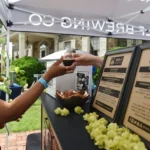
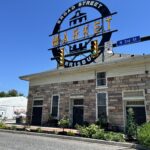
Elementary Coffee Co. is located inside the brick building of the Broad Street Market in Harrisburg. For more information, including weekly featured brews, visit their Facebook page at Elementary Coffee Co.

Continue Reading

Pulling Back the Curtain: Harrisburg native writes, speaks on slavery, racism in her city.

Screenshot 2015-01-27 23.49.41Marian Cannon stood on “the big stage.”

Her spelling prowess carried her there as one of two students representing the 13 sections of eighth graders in the Camp Curtin Middle School spelling bee. The principal, acting as moderator, gave the word “catarrh.” The old-fashioned term for flu knocked out a huge percentage of kids.

“People were dropping like flies,” she said.

Then Marian took her turn.

C-A-T-A-R-R-H.

“And there was this long moment of silence,” Marian Cannon Dornell recalls now, decades later. “What happened next, I have never heard of before. The principal called back all the kids who had been knocked out.”

But the principal could try only so many end runs around the black girl who knew how to spell the hardest words.

“I went on to win that spelling bee,” Dornell says, “and I still have that gold medal from Merriam-Webster.”

It took a book of poetry, 10 years in the making, to help erase the legacy of bitterness from constant racist treatment—the segregated soda fountain, the segregated YMCA, getting cast as the laundress in school plays—that Dornell experienced during her Harrisburg childhood. Now, her book, “Unicorn in Captivity,” will be released at a Feb. 11 YWCA event examining poetry and perspectives on race in Harrisburg.

Reaching Out

Dornell was born in Harrisburg Hospital in 1939 to “sheltering, nurturing parents” who were “very conservative and very protective.”

“They made sure I knew the positive impact African Americans made on history,” she says.

Many of Dornell’s poems, to be shared and discussed at the YWCA event, pull back the curtain on the history of slavery in Harrisburg. One poem, “Naomi’s Harvest,” is set at Fort Hunter, the narrative of a woman harvesting fragrant herbs that she can’t smell but that, nonetheless, bring back memories of the mother she was torn from at a Philadelphia slave market.

A Penn State poetry professor introduced Dornell to an Altoona poet who mentored her. Dornell used poetry as a tool to “forgive Harrisburg for treating a nice girl like me in such a callous way.” She and her husband, Edwin, had been away from Harrisburg for much of their careers—his in public health, hers in nursing after their five children “left the nest.” They returned to the area recently, now living in retirement at Bethany Village.

“I reached out to Harrisburg, and Harrisburg reached out to me,” Dornell says.

Through historian George Nagle, she learned of Fort Hunter’s slavery legacy and its nearby African-American cemetery. Fort Hunter officials staged a walk to the peaceful graveyard, where Dornell read “Naomi’s Harvest” to “100 people of all ages and all races. That’s when I knew I had to forgive because people are hungry for these experiences.”

To Better Understand

Dornell says she can see “that things have improved so much” in her hometown, what with Nathaniel Gadsden’s Writers Wordshops and Jump Street “creating energy and stuff for young people to do,” and Midtown Scholar Bookstore providing “another safe place” and the YWCA with its mission of eliminating racism and empowering women.

Dornell’s appearance at the YWCA dovetails with its mission year-round—not just Black History Month, says Racial Justice Program Coordinator Amanda Arbour.

“The struggles that we have today with race and racism are so much built up on the history of our city and nation,” Arbour says. “It’s vital that we explore and learn and understand what that history is in order to better understand.”

Dornell has “always loved words.” She’s nervous about making herself vulnerable by doing readings about race, but, through her poems, she hopes to provide a platform and the language for discussing topics that some consider taboo.

“I like to take words and thoughts down to their lowest common denominator, but I’m interested in how one uses language to rhyme it, to put it in a rhythm, to spell things out with people,” she says.

If people are to shed fear and to stop categorizing others, it’s essential to understand the “living history” of slavery and racism, Dornell says. Perpetuating and handing down the fear of an African-American man walking down the street or of rap artists “speaking their own truth about life as a black” is “still a form of enslavement.”

“I use history as a way of documenting the way it was, and then I use my conversation to say that we may not be enslaving people in such a way as we own other people, but we deny them rights,” she says. “We deny them a place in the community because of our fear.”

Arbour agrees that exploring the history of slavery helps reveal the root causes of racism and ongoing tension around such incidents as the shooting of Michael Brown in Ferguson, Mo.

“Racism is always present, even though it’s under the surface,” Arbour says. “When things like that happen, that just brings it out. White people, in particular, don’t talk enough about race. It’s an educational opportunity for everyone to learn about our history.”

Through her poetry, Dornell wants to expose readers and listeners to “the links between the history and the legacy and the choices they make today.”

“It’s a different way of using art and history as a way to encourage people to think about their actions and their thoughts every day regarding race, racism and justice,” she says.

The book launch and lecture, “Unicorn in Captivity: Poetry & Perspectives on Race in Harrisburg,” by Marian Cannon Dornell will be held on Feb. 11 at 5:30 p.m., with light refreshments at 5 p.m., at the YWCA Greater Harrisburg, 1101 Market St., Harrisburg. The snow date is Feb. 24. Visit www.ywcahbg.com.

Continue Reading

Judgment Call: Before condemning Harrisburg, opinion-writers might want to pick up the phone.

Screenshot 2015-01-27 23.42.27

In case you missed it, I took a month off from my publisher’s column to start 2015, in favor of Paul Barker’s excellent analysis of the research skills that are a necessary part of honest and engaged journalism. Apparently, though, local media took little notice of Paul’s story.

Instead, our area’s largest paper started off 2015 where it left off in 2014—with a continued assault on all things Harrisburg, this time with claims about a supposed negative business climate.

In an editorial, PennLive’s opinion-writers attempted to link three unrelated decisions, two of which took place at least two years apart and one that has been under discussion for decades. The first, Harrisburg City Council’s refusal to sell the Keystone Products building on Cameron Street to Appalachian Brewing Co. (ABC) for $1, took place in 2012 under the Thompson administration.

The second was the Harrisburg Zoning Hearing Board’s December 2014 refusal to grant a variance to a proposed distillery in Midtown. (See Larry Binda’s Jan. 7 blog post at www.theburgnews.com.)

The final knock was directed at Mayor Papenfuse and the fulfillment of his campaign promise to update the city zoning code. The zoning code update had, in fact, been in process for decades under three administrations and countless reviews.

From these unrelated stories, the writers concluded that Harrisburg was hostile to entrepreneurship and that somehow Mayor Papenfuse and other city officials were to blame. This argument struck me as contrary to my observations and experience over the past year. So, taking Paul’s advice, I did a bit of research and called the affected parties.

First, I spoke to Adam Meinstein who owns Transit Park on the site of the old U.S. Post Office. Adam said he is “thrilled” with his investment in Harrisburg, has more than 450 daily users of his “low-cost” commuter lot (mostly Amtrak commuters) and is expanding capacity to nearly 900 spots, some of which will be under cover. In addition, he has active interest from commercial/industrial tenants for the renovated building on his site. His initial concern with the new zoning code involved a technical matter that his current use is permitted as a “pre-existing condition” and not as a “right” under the code that could theoretically impact value down the road. Nonetheless, the code does not impede his current business, his plans for further investment or his enthusiasm for his first time doing business in our city.

Next, I spoke to Alan Kennedy-Shaffer about his plans for a distillery. Not unexpectedly, Alan and his partner were not pleased with the zoning board’s decision, but Alan said that he remains personally “as committed as ever” to Harrisburg. Knowing Alan’s commitment to the city, my guess is that he will keep working hard on his plans and try to come back again at another city location.

I also spoke to a member of the zoning board who confirmed Larry’s reporting that—far from a rash rejection of the distillery—the board (made up of citizen volunteers) stressed their duty for a thorough review to make sure that the plans comply with the law. They encouraged the pair to re-submit their plans with additional detail with the hope for an eventual approval at the proposed site or another.

Finally, the 2012 ABC issue revolved around the value of a parcel of real estate. Regardless of past decisions by former government officials, the Papenfuse administration confirmed to me that it is now willing to sell the property for $1. City economic development officials and the mayor also told me that they are in active discussions with ABC about jointly seeking outside grants for the necessary site work and expanding their brewing operations, something that would create “scores of jobs” if successful.

I find it ridiculous to pin a two-year-old decision on the new mayor or new council. Moreover, editorial writers should realize that a business that starts in the city and then expands to the suburbs (like ABC) is not a sign of city weakness, but can be (and in this case is) the sign of a strong brand being built here and then taken on the road to greater heights for the mutual benefit of both.

There are many other signs of robust entrepreneurial spirit throughout the city.

Just to the north of ABC at Cameron and Herr streets, Moran Industries stepped in last year to buy a building on a formerly failed development site. Moran is now investing millions to finish the building and grounds, turning a former eyesore into a handsome new operating complex for its trucking and logistics business.

Likewise, since the Papenfuse administration took office last January, there are at least five new restaurants representing several million dollars in total new investment throughout the city (underscoring also that the new parking rates have had little impact in the decision-making of new restaurant openings).

One of these is Josh Kesler’s complete renovation of the long-vacant Millworks building across from the Broad Street Market. Josh told me that the Millworks will house 23 artist workspaces, a new indoor/outdoor beer garden and farm-to-table restaurant when it opens in early March.

Several other new businesses with good paying jobs, such as WebpageFX, have moved their employees into the city. Co-owner Bill Craig said that his move to the city has greatly helped with recruiting. He said he’s received about 500 more applications for his rapidly growing company, up 20 percent from the year before.

“We grew 50 percent last year, so finding technical marketing talent is one of our keys to maintaining our current growth trajectory,” Craig told me. “Many of the applicants are from other cities and from outside of central PA, which we would not have received if we didn’t move to Harrisburg.”

The company has grown tremendously since its move just 11 months ago, and the 70-plus employees “love the city,” Craig said.

Demand for apartments and condos is also rising. Brickbox opened its new for-sale condos at LUX (3rd and State streets) and is more than half sold out. WCI Partners (where I am a partner) has noticed increased demand for apartments and townhomes and a new willingness on the part of many people to “give the city another try” after moving out during the Thompson administration, in the words of several of our new residents.

Much more remains to be done, and a half-century of population decline will not be reversed quickly or without great effort or smart policies that encourage investment. However, this renewed enthusiasm points to business confidence in the Papenfuse administration.

A modest suggestion for those who get paid to give opinion about the city would be to actually talk to business owners before writing about city business. It may just give pause enough before reflexively propagating inaccuracies about our little city from across the river.

J. Alex Hartzler is publisher of TheBurg.

Continue Reading

A Time for Tuna: Even without meat, you can enjoy a good Italian meal during Lent.

Screenshot 2015-01-28 00.01.08As I write this column, Christmas seems like just yesterday, yet now we are facing Lent. How can this be? For many, the season of Lent carries with it some culinary traditions or, some may say, “restrictions”: fasting, giving up a favorite food or drink and meatless Fridays.

At the Ruggieri house, Friday meals in Lent were pretty grim—at least in my then-childish view. But today, many of these same foods are not only popular but considered “high-end.” Lentils made a frequent appearance for our meatless Fridays, simply boiled in salt water, placed in a soup bowl, and drizzled with a little olive oil. Served with crusty Italian bread, it was truly peasant fare. Or we might have been served chickpeas (my mother called them ceci’s) mixed with some elbow macaroni. I missed meat!

In Italy, the season of Lent, preceded by the winter celebration of Carnivale (much like our Mardi Gras) is a time of austerity. A lot of Italian Catholics eat no meat at all during Lent, while others abstain only on Ash Wednesday and Fridays. So, while searching for meatless dinner alternatives during Lent and other times, I have “discovered” and fallen in love with Italian tuna.

Authentic Italian tuna, which is available in cans or glass jars, is considered “light tuna” rather than white or albacore tuna. My favorite is made by Flott, which can be obtained online or in Italian specialty stores. This is yellow-fin tuna. While expensive, it has a richness and depth of flavor that can’t be found in most supermarket brands. Paired with some sliced tomatoes, a few capers and Italian bread, it can even be lunch right out of the jar.

I have a favorite tuna pasta recipe that is one of my “Thursday night specials”: a nutritious late-week meal made entirely with pantry ingredients when the refrigerator and freezer are getting bare. It works in the winter as a heated dish but also can be turned into a chilled pasta salad in the summer. And, depending on what I have available, the recipe varies. I try to use good, imported tuna but, if you prefer, you can use a well-known grocery store brand. Make sure you find one that is packed in olive oil (Bumble Bee makes a fairly good product). Tuna packed in water will not do!

Here is my tuna pasta, winter version, a great dish for Lent or anytime.


Ingredients

  • 10 to 12 oz Italian tuna packed in olive oil
  • ½ medium sweet onion, chopped into medium dice
  • 1 or 2 cloves garlic, finely chopped
  • 1 ½ cups cannelloni beans, rinsed and drained
  • ½ cup sliced black olives (Greek, Nicoise, etc.)
  • ¼ to ½ teaspoon crushed red pepper flakes
  • Lemon juice from ½ lemon
  • ¼ cup olive oil
  • ¼ to ½ cup finely minced Italian parsley
  • ½ pound pasta, cooked al dente, any shape you like
  • Salt and pepper to taste

Recipe

  • Heat the olive oil in a 10-to-12-inch sauté pan and cook the chopped onion until gold in color and translucent. Add the minced garlic and red pepper flakes and cook just for a minute.
  • Add the rinsed cannelloni beans, the olives and the tuna, gently stirring to combine (the tuna should remain in fairly large chunks).
  • Remove from heat and keep warm.
  • When the pasta is done, remove ½ cup pasta cooking water before draining.
  • Place the pasta in a large bowl and add the tuna mixture, combining all with a large spoon.
  • Sprinkle the juice of ½ lemon and the minced parsley over the pasta and toss again.
  • Add salt and pepper to taste.
  • If the pasta needs more moisture, add a little of the pasta cooking water or extra olive oil. I usually add more red pepper flakes on my portion.

This pasta dish is so good with warm, crusty Italian bread. And you can be creative by adding other ingredients like chopped roasted red peppers, capers or halved cherry tomatoes. If you’re able to find imported Italian tuna, I hope you will try it. As with all cooking, the quality of the ingredients makes such a difference.

The quiet, reflective period of Lent has its place in our lives. But, if you make this pasta dish on one of those meatless Fridays, it will not feel like a sacrifice.

Continue Reading

To Books . . . and Beyond: Floyd Stokes may have retired his cape, but the SuperReader lives on.

Screenshot 2015-01-27 23.49.05SuperReader’s origins weren’t very superhero-like.

He wasn’t jettisoned from an exploding bookstore, bitten by a spider that crawled from an unabridged dictionary, or endowed with great wealth after the death of librarian parents in a tragic bookslide.

SuperReader was born in 2000 because Floyd Stokes wanted to do something with kids. He was running a music business in Carlisle and deeply involved in community causes—too many to have a real impact, he realized.

“I wanted to focus on the importance of education, so I narrowed it down to reading,” Stokes says. “I wanted to create a character who would stand for something positive and tell kids they could start using their brains.”

And so along came SuperReader, in blue cape and yellow mask, encouraging pre-K and elementary students to read books.

Today, SuperReader has hung up his tights, but his alter ego Stokes has evolved into a children’s book author and a force for literacy throughout central Pennsylvania and nationwide.

He founded and directs the American Literacy Corp., which designs supplemental literacy programs that promote the importance of reading. Through family festivals, 15 published books and counting and the annual 500 Men Reading Day, Stokes and the ALC have created a reading culture that attracts devoted fans and supporters.

Stokes started writing books because SuperReader’s presentations involved fairy-tale skits that students would stage. Always seeking feedback, Stokes heard from a teacher who asked why the skits didn’t include a literacy element. A light bulb went off. The boy who cried wolf suddenly did so because he ran out of books and got bored. Goldilocks tried reading Papa Bear’s book first, but it was too hard. Then she read Mama Bear’s love story, but it was too mushy.

“Everybody always cracked up at that,” Stokes says now. “The next book was on her level. She could read it. It was just right.”

The skits became books that Stokes published and began to read for the kids. But, by 2008, he still felt that one guy, promoting literacy on his own, couldn’t do enough. He remembered all the encouragement he got as a boy, an African-American kid growing up in Mississippi, and wanted to “create an opportunity for men to get some face time with children, so children will see one more positive role model.”

“For some reason, I came into contact with a lot of people who believed in me,” Stokes recalls. “It was confusing, but the encouragement I received fueled me. Those positive contacts motivated me to want to reach higher and do more and be the best person I could be.”

Of course, recruiting other men to read to classrooms meant asking them to do something very scary—“as scary as the scariest Halloween costume out there.”

So, Stokes created 100 Men Reading, building strength in numbers by bringing together men to read to classrooms in school-wide events. As more and more men signed on, the event became 500 Men Reading, spanning a week in March, in Harrisburg-area schools and in York.

George Nahodil co-chaired 500 Men Reading in 2013 and 2014. Nahodil, the Members 1st executive vice president for retail delivery and marketing, met Stokes through financial literacy events and thought, “Wow, this is pretty awesome.”

“He was so passionate about reading to the kids, preaching the gospel of literacy,” Nahodil says. “You gotta read. You gotta learn to read. You gotta educate yourself.”

Nahodil is a former high school teacher, but he jokingly thanked Stokes for assigning him to read, not to cute second-graders, but to middle school students “taller than I am.” They asked questions about his job, his salary and his career path.

“The kids were awesome,” Nahodil said.

When students are exposed to adults “from all walks of life and all different career types,” who stress that they owe their jobs to their reading abilities, they realize that it’s not just their teachers who want them to read, Nahodil says.

“When they’re looking at you and really digesting what you’re saying, then you’re definitely having an impact,” Nahodil says. “These kids want to be successful. They want to do well. To me, if Floyd changes one kid’s life, it’s worth it.”

Stokes also teaches parents around Philadelphia, Pittsburgh and Schuylkill County how to bring reading into the home. It’s part of the National Institutes of Health’s massive National Children’s Study, a longitudinal study tracking the well-being of children from birth through age 21.

“I’m grateful for this opportunity to reach parents and to share my passion for reading to children and just teaching the lessons learned throughout the years, and not just from reading to schoolchildren, but reading to my children,” he says. “I’m a parent, and that’s the angle that I share from.”

Harrisburg School District Superintendent Sybil Knight-Burney says she so loves Stokes that she will “stop, drop and read” whenever he calls. It’s not just about 500 Men, with “all of these multi-racial, multi-colored, multi-talented men” coming to city schools, jumpstarting conversations about reading and life goals, she says. It’s about Stokes himself, who has adopted a third-grade class and will help whenever the district needs it—for instance, soliciting food donations to feed volunteers building a new playground.

“It’s a wonderful thing to see African-American men and an African-American man who’s taken on literacy, where so many kids don’t know the importance of reading,” says Knight-Burney. “They see it through him, and he lives it and breathes it 24 hours a day.”

An emphasis on literacy helps the district raise achievement rates, Knight-Burney says. Many students start school far behind in grade level, so they need to be encouraged that “even though it may seem difficult to do, once you master reading, the more you do it, the more you want to do it,” she says. “That’s the message that Floyd gives. As many different entities as that message can come from, it helps. It’s all around. It’s pervasive.”

For the future, Stokes expects to “just do more of what we’re doing. Try to learn as much as possible how to reach children and get them on the right path and developing a love of reading. That, to me, is more important than teaching kids to read early.”

And the now-retired SuperReader? He accomplished the mission he was put on earth to do. As Stokes walks around town, people still call him SuperReader. Many don’t know his name, “and that’s fine.”

“When they see me now, they know what I stand for, and it’s reading,” Stokes says. “It’d be hard to think of me and not think of reading. That was intentional.”

Learn more about the American Literacy Corp. at www.superreader.org.


Continue Reading

Beer Magic: For the Sons of Alchemy, the joy isn’t just in drinking beer, but making it.

Screenshot 2015-01-28 00.01.22For the uninitiated, the idea of a homebrew club may seem a little curious.

It may sound like just an excuse to hang out with your friends and drink beer.

Indeed, drinking beer is a happy consequence of being in the Harrisburg-area club. But, for the Sons of Alchemy (SoA), participation means much more than just hanging out.

“A club provides unique opportunities for group projects that would be either too expensive or impractical for an individual brewer to undertake,” said Matthew Miller, who maintains SoA’s social media connections.

Case in point: As a member of the club, I got to attend the final stage of a bourbon barrel-aged Russian imperial stout project that SoA tackled as a group.

Using membership dues, the club purchased a used bourbon barrel that had been previously employed by Victory Brewing Co. to age a specialty release. Bourbon barrels hold 55 gallons of liquid, which is way more than the reasonable home brewer could make on his or her own.

So, instead, 11 members brewed their own 5-gallon batch of Russian imperial stout. There were no rules about the ingredients—each batch just had to satisfy the specific guidelines for the style. All 11 beers were then blended and left to age for eight months.

Next, we emptied the barrel, with each participant receiving about what they put in (some beer is lost in the process). And of course, we all tasted samples of the fruits of our labor.

But beyond tackling larger projects, SoA also takes the science of brewing seriously.

Of all of SoA’s members, Miller exemplifies this quality best. A pharmacist with a background in organic chemistry and microbiology, he takes the same exacting approach to his brewing. His dedication has earned him the nickname Dr. Lambic, a style of beer spontaneously fermented using wild yeasts and bacteria. For him, it was important to collaborate with others who brew the same way.

“A brewing club is an opportunity for home brewers to both learn and teach, as well as improve their craft,” said Miller. “I wanted to join a club that was small but with a high level of brewing skill and knowledge.”

Jake Kustan, the club’s treasurer, is equally meticulous. A control systems engineer by trade, he takes the brewing process very seriously.

“I was curious about the individual components, as well as the processes used to make beer,” stated Kustan. “My curiosity led to obsession as I attempted to re-create my favorite brands, as well as seek out new flavors and experiences. Replicating the processes found in professional brewing systems made it all that more fun for me.”

Don’t get me wrong. SoA is not a meeting of mad scientists who just want to spend time in a lab. They know how to crack open a cold one and enjoy their time together. They just also enjoy nerding out over how it is made.

“SoA was created out of the need for a local homebrew club that went far beyond the social aspect of a brew club,” stated Kustan. “We also desired hardcore knowledge along with a little competition.”

SoA has begun taking this desire for competition more seriously. The club has started selecting individual brewers to go head to head, each brewing a batch of a particular style to be judged at a future meeting. The club as a whole has also begun issuing friendly challenges to other area brew clubs.

In addition, they have other projects in mind. I asked both Miller and Kustan what projects they would like to tackle next.

“I am excited to see the club try their hand at barrel-aged sour beers,” said Miller.

Kustan agreed: “A sour barrel project.”

I guess we know what that now-empty bourbon barrel is going to be used for next.

Read more about the Sons of Alchemy at www.sonsofalchemy.org.

Continue Reading