A Taste of Romance: In all its forms, amaretto is a hint of love.

Screenshot 2015-02-22 11.31.59Amaretto di Saronno. The name almost sounds like poetry doesn’t it?

Most of us are familiar with the bittersweet amber liqueur of the same name with its rich almond flavor. Today’s amaretto is an infusion that includes the oil of apricot kernels, burnt sugar, fruits and herbs. It is often referred to as the spirit of love and romance, dating all the way back to the 16th century. Legend has it that it was originally made as a gift to a young painter from his beautiful model.

Amaretti cookies, though not made with that famed spirit, have that same bittersweet almond taste. They too are associated with romantic legend. As the story goes, a cardinal from Milan visited the little Italian town of Saronno in the early 18th century. A young couple, who were deeply in love, baked him some biscuits from sugar, egg whites and crushed almonds or apricot kernels. They wrapped the little cookies in tissue paper and presented them as a gift. In thanks, the cardinal is said to have blessed them with wishes for a happy marriage and a long life together.

I love the liqueur and the cookies and use them both in my baking. Amaretto di Saronno Originale liqueur is readily available. It is sold in a beautiful, rippled Murano glass bottle with a square cap.

Amaretti cookies, made by Bellini, can be found at the supermarket (in the “Italian section”). But, if you can, try to find those made by Lazzaroni—perfectly shaped, round biscuits wrapped in pastel tissue paper in packs of two and packed in a distinctive, red tin box. They are sold in specialty stores, Italian markets and online and are worth the trouble to find. The Lazzaroni family claims to be the sole possessor of the original cookie recipe. Authentic amaretti biscuits are crisp on the outside, chewy on the inside and sprinkled with coarse sugar.

I recently baked a chocolate amaretti cake that uses both of these Italian treats. It is called Torta di Cioccolata alle Mandorle and is a specialty of Lombardy, a northern province of Italy near Switzerland. The recipe calls for almonds, amaretti cookies and semi-sweet chocolate rather than flour. It results in a rich, dense confection, perhaps a little like a brownie. I took the cake to a friends’ house for dinner and, paired with creamy gelato, it was a hit.

Spring is coming. Celebrate the season by serving this cake for company or a romantic dinner for two. Good espresso and a little glass of amaretto liqueur on the side would be lovely. Your love affair with amaretto has begun.


Ingredients

  • 6 ounces semi-sweet chocolate (I use Hershey’s but other good quality brands will do. Just don’t use bittersweet.)
  • 1 cup almonds (skin-on almonds are fine)
  • 1 cup crumbled amaretti cookies
  • ½ cup (4 ounces) unsalted butter at room temperature
  • ½ cup sugar
  • 4 eggs
  • 1 or 2 tablespoons Amaretto liqueur
  • Cocoa powder for dusting

Recipe

  • Preheat the oven to 350 degrees.
  • Grease and flour a 9-inch, round cake pan with sides at least 2 inches high. (I used my springform pan and PAM baking spray.)
  • Break the chocolate into small pieces and place in a heatproof bowl. Then place the bowl over a saucepan that has a few inches of simmering water in it. The bottom of the bowl should not touch the water. Heat until softened, stirring occasionally. (This is not a hard step. If you have a double boiler that will work too.) When the chocolate is softened, remove from the simmering water and stir it until smooth and glossy.
  • In a food processor, process the almonds and cookie crumbs until finely ground and transfer to a bowl.
  • Process the butter and sugar until smooth.
  • With the motor running, add the eggs, one at a time, and blend well. Scrape down the sides of the bowl occasionally. Add the Amaretto liqueur.
  • Add the nut mixture and the chocolate to the food processor bowl. Pulse to blend all the ingredients together.
  • Pour batter into the prepared pan. Smooth it out a little with a spatula.
  • Bake until the center is slightly puffed, about 30 minutes. My advice is to check the cake at 20 minutes with a cake tester or bamboo stick as every oven is different. It is done when the tester comes out clean.
  • Remove the cake from the oven and let it cool on a rack for 15 minutes.
  • Remove the cake from the springform pan by releasing the sides onto a plate. If you are using a plain round cake pan, invert it onto the plate. Let the cake cool completely.
  • Just before serving, sift some cocoa powder over the top of the cake. This creates a very pretty effect. Top each serving with gelato, ice cream or sweetened whipped cream.
  • Enjoy
Continue Reading

The Pluck of the Irish: Friendly Sons of St. Patrick marks two decades of celebrating heritage, giving back to community.

Screenshot 2015-02-22 11.27.52Sometimes, a little luck can go a long way.

Twenty years ago, a group of Capitol staffers, lobbyists and a smattering of others began the Harrisburg chapter of the Friendly Sons of St. Patrick to embrace their Irish heritage and Irish culture.

Since then, the group has grown into a diverse club of men and women who want to have a strong local impact—and a little fun along the way.

Ted Mowatt, a founding member and past president, remembers when the Friendly Sons would meet in the basement of a bar that no longer exists. One of the prouder early moments was helping to restore the St. Patrick’s Day Parade after it had become a dormant, distant memory, he said.

Another group—the Capital Region Association of Irish and Celts—now organizes the parade, but the Friendly Sons’ biggest event still revolves around the annual observation of all things Irish.

Each year, the Friendly Sons holds its largest fundraiser, the St. Patrick’s Day Celebration, close to the big day. This year, the celebration takes place March 13 at the Federal Taphouse in downtown Harrisburg, with a portion of the proceeds benefitting the New Cumberland River Rescue. To further emphasize the first responder theme, the Friendly Sons has named Harrisburg Fire Chief Brian Enterline as “Irishman of the Year.”

As a volunteer firefighter, treasurer Butch Comstock knows how hard it can be for emergency responders to find the funds to keep meeting the needs of the community. After 17-year-old Medard Kowalski went missing on the Susquehanna River in December, members of the group saw how much of their own time and resources the river rescue gives, Comstock said.

“Enough can’t be said for those folks,” Comstock said. “They donate thousands of volunteer hours every year, and their equipment takes a beating nearly every time they get on the water. We feel that it’s an important year to recognize them for their efforts.”

On average, about $4,500 is given to the St. Patrick’s Day chosen charity, Comstock said. He hopes this year’s event will be the biggest yet. A $30 admission ticket includes performances by Andy Mowatt’s Steely Jam, beer, wine and food, as well as a cash bar for themed cocktails provided by Southern Wine and Spirits.

MaryEllen Parmer, vice president of the local chapter, said members like to get together to have a good time, but they want to do it with a purpose.

“We like to have fun in order to give to other groups that are deserving,” Parmer said. “We’re definitely an organization that likes to throw a good party.”

The more events they can do each year, Parmer said, the more money they can raise for area charities. In addition to the St. Patrick’s Day Celebration, the group has held Halloween parties, a Toys for Tots drive and charity golf events.

While Irish-focused, the group would like to be a diverse organization, Mowatt said. The Harrisburg chapter has made a concerted effort to recruit female members, as well as those who don’t have more than a sprinkling of Irish heritage in their veins, if that, he added.

“We’re more about enjoying the Irish heritage, while putting a lot of energy into taking care of the community that takes such good care of us,” Mowatt said. “We’re an organization with a lot of history, and we foresee a bright future.”

The Friendly Sons of St. Patrick, Harrisburg Chapter, can be found on Facebook and reached at [email protected]. The annual St. Patrick’s Day Celebration is slated for March 13 at Federal Taphouse, 234 N. 2nd St., Harrisburg. For more information, visit www.eventbrite.com and search for “Friendly Sons of St. Patrick.” Tickets are also available at the Federal Taphouse.

The annual Harrisburg St. Patrick’s Day parade starts at 2 p.m. on March 21.


Continue Reading

Gifts in a Glass: Malbec and Torrentes prove that Argentine wines have arrived.

Screenshot 2015-02-22 11.31.41In the world of wine, Argentina has risen to become one of the greatest success stories of recent years.

In just two decades, this South American nation has gone from being an afterthought to the fifth largest producer of wine by volume. From French varietals to unique blends, Argentina has a quaff for every palate. Two grapes define modern Argentinean wine: the big, red Malbec and the white Torrontés.

Malbec is a French grape that migrated to South America in the mid-1800s before the phylloxera epidemic made a shambles of the Gallic vineyards. Originally a blending grape in the Bordeaux region, it has become a totally different fruit in the dry, high altitude vineyards of Argentina.

Here, the volcanic soil and average cultivation height of 2,700 feet have concentrated the flavors of wine made from this spicy, red grape. Since there are no phylloxera aphids in this region, the vines are grown on their own roots. This quality arguably gives the wine more of the flavor it originally had before grafting became a necessary evil in most of Europe.

In the glass, Malbec is a dense, concentrated wine. Dark and deeply colored, it can be fruity and spicy or heavy and tannic with herbal highlights. I try to find wines that are balanced so that the plum and berry flavors are not dominated by the drying tannins of the thick-skinned grape. For food-pairing, keep in mind that this is the wine that quenches the thirst of the guests at the gaucho cookout known as the asado, a multi-course feast dominated by red meat and red wine.

For every ying, there is a yang. The most famous Argentine white wine is made from a unique grape known as Torrontés.

Torrontés was originally thought to have come from the Galicia region of Spain, but this is not the case. Genetically, it is a cross between Criollas, the mission grape of California, and Muscat di Alexandria. In ancient times, the Greeks took the latter to Sicily, where today it makes an amazing white wine called Zibibbo. The Spanish had both grapes in Mendoza, where it appears that hybridization took place, giving us the modern grape.

Torrontés is a spicy, fruity quaff that matches well with lighter foods, but also has enough character to stand up to spicy Asian dishes. The floral scents of the wine in the glass invariably knock me for a loop. The amazing aroma of cut flowers hovers above the light, gold liquid, enticing your first sip. It’s a truly unique experience in a bottle that deserves a place at Easter dinner.

Argentina has given us two wines that have become its signature quaffs. Both are unique and deserve our attention. Try one as soon as you can.

Keep sipping, Steve

Continue Reading

Farm-to-Table Fidelity: As The Millworks sets to open, local, sustainable are closer than ever.

Screenshot 2015-02-22 11.31.22Meet Joshua Kesler. He calls himself a “serial risk-taker.”

Ask him, though, if farm-to-table restaurants are a passing fancy, and he sees little risk at all. He firmly believes that sustainable dining is here to stay.

“Farm-to-table local sustainable is just starting,” says Kesler as workers put the final touches on The Millworks, his new restaurant in Midtown Harrisburg. “It’s not a fad. It’s not going to burn out. It’s only starting, and the awareness of what we eat, how it affects our soil, our communities, our economies, our bodies—I don’t think that’s something we’re going to get tired of as a culture.”

The Millworks, the region’s latest entry in sustainable dining, opens March 12. Kesler is the local developer who, with his wife Rachel, transformed the 1930s-era Stokes Millworks from a dilapidated shell into a stunning restaurant, with a beer garden, art studios and events space.

Kesler and architectural developer David McIlnay designed the space to link all those disparate features and add airy lightness to industrial chic. True to its sustainability mindset, the rebuild spotlights the array of stairs, windows and tables made—many by Millworks construction manager Dustin Malesich—from wood left behind when Stokes went out of business years ago.

“Design is everything,” says Kesler. “Design ties together concept and materials. Design is like the center point of everything, the hub of the wheel.”

And as for the meals served to diners, Kesler and others insist that sustainability is not a fleeting trend. Consumers are embracing better-quality food for life, they say. After all, says Kesler, central Pennsylvania is “the Tuscany of the East Coast.”

“That might sound dramatic, but it’s really not,” he says.

Within 30 Miles

Screenshot 2015-02-22 11.31.13Restaurants in New York, Philadelphia and Washington already source their milk, cheese, veggies and fruit from our region’s rich fields. Kesler has been building relationships with these local farmers through the Millworks Farmstand (formerly Harvest) at the Broad Street Market in Harrisburg.

About 90 percent of the food served at the Millworks comes from within 30 miles of the restaurant, “and the other is 50 to 70 miles at most,” says Kesler. Adhering to those boundaries requires Kesler and Executive Chef Nicholas Jones to be nimble.

“From an owner-chef level, you have to be very mindful and creative about how to bring that dish to the table at a reasonable price and meet customer expectations of quantity and value,” says Kesler.

You could say that Kesler and Jones are going whole hog into sustainable foods because entire animals are, quite literally, an element in sustainability. Here’s how it works. Traditional restaurants famous for, say, their pork chops or filet mignon require a steady, year-round supply for their menus. The fate of the rest of the hog or steer may be none of their concern.

By contrast, the Millworks is “loyal to the farm, not to the cut, buying whole animals and creatively crafting the menu to use as much of that animal as possible,” Kesler says. “It’s all local and sustainably grown, but it’s also sustainably used.”

Craving Authenticity

The Millworks’ approach “honors farmers,” assuring they aren’t stuck with unsellable cuts of meats, says Brooks Miller, who founded Perry County-based North Mountain Pastures with his wife, Anna Santini.

Some restaurants claim to serve local food, but their idea of local is “not from New Zealand,” says Miller. Farm-to-table assures “food that comes from people we know, and that’s the point of the whole thing.”

“As the last generation or two have gotten detached from their food supplies, people have gotten more interested in getting back in touch with it,” says Miller. “That’s sort of our job, to raise their meat with integrity.”

Still, farm-to-table requires a healthy dose of consumer education if it’s to rise from trend to fixture, says David Cranage, associate professor of hospitality marketing in the Penn State College of Health and Human Development, State College. Customers must “change their expectations” and accept things like oxtail soup or braised short ribs made from lower cuts of meat as the night’s special, he says.

Maybe “the jury’s still out” on the prospects of farm-to-table ventures, but the trend can succeed because people are disillusioned with agribusiness and such monstrosities as the taste-free tomato—picked green, gassed to turn red and served “hard as a hockey puck,” Cranage says. Teach diners to enjoy a salad with six kinds of leafy greens and flavorful carrots and beets, “then that’s a whole lot better than whether you have tomatoes in it or not.”

Local sourcing even offers advantages that can offset higher prices. Farmers selling entire animals can offer a price break, says Miller, while Cranage adds that producers who sell an entire crop to one restaurant exclusively are assured stability that keeps prices down.

Kesler is counting on authenticity-craving diners, including the Gen Y-ers who indulge in upscale casual dining more often than their Gen X and Baby Boomer elders. On the Millworks’ opening night, diners will recognize the menu’s Pennsylvania Dutch roots, blended with the culinary theme of New Rustic American. There may be wood-fired mac and cheese, chicken potpie, fried chicken and polenta, steak tartar and pizza-like wood-fired flats.

Kesler hopes to lead the farm-to-table trend toward a future of “consuming what we have available.” And, if the menu has tomatoes in March, rest assured they’re from the 700 fresh pounds canned by the Millworks, honoring “the old techniques that our great-great-grandparents used” for year-round enjoyment of central Pennsylvania’s abundance of seasonal foods.

“We could go to Tuscany, but why?” says Kesler. “We’re here.”

The Millworks is located at 340 Verbeke Street, Harrisburg. The restaurant’s opening is slated for March 12, which will coincide with the public opening of the building’s art studios. For more information, visit www.millworksharrisburg.com or call 717-695-4888.

Continue Reading

A Chocolate Experience: From his lab, Frederic Loraschi makes beautiful, decadent confections–and the fun’s just getting started.

Photo by Mike Mihalo Photography.

Photo by Mike Mihalo Photography.

In 2005, after two decades of traveling and cooking at world-class levels, Frederic Loraschi found himself coming off the sugar high of serving as executive pastry chef for the Hotel Hershey. It was then that he began his next adventure: creating his own line of chocolates.

Why set up shop in central Pennsylvania?

Loraschi explained that, after a while, the excitement of moving around got challenging as his young family started to grow. He added that the rural, hilly landscape reminds him of Gascony, where he grew up in the southwest of France.

His workshop, dubbed “the lab,” is currently in the converted kitchen basement of his Hummelstown home, where he lives with his wife and two sons. It’s a clean, organized, well-lit space perfumed by the sweet-smelling fragrance of chocolate and pralines.

“Business picked up right away,” said Loraschi of his entry into entrepreneurship.

Currently, he sells his artisan chocolates online. You also can visit Elementary Coffee Co. at the Broad Street Market in Harrisburg to sample Loraschi’s hot chocolate mix and Ivory Coast dark and milk chocolate bars.

But, area chocolate-lovers, there’s still better news ahead.

Loraschi plans to open the doors of a 5,000-square-foot location in Colonial Park this summer. It will serve as a production facility, as well as a small retail shop, where he’ll sell his chocolates, pastries and macaroons and even offer classes to the public.

Highest Quality

Loraschi has spent his entire career preparing for this moment.

As a culinary student, he served in Michelin-starred kitchens in France, Luxembourg and Spain. He came to the United States to work in California restaurants, eventually landing in Boston after the 2002 reopening of the Ritz-Carlton. A year later, he was pursued by the Hotel Hershey to become the executive pastry chef there.

For the past decade, Loraschi has created and sold his own confections, experimenting relentlessly to refine what he offers to his demanding customers.

Some of his most popular products can be sampled in the gourmet gift boxes that feature a globetrotting variety of single-origin chocolates and stunningly beautiful, hand-painted chocolates with real fruit fillings. The chocolate truffles are truly unique and come in different varieties infused with whiskey, rum, Grand Marnier, Champagne or beer (Tröegs LaGrave and the French Fleur de Biere).

Ingredients are locally sourced whenever possible and are always of the highest quality, he said.

In 2010, Loraschi won the “Best Tasting” award as the U.S. selection for the World Chocolate Masters. That experience was aired as the “American Chocolate Championship” on TLC.

Loraschi said that winning the award was especially meaningful because making delicious chocolate is at the heart of what he and his staff strive to do.

“Anyone can be great one day out of the year, but, here, we strive to be great every day,” he said.

Able to Help

Andrea Grove-Musselman, owner of Elementary Coffee, said she approached Loraschi about using a hot chocolate mix at her new stand in the Broad Street Market and, together, they developed a drink that showcases the rich and decadent flavor of his mocha powder.

Musselman called the chocolatier “a sweetheart” as she opened a box of chocolate truffles that he sent to her as a thank you. She offered up a soft-centered square to taste with the well-balanced coffee she serves.

“Customers have responded very well to his product,” said Musselman, who would like to incorporate a sampling of his chocolates with a flight of her coffees in the near future.

Not only does Loraschi show his sweet side through his chocolate creations, he has implemented a “charity of the month” program in which up to 30 percent of sales from select items on his website are donated to local nonprofit organizations that benefit the community.

“It is great to be able to help,” said Loraschi.

He explained that the program is a way for him to control the flow of demand he receives for donations.

“As much as you would like to help everybody, it is, at times, impossible, and you also want to see what people really do with your donation,” he said.

To date, his donations have benefitted local organizations like the Hummelstown Library, the Falcon Foundation of the Lower Dauphin School District and the Berks T1D Connection.

In turn, Loraschi is grateful for the help he has received in the kitchen from his assistants over the years. He especially praised his sous chef, Melissa Costell, referring to her as his rookie point guard.

“She does amazing work in the lab here,” he said. “Give her a few years, then you’ll be writing articles about her.”

Learn more about Chocolat Frederic Loraschi at www.fredericloraschichocolate.com or at the company’s Facebook page. Loraschi products also can be bought online at Etsy or Amazon.com. Loraschi plans to open a production and retail location at 4615 Hillcrest St. in Colonial Park (Lower Paxton Township) in several months.


Continue Reading

All Things Local: Our commitment to Harrisburg runs deep.

Screenshot 2015-02-22 11.24.03As a business owner in Harrisburg, I believe that supporting our local community is vitally important, which also aligns with my company’s core values. I feel that some of the best ways to do this are supporting other local small businesses and supporting local charities.

I like to say that I vote every day when I choose where to spend my money. I purposefully seek out local business when shopping for everything from business vendors to a place to eat. And Harrisburg certainly has a lot of variety. It is not always the easiest thing to do, but I feel it is critical that I personally contribute to the local economy whenever possible though both my business and my own dollars.

According to the U.S. Small Business Association, small business owners are the largest employers nationally. They employ more than half of the private workforce and have created almost two-thirds of our country’s net new jobs over the past 15 years. When you support small business in your community, you are supporting local employment.

Patronizing local businesses also helps grow the area tax base and local revenue. If a business is based in Harrisburg, that business is supporting the local Harrisburg tax rolls. Locally owned companies tend to spend money in their own market, which puts the revenue back into the local economy.

Another advantage of shopping local is that the environmental impact is reduced. Local businesses usually make more local purchases, which reduces transportation pollution and contributes less to sprawl, congestion and habitat loss.

When shopping in Harrisburg, or any other city center for that matter, product diversity is evident. When each local business selects products based on its own interests and the needs of a local market, a more diverse range of products is available to the customer. In an increasingly homogenized world, locally owned small businesses create a uniqueness to each city that gives that area a distinct advantage over the strip malls and big box chains prevalent in the suburbs.

Do we really need another big box store, unused office complex, or half-empty strip mall contributing to the suburban sprawl? There are plenty of opportunities in our wonderful city and, if you are a regular reader of TheBurg, you know that Harrisburg is headed in the right direction.

Local businesses are also much more likely to give back to the community. My company donates more to the United Way of the Capital Region than all other auto groups in the area combined. We were proud to be a part of the last campaign that ended up raising a record $12,020,175. Thanks to 13 local companies that cover 100 percent of administrative costs, every dollar raised during this campaign went to the United Way of the Capital Region and every dollar stayed in the capital region. Fewer than 10 United Way organizations have this type of program.

If you’re familiar with local history, you may know that most area car dealerships used to be located in Harrisburg. Cameron Street and Paxton Street were known for having a large selection of car dealerships. There are only a few remaining. Our company has chosen to stay because we feel that our particular location in the city gives us a lot more visibility than a suburban location. We also receive quite a few unsolicited appreciations from people for the large American flag that we fly at our location at 13th and Paxton streets. Due to its visibility, it has become a landmark over the years for many locals, as well as for people who drive through I-83 on a regular basis. I have actually seen the flag in a few pictures of Harrisburg’s skyline.

Harrisburg has had its ups and downs in the last few years, but I firmly believe that our city’s future will be brighter than its past. My hope is that our local companies and even the big box chains consider the city for their next retail storefront or office. Even in tough times, Harrisburg has been a great place to conduct our business, and I don’t see why that would change as our city continues to move in the right direction.

I am proud that my company is a community publisher of TheBurg. Harrisburg is a city with a rich history, a culturally diverse population, and generous community focused companies. Sounds like a great place to do business to me!

Jonathan Casey is the general manager for Sutliff Chevrolet Volkswagen, a community publisher for TheBurg.

Continue Reading

The Ring of Spring: Who’s calling? Why, it’s your garden.

Screenshot 2015-02-22 11.30.29It is taking hold of us now. An invisible, primal, internal force.

I need to get dirty.

I need to be outside.

I need to plant.

Funny how there are so many of us responding to the same stimulus. A 50-degree day is all it takes. We wake from our winter slumber energetically charged, the phenomenon known as “Spring Fever.”

So what to do with all this energy? Most of us run around all scattered and, in June, we look back and think, “What just happened?” I have discovered making a list of chores is a great way to get stuff done without being quite as distracted.

Paying attention to your tools is a great thing to do now before the chaos arrives. Working with good tools makes tasks easier and more pleasant. Pruning tools should be sharpened and lubricant sprayed in the moving parts. Use a Speedy Sharp, file or sharpening stone to return a nice cutting edge. Clean any caked soil off of shovels. Bright pink duct tape wrapped around handles helps when tools decide to play hide and seek.

A nice stroll through the garden with eyes wide open will remind you of all the tasks you didn’t get to last autumn. With notebook in hand, jot down directives. I never did finish the brick edging I was installing…nor did my compost get fully moved.

Mulch & Prune

Of course, there will be the added spring checklist—cutting down ornamental grasses, removing all the leaves that blew in after we were done raking, etc. A nice fresh edge on the landscape bed lines also keeps mulch out of lawn.

Mulching note: Mulch should never be more than 2 to 3 inches deep, especially around our trees. Mulch rings around trees that look like volcanos are very bad for growth. They prevent water from reaching the surface roots, cause roots to grow up into the “cone” thus creating more drought stress, cause roots to circle and strangle trunks while seeking water, and cause the bark to rot around the crown.

A proper mulch ring at the base of a tree should look like a large plate, with the high spot around the perimeter of the circle. Trees grow 80 percent faster with a proper mulch ring laid.

Not everything should be pruned! Many a flower bud gets trimmed off in early spring from overzealous clipping. Most hydrangeas and azaleas should not be pruned in early spring. Many clematis will also be stripped of future blooms when pruned at the wrong time. Summer blooming spirea, butterfly bushes and abelia respond well to a deep haircut.

If you aren’t sure, call your local experts—before you trim. If you aren’t sure what shrubs you have, trim little pieces off and bring them in for proper identification.

Rinse & Rant

Adding plants to the landscape is another wonderful job on the task list. Maybe some plants have become overgrown or aren’t very happy/healthy. Notice if it is a sunny or shady area. Decide what the perfect mature size should be. Is the area very dry or very wet? All these details add up to successfully choosing a plant.

The early bird gets the birdhouse! Check your birdhouses for old nests and clean them out. Give the birdbaths and birdfeeders a good scrubbing. Bleach, used at the disinfection ratio, works great for cleaning. Rinse well with clear water when done. Clean up all the shells collecting under the feeder and discard.

My writings don’t feel complete to me until I rant a lawn rant. The lawn and weed killer commercials are being paraded already in front of our wide eyes. “Commercial” also translates to “manipulation.” We have come to associate (be manipulated to) the perfect green lawn with the perfect neighborhood and the perfectly caring neighbor.

Personally, I don’t think spreading chemicals all over my property equates to being a good neighbor. Personally, I don’t wage war against dandelions. Personally, I don’t need a grass-only lawn to prove my belonging to my neighborhood. I keep a meadow. I take a pH and soil nutrient test every few years. I use this information to apply the proper amount of lime and fertilizer. I never ever kill “weeds” in my meadow with chemicals.

The number of visiting butterflies, bees and pollinators reinforce my decision to go natural. If you live in a newer development where the topsoil was stripped away leaving subsoil, you are really in for a struggle. Grass likes good soil. Repeated applications of chemicals are not going to give you better soil. Choose organic fertilizers to start the long process of rebuilding your soil. Do your soil tests, make choices for the soil to get the reward of better grass growth. Be informed, don’t be a sheep.

Happy Spring! May the fun begin!

Erica Shaffer is the nursery manager at Highland Gardens, 423 S. 18th St., Camp Hill. www.highlandgardens.org.

Continue Reading

The Rebuilders: A Q&A with Vern McKissick

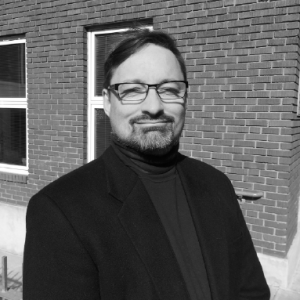
Vern McKissick

Vern McKissick

This month, TheBurg introduces “The Rebuilders,” an occasional series of interviews with people who have contributed to the reconstruction of the city.

Our first interview is with Vern McKissick, founder of McKissick Associates Architects. McKissick has designed several important buildings in Harrisburg, including the National Civil War Museum and, more recently, the Capitol View Commerce Center. We sat down to talk in the building where he works and lives at 317 N. Front St. The complete interview follows.


TheBurg: Tell me a bit about your background.

My wife and I moved here in ’93. Interestingly enough, we tried to buy this building. I was with an architecture firm that was two doors up the street. They had purchased the old Lawrie and Green. Lawrie and Green locally had done the State Museum, the YWCA, the courthouse, Strawberry Square, you name it.

So, it was kind of intriguing. We were in the State College area, moved down. When we decided to move, we expected to be dead in six months.


TheBurg: Why was that?

My earliest memories—my father was a school superintendent and, in those days, before computers, they would have them all come down here every month or two months for meetings at the Department of Ed. And, sometimes, we’d come down with my mother, and one of my earliest memories was being hunkered down on what I now know to be 2nd Street outside of what was then the Harris Savings Bank while the cops were leaning over the back of the car during a bank robbery. So, this was my sense of Harrisburg (laughs). This was in the ‘70s. So, I thought, well, OK, we’ll go down there and be dead in six months.


TheBurg: A lot of people still think that, and I continually write about how ridiculous this is.

That’s like my mother-in-law because when we first moved down, our home sale fell through at the last minute in Boalsburg. They wanted me down here at the office, so we took the caretaker’s place two doors up the street for about five months downtown. And her mother was convinced we would be dead. She begged me not to do this. So, that was my introduction to Front Street.


TheBurg: You didn’t die, as it turned out.

Apparently not.

We tried to buy this building. It was abandoned at the time. The homeless were living in it. It was placarded for demolition. We tried to buy it, and they turned down our offer. So, we went up to Bellevue Park and bought a place up there and lived there for awhile.


TheBurg: You tried to buy it as your home?

Yes, we tried to buy it as our home back then. My office was two doors up the street, so I watched it. And I saw the fires that happened here and all the things. So, it was kind of disappointing for years and years and, finally, in ’99, [former Lieut. Gov.] Mark Singel bought this place and started renovating it. So, when we had a chance in 2003, we met him, we said, “Hey, I’ll finish it. Let me take it over from you.” But it took us years to get here.

We’ve been on Front Street . . . my office was there when we started the new practice. We were with Hayes Large Architects. I was one of five partners. We were eight offices and 180 people and an airplane and all the rest of that jazz—very high corporate, tightly wound kind of a place. We wanted to do something different.

My wife is an architect by training. We met at Penn State. She left the firm. When she wanted to become a partner, they said, “Oh, well you shouldn’t be a wife or kin.” So, she stated a small graphics company and ended up morphing into a commitment where she was the initial webmaster for MapQuest down in Lancaster. So, when MapQuest in ’99, when AOL bought them out for $1 billion, we cashed the stock options and said, “You know, I really don’t need all this headache. Let’s do something on our own.” So, we walked down the street and leased an office in a historic building of St. Stephen’s. So, we’re back down on Front Street. My mother-in-law still expected us to be dead in six months. I’ve had 20 years on Front Street at this point.

It’s the greatest place to be in the world. There’s no place better I’ve been—the view and the park and the activities and the fireworks. And I can walk to a hardware store, and I can walk to the bank, and I walk to my accountant. It’s just bizarre. It’s like a small town, but it isn’t. So, we see a lot of things being down here. I probably have one of the most prolific numbers on 9-1-1. Other people just look past it, but I call. They say, “Oh, it’s you again. What is it this time?” But we have a responsibility, and I try to live up to it.”

But we’ve never had a problem in all the years. You just live smart. You don’t do stupid stuff—stagger around drunk at 2 in the morning. I don’t care if you’re in State College or Boston, you’re going to have a problem.

I’ve become a real big booster on Harrisburg. Once you get off the beltway and see that there’s actually an old city underneath, it’s got a lot of charm and a lot of potential. We’re both from small towns. So, we found that actually Harrisburg, once you get into it, is a lot like that. There’s only—there’s a small group of very active people, and you can get to know who they are. And it’s very transient because people do come into the area, it’s not like going to Pittsburgh, where, if you’re not a Mellon or a five-generation family, you can’t get involved or do things.

We do a lot of work out of the area because there’s just not much happening in Harrisburg per se. We’re out in Johnstown and Erie and Pittsburgh, and we have an office and home down in Winston-Salem, N.C., which is interesting for us because it’s the same size metropolitan area. It had the same kind of challenge because RJR shut down. But their response to it is a $1 billion in infrastructure improvement, and they now have a biotechnology center, a medical school downtown, 10,000 new residents and loft apartments that have been converted from the old warehouses and things. And it’s just interesting to see how two different communities dealt with adversity. If the state left [Harrisburg] tomorrow, I don’t know what we’d do. I just can’t imagine anyone having the vision to do anything with it. But, along the way, I had the chance to do the Civil War Museum with [former mayor] Steve Reed, back in the day, and that was very interesting. View from the inside-out.


TheBurg: I bet it was.

We reopened Pennsylvania Place when it was abandoned. We worked with that one. We did St. Stephen’s, converted the old parking garage into the first LEED-rated religious school in the country, which is kind of neat, taking an 1845 mansion and a 1922 parking garage and saying we’ll make a school out of it. There have been some challenges. But, like I say, we mostly work in small towns: Wellsboro and Williamsport and Sunbury and Milton and Selinsgrove and Bedford.


TheBurg: What was your first significant project in Harrisburg?

Our first significant project in the city was the Civil War Museum. We moved here in ’93, still did a lot of work in New York and Virginia. But that was interesting. It was a design competition, and we were short-listed as one of three, and Steve Reed had very definite ideas on what he thought the solution should be.


TheBurg: That’s not surprising.

It was his solution, and, basically, it was a small building down by the amphitheater. We came up with some illuminated, like kind of tents. It looked like an encampment type of thing. I didn’t like it. So, we had a model about half the size of this table. I said, “You know, I’m going to win this thing.” So, we built the model so that the top lifted up. It was the whole Reservoir Park. At the time, there was a circle at the top of the hill, where everyone used to go to drain their motor oil. People were upset because we took away the drains where they had drained their oil into. It was a great mix with the reservoirs being up there.

When we got down, I said, “Do you have five more minutes?” He said, “Yeah, all right.” I had staged four people in the next room, and I had them come in. They came in and lifted the top of the model off, walked out of the room, brought in a model to put the building on top of the hill, used the circumference of the old drive as the circle for the atrium. Reed took a look at it and said, “That doesn’t match anything I asked you for. I love it.” It goes back to the fact that nobody knows what they want until they see it sometimes.

So, we got to work on that project over the years. It was interesting because when we first started working on it, we had a budget of $6 million. He said, “That’s not big enough. How big do you want it?” He said, “What if I give you another $1 million?” He came back. “That’s still not big enough. What if I gave you $2 more million?” It finally got big enough at like 16. I said, “OK.”

The most amazing thing with that project was the day I had to tell him it was in Susquehanna Township. Everyone in the city had thought, until that time, that Reservoir Park was in the city. Actually, two-thirds of it is in Susquehanna Township. So, Steve got a little worked up and had a bit of a panic attack. We started to look at other sites, like down at where the post office is here. We were moving the museum there. I took it upon myself to call the supervisor of Susquehanna Township and said, “Can I come and meet with you?” I’m not authorized to do this. I went into them and talked and explained what we were doing. At the end of the day, they said, “You know what: as long as you redirect all the water into the city, the storm water into the city, you close all the roads that connect to our township coming out of the park, we’ll waive all of our land development rights and give everything back to the city, and you do whatever you want.”

So, I walked back to Steve Reed and said, “Guess what I just figured out?” He said, “You did what? Oh, I guess we could do that.” But, until then, the project was cancelled. It couldn’t be there because it was in the township. So that was a fun project. Then we documented the construction and did the brochures when it opened. They hadn’t thought about the fact they needed printed material and so on and so forth when they opened. So, we found a printer a week before it was due to open. We picked up the brochures wet from the printer, folded them in the back of car in my tux and her gown, just so there would be something in there when it opened. It went on. We did the business plan. We did all the curatorial stuff. So, I touched everything that was in it.

And I could have told you that two-thirds of the stuff was Western, because he was doing a Western museum until he found out that [former Gov.] Ridge liked Civil War. So, [Reed] just said, “I’ll just take this chunk of my history, which together was 1800 to 1890 or whatever, and I’ll make that a separate museum.”

So, we brought in the folks from the Tennessee State Museum, their director. We brought in grad students in curatorial studies to separate everything out, and we set up this big room at the sewage treatment plant, of all places, about the size of a gymnasium. And we put a rope down the middle, and then we started bringing in all this stuff from all the rooms, all over the city, because all we had was a list. We had no idea what we had. So, you’d open the boxes. By the time we were done, we had pushed the aisle all the way over here, because we had this much Civil War and this much Western stuff. So, it was just an amazing view for me on the inside of all of that.


TheBurg: His original plan was the Wild West Museum?

That was his passion. The Civil War was just a breakout. And one of the frustrating things with the Civil War Museum was—and I appreciate what Eric is trying to do over here—but when the first reaction was, “Well, we’re not getting our money’s worth out of the museum,” the reality was the state paid for the entire museum. Even though it was a $34 million project, the other $17 million was all pledged value of the park. The Parking Authority actually built all the roads and the parking lot. So, there is no cash value to the city in the building. So, the city is not paying. It’s not out anything.


TheBurg: It’s on the hook to maintain the building.

But my sense, mostly they’ve been doing their own maintenance. I mean, the city never really stepped up.


TheBurg: They want to bill the city for some of their maintenance.

And that was the original agreement. What was interesting was we did the financial analysis, and what actually happened was exactly what was predicted. We had to go into the governor’s office, and we presented all the data. We predicted it would be, I think, 119,000 visitors and it would drop to 80 and 69, and it would stabilize to around 43,000 over time. We’ve actually stabilized a couple thousand higher than that, which is exactly what we thought.

The whole thing was designed as an event location. That’s why so much focus was on the ballroom and all the rest of it, because we knew it would never do more than 25 percent of its money from gate receipts.

We had good people [working on the museum]. We had Avi Decter help us with the exhibit design. He had just finished the Holocaust Museum in DC. We brought in Ueland Junker Nicholson out of Philly. They did they Constitution Center as our equipment and our space and museum planners. So, we had good people.

They [the Reed administration] kept talking about, “We have this $3.5 million.” We have this great deal that John Levenda had put together with Coca-Cola, a big sponsorship. And that’s why I was folding brochures on the day it opened, because it turned out it wasn’t $3.5 million in cash. It was $3.5 million with pictures of the Civil War Museum on the side of soda cans. It was equivalent advertising, but it wasn’t the cash that everyone thought we were getting to open. So, they’ve always been missing a chunk of money. It was never there when it opened. I think that’s the single greatest downfall.


TheBurg: That seems to be a very significant misunderstanding.

Yeah. It’s a shame, but I think the building is solid. We built it to last forever. I don’t know if people know it, but it was one of the first uses of underground ice for cooling. We have ice tanks under the outside parking lots. We make ice during the night and melt it during the day. We had the Smithsonian Institution help us design the exhibit spaces.

One of the things they did, though, and I’m getting is off-topic: After I left and went to the new practice, they came back and chopped up the display space. It was designed exactly to Smithsonian standards for rotating exhibits. They chopped up the first floor and put in a little gallery and a coatroom. And now it was no longer large enough to get the rotating exhibits.

My wife and I have been active. We’ve been 20 years in the city. She was on the HARB board for about 14 or 15 years. She was the chair for a number of years. I’m still on the planning commission, now 18 years, I guess. I’m on the steering committee we’re getting our comprehensive plan consultant selected and getting that all moving, after that debacle. So, it’s good to see it circle back and trying to do it right. At least we have a new zoning code. We brought that to completion three different times. With all the good input, we made it the best it could be, given the resources we had available to us. It always got blocked by real estate people in town, and they would lobby against it. The fact that Eric was able to slide it through at the particular time he was, because we were dealing with a 50-year-old zoning code. So, at least, I feel we did something.

We were trying to find a decent compromise. The goal behind a zoning code is both to protect, but also to encourage future development. And one of the big things that I was very involved in with pushing for was for the riverfront zoning to change. This was all SPD before, and it was very restrictive. Now, opening it up a little bit. We don’t want a bunch of McDonald’s up here, because you can look further up Front Street and see what happened before we had a zoning back in the ‘50s and ‘60s. But we’re starting to see some investment and some things starting to happen on Front Street.

This building is a challenge. We live here, and it’s our office. It’s 26-feet wide. It’s almost 10,000 square feet, but you can’t rent space above the second floor without an elevator. In the historic mode, every floor staggers. So, we can put an elevator in for $300,000, but there’s just not a return. So, we found the sweet spot. I pay my $26,000 a year in property tax and smile. I kind of expect I should have—the racers at least get their decal on the car—Pennzoil and the like. I’d like to see some city people with my logo on them or something. But it’s worked for us, but it’s a strange existence. People look at us and say, “You do what?” Well, yes, we do.


TheBurg: So, you fought for this new zoning code for all these years, what do you think that brings to the city?

I think it brings a new place to start the discussion. The old one was so outmoded, it didn’t even represent the society that we have today. At least we have a new basis. At the next planning commission meeting, we have five or six adjustments that people have requested already coming in. At least we can evaluate them based on something that’s remotely valuable. The thing for developers: they have to know what the ground rules are. It just didn’t represent anything that anybody could really get their arms around. The biggest challenge we have right now is this whole parking thing because the way it’s been interpreted and the way it works, it actually gives them the ability to supersede the zoning code. If somebody wanted to come into town at this point, like another Pennsylvania National, these guys have to agree to let you do it even if you want to build your own parking lot. That crosses so many lines. I’m not sure it’s legal, and I think there will be some great challenges some day. But, right now, it’s just another nail in the coffin of development in the city, on a major scale. I don’t think it affects the little guy terribly. But it’s just an erosion; it crosses so many lines. I don’t think that dust has settled.

The thing is: with that whole incinerator deal—there’s not been any discussion over what really went wrong, which is that they had a lawyer’s opinion that said you don’t need bonding. And the company failed at what they did and went bankrupt. I’ve never had a public project that I’ve never had bonding required on, even quasi-public, because you want that insurance. Sure, you pay 2 percent or 3 percent more, but, golly, that would have been the best 3 percent the city ever spent back in the day. And it all just came apart from there.

Steve Reed was a genius—he and Milt Lopus—when they came up with the scheme to do the hydro-dam out here, and then get the Sierra Club to fight them in court for 20 years. And, by the way, it was early enough that you could arbitrage the interest, which you can’t do. They changed the laws after that. That spun off all the money he used to start developing the city: the money for City Island and the money this and that. The stuff he did, even the Hilton—that was that little mayor’s special…. That all really wasn’t city money. It was all creative financing because of the hydro-dam that never went through. People miss that kind of genius, and we need that kind of genius if we’re going to dig out of this hole. That punitive: “You guys are from Harrisburg, you should be punished approach to what we’ve been hit with.”


TheBurg: It seems to me that Steve Reed became a bit too confident in his ability to do things.

I think he ran out of energy, became 50 years old. He was 50 years old when the museum opened. It just seemed like, after that, there just wasn’t the drive there had been. If you were here during the ‘90s, before we moved down here, you’d read about Steve Reed atop of the fire truck. He even had an unmarked police car and started doing his own arrests, traffic stops.


TheBurg: He seemed to have no distance anymore between Harrisburg and himself and Harrisburg and taxpayer money and himself.

The methods you can argue with. There was a line, and he was always standing on it. The goal, I think, was desirable. I don’t think we’ve ever found any offshore accounts with Steve Reed’s money in it, not like Chicago or some other places around the country. He just had a vision that he wanted to see manifested.


TheBurg: It’s fine to have a vision, but you have to be able to afford that vision. You just can’t constantly think, “Oh, I’m going to have some money going in from somewhere” and then start scheming over how to bring that money in.

I thought the recovery plan might have made more sense had we had looked at dissolving the school district and assigning different parts of the city to adjacent school districts like Wilmington did. There’s no Wilmington city school district in Delaware because you reach a point where you can’t deliver when you’ve concentrated things. Of course, that was white flight and everything, long before I was born, they built the Brittany White Bridge to Camp Hill, and that was the end of it.

It’s a weird area because I can see out the window, half the population. But because of that, we have one small Wegman’s. We don’t have one big Wegman’s. We have three Home Depots. You have to duplicate everything because the market is so fragmented. We don’t have any of the more upscale things or more variety like a Trader Joe’s, that kind of stuff. I look at Winston-Salem again: same size town, same demographic. But it’s a county system. You see it down south. Once once you get sewer, once you get water and you want fire protection or whatever it is, they annex you. You become part of the city. So, you can’t move far enough out to not be part of the solution. You have to stay engaged. Here, you drive a mile, you’re in your own world, and we’re left to our own devices on the East Shore.

If I walk out my front door, there are 26 municipalities in a five-mile radius, maybe 24 now that Fairview went away. Pennsylvania is just so fractionalized, and I see that everyplace we go, whether it’s Altoona or Johnstown. We’re doing a lot of work up there with school systems. People, you’ve got limited resources. You need to cooperate. And we don’t have that, and I don’t know how to force it.


TheBurg: I don’t know how you do that, because it’s the system is just built that way. Everyone is invested in the status quo, and no one wants to give up what they have.

We see that everywhere we go, all these communities we deal with. It’s frustrating. There’s a great life to be had here, but we have to get out of our own way. I think we’re in a kind of caretaker situation right now with regard to governance. I was never more disappointed to see Council fall back into its old ways, with Eric’s first budget. If he wants a sustainability director, and he can cut three positions and move the money around, why not? What the hell is it going to hurt?

I was in Portland, Ore., spent two weeks there. Trolley cars everywhere and development and people and mixed income levels. You go there, and it’s an architect’s dream. It’s what our zoning codes and all the green design standards and everything—they’re doing it. So, it can be done. If you look at pictures of there in the ‘70s, it was a pretty decrepit place. They had fallen on their face because they lost industry and transportation had changed because they used to barge up the river, and nobody was doing that anymore.


TheBurg: They totally remade themselves.

So, it can be done. I even look at Winston with its problems, Winston-Salem. They lost 18,000 jobs with RJR, which basically ran their town. Then, with the tobacco settlement, they said, “We’ll show you. We’re going to make ourselves efficient enough to be able to pay off that big multi-billion-dollar settlement. How do we do that? We ship everything overseas to produce it.” So they fired all the American people and left a hole in the middle of the city.


TheBurg: I’ve found, in many cases, the council asserts power because it can.

A plan executed is better than no plan at all because you can always adjust the course. But to sit there doing nothing because it might be the wrong thing or might not be as perfect as some other idea.

From a development standpoint, we tried to make developments work for many different projects in this city. Once LERTA went away, we couldn’t make the numbers work. I looked actually at Stokes Millworks. We had that under contract at one point. But I was looking at $48,000 in taxes the first year it was done. Really? So, now I’m down in Chambersburg. We bought the old Central Junior High School down there, 120,000 square feet, and I have a five-year tax abatement. It’s not great, but it’s something. It’s an historic structure, which is where they put their tax abatement. So, they weren’t talking about building new stuff. But, down there, they’ve been tremendous to work with. It’s a world of difference.


TheBurg: What else in Harrisburg have you been involved with?

We did St. Stephen’s, which was one of the first green projects in the area and the region. It won a number of awards. We’ve done some smaller redevelopment things like the AFL headquarters down here next to the Firehouse (restaurant). They cut the budget halfway through, and we had to cancel the new windows. We had them under production. What a shame. The history to that building is just phenomenal. We’ve done things with Volunteers of America. The city was just a very insular culture, and there wasn’t much that happened here. You can look at the list of really what’s happened, other than what WCI has been able to do. Dan Deitchman did some things, but he’s picked up his marbles now and kind of headed to State College. Harrisburg University—we did some very early conception planning for that. We were going to put it in the post office before they decided to go $60 million in the air.


TheBurg: Let’s talk about the Capitol View Commerce Center.

I never thought I’d see that. I’d reached the point where I expected to see demolition.


TheBurg: I didn’t even know it would be savable, since it was exposed to the elements for years.

If you can buy $9 million of the infrastructure for $250,000, it’s an amazingly cheap deal. I looked at it for a number of different folks, but the problem was you had to have a deep-pocketed person to do it, because no bank was going to finance you. And John [Moran] has millions of square feet of logistics space at 80 and 15 in Berwick and that whole zone.

But, yeah, that was one of the more exciting projects for us because it was a chance to remake 3,200 feet of Cameron Street. That was a brownfield, Harrisburg Steel. The things we had to solve to make it work: poor soils, contamination on the site. There was a nasty treatment plant that we had to rebuild it brand new, which we did, down near the stream. We had to blow the old one up, build a new one, do the EPA and all that fun stuff. Then, of course, they shut down anyhow.

When David Dodd first came up with the idea of the project, it was very entrancing because his model was that he had a printing operation that he had started in the city, moved out to Penbrook and grew it up to 100 employees. It was a pretty good business. So, he wanted a facility expanded, too. We designed it with a rooftop play yard for daycare. It was to be provided on site. The main part of the building was actually a building that was designed by John Vartan. He had actually made the pieces before he died. They were sitting out where Giant is on Linglestown Road. That was his pre-casting plant, and he had a big supply store, Vartan Supply. So, when he died, about the time we were doing this, we knew that nobody was picking up the casting yard or anything like that. But he had built this building to go up near where his son built the facility there. It was to fill a whole block. It was a four-story building with two stories of parking underneath.


TheBurg: At 6th Street?

Yeah. So, the pieces in here were actually for the other building. So, we directed David to talk to him and see if we could pick these up on a whim. At the time, they were worried about what to do with all of this pre-cast because they were going to build Giant and the mall in there. So, he paid pennies on the dollar to get it. So, we designed it around these pre-cast T’s, what had been a building that was to be elsewhere in the city. Then David’s concept, and I think it was still valid: What is Harrisburg missing that every other northeastern city has? Old industrial lofts. There just was no incubator space. Well, there are a few trashy little buildings. And there were more, but they all burned down up in Allison Hill in a huge, like 12-alarm fire back in the late ‘70s. We lost a lot of it. So, the idea was to design space that easily could be incubator, very industrial lofty, which is what the high-rise building was. So, that sat over top of over the first floor, and that first floor, where there’s a little bit of a notch, like a porch, was going to be like retail showrooms, like furniture showrooms, because there are 30,000 cars a day that park there. Lit up at night, looking in those windows, you could sell cars, you could sell furniture, do whatever. All the parking was going to be below grade. That’s how we dealt with flood plain.

Now, it’s a little different than what we had visualized. We got a grant from Chesapeake Bay Foundation to do a riparian buffer along the whole length of the site. We were going to restore the stream edge and all that. There was a lot of good stuff happening. David was just always looking for another way to do it, a cheaper way, and the reality was that the building had an 800-pounds-per-square-foot floor load because of these paper rolls for printing, and they were being stacked stories high. And we had muck on the site down to about 17 feet. So, we played around with all kinds of densification systems. We said: Just put the piles in and be done with it. And, after a year, that’s what he did. Had he gone ahead and not fooled around, the building would have been done before the real estate crunch, and I think it would have been a successful project. He got himself in a hole and then started playing cute games with it.

We originally started with a construction manager, and they somehow had a falling out. So, he decided to take on one fellow who was qualified. That guy came down with cancer and was down at Johns Hopkins. So, they said: I’ve got this good guy who runs my printing line. I’m going to put him in charge. And I’ve got this other great idea: I’m just going to hire workers off of the union bench. I’m not going to have contractors anymore. That’s when he started getting into a whole world of trouble. I was actually sitting in a meeting. We were on site once a month to try to answer some questions, and he was late. The sprinkler guy was there; the window guy was there; the HVAC guy was there. And I was $75,000 in the hole because he hadn’t paid me. He came up with all these excuses, like the city wasn’t processing the paperwork and da-da-da-da-da-da. And one guy started talking, and they all realized they were getting the same story, and the whole job shut down the next day. The lights went on. I was right there when the light bulbs went on.

Then we came back and tried to bring the project back to life. There was a developer, White Acres Equities. He was actually one of the people who was vying at one point to privatize the parking system. It was basically money from Hong Kong. It was Jacob Frydman. So, we redesigned the whole thing as an upscale retail and office complex. So, he had been promised a lease from the state. They had a lease out for a major block of space. We had prepared new renderings and reworked the whole thing. All of a sudden, one day, he calls and says, “We’re done.” I said, “Why’s that?” He said that the county commissioners got involved, and they had the lease yanked and assigned to Forum Place. They were upside-down on Forum Place because they had paid like $30 million for a building they should have paid $5 million for.

So, whenever anybody looks at David Dodd and this project, there were some other hands involved in bringing it to where it was. It wasn’t just him. But that never gets talked about.


TheBurg: How did your firm get involved to be the architect of this?

We actually knew the surveyor. Dodd had said, “I want to maybe put up a metal building to build a printing plant.” This fellow thought maybe he wanted to do something green, and he knew we had done St. Stephen’s. So, the surveyor called and said, “Do you want to sit down and maybe do some sketches? This guy thinks he wants to do something green.” So, we ended up, one thing led to another, and David spun this story with 13 funding sources from HUD, the state, the feds. He had everyone under the sun. It sounded great. He was a hell of a salesman. I just never visualized that that pre-cast that we helped him buy, he was selling back to himself at full value and putting the money in his pocket. We thought the money was being used to cover a shortfall because it was bad soil, the foundations. We knew it was an expensive building, etc., and it all made sense. We actually had gone to open bid to keep it all legal and open. We had done a full-bid package for the pre-cast. It went out. At the time, the pre-cast was running a 24- to 30-month delay. This was gangbusters in 2006. So, we bid it once and didn’t get any bids. We bid it a second time, we got one bid at like $8 million or some, and it should have been $4 million. We knew that David had the chance to buy this pre-cast, and he got a ruling from the city solicitor. He said, well, if you bid it twice and can’t get anybody to supply on it, then you can self-supply. OK, that makes sense. He paid $1 million for all this pre-cast, and it was worth $4 million. This works. Never thought anything about it. Then I find out there ‘s a shoebox in his closet. But I donated $75,000 to make it a prettier intersection. That’s how I look at it. For me, it was frustrating. For a number of years, I was chair of the DGS Selection Committee. I was appointed by Rendell to select architects and designers. I had to go by there. I reached a point that I would drive out of my way. I just couldn’t look at it.

The thing was—they were so close. They had the roof on, but they had the roof membrane laid over the outside with timbers weighing it down because they figured they’d be back the next day to finish. It was one of those things where they had all the doors in but one. The elevator was sitting there in a crate. Most of the building that they hadn’t put up was lying there in boxes. They got so close. But the other thing that screwed them was the bank at the time. The bank got bought and got bought and got bought about the time this went south, and no one was managing the portfolio. As a result, they should have invested about $350,000 to seal the building, the perimeter, finish the membranes. But, because they didn’t, water got inside. We had mold growth through everything.

Even a year after the building was abandoned, we went in with a couple of people who wanted to look at possibly buying it. We walked through it. And I said, “Wow. Nobody’s touched this.” The lights were on. Nobody had turned the light switch off. But, one day, the bank got this brilliant idea. He had all this printing equipment he had purchased and all this paint and barrels of spackle, machines, etc. “We’re going to have an auction.” Let’s bring the community in, and we’re going to get some money back. So, they brought everybody in and had an auction. They raised something, but not much. So, I’m back three months later with another tenant, and, by then, someone had gone through with chainsaws. Whole floors were covered with confetti. That was when they had gone through the building and stripped all the insulation off the copper wire. There was a $500,000 chiller plant sitting up on the roof. They went in and tore off all of the insides, probably got $100 worth of copper. But they broke open walls to take the plumbing piping out. It had been destroyed. I estimate they destroyed $4 to $5 million worth of value. The bank just had to put a night watchman on for what $50,000 a year for two years. That’s what took it to the really abandoned condition. We had the heat pumps installed throughout the building. All the plumbing was installed, thinking it was going to be done in four months.

You want to talk about anatomy of a disaster? The thing just never wanted to happen. First you get started with it, and David does it to himself with fooling around with the foundations, and it slides into a bad economy. Then you get another developer with pockets to join him—Frydman—and the county commissioners get involved and fool around with the state lease that was available. Then it’s still salvageable, and the bank gets this brilliant idea to have an auction. And they say: “Hey, by the way, why doesn’t everybody in town come in and see what you can steal, because this place is wide open?” Then it just sat there and sat there and sat there. So, when John bought it, we had a model. I called him up, and we gave him the model.

They followed our design to a tee. When I saw it, I said, “Wow.” I’m happy because it’s 230,000 square feet of mixed-use, flexible space. He’s bringing jobs into the city, which it was intended to be. But I don’t know he has much tenancy for the upper buildings. His model was to complete the outside and then wait because it worked financially just to get the warehouses up for what he paid for it.

It’s a design from 10 years ago. I was looking at my files, and the design is from November 2004. It’s like you’re seeing something from the past. Ten years is a long time in design.


TheBurg: I was surprised when I found out they could use what had been already constructed. I assumed it would not be savable.

The saving grace for us is that we had those pre-cast T-s, because those same pre-cast T-s are what’s used to build bridges. Bridges sit out in the environment. The Susquehanna River will have eaten the whole city of Harrisburg, and that thing will be standing in the middle in 500 year or 1,000 years, and people will say, “What the hell was that?” It’s just that well anchored and that heavily designed. It’s built. It was just a freak. In normal conditions, it would have been torn down. I’m waiting to see the first helicopter.


TheBurg: Some of these projects, like this one and The Millworks, are dependent upon people with very deep pockets to come in and save these buildings.

It’s like the patrons of old, like the Medicis in Florence.


TheBurg: In some way, they’re making an uneconomic decision. Sure, they hope for a return, but this is almost a decision outside of sheer economics. It needs people who have another mission that’s not always the bottom line.

And, once upon a time, in our communities in Pennsylvania, banks would support it because they were local. But how many banks now are headquartered in Harrisburg? They’re all part of someone else. There’s nobody here. So, who has the local interest? In some small towns, there are still some small local banks, but not many around the state. Those are the people sitting around saying, “You know, it may not make sense to lend money to that department store. You know, I’ll probably break even on it. But at least I’ll have a department store, and the three buildings on either side of it won’t go empty because it’s there.” Those kinds of decision are lacking because we don’t have locally vested people. You have to have someone who is locally motivated. Then the only person left is government.


 

Continue Reading

Meet the Roomie: An unintended consequence of a hot rental market–roommate issues.

Screenshot 2015-02-22 11.30.09It seemed reminiscent of a scene from the 1990s sitcom, “Friends.”

A trio of young, professional women sat in front of me signing a lease for a beautiful, 2,500-square-foot home in Olde Uptown. Stylishly dressed, they joined forces and decided to cohabitate. As we signed the necessary documents, they talked amongst themselves about finding friends to help them move, about who would take which bedroom and about hosting a dinner party since they finally had a “real” dining room.

Each had her own personality, yet I had no doubts they would successfully merge into one residence. You could see that they clicked with one another.

Partly fueled by student loan debt, a tight job market for recent college graduates, and a generational preference to prolong home-buying, the rate of living with roommates has soared. Nationally, 32 percent of working-age adults, aged 23 to 65, live in doubled-up households, up from 25 percent in 2000 and 26 percent in 1990, according to an October 2014 report by the online real estate site, Zillow.

From my vantage point as a rental manager, I have seen this trend grow significantly over the last five years. The income spectrum is broad. Some roommates are making near minimum wage and, out of necessity, are seeking alternatives to substandard housing, while others are intentionally keeping housing costs low to facilitate faster accrual for a down payment on their first house, pay off other debt or afford vacations. For example, one of the tenants I described above admitted that she had the funds to have her own place, but wanted to spend it traveling.

“By sharing living space, I am able to pursue my passion to travel on a whim,” she said.

Roommates are often saving more than just rent. They are able to share ever-rising utility expenses. They can also reduce their furnishing costs. As many renters seek their first independent space, the cost of initial furnishings can prove to be unexpectedly high. At move in, Shannon, one of my tenants, said that two of her roommates were coming straight out of dorm rooms into entry-level jobs.

“Each of us were able to bring our favorite pieces,” she said. “Fortunately, we had similar styles and ended up with a cohesively furnished home.”

Does It Feel Right?

Whatever the motive behind a decision to have roommates, there are several points to consider. First and foremost is safety.

It startles me how often roommates find each other on Craigslist. If this is the search method you choose for procuring a roommate, at least ensure you rent from a landlord who performs a full background check that includes criminal history.

A local resident recently shared that, several years ago before he came to Harrisburg, he found a roommate and did his own background check, only to discover that the roommate had lied about his name and was actually wanted for murder. While most cases are not this extreme, it’s critical to know in advance if the person you’ll be rooming with has a history of run-ins with the law. The nature of the offense will likely be a strong signal of how they’ll behave as a roommate.

How can you avoid situations like this? One obvious way is to start with your own circle of friends. Let friends and family know of your plans and ask for referrals. In my experience, roommates who started from a shared connection such as a friend, colleague, college, place of employment or other commonality had a much greater rate of success.

If you choose to or must find an unknown roommate, set up the first meeting in a neutral, public setting. Don’t just rely on the phone. I recommend treating this as a hybrid date/interview. Ask questions—lots of questions. Success can take two routes in this pairing. Either you are opposites who balance each other, or you share similar ideas and values on what makes a happy home.

This is where you want to be open and honest about expectations. Do you expect to share food? Are you OK with dates coming home? Who will be responsible for which utilities? Are you OK with a roommate who hosts frequent dinner parties? Does the toilet paper roll under or over? You get the idea. Not everyone is a good match, and potentially unsuccessful pairings can usually be discovered in this first meeting.

Classic red flags are vague responses, extremes (agreeing on everything or nothing), asking not to be formally included on a lease or have utilities placed in their name, or unwillingness to discuss certain areas of life, such as where they lived prior or where they are employed. Ultimately, trust your instinct. If something feels off, it probably is, and you’re better off walking away.

Teammates

It’s important to understand that you are legally binding yourself to a roommate in a way that may have negative repercussions for you even if you are a model tenant.

A lease is a contract, and most lease contracts are written so that all parties are responsible for the entire requirements and obligations of the lease both severally (meaning each individual separately) and jointly (meaning everyone together). This means that, if one tenant is unable to perform as dictated by the contract, you will likely still be held individually liable for any and all monetary obligations, such as total unpaid rent, unpaid utility costs and more. In addition, if the landlord were to file eviction or attempt to collect damages due to a roommate’s inability to pay, you will likely be included in the filing.

In terms of accountability, treat it like you’re joining the military or a sports team. If one person screws up with respect to the lease terms, it means that everyone has screwed up and is therefore accountable. And be aware that an unfavorable rental record, even if you were not the cause of the problems, could make it difficult to rent in the future.

On more than one occasion, I have seen well-intentioned tenants choose to allow one roommate to handle all the finances. Roommate A collects a third of the monthly expenses from roommates B and C. However, something comes up, and they borrow against those funds before the deposit is made. In cases like this, all roommates will be held equally and individually responsible, regardless of the injustice of roommate A’s actions. I suggest tenants make these payments individually.

So what happens once the final picture is hung on the wall, but you realize this isn’t working out? You have several options, depending on the specific terms of your lease. Remember, your landlord’s ultimate goal is to collect the rent each month. They may be willing to mediate.

Even if that’s not the case, they will still likely allow you to replace a roommate with another roommate by amending the lease in order to keep consistent rent payments coming in. Keep your landlord informed, but realize that they have little authority to enforce any specific roommate-to-roommate agreements.

A good rule of thumb to follow is, if the problem is the sort of thing you would complain to your mom about when a sibling did it, you probably don’t want to involve the landlord. In the worst-case scenario, you should find a way to make it work until the lease term is ended.

Lori Fortini is operations manager for Harrisburg-based WCI Partners LP.

Continue Reading

This Very Old House: Central PA has its share of antebellum buildings. Owning one, however, can be more challenging than charming.

Screenshot 2015-02-22 11.29.43On a dead-end street, blossoming cherry trees flank a small stone cottage, evoking a scene straight from “Snow White and the Seven Dwarfs.” A brick path curves to the front door; a spring bubbles up and meanders down the bank beside the residence.

Evan and Sommer Keller have lived in this 1790s home on Fetrow Lane in Fairview Township for 13 years. Known as the Fetrow Farm, it originally served as a distillery, later as an orphanage and as a summer home for a family from New Cumberland.

When asked why they decided to purchase the home, Evan replied, “When we saw it, it was a charming little cottage…it was cool and old and whimsical.”

Not everything about living in a very old home is cool, however. The Kellers said that they had to upgrade the electrical wiring throughout the house and put in a new heating system. This work was made more difficult by the plaster made of horsehair, straw and mud that covered the walls.

And nothing in this home is level, plum or square.

The home had no insulation when the family first moved in. So, until they were able to insulate their home, the Kellers slept with a heating blanket.

Bob and Eileen Young can attest to these challenges. For 38 years, they lived in an 1857 Shipoke house once owned by Civil War Gen. Joseph Knipe. Every door in the home hung askew, and the attic door wouldn’t even close.

“It helps to be young, enthusiastic and able to use a hammer,” Eileen quipped.

Caretaker of History

Indeed, home improvement projects can prove extra challenging in old homes because no building codes existed at the time, so nothing is standard. In his 30 years of renovation experience, Dave Leaman of Harrisburg-based Renovations Company has found that each old house presents its own set of unique trials.

First of all, there’s the aforementioned lack of insulation in ceilings, walls and floors. Then there are the windows and doors that leak heat and the floors and ceilings that sag because of large spans between floor joists.

Also, much of what needs to be repaired or replaced in an old home, such as moldings, trim, doors and windows, doesn’t come stock. That means special orders or unique vendors, which equals money.

Because of the costly nature of owning an old home, Leaman said that people with “big dreams and no money” should enter into a purchase cautiously.

He added that, when considering a contractor, owners should make sure that the firm has experience working on vintage homes. The Youngs concur. Homeowners, they said, should find a contractor that is willing to do the often-laborious work necessary to maintain the historical integrity of the structure.

For those who take the plunge, living in an older home often involves the desire to retain its antiquity.

The Kellers, for instance, left exposed beams in their living room. They removed the horsehair and mud stucco from the brick in the upstairs to reveal beautiful stonework.

They also wanted to refurbish the upstairs flooring, but the downstairs ceiling was attached to the floor. So, they supported the ceiling beams, at great effort; removed the floorboards; re-planed the wide pine boards; epoxied the holes; created new tongue and grooves; and reinstalled the floor.

It took two years.

However, they couldn’t keep all of the house’s aged appeal. Sometimes, practicality had to win out. For instance, they installed drywall throughout the house to run new electrical wires.

After the devastating 1972 flood, the Youngs felt strongly about keeping their Shipoke home’s original floors.

So, instead of taking the easier option of ripping them out, they cleaned them up themselves—with toothbrushes. After a project to move the furnace from the basement to the third floor destroyed some 13-inch molding, they took the extra step to have moldings reproduced by the former Snyder Lumber Mill in Harrisburg,

Eileen Young said that living in an old home made them feel like they were “caretakers of history,” a responsibility that they took seriously.

Extra Effort

Is all of this effort worth it?

Absolutely, according to the Kellers.

“It was a hobby and a joy and a love before we had kids,” said Sommer. “We didn’t go to sports games or shopping. We’d stay up all night and work on the house. We had a blast.”

It’s evident that folks live in these homes because of the special feeling it invokes.

“I love this house every time I visit something new,” said Evan Keller. “It makes you love the things that are old.”

The family has come to appreciate the house’s quirkiness—its soul. For instance, there is something extraordinary about the sound of a rainstorm on a tin roof, the Kellers said.

“When you’re in a rainstorm and hear the rain on the metal roof, you think people have basically been doing this for 200 years,” said Evan.

The Youngs echo those sentiments, saying that an old house is like living in history and that “there is always something to see,” referring to the woodwork and moldings in the home.

These houses feel distinct. The low, sagging ceilings, natural stone and wooden beams bring the past into the present. Homeowners are enveloped in history every time they walk down the uneven walkway and up the tilting steps through the crooked front door.

Continue Reading