Home Style: Anna T’s is a tribute to a special mom & her way of cooking.

Screenshot 2015-06-01 08.29.50When Mark Gaspich took an early retirement after 14 years in law enforcement, he decided it was time to fulfill his life-long dream of running a restaurant.

By September 2014, that dream had been realized, and the only citizens he detains these days are diners, who voluntarily turn themselves over to his custody and are arrested by his delectable dishes. The 50-seat restaurant, located across the street from the state Capitol, serves up home-style food seven days a week.

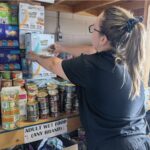
The former Dauphin County deputy sheriff named the place “Anna T’s” as an homage to his late mother, Anna Theresa, at whose side he learned to cook. A portrait of her, with Gaspich’s father John, graces the back wall of the establishment and acts as a comforting reminder.

“When my dad retired in 1992, they spoke of opening a soup and sandwich shop, and it never came to fruition, so I had the opportunity to fulfill both our dreams,” said Gaspich.

The Linglestown resident is no stranger to food preparation. He spent decades working in the kitchen of the local fire company, cooking for weddings and other events.

Made from Scratch

Fans of the first meal of the day have their choice of steak and eggs, sticky buns, hotcakes, breakfast meats and hearty omelets. Late risers will be glad to learn that breakfast is an all-day affair.

“Not many places do that,” said Gaspich.

State workers can easily walk to Anna T’s during their lunch hour and choose from soups, sandwiches and salads. Dinner choices include lump crab cakes and substantial, stick-to-your-ribs comfort foods like meatloaf, turkey with filling and chopped steak, which Gaspich says is a customer favorite.

One thing that sets Anna T’s apart is that everything is made from scratch, from “Mama’s chili” to meatballs to chicken corn soup to the rich, decadent macaroni and cheese. When patrons order sandwiches for the first time, they are often pleasantly surprised to find them devoid of deli meat.

“All our meats are cooked here and hand-carved off the bone,” said Gaspich, adding that the turkey club is a big hit. “We also do a slow-roasted, pulled pork sandwich with our own apple cider barbecue sauce made with real apple cider.”

Gaspich makes it a point to greet all his customers and make them feel welcome.

“Even though I spend quite a bit of time in the kitchen, I always attempt to check on every customer,” he said.

Those who leave room for dessert can choose from cookies and cakes, which are baked on site.

“The cakes, pies and the grilled sticky buns are all homemade, using my mother’s or my staffs’ family recipes,” said Gaspich.

Close Ties

Judy Imes works in the Fulton Bank building and is an Anna T’s regular.

“It’s a friendly, relaxing place,” she said. “Mark’s dad comes in, and he’s a joy also.”

Imes enjoys a few dishes in particular.

“When you order a chef salad, you get real turkey, and they offer a tuna melt on Fridays that is just delicious. They also have a veggie omelet that is to die for.”

The Harrisburg resident said she enjoys that all the food is homemade and portions are generous.

“I ordered their hot roast beef sandwich and had to take half of it home,” she said.

Joe Sobel, who works next door, said he likes the fact that Gaspich supports local artists by displaying their artwork, which is available for sale on consignment.

“I’d like to get to the point where I rotate it out every few months,” said Gaspich.

Sobel said he appreciates the fact that the owner has such close ties to Harrisburg. He also enjoys the welcoming atmosphere and the homemade family recipes, including the soups and omelets.

“Everything is fresh and tastes good. For lunch, I often choose the wraps because they’re well done,” he said.

Specials vary daily and diners can preview them by visiting the Anna T’s Facebook page.

For those who want to bring meals home to the family, takeout is available along with seating up front for customers to relax as they wait.

For Gaspich, Anna T’s has been a satisfying second act as he enjoys his new career as a restaurateur.

“My favorite part is chatting with customers and seeing their smiles,” he said. “The fact that I’m putting out comfort foods at a good price makes me happy.”

Anna T’s is located at 210 N. 3rd St., Harrisburg. Hours are Monday to Thursday, 7 a.m. to 7 p.m. and 24 hours from Friday through Sunday at 2 p.m. For more information, call 717-236-1110 or visit the Facebook page: Anna T’s.

Continue Reading

Bending Sound: Carlisle-based Rivers dives into the local indie scene.

Screenshot 2015-06-01 08.31.45Rivers is a smattering of genre-bending sounds—tapping into folk rock, pop, funk, blues, chamber pop, Americana, roots rock and alternative—that make up a fluid and dynamic indie folk style.

But, when you think you can put a finger on their overall sound, Rivers keeps you guessing. That’s the beauty of their music.

After just two short years of playing together, Joe Schaefer, 25, Matt Sinkovitz, 31, and Vincent Yarnell, 25, are eagerly working to get their distinctive folk amalgamation into the eardrums of as many people as possible.

“People really love our music,” said Sinkovitz, the percussionist. “It’s amazing to share what you’ve created with people and get such a positive response. It makes you feel like you are doing something right. We have kids sitting around us at farmers markets, and we play senior homes. We can hold it down for most audiences.”

They regularly play at some favorite local spots—Appalachian Brewing Co., Little Amps, Suba and The MakeSpace in Harrisburg, as well as the fourth Monday of every month at Andalusia Tapas Bar in their hometown of Carlisle. They’re also picking up gigs at bars, restaurants, markets and festivals in places like Philadelphia, Maryland and Washington, D.C.

Influences and Sounds

Yarnell leads the vocals and plays guitar and banjo with acoustic grit and smoky soul, drawing inspiration from musicians like James Taylor, the Wood Brothers and Gorillaz.

Schaefer’s voice and upright bass are smooth and easy going, yet fearless. Drawing from his classical training and love of bassist Edgar Meyer, he lends classical sounds, but can rock out fiercely.

“Joe just bashes the bass. He plays it like a 12-piece drum set,” said Yarnell, who added that his bandmate is “super funky.”

Sinkovitz is the rhythmic heartbeat of Rivers as the percussionist, bringing a love of many genres to the table—jazz, classical and hip-hop—from Simon and Garfunkel to The Notorious B.I.G.

Drawing from wide-ranging influences and sounds, the seven-track “Rivers (EP)” is a pleasing, multifaceted experience.

Pop folk ballad “Heartland” is an inviting, smooth listen that has potential for commercial appeal. “Halymorpha Halys Blues” channels gritty alternative rock and moody blues, cleverly relaying the plight of a brown marmorated stink bug—its scientific name serving as the song’s namesake. “Photographic Memories” weaves the swing and coolness of jazz with the plucking cadence of bluegrass.

The EP’s cover, a collage crafted by Carlisle artist Aron Rook, seamlessly joins Rivers’ folk rock sound with its indie image.

“We just asked her to use a piece from a collage series she had recently created,” Sinkovitz said. “Aron is our favorite artist and has done several poster designs for us as well.”

By the end of the summer, Rivers plans to release a second EP, and, as 2015 wraps up, they hope to record a full album of more original material.

Open Mic Magic

Rivers formed thanks to the area’s active open mic circuit.

Sinkovitz and Yarnell met each other first at the Alibis open mic in Carlisle and started playing together.

“I was drawn to Vince because I could immediately see that he was a great guitar player and a strong, original songwriter,” said Sinkovitz. “Once we started playing together, we discussed trying to find a bass player.”

Shortly thereafter, they saw Schaefer perform at the Courthouse Common open mic.

“His skill level and ‘sick-nastiness’ on the bass is what encouraged us to reach out to him,” said Sinkovitz.

You could say that the three musicians were at the right open mics at the right time.

“We were there just to perform and play music. Our meeting was serendipitous,” said Sinkovitz.

After just a year of playing together, the young folk musicians made a momentous decision. They hung up their hats at their day jobs and embarked on the life of a full-time band.

This year, they have set a goal of playing 200 dates and, counting June bookings, were almost halfway there.

“It feels good to make a goal and see the goal in action working for you,” said Yarnell. “This is the best job you could ever ask for. If we have a day off [from playing], we are writing more songs.We are paying the bills getting to play music from our hearts.”

To find Rivers shows in the area and to download “Rivers (EP),” visit www.theriversband.com.

June Concert Dates

  • June 6, 9-11 p.m.—Suba Mangia Qui, Harrisburg
  • June 10, 3-7 p.m.—Farmers on the Square, Carlisle
  • June 19, 9 p.m.- 12 a.m.—Yardz Bar and Grill, Enola
  • June 20, 11 a.m.-2 p.m.—Broad Street Market, Harrisburg
  • June 22, 6-9 p.m.—Andalusia, Carlisle
  • June 27, 4-8 p.m.—Music in the Garden, Carlisle
Continue Reading

History Hop: Canals, old buildings, antiques and Bunny Burgers round out a tour of Perry County.

Screenshot 2015-06-01 08.25.04When people think of Perry County, they may think first of hunting and fishing, maybe hiking or camping. But history buffs, take note: a colorful past pervades the county’s hills, valleys and towns.

Dennis Hocker, president of the Historical Society of Perry County, thinks about local history a lot. Therefore, he was the perfect guide for a daylong tour of this fascinating place that, nearly two centuries ago, was sliced out of neighboring Cumberland County.

“There are so many historical sites in Perry County that I’ve picked just a few to allow you to enjoy the drive, with a few refreshments along the way,” Hocker explained at the start of our trip.

We began our tour ensuring that we’d be properly nourished for the journey ahead, heading to one of the county’s best-known (and oldest) eateries.

Opened on Mother’s Day 1964, the Red Rabbit Drive-In outside of Duncannon is a throwback to the time of the British invasion and the original Ford Mustang. There’s nothing faux about the Red Rabbit—it just hasn’t changed in 50-plus years.

“With no inside seating, carhops take your order, just like back in the day,” said Hocker.

Similarly, the architecture and décor recall a time gone by, as does the menu (if it’s your first time, go with the locally famous Bunny Burger, along with the requisite fries and shake). There also are a few picnic tables around the lot for those afraid of spilling bunny dust (a special French fry seasoning) in their cars.

Following lunch, we stopped nearby at the Juniata Junction lock at the Amity Hall exit of Route 322.

The canal era in Pennsylvania, begun in 1827, was a complex, engineering marvel. When the Juniata River portion of the system opened in 1832, the canal extended to Hollidaysburg at the eastern end of the Allegheny Portage Railroad, 127 miles west of the Susquehanna River. A total of 86 locks was required to overcome a change in elevation of 584 feet over the full length of the canal, which cut the travel time from Philadelphia to Pittsburgh from weeks to a few days.

“The Juniata Junction was the traffic director on the canal system from Harrisburg,” Hocker said. “It allowed canal boats to either continue further north or turn westward toward Pittsburgh.”

To gain a sense of what riding on the canal was like, continue a bit farther west to the borough of Newport and stop at the town square. To your left, you’ll be treated to a mural on the wall of the Perry County Council of the Arts showing a canal boat on the move. Newport was an important stop on the early system, a launch point for crops and lumber headed to cities in the east. While there, stop at local favorite Espresso Yourself for a quick jolt or snack in the charming, historic storefront on the square.

Critical Time
On the other side of Newport, a short distance away, is Little Buffalo State Park. When you reach the park entrance, turn left onto State Park Road.

The Blue Ball Tavern was built in 1762 and purchased by Peter Koch in 1793. His son opened a tavern there in the late 1700s, and its proximity to the Juniata Furnace, an iron works, made it a gathering spot for locals. The tavern offered food, drink and a sleeping loft.

“The Blue Ball Tavern took on a critical role during the war of 1812,” said Ben Ranney, naturalist at Little Buffalo State Park. “The tavern was strategically located on what was at the time called the ‘Great Road,’ linking the military post in Carlisle with the town of Sunbury.”

When the dispatch rider from Carlisle arrived, the owner of the Blue Ball Tavern would provide him something to drink, then signal the owner of the White Ball Tavern on the ridge overlooking the road to saddle another horse for the rider.

“Refreshed, the rider would pass through Newport, then cross the Juniata River at Reider’s Ferry and be on his way,” said Ranney. “This system helped maintain communications between Washington, D.C., and Fort Niagara during a critical time in our history. “

The tavern closed in 1841 and is currently managed by the Historical Society of Perry County.

Year Round
Leaving Blue Ball Tavern, follow the signs to Shoaff’s Mill. As you walk up to the mill from the parking lot, enjoy a stroll through Clay’s Bridge, a burr arch-style covered bridge. Built in 1890, the bridge was moved to its current site in 1971.

When the Juniata Furnace Iron Works closed in 1848, William Shoaff bought 63 acres, which included a mid-1830s gristmill and a log cabin. The commonwealth purchased the mill in 1966 and renovated it in 1976 for grinding cracked corn and apples.

Once you leave the mill, follow Route 34 into the borough of New Bloomfield. At the square, take a moment to observe the historic Perry County Court House. Built in 1826, it’s the oldest continually used courthouse in Pennsylvania. In the middle of the square, the Soldiers and Sailors Statue dates back to 1898 and honors Perry County citizens who lost their lives in war.

It’s only a mile from New Bloomfield along Route 274 East to Huckleberry Road and the Hoverter and Sholl Box Huckleberry Natural Area. Gene Odato, the district forester at the Tuscarora State Forest, has responsibility for the site.

“This 10 acres is Pennsylvania’s smallest state-designated natural area,” Odato said. “The specimens of box huckleberry here have been estimated, based on their observed rate of growth and clonal reproduction, to be between 1,200 to 1,300 years old.”

A nature trail winds throughout the box huckleberry plants. Because the plant is an evergreen, keeping its leaves in the winter, this natural area attracts visitors year round.

After your visit, continue on Route 274 East into the borough of Duncannon and follow Market Street into town. On the town square, you’ll pass the Doyle Hotel, famous among hikers on the Appalachian Trail as a great place to stop for a meal to celebrate reaching the mid-point of the trail.

Ice Cream & Archeology
If the mood strikes you, consider stopping for a treat at the 3B Ice Cream shop. Then you can walk across the street to the Clark’s Ferry Tavern and check out the archeology dig, which is open to the public most Sunday afternoons.

“The Clark’s Ferry Tavern, the oldest building in Duncannon, was originally built in 1788,” Hocker explained. “It served as a docking point for the ferry crossing the Susquehanna River and a stage stop on the first road westward. During the Civil War, it was known as the Topley Hotel and served as a mustering point for men of Company B of the famed Pennsylvania Bucktails.”

Round out your trip with a stop at the Old Sled Works. In 1904, the production of Lightning Guider sleds opened in this two-block-long factory building. For nearly 85 years, millions of sleds and other wood products were built here and shipped throughout the United States. At one point, the factory had become the largest sled production facility in the country.

“My dad bought what was then called the Standard Novelty Works in 1968, and it continued to operate as such until the fall of 1990,” said owner Jimmy Rosen. “I was only 26 when my dad turned the sled works over to me. I could hardly wait to begin refurbishing the building to make it sparkle like so many of the others I’d seen.”

Today, more than 120 vendors pack the Old Sled Works to sell a wide range of antiques and crafts. To add to the old-timey atmosphere, Rosen has styled the building so families can amuse themselves at the penny arcade and buy a milkshake at a real soda fountain. There’s even a sled museum inside.

I hope you enjoy your tour. For those of you looking for more information on the history of Perry County, check out www.perryheritage.com. Dennis Hocker has written 12 books on the history of Perry County. I think you’ll find them informative and fun to read.

Getting There
The Red Rabbit Drive-In is located on Route 322 one-half mile west of the Clark’s Ferry Bridge and one-quarter mile east of Route 11/15. The hours are 11 a.m. to 9 p.m. Friday, Saturday and Sunday. For more information, visit www.redrabbitdrivein.com.

Juniata Junction and the Canal Lock. Take the Amity Hall exit off Route 322 then turn left at the bottom of the hill and park at the River Road sign. Walk about 300 yards up the southbound exit ramp (to the right of, and along, the PennDOT yard) until the ramp bends to the left. The trail will be to the right, across from the smallest PennDOT building.

When you reach the bottom of a short hill, you will be in the canal itself. If you look to your right, you’ll see what is left of the canal, which headed north along what is now Route 11/15. There was a bridge across the northbound canal for the mules to turn the boats destined to enter the Juniata River branch of the canal and go west.

As you walk straight ahead, you’ll see the towpath at the top of the berm to your right for the mules that pulled the canal boat toward the lock. In about 800 yards, you’ll reach the Juniata Junction Lock. Notice the cut stone sides of the lock, which have weathered almost 200 years.

Blue Ball Tavern Museum is located at 59 State Park Rd. directly across from the Little Buffalo State Park offices. The site is open Sundays during the summer, 1 to 4 p.m.

Shoaff’s Mill is located at 1579 State Park Rd., one-half mile up the road from the Blue Ball Tavern. This 19th-century mill still runs on the 103-year-old, 32-foot waterwheel. It’s open Saturday and Sunday from 1 to 3 p.m. from May to the third weekend in October. For information about tours, call 717-567-9255.

Hoverter and Sholl Box Huckleberry Natural Area is one-half mile along Huckleberry Road from Route 274. When you see the sign for Arbutus Lane, pull over and stop along the side of the road. The site is on the left, up the hill. For more information, call the Tuscarora Forest District Headquarters at 717-536-3191 or email [email protected].

The Old Sled Works is located at 722 N. Market St. in Duncannon hours and is open Wednesday to Sunday, 10 a.m. to 5 p.m. For more information, go to www.sledworks.com or call 717-834-9333.

Don Helin published his first thriller, “Thy Kingdom Come,” in 2009. His recently published novel, “Devil’s Den,” has been selected as a finalist in the Indie Book Awards. His latest thriller, “Secret Assault,” was published in November. Contact Don on his website, www.donhelin.com.


Continue Reading

A Bright Idea: Lighten Up Harrisburg gears up for its second Glow Run.

Screenshot 2015-06-01 08.17.24Got glow gear?

Then you’re already prepared for this month’s 5K Glow Run, which, for a second year, will make the city a little brighter by raising money to install LED lights on streets that need it most.

Runners and walkers of all ages and fitness levels will fill Riverfront Park with neon glow sticks, necklaces, bracelets and a variety of other lights as they participate in the night-time run. And, if you lack any manner of glowing, blinking bling, don’t fret. You can always pick up some at the race.

“I was blown away by the people who responded and showed up last year,” said event coordinator Stacia Zewe of Lighten Up Harrisburg. “When you plan a party, you’re like, ‘Gosh, I hope somebody comes.’ I couldn’t believe how many people cared.”

Last year, $22,000 was donated to Harrisburg for lighting improvements along Front Street, Zewe said.

While the city donated labor for the installation of the lights, the money raised from the 5K helped replace 14 streetlights in that area, she said.

Lighten Up Harrisburg is no stranger to making the city shine brighter. The organization’s other projects have included the Walnut Street Bridge relighting and lighting work on Allison Hill.

Despite the improvement along Front Street thanks to last year’s run, the lighting project still must be completed, Zewe said. If the event can raise enough money, Lighten Up Harrisburg would like to focus on other streets, too.

“Overall, people were happy to see that something was done so quickly,” Zewe said. “Within a month of the Glow Run, we had replaced 14 lights on Front Street, so people could see that what they did helped make an immediate impact.”

To keep things fresh this year, the run will feature the fun street band No Last Call at the turnaround point to help keep runners and walkers motivated.

Also, last year’s after-party at Sawyer’s Cantina meant participants younger than 21 couldn’t celebrate post-race. In an effort to include all runners, a small party will be held at the starting point in Riverfront Park.

For Zewe, it’s still surprising to see the community event she dreamed up turn into such a popular race. A runner herself, she saw the need to provide better lighting in the city.

While she hasn’t created a hard financial goal for this year, she’s hopeful that even more money will be raised, largely due to corporate sponsors. WCI Partners, City House Bed and Breakfast, Mid Penn Bank and Road ID are among those contributing.

“Last year, I think all of us were blown away because the event was our baby, and it learned to crawl and run in the same night,” Zewe said. “It’s so different and such a good cause. It’s important to me that we keep that kind of excitement going.”

Lighten Up Harrisburg’s 5K Glow Run is set for 8:40 p.m. on June 6. The race starts in Riverfront Park, Harrisburg, just south of State Street. Pre-registered runners can pick up bibs and race information at TheBurg offices, 2601 N. Front St., 3 to 6 p.m., on June 5. Registration is $30 for adults and $20 for kids 12 and under. For more information, visit www.lightenupharrisburg.com.

Continue Reading

The Lounge Next Door: Romance, rooftop are part of the expanded 704 Lounge.

Screenshot 2015-06-01 08.29.36At Harrisburg’s 704 Lounge, a stunning, upscale addition is ready for its close-up.

Several years ago, owners Brett Johnson and Russ Harr bought the circa-1881 townhouse next door to their original bar, both located across the street from the state Capitol complex. They then began a series of renovations that removed part of the wall that divided the two properties, adding a new kitchen and second-floor bar area.

Like that, the new Cielo Lounge was born (in Italian, cielo means sky or heavens).

In the beautiful addition, guests can sit comfortably and admire the work of local and national artists along with a colorful collection of Depression-era glass gleaming in the built-in display case. The space has a partially enclosed nook perfect for private conversations. A Chihuly-inspired, hand-blown chandelier takes center stage in the original foyer, which has a clean, modern feel with Victorian-era details about the room.

“Anything from 1881, we kept,” said Harr of the historic townhouse.

The property has been lovingly restored to show off its best assets. Prominently featured in the foyer is the original fireplace, gorgeous stained-glass windows and a winding staircase, which the wait staff uses to access the new, second-floor bar servicing the Cielo Lounge.

Johnson meticulously designed the Cielo Lounge with Brazilian Koa wood floors, wall coverings from Germany, rosewood mahogany tables and sparkling light fixtures by Yale. 2D artwork by Orna Amrani is hung as a focal point along the main wall.

Gold, bronze and silver accents provide a romantic and relaxed atmosphere in the sunken bar lounge. Step up through the sliding glass doors and the glowing rooftop invites you to admire the Pennsylvania State Museum and Capitol building. The rooftop also has one of the best views for fireworks in the city.

“You don’t even have to bend your neck,” said Johnson of the view.

The Cielo Lounge has a state-of-the-art sound system and is equipped to host business meetings and events. Though the space just opened, there are already two weddings booked, as well as several social and charity events.

The lounge also functions as a dance floor on Fridays and Saturdays with different themes like salsa and swing nights led by dance instructors.

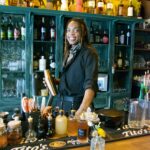
704 Lounge offer a tapas menu and a new drink list with specialty cocktails, some with edible flowers. Speakeasy nights feature old-fashioned concoctions sourced from a 1920s drink recipe book found by Johnson. On Sundays, you can make your own bloody Mary from your choice of three kinds of tomato juice, a house mix and all manner of garnishes. Wait staff takes drink orders from both the lounge and rooftop.

The renovations have been a labor of love for Johnson and Harr. They explained that some of the inspiration for designing the Cielo Lounge came from places they’ve visited like Upstairs at the Kimberly atop the Kimberly Hotel in Manhattan. Johnson couldn’t recall a place in Los Angeles that could quite match what they’ve achieved at 704 Lounge.

“Everything is designed,” said Johnson, a long-time professional in the field. “From the wall coverings and silks to original art, it’s all hand done.”

Johnson worked as a designer and project consultant in L.A. when he met Harr, who had moved from Pennsylvania in 1990. Harr found success managing artists for events such as the Oscars, which he continues to do. In 2010, they relocated to Harrisburg and created Bar 704, the original name for the business before two expansions.

“I never thought I’d come back,” said Harr of the return to his home state.

The affordability of the area has allowed them to do what they love and do it with style. In the five years that they’ve been open, 704 Lounge has become known for its annual Night of Glamour, which celebrates the Oscars during its live broadcast. Along with a red carpet, awards are offered for the best-dressed man, woman and couple of the evening.

Neither Johnson nor Harr would have guessed they’d one day own a bar, but their love of people and art led them to where they are now.

“We are very proud,” Johnson said of their establishment. “It’s an ‘everybody’ bar.”

704 Lounge is located at 704 N. 3rd St., Harrisburg. For more information, visit www.704pa.com or call 717-234-4226.

Continue Reading

Musical Notes: June Jumble–This month, something wonderful for everyone.

Summer is kicking off with a bang here in the ‘Burg. Both new venues and more familiar haunts are bringing in a number of notable acts. Whether you are looking for quiet reflection or challenging rhythms, June will not disappoint. So either head to the still freshly minted Millworks and try something new or take in some classics at Whitaker Center. Either way, this month will be incredible!


AVA LUNA w/ ETERNAL SUMMERS, 6/6, 10PM, THE MILLWORKS, FREE/21+

This Brooklyn band is known for mashing seemingly unmashable genres together. Lost somewhere between krautrock and soul (which, if you’re unfamiliar, are nothing alike), their music can be a little jarring at first. But, with each subsequent listen, their tunes become increasingly understandable, the divergent influences blending into something recognizable. Never lacking in energy, they often shift on a dime between bombastic, distorted explosions of sound and strange, jilting grooves. They will be joined by the equally delightful shoegazy power trio, Eternal Summers.


SIMONE FELICE, 6/11, 9PM, ABBEY BAR, $10/$15

A smoky singer-songwriter, Simone Felice is a folk singer with a pedigree. One the founding members of the Felice Brothers, he has taken the stage at the famed Newport Folk Festival, his music bearing the marks of a lonely wanderer. He released his second LP, “Stranger,” last year, but he is also a published author. It is no wonder then that his songs tell such strong stories. He will be accompanied by Anna Mitchell and Marie Danielle. Danielle will also be performing solo at the Downtown Little Amps the following day, June 12.


DAVID CROSBY, 6/23, 8PM, WHITAKER CENTER, $49.50-$90.50

It’s not every day that one of the founding members of the rich 1960s folk revival scene comes into town. David Crosby of Crosby, Still, Nash and (sometimes) Young will be bringing his years of both musical and life experience to Whitaker Center for an evening that is sure to be memorable. While most people are probably already familiar with his career, he began as a member of the Byrds and then formed CSN, providing the soundtrack to much of the tumultuous ‘60s. But nothing about his music comes across as outdated. Records like “Déjà Vu” and “4 Way Street” still sound fresh as ever (and regularly make appearances on my turntable.) This is an evening that is not to be missed.

Mentionables: Steve Wilkins, 6/5, Downtown Little Amps; Merchandise, 6/9, The Millworks; Jerry Joseph and the Jackmormons, 6/13, Abbey Bar; Beth Hart, 6/21, Whitaker Center

Continue Reading

H*MAC, Rising: Once near extinction, a restored Harrisburg Midtown Arts Center surges back with a casual restaurant, a new performance space and a re-energized mission.

Screenshot 2015-06-01 08.16.47The developers of the Harrisburg Midtown Arts Center see an unfilled niche in the city’s entertainment scene.

H*MAC partner Michael Giblin sees it when, in his life as a bass player, he tours nationwide with musicians from such revered bands as R.E.M. and Wilco. Lisa White, the Washington, D.C.-based booker brought on to fill the Lazarus-like space, also saw it when she drove down 2nd Street late one night and stopped for young drunks lurching in front of her car.

That niche is the responsible, grown-up crowd, hungry for a night out that doesn’t end in a drunken blur. White knew that mature types would want “to hang out in Midtown where there are more adult things to do, and more art-related things to do, whether it be visual art or musical art or film.”

Screenshot 2015-06-01 08.17.00“Every city has their area where the younger people go to just be drunk, and they have other places where people can go who don’t want to be part of that, and that’s what Midtown Harrisburg is going to be,” she says.

H*MAC, rescued five times from the sheriff’s sale list, has been restored to life. A financing deal in October 2014 finally provided the infusion to capitalize on the whole, historic building and not just the funky, existing Stage on Herr.

Giblin says he became “organically involved” with the project, moving from frequent customer to hands-on partner with John Traynor, Gary Bartlett and Chuck London. Traynor is the British import who wandered off I-81 to check out Harrisburg and fell in love with the possibilities at the former Police Athletic League building at 1110 N. 3rd Street.

But the dream collided with the recession, and H*MAC’s tribulations were front-page news. Today, the partners are about $4 million into the total $5 million project, and the end is in sight, says Giblin. Here’s what to expect in the new, ADA-compliant H*MAC:

  • Stage on Herr, rebranded as Herr Street Stage, continues hosting fun and up-and-coming acts. Even in the darkest days, the success of this space helped pay the bills.
  • The spectacular upstairs ballroom becomes the Capital Room. With capacity up to 1,100, it’s a configurable venue worthy of hosting name music acts, weddings, galas, fundraisers and dances.
  • The Kitchen at H*MAC opened May 15, serving fast-casual, but not like Chipotle. These are “gourmet-ish,” PA Preferred, Southern-inspired, chef-prepared dishes, Giblin says. The H*MAC partners signed on the Delaware restaurant consultant behind Troegs Brewing Co.’s breakout tasting room and snack bar to create the concept.

Screenshot 2015-06-01 08.16.37What else? Maybe a dance club in the basement. Maybe a bar on the rooftop. That’s in the next phase, so we’ll have to wait and see. The idea isn’t just about expanding the space but “bringing a whole new concept to the landscape,” says Giblin.

“We’re going to be a one-stop shopping event for your evening out,” he says. “You can come and eat, either before or between the show, you can go to the show upstairs, and then you can hang out in the night club afterwards.”

There’s that grown-up thing. H*MAC belongs to the Destination Midtown coalition striving for the eclectic go-to neighborhood that Harrisburg pines for. He remembers the days of the “I saw your mama on 3rd Street” taunts. Now, he sees a turnaround because a few smart folks bought low during the recession and are dreaming high.

“All of those wonderfully hidden architectural gems were sitting there, waiting to blossom,” he says.

Giblin envisions a “middle class of acts” coming to H*MAC from the “rich catalog that appeals to the over-30 crowd or the cottage industry of artists that makes a living playing live.”

That’s where Lisa White comes in. She has been booking spaces and consulting since the 1980s. She signed on with H*MAC because she saw the “little renaissance” of artistic variety in Midtown and recognized the need for touring acts and events in a wide-open space.

White says she won’t sign any artists to the Capital Room until renovations are wrapping and an opening date is clearly in sight.

“The last thing we want to do is move a confirmed show that someone has routed a tour around,” she says.

Screenshot 2015-06-01 08.16.20But she’s been planting the seed among managers. At this year’s South by Southwest music festival, her descriptions of this new venue in a city just off a major highway got their attention. She and other buyers are conversing about an I-81 music corridor, where acts can find eager audiences city by city.

“They can’t go up and down the I-95 corridor all the time,” she says. “You can only play those markets a certain amount of times before you start having diminishing returns. Bands are on the road more because they’re not getting any revenue from the recorded product, so they need to find places where they can perform and do well.”

Enter Harrisburg. There will be an experimentation period in booking the Capital Room, finding what delights Harrisburg, whether it’s Scandinavian black metal or swing dance lessons on the ballroom’s wooden floor.

“That’s part of the adventure of it,” White says. “You don’t know these things, and you can’t know these things, and you just gotta try it and see what works.”

The Harrisburg Midtown Arts Center (H*MAC) is located at 1110 N. 3rd St., Harrisburg. For the latest updates and scheduled acts, visit www.harrisburgarts.com or the Facebook page: Harrisburg Midtown Arts Center.

The Kitchen at H*MAC is open Monday to Thursday, 4 p.m. to 11 p.m.; Friday, 4 p.m. to midnight; Saturday, 11 a.m. to midnight; and Sunday, 11 a.m. to 10 p.m.


Continue Reading

Student Scribes: Letter from Harrisburg

Screenshot 2015-06-01 08.33.02I heard nothing about the Baltimore riots until the following day, when I walked into work and noticed the television tuned to the news. Being at the tail end of my undergrad career, while also working four to five days a week, leaves little time for keeping up to date. I knew about the death of Freddie Gray, but not the escalating situation. The first images that crossed my vision were of fire and chaos. I worry that it could happen here, in Harrisburg, right down the road from where I live.

My neighborhood, Allison Hill, has a face only a mother could love. Empty plastic bags tumble down the streets, and scraggly weeds grow out of the cracked sidewalks. A pothole on my side street takes up so much of the road that my car can only drive down the wrong half. My car might easily be dragged into the black hole of rubble, ripping out the undercarriage and leaving a gutted shell behind. The street remains mostly unchanged since I purchased my house and moved in five years ago. Though they did throw in some cold patch a few years back that lasted until the following winter, when it began to cave in on itself again. Like the burnt-out street lamp on my block, I doubt the city will ever fix it.

And I adore it. I adore the Dominican salon across the street, the Spanish-American restaurant on the corner, the deli that sits diagonal from my house that reminds me of Brooklyn. I love the joy of the two young girls who live in the house across from me, who giggle and chase each other down the stairs and up the ramp of their home, over and over. I wave to my neighbors across the street and smile at the passersby on my way to the store. I love the kids on roller blades navigating the jutting sidewalks; the folks walking back from the supermarket pushing wheeled personal carts around the broken landscape; the souped-up dirt bikes that rip and roar up the street on any given Saturday night, or Tuesday afternoon for that matter. But in the same breath, learning to discern the difference between bullets and fireworks factored into the education of living on the tattered edge of Allison Hill. I actually reside two blocks past the technical edge of Allison Hill, but bullets aren’t concerned with invisible boundary lines.

I understand the anger of Baltimore and Ferguson, of Eric Garner, Amadou Diallo and Rodney King. There is a systemic racism in this country, and it has gone on far too long. But how do we channel that anger into change? How do we become a country that values each and every life? My neighborhood could very easily descend into violence. The buildings in this city could burn alongside police cars. Walk down Derry Street, and you will see abandoned houses, chipped and peeling paint, broken and boarded up windows. The Rite Aid down the street has been robbed so often they employ a security guard. How are the people who live in this neighborhood supposed to hope for a better future when their environment falls apart around them? Martin Luther King Jr. stated that, “A riot is the language of the unheard.” Who will hear the cries of my neighbors if chaos erupts? More importantly, is anyone listening now?

My friend “Jersey Mike” Van Jura moved here from New Jersey, and adopted Harrisburg as his home. He loved it here. I never asked him why he came; I missed that opportunity. He saw possibility on the streets of this city. He wanted to create a scene that encouraged art, music and theater, that encouraged political activism, that fostered involvement. He wanted a better future for everyone. His heart and soul loved and believed that Harrisburg could be a place where people wanted to live, a city where bands wanted to come because a space conducive to the arts existed. He believed that, by creating a scene where positivity reigned, the whole city could benefit.

The first few years after I moved here, I hated Harrisburg. The only thing to do in the city involved drinking on 2nd Street. Yes, there were some fabulous restaurants, and a couple fantastic little theaters, The Gamut and Theatre Harrisburg, but once you attended their productions, weeks passed before a new show opened. I regretted ever moving here to be near my family. I’d lived in Brooklyn, traveled to Chicago several times, and spent a couple months in Austin. I’d resided for a decade in Kalamazoo, Mich., a town loaded with theaters and music venues, art galleries and opportunities. Here, I felt adrift on a disappointing wave lapping at the shore of a life I used to live.

Ranting one day to Jersey Mike about the lack of culture in the city, he surprised me. I thought he’d commiserate with me. Instead, he told me I needed to be part of the creation of something bigger than an angry diatribe. He put himself out there all the time. He held tweet-ups at Appalachian Brewing Co. that encouraged people to become an active participant in the change they wanted to see in the city. He blogged about the best diners and attended City Council meetings; he wanted his voice to be heard. The last day I saw him, he wore a crisp white shirt and black vest. His smile showed his excitement at lending his voice to the politics of the city. Three days before, he’d officially submitted his name to run for City Council. He never had the opportunity make good on his promise. When Harrisburg lost Jersey Mike, it lost a beacon of light in a city immersed in darkness.

At one time, my neighborhood must have been gorgeous with its beautiful old houses. When I started looking to purchase my first home, I spent much of the time perusing cookie-cutter townhomes that appeared as carbon copies of one another. There came a point where I almost gave up hope. Then I stumbled upon an ad on one of the real estate websites showing photos of the home I would come to call my own. Boasting high ceilings, beautiful woodwork, a hardwood staircase and a claw foot bathtub, I knew I wanted to look at it. My real estate agent, a sweet, older, balding man tried to talk me out of it because of the neighborhood. He insinuated that as a tiny, single, white girl intent on living alone, that area of the city might not be in my best interest.

I knew the dangers of living in a poverty-stricken area. I’d lived in Trenton, Cleveland and Pittsburgh. My neighborhood in Kalamazoo acquired the name “The Student Ghetto.” For years, it had been dangerous, but the students stayed and bought homes, fixing them up in the process. The neighbors there looked out for one another. So, I didn’t care about the surface appearance of Allison Hill. The requisite postage stamp-sized backyard and the sloped-ceiling attic where my books could live sealed the deal. On August 31, 2009, I signed the paperwork and became a homeowner. The girl who never lived in one house longer than two years finally put down roots.

The following summer, a drive-by shooting occurred right in front of my house. In that moment, I remember thinking that gunshots sound nothing like fireworks when they happen 15 feet from your bedroom window at 2:30 a.m. I watched as a crime scene unit placed tiny, numbered placards on the sidewalk for each bullet that lay abandoned on the street. There were no casualties, but I wondered if I’d made a mistake. Who was I to live alone in such a dangerous place? I talked to friends. They advised me to consider purchasing a weapon. A black-ops military man I know, more than 6 foot tall and very imposing, suggested a rifle with buckshot. The sound of the cocking gun would become a deterrent, and, even if I couldn’t aim, the buckshot would likely spray enough that I’d hit whoever was in the process of breaking in. As a hippie, I recoiled from this whole idea. I’d never held a weapon, let alone considered firing one. Could I shoot someone even in defense of my life? I’d been advised that once I shot, I must empty the chamber into whoever stood before me. Otherwise, the police would not believe that I felt truly threatened.

Walking around Allison Hill, if you learn to look past the roll-down gates and the graffiti, you’ll see backyard gardens bristling with sunflowers. You’ll see the young trees we planted a few years ago and an anti-violence mural the community created with the words, “Live the Conversation” on the side of a building. When I walk anywhere, the people almost always smile back at me. In the five years since I moved into the neighborhood, I’ve never had a problem. But summertime approaches, and I will once again fall asleep to gunshots and sirens. After 5½ years of hard work at HACC and Penn State Harrisburg, I wonder what my bachelors of arts offers my community.

In Jersey Mike’s office hung a whiteboard. On it, in varying shades of dry erase markers, were listed the names of bands he wanted to bring to the city. I often wrote my own suggestions. Some were unattainable: Flogging Molly, Mumford & Sons, Bruce Springsteen. One late night, while sitting on the deck, we planned how we might attract Springsteen to play at the Abbey Bar. I still think about that complicated and impossible dream that involved a lot of luck. Everyone we mentioned it to enjoyed a good chuckle. But Jersey’s magnetic charm brought plenty of other bands, and I’m not sure he didn’t actually believe he could get Bruce Springsteen to play here. I’m not sure I didn’t believe he could do it. Especially considering I once wrote the name of one of my favorite bands, Lucero, on the board on a whim. I’m fairly certain I squealed the day he told me he’d booked them.

As I watched the news of Baltimore the day after the riots occurred, I listened to stories of community members calling for calm. I turned it to sports when my bar started to fill up, but the images lingered. That evening, I turned the news on at home and waited for the curfew to take effect. Riots cops lined the streets, the protestors facing them. Someone lobbed a bottle at the police, and they retaliated. But somewhere amidst the rising tension, the community chose peace and silence came over the neighborhood as people slipped back to their homes. Did the people calm because they felt that their voices had been heard?

It’s easy to imagine Allison Hill as Baltimore, easy to see potential fires where stores grace corners. I hope, if the worst happened, that someone would give voice to the unheard cries of the people who live here. But maybe Jersey Mike was right. Maybe life needs to be more than waiting around for someone else to make a change, to take a chance. I love the pockets of beauty hidden in my neighborhood, but I’ve never really claimed it as home.

I explain patiently to those who look at me quizzically when I reveal where I live that the scariest man in my neighborhood is the man who lives in the duplex on the other side of my house. I have a kiddie pool I set up in my backyard every summer. I like reading in the sunshine, a beer on the side table, XPN playing over the radio on the porch. Creepy old man neighbor insists on leaning over the fence to ask me what I’m doing, as if the swimsuit, pool and book weren’t enough of an indication. As I hastily try to cover my body from his lecherous eyes, I know now why the previous owners grew morning glories on the trellis. I’ve been forced to listen to his family scream obscenities at each other more often than not. I worry more about them than I do about coming home at 4 a.m. after closing up at my job. Yes, there are arguments at all hours that waft in off the streets, and I’ve been woken up more than once by the sound of a vehicle crashing on the block in front of my house, but I’ve never felt threatened in my neighborhood. Catcalled, yes, but I’m a woman, so there’s nothing unusual in that.

Allison Hill is quiet tonight. No siren’s lullabies seep in through my open window. My cat’s head rests on his paws as I sit in my worn blue recliner and contemplate what comes next. My eyes fall on the stacks of books, the piles of mail, the sci-fi posters that adorn my living room and hide the holes I’ve made trying to hang pictures on the horsehair plaster walls, and I wonder if I want to leave. Grad school looms on the horizon. Ten years ago, when I first moved to Harrisburg, five years before I bought my house, when asked if I planned on leaving, I always answered with a resounding yes! I’d always planned to leave. Now I’m not so sure.

Today, the dappled sun flickered over me through the branches of the oak tree, and my neighbors waved from across the street. I walked over to Rite-Aid and jokingly gave Alex, one of the employees there, a hard time, as I always do; I know most everyone who works there by name. I passed a man walking with his daughter on my way back home, and they both smiled at me. These people hold voices worthy of listening to, if only someone cared to do so.

Last summer, 13 years after I left, I drove through the “Student Ghetto” back home in Kalamazoo. I noticed the vibrant colors of repainted houses, the streets free of debris, the hippies still playing guitar on the porches. It is beautiful today, because the residents graduated and decided to stay. I think about Allison Hill, and the people who live here. Hardworking, decent people who deserve more than vacant overgrown lots and potholes. It’s days like these I ask myself what Jersey Mike would do. What made him stay here despite the odds stacked against the city? I wish I could envision the city he imagined. At a crossroads, the decision of whether to stay or to leave waits in front of me. When the sun shines down and children’s voices echo on the streets, I want to stay. I want to make it better. But when the silence of the night breaks with the ricochet of gunshots, I want to sell and get as far away from the danger as possible. Then I wonder how the media would characterize my kind, smiling neighbors, and my troubled neighborhood, if chalk outlines left ghostly imprints on the streets.

Dawn Saylor was a senior English major at Penn State Harrisburg. She graduated in May.


Continue Reading

Farm to Glass: From grapes to bees to beer–Spring Gate crafts a local experience.

Screenshot 2015-06-01 08.24.47“Why a vineyard in Harrisburg?”

That was one of the first questions I asked of Marty Schoffstall, owner of Spring Gate Vineyard in Colonial Park, located just a few miles outside the city.

I visited during a ribbon-cutting ceremony commemorating the vineyard’s one-year anniversary, and, amidst the food and music and general hoopla, Schoffstall kindly gave me a tour of his operations.

“Wineries,” he said, “weren’t that big of a deal in PA.”

He was referring to the 1990s, when he traveled with his then-business partner, Mark Fedor, to California’s Napa Valley. They happened upon a vineyard where they tasted, learned and experienced wine. Schoffstall and Fedor decided that’s what they wanted to bring home—the vineyard experience.

The two first opened a vineyard in Virginia, named North Gate Vineyard. After North Gate’s success, Schoffstall turned homeward to Harrisburg, where he had previously purchased a farm for his family. He started by planting a test vineyard, experimenting with hybrid grapes.

Enter Rebecca Klein, another Harrisburg local, and an oenophile. Schoffstall and Klein met at their children’s school and discovered their common wine passion. He tapped her as Spring Gate’s executive director. Together, they opened the winery in March 2014.

Schoffstall, also a partner in Linglestown’s St. Thomas Roasters, envisioned something unique for Spring Gate. He decided to model his business after the European Farm Barn motif, capturing the essence of a European café.

He and Klein created a setting where people experienced the area, not just the wine. Firepits, enclosed patios, open gazebos, wandering farm animals, tastings, specialty chocolates, tours, music and private parties are all part of Spring Gate. They want you to enjoy wine at an enjoyable place.

The Vineyard

About 12 of Schoffstall’s 60 acres are devoted to the vineyard. Two natural springs provide plenty of clean water, as well as the vineyard’s name.

The central structure on the grounds, the barn, has been renovated. It includes cozy seating, a wine bar and a tasting room. Spring Gate currently offers about 23 wine varieties. Schoffstall said the Susquehanna sweet white (Niagara) and red (Concord) thrive at the vineyard. Chardonnay won’t grow, and he lost the Merlot in a test vineyard. The noiret, a hybrid grape with a hint of pepper, is my personal favorite.

Anthea, a visitor to Spring Gate, recommended the Détente—a dry white with a crisp, fruity finish. She said it reminded her of her time in Italy, sitting outside, enjoying a similar wine.

Besides grapes, there is an apple orchard, hops and beehives. Maple trees were tapped for syrup on the day of my visit. Vegetables grown on the farm are sold across the street in a market building. Chickens roam freely and sheep, not chemicals, fertilize the ground. Sheep, not machines, cut the grass.

“Inch by inch, year by year, the property becomes more sustainable,” said Schoffstall.

One domesticated bird in particular, Gertrude, has graced the label. So has a lamb. The dog might be next.

Wine to Beer

Spring Gate hosts festivals most months. On St. Patrick’s Day, an instructor taught an Irish jig. Earth Day was celebrated with bottle swaps and guests hand-painted recycled bottles. May featured the Kentucky Derby’s mint juleps and fancy hats, along with a Mother’s Day brunch.

And Spring Gate isn’t only the reserve of wine-lovers. Schoffstall has more than 30 years of experience making cider, so he logically introduced the hard variety. Now, every Saturday is cider day, the beverage purchased by the glass, growler or bottle.

Going forward, Schoffstall hopes to add brewing to his expanding operation. A beer garden—an outdoor area where beer is served—is in the works.

“Winter wheat is a natural product in this area,” he said.

The beer menu won’t be as extensive as the wine list, at least to start, featuring three or four varieties, he said. To get things going, he’s even brought in a consultant and brewer from Belgium.

The prospect of a brewery recently led to some controversy in Lower Paxton. Over the winter, some locals objected to a special zoning exception that Spring Gate sought, expressing fears of traffic, drunken driving and noise.

When I asked Schoffstall about it, he replied, “No one has ever complained about a winery,” perhaps because beer has a stigma that wine does not.

Indeed, beer in this country long has been associated with flannel, truck stops and bad country music. However, that stereotype is fading as the local craft beer scene has grown.

“What would differentiate Spring Gate from other local breweries?” I asked.

“The culture, the property and the experience,” Schoffstall replied.

I asked about future plans and brought up the word, “mead.” With a gleam in his eye, Schoffstall said, “We are releasing a honey-peach wine in June.”

The farm has bees and springs; honey and water make mead.

“To emulate those (old-world, European) meads would be a real goal, if I could find enough local honey,” he said.

Emphasis on local. Local wine and cider. Some day, local beer and mead. That’s what Spring Gate is really about.

Spring Gate Vineyard is located at 5790 Devonshire Rd., Harrisburg (Lower Paxton Township). For more information, visit www.springgatevineyard.com.

Continue Reading

A Midstate Passage: Anju Singh brings Indian clothing, culture to central PA.

Screenshot 2015-06-01 08.27.18Walking into Aanchal Apparel & Accessories, it’s impossible to miss the array of bright colors and sparkling jewelry that lines the shop’s racks and walls.

Indian culture is known for its vivid, vigorous spirit, so the visual display is a perfect introduction to the downtown Hummelstown shop.

“My vision and mission are to provide economical Indian clothing and accessories to promote diversity,” said owner Anju Singh, who greets customers with a warm and welcoming smile. Her motto is “apparel for anyone, anytime, anywhere.”

Singh was born and raised in India and earned her medical degree before coming to the United States. After enduring a difficult divorce and earning a PhD in molecular medicine, she was looking for a job that would be fulfilling and allow her to be her own boss while caring for her three children. She says her daughters, 4 and 6, were the inspiration for her store.

“They love the bling, bangles and jewelry,” Singh said. “I wanted to keep the culture and tradition alive in my own family.”

She got a business license, $4,000 from a friend who believed in her idea and began selling clothes and jewelry from her home in the fall of 2013. A year later, she opened her shop, presenting a unique concept for central Pennsylvania.

“I found this niche in the market,” Singh said. “There is no other brick and mortar store in the area selling Indian apparel.”

Singh carries items for women, men and children, with everything from casual clothing to wedding gowns. Brides can buy dresses she carries in the shop or order custom creations that will be made in India and take four to six weeks to arrive, depending on the season. She schedules appointments for wedding parties and individuals and also offers free sari-wearing lessons, taking pride in teaching second-generation girls and anyone else who wishes to learn how to wear the traditional Indian garment.

All of the items she sells come from India, and Singh works with multiple suppliers to provide a wide variety of options to her clients. She says she has one great supplier that she does rely on because they have a good relationship and his prices are reasonable.

“If he doesn’t have it, can’t get it, or won’t get it, though, I tell him I’m going shopping,” Singh said with a laugh.

One aspect of her business is very important—keeping her prices affordable. Singh has an exact formula for calculating her costs, allowing her to make a profit while ensuring the clothing and accessories are reasonably priced. She knows that she is competing with online stores, but cites an example of silk scarves in her display case of why customers should come into the shop. She says the same scarf she sells for $30 costs $41 online.

The reason for keeping her prices reasonable is simple. She believes that people are more willing to try new clothing items if they’re economical. She advocates a “try it before you buy it approach” because each piece is cut differently and because people like to be introduced by touching and feeling the clothing.

One of the items she is most proud of is what she calls the “1-2-3 sari.” Women can choose their fabric, and Singh then sends that material to her tailor in India to stitch into a ready-to-wear sari within a few weeks. The majority of her clients are American, and she takes great pride introducing new people to Indian apparel and accessories.

She also feels strongly about working with other local business owners to build mutually beneficial relationships.

“We generate energy by working together,” Singh said, adding that she is always looking for other small- and women-owned businesses with which to collaborate.

Singh was recently elected president of the Hummelstown Business and Professionals Association and has a vision to put the area on the map.

“Hummelstown is a small American town that has preserved its heritage but is in the 21st century,” Singh said, adding that she hopes to add to its diversity and culture.

Singh regularly attends community events to meet other local business owners and to promote Aanchal. She says she never fully understood customer loyalty before opening her store.

“I am touched to see that there are people who show up at events to support me and take the time out to support us,” she said.

Aanchal Apparel & Accessories is located at 417 W. Main St., Hummelstown. For more information, call 717-991-5105 or visit the Facebook page: Aanchal Apparel & Accessories. Singh also will be out with other local vendors between June and September at First Friday events at the Giant Food Store at 257 Hershey Rd., Hummelstown.


Continue Reading