TheBurg Podcast, June 12, 2015

Welcome to TheBurg Podcast, a weekly roundup of news in and around Harrisburg.

June 12, 2015: This week, Larry and Paul discuss a pair of hires discussed at Tuesday’s night’s City Council meeting and the future of City Island, the city’s gem in the middle of the Susquehanna.

Special thanks to Paul Cooley, who wrote our theme music. Check out his podcast, the PRC Show, on SoundCloud or in the iTunes store.

TheBurg Podcast can be downloaded by clicking on the date above or by visiting the iTunes store. You can also access the podcast via its host page.

Continue Reading

TheBurg Podcast, June 5, 2015

Welcome to TheBurg Podcast, a weekly roundup of news in and around Harrisburg.

June 5, 2015: This week, Larry and Paul welcome the podcast back from its vacation to catch up on the results of the May Democratic primary. Then, they discuss the raid of former Mayor Steve Reed’s home in Midtown, the latest legal trouble for Councilwoman Sandra Reid and the impending arrival of new tenants on N. 3rd Street.

Special thanks to Paul Cooley, who wrote our theme music. Check out his podcast, the PRC Show, on SoundCloud or in the iTunes store.

TheBurg Podcast can be downloaded by clicking on the date above or by visiting the iTunes store. You can also access the podcast via its host page.

Continue Reading

Fitness Studio Planned For Site Of Evicted Corner Store

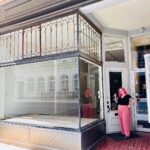
Ivan Black in the retail space at 3rd and Herr streets where he plans to open Next Step Performance this July.

Ivan Black in the retail space at 3rd and Herr streets where he plans to open Next Step Performance this July.

A fitness studio plans to open next month at the corner of 3rd and Herr streets in Midtown, replacing a convenience store that was evicted late last year after a string of citations and complaints from the neighborhood.

Ivan Black, a personal trainer and former college baseball player, hopes to launch the new training studio under the name Next Step Performance in the remodeled space on July 6, with a focus on calisthenics and bodyweight training.

The space will look like a “typical CrossFit studio,” Black said, referring to the popular high-intensity fitness regime, with lots of open space and some minimal equipment like pull-up bars and medicine balls.

Next Step Performance will fill a first-floor, corner commercial space that has sat vacant since the eviction of the T-Mart, a convenience store that repeatedly ran afoul of neighbors and city officials during the two-and-half years it was there.

The store and its owner, Tika Siwakoti, were the subject of several citations, including for selling loose cigarettes and failing a codes inspection.

Midtown Square Action Council, a neighborhood group, was particularly active in pressing for change from the city and the landlord, who finally filed for eviction in mid-October.

“It was an absolute wreck, but there was something charming about it,” Black said of the space. “I had a bat hanging from the ceiling. I took a picture of that.”

Black and his wife moved to Harrisburg two months ago from Washington, D.C., where he taught classes at Reformation Fitness, an area gym. He also launched Ivan Black Fitness, a website for his personal training services.

He said he was getting familiar with Harrisburg and was happy to “hit the ground running.”

“I feel good about the neighborhood, too,” he said, describing the Midtown location as a growing part of the city.

Black said the neighbors’ involvement in the ousting of the tenant before him, which he learned about from the building’s owner, encouraged him.

“That made me feel good, because the sort of business I have, I need the community involved,” he said. “I knew if I did the right thing, I’d be OK.”

Continue Reading

A Well-Spun Lie

West1West2West3West4Agents spent much of Tuesday hauling Western-style artifacts from the home of former Harrisburg Mayor Steve Reed.

In early 2014, TheBurg’s former managing editor, Dan Webster, conducted an interview with a man who had virtually disappeared from the public eye: the long-serving mayor of Harrisburg, Stephen Reed.

The interview was the result of months of hard work and persistence by Webster, who, after letters, phone calls and visits to Reed’s house, finally cornered him in one of his usual haunts–a barstool of Der Harrisburg Maennerchor on North Street at about 2 a.m., the seven-term mayor sipping his usual drink of a light beer over ice.

Reed didn’t know Webster and, at first, was put off by the young man’s tenacity. According to Webster, Reed said to him something like, “Oh, so you’re the guy who’s been stalking me?”

But, after some conversation, Webster persuaded Reed to sit for a lengthy, wide-ranging interview that covered everything from his biography (though no questions about his personal life were allowed) to the city incinerator debacle to the Old West museum that Reed had proposed. Webster later published portions of the interview in his magazine, “Local,” a Harrisburg-focused issue released about a year ago. The cover featured a portrait of Reed, grinning slyly, a caption overlaying the picture and asking the question, “Sinner or Saint?”

On Tuesday, I thought about Webster’s story as I stood across the street from Reed’s Cumberland Street home (along with the rest of the media scrum), watching agents haul away items such as saddles, a statue of an Indian, a totem pole and a stuffed coyote. The bounty would have fit perfectly into the “Old West” museum that Reed had wanted to build, for which he had spent millions in public funds to acquire thousands of artifacts.

In particular, I kept remembering when Webster asked Reed why he wanted to build a Western-themed museum in the unlikely location of Harrisburg, Pa. His response:

“Everybody assumes that I must be a collector of those items. I never was. I never was. I do collect stuff, WWII-related stuff, some Vietnam and old books. Just people assume, ‘Oh, he’s building museums related to his hobbies.’ No, actually, I wasn’t. But, in this town, a well-spun lie will trump truth or fact any day of the week.”

In his story, Webster cast doubt on Reed’s veracity by mentioning that his old city hall office was filled with Western-themed artifacts, including his “two prized possessions”: Wyatt Earp’s card table and Doc Holliday’s revolver.

And now we know that his personal home also was loaded with objects from the American West. After the faded, chipped green door opened, the Cumberland Street house spit out three truckloads of artifacts, including a spinning wheel, a whiskey barrel, statues, antique-looking furniture, Western-style clothing, horse-riding gear, Indian ceremonial items and box after sealed box of other things.

The house’s contents didn’t surprise a few of the veteran reporters. Rumors had circulated for years that Reed’s house was jam-packed with artifacts, though, until Tuesday, no reporter I knew had ever seen them. In a 2009 interview, Patriot-News reporter John Luciew asked Reed directly if any city-owned artifacts were inside his house.

“Never have I kept city- or authority-owned anything at my house, other than my pager,” Reed replied.

Luciew also asked about the reimbursement that Reed had requested from the Harrisburg Authority for artifacts he said he had purchased with his own money years earlier.

“These weren’t personal items,” he said. “There were items I had purchased for the archives and museum projects. These were delivered here (to the city) from the beginning. They were never anywhere else but delivered here.”

Emerging from his house yesterday, Reed–the non-collector–told the media gathered outside that the artifacts seized by agents the day before were, indeed, his personal property. He then went on, as he did with Webster, to offer reporters a lesson in lying.

“A well-spun lie repeated often enough becomes almost gospel truth,” he said before the cameras when asked about reports of corruption during his lengthy tenure in office.

After speaking for a few more minutes, Reed got into his car and drove off, saying that he was under a court-imposed order not to talk to the press and, in any case, was on his way to meet his lawyer.


Continue Reading

Utilities Launch Anti-Imposter Initiative

PUCCommissionerPamWhitmerCEOShannonWilliamsCReWBryanGenesse

Capital Region Water CEO Shannon Williams (right) is joined by PUC Commissioner Pam Whitmer and Bryan Genesse of Capital Region Water at today’s announcement.

A utilities coalition is joining forces with the state and with law enforcement organizations to help prevent robberies caused by people posing as utility workers.

The Keystone Alliance to Stop Utility Imposters today said it will work to battle this type of fraud in conjunction with the Pennsylvania Public Utility Commission (PUC), Pennsylvania District Attorneys Association and Pennsylvania Chiefs of Police Association.

At a press conference at the Capitol rotunda, the alliance also declared June 8 to 12 to be “Utility Imposter Awareness Week” in Pennsylvania.

Across Pennsylvania, thieves have gained access to residents’ homes by posing as utility workers, according to a statement from the group. Once inside the home, the imposters typically divert the resident’s attention by sending them to another floor while they rob the home.

“We haven’t had any utility imposters in our service area, but as part of our commitment to be community focused and proactive, we want to keep it that way,” said Shannon Williams, CEO of Capital Region Water. “Capital Region Water’s CReW rarely, if ever, needs access to a customer’s home without an appointment. When they do visit a home, they will have proper identification, a uniform with Capital Region Water’s logo, and will travel in a vehicle that is also branded with our logo

Williams added that, if customers want to confirm that the staff in question works for Capital Region Water, they should call 888-510-0606. If someone feels unsafe, they also can call 9-1-1.

The Keystone Alliance to Stop Utility Imposters formed to educate consumers on how to protect themselves via a new public awareness campaign with print, broadcast and online media advertisements.

“The PUC shares the concerns of utility providers and law enforcement and supports the need for greater consumer awareness about utility worker imposters,” said PUC Commissioner Pamela A. Witmer. “We are happy to join the participating utilities in this important effort as they strengthen their outreach on safety and continue to build strong relationships with their customers.”

At the news conference, the Keystone Alliance to Stop Utility Imposters unveiled its media campaign aimed at informing consumers about the illicit practices of utility imposters. For example, the coalition’s ads inform customers that impersonators are not easy to spot. Homeowners are advised that before letting any worker into their house to always check for a company-issued photo ID.

“These criminals typically prey on seniors and use a variety of excuses to enter and steal from the home. But if homeowners know what to look for and how to protect themselves, we can not only prevent this crime but also catch and prosecute these thieves to the fullest extent of the law,” said David J. Freed, Cumberland County District Attorney.
 
The coalition’s campaign materials were designed by Meinert/Mashek, a Pittsburgh-based agency. In addition to television and radio public service announcements, the member utilities will distribute the newly created communications tools among their customers to raise awareness.
 
“We’re glad to be part of this alliance and help alert homeowners about these imposter schemes. Take the time to examine the ID badge whenever someone from a utility company arrives at your home. Be safe, stay vigilant and if you have any suspicions about the individual’s identity, call 9-1-1 immediately,” said Dane Merryman, executive director, Pennsylvania Chiefs of Police Association.

The resolution also should serve to highlight the issue of phone scams, said Christopher Cardenas, PPL Electric Utilities’ customer services vice president. In those cases, thieves target customers with a false claim they are behind on their bill and will have service shut off if an immediate payment is not made with a pre-paid debit card.

Continue Reading

A Cemetery Swing: The region’s historic graveyards offer a fascinating take on the past.

Screenshot 2015-06-01 08.25.46Search the web for things to do in Harrisburg and you will find the typical list of “Harrisburg-y” possibilities: tour the Capitol, visit the National Civil War Museum, ride the Pride. However, No. 24 on the list of 30 offers an unexpected option— visit Harrisburg Cemetery.

A cemetery as a tourist attraction? I couldn’t resist.

Cemeteries meet the interests of a number of groups, especially history buffs. With a cemetery visit, you get the collective history of those buried there, the history of art used to commemorate their lives, and the history of wars or struggles in which they participated.

“So many interesting stories, that’s the way it is, though—all the old cemeteries, they have a story to tell,” said Barbara Barksdale, co-chairwoman of the Pennsylvania Hallowed Grounds Project and president of Friends of Midland, a non-profit that cares for the predominantly African-American Midland Cemetery in Steelton. “The history is just crazy in cemeteries around here.”

Some of those stories are individual, such as Herbert “Rap” Dixon, who, in 1930, became the first black man to hit a home run in Yankee Stadium. Then there’s Lemuel Butler, born in Harrisburg in 1844, a teamster who served with the U.S. Colored Troops during the Civil War.

Other stories are broader. Looking at the dates on the stones, it’s clear that some of those buried in Midland were slaves or freed slaves who mostly likely worked on the farm where the cemetery now sits. Midland is also the resting place of veterans of numerous storied African-American military groups, including the Buffalo Soldiers, the U.S. Colored Troops, Montford Point Marines and the Tuskegee Airmen.

“I want people to go away with—it’s more than a headstone,” said Barksdale, who gives tours of the cemetery.

Local Notables

Screenshot 2015-06-01 08.25.35Harrisburg Cemetery, listed in the National Registry of Historic Places, holds local and national history, as well.

In the walking tour, David Via, superintendent of the cemetery, pointed out the governors, soldiers and local people of interest buried there. Names like Berryhill, Calder, Cameron and Kelker, among many others, read like the street signs of Harrisburg.

“The Walking Tour Guide of Harrisburg Cemetery,” available at the caretaker’s house at the entrance to the cemetery, provides information on those buried there, as well as other intriguing aspects of the place.

Via said that 155 Civil War soldiers are buried in the cemetery and pointed out that the simple, white tombstones differ. The monuments for the Union soldiers have rounded tops, while the Confederate soldiers have pointed tops.

“Supposedly, so the damn Yankees couldn’t sit on them,” Via said of the Confederate stones.

Veterans of the American Revolution, the War of 1812, the Mexican War and the Civil War are all represented in the cemetery.

Down the highway a bit, the Old Public Graveyard in Carlisle holds the remains of 53 Revolutionary War soldiers, including Molly Pitcher, the famous female fighter and heroine. Her monument is one of the larger ones in the graveyard.

A guide mentions that the oldest marker is from 1757 and that the cemetery is the final resting place of a Civil War drummer boy and of Judge Frederick Watts, president of the Cumberland Valley Railroad, a U.S. Commissioner of Agriculture and a person “instrumental in the founding of Penn State.”

Manmade, Natural Beauty

While civic and war history engage many, the art history in cemeteries also should be noticed. Cemeteries large and small typically contain a gate, sometimes simple, sometimes ornate, which signifies the separation between the everyday world and the cemetery space.

A 30-foot-tall obelisk, representing eternal life from the Haldeman family plot, greets visitors to Harrisburg Cemetery. Tombstones on the grounds hold symbolic art. Anchors represent hope, ferns sorrow and lambs innocence.

The Old Public Graveyard contains many family plots with iron gates, some with intricate scrollwork, conveying a sense of privacy for the deceased.

Examples of white bronzes exist in both Harrisburg Cemetery and the Old Public Graveyard. These gray headstones, made of a combination of copper, tin and zinc, show little weathering even after a century of exposure.

The natural beauty of cemeteries is another draw. Quiet places, they provide a serene environment to walk, write, read or explore. Harrisburg Cemetery, in particular, has a wonderful array of plant life. In appreciation of its many flowering trees, the cemetery held a tree walk in April.

Trees include the well-known flowering dogwood, the crabapple and the northern red oak, as well as the less-recognized Kentucky coffee tree with its unusual pods, the English hawthorn lined with thorns and the Japanese pagoda tree, which sports bumpy, string bean-type seeds.

Via pointed out ivy growing on a stone that originated from a trimming from Martin Luther’s grave. Similar to English ivy but smaller in size, he calls it “Martin Luther’s ivy.”

Before visiting a cemetery, do a little research. Often, online, printable guides will direct visitors to points of interest within the cemetery and to any special artistic and planting features.

Visitors should follow posted rules, which often vary from cemetery to cemetery. While they provide a park-like atmosphere, with lots of space, grass and trees, cemeteries are not playgrounds. Stones are heavy and often old and could seriously injure someone standing or leaning on them. Groundhogs, which frequent cemeteries, burrow under stones, leaving large holes. Tread carefully.

Cemeteries serve as the burial ground for the dead, but offer much to the living. Those looking for a way to spend a summer day may want to consider a visit. Even the skeptical should try it once, as they may have a similar reaction to students who spent time in Midland Cemetery. As Barksdale put it, “Once I got them, they were hooked.”

For more information on the cemeteries mentioned:

  • Hallowed Grounds tour: https://centralpahallowedgrounds.blogspot.com
  • Harrisburg Cemetery: https://sites.google.com/site/harrisburgcemetery
  • Midland Cemetery: Friends of Midland Cemetery on Facebook
  • Old Public Graveyard, Carlisle: https://www.visitcumberlandvalley.com
Continue Reading

Not Our Fault? In Harrisburg, there’s plenty of blame to go around.

Screenshot 2015-06-01 08.14.19I don’t often get into screaming matches, much less in public places.

But, a pint or two in at my favorite new Harrisburg brewery, a friend and I began raising our voices over something we actually agree about—that we’re both angry, really angry, at John Campbell.

For sure, we’re not alone. The disgraced former Harrisburg treasurer upset plenty of people who had trusted him with their confidence and their money.

Heck, two months before Campbell’s arrest on theft charges, TheBurg helped host a party in his honor as he departed Historic Harrisburg Association, where he had been executive director. And my friend and I both were members of organizations where Campbell has been accused of taking money.

So, I guess we needed to vent, which we did, loudly, in contrast to the sounds of folks happily enjoying their La Dolce Vita drafts and their mutual company and the din of the jukebox at Zeroday Brewing.

We vocally debated Harrisburg’s version of “he who must not be named,” but, in the process, disagreed about something fundamental.

I hold many of us at least partially responsible for the phenomenon that was John Campbell; my friend doesn’t.

“He was a con man,” my friend said. “How could anyone have known that?”

Con man, no doubt. But I insisted that Campbell never should have had such positions of authority in the first place.

“He was a 21-year-old kid still in college when he was hired,” I countered, insisting (without success) that Campbell should have been flagged as too young and too inexperienced to serve as director or treasurer of anything important.

A person, I believe, is responsible for his own actions. However, that also pertains to the supporting actors, those who played lesser parts in a situation that goes spectacularly wrong.

I feel largely the same way about the city’s financial collapse.

Former Mayor Steve Reed, without question, tops the list of people responsible for Harrisburg’s fiscal chaos. However, in a flow chart of blame, you could list, in descending order, Reed’s direct underlings; the professionals who advised him; the Harrisburg Authority; members of City Council; the Dauphin County commissioners; numerous state officials; the supine media; and the voters.

Not that anybody has accepted this blame. A few years back, during a state Senate committee hearing on the city’s massive incinerator debt, every witness called upon, including Reed himself, denied responsibility. Evidently, Harrisburg’s near-bankruptcy happened without anyone causing it.

In fact, during the Reed administration, signals abounded that his consolidation of power was troubling and that the city’s finances were increasingly out-of-whack. Some residents tried to sound the alarm, but they invariably were shouted down, mocked or ignored.

You could make a long list of the ill-advised projects that the Reed administration championed, often financing them through strange, convoluted deals. For the sake of this column, I’ll limit my focus to what might be the most surreal—Reed’s attempt to build not one, but “five nationally scaled museums” (his words) in a poor, tiny city in central Pennsylvania.

New museums typically are born in one of two ways. In the first, a group (usually a non-profit board) tries to raise money for a building and/or its contents. In the second, a wealthy patron donates items—and sometimes foots the bill for the building, as well.

Harrisburg didn’t follow either path. The museum idea originated in the mind of a single man, Steve Reed, without any of the detailed preparation and painstaking planning needed to embark on a massive venture like starting a world-class museum (much less five of them).

In a nutshell, Reed got hold of public money and began buying stuff because he wanted to—and because he could.

Over a decade, he packed an enormous warehouse (and several other buildings) full of thousands of items from his sprees, spending untold millions on things that ranged from the genuine and valuable to junk and fakes. Lacking expertise, he vacuumed up lot after lot, often overpaying for the good and the bad.

The majority of objects were for an Old West museum he wanted to build, but some were for an African-American heritage museum he proposed and others for a Sports Hall of Fame he hoped to construct on City Island. There also were artifacts that didn’t seem to fit into any category—wood from a Colonial-era ship, transcripts from the Nuremberg trials.

Eventually, he got one “nationally scaled” museum built, the National Civil War Museum, but only because he learned that former Gov. Tom Ridge was a Civil War buff. So, according to project architect Vern McKissick, Reed quickly carved out a Civil War collection from his vast Old West stash and, though luck and salesmanship, got the state to foot the bill for the building.

This is local government gone completely off the rails. I half-laugh, half-cringe when I imagine Reed and his surrogates darting around the country attending auctions, sweeping up inventory, packing it all up, shipping it to Harrisburg, unpacking it and storing it in whatever dusty corner they could find for future museums that had no realistic path to ever existing.

But that’s what happened, and a lot of people knew about it—officials and politicians, consultants, city workers, the media, some in the general public. Yet year after year after year, it went on.

Typically, I’m not big on assigning blame, as I find resolving a problem more important than determining who’s at fault. However, in the case of Campbell and Reed, I believe it’s important to examine if we, as individuals, are in some way responsible. By understanding our own roles, we lessen the chance of a future rogue mayor, thieving treasurer or whoever might try to scam us next.

We all know the cliché that it takes a village to accomplish something good. Well, sometimes, it also takes a village to screw up royally.


Lawrance Binda is editor-in-chief of TheBurg.

Continue Reading

Treasured Island: Many people have high hopes for the future of Harrisburg’s City Island. But can its players paddle in the same direction?

Screenshot 2015-06-01 08.41.10One evening in March 1986, Mike Trephan was at the reception for his own wedding, at Catalano’s bar and lounge in Wormleysburg, when he got a call from then-Mayor Steve Reed.

“He says, ‘Michael, the river’s coming up,’” Trephan recalled. “‘You’ve got to move—’” Trephan knew what Reed was talking about: the hull of what was to become the Pride of the Susquehanna riverboat, a hulking metal frame that was perched on a City Island beach, unmoored. For the past year, Trephan and a group of local businessmen had been working to build an old-fashioned passenger boat to augment the city’s riverfront attractions. Trephan, who had recollections of taking a ferry to City Island as a child, called it “an old memory becoming a new dream.” He got off the phone and, along with his wife, headed for the island.

Rising waters had imperiled the project once already. Months before the wedding, the river had torn the boat from where it was docked on the west shore, wedging it against a pier of the Market Street Bridge. The disaster prompted a Patriot-News reporter to liken the riverboat to the Titanic—a display of hubris that was doomed to failure. But the hull was rescued and relocated to the island, and Trephan, after coaxing more positive coverage from the paper, kept the project and its capital campaign alive. On his wedding night, he got to the boat before the swelling river did. “And who shows up and helped us? Mayor Reed,” Trephan said. “We were all dressed up, but we got the boat tied up. I think he’s the one that brought ropes over, if I’m not mistaken.” The boat stayed anchored to the island.

The riverboat was just one piece of City Island’s transformation under Reed. For nearly a century, the island had been a recreational site for city dwellers, following the 1890 construction of the Walnut Street Bridge. According to Eric V. Fasick’s “Harrisburg and the Susquehanna River,” a collection of images of the river published earlier this year, the newly granted access led the city to develop bathing beaches, playgrounds and baseball diamonds there. By the time Reed took office, however, in 1981, the island had fallen out of use and acquired a reputation for prostitution and cruising. Trephan called it “disheveled,” though, he hastened to add, it “wasn’t as bad as people say it was. It just wasn’t developed.”

All that changed under Reed. In 2010, giving an interview for a local history project, Reed recounted his search for an enterprise that would have a “catalytic effect on changing the image and perception of the city.” “You needed something that had universal appeal,” he said. Waterfront investments, he went on, were “almost no-brainer types of developments. Once you do them, people will come. You build it, they will come.”

Trephan got involved after talking to the mayor during Kipona, the city’s riverfront festival over Labor Day weekend. Trephan had charted helicopters for the festival, and, as he and the mayor observed the long line of people waiting for a ride, Reed asked about other ways to improve the riverfront. Trephan ventured a suggestion for a ferry. That idea blossomed into the campaign for the riverboat, which Trephan spearheaded, along with other acquisitions—a railroad circuit and steam train, purchased from a bankrupt Vermont millionaire; an antique carousel. The crowning achievement was the construction of a new ballpark and the acquisition of a minor-league franchise.

Trephan, now in his seventies, looks back on the redevelopment of City Island as an emblem of Reed’s vision and follow-through. “He was a doer,” he said. “People knew that if he said he’d get something done, he would.” More than that, though, he recalls it as a story of political and geographical unity. The mayor “didn’t give a shit what your political party was,” he said. In the case of the Pride of the Susquehanna, he “probably got that done with 80 percent Republican help.” Trephan wanted the boat to be a project of both shores, and, when it came time to incorporate a nonprofit to manage it, he lobbied for the name to include “Harrisburg Area,” as opposed to just “Harrisburg.” (In a history of the riverboat, which Trephan put together in 2007, he wrote that it “might have been the first time that the east and west shores ever came together on a community project.”)

The renaissance on the island has largely endured. The Senators still play ball in the stadium, now dubbed Metro Bank Park. The Pride of the Susquehanna is paddling into its 27th year. But in recent months, both the private sector and local officials have begun looking to improve its offerings. Much as it did in 1986, when its mayor showed up to save a stranded boat, the city is considering what sort of businesses can flourish there, and how the government should help.


Last November, a group of land-use experts met over two days in downtown Harrisburg to contemplate City Island’s future. The Urban Land Institute, a global nonprofit, had convened them to tackle a question: was the island was being used to its full potential?

Urban Land Institute panels are meant to provide planning advice, as the institute puts it, “in an atmosphere free of politics or preconceptions.” Susan Baltake, the executive director of its Philadelphia council, which oversaw the City Island panel, told me the institute “gives cover to elected officials, who don’t want to be the ones telling constituents what to do.” The panel, which included lawyers, engineers, designers and real estate and construction professionals, among others, toured the island and interviewed 51 “stakeholders” representing the various constituencies with interests there. The result was a report that George Asimos, a local real estate attorney for the law firm Saul Ewing, and the panel’s co-chair, said he hoped would be “an informed, open-minded, no-agenda catalyst for action.”

The report affirmed the island’s present recreational use, while highlighting its immense potential. It called for a form of centralized management and urged the city to develop a long-term master plan. Among other ideas, it recommended pursuing additional programming at the island’s sports facilities and exploring winter activities and a year-round restaurant. It strongly urged the city to work with the City Islanders, a professional soccer team, to improve their stadium, which is underwhelming, despite the view of the Harrisburg skyline from its bleachers. The report also included a few of what Asimos called “blue-sky ideas,” including a “Museum of the Susquehanna” to celebrate the river’s ecology.

“City Island is a well-loved place,” Asimos told me. “It is unique and tremendous in its location, and in the fact that you can walk and drive to it.” But, he noted, the island’s amenities are “not planned in a uniform way.” The island didn’t have a consistent signage system, and the natural resources were integrated haphazardly. “It’s crying out for a unified master plan,” he said. Brad Jones, the president of the downtown development nonprofit Harristown, which led the request for the Urban Land Institute study, said the panel learned that vendors shared more or less the same wish list. They wanted the island to be “clean, safe and beautiful,” and they would like “maybe a little more marketing.”

Where does city government fit into these objectives? In 1984, before the rapid development of the island under Reed, the city petitioned the Urban Land Institute for a similar report. This time, the request came not from the city but from Harristown, with the backing of the Dauphin County commissioners and the regional tourism bureau. The difference is small, but it may say something about a divergence in priorities. Since Mayor Eric Papenfuse took office, he has clashed with these entities over spending on development and tourism. Though he was interviewed for the report, he took little interest in it. “I don’t think it told us anything we didn’t already know,” he told me, describing it as “one of those things the county likes to spend money on.” (Dauphin County paid $15,000 for the study.)

More to the point, Papenfuse has begun his own examination of the island, focusing less on potential for future development and more on the status quo. The city recently engaged a contract lawyer to go through the city’s permits with island vendors. The Urban Land Institute report recommended giving vendors longer permits, to encourage investment—yet the city recently notified vendors that their permits would be extended provisionally, for one year only. Jackie Parker, director of the city’s Department of Community and Economic Development, which encompasses the parks division, said she expected ultimately to renew them. But, she added, “We’re taking a look, because they’ve been on the books for a very long time, so we felt, and so did the vendors, that there were some things in there that they’d like to discuss and, you know, make some changes.”

Opening the permits may simply be about ironing out wrinkles; most of them date back a decade or more. But it may also reflect a deeper reconsideration of the vendor-city relationship. Under some permits, the city pays the vendor’s electric bill. Many contain a profit-sharing provision—if the vendor earns above a certain figure in a given year, a percentage of those profits goes to the city. But the city has rarely, and perhaps never, collected money under the provision. (One city official suggested such profit-sharing was never meant to be enforced, but rather was a way of making permits for private use of city-owned land more politically palatable.) Vendors, meanwhile, have found the one-year term puzzling. “As a business owner, how do you take a one-year permit to the bank to get a loan?” one vendor asked me.

These concerns are especially prevalent in the case of the asset that dominates the island—the minor-league baseball stadium. The city renovated the ballpark in 2007, matching an $18 million state grant with $18 million in borrowed money. (Around the same time, Reed sold the Senators to a private investor for $13 million, representing quite a coup, as the city had paid less than $7 million for the team a decade before.) Reed claimed that, under the deal, the city should expect ongoing revenues from the ballpark of $500,000 per year. In fact, the city now loses money on the stadium, largely because annual debt payments on it exceed the year’s rent and tax revenues by around $200,000. One city official described the arrangement as a “naked put—the city has all the downside.”

More worrying to Papenfuse, the stadium permit requires the city to pay for facility upgrades, potentially at very high cost to taxpayers. “You have a major scoreboard outage, you have an elevator go down, and you could suddenly have a million dollars in a year that the city’s on the hook for,” he told me. The Senators are supposed to pay the city a portion of parking revenues and stadium naming rights, but the city hasn’t received the money for about a year now, because it’s been siphoned off to pay for repairs. Papenfuse has been meeting with Mark Butler, a local businessman who bought the team earlier this year, and said he feels optimistic about the negotiations. He called the team “good partners” and pointed to its nearly $400,000 annual lease payment, which he acknowledged was costly. “From their perspective, they have the highest lease payments of any team in the league,” he said. “But from our perspective it doesn’t work, and the city can’t fill the gap.” (Butler did not respond to requests for an interview.)

The Urban Land Institute aspires to apolitical advice, but it is difficult to sever political considerations from the use of public land. Asimos, though he said the mayor’s task force didn’t come up during the panel, said the “fact that City Island is still costly to the city” did. In the fall, absent a renegotiated ballpark permit, Papenfuse will go before City Council and ask members to budget for the stadium’s capital repairs—and thus balance the city’s island subsidy against other spending priorities. I asked him what his long-term goal was for the island. “I’m not sure we can achieve it, but the goal is to get it to be—it doesn’t need to make any money for the city, but it shouldn’t be a financial liability to the city,” he said. “And right now, it’s a huge financial liability, with a sort of question mark for how high it can go.”


On a Thursday in early May, around noon, three men in red T-shirts and matching pants left a small, gray shed on the island, near the Walnut Street Bridge, and climbed into a Department of Corrections van. An escort drove them past the stadium towards the beach at the northern end. There, behind the putting greens of a miniature golf course, they spread out at a picnic table for lunch.

Jeff Palkovic opened Water Golf in 1990, making him one of the island’s longest-running attractions. A few years ago, when the city was nearly bankrupt, Mike Trephan organized Palkovic and several other businessmen into a loose committee to help take care of the city’s parks, including the island. A fellow board member of Trephan’s worked in corrections, and she connected the group with a community work program at the Camp Hill prison. Since then, Palkovic said, he has spent hundreds of hours working with the prisoners to maintain the island—cutting back overgrowth, painting facilities, even clearing a walking trail on the west shore.

These efforts raise the question of what the proper relationship is between city government and private businesses, particularly private businesses that rely for their livelihood on public land. The island is a city park, and it falls to the city to maintain the public areas. When the city can’t afford the maintenance, how far should businesses go to keep up appearances on their own? Trephan, who approached former Mayor Linda Thompson with the offer to help early in her term, said she initially seemed suspicious of his motives. Trephan told her he wanted to help because the parks were “what our forefathers left us, and it’s up to us to keep them going.” “All of a sudden, she completely changed her demeanor,” he recalled. “I only had 10 minutes with her—we sat there for an hour, hour-and-a-half talking.” After their meeting, he said, Thompson “helped me anywhere she could.”

Vendors have more recently taken the initiative in marketing and promoting the island. For the past year, they have held monthly meetings to discuss issues ranging from the island’s appearance to branding, signage and security. They meet either on the riverboat or at a ballpark conference room and are typically joined by the city’s parks and recreation director, at least for part of the time. Jackie Parker compared it to a downtown merchant’s association—“they really are starting to work together as a group, which is cool,” she told me. But the businesses also seem to want to ensure their insights and experience are respected. “I want to work as partners with the city,” Steve Oliphant, who owns Susquehanna Outfitters, which rents watercraft and offers river tours, told me. At the same time, he added, the parks administrators were newcomers, while most of the vendors had been on the island for 10 years or more. “They should be coming to the businesses that exist and working as partners. We want to help, too. Have input. Not feel like decisions are made in our absence, and they’ll tell us how that works out.”

“I think the city and the mayor are so overwhelmed with trying to fix things,” Palkovic told me. “There’s a hundred things to do and they can do 10 things.” Still, he reminisced about an earlier era of cohesion, when the island, under aggressive city management, seemed to pick up momentum. Each new vendor drew visitors to the island, and, as a result, everyone’s business improved. Tina Manoogian-King, the longstanding parks and recreation director under Reed, “ran it with an ironclad fist,” he said. “But you know what? You knew what to expect and you knew it was gonna be really, really good.” She was especially ardent about vendors cleaning up trash. To this day, after fireworks displays on the island, Palkovic goes around with a blower to clean up fallen debris. “And I have no problem with that,” he said. “Because I want the island looking good, so when you come, you’re impressed.”

Speaking to vendors and city officials, I wondered how much Papenfuse’s approach to the island was informed by his views on Reed’s legacy. His approach to the National Civil War Museum set one kind of precedent. When he asked the county to cut its funding, he described the museum as a financial waste that should never have been constructed. What Reed saw as a worthy investment, Papenfuse now saw as a crippling obligation. I asked him—did he feel the same way about the stadium and the Senators? “I think it’s distinct,” he told me. “Because there’s no question the Senators bring a benefit, and that perhaps at one time you could make an argument that a city or municipality could subsidize a sports team.” When it came to City Island, it wasn’t that he didn’t see the value of the investment. It was that he believed he had a more pressing obligation to the bottom line. “When we have debt that we absolutely have to pay, and we’re hundreds of thousands of dollars short on a yearly basis,” he said, “we don’t have the luxury of looking at the soft economic impact of that. We have to come up with real numbers.”

Last month, on a nearly perfect spring night, I went to a Senators game. I was early, and while I waited for my wife and our friends, I stood near the gates and watched a crowd stream in from the parking lots and over the bridge. The first time I’d seen the Senators play, before I moved here, I found the experience charming—the kids’ contests between innings, the ads for local businesses on the Jumbotron, the lights strung up on the Walnut Street Bridge. Now, though, it struck me as an emblem of a much more complex legacy.

I thought of something Mike Trephan told me. We’d been talking about the uniqueness of Harrisburg’s riverfront, and the beauty of the island, but had gotten sidetracked on his estimation of the Reed years. He was aware of the incinerator and related borrowings that, late in Reed’s tenure, wrecked the city’s finances. He would entertain the suggestion of bad governance, but he didn’t doubt for a second the mayor’s motives. “Everything he did, he did for the city,” Trephan said. He paused a moment, then set these thoughts aside. “Ah, it’s a great place, City Island,” he said, as if it was all that mattered.


 

Continue Reading

Harrisburg on the Levant: 2nd Street Shawarma brings Mediterranean flair to central PA.

Screenshot 2015-06-01 08.30.18Mustafa Thabata and Doug McKeta have an easy rapport and appear, at least on the surface, to lack the frenetic demeanor that is often part of those in the restaurant business.

I wondered: Was it because I showed up on a rainy, blustery day around 2 p.m. when most diners had returned to their homes and jobs?

But the more I talked to them, the more I learned that easygoing is just their way. The two aren’t easily rattled—crowd or no crowd.

Perhaps that’s why the laid-back partners decided to take the plunge and launch their new restaurant, 2nd Street Shawarma, during one of most challenging times of the year—the icy, frigid days of February.

Couple the freezing temps with parking rates that are sometimes blamed for keeping people away from downtown Harrisburg, and a less optimistic pair would have reconsidered the timing. Yet, the two were confident that they could overcome the hurdles and make a go of it.

Today, they are reporting a steady uptick in business as the weather warms and word of their cuisine spreads.

“We’re getting great reviews on Yelp,” said Thabata.

And, as far as the parking rates are concerned, they are meeting diners in the middle, so to speak.

“The first half hour is on us,” said McKeta.

Making a Mark

Before opening the restaurant, the two worked together in the flooring business.

“We put in one particularly long day, and Mustafa looked at me and said, ‘I’m tired,’” recounted McKeta, who agreed, commiserating with his friend.

What came next was a surprise. Thabata suggested they team up to run a restaurant, using Palestinian recipes passed down through his family.

Within three weeks, they hit the street searching for the perfect place to make their mark on the Harrisburg food scene.

“I knew if we didn’t get on it right away, it would be nothing but talk,” said McKeta, who added that they selected downtown for the steady foot traffic from daytime workers and nighttime revelers.

The Harrisburg men finally settled on the N. 2nd Street address where Arepa City operated until it moved up the road. The pair worked at record speed to make the restaurant their own, choosing a lime green hue for the building that once sported bright yellow.

“We also installed new floors and new lighting,” said McKeta.

The cozy space accommodates 26 inside, and additional seating will soon be available outside for those who wish to dine al fresco.

Adding Diversity

McKeta and Thabata are providing customers with an alternative to the downtown routine along restaurant row.

The manageable menu, developed with team member Hashem Abulizz, includes starters like hummus, vegetarian grape leaves and the popular baba ghannouj, featuring mashed eggplant, lemon juice, garlic and sesame seed butter served with pita. For the record, “baba ghannouj,” means “pampered papa” (you can thank me in advance if you ever compete on “Jeopardy”).

Salads include fattoush, a fresh vegetable mix with toasted pita and house dressing, and tabbouli, which features chopped parsley with onions, tomatoes and cracked wheat mixed with lemon juice and olive oil.

Vegetarians can choose from dishes like the “Falafel Deluxe,” a wrap containing falafel, hummus, tabbouli, tomatoes, pickles and a creamy, garlicky tahini sauce.

There’s plenty on the menu for meat lovers, as well, from the beef shawarma with marinated beef slices, tomatoes, pickles, hummus, onions, tabbouli and tahini to lamb, beef and chicken kebabs, to name just a few.

“For people who have yet to try the cuisine, one of the most oft-heard comments is that the food is ‘very flavorful,’” said Thabata.

And the men promote a fun atmosphere for their employees, according to waiter Justin Randall. “The guys make me laugh and make my day better.”

Randall said one of his favorite parts of the job is when a customer tries something for the first time and is pleased.

“For instance, I’ll give them a dessert sample, and a smile breaks out on their face and they say, ‘I’ll take one,’” said Randall, with a chuckle.

“None of their food comes in a bag,” said customer Bill Hamad. “It’s like going to somebody’s house for dinner. They picked a good niche—to find something similar and of equal quality, you have to drive fairly far.”

Kevin Long, who works downtown, said the restaurant scene is important to him.

“I like that it’s inexpensive, you get a lot of food for the price, and it’s something different,” he said.

He also likes the complexity of the flavors in the dishes.

“The rice/lentil/onion dish amazes me, it’s so simple, yet so tasty,” said Long, referring to the vegetarian mjaddara. “When I’m getting food to take home to my family, we get the mixed grill so everyone can sample each of the meats they offer.”

Then he quickly added: “And if you get dessert, try the harissa—it’s wonderful.”

Harris Zwerling also works nearby and said that he appreciates the convenience, the friendliness and the rapid service. He highly recommends the falafel.

“I’ve lived in a number of different places from Montreal to New York to the Midwest and have had quite a wide variety of falafel,” he said. “It compares very favorably with the other places where I’ve lived and traveled. It’s also one of the few places I’ve gone where they grill the pita.”

As far as the future, the men have big plans.

“We’d like to eventually branch out to other parts of PA, but, for now, we’re happy to be a part of the community and to bring something new to Harrisburg for their enjoyment,” said McKeta.

2nd Street Shawarma is located at 316 N. Second St., Harrisburg. Call 717-232-3100 or visit their Facebook page: 2nd Street Shawarma. Hours are Monday to Thursday, 11 a.m. to 2 p.m.; Friday, 11 a.m. to 3 a.m.; Saturday, noon to 3 a.m.; and Sunday, 2 p.m. to 9 p.m.

Continue Reading

National Battle: Realtor Ray Davis goes up against the nation’s best to raise money to fight blood disease.

Adyson and Chase, cancer survivors and 2015 Boy & Girl of the Year from the Central Pennsylvania Chapter of the Leukemia  & Lymphoma Society.

Adyson and Chase, cancer survivors and 2015 Boy & Girl of the Year from the Central Pennsylvania Chapter of the Leukemia & Lymphoma Society.

In 2011, Ray Davis almost did it.

The well-known Harrisburg-area realtor placed second in the Man of the Year competition held each year by Central Pennsylvania chapter of the Leukemia & Lymphoma Society.

Four years later, Davis, an agent for RE/MAX Realty Associates, is back at it, but this time he’s trying to best the fundraising prowess not of folks from Mechanicsburg and Linglestown, but places much farther away, including south Florida and Los Angeles.

Davis is representing central Pennsylvania in the Man and Woman of the Year National All Stars, a coast-to-coast contest comprised of seven of the top fundraisers from local competitions of years past.

“It’s important that we continue to do everything we can to fight blood diseases,” said Davis. “This was one thing that I felt I could do.”

It was only after Davis got involved in the original LLS fundraising campaign that he realized how many people in his orbit have or have had a blood cancer. These include a brother-in-law, a very close friend and a colleague who is, thankfully, cancer free.

“Her condition now is mostly due to the advances of LLS and the money it raises,” he said. “It’s not a question of who but when you will know someone with a blood cancer.”

Since Davis first participated in his first Man and Woman of the Year campaign, people with family members who have died of these diseases have reached out to him to tell them their stories.

“It’s been very humbling,” he said. “I’ve felt honored that they’ve shared their experiences with me.”

Man and Woman of the Year candidates engage in a wide variety of activities to raise money for the cause. These include direct donations, dine-ins at restaurants, cocktail parties and sporting events.

For this competition, Davis is pulling out all the stops. He’s raising money online, through fundraisers at friends’ houses, at trunk shows, by courting media and by having folks dine with him, among other strategies. Besides placing first nationwide, his personal goal is to exceed the impressive $59,000 he raised during his 2011 campaign.

This year, fellow RE/MAX realtor Wendell Hoover and his wife, Brenda, are among those hosting a fundraising event for Davis.

“We just wanted to support Ray and his efforts on behalf on LLS as much as we could,” said Wendell.

Often, because of the intensive nature of the fundraising drive, those who have participated once don’t try for a second time.

“To be an All Star candidate, you have to be among the alumni of the Man and Woman of the Year program,” said Laura M. MacNeill, executive director of the central Pennsylvania chapter. “To further clarify, you have to have run in a local campaign prior to the year you are running as an All Star.”

Davis’ intense, eight-week fundraising effort began on April 1 and runs through June 10. It will conclude with a finale at the Radisson Penn Harris Hotel in Camp Hill.

Most Man/Woman of the Year candidates who take on this formidable challenge combine a belief in a social mission with a strong local presence. Davis is no exception. He’s tapping the vast business and social network he’s built throughout his 25-year real estate career.

“There can be a whole different set of dynamics depending on whether the person is raising money in north Jersey or central Pennsylvania,” Davis said. “But it all boils down to, whoever raises the most money gets the title.”

Whether Davis wins or loses, the important thing, he said, is that his fundraising will benefit LLS and those it serves.

“We’re all winners,” he said. “We raise awareness and help a wonderful organization.”

Ray Davis’ fundraising campaign continues through June 10. To contribute, visit www.raydaviskickcancer.com. To learn more about the local chapter of the Leukemia & Lymphoma Society, go to www.lls.org/central-pennsylvania.

Continue Reading