Weekend Roundup with Sara Bozich

article header

Okay, campers, rise and shine, and don’t forget your booties because it’s COOOLD out there!

Happy Candlesmas, or Groundhog Day! My long and everlasting love for quaint Pennsylvania charm comes honestly. I’ve probably told you this, but my college friend’s dad is the Fair Weatherman, and my senior year of college, we went to Gobbler’s Knob with him for the weekend, and I wrote about it for The Holcad, my college newspaper, which let me have a column about whatever the hell I felt like writing about.

WR0202

I’m excited to get together with some friends I haven’t spent much time with recently. I think Roots is (finally) on my agenda, but I haven’t planned beyond that (maybe some live music on Friday).

Don’t forget, Steelers Nation, #RiseUp on Sunday. Defeat Evil Belichick.

What are you doing this weekend?

(more…)

Continue Reading

Burg Blog: Pay for Stay

Photo by Dani Fresh

Who would want to leave this beautiful city? 

How much would you pay to boot John Micek out of Harrisburg?

That’s a question that PennLive’s opinion editor himself has been asking his readers in a couple of cheeky columns over the past few days.

The offer isn’t a serious one, but seems mostly designed to have a little fun with central PA’s conservatives, who, sufficiently aroused, are dutifully driving traffic to our area’s website of record.

Micek’s facetious proposal made me wonder something. How much would readers of TheBurg pay to keep me in Harrisburg?

Don’t worry. I’m not going anywhere. TheBurg just finished up a great year, and we have some exciting plans for 2017 (return of TheBurg Podcast, anyone?). And, well, you know, I still have so many great thoughts to think about this city and its place in the universe.

But I bring up Micek’s column because, often, people ask me how they can support what we do at TheBurg. It seems they feel a little guilty that, each month, they get a high-quality magazine packed with great local journalism at absolutely no cost. Many readers have said to me, “I would pay for this!”

We actually do accept subscriptions, and some folks have taken us up on that. However, we tend not to promote it much, mostly because, to cover our expenses, it’s somewhat pricey. But, if you are interested in receiving a hard copy of TheBurg delivered right to your mailbox each month, you can do that by clicking here.

We also have a donation program, in which you can contribute anywhere from $1 on up to show that you appreciate what we do. For that, there’s a link at the bottom of our home page, or you can click here.

Lastly, you can encourage a company you work for or do business with to advertise in TheBurg or, better yet, become a Community Publisher. Major companies and organizations in central Pennsylvania have become Community Publishers because, while they wish to support us, they aren’t traditional advertisers—or they want to increase their level of commitment.

Following the recent presidential election, major newspapers, such as the New York Times and the Washington Post, reported a flood of new subscriptions, both in print and online. People, it seems, were finally realizing that real, responsible journalism costs money—a lot of money—and someone needs to pay for it.

The same holds true on the local level. Yes, our monthly magazine is free and always will be, as we feel a responsibility to make TheBurg available to everyone in the greater Harrisburg area. However, we greatly appreciate the support of the community. Perhaps that support takes the form of a gracious compliment, which I’m often lucky to receive, but maybe it’s financial support, as we always want to do more in print and on the web, and that takes resources.

So, no, I’m not going anywhere. Nor, I suppose, is Micek. But, in my case, I hope that the fact I plan to stay right here in Harrisburg, leading TheBurg team, causes you not to fume, but to smile.

Lawrance Binda is editor-in-chief of TheBurg.
Photo by Dani Fresh

Continue Reading

“1 Billion Percent Grassroots”: Immigrants Solidarity Demonstration coming to Capitol

CapitolWebLast weekend, demonstrators gathered in airports and urban centers across the country in response to President Donald Trump’s travel ban on refugees and those from seven Muslim-majority countries.

Now, two Harrisburg-area grassroots organizers are bringing the idea to Harrisburg.

This Sunday, more than 700 people are expected to gather for a rally and march in support of immigrant rights and solidarity, according to the organizers.

“We just want we want to convey solidarity,” said co-organizer Joy Manbeck. “There are people who support immigrants, and we are not going to judge immigrants.”

Demonstrators will gather at 2 p.m. on the Capitol steps. Then speakers, including representatives of the American Civil Liberties Union and the Movement of Immigrant Leaders in Pennsylvania, will address the crowd, said the organizers. A march of about a mile will follow.

Manbeck said that she and co-organizer Katherine Lugaro have organized about seven peaceful demonstrations together in the past two years.

“We’re 1 billion percent grassroots,” she said.

Lugaro said she expects Sunday’s march to draw a “larger than normal” crowd than other demonstrations they’ve organized.

Both women said they’ve seen an increasing number of local people interested in progressive activism since the middle of last year.

For instance, more than 300 demonstrators gathered near the state Capitol the Friday after Election Day, and more than 1,000 gathered for the recent Women’s March, a progressive worldwide demonstration in response to Trump’s inauguration.

Manbeck said that, since November, at least 20 friends and acquaintances in the area have reached out asking how to get involved.

“Trump is definitely, ironically, uniting us in some ways,” she said.

Manbeck said she became an activist nearly two years ago after working for the Sen. Bernie Sanders campaign for the Democratic presidential nomination. Lugaro has been organizing since she was 15, she said, when she co-founded the minority student union in high school.

“We are trying to get Harrisburg activated,” Lugaro said.

To learn more about the protest and how to participate, visit their Facebook event

Author: Danielle Roth

Continue Reading

Response Time: Amid a polarizing political climate, a local grassroots group responds to hate and works to bridge divides.

A mother of four elementary schoolers, Amina Anjum relies on her weekly trips to Costco to buy staples for her family.

sticky

“I mostly get milk, bread, eggs, the routine,” she told me. “Snacks for the kids.”

Typically, she shops quickly. She’s in and out in less time than her children’s hour-long enrichment classes. She slowed her pace when I tagged along on the busy Wednesday between Christmas and New Year’s Day.

We met in the parking lot. I stood, watching cars circling the lot unable to find a space, and I told her on the phone I was wearing a gray sweater and purple earrings.

“You’ll be able to tell it’s me,” she said.

Amina wears a hijab, a visible marker of her faith. I spotted her quickly as she crossed the crosswalk in my direction. The hijab, a traditional Muslim headscarf, makes her stand out, she said, sometimes leading to looks of fear, shock or even innocent curiosity. In recent months, since the presidential election, those reactions have increased, she said. Her friends have experienced hostility, too. One man asked her friend if she had a bomb (she didn’t). A few people have tried to tug the hijab from behind, a fear for Amina.

For the past several months, a local grassroots coalition, Community Responders Network (CRN), has been busy responding to what it sees as a growing number of incidents that threaten or intimidate others. Samia Malik, CRN co-chair, said that those who spread hate have “become emboldened,” no longer as hesitant as they once were.   

During the campaign, now-President Donald Trump spoke out against many individuals and groups, mocking a disabled reporter, generally calling Mexican immigrants criminals and flirting with the idea of a Muslim registry.

“His political rhetoric was scary,” Malik said. “But was it only the political rhetoric? Was it always there, and there were covers pulled over it, and as soon as the politicians started to say this, then the covers came off?”

Locally, hateful events flanked election night. A neo-Nazi group rallied on the state Capitol steps the Saturday before the election. The day after the election, a few students at York County School of Technology celebrated by shouting “white power” and carrying Trump signs. The York Daily Record reported that some students left early because they felt unsafe.

The York Tech story reached national attention, with CBS, CNN and other outlets picking it up. Since the election, the Southern Poverty Law Center, a civil rights advocacy nonprofit, tracked a spike in hate- or bias-related incidents. In the month after the election, between Nov. 9 and Dec. 12, SPLC counted 1,094 incidents, 51 of which reportedly happened in Pennsylvania.

“In so many of the bias incidents that we know of in Pennsylvania and across the country, the actor has referred to Trump,” said Ann Van Dyke, the chair of CRN’s Rapid Response committee.

In late November, Steelton’s Islamic Society of Greater Harrisburg received a letter from “Americans for a Better Way.” The author wrote, “There’s a new sheriff in town—President Donald Trump,” and that Trump will do “what Hitler did to the Jews.”

This letter wasn’t unique. Mosques in five states received this same letter. On top of that, about 37 percent of all incidents directly referenced Trump, his campaign slogans or his sexual assault comments, per the SPLC’s report.

This is the type of incident that CRN, under the umbrella of the YWCA Greater Harrisburg, responds to and tries to prevent through education since its founding in 2008.

Malik, the organization’s co-chair, first heard about the letter when she had a house full of guests celebrating Thanksgiving. She alerted Gov. Tom Wolf’s office, state Rep. Patty Kim and the Pennsylvania Human Relations Commission, which investigates hate crimes.

Later that week, city and state officials held a press conference. “They gave us so much support,” Malik said. “They said this will not be tolerated here.”

But come time for Sunday school, some families did not feel safe going to their place of worship. Normally, about 100 children attend. Some parents teach. Some stay to chit-chat. Others drop off the young ones and pick them up in the early afternoon.

Ann Van Dyke. Photo by Dani Fresh.

Ann Van Dyke. Photo by Dani Fresh.

CRN helped gather about 50 people from the interfaith community to stand around the building while families entered the mosque. Supporters carried signs that said things such as, “You belong. Be strong. Be blessed.”

“We are like a clearinghouse. We go ‘foo’ and get it out,” said Van Dyke, while making a ‘woosh’ motion with her hands.

She said that her group often acts as a catalyst to get the message into the public realm. “It’s not like CRN wants the credit for anything,” she said.

We Need You

I drove around the bends of a long driveway to arrive at YWCA’s hilltop location. Cars occupied every space. I parked on a side street in the Allison Hill neighborhood and followed a few others looking for CRN’s “Call to Action” event.

As I entered the building, a cheery greeter welcomed me. Upstairs, I entered a packed house. I took a seat at one of the 12 circular tables. At the 6 p.m. start time, more than 100 people filled the room. A dozen stragglers pulled up chairs. Some stood around the edges of the meeting space.

I chatted with the man sitting next to me, a Philly native turned Harrisburg transplant. He said he came out to the event because the election rhetoric shocked him. He wanted to do something locally about it.

Many in the crowd seemed to feel the same way.

After the Nov. 8 election, at least six people reached out to CRN to join its 20 active members, said co-chair Margee Kooistra. Now, the new faces flipped through CRN fliers, including a membership form.

“We are here tonight because each of us is concerned about the rise of hate, bias, and that has increased across our nation in our many, many communities over the past two-plus months,” emcee Shaashawn Dial-Snowden said to the crowd.

Most people stayed for the entirety of the two-hour event. Potential new members mulled over how they saw themselves in the organization—helping with education, response or in an ad hoc committee created to handle the election backlash.

Listening to each presenter, I gathered that CRN could use as much help as it could get.

Van Dyke put it this way: “We need you.” Then she paused. “We really need you.”

During the second half of the meeting, our tables turned into a facilitated discussion about local instances of bias and intolerance. My table consisted of a father and daughter, two friends, two women who came alone and a CRN volunteer.

The volunteer passed out six colors of sticky notes. She instructed us to write down what we or CRN could do to create a more loving community. We had six semi-academic categories to brainstorm for: crisis responding, safety planning, reporting, mobilizing allies, safe spaces and healing.

Around 8 p.m., we put our sticky notes on the six sheets of paper at the front of the room. I read a few as attendees mingled after the meeting. A handful of people filled out membership paperwork.

Themes of communication and education echoed in the rainbow of sticky notes behind the podium.

A pink note in capitalized letters read, “COMMUNICATION IS KEY.” Another read, “Reach out to neighbors in the community. Get to know the unknown.” 

stickies

Not Alone

“This is exclusive to Costco members and only found in the Costco store,” said an employee positioned behind a white booth. She offered passing customers small plastic containers of tuna quinoa salad.

Amina and I took the samples and continued walking passed the stacks of canned tuna.

“The finest albacore,” the employee called out.

Amina pushed the cart down the frozen food aisle. We passed a woman shaking her head, as if wrestling with a difficult thought. She looked in Amina’s direction, locked eyes with me, then looked at Amina again, still shaking her head. Amina gave her a smile.

After the woman passed us, I ask Amina about her.

“I don’t think she did that at me,” she said.

“I wasn’t sure,” I said.

Most of the discomfort Amina feels when she’s out stems from the “look,” a mix of fear and shock that strikes people’s faces when they initially see her.

This doesn’t always happen. But, when it does, she tries to be positive.

“If I’m giving them a smile, I get a smile back,” she said.

Much like Amina smiling at a frowning shopper, CRN tries to turn hate incidents into a way to bridge divides.

For example, CRN helped organize a “unity rally” to divert attention from the neo-Nazi group rallying in Harrisburg the weekend before the election. The Unity Rally, a day of celebrating diversity, brought about 400 attendees into Harrisburg High School’s auditorium, twice as many as at the hate rally, Van Dyke said.

“I walked in and went, ‘Woah.’ Because you can feel good will,” she said. “When people applauded, it was like you were being hugged.”

Van Dyke spent 33 years with the Pennsylvania Human Relations Commission. She followed hate groups across the state, organizing communities against the groups as she went town to town.

In her retirement, she took the helm on CRN’s rapid response team. “Which is rarely rapid. I always say that,” she said.

We chatted over omelets and coffee at one of her favorite diners. Her words took on an energetic, quick tempo.

When CRN members hear of a hate incident, they alert the rapid response team. The team works with individuals targeted by the incident, “Simply to say ‘You are not alone,’” Van Dyke said. Then the team takes the proper steps to report and try to correct the incident.

Recently, a West Shore business owner put an Islamophobic sign in his window, which offended, saddened and outraged Muslim clientele shopping at neighboring stores.

Van Dyke contacted the business owner and the landlord, who took down the sign. The state’s civil rights law, The PA Human Relations Act, says that businesses are legally obligated to take reasonable measures to create an unbiased environment for the public.

Van Dyke received four emails from strangers in the Muslim community thanking her. Someone even sent her a bouquet of roses.

“I was honored, humbled and saddened,” she said.

The business owner was furious that he could not hang the sign. His outrage did not stop two women in the Muslim community from bringing him cookies and peace-making conversation.

“Maybe in a month or so, we will go to say, ‘Hello, how are you doing? We meant no harm,’” Malik said.

Walking with You 

We stood in the snack aisle. Amina flipped over a tin of chocolate cookies.

“Thirteen grams? That’s a lot,” she said to herself as she put the product back on the shelf.

“Chocolate is my weakness,” she admitted.

We have nearly looped back to the cash registers. Nearing the end of our shopping trip, Amina’s cart was full of staples like bread and bananas. A sampling booth convinced her to buy some salsa. She picked up a “Harry Potter” boxed set for her 10-year-old daughter who loves to read.

I asked her about the looks she received today.

An older man’s eyes curiously followed her as she walked. In the checkout line, a woman’s face turned hostile when Amina turned around. I noticed that a few employees offering samples directed their pitches toward me, though Amina showed interest in purchasing the items.

As a white woman, I’m not 100-percent versed in the language of microaggressions, small, daily incidents of bias, sometimes unconsciously performed. But I thought the shopping trip was pleasant, and Amina, charming and friendly.

“Another thing that makes them feel comfortable is, I guess, because I’m walking with you,” she said.

“I guess that makes people feel good, that two people can be friends,” she added. “It doesn’t have to be two women with hijabs. It can be an American and myself.”

For more information on the Community Responders Network, including how to become a member, visit the YWCA Greater Harrisburg’s website: www.ywcahbg.org.

Author: Danielle Roth

Continue Reading

A Matter of Trust: In Harrisburg, more social space is a step towards greater social trust.

Illustration by Rich Hauck.

Illustration by Rich Hauck.

As some of you may know, for several years, TheBurg hosted a weekly podcast of Harrisburg political and government news.

Now, I’m an old print guy. So, when we began, I knew nothing about audio. Eager to learn, I began listening to podcasts to understand how they were structured and how I could do a better job presenting information to listeners.

Quickly, I got hooked and now listen to several podcasts a week, mostly discussions of news, politics and economics. One of my favorites is “Freakonomics,” a podcast that looks at financial issues from unique perspectives, often making unexpected connections between money and, well, just about anything.

A recent episode examined the issue of “social trust,” saying that societies marked by high levels of trust among people were both healthier and wealthier. Unfortunately, social trust in the United States has been declining for decades, the podcast said, ever since people began abandoning their social clubs, softball teams and even corner bars to bask in TV’s (and now Netflix’s) “warm glowing warming glow,” as Homer Simpson once described television’s hypnotic effect.

As is my tendency, I immediately thought of Harrisburg, a city that, on some days, seems singularly divided (and I spent 25 years in Washington, D.C.). But I’ve been told it wasn’t always this way.

A couple of months ago, announcing for mayor, Harrisburg native Gloria Martin-Roberts spoke wistfully of the many gathering places from her youth: the record store, the bowling alley, the farmers market, the fish house and the shake shop. And I’ve heard many stories about such legendary community spots as the Penn Harris Hotel, the Mary Sachs store, Pomeroy’s Tea Room, Harry’s Tavern and William Penn High School. These all helped foster a sense of place and shared identity among Harrisburg’s residents, as did the myriad of social and political clubs throughout the city.

But deindustrialization, disinvestment and depopulation took a heavy toll, hollowing out the community and its bonds of trust. By the time I got here, Harrisburg seemed mostly to have social distrust. Suspicion and finger pointing prevailed with the collapse of the omnipresent Reed administration, which, for a time, had offered at least the illusion of common purpose.

Now, an interesting thing about social trust is how dependent it is on tangible stuff: stores, schools, bars, restaurants, churches, clubs and, I might selfishly add, newspapers. You’re not going to build trust by spending all day in the virtual worlds of the Internet and all night in the make-believe worlds of television. People need places where they can gather and interact in a genuine way—converse, make friends, have fun and build community.

On this front, I find there’s both good and bad news. The bad news comes mostly from the continuing fallout from the digital revolution—fewer bookstores, newspapers and libraries; the loss of retail; the coarsening of civic discourse, especially online; and, now, the viral spread of sensationalized, partisan and fake news.

The good news, though, is that, at least in Harrisburg, there’s a countertrend. When I arrived, I saw the ghost of a once-great city. Pedestrians were scarce, grand, historic buildings were crumbling, and there were few places where social trust could take root. Since then, however, Harrisburg has quietly enjoyed what might be called a social space revolution, much of which has taken place along the 3rd Street corridor.

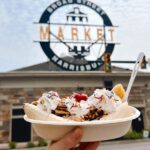
So, today, you might gather for a storytelling event at Zeroday Brewing, take in an outdoor film at Midtown Cinema or attend an art class at the Susquehanna Art Museum or the Millworks. At some point, you’ll probably pop into Midtown Scholar for a lecture, event or meeting. The beautifully restored Harrisburg Midtown Arts Center has become a focal point for culture and fun, while St@rtup’s stunning new space offers opportunities for collaborative work. Even Strawberry Square is refocusing on the community, hosting the HBG Flea and other events. Then there’s the revived Broad Street Market, a remarkable community asset where people flock to meet, eat, shop and linger. Just off the corridor, Little Amps and the new Gamut Theatre both deserve praise for quickly becoming important social centers.

Amazingly, until a few years ago, most of the buildings I just mentioned were abandoned or profoundly underused.

This said—we still have a ways to go. When I first came here, I remarked that many restaurateurs and merchants seemed to have a hard time seeing outside their four walls to the community beyond. That often remains the case. And I sure wish that the city’s few surviving social clubs would change with the times, drawing up their blinds, fixing their facades and showing they care about the world around them.

In addition, this resurgence hasn’t reached all parts of the city, though several organizations, such as the Camp Curtin Y and the YWCA, long have offered safe social spaces and community programs in their neighborhoods.

It’s fascinating—the podcast that inspired this column blamed falling social trust mostly on technological forces, such as TV and the Internet. I don’t disagree with that generally. However, social trust in Harrisburg was not destroyed primarily by technology but by people’s rejection and desertion of the city itself. Harrisburg’s social infrastructure now is being rebuilt—one restaurant, theater, café and meeting space at a time. The ground is being set for a renewed sense of camaraderie and common mission, for a revival of social trust, lost so long ago.

Lawrance Binda is editor-in-chief of TheBurg.

Ed. Note: Since suspending “TheBurg Podcast” last year, I’ve been asked many times if and when it might return. Good news, podcast fans, we’re in the planning stages to bring it back.

Continue Reading

Past Ball: Negro League Conference comes home to Harrisburg.

“Giants Come Home,” a painting by Dane Tilghman, depicting Harrisburg Giants players throughout the history of the team.

“Giants Come Home,” a painting by Dane Tilghman, depicting Harrisburg Giants players throughout the history of the team.

In the late 1930s, Calobe Jackson, Jr., often went with his grandfather to City Island.

There, he saw players whose legends still live today—Josh Gibson, Roy Campanella, the colorfully named Double Duty Radcliffe. The baseball was tremendous, but even as a child, Jackson recognized the unjust premise behind it.

“We realized most of the Negro League players were good enough to make the Major Leagues, but we saw the discrimination,” he said.

As a Negro League baseball hotspot, Harrisburg hosted most of the greats, and, this July, the legacy will be relived as the city hosts the 20th annual Jerry Malloy Negro League Research Conference. Also known as the Society for American Baseball Research Negro League Committee Conference, it’ll be the event’s fourth appearance in Harrisburg—the original host city—since its launch in 1998.

Study of Negro League history reveals “the evil of segregation and discrimination,” said Ted Knorr, the Harrisburg-area resident who founded the conference. The conference agenda includes speakers on teaching Negro League history in K-12 education as part of American history, not separated into the category of African-American History Month subjects.

“No baseball fan can tell me with a straight face that they know baseball history in the first half of the 20th century unless they have a good working knowledge of the Negro Leagues,” Knorr said. “Forty percent of the game was outside of the Major Leagues. The audience for this conference is not a pigeonhole. It’s anyone who wants to know the rest of the story.”

Like many great endeavors, the conference was born late at night, over beer. Knorr and colleagues at a Society for American Baseball Research conference—all members of SABR’s Negro League Committee—were sharing Negro League stats and stories. It was the sort of sidebar meeting that happened at every SABR conference, and one of them said, “We really should have our own conference focused strictly on the Negro Leagues.”

Knorr took the ball and knocked it out of the park. He organized the first conference, in 1998, in Harrisburg. Since then, it has rotated among other cities, including Kansas City and Newark, and returned to Harrisburg in 2000 and 2003.

The conference includes a tour of notable Negro League sites in and around Harrisburg. At City Island, attendees will see the diamond and home plate on FNB Field, which haven’t changed location since 1890. On 16th Street, they’ll see the still-standing home of Negro League legend Oscar Charleston—player, manager of teams including the Harrisburg Giants, and husband to the daughter of a Harrisburg minister. They’ll visit the Steelton grave of Herbert “Rap” Dixon, the first African American to hit a home run in Yankee Stadium.

When it comes to Negro League baseball, Harrisburg is “not quite Kansas City or Homestead, but it’s on the map,” said Knorr. According to Jackson, the city’s place in Negro League baseball dates to 1867, when journalist and educator Thomas Morris Chester and his brother founded the Harrisburg Monrovians, named after the capital of Liberia, where Chester had studied.

The Monrovians played a game against the Philadelphia Pythians—Jackson has the box score—and the Pythians are famous for being denied an application to play in the Major Leagues of the day, “one of the first instances of discrimination against black ballplayers,” Jackson said.

As a regional transportation hub, Harrisburg found itself in a sweet spot for Negro League play, said Jackson. Teams now legendary—the Pittsburgh Crawfords, the Homestead Grays, the Philadelphia Stars, the Baltimore Giants, including Campanella—found it easy to come to the city and play in the ballpark by the river.

“They remembered it because of the flies and the bugs,” Jackson said. “Nothing changes.”

Negro League history deserves study because it shows “how things have changed through the years and the opportunities that have come about for us through their vigilance,” said Jackson.  

Although some 19th-century teams were integrated, a “gentleman’s agreement” late in that century blocked African Americans from Major League play, said Raymond E. Janifer, Sr., Shippensburg University professor of English and Ethnic Studies and a conference presenter. From there, Negro League history reflects the U.S. reliance on the Supreme Court’s “separate but equal” doctrine for legal cover that justified segregation, discrimination and Jim Crow laws.

Negro League games “were very well attended,” he said. “People went to those games saying, ‘Those guys should be in the Major Leagues.’”

American Literacy Corp. Executive Director Floyd Stokes worked with Knorr to develop a children’s activity book on Negro League history and will help present the conference. Negro League players “achieved great things,” he said. “Their stats, their history, their achievement is just as important as anybody else who played in the Major Leagues. They just didn’t have the opportunities because of the color of their skin.”

That, he added, is American history “that needs to be told. The stories need to be told because the young people just don’t know the great folks right here in our yard. Not just our backyard. In our yard.”

After panels featuring researchers, biographers and a 1950s Negro League player, the conference will wrap with an awards banquet, plus music by the Crawford All-Stars—a combo featuring a player whose father played Negro League baseball.

“This is family,” said Knorr. “Many of these people were there years ago, white and black, male and female, old and young. We still gather together to break bread and talk baseball.”  

The Jerry Malloy Negro League Research Conference takes place July 27 to 30 based at the Hilton Harrisburg. To learn more, visit www.sabr.org/malloy.

Author:  M. Diane McCormick

Continue Reading

This Song Is Your Song: Gather round to hear the music of protest.

Doug Morris

Doug Morris

Doug Morris started bringing evenings of protest music to the Cornerstone Coffeehouse in Camp Hill about four years ago.

First, he played for Woody Guthrie’s 100th birthday, a celebration of the iconic songwriter/performer who wrote, “This Land is Your Land.” He then started organizing around different themes and songwriters such as Pete Seeger, Utah Phillips, Bob Dylan and Bruce Springsteen.

“Pete Seeger offered the following: Some music can help us escape our troubles; some music can help us understand our troubles; and some music can help us overcome our troubles,” Morris said. 

Morris, who plays monthly at Cornerstone, attempts to provide “some of each.”

He next will perform at the popular Camp Hill café on Feb. 18, holding a “Woody/Bruce Heavyweight Championship,” during which he’ll pair Guthrie and Springsteen tunes. He’ll also offer commentary about how both songwriters, though very different, have sought to raise public consciousness about struggles for social justice and against inequality.

“So, Woody’s ‘This Land is Your Land’ could be paired with Bruce’s ‘This Hard Land’ and Woody’s ‘Bound for Glory’ with Bruce’s ‘Land of Hope and Dreams,’” said Morris. 

Audience members are encouraged to sing along at the free event.

For his day job, Morris is a professor at West Chester University, and, before that, played jazz guitar and studied with Philly guitar legend Joe Federico. Morris also has written scholarly papers about the history of protest music and has done studies on the connections between progressive politics, radical music and social transformation.

Morris has been captivated for years by Guthrie’s humanist politics and finds his music gripping and transformative. As a prolific songwriter, a satirical cartoonist and newspaper columnist, Guthrie turned complex ideas about democracy, human rights and economic equality into simple drawings, stories and songs that all Americans could embrace.

His catalogue of songs includes favorites such as “Pastures of Plenty,” “Goin’ Down the Road Feeling Bad,” “Union Maid” and “Bound for Glory.” His most famous song, “This Land is Your Land,” was written in 1940 as a socialist response to Irving Berlin’s “God Bless America.” Guthrie wanted to write about the Depression-era America he knew, so he wrote lyrics addressing liberty, individual rights, poverty, freedom, equality and property ownership.

“The song should really be heard as a rousing anthem for working people—i.e. most of us,” Morris said.

According to Springsteen, it’s “the greatest song ever written about America. It gets right to the promise of what our country is supposed to be about.”

Many Springsteen fans may not recognize how politically informed his music is or that he considers that his work “has always been about judging the distance between American reality and the American Dream,” Morris said. Throughout the years, Springsteen has become progressively more vocal about social injustice and inequality, which, he believes, get in the way of making America great.

Springsteen’s contributions were recognized this past November when President Barack Obama awarded him the Presidential Medal of Freedom. In his remarks, Obama called Springsteen “a songwriter and a humanitarian” and said, “Through stories about ordinary people from Vietnam veterans to steel workers, his songs capture the pain and the promise of the American experience.”

“Woody and Bruce are among the world’s preeminent protest songwriters as both are informed by an expression of workers’ struggles against exploitation,” said Morris. “Their work is grounded in and alive with history.” 

Their music often addresses such issues as the horrors of war, social marginalization and economic inequality.

“They’ve demonstrated an engagement with our most serious social crises and challenges,” Morris said. “They are critical and hopeful observers who have been able to interject into their songs our human capacities for empathy, creativity, solidarity and love.”

Morris performs monthly at Cornerstone Coffeehouse, 2133 Market St., Camp Hill. He’ll perform the “Woody/Bruce Heavyweight Championship” on Feb. 18 at 7 p.m. He’ll also present the show at Crave and Co., 614 N. 2nd St., Harrisburg, on Feb. 17 at 6 p.m. For more information, visit www.thecornerstonecoffeehouse.com or www.craveandco.com.

Author: Jess Hayden

Continue Reading

Humanity Questioned: Robots in the past—and future.

Screenshot 2017-01-31 08.22.11

What exactly is a robot?

Is it, specifically, a machine? Or is it, simply, characterized by being “artificial” or “non-living?” Can a robot be programmed to have feelings, and, if so, do humans become irrelevant?

All these, and more, are questions that Gamut Theatre Group explores in its upcoming production of “R.U.R.” by Karel Capek. R.U.R. stands for Rossum’s Universal Robots, the company the drives the entire story. While Capek’s story is best known for introducing the word “robot” to science fiction, the robots in Capek’s story are more similar to what we know as androids. That is, they look and act like humans and can speak and communicate with humans.

While Capek may have introduced the word into science fiction proper, robots of varying types had already existed. In fact, the word “robot” is nothing all that unique. It derives from the Czech word “robota,” which means “forced labor,” and is further derived from “rab,” meaning “slave.” The etymology of the word is incredibly important when considering the issues Capek raises in his play.

“R.U.R.” was written in 1920, but takes place starting in 1932 and seems closer to present day in its exploration of technology. It is about a company on an island that makes humanoid robots programmed to perform a specific task, by the thousands, and ships them out all over the world. One day, a woman named Helena (Michelle Kay Smith) comes to the island with idealistic visions of freeing what she views as enslaved robots, only to find out the robots lack a soul. Over time, Helena convinces scientists to program feelings into the robots. However, once the robots understand their position as slaves, they begin to rebel, and the resulting events put all of humanity at risk.

Gamut’s Associate Artistic Director Thomas Weaver, who also acts in the show, said that the play reminds him of the classic horror story, “Frankenstein.”

“There is a strong parallel in that, just because you are able to do something, does not mean you should do it, and then once you do it, you now have a responsibility to own what you did,” he said. “I think the moment when the scientists realize that the robots are a threat to their existence, what they feel is very similar to how I think Victor Frankenstein felt the moment his creature opened its eyes.”

In both stories, the creators face consequences brought about by having not taught their creations how to navigate their new, human-like feelings.

“For the robots, they now can do more than tasks like putting together a car,” Weaver said. “They now need a kind of parent.”

These issues have been addressed repeatedly in sci-fi. Where does the line get drawn between being a robot and being a human? What, really, separates us, once robots are sentient, and is it wrong to continue to oppress them when this happens?

Weaver said that he suspects that Capek and other science fiction writers of this era were “writing about a reality, but the only way they could write about it is to make it this fantastical story… and ‘R.U.R.’ was the safest way that he could make that statement.”

This oppression has many historical precedents, including in American slavery, which had only been abolished for 55 years. It would have provided a frame of reference to what happens when those in control deprive human beings of what makes them human and attempt to turn them into machines to do their work. The parallels exist in Rossum’s ideology behind the robots when he suggests that, if we make robots do all of our farming, humans will have more time to better themselves.

Even more prominent in Capek’s everyday life would have been the eugenics movement, which was in full force in Europe by 1920. The idea that one race—or a set of characteristics—made someone more “human” than another was the cornerstone, of course, of what was only a decade away: Nazi Germany and World War II. Primo Levi, a Holocaust survivor, has famously stated that concentration camps were a “great machine to reduce us to beast, and we must not become beasts.”

All of these connections can be made and should be taken as a warning, Weaver said.

“It’s interesting because the story was written in 1920, but it was written in the future so it’s actually a 1920s idea of what the ’40s would be like, and then what today would be like,” he said. “When you experience that now, it’s like a warning about what is happening around you, from people who saw it coming.”

This is why a story that raises such questions lives on—the issues are still relevant. “R.U.R.” may be exploring robots on the surface, but deeper, there is contemplation over what it means to be human and the potential problems that arise when humanity is repressed. Does Capek offer a solution or even hope? Yes, but you must see the show to find out what that hope is.

“R.U.R.” runs Feb. 11 to 26 at Gamut Theatre, 15 N. 4th St., Harrisburg. For more information, call 717-238-4111 or visit www.gamuttheatre.org.

Upcoming Theater Events

Gamut Theatre
www.gamuttheatre.org

“R.U.R. Rossum’s Universal Robots”
By Karel Capek
Feb. 11 to 26
Fridays and Saturdays at 7:30 p.m.
Sundays at 2:30 p.m.
Doors and bar open one hour prior to the performance.
Tickets are $30 on Fridays and Saturdays.
Bring your own price on Sundays, where any size donation buys your admission

Author: Meghan Jones

Continue Reading

National Colors: Carlisle shop specializes in the beauty, function of American-made art.

Screenshot 2017-01-31 08.18.47Pam Fleck has been selling American-made goods nearly her entire life, starting as a child with produce at a fruit stand.

Today, the products she sells are less edible, but far more lasting and beautiful. Fleck is the owner of the American Artisan Gallery in downtown Carlisle, a shop that features fine and folk art exclusively by American artists.

Fleck, a painter, has always collected art and, after stints as a bank manager, sales specialist for an e-commerce company and owner of a leasing business, decided to follow her passion and open a gallery.

“We feel it’s important to support small business, the American arts, and we feel that you get not only better made but more unique and sometimes more affordable work than you do at the mall,” said Fleck.

The shop itself has an interesting history. A building has stood on the site since the 1750s but has had the misfortune of burning down twice. The present building, an early-1900s structure, hosted a Bon-Ton store, Snyder’s Hardware and other retail shops, but had been empty for 12 years before Fleck arrived. She restored the original tin ceilings, kept the skylights, and installed oak floors in the front of the building to coordinate with those in the back. 

Today, the space features works by about 80 artists in a variety of mediums, including pottery, glass, textiles and wood. Fleck said that shoppers can expect to find “good quality, functional fine art” at her gallery.

Fleck sells a wide variety of art, including what she calls “investment pieces” such as woodworks by Dauphin County artist Al Fox. One especially striking piece, a vase entitled “Budding Out,” was created using canarywood, redheart, tulipwood and holly. The pyrographed leaves, shadowed using a burning technique, curve off the midsection of the vase like flanges, exposing a light center. Another of Fox’s works contains 1,636 individual pieces fitted together to form a circle, with a long-handled lid. Called “Pyxis,” it resembles sixth-century pottery used to hold jewelry.

Also featured are paintings by Lynne Yancha and hand-carved birds by Bob Triplett.

More functional, but nonetheless beautiful, are the granite beverage dispensers. Any long-necked bottle can be flipped upside down, slipped into the granite block and served from the tap. 

Wearable items include copper earrings with metal recycled from the Frank Lloyd Wright Unitarian Meeting House; ornate cotton silk crocheted hats decorated with flowers of the same material; and hand-sewn leather briefcases and messenger bags.

Fleck explained how she chooses her gallery artists.

“Number one, they must attain a certain quality of work,” she said. “We don’t want work here that people could do themselves after a trip to a craft store. And, number two, we like to make sure that we’re not competing with anyone who’s already working with us.”

Locally themed art is well represented in the shop. Charles Clevenger paintings of life in south-central Pennsylvania feature scenes like a fruit stand in Camp Hill, houses decorated for Christmas in Boiling Springs and Mechanicsburg’s Frankenberger Tavern. I was especially drawn to whimsical items from Carrolltown, Pa.’s Roland Metal Art, which uses recycled railroad spikes to create representations of everyday life, such as a figure golfing or playing soccer.

This selection attracted Megan Morrison from Landisburg, who said she stopped in on her way to the Gettysburg outlets, knowing the area’s reputation for great shops. 

Morrison said she was holiday shopping for others, but then added that she’d like to return to shop for herself.

“I know where to come after Christmas,” she said.

Items in the store reflect Fleck’s taste. I asked her about her favorite pieces in the gallery.

“I’m drawn to everything,” she said. “All of this is something I wouldn’t mind having in my own home.”

American Artisan Gallery is located at 35 N. Hanover St., Carlisle, and will participate in the upcoming Carlisle Ice Art Festival, Feb. 10 to 12. The festival will include carriage rides, food vendors, an indoor art show and 35 ice sculptures at locations throughout downtown Carlisle. For more information on the gallery, call 717-254-6136 or visit www.americanartisangallery.com.

Author: Susan Ryder

Continue Reading

Have Bike, Will Fix: Up from the basement, The Underground Bike Shop opens this month.

Burg in Focus: Underground Bike Shop from GK Visual on Vimeo.

Ian Morrison’s parents gave him an ultimatum: Get rid of some bikes or you can’t get any more.

About 100 bikes overflowed from the shed, garage and porch of his parents’ Mechanicsburg home. The 20-something bike mechanic accumulated spare parts in a scrap pile in the backyard.

Unwilling to part with his collection, he created a third option. Morrison and his bikes moved to Midtown Harrisburg, where he joined forces with bike mechanics Andy Hollinger and Zach Spellman. They created the Underground Bike Shop, which will open Feb. 4 for a soft opening.

“It’s not going to be a big shindig,” Morrison said. “I’ll just be here consistently Monday, Tuesday, Thursday, Friday, Saturday, Sunday working.”

Noting that the bike shop’s light is on whenever I walk down 3rd Street, I interjected, “Isn’t that already the case?”

Ian Morrison

Ian Morrison

“Yes, except I’m typically working seven days now, not six,” he said.

In October, Morrison and his team started renovating the space, the original locations for two other successful Midtown businesses: st@rtup and the Midtown Scholar Bookstore. Renovations will be nearly finished in February. A grand opening in April will kick off the spring biking season and celebrate the completion of the renovation.

The front area, which Hollinger jokingly dubbed the “chill zone,” will entice customers to hang out. Right now, a few comfortable couches and chairs circle a coffee table. A countertop lines the front window, like in a coffee shop. The team envisions customers munching on snacks and drinking tea or coffee. Local art will hang on the walls, and bands will perform.

“I want it to be an open environment where people can come in and do that and not feel pressure to buy a bike,” Morrison said.

Of course, the main attraction of the Underground Bike Shop is the bikes. Customers can have their bikes serviced or purchase used, newly rebuilt bikes costing $100 to $300.

The partners buy bikes from Craigslist and other buy-sell-trade agreements. They look for high-quality rides—like those found in a specialty bike shop, not department stores.

Then Morrison reduces the bike essentially to the frame and starts the rebuilding process. He leaves no surface untouched, putting 10 to 12 hours into a bike depending on its original state and the customer’s needs.

“I’d rather rebuild everything entirely and not short-cut it, even though I’m confident that everything will work,” he said.

Though the Underground Bike Shop specializes in used bikes, it will sell one new brand, Virtue Cycles. This California-based brand of city commuter bikes has a “hip, retro feel,” Hollinger said.

Zero to $350

When Morrison sold new bikes at a Harrisburg-area shop, he realized that expensive, quality products excluded a market of customers.

“There’s this zero to $350 range that is often met with places like department stores, Dick’s Sporting Goods, Wal-mart,” he said. “The problem with [those stores] that is you get a bike that isn’t good quality and needs work constantly.”

Before coming together, the two halves of the Underground Bike Shop team worked separately fixing up bikes for friends.

“We were basically doing the same model of finding used bikes, making them road ready, and selling them at a used price,” Hollinger said.  

They worked out of basements, hence the name, “The Underground.”

In addition, Hollinger and Morrison both volunteered at Recycle Bicycle, an Uptown bike repair nonprofit run by Ross Willard, Harrisburg’s go-to bike guy.

“Recycle Bicycle is the closest thing to a bike shop that exists in the city of Harrisburg, and not everybody can afford to go to a nice bike shop to get their work done,” Hollinger said. “We intend to meet in the middle ground. Come have us do it for cheap.”

Their location across from HACC’s campus puts them in the heart of the Midtown neighborhood.

Morrison saw a neighboring building for sale while riding his usual route up Reily Street. After his inquiry for the neighboring building petered out, he was pointed toward this space after st@rtup moved to a much larger location down 3rd Street.

“I liked it because of its location right in between where Midtown is being revitalized commercially and residentially,” Morrison said. “It’s just enough space.”

Plus, ironically, there’s plenty of off-street car parking—just in case your new bike doesn’t fulfill all your transportation needs.

The Underground Bike Shop is scheduled to open Feb. 4 at 1519 N. 3rd St., Harrisburg. For more information, visit the Facebook page.

Author: Danielle Roth

Continue Reading