Service Call: HBG Rotary members come for the networking, stay for the giving.

The more we give of ourselves, the more fulfilling our lives are.

Two Notre Dame sociologists refer to that as “The Generosity Paradox”—the fact that giving makes you feel better.

But you don’t need to tell that to members of the Rotary Club of Harrisburg.

“One of the greatest things about this place is you always leave with something,” said Rich Curl, CEO of the Harrisburg-area YMCA and proud Rotarian after the club’s weekly lunch meeting at the Hilton Harrisburg.

Curl wasn’t referring to a full belly or a business card—though he left with those, too.

He meant the good works of the club’s active members, who often share with fellow Rotarians what they’ve been up to over the past month.

“Research shows that people come for the networking, but they stay for the engagement and the service,” member Virginia Roth said.  “You come to realize that we are all beneficiaries of something greater than we could ever give.”

Una Martone, the club’s governor-elect, noted the large number of needs within the local and global communities.

“Rotary maximizes and leverages our individual capacity, giving us the power to make a huge difference in the world,” she said.

The organization’s century-old, grassroots approach is not specific to Harrisburg. According to Rotary International, more than 35,000 clubs operate at the local level to serve their communities. Members leverage relationships locally to eradicate disease, promote healthy and safe living conditions, and support education.  

What makes the Rotary Club of Harrisburg unique, however, is its focus. The largest recipient of the members’ time and philanthropy is the Harrisburg School District, Martone said.

Martone, who also is CEO of Leadership Harrisburg Area, chairs the Rotary’s committee for Youth Community Development Team, a group that spearheads a yearlong mentoring program for high school juniors and seniors.

“We help students identify the greatest community need and fundraise for that need,” she said.  

Martone’s work with youth is only one example in which Rotary’s mission engages others to serve the local community.  

The club also sets up a temporary vision clinic at Foose Elementary School, partnering with eye care professionals, who perform free screenings and provide glasses for children who need them. The program screened about 300 children this year, supplying almost two-thirds of them with eyeglasses.

Martone said the committee is currently working on developing a permanent screening location inside Hamilton Health Center.

“It’s all about the people,” said Andy Rebuck, the club’s vice president.  

Rebuck has been an active member of Rotary for 25 years, and he sees great value in the relationships he’s formed working alongside fellow members. Rebuck is involved in another service project to benefit the school district—the annual pancake breakfast held at John Harris campus over Homecoming weekend. He, along with other volunteers including fellow board member Joyce Libby, prepare and serve pancakes in the school’s cafeteria for upwards of 1,000 guests.  

To Libby, it’s the service work—not the meetings—that offer her the greatest benefits of membership.

“You have to roll up your sleeves and do the work,” she said. “When you do it next to somebody, you get to know them on a deeper level.”

Rotary members roll up their sleeves in the classroom, too. Each fall, Libby and other club members travel to the John Harris and SciTech campuses to recruit students for the “Four Way Speech Contest.” Students choose topics that pique their interest, form an argument, and evaluate it against Rotary’s four ethical questions, which focus on truth, fairness and value. Students compete for cash prizes as they advance through the competition’s three levels. Rotary committee members work directly with the teachers to personally coach and mentor the students along the way.

Committee member Joan Prescott said that witnessing the student’s growth is the greatest reward.

“They learn how to research a subject, open up their thoughts, and express how they feel,” she said. “I’m very proud of them and what they’ve done.”

Libby shared that the Harrisburg High senior who won wrote a thank-you letter to all those who supported her. In it, she credited the contest—as well as the combined coaching and support from the Rotary volunteers and her teachers—for helping her find the confidence to speak her mind effectively.

The district’s educators see the community involvement as a unique learning opportunity for the students.

“There was a neat camaraderie between the Rotary and the kids,” said Maureen Dunbar, instructional coach at Harrisburg High School.  

She described the relationship between the students and the Rotary volunteers as one of mutual respect. Dunbar also mentioned that the education was a two-way street.

“The professionals were able to see these kids putting in the work,” she said.

Dunbar added that the more the community gets inside the school, the better.

“The kids see that the community really cares, and they can see there are a lot of good things going on—and a lot of great kids,” she said.

Libby added that, every year, she looks forward to going into the classroom to support the teachers and the students.

“It fills me with pride to see all the students gain confidence and discover more opportunity can be available to them if they do the work,” she said, “And it’s uplifting to think that Rotary had some small part in that.”

Learn more about Rotary Club of Harrisburg by visiting www.hbgrotary.org.

Author: Jen Fertenbaugh

Continue Reading

New Land, New Lives: Despite the political environment, refugees continue to come to Harrisburg—and Catholic Charities is here to help.

Photo by Dani Fresh

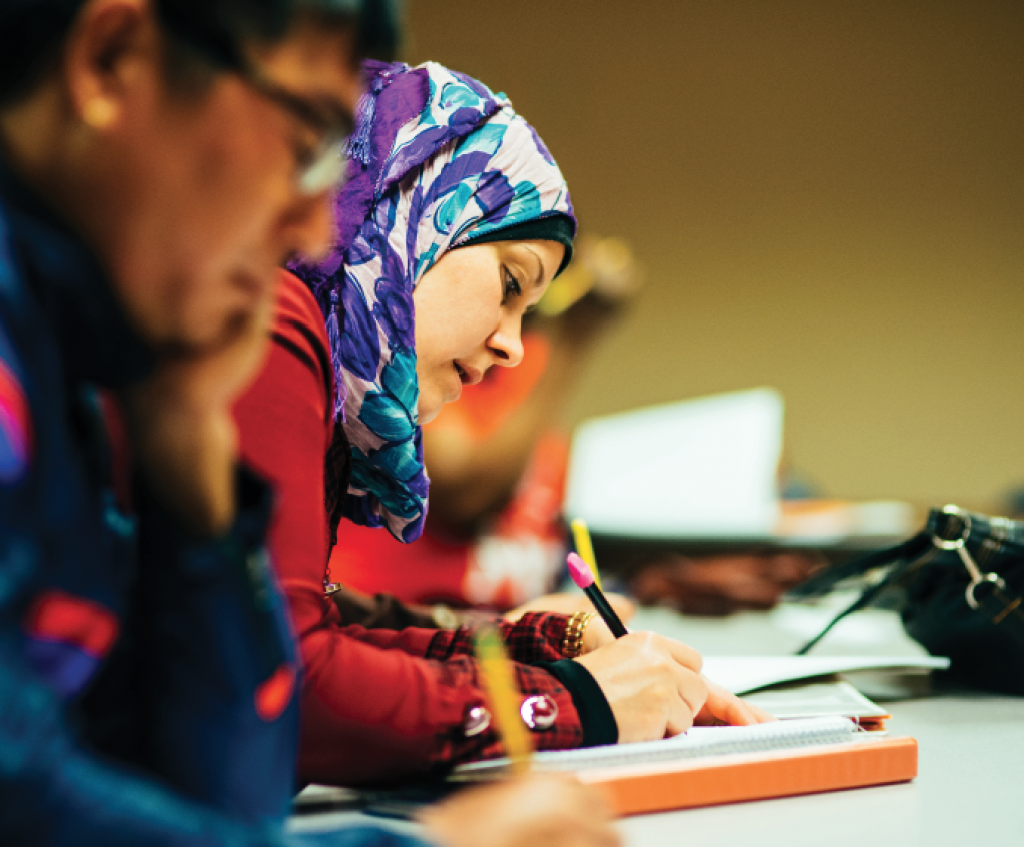
On a clear, cloudless morning in suburban Harrisburg, nine colorfully clad men and women work at tables in uninterrupted silence as teacher Charity Stowell exits the classroom briefly.

Their stillness is not merely a product of studiousness.

The students do not speak English fluently, and most do not speak the same language as the person seated to their right or left.  

All are attending a free English as a Second Language (ESL) class, held from 9 a.m. to noon Monday through Thursday each week.

Sponsored by Catholic Charities’ Refugee Resettlement Program under the auspices of the Diocese of Harrisburg, the classes unfold in the basement of a nondescript office building in Lower Paxton Township. About half the learners are from Bhutan and Nepal. Others hail from the Congo, Sudan, Pakistan, China, Syria and South Korea.

Interpreter Shira Adhikari, 30, and a young, bespectacled interpreter who speaks Arabic, are close at hand to help.

Adhikari was born in Bhutan, a landlocked country flanked by India to the south and China to the north. He and tens of thousands of other Nepali-speaking Bhutanese were raised in cramped, primitive refugee camps in the shadow of the Himalayas, as the nation’s leaders embarked upon a systematic ethnic cleansing campaign designed to build a homogenous race.  

Adhikari’s cell phone still holds photographs of the thatch-roofed huts in leafy villages that were home to refugees living a life “more miserable than you can imagine.”

ESL services Manager Sarah Beck said that many Americans conflate immigrants with refugees, but these terms should not be used interchangeably. The refugees now living in Harrisburg had no choice but to flee their country of birth. They are carefully vetted and came to America to save their families from persecution, as any parent would do.

Adhikari holds a master’s degree in physics. He relates the tale of his own parents, who have been in this country for four years. Their apartment is surrounded by refugees from other countries. Despite the language barrier, the children all play together, the adults all wave to each other, and neighbors shovel each others’ walks, clearing away the pure, powdery snow that most have seen for the first time.

When their neighbors speak kind words in a language that is foreign to them, the Adhikaris’ response is automatic. They smile, deliver two thumbs-up and say, “Everything is good.”

That sentence encapsulates how they have found every detail in America—the lights that always work; the clean, clear water that runs hot and cold, night and day; the dwelling space that is cavernous compared to their closet-sized huts; the drawers that are stuffed with clothes; and the grocery store shelves that are dense with a dizzying variety of cartons and cans, fresh fruits and vegetables.

It is a far cry from Bhutan, where rain streamed in like a garden hose through the roof during storms and food was so scarce it was rationed. Clothing was extremely limited. Fires were frequent. When one hut burned, they all went up in black smoke.

“We could see the moon from our bed,” Adhikari said. ”The roof blew off often.”

Today, in Stowell’s classroom, the young Messiah College graduate is teaching the refugees how to ride a bus. Few have their driver’s license, but as soon as they receive their Social Security card, they will try to get jobs.

The classroom’s whiteboard bears these words, written in magic marker: “Stay in your seats. Listen to your music with headphones.”

One refugee was called to the center of the “U” to assume the role of bus driver.

Stowell gently corrected a student who had written that pets were allowed on the bus. Paying the fare and watching your young children were also part of the lesson.

“The class is like a one-room schoolhouse,” Stowell said.  

Some students have never been to school, never learned how to write their names. Others have advanced degrees in their native countries. Volunteers help to personalize the instruction.

Like the turmoil in the world, “the class is constantly rotating,” Stowell said. When Cuba was in political crisis, Cuban refugees populated the class.  

Colleen Wisor Patterson, a young student support specialist with the migrant program, which works closely with Catholic Charities, helps the children of refugees cope with the trauma of life in Bhutan and then the double-trauma of leaving it all behind. She is keenly aware of the politically charged climate in which they are aiding refugees. She said many Americans choose to either demonize refugees or glorify them.

She recalls one citizen who whipped out his cellphone when he saw the hijab on a woman, ready to call 9-1-1 or record events.

“We see a lot of snap judgments, based on appearances,” she said.

She emphasized that the refugees are just regular people, wanting to be accepted and trying to make a better life for their families.

Sunita Rai is a 20-year-old refugee, a small-boned woman in Stowell’s class who was born and raised in a refugee camp in Nepal. Her parents are Bhutanese. Her mom is here in America. Her father passed away.

“America is very nice,” she said in English.  

Her favorite new word: “OK.”

For her, Harrisburg’s vast array of flowers—and elevators—were among her most dazzling discoveries here.

Beck said that, since 2008, some 8,000 Bhutanese and Nepali refugees, rejected by their government, have been resettled in the Harrisburg area. Adhikari said the program resettled about 300 refugees last year, with the majority hailing from Bhutan. The refugees receive help with life skills, language, housing and jobs.   

How to use a debit card, write a check, follow directions on a pill bottle, and ask for directions are some of the first skills taught.

Beck noted that only about 1 percent of the world’s refugees are resettled. With more than 21.5 million people considered to be refugees worldwide, each country picks the numbers they can take. In the past, the United States agreed to take about 80,000.

Many refugees are settled together in apartments on Green Street, which can be challenging when families are large and multi-generational. The program’s goal is independence within three months.  

Many refugees find jobs in the midstate’s vibrant warehouse, packaging and health care industries. Many enroll at HACC. Often, they work two and three jobs, double shifts, Patterson said, and are “extremely entrepreneurial.”

Stowell quotes one refugee as he adjusted to America: “I had to be like a baby again.”

As they cope in this brave new world, “Mostly they just need a friend,” said Patterson, someone to visit, to take them to appointments.

She finds that most refugee children suffer from severe loneliness, trying to transition from the trauma in their native land to the trauma of separation and a strange new land.

One bond the class all seems to share—how laughably bad Google Translate is, Stowell said.

But everything else—all good.  

“They love the house, the food, the clothes,” said Adhikari. “There is fresh air. There is peace in America. There is no one knocking at their door at midnight. In America, they can sleep here fearlessly.”

He is eager for the day he can take the formal oath as an American citizen.  

“We can work independently,” he said. “We can live independently. We can live our own life. This is the dream place for people all over the world.”

One hand signal they all seem to know transcends the barriers of language and culture.

When asked where they would be without the refugee program, they all speak in their native tongue in a verbal deluge of gratitude, and then, reflexively, they touch their heart.

June 20 is World Refugee Awareness Day. For more information about Catholic Charities, Diocese of Harrisburg, including immigration and refugee services, visit www.cchbg.org.

Author: Diane McNaughton

Continue Reading

Trail of Beauty: Experience nature’s splendor with a journey along the Susquehanna River Water Trail.

Most people experience the beauty of the Susquehanna River from afar, from the banks or as a blur from their cars.


However, you need not be satisfied with a sideline vista. From Sunbury to Middletown, you easily can travel on the river along the Susquehanna River Water Trail.

Formed in 2000, the 54-mile-trail, with 25 islands containing primitive campsites, is maintained by the Susquehanna River Trail Association (SRTA). Confusing to some, a water trail is no different from a foot trail except that, instead of hiking boots for trekking, one needs a boat.

“It’s a really nice juxtaposition of civilization and nature—an accessible wilderness,” said Brook Lenker, an SRTA founder.

Lenker began his journey to creating the trail while pursuing a master’s degree at Towson University and writing a paper about a proposed hydroelectric dam along the Susquehanna in Harrisburg. In an effort to understand the river better for this project, he contacted Pat Riley, a local river guru.

“He put me in a solo canoe, said ‘follow me,’ and changed my life,” Lenker said.
The trip opened his eyes to the special nature of the Susquehanna and set him on serendipitous course.

In 1993, while working for Dauphin County Parks and Recreation, Lenker visited Hog Island, part of the Maine Island Trail, America’s first water trail. As he witnessed the public’s access to the islands and camping along the water trail, he thought, “It would be cool to do something like that in Harrisburg on the river.”  

Over the next seven years, with help from the state government, local outfitters and the conservation community, SRTA was founded.

Today, the trail represents a cooperative effort between SRTA, the state Department of Conservation and Natural Resources (DCNR), the Pennsylvania Fish and Boat Commission and the National Park Service.

Its mission: “To facilitate the use of the river to encourage stewardship.”

Much to See

SRTA members take stewardship seriously, acting as caretakers of the islands.

The volunteer position of steward involves surveying the islands regularly, maintaining the campsites and reporting any problems to the association board. Work may involve tasks as simple as cleaning up trash or as labor-intensive as hauling cement by canoe to repair a fire ring. The 12 or so stewards work hard so that visitors can fully enjoy the river.

River attractions include a wide variety of birds, including great blue herons, egrets and cormorants. Boaters can see these birds up close in their natural habitat as they nest or stalk along the bank fishing. Bald eagles are often spotted, so frequently that boaters are almost guaranteed a sighting, Lenker said. Non-feathered animals include mink, beaver, deer and, occasionally, bear.

“There’s so much to see that you can’t see from the road,” said Mike Traxler, SRTA president.

Boaters can pull up on an island for exploring or paddle to a rock, unload and bask in the sunshine. Morning and evening paddles offer stunning views, with the sunlight skipping across the water as it rises or sinks below the horizon.  

Always Changing

Before heading out into all this watery beauty, there are a few things that boaters should consider.  

First of all—be safe. Traxler recommends that novices journey with an experienced guide or someone familiar with the river. Outfitters like Susquehanna Outfitters on City Island, Shank’s Mare Outfitters and Blue Mountain Outfitters can provide guides and boats.  

Low-head dams pose a serious risk, and two exist in the middle section of the Susquehanna—in Sunbury and Harrisburg. Boaters should portage, which is river speak for taking a boat out of the water and going around the dams. They may look innocuous, but the vortex they create makes them deadly. Dams are clearly marked with caution buoys.  

Planning is also important.  

“The mistake a lot of new paddlers make is trying to go too far,” said Traxler   

Low water or a headwind will make the trip longer, and a good rule of thumb is one mile in one hour. If the water level is too low, the trip could be a real drag, literally. If the water level is too high, conditions are dangerous. Under five feet is considered safe. Check water levels at SRTA’s website.

Paddling represents one aspect of the trail, camping another.

Lenker said that its camping focus makes it unique. Each island has clear DCNR markings to let folks know it holds a campsite. Sites contain a fire ring, a clearing for tents and a log-in box. The box has a logbook and lots of good information for visitors.  

Based on the Appalachian Trail logbooks, they allow campers to offer feedback about the site, record wildlife sightings and even pontificate on the river experience.

“Life is like a river; keep paddling!” said one visitor who left her name as Ruth Ann.

Another wrote, “It’s another awesome summer day. One can’t describe a peaceful moon on the river!” Yet another contained the superimposed, drawn handprints of Cheyenne, age 21 months, and Douglas, age 3 years.

Venturing out on the Susquehanna River Water Trail will afford a different experience for each person, depending on the time of year, weather and happenstance. Even for folks like Traxler who frequent the river, each time is fresh.

“Every time I’m out, I experience something new, something I’ve never experienced before,” he said. “It’s always changing.”

For more information about the Susquehanna River Water Trail and the Susquehanna River Trail Association, visit www.susquehannarivertrail.org.

Author: Susan Ryder

Continue Reading

Making Connections: The Art Association’s new curator strives to link old and new, large and small.

Burg in Focus: Art Association of Harrisburg from GK Visual on Vimeo.

Rachel O’Connor started big—very big.

When she succeeded Terrie Hosey as the curator of the Art Association of Harrisburg in January, the first show she hung was the mammoth annual membership show, the perennially popular “Figuratively Speaking”—51 pieces depicting the figure in all manner of media, filling the historic building’s myriad rooms and halls.

“I’m a very cautious person,” said O’Connor. “But at the same time, there’s something inside of myself that’s like, no, jump into the deep end without any floaties.”

She seized the opportunity to work in Harrisburg while wrapping up graduate work at the Savannah College of Art and Design in January 2016.

“I was in the last semester of my second year,” she said. “I didn’t see it coming. The art world is really hard to get into, so I thought—this is my foot getting in the door.”

This first step into the world of art was, literally, like coming home.

O’Connor attended Cumberland Valley High School and already had studied with HACC and Messiah College professors. She even got to work in the art mecca of New York City, when, as an intern, she co-curated a show at the New York Center for Art and Media Studies.

With all of this experience, the year she spent as assistant curator at the Art Association provided O’Connor with plenty of opportunities to contemplate.

“What does it mean to be a curator in a small institution, in a smaller city?” she said. “How do I shift my thinking from what it always was when I was in school—‘I want to be a curator in New York City!’—which means something so different than being a curator in Harrisburg. I started to realize that there are some differences, but there also don’t have to be a lot of differences. Curating is still curating.”

For O’Connor, curating is collaborative. When it comes to placing a work within a particular context, she takes the vision of the artist into account. Part of that context also is the location of the Art Association—in Harrisburg.

“My job as the curator is to think about our audience,” she said. “Harrisburg is our audience. Whether or not Harrisburg as a city is coming in and viewing our work, it doesn’t matter. They are still our audience. So, I have to think, ‘What artist can I bring in? How can I display things in such a way where I’m caring about the city and the people who live in the city?’”

Recent collaborations with Metropolis Collective and the Makespace have brought in crowds different from those that usually visit Art Association shows, and O’Connor wants to keep cultivating those shifts.

“We’re part of the art community, but we have not been speaking to the art community,” she said.

In O’Connor, Harrisburg’s art community has a sharp-eyed, big-hearted ally.

“I really love working with living artists,” she said. “And I realized that—this sounds funny—but I actually love other artists’ work more than I love my own, and I love artists maybe even a little bit more than, or equally as much as, I love art. What can I do where I can have relationships with them and work with them and care about them?”

That is exactly what she is doing.

At the Art Association, O’Connor is particularly interested in bringing in fresh talent. As an example, from the end of February through March, the show “Impulse: Then & Now” featured five artists who studied with her in New York: Joel Daniel Phillips, Christine Aria Hostetler, Chelsea Tarnas, Heidi Wiren Bartlett and Kate Running. Tarnas and Running’s work, in particular, complemented the tension between the homey, 19th-century space of the Art Association and the clean, vivid and contemporary quality of the artwork on exhibit.

It was a clear indication not only of what O’Connor can stir up and inspire working in Harrisburg but what happens when she makes connections.

“I want to speak to the art community and say, ‘We’re all in this together. I’m with you and the Art Association is with you, and I want to work with you,’” she said.

The Art Association of Harrisburg is located at 21 N. Front St., Harrisburg. The current exhibit, “89th Annual Juried Show,” runs through June 15. For more information, visit www.artassocofhbg.com.

Author: Kari Larsen

Continue Reading

Cuisine on Screen: Creative documentary explores the life of a celebrity chef.

With producing credits for films such as “The Mind of a Chef” and “A Cook’s Tour” under her belt, you would think that Director Lydia Tenaglia would know everyone of importance in the food industry.

But there is one chef who somehow managed to weasel his way out of her frame of knowledge—Jeremiah Tower, the chef said to have jumpstarted the very idea of food as an experience. This mystery man was the perfect subject for Tenaglia’s next project.

“There were just so many layers to this person,” she said. “Food really was almost in the background.”

And so began the year-and-a-half-long journey into the mind of “Jeremiah Tower: The Last Magnificent.”

“[Tower’s] need to be in the public eye, but his desperate need to be left alone—it’s an interesting dichotomy,” Tenaglia said.

Many who know the man have described him as a private person—hard to read and hard to get to know—and the film relates that character.

“I have to stay away from human beings because somehow I am not one,” he states early in the film.

And perhaps he really does feel that way. From his childhood, when he escaped his parents’ “moneyed neglect” by surrounding himself with refined eatery, to the dramatically charged role he played at the restaurant, Chez Parisse, we watch the slow progression as his circle of acquaintances begin to regard him as something more than human—a culinary god, if you will—born with a silver fork in his hand.

“Before I read books, I read menus,” he muses.

And he has the ego to match his supernatural guise.

After drama stirred between Tower and the staff at Chez Parisse, he moved on to create his own masterpiece—the theatrically inclined restaurant, Stars, where eating out became about more than just food, but about entertainment. Derived completely from Tower’s fantasy and orchestrated to reflect the safe haven he created as a child, Stars was truly the place where his god status was cultivated and cemented. Then, abruptly, Jeremiah Tower disappeared from the public eye.

Stylistically, the film is a dream. Tower’s life is shown through four dynamic threads, weaved together to create Tenaglia’s masterpiece.

First, there is the footage of Tower in his hideaway home in Merida, Mexico, walking by the ocean and inspecting old buildings to purchase and rebuild, and then there are the dramatizations. Initially, due to a lack of archival pictures, Tenaglia shot a series of scenes recreating Tower’s memories, actually structured to feel like memories.

“To really get a sense of Jeremiah’s character, what he was literally and figuratively able to bring to the table, you had to viscerally, visually understand his formative memories as a child, good and bad,” said Tenaglia.

The result is a rare, beautiful and ethereal cinematic landscape interlacing these expressive, visually articulated dramatizations throughout the story, thereby foregoing the “follow-doc” feel of a typical documentary and allowing the scenes to breathe.

It wasn’t until two-thirds through editing that Tower unearthed some old 8-mm films while cleaning out his mother’s basement, and the entire visual paradigm of the film shifted. Suddenly, the question was how to marry archival information with memory-driven recreation. Again, the result called forth a dream-like quality that is sure to captivate audiences.

This leads to the fourth thread—the unexpected finale, which takes place in 2015 when Tower makes a comeback by moving to New York to add his artistic touch to the barely afloat restaurant, Tavern on the Green. Suddenly, the film becomes a follow-doc—a tantalizing question of whether Tower can make the comeback he deserves, or if that dream even still needs to be realized.

“[We have] an opportunity to see Jeremiah roll up his sleeves and work the way he’s always done,” said Tenaglia.

This is a shining moment, when you can see both Jeremiah’s incredible strength and profound flaws on display, his ego struggling for complete control in a job that doesn’t allow for it. But here we see the true Jeremiah Tower. As Tenaglia puts it, he is simply “an artist who is seeking, even from early on, some means of expression. The kitchen was just his canvas.”

You can see the result of Tenaglia’s finesse, and a more complete rendering of Jeremiah Tower than this review could possibly include, at Midtown Cinema starting June 2. Don’t miss this incredible documentary.

Special thanks to Lydia Tenaglia for agreeing to an interview.

MIDTOWN CINEMA JUNE SPECIAL EVENTS

Superhero Summer Series
“Batman” (1989)
Friday, June 2, 8 p.m.
Saturday, June 3, 2 p.m.

“X-Men” (2000)
Saturday, June 3, 7 p.m.
Sunday, June 4, 2 p.m.

Down in Front! Presents

“Howard the Duck” (1986)
Saturday, June 3, 9:30 p.m.

National Theatre Live Presents

“Rosencratz & Guildenstern Are Dead”
Monday, June 10, 7 p.m.

3rd in the Burg $3 Movie

“Deadpool” (2016) Friday, June 16, 9:30 p.m.

Faulkner Honda Family Film Series
“Teenage Mutant Ninja Turtles” (1990)
Saturday, June 17, 2 p.m.
Saturday, June 17, 8 p.m.
Sunday, June 18, 12 p.m.

Outdoor Film Series
“Who Framed Roger Rabbit?” (1988)
Friday, June 9

“Superman” (1978)
Friday, June 23

Down in Front! Presents: “I Was a Teenage Werewolf” (1957)
Friday, July 14

“Jaws” (1975)
Friday, July 28

“Harry Potter and the Sorcerer’s Stone” (2011)
Friday, August 11

“Star Wars: The Force Awakens” (2015)
Friday, August 25

All outdoor films start at dusk, with a rain date of the following day.

Author: Sammi Leigh Melville

Continue Reading

Ripple Effect: Through our actions, we can spur growth and progress.

What if we were all constantly aware of the fact that a single action has an effect over several different entities? How would our world be different?
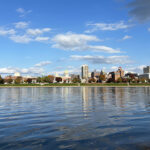


Consider our home and professional lives as a simple starting point. Everything we do and think has the ability to affect the people in our lives and, in turn, their reactions influence others. I believe most of us are aware of this impact and that we absolutely have the ability to choose the way we respond to every situation. Remaining constantly aware can be a challenge. But, like everything else, if you focus your energy here, you could gain the emotional strength necessary to control your every response, making sure you are prepared to respond rather than react.  

It is a starting point to know that every transformation has a point of origin. As I have gone through my own personal journey, I have worked to stay in tune with what my actions state and how they influence those around me, including my staff and anyone I encounter, whether that connection is in person, in email or on the phone, whether it’s with my family, friends, children or their friends and families. The impact we have on others can no doubt provide a ripple effect. It is an amazing theory and such a simple concept to know that a simple act of kindness or an acknowledgement can be life changing. Are we aware of how influential our actions can be and how a simple expression of gratitude can enhance cause and effect?

When our state of mind is “pay it forward” or “givers gain,” it spurs greatness in all our daily interactions and helps confirm authentic relationships. Having been influenced by leaders that have demonstrated both, I find it amazing how you begin to see and seek greatness in all things. We truly could facilitate personal growth through our approach and response when we are in this positive, truth-seeking state of mind.


To have a positive and thriving culture and community, are we doing the best we can to challenge each other to be exceptional, to create waves in business and community development by holding each other accountable, not condemning ourselves but encouraging each other? The truth is we are all responsible for facilitating this personal growth. Whether it is through being the best possible role model or offering a great support system, we can create the positive ripple effect that comes from our own actions.   

Jaime Novinger-Toigo is president of Service 1st Restoration & Remodeling, a community publisher of TheBurg.

Continue Reading

A Trip Back in Time: At “Dinosaur Discovery,” you can relive both the Earth’s history and your own.

Imagine locking beady eyes with potential prey, smelling the breath of larger predators, guarding a nest full of eggs, ducking mosquitoes the size of your snout, and hearing the cracking of your babies birthing themselves through their eggshells.

Whitaker Center’s new summer exhibit, “Dinosaur Discovery: Where Science Comes Alive!” carries those misty, longing elements that snap me right back into my overalls and braces. Seeing those dinosaurs tower over me menacingly sent me back to elementary school field trips, reading about them in picture books, and being young enough to believe I could build my own time machine to visit real ones.

The exhibit’s curators took great care to choose a representation of dinosaurs with contrasting features: babies and adults, flight and ground, herbivores and carnivores, predator and prey. Most of the exhibits show them battling each other. There was no such thing as a safe space back then.

“Guests may remember that we had a dinosaur exhibit in 2013 that was very popular with families,” said Steve Bishop, vice president of Science and Cinema Operations at Whitaker Center. “We wanted to offer what we feel is a next-generation version of that exhibit.”

“Dinosaur Discovery” is decidedly upgraded from “Dino Adventure,” which already offered a fair number of robotic dinosaurs, preserved reptilian eggs and fossilized dino dung.

Today’s kids enjoy video game graphics that are far superior to yesteryear’s Pong, so they expect realistic graphics and advanced robotics. The virtual reality simulator pod delivers a realistic, minutes-long slice of life from a dinosaur’s point of view within the Cretaceous ecosystem.

You can also look forward to dinosaurs that are more lifelike.

“Guests can get up close and personal with over a dozen active dinosaur animatronics,” Bishop said. “There are a lot of components to the exhibit that are educational, but feel like pure fun.”

They can even operate one of the dinosaurs with a remote control.

Many of the easily recognizable species, like T-Rex, will be robotically roaring, eating, caring for their young and fighting with each other. And there will be others, more obscure, whose names I quickly forgot after passing my fourth-grade earth science test.

Because archeologists and paleontologists add more artifacts about dinosaurs as they discover them, “Dinosaur Discovery” isn’t a crusty exhibit stuck in a time machine. It offers up-to-date models and the latest information for all us science geeks. The field itself isn’t frozen in place, either, with a new genus and species of horned-face dinosaur recently discovered in New Mexico. It’s so new, it hasn’t even been named yet.

Little ones who enjoy a tactile learning experience have the chance to touch dinosaur skin, teeth and even a nest. There’s also a big sand table for kids to sift through with archeologists’ tools to dig for “fossils.” They even can find fossils by rubbing crayons on paper-covered templates, which holds more of a guarantee if your little one is easily frustrated and not as deep a digger as the older kids in the sandbox.

“I’m excited for Whitaker Center to offer an exhibit with such a popular and captivating subject like dinosaurs,” said Ted Black, the center’s new president and CEO. “The exhibit elements are going to be really engaging and a great complement to the other three floors of the Harsco Science Center. Coupled with the other attractions and museums in this region, Harrisburg has a lot to offer in terms of family entertainment this summer.”

Like the giant reptiles themselves, the exhibit will only be available for a limited engagement. It starts this month in the Gloria M. Olewine Gallery in the basement of Harsco Science Center and goes extinct from Whitaker Center three months later.

As a perfect pairing to the prehistoric theme, be sure to check out “Walking with Dinosaurs: Prehistoric Planet 3D” at Whitaker Center’s Digital Cinema.

This time, I’ll be wearing my mom jeans instead of my overalls.

“Dinosaur Discovery: Where Science Comes Alive” runs June 3 to Sept. 3 in the Gloria M. Olewine Gallery at Whitaker Center, 222 Market St., Harrisburg. For more information, visit www.whitakercenter.org.

Author: Gina Napoli

Continue Reading

Garden of Earthy Delights: In June, Bartram’s Garden springs to life.

On a beautiful sunny day, I went searching for William Bartram.

Like most of my stories, this one began with a nugget of thought, and then research took over until I ended up at Bartram’s Garden in Philadelphia. Being a nature photographer, I wanted to check out the home of a family full of nature-lovers and discovered this amazing, historic garden. Perhaps I would also pick up a tip or two in my futile quest for a green thumb.

William Bartram was born in 1739, and his family lived in Kingsessing, a part of Philadelphia. His father, John Bartram, was a well-renowned botanist. William was an explorer, writer, botanist, naturalist and artist. He wrote “Travels” in 1791 about his adventures through the American South, among the first modern-style writers to portray nature in depth.

My day trip started with an easy drive to Philadelphia with the garden just a short hop off the PA Turnpike. I arrived on a Sunday morning right after opening. Bartram’s Garden is a 45-acre National Historic Landmark, and, when I first stepped out of my car and looked across the property, I was excited to see the skyline of Center City in the distance across the water. This was my first time visiting Philly, so I was hungry to take in every new sight.

I went through the welcome center to purchase tickets for a tour, conversing with the young woman at the desk, asking some questions then looking around the grounds before my tour started.

The grounds are free to the public and open year-round except for city-observed holidays. Guided tours are offered April through December. Aside from strolling through the beautiful property and having a picnic, there are artists’ workshops, musical performances and other arts and culture programs throughout the year.  

While wandering around, I came upon the Ann Bartram Carr Garden, which was named after the granddaughter of John Bartram. This is the main garden in front of the house and welcomes visitors to the rest of the property. Ann was the one who created the 19th century exhibition garden, the first public green space at Bartram’s Garden. She knew other gardens were becoming popular, so decided to make theirs unique. With exotics as her specialty, she grew her own hybrid camellias and dahlias. At its peak, the garden featured 10 greenhouses, more than 1,400 native plants and 1,000 exotics.

During my tour, I found out that Ann had quite a knack for botany and drawing. Her uncle, William, spent a lot of time teaching her the skills and passions that he had. Due to the times, Ann’s talents were not acknowledged like those of her uncle and grandfather. Despite that, she was one of the first women to run a gardening business, and what really impressed me was her passion for sharing her love of nature. Being a woman, I can appreciate the courage she had to be a pioneer.

Sadly, due to financial difficulties, the property was sold in 1850. Today, Bartram’s Garden is managed by the John Bartram Association, which was created by descendants of John Bartram in 1893, in cooperation with Philadelphia Parks and Recreation.

Bartram’s Garden is located alongside the Lower Schuylkill and provides free kayak and rowboat rides every Saturday (in season). Instead of driving, you can take a short cruise to and from Center City.

Michael J. Nevadomski, marketing coordinator for the John Bartram Association, strongly recommends a June visit.

“June’s big event is River Fest on June 3, which is one of our biggest community gatherings,” he said. “Free boating, (a lot of free food usually), a lot of family activities and a boat parade.”

Writer Erol Ozan once said, “Some beautiful paths can’t be discovered without getting lost.” I started that day thinking I would find out more about William Bartram, but my adventure gave me much more. I went searching for William, but my journey brought me to Ann.

Oh, about my hoped-for green thumb—I purchased a native plant at the Welcome Center that day and, by some miracle, it is thriving. I think Ann would be proud.

Bartram’s Garden is located at 5400 Lindbergh Blvd., Philadelphia. For more information, visit www.bartramsgarden.org or call 215-729-5281.

Author: Carissa Bannister Kauwell

Continue Reading

Artsy Rider: A new exhibit examines the art of the motorcycle.

Rodney Firestone has loved motorcycles ever since he was a child. But it’s only recently that he’s expanded his vision of them.

They’re no longer just a way to get around but are, well, works of art.

Firestone isn’t a “formal” collector of motorcycles. At the moment, he has a “mere” six of them. Since his father owned bikes, Firestone started riding them when he was 7 or 8.

“But my real interest began when I was 12, when my older brother asked me to pick up his friend’s BSA 441 Victor (British motorcycle), which had gotten a flat tire,” Firestone said.

Aside from rescuing a disabled cycle, he reacted in a strong and unexpected way.

“The bike, with its yellow and polished aluminum fuel tank with red letters, mesmerized me,” he said.

After returning home from being stationed in Great Britain as a sailor, Firestone bought a Victor 441 of his own.

“Forty-five years and 40-plus motorcycles later, I am still captivated by them,” he said.

So captivated that Firestone, president of the former Firestone Motors in Lemoyne, suggested to the Susquehanna Art Museum that it host an exhibit linking motorcycles and fine art.

The museum accepted his suggestion. The result is an exhibit entitled “Art in Balance: Motorcycles and Fine Art,” which opens this month.

So, how did Firestone come to see bikes as art?

It was by attending “The Art of the Motorcycle” exhibit at New York’s Solomon R. Guggenheim Museum in 1998—an exhibition that, according to SAM Executive Director Alice Anne Schwab, went down in museum lore because of the huge crowds it drew and its resulting profitability.

It also inspired Firestone—and the current exhibit.

“Ever since then, I’ve wanted to help others see scooters as more than a mode of transportation,” Firestone said. “I see motorcycle design as both artistic and functional.”

The Guggenheim exhibit featured 114 motorcycles known for their historic importance or design excellence. The SAM exhibit will be on a smaller scale.   

The cycles to be featured include the Indian 1946 Chief (USA); Honda 1962 “Baby Dream” CA95 (Japan); Ducati 1969 Mark III Desmo 350 (Italy); Harley-Davidson XLCR 19977 “Café Racer” (USA); Yamaha 1994 RD350 “Kenny Roberts Special” (Japan); and BSA 2000 Gold SR (UK).

At deadline time, the museum was still wavering between two 1960s-era BMWs from Germany.

Artwork on view in the exhibit will include signature pieces from such noted artists Andy Warhol, Louise Bourgeois, John Baldessari, Agnes Denes and Sol LeWitt, Schwab said.

“We are an art museum, not a motorcycle museum obviously, and this exhibition gives us an opportunity to enjoy works of fine art, mostly contemporary and abstract, from collections,” said Schwab. “We will be borrowing works from Bucknell University’s Samek Art Gallery, the Woodmere Museum of Art and local art collectors.”

So, how is the museum linking the worlds of art and motorcycles?

“We’re looking at a number factors, some of which may resonate fairly easily and obviously with the viewer, others of which may not,” she said. “Personally, I think that’s part of the fun.”

The museum is building pedestals so each motorcycle will be displayed as a work of art.

“That said,” Schwab pointed out, “these are still running motorcycles, which will be ridden after the exhibition ends.”

The exhibition gala will take place on Saturday, June 3, followed by members’ preview event on June 6. Admission to the museum will be free on the third Friday of the month through September as part of 3rd in the Burg.

“The exhibition is not a definitive motorcycle show,” Schwab said. “Rather, it is one that will exhibit an array of bikes from different makers and countries of origin, each with the very distinctive characteristics that accentuate the bike’s design. We’ve selected the motorcycles for their design features, color, country (maker) of origin and historical sense.”

“Art in Balance: Motorcycles and Fine Art” runs June 7 to Sept. 17 at the Susquehanna Art Museum, 1401 N. 3rd St., Harrisburg. For more information, call 717-233-8668 or visit www.sqart.org.

Author: Carissa Bannister Kauwell

Continue Reading

June News Digest

Papenfuse Re-nominated

Incumbent Eric Papenfuse secured the Democratic nomination for Harrisburg mayor last month by a wide margin, putting him in a strong position to serve a second term.

With all precincts reporting, Papenfuse tallied 2,663 votes versus 2,048 for his nearest challenger, former City Council President Gloria Martin-Roberts.

In his acceptance speech, Papenfuse said he was “troubled” that the city appeared so divided during the election and that turnout was low.

“I’m committed to uniting this divided city,” he said, speaking at his business, Midtown Scholar Bookstore.

He also said he would make a strong effort to pass a home rule charter for Harrisburg in a second term.

“Home rule is the path to the city’s sustainable future,” he said.

For her part, Martin-Roberts appeared disappointed in her second-place showing, as she gathered with about 30 supporters at the Harrisburg Elks Lodge.

“We ran a good, clean race,” she said. “We took the high road.”

Trailing the field were challengers Jennie Jenkins (506 votes), Lewis Butts (124 votes) and Anthony Harrell (74 votes).

No Republicans ran in the primary. Papenfuse still must win the general election on Nov. 7, but he stands a strong chance in a city that is overwhelmingly Democratic. In fact, he also secured the Republican nomination by collecting the most write-in votes on the GOP side.

Council Incumbents Victorious

Harrisburg City Council incumbents emerged with wins last month in the city’s Democratic primary, while the results were more mixed in school board races.

Ben Allatt, Wanda Williams and Shamaine Daniels each won nominations for four-year terms, as did challenger Ausha Green. No Republicans ran in the primary.

For city school board, Democratic incumbents Judd Pittman and Danielle Robinson won nominations for four-year terms, as did challengers Brian Carter and Carrie Fowler.  Incumbent James Thompson lost nomination on the Democratic side but cross-filed, so will appear as a Republican candidate in the general election. Newcomer Percel Eiland ran unchallenged for the nomination for the board’s lone two-year seat.

In other races, incumbent city Treasurer Dan Miller and incumbent city Controller Charlie DeBrunner ran unopposed, thus securing the Democratic nomination. There was no Republican challenger for either office.

Several races for magisterial district justice were hotly contested.

Incumbent Barbara Pianka defeated newcomer Josh Feldman for the Democratic nomination for district 12-1-02. Both candidates cross-filed for the Republican nomination, and, though very close, Pianka also won that race.

In Harrisburg district 12-1-04, incumbent Justice David O’Leary narrowly defeated former Harrisburg Treasurer Tyrell Spradley for the Democratic nomination. No Republicans competed for the seat.

And, in an open seat for district 12-1-05, Hanif Johnson came out ahead in a crowded Democratic field, defeating Harrisburg Councilwoman Destini Hodges, former Councilman Kelly Summerford and newcomer Claude Phipps. Only Phipps cross-filed on the Republican side, so he secured that nomination.

All of the winners must compete in November’s general election.

Illegal Gun Roundup

The Harrisburg Bureau of Police announced last month it has taken 82 illegally owned guns off the street from January to May.

Community policing, with a focus on getting firearms from illegal owners, helped the bureau obtain the 82 guns, said Police Chief Thomas Carter. He credited his bureau’s leadership, professionalism and training for rounding up the illegally owned guns with minimal injury.

“There are two guns right there: the police officer’s gun and the bad guy’s gun,” he said. “Those are opportunities that things could go bad or someone could get seriously hurt or even killed.”

Capt. Deric Moody asked Harrisburg residents for their support.

“Please continue to help us,” he said. “At least 13 weapons came from citizens picking up the phone and saying, ‘Here’s what I know, here’s what I found.’”

The guns will be destroyed if they cannot be returned to their legal owner, police officials said.

More Affordable Housing

Officials broke ground last month on the construction of affordable housing units on Hummel Street in Allison Hill.

Three units will be completely gutted and renovated, while five units will be demolished to make way for new townhouses for purchase by low-income families, said Gary Lenker, executive director of Tri-County Housing Development Corp.

The $2.25 million project, administered by Tri-County, is supported by grants from HUD’s Community Development Block Grant program, Dauphin County’s gaming grant program and the nonprofit, Impact Harrisburg.

The affordable housing project on Hummel Street plays into the city’s coordinated focus on the MulDer Square neighborhood near Mulberry and Derry streets, said Harrisburg Mayor Eric Papenfuse. A total of $31 million for housing, streetscape and infrastructure development is slated to flow to that area, he said.  

“[This is] a tidal wave that can change the community,” he said.

Steelton Skate Park

Construction started last month on a skate park in Steelton Municipal Park.

Dauphin County commissioners Jeff Haste, Mike Pries and George Hartwick joined Steelton Council President Jeffrey Wright and Borough Manager Doug Brown to break ground on the project.

This will be the first skate park in Dauphin County. The skate park will replace the tennis courts, which officials said were underutilized. Plans include a dozen concrete skating features, including a bowl, officials said.

Homes Sales Jump

The spring home-buying season got off to a strong start, with area home sales jumping 16.8 percent in April.

For the month, 863 homes sold in the region compared to 739 sales in April 2016, according to the Greater Harrisburg Association of Realtors. The median sales price increased to $174,160 from $160,000, and average days on the market fell to 68 from 83.

In Dauphin County, sales totaled 288 units versus 255 in the year-ago period, while the median price jumped to $158,900 versus $139,900, said GHAR. Cumberland County sales increased to 327 units from 249 in April 2016, and the median price rose to $189,900 from $175,000.

In Perry County, 34 homes sold versus 35 in the year-ago period, while the median price was $123,387, a drop from $133,500.

GHAR covers all of Dauphin, Cumberland and Perry counties and parts of York, Lebanon and Juniata counties.

So Noted

Excel Interior Concepts & Construction of Lemoyne has received three awards for residential remodeling projects completed in 2016, including two awards in the best kitchen renovation category and one in the best bathroom renovation category. The recognition from the Home Builders Association of Metropolitan Harrisburg came during the annual Pyramid Awards event.

Pennsylvania Historical and Museum Commission last month appointed Patrick C. Morrison as site administrator to the Railroad Museum of Pennsylvania in Strasburg. Morrison, formerly the museum’s education director, replaced Jeffrey Bliemeister.

Roman Colon has been named the 2017 Oliver LaGrone Scholar, given each year to a graduate of Harrisburg High School. With the $7,000 scholarship, Colon plans to attend Penn State Harrisburg to study civil engineering.

Sweets on Market, an ice cream shop in Strawberry Square along Market Street, celebrated its grand opening last month. Mayor Eric Papenfuse, Harristown CEO Brad Jones and John Fulponi from state Sen. John DiSanto’s office joined owner TJ Grewel for a ribbon cutting.

TheBurg picked up 14 awards last month at the annual Keystone Press Awards banquet sponsored by the PA News Media Association Foundation. These included first-place awards for column writing, business/consumer story, feature photo and graphic/photo illustration, as well as the prestigious “Sweepstakes” award for best performance in our category.


Changing Hands

Bellevue Rd., 1914: C. Johnson to K. Bailey, $60,000

Boas St., 213: T. Stark to B. Wagner, $96,000

Boas St., 426: Secretary of Housing & Urban Development to N. Spence, $65,000

Briggs St., 1506: C. Jackson & K. Roach to S. Swartz, $110,000

Chestnut St., 2411: J. Andrews Jr. to P. & A. Maple, $140,000

Emerald St., 220: C. Shokes to HBG Rents LLC, $35,000

Jefferson St., 2635: A. & E. Ballard & S. Cornish to F. Brannon & H. Cabrera, $42,000

Kensington St., 2311: CJR Rentals LLC to L. Johnson & J. Ardrey, $68,000

Market St., 1912 & 1519 N. 6th St.: Rogue Enterprises LLC to CPenn Patriot Properties Midtown, $87,621

Muench St., 220: WCI Partners LP to Q. Vandermeersch, $172,000

Muench St., 608: LSF9 Master Participation List to Buonarroti Trust, $30,000

2nd St., 3217: M. Ruff to N. & L. Swett, $90,000

3rd St., 2447: Triple J. Associates Ltd. To Keynet Business Network Inc., $60,000

4th St., 1631: GWD Capitol Heights LP to K. Prince, $103,900

5th St., 2522: Rivas Property Investments LLC to I. Mirambeaux, $35,000

Front St., 1525, Unit 104: D. Waltz to D. & M. Liberatore, $123,000

Front St., 1525, Unit 501: C. Markley to C. Keefauver, $179,900

Front St., 1525, Unit 614: C. Fetterhoff Jr. to J. & D. Sciortino, $90,000

Front St., 1705: WCI Partners Inc. to Harrisburg Redevelopment Group LLC, $1,316,161

Peffer St., 224: D. Leaman to N. Dohner, $168,000

Penn St., 1624: M. Anderson & Y. Dilman to S. Hickey, $139,900

Regina St., 1440: M. Naranjo to CTD Group LLC, $30,000

Regina St., 1600: K. Yoder to J. Hendricks, $130,000

Reily St., 263: Nish Properties LLC to Cool2Zap Properties LLC, $180,000

Rudy Rd., 2492: US Bank NA to My Neighbor LLC, $33,600

Rumson Dr., 269: L. & J. Lewis to K. Bowman, $79,900

Showers St., 613: J. & B. Wildeman to L. Plummer, $160,000

3rd St., 11: Market View LP, Brickbox Enterprises Ltd. & Property Management Inc. to SOMA Associates LLC, $165,000

13th St., 1039 & 1300 Sycamore St.: Graybar Electric Co. to Brooks Property Holdings LLC, $720,000

17th St., 830: Greenleaf Investment Properties LLC to S. Flores, $35,000

21st St., 755: V. Tran to B. Zimmerman, $33,000

State St., 231, Unit 302: LUX 1 LP to E. Dice II, $107,000

Susquehanna St., 2306 & 2314: J. Cuevas & I. Padua to A. Salgado, $80,000

Swatara St., 2415: J. Saul to P. Mackie & M. Swanger, $160,000

Verbeke St., 213: J. & S. Bircher to J. & E. High, $135,000

Wiconisco St., 403: Willowscott Investments LLC to J. Negley, $113,800

Harrisburg property sales for April 2017, greater than $30,000. Source: Dauphin County. Data is assumed to be accurate.

Author: Lawrance Binda

Continue Reading