Family Dance: At Pennsylvania Regional Ballet, some are treated like family–others actually are.

Photos courtesy of Pennsylvania Regional Ballet. Photos by Eduardo Patino.

The first time Gillian Murphy danced the Sugar Plum Fairy, she was a high school freshman at the North Carolina School of the Arts.

Since then, she has performed it many times with the world-renowned American Ballet Theatre—where she is principal dancer—and in guestings around the country.

In Tchaikovsky’s beloved “Nutcracker” ballet, the Sugar Plum Fairy rules the Land of the Sweets.

“I’ve always loved dancing it because the music and the role are so uplifting and iconic,” Murphy said.

This year, she’ll have a special treat. Murphy will perform the role with the Pennsylvania Regional Ballet for the first time with her frequent partner, ABT principal James Whiteside. But also, for the first time, she’ll be on stage with her niece, Allegra Inch.

The 12-year-old is a student at PRB, based in Enola.

“It will be so special to share the stage with her and watch from backstage as she dances as a soldier in the battle scene and leading a divertissement in Act II,” said Murphy.

PRB is “thrilled” to have Murphy, “one of the best-known ballet dancers in the country,” said Kathryn Aumiller, executive director. “It’s really a family affair, because Allegra’s mother, Erin Stiefel Inch, is a teacher in the school.”

Allegra calls the experience “an enormous honor.”

“Having my mom as one of the teachers and Gillian as the Sugar Plum Fairy is so special and will be an incredible memory,” she said. “I think it really sums up how we feel as dancers about Pennsylvania Regional Ballet. We are a family.”

That feeling is one consciously cultivated by PRB Artistic Director Sandra Carlino.

Aside from providing professional dance training for students ages 3 to 18 and nurturing individual artistic quality and versatility, PRB is “known for the faculty’s dedication to the emotional and physical well-being of the students,” Carlino said.

Alumni are currently attending university dance programs, performing with professional companies, choreographing, teaching and serving as artistic directors internationally.

One of those alumni who remembers PRB fondly is Kristen Weiser, director of ballet at Columbia (Mo.) Performing Arts Centre.

Weiser was only about 11 when she realized she was more interested in contemporary dance than classical ballet. She had enrolled in the Cumberland Dance Company—as PRB was then known—at 6 years old.

“Sandy did a piece that appealed to me,” said Weiser, who went on to the famous Juilliard School. “It was en pointe (on toe shoes) but neoclassical, and I fell in love with it. She was the best teacher.”

At the time, PRB was the only area company that taught modern dance and contemporary ballet, as well as classical. It also offers tap and jazz for musical theater.

Carlino, a former dancer with New York’s Joffrey Ballet, came to central Pennsylvania in 1987 and was appointed ballet mistress and rehearsal director of Cumberland Dance Company.

In 2001, she became artistic director, but considers the origin of PRB to be the earlier date. A few years later, the school hosted the conference of Regional Dance America, a national association of dance companies.

Carlino started with 45 students. That number now fluctuates between 125 and 130.

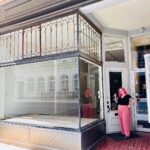
After performing in a church for 15 years, PRB purchased a former florist shop in Enola.

“We had two months, between the time we bought it and classes were going to start, to get it ready,” she said. “We completely gutted it and turned it into a ballet school.”

The family atmosphere has attracted staff as well.

Jeffrey Gribler has been freelance teaching and choreographing at PRB regularly. A former principal dancer with the Pennsylvania Ballet and later its ballet master, he is now part of the school’s faculty for the 2017-18 season.

“PRB is a second home to me,” he said. “The atmosphere is so positive and so headed in the right direction. The kids get better all the time. I love the quality of the work.”

Gribler met Carlino as an adjudicator for Regional Dance America and considers her “family.”

A few weeks before the “Nutcracker” performances, PRB will host the family-oriented “Enchanted Nutcracker Tea.”

“This is our fourth year for the tea, which is nice for our kids and their parents,” said Aumiller. “It includes a child-friendly luncheon, narrative preview from the ‘Nutcracker’ production, and autograph signings and photo opportunities with the major characters.”

Everyone in the local dance world knows Central Pennsylvania Youth Ballet in Carlisle for its rigorous training and quality performances. But Carlino is unperturbed.

“In all fairness, CPYB is one of a kind,” she said. “You can’t imitate it.”

But she pursued a different model, inspired by the “kind of trendy classical ballet and neoclassical pointe work” at the Vineland (N.J.) Regional Dance Company.

“I thought to myself—these are our bodies; this is what we should try to go after,” she said. “Some of our dancers won’t be ballet dancers. Some may pursue Broadway careers. We found a way to balance good training with flexibility.”

For pre-professional students, who have daily classes and rehearsals and may not get to eat with busy working parents, Carlino said, “Everyone cares. It is a family thing.”


The Pennsylvania Regional Ballet will perform “The Nutcracker” on Dec. 2 at 1 and 5 p.m. and Dec. 3 at 2 p.m., at the Scottish Rite Theatre, 2701 N. 3rd St., Harrisburg. For more information and to purchase tickets, visit
www.prballet.org or call 717-732-2172.


The “Enchanted Nutcracker Tea” takes place Sunday, Nov. 12, at the West Shore Country Club, 100 Brentwater Road, Camp Hill.
Continue Reading

Imagine This: Harrisburg-area kids take inspiration from Mollybee Toys.


Melissa Rhen.

The idea for Mollybee Toys began to germinate about seven years ago, following a well-timed trip to Europe.

“I was pregnant, and my husband returned from a trip to Germany and brought home Haba building blocks, which my kids, now age 5 and 6, play with to this day,” said owner Melissa Rhen.

The couple admired the quality of the beech wood blocks and the creative purpose behind the design. Soon, Rhen’s husband Dave began toying with the idea of purchasing more products with an educational component.

“He sent me an email about three months after my daughter Ella was born which said, ‘Let’s start a toy store,’” Rhen said.

She was game, and the couple decided to throw the dice by opening up an online shop. They named it Mollybee as a tribute to Rhen’s sister, Molly.

As time passed, the couple contemplated expanding into a physical location. At the same time, Rhen’s friend, Rebecca Werley, who was also a stay-at-home mom, was weighing the idea of starting a business of her own. So, the two worked as a team to strike the right balance between business and family life.

Each opened a shop in the same Market Street building in Camp Hill, where Werley runs Sweet 504, an interior design space adjacent to Mollybee Toys.

“We cover for each other when there are doctor’s appointments or field trips, things like that. It works out well,” said Rhen, adding that her children Ella and Landon, now school-aged, help out too. “They have jobs here too like helping me stock the shelves.”


Happy Place
Rhen’s store may be cozy, but there’s something to see at every turn.

There are the European-style educational toys that inspired the shop, such as sturdy wooden puzzles and early learning items. She added to that a range of gift and baby shower items like adorable “onesies” that feature magnetic buttons and colorful “chew bead” necklaces and bracelets designed to be worn by mom and tugged on by little hands.

For older kids, the shop carries many “analog” items, though you won’t find your typical board games like Candyland and Sorry. Rhen opts instead for more unusual merchandise like The Peaceable Kingdom series, which enables children to play against the game rather than each other. She discovers such finds by attending industry events in New York on a regular basis.

She also carries an award-winning series of products called Nancy B’s Science Club, kits designed to spark young girls’ interest in STEM learning, and Elenco Snap Circuits, which teach children about the world of electronics.

Janean Searfoorce, who is a regular MollyBee shopper, said she can always count on finding a good gift there.

“Because it is small, she has to be particular about what she has there, and they are all high-quality items that I can feel confident won’t be duplicated,” she said.

Alexis Schrock of Marysville, who has a 5-month-old and a 3-year-old, said she brings both children to the store.

“I can let them pick out anything, and I know it’s going to be a good toy that’s a mix of education and fun,” she said. “You can tell that every toy has some thought behind it, even the board games.”

When asked to describe the favorite part of her unique business, Rhen doesn’t think twice.

“It’s when the children run into the store and look around and realize that they are allowed to touch everything,” she said.

She added that it’s fun to see how many kids play with the same toy, like the LEGO Light Stax, which have a tiny LED bulb inside each toy brick.

“About five times a day, this is built into a different configuration,” she said.

Rhen said she’s looking forward to celebrating “Neighborhood Toy Store Day” on Nov. 11, when independent retailers across the nation will hold events in their stores.

“We’ll have giveaways and make-your-own Christmas ornaments and other activities,” she said.

Working in a toy store does have its perks, and you can tell Rhen is in her happy place, with children and smiles all around.

Mollybee Toys is located at 1849 Market St. (rear), Camp Hill. For more information, visit www.mollybeekids.com or their Facebook page.

Continue Reading

You Got This! A runner recalls the exhilaration–and exhaustion–of the Harrisburg Marathon.

Photo by Rosie Turner

On a wonderfully cool day recently, people on lunch break enjoyed the fresh air of the Walnut Street Bridge, the Susquehanna River meandering below them.

As I stood at the end of the bridge, just short of City Island, I was brought back to five years earlier when 2,000 fellow runners started a 26.2-mile race. Back then, the Harrisburg Marathon finished on the Walnut Street Bridge, and I was standing near the spot where I once collapsed into a wheelchair.

Run Forever
I’d started to run, casually at first, at the age of 40.

Running, like some other things in life, can cascade, and it soon became my addiction. I’m still not sure why it felt so good, but it might have had something to do with creeping middle age, endorphins and a little hole developing in my soul after 15 years in middle management.

The first marathon I entered was a pancake-flat race in York, which proved catastrophic. I trained for it in earnest, pretty much doing everything wrong, heeding no advice and training too fast and too short. My longest training run was 16 miles. In the race I “bonked” (hit the wall) at, you guessed it, mile 16. I heard a spectator say, “I didn’t know people walked these.”

My lower back had started hurting by then, sometimes bad enough that it was tough getting out of bed. After therapy, I started running again. I read an article in Runner’s World about a growing obsession, among some, to qualify for what might be the greatest race, the Boston Marathon.

I increased mileage gradually, my back held, and, in April 2012, I decided to train, a day at a time, for Harrisburg, which had gained a reputation as a well-organized, small-town race. I studied running websites, talked to local track coaches, stretched after runs, ordered chia seeds online, and religiously followed a training program. I stopped short of high altitude training in Colorado, but considered it. By November 2012, I felt like I could run forever.

Nov. 11, 2012, the date of the race, started cold and clear. By 3 a.m., I couldn’t sleep, and I walked my dog down the farm lane. The air from Canada was bracing; a meteor shot against the sky in front of us, too rare to believe.

I reached the parking lot on City Island around 5 a.m. I sat in my car, queasy but encouraged that others also saw fit to arrive so early. I walked around and picked up my packet inside a building. Everything was organized well, and the people were friendly, talking quietly in small groups. I really had nothing to say except for an inner monologue, and I walked back through the parking lot, telling myself I’m not nervous, and why should I be when I’ve put in the miles. A marathon is two races, someone had told me—the first 20 or so, and then the rest.

Before I returned to my car, I saw another man, maybe 30, in his car eating a thick hamburger. Red meat on race day? First the meteor, then this.

Are You OK?
It was finally nearing race time, and we lined up on the Market Street Bridge, which was choked with runners. Super Storm Sandy had hit several weeks before, wiping out the New York Marathon, and the overflow was hitting smaller races. Pace groups distinguished themselves with raised signs, and I went to the fastest group I saw: 3:25 (three hours, 25 minutes).

I’ll run with the group, I said to myself, and then take off, maybe at mile 18. Standing on the bridge facing the city, the sun was up, sweats were off, and it felt good. Announcements were made, and I wanted to run so badly. Two days ago, during my taper, my boss had said, “I bet it’s painful not to be able to run today.” Yes, boss, thanks.

A blond woman in our group, maybe 10 years my junior, said something to me. She was from Australia, living in northern Jersey, very pretty and outgoing. Absently, I pictured myself cheering her on at the finish.

The gun sounded—or maybe it was a horn. I don’t remember. I do remember feeling strong, curbing the temptation to abandon the group. I talked to the pacer as we ran, a friendly, helpful man in his early 30s named Jamie, sporting a hydration pack and yellow shirt. His personal record was 2:53, and he’d done Boston seven times.

Every two miles, there was a table with small water cups. I slowed down at each, took two cups and drank. The group pulled ahead each time, and I scampered after them, probably catching up too quickly. At mile six, I said something to Jamie about feeling so good and asked if it was too early to take off. We still had about 40 or so people in our group, and others heard me and must have thought I was obnoxious.

At mile 18, I said to Jamie, “If I still feel good by now, I have this, right?

Soon afterwards, we hit three short, but sharp hills. A man staggered down one, and Jamie said, “You got this! Stay with us!” But he pulled to the side and stopped, head down. I was still standing and chose this moment to inch ahead. A half-mile later, in an instant, I felt weak, a little sick. Jamie and a group of about 10 came up on me. He said, “Are you OK?”

Under my breath, I said, “Yes, it will be OK.” He offered a gel, strawberry banana. It made me nauseous and worried. I knew how quickly pace can slow, double, even go to stop, and I knew we were just 60 seconds ahead of a 3:25 finish.

We hit the last stretch, a winding path along the Susquehanna back to our bridge. The sun was up in the sky now, piercing in the dry atmosphere. Jamie announced that we had three miles to go, and a bit after, said, “There’s our bridge!” This was the bike section of the Catfish Triathlon that I’d done just a few months earlier, and I knew where I was. The next bridge, now close to us, was the Harvey Taylor, decidedly not Walnut Street. I hated that fact but was glad to know it as we continued past.

By now, I was finished, as if a virulent flu had taken hold. In any circumstance outside of a dire emergency, or, it turned out, a Boston Marathon qualifier, I would collapse and not move for hours. The human body can hold about 2,000 calories of glycogen, and a marathon, on average, requires much more energy than that. It is unbending math, and if you don’t heed it, you’ll bonk. I had ingested gallons of water and pounds of carbs in the days leading up, but intra-race nutrition was the one crucial item I’d left out of race day.

My mind went back to the catastrophe in York, two years before, but my eyes were fixed on Jamie’s yellow shirt, and, for the life of me, I wouldn’t let it recede. We continued, now four of us, along the path’s too-warm cement.

The last hill on this course was the path up to the Walnut Street Bridge. I braced for it, mentally preparing for the effort as a weight lifter might for a deadlift. On top, we saw the finish beyond the edge of the bridge, and Jamie stepped aside, cheering us on. “Mark, go, go. That’s the finish! You got this!”

I wondered how he could be so confident, because every step felt like my last. I lurched over the finish line, and a woman, a smiling volunteer, an angel, pulled up a wheelchair and pushed me to the medical tent. “Someone died at this last year,” she said.

As I looked around the tent from under my blanket, a nurse took my pulse and pushed Gatorade. I saw others in varying states of disrepair. A fit man in his early 30s was on his stomach next to me, a massage therapist teasing out lactic acid. He smiled at me. I grinned drowsily back and said, “I almost didn’t finish,” and he nodded, knowing what I meant.

The 2017 Enders Harrisburg Marathon is scheduled for Nov. 12. The course changed in 2015 and now finishes in downtown Harrisburg. The new finish, according to Tom Gifford, the race director, “allows more spectators, cheering and excitement.” For more information, visit www.ymcarun.com.

Continue Reading

Fifty & Fabulous: Five decades old, The Plum continues to bear fruit.

There’s always something new at The Plum, the venerable women’s clothing shop in downtown Harrisburg.

That’s what owner Isaac Mishkin says, and, as anyone who’s passed by his Locust Street shop recently can attest, he isn’t kidding.

Since mid-September, a stunning, colossal mural by Ecuadoran artist Vera Primavera has graced the store’s exterior wall, adding vibrancy to what was once a large, drab surface. The mural’s size, bright colors and subject matter (a stylish young woman juxtaposed with a gypsy moth emerging from a purple-hued volcano) have quickly made it a draw for visitors.

It seems fitting that such an amazing addition should happen now, just as The Plum celebrates its golden anniversary—an amazing 50 years selling women’s fashions in the heart of Harrisburg.

Stepping through the door of the boutique just feels special, a calculated move on the part of the 80-year-old Mishkin and his daughter, Kirsten, who carefully crafted the décor to evoke big-city chic, with a dollop of posh. Black walls contrast with ornate white woodwork and high ceilings, giving the space an airy feel. Dripping crystal chandeliers tie in with an oversized gilded mirror for a hint of extravagance. Mishkin is quick to point out, however, that his fashion finds are approachable.

“My business is considered a ‘bridge store,’ which is to say that it’s a store that bridges the gap between the contemporary and the couture,” he said. “Our merchandise doesn’t necessarily have the name recognition like Yves Saint Laurent out of Paris, but it’s sold with quality in mind.”

Hats to Haute

Mishkin’s initial ambitions had little to do with fashion. As a young man, he pursued a degree in accounting—that is, until fate stepped in.

“My father died when I was a senior in college,” he said. “The family operated three millinery stores in Harrisburg, so I returned home to help my mother.”

Mishkin used marketing skills gleaned in college to add handbags to the inventory of headwear. When that succeeded, his interest in retail blossomed, inspiring him to open The Plum in 1967. His mother ended up selling her stores a year after Mishkin blazed his own retail path.

“The hat business was beginning to fade, but she was ready to retire by that time anyway,” Mishkin said.

Running a successful business for 50 years is no small feat, and Mishkin keeps up with the times when it comes to fashion. But, for service, he sticks with the tried-and-true.

“I wait on people the old-fashioned way,” he said, emphasizing the personal service he delivers, catering to each individual shopper.

He also takes pride in how his customers look, as they are a walking testament to his taste.

“I won’t sell anything that doesn’t look good on people,” he said. “We’re not in this business to make one big killing. We want them to say, ‘Oh my God,’ and then return.”


Not Just a Business

Mishkin flashes his signature wide smile, and his eyes light up with anticipation as a customer enters his shop. Watching him in action, it appears that he takes a split-second mental inventory to assess the patron’s shape, size and style to pair with his merchandise. Within minutes, he’s carefully pulling items off the racks—a cashmere sweater here, a poncho there.

“This will look great on you,” he assures one customer, who agrees after trying on his recommendation.

Coats, gowns, jeans, pants, capes, shirts, jewelry, belts, you name it—there’s a little of everything in Mishkin’s 3,000-square-foot flagship store and more can be found at his West Shore location in Camp Hill.

Cindy Fremont works as a financial advisor for Edward Jones and has been shopping at The Plum for 15 years.

“I have to be professional, but I like to throw a little funk in there every so often,” said the East Berlin resident whose mother-in-law originally recommended the shop. “Isaac knows fashion and what looks great.”

Fremont can attest to the quality of the garments, too.

“I have pieces that are easily a decade old,” she said, adding that daughter Kirsten inherited her father’s fashion sense. “When Kirsten travels to New York, she buys for me and everything fits.”

Pamela McDermott is another enthusiastic customer whose loyalty dates back years.

“I graduated from Lower Dauphin in the 1970s and have always loved to dress up since the age of 3,” she said. “When I needed a gown for the senior prom, my mom bought me one at The Plum. I kept the receipt—it cost $44.”

The Union Deposit woman, once recognized by the Patriot-News as a “style maven,” said that she has Mishkin on speed dial.

“I’m not a department store shopper,” she said. “If I’m looking for something unique, edgy and over the top, Isaac will have it.”

Surveying his shop, Mishkin says that he finds it hard to believe that he’s been in business for 50 years. He considers himself very lucky, both that he found his calling and that he’s been able to operate for decades in a difficult industry not known for its longevity.

“When I hear about so many people complaining about their jobs, I’m thankful that I like to go to work,” he said, flashing that big grin again. “Once that retail bug bites you, you can’t get rid of it, even if you want to retire. I like people. I like fashion. It’s not just a business. It’s a social thing too.”

The Plum is located at 213 Locust St., Harrisburg and at 3801 Old Gettysburg Rd., Camp Hill. For more information, call 717-232-9251 or visit www.theplumclothing.com or their Facebook page.

Continue Reading

Critical Condition: Harrisburg’s first responders toil as their building decays around them.

Drippy ceiling tiles, crumbling cement and a faint pong of marijuana—all are part of a day’s work at the Harrisburg Public Safety Building.


The space housing the police and fire bureaus, located on the first block of Walnut Street downtown, has reached the end of its natural lifespan, according to Mayor Eric Papenfuse. The city recently decided not to invest more money in the building and is actively scouting relocation sites.

But until the city identifies an alternative location for almost 200 employees, its first responders—and the administrative staff that supports them—will continue to work in what Papenfuse calls “substandard” conditions.

The vast majority of the building’s employees are police officers and parking enforcement agents who spend their days off site, said Joni Willingham, Harrisburg’s human resources director. Almost 30 administrators, including police and fire chiefs, work there full time.

What’s it like to report for duty every day?

“It’s the equivalent of going on vacation and coming home to a dirty house,” Capt. Gabriel Olivera, the Police Bureau’s public information officer, said during a recent tour of the building.

Small Investments

Mattea Macri has watched the building deteriorate during the 33 years that she’s worked for the bureau.

“It’s dirty,” she said. “There’s problems everywhere—leaks, one room is hot and another is cold.”

The leaks, which manifest as brown rings and waterlogged blisters in the acoustic ceiling tiles, are most numerous in the detective offices on the building’s third floor. Gaps in the ceiling mark where tiles were removed for water damage, and employees use everything from trash cans to coffee cups to catch the runoff.

Olivera says that leaks in the third-floor forensics lab and second-floor records office have never compromised police procedures. Harrisburg police only use their forensics space to run fingerprints and send all other lab work to a state-run facility. And Olivera said that the police department has never lost paper records to water damage.

What’s more hazardous, he said, is the ceiling in the basement parking garage, where crumbling cement and drywall has fallen and damaged personal vehicles.

The building also circulates heat poorly, leaving some rooms uncomfortably hot and others frigid. In the winter, some offices have recorded temperatures as low as 63 degrees, Olivera said.

Ventilation also partially accounts for the faint odor of marijuana in the first and second floors. Olivera said it’s a product of seized drugs stored in the first-floor evidence room. Officers staffing that room recently had standing fans directing the stench outside.

Though the city has decided not to make capital improvements to the building, it still will make small investments in repairs and maintenance, according to city Engineer Wayne Martin.

Olivera identified some areas that have seen recent upgrades, including a hallway where carpet was replaced after the previous carpet became “dangerous.”

But many of the recent enhancements were completed with donated goods and labor. A local Eagle Scout refinished an interview room on the third floor. Down the hall, volunteers from the Rotary Club renovated and furnished a family waiting room.

In some cases, officers take maintenance into their own hands. Olivera pointed out two offices on the first floor where sergeants replaced flooring, applied fresh paint and installed donated desks.

“They just got tired of how it looked,” he said.

When asked if he thought that the workspace conditions affected officer morale, Olivera answered with a definitive “yes.” But he declined to elaborate and insisted that officers would not allow their work quarters to affect public safety.

“In spite of all this, our officers come in every day to do the work they signed up to do,” Olivera said.

Too Big

Olivera hopes that the Police Bureau will downsize its offices in its next move. He said that the force employed close to 200 officers when it moved into the building in 1981. Today, the full-complement rank is limited by Act 47, a state statute that governs financially distressed municipalities. The police force has a capacity of 157 officers but currently operates with 142.

Put simply, the building is too big for the current force, Olivera said. He thinks smaller quarters would alleviate the burden of upkeep and repairs, especially since the city has reduced its maintenance staff under Act 47, he said.

Papenfuse attributed the current condition of the building to years of neglect under former Mayor Steve Reed’s administration. The city decided in 2015 that it would no longer make capital improvements to the building.

Martin, the city engineer, defined a capital improvement as a repair, such as a roof replacement, that would extend the life of the structure.

Once the city relocates its public safety employees, it will likely seek out a lease agreement with a private sector company, Papenfuse said.

Under that agreement, a private company would bear the cost of renovations in exchange for a nominal rent fee from the city.

City Council recently rejected a similar proposal with Eastern University, a Christian college that wished to renovate and rent space in the City Government Center’s unfinished basement.

Papenfuse is skeptical that the city will find many bidders for the basement, but thinks it will have more success fielding proposals for the Public Safety Building. Since it’s a complete, free-standing structure, companies will have more options for how to renovate and use it, he said.

That’s good news to Fire Bureau Chief Brian Enterline.

“This is probably the best building in the city, to be repurposed into something else,” Enterline said.

Continue Reading

Coffee Capital: Just across Forster Street, warm drinks, friendly staff, await.

The saying, “out of the mouths of babes,” resonates with Rick Hawtrey, owner of Capital Joe Coffee, right across the street from the Capitol Complex.



It was Hawtrey’s young son who urged him to move from Wisconsin in the mid-2000s, when his job as an information technology consultant had him traveling on a weekly basis to places like Washington, D.C., New York and Harrisburg. So, Hawtrey followed the boy’s advice and moved his family to central Pennsylvania in 2009, putting him closer to work and allowing him more time with his family.

It also set him down a new and unexpected path.

Hawtrey, a native of Milwaukee, purchased the Forster Street building that houses the coffee shop two years ago, using it then as the office for his IT business. But when the state, one of his biggest clients, couldn’t make timely payments for services because of a prolonged budget impasse, it got Hawtrey wondering what to do next. That’s when he realized he was in a prime location, not just for an IT shop, but for a coffee shop as well.

“We love coffee, coffee loves us,” he said. “We weren’t experts, but we put in the time and did the research.”

He approached Square One Coffee in Lancaster. Even though Capital Joe could have roasted its own coffee, Square One brought another dimension as a highly regarded roaster of small-batch coffees. Capital Joe, then, could tap into this established reputation and brand recognition.

Whatever We Can

Capital Joe’s charming 19th-century building sits across from the Keystone Building.

Visitors who walk through the door are hit immediately by the aroma of brewing coffee and treated to an invitingly quaint space with small table and chairs, old photos from around the Harrisburg area, and even a flat-screen TV mounted on the original brick walls. An indoor lounge anchors the back side of the building.

There’s a mission with each cup. Next to the tip jar are jars to support the Bethesda Mission and Morning Star Pregnancy Services. Anyone in uniform—police, firefighters, paramedics—is treated to a discount.

“We do whatever we can for the community,” Hawtrey said.

Mathias Cabell is usually the first face customers see. Cabell, Capital Joe’s general manager, had worked at Hawtrey’s IT company and previously sold cars at Red Lion Chevrolet in York County. Like Hawtrey before him, Cabell also relocated to the area to be closer to work, and his personable style and bright smile attract customers immediately, Hawtrey said.

“I knew nothing about coffee, and it has been a learning experience,” Cabell said. “But I went through the Square One training program, and I’m learning something new every day. I feel comfortable, and Rick believes in me, so that is why I do this.”

In addition to roasted coffees, Capital Joe offers 10 varieties of loose-leaf teas and a small selection of baked goods that are made by Hawtrey’s wife at their second location in the old police station on Main Street in Mechanicsburg. They offer three types of muffins, three kinds of biscotti and two types of cookies. In the fall, many of the treats are infused with pumpkin and seasonal spices. But the pumpkin spiced coffee is always available. Hawtrey and his team also are planning hot caramel apple cider, shoofly pie latte and lavender lemonade and lavender lattes, and soon will introduce a baked oatmeal cake.

“Our staff is always coming up with new ideas for drinks, and we are always looking to expand our menu,” Hawtrey said.

He hopes to open more shops, beyond the Harrisburg and Mechanicsburg locations. His first priority, however, is making sure his staff feels as though they are part of the family, especially as the business grows. For now, the Capital Joe philosophy is simple, Hawtrey said.

“Good drinks to make people happy.”

Capital Joe Coffee is located at 418 Forster St., Harrisburg, and 36 W. Main St., Mechanicsburg. For more information, visit www.capitaljoe.com.

Continue Reading

Musical Notes: November Jumble–this month, something for every ear.

Well, we’re nearing the close of another crazy year. The end of fall is near and, as Jon Snow would say, winter is coming. November’s my birth month, and I’ve always loved fall, so it’s a special time of the year to me.

This month, venues across Harrisburg will host some equally special shows for you to enjoy. This month’s featured shows are a few that I’m pretty excited about. Some pysch rock, some indie rock and some post punk top my list, but be sure to check out the chamber music, festivals and local shows also going on around town. Happy birthday to my fellow November-born readers—and happy listening.

BIRDS, 11/6, 7PM, LITTLE AMPS DOWNTOWN, $5
About a year ago, I saw Birds play a show at Zeroday with a few local bands, so trust me when I say that these dudes are cool enough to see twice. The Brooklyn-based band is a self-described “psychedelic weird pop” group consisting of guitarist/vocalist Duane Lauginiger, drummer Tim Plunkett, guitarist Jess Rees and bassist/vocalist Jessica Reynoza. If you’re a sucker for some energetic psych rock with spacey guitars and dreamy vocals, don’t miss out on this show. Joining them at downtown Little Amps is fellow Brooklyn band Stuyedeyed, specializing in their own brand of “sike garbage spunk” and local beach boys Concrete Beach, bringing you some surfy garage rock. Check out Birds’ latest album, “Running Water,” on Bandcamp if you want a sneak preview. “Coming Up” is definitely worth a listen. 

THE DISTRICTS, 11/18, 7PM, H*MAC CAPITOL ROOM, $20-25
There’s definitely a lot of hype around the city for this show. That’s probably because these Litiz natives have perfected their shoegaze-inspired indie sound throughout their relatively new career. The Districts was started by vocalist/guitarist Rob Grote, bassist Connor Jacobus and drummer Braden Lawrence while they were high-schoolers. After working the local scene, they released their debut, “Telephone,” in 2012 and worked with producer John Congleton, known for his work with acts such as St. Vincent and Kurt Vile. After writing extensively and experimenting with their sound, the Districts have achieved quite the reputation with their newest album, “Popular Manipulations.” Check it out if you get the chance, or check out my favorite album of theirs, “A Flourish and a Spoil.” I get the feeling that this show’s gonna sell out fast, so get your tickets while you can!

RADIAN, 11/27, 7PM, DER MAENNERCHOR, $8
I love a good show at Der Maennerchor, and, luckily, we’ve got a powerful performance coming our way. Near the end of the month, Harrisburg’s art group, Moviate, is hosting Radian, a post-rock/post-punk band from Austria. Moviate is all about bringing unique music and art to Harrisburg, and this group is no exception. Radian is comprised of Martin Brandlmayr on drums and electronics, John Norman on bass and Martin Slewert on guitars, lapsteel and electronics. Together, they create a dynamic electronic experience that you have to hear to understand. They have been reviewed by The Wire and BBC, and called “…a band with impressively original density and texture” by Will Montgomery, a writer for The New York Times. If you want a taste, look up the video for their song “Transistor” for the full art punk experience.

Mentionables
RAQ, Nov. 2, The Abbey Bar
A Night of Chamber Music, Nov. 3, H*MAC Capitol Room
Steven Courtney Band, Nov. 11, River City Blues Club
PennsylMania Music Fest, Nov. 11, H*MAC Capitol Room
Country Music Festival, Nov. 11 & 12, Spring Gate Vineyard
Crystal Haze, Nov. 18, River City Blues Club
Consider the Source, Nov. 30, The Abbey Bar

Continue Reading

Chamber Made: Sempre Dolce reimagines traditional chamber music.

“Are you familiar with Nirvana?” asks Mary Gardner-Firestone, one of two violists in Sempre Dolce.

The quartet—Gardner-Firestone, fellow violist Marie Valigorsky, violinist Greg Glessner and cellist Matt Masek, with guest violinist Sjrsten Siegfried—is rehearsing on a Tuesday evening amid the gymnasium-style Capitol Room of the Harrisburg Midtown Arts Center (H*MAC).

Glessner closes his eyes while trying to identify one of the most famous rock bands of all time.

“I’ve heard the name.”

Glessner, raised on classical music, has only a passing familiarity with the musical culture most others could not avoid if they tried.

“The only pop culture I’m in tune with is old TV shows,” says Glessner, citing “The A-Team” and “ALF” as favorites.

With a prompt from Gardner-Firestone, Glessner lifts his instrument to his chin and sprints into a lively version of “The A-Team’s” signature theme song.

“Well, I think you’ll like this one,” says Gardner-Firestone before passing over sheet music for her own arrangement of “Smells Like Teen Spirit.”

A regular feature at the MakeSpace, Sempre Dolce will have its third performance of chamber music at H*MAC early this month, featuring a combination of original pieces by Valigorsky, arrangements by Gardner-Firestone and selections from a range of canonized composers such as Philip Glass and Johannes Brahms. Largely an invention of Valigorsky, the group is a product of an underground classical music scene kept alive by challenging where classical music does and does not fit.

Arrangements of contemporary works have become a centerpiece of Sempre Dolce’s performances, with Gardner-Firestone shifting the band AWOLNATION, the “Game of Thrones” theme by Damon Djawadi, and the White Stripes into classical notation. Upon seeing “Seven Nation Army” in the set list, cellist Massek bemoans, “Not this one—the Ravens song? They play it at Ravens games all the time.”

It’s a tactic the violist is used to for introducing newbies to the sounds and themes of classical music. Gardner-Firestone regularly creates arrangements on request for a variety of private students—ranging in age from “5 to old enough to be my grandparents”—when she’s not playing for Sempre Dolce.

Early Starts
The group began from a chance meeting between Gardner-Firestone and Valigorsky in 2015 when the latter attended a performance by the former at the MakeSpace in Harrisburg.

“I’ve been playing chamber music and forming groups since graduate school,” said Valigorsky. “It started small but really grew as we went along.”

Gardner-Firestone introduced Valigorsky to Glessner, whom she had met through a private chamber music group hosted by Camp Hill bassoonist Jan Jekel.

Glessner, like most members of Sempre Dolce, began playing as a child. After nursing a jealousy towards an older brother who began piano, Glessner sought out the violin by age 6.

“They so wanted it to be piano,” Glessner said of his parents. “We already had a piano, we already had a teacher. But no, it had to be the violin. From there, I took it up quite naturally.”

Valigorsky introduced the pair to Matt Masek, with whom she had an existing musical relationship. Masek stands out among the group for his experience in the rock band Shadow Scream.

“We actually put out three albums,” said Masek. “The last album was based on Madeleine L’Engle’s ‘A Wrinkle In Time.’”

After the band went bust, Masek began playing for Valigorsky and her original compositions at the MakeSpace.

New to the November performance is violinist Sjrsten Siegfried, whom Valigorsky met through the West Shore Symphony Orchestra.

“My mom started me on the fiddle when I was 5,” Siegfried said. “My first instrument was built my by great grandfather. I went to university on a scholarship and was paid to play for a while.”

The casual setting of H*MAC is nothing knew to Siegfried, who played violin in bars while studying abroad in Beijing.

“They really liked when I played George Michael’s ‘Careless Whisper.’ They liked when I ripped into it like a saxophone.”

The group’s inclusion in H*MAC’s fall lineup (which includes a reunion of punk legends The Dead Boys, a My Chemical Romance tribute band, and the venue’s annual “The Rocky Horror Show” production) might seem strange to some, but not to co-owner John Traynor.

“A lot of people don’t understand exactly what H*MAC really is,” said Traynor. “When we first announced H*MAC as a project back in 2009, it was always to be multi-faceted. We do theater. We do rock. We do classical.”

Traynor cites a joint project with Elizabethtown College to bring opera to H*MAC as well as last year’s performance of the Broadway show and classic rock masterpiece, “Tommy.”

“Partnering with chamber music and classical music is just an extension of all of that,” he said. “The goal is really to offer something to everyone in the community and not just have one genre in our focus.”

In Touch
For most members of Sempre Dolce, working as classical musicians in central Pennsylvania mostly means hunting for the rare opportunity to play with others, thereby raising the complexity of music they can pursue.

“It’s meditative by yourself and that’s great,” said Siegfried. “But there’s just something about making music with other people. It’s like conversation with instruments.”

The connections of private groups, public symphonies and live bands that brought together Sempre Dolce is emblematic of the links that keep the genre alive and well in the midstate.

“It’s mainly through finding a group and networking through there,” said Glessner. “I feel like it’s kind of an underground network of sorts.”

Classical musicians are hidden throughout public life, Masek added.

“The flipside is, for the members of this group, there are fantastic players out there who are probably sitting at home—doctors, lawyers, engineers—who can play these instruments like crazy but haven’t touched them in years,” he said.

“Families know families,” said Gardner-Firestone. “And just staying in touch with people helps.”

Sempre Dolce performs Nov. 3 at the Harrisburg Midtown Arts Center, 1110 N. 3rd St., Harrisburg. For more information, visit www.harrisburgarts.com.

Continue Reading

Mega Mordor: Spend an entire day in Middle Earth.

I will admit it: I had my doubts about “The Lord of the Rings.”

I was a kid. I saw the trailer for the first film in theaters and rolled my eyes. I had never read the books. I had never even heard of J.R.R. Tolkien.

But my opinion changed very quickly when my family rented the first film to watch right before we saw “The Two Towers” in theaters (that’s right—I didn’t even see the first film in theaters). Very suddenly, Middle Earth was a place that I loved and wanted to be a part of.

I wanted to take that journey with Frodo and meet elves in Rivendell and talk with Ents in Fangorn Forest. I read the books shortly after that. And then I read “The Hobbit,” the story that spawned the quest to return the One Ring to the fires of Mordor, and then those movies came out, and the cycle continued…

The point is—it’s not difficult to get lost in Middle Earth. There is so much to get wrapped up in, whether the quaint hobbit holes of the Shire, the Misty Mountains, Rivendell or Mordor itself.

The universe that Tolkien created is rich and epic and captures the hearts of more than just fantasy lovers—because it’s more than just a fantasy world. It’s an opportunity to grapple with evil and fight for good, and it’s a journey into lands foreign even to ardent travelers. It’s a glimpse into a world that struggles to remain close to nature and maintain its innocence in a war-torn, chaotic era, a theme that rings true today.

That’s the beauty of Middle Earth. Even though we focus on the hobbits and wizards and orcs and other mythical things that we don’t get to see in our own world, at the end of the day, there are still humans abiding in the midst of this magic. We can still plant ourselves in Middle Earth’s tales and feel like we belong.

No wonder the Tolkien universe is so beloved. And no wonder there are movie marathons held in his honor.

This month, Midtown Cinema will host its first “Middle Earth Marathon”—more than 20 hours that fit neatly into a single day. It won’t be the first time this task has been attempted, and it won’t be the last. Marathons go ever on, and this day celebrating Tolkien will join the ranks of marathons that have crossed Midtown Cinema’s threshold, including a Harry Potter marathon and slasher film lock-in. There is nothing more effective than a movie marathon in getting a group of like-minded people together and excited about revisiting their favorite stories.

In the end, it’s only a passing thing—every movie marathon must pass, and a new day will come. But there’s something about Tolkien’s stories that stay with you. They mean something. The commitment is arduous, but the result is getting that ring to Mordor.

“The Middle Earth Marathon” takes place Nov. 18, beginning at midnight, at Midtown Cinema, 250 Reily St., Harrisburg. Arrival starts Nov. 17 at 10:30 p.m. For more information, visit www.midtowncinema.com.


MIDTOWN CINEMA
NOVEMBER EVENTS
www.midtowncinema.com

Hola Mexico Festival
Oct. 27-Nov. 2

Down in Front! Presents:
TBA
Friday, Nov. 10, 9:30 p.m.

Middle Earth Marathon
Saturday, Nov. 18, 12 a.m.
(Arrival starts at 10:30 p.m. on Nov. 17)

Moviate Presents
Stephen Broomer’s “Potamkin” on 16mm
Sunday, Nov. 26, 7 p.m.

Continue Reading

Thanksgiving on Ice: You can thank Aunt May for this holiday treat.

I have lots of very happy memories of Thanksgiving at my childhood home—memories as a child and especially memories as an adult with children of my own.

The day always included a flurry of excitable Italians bustling around the kitchen, the same brown sugar candle that sat in the same spot every year and never seemed to burn down, delicious food, and lots of fine spirits to warm us.

My little family was big on tradition, meaning they tended to always do things the same way. That included my Aunt Mary whom my sons referred to as “May.” May made the same three things for Thanksgiving every year: broiled pink grapefruit halves soaked with sherry and brown sugar, celery hearts stuffed with cream cheese laced with Beau Monde seasoning and cranberry orange ice.

The one year I convinced my aunt that nobody needed cream cheese before the biggest meal of the year was the year my younger son, James, asked for the celery as soon as he came through the door. So, tradition had to continue.

In the cranberry department, I have been a little more adventurous, trying numerous cranberry relish concoctions. I have made cranberry sauce with apples, oranges, raisins, ginger, port and Grand Marnier, cooked and uncooked. But, this year, I thought I might return to my aunt’s beloved cranberry ice. It really is good! It is light and refreshing and acts almost like a tangy palate cleanser. May didn’t have a food processor or an ice cream maker back then, so I suspect she used her blender and overhead freezer of her refrigerator to make it.

I looked high and low for a recipe that would be close to what she made in those days. This is what I found.


Cranberry Orange Ice

Ingredients

  • 2 12-ounce bags fresh cranberries
  • 2 cups sugar
  • 1¼ cups fresh orange juice
  • 1 cup fresh lemon juice
  • Grated orange zest from 2 oranges

 Directions

  • In a large pot, add cranberries with enough water to cover. Boil until the berries begin to pop.
  • Drain the mixture, and place the cooked berries in a food mill over a large bowl. Alternately, place the mixture in the container of a food processor. Puree or process until the mixture is smooth.
  • While the berry puree is still warm, add the sugar. (Start with 1½ cups of sugar and test the sweetness according to your liking. Add the rest of the sugar if you like. I prefer a tart ice, but it is a matter of preference.)
  • Add the orange and lemon juices and the grated orange zest.
  • Pour the mixture into a square 8- or 9-inch baking dish and freeze overnight.
  • Take the cranberry ice out of the freezer for about 5 to 10 minutes before serving.

We placed the cranberry ice in little crystal fruit dishes and ate it throughout Thanksgiving dinner. This refreshing treat cuts through the richness of the turkey and the rest of the meal. The leftover ice keeps well in the freezer and is delicious with baked chicken, pork chops and roast beef, as well (maybe save some for Christmas dinner).

I hope my Thanksgiving guests enjoy Aunt May’s cranberry orange ice this year, although our good friends from Virginia will likely still bring their favorite Ocean Spray jellied cranberry sauce in a can. Nothing else will do for them. Tradition continues for everyone!

Continue Reading