Happiness Is a Warm Bun: Meaty, gooey delights at The Cheesesteak Guy.

Josh Longo’s future was written on a napkin.

One day, he scribbled the word “cheesesteak” on a cocktail napkin, and when he came home from work that night, his fiancée Keri Little saw the note. She grew suspicious.

“What are you up to?” she asked him.

Longo admitted that, indeed, he had an idea. He knew that the owner of The Harrisburger was closing his hamburger stand in the Broad Street Market, and he wanted to do something with the space. Cheesesteaks seemed like a natural choice.

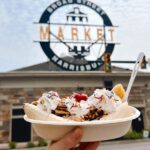
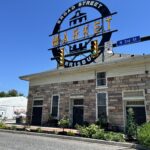
Just a few months later, The Cheesesteak Guy opened in the back of the market’s stone building. Since July, co-owners Longo, a former manager at Zeroday Brewing Co., and Little, a Florida transplant, have been filling a niche by churning out the legendary sandwich to market patrons and passersby alike. They average about 100 cheesesteaks a day on market days.

Perhaps this quick success should come as no surprise, as Pennsylvania is practically synonymous with the word, “cheesesteak.”

According to Philadelphia’s official tourist site, the sandwich was invented in the 1930s by hot dog vendor Pat Olivieri in South Philadelphia. Olivieri was grilling beef from the butcher and placed it on an Italian roll. A passing cab driver caught a whiff and asked for the “steak sandwich.”

The rest, as they say, is history.

Longo’s personal history also indicates that he made the right choice to enter the cheesesteak biz.

His aunt, Stephanie Stence, owns Premier Caterers in Camp Hill. His uncle, Donny Brown, owns Black ‘n Bleu in Mechanicsburg and formerly owned the Firehouse Restaurant in downtown Harrisburg.

Longo and Little took advantage of the family’s institutional knowledge. They went to his aunt for advice before starting the business. They also credit Broad Street Market Manager Beth Taylor for supporting them as they worked through the process of getting up and running.

Since Longo had also worked at Zeroday’s Outpost in the market, just a few feet from the new stand, he was intimately familiar with the location and its potential.

“I was eager to make cheesesteaks that are authentic, without cutting corners,” he said.

The only corners that Longo and Little cut are the ones on the ends of the rolls they use for sandwiches, which makes them the perfect size. The owners tried out quite a few breads and dimensions before settling on Glassboro, N.J.-based Liscio’s Bakery, whose slogan is, fittingly, “It Starts with the Bread.” Liscio’s is a cheesesteak fan favorite. So, Longo and Little have the bread delivered to their house between 4 a.m. and 5 a.m. weekly.

“We had a visitor from south Jersey come to the stand one day, and she gave me her name and number and said, ‘If you ever have rolls left over at the end of the day, can I buy them from you?’” Little said.

But there has been nothing to spare, not even the cut corners. Longo and Little donate those to fellow Broad Street vendors Raising the Bar bakery, which uses them for their bread pudding, and to Hummer’s Meats, which puts them in their meatloaf.

Beyond the bread, Longo and Little emphasize the freshness of all the ingredients they use in their sandwiches.

They get to their stand at 6:45 a.m. every workday to hand-slice all of the ingredients, including mushrooms, onions and peppers. The shaved, choice ribeye is purchased from Warrington Farms in Dillsburg and broken down by hand. Their cheesesteaks also feature the ever-famous Cheez Whiz. But, to give it a creamier consistency, they add some sour cream. If patrons prefer another option, The Cheesesteak Guy also offers provolone, American, cheddar and pepper jack cheeses.

For those craving something other than a cheesesteak, Longo and Little make hamburgers with meat from Hummer’s. It’s another popular choice, as they sell about 25 burgers a day. They also serve breakfast sandwiches, grilled cheeses and BLTs.

“Midtown sucks you in,” said Longo, reflecting on the jump to start and own a business in the popular, historic Harrisburg neighborhood. “You see the same people, and it’s great. It’s the only place we like to hang out.”

Then Little added: “It feels good to be your own boss.”


The Cheesesteak Guy is located in the stone building of the Broad Street Market, Harrisburg. For more information, visit the Facebook page: The Cheesesteak Guy.

Continue Reading

Dreaming of a Green Christmas: Nonprofits depend upon the giving time of year.

For Bethesda Mission, it starts with the Thanksgiving food drive. Mail campaigns and Giving Tuesday follow. The venerable service organization has even added a family Christmas event to its holiday fundraisers.

“It’s crazy,” said Director of Development Cindy Mallow. “We live for these couple of months here.”

What would nonprofits do without the holidays? The answer is—sacrifice a lot of money.

While many are diversifying their revenue streams, nonprofits continue relying on year-end events and appeals for as much as one-fourth of their annual income, for their very own, extended Black Friday.

Historic Harrisburg Association, founded in 1973, dove into holiday events in its first year.

The then-new organization sought to “revitalize the neighborhoods that had been devastated by the flood of 1972 and to awaken the public to the value and the beauty of historic urban neighborhoods,” said HHA Executive Director David Morrison.

Its Candlelight House Tour, still going strong, “was a way to showcase it and for the general public to get involved.”

“Simply seeing these houses was a form of education and advocacy, for people to say, ‘Oh, we had no idea these homes could be so charming,’” Morrison said.

In 2017, Bethesda Mission launched a new event. “A Tremendous Christmas at Italian Lake” brought carriage rides, Santa Claus, carolers, vendors, and a Christmas tree lighting to a park that normally slumbers in winter hibernation.

“Italian Lake has been a hidden gem for years,” said Mallow.

Sponsors for each activity keep the overall event free, with minimal fees for some activities. New this year: a skating rink.

“It’s not real ice,” Mallow admitted. “But it’ll be fun for the kids.”

While the concept was being developed, Mallow envisioned “this New England, small-town Christmas, where the whole town gets together, and they sing Christmas carols and go for carriage rides and light the Christmas tree.”

“Even though Harrisburg is not that small New England town, we felt it was important to make it a family event and bring the community together,” she said.

The holidays also give the arts a time to shine.

Susquehanna Chorale performed its first Christmas concert the year after Linda Tedford founded the ensemble in 1981. She strives to create “a place of peace and beauty” for patrons.

“If choirs are going to perform, financially and repertoire-wise, the holiday season is rich with possibilities,” said Tedford. “It’s such a good time to bring people together, and I think people are hungry for that, especially in these days.”

The transformative magic “happens for the artists, as well,” even though they’ve “done the grunt work” to prepare, said Susquehanna Chorale alto Anne Moul. The singers, all volunteers, commit the time because Christmas music and carols are “part of the fabric of our families and our country.”

“The reward far exceeds the effort,” she said. “The satisfaction of creating an artistic product of high quality and mixing with other people. We all bring our gifts, vocally and artistically, and we’re molded by the master gardener.”


Amazing Thing

Nonprofits also seize the opportunity to “friend-raise” during the holidays, spotlighting their missions, promoting future events and cultivating supporters.

Charitable givers, especially younger people, crave two things in their giving—an experience and the knowledge that their dollars make a difference, said Avrum Lapin of Philadelphia-based consultant The Lapin Group. Events are “a way for people to participate,” even if ticket sales can’t match the income-generating power of galas (“and those are becoming less popular,” she added.)

Holiday events derive their power from being “part of the fabric of the community.”

“They help organizations meet their budgets, and they keep people close,” Lapin said. “It strengthens the sense of engagement and community.”

While Bethesda Mission generates half of its annual income during the year’s last quarter, and one-fourth during December, year-end outreach also raises awareness of the extent of its services—men’s shelter, women’s shelter, community center and medical and dental clinics.

“We accept no government funding, so we rely 100 percent on donations to keep us running,” said Mallow. “We feel we have to be out there spreading the word.”

Holiday events and appeals are opportunities to remind audiences of an organization’s value to the community, and that “we are doing what you would like us to do,” said Tedford. Donors are investing not just in concerts but in the chorale’s educational outreach to young people with futures as “singers, teachers, donors, attendees, board members.”

“We know these people value the arts,” said Tedford. “We are their voice.”

Of course, December weather can upend the best-laid plans. Susquehanna Chorale has only canceled once, but with the prospect of a single ice storm wiping out one quarter of annual revenue, “we pray a lot,” said Tedford.

Morrison recalled the year that a blizzard struck during Elegant Progressions, the black-tie progressive dinner benefitting HHA and the Kidney Foundation of Central Pennsylvania. Patrons were stranded at the hors d’oeuvres house “with a full bar but no food.”

“Here was the amazing thing,” he said. “We offered a refund to anyone who wanted a refund. The vast majority of people said, ‘Keep our donation. We know you had expenses.’ It minimized what would have been a catastrophe. It was more of a catastrophe in experience than a financial catastrophe.”

Like many nonprofits, HHA is diversifying its revenue base to lessen its dependence on holiday events. Monthly financial reports “don’t rise and fall nearly as dramatically as they did in years past,” noted Morrison.


Giving Heart

Lapin counsels nonprofits to stay in touch with donors and friends year-round, but still, “probably about 25 percent to 30 percent of all revenue is earned in the last couple weeks of the year.”

Donors don’t give just for the tax deduction.

“Not giving puts more money in your pocket,” Lapin noted. “[They] want to make an impact, and that’s why these nonprofits exist, with all their wonderful missions.”

“God bless them,” he said. “That’s the American way. Truly. If there’s nothing more that unifies Americans, it’s philanthropy.”

The corporate sponsors so crucial to holiday-event success show the same altruism and interest in community vibrancy, said Morrison. They may benefit from visibility and free tickets, but maybe “simply, there’s just a feeling of satisfaction. Not every sponsor is quantifying what they’re getting.”

Even tax-law changes that doubled the standard deduction, therefore setting a higher bar for charitable donation itemization, won’t disrupt the tradition of giving, said Anne L. Gingerich, executive director of the Pennsylvania Association of Nonprofit Organizations.

“People in the United States are generous anyway,” she said. “People are going to keep giving because we genuinely care about our neighbors.”

Or as Mallow put it, when the holidays come around, “people have a more giving heart.”


The Giving Season

Would you like to attend some of the holiday events mentioned in this story?

Continue Reading

Academic Adjustment: Faced with charter and online competition, local public schools are changing, adapting.

A young girl sits pointing to a school lesson on a computer screen, showing her mother. Both are smiling and engaged.

You may have seen this advertisement, or one like it, many times and thought nothing of it.
However, these ads for Pennsylvania charter schools represent the changing face of our educational landscape, as they look to attract students from area public schools.

Students today can choose to attend their district school or opt for a tuition-free cyber or brick-and-mortar charter school, privately owned and operated but publicly funded. This concept, known as “school choice,” was implemented two decades ago as Pennsylvania began looking to charter schools as a means of education reform.

This reform, however well meaning, led to an unsettling consequence. Children now had a value placed on them, as each student who left the traditional public school meant more public tax money for the charter school and less money for the school district. Some refer to that as “backpack funding.”

“Every child has a certain amount of money attached to them for education,” explained Dr. Sarah Cordes, assistant professor of educational leadership at Temple University. “Think of that money as being placed in a school backpack. Each child takes that backpack to the school of their choice.”

Harrisburg-area public schools have responded by seeking ways to reinvent themselves to meet the changing needs of students. School days are no longer necessarily spent sitting in a classroom eight hours a day, five days a week, from September to June. School choice has led districts to offer more program options and educational pathways.


Not Equal

Dr. Fred Withum, superintendent of the quickly growing, 9,400-student Cumberland Valley School District (CVSD), puts the problem facing many public schools in a nutshell.

“[Education] still reflects much of what we did 50 to 100 years ago and is working on an agrarian calendar, but expecting 21st- and 22nd-century results,” he said.

Withum has been trying to battle this tough problem as part of his district’s innovation strategy.

Three years ago, CVSD started offering a summer class program known as “Term Three,” in which students attend full courses during the summer. Withum said that the program was designed to provide students with the flexibility to alter traditional school year schedules and include college courses, job shadows and even early graduation.

CVSD also partners with Harrisburg University in a program called NuPaths, based on an HU information technology start-up program, as another pioneering workforce development program.

When it comes to competing with charter schools, Withum said that the “playing field” is not equal. He pointed out that charter schools do not have libraries to fund and staff, offer no free breakfast or lunch programs and have little transparency in spending.

In his previous position at another Pennsylvania school district, Rob Schultz, superintendent of the 3,800-student Lower Dauphin School District (LDSD), wrote an article on the topic of spending.

“My concern, based on my research, surrounds how the taxpayer dollars are used by the cyber charter school,” Schultz wrote in an October 2016 issue of the Reading Eagle.

According to Schultz, the months of August and December are often marked with a spike in charter school advertisements. He said that he believes students are heavily marketed to then as an alternative to returning after breaks to any school issues they may be facing.

Regardless of the timing, Schultz believes that more emphasis should be placed on individual assessments to ensure online learning is a good fit for the student.

“It’s the first thing we do at LDSD before one of our students opts for CAOLA (Capital Area Online Learning Association) as a strictly online option,” he said.

He added that some students are better suited to face-to-face learning or a hybrid option. He has seen many charter students returning to public school after a few years, finding online learning not to be a good fit.

Like CVSD, LDSD is partnering with HU, offering 10 college courses this year taught by certified teachers. They have also designed their own STEM program.


Ebb and Flow

The challenges facing public schools aren’t just academic; they’re social and developmental, as well.

“Some people see charter schools as the great hope for education,” said Dr. Carol Johnson, superintendent of Central Dauphin School District, the area’s largest at 13,013 students. “But schools are tasked with more than just education. We offer social services, counseling, and teach kids cooperation and to be good citizens.”

Johnson also pointed out the importance of helping children handle the “daily ebb and flow of emotions.”

According to Johnson, although the changes taking place in public education may have been nudged along with the advent of charter schools, many are occurring “because it’s the right thing to do for our students.”

Johnson said that blended learning options through public school partnerships like CAOLA, a consortium-based approach, provide viable solutions. Through CAOLA programming, students take a schedule of solely online courses, like charter schools offer, or a blend of online and classroom courses, providing scheduling flexibility.

Johnson also pointed to new classroom programs like their drone course, where students learn to build and fly a drone and take a Federal Aviation Administration test, and a first responders course, which is offered in conjunction with the University of Pittsburgh.

Students at smaller districts, like the Camp Hill School District, with 1,337 students, also have several internship, mentorship and work-study opportunities to choose from, with more in the pipeline.

“Programs offered in conjunction with HU and Harrisburg Area Community College provide students with creative, goal-oriented options, especially senior year,” said Superintendent Patricia Craig.

Despite the different challenges each district faces, local superintendents seem to agree on three elements in a public education transformation: a blended learning model of online and classroom courses that meet individual needs; partnerships with higher education and businesses and industry; and scheduling flexibility.

In this way, public school districts are both competing more effectively with charter schools and better preparing their students for 21st-century careers.


School District         Student Body       2018-19 Budget      Amt f/charter school students

Central Dauphin       13,013                      $190 million                        $6.9 million

Cumberland Valley    9,400                       $140 million                        $1.9 million

Lower Dauphin          3,900                       $64.7 million                       $1.2 million

Camp Hill                  1,337                        $23 million                           $347,000

Continue Reading

Deck the Huge Halls: Put a historic mansion visit on your Christmas list.

Throughout different eras and places in history, Christmastime feels special. Maybe it’s the extra effort from giving gifts, baking and attending special events. It could be the smell of evergreens or twinkling light strands.

Whatever makes you feel festive, visiting an impressive historic mansion just might help the Christmas spirit visit you. Historic houses are especially enticing and meaningful when they incorporate accoutrements from the era when its owners lived there.

Outside of Harrisburg are several historic mansions, all gussied up for the holidays, which may not be on your radar but are definitely worth a visit this month.


Eisenhower Farm Christmas

A farm near Gettysburg served as President Dwight and First Lady Mamie Eisenhower’s weekend retreat and eventual retirement home. Mamie, dubbed “Mrs. Christmas” by Southern Living magazine, made her surroundings come alive at Christmastime.

Curators have taken special care to re-create Mamie’s special farmhouse touches and Christmas style. A life-sized Santa greets visitors on the porch. Traditional mistletoe, wreaths and poinsettias accent the house in green, and the family tree is illuminated and covered with candy canes. In the kitchen are sugar cookies and plum pudding, just like Mamie made for her grandchildren. The dining room table is even set for Christmas dinner. One glance at all the presents under the tree, and you’ll feel like part of the Eisenhower family. Go ahead and hum along to their Christmas records playing in the background.

Visitors can view the Eisenhowers’ custom-made White House Christmas cards, Christmas gift prints of Ike’s paintings and a handmade, 1950s-era Christmas diorama.

If you’re also visiting the battlefield, a tour shuttle bus leaves daily from the Gettysburg National Military Park Museum and Visitor Center.

Eisenhower National Historic Site is located at 243 Eisenhower Farm Rd., Gettysburg. For more information, call 717-334-1124 or visit www.nps.gov/eise/index.htm.


Wheatland

For more presidential history, visit “Yuletide” at President James Buchanan’s grand Wheatland mansion in Lancaster. Yuletide is a holiday-themed, performance-based program that brings to life pre-Civil War American history.

The house features decorations from the Victorian era all the way through the 1920s, when the Wilson family lived there. Visitors don’t just tour Wheatland. They become part of the performance, playing parlor games and caroling. Yuletide performances go on through Dec. 29.

While visiting Wheatland, be sure to visit all the non-Christmas sites, including at neighboring LancasterHistory.org: the gardens, the research library and archives, the exhibition galleries, the arboretum and the museum store.

As a bonus, LancasterHistory.org is planning to hold a special “Tours & Tinsel” program on Dec. 11 and 18 from 6 to 8 p.m., complete with live music and drinks.

Wheatland is located at 1120 Marietta Ave., Lancaster, and neighboring LancasterHistory.org is located at 230 N. President Ave., Lancaster. For more information, call 717-392-4633 or visit www.lancasterhistory.org.


Cameron/Masland Mansion

Although not a presidential home, local politician James McCormick Cameron’s 32-room stone mansion, built circa 1908, served as his summer retreat from his city home in Harrisburg. The Masland family (of carpet fame) purchased the house after Cameron’s death in 1949. The commonwealth acquired the property through the Nature Conservancy in 1973.

On Dec. 2 and Dec. 9, the Cameron-Masland Mansion opens from noon to 4 p.m. for its self-guided holiday open house. Although the first floor of the mansion is open Sunday afternoons Memorial Day through November, it has special hours and events for one week in December.

Enjoy seasonal Celtic harp music on Dec. 2 and cello music on Dec. 9, perfectly bookending the event. Visitors may also sample hot-spiced cider and cranberry orange cookies in the afternoons. A holiday coffee house will keep the mansion open on Dec. 8 starting at 6 p.m. for music and refreshments.

The Italian villa-style house is situated on more than 2,500 acres of forest on South Mountain, with more than 20 miles of hiking trails and an impressive view of the Cumberland Valley.

The Cameron/Masland Mansion is located at Kings Gap State Park, 500 Kings Gap Rd., Carlisle. For more information, call 717-486-5031 or visit www.friendsofkingsgap.org/home/kings_gap_mansion.


Christmas Near You

If you prefer your mansion to be closer to home, Fort Hunter Mansion and the Harris-Cameron Mansion in Harrisburg are always festooned for the holidays, with many activities planned.

Fort Hunter Mansion

  • Christmas at Fort Hunter: Tour the mansion, decorated for the Christmas season.
  • Clear Toy Candy Demonstration: See how barley sugar candy was made as early as the 1850s.
  • Craft Reunion Show and Sale: Boutique-style open house full of traditional holiday and central Pennsylvania crafts.
  • Festival of Trees: Local garden clubs decorate trees, filling the first floor of the mansion.
  • Fort Couture Christmas Tree Dresses: Decorate dress forms to look like trees or watch others create.
  • Greens Sale: Purchase handmade evergreen arrangements such as boxwood trees, topiaries, centerpieces and swags.
  • Kids-Only Shop: All items priced $10 and under, and the Friends of Fort Hunter wrap and label all gifts for the children.
  • Santa’s Reindeer and Mrs. Santa: A photo op with Santa’s wife and staff.
  • Susquehanna Folk Music Jam Session: Bring your own acoustic instrument and snacks to share for a jam session.
  • Toy Train Exhibit: Displayed by the Keystone Model Railroad.
  • Victorian Tea: Old-timey seasonal tea.

Fort Hunter Mansion is located at 5300 N. Front St., Harrisburg. For more information, visit www.forthunter.org.


John Harris-Simon Cameron Mansion

  • Deck the Halls: On Dec. 6, the mansion hosts its annual gala and fundraiser to include live music, food stations, a silent auction and an open beer and wine bar.
  • Christmas at the Mansion: On Dec. 9, 1 to 6 p.m., the mansion will feature natural decorations, a visit from Santa, displays of vintage toys and refreshments. It also will serve as a stop for Historic Harrisburg’s Candlelight House Tour.

The John Harris-Simon Cameron Mansion is located at 219 S. Front St., Harrisburg. For more information, visit www.dauphincountyhistory.org/museum.

Continue Reading

Have Yourself a Monster Little Christmas: Holiday drive aims to change misconceptions about “monster breeds.”

A white dog, dripping blood, came into the Humane Society of the Harrisburg Area as a cruelty case.

Living in a backyard, he got loose just before his scheduled surrender to the society. While on the run, he was shot in the face. Coincidentally, his name was Bullet.

“He came in dripping blood, but wagging his tail a mile a minute,” said Elysa Springer, a shelter volunteer. “He had a great personality.”

That was 2010. During his recovery, including two surgeries, Bullet was fostered then officially adopted by Springer and her husband Patrick Noll, who serves as the Humane Society’s director of programs, as well as humane officer for Dauphin, Cumberland and Perry counties. The Hummelstown couple aptly renamed Bullet, “Bulletproof.”

“A lot of dogs—that would have beat their spirit,” Noll said. “But he was so happy.”

Still friendly and full of personality at age 10, Bulletproof is now a certified therapy dog that often visits patients at the Penn State Hershey Rehabilitation Hospital. He knows about scars as well as second chances; his face still bears the mark of the gunshot.

Today, his distinctive visage is also the face of a local holiday drive collecting donations to benefit area animals during the holiday season—but with a deeper purpose of helping people overcome their fear of pit bulls and pit bull breeds, often called “pitties” by some, but “monster breeds” by others.

That’s right. Bulletproof is a pit bull mix. Does that affect your view of his story? Springer wants to help change that.

This is the fourth year that she has organized the Harrisburg area’s “Monster Holiday Drive” as part of the nationwide “I’m Not a Monster Holiday Drive.” In 2017, Springer’s efforts netted more than $3,300 worth of donated goods, split between two organizations—the Humane Society and Pitties.Love.Peace., a nonprofit rescue dedicated to pit bulls based in Elizabethtown.

Nationwide, the drive collected more than $870,000 worth of supplies and donations benefiting 125 animal shelters and rescues. Each local chapter features an “elf,” or ambassador pit bull, with his or her story featured on the advocacy initiative’s national website.

Springer invites donations of crates, tough toys and chews such as Kongs, gently used blankets, peanut butter, gift cards and many additional items. Items and area businesses with collection bins are listed on the “Bulletproof the Therapy Dog” Facebook page.

Springer, accompanied by Bulletproof, in a holiday costume, traditionally round up all donations and deliver them on New Year’s Day.

“It’s a huge help, and it eases the financial burden on supplies,” said Jessica Blouch, vice president of Pitties.Love.Peace. “Plus, it’s great to give the dogs something of their own.”

The organization, founded in 2011, fosters about 45 pit bulls at any one time through a network of area foster families. Most dogs are rescued from local shelters or surrendered by owners. To date, the organization has placed close to 1,000 pitties in forever homes.

“We’ve rescued dogs that have been attacked by other dogs, animal cruelty cases, dogs covered in burns, with fractures, broken legs, dogs that were abused, dumped or neglected,” Blouch said. “Unfortunately, it’s the dogs that get labeled, not the humans who did the damage.”


Great Pets

The official name of the breed is the American Pit Bull Terrier, but Noll said that many mixed-breed dogs are lumped under the pit bull label based upon appearance and guesswork. He said the breed is high-energy, muscular and characterized by a bulky head. It’s not aggressive like many people believe, yet often stubborn and “almost always friendly.”

“I never feared for my life in a pit bull situation,” Noll said, of his nearly 15 years at the Humane Society. “The only time I was ever bitten by a dog was by a Corgi.”

At any one time, the Humane Society is home to well over 300 animals, about 100 of which are dogs. Noll conservatively estimated the percentage of pit bull mixes at any given time at the shelter at 60 percent.

“The biggest problem [leading to overpopulation], in my opinion, is backyard breeding,” Noll said.

Compounding the problem, the adoption rate is much lower for pitties.

Noll said that many people avoid adopting them, even if they’re aware of the falsehoods, because they don’t want to deal with the hassles associated with the stigmas. For instance, some landlords forbid tenants from owning pit bulls. Springer said that people regularly cross the street when she walks Bulletproof or other pitties, deliberately avoiding them or fearful.

“The biggest misconception is that people think they’re mean,” Springer said. “So, they label them as monsters.”

Bulletproof is one of five dogs in Noll and Springer’s household. All but one are pit bull mixes, and they all hail from dire situations of cruelty or neglect. The couple said that their dogs are proof that animals from bad situations, even pit bulls, can make great pets.

“My whole family came from the shelter,” Springer said. “Seeing all the animals in the shelter at the holidays that don’t have families, that’s rough for me.”

She sees Monster Holiday Drive donations as tangible proof that generous people do indeed care about homeless shelter dogs, even pit bulls.

“Nothing makes me happier,” she said.


For more information, see the Facebook page: Bulletproof the Therapy Dog. Elysa Springer invites people with questions about donations or locations to message her through the Facebook page. Also visit monsterholidaydrive.com, humanesocietyhbg.org and pittieslovepeace.com.

Continue Reading

A Little Bit Him, A Little Bit Her: In downtown Harrisburg, all genders find fashion satisfaction.

“For Men, For Women, For Everyone.”

So says the window of a new shop in downtown Harrisburg. It’s a fitting tagline for a unique retail concept that houses two clothes stores in one—the male-focused Midtown Dandy and the female-centric Stash Vintage.

Anela Bence Selkowitz runs Stash, which carries mostly women’s clothing and accessories, while Andrew Kintzi heads up the Midtown Dandy, which features menswear. The two have combined their passions to bring stylish, vintage collections to the city’s burgeoning SoMa neighborhood.

Stash has actually been around since 2013, starting off as a collective of four owners with a shop on North Street and then space on Walnut Street. Over the years, various life changes reduced the group to three then two then one, with Bence eventually moving Stash exclusively online.

“Doing this on my own online has been manageable because I’m a mom and a photographer, and I can kind of work it around my life,” she said. “The store is obviously different.”

However, just when Bence thought she was out, Kintzi drew her back in, asking if she’d like to join him in a brick and mortar.

“I couldn’t really say no when Andy asked,” she said. “I know people have been talking about wanting the store to come back. Having him stock my men’s corner was such a relief.”

On its own, Midtown Dandy has been operating since 2015, starting at the Harrisburg Flea and running an online shop through Etsy.

“Mostly, it was just the pop ups,” Kintzi said. “I just started buying men’s vintage clothing and figured out how to sell it. Then I got more people to know about it, and it spun into this.”

Kintzi had never done retail in a storefront before, so it’s a new experience for him.

“It’s a little on the daunting side, but it’s a good scary,” he said. “The grand opening was very successful for us because we’ve had a lot of support in the city.”

That support extended to friends, family and other business owners, he said.

“It’s nice to know that the support is there and that the small business community is very strong here,” he said.


One of a Kind

Bence has a longtime interest in textiles and fashion. Some of her favorite styles are from the 1920s and the 1970s. On opening day, she was rocking a vintage pair of bell bottoms as a subtle hint towards her interests.

“Nobody would ever know,” she said, laughing. “But in particular, I love the glam part of the ‘70s. That crazy, disco-y black and velvet. I don’t wear a lot of beads or sequins, but I love glammy and gaudy styles. I just think that era was so sexy.”

“I’m a victim of the ‘90s,” Kintzi joked. “I grew up in the ‘90s, so I’m kind of slightly obsessed with old band tees. Like the streetwear stuff that’s all coming back, I have an affinity for.”

Kintzi’s favorite styles are new looks mixed with some of the old. At the opening of the shop, he matched a camo button-up with a navy blue tie and a more formal-looking jacket.

“The style that I’m really into right now is the juxtaposition of streetwear mixed with vintage,” he said. “They just pair really well together. Taking a piece from Supreme or a brand like that and mixing it with a 1960s camouflage military jacket and mixing it with thrashed Levis from the ‘80s. Mixing it all together and figuring out how to make it work is something I’m really into.”

Bence pointed to the quality of the vintage pieces.

“I love the history that’s there,” she said. “The nostalgia and the quality and the attention to detail are all things that I appreciate. It’s all one-of-a-kind and clean, recycled fashion.”


Cool Stuff

Besides bringing cool clothes to Harrisburg, Bence and Kintzi hope to offer guidance to those looking to up their fashion game.

“The biggest thing I’m trying to do is show men how to wear things,” Kintzi said. “Like looking at something on the rack and figuring out what to put with it. That’s the kind of thing that I want to help people with, knowing that they have a resource where they can not only find cool pieces, but that they know what to wear with it.”

With their combined knowledge of women’s and men’s fashion, Bence and Kintzi can provide guidance for everyone and their varying tastes.

“Andy also helps with women like me who also like menswear,” Bence said. “Women who want the flannels, button downs, stuff like that.”

“A large portion of my clientele is women,” Kintzi said. “They buy a lot of the more androgynous clothing like sweaters, camos and jackets. There’s no gender to it. It’s all just cool stuff, regardless of whether it’s a guy’s or a girl’s.”

One thing they both offer is a personal touch from experienced professionals. Bence hopes that they will continue to attract people who have specific needs, who need tips for creating a great outfit.

“It would be a lot of fun to get people in here who were looking for help trying things out and help putting things together for people,” she said. “That’s what I really liked about the old shop. People coming in, for example, looking for clothes for a party, and my telling people what I think they would look good in. Then seeing if anything fits and if they like it.”


The Midtown Dandy and Stash Vintage are located at 11 S. 3rd St., Harrisburg. For more information, visit www.themidtowndandy.com and www.stashhbg.com, as well as their social media and e-commerce sites.

Continue Reading

Commonwealth of Preservation: Modern-day alchemists ply their trade inside the Capitol complex.

Burg in Focus: Johnson & Griffiths Studio from GK Visual on Vimeo.

Jeff Johnson knew he loved to paint.

He went to school for painting with no idea where it would take him. At one point, he even thought about becoming an architect until an internship at the Pennsylvania State Capitol building changed his trajectory.

Johnson moved to Harrisburg in 1987 to intern with Albert Michaels Conservation and never left. He formed his own company, Johnson & Griffiths (J&G), in 2008 and has worked at the Capitol complex ever since.

J&G is a historic preservation company focused on art conservation, restoration and decorative arts. The team’s work ranges from conserving paintings and sculptures to restoring decorative finishes.

“We come into it with an idea of art,” Johnson explained.

Everyone who works for Johnson has some kind of background in art, mostly painting. However, Johnson said that the better way to describe them is “modern-day alchemists.”

Each project starts by finding the essential parts. With a painting, you have to understand what was previously done to it, how moisture and sunlight impacted it, and how to remove any paint on top of the original without damaging what’s underneath, he said.

It’s where science meets art.

“A lot of the projects we do are historic interiors,” Johnson explained. “We go in and take samples and look at them under a microscope. Then we do chemical exposures to expose what the original decoration was.”

Then they have to re-invent what was there before using modern materials. J&G recently finished a project in the Capitol’s North Office Building, which involved restoring decorative woodwork and an upholstered ceiling with 5,000 decorative tacks in a diamond pattern.

The original may have contained lead paint or animal adhesives. The batting glued to the plaster ceiling was made from some kind of animal hair. Johnson still isn’t sure how the designers stuck the upholstered canvas to the ceiling, but he had to find a way to re-invent it.

He found a company in Seattle that makes flame-resistant adhesives for airlines and worked with them to find the right product for his needs. Then he contacted a theater company in Chicago that makes huge drops for productions and operas to find a canvas big enough for the ceiling.

J&G used the cathedral room on the second floor of HMAC to paint the canvas. Because it was so large, they rolled it up and carried it down 3rd Street from HMAC to the Capitol.

“We didn’t really know how it was going to work until it actually worked,” Johnson said.

That’s the fun of it for Johnson. He loves making interiors beautiful again and learning about the materials and new ways of doing things. It’s an ongoing process of learning for the team.

“If we don’t know what materials or what paints were involved or what finishes were involved, we research it, or I call somebody in who’s an expert, and we learn from them,” he said.


Never Done

Jacintha Clark, who has worked for Johnson for six years, said that she’s constantly learning and developing new methods of doing things. She even took a workshop in Connecticut specifically looking at the cellular anatomy of wood.

Although Clark handles many of the conservation projects for J&G, each one is a different challenge. Whether she’s sculpting out baby Jesus’ fingers or working on tombstones, she’s acutely aware of the materials involved.

“It’s a lot of critical thinking,” Clark said. “If this goes here, will this match up with that?”

Critical thinking has worked for the team. Johnson has now worked in the Capitol for 30 years, and J&G has also worked on the Pennsylvania State Law Library, the Pennsylvania State Forum, the U.S. Treasury Building, Historic St. Mary’s Church in Lancaster and more.

The work is never done. Johnson has to re-invent new ways of doing things as materials change. For example, when volatile organic compounds were eliminated in certain paints, the material didn’t work like it used to.

“Now, I have a wealth of experience and understanding of adhesives and paints and different canvases and wood finishes,” Johnson said.

His work in the Capitol is ongoing. He’s done certain areas a couple of times because of water damage, people running into things and more. He also hand-winds all 230 historic clocks in the building every Monday, Thursday and Friday.

Johnson found it funny that, when he went to purchase workers compensation insurance, J&G was in the same category as circus performers. However, the more he thought about it, the more he realized it made sense.

“We show up with our scaffolding instead of our tent, and we plastic off rooms like a tent,” he said. “We’re there for a couple months, and then we’re gone.”

For now, Johnson and his conservation and restoration circus have folded up their tent inside the North Office Building. But it’s only matter of time until they make their way up the Capitol steps again.


For more information about Johnson & Griffiths, visit www.johnsonandgriffiths.com.

Continue Reading

Next Stop: Christmas–In Strasburg, it’s a short line to holiday fun.

Trains.

If you mention Strasburg, Pa., that’s probably someone’s first, and maybe only, thought.

And, yes, trains are a big part of this Colonial-era borough, which actually began life as a prosperous stagecoach stop between Philadelphia and Lancaster before the railroad came through. But there is much more to this small, historic town, especially during Christmastime.

If you’re like me, you like to start off a day of sightseeing with solid sustenance and a good jolt. That’s why we began our tour of Strasburg at Speckled Hen Coffee, which has been serving craft coffee and a full menu since 2015.

“We had over 70 chairs in the restaurant and wondered if anyone would show up on that first day,” said co-owner Janae Dagen. “Since opening day, we’ve continued to exceed our goals from year to year.”

Janae and husband Ryan opened their café because they felt the community would benefit from having a restaurant where families could gather together and enjoy good food. Much of their business, though, turned out to be tourists like me.

“We anticipated serving mostly locals and providing life to our community,” Dagen said. “Since opening, however, we’ve been delighted with how many customers travel a distance to eat with us.”

At the Speckled Hen, you can get breakfast all day, and many ingredients come from local farmers, including eggs that originate from the poultry farm where Dagen grew up. The couple also serves many family recipes and emphasizes home-style foods that are tasty, healthy and nicely plated.

“When we first opened, we outsourced our baking,” Dagen said. “Now we have a full prep kitchen as well as a baking facility in the basement. I enjoy creating many of the recipes along with our team of talented chefs.”

The Speckled Hen’s large Christmas tree will help set the mood for your Strasburg visit, and they even plan special holiday dishes.


Art & Home

Two decades ago, the Lancaster County Art Association moved from Lancaster city to a modern-style building in Strasburg that features two galleries, a large classroom and a clay room.

“We have a number of shows each year,” said gallery Director Carol Herr. “Some are member shows, and some have themes.”

During the holidays, the association will host a “Home for the Holidays” and a “Merry Miniatures” member show in the Kauffman Gallery. The miniatures (10-by-10 inches or smaller) can be purchased as holiday gifts

Over in the Steinmetz Gallery, the association will exhibit the work of the late Dale Ziegler.

“Dale was a prize-winning member of the Pennsylvania Watercolor Society and was well known for painting Lancaster County farm lands and Amish society,” Herr said.

On Dec. 9, the association will host a special holiday tea. Attendees are encouraged to bring their favorite teacups to show off as they sample finger sandwiches and other treats.

To see more of the historic town center, visit during the Strasburg Heritage Society’s popular holiday home tour, which takes place on Dec. 1. Tickets can be purchased in advance for $20 or at the door of the First Presbyterian Church the day of the event for $25.

“While at the church, you should check out vendors at the public holiday market and the food at the holiday pantry,” said publicity event chair Lorna Mentzer. “There is a silent auction for a Colonial-themed dinner at a historic home.”

The tour features nine stops—eight houses and the model railroad exhibit of Linn Moedinger, the president of the Strasburg Rail Road, who has created a scale model railroad of scenes from the Colorado and Allegheny mountains.


All Aboard

The model railroad may the perfect way to ease into the real thing.

Strasburg Rail Road features the “The Night Before Christmas Train,” which recreates the excitement of the traditional tale as a costumed reader in each car tells the story to riders. Dining car seats may be reserved where passengers can purchase a meal with all the holiday trimmings. Then jump aboard the Christmas Tree Train, which takes you to a field where you can pick your tree, then have it delivered back to the station by flatcar.

National Toy Train Museum is the headquarters of the Train Collectors Association. Enjoy an interactive display of toy trains with the collection that dates from 1800s. Santa will be at the museum during the first three Saturdays in December, bringing candy canes for visitors.

Railroad Museum of Pennsylvania houses one of the largest collections of historic railroad artifacts in the world. On Saturday, Dec. 1, and Saturday, Dec. 8, you can glimpse 100 years of holiday railroads and enjoy costumed railroaders and the music of the season.

At Strasburg, it seems, you just can’t avoid hopping aboard a train or two. But who would resist anyway?


Strasburg Bound 

Speckled Hen Coffee, 141 E. Main St., Strasburg, www.speckledhencoffee.com

Lancaster County Art Association, 149 Precision Ave., Strasburg, www.lcaaonline.org

Strasburg Rail Road, 301 Gap Road, Ronks, www.strasburgrailroad.com

National Toy Train Museum, 300 Paradise Lane, Ronks, www.nttmuseum.org

Railroad Museum of Pennsylvania, 300 Gap Road, Ronks, www.rrmuseumpa.org

Strasburg Heritage Society, 124 S. Decatur St, Strasburg, www.strasburgheritagesociety.org

Continue Reading

A Remarkable Gift: This holiday season, consider becoming a living donor.

Illustration by Aron Rook.

The holidays, as we know, are a time for giving.

That’s why, for my December column, I decided to focus on what is one of the greatest gifts a person can give—becoming a living donor. By choosing to be a living donor, you can save someone’s life without impacting your own quality of life.

Living donors can donate many organs, including a part of their pancreas, lung, liver or intestine. Healthy people of a certain age also can donate stem cells, and, of course, blood and platelets.

One of the greatest needs is for kidneys. There are more than 93,000 people in need of a kidney transplant in the United States. Of those, over 5,000 will die each year because a donor is not found. The wait for a deceased donor’s kidney could be five years and, in some states, it is closer to 10 years.

So what are the advantages of receiving a kidney from a living donor?

  • There is no need to wait for a deceased donor kidney to become available (most living transplants take place three months after the evaluation process begins).
  • The kidney usually begins to work immediately, even in the operating room.
  • There are fewer episodes of rejection. As a result, living donor kidneys tend to last longer.
  • Depending on the genetic match, the recipient may be able to take fewer immunosuppressive drugs, therefore minimizing possible side effects.
  • Living kidney donor transplants can be scheduled. This allows both the donor and the recipient to plan for absences from work and family responsibilities.


Is It Safe?

Living kidney donation is a safe procedure for the donors.

Most people live a long and healthy life with one kidney. At UPMC Pinnacle, our donors are screened and tested thoroughly before donation to ensure that removing a kidney will not affect their health in any way.

Immediately after kidney donation, the donor’s kidney function is temporarily reduced by half until the remaining kidney compensates for the missing kidney. This takes about two to four weeks. After the initial phase of recovery, the donor’s kidney function will be 60 to 80 percent of function prior to donation, which is more than adequate to support the donor’s needs.

Donors are also not responsible for any expenses related to the testing, surgery or hospitalization for living donation.

During this season of giving, I hope that you’ll consider the tremendous gift of becoming a living donor.

To learn more about becoming a living donor and UPMC Pinnacle’s transplant program, visit UPMCPinnacle.com/Transplant.

Harold C. Yang, M.D., Ph.D., is a surgeon with UPMC Pinnacle.

Proudly Sponsored by:

Continue Reading

Holly Jolly Artichokes: A new green for your Christmas dinner table.

Christmas is almost here and as usual, I’m thinking of what to make for Christmas dinner.


My go-to main dish is always a standing rib roast accompanied by the “usual suspects”: glazed carrots, green beans with some caramelized shallots, baby peas with scallions and roasted potatoes. All are wonderful, of course.

But this year, I’m thinking of serving something a little different—a side dish with artichokes. My mother made artichokes a lot when I was growing up. Her stuffed artichokes with breadcrumbs, olive oil and Parmesan cheese were spectacular, and there were often marinated artichokes in our nightly salad. Her steamed artichokes served with nothing more than melted better and fresh lemon juice were a simple but delicious first course.

But when was the last time you heard of someone preparing fresh artichokes? Maybe never? While there is a definite fear of artichokes out there, I’m here to report that, despite a little more effort than peeling a carrot, prepping fresh artichokes is not a difficult process. And it is well worth it.

A few simple steps:

  • Choose artichokes that are fresh from a market or store that sells them often. “Baby” artichokes are wonderful but are harder to find.
  • Trim the stem with a vegetable peeler, much as you would an asparagus stem and remove the rough lower portion.
  • Taking a sharp knife, slice about one inch from the top of each artichoke.
  • Remove all the tough outer leaves. You should end up with a globe about one-half of its original size.
  • Then, with kitchen shears, trim the top part of each remaining leaf around the artichoke.
  • Drop the prepared artichoke into a bowl of cold water to which you have added a few tablespoons of fresh lemon juice. This will keep the cut edges from turning brown.

Now you are ready to cook with fresh artichokes. (Be sure to dry them well if you have them soaking in lemon water.) The recipe that follows is a combination vegetable and potato dish that pairs well with roast beef, turkey, lamb, chicken or ham.


Artichokes and Potatoes

Ingredients

  • 4 artichokes
  • 1 large onion, chopped
  • 3 tablespoons olive oil
  • 1 clove garlic, chopped
  • 2 tablespoons chopped, flat-leaf parsley
  • 4 large yellow gold potatoes, scrubbed but unpeeled
  • Salt and freshly ground pepper to taste
  • ½ cup water


Directions

  • Dry the artichokes if they have been soaking in water and cut each one in half. Then cut each half lengthwise into 3 wedges and set aside.
  • In a saucepan over medium heat, sauté the onion in the olive oil until soft and golden, about 5 minutes. Stir in the garlic and parsley and cook until fragrant, about 1 minute more.
  • Add the artichokes and potatoes and stir well. Sprinkle with salt and pepper and add the water.
  • Cover the pan, reduce the heat to low, and cook until the vegetables are tender, about 20 minutes.
  • Transfer to a serving bowl and serve hot or at room temperature.

I think you will like this vegetable dish as a new addition to your holiday dinner. Some of my recent dinner “innovations” have not always been family hits. Among these were mashed sweet potatoes with goat cheese, Harvard beets and a gratin of creamed kale (all looked delicious to me but the beets lingered untouched for a week). I know this will be different.

And I hope you no longer “fear the artichoke.” Have fun!

Buon Natale to all our faithful Burg readers and talented staff.

Continue Reading