Burg View: Progress on Forster

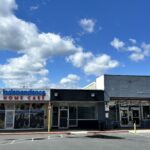
Around midday on Wednesday, Forster Street between N. 2nd and Front streets was mostly devoid of traffic.

Many U.S. cities hit their population peaks in the 1950s.

Harrisburg, for instance, tallied about 90,000 residents in the 1950 census, though the population is only about half that number today.

The decline, in part, was due to the federal government’s often-ruinous transportation policies. For more than a decade, highways ripped through urban centers, making cities increasingly undesirable places to live, while simultaneously feeding the growth and sprawl of the suburbs.

Harrisburg, the commonwealth and a regional planning body now have taken one small, yet very important, step to repair some of the damage wrought more than six decades ago.

Last week, the Harrisburg Area Transportation Study decided in favor of Harrisburg’s application to use federal transportation funds to narrow and improve a dangerous, ugly stretch of Forster Street between the Harvey Taylor Bridge and N. 2nd Street.

Kudos to all involved for this wise decision.

A rendering of the planned improvements to Forster Street.

In Harrisburg, Forster Street is a poster child for reckless, shortsighted transportation planning. The mid-1950s road widening—combined with similarly unwise changes to N. 2nd and Front streets that turned those local roads into highways—tore lower Harrisburg to shreds, sealing the fate of a city already suffering from post-war industrial decline.

Today, Forster Street is a ridiculous eight lanes wide, nine in some places, from the bridge almost to N. 7th Street.

Over the years, I’ve heard many city officials and local business people ponder how to “fix” Forster so that it ceases to divide the heart of Harrisburg. Suggestions have ranged from building a pedestrian bridge over the road to burying it in a tunnel.

These aren’t bad ideas, but let’s face it, they’re never going to happen, given their complexity and expense. The easiest and most elegant solution has always been narrowing the road by eliminating two lanes and adding pedestrian-friendly features like improved crossings, medians and bump-outs.

That’s now what’s basically ahead for Forster from the bridge to N. 2nd, with work slated for next year. That stretch then will be much better integrated into its urban environment. Harrisburg will never get its little local road back, but there will be a far better balance between cars and pedestrians, between the needs of commuters and residents.

The best news may be that we now seem to have a solution for Forster Street, with the city and PennDOT finally on the same page, at least for this project. A narrower, more city-friendly street will facilitate the flow of people between Midtown and downtown, benefitting residents and businesses in both neighborhoods, while improving road safety and the quality of life here.

So, one long block of Forster Street will be fixed—five more to go . . .

Lawrance Binda is co-publisher and editor-in-chief of TheBurg.

Support quality community journalism. Join Friends of TheBurg today!

Continue Reading

October Editor’s Note

Our current era of news is unique in so many ways.

Unfortunately, much of this uniqueness is pretty awful—plunging revenues, threadbare newsrooms, failing newspapers.

Among all the bad news, I would cite one silver lining. More and more, newspapers see each other as allies, not enemies.

This is a new development indeed.

Fans of classic cinema know that the “newspaper war” was long a standard Hollywood plot device. If “Citizen Kane” were made today, the main character would be an unprincipled social media magnate, not an unprincipled newspaper magnate.

Newspapers no longer can afford the luxury of cutthroat competition. So, they often freely share copy, even resources. Over the past year, I’ve had several meetings with my fellow PA publishers to share ideas and support each other.

What’s the takeaway for our readers? I would say that it’s twofold.

First, you should expect less news overlap. At TheBurg, we’ve always tried to pick our spots, since our reporting staff is so small. So, we shy away from breaking news, including crime news, that we know others will cover. Instead, we devote our limited resources to under-covered community stories or try to find unique angles to more popular subjects.

Secondly, readers should be proactive, conscientious news consumers. My best advice is to go old school and bookmark TheBurg, PennLive, WITF, the PA Capital-Star, Spotlight PA and other trustworthy news outfits—and check back with us several times a day. We all have different focuses and abilities, but, together, offer a steady output of quality local and state news.

In addition, if you have the ability, please support our important work by subscribing to PennLive, becoming a Friend of TheBurg and donating to the news nonprofits.

It’s a different era of news out there. No one can do it all anymore. But, together, we just might make it through the newspaper crisis, through the pandemic and through the distortions, rumors and calculated outrage of social media.

Lawrance Binda
Co-Publisher/Editor-in-Chief

Support quality local journalism. Join Friends of TheBurg today!

Continue Reading

Where’s Waldo’s?: Gettysburg artist community flourishes, underground

Artist at work at Waldo’s & Company.

Chris Lauer decided to walk across the country.

The Minnesota native set off with not much more than a backpack and camping gear, bound for Philadelphia. But about 1,000 miles down the road, his four-month journey hit a snag on Route 30, in south-central Pennsylvania.

“I fell in love with Gettysburg and stayed,” Lauer said.

That was 12 years ago. He’d studied studio arts for several years, but hadn’t completed his degree. He made friends in nearly every town he’d walked through, and Gettysburg was no exception. But something about Gettysburg also inspired his creativity, so he found an apartment and studio space in an old warehouse. Years ago, a man named Waldo Pepper ran an auto-detailing business there, so the vintage sign still read, “Waldo’s.”

Lauer started rolling up the massive, paint-chipped garage door. An Adirondack chair on the sidewalk held a sign reading, “open studio.” And before long, people started venturing inside. He found his tribe—or they found him.

“We started dreaming about an arts organization that could support an artist community,” Lauer said. “And, out of those conversations, people came together to start creating and building.”

First, they built a stage and starting hosting concerts that attracted up to 100 people.

“We realized we had tapped into something Gettysburg had been waiting for,” said Lauer.

Then codes enforcement officers shut them down.

But “Waldo’s and Company” had gained enough momentum to propel the young organization to its next and current location—about a block away on Lincoln Square in the heart of Gettysburg, intersected by the very Route 30 that brought Lauer to town in the first place.

Driving Force

When you enter 17 Lincoln Sq., you’ll see Gettysburg Baking Co. to your left and the gift shop, Lark, to your right. So, where’s Waldo’s? Look for the descending staircase inside Lark—or seek out their back alley entrance.

“The atmosphere, that we’re in a basement and underground, adds to the idea of an artsy gallery space and trade-shop,” said Becca Muller, Waldo’s director of operations.

The first order of business for visitors and regulars alike is a stop at the coffee bar. In addition to coffee—roasted by Lauer—house-made kombucha, chai and sodas are on the menu.

“Lots of us are artists, which means lots of us were also baristas at some time,” Lauer said.

But there are no prices.

“We encourage people to make a donation instead… and the coffee bar is our primary source of funding,” Lauer said.

The nonprofit Waldo’s is also funded by external donations, grants, events, artist studio rentals and trade-shop memberships, which includes access to screen printing and block printing equipment, a ceramics studio and a darkroom.

In the gathering space, across cups of coffee, board games and books, conversation and community flourish. The “substance-free” policy provides a safe space for area teens and college students, but Waldo’s attracts an eclectic mix of ages, artists and creatives.

Muller, who grew up in Gettysburg, is a floral artist in addition to her role on Waldo’s 10-member board. She served as a teaching assistant while earning her biochemistry degree from Harrisburg University. The organizational skills she learned as a TA serve her well at Waldo’s—especially during the COVID-19 shutdown.

“At a time when nothing seemed stable or real, you could count on our Zoom sessions and trade-shop tutorials,” Muller said.

During the current “green phase,” Waldo’s is open to 20 people at a time, and a virtual Black Lives Matter gallery is being curated on their Instagram account.

Young Artists

Cameron Powell of Gettysburg was going through a “transitional period” about five years ago.

“I was graduating from high school, aging out of Boy Scouts, and I had no set direction,” he said. “It felt like a free-fall of confusion and poor decisions, until I met the Waldo’s crew.”

But how many 22-year-olds can claim friendships with such a diverse group of people?

“I found myself in the presence of actresses, potters, professors, foreign affairs workers and talented artists—all types of people,” Powell said.

It was especially rewarding for Lauer to see Powell plug into the community.

“I essentially got to watch him become an artist,” Lauer said. “He picked up screen printing, and he’s grown so much that he now teaches people and even had his own gallery show here.”

Powell, who earned a degree at HACC-Gettysburg, now works at a Hanover bookshop.

“They love his work ethic, which I give Waldo’s some credit for helping him develop,” said Dan Powell, Cameron’s father. “Waldo’s has been a significant and positive influence on him—as a person and as an artist. They’re a great asset to our community.”

Muller believes that Cameron Powell’s metamorphosis is representative of Waldo’s up-and-coming artistic talent.

“We have found a niche of local kids who never knew they could be artists,” Muller said.

Daniel Filler is also one of those kids—he describes himself as a “fairly regular patron” during his late high school and college years. And he fondly recalls his standard custom soda order—orange cherry cinnamon with whipped cream—and the community.

“They are the most accepting people I know—Chris Lauer in particular,” Filler said. “It’s disarming to see a dude in clear frame glasses, Carhartt overalls and a rattail haircut hunched over a letterpress when you walk in. But that’s who he is, and he will talk to you no matter who you are.”

Filler, a recent college grad, just launched his career as a software engineer in Utah.

“Ultimately, there’s nowhere like it that I’ve been and especially not in the area,” said Filler. “Waldo’s is like a coffee shop merged with your best friend’s basement, whose parents are art teachers.”

Waldo’s & Company is located at 17 Lincoln Sq., Gettysburg. For more information, visit waldosandco.com.

Support quality local journalism. Join Friends of TheBurg today!


Continue Reading

On the Side of the Angels: Braver Angels flies into the political divide to bridge polarization

Karen Cotter and Karen Ward

Nov. 4, the day after the presidential election, could be the most divisive day in modern U.S. history.

That’s according to a nonprofit organization called “Braver Angels.” But they’re flying in the face of adversity.

“Immediately after the election of 2016, 17% of Americans surveyed by Reuters said they’d severed relationships with family during the election,” said Linda Beck of Harrisburg, the first Dauphin County member trained as a Braver Angels moderator. “It’s along those lines, because we’re so polarized, that we tend to see things as black and white, and are very quick to end relationships over politics. So, there’s an assumption that things could be as bad or worse after this election.”

Beck became a member shortly after delivering a TED Talk on the importance of fact-checking amid our social media-driven world. She was looking for resources to help her combat declining civility in everyday conversation, both online and in-person.

“It’s not Democrats that are the problem, and it’s not Republicans that are the problem,” Beck said. “It’s polarization that’s the problem. We are now more politically divided than before the Civil War, according to Pew Research.”

Speaking of the Civil War, the organization reached back to 1861, to the words of Abraham Lincoln, to find the right words and name to capture their intent. Lincoln, facing the daunting task of healing the country following the secession of seven states from the Union to the Confederacy, delivered his first inaugural address by imploring Americans “not to be enemies,” and appealing to the “better angels of our nature.”

Braver Angels was founded shortly after the 2016 election with the mission of uniting red and blue Americans to depolarize them. The organization defines polarization as the “gap between ideological viewpoints,” as well as the “increasingly negative emotions and attitudes toward those in the other political party.”

But political labels are neutralized by referring to members in terms of colors—red and blue.

“I believe that was an attempt to get away from liberal and conservative labels which tend to have emotional reactions or baggage,” Beck said. “It’s a step away from that—part of the depolarization effort is to help people get away from seeing people through labels. Because no matter which side you’re on, you likely have more in common than you think.”

Beck and all Braver Angels in leadership positions are volunteers.

“It’s a big labor of love,” said Beck, an adjunct professor of business communications at HACC.

She recently helped create the Braver Angels ambassador toolkit for members’ nationwide use.

Spring and summer workshops were planned as a way to bring reds and blues together. Beck was set to host Dauphin County’s first one in March, when the pandemic forced cancellations. Events have shifted to online platforms nationwide and statewide.

And right here in Pennsylvania, there’s an unlikely set of state coordinators leading the state’s 650 Braver Angels.

The Karens

Karen Cotter of Bloomsburg is Braver Angels’ state coordinator for the eastern section of the state. With a background in dispute resolution and social work, she wanted to help mend her community’s contentiousness.

So she wrote a letter to the editor, published by the local newspaper.

“I asked if anyone in the area was interested in getting together to talk about the political divide,” Cotter said.

A handful of people responded and showed up. One of them was Karen Ward, also of Bloomsburg. Cotter identifies as “blue,” while Ward is “red.”

“But we’re both dedicated to the mission of Braver Angels, and we’ve become friends in the process,” Cotter said.

Ward is now Braver Angels’ state coordinator for the western portion of the state. So, two women, both named Karen, both from Bloomsburg, one red and one blue, serve as state coordinators for Braver Angels.

The similarities don’t end there. They both have the same middle name (Jean), both of their husbands are named John, and they both have October birthdays (almost exactly 10 years apart).

Despite having opposite political views, their friendship serves as a model for Braver Angels’ programs, including “Depolarizing Within” workshops.

“The workshop teaches you to work on yourself, first,” Cotter said. “And when you relate to political others, the workshop teaches you how to focus on genuine listening—skills that set the tone for conversation and listening, being able to paraphrase and acknowledge what others said,” Cotter said.

“With Malice Toward None,” borrowing a line from Lincoln’s second inaugural address in 1865, is a new initiative, born out of the COVID-19 landscape. Its online materials are designed to serve as templates for civic organizations, churches and other groups to guide online or in-person meetings and build community.

“I know how difficult it is to be involved in anything when you have a full-time job, but the one thing I’d tell somebody is, for $12 a year, you get access to all the information on the website—our workshops, the training available online—it would help in the political climate that we’re in right now,” Ward said.

Ward, a retired Philadelphia-area police officer, said her first “Red/Blue Workshop” in October 2018 was eye-opening.

“The alliance that came from people who participated—they could see there were people willing to listen and able to understand the other side,” Ward said. “They were hugging before they left.”

Cotter and Ward have discussed issues including race, policing, LGBTQ+ rights and guns.

“Being able to pick each other’s brain and trying to understand, without the yelling part,” is how Ward describes their conversations.

They both encourage Pennsylvanians to become Braver Angels.

“It’s important, as a battleground state, to have as many folks as possible involved,” said Cotter. “Sometimes, people are reticent to be involved in an organization that deals in conflict, but we think it’s important to build relationships because of the contentious nature of this year’s elections—and those kinds of bad feelings may continue long after the election.”

For more information, see braverangels.org. To contact Dauphin County Braver Angel Linda Beck, email her at [email protected].

Support quality local journalism. Join Friends of TheBurg today!

Continue Reading

A Song, a Dance, a Mask: This art season is like no other

Midtown Cinema

“You ask me what audiences can expect.”

Stuart Landon gives it his best shot. How about fun tales from awesome storytellers, delivered virtually, without a paywall, and in never-before-done formats?

“If we have to re-create something anyway, why don’t we re-create with our hearts?” said the producing artistic director of Open Stage.

In the arts world, fall usually means splashy launches of new seasons. Cooler weather brings the cultural comfort food of thought-provoking plays, glorious symphonies, pulse-quickening concerts and colorful artworks.

Oh, that. The fall season is back, but pandemic-style.

Safe and Safer

While devising a safe return to live theater, Gamut’s Artistic Director Clark Nicholson found himself researching hydroxyl generators.

“So we’re getting a hydroxyl generator that cleans the air,” he said.

“We got a grant for it!” enthused the budget-minded Executive Director Melissa Nicholson.

“You have to sort through what’s quackery and what’s real,” added Clark. “When I first heard about it, I thought, ‘Yeah, right.’ But it really is viricidal.”

To boldly go to live performances, Gamut adopted a litany of safety protocols. Actors quarantine in cohorts. Patrons agree to follow the rules, including wearing masks, before they can even buy tickets. Actors are safely distanced from patrons, no longer delivering lines from the aisles.

“We’re just looking forward to getting back in front of people,” Clark said.

No matter their exposure to live patrons, organizations are taking precautions. HSO made sure to count Maestro Stuart Malina in the 25-person limit recommended for many gatherings. Susquehanna Art Museum visitors are encouraged to use one restroom, which is cleaned between visits whenever possible.

Midtown Cinema’s small-group showings are scheduled in staggered starts, to prevent groups from mingling. Midtown Cinema and Open Stage, both managed by Landon, invested in “crazy cleaning stuff,” he said.

 Building a Season

COVID-19 has disrupted the seasonal rhythm of the arts.

“The rules have changed, so it’s not just rinse and repeat,” said HSO Executive Director Matthew Herren. “Everything is new. We’re working overtime to make everything work. The staff has been terrific.”

Open Stage has “doubled down” on technology to present its virtual season on its own YouTube Channel, said Landon. A new chat moderator keeps conversation going in social media.

The Susquehanna Art Museum moved its planned Modernism exhibit from summer to fall, while adapting as works became available or unavailable.

“Not much is committed as far as traveling exhibits out there in the world,” said Executive Director Alice Anne Schwab. “The best we can do is plan what we can and do it as well as we can.”

Even while the Art Association opens its doors, it continues to rearrange its yearly calendar. The Vision Gala—the former Bal Masque—was postponed, re-postponed and finally scheduled for March as the 2021 (Corrected) Vision Gala. The hosts of all five 2020 summer soirees agreed to postpone until 2021.

Supporters remain onboard because “they love the Art Association offerings and know that what we provide is essential to their physical and mental well-being,” said Executive Director Carrie Wissler-Thomas. “You can’t survive in a normal world without art, and in an abnormal world like we have now, the art is absolutely vital. You need to find some joy and beauty in your life.”

 New Ways

HSO’s “A Conversation with the Maestro” on YouTube. Gamut’s TMI Improv on Zoom. HU Presents seeking out new venues. A specially designed virtual art session for high school students at SAM.

New approaches are popping up, and artists finally have time to pursue what Herren calls these “backburner ideas.”

“We’ve said we should do more social media, or more online content, and now we’re all doing it, because we have to,” he said. “I think it’ll pay off. It can only help grow the audience, because a lot of it is free.”

Open Stage took the free idea to the limit, making access to its streamed performances “pay what you will”—even if you pay nothing.

“We felt it was important for us to take this moment to assess our industry and to make sure that it’s as inclusive and equitable as it could possibly be, even if we are in ‘survival mode,’” said Landon. “Ultimately, our central product, our core competency, is taking a big leap of faith, but I just know that our community will support us and will join in on the fun.”

Of course, arts groups, like all other organizations and businesses, need money to survive.

Many organizations have received federal, state and local grants and loans. Emergency appeals have been fruitful. Patrons are holding on to their pre-March ticket purchases, patiently waiting for the lights to come back up.

“We’ve been around for 90 years,” said Herren. “We wouldn’t be if it wasn’t for the generosity of this community. We didn’t invent COVID. The arts didn’t invent COVID. They want to come with us and see us come out the other end.”

Melissa Nicholson’s voice rises to a question mark when she says, “Right now, we’re good.” Then she adds, “But this could be a long time, and that’s one of the reasons we wanted to explore trying live shows.”

Frank Schofield, Harrisburg University’s director of music and media services, has been asked to refund only about five tickets purchased for postponed shows.

“The resilience of the live entertainment ticket holder in central PA is pretty amazing,” he said. “This tells me that people are understanding. They’re patient. They realize that their investment will bear fruit.”

As for next summer, watch for a “very full and active” concert season, Schofield says.

After all, artists gotta art.

“When this is all over and all the actors can come back, you’re going to see an explosion of creativity,” said Clark Nicholson. “They’re like horses in the starting gate, and they can’t get out. There are performers who are ready to do anything and everything for you. There’s gonna be a boom when it’s all done.”

Show Goes On

With a pastiche of video, streaming and—yes—live performances, here’s a peek at the 2020-21 season for several arts organizations (subject to change, of course).

  • Gamut Theatre Group. Live theater returns, under strict safety and sanitation protocols. Three short productions through November include a night of Chekhov comedies, Edward Albee’s searing “The Zoo Story,” and a modern twist on “Little Red Riding Hood.” Seating is limited, distanced, and grouped in no more than threes. Tickets, offered at budget-friendly levels, must be purchased in advance.
  • Open Stage. Nine original productions are live-streamed through June 2021, based on such public-domain works as Mary Shelley’s “Frankenstein” and Agatha Christie’s “Poirot Returns!” Open Stage’s five full-time staffers do all the acting, employing centuries’ worth of theatrical devices, from puppetry to green screen. Tickets are free or donation, while monthly “Inner Circle” donors get access to special features.
  • Harrisburg Symphony Orchestra. “A Season Like No Other” offers four digital concerts through December, recorded in new venues—the state-owned Forum building remains closed—by 24-person ensembles. Audience members will receive links to view each concert.
  • Art Association of Harrisburg. Patrons can visit the Front Street gallery for exhibits, including a Li Hidley exhibit and the annual fall member show. An invitational is scheduled for early December.
  • Susquehanna Art Museum. Open to the public since June, the Midtown museum’s new show, “The Modernists: Witnesses to the 20th Century,” includes a Marc Chagall loaned by a local collector.
  • Midtown Cinema. The renovated movie house reopens in October under a new business model. Single tickets are not for sale, but private parties of 10 or fewer can rent a theater and choose from a slate of nostalgic classics or seasonal films to view.
  • HU Presents. Live shows return in February with Black Pumas at XL Live. The Jason Isbell camp loved their December 2019 Harrisburg visit so much that they are returning to Riverfront Park on May 29. All shows canceled this year are being rescheduled.

Support quality local journalism. Join Friends of TheBurg today!


Continue Reading

Roll Call, Role Model: Tyrai Anderson sets his eyes on his next goal—becoming a Harrisburg police officer and inspiring city youth

Tyrai Anderson

Tyrai Anderson was always running.

As a high school student at Bishop McDevitt in Harrisburg, Anderson played football, basketball and track and field. In 2009, his track team won the school’s first championship for the sport. Also that year, the football team came out on top as the Mid Penn champions.

He went on to play football at Lock Haven University and was even an NFL prospect, he said.

Anderson started sports when he was young. His mom signed him up to help him stay out of trouble.

When he was 9 years old, a teacher caught him with a pocketknife he found on the ground. The school had just switched to a “zero tolerance” policy. He was in trouble.

“I’ve never been a trouble-maker; I’ve been a kid,” he said. “As a little kid, I had already been going through the juvenile system.”

Growing up in the city, Anderson remembers other encounters with the police.

“I would always resent experiences that I had—run-ins with the police,” he said. “I could’ve easily been someone that had a dislike for law enforcement.”

Back in his football days, Anderson faced his opponents head-on, clashing, tackling, outrunning. But with the police, it was different.

There was a clash, but he decided not to run.

“I always told myself—rather than run away from my fear, why don’t I do something about it?” he said.

Anderson is now enrolled in the Police Academy at HACC. His goal is to graduate and serve as an officer in Harrisburg’s Bureau of Police.

Unique Perspective

Anderson didn’t always see himself as a police officer, mainly because most officers he encountered didn’t look like him.

He wanted to be an athlete, and there were plenty of role models in that realm. One of his influencers was Chris “Handles” Franklin of the Harlem Globetrotters, who mentored him through basketball.

As Anderson grew older, he began to see people of color, like Harrisburg Commissioner Thomas Carter, in law enforcement positions.

He took a position with the Dauphin County sheriff’s office, and it was that job that led him to a career in law enforcement.

Later, he began working as a constable alongside his friend Hanif Johnson, now a magisterial district judge in Harrisburg.

“We both had a passion for sports, and we used that to get a college education,” Johnson said. “Watching him become a member of law enforcement has been very interesting.”

Now, Anderson is training part-time to become a police officer, while continuing to work as a constable.

In his class, he said, he is the only African American.

“I feel like we could have more,” he said. “But I don’t blame them.”

Anderson believes that he brings a perspective, unique from those of his classmates, to the academy, as a Black man from the inner city who has had negative experiences with the police.

“I always remind my classmates and try to be open with them about how I grew up,” he said. “I know what it’s like to sit in the back of a cop car.”

Anderson often goes to Harrisburg schools to talk with kids. He gets their attention with some basketball tricks and then tells them about his story.

He wants to be a role model for kids who are growing up just like he did. To Anderson, representation matters.

“Once I started to see people that look like me in these positions, it made me want to do it,” he said. “I want these kids to know there is someone out there who cares about them.”

Anderson still spends a lot of time out on the field. He is often playing flag football with kids or volunteering with the Holy Name Jets or the Central Penn Crusaders youth football teams. Sometimes, he and Johnson coach together.

“If you made it out of a hard situation and bettered yourself, you should share that blueprint,” Johnson said.

All Love

Tyrai Anderson is always running.

He gets up each morning at 4:45 a.m. to work out at the gym. Then he goes to get his kids ready for school. At 8 a.m., he goes to work as a constable and, afterwards, studies at the police academy until 10 p.m.

But he’s used to hard work.

“I’ve always had to climb up in order to get things,” he said.

Even though Anderson understands the risk that comes with being a police officer, it’s not putting on the uniform that scares him—it’s taking it off.

“I don’t get to wear this uniform all day,” he said, recalling the times he felt profiled or criminalized. “I should be able to look the way I look and talk the way I talk and still be a professional.”

Anderson hopes that becoming an officer will inspire other Black police recruits.

“In order to get young African American males, we have to decorate our police force,” he said. “I wish there was a more diverse police force.”

Anderson is especially passionate about serving his hometown, Harrisburg. He said he wants to follow in the footsteps of one of his heroes—Commissioner Carter.

“The city of Harrisburg is something special to me,” he said. “I don’t want to go anywhere other than the city of Harrisburg.”

Anderson learned a lot during his days as an athlete: hard work, stamina, determination. There’s a lot he can take from the field into being in law enforcement. But the clashing of teams, the polarization—that’s what he wants to avoid.

He remembers what it felt like to be that 9-year-old caught with a knife he had picked up off the ground. He knows the feeling of riding in the cop car.

As a member of law enforcement, Anderson plans to operate on the basis of love, respect and the understanding he has from being on the other side of the law.

“I could literally take someone to jail, and it’ll be all love at the end of the day,” he said.

Support quality local journalism. Join Friends of TheBurg today!


Continue Reading

Welcome Home: A new director steps up at the Brethren Housing Association

Kait Gillis-Hanna

After parking on the 200-block of Hummel Street in Allison Hill, I scanned the buildings for the number 219 or a sign that would let me know which door to knock on.

I was looking for the Brethren Housing Association (BHA), an organization I knew housed mothers and children in need, but I had yet to see their work up close.

Already uncertain, I saw “BHA” written on many of the block’s buildings, leaving me even more confused as to where I was supposed to meet the new executive director. Finally, I saw the word “Office,” and met Kait Gillis-Hanna inside.

She led me into the organization’s humble space, otherwise known as the basement of the First Church of the Brethren. After she stopped to check in on a mother and baby in the lobby, we headed to her dimly lit office.

“I like to be here to make sure the moms are OK,” Gillis-Hanna said. “I make sure someone is always here.”

It was just her fourth month on the job when we talked, but the way she spoke confidently about BHA made it sound like she had been there for years.

“I wanted to make a more direct impact on the community,” she said. “I’ve jumped in with both feet into the neighborhood, and I’ve been welcomed wholeheartedly.”

Gillis-Hanna has held jobs in New York, Philadelphia and locally in human services and communications, focusing on community engagement and improvement. Over time, she realized how foundational housing is to human needs.

Fortunately, putting roofs over people’s heads is what the Brethren Housing Association specializes in. Hence all the buildings marked “BHA.”

The organization provides temporary housing for single mothers and their children. The women attend life skills classes, receiving guidance on things like finances, job searching, cooking and home maintenance. BHA assists them in finding stable housing when they are ready to graduate the program.

“BHA is so unique,” Gillis-Hanna said. “We are really at the forefront of the way nonprofits are starting to go.”

Caring in COVID

I had first met Gillis-Hanna at a press conference about a “Community Classrooms” project launched by Rep. Patty Kim (D-Dauphin). After the Harrisburg School District announced classes would start virtually for the 2020-21 school year, Kim presented an option for concerned working parents.

Gillis-Hanna turned to me, saying how concerned she was for the mothers and children at BHA.

When the COVID-19 pandemic hit, all of the 18 women in BHA’s program lost their jobs. The organization supported them financially, but it caused them to fall behind in the program.

As the state reopened, they were able to resume work. They then faced the challenge of what to do about their young children, who would need to attend school online. Childcare options were scarce.

“I know how stressful the pandemic was for me, and I got to keep my job and childcare and everything,” said Jessica Johnson Vinton, director of development at BHA.

Gillis-Hanna reached out to local organizations to try to come up with some solution. Pulling resources together as a community was important to her. Eventually, she found programs that could help.

Employment and childcare were some of the biggest issues for BHA during the height of the pandemic—things Gillis-Hanna had to take on immediately upon starting her job.

“Kait came in the middle of a global pandemic and hit the ground running,” Johnson Vinton said. “She is doing a great job. It really makes everyone on staff excited to work with her.”

Safe Haven

In Gillis-Hanna’s office, a framed picture of a little boy and girl sits on a shelf. She told me that she and her husband had been fostering them for over a year.

They always knew they wanted to foster, and here they were with two kids they loved.

“Our children are actually from this area, so it resonates even more with me for why I wanted to work here,” Gillis-Hanna said.

Fostering her two children and watching family members struggle with substance abuse has taught her a lot over the years about how to care for people.

“If I was in this job 10 years ago, I may not have been able to approach it in the way that I have,” she said. “When you experience things personally, your perspective really does shift. That gives me the ability to interact with our moms on a different level.”

Central to BHA’s mission is building one-on-one relationships with participants in the program. Many of the women haven’t had loving relationships like this, Gillis-Hanna said.

“I get to know each of our moms; I get to love them and their babies,” she said. “That part is really special.”

While BHA is a relatively small organization, they’ve made a big impact. They’ve transformed a block into a community—a safe haven for women and children. When there are enough buildings labeled “BHA” to leave me confused, that must mean that they’re doing something right.

Gillis-Hanna believes the next step is partnering with local organizations to serve the community in Allison Hill even better. To her, communication is key.

“Somebody told me that BHA is Harrisburg’s best kept secret,” Gillis-Hanna said. “My vision is to make that statement never said again.”

Brethren Housing Association is located at 219 Hummel St., Harrisburg. For more information, visit www.bha-pa.org.  

Support quality local journalism. Join Friends of TheBurg today!


Continue Reading

Brave New World: What does live theater in a pandemic look like? Gamut reopens, with answers and restrictions in place

Jeff Luttermoser and David Ramón Zayas. Photo by Phillip Mann and Jerry Stevens II

Gamut Theatre made the decision to shut its doors on March 12, as the words “COVID,” “social distancing,” and “pandemic” were just entering the American lexicon.

Exactly six months later, on Sept. 12, Gamut reopened to the public with two comedic one-acts by Anton Chekhov, billed under the title, “Love Hurts!” and featuring the resident Core Company. With this move, Gamut Theatre ventured onto virgin soil: What does live theater look like during a pandemic?

The answer lies in the extensive health and safety protocols that have been formulated and put in place by the company, under the leadership of founders Melissa and Clark Nicholson. Working with the PA Department of Health, the U.S. Centers for Disease Control and the World Health Organization, Gamut Theatre is determined to keep its artists and patrons safe.

Masks are required at all times for all patrons.

“If you have a condition which prevents you from wearing a mask, do not purchase a ticket, as you will be asked to leave,” states Gamut’s website. “This applies to patrons of all ages, including children.”

There will be new, different movement patterns through the theater in order to minimize, if not eradicate, opportunities for traffic jams. While theaters located in “green” counties are permitted to operate at 50% capacity, Gamut has made a decision to operate at 25% capacity, which means that each performance will only have 51 available tickets. Patrons may sit singly, in pairs, or in groups of three—max. If a particular group consists of more than three people, it will be required to separate into groups of no more than three. Visit Gamut’s website for all its health and safety protocols.

The Gamut staff and guest artists recognize just how lucky they are. The size of its downtown Harrisburg theater allows for a responsible reopening, as well as responsible rehearsing. While many artists would love to dive back into the process of producing a show, the Nicholsons had to sit down and suss out how to keep those artists safe. Temperature checks, assigned rehearsal spaces, assigned restrooms and social distancing between the acting cohort and the production staff during rehearsals have all become the new normal.

As mentioned above, the first fall production, “Love Hurts!” was cast with Gamut’s resident Core Company. For their follow-up production, Edward Albee’s “The Zoo Story,” Clark Nicholson worked with another cohort of actors who live together, former Core Company members Jeffrey Luttermoser and David Ramón Zayas.

In a time of rampant disconnect, isolation and uncertainty, Albee’s play examines what kind of effect these circumstances can have on the human condition and to what lengths a person will go to make a genuine connection. The results are startling, but I won’t spoil the play for you. It’s a searing character study that should be seen in person.

“The Zoo Story” is not new territory to Zayas or Luttermoser. A 2004 production of the play marked the beginning of their relationship (the pair married in 2015). Both actors were keen to revisit the show in their adopted hometown of Harrisburg, at the theater they call home. Noting that many of their fellow theater artists are chomping at the bit to get back to work, they feel honored to be a part of bringing live theater back to the area.

Clark Nicholson also has a history with this play, having played one of the two roles, and observes that directing a play like this one, with minimal technical requirements and a two-person cast, allows him a rare opportunity to watch, question and discuss artistic choices made by the actors. So often, he is corralled into choreographing all movements on the stage, making sure sightlines and configurations work for the story they are telling, as well as for their audiences. This time around, instead of having to focus on “you cross here,” he can ask his actors, “Why did you make that choice?”

The act of rehearsing a play with other people in the room scratches a specific itch not only for Zayas, Luttermoser and Nicholson, but also for the production stage manager, Karen Ruch, who seized on this opportunity to work on a show. Ruch was a logical fit for this position, being a member of the Zayas-Luttermoser “pod,” or “bubble,” if you prefer. Having first-hand experience of working in a Ruch-managed show, I can attest that “The Zoo Story” is in exceptionally capable hands.

Attending live theater is a unique type of media consumption. Movies and television, while valuable, simply do not compare. In a performance space, there is a very real exchange of energy between actors and audience. Watching actors tell a story that forces an audience member to question and/or examine their own viewpoints can be a powerful experience. When those actors are only several feet away, close enough to see the tears in their eyes, the sweat on their brow, or to hear the tremor in their voice, that experience verges on earthshaking.

“The Zoo Story” runs from Oct. 9 to 25 at Gamut Theatre, 15 N. 4th St., Harrisburg. Performances are Fridays and Saturdays at 7:30 p.m. and Sundays at 2:30 p.m. Peggy’s Pub opens 45 minutes before show time in Gamut Theatre’s Capital BlueCross Lobby. Patrons have the option to pre-order their drink before show time by emailing [email protected].

Recognizing that the pandemic has affected people in different ways financially, Gamut allows patrons to “Pick Your Own Price.” Choose a ticket price that is most comfortable for your budget: $30 (suggested) or discounted levels of $20 or $10 each. Seating is available in singles, doubles or triples. All tickets must be reserved in advance. No tickets will be sold at the door.

Support quality local journalism. Join Friends of TheBurg today!


Continue Reading

Screams & Hygiene: Fall attractions, with a twist, during pandemic times

Costumes from Field of Screams. Images courtesy of Field of Screams.

You hear your name whispered in your ear. You turn—but nobody’s there.

“The biggest scare that people get is hearing their own name said back to them, or a gentle touch on the cheek,” says Johlene “Spooky” Riley, owner of Gettysburg Ghost Tours. “Even a seasoned ghost hunter can be taken aback by something like that.”

In a year of real-life frights, central Pennsylvanians are ready to pile it on this fall with ghostly scares. Or they’re shedding their fears amid the serenity of cornstalks and vineyards on a brisk autumn day.

It’s time for one last, COVID-safe excursion before the cold weather chases us back indoors for the scariest encounter of all—possibly more months of quarantine.

 Opening Safely

The art of securing a destination involves much more than facemasks and social distancing. Places throughout the region have gone out of their way to remain safe and welcoming, according to Visit Hershey & Harrisburg President and CEO Mary Smith.

“They’ve adjusted floorplans,” she said. “They’ve changed their schedules. They’ve built new seating areas. They reimagined how they use the space that they have.”

Typical COVID-era travelers trust that their destination’s protocols are adequate, Smith added. It’s other visitors they worry about. So, if you’re not confident in your fellow patrons at crowded events, the VHH Adventure Trail presents hiking, biking, kayaking and family fun within a short drive of home.

A bit farther down the road, Riley’s Gettysburg Ghost Tours offers a range of experiences. There are family-friendly walks entirely outdoors and on easy terrain, “an inexpensive way to enjoy the outdoors with your family,” said Riley.

If you dare to venture indoors, the Museum of Haunted Objects in a historic Civil War-era building presents everything from creepy dolls to haunted mirrors. And there are indoor ghost hunts—family-friendly or more extreme—at Civil War landmarks.

People want to be scared until they actually get scared, said Riley. Still, no ghost hunt can equal the frights of pandemic 2020.

“I don’t think any entity on earth or beyond can compare with what’s been going on,” she said. “It’s been a big challenge, but just like everyone, we’re trying to make the best of it and trying to keep everybody safe. We appreciate people being patient with us while we try to navigate the unknown ourselves.”

Point the car toward Mountville, in Lancaster County, and Field of Screams presents gore galore. Owners reviewed guidelines and regulations “up and down and all over” before deciding that the venerable Halloween attraction could go on, said co-owner Jim Schopf. Fans “really are yearning for a fall experience and to have a somewhat normal time, just letting their guard down and having fun.”

Safety restrictions mean reduced capacity, and tickets must be purchased online and in advance. All Field of Screams actors are trained—at “Scare School”—in COVID protocols. Face coverings are worn underneath makeup, or they slipped easily into costume designs—surgical masks in “Frightmare Asylum,” gas masks in “Nocturnal Wasteland.”

“We got a little creative with the coverings,” Schopf said.

Veteran patrons would rather cancel Christmas and birthdays than Field of Screams, and people are ready to scream out the frustrations of a tense year, Schopf said. He used to describe the attraction as a safe scare, where no one gets hurt or injured. Now, safe means protected through protocols, distancing and sanitizing stations.

“It takes on a whole new meaning this year,” he said.

 Bottom’s Up

Fall. Beer.

“It’s hard to think about fall and not think about beer trails or breweries,” said VHH’s Smith. “Fall and beer, for some reason, go hand in hand.”

Which makes the new VHH Beer Barons Brew Trail a natural fit. Using a mobile app, beer tourists can explore more than 20 local breweries that are open for business and offering events such as live music or special releases.

And because Gettysburg Ghost Tours is next door to the Tattered Flag Taproom, there just have to be Craft Beer and Spirit Tours, Friday and Saturday nights—and those “spirits” can be the ghostly kind or the mixed-drink kind.

Hop over to the Brewery at Hershey and Vineyard at Hershey, and daytrippers can get in the seasonal mood with the Oktoberfest Flash Gourd’n Pumpkin Ale, or the nice dry Firefly red wine. While wine and beer are still on the menu, the events that have drawn visitors for days that linger into nights have been scaled back but reimagined.

Under strict safety protocols, offerings include free music on weekends. Unleash your creative side with a craft class. At October’s end, dress up the schnauzer for the doggy Halloween party. Purchase food from a food truck parked on site, and under pandemic rules, you can buy alcohol.

“We work with a lot of local food truck owners, and they have been hit hard,” said the Vineyard at Hershey Director of Operations Lynn Day. “A lot of those big festivals that typically happen during the summer season didn’t happen. So, they’re desperate to get out, as well.”

The Vineyard at Hershey’s commitment to fellow businesses extends to Small Business Sunday on Oct. 11, when local vendors set up stands and visitors can shop in the great outdoors.

“We want to help support these small businesses that have just been decimated by this pandemic,” said Day.

 Fresh Air

In autumn, nature takes center stage. Pumpkins. Hay rides. Corn mazes. Ziplines.

“We have a 600-foot zipline,” said Debbie Smith, co-owner with her husband, Chris Smith, of Fields of Adventure, in Aspers, Adams County. “That’s fun for those who don’t want to do a whole zipline trail but just want to try it.”

The region’s agritourism takes a deep dive into fall fun. Most are less than an hour’s drive from Harrisburg, scattered around Perry, Lancaster and Cumberland counties.

The 40-acre Fields of Adventure attractions include a corn maze for daytime or flashlight exploring. When you’re hungry, try a Fields of Adventure farm-raised farmburger, pulled pork sandwich, chicken wrap, or popcorn (yes, it grows on cobs). Little ones can ride horse swings. Teens love the human foosball court. Hay rides go into the pick-your-own pumpkin patch.

Of course, you can buy a pumpkin at the Fields of Adventure farm stand, along with its pasture-raised meats and poultry, but “it’s fun for the family to go out and walk through the patch and pick their pumpkins.”

“We’re a family farm,” Smith said. “We just want to share our space and have folks come out, especially this year. People just want a place that’s outside, in fresh air, but mostly just to spend time together.”

 A Few Tips

Daytrips are different in the pandemic age. Try these tips for a safe, obstacle-free experience:

  • Before getting in the car, even for outdoor events, check websites for safety and sanitation protocols, revised hours, group sizes and any restrictions.
  • Make reservations for ticketed events well in advance.
  • Try non-peak nights. Field of Screams sells out on Saturdays, but it’s just as spine-tingling on Thursdays, Fridays and Sundays.
  • Make a full day or weekend of the excursion by patronizing surrounding restaurants, hotels and B&Bs.
  • If you’re not ready for travel, consider nearby autumn offerings from the Pride of the Susquehanna, 3rd in the Burg or Hersheypark.
  • Support local destinations by buying gift cards. They fit nicely into holiday stockings.

Support quality local journalism. Join Friends of TheBurg today!

 

Continue Reading