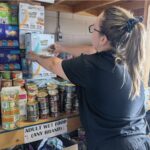
Tougher Times: COVID has been especially hard for those going through addiction recovery.

Addiction is like an abusive relationship. It thrives in isolation.

So, when COVID-19 hit, with the resulting lockdown and ensuing job loss, it was a perfect storm to upend those in recovery.

“Isolation is the biggest enemy to someone in recovery,” said Steve Barndt, executive director of Just for Today Recovery & Veteran Support Services (JFT), located in Lemoyne.

Rather than simply abstaining, recovery is an active approach of tackling the issues that caused the drug or alcohol use in the first place.

An integral part of that process is speaking with others who understand the struggle at Alcoholics Anonymous meetings, Narcotics Anonymous meetings, etc., or just hanging out with them. Faith organizations hold about 80 percent of the recovery meetings, and many continue to be closed.

“I go to the gym, work and meetings, and that was taken away,” said Meredith Thomas.

Single, Thomas spent most of her time alone during the shutdown.

“I didn’t feel in jeopardy of using, but I wasn’t OK,” she said.

Zoom meetings and telehealth became available, but online meetings are a tool, and, for many, not a replacement for in-person meetings.

“I connect one-on-one with people so much better than I connect with a large group,” said Thomas, sitting inside JFT’s cozy café, with a couple of guys chewing the fat in the background.

Side conversations and words offer encouragement after meetings and provide a necessary boost. Zoom doesn’t deliver that important social aspect.

“Fellowship is just as important, because you’re building new friendships, because you had to give your old ones up,” said Barndt.

In recovery himself, 18 years clean and a recovery specialist, Barndt understands the vital need for this social connection. When the shutdown happened he said, “We cannot close.”

Those at Gaudenzia, a Harrisburg-based treatment center, also recognized the danger.

“Stress, depression and anxiety are the three main triggers to relapsing or to start to use,” said Matt Null, Gaudenzia’s marketing manager.

Those triggers were in great supply, along with an abundance of isolation. The thought at Gaudenzia: “If we close, people die. Period,” said Null.


Place to Be

Barndt described people’s relief in knowing that JTF’s doors remained open to them.

Meredith Newman was one of those people. We talked in the meeting room in the basement of JFT, where she works in its clothing closet.

“I choose not to put in my mind what would have happened if it [JFT] wasn’t here,” she said. “It wouldn’t have been good.”

After the shutdown and losing her job, Newman came into the center, in tears, because she knew she was in danger of relapsing. She wasn’t alone. Many people came into JFT begging them not to close.

“You saw [relief] in the eyes of people, when they came in,” Barndt said. “[They said], ‘We have a place we can be.’”

Null pointed out that other things conspire against those in recovery, such as lack of accountability to family and friends, since people can’t visit, and it’s easy to say “I’m fine” on a text. Consequences of use such as eviction or job loss often lead people to treatment or away from relapse. But the moratorium on evictions and layoffs placed people in a position to use without those results.

Also, people had money, either from a stimulus check or unemployment, and drugs were readily available.

“Drug dealers don’t abide by COVID restrictions,” said Null.


Uphill Climb

These factors have led to a rise in drug overdoses. Numbers were rising to similar levels as the opioid epidemic in 2017, when 5,396 people died in Pennsylvania. The state last year had 3,954 overdose deaths as of this reporting. But, with a three- to six-month lag in registering deaths, those numbers could end up much higher.

Despite rising overdoses, Thomas said that the recovery community was divided about COVID and meeting in person. It placed people in a position of feeling like they were doing something wrong while reaching out for help, she said.

Some people even tried to get JFT shut down. Brandt said that he understood that COVID presents risks, but he felt that, for many, substance abuse posed a greater risk.

“We looked at it like, if you get COVID and you’re under 70, you have a 99% chance of surviving it,” he said. “You go out and shoot a bag of Fentanyl, you have a 99% chance of dying.”

COVID also created a perception that treatment wasn’t available or safe.

“But it is available, safe, and we care about you,” said Null.

At one point last year, Gaudenzia’s in-patient facility was at less than 60% capacity and, as of early January, was 70% full.

One bright spot is that COVID has bridged the east and west shore recovery community.

Barndt reported that people from Harrisburg have been attending the meetings, which wasn’t often the case before. People came out of treatment, with no place to go and ended up at JFT.

“It’s beautiful to see how far people have come,” said Newman.

Behind the numbers are people who are trying to survive this pandemic. But it threatens them beyond COVID-19. With added triggers and decreased resources, it makes the uphill climb of recovery seem like Everest with an unknown summit.

But organizations continue the work to help those struggling, blunting the seclusion and stress.

“No matter how vulnerable the world leaves you, you know you have a safe place to be,” Newman said.

For more information about Just for Today Recovery & Veteran Support Services, visit www.jft-rvss.org.

For more information about Gaudenzia, visit www.gaudenzia.org.

Find help for yourself or a loved one struggling with substance abuse at 833-976-(HELP).

Support quality local journalism. Become a Friend of TheBurg!

Continue Reading

Illness & Inspiration: COVID-19 has greatly impacted Harrisburg’s Black community, but some find hope amid the disease, the loss.

Kevin Dolphin and Lisa Burhannan

Kevin Dolphin once watched his friend, Lisa Burhannan, work her magic on a room of teenage girls.

Their nonprofit, Breaking the Chainz, teaches cognitive development in schools, but these particular girls were “having a bad day.” So Burhannan got them to draw how they were feeling.

“By the end of the day, you could see the light in their eyes,” said Dolphin. “They would always come to her for advice. They couldn’t wait for her to get there so they could ask her and talk to her about things. That is more priceless than anything.”

Burhannan is gone now. So is Gerald Welch, who never backed down if it meant keeping children from falling through the cracks.

COVID-19 has plowed through Black America, carving a gash in leadership structures and within families. In Harrisburg, those left behind are finding resiliency in the community and plumbing the legacies of lost loved ones for inspiration.


Dreams Released

The Rev. Dr. Brenda Alton no longer pastors her own church—she is system manager of spiritual care services at UPMC Pinnacle. But in the COVID year, she presided over more funerals than ever before.

Her job, though, still inspires hope. She gets to deliver “good news in bad times” to a community rediscovering its strengths.

“The pandemic has allowed the ‘neighbor’ to return to the ‘hood,’ so we have ‘neighborhood,’” said Alton, who lost dear friends to the pandemic while she and her family were “deathly sick” in March. “We have neighbors who check on each other. We have families that have restored a level of care. They pay more attention. There’s this heightened sense of protection for our elders and maybe even a return of respect for our seniors.”

Quarantines have not halted a renewed grassroots activism, Alton adds. Community leaders organized food distributions and holiday gifting for people suddenly facing the loss of livelihoods, businesses and retirement savings.

Black churches rarely trumpet their good deeds, so the role of the church in sustaining community has long been overlooked, said Ronald D. Holton, Sr., pastor of Lingo Memorial Church of God in Christ in Uptown Harrisburg. The pandemic has changed that. One young man Holton knows had frequently disparaged the church online but is now saying “Amen” to Holton’s virtual sermons.

“In difficult times, individuals turn to the church, and they begin to see the importance of the Black church in the Black community,” Holton said.

And, says Alton, old aspirations that had gone dormant in pre-COVID days are awakening as people collaborate to launch startups and patronize small businesses.

“All those dreams we’ve had locked up, it’s time to work on them and release them,” Alton said.

In the wake of COVID, the Black community is mobilizing on multiple fronts, addressing physical and mental health, economic upheaval and social justice, said Dolphin.

“Coming together has been one of our greatest strengths,” he said.


Essential

When you suddenly can’t smell Clorox, COVID-19 is calling.

Aaron Johnson blames his case on high-fives exchanged with fellow Steelers fans at a Dallas Cowboys’ home game. But the loss of taste and smell didn’t keep him from eating the Thanksgiving dishes that friends dropped off.

“What are we gonna do?” he said. “I’m still gonna eat. I know what it’s supposed to taste like.”

Kidding aside, Johnson’s wife also contracted COVID. So did his sister, who was hospitalized. He lost his stepbrother and several friends. One friend, a bus driver with underlying kidney disease, recovered, but only after being placed on a ventilator.

Through all of this, Johnson wonders—who’s watching out for sanitation workers? As director of Harrisburg’s Department of Public Works, he’s been juggling the schedules of the sick and quarantined. Contact tracing turns one possible case into four or five workers forced to isolate. Test results take days to come back, forcing people off work while they wait.

The people who pick up our trash, a largely Black and Brown workforce, should be classified as essential workers and given priority for vaccines, Johnson said.

“Public works and highway and sanitation, we’re emergency workers,” he said. “Ever since (the pandemic) broke out, sanitation is on the ground.”


A Void

Dolphin and Burhannan grew up together, the children of dysfunctional families from “the wrong side of the tracks,” in Dolphin’s words.

With her “giving and selfless heart,” Burhannan would reach out to help “anyone, anywhere,” especially after the death of her son. Locally, she led chapters of Mothers in Charge and Crime Survivors for Safety and Justice, ministered to hospital patients, and supervised a re-entry home for women. Her work took her nationwide.

“Those are a pair of shoes that no one in the city or wherever will be able to fill,” said Dolphin, the founder and president of Breaking the Chainz. “She definitely left something behind. There’s a void.”

Even from the ICU, Burhannan hosted Zoom meetings and helped family. She died from COVID-19 on June 11.

Harrisburg School Board Director Gerald Welch succumbed on April 15. For a man known for his brutal honesty, Welch was “a teddy bear,” says his wife, Donna. They met online. He proposed the first time they met in person. She said yes because “it just felt right.”

Moving to Harrisburg from New York after they married in 2008, Welch worked as a behavior specialist and drug and alcohol counselor. He also grew incensed about the school district’s dismal graduation rate. On his second run for school board, he won a seat, sharing a platform with a group that wanted to oust former Superintendent Sybil Knight-Burney.

When the pandemic arrived, he kept working, meeting patients one-on-one. Many joined a long line of mourners in a drive-by tribute on a cold, rainy day in late April. Welch’s ICU nurses displayed a banner saying that it was an honor to care for him. One woman he helped to sobriety made a sign—still in Donna’s yard—showing a black and a white hand coming together in unity.

“People would come and put balloons in my front yard, or candles,” said Donna.

In Gerald Welch’s memory, fellow school board Director Carrie Fowler founded Gerald’s Kids. The scholarship program focuses services on individual children transitioning from first to second grade—an often-overlooked time when children who are struggling to read or who lack adult attention risk lifetime consequences. The first child sponsored is the son of an imprisoned man who Gerald Welch had reached out to.

At Burhannan’s socially distanced service in Reservoir Park, Alton presided for her longtime friend. She reminded mourners to follow Burhannan’s example of a life transformed.

“Lisa gave it her all, 24/7,” Alton said. “There is a void, and I’m hoping that those who are still mourning will say, ‘She is still alive in my heart.’”

Tina Nixon has received “too many text messages and phone calls” informing her of deaths. An aunt died from COVID. So did a cousin.

“COVID has shined a spotlight on the health disparities on communities of color,” said the vice president, mission effectiveness, and chief diversity officer at UPMC Pinnacle. “We’ve been addressing it, but we can’t do it alone.”

UPMC Pinnacle is leveraging existing connections to share messages of staying safe against COVID and getting the vaccine, said Nixon.

The system’s Faith Community Health Connection, which includes many African-American churches, shares education on the impact of the virus. Hamilton Health Center, a UPMC Pinnacle partner, launched a free mobile testing center. UPMC Pinnacle also opened satellite testing sites and helped provide transportation there.

And the Healthy Harrisburg Initiative, planned in 2019 but launched virtually in 2020, targets the underlying conditions—specifically high blood pressure, chronic heart disease, and diabetes—that have intensified COVID’s deadliness in the Black community.

Gerald and Donna Welch

Live On

On Easter Sunday, Gerald Welch struggled to breath but kept procrastinating a trip to the hospital. He spent his time writing names on his “gazillion” beloved watches, instructing his wife to give them to the designees. She refused, insisting that he wasn’t going anywhere.

Since Gerald’s passing, Donna Welch has given watches to his sons and grandsons, but “there’s still a bunch left.” She is helping administer a church scholarship fund that he worked passionately for.

“I just remember him and how much he cared about people, especially children,” she said.

Aaron Johnson’s sister is slowly recovering. His Public Works Department is managing the impact on personnel, even as residential trash pickups rise with more people at home. He and his wife got through their illnesses with prayer and the help of help of family and friends.

“We couldn’t have done it without them,” he said. “For me, it’s sad because there’s a lot of friends and family that I lost.”

Dolphin won’t accept discouragement, especially when he recalls the tireless energy of Lisa Burhannan—the friend who rode with him to countless conferences nationwide.

“She’s always with me,” he said. “When I’m riding, she’s in the seat next to me. She was that spirit. As long as I’m alive, as long as Breaking the Chainz is around, she’ll definitely live on.”

For more information about UPMC Pinnacle’s Healthy Harrisburg Initiative, visit www.upmcpinnacle.com.

Support quality local journalism. Become a Friend of TheBurg!

Continue Reading

50 Ways to Bide Your Time: Still stuck at home? We have a little Harrisburg-themed distraction.

About once a year, I take a break from my usual conceit of trying to think great thoughts about our fair city and attempt to do something a little different.

So, one year, I tongue-in-cheeked it through a list of Harrisburg “gotta knows” for city newcomers and, another year, I set out to lure overwrought Washingtonians to our smaller capital city.

February seems as good a time as any to distract myself—and you—with more foolishness. So, I’ve compiled a list of 50 “very Harrisburg” items, events and nuggets. This list is designed with residents in mind, though anyone who’s spent time in the city should be able to answer a bunch. Please know that this isn’t a serious competition—it’s just some silly fun.

Award yourself two points for each one accomplished/answered then visit our Facebook page and tell us how you did.

If nothing else, this little exercise may allow you to chew up a few minutes as we all sit around and wait our turn at the vaccine.


The List (each item is worth 2 points)


Harrisburg & You

1)  You’re born and raised.
2)  You attended school here.
3)  You’ve taken a class at HACC (extra point for earning a degree).
4)  You’re a happy transplant.


Official HBG

5)  Identify the tropical storm that devastated Harrisburg in 1972.
6)  Name a Harrisburg mayor not Reed, Thompson or Papenfuse.
7)  Name more than one current member of City Council.
8)  Correctly name the entity that conducts city street sweeping.
9)  Name the entity that owns Harrisburg’s parking system.
10)  You own an artifact that once belonged to Steve Reed.


Down on the Corner

11)  You know how to properly pronounce “Muench” Street.
12)  You’ve almost been hit crossing Forster or State streets.
13)  You know the common name of the neighborhood that was destroyed to expand the Capitol complex (extra point for correctly naming the park that now dominates the area in back of the Capitol).
14)  You’ve never complained on social media about parking.
15)  You’ve been on a Harrisburg house tour (extra point for showing your house).
16)  You’ve heard shots fired (another point if you later realized it was duck hunters).
17)  What’s the nickname of the Walnut Street Bridge?


Chow Down

18)  You’ve eaten at all three: Mangia Qui, Suba and Rubicon.
19)  You’ve had pizza at Subway Café.
20)  You’ve patronized the taco truck at 15th and Market streets.
21)  You’ve brunched at Crawdaddy’s.
22)  You’ve held the door open at the Broad Street Market for a long, long line of strangers.
23)  You have memories of one of the following long-gone eateries: The Spot, Alsedek’s, Santanna’s or Harry’s Tavern.
24)  You can name one previous restaurant in the building that now houses Note Bistro & Winebar (extra point for naming a prior occupant of Ted’s; and yet another point for naming a prior occupant of Los Tres Cubanos).
25)  You dined in the street during 2020.


Parks & Rec

26)  You’ve picnicked in Reservoir Park (another 2 points for sledding in Reservoir Park).
27)  You’ve run an organized race along the Harrisburg riverfront.
28)  You’ve walked, run or biked the entire 3.1-mile loop in Wildwood Park.
29)  You’ve played Water Golf.
30)  You’ve biked the entire Capital Area Greenbelt (extra point if it was during the Tour de Belt; extra two points if you can identify the section of the Greenbelt that features the MLK Jr. Memorial).
31)  You’ve attended at least two summer festivals in Riverfront Park (extra point for naming two memorials or statues located in Riverfront Park; extra two points for naming the organization primarily responsible for the Peace Garden)


Harrisburg Critters

32)  You’ve waded through a cloud of mayflies (extra point if this happened at a Harrisburg Senators game).
33)  You’ve swallowed a gnat while running/biking on the river walk.
34)  You’ve had it already with all the spider webs!
35)  You’ve dodged geese in Riverfront Park or Italian Lake.
36)  You’ve dodged goose droppings in Riverfront Park or Italian Lake.
37)  You’ve had some type of mouse, groundhog or squirrel issue.
38)  You’ve posted on social media about a stray cat (extra 2 points for adopting the cat; another 2 points for visiting the Friends of Midtown Community Dog Park).
39)  You know about the Harrisburg beaver and its vital role in city history.


Hometown Tourist

40)  You’ve toured the state Capitol as an adult (add 2 more points for also visiting the State Museum as an adult).
41)  You’ve been inside the Harris Cameron Mansion (extra point for touring the Fort Hunter Mansion).
42)  You’ve attended at least two PA Farm Shows (extra point for going to “Food Court” day; another point for going in a snowstorm).
43)  You’ve explored Harrisburg Cemetery, for fun.
44)  You’ve attended a 3rd in the Burg event (extra point for hosting one).
45)  You have a favorite Harrisburg mural (extra point for naming the artist.)
46)  You’ve been on a pontoon boat on the Susquehanna.
47)  You’ve kayaked on the Susquehanna.
48)  You’ve sailed on the Pride of the Susquehanna.
49)  You have a regular spot where you pick up TheBurg magazine (extra point if you subscribe to TheBurg Daily and another point if you’ve listened to TheBurg Podcast; two extra points if your name has been in TheBurg).
50)  You heart Harrisburg.

Extra Credit: Award yourself two more big points if you’re a “Friend of TheBurg!”

How’d you do? We’ll link to this column on Facebook on the day the print issue drops (Jan. 29), so you can share your feedback with us. Sorry—there are no prizes, but I hope this column offered you a brief mental vacation. Now, where’s my vaccine already?


Your Score

Fewer than 20 points: What’s a Harrisburg?

20-30 points: You run the lights on Forster Street to vamoose.

30-40 points: You might show up—if the parking’s free.

40-50 points: Currently scrolling Trulia, hoping to find “deal.”

50-60 points: Asking around for “reliable” contractor.

60-70 points: You know where to get the best food at Kipona.

70-80 points: You eagerly anticipate each new issue of TheBurg.

80-90 points: You should have your own stand in the Broad Street Market.

90-100+ points: You’re John Harris.


Most responses are personal or subjective, but some items have actual answers. These include:

  • 5: Agnes
  • 6: There are too many to name here, but, believe it or not, there’s an informative Wikipedia page that lists all of Harrisburg’s mayors since the city incorporated—check it out.
  • 8: Capital Region Water
  • 9: The city technically owns the system but leases it.
  • 11: “Min-ick” Street
  • 13: Old 8th Ward and, for extra point, Soldier’s Grove
  • 17: Old Shaky
  • 30: The MLK Jr. Memorial is located on the Greenbelt’s Cameron Parkway.
  • 31: The local chapter of the Physicians for Social Responsibility spearheaded creation of the Peace Garden.

Lawrance Binda is co-publisher and editor-in-chief of TheBurg.

Illustrations by Rich Hauck.

Support quality local journalism. Become a Friend of TheBurg!

Continue Reading

Month of Movies: For a second year, the Jewish Film Festival comes to you.

“The Passengers”

A few decades ago, three covert operations airlifted more than 20,000 Ethiopians to Israel to escape hardship and danger.

More fraught with controversy is the struggle of the final community of Ethiopian Jews to immigrate. Had conversion a few generations back been done under duress? Did they always consider themselves Jews, as Jewish activist groups do? What is the position of the Israeli government? What happens to the thousands waiting to leave?

“The Passengers,” a feature documentary, relates the story of that final community. It follows two best friends representing a grassroots advocacy campaign to win American-Jewish support to their cause. The film, by Ryan Porush, is one of those featured in the next iteration of the Edward S. Finkelstein Jewish Film Festival, according to Julie Sherman, festival chair.

“Despite so many of the Jews in Ethiopia having to wait for several years, there remains hope—both for those who have made it, that their family and friends would join them, and also for those that are still stuck as ‘passengers’ in Ethiopia,” Porush said. “My sense is that this is an issue of politics and agenda-setting. Israel has a wonderful progressive history on the issue of Ethiopian Jewish immigration, and should be celebrated for that. [But] I think, as Jews, it’s also our responsibility to hold Israel to this high standard that it set for itself in terms of the lengths we will go to bring Jews home.”

The documentary is a part of the 11-film series, streamed virtually from mid-February to late March. Originally, it was set to run in the spring.

“But we decided to move our May festival up when we realized that this season, like the last, would have to be a fully virtual event,” Sherman said. “It seemed more fun to give our audience something to do, and to look forward to, in the coming cold, dark days.”

Films related to Israel inhabit a large part of the film festival repertory, in which the Holocaust is also a recurrent theme. In the fictional “Thou Shalt Not Hate,” a young doctor and survivor’s son must decide whether or not to treat a critically injured man with a swastika tattooed on his chest. His decision changes the physician’s life in unexpected ways.

“Love It Was Not” reveals an astonishing two-year love affair between a Jewish inmate at Auschwitz and one of her Nazi guards. Despite his brutality in other ways, Franz Wunsch is seen as sincerely loving Helena Citronova and saving her life. The affair ends when he is sent to the front, though he searches for her after the war. The next time they meet is 30 years later, when she testifies at his war crimes trial.

“This is an absolutely true story,” said Sherman. “Both the woman and the man involved were interviewed years later, as were a number of fellow Auschwitz inmates who witnessed the relationship throughout.”

There is also more lighthearted fare. “Herb Alpert” is a documentary about the legendary musician and music producer many don’t realize is Jewish. “Here We Are,” an Israeli dramedy, concerns a man who gave up his life for his autistic son, now a young adult.

“It’s a lovely road trip/buddy film, but ultimately a story about growing up and letting go,” Sherman said.

Another Israel-based documentary, “Double Income, Kids,” concerns a gay couple who engage an American surrogate to bear their twins.

“Neither gestational surrogacy or adoption are accessible for [gay couples] in Israel,” said director Hendrik Schaefer.

In addition to wanting to explore whether “gestational surrogacy is a viable and ethical path to parenthood,” Schaefer was struck by the fact that, in Israel, a country with a very high fertility rate, the desire of gay people to have children is also very high. Politics aside, the film is a personal one about a loving couple.

“The mission of the Edward S. Finkelstein Jewish Film Festival is to enrich the cultural life of the greater Harrisburg area by presenting films that reflect contemporary and historic Jewish and Israeli experiences,” Sherman said.

The Edward S. Finkelstein Jewish Film Festival runs from Feb. 14 to March 23. Individual tickets and all-access passes are available for purchase now on the festival’s website, www.hbgjff.com. Each of the 11 films will be available to stream for 72 hours, with a new film offered each Sunday and Wednesday throughout the series. Some films will be accompanied by guest speaker events that are included in the ticket price. For more information, visit the festival website.


Log On, Tune In
In addition to those mentioned in the main story, other films in this festival include:

“Aulcie,” a documentary about an African-American basketball player who found fame and fortune in Israel but whose personal demons nearly destroyed him.

“Golden Voice,” an Israeli dramedy that highlights the “stranger in a strange land” plight of many new immigrants

“Love in Suspenders,” a lighthearted Israeli comedy about second chances for love.

“Winter Journey.” In his last role, Bruno Ganz portrays an elderly German Jew interviewed by his son about his activities during World War II, before fleeing to the United States.

Support quality local journalism. Become a Friend of TheBurg!

Continue Reading

Pandemic Plot Twists: It’s a storyline with screen fatigue, “real” books and blue light glasses.

Illustration by Curt Roher.

There’s never been a better time to get lost in a book.

“An ironic positive side effect of the pandemic is that people are falling back in love with reading,” said Alex Brubaker, manager of Harrisburg’s Midtown Scholar Bookstore.

One downside of a work-from-home lifestyle is screen fatigue. But an upside of a stay-at-home lifestyle seems to be a return to reading—real, hold-in-your-hand, paper books.

“As people are staying inside more often, they are trying to find something to do away from their screens—activities and hobbies that don’t have to do with a computer screen,” Brubaker said. “Books are one thing people are coming back to. The pandemic is reigniting their love of books.”

Print sales are up 6% across the entire industry, he said, although indie bookstore sales are down 30%—a phenomenon he attributes to the popularity of Amazon.

Midtown Scholar has kept its doors closed since March, which has resulted in “an enormous hit on sales,” said Brubaker.

“On the flip side, online sales are up,” he said.

And the bookstore made creative pivots to online author discussions, outdoor sidewalk sales and curbside pickup.


Page Turners

So, what are people reading amid the pandemic?

“There’s been a great surge in book sales related to the Black Lives Matter movement and current events,” Brubaker said.

For others, real life is too real these days. They crave escapism, science fiction, fantasy, fiction and humor, including new books by David Sedaris and Jerry Seinfeld.

“Reading was my lifeline during the spring closure and the isolation resulting from the pandemic,” said Karen Cullings, executive director of Dauphin County Library System (DCLS). “Reading about issues became even more important to me, so I could understand and process my feelings about current events. And relaxing with a lighter book—I love mysteries—was an important escape when things got to be too much.”

DCLS circulation was down 43% in 2020, compared to 2019. Cullings said those numbers aren’t surprising, given the libraries’ closures and restrictions.

Meantime, online library services took off. Catalog searches were up 108%, eBook usage increased 29%, and use of eContent such as movies and music increased by 17%.

Personal touches at DCLS became more meaningful amid the pandemic. The libraries launched BookAdvisor, a personalized book selection service, and offered curbside pickup—books-to-go.

“Library members have been extremely supportive and expressed gratitude for the library and what it provides during the pandemic,” Cullings said.

She’s received numerous thank-you notes, some hand-written, even accompanying donations.

Many readers say they feel a more personal connection with the books they’re reading, in-hand.

“Reading books in print offers a deep reading experience,” Brubaker said. “Some readers say they can’t or don’t do eBooks because they hurt their eyes or have screen fatigue. Other people say they don’t like reading on their device, because the potential for distraction goes up when emails come in.”

So are real paper books healthier for our eyes?

“When you have real paper, there’s not a light source projecting from screen, and you’re definitely going to get less exposure to blue light,” said Dr. Alan McLin of Morrison Eye Associates, with locations in Harrisburg, Hershey and Dillsburg.


In Light of the Pandemic

Eye doctors nationwide are seeing an increase in patients reporting eye strain, due to greater numbers of people working from home and attending school online—then spending downtime on their phones. McLin’s patients are following these trends.

“Our exposure to blue light emitting devices is dramatically increasing,” said McLin, who’s been an eye doctor for 30 years.

So what exactly is blue light?

Within the visible spectrum of light, blue light is at the end of the spectrum of colors produced by shorter wavelengths, McLin said.

“That end of the spectrum has more energy per se, so the amount of it, and the energy of that blue light is what can potentially affect your eyes,” McLin explained.

While blue light is emitted from digital devices—computers and phone screens—it also naturally exists in sunlight.

“More research on blue light is needed to be conclusive,” McLin said. “But we know it does have some ill effects. It causes eye fatigue or strain and may contribute to macular degeneration. It affects your circadian rhythms—how you adjust to being awake and being asleep—and inhibits melatonin—your sleep hormone—which keeps you awake and alert.”

So, basically, staring at a screen all day can hurt your health, and McLin said many of us also have bad posture and other habits that contribute to pain and fatigue.


Sight for Sore Eyes

Following national trends, McLin is receiving more patient requests for blue light-blocking glasses, which have a special coating that inhibits blue light. McLin likens them to sunglasses that filter harmful ultraviolet light.

And just like sunglasses, blue light blocking glasses can be combined with a prescription—something McLin said he does every day—or they can be worn without prescription lenses.

“They’re rampant on the internet right now,” said McLin. “There’s definitely an awareness, and millennials are all over this.”

While some patients put them on and say their eyes immediately feel more comfortable, McLin calls that “a placebo effect.”

“You’re not going to have that effect right away, but when people say their eyes don’t feel as fatigued at the end of the day, that’s a real benefit,” McLin said. “That’s not imaginary, and it’s not a gimmick.”

And, after all, don’t we all want a happy ending?


Midtown Scholar Bookstore is located at 1302 N. 3rd St., Harrisburg and online at
midtownscholar.com.

Learn more about the Dauphin County Library System at dcls.org.

Dr. Alan McLin practices at Morrison Eye Associates, including a location at 235 Division St., Harrisburg, with more information at morrisoneye.com.


Support quality local journalism.
Become a Friend of TheBurg!

Continue Reading

A “Modern Love” Story: Midstate couple finds love at first sight and recounts it in the New York Times.

Xander Miller and Naomie Brinvilus. Photo by Danae Blackburn

Xander Miller could never figure out why his wife Naomie Brinvilus always wanted to buy so many pillows.

Their bed already had at least a dozen pillows. It wasn’t until they started writing a joint memoir on their love story that he discovered the reason and got to know so much more about her.

In a section about her life that Brinvilus wrote one evening and that Miller read early the next morning, she described how her family used to make their beds on the floor of their home in Petit-Goâve, Haiti, with carpeting and a foam mat. “We never had any pillows,” she had written.

“And, I realized that that’s why she likes pillows so much,” Miller said, as Brinvilus laughed during a Zoom interview from their home in Lancaster. “It’s been an interesting experience to learn more about her life from her stories. It’s been a way to enrich our lives a little bit after all these years.”

Brinvilus and Miller, who have been married for seven years, found love thanks to a voodoo priest and a rooster, the devastating earthquake in Haiti in 2010, and a cholera epidemic that followed. Brinvilus, a Haitian who was working for the nonprofit Oxfam, and Miller, a volunteer from the United States, were serving in a cholera treatment tent. After their unlikely meeting, Brinvilus knew that Miller was the rooster that a priest had foreseen for her during a consultation.

“We made eye contact; that was all. When I got home, I told my sister I had seen my rooster and was afraid I would never see him again,” Brinvilus wrote in a “Modern Love” essay entitled, “A Glance (and a Rooster) That Changed Everything,” published this past August in the New York Times.

“Ever since the pandemic started, Xander and I have been spending time writing and revisiting our love, since we met in a pandemic and an epidemic and now we live again in a pandemic,” Brinvilus said. “It follows back to the time when we first met, so that’s why I wrote the [New York Times] column.”


Locked Eyes

Their meeting came on Miller’s second trip to Haiti after the devastating earthquake in January 2010. He first went for three months to help as an EMT volunteering with the Jatukik Providence Foundation.

Miller discovered that small communities outside the capital of Port-au-Prince had no means of moving critical patients to city hospitals. He returned to Sante Fe, N.M., where he had worked as an EMT, and started a nonprofit called “Ambulance for Haiti” to raise money to buy and ship an ambulance back to that community. He succeeded and returned along with it in September 2010, when Haiti was now on the verge of a cholera epidemic.

Early on at a cholera treatment center, he and Brinvilus locked eyes. They dated until he left again in January 2011. Her friends and family predicted that would be it, but long-distance phone calls and Miller’s trip back with a ring proved them wrong. After Miller spent nearly a year trying to get a fiancée’s visa, Brinvilus was finally able to join him in Cleveland in March 2012.

The couple landed in Hershey in 2018, when Miller started the physician’s assistant program at Penn State Hershey. Two years later, he graduated in the middle of another pandemic and landed a job as a physician’s assistant in one of Lancaster General Health’s primary care practices. The couple recently moved to Lancaster, where they live together there with their 2-year-old Emerson (Emmy) and Brinvilus’ sister and her two children.


Fell in Love

Days before Brinvilus’ “Modern Love” essay appeared, the New York Times reviewed her husband’s first fiction novel, “ZO,” which was published last summer by Alfred A. Knopf. Miller wasn’t sure he would be the best person to write about Haiti, but the earthquake and the lack of literature written about it spoke to him.

“First of all, I fell in love in Haiti after the earthquake, after cholera,” he said. “I couldn’t write about falling in love anywhere else with anyone else except a Haitian woman in Haiti.”

“ZO” is a socioeconomic class story of forbidden love—an orphan falls in love with a doctor’s daughter. The earthquake and its devastating effects figure prominently in the story. Miller’s descriptions of sailing, boxing and pulling a cart filled with injured people feel brutally real.

He felt compelled to write the novel after listening to a radio show that interviewed an earthquake survivor who described waking up in a dump truck bound for the burial ground. Many experiences in the novel were those that Brinvilus had lived firsthand.

Brinvilus had moved to live with her uncle in Port-au-Prince for college. After the earthquake destroyed their home, she and her sister lived in a tent on the grounds of the Mormon Church.

She had no way of reaching her mother and family after the earthquake. She didn’t know if they were even alive, just as they also didn’t know her fate. She used the last of her money for bus fare to get to their hometown five days after the quake hit. Although her mother’s house suffered destruction, she was OK, and she broke down crying to see her daughters alive.

Soon after that, Miller spied her in the cholera treatment clinic, and the rest is history that will form the foundation for their memoir—a study of love at first sight—that they hope to finish writing in the next six to nine months.

“It’s going to be about us falling in love, “Brinvilus said. “It’s changed me—I will say for the best.”

Miller spoke further of their special connection.

“Naomie and I—we should be very different, right?” he said. “Naomie grew up in the poorest country in the western hemisphere, and I grew up here in the richest country in the western hemisphere. I’m white; she’s black. I speak English; she speaks Creole. I’m a Jew; she’s a Catholic and a voodooist, depending on what day of the week it is. In America, we make such a big deal over differences. But, for Naomie and I, we knew there should be differences, but they kind of all faded away, and we wanted to write about how that works and explore why, when we saw each other, all the things that should have been barriers just melted away. We just want to explore that story.”

It’s a story of pillows, roosters, disaster and love at first sight.

A Glance (and a Rooster) that Changed Everything appeared in the New York Times on Aug. 14, 2020.

Support quality local journalism. Become a Friend of TheBurg!

Continue Reading

Artist in Focus: Dionn Reneé

Harrisburg-area artist Dionn Reneé credits her upbringing for her versatile career—her family’s involvement in the arts and entertainment, as well as early encouragement from schoolteachers.

Today, she’s skilled in everything from photography to graphic design, but it’s her fine art that we’re highlighting in this space.

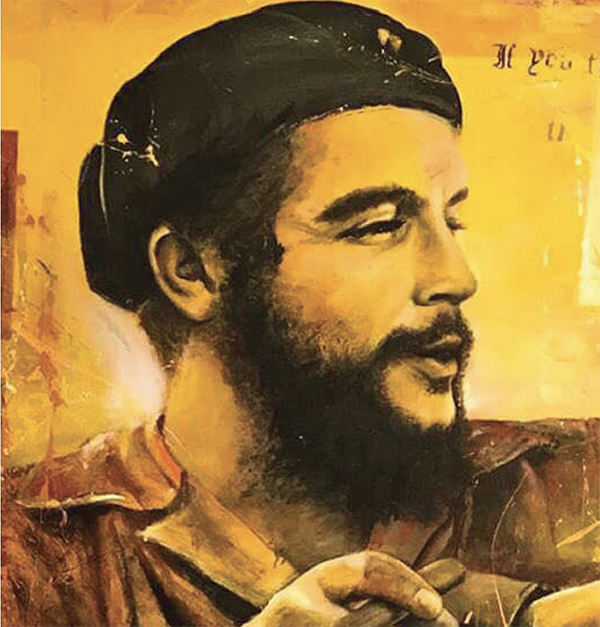
As you can see from this page, her subjects and techniques are varied. She’s done numerous celebrity portraits, but is equally adept at abstract, realistic or even surrealistic styles. Her pieces often feature Black themes and subjects, and many emphasize faces and figures.

According to the artist, her education, her world travel and her experiences have greatly influenced her style and her subjects, and she uses them all when creating a new piece.

In this feature, we share a very small portion of her work. To see more, visit her website at www.dionrenee.com.


Support quality local journalism. Become a Friend of TheBurg!

Continue Reading

It’s All Uphill: State park benchmarks go wild amid pandemic.

It’s where LeAnn Martinez goes to find “a moment of sanity.” Dauphin County’s Memorial Lake State Park is where she connects to nature.

“I run around the lake, and it’s very peaceful, with a really cool bridge to run across,” said Martinez of Harrisburg.

Swatara State Park, located in Lebanon and Schuylkill counties, is another one of her go-to’s. As an endurance runner who regularly participates in 24- and 48-hour running events often held on trails, Martinez likes to train on both parks’ trail systems. The 2-mile loop around Memorial Lake is one she often runs continuously for hours at a time.

“You forget about the stress of your job—you know the world’s still there, but it’s a little reprieve,” Martinez said. “It’s like therapy.”

And amid a worldwide pandemic, she’s not alone. Community, state and national parks across the country are reporting surges in attendance.

Pennsylvania, with one of the largest state park systems in the country, as well as one of the few that offers free admission, shattered recreation records in 2020.

“In 2019, we had 304,670 total attendance at Memorial Lake. From January to Nov. 30 of 2020, we’re already at 421,435,” said Courtney Troutman, manager at both Memorial Lake and nearby Swatara State Parks.

Swatara, shaped by the forested land along both sides of the Swatara Creek, offers access to the Appalachian Trail, the hiking and biking-friendly Swatara Rail Trail, historic bridges, plus horseback riding. Park attendance stood at 194,735 in 2019. It soared to 309,511 during 11 months of 2020. That’s a 59% increase—even without December’s final figures.

“Since the start of addressing this pandemic, outdoor recreation is one of the only fun things people were allowed to do,” Troutman said. “People were cooped up in houses, and getting outdoors, enjoying public land was pretty much the only option.”

Surrounded by Fort Indiantown Gap, Memorial Lake offers hiking trails, boating, fishing and picnic facilities—described by Troutman as a “family-friendly park.”

Parking was often an issue at Memorial Lake, where there are three large parking lots totaling 400 spaces. Troutman said that park personnel had to devise an overflow parking area in a field.

The lake’s boat rental concessionaire sold out on multiple weekends, renting every single one of its canoes, kayaks, fishing and paddleboats to visitors.

“That was a record,” Troutman said. “And with boat launch permits, we noticed more inflatable kayaks this year. Visitors had to buy those because outdoor equipment [like hard shell kayaks] was hard to find on shelves during the pandemic.”

Total attendance at the Keystone State’s 121 parks rose from 35.8 million in 2019, to 45.2 million through November in 2020—that’s more than a 26% jump.

“We’re serving a mission-critical function in terms of COVID-19 response,” said David Sariano of the Bureau of State Parks, under the umbrella of the Department of Conservation and Natural Resources. “It’s a challenge many people are facing, and they need an escape. It creates a situation where we’re adding to the public health by keeping the parks open.”

In central Pennsylvania, York County’s Codorus State Park attracted the biggest pandemic crowds—annual attendance hit 1.3 million through November.

And state park visitors aren’t just hiking, picnicking or boating for the day—they booked overnight stays in record numbers, too. Reservations at the state’s 6,800 campsites, cabins and picnic pavilions totaled more than 250,000 in 2020 (January through November)—a 47% increase over 2019.

What is the resulting impact on the parks, economically and ecologically?

“It’s been a challenge for us, in that we have unprecedented day use and overnight demands, but not a fully funded budget or staffed park system,” said Sariano. “We received our final budget in early December and have had staff cuts and less money for contracting and services. That’s our challenge on how we move forward, because in the current state of emergency, we’re providing an essential service, and we want to remain open and provide service at a high level.”

The state parks’ current budget is $108.3 million, a reduction from last year’s $114.4 million.

Yet, “the total [annual] contribution in visitor spending to the state economy is $1.145 billion… and in 2020 it would have been way up from that,” said Sariano.

Negative impact on the state’s natural resources, including wildlife, may be harder to measure. Troutman said that garbage cans occasionally overflowed at Memorial Lake and Swatara, due to the combination of visitor increases and staffing hiccups amid COVID-19. Volunteers couldn’t gather at times to keep park trails and waterways cleared.

She predicts another banner year for state park visitation in 2021 and remains optimistic that, along with visitor increases, there will be increased public appreciation for state parks.

“I think the trends will continue,” Troutman said. “This past year has been an important one for state parks because it’s shown the importance of public lands and how they impact everyone’s lives—impacting physical and mental health.”

For more information on Pennsylvania’s state parks, see www.dcnr.pa.gov/StateParks.

Stories on environmental topics are proudly sponsored by LCSWMA

Support quality local journalism. Become a Friend of TheBurg!


Continue Reading

Tasty, Roomy: Soul House Cafe opts for larger digs to better serve its loyal customers.

“Pivot” is a big word in the restaurant industry these days. Restaurateurs have been forced to change—and change again—in response to the COVID-19 pandemic.

Andre Young is no exception. The owner of Soul House Café has learned that, to succeed in life, one must be resilient—a philosophy that has served him well over the years. Each time he suffered a setback, he figured out a way to emerge victorious.

This time, he decided that he wasn’t going to allow a pandemic to stand in his way.

When COVID hit, his Harrisburg restaurant was forced to shut down twice, once in April at the onset of the pandemic and then again on Halloween.

It was then that Young realized it was time to take action. So, after five years at 19th and North streets, he moved to a larger location at the corner of 17th and Paxton streets.

“In the previous place, there was a very small lobby and no waiting area, except a deck, where people would wait for their food,” he said. “With the cold weather approaching and social distancing, it forced my hand.”


Time Was Right

Young credits his mother for his profession, saying that she imbued in him a love of cooking.

Years later, when he became a single parent, he decided it was time to go back to school to study the related field of hotel and restaurant management. After working at Red Lobster and subsequently helping to train staff at various locations, he realized that he had a yearning to return to his hometown.

“I was in Norfolk at the time and came back to intern at the Maverick,” Young said. “A nightclub operated there in the evenings before a fire took it out.”

He then opened Off the Hook on 17th Street, where he served up heaping helpings of soul food, much as he does today. He ran the eatery for four years, until the Great Recession put him on the ropes.

“I couldn’t withstand the rise in gas and food prices,” he said.

Several years later, he decided to take another shot at running a restaurant, benefitting from all he had learned over the years.

Over time, Soul House Café became very popular, often with customers waiting in long lines for their orders. COVID, though, presented a big problem due to a lack of space inside. So, Young decided to move into a larger building on Paxton Street, where social distancing was easier and people could duck in from the cold to wait for their meals.

“We closed down during the month of November to make the transition,” he said.


On Offer

The Soul House Café menu lists traditional southern cuisine, but with many twists.

A variety of chicken wings are on offer, with a choice of sauces, like the popular “mumbo” sauce, which, Young explained, was created in Chicago and gained popularity in the Washington, D.C., area.

“It’s a sweet and tangy sauce, with a little kick,” he said.

An array of wraps is also available, like the signature whiting fillet, deep fried and wrapped in a flour tortilla, or the Buffalo chicken wrap with grilled or fried chicken, tossed in sauce and blue cheese and served with a choice of toppings. Additional handhelds include cheeseburgers and chicken breast sandwiches, along with sandwiches that focus on seafood, such as the popular whiting and catfish.

A selection of hot subs is also available with ingredients like sausage, steak and chicken.

Customer Dawn Johnson said that Young was a former classmate and became the “go-to caterer” at her workplace. Among her favorites are the fried shrimp dinner, roasted chicken, macaroni and cheese, greens and rice and gravy.

Dana Blackston has also known Young for years.

“I used to run the Harrisburg Packers midget football program, and he did all the cooking for me at our concession stand,” Blackston said.

His favorite dishes are the deep-fried shrimp and fries, the macaroni and cheese, and the greens and sweet potatoes. Blackston also mentioned how popular Young’s restaurant is.

“I’ve been to the new place three times, and each time there was an hour wait,” he said.

Marlon Anderson comes in from Steelton to grab and go, with the Cajun catfish dinner being his favorite.

“My wife and I both love it,” he said.

Anderson likes that every dish is cooked to order.

“It’s fresh and doesn’t sit under a heat lamp,” he said. “Plus, the service is good and everyone has a great attitude.”

He added that the new place is an improvement over the old.

“It’s bigger inside,” he said. “In the other place, there was no seating inside.”

As for Young, he’s looking forward to how things will play out in the new year in his improved digs.

“COVID is making the decisions right now,” he said. “For now, we’ll do takeout until vaccines get more widespread and the fear subsides.”

Until then, he’s “playing it by ear.”

“You gotta have a love for it,” he said.

 Soul House Café is located at 1639 Paxton St., Harrisburg. Call for takeout at 717-236-3500. Follow them on their Facebook page: SoulHouseCafe717.

Support quality local journalism. Become a Friend of TheBurg!

Continue Reading

February News Digest

Jackson Hotel Collapses

The history-rich Jackson Hotel partially collapsed last month and then was razed to prevent further danger.

Harrisburg Commercial Interiors was working to stabilize the building, located on the 1000-block of N. 6th Street, when the situation became unsafe, according to owner Matt Long. Workers were able to get to safety before the wall facing Herr Street collapsed, Long said.

Staff and customers at the neighboring Jackson House restaurant saw falling bricks hit cars and damage the restaurant’s roof and sign, said owner Dave Kegris. Within a few hours, Long began to demolish the rest of the building for safety.

The circa-1884 Jackson Hotel once catered to African-American patrons who were denied service in Harrisburg’s white-only hotels. When long-time owner German Jackson died in 1998, the building was boarded up and has remained empty since.

In his will, Jackson left the building to Kegris, who owned it until 2015. Since then, the building has changed hands several times and, for the past few years, prominently featured a mural celebrating local Black history.

Over this time, few renovations were done and, eventually, the building’s roof caved in, and the back of the building collapsed. The interior of the building pancaked, leaving it in rubble, and the city condemned it.

Long purchased the building in 2018 with plans to stabilize the foundation and construct a completely new interior and roof. He intended to create apartments and commercial space.

Long said that he now plans to build an entirely new structure on the site, closely replicating the original Jackson Hotel building.


Theater Renovation to Start

Friends of the West Shore Theatre last month announced that they had secured enough funding to begin renovation of the 80-year-old theater in New Cumberland.

The group, as well as borough officials, gathered under the building’s signature marquee to celebrate significant progress in fundraising.

“We realized the value of trying to restore and keep this theater here in New Cumberland,” Mayor Doug Morrow said. “The funding is in place. We are moving forward.”

The West Shore Theatre opened in 1940 with 25-cent tickets. It remained a beloved, small-town theater for years before its doors closed in 2015. Friends of the West Shore Theatre eventually acquired it and began planning to bring it back to life.

Morrow announced that, with several new grants, the board has raised $1.4 million of the $2 million needed for the renovation.

The most significant chunk of funds was $650,000 from the state’s Redevelopment Assistance Capital Program (RACP). The PA Department of Community and Economic Development also awarded a $250,000 grant for the project. Other local foundations provided grants, as well.

An extensive renovation is planned, including adding seating and a standing lounge area, stage improvements, new equipment and other upgrades.

Additions to the back of the theater, such as green rooms and classrooms, will likely happen a year after it opens to the public, said Dan Burke of Friends of the West Shore Theatre.

Morrow added that they intend to use the theater for showing movies, live performances, theater classes and community group meetings.


Apartment Plan for Midtown Building

A Harrisburg resident has his eye on one of the last dilapidated commercial buildings in Midtown, with plans to turn it into a small apartment building.

Nathaniel Foote has a contract to buy the former Gerber’s Department Store—also known as the “Carpets and Draperies” building for the sign on the front façade—on the 1500-block of N. 3rd Street.

His plan calls for a five-unit apartment building, along with first-floor commercial space, in the 4,800-square-foot, three-story brick structure.

“I live in the neighborhood,” he said. “I want to see the property restored.”

Foote is an attorney who owns two duplexes in Midtown and, along with his father, a parking facility. He said that his interest in the building arose simply from walking past it nearly every day, so that eventually he called the listing agent for the property.

“I’m not an out-of-town developer looking to make a buck,” he said, estimating that construction will cost about $500,000. “The cost is substantial given the number of units you can get out of it.”

Schnecksville, Pa.-based Mussani & Matz Co. has owned the century-old building since 2007, but it’s sat empty and increasingly blighted for most of that time. It’s been on the sales market for the last few years.

Six years ago, two Harrisburg residents proposed turning the building into a craft distillery, but that project was abandoned after it failed to gain approval of the city’s Zoning Hearing Board.

Foote said that he’s encouraged by a spate of development proposals for the immediate  area. Over the past year, several developers have proposed projects for the Reily Street corridor, but none have broken ground yet.

Foote’s plan calls for all two-bedroom units, which would range in size from 750 to 2,000 square feet, along with a 1,000-square-foot commercial space on the ground floor. He expects that he would live in the largest unit on the third floor.

Rents would range from about $1,000 a month to about $1,400 a month, he said, depending on unit size.

Foote expects to put the project on the agenda for the city’s Planning Commission and Zoning Hearing Board for their February meetings. If the project gains city approval, he hopes to start construction in March for completion by year-end.

The interior is gutted, so it would need to be completely rebuilt, Foote said. He plans for Harrisburg Commercial Interiors to do the construction. The notable “Carpets and Draperies” sign would be restored as part of the project, he said.

The building does not have its own off-street parking, but is surrounded by surface parking lots. Foote said that he expects to lease parking spaces from one of the lot owners.


Classrooms May Reopen

Harrisburg School District officials may be closer to welcoming some students back into school buildings.

If COVID-19 cases continue to decrease in the district, small cohorts of students could resume brick-and-mortar learning in March, Acting Superintendent Chris Celmer said last month.

“This is our hope, this is our wish,” he said. “This is what we want to see hopefully happen.”

He said that the focus would be on returning special education and elementary students to the buildings first, as well as other cohorts of students that the district determines are struggling the most.

The district has been operating with a 100% virtual learning model since the beginning of the school year. From the start, administrators have been looking for Dauphin County to meet certain benchmarks in order to bring students back to the buildings. Celmer said that they are still using those markers to determine if they will allow these small groups back to school buildings in March.

These include reduced positivity rates, below 10%, and incidence rates per 100,000 residents trending downward to a daily rate of 100 or less. He also wants to see the wastewater epidemiology tracker, Biobot, project Harrisburg virus cases closer to 100 or less per day.


December Home Sales Strong

Harrisburg-area home sales rose considerably in December, capping off a strong year for the local real estate market.

Home sales totaled 744 units compared to 611 units in December 2019 for the three-county region, while the median price rose to $217,750 versus $187,500 in the year-ago period, according to the Greater Harrisburg Association of Realtors (GHAR).

Dauphin County had 348 sales compared to 279 the previous December, as the median price rose by $20,000 to $185,000, GHAR said.

In Cumberland County, 353 homes sold versus 287 a year ago as the median price increased to $244,820 versus $215,000 the prior December.

Perry County saw monthly sales of 40 units compared to 22 units in December 2019, as the median price dropped a bit to $179,900 from $182,500, GHAR said.

Houses were also selling quickly. The average days on the market plummeted to just 26 days compared to 46 days in December 2019, according to GHAR.

The Harrisburg-area real estate market was strong throughout 2020, especially after pandemic-related restrictions were lifted in May.


So Noted

Civic Club of Harrisburg is seeking donations after thieves stole an air conditioner and caused damage last month to their historic riverfront home, Overlook. To donate to the club’s Vandalism Relief Fund or get more information about the club, contact President Mary Beth Lehtimaki at [email protected].

CommUNITY Yoga Space has moved a few doors down to a new, larger space at 1423 N. 3rd St., Harrisburg. Erika Malorzo opened the pay-what-you-can yoga studio over two years ago, and recently had to move following the sale of the building that housed her original space.

Harrisburg last month announced that it is requiring COVID-19 vaccinations for city workers. Mayor Eric Papenfuse signed an executive order requiring municipal employees to get the vaccination as quickly as possible in accordance with the state’s distribution guidance.

Harrisburg Regional Chamber & CREDC last month named their board chairs for 2021. Meron Yemane of Morgan Stanley Wealth Management will head up the Chamber’s board, while Mike Funck of Wohlsen Construction will lead CREDC’s board. The two boards also named new officers for the year.

Harrisburg University last month announced that it had successfully sold $100 million in tax-exempt bonds to institutional investors. The money is being used to finance construction of its 11-story academic building at S. 3rd and Chestnut streets in downtown Harrisburg.


Changing Hands

Adrian St., 2258: D. Bryant to J. & J. Parker, $72,000

Alricks St., 650: Consolidated Holdings International LLC to D&F Realty Holdings LP, $30,000

Bellevue Rd., 2000: G. & N. Payne to E. Gonzalez, $95,000

Boas St., 217: J. & C. Kuntz to L. Wood & T. Miller, $109,900

Boas St., 222: N. Laudeman to F. Cossick, $112,500

Boas St., 264: J. & S. Sempeles to Westfall Real Estate LLC, $185,000

Boas St., 1930: CR Property Group LLC to I. Lenny, $139,000

Calder St., 215: J. Zehring to M. & A. Zehring, $71,500

Camp St., 632: M., A. & C. Little and D. Anderson to D. & J. Porter, $57,000

Chestnut St., 1200, 1202, 1204, 1206 & 1208: Round Rock Investments LLC to 101 S. 17th Street LLC, $450,000

Chestnut St., 2112: S. Siciliano to M. Cragle & S. Hughes, $226,900

Croyden Rd., 2807: S. Camaplan LLC FBO Mark Murdoch IRA to A. Blackwell, $100,000

Cumberland St., 213: V. Lefkowitz to W. Hoover & B. Shoemaker, $105,000

Derry St., 1248: Jackson Investment Properties LLC to E. Kelly & M. Alarcon, $55,000

Derry St., 2309: S. Gutshall to A. Nunez & J. Espihal, $73,000

Derry St., 2411: B. Ahmed to B. Arismendy, $46,000

Derry St., 2532 & 2534: K. & R. Gupta to Around the Corner LLC, $163,700

Edwards St., 260: Realm Properties to C. & K. Gehman, $360,000

Emerald St., 233: D. Welliver & R. Harpster to J. & S. Compton, $65,000

Emerald St., 652: D. Fernandez to Z. Williams & B. Jones, $99,900

Evergreen St., 319: NA Capital Group LLC to A. Rivera, $60,000

Forster St., 1928: M. Bair to B. Arias, $66,000

Green St., 2410: KTT Properties LLC to T. Meriweather & S. Nichols, $160,000

Green St., 3230: C. & L. Summerscales to G. Holmes, $130,000

Harris St., 414½: Ravo Rentals to Limitless Possibilities LLC, $50,000

Herr St., 217: K. & V. Land to A. & C. Greenblatt, $180,000

Herr St., 421: F. Washington to T. Ladas & S. Maykovich, $60,000

Herr St., 1726: Mango Properties to Gold Key Properties LLC, $50,000

Holly St., 1914: D. Berhe to SPG Capital LLC, $44,000

Hudson St., 1147: R. Vega & A. Marsico to C. Yourkavitch, $125,000

Kensington St., 2347: T. Thai to C. Grant & M. Rinaldi, $65,000

Kensington St., 2365: H. Grills to C. Woods, $53,500

Kensington St., 2366: J. Robinson Jr. to L. Stewart, $70,000

Lewis St., 327: L. Seidel to 327 Lewis LLC, $76,500

Logan St., 2141: KBT Enterprises to E. Alcantara, $30,000

Maclay St., 239: M. Nelson to Awesome Tenants LLC, $73,500

Manada St., 2003: C. Holvick to Henderson & Sons LLC, $32,500

Market St., 1819: M. Kearney to 77 Estate LLC, $35,000

Market St., 1903: CAR Property Holdings LLC to W. Cajina, $89,337

Market St., 2407: J. Brown to K. Parker, $142,000

Mulberry St., 1820: Alternative Rehabilitation to Archie Group LLC, $160,000

Nagle St., 119 & 709 Showers St.: J. Baer & A. Jury to V. & B. Wagner, $262,599

N. 2nd St., 610: Wyco Investments LLC to N&R Group LLC, $175,000

N. 2nd St., 2304: L. Rapaport to T. Brown, $269,500

N. 2nd St., 2809: W. & E. Steele to E. Larios, $162,000

N. 2nd St., 2830: Equity Trust Co. Custodian Julie L. Burns IRA to J. Davis, $72,500

N. 3rd St., 1201: C. Hull to R. & C. Steele, $100,000

N. 3rd St., 1417½: Long Life LLC to Heinly Homes LLC, $130,000

N. 3rd St., 1624: Sickler Properties LLC to SJL Rentals LLC, $155,000

N. 3rd St., 1820: MMLM Realty LLC & Ian Smith Contracting Inc. to DPS Properties LLC, $150,000

N. 3rd St., 1825: D. Totton to Community First Realty, $45,000

N. 4th St., 2110: A. Clay and M. & M. Corney to NA Capital Group LLC, $30,000

N. 4th St., 3118: M. Shank to J. Kilby & J. Vargas, $105,000

N. 5th St., 1624: B. Davis to K. O’Brian, $168,000

N. 5th St., 1628: Braemer Properties LLC to B. Butzer, $142,500

N. 5th St., 1720: Freedom Mortgage Corp. to Principium LLC, $123,500

N. 6th St., 2720: L. Brown to T. Hardison, $35,000

N. 6th St., 3156: Dobson Family Partnership to J. Ulloa & A. Villar, $80,500

N. 7th St., 3133 & 3205 and 651 Alricks St.: Consolidated Holdings International LLC to DAP 3250 LP, $1,000,000

N. 15th St., 1119: J. & M. Irvin to J. Irvin, $60,000

N. 18th St., 808: C. Lovejoy, M. Miller & PA Property Brothers LLC to G. Almonte, $44,000

N. 19th St., 49: M. McWilliams to Carters Clean Up LLC, $58,000

N. Front St., 1525, Unit 503: Dowell Group Inc. to J. Davis, $115,000

N. Front St., 2405: J. Hartzler to Serene Spaces LLC, $320,000

N. Front St., 3207: 3207 N. Front St. LLC to S. Juneja, $370,000

Norwood St., 915: Integrity First Home Buyers LLC to G. Morris, $108,000

Park St., 1830: A. Caraballo to H. Ngoshi, $42,000

Peffer St., 221: N. Laume to Z. Brady & B. Blessing, $138,000

Peffer St., 435: K. Kessler to R. Clymer, $95,400

Penn St., 906: K. Holtzinger to J. Spatz, $136,000

Penn St., 1409: E. Lohss to J. Freeman, $107,000

Radnor St., 630: Integrity First Home Buyers LLC to G. & L. Boone, $46,000

Reel St., 2449: E. Stawitz to SJJR LLC, $48,000

Regina St., 1619: J. Colucci to N. Harris, $55,000

Rolleston St., 1027: R. Castillo & E. Martinez to F. Torres, $98,000

Ross St., 627: Gilligan Realty LLC to Sanhos LLC, $40,000

Rudy Rd., 2405: N. & L. Skulstad to D. Bradford, $174,900

Rumson Dr., 350: L. Rodriguez to M. McAllister, $128,100

Seneca St., 224: R. Boust to D. Daley, $102,990

South St., 105: A. Crompton to 608 N. Third LLC, $70,000

S. 13th St., 1451: RTD Properties & Management to S. Esayas, $75,000

S. 13th St., 1456: Integrity First Home Buyers LLC to 1456 S. 13th LLC, $100,000

S. 17th St., 319: 4P Ventures LLC to Pichardo LLC, $200,000

S. 24th St., 710: Equity Trust Co. Custodian Robert L. Burns IRA to D. Boyle, $39,000

S. 25th St., 350: B. Ho & S. Nguyen to R. Lyles Jr., $84,900

S. Front St., 333: 333 Sri Ganesh LLC to 101 S. 17th Street LLC, $250,000

S. Front St., 563: K. Bernhard & S. Schwab to T. Youngbluth, $76,000

State St., 223: 223 State St. LLC to PMA Foundation, $445,000

State St., 1310: M. Maniari & Z. Er Roudi to A. Ulerio, $83,500

State St., 1326: C. & T. Semancik to JMR Ventures LLC, $170,000

State St., 1502: S. Kochis to 77 Estate LLC, $30,000

State St., 1909: Atrium Gardens LLC to ZM Penn Group LLC, $59,000

State St., 1951: R. Shultz Jr. to Moxie Properties LLC, $225,000

State St., 2001: R. Shultz Jr. to Moxie Properties LLC, $275,000

Susquehanna St., 913: MR RE LLC to R. Perrego, $132,500

Susquehanna St., 1610: D. Lawyer & S. Flagle to R. Small, $182,500

Susquehanna St., 1708: J. Merx to J. Weinstock, $136,000

Susquehanna St., 2132: J. & C. Sanderson and A. Pletcher to L. de Gonzalez, $48,000

Susquehanna St., 2218: J. Grant to Heinly Homes LLC, $36,500

Verbeke St., 202: B. Hamilton to V. Filbert, $140,000

Verbeke St., 211: J. & S. Bircher to D. Leaman, $207,500

Waldo St., 2711: Mainline Funding Group Inc. to A. Hawkins, $47,800

Walnut St., 1500: E. Salah to J. Rodriguez, $32,800

Woodbine St., 241: G. & W. Banova to E. de Rosado, $117,500

Support quality local journalism. Become a Friend of TheBurg!

Continue Reading