Sharp Dressed Men: Local fashion influencers raise the bar on style

Mohammed Al Nazal: Blue and burgundy (in my opinion) is one of the most elegant color combinations that works great on anyone regardless of their skin tone. The patterns in the shirt and tie are giving the look an extra edge and challenging the mainstream solid colors. Micro check and small medallion prints have nothing in common between them, which help add extra contrast—the goal of all formal looks. Here, I am wearing a Brooks Brothers suit with a Ralph Lauren shirt and coat.

“Technically, I’ve been into fashion since I opened my eyes,” Mohammed Al Nazal told me during our interview.

There was never a fashion awakening for him; it had just always been there.

Growing up in Iraq, Al Nazal remembers his father “fully suited” for as long as he knew him. He was classy. He had suits made from British wool and other fine materials from the 1970s to ‘90s.

When his father passed away in 1997, Al Nazal inherited his suit collection, only fueling his fashion love affair. At the time, he was a teenager, and the suits were too big for him. When he finally grew into them, they were out of style.

“And then they came back into style, and I outgrew them,” Al Nazal said with a laugh.

But his father’s style stuck with him, influencing his own look.

Al Nazal considers himself a suit-and-tie guy. He’s drawn to the 1940s through ‘60s style—a “classic narrow tie with a slim suit.”

Al Nazal works an I.T. position at Select Medical. When he’s in the office, he’s wearing a suit, or at least a tie, and is typically the most dressed up in the room.

“I think real men wear suits and ties…at least suits…at least a jacket,” he said. “I’m not a big fan of what menswear is now in general.”

Al Nazal is one of a small pool of men’s fashion social media influencers in the Harrisburg area. He’s been posting pictures of his outfits for around five years, filling a gap that he sees.

There’s no shortage of fashion on Instagram, his platform of choice, but there is a shortage of male influencers, especially in the central PA area. According to Al Nazal, the majority of fashion influencers on social media are women. He hopes his account will help men find their style, and, at least, put on a jacket.
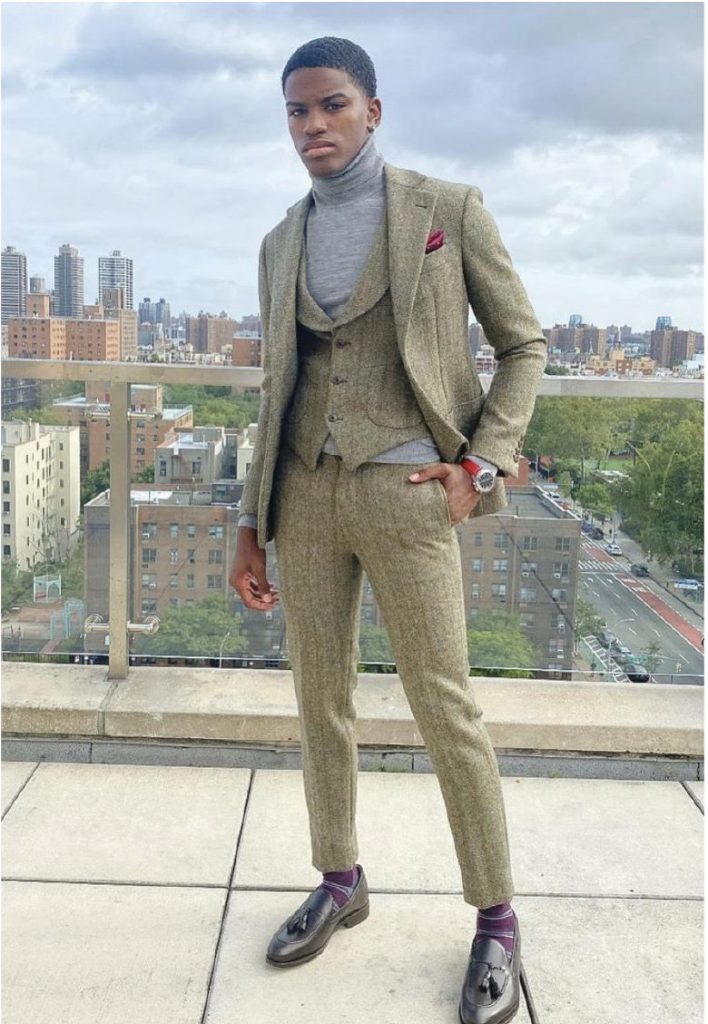
Layton Lamell: Here, I’m in East Harlem during New York City Fashion week wearing a Welthe NYC Jameson green tweed three-piece suit. To relax the suit, I chose to rock a gray turtleneck. I added a red-and-white polka dot pocket square that complements the red band watch from ToyWatch. I like to have a strong sock game, so I put on purple and grey striped dress socks. Lastly, I wore Welthe NYC brown tassel loafers to top off the outfit.

Superman Cape

Layton Lamell won the superlative of “best dressed” basically every year in high school. He remembers someone saying, “Layton I’ve never seen you wear sweatpants yet!”

He began perfecting his look at about 6 years old. As a kid, he wore suits and long coats, just like his stepfather—his fashion icon from an early age.

“He taught me how to wear a suit, be a gentleman and tie a tie,” Lamell said.

He also attributes aspects of his style and his “swagger walk” to his grandfather and brother.

When his senior prom rolled around in 2019, it was no shocker that Lamell showed up dressed like he had just stepped off the red carpet. He wore a black suit, lapel pin brooch, bowtie and even a studded mask, ahead of the times that COVID would soon bring.

His look earned him a cover photo on Krave Magazine, a publication that highlights fashion and entertainment for men of color, and national attention.

“That’s when I was like—I should take this seriously,” Lamell said.

After talking with his mom, he decided to shift his direction, letting go of sports and diving into the world of fashion.

Now Lamell has gained a following on his Instagram page and has taken up modeling.

“When I put on clothes, it’s like putting on that Superman cape, ready to just be confident,” he said.

Josh Maugans, another fashion influencer from Harrisburg, can identify with that sentiment.

You may catch him around Harrisburg rocking crop pants, a tracksuit or a wide brim hat.

In his pictures, he looks confident, but he said it hasn’t always been that way.

“I hated getting my picture taken,” he said. “I was really hesitant.”

But when he started two years ago, he quickly realized he couldn’t keep taking pictures of his neatly folded outfits to show his style, that would get boring. He needed to model them himself.

Maugans took a chance in front of the camera and got great feedback. His account grew in popularity quickly, and he found a hobby he loved.

In 2020, he decided to step up his game and post more frequently on his page. He wanted to create higher quality content and increase his audience.

Today, he regularly poses with Harrisburg as his backdrop. Several Sprocket Mural Works murals make an appearance on his page, as well as Little Amps coffee shops, the Broad Street Market and Riverfront Park.

While Maugans wears a suit for his job at a menswear store and occasionally in pictures he posts to Instagram, off the clock, his signature look is modern street style.

Contrary to Al Nazal’s classic style, Maugans likes to push the envelope on modern men’s fashion.

“I wear stuff that’s a little out of the ordinary,” he said.

Josh Maugans: Here, I am wearing a black and brown combination, which is something that is often seen as a no-go. I paired this suede field jacket with a black turtleneck, black distressed jeans, a black hat and bold, checker-print Vans shoes. The hat and shoes both add a pop of fun to the look that makes it stand out. The pattern on the shoes contrasts against the dark-toned outfit, and the hat adds something unique.

That’s Cool

 Al Nazal loves fashion influencing, but it’s a side gig. He has, though, gained opportunities to work with big name brands like Brooks Brothers and Express. While he isn’t waiting for social influencing to become his full-time job, he does hope to expand to work with more brands.

Al Nazal doesn’t have tens of thousands of followers, but he believes that those he has are people who are genuinely interested in what he does. As a Middle Eastern man, he has occasionally received negative comments, but he said that most of his followers are very supportive and kind.

He regularly interacts with them, answering their questions on where his clothes are from. Al Nazal especially wants to reach a younger audience with a style that they might not have experienced before.

“I really hope young men start looking at suits and saying, ‘that’s cool, it’s not just an old man style,’” he said.

Lamell also hopes to inspire people’s creativity, as well as give advice and show others how to feel confident.

And while in most of his pictures, he looks serious, posing straight-faced, Lamell was all smiles during our interview. He doesn’t know what exactly his future holds in terms of influencing and fashion, but his overall goal is simple.

“My legacy is being a kind person,” he said. “Being a kind person with humility.”

Mohammed Al Nazal can be found on Instagram at @mohammedalnazal.

 Layton Lamell can be found on Instagram at @laytonlamell.

 Josh Maugans can be found on Instagram at @jm_fashion12.

 Support quality local journalism. Become a Friend of TheBurg!
 

Continue Reading

From Paris, with Crêpe: A European trip inspired one of the area’s newest eateries

Tony Cheverez and his daughter Rosina Marie had one very memorable family vacation.

Following an overseas excursion, they were so wowed by Paris that they wanted to bring a taste of the City of Light back to Mechanicsburg.

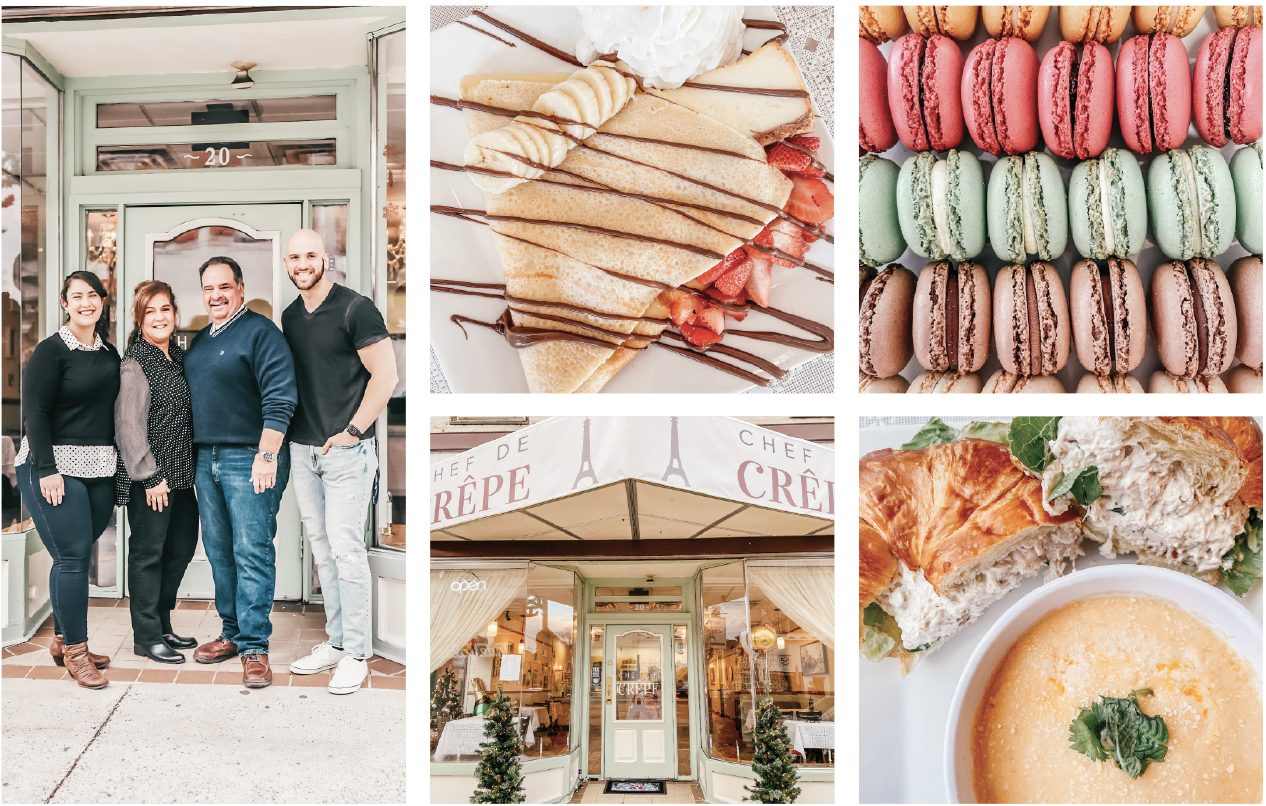
“We were inspired to open Chef de Crêpe after a family trip to France,” explained Rosina Marie.

The eatery, located in a former Subway restaurant on the corner of West Main and Railroad streets, opened in December, just as another lockdown order went into effect. However, the community was welcoming, she said, and they did a brisk takeout business until mandates were lifted.

This isn’t the family’s first foray into the food world. They also run a catering business and a food truck and have appeared as a pop-up business at various events. The new store is just another way for them to serve the public, said Rosina Marie.

When customers enter the snug eatery, they see attractive chandeliers, white tablecloths, Paris scenes and family photos festooning the walls as they are greeted by the staff with a cheery, “Bonjour!”

Patrons place their order at a serving station at the front of the restaurant where their food is prepared before them. The handheld crepes can be eaten as a meal or a dessert.

According to Rosina Marie, one of the most popular choices is the “Mexi-Steak,” which is comprised of steak, salsa, sour cream, guacamole, sautéed onions, red peppers, cheddar cheese and cilantro. A selection of breakfast crepes is served all day, with ingredients like eggs, bacon, cheddar and ham.

Those who like sweets have been known to enjoy a popular crepe called, “The New Yorker’s Gift,” comprised of cheesecake, strawberries, banana, Nutella and whipped cream.

“Many of our customers pair that with a cup of coffee, which we source from Lonely Monk Coffee Roasting in Lemoyne, which is fantastic,” said Rosina Marie, who also owns a bakery by the name of Frosting & Co., where she makes custom cakes and croissants for the eatery.

Those seeking out more traditional fare have their choice of soups, sandwiches and salads.

Janet Close travels from Hummelstown to dine at the restaurant and calls it a “breath of fresh air.”

“The interior has been transformed into a scene right out of Paris,” she said. “Not only is the décor exquisite, but the ambiance is warm and inviting.”

Her favorite savory crepe is the chicken Florentine, with chicken, sautéed mushrooms, red onions, cream cheese, garlic and bechamel sauce. Her favorite dessert crepe, “La Parisienne,” is made with Grand Marnier, raspberries and chocolate sauce.

“I’d recommend the restaurant for a quiet business meeting or a girls’ brunch—just remember to bring your own mimosas,” she said.

Mike Hetrick of Enola first tasted the Cheverez family’s fare when their food truck came to his Westbury neighborhood.

“We ordered several different crepes,” he said. “My wife and I enjoyed the cheesesteak crepe, and my girls liked the honey mustard chicken, and we all enjoyed the Nutella and crème crepe.”

Rosina Marie said that they have been overwhelmed at the outpouring of support, which inspires them to do their best to continue to make their customers happy.

“We will continue to strive to be a family friendly and culturally distinguished French crêperie and café for all to enjoy,” she said, with a smile.

Chef de Crêpe is located at 20 W. Main St. in Mechanicsburg. For more information, call 717-603-3821 or visit www.chefdecrepes.com or their Facebook page.

Support quality local journalism. Become a Friend of TheBurg!
Continue Reading

For Your Lenten Table: Rosemary suggests a seared tuna dish from Sicily

The trip my husband and I made to Sicily in 2010 is such a beautiful memory.

The island’s stunning landscape and unique culture held special meaning for me as my mother was Sicilian. Her family emigrated from Palermo, which is both a region and the capital city of Sicily. We don’t know if they were city dwellers or farmers who lived in the surrounding countryside. I thought of them often during our brief visit to this Italian island paradise and wished there had been time to explore the family’s history.

But it is the food of Sicily that fascinates me, a cuisine influenced by the area’s volcanic soil, abundant sunshine and blue ocean waters. But, in no small measure, also by the many nationalities that invaded the island over many centuries. The soul of Sicilian cooking revolves around citrus fruits, which grow in abundance there, fish like tuna and swordfish, capers and other fresh herbs, pine nuts and olives and the unique dishes that are known as agrodolce or “sweet and sour.”

Lent is here, and I’m always looking for seafood recipes for those traditional Catholic meatless Fridays. I found a recipe by renowned French chef, Jacques Pepin, who prepared this tuna dish for a group of tourists on a culinary tour in the town of Messina, Sicily. It’s unusual in that he uses red wine in the preparation rather than white and accompanies it with olive oil-dressed arugula. I served it with broccoli and whipped yellow gold potatoes and omitted the arugula, which seemed more like a summer meal.

As a matter of full disclosure, my family accused me of overcooking the tuna. I’m good at that. Unlike me, they prefer tuna rare.  So, if you are one of those as well, watch your cooking times very carefully. The flavors in this dish are complex and involve three main steps: making the relish, making the red wine sauce, and searing the tuna. But it’s not a hard dish to make.

PAN SEARED TUNA STEAKS WITH CAPERS AND OREGANO

Ingredients

  • ¼ cup capers, drained
  • 2 tablespoons chopped oregano (1 tablespoon dried if fresh not available)
  • 1 small shallot or very small red onion, finely minced
  • 1½ tablespoons extra virgin olive oil, plus more for drizzling
  • Salt and freshly ground pepper
  • 4 6-ounce fresh tuna steaks about ¾-inch thick
  • 4 anchovies, chopped or a couple squirts anchovy paste
  • 1 cup dry red wine
  • 2 tablespoons cold, unsalted butter, cut into small pieces

Directions

  • In a small bowl, mix the capers, oregano and minced shallot or onion with ½ tablespoon olive oil. Season with salt and pepper to taste and set aside. (Remember, capers are salty.)
  • In a skillet (NOT non-stick if possible), heat the remaining tablespoon of olive oil until shimmering. Season the tuna steaks lightly with salt and pepper and add to the skillet.
  • Cook over medium high heat about 4 minutes total, turning once. (You want a nice sear to the steaks without overcooking them!) Transfer the steaks to a platter and keep them warm.
  • Add the anchovies or anchovy paste to the skillet, swirling it until it “dissolves.” Add the wine and boil until reduced to about half (about 4 minutes).
  • Remove the skillet from the heat and swirl in the butter one piece at a time, until blended and smooth. Season the red wine sauce with a little salt and pepper.

When you are ready to serve, place the tuna on a serving platter or on individual plates. Put a small mound of the caper relish on each piece and drizzle with some of the red wine sauce. Partner the tuna with sides of your choice.

This is an elegant Lenten meal or great for any season. The tuna could be grilled in the summer, and then Chef Pepin’s arugula salad would be a perfect accompaniment. I also was thinking you could substitute swordfish for the tuna and perhaps make a white wine sauce instead.

The list of classic Sicilian dishes is long—Italian, but uniquely Italian. I hope you enjoy this one!

Support quality local journalism. Become a Friend of TheBurg!
Continue Reading

A Wish, a Journey: Harrisburg-area family ventures across country to seek disease cure

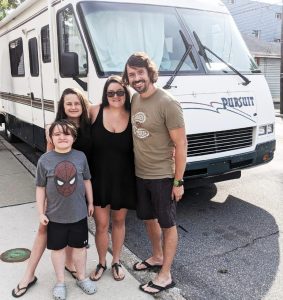
Gunther family in front of their RV.

It was a diagnosis that “just hit us out of nowhere,” Vanessa Gunther recalled recently.

It was the day, two years ago, that her family’s life changed forever.

Vanessa and husband Steve, of Linglestown, had noticed that their 7-year-old son Drew moved slowly but thought, “He was a little bit uncoordinated,” Steve said.

However, Penn State pediatrician Jessica F. Butts suspected otherwise when observing Drew struggle onto an exam table during his regular wellness check, and she ordered further blood tests.

As it was, the test results would confirm exactly what the doctor suspected.

Drew was diagnosed with Duchenne Muscular Dystrophy, a genetic disorder found primarily in boys and that affects about 1 of every 3,500 children. The disease is characterized by progressive muscle degeneration and weakness caused by alterations of the body’s dystrophin proteins. Drew’s diagnosis is 100% fatal, according to his father.

“The dystrophin gene is the largest in the body and responsible for maintaining muscle,” Steve explained. “Without proper dystrophin production, the muscles waste away, and you cannot build and maintain new muscle.”

This disorder affects every muscle in the body, usually starting with the legs and hip, but eventually reaching the heart and lungs, which is typically the cause of death in the late teens or early 20s, he said.

Most youngsters lose the ability to remain mobile without the use of a wheelchair by 10 to 12 years old, although some may take longer, Steve added.

The family learned of Drew’s diagnosis on Valentine’s Day 2019.

“It punched me in the stomach,” Vanessa recalled. “Everything I knew disappeared then.”

However, no one in the family was ready to give up, least of all Drew.

“Drew’s a champ,” Steve said. “He’s probably better with this than most adults.”

Drew soon began a regimen of specialized treatments through a clinical division of the Penn State Hershey Medical Center.

“Almost all of Drew’s treatment at HMC has been covered until recently when we got our first small bill,” Steve stated.

Meanwhile, Steve and Vanessa stayed busy scouring the internet for research taking place elsewhere. Various experimental treatments for the disease were underway at a handful of far-flung facilities across the country. But fresh hope came with a catch.

Experimental treatments, not yet certified by the U.S. Food and Drug Administration, didn’t qualify for payment by the Gunthers’ insurance. If Drew accepted experimental treatment without FDA approval, his family would face unreimbursed medical expenses. For stem cell treatment available in California, the Gunthers would have to pay around $50,000 per year out of pocket, Steve said.

So, in 2019, the family initiated “Wishes For Drew” as a series of fun local events raising funds for their son to pursue treatment in California. Throughout 2019 and 2020, the family hosted live fundraisers throughout the area, which included several “Pint Nights” sponsored by local breweries.

In early 2020, Wishes For Drew was formally established as a nonprofit entity. Sadly, live fundraiser events were placed on an abrupt hold around that time due to the pandemic, leaving the Gunthers to devise safer fundraising methods. Vanessa began selling her crafts, and the family established a second GoFundMe page. Still, they lost tens of thousands of dollars’ worth of donations since the onset of the pandemic, Steve estimated.

The Gunthers’ biggest act, however, was still to follow.

Last October, the Gunthers set out on the road in a 1996 Georgie Boy Pursuit Class AV destined for an experimental treatment for Drew in Irvine, Calif. It would take five days of driving to get there.

To fund the trip, Steve and Vanessa sold their three-story townhouse in Linglestown and purchased a 32-foot RV. The townhouse had become burdensome for the family to live in, anyway, because Drew could no longer climb steps.

In California, Steve continued to work remotely as an attorney while Drew and sister Brea, 12, took online studies through Reach Charter School. Meanwhile, Vanessa continued taking care of everyone.

“The biggest challenge for us is probably the lack of space and privacy,” Steve said.

Steve and Vanessa decided not to make the return trip to Pennsylvania until this spring, as Drew’s muscles feel better in West Coast warmth during the winter.

As an added bonus, the ongoing stem cell therapy that Drew receives in Irvine every eight weeks appears to have alleviated DMD symptoms between treatments.

“Drew feels better now,” Steve said. “He has a lot fewer falls, he breathes easier, and his overall mood’s been better. Before, he couldn’t even pump a hand soap dispenser. If he didn’t have treatment, he couldn’t pull himself up steps.”

Nonetheless, Drew remains limited in his day-to-day activities. In his spare time, he sticks to hand-controlled play that doesn’t hurt his muscles, such as running remote-operated cars and of course, video-gaming. According to Drew, Minecraft and Fortnite games are his favorites.

In the meantime, Steve and Vanessa serve as founding ambassadors for Cure Rare Disease, a nonprofit biotechnology company based in Boston.

“Cure Rare Disease focuses on fixing the genetic mutation and inserting the fix through CRISPR,” Steve explained, citing the promising gene-editing technology. “Their approach will be for any rare genetic disease and not just DMD.”

In retrospect, Steve and Vanessa acknowledge that, some days, it’s harder to stay positive than others. All in all, however, the couple agrees that all their effort feels worth it when they “see Drew and how much it benefits him,” Steve said.


To learn more about or donate to Wishes for Drew, visit
www.wishesfordrew.org or their Facebook page.

Support quality local journalism. Become a Friend of TheBurg!
 

Continue Reading

What’s the Story?: Central PA authors share advice for all you aspiring novelists

During our year of pandemic, many people, it seems, have turned to writing during their long days at home.

Here at TheBurg, we’ve never before received so many pitches about new books and authors.

Therefore, we decided to ask a few local novelists about their craft and process. All of these writers recently have had books published, so their words are especially timely.

If this story piques your interest, please consider buying and reading their novels. You will get a good read, I’m sure, but also will help support the local writing community here in central PA.


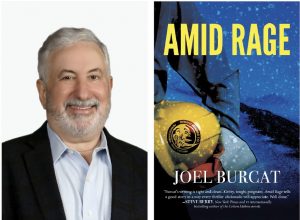
Author: Joel Burcat
Location: Harrisburg
Recent Novel: “Amid Rage,” published February 2021
Website: www.JoelBurcat.com

Describe what you write about and why you write about that subject area.

I write environmental legal thrillers because I know about environmental and legal issues, and I care about the environment. I have also written about many other subjects because they interest me. Mostly, I write to describe people who make a difference and issues that matter.

Tell us how you generate ideas for your novels.

Some of my ideas come from my 40 years of experience as an environmental lawyer. I try to read a wide variety of news stories, and some ideas are “ripped from the headlines” as the cliché goes. Other ideas come from my observations, fears and concerns in life

Give us some insight into your writing process.

I start writing by around 8 a.m., six days a week, and write until lunchtime (whenever it is that I get hungry). Sometimes, I write an outline, but most often I do not. I devote the afternoon to the “business of books.” As I write, there are things I want to write and things I must write. Often, I will let my characters dictate their words (truth). I will also try to imagine a scene (e.g. a country bar) and picture what and who is there. What is the bartender like? What is on the walls? How does it smell? I’ll write down what I imagine. Often, I will dictate a chapter using Dragon dictation software.

What advice would you give to an aspiring novelist?

Two things must be at the top of your to-do list:

Read. It is one of the best pieces of advice I can give. Reading a good book is a master class in writing. Reading a not-so-good book is also a lesson in writing. I read in a four-book cycle. (1) A book by a debut author or new author. (2) A book by a tried-and-true thriller writer. (3) Non-fiction. (4) Whatever the hell I want to read. Then I start over.

Write. This is also advice given by every writer, and it is true. I’ve met quite a few aspiring writers who have confessed they are ashamed of their first drafts, so they hesitate to put their words onto paper. The great writer and teacher Anne Lamott in “Bird By Bird” (a terrific writing book) said:

“Almost all good writing begins with terrible first efforts. You need to start somewhere. Start by getting something—anything—down on paper.”

Just write, people.


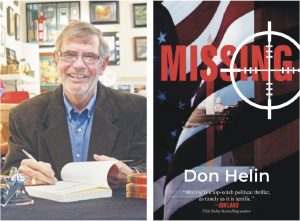
Author: Don Helin
Location: Lancaster
Recent Novel: “Missing,” published September 2020
Website:  www.donhelin.com

Describe what you write about and why you write about that subject area.

I enjoy reading thrillers, so when I began to write novels, I chose thrillers. With a career in the army and three tours (almost 10 years) in the Pentagon, writing political/military thrillers seemed a natural. My hero is an army colonel who works for the president’s national security advisor. My military background helped me develop realistic plot lines and characters.

Tell us how you generate ideas for your novels.

Ideas are all around us. My first novel is about white supremacists in central Pennsylvania. This is a reality in the rural county where I lived, so I began to research white supremacist groups and decided that was an interesting topic for a thriller.

I’ve always enjoyed traveling to Gettysburg and, on one trip, took a ghost tour. That seemed interesting, so it became the basis for “Devil’s Den.” Once I decide on the topic, I begin research to make sure I can find relevant material.

Give us some insight into your writing process.

I usually begin by developing a premise for the novel. Many of my friends develop an outline, but I’d rather spend time developing the story itself. Once in awhile, I need to go back, but normally I keep moving forward.

I usually develop at least two plot lines so I can switch back and forth between them.  When my hero gets in trouble in one plot line, I can switch to another. For example, in “Missing,” I had four plot lines: a high school reunion, a presidential election, abuse in memory units and artificial intelligence. These four plot lines were a lot to research, but I believe the result is more interesting.

What advice would you give to an aspiring novelist?

First: You never get a second chance to make a good first impression. Check and recheck your work before you send it to your publisher.

Second: Writing is an art, but publishing is a business. A novelist must learn how to write a quality novel. The successful novelist must then understand how to work with a publisher to improve and market the novel. If your first novel doesn’t sell, the chances of a second novel being published are slim.


Author: Maria V. Snyder
Location: Elizabethtown
Recent Novel: “The Eyes of Tamburah,” published February 2021
Website: www.MariaVSnyder.com

Describe what you write about and why you write about that subject area.

I write mostly fantasy and science fiction for young adults and adults. These two genres appeal to me because my stories don’t have to be limited by real life. My characters can use magic or travel throughout the galaxy as they overcome the various obstacles—both real and fantastical—to achieve their goals. It’s a great deal of fun.

Tell us how you generate ideas for your novels.

I love to travel, and I frequently spark on story ideas while I’m visiting other countries. For example, “The Eyes of Tamburah” is a fantasy set in a desert world that is so hot on the surface the inhabitants have to live in vast underground cities. Where water—not money—equals power. That was inspired by my trip to the Australian Outback. “For Navigating the Stars,” I sparked on the idea of the discovery that Terracotta Warriors had been buried on other planets when I was in China. Terracotta Warriors in space! How could I not write that?

Give us some insight into your writing process.

When I get an idea for a novel, I immediately think about the characters. To me, they are the most important part of a story. Without them, there is no story. I formulate a general idea of their goals and obstacles and begin writing. I don’t outline, but rather discover the story as I go and often am surprised by my characters’ actions. I love it when that happens!

What advice would you give to an aspiring novelist?

Persistence! It’s key for all aspects of writing. You need it to finish a novel, for all the rounds of editing, for finding an agent and publisher, and for marketing and promotion. Even if you publish your book independently, you need persistence to produce the best book possible and to do all the hard work to reach readers. I also teach in Seton Hill University’s MFA program and have plenty more advice about writing and publishing that can be found on my website for free. Here’s a link: www.mariavsnyder.com/advice.php.


 Support quality local journalism. Become a Friend of TheBurg!
Continue Reading

Signs of the Times: Marty Mummert creates hand-painted signs the old-fashioned way—one at a time

Back in the ‘80s, Marty Mummert took a string of odd jobs, including a position with a sign company.

“They said everything was going digital, and I said, ‘That can’t happen—I gotta learn how to hand paint signs,” he said.

Mummert, who had recently come out of the Air Force, took up a new calling. He felt like it was his duty to preserve the time-honored, hand-lettered craft of sign making.

His first hand-painted sign, created on plywood, was for a shop in Newport News, Va.

And so it began—Mummert worked at the sign company, which was turning digital, during the day, while he continued plying his old-fashioned, hand-painted trade on the side, after hours.

“I think I’m an old soul—I really do,” Mummert said. “I look at how things were—and I might be stepping on toes—but we just accept stuff today. I mean, is there any character or creativity left?”

To the Letter

Sign making was a side hustle for many years. Mummert bounced between jobs with Coca-Cola, a potato chip company and truck driving. Sign making added to his colorful resume.

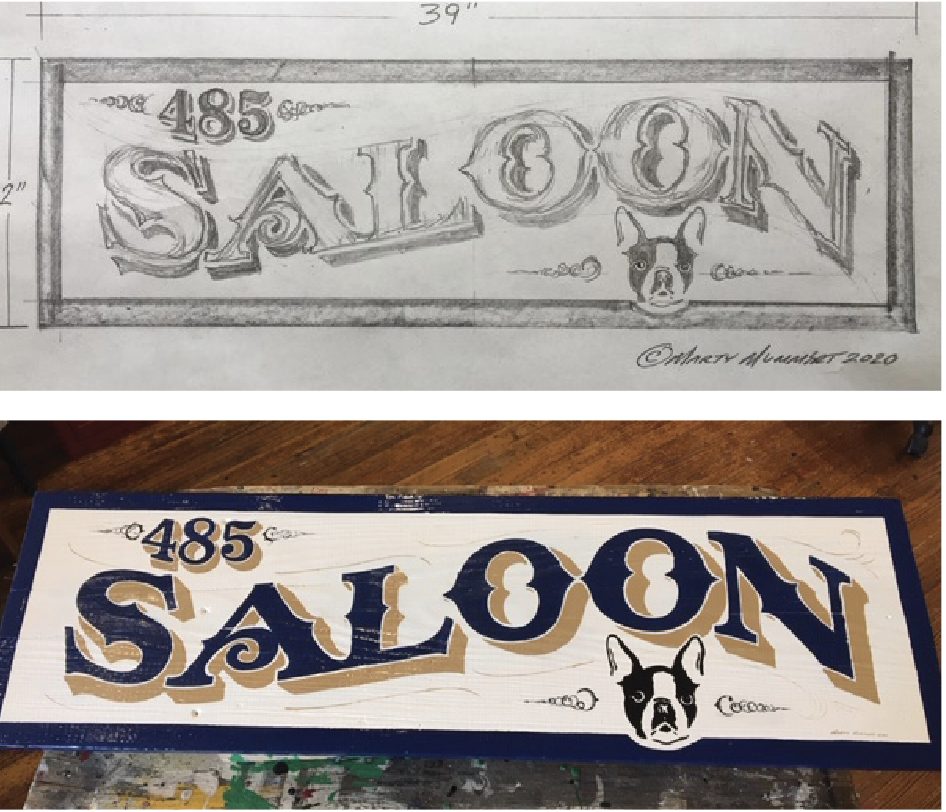
Every Marty Mummert sign was and is an original that begins with a pencil sketch, measurements and dimensions calculated meticulously. He calls the process “pencil to paint.” The finished product comes to life with vibrant, oil-based paint, a sign painter’s brand called “One Shot Paint.”

By 1996, Mummert went full-time and launched Marty Mummert Studio from his East Berlin, Adams County home. By 2014, he opened a storefront—Marty Mummert Sign Company—along Baltimore Street in downtown Gettysburg.

One of his first big breaks came during a trade show in Atlanta.

“A buyer from Spain gave me his business card—it said Anthropologie. I didn’t even know what Anthropologie was, but he called the next week and asked if I could handle several thousand rusted metal signs—2,600 for all their stores. That was pretty flattering,” said Mummert.

That was followed by signs for Bubba Gump Shrimp Company, Cracker Barrel, an episode of “Unwrapped” with the Food Network and Disney movie “Invincible.”

Mummert talks about it all with an “aw, shucks” attitude.

“Oh yeah, I got to do couple jobs for Starbucks, too. I’m pretty much flattered when anyone wants a sign, whether it’s someone from Hollywood or someone who walks in my shop,” Mummert said. “I guess I’m finally doing what I’m supposed to be doing.”

Today, at the age of 61, he’s painted hundreds of projects for clients around the globe. Marty Mummert signs hang in national and international businesses, as well as small businesses along Main Streets throughout America. His artwork has appeared on television, in movies and music videos, on pickup trucks, barns and murals.

Historic Home Base

How fitting is it that Mummert’s shop is located in one of America’s most famous historic towns, Gettysburg?

His handiwork paints the town—no small feat for a town as historically correct as Gettysburg.

“Signs in Gettysburg have always been viewed as a significant contributor to a positive experience, either walking or driving through the historic town,” said Gary Shaffer, of Gettysburg’s Historic Architectural Review Board (HARB). “For many years, HARB has championed unique and especially well-crafted signs—they need not be historic in design, but thoughtful and artful. The streetscapes in Gettysburg have been enriched in the last several years by the careful, creative designs of Marty Mummert.”

Numerous businesses located in the heart of Gettysburg, directly on Lincoln Square, feature Mummert’s hand-painted designs—including The Pub & Restaurant owned by Lisa Grim.

“It’s hard to find craftsmen like Marty any more—it’s a dying breed, sadly. He breathes life back into authenticity and craftsmanship,” Grim said.

Mummert is well liked among Gettysburg shop owners, and the feeling is mutual.

“Gettysburg has received me pretty darn well,” he said.

As you can probably tell, it’s not just Mummert’s talent that customers enjoy—it’s also his personality.

One of Mummert’s recent, larger projects involved hand-lettering “The Barrel House” directly on the third-story bricks of the downtown Chambersburg landmark and venue.

“Marty is an inspirational artist… he is so kind,” said Dr. Joshua Dunklebarger, who owns The Barrel House. He described Mummert’s work as “timeless.”

In the Driver’s Seat

One of Mummert’s biggest projects was for Okoboji Classic Cars—a car museum in Iowa.

“It was a 22-hour drive, and I went out for three weeks at a time, then came home for two weeks at a time,” Mummert said. “It’s built like a downtown, with all the signs painted by hand. That was probably one of the most memorable projects.”

How does the saying go? If you love what you do, you’ll never work a day in your life?

“The very fact that I do it by hand makes it fun,” Mummert said. “I go home every day with a smile on my face.”

Like his signs, he’s a classic, full of character.

“I’m just flattered that you’re writing a story about me,” said Mummert. “I don’t know who will read this.”

Marty Mummert Sign Company is located at 137 Baltimore St., Gettysburg. For more information, see martymummertstudio.com.

Support quality local journalism. Become a Friend of TheBurg!


Continue Reading

Pandemic Perspectives: Four Burg writers share insights on the one-year anniversary of the COVID-19 pandemic

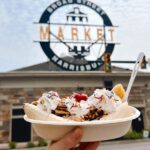
Pre-pandemic, four Burg writers regularly met for lunch at the Broad Street Market.
From left: Susan Ryder, Diane McCormick, Gina Napoli and Karen Hendricks.

Friday, March 13 is the date that many people pinpoint as “the day” that the pandemic started affecting their lives. It was that afternoon that Gov. Tom Wolf announced the first lockdown that would change every aspect of our lives—our jobs, schools, businesses and everyday habits.

Friday, March 13 was also the date that four writers for TheBurg gathered at the Broad Street Market for lunch. “Coronavirus” was the hot topic at lunch that day, but little did they know how far-reaching the pandemic’s impact would be upon the rest of the entire year—impacting their personal lives and professional work as writers.


Little Did We Know

By Karen Hendricks

They say that birds of a feather flock together. As four writers, the main reason we started gathering for an occasional lunch was to combat the otherwise lonely existence that freelance writing can be. Which is pretty ironic, because as we gathered on March 13, 2020, little did we know our idea of “lonely” was about to be redefined.

Leading up to that Friday the 13th, I was the one who sounded the alarm and suggested (gasp) that we cancel. Call me cautious or cynical, I was tuned into the national and international news reports describing the impending “coronavirus” as much more serious than the goofy memes featuring bottles of Corona (remember those?). I feared the worst, but, in true peer pressure fashion, my three fellow writers assured me we’d all be just fine—and I caved.

I remember our conversation alternating between laughs (there are always laughs), congrats (they were genuinely happy for my debut of TheBurg Podcast just the day before), and our doubts and fears about what was to come. The Broad Street Market was like a ghost town compared to the typical friendly Fri-yay atmosphere. Little did we know, it would be the last “normal” day of operations.

I remember how shockingly quiet our communities were, those first few weeks of lockdown. No traffic. It felt eerie—too quiet—even for someone used to working solo, from home, most of the time.

As journalists, we’re trained to ask questions, be curious and observant, and then explain what we’ve gleaned through our writing. I tried to describe the strange times we were living in, through several Burg Blogs, as well as my personal journal. But honestly, I stopped journaling for weeks at a time. The pandemic, layered with politics, then racism and hate, became too overwhelmingly painful. I didn’t want to capture those memories—I wanted to release and forget them.

Journalism became an outlet, and I focused on writing others’ stories—inspiring distillers-turned-hand sanitizer producers, food bank directors, runners and teachers. Amid a pandemic, I couldn’t cover news on the frontline, so phone and Zoom interviews became my lifeline.

Instead of beginning conversations with the usual, “How are you?” I learned from a pandemic-pivoting journalism webinar to add one more empathetic word to that sentence.

“How are you coping?” became my first question, because it acknowledged that we were all dealing with “stuff,” and it set the tone for honest, real conversations.

I tried to capture the spirit I heard in those early voices, as they described innovative, can-do resilience.

One of the joys of being a writer is learning something new every day, but by the summer, I began to resent some of the things I was learning. Because I also had to capture the hurt I heard in those voices. Little did we know how long, how hard, how ugly, how deadly this pandemic would be.

But lately, the tone across the phone lines has shifted. And I love what I’m hearing, because now, in 2021, I’m hearing a lot of hope.

On Dreams Deferred

By M. Diane McCormick

I was the one who suggested we cough when Karen, the COVID-19 scaredy-cat, arrived.

Some joke. Please forgive me. How could we know? We did normal things that day. Karen and I split a pizza. We four laughed over a lingering lunch.

But in my memory, the Broad Street Market already felt hollow. One vendor pointed to the burners on her stove, cold from lack of business.

At home that afternoon, I heard that Gov. Wolf was closing schools for two weeks. But my granddaughter was starring in her school musical! Postponed now, but not for long, I assured her. The show does go on.

Except that it hasn’t. Poor kid is still waiting in the wings. So is my singer-songwriter stepdaughter, verging on a career breakthrough. And my nephew, ready to transform from minor leaguer to Houston Astro.

Dreams put on hold really burn me up, but there was no escaping them. From that day on, every assignment started with, “Diane, can you write a story about the impact of COVID on . . .?” Fill in the blank. Animal rescues, restaurants, the holidays, fall getaways, the arts (two of those).

And that was just for TheBurg. I wrote so many “how we’re dealing with this” stories that I called myself “The COVID Whisperer.”

Then came the gut punch, a story for TheBurg on the pandemic in Harrisburg’s Black community. Learning about the departed greats of our city, I felt a new anger—resentment over talent lost and wisdom wasted. Gerald Welch, the school board member who never let a child fall through the cracks. Lisa Burhannan, the tireless advocate for girls, re-entrants, crime survivors, and anyone else who needed a friend.

They should still be here, transforming lives. I fumed, until I heard hope and gratitude in the voices of grieving friends and family. They rediscovered purpose. They rediscovered the core values somehow lost in the pre-pandemic grind.

That message, I realized, was woven through all my COVID-year writings.

“All those dreams we’ve had locked up,” the Rev. Brenda Alton told me. “It’s time to work on them and release them.”

So, dreams. Get off the “someday” list and take flight. Bring back a life of health and happy gatherings. And make sure that my assignments from here on start with, “Diane, can you write a story about the impact of recovery on . . .?” Fill in the blank. Hit me. I’m ready to be “The Post-COVID Whisperer.”

A Unique Time

By Susan Ryder

Our traditional Friday the 13th gathering felt a bit clandestine. Should we be meeting due to the rising concern of the coronavirus? Karen Hendricks expressed some concern, and I told her I thought we’d be “fine,” and pushed away the thought that we could be taking a chance.

A pall hung over this usually light and happy Broad Street Market lunch. Normally, there would be hugs all around, but social distancing had just arrived in our reality. As typical, we chatted about our stories and what was in the works.  I was working that day too, on a piece about how COVID-19 was affecting business there.

This excerpt from my story, published online March 13, summed up market that day:

“Bits of conversation about the coronavirus rose above the banter, as people purchased produce, waited to order fish at Tep’s Fresh Seafood, and greeted friends.”

I talked with a few patrons. One older gentleman, who used the market as his office, told me that he wasn’t going to live in fear. Another woman expressed concern about how this would impact local businesses.

Based on what was happening in Europe, I was quite anxious about how America would weather corona. For a minute, I thought this could be a rallying point for a conflicted country—that we could gather around a common enemy, COVID-19. That pipe dream lasted until Monday afternoon, when we locked down.

Then the vitriol around the virus swirled. People were scared, uncertain and overwhelmed, but instead of uniting, we argued via social media about whether it was real. That crushed me more than the threat of the virus.

However, like many folks, I received comfort and encouragement from my neighborhood! Early in the lockdown, I walked past the bay window of my bi-level home and saw something that made me burst into laughter. My neighbors had placed a paper hangman word game in their front window. For the next few days, we sent letter guesses, written on recycled printer paper, in an attempt to decipher the message—“Flatten the curve.”

Neighbors sewed and distributed masks, shared toilet paper, inquired about needs at the grocery store, delivered baked goods and books. In a small attempt to do my part, I hacked my potted palm tree on Palm Sunday and gave palms to my neighbors.

Journalistically, it’s been a unique time. I covered stories such as how COVID changed how we mourn, a personal story as my father-in-law died in June. And since racism’s ugliness once again let itself be known in a dramatic way, I felt compelled to shine a light on white supremacy, even as the fatigue of COVID weighed down the world.

How does a person sum up a year? With the most vivid memories. What I remember most are the good and kind things that arose from the chaos.

I look forward to the next time this writing quartet meets—enjoying spanikopita at Phyllo, and sharing not only stories but hugs all around.


On Grieving During COVID-19

By Gina Napoli

In my usual “denial style,” the pandemic gravity had not hit me by March 13, 2020. Back then, the CDC proclaimed COVID-19 a “once-and-done” disease. My immediate family felt certain the virus had already ripped through our household in December 2019. We complied with Gov. Wolf’s fluctuating rules to avoid becoming carriers, but like Alfred E. Neuman of MAD Magazine, we weren’t worried.

Then at the end of March, my 29-year-old cousin died. (At the time, it wasn’t deemed COVID-related, but now the CDC hints otherwise.) As I shoehorned my fat rolls into my black funeral dress, I wondered how to get through an Italian funeral for one of our youngest without anyone hugging me. I resolved to knuckle-bump, rub elbows and head-nod across the cemetery.

My resolve lasted 20 minutes. Even with limited attendance of just our big family and no friends, the Napoli’s turned a burial into a potential super-spreader event. What should have been a well-attended, four-part viewing + visitation + burial + face-stuffing event with affection everywhere devolved into a pared-down substitute. I realized then how much solace the familiar string of rituals provided. COVID-19 cheated my cousin out of the farewell party she deserved.

“Flattening the curve” was supposed to end when March did. Except it didn’t. My usual beat of writing theater reviews and offbeat local attractions went pffft. My articles awaiting publication were either postponed or killed, so it didn’t make sense to seek out new ideas. I grieved my personal change—the professional fulfillment I once felt from my freelance writing career.

Throughout 2020, several high school classmates’ parents passed away—moms and dads who had once served as my honorary parents. I would have ordinarily paid my respects in person, but every family either had private funeral arrangements or waived them altogether. Again, cheated by COVID-19.

Then my 95-year-old grandfather died New Year’s Day. In addition to the same crowd from March, several romantic indiscretions by the guest of honor yielded extra half-families around the casket. Not that this happens to me much (but it will probably, thanks to ancestry.com and an uncle who won’t quit swabbing us), but normally, when you meet new, long-lost family, there is an initial awkward moment spent stumbling over the handshake/hug decision. COVID made the decision for us to limit our interactions to a wave—way over there.

Graveside, supply chain issues (or scandal?) affected the availability of Catholic priests, so a Southern Baptist minister showed up instead. I never saw more side-eyes than when we heard his drawl. Then, when my great-aunt died less than a week later, similar protocol omissions followed: fabric chairs, guest-books, prayer cards.

My family already resembles the “Goodfellas” cast, so masks added an extra criminal-like element… symbolically apropos, because COVID-19 has robbed 2020 of normal grieving rituals. This loss is something to mourn all by itself.


From coverage of social justice issues to pivots in theater performances, attempts to interview booked-up mental health professionals and overworked teachers: What interviews, behind-the-scenes stories, facts and observations stand out from these writers’ pandemic assignments? These four writers continue the conversation on TheBurg Podcast’s March episode, available on Friday, March 12.

Support quality local journalism. Become a Friend of TheBurg!
 

Continue Reading

March Editor’s Note

A year ago, in mid-March, our printing company called and asked me what we planned to do.

The pandemic had just hit, everything was shutting down and, apparently, many of their publishing customers were pulling their orders.

“We’re not cancelling,” I said. “We will have an April issue.”

I wasn’t exactly sure what that would look like. Within just two days of the state-mandated lockdown, our business dried up as most advertisers cancelled, and many of our distribution locations closed, as well.

But we forged ahead. In such uncertain times, I felt that people needed a degree of normalcy in their lives, even if that was just the next regular issue of TheBurg. If we had to eat our costs, so be it.

A year later, I feel the same.

The past year has been difficult, exhausting, marked by one turbulent event and then another. So, there’s something to be said for regularity and routine.

Yes, we’ve had our share of topical features, many stories about COVID, about Black Lives Matter and about the shutdown and protests, all with local angles. But we also never stopped our regular coverage—pieces about local businesses, restaurants, nonprofits, the arts, etc.

Some people, I’ve been told, read TheBurg cover to cover each month. But others head straight for their favorites, such as Rosemary’s food column, our listing of property sales or even, I’m always surprised to hear, my monthly “City View” piece. And, apparently, the crossword puzzle and Sudoku have many fans, at least judging from the calls I received the time we goofed and published the wrong answer key.

I hope that, throughout this crazy year, we’ve been able to provide an element of normalcy in very abnormal times. And, as the year progresses, I’m optimistic that we’ll gradually return to our full-on, boring old routine: a magazine thick with stories, events and ads—and with full distribution.

A year ago, “ordinary” was taken away from us. Looking at the rest of 2021, our primary goal is to get it back.

Lawrance Binda

Co-Publisher/Editor-in-Chief

Support quality local journalism. Become a Friend of TheBurg!
Continue Reading

History, Streamed: Sankofa, Gamut join forces to highlight figures of Harrisburg’s past

Lyeneal Griffin as Joseph Bustill. Photos by John Bivins.

History is reflected not just through events but through people. Sometimes, these people are overlooked heroes right in your own community.

In Harrisburg, they include such figures as abolitionist William Howard Day, poet Alice Moore Dunbar-Nelson and political activist Maude Coleman. And now you can get to know them through the efforts of Sankofa African American Theatre Co. and Gamut Theatre Group.

A program entitled “Do You Know Me?” connects audiences to Harrisburg’s rich African American history—abolitionists and civil rights activists who struggled to end slavery, secure the vote, and challenge ongoing segregation.

In February, the program was presented to high school students in honor of Black History Month and, this month, it will be streamed for general audiences.

Sankofa and Gamut have, for a number of years, partnered in a live program that celebrates Black history. This year, because of the COVID-19 pandemic, the program had to go virtual—also known as a “digital performance episode”—developed by Sharia Benn, Sankofa’s executive artistic director.

This digital performance features local student talent as well as professional artists who are capable of breathing life into poetry, interviews, speeches and letters. These written records highlight the words of influential local and national African American leaders.

“By sharing this truthful knowledge of culture, history, and identity, we gain a better understanding of the past so we can be better agents for social change in the future,” Benn said.

Highmark Blue Shield and Dauphin County are co-sponsoring the performance.

Commission Chair Jeff Haste stated that Dauphin County has made Black History Month a priority by supporting events for nearly a decade.

“The Dauphin County commissioners are honored to continue this vital program to celebrate Black history,” Haste said. “We believe it is essential to offer the citizens of Dauphin County chances to learn more about local history, the fascinating people who lived here and their incredible stories.”

Nicholson and Benn co-directed the program, and students performed live monologues filmed on the Gamut stage, with Zoom performances and discussions. Featured are students Jade Jarrell and Najuma Norman, both of Capital Area School of the Arts, and Lunden McClain of Central Dauphin East.

“I have really enjoyed working with these strong young ladies,” Nicholson said. “I am ecstatic that we can continue this program virtually and continue in our mission to share these important stories.”

The program has focused principally on the 8th Ward, where many African American residents in Harrisburg resided, a neighborhood razed a century ago to expand the Capitol complex. It is multifaceted—encompassing artistic, historical and educational components, explained Nicholson.

According to Benn, “Do You Know Me?” bridges the gap between knowledge and meaningful action as students travel along the path to accountable and equitable citizenship.

“Recent racial and social injustices have fueled young people in our community with a desire to be social change agents,” she said.

“Do You Know Me?” will be offered as a digital performance for two special viewings on Sunday, March 14, at 4 p.m., and Monday, March 29, at 7 p.m. Tickets for the public performances are available for the community engagement price of $10 and may be purchased at GamutTheatre.org. 

Support quality local journalism. Become a Friend of TheBurg!
Continue Reading

Happenings: Our March Calendar of Events

Museum & Art Spaces

AACA Museum
161 Museum Dr., Hershey
717-566-7100; aacamuseum.org

“Look . . . They Gave Me a Map,” an exhibit examining the enduring appeal of free road maps, through April 23

“Minibike Mania,” a display of more than two dozen miniature motorbikes, through April 23

“Yeah, It’s Got a Hemi!” an exhibit focused on Hemi engines, through April 23

“Yes, We Drive These Cars!” is an exhibit of The Horseless Carriage Club of America, with three display cars, early signage and artifacts, and video of the cards on tour, through April 23

Art Association of Harrisburg
21 N. Front St., Harrisburg
717-236-1432; artassocofhbg.com

“Figuratively Speaking,” annual juried membership show, celebrating the human form, with an added theme this year of coronavirus lock-down/quarantine experience, through April 1

Carlisle Arts Learning Center (CALC)
38 W. Pomfret St., Carlisle
717-249-6973; carlislearts.org

“I REaD it somewhere,” CALC’s Annual Members’ Exhibit, through March 6

“Annual Student Show: Honoring Seniors 2021,” March 18-April 10


Hershey Area Art Association (HAAA)
hersheyart.org

Local art display through March 27 at Hershey Public Library’s Hallway Art Gallery

Works by HAAA artists Mona Frey and Carolyn Alfano, through March 31 at Backstage Café’ Art Gallery (at Allen Theatre)

The Millworks
340 Verbeke St.; Harrisburg
717-695-4888; millworksharrisburg.com

Works by Amie Bantz, Tina Berrier, Pamela Black, Tristan Bond and Tara Chickey, March 2-April 11

Pennsylvania National Fire Museum
1820 N. 4th St., Harrisburg
717-232-8915; pnfm.org

Exhibits dedicated to Pennsylvania firefighting history

Perry County Council of the Arts
PCCA Gallery, 1 S. 2nd St., Newport
717-567-7023; perrycountyarts.org

“On and Off the Grid,” abstract paintings in grid style by Thom Kulp, inspired by the work of Agnes Martin and serving as metaphors for restrictions people have faced during the covid-19 pandemic, through April 10

Rose Lehrman Art Gallery
One HACC Dr., Harrisburg
717-780-2435; hacc.edu

Virtual exhibition of Graphic Design Works by Craig Welsh, through March 18; Zoom lecture: March 18, 5:30 p.m.

Susquehanna Art Museum
1401 N. 3rd St., Harrisburg
717-233-8668; susquehannaartmuseum.org

“Once A Future Kingdom,” sculptured materials and imagined relics by Anthony Cervino, through March 14

“Sun + Light,” a collection of works from the series “Everyone Loves the Sunshine” by contemporary artist Charles Edward Williams that highlight his own personal encounters with the Civil Rights movement of the 1960s,” through April 11

“Meanderings,” a collection of collagraphic prints by artist Valerie Dillon, through April 25

“Persephone/Persephone,” a multi-panel collaborative installation by Elody Gyekis and Joanne Landis, through June 20

“Project Pattern” multimedia display of photography, painting, sculpture and installation by artists Nate Ethier, Nicole Herbert, and Luke Murphy, through August

Suzanne H. Arnold Art Gallery
Lebanon Valley College
101 College Ave., Annville
717-233-8668; lvc.edu/gallery

“Danny Lyons—Memories of the Southern Civil Rights Movement,” through March 22


Read, Make, Learn

Carlisle Arts Learning Center (CALC)
38 W. Pomfret St., Carlisle
717-249-6973; carlislearts.org

March 9: Metal Jewelry—Riveting & Texture, 6-8 p.m.
March 17: Experimental Mixed Media 1-Day Workshop, 10 a.m.-1 p.m.
March 17: Suicide Loss Survivors Creating Together, 5:30-7 p.m.
March 30: Jeweler’s Saw—Tips & Tricks, 6-8 p.m.

Dauphin County Library System
dcls.org

March 1, 8, 15, 22: Virtual Anime Club, 4 p.m.
March 1, 8, 22: Born to Read (birth-18 months), 9:30 a.m.
March 2, 9, 16, 23: Animal Crossing with The Library, 3:30 p.m.
March 2, 9, 16, 23: Virtual Family Storytime, 6 p.m.
March 3, 10, 17, 24: Virtual Toddler Storytime, 10 a.m.
March 3, 10, 17, 24: Virtual Create Lab, 4 p.m.
March 3, 10, 17, 24: Young Adult Book Club on Zoom, 4 p.m.
March 5, 12, 19, 26: Preschool Storytime on Zoom, 10 a.m.
March 5, 12, 19, 26: Dungeons and Dragons on Zoom, 4 p.m.
March 6, 13, 20, 27: Dungeons and Dragons on Zoom, 3 p.m.
March 8: Virtual Device Club, 1 p.m.
March 9: Virtual Reading the Rainbow Book Club, 7 p.m.
March 10: Mental Health Series—Meditation, 7-8 p.m.
March 20: Virtual Mindfulness for Teens, 10-11 a.m.
March 23: Job Seeker Resources on Zoom, 6-7 p.m.
March 31: Knit One, Crochet Too! on Zoom, 6 p.m.

Fredricksen Library
100 N. 19th St., Camp Hill
717-761-3900; fredricksenlibrary.org

March 1, 15: STEM Grab & Go Bag (ages 7-12), 9 a.m.
March 1, 15: Zoom—Fredricksen Writes on Zoom, 6:45 p.m.
March 8, 22: Teen Grab and Go Bag, 9 a.m.
March 2: Zoom—Curl up with the Classics on Zoom—“ The Screwtape Letters,” 10-11 a.m.
March 2, 9, 16, 23: Career Exploration Workshop on Zoom, 10:30 a.m.
March 2, 9, 16, 23: Career Exploration Workshop on Zoom, 4:30 p.m.
March 3: Zoom—Moving Forward Book Group w/ Hospice of Central PA, 1-2 p.m.
March 4, 11, 18, 25: Zoom Resume Writing Workshop, 10:30-11:30 a.m.
March 4, 11, 18, 25: Zoom Resume Writing Workshop, 4:30-5:30 p.m.
March 4, 18: Virtual Peaceful Poses Children’s Story Time, 11 a.m.-12 p.m.
March 5, 12, 19, 26: Virtual Get That Job! Workshop, 10:30-11:30 a.m.
March 5, 12, 19, 26: Virtual Get That Job! Workshop, 4:30-5:30 p.m.
March 6, 20: Easy Craft Grab and Go Bag (ages 4-7), 1 p.m.
March 8: Twisted Stitchers, 6:30-8:30 p.m.
March 12: Philosophers’ Roundtable, 2 p.m.
March 12, 26: Zoom STEM Storytime, 10 a.m.
March 17: Zoom—Write On, 7:30 p.m.

Gallery on the Square
Millersburg Area Art Association
226 Union St., Millersburg
Facebook: Gallery on the Square

March 8, 15, 22: Practical Color Theory, 5-5:40 p.m.

Hershey Public Library
701 Cocoa Ave., Hershey
717-533-6555; hersheylibrary.org

March 2, 4, 9, 11, 14, 18, 23, 25, 30: Penn State Hershey—Mothers & Babies Together, 10 a.m.
March 6: Virtual COVID Safety Storytime, 10 a.m.
March 6: Connect for Your Health—Evaluating Online Health Information virtual workshop, 11 a.m.
March 7, 14: Art of Truth—Creative Non-Fiction virtual workshop, 2 p.m.
March 8: Discovering Your Patriot Ancestors virtual workshop, 7 p.m.
March 9: Virtual Connect for Your Health—MedlinePlus for Online Health Information, 6 p.m.
March 10, 24: Virtual LEGO Club, 3:45 p.m.
March 11: Morning Contemporary Book Group on Zoom, 9:30 a.m.
March 11: Evening Contemporary Book Group, 6:30 p.m.
March 12: “Brothers and Sisters”—a Bill Harley virtual watch party, 7 p.m.
March 13: Connect for Your Health: Health information in the News (virtual), 11 a.m.
March 13: One Book One Community Book Discussion (virtual), 2 p.m.
March 18: Life-long Readers Book Group on Zoom, 6:30 p.m.
March 20: The Spanish Influenza of 1917-1918 in the Philadelphia Region (virtual), 2 p.m.
March 21: Mythology Madness Virtual Trivia, 2 p.m.
March 22, 29: Facebook Live: Books & Babies, 10 a.m.
March 23: Blood Drive, 1:30 p.m.
March 23, 30: Virtual 1, 2, Whee!, 10 a.m.
March 25: Virtual Storytime, 10 a.m.
March 25: Zoom—Between the Lines Book Group on Zoom, 6:45 p.m.
March 27: Virtual Kids Carry & Craft—Kite Mosaic, 10 a.m.
March 27: Virtual Teen/Adult Carry & Craft—Rock Painting, 11 a.m.

The Hershey Story Museum
63 W. Chocolate Ave., Hershey
717-534-8939; hersheystory.org

March 1-31: Chocolate Lab classes
March 27, 28: Easter-themed Chocolate Lab classes

Historic Harrisburg Association
1230 N. 3rd St., Harrisburg
historicharrisburg.com

March 22: Fourth Monday Program—Four Generations of Strong Women in Harrisburg, 6-7 p.m.

Joseph T. Simpson Public Library
16 N. Walnut St., Mechanicsburg
717-766-0171; simpsonlibrary.org

March 1, 5, 8, 12, 15, 19, 22, 26: Toddler Time on Zoom (18 months to 3 years), 11:10 a.m.
March 1, 8, 15, 22, 29: Story Time on Zoom, 1:30-2 p.m.
March 1, 8, 15, 22, 29: Rhyme Time on Zoom (18 months and younger), 10:15 a.m., 5:15 p.m.
March 1, 8, 15, 22, 29: Toddler Time on Zoom (18 months to 3 years), 6 p.m.
March 1, 8, 15, 22, 29: Family Story Time on Zoom, 6:45-7:15 p.m.
March 2, 9, 16, 23, 30: Tea & Stitches on Zoom, 10 a.m.
March 3, 10, 17, 24, 31: Zoom Story Time (ages 3-6), 10-10:45 a.m.
March 5, 12, 19, 26: Story Time (ages 3-6), 10-10:45 a.m.
March 5, 12, 19, 26: Zoom Toddler Time (18 months to 3 years), 11:10 a.m.
March 5, 12, 19, 26: Rhyme Time (18 months and younger), 12-12:20 p.m.
March 9: Tween Scene on Zoom—Game Night (grades 4-5), 6:30-7:30 p.m.
March 10: Mad About Mysteries on Zoom, 7-8 p.m.
March 12, 26: Dungeons & Dragons (grades 6-12), 6-8 p.m.
March 15: Virtual Monday Night Book Club, 7-8 p.m.
March 16: Zoom STEM Club, 6-6:45 p.m.
March 20: Kindergarten Club, 10:30-11:30 a.m.

The LBGT Center of Central PA
1306 N. 3rd St., Harrisburg
717-920-9534; centralpalgbtcenter.org

March 1, 8, 15, 22, 29: Virtual Common Roads (Young Adult), 4-6 p.m.
March 6, 13, 20, 27: Virtual Passageways Transgender & Non-binary Group, 2-4 p.m.

Middletown Public Library
20 N. Catherine St., Middletown
717-944-6412; middletownpubliclib.org

March 4: Virtual and in-person Book Club, 6-7 p.m.
March 5, 12, 19, 26: Online Science Fiction Book Club
March 5, 12, 19, 26: Star Trek Rewatch online group
March 15: Virtual and in-person Mystery Book Club, 6 p.m.

Midtown Scholar Bookstore-Café
1302 N. 3rd St., Harrisburg
717-236-1680; midtownscholar.com

March 4: An Evening with Anne Lamott, 7-8 p.m.

The Millworks
340 Verbeke St.; Harrisburg
717-695-4888; millworksharrisburg.com

March 6: First Saturday Open Studios, 1-5 p.m.

Ned Smith Center for Nature and Art
176 Water Company Rd., Millersburg
717-692-3699; nedsmithcenter.org

March 21: Ducks and Geese of the Susquehanna, 8 a.m.-1 p.m.

Palmyra Public Library
50 Landings Dr., Annville
717-838-1347; palmyra.lclibs.org

March 2, 4, 9, 11: Little Explorers Virtual Early Learning Classes, 10:30-11 a.m.

Perry County Council of the Arts
Landis House, 67 N. 4th St., Newport
717-567-7023; perrycountyarts.org

March 13: Virtual Paint Together, 4-6 p.m.

Pine Street Presbyterian Church

310 N. Third Street, Harrisburg

717-238-9304; pinestreet.org/education

Mar. 7, 14, 21: “The Sermon on the Mount,” 8:45 a.m.

The State Museum of Pennsylvania
300 North St., Harrisburg
717-787-4980; statemuseumpa.org

March 5: Virtual Artists Conversations—Violet Oakley’s William Penn Mural, 12:15-12:45 p.m.
March 7: Virtual Charter Day
March 12: Virtual Adventures in Nature Lab: PA Songbirds, 12:15-12:45 p.m.
March 19: Virtual Curator’s Choice: Deadly Contact: Europeans, Native Americans, and Pandemics, 12:15-12:45 p.m.
March 26: Virtual State Museum Perspectives—Archaeology, 12:15-12:45 p.m.

Susquehanna Art Museum
1401 N. 3rd St., Harrisburg
717-233-8668; susquehannaartmuseum.org

March 14, 21, 28: Saturday Morning Art Club, 10 a.m.-12 p.m.
March 14, 21, 28: Young Artist Club, 10 a.m.-12 p.m.
March 17: Life Drawing Class, 6-9 p.m.

Wildwood Park
100 Wildwood Way, Harrisburg
717-221-0292; wildwoodlake.org

March 6: Kids Discover—Woodpeckers (ages 4-6), 10 a.m.-11:30 a.m.
March 6: Kids Discover—Woodpeckers (ages 7-10), 1:30-3 p.m.
March 13: Volunteer Work Day—Litter Clean Up, 10 a.m.-1 p.m.
March 13: Spring Wreath Workshop, 8:30 a.m., 12 p.m., 1:45 p.m.
March 24: Bird Walk—Waterfowl and Early Spring Migrants, 8-10 a.m.
March 27: Juniors—Animal Habitats, 10 a.m.-1:30 p.m.
March 30: Nature Journaling, 1-3 p.m.


Live Music

American Music Theatre
2425 Lincoln Highway East, Lancaster
717-397-7700; amtshows.com

March 21: Air Supply
March 25: 38 Special
March 26, 27: Celtic Woman Celebration

Appell Center for the Performing Arts
50 N. George St., York
717-846-1111; appellcenter.org

March 13, 15: York Symphony Orchestra digital concert
March 18, 25: A.J. Croce livestream

Arts on the Square
Market Square Presbyterian Church
20 S. 2nd St., Harrisburg
Facebook: Market Square Church

March 28: Pianists Ruth Slenczynska and Shelly Moorman-Stahlman (free live stream on Facebook page, 4 p.m.)

Club XL
801 S. 10th St., Harrisburg
717-409-8975; xlhbg.com

March 6: X Ambassadors

Luhrs Performing Arts Center
1871 Old Main Dr., Shippensburg
717-477-7469; luhrscenter.com

March 14: Ireland with Michael Londra virtual performance

Market Cross Pub & Brewery
113 N. Hanover St., Carlisle
717-258-1234; marketcrosspub.com

March 7: Shrimp Ryan’s Jig Band

Market Square Concerts
www.marketsquareconcerts.org

March 14: Verona Quartet at Whitaker Center

Messiah University School of Arts
One University Ave., Mechanicsburg
717-766-2511; messiah.edu

March 5: Messiah University Symphony Orchestra
March 7: Kuhlman Competition
March 26: Messiah University Concert Choir and Chamber Singers
March 27: Messiah University Percussion Ensemble

Ned Smith Center for Nature and Art
176 Water Company Rd., Millersburg
717-692-3699; nedsmithcenter.org

March 27: Leblanc, Kissinger & Messano

Pine Street Presbyterian Church

310 N. Third Street, Harrisburg

717-238-9304; pinestreet.org/music/maps

Mar. 21: Lenten Recital

The Susquehanna Folk Music Society
717-745-6577; sfmsfolk.org

March 13: We Banjo 3
March 14: SFMS Coffeehouse with Matt Minskie, Redacted, Roman Barten-Sherman
March 27: Väsen

Whitaker Center
222 Market St., Harrisburg
717-214-ARTS; whitakercenter.org

March 18: The Allman Betts Band


The Stage Door

Dutch Apple Dinner Theatre
510 Centerville Rd., Lancaster
717-898-1900; DutchApple.com

March 3-April 3: “Happy Days”

Gamut Theatre Group
15 N. 4th St., Harrisburg
717-238-4111; gamuttheatre.org

March 14, 29: “Do You Know Me?” digital performance

Harrisburg Christian Performing Arts Center
1000 S. Eisenhower Blvd, Middletown
717-939-9333; thehcpac.org

March 11-14: “The Little Mermaid”

Messiah University School of Arts
One University Ave., Mechanicsburg
717-766-2511; messiah.edu

March 4-7: “Snow White and the Seven Dwarfs” livestream
March 26-27: Spring Senior Series livestream

Open Stage of Harrisburg
223 Walnut St., Harrisburg
717-232-OPEN; openstagehbg.com

March 5-21: “Everyman”


Support quality local journalism. Become a Friend of TheBurg!

Continue Reading