March News Digest

Harrisburg Proposes Affordable Housing Bill

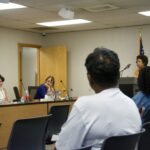
Affordable housing has been a long-debated topic in city hall, but now it seems that words are translating into action.

Harrisburg proposed a package of affordable housing legislation last month that would incentivize developers to incorporate affordable rental units into their building plans.

“I am very excited about this,” said Nona Watson, director of economic development for the city. “We are well on our way to establishing our affordable housing program.”

The package consists of several bills designed to encourage affordable housing through the use of incentives like tax abatement and zoning relief. Additionally, the city will satisfy street vacation application requirements, if needed.

Other incentives to developers may include density bonuses, which would permit developers to build more units than allowed by right on a property, explained Geoffrey Knight, the city’s director of planning. Incentives may also include reducing parking requirements. Knight explained that research has found that lower-income households are less likely to own a car.

Developers who apply and receive a Certificate of Qualification will have a set of rules they must follow in order to receive benefits.

According to the proposed bill, developers must provide 20% of their units as affordable for low-income households, as defined by the U.S. Department of Housing and Urban Development.  The units must be made available to rent at a price that does not exceed 30% of a household’s monthly income.

Additionally, developers need to keep the units at an affordable rent for at least 10 years.

The requirements also state that units must look the same and include the same heating and cooling systems and other improvements as the market-rate units. Affordable housing units must be made available for rent at the same time as market-rate units.

“We want to make sure that what we put out there is actually going to work,” Watson said.

Harrisburg to Buy Former Bank Building

Harrisburg is set to expand its office footprint, adding a new building in Midtown for city workers.

At a virtual legislative session last month, City Council unanimously voted to allow the city to purchase the former M&T Bank building on N. 7th Street to transform into offices for its engineering and traffic departments.

“This is a space that is needed due to the requirement of additional space for the public works engineering department,” said council member Ben Allatt.

In November, council voted to reallocate 2020 funds to purchase the building for $375,000, which Mayor Eric Papenfuse touted as a good deal since it was appraised at $675,000.

Papenfuse said that the $300,000 reduction in purchase price constituted a donation by M&T to the city.

“We’re greatly thankful to M&T for their continued support,” he said.

The ATM machine currently at the building will remain on-site as part of a lease agreement with M&T Bank.

At a prior council session, Papenfuse explained that, as part of PennDOT’s I-83 expansion project, part of the city’s Department of Public Works building on Paxton Street will be lost to eminent domain, requiring the traffic bureau to move. City Engineer Wayne Martin added that the growing department also needs more space.

The traffic bureau likely will share the building with the city’s engineering department, which currently is spread out among different office locations, Martin said. Many engineering employees will move out of the public safety building downtown, freeing up space for the expanding community policing team.

Renovations and remodels of the building are included in Harrisburg’s 2021 budget. It will likely cost around $192,000 for demolitions, renovations, HVAC replacement and security additions, among other items, Papenfuse said. He estimated that the annual cost of utilities and maintenance for the building would be around $60,200.

HHA Announces “Preservation Priorities”

One of Harrisburg’s oldest structures is a top preservation priority for 2021, the city’s principal historic preservation organization has announced.

At a virtual presentation, Historic Harrisburg Association unveiled its top five preservation priorities for the year.

The list includes Balsley House, a dilapidated, double building located downtown at 220 N. 2nd St. Dating back almost two centuries, Balsley House is one of the few remaining federal-period buildings in Harrisburg.

“It’s one of the oldest structures still standing in Harrisburg,” said Sara Sweeney, chair of HHA’s preservation committee. “It’s deteriorating. It’s in very bad shape, especially if you go around to the back.”

The 2,590-square-foot building, owned since 2006 by Dusan Bratic of Mechanicsburg, has housed many different businesses over its lifetime, but has sat empty and increasingly blighted for a number of years.

“We’re hoping to really raise awareness of this property over the next year,” Sweeney said. “With the revitalization that Harrisburg is really primed for, hopefully we can make some strides to bringing this building back to life before we lose it.”

The other properties on the 2021 list are:

  • William Penn High School, Uptown Harrisburg
  • Camp Curtin Memorial Mitchell UMC, Uptown Harrisburg
  • Harrisburg State Hospital campus, Harrisburg/Susquehanna Township
  • Prospect Hill Cemetery Gate House, Allison Hill/city line

William Penn, Camp Curtin UMC and the Harrisburg State Hospital campus are all on the market for sale. Prospect Hill Cemetery Gate House was severely damaged last year when it was struck by a car.

Balsley House, William Penn, Camp Curtin UMC and Harrisburg State Hospital all appeared on the 2019 list, as well.

Sweeney also noted several Harrisburg buildings that have been restored in recent years, calling them “wins.” These include the former Mary K mansions on Front Street, the former Fox Hotel in Shipoke, Locust Street houses downtown and the former Moose Lodge in Midtown.

Eviction Ban Extended

Harrisburg residents behind on rent due to the pandemic can take a deep breath once again.

Mayor Eric Papenfuse announced last month that he would extend the city’s ban on evictions for another 30 days into mid-March.

“It is important that we continue this eviction moratorium for the health and safety of our residents during these difficult times,” Papenfuse said.

This is the second extension the mayor has enacted since the original eviction moratorium declaration on Dec. 16. The first extension took place on Jan. 16.

Under the moratorium, no resident can be evicted for non-payment of rent or lease expiration. This does not include eviction for other reasons, such as property damage or criminal activity.

“We don’t want to make a homelessness situation worse,” Papenfuse said. “We don’t want to make it harder for people to have safe and reasonable shelter in the midst of a pandemic.”

The original order was adopted after city officials found that there likely would be hundreds of people facing eviction at the start of 2021, since the U.S. Centers for Disease Control’s moratorium was set to expire on Dec. 31, 2020. They predicted that there would not be enough shelter space for the increased number of homeless residents. The CDC’s order has since been extended until March 31.

Harrisburg’s declaration gives the city the power to fine non-complying landlords up to $10,000 or 90 days in jail.

Homes Sales Flat, Prices Up

Home sales were generally flat in January in the Harrisburg area, though price appreciation continued to be strong.

For Dauphin, Cumberland and Perry counties, home sales totaled 502 units, a small decline from 515 units in the year-ago period, but the median sales price shot up to $194,700 versus $179,900 a year ago, according to the Greater Harrisburg Association of Realtors (GHAR).

Dauphin County saw a slight bump in sales, which totaled 240 homes versus 238 in January 2020. The median price increased to $174,900 from $169,900, GHAR said.

In Cumberland County, sales declined to 221 residential units versus 228 the prior year, but the median price rose to $224,950 from $195,450, GHAR stated.

Perry County had 29 home sales in January compared to 25 a year ago, as the median price increased substantially to $174,900 versus $141,500 in January 2020, according to GHAR.

Homes were also selling faster in January. The average days on the market dropped to 31 days compared to 42 days a year earlier, GHAR said.

So Noted

Dauphin County Library System won a Dauphin County “Premier Project Award’’ from the Tri-County Regional Planning Commission for its “Your Place to Belong” campaign. The campaign focused on expanding the McCormick Riverfront Library with the restoration and linking of an adjacent historic townhome.

DTLR/Villa has made a temporary move to 309-311 Market St., the former location of Rite Aid. The clothes and athletic wear store will return to its permanent location at 333 Market St. later this spring following an extensive renovation and expansion of that space.

Harrisburg University and Lackawanna College have signed an agreement that will make it easier for Lackawanna College students to continue their education at HU. Under the agreement, qualified students who earn an associate of science degree in cyber security from Lackawanna College will be able to transfer into HU’s bachelor of science in cyber security operations and management program at junior level standing.

Harry’s Bistro has opened in a classic steel diner at 1933 Herr St. in Harrisburg, serving breakfast and lunch. The father/daughter duo of Lou and Anna Vazquez named their business for the venerable Allison Hill tavern that operated for five decades, modeling some of their menu after classic Harry’s dishes.

“Ice in the Burg” takes place this month at locations around Harrisburg. The three-day festival starts March 5 with a drive-through ice sculpture display on City Island. It continues on March 6 and 7, when over 40 small and large sculptures will be placed at locations around the city.

New Cumberland Food Truck & Restaurant Rally
kicks off for the season on March 11, held each second Thursday through December at Market Square in New Cumberland. The event, from 5 p.m. to 8 p.m., will feature numerous food trucks, and some local businesses and restaurants also will host specials and entertainment.

Changing Hands

Allison Ct., 4: Lemoyne Land Corp. Inc. to F. Hench, $96,200

Berryhill St., 2410: J. Washington to J. Anthony & D. Hill, $64,900

Brookwood St., 2436: E. Noon to C. Austin, $73,000

Calder St., 268: B. Roller to S. Elias, $138,000

Chestnut St., 1955: P. Trustey to A. Luchansky, $62,500

Chestnut St., 2306: M. O’Donnell, A. Sullivan & C. Walsh to N. Etter, $173,000

Emerald St., 317: PNC Bank to C. Brown, $47,500

Forrest St., 603 & 605: B. & C. Rucker to Neidlinger Enterprises LLC, $59,000

Greenwood St., 2712: P. & Q. Ritter to G. Burke, $85,000

Hamilton St., 279: W. Hoover to J. Eaton, $220,000

Herr St., 415 & 426 Snipe Alley: K. Baran & R. Gillis to D. & H. Bliss, $120,000

Holly St., 1805: BSR Rental Trust to Fine Line Real Estate LLC, $56,000

Hummel St., 210: ICE Properties to Brethren Housing Association, $85,000

Kensington St., 2006: D., S. & B. Zimmerman to S. Carr, $60,000

Kensington St., 2436: L. Sim to C. Zapata, $64,000

Lewis St., 313: S. & B. Ballenger to R. Freeman, $96,500

Liberty St., 1415 & 1417: L. Wigington to Blue Door Management LLC, $40,000

Logan St., 2347: RT Propertiez LLC to S. Maurer, $30,500

Lowell St., 1309: C. Lindberg to Dinh Investments, $40,000

Luce St., 2324: CR Property Group LLC to Ryan Randall Properties LLC, $121,000

North St., 1511: Y. Reuvenny to S. Gross, $56,000

North St., 1827: W. Cajina to G. Osborne, $89,900

N. 2nd St., 1211: Mussani & Co. to N&R Group LLC, $240,000

N. 2nd St., 1430: J. Rotegliano to Harrisburg Apartments LLC, $135,000

N. 2nd St., 1615: S. & D. Miller to MR RE LLC, $128,000

N. 2nd St., 2009 and 2000 & 2002 Penn St.: L. Rotegliano to HBG Apts LLC, $110,000

N. 2nd St., 2343: S. & T. Dunford to I. Stubblefield, $180,000

N. 2nd St., 2802: S. Gallagher & C. Prestia to P. Kessler, $200,000

N. 3rd St., 1626: C. Grilli to D. & M. Soisson, $150,000

N. 3rd St., 1910: Integrity First Homebuyers LLC to D. Roa, $35,000

N. 4th St., 2033: J. Frey to SPG Capital LLC, $62,000

N. 4th St., 2543: L. Deatrick to Neidlinger Enterprises LLC, $55,000

N. 5th St., 2546: TKO Rental Properties LLC to A. & A. Volk, $86,000

N. 6th St., 2001: Jamil Karimm LLC to D&F Realty Holdings LP, $300,000

N. 6th St., 3152: Neidlinger Enterprises to K. Scheurer, $115,000

N. 19th St., 43: Equity Trust Co. Custodian Julie Burns IRA to D. Boyle, $34,250

N. Front St., 1525, Unit 412: H. Garner to M. Colton & K. Tennis, $160,000

Norwood St., 925: M. Archie to T. Higgins & S. Owens, $145,000

Park St., 1837: KBR Group LLC to AP Properties Services LLC, $30,000

Parkway Blvd., 2437: KMM Development LLC to T. Washington, $179,500

Penn St., 1616: P. Bayer to Veso Properties LLC, $45,000

Penn St., 2322: BSR Rental Trust to D. Nguyen, $50,000

Rolleston St., 1244: Integrity First Home Buyers LLC to Whitestone Development LLC, $109,995

Rumson Dr., 361: H. & M. Miller to M. DePasquale, $44,000

Rumson Dr., 2970: D. Myers to S. Russell, $106,000

S. 13th St., 1413: C. Littles to Integrity Home Buyers LLC, $40,500

S. 13th St., 1466: Integrity First Home Buyers LLC to 1466 S. 13th LLC, $100,000

S. 18th St., 317: M. & M. Perry to F. Ramirez, $40,000

S. 19th St., 10: D. Lightner to J. Gritten, $67,000

Susquehanna St., 1816: R. & C. Steele to M. Bush & S. Anderson, $179,500

Swatara St., 2239: H. Drothler to Fine Line Real Estate LLC, $75,000

Taylor Blvd., 52: V. & S. Vdov to F. de Perez, $120,000

Valley Rd., 2300: M. & R. Lewis to S. & S. Anthony, $269,000

Waldo St., 2618: Midatlantic IRA LLC Cynthia Hampton IRA to F. Sisic, $53,000

Walnut St., 1936: M. Molinar to A. Ryabukha, $87,000

Harrisburg property sales for January 2021, greater than $30,000. Source: Dauphin County. Data is assumed to be accurate.

Support quality local journalism. Become a Friend of TheBurg!
Continue Reading

Real Stories, Real Lives: CASA Pennsylvania helps give immigrants a voice

Laila Martin Garcia (left) at a recent protest in Harrisburg

“We are not a charity organization.”

That’s what Laila Martin Garcia says about CASA. Garcia is a Harrisburg-based regional lead organizer for CASA of Pennsylvania, an organization that caters to reworking the structures that serve—and don’t serve—Black and brown immigrants, especially those from Latin American countries.

“The ultimate goal is we create a structure where that is not needed,” Garcia said, of the notion of philanthropy.

That’s not to say that CASA doesn’t provide short-term support. During the pandemic, a swath of community members donated their personal stimulus checks to CASA’s Solidarity Fund, which has gone on to help more than a thousand Pennsylvania immigrant families, including some in Harrisburg.

“He lost his job, he also had COVID-19,” said Marilú Saldaña, a Harrisburg local and member of CASA, about someone she knew who received cash assistance from the Solidarity Fund. “He was able to pay his rent and buy some food at the time.”

Saldaña said that she first heard about CASA when her family was going through a hard time nearly three years ago.

“A family member was facing deportation, and we didn’t know what to do,” she said. “A friend told me about CASA, maybe I could contact them and see what our rights were.”

Today, Saldaña, Garcia and many of the more than 250 Harrisburg-area members frequently demonstrate for their rights both in Harrisburg and Washington, D.C. In fact, on Nov. 7, the CASA community organized a rally on the steps of the state Capitol. That same day, Pennsylvania announced its election results, which favored Democrat Joe Biden. Meanwhile, then-President Trump’s supporters showed up to the Capitol by the busload.

“They were very noisy, but we were ready, and we were in power,” Garcia said. “We had the permit.”

It took time for the police to get organized, but they ultimately led the Trump-supporting protesters away from CASA and around the back of the building.

“I’m gonna tell you something,” Garcia said. “It was scary. I remember arriving, and the police had to make a corridor so we could go through.”

But, as Garcia made sure to emphasize, go through they did.

The recent presidential shift provides renewed opportunity for immigrants in Harrisburg to secure legislation. With weekly trips to D.C., CASA staff and members are not letting a potential moment for change pass them by.

Between mobilizing, CASA helps educate and assist immigrants on their rights in this country. They develop new systems, too. There’s the Worker’s Development Program, a similar type of guidance to PA CareerLink, yet suitable even for those who don’t have a Social Security number.

That’s the real juice of CASA’s work—not just working through the systems that currently exist for immigrants, not just placing bandages on wounds that will only continue to fester, but working to redefine what it means to be an immigrant in and out of Harrisburg.

CASA has worked with the state police to help loosen their ties to U.S. Immigration and Customs Enforcement. They’ve developed a quadrilingual hotline for immigrants seeking guidance during the economically trying pandemic. And moving forth, the Harrisburg leg of the organization will be endorsing political candidates chosen by CASA members themselves.

Those members pay a $40 annual fee, which Garcia says helps keep people committed in the fight for long-term systemic change.

Garcia has been in Harrisburg for 4½ years. When she first arrived, she was undocumented with a 1-year-old child.

“I just didn’t have the strength I think at that moment to give myself to the community,” she said.

But, like Saldaña, Garcia’s involvement with CASA has been familial and invigorating. Each demonstration, each obstacle, each step forward has fed her.

“When we think about immigration, we think about abstract terms,” Garcia said. “We don’t think about the real people, with real stories, with lives, with children, hopes and dreams.”

During the pandemic, Latinos in the United States have experienced higher COVID-19 infection rates, as well as higher unemployment rates, according to Pew Research and the U.S. Centers for Disease Control. Despite that, CASA and other activist organizations have continued to remain committed to their cause.

“We see it now with COVID, all the essential workers,” Garcia said. “Marilú’s husband is working during the pandemic. We know that this country needs us as much as we need this country.”

For more information about CASA Pennsylvania, visit www.wearecasa.org or their Facebook page.   

Support quality local journalism. Become a Friend of TheBurg!

Continue Reading

Artist in Focus: Elena Jasic

When viewing Elena Jasic’s art, the word “striking” immediately comes to mind.

Her photography emphasizes bold colors, adornments and brash contrasts. The result is innovative, multi-faceted artwork that is complex, yet appears deceptively simple, and, ultimately, is better beheld than described.

On this page, we feature a collection of images from this Serbian-born artist. From these photos, you can see Elena’s unique artistic vision, as she threads together colors, textures and styles. To see more of her work, visit www.elenajasic.com.

Continue Reading

Some Hip Hop Luv: Young Harrisburg area rapper Kierra Luv charts her future

Kierra Luv

In 2018, Kierra Luv uploaded a video to her Instagram page, not thinking much of it. She was rapping freestyle to Cardi B’s track, “Money.” She captioned the video, “Only 16, but move like I’m grown.”

It was just a minute-long clip that she recorded in her attic, but it quickly became much more after Cardi B shared it to her own page. Suddenly, Luv had millions of views on her freestyle.

“It hit me by surprise,” she said. “It was a flip-switch moment.”

From then on, everything changed. Luv had people listening, and she had to keep their attention.

Reeling her audience in with her rhymes, Luv’s lyrics touch on her life experiences and the struggles she has gone through. It’s the maturity in her raps that she believes hooks her audience, despite her age. Being young and a female in a male-dominated genre aren’t disadvantages, but make her stand out, she said.

When she first started rapping in 2016, it was just a new hobby to try out. Luv was into music, but had no experience with writing her own lyrics. One of her favorite shows at the time was Lifetime’s “The Rap Game,” in which young artists battled to win a recording contract.

“I just wanted to see if I could do it,” Luv said.

She tried out for the show that year and, while she wasn’t chosen, the experience energized her to become more consistent with writing and recording content.

Luv began to develop as an artist, creating more freestyle videos for social media and then signing with a record label in 2019, which she has since parted ways with. From there, she started releasing singles like “Automatic” and “Don’t I.”

Her songs rely on themes of how Luv has gone through difficult times but is rising above them.

I remember days there was nothing left to eat/ So we only had one option we would starve ourselves to sleep, but I/ I make this thing look too easy, don’t I/ Make lookin’ good look great, don’t I

—From “Don’t I”

She also touches on her relationship experiences and heartbreaks. For only being 18, Luv doesn’t think her age shows in her lyrics.

“I’m talking about things they wouldn’t expect,” she said. “Everything I say in my songs is advice, and I just hope people apply it their lives in whatever way they can.”

In 2020, Luv’s mixtape, “Take It Or Leave It,” dropped with 10 songs, a few of them already released singles. Well-known Canadian hip hop artist Tory Lanez, rapper iann dior and rising R&B star Ray Moon made appearances on the mixtape, as well.

She sees the mixtape as her introduction into the music world.

“I wanted to plant the seeds, and right now is the time the seeds are sprouting,” Luv said. “People can look back and be like, this is where she started and this is how she grew.”

With her mixtape garnering over 4 million streams, it seems like the seeds are sprouting.

Luv remembers bumping into alternative singer-songwriter Billie Eilish in an airport. Luv’s cousin, who was with her, asked Eilish if she knew Luv’s music. Eilish said she did, and that stuck with Luv.

“It’s just crazy,” she said. “For her to even see what I got going on shows me, well I’ve got to be on the right path.”

Luv is now an independent artist, recording at a nearby studio in Lemoyne. However, she has plans to move to Atlanta in the near future.

Even though Luv was bummed she couldn’t hold concerts during the COVID-19 pandemic, it’s given her plenty of time to work on more projects. She said that she has a lot in the works, including many singles.

“I’m working on so many different things and so many different ways to explain the story,” she said.

You can listen to Kierra Luv’s music on all major streaming platforms. Find her on Instagram at @kierraluv.

Support quality local journalism. Become a Friend of TheBurg!
Continue Reading

Toil & Service: On a search for the origins of the Irish in Harrisburg

Michael Burke. Photo courtesy of the Historical Society of Dauphin County.


Dennis Dougherty. Tillie and Patrick Conway. Timothy P. O’Leary.

If you’re looking for Irish Harrisburg, look under your feet. Actually, look six feet under at Mount Calvary Cemetery. It’s the compact graveyard at 13th and Berryhill streets that you’ve probably passed without noticing (I know I have). The grounds are neat, but the last plot sold here was in 1920, making the cemetery feel—forgive me—not lived-in.

Harrisburg’s Irish history is well hidden, but you can find pieces of it here at Mount Cavalry, in stories of heroism, humanity and hope.

Forgotten Man

Lynch. O’Sullivan. Here’s a Reagan. There’s a Kennedy.

No doubt about it. Mount Calvary was the last stop for Harrisburg’s 19th- and early 20th-century Irish community. There are three bishops here, as well as an Irish-born physician buried under a grandiose Celtic cross and America’s first Irish-born Medal of Honor winner (more on him later). The Patriot-News once called the site a “who’s who of prominent Catholics of yesteryear.”

But I was there on a search for the forgotten man. Some of the bodies here made a second journey after their first burials. They were originally interred at the graveyard of the first St. Patrick’s Church on State Street. Many came from the Irish community nestled in the vicinity. During church rebuilds in 1902 and possibly earlier, around 1868 (there’s a bit of confusion here), the dead were reinterred in this little country graveyard high atop Allison Hill. More may have been moved in 1902, with construction of today’s St. Pat’s. Today, trucks rumble past on I-83.

Hard to say where these reinterments are, exactly. I couldn’t find anything like a mass reburial or ancient markers, so I spent my time communing with the Gilmers and Clancys and McGraths. And Hugo Schutzenbach and Joseph Aiello. No ethnic discrimination here, but non-Irish are definitely in the minority.

Michael Madden was not hard to find. Maybe 20 feet beyond the main entrance stands a stone—hefty but nothing elaborate, proclaiming, “MADDEN,” for eternity. A wreath obscured the name of beloved wife Annie, but there is Michael J. Madden, 1841-1920.

Born in Limerick, Ireland, Madden immigrated to the United States in 1855, hard up on the Great Famine that brought waves of Irish to this country. On Sept. 3, 1861, the strapping, blonde, hazel-eyed Madden was serving with the 42nd New York Infantry, known as the Tammany Regiment (“cannon fodder,” Ancient Order of Hibernians historian Michael Edmiston told me). On a reconnaissance mission, Madden and two comrades drew fire. One of them, John Coffey, was hit and couldn’t walk.

“If I left him lay,” Madden said for posterity, “he would have probably bled to death or starved in their Rebel dungeons.”

With bullets flying, Coffey rallied, and Madden walk-carried him to the water’s edge. From an island in the river, Madden’s company provided cover. The Confederates returned fire. Amid bullets zinging into the water, Madden put Coffey on his back and swam to safety.

The fresh wreath hanging on Madden’s Mount Calvary grave—honestly, one of the few signs of remembrance in these grounds that probably haven’t seen a burial in decades—is a “Wreaths Across America” recognition from the Cumberland County-based Ancient Order of Hibernians, Michael Collins Div. 1.

Madden would be wounded twice in 1862, at Glendale and at Antietam. In 1863, he fought at Gettysburg. In 1864, he was mustered out of the Union Army—and reenlisted.

“He didn’t get wounded enough,” surmised Edmiston.

Finally out with the war’s end, Madden came to the bustling railroad town of Harrisburg. While serving as a railcar inspector, he and his brother-in-law got a patent for a railcar brake. He was, said Edmiston, “a pretty interesting character.”

“If you have any doubt that there has been a substantial presence of Irish-born or Irish descent in this area, that cemetery is loaded with names that smack of the Old Sod,” Edmiston said.

First Cluster

In 1850 Harrisburg, the largest foreign-born group of residents was the Irish—421 people in a town of 7,834. Many didn’t stay long, perhaps moving north with railroad construction jobs.

But one group had been in Harrisburg and stayed, all the way to Mount Calvary. They were fairly well tolerated in the Know-Nothings age of rabid anti-immigration fervor. Funny little historical footnote: One exception to the area’s tolerance for Irish Catholics was a Harrisburg Telegraph and Morning Herald editor who relentlessly denounced the Irish as paupers filling the jails, living off taxpayers, and blindly obeying the pope. His name was Stephen Miller—just like former President Trump’s anti-immigrant immigration adviser.

Back to that first cluster of Harrisburg’s Irish. They came here in the 1820s to build the Pennsylvania Canal. The remnants of their labors are still visible in the filled-in canal beds behind the Glass Lounge and the Harris switch tower near the Forum, and in that watery trench fronting the Steelton steel plants.

A small Catholic mission had been located on Sylvan Heights since around 1810 but, according to Ken Frew’s “Building Harrisburg,” never got much traction. Canal construction provided a “ready congregation” of Irish Catholic immigrants, so the tiny church’s leaders moved to the riverfront where they lived. On a plot on State Street, the cornerstone for the first St. Patrick’s church was laid in 1826. Those canal workers built the church, named—it’s said—in honor of their national patron saint.

That humble building’s 1873 replacement gave way to the permanent St. Patrick’s Cathedral, dedicated in 1907. Tap on the floor somewhere in the St. Patrick’s sacristy, and the Irish-born canal and railroad contractor Michael Burke might tap back to say hello.

The entrepreneurial, civic-minded Burke made his way from Tipperary to Harrisburg. The outsider made his fortune working with the area’s native-born elites—many of them Scotch-Irish, which is a whole other story—to transform a sleepy community into a factory town, according to Gerald G. Eggert’s “Harrisburg Industrializes.”

Burke died in 1860 in a tale worthy of an Irish pub song, the victim of a freak accident involving a railway crossing, a carriage, a horse and a train cowcatcher. The horse was not injured. Burke was buried in the old St. Pat’s churchyard and, it appears, never re-interred to Mount Cavalry.

Burke is “buried under the floor under the present St. Patrick’s,” Frew told me. “The nearest we can figure, he’s still encapsulated there.”

Sisterhood

Around 1869, Harrisburg’s first bishop, Jeremiah Shanahan, wrote to his aunts, who were Sisters of Mercy in Chicago. Their order, founded in Dublin in 1831, had been sending women from Ireland to the United States since 1843 to serve the sick and the poor. Now, Shanahan needed nuns to serve his newly designated diocese.

On Sept. 1, 1869, six Sisters of Mercy boarded a train in Chicago and journeyed to Harrisburg, according to a 2020 story by Sister Regina Werntz in the newspaper, the Catholic Witness. For a time, their motherhouse was the Sylvan Heights home—later an orphanage that these sisters would run, and today, the landmark home of the YWCA of Greater Harrisburg.

The order’s Mother Clare bought a $10,000 property for the sisters on Maclay Street “with only $10 in the bank,” recalled one of the sisters. “There they prayed for coal and food, especially bread. The tombstones bearing the ages of young Sisters who died of tuberculosis . . . is proof of the poverty they suffered.”

The Sisters of Mercy went house to house, visiting the sick and braving open ridicule on the streets. They didn’t charge for their ministry, but lived on fees charged for music lessons and the tiny schools that they ran. Over the next decades, the sisters operated an infirmary in Harrisburg and a government school for Native Americans in Carlisle. They taught at Bishop McDevitt, Trinity and Delone high schools. In Lancaster in 1975, the order learned Spanish so that they could teach the children of Latino families. That same year, they aided refugees arriving at Indiantown Gap from Vietnam.

As I walked up the sloping hill of Mount Calvary Cemetery, I gasped at a striking sight—two long, back-to-back rows of tiny Celtic crosses. They are engraved only with names and dates. Sister Mary Francis Donovan, 1845-1918. Sister Agatha Horn, 1850-1921. Here is one who died young, Mother Carmalita Brady, 1884-1909. The Sisters of Mercy came to Harrisburg from Ireland to minister and educate. Here, they remain.

Support quality local journalism. Become a Friend of TheBurg!
 

Continue Reading

West Shore Soul: Nyree’s bridges cultures—one oxtail at a time

Joe Hobbs, center, with the staff of Nyree’s

Joe Hobbs opened a soul food restaurant on Sept. 11. During COVID. On the West Shore.

When asked if he felt like he was taking a gamble, the good-humored restaurateur let out a chuckle, but otherwise seemed unfazed. “I think so,” is all he said.

Hobbs operates the eatery, which is named after his daughter, Nyree, in the former Cru Pizza & Deli at the Cedar Cliff Plaza and comes by his cooking chops honestly. Not only did he grow up in Philly, which is arguably one of the best foodie areas in the state, but he also came from a big family, led by a Southern mom.

“She showed us how to make great food,” said Hobbs.

His wife Toni assists him in the kitchen.

“She does all the sides, and I do all the meats,” he said.

This isn’t his first foray into the restaurant business. Some may remember Nyree’s at the corner of Market and Cameron streets in Harrisburg, which operated from 2013-14.

If you ask him if he’s worried about soul food being popular on the West Shore, he’ll tell you that people of many different backgrounds are embracing him and his food.

“We’re used to this cuisine because we eat it every day,” he said. “There are no soul food restaurants on the West Shore. So, it’s all about bridging that gap.”

He said that, recently, an elderly white couple, an Asian couple and a Black couple all came in to dine, and he witnessed them jovially interacting with each other.

“I watched them talk about the food and the music,” he said. “If that was in the inner city, it may not have happened. That’s why we’re out here.”

When customers enter the roomy restaurant, they first encounter three big screens with the menu flanking a video, which is designed to make anyone standing in line salivate. The loop shows the staff peeling potatoes for fresh fries, mixing the creamy mac and cheese, and preparing the collards.

The manageable, meat-centric menu includes baked turkey wings, barbecue chicken and pork, both pulled and fried, as well as oxtail, the culinary term for the tail of a cow, which some argue is more flavorful and tender than a short rib.

Seafood options include butterfly shrimp and fried fish—flounder, catfish and whiting.

Customers can choose from a variety of sides like green beans, steamed corn, mashed potatoes, the aforementioned mac and cheese and collards, candied yams, black-eyed peas, cabbage, cornbread, potato salad and homemade sweet beans.

Those with a sweet tooth can end their meal with old-school desserts like peach cobbler, pineapple upside down cake, strawberry shortcake and the perennial favorite, sweet potato pie.

Customer Vance Hawkins took his mom’s recommendation to give the restaurant a try, and now the Harrisburg resident is hooked. He visits, he said, two to three times a week.

“The food is good—hot and fresh,” said Hawkins, whose favorite is the shrimp and chicken wing platter, although he also recommends the barbecue turkey wings. “They are fall-off-the-bone delicious.”

Hobbs said that helpings are huge and the turkey wings, in particular, fly out the door. He also encourages those who are unfamiliar with oxtail to give it a try.

“They may end up loving it,” he said. “The oxtail is one of those dishes that bridge cultures.”

The roomy restaurant features only about seven tables for the time being. When COVID regulations are lifted, Hobbs plans to add more seats and hopes that customers will come in and get to know each other and maybe even engage in a friendly game of pool.

When the weather warms, he has plans for outdoor seating and a barbecue pit.

You can tell that the passionate restaurateur can’t wait to open up his place to full capacity in the future.

“You can feel the energy right now, and, if I could do this for free, I would,” Hobbs said. “I love to see people’s faces when they are enjoying my food and, judging by our reviews online, they are loving it.”


Nyree’s A Taste of Comfort is located in the Cedar Cliff Plaza at 1104 Carlisle Rd., Camp Hill. For more information, call 717-433-5627 or visit
www.eat365.us/nyrees or their Facebook page.

Support quality local journalism. Become a Friend of TheBurg!

Continue Reading

Vision, Provisions: Vision Resources of Central Pennsylvania celebrates 100th anniversary

Vision Rehab Center doctor, Dr. Bourdeau, with a low vision client, with a new technology device mounted to his glasses allowing him greater quality of vision.

At the age of 67, Dr. Wesley Britton of Harrisburg is grateful for his “Get Off the Couch Club.”

The former English professor, retired from HACC, enjoys the club’s walks and dinners—plus more adventurous outings like kayaking.

Does it change your perception of Britton or club members, to learn that they’re visually impaired—or in Britton’s case, blind?

“The number-one thing for a lot of people when they see a disability, they zoom in on that—you’re instantly defined by that disability,” Britton said. “And everybody seems to be amazed that you can accomplish day-to-day things like doing the laundry or dishes… we’re not superheroes.”

Britton has indeed accomplished a lot, including a PhD, teaching in college classrooms for 33 years and writing numerous books. But he admits he spent several years of his life “ticked off,” going in and out of “rages and self-pity.” A genetic condition caused him to gradually lose his vision through his 20s.

Although he lost his eyesight, he gained insights to share—that’s why he served on Vision Resources of Central Pennsylvania’s (VROCP) board for 14 years, including two as president.

Their “Get Off the Couch Club” helps him get out the door, but it’s another VROCP service that dramatically impacts his time at home: computer access technology.

“Without any question, it’s the most incredible advancement I’ve experienced,” Britton said. “Speech software in computers allows me to email, be online, do anything on the computer—that technology has opened up everything.”

Century of Service

Perceptions and technology have come a long way since VROCP was founded exactly 100 years ago in March of 1921.

“Our organization has been through World War II, helping take beggars off the streets of downtown Harrisburg—that’s how the blind were living back then. Our organization provided jobs so they didn’t have to beg,” said Danette Blank, executive director.

To this day, VROCP not only provides services through caseworkers and ever-improving technology, but business—via employment—as well.

“I love the combination—providing employment for people with disabilities, which provides 80% of our income,” said Blank.

An annual budget of $4 million relies on very little government funding—only a small amount of state money. Grants and donations add to the coffers. Blank is proud of the fact that 91 cents of every dollar the nonprofit takes in goes toward services.

VROCP began as a member agency of the Pennsylvania Association for the Blind for Dauphin County, and over the years, it expanded to a 2,400-square-mile service area encompassing Cumberland, Perry and Franklin counties. In addition to serving the blind, VROCP assists people affected by four major eye diseases: macular degeneration, diabetic retinopathy, cataracts and glaucoma.

“We touch the lives of about 14,000 people annually,” said Blank. “We believe about 1% of the population is blind and visually impaired—but it’s very hard to find those statistics. A lot of people don’t want to be categorized as blind or visually impaired.”

Celebrations amid COVID

Blank and her colleagues acknowledge that it’s been difficult to plan a yearlong, 100th anniversary celebration amid COVID-19, but it kicks off this month.

“Not many businesses or organizations make it to the 100-year mark,” said Blank. “We want to celebrate 100 years of being in the community, to share successes and history.”

One of the highlights is a May 19 gala planned for Harmony Hall, a spacious venue that allows the flexibility of either indoor or outdoor gatherings.

“We’re hoping, by then, to be one of the first activities people would like to share in,” Blank said.

During her 20 years with the organization, she’s seen the impact that VROCP’s services have on clients’ lives. She witnessed a woman crying because technology allowed her to see a photo of her grandchildren—a sight she never thought possible. A Harrisburg-area attorney with sudden vision loss was able to continue his career through VROCP’s emergency services.

“Even small impacts are very rewarding—like helping people receive a new pair of glasses at our eye clinic,” said Blank. “Those are the little things that get you up in the morning.”

Eye on the Future

Prevention of vision loss, through regular eye exams, is just as important as treatment. VROCP’s on-site clinic provides exams to the under- and uninsured. Their low vision rehab center treats those battling eye diseases. And during the last fiscal year, VROCP provided more than 4,000 free eye screenings for preschoolers.

“As we move into our next century of service, we’re trying to set ourselves up for the funding and needs we’re going to have,” said Paul Zavinsky, VROCP’s development director. “People are living longer, so the elderly population is growing, and that is when most people deal with vision problems.”

Audio services are one of the longest continuous services available through VROCP.

“Back in the ‘20s when radios were expensive, donations were made to the blind association so that we could purchase radios for the blind, so they could listen to the news,” Zavinsky said. “That evolved into reading services… reel-to-reel tape recorders… then low-power radio in the Harrisburg area in 1984.”

That service continues today—except it’s grown from a 30-mile radio tower radius to a worldwide audience, via digital streaming services on VROCPs website.

During the last fiscal year, 123 volunteers donated more than 3,200 hours to the nonprofit. About 40 of those volunteers spent more than 2,000 hours reading all types of news, online.

Glancing through the schedule, listeners can hear books, grocery store ads, health and local news. And if you tune in on Fridays, between noon and 12:30 p.m., you’ll even hear stories from the pages of TheBurg.

Vision Resources of Central Pennsylvania is located just off Paxton Street, at 1130 S. 19th St., Harrisburg. To learn more about the services offered through VROCP, as well as the organization’s anniversary events, see vrocp.org.

Support quality local journalism. Become a Friend of TheBurg!

Continue Reading

Sharp Dressed Men: Local fashion influencers raise the bar on style

Mohammed Al Nazal: Blue and burgundy (in my opinion) is one of the most elegant color combinations that works great on anyone regardless of their skin tone. The patterns in the shirt and tie are giving the look an extra edge and challenging the mainstream solid colors. Micro check and small medallion prints have nothing in common between them, which help add extra contrast—the goal of all formal looks. Here, I am wearing a Brooks Brothers suit with a Ralph Lauren shirt and coat.

“Technically, I’ve been into fashion since I opened my eyes,” Mohammed Al Nazal told me during our interview.

There was never a fashion awakening for him; it had just always been there.

Growing up in Iraq, Al Nazal remembers his father “fully suited” for as long as he knew him. He was classy. He had suits made from British wool and other fine materials from the 1970s to ‘90s.

When his father passed away in 1997, Al Nazal inherited his suit collection, only fueling his fashion love affair. At the time, he was a teenager, and the suits were too big for him. When he finally grew into them, they were out of style.

“And then they came back into style, and I outgrew them,” Al Nazal said with a laugh.

But his father’s style stuck with him, influencing his own look.

Al Nazal considers himself a suit-and-tie guy. He’s drawn to the 1940s through ‘60s style—a “classic narrow tie with a slim suit.”

Al Nazal works an I.T. position at Select Medical. When he’s in the office, he’s wearing a suit, or at least a tie, and is typically the most dressed up in the room.

“I think real men wear suits and ties…at least suits…at least a jacket,” he said. “I’m not a big fan of what menswear is now in general.”

Al Nazal is one of a small pool of men’s fashion social media influencers in the Harrisburg area. He’s been posting pictures of his outfits for around five years, filling a gap that he sees.

There’s no shortage of fashion on Instagram, his platform of choice, but there is a shortage of male influencers, especially in the central PA area. According to Al Nazal, the majority of fashion influencers on social media are women. He hopes his account will help men find their style, and, at least, put on a jacket.

Layton Lamell: Here, I’m in East Harlem during New York City Fashion week wearing a Welthe NYC Jameson green tweed three-piece suit. To relax the suit, I chose to rock a gray turtleneck. I added a red-and-white polka dot pocket square that complements the red band watch from ToyWatch. I like to have a strong sock game, so I put on purple and grey striped dress socks. Lastly, I wore Welthe NYC brown tassel loafers to top off the outfit.

Superman Cape

Layton Lamell won the superlative of “best dressed” basically every year in high school. He remembers someone saying, “Layton I’ve never seen you wear sweatpants yet!”

He began perfecting his look at about 6 years old. As a kid, he wore suits and long coats, just like his stepfather—his fashion icon from an early age.

“He taught me how to wear a suit, be a gentleman and tie a tie,” Lamell said.

He also attributes aspects of his style and his “swagger walk” to his grandfather and brother.

When his senior prom rolled around in 2019, it was no shocker that Lamell showed up dressed like he had just stepped off the red carpet. He wore a black suit, lapel pin brooch, bowtie and even a studded mask, ahead of the times that COVID would soon bring.

His look earned him a cover photo on Krave Magazine, a publication that highlights fashion and entertainment for men of color, and national attention.

“That’s when I was like—I should take this seriously,” Lamell said.

After talking with his mom, he decided to shift his direction, letting go of sports and diving into the world of fashion.

Now Lamell has gained a following on his Instagram page and has taken up modeling.

“When I put on clothes, it’s like putting on that Superman cape, ready to just be confident,” he said.

Josh Maugans, another fashion influencer from Harrisburg, can identify with that sentiment.

You may catch him around Harrisburg rocking crop pants, a tracksuit or a wide brim hat.

In his pictures, he looks confident, but he said it hasn’t always been that way.

“I hated getting my picture taken,” he said. “I was really hesitant.”

But when he started two years ago, he quickly realized he couldn’t keep taking pictures of his neatly folded outfits to show his style, that would get boring. He needed to model them himself.

Maugans took a chance in front of the camera and got great feedback. His account grew in popularity quickly, and he found a hobby he loved.

In 2020, he decided to step up his game and post more frequently on his page. He wanted to create higher quality content and increase his audience.

Today, he regularly poses with Harrisburg as his backdrop. Several Sprocket Mural Works murals make an appearance on his page, as well as Little Amps coffee shops, the Broad Street Market and Riverfront Park.

While Maugans wears a suit for his job at a menswear store and occasionally in pictures he posts to Instagram, off the clock, his signature look is modern street style.

Contrary to Al Nazal’s classic style, Maugans likes to push the envelope on modern men’s fashion.

“I wear stuff that’s a little out of the ordinary,” he said.

Josh Maugans: Here, I am wearing a black and brown combination, which is something that is often seen as a no-go. I paired this suede field jacket with a black turtleneck, black distressed jeans, a black hat and bold, checker-print Vans shoes. The hat and shoes both add a pop of fun to the look that makes it stand out. The pattern on the shoes contrasts against the dark-toned outfit, and the hat adds something unique.

That’s Cool

 Al Nazal loves fashion influencing, but it’s a side gig. He has, though, gained opportunities to work with big name brands like Brooks Brothers and Express. While he isn’t waiting for social influencing to become his full-time job, he does hope to expand to work with more brands.

Al Nazal doesn’t have tens of thousands of followers, but he believes that those he has are people who are genuinely interested in what he does. As a Middle Eastern man, he has occasionally received negative comments, but he said that most of his followers are very supportive and kind.

He regularly interacts with them, answering their questions on where his clothes are from. Al Nazal especially wants to reach a younger audience with a style that they might not have experienced before.

“I really hope young men start looking at suits and saying, ‘that’s cool, it’s not just an old man style,’” he said.

Lamell also hopes to inspire people’s creativity, as well as give advice and show others how to feel confident.

And while in most of his pictures, he looks serious, posing straight-faced, Lamell was all smiles during our interview. He doesn’t know what exactly his future holds in terms of influencing and fashion, but his overall goal is simple.

“My legacy is being a kind person,” he said. “Being a kind person with humility.”

Mohammed Al Nazal can be found on Instagram at @mohammedalnazal.

 Layton Lamell can be found on Instagram at @laytonlamell.

 Josh Maugans can be found on Instagram at @jm_fashion12.

 Support quality local journalism. Become a Friend of TheBurg!

 

Continue Reading

From Paris, with Crêpe: A European trip inspired one of the area’s newest eateries

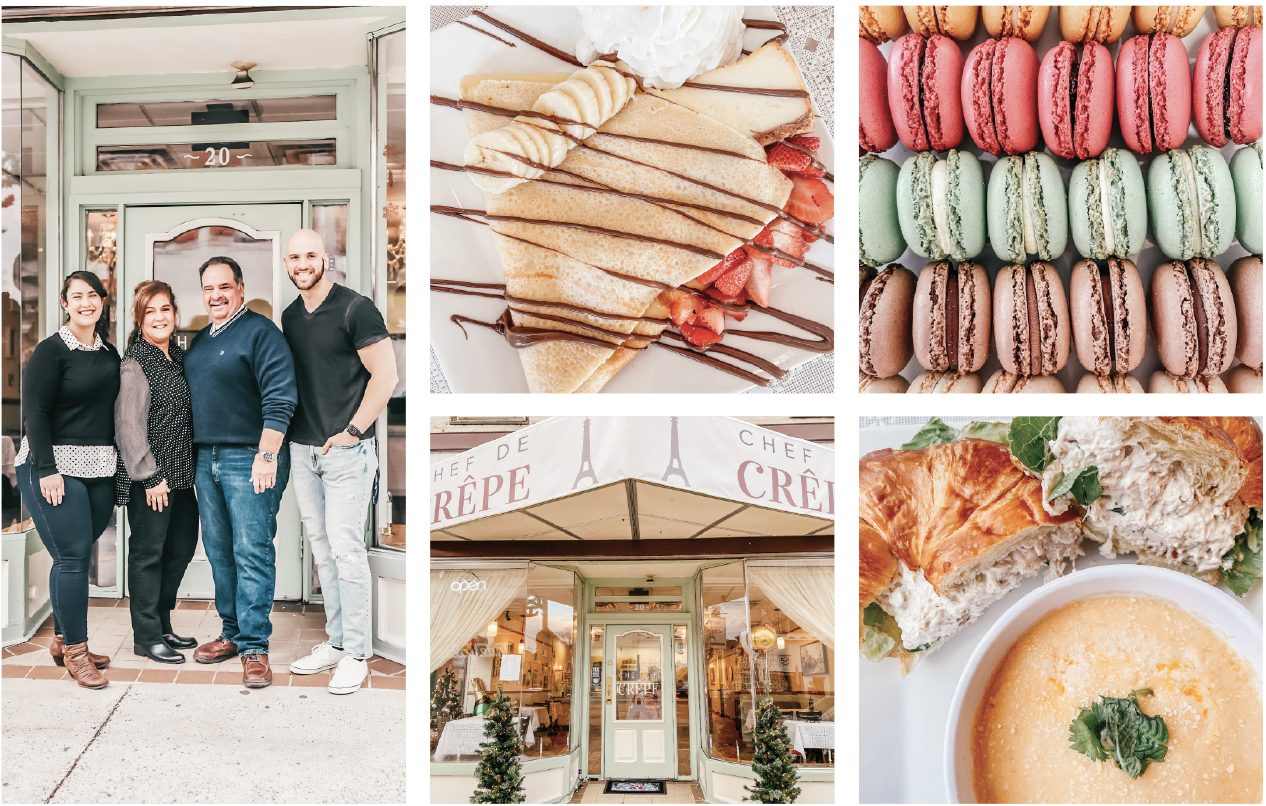
Tony Cheverez and his daughter Rosina Marie had one very memorable family vacation.

Following an overseas excursion, they were so wowed by Paris that they wanted to bring a taste of the City of Light back to Mechanicsburg.

“We were inspired to open Chef de Crêpe after a family trip to France,” explained Rosina Marie.

The eatery, located in a former Subway restaurant on the corner of West Main and Railroad streets, opened in December, just as another lockdown order went into effect. However, the community was welcoming, she said, and they did a brisk takeout business until mandates were lifted.

This isn’t the family’s first foray into the food world. They also run a catering business and a food truck and have appeared as a pop-up business at various events. The new store is just another way for them to serve the public, said Rosina Marie.

When customers enter the snug eatery, they see attractive chandeliers, white tablecloths, Paris scenes and family photos festooning the walls as they are greeted by the staff with a cheery, “Bonjour!”

Patrons place their order at a serving station at the front of the restaurant where their food is prepared before them. The handheld crepes can be eaten as a meal or a dessert.

According to Rosina Marie, one of the most popular choices is the “Mexi-Steak,” which is comprised of steak, salsa, sour cream, guacamole, sautéed onions, red peppers, cheddar cheese and cilantro. A selection of breakfast crepes is served all day, with ingredients like eggs, bacon, cheddar and ham.

Those who like sweets have been known to enjoy a popular crepe called, “The New Yorker’s Gift,” comprised of cheesecake, strawberries, banana, Nutella and whipped cream.

“Many of our customers pair that with a cup of coffee, which we source from Lonely Monk Coffee Roasting in Lemoyne, which is fantastic,” said Rosina Marie, who also owns a bakery by the name of Frosting & Co., where she makes custom cakes and croissants for the eatery.

Those seeking out more traditional fare have their choice of soups, sandwiches and salads.

Janet Close travels from Hummelstown to dine at the restaurant and calls it a “breath of fresh air.”

“The interior has been transformed into a scene right out of Paris,” she said. “Not only is the décor exquisite, but the ambiance is warm and inviting.”

Her favorite savory crepe is the chicken Florentine, with chicken, sautéed mushrooms, red onions, cream cheese, garlic and bechamel sauce. Her favorite dessert crepe, “La Parisienne,” is made with Grand Marnier, raspberries and chocolate sauce.

“I’d recommend the restaurant for a quiet business meeting or a girls’ brunch—just remember to bring your own mimosas,” she said.

Mike Hetrick of Enola first tasted the Cheverez family’s fare when their food truck came to his Westbury neighborhood.

“We ordered several different crepes,” he said. “My wife and I enjoyed the cheesesteak crepe, and my girls liked the honey mustard chicken, and we all enjoyed the Nutella and crème crepe.”

Rosina Marie said that they have been overwhelmed at the outpouring of support, which inspires them to do their best to continue to make their customers happy.

“We will continue to strive to be a family friendly and culturally distinguished French crêperie and café for all to enjoy,” she said, with a smile.

Chef de Crêpe is located at 20 W. Main St. in Mechanicsburg. For more information, call 717-603-3821 or visit www.chefdecrepes.com or their Facebook page.

Support quality local journalism. Become a Friend of TheBurg!

Continue Reading

For Your Lenten Table: Rosemary suggests a seared tuna dish from Sicily

The trip my husband and I made to Sicily in 2010 is such a beautiful memory.

The island’s stunning landscape and unique culture held special meaning for me as my mother was Sicilian. Her family emigrated from Palermo, which is both a region and the capital city of Sicily. We don’t know if they were city dwellers or farmers who lived in the surrounding countryside. I thought of them often during our brief visit to this Italian island paradise and wished there had been time to explore the family’s history.

But it is the food of Sicily that fascinates me, a cuisine influenced by the area’s volcanic soil, abundant sunshine and blue ocean waters. But, in no small measure, also by the many nationalities that invaded the island over many centuries. The soul of Sicilian cooking revolves around citrus fruits, which grow in abundance there, fish like tuna and swordfish, capers and other fresh herbs, pine nuts and olives and the unique dishes that are known as agrodolce or “sweet and sour.”

Lent is here, and I’m always looking for seafood recipes for those traditional Catholic meatless Fridays. I found a recipe by renowned French chef, Jacques Pepin, who prepared this tuna dish for a group of tourists on a culinary tour in the town of Messina, Sicily. It’s unusual in that he uses red wine in the preparation rather than white and accompanies it with olive oil-dressed arugula. I served it with broccoli and whipped yellow gold potatoes and omitted the arugula, which seemed more like a summer meal.

As a matter of full disclosure, my family accused me of overcooking the tuna. I’m good at that. Unlike me, they prefer tuna rare.  So, if you are one of those as well, watch your cooking times very carefully. The flavors in this dish are complex and involve three main steps: making the relish, making the red wine sauce, and searing the tuna. But it’s not a hard dish to make.

PAN SEARED TUNA STEAKS WITH CAPERS AND OREGANO

Ingredients

  • ¼ cup capers, drained
  • 2 tablespoons chopped oregano (1 tablespoon dried if fresh not available)
  • 1 small shallot or very small red onion, finely minced
  • 1½ tablespoons extra virgin olive oil, plus more for drizzling
  • Salt and freshly ground pepper
  • 4 6-ounce fresh tuna steaks about ¾-inch thick
  • 4 anchovies, chopped or a couple squirts anchovy paste
  • 1 cup dry red wine
  • 2 tablespoons cold, unsalted butter, cut into small pieces

Directions

  • In a small bowl, mix the capers, oregano and minced shallot or onion with ½ tablespoon olive oil. Season with salt and pepper to taste and set aside. (Remember, capers are salty.)
  • In a skillet (NOT non-stick if possible), heat the remaining tablespoon of olive oil until shimmering. Season the tuna steaks lightly with salt and pepper and add to the skillet.
  • Cook over medium high heat about 4 minutes total, turning once. (You want a nice sear to the steaks without overcooking them!) Transfer the steaks to a platter and keep them warm.
  • Add the anchovies or anchovy paste to the skillet, swirling it until it “dissolves.” Add the wine and boil until reduced to about half (about 4 minutes).
  • Remove the skillet from the heat and swirl in the butter one piece at a time, until blended and smooth. Season the red wine sauce with a little salt and pepper.

When you are ready to serve, place the tuna on a serving platter or on individual plates. Put a small mound of the caper relish on each piece and drizzle with some of the red wine sauce. Partner the tuna with sides of your choice.

This is an elegant Lenten meal or great for any season. The tuna could be grilled in the summer, and then Chef Pepin’s arugula salad would be a perfect accompaniment. I also was thinking you could substitute swordfish for the tuna and perhaps make a white wine sauce instead.

The list of classic Sicilian dishes is long—Italian, but uniquely Italian. I hope you enjoy this one!

Support quality local journalism. Become a Friend of TheBurg!

Continue Reading