 A water bottle filling station.
That’s what David Botero wants to see at the East Shore YMCA for his Hope in Handball students. The old-style water fountain just doesn’t cut it for thirsty teens.
“There’s a lot of slurping,” he said.
The Harrisburg Area YMCA—the nation’s eighth oldest, founded in 1854—is entering its 172nd year with a strategic plan focused on community impact while its branches get facelifts for the 21st century.
The strategic plan is “based on real needs in the community,” meant to offer hope in an unraveling world, said President & CEO David Ozmore.
“We want everyone to thrive,” he said. “That’s spirit, mind and physically and mentally. And then, everyone belongs. We want people to feel welcome.”
In the Plan
Ozmore took the reins in 2022, with goals to deepen YMCA partnerships and lead strategic planning.
The plan emerged from long staff meetings airing organizational strengths and weaknesses. The board spent hours parsing a nine-word vision statement: “To strengthen communities where hope thrives and everyone belongs.”
The process yielded “Thrive Together: A Vision of Hope and Belonging,” a plan built on safety, security, hope and belonging.
The plan’s four pillars include fostering welcoming environments; inspiring and empowering youth; creating community environments where spaces are accessible and within reach of the full community; and expanding health equity with programs that address disparities.
Watch for signs of progress as programs grow and refine in coming years in accordance with the plan.
Supportive environments will nurture the educational, social and emotional development of infants, young children and teens. Senior adults will find respite from isolation, according to the plan.
There will be modernized spaces, behavioral health supports, and virtual health programs. More money will be raised, and endowment funds will be distributed as financial aid. There will be enhanced leadership, staff and volunteer training.
The plan also includes partnerships—lots of partnerships. Interlocked community organizations can fill the gaps in lives where one of the four pillars is crumbling, said Ozmore.
“Imagine a kid who’s coming to us from a dysfunctional family, but the church rallies, the community rallies, the school rallies,” he said. “We can still support the development of that child until the fourth pillar rebuilds itself.”
Partnership Power
Dr. Sabina Grant-Spencer, early childhood director for Harrisburg School District, reached out to the YMCA for academic and social support for Harrisburg schoolchildren and for early childhood education for their families, including the infant care that helps parents keep their jobs.
“As a parent, you want to know you’re coming into a safe place, where your kids are going to learn and enjoy being here, and that’s something we established at the Camp Curtin Y,” she said.
As the plan unfolds, Grant-Spencer envisions more mentoring and initiatives that teach organizational skills and promote career learning. To overcome transportation barriers, the Y could deliver afterschool programming to children in their own schools.
Through the partnership, the Y released endowment funds to finance memberships for 200 of the district’s displaced families, giving students a place where “they know they’re going to fit in wherever they go, and a parent knows that they’re going to be safe,” she said. “And they make friends.”
Sometimes, the Y is “just the facilitator,” said Ozmore—as in, offering the Harrisburg Area Food Pantry a home at the Camp Curtin YMCA in Uptown Harrisburg since early 2024.
As food insecurity surged, the pantry struggled with space constraints, said Executive Director Deidre Lenker. Since moving to Camp Curtin, they are “blowing our records out of the water.”
“We could not have done that with the physical layout of our own facility,” she said.
Clients from urban and rural food deserts easily find Camp Curtin for its familiar location, parking and accessibility.
“We’re thrilled to be a part of this organization and be able to serve as many people as we are serving,” she said. “And we get great support.”
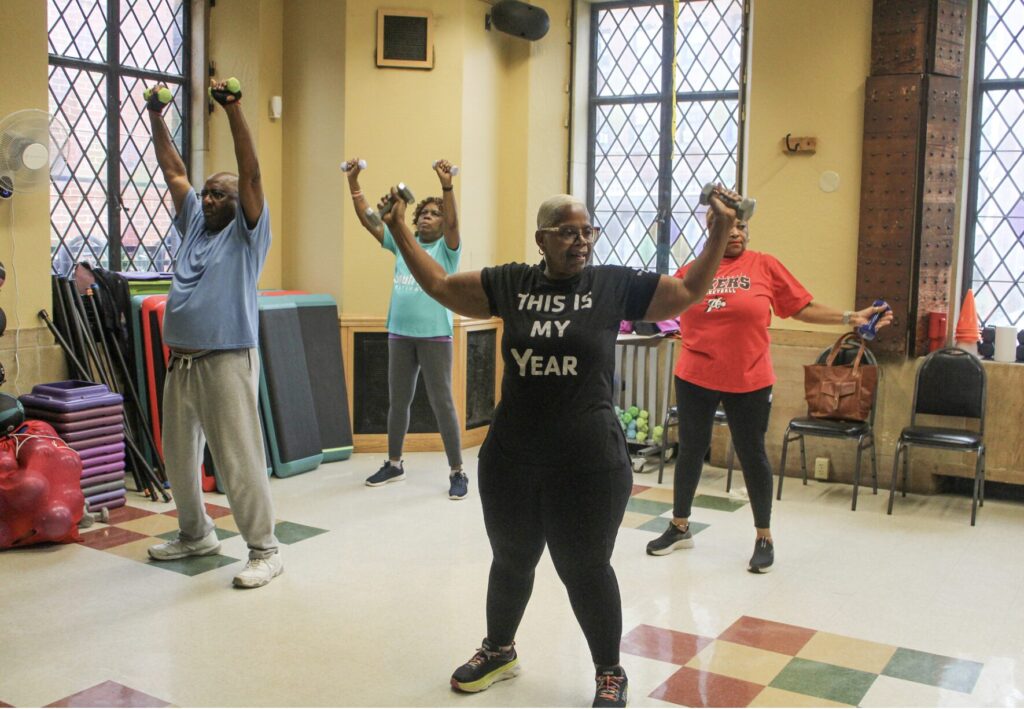
Battling the isolation of older adults took its place in the strategic plan because they were the first group to resume Y membership after COVID.
“They missed their friends,” said Ozmore. “The Y is a tremendous social organization for connection and belonging.”
The Y could expand partnerships that help area senior centers offer more exercise classes to their members.
“Could we partner with a senior center that only runs two or three classes a day?” Ozmore said. “Could we help to manage and give them resources to run senior programs at other times of the day?”
Since Botero and Sally Snyder co-founded Hope in Handball in 2009, it has operated at the East Shore Y in Harrisburg. The program unites adult volunteers from a range of professions with middle and high school students for tutoring, mentoring, character development and, of course, handball. Students travel for tournaments, learn sportsmanship and meet new people—“that’s code for networking,” said Botero.
The historic, circa-1933 East Shore Y has been “gracious enough” to host Hope in Handball, provide students with YMCA memberships, help them through family emergencies, and invite them to events featuring the Harrisburg mayor and Pennsylvania governor, said Snyder.
Many Hope in Handball alums have gone on to their own careers, including a new dad working in finance and, now, mentoring today’s players.
As the YMCA implements its strategic plan and upgrades, Botero hopes for his water-bottle filling station, and Snyder would love to see the Y offer students volunteer and job opportunities.
“We’re a community, and we’re a family there,” she said. “It’s beautiful to have that space where we can walk the steps to that handball court. It’s such a special space. We have pictures on the walls and tournament winners posted, and we can walk down memory lane. The kids can see where they were 15 years ago, and now, they’re one of the leaders.”
Physical Changes
Throughout the YMCA network, multi-million-dollar renovations are completed, underway or on the drawing board. Branches are slated for HVAC upgrades, modernized amenities, state-of-the-art child care facilities, and inclusion of gender-neutral changing spaces in the locker rooms to accommodate individuals and families who need privacy.
Construction began on Camp Curtin’s $1.1 million project this fall, with a teen center, recording studio, and—for the first time—air conditioning in the 60-year-old building.
At the East Shore Y, the 86-bed residential upper floors serve people who “need a clean, safe place to stay,” said Ozmore, but supports are limited.
“How do we lift these folks up?” he said. “How do we provide food security? How do we make them ready to handle their own finances? How do we get them to lift themselves out of their current position and really be a flourishing member of society again?”
To answer those questions, the Y is negotiating with a potential partner to provide transitional services and leverage its resources, plus available public funding and seed capital from the Y, into a “big facelift” for the residence area.
That facelift—phase one of a $10 million, three- to five-year renovation of the entire building—would upgrade kitchen, shower and rooms, “giving the amenities a nicer glow,” said Ozmore. For accessibility, an elevator would be installed in what is now a five-story walkup.
The goal is a space and services that help residents achieve independence, said board chair and capital campaign co-chair Jim Mooney.
“It’s a way to lift people out of their current position in a big way,” he said.
When work on the residence is complete, the East Shore Y’s public side will follow, with a new roof, HVAC and “general maintenance for a nearly 100-year-old building,” said Mooney. The pool, lobby, gym and locker rooms will undergo makeovers, not yet designed.
“The general public would walk into a 21st century YMCA,” said Ozmore, adding that the expanse of construction “ties into community. It’s not just that we’re building beautiful buildings, but we’re building beautiful buildings for a reason.”
Sticking Around
In the future envisioned in Harrisburg Area YMCA’s strategic plan, the scattered branches and staff are more unified, finances continue to strengthen, and collaborations instigate growth throughout the community, said Ozmore. It culminates in “safety and hope.”
Food insecurity took the spotlight during “the craziness” of the 2025 government shutdown, said Lenker, and that makes way for the Harrisburg Area Food Pantry to grow along with the Y.
“We are getting donors and volunteers coming left and right, so we have a lot of hope for a lot of things that will make us even more effective,” she said.
Ozmore sees promise in the diversity and joy of Y events, the camaraderie of older adults, and the cheer that fills the East Shore Y lobby, “the heartbeat of our community.”
“That’s why we’ve survived for over 100 years,” he said. “Not many organizations have been around for 171 years, but because we’re embedded in the community, that’s our magic.”
For more information on the Harrisburg Area YMCA, visit www.ymcaharrisburg.org. Read the YMCA’s strategic plan at www.ymcaharrisburg.org/strategic-plan.
If you like what we do, please support our work. Become a Friend of TheBurg!


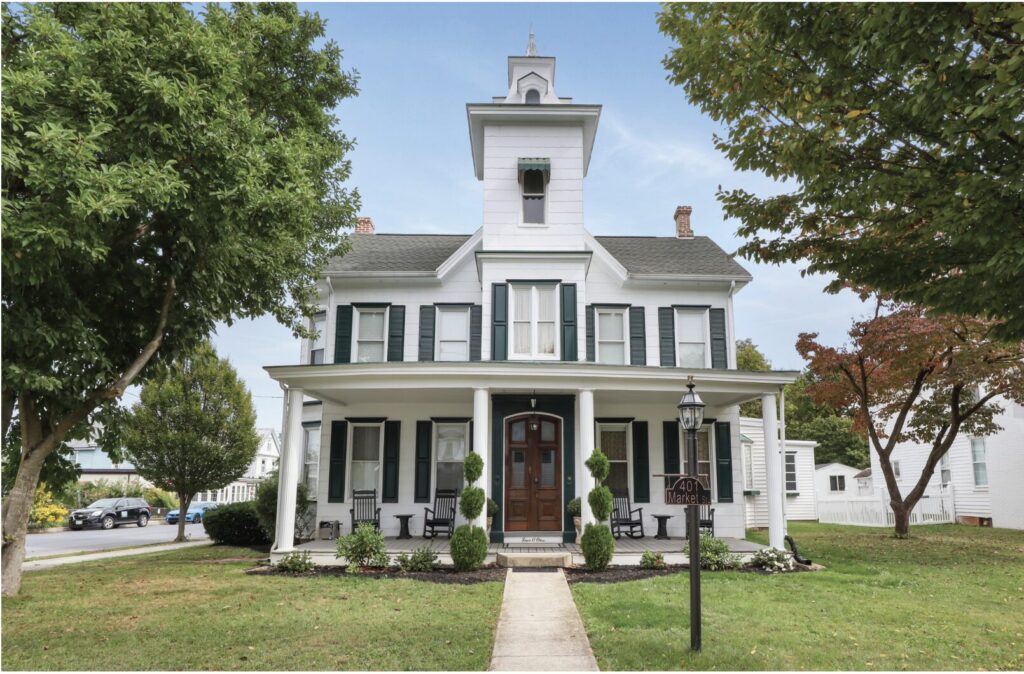 Noah and Hannah Snyder have a one-day dream to own all the tower homes in Mechanicsburg’s Tower Hill neighborhood—preserving history and the charm of a bygone era. But for now, they’ll happily settle for two.