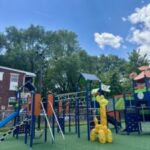
NonProfit Focus: SkarlatosZonarich & Harrisburg Catholic Elementary School

SkarlatosZonarich LLC

Why do you feel it’s important for your business to support our area’s nonprofits?

 Nonprofits provide a variety of necessary services to citizens of the greater Harrisburg area, which simply can neither be addressed by individual citizens nor satisfied by governmental agencies and funding. Nonprofit entities allow persons to band together to focus upon and address issues important to them as a group and important to society.

Why do you support this particular nonprofit, and what does your business do to benefit the organization?

 All of the managing members of SkarlatosZonarich LLC are involved in civic, nonprofit or religious organizations.

It is my pleasure to serve on the board of directors or advisory boards of a number of nonprofit corporations, including the Harrisburg Catholic Elementary School (HCES), The James A. Finnegan Foundation and the Historic Harrisburg Advisory Board, in addition to serving as a member of the Intergovernmental Cooperation Authority for the city of Harrisburg.

HCES offers an alternative source of education to students in and around the city of Harrisburg, including Dauphin, Cumberland and Perry counties. HCES allows the flexibility for quality education through small class sizes and individualized attention geared to meet the needs of student families. HCES provides an alternative to the Harrisburg school system. HCES’s location in Harrisburg allows it to incorporate visits from governmental leaders and visits to the city’s museums into its ongoing curriculum.

HCES has earned accreditation from the prestigious Middle States Commission for Elementary Schools. HCES is proud of its diverse student population. HCES, while rooted in Catholicism, is open to students of any faith. HCES charges tuition but provides a variety of scholarships to help parents defray costs. Its students qualify for free breakfast and lunch each school day.

Even during the pandemic, HCES has offered pre-K, kindergarten and elementary school students and their families the option of either remote learning or classes at one of its two locations, Cathedral Campus behind the Cathedral of St. Patrick in downtown Harrisburg or at its Holy Family Campus on S. 25th Street.

Service on HCES’ board is my way to “pay it forward” religiously and civically. For more information about HCES’ planned expansion, contact 717-232-2169.

All area businesses, including SkarlatosZonarich LLC, benefit from having an educated workforce available to serve as a pool of potential, qualified employees. HCES provides that type of basic quality education.

Harrisburg Catholic Elementary School

Describe your organization and the importance of corporate or foundation support to further your mission.

Harrisburg Catholic Elementary School (HCES) was founded in 2012 with the merger of two Harrisburg city schools (Holy Family, est. 1959, and Cathedral School, est. 1873), making it the only Catholic elementary school in the city of Harrisburg. We accept children from the city and its surrounding communities, celebrating diversity in our student population. Our mission statement says it all:

Harrisburg Catholic Elementary School, a faith-filled community, is enriched by diverse ethnic cultures. Building upon the teachings of the Catholic Church, we strive to develop the whole child as we encourage students to appreciate each other and share their God-given talents. We challenge students to achieve individual academic success, shared responsibility and appropriate socialization.

Our class sizes are limited to provide students the optimum degree of personal attention they deserve, but rarely receive, in larger classrooms. Our teachers put the needs of the students first. During this pandemic school year, we have maintained in-person classes, as well as live-streamed virtual classes, as requested by individual families. Our teachers have been able to manage students who have been on-line all year, in school all year, and some who have switched as needed. This flexibility emphasizes the dedication and compassion of our teachers, staff and administration.

For 2021, what is your greatest need for corporate or foundation support?

Today, more than ever, our school needs corporate and foundation support to provide tuition assistance, either through Pennsylvania’s EITC and OSTC programs or through individual donations. Eighty-two percent of our enrolled students live at or below the poverty level. This, combined with the economic aftermath of the pandemic, puts our scholarship need for the 2021-22 school year greater than ever. Simply put, without donations from the business community and foundations, our school tuition would be out of reach for most of our families.

The Educational Improvement Tax Credit (EITC) program allows businesses to donate to private schools and other educational avenues while providing credits to their own tax bills. The Opportunity Scholarship Tax Credit (OSTC) operates similarly in providing tax credits to businesses that donate. The OSTC scholarships apply to students who live in low-achieving public school districts and wish to attend private schools; EITC scholarships are income-driven.

Your business’s donations to either or both of these programs would help assist students whose needs for a better academic and social fit would otherwise be denied because of lack of tuition.

Individual donations are also accepted by the school to assist with tuition needs or in any area you would like to designate. Please contact the school for more information at 717-234-3797.

Thank you to SkarlatosZonarich and all of those who have sponsored our students in receiving excellence in education!

Sponsored Content

Proudly Sponsored by


Continue Reading

NonProfit Focus: Enders & Dauphin County Library System

ENDERS

Why do you feel it’s important for your business to support our area’s nonprofits?

The U.S. Small Business Administration reports that there are nearly 32 million small businesses in the United States, employing 60.6 million people as of 2020. These employers and employees make up the fabric our communities, but neither businesses, nor government, make up the fabric of our society alone. Nonprofits help to fill the void that exists for many.

As a small business operating throughout our region, Enders has been committed to community engagement for over 70 years. We actively engage in partnership with a curated group of nonprofits through advocacy, participation and financial support. We understand that, as a small business supported by community, we have a duty and obligation to do charitable works in that same community and beyond.

A key tenet of Enders’ values is to engage nonprofits that deliver services aligned with basic human needs and rights. We challenge one another to identify nonprofit partners that would benefit from our time, energy and financial contributions. Through the aggregation of effort, partnering with well-positioned nonprofits enhances our community.

Why do you support this particular nonprofit and what does your business do to benefit the organization?

Communities often underestimate the value of the public library, relegating them to the notion of old, dusty buildings filled with books. We know that the most cogent argument disrupting this antiquated view is to testify to the living spaces that are the Dauphin County Library System facilities. It is not the brick and mortar alone, but rather, the vibrant professionals who systematically organize information so that it might be shared with all those that seek understanding, especially the members of our community that may not know where to turn.

While libraries of old were quiet fortresses of knowledge that offered a privileged few the ability to secure entry, today’s libraries are lively hubs of equality and robust resources. As the Dauphin County Library System embarks on the restoration of the stunning McCormick Riverfront Library and the adjacent, historical townhouse at 27 N. Front St., we recognize the value that this will bring to our community through additional resources.

Support for the Library means that more members of our region will have enhanced access to technology, more resources for securing gainful employment, and safe environments in which to get direction on health providers. This project includes the return of the first floor of McCormick Riverfront Library to its intended purpose: a space for our children to engage with one another in the pursuit of education and learning.

Dauphin County Library System (DCLS)

Describe your organization and the importance of corporate or foundation support to further your mission.

Whether it is to find jobs, learn new skills, examine new perspectives, or connect with one another, our community relies on the Dauphin County Library System (The Library). The Library’s unique mission statement embraces this important community-building role. The Library builds community and transforms lives by connecting people, ideas and opportunities. From early explorers to seasoned learners, The Library provides resources to improve individuals’ lives and expand a community’s possibilities.

The public library’s role always evolves along with the community and its needs. One critical role is the provision of equitable access to information and to serve as a workforce developer. As we turn our focus outward and connect more fully with our community, we recognize the need to serve as functional, inclusive space. The Library also understands that the spaces, services and access to important information it provides will play a critical role in our community’s pandemic recovery.

A public library is a partner with the community it serves—one that relies on our corporate citizens and foundations for both financial help and assistance with identifying community needs and developing opportunities to serve them. Through dialogue and partnerships, The Library can reach more people and create a more equitable, inclusive community.

For 2021, what is your greatest need for corporate or foundation support?

The year 2021 presents an exciting opportunity for The Library. In addition to an ever-evolving calendar of programs, The Library is engaged in a significant capital campaign supporting the award-winning “Your Place to Belong” project.

The $3.5 million expansion of McCormick Riverfront Library, which has won a Dauphin County Premier Project award, includes connecting the adjacent, 5,458-square-foot residence to the existing library. The McCormick Riverfront Library expansion will offer a 2,000-square-foot, dedicated children’s library. This bright and engaging space will be fully equipped to support both individual and collaborative learning. Beloved and time-tested library storytimes and children’s literature will be offered alongside science-based toys and coding play, virtual reality enhanced storytelling, and cooperative project activities. In addition, the project will provide unique public meeting space in the historic residence, added public computers to the main library floor, improved job-seeking and small business support resources, and expanded library space to support community partnerships.

This project seeks to reflect and support the downtown area and broader community it serves. We are counting on everyone who calls Harrisburg home to offer their ideas on how this space can address the needs of our community, support the growing STEM community downtown, and provide resources to lift up those citizens facing homelessness, job loss, food insecurity and other challenges.

Sponsored Content

Proudly Sponsored by 

Continue Reading

New program offers grants to area’s devastated hospitality industry

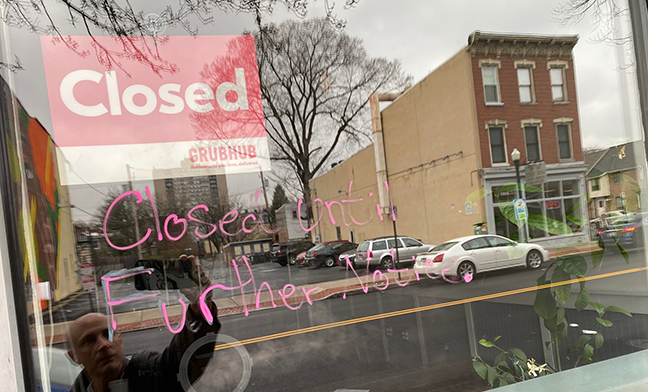
In March 2020, most area restaurants closed for extended periods and many still have not fully recovered.

A new grant program is targeting one of the hardest-hit sectors of the local economy—our area’s large hospitality industry.

Starting on March 15, hospitality-related businesses can apply for the statewide COVID-19 Hospitality Industry Recovery Program (CHIRP), which offers financial help for hotels, restaurants and bars.

The program offers grants of up to $50,000. To be eligible, businesses must have fewer than 300 employees and a tangible net worth less than $15 million.

“There are so many Dauphin County businesses that have endured closures, capacity crunches, and staff lay-offs during this unprecedented pandemic,” Commission Chair Jeff Haste said. “These funds will serve as much-needed lifelines.”

Recently, Gov. Tom Wolf announced the $145 million program throughout Pennsylvania’s 67 counties. Dauphin County’s portion is $3.1 million, and Perry County has been allotted just over $500,000.

A business is eligible if it:

  • Has a North American Industry Classification System (NAICS) designation within the Accommodation subsector (721) or Food Services and Drinking Places subsector (722) and where accommodations, food or drink is served to or provided for the public, with or without charge.
  • Has fewer than 300 full-time equivalent employees.
  • Has a maximum tangible net worth of not more than $15 million.
  • Was in operation on Feb. 15, 2020 and remains in operation and does not intend to permanently cease operations within one year of the date of application.
  • COVID-19 has had an adverse economic impact on the eligible applicant that makes the grant request necessary to support the ongoing operations of the eligible applicant.

Grants are being administered through Certified Economic Development Organizations, which, in our area, includes the Capital Region Economic Development Organization (CREDC).

Joe Massaro, general manager of the Hilton Harrisburg, emphasized the need for this program, saying that hotels have experienced a 78% drop in business since the COVID-19 pandemic began almost a year ago.

“The CHIRP program will provide much-needed relief to devastated hospitality industry businesses in Dauphin County,” Massaro said.

CREDC plans to hold a webinar on March 11 to offer details about the program and how to apply. To register, visit https://web.harrisburgregionalchamber.org/events/COVID19Hospitality%20Industry%20Recovery%20Program%20Guidance%20Webinar-3551/details

For more information for Dauphin County businesses: www.harrisburgregionalchamber.org/chirp/dauphin  

For more information for Perry County businesses:
www.harrisburgregionalchamber.org/chirp/perry


Support quality local journalism. Become a Friend of TheBurg!

Continue Reading

In the Shadow of the Dome: It’s been an unprecedented year of protests in the backyard of residents, businesses near the Capitol

An armed man stands in front of the PA Capitol during a pro-Trump rally. Photo by Jelani Splawn.

Every Sunday morning, Kevin Burrell walks a few blocks from his downtown Harrisburg home, where he’s lived for 20 years, to Market Square Presbyterian Church. There, he serves breakfast to those in need. He loves his church and is very involved.

But on one particular Sunday, Burrell stayed home. It was the weekend before the U.S. presidential inauguration and state capitals around the country were preparing for what the FBI warned could be armed protests by supporters of then-President Donald Trump.

“I was very concerned as a person of color,” said Burrell, who is Black. “I didn’t leave my house. I’ve never felt this way in my community and my neighborhood.”

State, Capitol and city police, along with Pennsylvania National Guard troops, patrolled the Capitol grounds and surrounding roads, hoping to deter anyone with violent intentions from coming. And it worked. Hardly anyone showed up.

But that wasn’t much consolation to Burrell, considering what he witnessed in the past months. Neither were local officials’ promises that they would keep the city safe during that inauguration week reassuring, not when Burrell had already seen men strapped with guns and Confederate flags parading the streets of his neighborhood.

Burrell described his feelings with words like “unsettling” and “unnerving.” His partner, Jon Podany, who is white, jumped in, as we do when we feel those we love are minimizing their experience, saying that Burrell was being too polite.

Podany, painted a picture of chaos, fear and white privilege on display.

For this Harrisburg couple, the string of protests that began in April wasn’t something they could switch off with a remote or scroll past on their Facebook feed, not when it was happening in their own backyard.

Such was the case with many residents, businesses and organizations in the neighborhoods surrounding the Capitol. And while everyone interviewed supported the right to gather and voice an opinion, they weren’t happy that some people purposely intended to invoke fear among those who call the city their home. Each was directly impacted by the large protests, especially the ones that weren’t kept to the Capitol steps.

“I love my neighborhood,” Burrell said. “It’s usually very peaceful and predictable. I’m very connected to this place. But now I’m feeling I need to be more mindful of my comings and goings.”

Block Crashers

In April, a large group of people arrived in downtown Harrisburg for a “ReOpen PA” rally, kicking off what would be months of protests, some tense, many peaceful, by both left- and right-wing groups.

A string of Black Lives Matter protests began in May, the first of which led to clashes between some marchers and police. There were additional anti-lockdown rallies, and, during November and December, numerous “Stop the Steal” protests that opposed the U.S. presidential election results.

At the first “Reopen PA” rally in April, people gathered to show their opposition to Gov. Tom Wolf’s orders to shut down nonessential businesses and to stay at home to try to fight the COVID-19 pandemic. Many brought pro-Trump flags and homemade signs saying things like “Freedom is essential,” or “Honk to reopen.” Others drove their cars and trucks around the Capitol honking and gridlocking streets.

Podany remembers people racing cars down the streets.

Pam MacNett, head of the Capitol Area Neighbors group, has video footage from her security camera of a man walking past her house with an assault rifle. She also recalls seeing an armed person walk by the Harrisburg Catholic Elementary School’s State Street campus.

“I really wish they would stay at the Capitol grounds,” said Dave Rushinski, principal of the school. “There are people whose livelihoods depend on these small neighborhoods.”

Andrea Grove is the owner of Elementary Coffee Co. on North Street in Harrisburg, about two blocks from the Capitol steps.

Grove said that one of the reasons why she chose to open up shop downtown in 2019 was specifically for its proximity to the Capitol. She wanted Elementary to be a safe space for protesters, especially Black Lives Matter protesters, to refuel and receive help, if needed.

In fact, Grove participated in some of the Black Lives Matter rallies this past summer.

While she recognized there was definitely passion and strong emotion fueling the BLM, ReOpen PA and “Stop the Steal” rallies, something about each felt different to her.

“The tone changes quickly when there are guns,” Grove said.

After the ReOpen PA rally in April, Grove and employees began internal discussions about how to stay safe and respond to future protests like that one. She said that they talked about de-escalation and workers’ comfort levels.

Grove had a feeling that Elementary could be a target for right-wing protesters. She isn’t shy about making her political stance part of her business. Social media posts and signs on their shop windows reflect their views. Grove said that Elementary had been “trolled” on social media by some “Proud Boys,” a far-right group, before.

But when armed men wearing “Proud Boys” jackets showed up outside their North Street shop on the day the U.S. Capitol was stormed in January—that was scary, Grove said. The group of men yelled and shouted racist slurs at Elementary Coffee while employees remained inside.

Grove could see neighbors looking out their doors and walking by the scene, which made her feel a little bit better.

Band Together

By the time the state brought in troops and police during pre-inauguration weekend, local residents and businesses had already witnessed their fair share of rallies. They already knew what was possible.

The Philadelphia Inquirer published a story that weekend, as well, quoting Harrisburg residents on what they were expecting.

“Harrisburg, Pa., is not Washington D.C.,” wrote reporter Anna Orso. “The ornate state Capitol building is smack in the middle of the city’s downtown. There is no two-mile National Mall lined with monuments leading up to it. It’s surrounded by shops and cafés, and hundreds of people live a football field’s distance from the stairs.”

She was right.

Podany remembers a Saturday he spent outside painting his and Burrell’s porch steps. It was a quiet weekend morning until the protesters arrived. He described the noise and yelling that he could hear from his house and the air that felt thick with tension.

On the days before the inauguration, some businesses closed or boarded up, like Mangia Qui and Rubicon, both under the same ownership. Some residents chose to stay home, including Burrell and MacNett.

People asked Grove if it was time to erase the “Black Lives Matter” sign written on the windows. She had her concerns like they did, but she couldn’t stand the thought of giving into fear.

“If we don’t stand for these things now, when do we stand for them?” Grove said. “We decided to just keep doing our thing and there’s a strength in that.”

Burrell described his experience with the protests as seeing a genie let out of a bottle—something coming to the surface that had been lingering underneath. But the division that Burrell witnessed has given him a renewed strength in the work he does with the Harrisburg Human Relations Commission.

“We are not done with these issues,” he said. “We need to work.”

For Grove, the experience included exchanging phone numbers with people who live near the shop, in case anyone needed to call on each other. Ultimately, she believes it all drove conversation and strengthened neighborhood bonds.

“The downtown community is strong,” she said. “People are going to look out for each other.”

Support quality local journalism. Become a Friend of TheBurg!


Continue Reading

Crash Into Me: Colliding into a year of pandemic

Illustration by Rich Hauck.

One year ago, during the first week of March, I did several things.

I walked over to Strawberry Square to get a coffee and do some work at a high-top table near the Little Amps kiosk. I met friends at the bar at McGrath’s. I ate lunch inside the Broad Street Market.

These all seemed so routine—little outings that I enjoyed but hardly thought about as special. Tomorrow or next week or whenever, I might well do them again.

But no.

A few days later, Gov. Tom Wolf announced a health emergency, and schools shut down, businesses shut down, life shut down.

For the past year—yes, it’s been an entire year—we’ve lived in a state of suspended existence, a strange reality where nothing seems quite right. Three-hundred-and-sixty-five days later, I still can’t regain my footing.

Attend a party? Go to a movie? Be near a stranger? Since March 2020, such simple acts have been regarded as reckless or rebellious.

I’ve often thought about what I miss most from our year of pandemic. Well, I haven’t seen my family, have had limited time with friends and haven’t dined inside of a restaurant. So, there are three, right there.

But, maybe what I most miss, at least on a day-to-day basis, is something called “collisions.”

In urban studies speak, collisions are those random interactions you often have in cities, when you venture out and randomly bump into a friend or have an unexpected conversation with a stranger. From these collisions, you share information, you learn, maybe you even collaborate or create.

In Harrisburg, collisions used to happen to me all the time.

I once joked that a Saturday shopping trip to the Broad Street Market took two hours longer than planned because of all the people I saw and talked to. Folks stopped to chat about Harrisburg or wanted me to join them for a beer at the Zeroday Outpost or pulled up a chair while I ate lunch.

It was half grocery shopping, half social excursion. I may have gone to the market for bread, but I returned with news tips, story ideas and life updates.

On Saturdays, the Broad Street Market, in particular, has a very high “collision density,” another nerdy term that just means that there are a lot of people in one place to run into, to interact with and to learn from.

Or, let me correct that, the market used to have a high collision density.

Sure, there are still people shopping there now, but you can’t sit at tables anymore, you can’t linger over coffee, and you can’t really strike up random conversations. But who would want to anyway, when everyone is half-hidden behind a mask and your next close encounter could lead you to the COVID ward?

The same can be said of any public space. In Harrisburg, that might be your favorite coffee shop, your neighborhood bar, your regular restaurant—your theater, art or music place.

The virus has robbed us of so much, starting with people we love. But it’s also taken away our many small enjoyments, including random interactions that we didn’t even think much about until, one day, they were just gone.

For the past year, we’ve been living in a strange, foggy, unwelcome reality of stay away, stand back, don’t talk to me and don’t touch.

Last year, on the first weekend in March, I called an Uber, rode over to the mall and did some clothes shopping. The place was packed.

During those three hours, I had dozens of unexpected conversations and interactions: fellow shoppers, salespeople, a family at the next table during a coffee break. I even ran into a couple from my neighborhood and, inevitably, they had information to share. Yes, collisions can happen even on the west shore!

But they’re really synonymous with the city and, actually, are one of my favorite parts of living in an urban environment. Oh, to be greeted again on a Harrisburg street corner by a smiling face, a firm handshake, a hug.

In 10 years’ time, when I look back on our year of pandemic, I may remember something about the daily case counts, the business closures, the countless Zoom meetings. However, I likely will remember it most by how it made me feel. “Empty” seems to be the most appropriate word I can think of right now.

We’re told that we may be able to resume our normal lives as we move through 2021. Sign me up. Then stop me on the street, sit at my table, come share a beer with me, talk, gossip. I’m collision-ready.

Lawrance Binda is the co-publisher/editor-in-chief of TheBurg.

Illustration by Rich Hauck.

Support quality local journalism. Become a Friend of TheBurg!

Continue Reading

It’s Callie’s Turn: Harrisburg restaurant veteran opens her own eatery, Deco Grab & Go

Callie Alvanitakis

After 20 years of working at other popular Harrisburg eateries, Callie Alvanitakis has found her sweet spot.

She has crafted a sweet menu featuring her star-attraction, “cinnie buns,” and a safe, pandemic-friendly style of service, catering to hungry diners who want to grab fast, delicious, nutritious food and go.

But her specialties are not limited to sweets. Her new café, Deco Grab & Go, also features fresh salads, homemade soups, sandwiches, smoothies, whole-grain bowls and much more, just across the street from the state Capitol.

The café’s name reflects her love for the glamour of the late 1920s and the then-ground-breaking decor of the modernist Payne-Shoemaker building at 3rd and Pine streets, where she has opened her doors. The site had been home to a gluten-free bakery, but has been vacant for several years, lying in wait for her artistic taste.

“Being that I’m an art nerd, I want to reflect that vision in my space,” she said.

Local artists are featured on the walls, and the venue’s clean lines complement the clean and lean food.

Deco Grab & Go debuted last month, and Alvanitakis readily acknowledges that it’s not easy opening a new business when the streets of downtown Harrisburg are eerily quiet and COVID-19 restrictions on seating, cleaning, masking and spacing still weigh heavily on restaurants. She has adapted to the times, with the experience and personality to make it a success.

She already knows the neighborhood well. Her resume includes stints at several downtown spots, including Fresa Bistro, Café Fresco and Carly’s. In fact, Carly’s was her first manager’s job, and she is pleased to report that they still use some of her menus, which include her trademark basil mojito. She said that she became a human “sponge for all that time,” absorbing knowledge about the industry and the market, before deciding, “It’s my turn.”

She said that she saw a void in the downtown’s breakfast and lunch offerings when Bagel Lovers in Strawberry Square closed, as did the Flamingo Café.

Her “staple” is her fragrant, warm cinnamon buns. She also serves bagels and bagel “sammies,” with bacon, egg and cheese, Greek, mushroom and ham and Swiss choices. All are complemented by the local favorite of caffeine-seekers, Elementary Coffee.

Authentic Greek influences show on numerous menu items, reflecting her heritage. She makes a breakfast sandwich featuring feta cheese and an olive spread, a Greek salad and grain bowls with a Mediterranean influence. She makes her own hummus, as well.

Her degree in fine art guides her décor. Deco’s interior currently features artwork by local artist Michele Hernandez.

“I didn’t choose this business—this business chose me,” Alvanatikis said.  “It’s in my blood. I’m a Greek.”

And like the ancient Greeks, she is not daunted by tragedy.

“It’s a crazy time to open a restaurant, but I view it as an opportunity right now,” she said.

Alvanitakis has adapted to the pandemic by being “lean and streamlined.” She cross-utilizes as many ingredients as possible, serving food that is super-lean and super-fast.

“It’s healthy, fast, nutritious—things people want,” she said.

She keeps contact with patrons to a minimum.

“I’m very safe when it comes to COVID, but people still need to eat,” she said.

In the future, she may attempt to offer a catering menu and take on larger-scale events.

For new fans and old friends, Alvanitakis is cooking up plans to offer dinner meal kits, so that time-crunched city residents and commuters can pick up everything they need to go home and serve a fast, fresh dinner to their families. She is imagining such items as vegetable lasagna for four to six people. Customers can just pop it in the oven, and dinner is served.

“I realize many people are working two jobs,” she said. “I want to provide options for people.”

There will be some indoor seating, but most will remain takeout post-pandemic, she said. She does expect to have some outdoor tables when the sun and warmer temperatures make a comeback.

Until then, it’s happily soup time at Deco Grab & Go.

“It’s nourishing, warm, and the way I make soup, it’s like a meal,” she said. “It’s rich and hearty.”

She offers such favorites as chicken and broccoli, lemon chicken with spinach and chicken corn soup. Her plan is to offer two homemade soups a day.

“That is where I shine,” she said.

Deco Grab & Go is located at 240 N. 3rd St., Harrisburg. For more information, visit their Facebook page.

Support quality local journalism. Become a Friend of TheBurg!

Continue Reading

Off to a Good Start: Nurse Family Partnership offers a helping hand to first-time mothers

Allison with her daughters, Oakley and McKyah.

As a pregnant 19-year-old, one credit shy of finishing high school, Allison Pierre worked at a grocery store and saved money so that she and her baby’s father could move out of his grandmother’s house. It wasn’t a perfect plan, but it was a plan.

She knew of a program called the UPMC Pinnacle Nurse Family Partnership (NFP) because her childhood friend’s mother was an NFP nurse, but she didn’t know if it was for her. And the thought was a little frightening.

“It sounds scary, a stranger coming into your home,” she said.

But once the nurse crossed the threshold, Pierre’s life changed quickly.

“We became friends so quick, very welcoming,” she said. “She met me where I was.”

She described being overwhelmed and not knowing her next move. That feeling was amplified with the realization that her baby’s father had begun using heroin and had drained their hard-earned savings.

With coaching from the NFP nurse, Pierre finished high school, received nurse aide training, and moved back in with her father.

“The program changed the trajectory of my life,” she says now.

This type of positive change is the hallmark of what NFP hopes to achieve.

“The end goal is always self-efficacy,” said Susan Brackbill, program director. “Every client has their own goal, and it looks different for everyone.”

Mom Figure

The UPMC Pinnacle Nurse-Family Partnership serves first-time mothers in Dauphin, Franklin, Lebanon, Cumberland and Perry counties. Statewide, 50 counties have NFP partners.

The income-based program starts when an expectant mother is no more than 28 weeks pregnant, and it continues through the child’s second year. While the “nurse” part of the program is vital, keeping tabs on the mother’s health and child’s development, much of the program emphasizes building relationships.

“They have someone who hears them, someone is there just for them,” Brackbill said.

Often, that person in a new mom’s corner is her mom, but Pierre’s mother hasn’t been in the picture since she was little. She said that it might sound weird, but her NFP nurse served as a mom figure to her.

Nurses talk parents and other family members through what often seem like insurmountable issues.

“It’s hard not to get stuck on what I need, what do I not have, what do I not know,” said Meghan Bragers, women’s health social worker for Penn State Health.

She added that NFP assists families in discovering what abilities and resources they do have—things like family support, quick learning skills or a compassionate heart—then focuses on capitalizing on them.

Connection to outside resources is paramount.

NFP connected Pierre with the Women, Infants and Children’s (WIC) program and Education Leading to Employment and Career Training (ELECT) program, which helped her receive a much-needed laptop. She eventually entered and graduated from HACC’s Nurse Aide Training Program.

“If I hadn’t met Nurse Cheryl, I don’t know that I would have pursued it,” Pierre said.

Brackbill said that NFP also strives to decrease health disparities.

“It’s really astounding the barriers that many of these families face,” she said.

These include navigating the maze of accessing health care and scaling barriers like transportation and childcare. NPF doesn’t lift clients over these barriers but provides the ladder and encouragement. The end result is an empowered parent.

“This program is designed for you to get on your feet—and resources,” Pierre said.

Driver’s Seat

NFP participants set their own goals, and nurses help them meet those goals.

“We are strength-based change agents,” said Brackbill.

Bragers echoed the theme.

“This is a client-driven program,” she said. “You are in the driver’s seat the whole time.”

And, like driving, parenting requires practice.

“NFP acts as that thread that is going from pregnancy to the early years,” Bragers said. “Chances are your questions aren’t going to stop after you have the baby.”

Pierre mentioned that her NFP nurse would come to her home and sit with the baby while she got things done. This was conversation time—creating a consistent, trusting relationship that Pierre could count on.

“It is such a privilege to be invited into clients’ homes, to be a part of their lives, and to share these experiences with families,” Brackbill said.

This time together with parents and family members builds a foundation for the future, for when the NFP nurse no longer visits.

Pierre’s future included nursing school, but COVID-19, as well as having to school her children at home, upended that for the moment. Undeterred, she has a very specific plan for her future.

“My goal is to be a visiting nurse for Nurse Family Partnership, and I am going to do that,” she said.

Far from her overwhelmed, stressed-out, 19-year-old self, Pierre has created a life for her family with the guidance and support of NFP. It gave her courage to make hard decisions, brought out the best in her, and directed her to resources that could make her and her children’s lives better.

Does she have any advice to parents facing similar challenges?

“This program is your way out,” she said. 

For more information about the Nurse-Family Partnership in Pennsylvania, visit www.nursefamilypartnership.org/locations/Pennsylvania.

Support quality local journalism. Become a Friend of TheBurg!


Continue Reading

March News Digest

Harrisburg Proposes Affordable Housing Bill

Affordable housing has been a long-debated topic in city hall, but now it seems that words are translating into action.

Harrisburg proposed a package of affordable housing legislation last month that would incentivize developers to incorporate affordable rental units into their building plans.

“I am very excited about this,” said Nona Watson, director of economic development for the city. “We are well on our way to establishing our affordable housing program.”

The package consists of several bills designed to encourage affordable housing through the use of incentives like tax abatement and zoning relief. Additionally, the city will satisfy street vacation application requirements, if needed.

Other incentives to developers may include density bonuses, which would permit developers to build more units than allowed by right on a property, explained Geoffrey Knight, the city’s director of planning. Incentives may also include reducing parking requirements. Knight explained that research has found that lower-income households are less likely to own a car.

Developers who apply and receive a Certificate of Qualification will have a set of rules they must follow in order to receive benefits.

According to the proposed bill, developers must provide 20% of their units as affordable for low-income households, as defined by the U.S. Department of Housing and Urban Development.  The units must be made available to rent at a price that does not exceed 30% of a household’s monthly income.

Additionally, developers need to keep the units at an affordable rent for at least 10 years.

The requirements also state that units must look the same and include the same heating and cooling systems and other improvements as the market-rate units. Affordable housing units must be made available for rent at the same time as market-rate units.

“We want to make sure that what we put out there is actually going to work,” Watson said.

Harrisburg to Buy Former Bank Building

Harrisburg is set to expand its office footprint, adding a new building in Midtown for city workers.

At a virtual legislative session last month, City Council unanimously voted to allow the city to purchase the former M&T Bank building on N. 7th Street to transform into offices for its engineering and traffic departments.

“This is a space that is needed due to the requirement of additional space for the public works engineering department,” said council member Ben Allatt.

In November, council voted to reallocate 2020 funds to purchase the building for $375,000, which Mayor Eric Papenfuse touted as a good deal since it was appraised at $675,000.

Papenfuse said that the $300,000 reduction in purchase price constituted a donation by M&T to the city.

“We’re greatly thankful to M&T for their continued support,” he said.

The ATM machine currently at the building will remain on-site as part of a lease agreement with M&T Bank.

At a prior council session, Papenfuse explained that, as part of PennDOT’s I-83 expansion project, part of the city’s Department of Public Works building on Paxton Street will be lost to eminent domain, requiring the traffic bureau to move. City Engineer Wayne Martin added that the growing department also needs more space.

The traffic bureau likely will share the building with the city’s engineering department, which currently is spread out among different office locations, Martin said. Many engineering employees will move out of the public safety building downtown, freeing up space for the expanding community policing team.

Renovations and remodels of the building are included in Harrisburg’s 2021 budget. It will likely cost around $192,000 for demolitions, renovations, HVAC replacement and security additions, among other items, Papenfuse said. He estimated that the annual cost of utilities and maintenance for the building would be around $60,200.

HHA Announces “Preservation Priorities”

One of Harrisburg’s oldest structures is a top preservation priority for 2021, the city’s principal historic preservation organization has announced.

At a virtual presentation, Historic Harrisburg Association unveiled its top five preservation priorities for the year.

The list includes Balsley House, a dilapidated, double building located downtown at 220 N. 2nd St. Dating back almost two centuries, Balsley House is one of the few remaining federal-period buildings in Harrisburg.

“It’s one of the oldest structures still standing in Harrisburg,” said Sara Sweeney, chair of HHA’s preservation committee. “It’s deteriorating. It’s in very bad shape, especially if you go around to the back.”

The 2,590-square-foot building, owned since 2006 by Dusan Bratic of Mechanicsburg, has housed many different businesses over its lifetime, but has sat empty and increasingly blighted for a number of years.

“We’re hoping to really raise awareness of this property over the next year,” Sweeney said. “With the revitalization that Harrisburg is really primed for, hopefully we can make some strides to bringing this building back to life before we lose it.”

The other properties on the 2021 list are:

  • William Penn High School, Uptown Harrisburg
  • Camp Curtin Memorial Mitchell UMC, Uptown Harrisburg
  • Harrisburg State Hospital campus, Harrisburg/Susquehanna Township
  • Prospect Hill Cemetery Gate House, Allison Hill/city line

William Penn, Camp Curtin UMC and the Harrisburg State Hospital campus are all on the market for sale. Prospect Hill Cemetery Gate House was severely damaged last year when it was struck by a car.

Balsley House, William Penn, Camp Curtin UMC and Harrisburg State Hospital all appeared on the 2019 list, as well.

Sweeney also noted several Harrisburg buildings that have been restored in recent years, calling them “wins.” These include the former Mary K mansions on Front Street, the former Fox Hotel in Shipoke, Locust Street houses downtown and the former Moose Lodge in Midtown.

Eviction Ban Extended

Harrisburg residents behind on rent due to the pandemic can take a deep breath once again.

Mayor Eric Papenfuse announced last month that he would extend the city’s ban on evictions for another 30 days into mid-March.

“It is important that we continue this eviction moratorium for the health and safety of our residents during these difficult times,” Papenfuse said.

This is the second extension the mayor has enacted since the original eviction moratorium declaration on Dec. 16. The first extension took place on Jan. 16.

Under the moratorium, no resident can be evicted for non-payment of rent or lease expiration. This does not include eviction for other reasons, such as property damage or criminal activity.

“We don’t want to make a homelessness situation worse,” Papenfuse said. “We don’t want to make it harder for people to have safe and reasonable shelter in the midst of a pandemic.”

The original order was adopted after city officials found that there likely would be hundreds of people facing eviction at the start of 2021, since the U.S. Centers for Disease Control’s moratorium was set to expire on Dec. 31, 2020. They predicted that there would not be enough shelter space for the increased number of homeless residents. The CDC’s order has since been extended until March 31.

Harrisburg’s declaration gives the city the power to fine non-complying landlords up to $10,000 or 90 days in jail.

Homes Sales Flat, Prices Up

Home sales were generally flat in January in the Harrisburg area, though price appreciation continued to be strong.

For Dauphin, Cumberland and Perry counties, home sales totaled 502 units, a small decline from 515 units in the year-ago period, but the median sales price shot up to $194,700 versus $179,900 a year ago, according to the Greater Harrisburg Association of Realtors (GHAR).

Dauphin County saw a slight bump in sales, which totaled 240 homes versus 238 in January 2020. The median price increased to $174,900 from $169,900, GHAR said.

In Cumberland County, sales declined to 221 residential units versus 228 the prior year, but the median price rose to $224,950 from $195,450, GHAR stated.

Perry County had 29 home sales in January compared to 25 a year ago, as the median price increased substantially to $174,900 versus $141,500 in January 2020, according to GHAR.

Homes were also selling faster in January. The average days on the market dropped to 31 days compared to 42 days a year earlier, GHAR said.

So Noted

Dauphin County Library System won a Dauphin County “Premier Project Award’’ from the Tri-County Regional Planning Commission for its “Your Place to Belong” campaign. The campaign focused on expanding the McCormick Riverfront Library with the restoration and linking of an adjacent historic townhome.

DTLR/Villa has made a temporary move to 309-311 Market St., the former location of Rite Aid. The clothes and athletic wear store will return to its permanent location at 333 Market St. later this spring following an extensive renovation and expansion of that space.

Harrisburg University and Lackawanna College have signed an agreement that will make it easier for Lackawanna College students to continue their education at HU. Under the agreement, qualified students who earn an associate of science degree in cyber security from Lackawanna College will be able to transfer into HU’s bachelor of science in cyber security operations and management program at junior level standing.

Harry’s Bistro has opened in a classic steel diner at 1933 Herr St. in Harrisburg, serving breakfast and lunch. The father/daughter duo of Lou and Anna Vazquez named their business for the venerable Allison Hill tavern that operated for five decades, modeling some of their menu after classic Harry’s dishes.

“Ice in the Burg” takes place this month at locations around Harrisburg. The three-day festival starts March 5 with a drive-through ice sculpture display on City Island. It continues on March 6 and 7, when over 40 small and large sculptures will be placed at locations around the city.

New Cumberland Food Truck & Restaurant Rally
kicks off for the season on March 11, held each second Thursday through December at Market Square in New Cumberland. The event, from 5 p.m. to 8 p.m., will feature numerous food trucks, and some local businesses and restaurants also will host specials and entertainment.

Changing Hands

Allison Ct., 4: Lemoyne Land Corp. Inc. to F. Hench, $96,200

Berryhill St., 2410: J. Washington to J. Anthony & D. Hill, $64,900

Brookwood St., 2436: E. Noon to C. Austin, $73,000

Calder St., 268: B. Roller to S. Elias, $138,000

Chestnut St., 1955: P. Trustey to A. Luchansky, $62,500

Chestnut St., 2306: M. O’Donnell, A. Sullivan & C. Walsh to N. Etter, $173,000

Emerald St., 317: PNC Bank to C. Brown, $47,500

Forrest St., 603 & 605: B. & C. Rucker to Neidlinger Enterprises LLC, $59,000

Greenwood St., 2712: P. & Q. Ritter to G. Burke, $85,000

Hamilton St., 279: W. Hoover to J. Eaton, $220,000

Herr St., 415 & 426 Snipe Alley: K. Baran & R. Gillis to D. & H. Bliss, $120,000

Holly St., 1805: BSR Rental Trust to Fine Line Real Estate LLC, $56,000

Hummel St., 210: ICE Properties to Brethren Housing Association, $85,000

Kensington St., 2006: D., S. & B. Zimmerman to S. Carr, $60,000

Kensington St., 2436: L. Sim to C. Zapata, $64,000

Lewis St., 313: S. & B. Ballenger to R. Freeman, $96,500

Liberty St., 1415 & 1417: L. Wigington to Blue Door Management LLC, $40,000

Logan St., 2347: RT Propertiez LLC to S. Maurer, $30,500

Lowell St., 1309: C. Lindberg to Dinh Investments, $40,000

Luce St., 2324: CR Property Group LLC to Ryan Randall Properties LLC, $121,000

North St., 1511: Y. Reuvenny to S. Gross, $56,000

North St., 1827: W. Cajina to G. Osborne, $89,900

N. 2nd St., 1211: Mussani & Co. to N&R Group LLC, $240,000

N. 2nd St., 1430: J. Rotegliano to Harrisburg Apartments LLC, $135,000

N. 2nd St., 1615: S. & D. Miller to MR RE LLC, $128,000

N. 2nd St., 2009 and 2000 & 2002 Penn St.: L. Rotegliano to HBG Apts LLC, $110,000

N. 2nd St., 2343: S. & T. Dunford to I. Stubblefield, $180,000

N. 2nd St., 2802: S. Gallagher & C. Prestia to P. Kessler, $200,000

N. 3rd St., 1626: C. Grilli to D. & M. Soisson, $150,000

N. 3rd St., 1910: Integrity First Homebuyers LLC to D. Roa, $35,000

N. 4th St., 2033: J. Frey to SPG Capital LLC, $62,000

N. 4th St., 2543: L. Deatrick to Neidlinger Enterprises LLC, $55,000

N. 5th St., 2546: TKO Rental Properties LLC to A. & A. Volk, $86,000

N. 6th St., 2001: Jamil Karimm LLC to D&F Realty Holdings LP, $300,000

N. 6th St., 3152: Neidlinger Enterprises to K. Scheurer, $115,000

N. 19th St., 43: Equity Trust Co. Custodian Julie Burns IRA to D. Boyle, $34,250

N. Front St., 1525, Unit 412: H. Garner to M. Colton & K. Tennis, $160,000

Norwood St., 925: M. Archie to T. Higgins & S. Owens, $145,000

Park St., 1837: KBR Group LLC to AP Properties Services LLC, $30,000

Parkway Blvd., 2437: KMM Development LLC to T. Washington, $179,500

Penn St., 1616: P. Bayer to Veso Properties LLC, $45,000

Penn St., 2322: BSR Rental Trust to D. Nguyen, $50,000

Rolleston St., 1244: Integrity First Home Buyers LLC to Whitestone Development LLC, $109,995

Rumson Dr., 361: H. & M. Miller to M. DePasquale, $44,000

Rumson Dr., 2970: D. Myers to S. Russell, $106,000

S. 13th St., 1413: C. Littles to Integrity Home Buyers LLC, $40,500

S. 13th St., 1466: Integrity First Home Buyers LLC to 1466 S. 13th LLC, $100,000

S. 18th St., 317: M. & M. Perry to F. Ramirez, $40,000

S. 19th St., 10: D. Lightner to J. Gritten, $67,000

Susquehanna St., 1816: R. & C. Steele to M. Bush & S. Anderson, $179,500

Swatara St., 2239: H. Drothler to Fine Line Real Estate LLC, $75,000

Taylor Blvd., 52: V. & S. Vdov to F. de Perez, $120,000

Valley Rd., 2300: M. & R. Lewis to S. & S. Anthony, $269,000

Waldo St., 2618: Midatlantic IRA LLC Cynthia Hampton IRA to F. Sisic, $53,000

Walnut St., 1936: M. Molinar to A. Ryabukha, $87,000

Harrisburg property sales for January 2021, greater than $30,000. Source: Dauphin County. Data is assumed to be accurate.

Support quality local journalism. Become a Friend of TheBurg!

Continue Reading

Real Stories, Real Lives: CASA Pennsylvania helps give immigrants a voice

Laila Martin Garcia (left) at a recent protest in Harrisburg

“We are not a charity organization.”

That’s what Laila Martin Garcia says about CASA. Garcia is a Harrisburg-based regional lead organizer for CASA of Pennsylvania, an organization that caters to reworking the structures that serve—and don’t serve—Black and brown immigrants, especially those from Latin American countries.

“The ultimate goal is we create a structure where that is not needed,” Garcia said, of the notion of philanthropy.

That’s not to say that CASA doesn’t provide short-term support. During the pandemic, a swath of community members donated their personal stimulus checks to CASA’s Solidarity Fund, which has gone on to help more than a thousand Pennsylvania immigrant families, including some in Harrisburg.

“He lost his job, he also had COVID-19,” said Marilú Saldaña, a Harrisburg local and member of CASA, about someone she knew who received cash assistance from the Solidarity Fund. “He was able to pay his rent and buy some food at the time.”

Saldaña said that she first heard about CASA when her family was going through a hard time nearly three years ago.

“A family member was facing deportation, and we didn’t know what to do,” she said. “A friend told me about CASA, maybe I could contact them and see what our rights were.”

Today, Saldaña, Garcia and many of the more than 250 Harrisburg-area members frequently demonstrate for their rights both in Harrisburg and Washington, D.C. In fact, on Nov. 7, the CASA community organized a rally on the steps of the state Capitol. That same day, Pennsylvania announced its election results, which favored Democrat Joe Biden. Meanwhile, then-President Trump’s supporters showed up to the Capitol by the busload.

“They were very noisy, but we were ready, and we were in power,” Garcia said. “We had the permit.”

It took time for the police to get organized, but they ultimately led the Trump-supporting protesters away from CASA and around the back of the building.

“I’m gonna tell you something,” Garcia said. “It was scary. I remember arriving, and the police had to make a corridor so we could go through.”

But, as Garcia made sure to emphasize, go through they did.

The recent presidential shift provides renewed opportunity for immigrants in Harrisburg to secure legislation. With weekly trips to D.C., CASA staff and members are not letting a potential moment for change pass them by.

Between mobilizing, CASA helps educate and assist immigrants on their rights in this country. They develop new systems, too. There’s the Worker’s Development Program, a similar type of guidance to PA CareerLink, yet suitable even for those who don’t have a Social Security number.

That’s the real juice of CASA’s work—not just working through the systems that currently exist for immigrants, not just placing bandages on wounds that will only continue to fester, but working to redefine what it means to be an immigrant in and out of Harrisburg.

CASA has worked with the state police to help loosen their ties to U.S. Immigration and Customs Enforcement. They’ve developed a quadrilingual hotline for immigrants seeking guidance during the economically trying pandemic. And moving forth, the Harrisburg leg of the organization will be endorsing political candidates chosen by CASA members themselves.

Those members pay a $40 annual fee, which Garcia says helps keep people committed in the fight for long-term systemic change.

Garcia has been in Harrisburg for 4½ years. When she first arrived, she was undocumented with a 1-year-old child.

“I just didn’t have the strength I think at that moment to give myself to the community,” she said.

But, like Saldaña, Garcia’s involvement with CASA has been familial and invigorating. Each demonstration, each obstacle, each step forward has fed her.

“When we think about immigration, we think about abstract terms,” Garcia said. “We don’t think about the real people, with real stories, with lives, with children, hopes and dreams.”

During the pandemic, Latinos in the United States have experienced higher COVID-19 infection rates, as well as higher unemployment rates, according to Pew Research and the U.S. Centers for Disease Control. Despite that, CASA and other activist organizations have continued to remain committed to their cause.

“We see it now with COVID, all the essential workers,” Garcia said. “Marilú’s husband is working during the pandemic. We know that this country needs us as much as we need this country.”

For more information about CASA Pennsylvania, visit www.wearecasa.org or their Facebook page.   

Support quality local journalism. Become a Friend of TheBurg!

Continue Reading

Artist in Focus: Elena Jasic

When viewing Elena Jasic’s art, the word “striking” immediately comes to mind.

Her photography emphasizes bold colors, adornments and brash contrasts. The result is innovative, multi-faceted artwork that is complex, yet appears deceptively simple, and, ultimately, is better beheld than described.

On this page, we feature a collection of images from this Serbian-born artist. From these photos, you can see Elena’s unique artistic vision, as she threads together colors, textures and styles. To see more of her work, visit www.elenajasic.com.

Continue Reading