Reading, Writing & Representation: Black authors in Harrisburg share their starts, their journeys

Ashley Cecilia Meyer

The Harrisburg area has many Black authors whose literary talents bring their own important perspectives to fiction and nonfiction alike. Floyd Stokes is one of those authors. 

Stokes, with over 30 books to his credit, found his way to writing while encouraging young people to read through his Harrisburg-based nonprofit, the American Literacy Corporation.

“I was going to schools and daycares reading to the public, other folks’ books,” Stokes said. “In the midst of that, I found holes.”

Those “holes” were topics or ideas that he thought were missing, where he could contribute. 

As a child, he “played with words,” but never really thought he’d write a book. His daughters, Madison and Olivia Stokes, however, influenced by their dad, became authors at a young age. One of their books was “Dress Up.”

“Olivia and I and my dad wrote this book together,” Madison said. “My sister and I were in our room. We were playing dress-up, and we wrote it down and came into the living room and said, ‘Hey, we wrote a book.’”

For author, activist and Messiah University professor Drew Hart, becoming an author was not on his radar as a young person.

“I was not a great student growing up,” Hart said.

He described middle school as “barely passing.”

“There’s nothing that would have pointed me to even once write a book, nonetheless, to imagine writing multiple books by this point,” he said.

His most recent book, “Making It Plain,” published in 2025, discusses the need for Black and Anabaptist Churches—a church history book, but more.

“How do I make these complex church history books that are thick and dense… accessible as possible, while still having some integrity to help them [readers] see a big picture?” Hart said. 

Hart’s first book, “Trouble I’ve Seen,” was birthed out of “a feeling out of convictions that I needed to [write about racism],” during the riots after the killing of Michael Brown, an 18-year-old Black man shot by police in Ferguson, Mo., in 2014.

Michele Mitchell

My Babies

Michele Mitchell’s writing journey began as a sort of “finding herself” moment, as she drove her daughter to and from Capital Area School for the Arts in Harrisburg.

“I was praying to God one day, and I was like, ‘Well Lord, you know, what am I to be doing?’” she said.

That’s when the idea for her first book, “She Ain’t Me,” arrived. Mitchell said that the uniqueness of her 15 books comes from their relatability.

“I really try to make my work real and natural as I can, so reflective of what’s happening in society,” she said.

Growing up, she had more acting, songwriting and singing aspirations than becoming an author, but those creative talents flourished in her writing. 

Ashley Meyer’s foray into writing began by opening a bookstore in Linglestown to carry more diverse children’s books. She wrote her first book, published in 2024, “The Cottage Witch of Venice,” because “I’m in love with cottages and witches.” Meyer, however, always knew she wanted to be a writer. At 15 years old, “I told my friend I would publish a book,” she said. 

For all of these authors, their books are precious to them. “They’re all my babies,” Mitchell said.

When asked if they had a favorite book their answers were similar.

“Whatever one I’m writing at the moment,” Hart said. 


Mirrors & Windows

For Floyd Stokes, it’s more about the reading than the writing that makes his books special.

“They only become my favorite when I’m reading them to children,” he said. 

Books can take from a couple of weeks to write, for a children’s book, to a couple of years for a novel.  There’s a tremendous amount of work that goes into authoring a book, and it’s not always enjoyable.

“I like the first writing, the first draft,” Hart said. “I do feel like the second draft, third draft, all the revision work is work for me. I don’t enjoy going back to it.”

However, caring about what one’s writing about can mitigate the work and sacrifice.

Drew Hart

“I’m usually very passionate about why I’m writing,” Hart said. “There’s something that I feel is very important and want to get out into the world. So, I think that part is energizing for me.”

Passion for photography is what kick-started Olivia Stokes’ latest book, “Secrets of Robins.” She was photographing birds in the yard and focused on a robin’s nest. After noticing the interesting behavior the birds showed in caring for their babies, she made a decision.

“Oh, my goodness—I have to turn this into a book,” she said.

These books offer enjoyment and knowledge, but they also provide an important Black perspective and diverse representation.

Floyd Stokes talked about educator Rudine Sims Bishop’s idea of mirrors and windows. Mirrors are where we see ourselves represented.

“Window is someone who’s not of that group, reading and learning about that group,” he said. “That’s a window into their world. So—we need both.”

Meyer said that, if we don’t have diverse writers, certain stories won’t be told or showcased. That diversity includes race, religion and physical ability. Madison Stokes echoed that statement.

“My dad…has really made an effort to put diversity in a lot of these books,” she said. 

Floyd Stokes shared a story about a woman looking for a book for her daughter who had just gotten glasses. She broke into tears when she saw Stokes’ book, “My Glasses,” featuring a little girl who didn’t want to wear her new glasses. 

“She started crying,” he said. “She said, ‘I’ve looked all over for a book with a little Brown or Black girl as a part of the story and couldn’t find it.’”

If you like what we do, please support our work. Become a Friend of TheBurg!

Continue Reading

An Overground Story: Craig Family African American Cemetery brings to light an essential part of local history

Photos courtesy of Amiya Marbles

Andrew Craig was born into slavery to a family that owned a farm modeled on a southern plantation envisioned by George Washington. 

Gaining freedom by law on his 28th birthday but with no money or property, Craig continued working as a free man for the family that had enslaved him.

Through hard labor and persistence, he made a new life, marrying a free Black woman whose family had emigrated from Haiti.

They bought a house not far from the farm where Craig had been enslaved. They would have 11 children, seven of whom lived into adulthood.

Neither Craig nor his wife could read or write, but their children went to school and were educated. Craig accumulated $300 worth of real estate and $200 worth of personal property—earned through backbreaking seasonal farm labor.

Only this wasn’t the Deep South. This was Middle Paxton Township in Dauphin County, where Craig and his wife Rachel Enty Craig purchased their home not far from Fort Hunter, where Craig was enslaved by the family of Archibald McAllister from his birth in 1795 until age 28—the earliest he could be freed under the Pennsylvania Act for the Gradual Abolition of Slavery, signed into law in 1780.

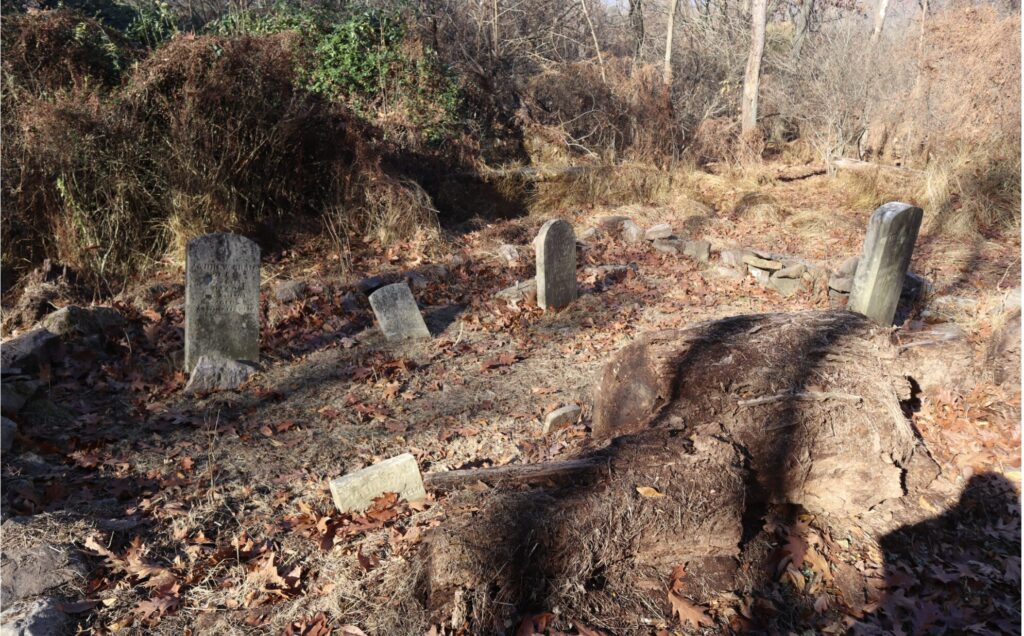
Andrew Craig died in 1863, and his wife Rachel in 1889. They are among the members of the Craig family buried in marked graves in what is known as the Craig Family African American Cemetery, which is east of Fort Hunter and south and east of the McAllister Family Cemetery.

Three other members of the Craig family—two sons and one daughter of Andrew and Rachel Craig—are also believed to be buried in the cemetery, based on obituaries and a July 1912 story in the Reading Eagle, said Dr. Steven B. Burg, a Shippensburg University history professor.

The Craig Family Cemetery is also known—erroneously—as the Fort Hunter African American Cemetery. The cemetery was originally part of the Fort Hunter estate, but, in 1933, land including the cemetery was transferred to the Country Club of Harrisburg by the will of Helen Boas Reily, who died in 1932.

Reily’s decision to transfer the land to the country club “was critical in seeing this site protected over time,” Burg said in a presentation at Fort Hunter on the Craig Family Cemetery in November.


Hike into History

Working with the country club, the task of preserving and protecting the Craig Family Cemetery—and telling and interpreting the stories of those buried there—now is being undertaken by a partnership of three organizations: Dauphin County Library System, the Popel Shaw Center for Race and Ethnicity at Dickinson College, and the International Institute for Peace through Tourism (IIPT).

This goes far beyond the history of the cemetery itself, said the late Lenwood Sloan, an African American historian who was executive director of IIPT and the Commonwealth Monument Project. 

“Our story is of the above ground. Who were the people, where did they live, how did they come up out of enslavement, how did they prosper, how did they create other passageways?” said Sloan, who was interviewed shortly before he died in late December. “There’s the underground story of where they died, and then there is the overground story of (how) they lived.”

The cemetery lies in a wooded area so remote that legal access is possible only through guided tours provided by the country club. The club has suspended tours until spring, due to slippery terrain during winter on the trail leading to the cemetery.

Protecting the cemetery is also a concern. The cemetery has been vandalized. Tombstones have been damaged by people shooting bullets into them.

“It’s not an amusement park,” Sloan said. “We do not want to attract people to the site. We want to encourage them to delve into the history of the people who were placed there.”

The cemetery at one time was much more accessible, perhaps a 15-minute walk from the Fort Hunter Mansion.

That changed over time due to the intervention of man-made structures. First, the Pennsylvania Canal was built through Fort Hunter in the 1820s, dividing the property in half. The railroad, now Norfolk Southern, followed and eventually came construction of the old Route 322 highway.

Due to these obstacles, reaching the Craig cemetery now requires a rugged guided trek of at least 45 minutes’ duration—after dismounting a golf cart taking you to the edge of the country club golf course.

The journey includes a foot bridge across a creek, hiking up a mountain, crossing two plateaus, and descending a cliff at a 45-degree angle by hanging onto a rope.

A rock hung from a tree branch serves as a marker, so people don’t get lost on their way back to the country club, said the Rev. Yvette B. Davis, director of the Popel Shaw Center, who has taken the guided tour to the cemetery three times.


Shine a Light

A big part of the partnership’s mission is educating people about the Craig Cemetery without them having to hike there.

A photo exhibit about the cemetery can be found in the Harrisburg Transportation Center at 4th and Chestnut streets. Technology is enabling the partnership to bring the cemetery to the public in other ways.

WHBG-TV 20, Harrisburg’s cable TV channel, has broadcast a video about the Craig Family African American Cemetery entitled, “Under Our Radar,” featuring aerial views of the cemetery using a drone. The video can be seen on YouTube.

Destiny McFalls, a 2025 Dickinson College graduate, has designed and done research for a TikTok series on the cemetery and those buried there, said Davis.

Kelly Summerford, a former Harrisburg City Council member, spoke of using augmented reality as a tool for people to learn about the cemetery without going there. AR allows people to point a smartphone in any direction and view a digital augmentation overlay about any conceivable subject.

Summerford also plans to bring stories of those buried in the Craig Family Cemetery to life through Pennsylvania Past Players, a group of living history interpreters.

In October, the Country Club of Harrisburg started hosting Chautauqua series public lectures on the Craig Family Cemetery. The series continues Feb. 19 with a Chautauqua lecture at the Country Club on Hannah Craig, one of the 11 children of Andrew and Rachel Enty Craig and believed to be buried in the cemetery.

Dauphin County Library System plans to build a collection focused on the cemetery that will be accessible to the public through its eight branches and online resources, said DCLS Executive Director Ryan McCrory.

Much of the renewed interest in the cemetery followed its inclusion on the National Register of Historic Places in November 2024. Being placed on the register can protect a historic site from an imminent threat and qualify the site for tax credits.

But Burg said that the most important thing the National Register does is “shine a light” on places, to show their communities and the country that these are places people care about and that matter.

That has certainly been the case regarding the Craig Family Cemetery, Burg said, which provides a unique look at the legacy of slavery right in our own backyard.

“We often think about Reconstruction as something that happens after the Civil War,” he said. “But right here in Pennsylvania, in the early 19th century, we see the process of reconstruction, of society being restructured, people building new lives and transitioning from slavery to freedom.”

Visit YouTube to view the video, “Under Our Radar: The Craig Family African American Cemetery.” 

If you like what we do, please support our work. Become a Friend of TheBurg!

Continue Reading

Intellect & Independence: Celebrating the bicentennial of activist, abolitionist, educator William Howard Day

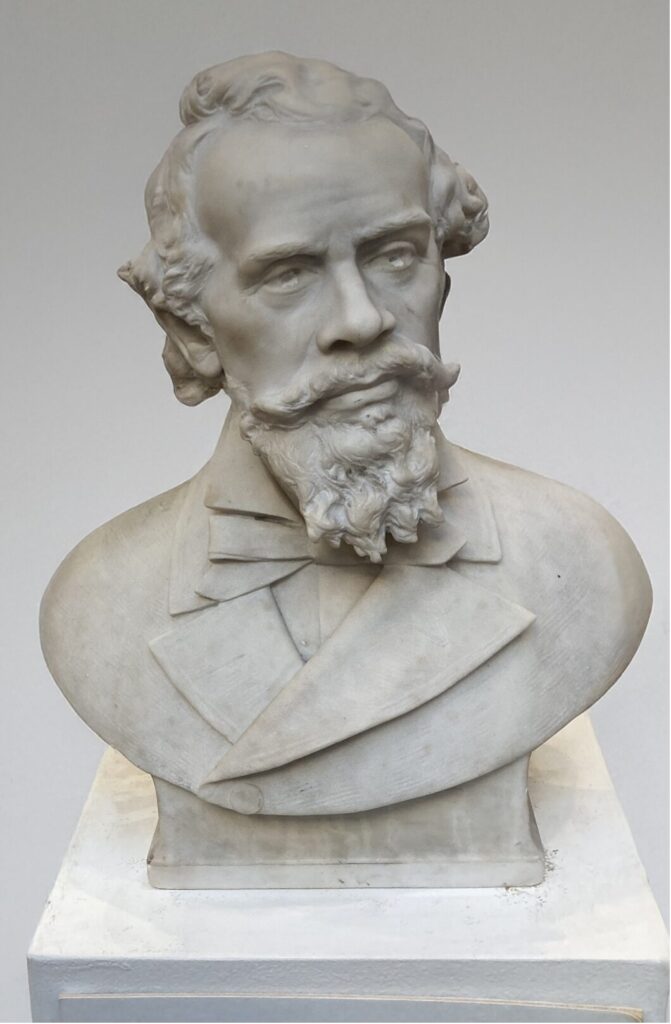
The Commonwealth Monument Project recently gifted this bust of William Howard Day for display in the PA Capitol Complex.

True learning, said William Howard Day, is not the “extent” of memorizing lines from textbooks but the “depth” of knowledge.

“And the depth will never be sounded until the mind of the student can by application weave the thought of the author into thoughts of his own period until the implanted lessons can be deduced—let out—into thoughts which are ours,” Day said at the 1893 dedication of the new Harrisburg Central High School. “That is education.”

William Howard Day channeled his talents, education and skills as teacher, administrator, politician, printer, editor, minister and orator into a life devoted to abolition of slavery, post-Reconstruction equal rights, and schools that equalized society.

Day was nationally known, a colleague of John Brown, Frederick Douglass and Harriet Tubman whose life after the Civil War brought him to Harrisburg. Here, he continued pushing back against the erosion of civil rights while breaking boundaries as the nation’s first Black school board president.


Fighting for Freedom

William Howard Day was born on Oct. 16, 1825, in New York City. Through his activist parents, he encountered veteran abolitionists who saw the talented young Black man “as a prodigy, like he was going to be the chosen one to abolish slavery in the country,” said Todd M. Mealy, author of the Day biography, “Aliened American.” 

At age 13, William’s mother sent him to Massachusetts to live with a white newspaper publisher who taught him the printing trade.

“He could be formally educated and given all the best things,” Mealy said. “The best clothing. The best education, whatever he needed, and his mom bought into it.” 

He graduated from Oberlin College, taught the children of freedom seekers, conducted on the Underground Railroad, and worked as a printer. A pioneer in Black media, he published the first edition of his newspaper, the Alien American, in Cleveland in 1853. 

The 1850 Fugitive Slave Act that jeopardized the freedom of all African Americans launched Day into the movement to establish sanctuary colonies in Canada. In 1859, he departed for Great Britain on a fundraising tour for the Buxton Mission in Ontario. 

He stayed in Europe until 1864, “representing the cause of freedom,” in Mealy’s words.

And was he, maybe, also a fugitive from justice for his seditious secret—the act of printing abolitionist John Brown’s “Provisional Constitution?”

“John Brown’s idea was to start a slave revolution, and he asked William Howard Day to print a guideline or constitution, and William Howard Day funded that,” said Harrisburg historian Calobe Jackson, Jr. “In fact, when John Brown raided Harper’s Ferry, William Howard Day was in Europe trying to raise money. Otherwise, he would have been tried in the conspiracy. It was very dangerous. Very dangerous.”


Reconstruction and Jim Crow

William Howard Day was a big-picture man with a can-do spirit. On his 1864 return to the United States, he joined famous African American abolitionists, including Douglass, strategizing for a constitutional ban on slavery. 

“The Emancipation Proclamation is not enough,” Mealy said. “If the Civil War ends without a plan, does slavery pick up again?”

During early Reconstruction, Day oversaw schools in Wilmington and Baltimore. As a Pennsylvania Republican Party organizer, he crisscrossed the state to help Black men exercise the suffrage they won in the 15th Amendment—a right still not enshrined in the Pennsylvania Constitution.

In 1873, he took a job in the Pennsylvania auditor general’s office. He bought a house in Harrisburg and made the city his home until his death on Dec. 3, 1900. 

Few Americans today understand the tightening vise of Reconstruction and Jim Crow—“slavery by a different name”—that Day resisted, said historian and genealogist Sharonn Williams. Emancipation didn’t equate to freedom, even for Black Americans born in non-slave states.

“Before, they were recognized as ‘free people of color,’” Williams said. “Now, they’re just ‘people of color.’ At some point, they lost things along the way.” 

Her grandfather, Williams added, “was an admirer of William Howard Day, and he instilled in me that you are not better than anybody, but you are not less than anybody. You have certain gifts, and you need to share those gifts.” 


A Living Voice

In 1877, Day spoke at the dedication of Lincoln Cemetery in Harrisburg, and he would be buried there at his death. 

Day’s words—“Our history is not written. It lies upon the soil watered with our blood. Who shall gather it?”—encapsulate the mission of Saving Our Ancestors’ Legacy, the project led by Rachael Williams to preserve the historic Black cemetery.

Day connected the dots needed “to create freedom and abolition, and raising the money, and connecting people, and speaking this truth and telling the history,” Williams said. 

She “firmly believes” that Dr. Martin Luther King, Jr.’s “I Have a Dream” speech echoed Day’s 1865 speeches in Washington. In one speech on the White House lawn, he said that the people emerging from bondage were following pathways forged by previous generations.

“The change, socially, may be silent, but on it moves,” he said. “It fills its years.”


Education for All

When the Harrisburg school board president died in 1891, the board turned to one of its members—William Howard Day—to fill out the term. 

Day’s experience as an educator and the injustice of Pennsylvania’s legalized school segregation first inspired him to run for what would become six terms on the board.  

In 1892, board members praised Day’s intellect and fairness as they reelected him as president. The rare honor emerged from “the combination of who he was and how well respected he was for the work he’d done in the city,” Mealy said.

Accepting his reelection, Day thanked board members for emphasizing that “the accidents of birth or circumstances or matters over which a man can have no control, amount to nothing in considering the interests of the thousands of children committed to your care for tuition and training in the public school—the People’s College.”

After more lofty words, Day listed the work ahead. There were schools to unify, free textbooks to supply, and music instruction to put into classrooms. 

Day’s commitment to serving Harrisburg “speaks volumes” about his sacrifices while other civil rights leaders found fame from Washington and New York City, Mealy said.

“One of the things I would argue that makes Day so heroic is the fact that he localized his efforts, which goes against the grain of national popularity,” he said. 


Continuing the Legacy

Day’s name lives on in Harrisburg’s W. Howard Day Homes, the William Howard Day Cemetery in Steelton, and since 2015, the Pennsylvania School Boards Association’s William Howard Day Award for outstanding contributions to public education (the indefatigable Day was a PSBA president).

But the Day Homes were founded for Black residents, said Williams. She nurtures the memory of Day’s accomplishments because the places named for him “are the things that are segregated,” she said. “Part of that offends my sensibility because he was an abolitionist.”

On Oct. 16, 2025, Downey Elementary School students sang “Happy Birthday” to celebrate Day’s bicentennial. The school was built to educate the children of Day Homes, and alumna Yvonne Echols-Hollins, a retired educator, is leading the memorialization of Day’s legacy by strengthening ties between the school and the Day Homes, with lessons on Day’s life, inviting Day Homes families to adopt classrooms, and introducing students to successful alumni and memories of the “phenomenal teachers” who encouraged them to achieve.

“A lot of good things came out of Downey School and the William Howard Day projects,” said Echols-Hollins. “We are keeping that legacy alive by doing this and letting the students know where their roots are, because if you do not know where you started, you will have no idea as to how you can get where you’re going.”

Day’s legacy lingers in “his thirst for education” and his prescient advocacy for learning steeped in independent thought, said Jackson. He revolutionized Harrisburg education by leading the construction of the unified high school that he dedicated in 1893, said Jackson. 

“The idea was to end segregation,” Jackson said. “Back then, it was a big thing to build a high school. A lot of students dropped out after elementary and junior high school. The boys, especially, could go to work in the steel mills and railroads. In fact, you had to pass an exam to enter high school.”

Day himself reminded Harrisburg school board members that education invited students of all circumstances to enter “the training place for future American citizenship.”

“Climb!” he said. “Climb up the steep ladders, up the winding stairs, through the mist and dark of this hour to the sun-lit plains above you. Are circumstances against you? Cast them off. Are prejudices, grey with age, in your path? With God’s help, breathe upon them the spirit of your achievement, and they will take wings and vanish. Is Poverty walking with you arm in arm? Treat her gently and let her speak for you. But go forward.”

Historic Harrisburg Association celebrates the centennial of Black History Month with historians Calobe Jackson Jr., Barbara Barksdale, and Elizabeth Jefferies who share Harrisburg’s legacy as one of the first communities nationwide to celebrate “Negro History Week” in 1926. Fourth Monday series, 6 p.m. Feb. 23, Historic Harrisburg Resource Center, 1230 N. 3rd St., Harrisburg. Free. www.historicharrisburg.org.

If you like what we do, please support our work. Become a Friend of TheBurg!

Continue Reading

Green Dream: Newly formed, the Harrisburg Green Alliance seeks to improve, beautify the city’s public spaces

Riverfront Park

Back in 2018, National Geographic named Harrisburg one of the “top 10” greenest cities in America.

It now may get even greener.

The newly formed Harrisburg Green Alliance officially launched this month with its sights set high for improving and beautifying Harrisburg’s public spaces. 

The new nonprofit is built on the idea that a city that looks clean and cared-for acts as a magnet for new residents and businesses, better retains existing ones, and attracts more tourists.

The alliance will follow the blueprint of established urban conservancies, according to board chair and interim Harrisburg University President David Schankweiler. 

Conservancy groups act as private, nonprofit partners of cities—extra hands helping to manage, fund and maintain public spaces when city budgets or resources are tight.

“The outcomes we have seen have been tremendous in other cities,” Schankweiler said. “We’re not looking to reinvent how to do things. We’re taking a lot of ideas from other cities across the country and, hopefully, hoping to implement them here.”

Many cities and small towns benefit from partnering with conservancies to bolster public spaces. Take New York’s Central Park, for example.

“The land is owned and the grass is cut by the city,” Schankweiler explained. “Everything else is done by a conservancy.”

Part-time executive director of the alliance, Shana Woomer, said Greenville, S.C., is another place this model has worked. 

Originally built around the textile industry, the town’s economy collapsed when the industry declined—leaving big roads and empty storefronts behind as people moved elsewhere.

“With public-private partnerships over decades, they turned things around and have a thriving downtown,” Woomer said.

One of its biggest public-private transformations was done in concert with a local conservancy, the Carolina Foothills Garden Club. The $13.5 million project, “Falls Park on the Reedy,” created a public park around an existing waterfall, previously hidden by a highway. 

Afterward, the city’s reputation transformed from an abandoned textile town to a must-visit destination. Woomer said that it also spurred an additional $600 million in development in the area.

Pittsburgh is another good example of a city that has benefitted. 

Since the Pittsburgh Parks Conservancy’s founding 30 years ago, it’s raised $150 million and checked off 24 city park improvement projects. One of its projects, known as “Mellon Square,”  helped restore a public green space atop a parking garage in the middle of downtown Pittsburgh.

According to Alana Wenk, the organization’s director of marketing and communications, the $10 million park, which reopened to the public in 2014, has since become a popular city hangout.

“A nice, central community gathering space, which, in turn, leads to a positive impact for downtown,” she said.

Wildwood Park

Welcoming, Thriving 

While Harrisburg faces its own unique challenges, Woomer said that the alliance can benefit from the experiences of other revitalization efforts.

“We can learn a lot by studying how other cities and towns have risen from the ashes, what they did to revive their economies and inspire their residents,” she said.

While the alliance will undertake some visible projects within the year, other cities—like Greenville—are proof that economic improvement through beautification is a long game. 

“The person that was behind that movement? He’ll tell you it was 30 years until they saw fruition,” Schankweiler said. “There are projects we’re going to do immediately, but there are other things that may take a considerably longer time.”

The Harrisburg Green Alliance plans to kick off by beautifying entrances to the city. The thought is that, when someone comes into Harrisburg, they should feel immediately welcome—whether it be a resident, a tourist or a prospective business.

“We want them to say, ‘Oh, this is the capital city. This is really nice,’” Schankweiler said.

City spokesperson Mischelle Moyer indicated the city is eager for such collaboration. 

The city, the mayor and our Parks and Recreation staff are very much so in favor of this organization and look forward to working with them in the near future,” she said.

Gathering further community support in January, the alliance held a meeting with about a dozen community groups, inviting them to the table, as the alliance launched, and encouraging an open channel for future collaborations.

The next big piece for the alliance, according to Schankweiler, is to secure financial support for projects, which will be announced as funding is secured. 

“We want to make sure we’re doing projects in all parts of the city,” he added.

From any group or individual that funds a project, the alliance will also secure monies for five-year maintenance commitments, so that projects can be properly maintained after being completed.

A big focus for the group will be city parks, he said, where the city—limited by staff—often struggles to keep up with maintenance.

“They don’t have a large staff,” Schankweiler said. “They cut the grass. They do other things—but we can enhance what they do in those city parks by helping to repair equipment, replace equipment, lighting, basketball hoops—whatever it takes.”

City forester Cody Legge said that he has been brainstorming projects that match the group’s mission, which he said aligns with a future many city residents want to see. 

“One where Harrisburg is greener, more welcoming and thriving,” Legge said.

From left: David Schankweiler, Shana Woomer and Kurt Knaus.

Giving Back

The idea for the Harrisburg Green Alliance came about, according to Schankweiler, through a collective brainstorm of about a dozen city residents and business owners all asking themselves one question: “How can we help the city?”

The book, “Our Towns: A 100,000 Mile Journey into the Heart of America” by James and Deborah Fallows, provided some inspiration. In it, the husband-and-wife authors document their four-year journey around the country to visit 29 small and mid-sized cities and study strategies for revitalization in the wake of economic challenges. 

“Each city is an interesting story,” Woomer recounted, noting that she and many board members read the book as the board was forming. “As I read it, I couldn’t help but think, ‘Harrisburg has this’ and ‘we have that!’” 

“One of the biggest takeaways from the book is that, if you invest in parks and public spaces for a more beautiful and livable city, economic development will follow,” she added.

The book also got board members thinking about Harrisburg’s assets—Woomer listed some of its most obvious: the Susquehanna riverfront, its affordability, its more-permanent (less-transient) communities. 

“We also have universities, a strong arts community, medical facilities, entrepreneurs who open breweries and distilleries,” she said.

Personally, Woomer fell in love with Harrisburg when she moved to the city from Washington, D.C., 20 years ago. In the years since, she’s enjoyed connecting with her community through a plethora of “entrepreneurial” pursuits, including owning a restaurant, working in public relations and events and selling real estate as a licensed agent.

“It’s small enough I feel like you can really make a difference,” Woomer said.

According to Schankweiler, every member of the alliance’s 18-person board shares a similar love for living in the area. 

“You couldn’t get any bigger cheerleaders,” he said.

Schankweiler, a city resident, grew up in Harrisburg and moved back after college. He later founded and ran the Central Penn Business Journal for more than three decades, always proud to show off Pennsylvania’s capital to visiting colleagues.

Chair of the board’s communications committee, Kurt Knaus sees his work with the alliance as a chance to give back to the city he loves. A 30-year resident, Knaus, senior vice president of Ceisler Media, lives by the Broad Street Market and works downtown. 

He walks to work, he said, which gives him a chance to see both the best and worst of the city. For him, the alliance is a chance to enhance the city’s best parts.

“What I see is its underlying greatness,” Knaus said of Harrisburg.

He added that, while the alliance has been laying its foundation, it’s been incredible to see the eagerness with which so many people want to help the city.

“There is a reserved energy in the city where people really want to roll up their sleeves and do something,” he said.

Schankweiler looks forward to harnessing such energy and using it to bolster not just Harrisburg—but the surrounding area. 

“We are the hub for this region,” he said, “and our success will be the success of the region.”

For more information on the Harrisburg Green Alliance, visit www.hbggreen.com

Stories in TheBurg on environmental topics are proudly sponsored by LCSWMA.

If you like what we do, please support our work. Become a Friend of TheBurg!

Continue Reading

He Lifted Us: Lenwood Sloan was an artist, activist, visionary, friend

Photo by John Bivins

Visionaries always have their doubters. When Lenwood Sloan was collecting support for “A Gathering at the Crossroads” sculpture, naysayers sidled in to discourage potential donors.

But guess what stands today in the Pennsylvania Capitol Complex? “A Gathering at the Crossroads Commonwealth Monument,” commemorating the civil rights victories of residents and visitors to the vanished Old Eighth Ward of 19th-century Harrisburg.

“He always kept his eyes on the vision, which meant that no matter what anyone was saying, no matter who was opposing him, he always rose above it, and he stayed focused on the goal,” said Yvette Davis, director of the Popel Shaw Center for Race & Ethnicity at Dickinson College in Carlisle. “No matter what point of the process we were in, he could describe that monument with such meticulous detail, you would think it had already been constructed.” 

Sloan was a “catalytic agent.” He convened people and turned dreams into reality through his talents as public historian, reenactor, actor, dancer and leader in the National Endowment for the Arts and government arts and heritage offices in Pennsylvania, California and New Orleans.

Sloan died suddenly on Dec. 26 at age 77. He left behind countless grieving but grateful friends, family members and colleagues. Anyone ever on Sloan’s famous non-bcc emails had insight into the hundreds of people he could sweep into his orbit, one change initiative at a time.


Living His Purpose

This story is about what family and friends learned from Sloan. There isn’t enough room for all of his accomplishments. In addition to “A Gathering at the Crossroads,” now a Harrisburg landmark anchoring T. Morris Chester Way (yes, another Sloan ideation), here are a few:

  • The Grand Review of the United States Colored Troops, a 2010 reenactment of Harrisburg’s 1865 Grand Review for Black troops shut out from the Union Army’s victory parade in Washington
  • The Pennsylvania Past Players, skilled reenactors animating the lives of central Pennsylvania’s abolitionists, Underground Railroad conductors and early civil rights activists
  • The International Institute for Peace through Tourism Peace Promenade in Harrisburg’s Riverfront Park
  • Pennsylvania artisan and heritage trails

“He had an incredible eye to help people realize what they might have in their backyard and to frame what I would call the embarrassment of riches in Pennsylvania to residents and visitors alike,” said Michael Chapaloney, a former colleague in the Pennsylvania Department of Community and Economic Development’s tourism office.

Raised in Pittsburgh, Sloan trained and danced with the Alvin Ailey American Dance Theater and the Joffrey Ballet. He staged his own theatrical works—his “Vo-Du Macbeth” reimagining of Orson Welles’ “Voodoo Macbeth” must have been something to see—and recreated historical dances, leading to film and television consulting that included movement specialist for “12 Years a Slave.”

To Heather Williams of College Park, Md., her Uncle Leni always had a project underway.

“He was this big, huge presence as a vessel and a visionary, and yet, there was also this part of him which I call his humble heart,” said Williams, the daughter of one of Sloan’s sisters.

Part of her mother’s massive Black art collection is in Lancaster Art Vault’s February African American art exhibit, complete with descriptions that Sloan assigned family members to write, because he walked into the gallery, struck up a conversation, “and before she knew it, they were booking a date.” 

“His purpose was to be a catalyst for change, and God gifted him with talents and with an interest in developing those talents to be able to live his purpose,” Williams said. 

After Sloan learned that erecting “A Gathering at the Crossroads” in Riverfront Park, as originally intended, required buying insurance to cover maintenance, he pivoted by working to gift it to the state, “and the state would keep it up,” said Harrisburg historian Calobe Jackson Jr. 

“He can finalize anything,” Jackson said. “Some can theorize, but he’s able to take a theory and put it together and get a final product. That’s what I like about Lenwood.” 


Moving Forward

As a public historian, Sloan encouraged people to find the family stories and mementos hidden in attics and stashed under beds. When historian and genealogist Sharonn Williams learned that she is a great-niece of Jacob Compton, the Harrisburg coachman famous for spiriting Abraham Lincoln away from would-be assassins, Sloan told her, “Your work is not done.”

Today’s policies requiring immigrants to carry papers and deporting them to unfamiliar countries echo manumission and colonialism, when slaveowners shipped enslaved people to distant states, and the children of Native Americans were forcibly assimilated, said Williams. 

“There are people around us who say, ‘That’s new. That’s different,’” Sharonn Williams said. “No, it’s not. It’s not new.”

In the wake of Sloan’s death, she added, “we need to keep moving forward, make sure that we are doing things for and in the public that will keep telling these stories.”

Davis, a Pennsylvania Past Players member and the Dauphin County Library System board president, was in awe of Sloan, “so touched and humbled and intimidated that he would take me under his wing as he would for so many other people.” 

At one Pennsylvania Past Players event, Davis’ heart dropped when Sloan asked her, without warning, to explain Pennsylvania’s coverture laws that erased a married woman’s legal identity—a topic Davis hadn’t reviewed in months. 

“Lenwood knew that I knew the answer to that question,” Davis said. “I didn’t know that I knew the answer. But in that moment, by God’s grace, it all came back, and Lenwood had such a smile on his face.”

Sloan met his husband, poet Byron Clement, through a mutual friend in New Orleans. Together for 22 years and married since 2017, they relocated to Harrisburg just before Hurricane Katrina. 

“He was pretty self-propelled,” Clement said. “He had great talent for bringing people together. He had immense energy. It took a lot of pushing to get these things through, and he’d hang in there and fight for them.” 


New Vision

Inspired by his parents’ activism and nurtured by his family, Sloan used and preserved history to generate change, even while he was the uncle who never missed a dance recital, said Heather Williams. 

“Very few people know how to love and give equally,” she said.  

Sloan was “always interested in what you were doing,” echoed Tom Weaver, former associate artistic director of Gamut Theatre Group. 

Gamut was rehearsing its 2014 Free Shakespeare in the Park production of “Antony and Cleopatra” when Sloan made the steep trek to Reservoir Park—the non-driver walked everywhere—to address the cast.

Smartly dressed, as always, Sloan shared his support for the players offering a free event to the community.

“He was so inspiring and encouraging,” Weaver said. “I don’t think anyone in that cast knew him at the time. I remember seeing their faces just light up as he was talking to them, and it injected some inspiration and some strength into that rehearsal.” 

Family and friends are discussing how to memorialize Sloan, but all agree that his greatest monument will be continuing his work.

Sloan was “adamant” that the Pennsylvania Past Players capture the spirit and humanity that drove oppressed people—of all races, ethnicities and colors—to overcome, said Davis. 

“That increases the collective self, the collective esteem of basically any community, even if you were not among the oppressed,” she said. “There is a new vision to how you can partner with the oppressed to bring justice, which also increases that group’s self-esteem with a lens toward justice, power, strength, wisdom and persistence.” 

Sloan, she added, was “the poster child for persistence.”

“It’s going to take hundreds and hundreds of feet to fill Lenwood’s shoes, and there will still be room in them. He left so many legacies. He lifted us in so many, many, many ways,” Davis said.

If you like what we do, please support our work. Become a Friend of TheBurg!

Continue Reading

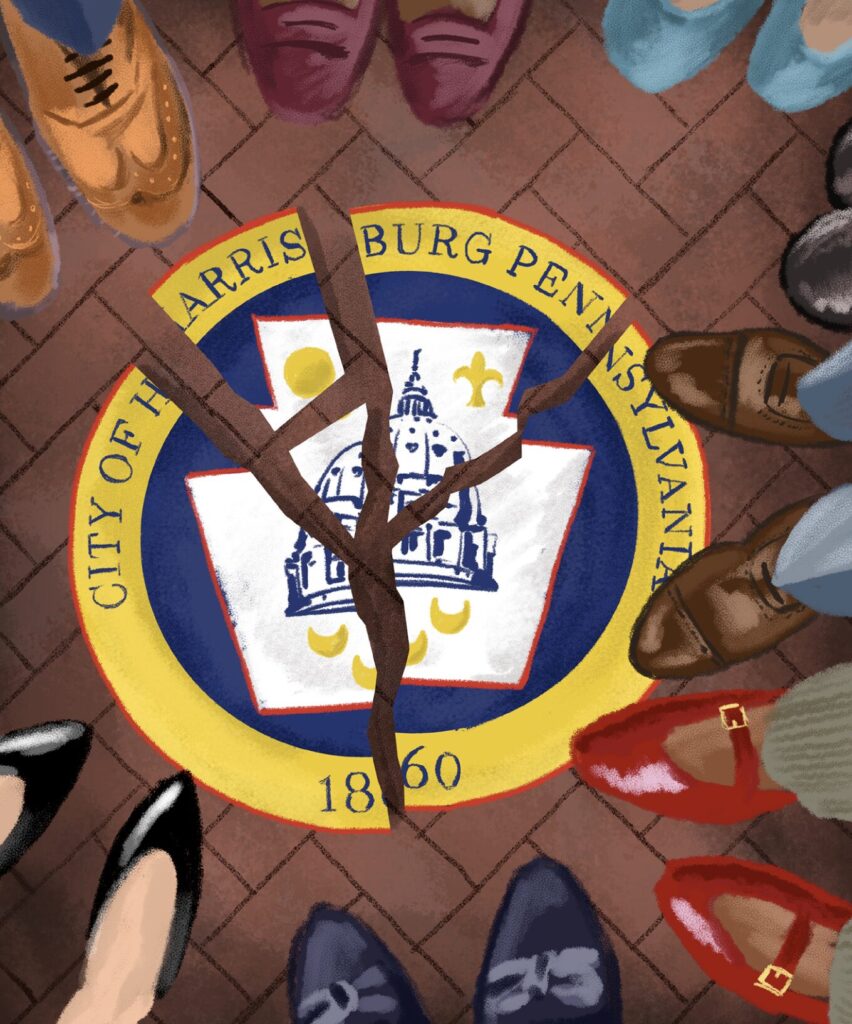
Veto to Toe: Relations between Harrisburg’s mayor and City Council have soured to the point of litigation. How did we reach this place?

Illustration by Rich Hauck

During her final meeting as City Council president in 2021, Wanda Williams cut herself off, mid-goodbye speech, to keep her tears at bay. 

She had been elected Harrisburg mayor the prior November and was about to bang her council gavel for the final time, but first she had some words to share.

“I love each and every one of you,” Williams said to her colleagues. “You are experienced, you’re leaders, you’re workers, you’re compassionate about what you do, and I’m so, so proud of each and every one of you. This is the best council that I think that we’ve ever had in the last 16 years.”

A smiling Danielle Hill, who served alongside Williams, presented her with a gift and plaque on behalf of council.

Four years later and Hill, now council president, said that she has virtually zero communication with Williams, who was recently sworn in for a second term as mayor. She doesn’t even attempt to call or text her anymore because her calls go to voicemail and texts go undelivered, she said. She believes that Williams has blocked her, which the mayor denies.

“I think she mentioned that we should text or email her,” Hill said. “When she served as the council president, I know she didn’t check her email so I’m not really sure how I’m supposed to communicate.”

Williams said she hasn’t blocked Hill and that, in city hall, council members have passed her without saying a word.


A Cycle Repeats

Back in 2021, after a rocky end to the relationship between former Mayor Eric Papenfuse and council, the stage was set for a smoother one under the new Williams administration. After all, Williams had spent years on council, and now her former council colleagues would serve as governing partners.

Despite a decent start—Hill said that she met with Williams weekly at first, though Williams disputes that—the relationship quickly backslid. 

According to city Solicitor Neil Grover, history has repeated itself.

“I tell this story again and again. In 1860, we became a city and, in 1861, the very first mayor sued the very first council for who had power to do what,” Grover said. “That has repeated itself 20 and 30 and 40 years apart several times.”

Tensions between the two bodies reached that same point during this year’s budget cycle. Williams has now sued council, after a back-and-forth of budget vetoes and overrides, as council eliminated salaries for several top city officials.

Council defunded the business administrator role, one of the city’s highest posts, saying that the interim director had remained in the position without council’s approval, past the allowed time for a temporary employee. They reduced the salary for the interim director of building and housing development for the same reason.

They also zeroed out the salary for the project director for business administration/LERTA, expressing dissatisfaction with the director’s work, and for the police bureau’s director of community engagement and relations, saying they felt the position was not needed.

For the roles that are unfunded, directors were terminated, and no one can be hired because there’s no money to pay them.

The lawsuit hinges on a disagreement over where the line is drawn between the two bodies’ powers. The mayor said that council crossed into “territory that does not belong to them,” by trying to assume an executive function such as personnel management. Williams called it an “overreach.” However, Hill maintained that council was within its rights by removing funds and didn’t fire anyone. “That is not under our purview,” she said.

“It’s fundamental questions of government,” Grover said. “What is the legislative authority? Where’s the line? What is executive authority? Where’s the line?”

But what is really behind the issue? Why can’t council and the mayor work it out, outside of court?

“Is that what you’d boil the issue down to—the lack of communication?” TheBurg asked Hill.

“I think so, I guess,” she said. “It just saddens me because, when does the cycle end?”


Dependent on Each Other

Going back to the basics, Harrisburg is a third-class city with a mayor-council form of government. Unlike other municipalities that may have a city manager or commissioners, Harrisburg’s mayor is given significant power. Harrisburg has a strong-mayor form of government, as opposed to the weak-mayor model, where the mayor is ceremonial. 

Harrisburg first adopted the strong-mayor setup in 1970. Democrat Harold Swenson became the first strong mayor, after the question of changing the governmental structure appeared on the 1969 ballot and was approved by voters, according to newspaper clippings from the time.

While the mayor handles daily operations—hiring, firing, spending, etc.—council is supposed to serve as the fiscal watchdog and legislative body. For example, council approves an annual budget with spending allocations, but the mayor and her staff prepare that budget, spend that money and execute projects. Both the mayor and council can introduce legislation. 

Harrisburg may have a system in which the mayor has broad executive authority, but without council on board, her power can face barriers.

According to Grover, the mayor-council system relies on the two branches working together.

“The government cannot run if the branches of government don’t work together. You see that here, you see that everywhere,” Grover said. “That’s how it’s designed. It makes them each dependent on each other.”

Ultimately, the cost of bad blood between council and the mayor lands on the taxpayer’s bill. The two bodies can keep score of wrongdoings, argue over who is at fault or cling to grudges, but in the tug of war, residents are the ones who suffer.

Whether that plays out in stalled city services, costly legal fees or lack of progress, something gets caught in the middle.

“I always tell both branches of government, you need to guard your powers jealously,” Grover said. “People gave them to you. You’ve got to guard them, but then you also have to figure out where the line is.”

The issue now is that both the council president and the mayor blame the other for the problem, and each seems to be waiting for the other to budge.

“It’s not productive, and the people who lose out in this are the residents,” Hill said. “It’s a little time intensive going back and forth, and it doesn’t have to be. If communication improves, perhaps that’s one avenue. But I would like to reiterate that I don’t have a communication issue.”

On the opposite side, Williams said that it’s council that has the issue.

“It’s unfortunate that we cannot collaborate more together. My doors are open […] knock on my door,” Williams told reporters in January. 

With the tense council-mayor dynamic recurring through the years, is there another option for Harrisburg?

Outside of officials joining hands, the city could re-evaluate its structure by enacting a “home rule charter,” a complex process that would examine various governmental structures and possibly recommend a new one for residents. It’s something that Grover said has been brought up over the years but hasn’t made it to a vote. 

In Harrisburg’s current governmental structure, officials are hopeful that relationship repairs can be made. Both Williams and Hill said as much. 

How that will happen, especially with the feud landing in court, and most elected officials at the start or middle of their terms, remains to be seen.

“I’m actually a believer in institutions,” Grover said. “I believe there will be a point where they come together—it’s just how do you do it? I completely believe that will happen. I believe when you force the question, solutions arise.”

If you like what we do, please support our work. Become a Friend of TheBurg!

Continue Reading

Loss Leaders: A brief history of bad decision-making in Harrisburg

Illustration by Rich Hauck

“What brought you to this lowly state?”

Over the recent holiday season, I watched “A Christmas Story” for the umpteenth time as, maybe, you did too. If so, you may recognize that quote, muttered by the “old man” during the scene in which Ralphie imagines himself poisoned and blinded by Lifebuoy soap.

Hearing that quote, I thought of—wait for it—Harrisburg. Ridiculous, right?

Except that Harrisburg does find itself in a lowly state, and, from online comments, it seems that lots of folks, maybe newer to the city, don’t understand how we got here. How has downtown, specifically, become riddled with closed businesses and empty storefronts? I thought a quick review was in order.

Gather ‘round, boys and girls, and let me tell you about the 1990s.

Britney Spears was cranking out pop hits, “Y2K” was about to destroy the planet, and, in Harrisburg, “mayor for life” Steve Reed was spending money (as my mother would say) like a drunken sailor.

Reed was ambitious, wanting things for Harrisburg found in many other cities: a university, an arts center, museums, a sports hall of fame, a baseball stadium. And he wasn’t about to let the annoying fact that Harrisburg couldn’t afford any of these things get in his way.

At around the same time, the city’s cursed incinerator kept polluting and failing—and polluting and failing. Something needed to be done about that.

So, Reed and his yes-men stumbled upon an “ingenious” solution they thought could kill two birds with one stone. They heard about an experimental technology that, they hoped, would burn trash cleanly, expand capacity and generate electricity. If it worked, the city would dispose of its garbage, get the EPA off its back, and, to boot, pocket some cash, a constant Reed obsession as he pursued his many grandiose, incredibly expensive schemes.

Only it didn’t work—and bad money followed more bad money trying to bang the darn contraption into shape. In a few years, Harrisburg found itself nearly half-a-billion dollars in debt and on the brink of bankruptcy.

In fact, in late 2011, City Council tried to declare municipal bankruptcy but was blocked from doing so by the state legislature, which mandated a receiver instead. A couple years later, the receiver drafted a financial recovery plan that sold off the incinerator and leased the city’s most valuable asset—its parking system—back to the commonwealth for 40 years to pay off Harrisburg’s massive debt.

And that’s how the city lost control of its parking.

So, if you have complaints about the insane rate of street parking, or the insane rate of garage parking, or the insane rate of parking tickets, don’t bother trekking to city hall. They can’t help you. Stroll over to 3rd and State streets, ascend the grand stone staircase and rap on the Capitol’s front door. Those are the guys who control the city’s downtown parking.

Now, to summarize: What brought Harrisburg to this lowly state?

At its core—bad leadership, at the both the state and local levels.

For years, Reed ran amok with the city’s finances and the state, which is supposed to supervise municipal spending, looked the other way. Then, once it all hit the fan, the state prevented the city from declaring bankruptcy and forced it into receivership.

As part of the financial workout, the state took over the city’s parking system, issuing bonds to pay off the city’s creditors. It then hired a parking manager, whose wacko response to weak demand was to keep jacking up rates. Downtown Harrisburg now is one of the most expensive places on earth to park a car, and people have responded by not visiting and not using the system.

But the parking nightmare didn’t end there either.

After the pandemic, the state allowed most of its workforce, most of the time, to work remotely. State employees usually didn’t need to pay for parking, but others did: lobbyists, lawyers, contractors, consultants, caterers, constituents, businesspeople, visitors—each day, tons of people met with and supported the 25,000 or so folks who worked at the Capitol complex. So, in that way, the state sabotaged its own parking regime.

These visitors also supported downtown businesses.  They robustly patronized cafés, lunch spots, hotels and restaurants, often not shy about flexing their expense accounts. For Harrisburg’s small downtown, these customers made a huge difference—today, they’re mostly gone.

Meanwhile, back at city hall, leadership is also wanting. We have virtual gridlock because City Council and the mayor are locked in a bizarre, deeply personal cold war. Instead of joining forces and marshalling resources to help solve the city’s problems and revitalize downtown, they’ve essentially stopped communicating, aside from the occasional dig or media taunt.

At long last, the people of Harrisburg need—and deserve—quality leadership from all its elected officials. In recent Harrisburg history, this leadership has been, at turns, irresponsible, negligent, arrogant and profligate, and it’s a major reason why the city, today, finds itself in “this lowly state.”

Lawrance Binda is publisher and editor of TheBurg.

If you like what we do, please support our work. Become a Friend of TheBurg!


Continue Reading

February News Digest

Mayor Files Lawsuit Against City Council

Harrisburg Mayor Wanda Williams has sued City Council.

The suit, which alleges that council acted outside of its scope of authority by defunding several top city positions, was filed in the Dauphin County Court of Common Pleas last month.

The lawsuit comes after a tense back and forth between council and the mayor over the city’s 2026 general fund budget. In December, council passed the budget, after making amendments to remove salaries for Harrisburg’s business administrator, project director for business administration/LERTA and the police bureau’s director of community engagement and relations. Council also zeroed out the city’s portion of funding for the interim director of building and housing development.

Williams then vetoed the changes, but council overrode her veto. Directors of each role, besides the building and housing director who still receives a federal salary, have been terminated. Williams said that she believes the move was a personal attack by council against her.

Williams, in her lawsuit filed by attorney Renardo Hicks, said that council’s action “invades powers assigned to the Mayor/Executive.”  Hiring, firing and personnel matters are the mayor’s authority, which council is not legally allowed to execute.

“They need to stop trying to do my job as the administration,” Williams told TheBurg.

However, council President Danielle Hill has maintained that council did not fire the staff, just defunded their positions.

“It was not to move anyone out of those positions,” Hill said. “We defunded the roles. That does not mean the people had to be fired. The mayor fired them. They could’ve easily been, maybe moved to a temporary position. There are other positions that are vacant.”


Williams Starts Second Mayoral Term

Harrisburg Mayor Wanda Williams has begun her second term in office, pledging “discipline, direction and renewed commitment to infrastructure.”

At a ceremony last month, Williams issued a call for unity among city officials, following Magisterial District Judge Marian Urrutia swearing her into office for another four-year term.

“My administration has a vision for the next four years,” Williams said on stage at Whitaker Center. “Harrisburg is ready for a new era of responsible growth, a new era of stability and a new era of long-term planning—an era where our children inherit a city that is stronger than the one we inherited.”

Williams won the mayoral election in November, beating her opponent Dan Miller, a Democrat who received the Republican nomination during the primary election, by  5,096 to 3,837 votes.

Williams’ speech, which included her priorities for the new term, spoke to mutual respect between City Council and her administration. The sentiments came at a time of conflict and litigation between the mayor and council over its 2026 budget amendments, which slashed salaries for several top city positions.

“We will stand firm against the disrespect, misinformation and unnecessary conflict,” Williams said. “Our residents deserve a government that behaves with maturity and professionalism. They deserve decisions that are rooted in facts and certainly not theatrics.”


Council Members Sworn In

Harrisburg City Council held a swearing-in and elected its president and vice president last month.

After four council members were sworn in, council voted for Danielle Hill to serve as council president for another two years and for Lamont Jones to serve as vice president.

Before a reorganization meeting, Magisterial District Judge Hanif Johnson swore in re-elected council members Ausha Green, Jocelyn Rawls and Ralph Rodriquez, and newly elected Rob Lawson, who was appointed by council previously and served for one year. Lawson replaces Shamaine Daniels, who did not run for re-election.

Hill will return as council president, having been unanimously elected after serving in the role previously. Jones unseated Green as vice president with a vote of 4-3, with Green, Rodriguez and Crystal Davis voting for Green.

“This is something that I want to do to yet again show the city of Harrisburg that I am someone that’s committed to serving us and standing firm in my stance, in my position, in what I believe in, and what I believe the people of this city deserve,” Jones said.


New Officers for Harrisburg Police

Harrisburg will soon have three new officers on patrol.

Mayor Wanda Williams last month swore in three police officers to the Harrisburg Police Bureau and promoted another during a ceremony at city hall.

“You are stepping forward at a time when the responsibilities of law enforcement are more complex than ever,” Williams said. “Our residents expect professionalism, compassion, accountability and a willingness to build trust with every neighborhood in this city. I believe you are ready for that challenge, and I am proud of each of you for choosing a path that places community at the center of your work.”

New officers include Cedric Bowling, a Harrisburg native and former city park ranger, William Fellenbaum, a Lancaster County native, and Melvin Torres, a McCaskey High School graduate who is bilingual.

The officers will enter field training with the police bureau after completing HACC’s police academy.

Additionally, officer Kyle Gautsch was promoted from lieutenant to captain. Gautsch has worked in the bureau for over 20 years and oversees the Criminal Investigations Division.


Al-Huda School Buys Former JCC

The former Jewish Community Center building has a new owner.

In late December, the Jewish Federation of Greater Harrisburg sold the 69,000-square-foot property at 3301 N. Front St. to the Al-Huda School for $1.1 million.

Safi Khan, director of the Al-Huda School, issued a statement celebrating the close of the sale. According to Khan, the Islamic school, which currently operates a campus in Camp Hill, will use the building as a new home.

“A place where the Quran will be recited, where the character will be built, where the hearts will be nurtured before the grades are measured,” Khan said, calling the purchase “the beginning of a legacy.”

The Al-Huda School, also known as Al-Huda PA, was founded in 2009. It is a branch of the Al-Huda School in College Park, Md. Its teachings are based around the Qur’an and Sunnah. 

Al-Huda PA currently enrolls pre-K through fifth grade students and offers online school for students in grades six to 12 through Al-Huda Global.

Zachary Benjamin, the president of the Jewish Federation of Greater Harrisburg, said that the sale symbolized the “end of a successful, joyful era” for the federation. The organization fully transitioned its operations to the Alexander Grass Campus for Jewish Life, at 2986 N. 2nd St., in 2024.

“We hope that the Al-Huda School enjoys many happy years in the space that served us so well,” Benjamin said.

The Jewish Community Campus building was originally built in 1956 and later updated in the 1990s. It served as the Jewish Federation’s home for almost 70 years.


Home Sales, Prices Stable

The Harrisburg-area housing market was largely unchanged in December, according to the most recent report on previously owned houses.

For the three-county region, 572 homes sold compared to 560 in December 2024, as the median sales price dipped to $270,000 from $280,000, according to the Greater Harrisburg Association of Realtors (GHAR).

In Dauphin County, 270 houses sold versus 257 in the year-ago period, while the median sales price slipped to $240,000 from $254,900, GHAR stated.

Cumberland County had 269 home sales, an increase of six from last December, as the median price rose to $329,900 from $310,000, said GHAR.

In Perry County, sales fell to 34 homes from 43 the prior December, as median sales price dropped to $237,500 from $255,000, according to GHAR.

The pace of home sales slowed, as “average days on the market” increased to 35 days in December versus 29 days in December 2024, GHAR said.


So Noted

Capital Area Greenbelt Association last month received a $750,000 state grant to support the relocation of the Greenbelt in south Harrisburg. The trail has been detoured and must be re-routed following construction of several housing projects in the area.

Doug Hill last month was re-elected president of the Capital Area Greenbelt Association, beginning his third year as the leader of the nonprofit group. Rounding out the officers for 2026 are Diane Kripas, vice president, Wes Veigle, treasurer, and Debbie Reihart, secretary.

Harrisburg area last month was named the second-best market in the country for first-time homebuyers, just behind Rochester, N.Y., according to Realtor.com. The report identified areas based on affordability, abundant for-sale inventory, local amenities and positive metro-level housing forecasts and economic outlooks.

Harrisburg Regional Chamber & CREDC last month named Alisa Harris as chair of the chamber’s board of directors and Beth Peiffer as chair of the CREDC’s board. Harris is vice president of government affairs at the Pennsylvania Alliance of YMCAs, and Peiffer is owner and president of Ralph E. Jones Inc.

John Wilsbach last month was named 2025 “Broadcaster of the Year” by the Pennsylvania Association of Broadcasters. Wilsbach has been a long-time traffic reporter in central Pa., as well as a play-by-play and color commentator for Lebanon Valley College sports.

SusqueCycle experienced a significant increase in ridership in 2025, according to the Tri-County Regional Planning Commission. The commission reported 3,321 rides for the rental bicycle network compared to 2,993 in 2024.


Changing Hands

Allison St., 1515: Y. Slimane to M. Shelley, $160,000

Balm St., 142: Q. Demiri to C&C Homes LLC, $75,000

Bellevue Rd., 1913: C. Bennett to Hope Only Corp Inc., $119,000

Berryhill St., 1827: J. Shaulis to M. Perez, $123,650

Berryhill St., 2250: L. Harrell to Beta One LLC, $98,671

Briggs St., 1920: Elevation Properties LLC to PACC HBG 2 LLC, $120,000

Conoy St., 100: S. & N. Dienner to N. Bova, $237,500

Crescent St., 300: J. Buckner to I. Zunun, $70,000

Cumberland St., 222: S. Rubinstein & H. Choi to S. Maiti & J. West, $208,000

Curtin St., 514: Buy the Block Back LLC to Breneman Properties LLC, $76,500

Curtin St., 532: Buy the Block Back LLC to A. DeLeon, $97,500

Derry St., 1509: T. Le to F. Parent, $120,000

Derry St., 2001: H. Alarcon to Val de Vie Estate Investment LLC, $142,500

Derry St., 2027: E. Echevarria to B. Frias, $145,000

Emerald St., 633: BCR 1 Properties LLC to Medina Realty Holdings LLC, $160,000

Forster St., 1837: House Cash LLC to S. Lewis, $134,500

Green St., 1630: Big Leaf Properties LLC to Calder Street Development LLC, $275,000

Green St., 2010: L. Sandelli to S. Pinter, $206,000

Hale Ave., 391: S. & M. Pillco to K. Kanuha, $168,000

Hanover St., 1205: D. Rodriguez to KN Investments LLC, $65,000

Harris St., 222: G. Grossman to I. King, $235,000

Herr St., 1104: V. & Z. Baklayan to R. Suarez, $675,000

Herr St., 1825: Allied Trust to ETAF Holdings LLC, $60,000

Holly St., 1903: Brittany Turner Agent Trust to G&W Rentals LLC, $85,000

Lenox St., 2025: V. Lyons to A. Ramirez, $66,000

Lewis St., 210: J. Hess to D. Banks, $179,000

Lexington St., 2562: Woco Holdings LLC to D. Levy, $165,000

Liberty St., 1414: Variety of Investments LLC to LYR Investments LLC, $95,000

Liberty St., 1612: JCIL LLC to D. Mick, $75,000

Linden St., 125: S. Tolopilo to PACC Homes & Development LLC, $200,000

Logan St., 2307: JB Express Construction Inc. to S. Davis, $110,000

Market St., 1845: Harrisburg Homes Investments LLC to J. Patel, $190,000

Muench St., 438: R. & D. Requa to A. Veres, $105,000

North St., 1151, 1100 State St.: Pennsylvania Commonwealth to Susquehanna Regional Transportation Authority, $340,000

North St., 1908: 2020 Real Estate Ventures LLC to J. Arroy, $155,000

N. 2nd St., 201: Murphy Second Street LLC to RMN Group LLC, $850,000

N. 2nd St., 1625: L. & E. Hamilton, J. Niblett & J. Wilson to C. Ramirez, $299,500

N. 2nd St., 2140: G. & K. Raser to S. & J. Toole, $240,000

N. 2nd St., 2309½: S. Martin to S. Ozark, $217,000

N. 2nd St., 2600: M. Thomas to M. Sargero, $185,000

N. 3rd St., 234: 234 N. 3rd St LLC to Blue Valley Leasing, $53,784

N. 3rd St., 1429: Third Street Development LP to Finanta Federal Credit Union, $560,000

N. 3rd St., 1828: PDI Properties LLC to Greys Properties & More LLC, $230,000

N. 3rd St., 1830: PDI Properties LLC to Greys Properties & More LLC, $230,000

N. 4th St., 23: J. Kowalczyk to A. & D. Good, $500,000

N. 4th St., 2135, 2137: Equitable Rentals LLC to Leesuer Estates LLC, $337,500

N. 4th St., 2239: A. Britton to Echo Propco I LLC, $85,000

N. 4th St., 3213: C. Shoemaker & K. Anderson to J. Tejedor, $210,000

N. 4th St., 3228: J. Tyson to S. Wright & M. Cox, $194,900

N. 5th St., 2032: Integrity First Home Buyers LLC to C. Pardo, $159,000

N. 6th St., 2951: Secretary of Housing Urban Development to C. Rhedrick, $75,000

N. 6th St., 3107: S. & K. Wright to J. & R. Guzman, $180,000

N. 7th St., 2640: V. Butts to H. Thompson, $95,000

N. 15th St., 1317: TRW Properties LLC to J. Zamora, $96,000

N. 16th St., 1006: H. Lacey to Dreamland Properties Associates LLC, $81,000

N. 17th St., 88, 1150 Mulberry St., 2332 N. 6th St., 2519 N. 6th St., 612 Oxford St., 613 Oxford St., 614 Oxford St., 616 Oxford St., 617 Oxford St., 619 Oxford St.: JMR Ventures LLC to BZDEL Global Investments LLC, $1,200,000

N. 18th St., 700: CG Home Buyer LLC to Rosaruth Properties LLC, $85,000

N. 18th St., 715: J. Weedon & D. Quartlebaum to T. Rudzenski, $125,000

N. Front St., 1525, Unit 208: S. & L. Weitzman to S. Marquet, $220,000

N. Front St., 3301: Jewish Federation of Greater Harrisburg to Al Huda Inc., $1,184,500

N. Summit St., 110: Black Market Hub LLC to Dreams 2 Reality Services LLC, $60,000

N. Summit St., 123: 1406 Market Realty LLC to 123 Summit LLC, $138,000

Norwood St., 949: F. Intrieri to T. Freeman, $178,000

Orange St., 2306: Sunny Day Real Estate Solutions LLC to F. McFadden, $114,374

Park St., 1827: Lorfax 1 LLC to B&H Investment LLC, $137,000

Parkside Lane, 2924: D. Rockoff to Top Cash Paid LLC, $150,000

Peffer St., 261: A., K., L. & M. Thomas to E. Green, $100,000

Peffer St., 323: Rebuilt Offers LLC to A&W Homes LLC, $80,000

Penn St., 2120: Gilligan Realty LLC to Breneman Properties LLC, $101,500

Penn St., 2153: Dvilla LLC to D. Stufflet, $170,000

Pennwood Rd., 3200: S. & C. Weinstein to RNM Group LLC, $58,000

Race St., 566: Almond Properties LLC to RE Innovative Digital Solutions LLC, $330,000

Reel St., 2446: E. Johnson to A. Morocho, $150,000

Reel St., 2717: G. & C. Wright to Top Cash Paid LLC, $85,000

Reel St., 2722: A. Britton to Echo Propco I LLC, $90,000

Regina St., 1841: D. Walker to 77 Estate LLC, $90,000

Regina St., 1921: C. Caraballo to BYD Properties LLC, $75,000

Reily St., 219: S. Briffa to M. Azizi, $180,000

Reily St., 220: SJL Rentals LLC to M. Tortora, $265,000

Reservoir St., 76: JJ House LLC to M. Williams, $160,000

Rudy Rd., 1811: J. Adlong to Breneman Properties LLC, $55,000

Rudy Rd., 1950: B. Freeland to D. Hernandez, $160,000

Rudy Rd., 2443: B. Hefflefinger to Dreamland Properties Associates, $72,000

S. 3rd St., 17: Blackberry LLC to SOMA Associates LLC, $220,000

S. 13th St., 1502: A. Khan to W. Cherelus, $140,000

S. 13th St., 1523: J. Spagnolo to Perosso Construction LLC, $97,500

S. 14th St., 118: H. Casado to 118 S 14th St LLC, $65,000

S. 15th St., 22: Trimble Investment Group LLC to K&M Homes Investments LLC, $70,000

S. 17th St., 332: S. Alden to Grid Investments LLC, $54,000

S. 17th St., 601: A. & D. Bailey to Moul 2 LLC, $432,000

S. 17th St., 1116: AKS Real Estate Group LLC to N. Nolasco, $189,900

S. 20th St., 13: Scholars Inc. to Grid Investments LLC, $50,000

S. 20th St., 21: T. Terry to Grid Investments LLC, $52,000

S. 25th St., 352: D. Biechler to S. Lalic, $115,000

S. 29th St., 630: J. Guzman to T. Anderson, $152,000

S. River St., 313: A. & R. Bomberger to D. & F. Johnson, $155,000

State St., 231, Unit 303: T. & D. Jensen to D. & K. Patel, $169,000

State St., 231, Unit 701: Murphy Huether Property Investments LLC to F. Clark, $157,500

State St., 1624: B. Smith to C. Howard, $200,000

State St., 1924: H&K Rental Properties LLC to D Martin Rentals LLC, $671,000

Taylor Blvd., 48: M. & A. Hinton to Dreams2Realty Services LLC, $65,000

Valley Rd., 203: J. & B. Hillegass to A. Murton & K. Feige, $277,000

Walnut St., 1854, 1856, 1858, 1860: Zook Rentals LLC to L. Fisher, $599,000

Washington St., 109: DLK Properties LLC to J. Daniely & D. Williams, $439,000

Zarker St., 2043: T. Payne to Grid Investments LLC, $54,000

Harrisburg property sales, December 2025, greater than $50,000. Source: Dauphin County. Data is assumed to be accurate.

If you like what we do, please support our work. Become a Friend of TheBurg!

Continue Reading

February Publisher’s Note

It’s been said that February is both the shortest and the longest month.

It’s the shortest month for obvious reasons—it has only 28 days (29 in leap years).

But, to many, February feels like the longest month because it comes on the tail of an
already lengthy winter. For those, like me, who feel that winter is more to be endured
than enjoyed, the month can feel like an eternity, as we eagerly await those first warm
hints of spring.

But there is something I do like, a lot, about February. This month, we celebrate Black
History Month, highlighting the achievements, often against tremendous odds, of Black
Americans.

Each year in TheBurg, we include a lengthy section of stories about not only Black
history, but Black culture and events—all-local, all the time.

This year, I especially would like to point to our feature story on a hometown great, the
late Lenwood Sloan, who passed away in December, right around Christmastime. I’m
sure that many of our readers knew Lenwood, and, at TheBurg, we were honored to call
him a friend.

Personally, I met Lenwood when he worked briefly for the city of Harrisburg, back in
2013. I remember that day well. Lenwood asked me to participate in a focus group as
he sought ideas on how to improve the city’s arts and cultural offerings.
In subsequent years, I ran into Lenwood often. Occasionally, he popped into my office to
chat. Other times, I met him at one of his many projects around the city, as he worked
tirelessly to highlight the city’s African American heritage.

I suppose it’s a cliché to say that a person can never be replaced, but, with Lenwood,
this is profoundly true. His creativity, his charm and his hearty laugh will be missed, but
his spirit will endure for generations through his work, by the legacy he’s left for us in
Harrisburg.

And, with that, I welcome readers to our February issue. We hope you enjoy all our
content, whether that’s history, culture, food or community features. And, for at least one
more month, stay warm—spring can’t be far behind.

Lawrance Binda
Publisher/Editor

If you like what we do, please support our work. Become a Friend of TheBurg!

Continue Reading

Auditor deems Harrisburg School District off to “good start” for first year back in board control

The Harrisburg School District’s administration building.

Coming off of several years of state-mandated oversight due to its financial instability, the Harrisburg School District earned praise Tuesday from an independent auditor who reviewed numbers from last year.

“It’s good news,” certified public accountant Carl Hogan told the Harrisburg School Board at its biweekly meeting. “You have a good start moving forward.”

The CliftonLarsonAllen consultant presented an audit of the district’s 2024-2025 finances, tracking metrics through June 30, 2025, the month the district exited state receivership.

The state-required audit found no material weaknesses or significant deficiencies.

By the Numbers

The district finished the year with $28.4 million in its general fund, up slightly from its starting balance of $25.9 million. 

The auditor also praised the district for the $47.8 million it concluded with in its capital reserve fund, which is only to be used for future capital projects. It added about $13.2 million to the capital reserve fund during the year.

“Like I said, this is a great position to be in,” Hogan said, adding that the district’s biggest asset is its building portfolio and grounds.

“To be able to have those reserves on hand to be able to maintain those assets is a great asset,” he said.

Additionally, the audit noted the district has $7.8 million in its debt services fund, used to pay off school construction bonds issued in 2007-2008, and a little more than $48,000 in its school-sponsored activities fund.

Revenues and Expenditures

The CPA also noted Tuesday that over the past few years, the district’s local revenue sources, such as earned income tax, transfer taxes and investment earnings have been better than expected.

“In the current year, your local source revenues were $3.5 million better than anticipated,” Hogan said of the 2024-2025 audit.

Hogan added that the district had budgeted $213 million in expenditures for the school year and came in at $204 million, leaving a $9 million variance that could be explained by a number of chronically open positions.

“The school district continues to still struggle with filling certain positions within the school district,” Hogan explained. “There’s still vacancies. It’s no doubt better than it was the past couple years, but a lot of these expenditures that are less than budgeted are primarily related to vacancies that the school district would like to fill.”

Calendars for the Future

In line with a new, proactive effort to provide the Harrisburg community with dates for school events farther in advance, the school district also presented a first look at calendars Tuesday night for its next two school years, 2026-2027 and 2027-2028.

Superintendent Benjamin Henry noted that the creation of the calendars involved a committee of administrators, teachers and families.

“As we move forward, this is something that we want to continue to do, is engage our community when we develop on our calendar,” Henry said.

Board president Roslyn Copeland noted that she was glad to see that graduation did not conflict with Juneteenth on the calendars, which had evoked concerns from community members in the past.

The proactive move was praised by board vice president Autumn Anderson.

“I love seeing that we are planning things out in advance, so that families can plan around the different activities—and that can increase engagement with families for many of our different events,” Anderson said.

Board Retreat, Property Taxes and More

Copeland also noted Tuesday that the board had held a retreat on Saturday, Jan. 17 to discuss the district’s financial projections and 2025-26 budget scenarios as well as real estate matters with the district solicitor. 

The board also approved the installation of bathroom security grills at Harrisburg High School’s John Harris Campus ($49,697), which will be done by the job order contractor Gordian.

The board also approved three NJROTC field trips, greenlighting Harrisburg High’s team to compete in drill meets in Delaware and Maryland over the next few months.

It also voted not to raise property taxes by more than 5.4% for the 2026-2027 school year. 

Eight of nine board members attended the meeting, which convened virtually due to snow. Board member Terricia Radcliff was absent. 

For more information on the Harrisburg School District, visit www.hbgsd.us.

If you like what we do, please support our work. Become a Friend of TheBurg!

Continue Reading