Small Town Tradition: Rhoads is a taste of old school shopping, with modern touches

Products for sale at Rhoads

“We’re really five stores under one roof.”

So says Dave Lutz, long-time proprietor of Rhoads Hallmark & Gift Shop in Hummelstown, who owns the business with wife Jeanne.

“We have a Hallmark Gold Crown shop, a gift shop, a women’s fashion boutique, a kitchen shop and a candle shop,” he said, explaining further.

Lutz bought the business in 1973, which many in the Dauphin County borough consider a local landmark. In total, Rhoads comprises 16,000 square feet of mercantile cornucopia on two floors and a cozy customer lounge.

“We move a lot of merchandise,” Lutz noted. “We don’t let our merchandise get stale. If it doesn’t move, we clear it out upstairs at 50% to 75% off.”

Currently, Nora Fleming serving dishes, which feature changeable design elements, are among the “hottest items,” Lutz noted. Another “amazing” food brand is Stonewall Kitchen, which features a wide selection of jams, relishes, mixes and dressings, he said.

Rebecca Yearick of Mechanicsburg recalled that she once shopped around “for the longest time” to buy an “old-fashioned” ice bucket for a party but just couldn’t find it. Then she spotted it, of course, at Rhoads—and it even came in brass.

You may say that Rhoads specializes in “old school” products, things once widely available in local shops but that have become increasingly difficult to find.

For instance, Yearick also favors Rhoads items like address books, recipe card boxes and Hallmark items. She further buys sauces, jams and mixes in the Rhoads kitchen shop, as well as ornaments.

In the women’s boutique, Rhoads sells jewelry, scarves and hats of recycled materials through an exclusive deal with Brighton Jewelry, among many other items.

“They have women’s clothing brands not found in other department stores and at affordable prices,” Yearick said.

For Meghan Carpenter of Hershey, Rhoads is a family affair.

She grew up perusing Rhoads merchandise while accompanying her mother and late grandmother on shopping trips. Today, she and mother Jill still are Rhoads regulars, particularly for the store’s Hallmark Keepsake Ornament series.

“They have such a unique selection (at Rhoads),” Meghan said. “I love going there especially to buy baby gifts that you won’t find anywhere else, like their prayer animals and mother-and-baby figurines.”

And then there’s the small-town feel that Meghan said that she senses whenever she visits.

The credit for that welcoming atmosphere goes, in part, to Rhoads’ roster of 16 employees, many who have been there for 25 years or more.

“Everyone who works there is so friendly,” she said. “They’re all so willing to take the time to recommend things that you’re looking for.”

All Rewarding

Rhoads’ roots in the Hummelstown community trace back to 1931 when Wesley Sanford established his drugstore there. In 1953, Simon Rhoads purchased the business and renamed it Rhoads Pharmacy. He later redesigned the building’s storefront, remodeled the pharmacy and added a gift shop.

In 1973, Rhoads sold the business to a young couple, Dave and Jeanne Lutz.

Dave had worked as a pharmacist under Rhoads before purchasing the business outright. Since then, they’ve remodeled the store five times, expanding it by purchasing adjoining properties on both sides.

In 2018, Dave Lutz sold the pharmacy operations to CVS, as the corporate chain opened a Hummelstown store blocks away on East Main Street.

“(CVS) came to me,” Lutz noted, after which he retired as a pharmacist.

After the sale, the business name was changed to Rhoads Hallmark and Gift Shop. Today, Dave continues overseeing the overall store while Jeanne supervises merchandise purchases by the store’s department heads.

For years, the Lutzes attended six national trade shows each year to scout for the store’s one-of-kind merchandise, traveling regularly to events in Atlanta, New York and Philadelphia.

Then came the pandemic. In 2020, all trade shows were cancelled. Dave Lutz has only gone to one show so far in 2021, the only one to reopen, he stated. In the interim, most merchandise is purchased through online vendors.

Meanwhile, the store was forced to close for eight weeks from March to May 2020 due to Gov. Tom Wolf’s pandemic orders. However, Dave Lutz said that business has since recovered.

“Sometimes, it’s been even better,” he said. “Forty percent of our annual revenue comes through the last three months of the year.”

As the business heads towards 50 years under his ownership, Lutz is proud of what they’ve accomplished.

“It’s all rewarding,” he said. “We’ve established one of the most popular shops in central Pennsylvania.”


Rhoads Hallmark & Gift Shop is located at 17 W. Main St., Hummelstown. For more information, call 717-566-2525 or visit
www.rhoadsgifts.com.

If you like what we do, please support our work. Become a Friend of TheBurg!

Continue Reading

November Editor’s Note

Each holiday shopping season comes with its own challenges.

Until recently, these tended to be things like busy mall parking lots or popular items that were hard to find.

Then came last year, and it seemed like the pandemic might quash the season entirely. That didn’t happen, but many folks did limit their in-person shopping and family gatherings.

Unfortunately, the pandemic lingers, though the problem has shifted, focused now on supply chain issues and higher prices. It seems that we can’t catch a break.

Well, I have an idea that might help.

Luckily for us, the Harrisburg area is chock-full of little shops, specialty stores and galleries that aren’t as dependent on long, global supply chains as the big boxes and retail chains—or even the e-commerce giants.

Even better, these stores often offer unique shopping experiences, wonderfully located in quaint downtowns or down picturesque country roads. They sell goods, carefully curated by shop-owners, which are locally produced, artsy and one of a kind.

The only supply issue might be the supply of time it takes the artisan to craft, build, pot, bake, cook, paint or otherwise create. Their products are made with care, skill and imagination, a process that can’t be rushed.

Throw in a side trip to a brewery, winery or restaurant, and you have the makings of a memorable, fun day trip with friends and family.

In this issue of TheBurg, you’ll find a long list of these shops and stores, along with feature stories and advertisements. We hope you’ll use these as jumping-off points for your own shopping explorations around the region.

With all the businesses included in the issue, I found many places that I wanted to visit, either for the first time or on a return trip. I even saw a few that I had forgotten about and was happy for the reminder. You might have the same experience.

Otherwise, it’s November, which means a return indoors for many of us. I hope the new issue of TheBurg will accompany you by the fire, a blanket nearby, a warm beverage in hand.

Lawrance Binda

Co-Publisher/Editor-in-Chief

If you like what we do, please support our work. Become a Friend of TheBurg!

Continue Reading

Pennies from Heaven: Flush with cash, Harrisburg needs a plan

Illustration by Rich Hauck

In the often-cruel world of municipal finance, it’s not everyday that a bucketful of money drops into your lap.

But that’s what’s happening in cities and towns across the country.

Back in March, Congress passed the American Rescue Plan Act (ARPA), which, in part, gave $350 billion in relief to state, local and tribal governments.

Harrisburg’s share of these “local relief” funds: a cool $48 million.

Now, many months have elapsed since the federal government told Harrisburg how much money it will receive and issued rules on how it can be spent. However, unlike many cities and towns across the country, the real conversation in Harrisburg has only just begun.

In a press conference last month, Mayor Eric Papenfuse said that he wanted to use the funds for city pool replacement and a guaranteed income pilot program. Meanwhile, council members have mentioned such things as infrastructure work, COVID expense reimbursement, affordable housing and small business support.

Harrisburg, though, has yet to officially introduce an ARPA plan, the first real step in a long process before these funds can be put to work to help city residents. Some council members also have expressed an interest in public hearings before drawing up a plan.

Personally, I like many of the ideas proposed so far. Harrisburg has plenty of unaddressed needs, and this unexpected bounty could have a huge impact on people’s lives.

I would like, though, to make a case for devoting at least some share to the city’s aged, dysfunctional sewer infrastructure. Let me explain why.

First, ARPA money can be deployed only for certain types of things. Most routine municipal infrastructure projects, such as building or fixing roads or bridges, are not allowed. But, notably, water and sewer projects are permitted.

Secondly, Harrisburg has become a regional poster child for water pollution. Its ancient, “combined” sewer system suffers from two main problems—leaks and sewage overflows. The water/sewer authority, Capital Region Water (CRW), reports that some 800 million gallons of raw sewage mixed with stormwater rush into the Susquehanna River each year.

Obviously, this is a problem for our environment, but also for the people of Harrisburg.

“The ongoing sewage releases are an environmental justice problem that must be addressed so that the people of Harrisburg can safely use their own waterfront to fish and swim,” according to Mary Greene, deputy director of the Environmental Integrity Project, a Washington, D.C.-based policy group.

For the past six years, Harrisburg has been under an agreement with the U.S. Department of Environmental Protection to repair and upgrade its outmoded, decaying sewer infrastructure and slash the pollutants damaging the river.

As a result, CRW has embarked on a set of solutions called “City Beautiful H2O,” which emphasizes “green infrastructure” to reduce stormwater flowing into the Susquehanna, as well as other fixes and improvements.

The schedule, however, is long, and the cost is high. CRW has a 20-year time horizon for the project at a price tag of up to $315 million.

To help pay for all this, CRW last year imposed a new stormwater fee on residents and businesses, which raises about $5 million a year. It also has received substantial state support in the form of low-interest loans.

Absent grants, though, nearly all of the cost eventually will be borne by Harrisburg consumers, who generally are in no position to pay it.

So, in my mind, sewer improvements are an all-around winner. They help solve an enormous challenge, offer a cleaner environment and may help relieve residents of high and likely rising utility costs.

It’s like money falling from the sky to help fix a festering, wildly expensive problem.

But there is urgency. Under ARPA rules, cities have just until the end of 2026 to exhaust these funds, which, in the world of capital projects, is not very long at all. In the meantime, Harrisburg must come up with a detailed plan for the money, get public input, fund the projects, deploy the money and undertake the work.

As I mentioned above, many municipalities already are deep into the process for using their funds.

For instance, Chambersburg already has developed, held a public hearing on and approved a list of eight projects, including a stormwater project, for its $7.7 million in local relief money. So, the borough is well on its way to getting a bang for its ARPA bucks.

Not so in Harrisburg.

In Harrisburg, a formal plan has yet to be introduced, much less vital consensus reached between the administration, city council and the public on how to spend the funds. In fact, given the ongoing, grueling conflict between the mayor and council, I don’t expect any real resolution until 2022.

I often say that, in Harrisburg, nothing is easy. This won’t be easy, either. Maybe you agree with my hopes for the ARPA money, maybe you don’t. But, whatever the plan is, we need to get the process rolling.


Lawrance Binda is co-publisher/editor-in-chief of TheBurg.

If you like what we do, please support our work. Become a Friend of TheBurg!


Continue Reading

He’s on a Roll: Nate Baer shares his passion for sushi through how-to classes

Nate Baer

Sushi has become an obsession for Nate Baer—and he’s not alone.

“About 20 years ago, there was probably one sushi restaurant in the entire Mechanicsburg area,” Baer said. “But the area has shown an interest in cultural food,” leading to a long list of current Harrisburg-area hot spots for sushi.

Baer was ahead of the curve, finding his passion for the traditional Japanese food and art form when he was young.

“I’ve always been a super big fan of sushi and Japanese culture,” said Baer, 42, of Mechanicsburg. “I was like a nerd as a kid, into video games and anime, and my dad introduced me to sushi. So I kinda stood out as a kid.”

Sushi, a colorful mix of vinegared rice, vegetables and seafood—often raw—focuses both on flavor and presentation. That’s because the ingredients are sliced with precision and artfully rolled into tight circles that, when cut into bite-size pieces, reveal pops of color combinations inside—pink salmon, green avocado and white rice, wrapped in thin black sheets of seaweed known as nori.

Baer loved sushi so much that he taught himself how to make it.

“I’m big into eating healthy, and sushi, in my opinion, is one of the healthier things you can eat,” he said. “I’m really into the presentation and design of it.”

The advent of YouTube videos helped him hone his craft. A few years ago, he started making it at home for his family every Wednesday night. When he began taking pictures and posting them on social media, friends took notice—and one friend in particular hit upon a great idea: What if Baer offered sushi-making classes?

The idea for Retro Sushi, Baer’s side business, was born. Why “Retro?”

“Because I’m a super big nerd, and I really like old school video games. I just like the graphic style of pixel art, so I blended the two things I like, together, [into the name Retro Sushi],” said Baer. “I think there’s something going on in mainstream pop culture right now—there’s a lot of retro going on, a return to the ‘80s.”

This is the third year of business for Retro Sushi, and Baer has worked up to steady gigs of 60 or 70 sushi-making classes annually. It’s a mix of in-home classes, corporate team-building events, and sessions regularly offered at area businesses—The Vineyard and Brewery at Hershey and Ann’s Cupcakery in Mechanicsburg, where I recently honed both my sushi skills as well as my swirls of cupcake décor.

Why sushi and cupcakes together? You could say it’s a match made in heaven: Ann’s Cupcakery is owned by Baer’s wife Nicole, and the couple offers combo classes regularly.

Eight of us gathered on a recent weeknight, and both Baers provided all the ingredients and supplies needed. Sushi came first.

Our sheets of seaweed went shiny side down on our bamboo mats. Then we learned how to layer it with pre-cooked rice, long strips of cucumber and imitation crab. The true test came next—rolling it all up, lifting the bamboo at just the right times, sealing it all together. My first attempt didn’t quite work out.

But Baer showed me where I went wrong, and my second attempt resulted in a successful, although slightly wobbly, maki roll.

We turned things “inside out” for our second roll of the night. That’s what “uramaki” means, as the rice is on the outside of the roll, layered with nori, carefully arranged salmon and avocado. We even got fancy by sprinkling and patting sesame seeds onto the rice-encased rolls.

Slicing up the sushi and placing everything in our to-go boxes gave the class a sense of accomplishment.

“It’s a fun, simple introductory class for people with no real skills. You can just go in and do it, and have fun,” said Matthew Edwards of Camp Hill.

“Especially with this past year, it was good to get out and learn something new,” said Brian Brockman of Carlisle. “Rolling sushi was something I wanted to learn how to do.”

Seeing that look of surprise and satisfaction on class participants’ faces, that look of “I made that!” is what it’s all about for Baer.

So what’s the secret to good sushi?

“The rice, for sure,” Baer said. “The fish is important, but if you don’t make the rice right….” Well, we won’t finish that sentence and go there.

Baer advised the class to use small to medium grain rice, rinsed before it’s cooked to remove starch. He personally uses an Instant Pot to prepare it just right. After the rice is cooked, Baer recommends letting it soak in cold water, then adding sushi rice vinegar.

Two trips to Japan helped Baer become even more sushi savvy.

“I traveled for two weeks with friends, and we did a lot of sushi eating,” Baer said. “It was definitely inspirational.”

With his full-time job as a bartender, sushi-making on the side, and his wife’s cupcake business, it sounds like an interesting recipe for success.

“We’re not eating sushi and cupcakes at home all the time—especially not the cupcakes,” Baer said with a laugh. “We do laugh about the idea that it’s odd that we’ve never taken a class for these skills, and we definitely are really fortunate that we have found things we’re passionate about.”


For more information, see retrosushi.biz, or follow Retro Sushi on Facebook or Instagram.

If you like what we do, please support our work. Become a Friend of TheBurg!

Continue Reading

Sweet Story: Hershey Trolley Works has the lowdown on Chocolatetown

Craig Porterfield, Paula Russell

History is important. If we don’t pay attention, we may be doomed to repeat it.

But the history of Hershey is different. It bears repeating—again and again.

Nothing tells the story of a small company town in central Pennsylvania the way that Hershey Trolley Works does.

Combining sights, sounds and a hint of theatrics, Hershey Trolley Works transports curious riders a hundred years into the past to a time when trolley cars ruled the primitive streets of Derry Township, the distinct aroma of chocolate filled the air, and a young entrepreneur was employing ingenuity and persistence to overcome failures.

Of course, the key to Hershey Trolley Works’ success is that it has a great story to tell.

“Hershey is very historic, but in a slightly different way,” said Curt Sisco, vice president and general manager of Hershey Trolley Works. “We’re recounting history over the last 100 years, from the late 19th century into the 20th century. A lot of the original stuff is still here. We’re looking at Mr. Hershey’s company town. Ultimately, we’re telling the story of Milton Hershey and chocolate, because without that, the rest of it wouldn’t be here.”

Piloted by a motor “mam” and narrated by a knowledgeable and entertaining conductor, Hershey Trolley Works treats passengers to a 75-minute, 15-mile comprehensive tour of Chocolatetown, USA. All that is required of the patrons is their attention and a little bit of imagination.

“I would say that, most times, people are laughing at my jokes and getting a sparkle in their eyes,” said Craig Porterfield, a 66-year-old Hershey native and conductor. “When I can’t get that, I have to dig a little deeper. When people thank me coming off the tour, it’s very rewarding. They’ll say, ‘I learned something’ or, ‘it was a good tour,’ or ‘thank you for telling me the story.’”

Originating from the outside of Hershey’s Chocolate World, the Hershey Trolley Works tour takes in most of the significant sites along the way. This includes the still-operating Hershey West Plant, Reese’s Peanut Butter Cup factory, Founder’s Hall, the Hershey Country Club, Milton and Catherine Hershey’s High Point Mansion, the original Hershey Chocolate Factory, Hersheypark, Zoo America, the Hershey Hotel and Hershey Gardens.

“If people want to know the history of the town, I would encourage them to come and take the tour,” said Porterfield. “I want them to know what made Milton Hershey significant besides the chocolate. It’s a way to get a better understanding of the man and the chocolate tour.”

The vast majority of riders are out-of-town visitors. But why should tourists have all the fun? For $17.95, locals also can jump on board.

“Our biggest segment of passengers by far is people visiting Hershey,” said Sisco. “You’ve got day-trippers. Some people are here three or four days, or a week, and they literally come from all over the world.”

But he would love to have more Hershey-area residents learn about their own town.

“If I had a nickel for everyone who has told me they live here and have never taken the tour, I wouldn’t have to work anymore,” Sisco said.


Aha Moment

Passengers are treated to a Hershey’s goodie bag as they exit the tour, but Hershey Trolley Works is not operated by either the Hershey Company or Hershey Entertainment and Resorts.

Privately owned, the trolley was established in 1988 for the exact purpose it now has mastered.

“The couple who founded it had moved to Hershey and loved the Hershey story,” Sisco said. “They found themselves driving around and telling people the story of Hershey. Then they had one of those ‘aha’ moments. They thought to themselves, ‘We could make a business out of this.’ That was the impetus behind it.”

From modest beginnings of offering tours mostly during the summer months, Hershey Trolley Works now operates year-round, 364 days a year. Over the past 33 years, ridership has grown from 20,000 visitors a year to more than 150,000.

“They’re tourists. They come from all over,” Porterfield said. “Tourism has always been important to Hershey.”

If history never gets old, then the future of Hershey Trolley Works is secure. There is nothing to suggest that the public’s interest in Hershey’s amazing story is waning.

“I’m of the strongest opinion that we haven’t yet reached our peak,” Sisco said.

In fact, the company is expanding, currently building a fifth trolley car.

“The story itself is tremendous,” Sisco said. “To me, the story of Hershey is a story of opportunities. I think the crucial centerpiece of the story is the Milton Hershey School, but it all comes back to Mr. Hershey and chocolate.”

Hershey Trolley Works is located in Hershey’s Chocolate World at 101 Chocolate Way, Hershey. For more information, call 717-533-3000 or visit www.hersheytrolleyworks.com.

If you like what we do, please support our work. Become a Friend of TheBurg!


Continue Reading

On the Right Trail: Central PA has become a mountain bike mecca, thanks to area activists

Kiosk and bike repair station at Derry Street gate

Like many pursuits, mountain biking is sort of an all-or-nothing venture.

If you’re not into it, you may not know a whole lot about the activity. But if you are into it—it’s a sport, it’s a passion, it’s a way of life.

Fortunately, central Pennsylvania is home to a thriving mountain bike subculture.

There are plenty of great biking trails in and around Harrisburg, and the local mountain biking community is supported by the efforts of SAMBA.

SAMBA stands for Susquehanna Area Mountain Bike Association, the local chapter of the global International Mountain Biking Association. SAMBA’s stated mission is to “provide information, education and support to the central Pennsylvania mountain bike riders.”

With some 320 members, SAMBA is very active in Dauphin and surrounding counties, maintaining and designing area bike trails and creating positive working relationships with area land management agencies. But SAMBA supports all area mountain biking activities, not just the ones engaged in by its members.

“You’ll hear people say mountain biking is about the freedom of being outdoors on a bike,” said Nick Loftus, president of SAMBA. “For me, it’s a connection with the outdoors, combining riding and being outside. Some people will tell you it’s an adrenalin rush. For me, it’s therapy, relaxation and recreation.”

With that freedom comes the cost of maintaining the area’s mountain biking trails.

SAMBA has designed, built or currently maintains the Parkway Trail System, located mere minutes from downtown Harrisburg, as well as many others in Lancaster and Lebanon counties. In all, that’s 70 miles of clearing fallen trees, trimming back brush and, sometimes, rerouting.

“The goal for us is to build the trails properly in the first place, so we don’t have to do too much maintenance,” said Loftus. “These trails have a life of their own. It’s an amazing place. Sometimes, a tree will fall, and we love it. We can either clear the tree or keep it as is and ride over it. It’s just the nature of the beast.”

Mountain bikers are a special breed, and so is their equipment. With fat tires, enhanced suspension and elevated clearance, mountain bikes are designed to tackle the tough terrain that riders not only encounter, but seek out. Helmets are highly recommended.

“We’re riding on natural surface trails, with roots and rocks,” said Loftus, a 50-year-old resident of Hershey. “Our bikes need to be built for that purpose.”

Out There

Originally formed as a club, SAMBA was founded in 2012 as an extension of the International Mountain Biking Association. As a member of this global community, SAMBA receives important support from the mother association to advance the local mountain biking community.

“We advocate for more off-road cycling opportunities in our area,” said Loftus. “We try to find opportunities for people to get outside and ride.”

For its members, SAMBA offers a handful of sponsored group events throughout the year, things like group rides, overnight camping, barbecues, seminars and fundraisers. But perhaps, most importantly, SAMBA provides the opportunity to connect like-minded riders.

“Both have their merits,” said Loftus, of the advantages of riding individually or with friends. “When you go by yourself, you can clear your head. It’s alone time. But it’s also a lot of fun ripping down trails with riders of the same skill level. There are some big groups that go out.”

The physical and aerobic benefits of mountain bike riding can’t be overstated. While one enjoys nature on the back of a mountain bike, exercise just sort of happens.

“Cycling is one of the best forms of exercise you can do,” Loftus said. “You’ve got to get exercise somewhere. For me, I can’t stand being on a treadmill or an elliptical. I’ve got to be out there.”

He said that he’s noticed an increased interest in the sport over the last few years. SAMBA is both partly responsible for that increased interest and there to support it.

“It’s amazing how many people are interested in off-road biking these days,” said Loftus. “We’ve been on that trajectory for years. We’re seeing kids riding. We’re seeing fathers and sons riding. It’s the old saying, ‘If you build it, they will come.’ If trails are close to home, they will be used. We’ve really seen that in the Harrisburg area.”

There’s an exploratory, adventurous element associated with mountain bike riding. Where you and I see trees and rocks and mountains, Loftus and SAMBA see potential trails.

“Prior to SAMBA being founded, bikers lost access to Pennsylvania state game lands,” said Loftus. “At that time, there were very few trails for mountain bikers to ride. We’ve established a lot of riding trails that are there now, and we’re proud of that. But we continue to advocate for more access to that area.”

All it takes is one mountain biking experience. It’s all downhill after that.

For more information on the Susquehanna Area Mountain Bike Association (SAMBA), visit www.sambabiker.com.

If you like what we do, please support our work. Become a Friend of TheBurg!


Continue Reading

November News Digest

Senior Housing Gets Go-Ahead

An affordable housing development for seniors planned for Harrisburg is free to break ground.

At a recent legislative session, City Council unanimously approved the land development plan for Bethel Village, a 49-unit apartment building for low-income seniors at N. 6th and Herr streets.

“I think this is a win for the community,” said Blane Stoddart of RB Development, one of the partners in the project. “So many people are going to benefit from the building of this building to provide affordable housing for the residents of Harrisburg.”

While many council members voiced support for the mission of creating affordable housing in the city, some did have hesitations about the limited parking.

Officials of the $15 million Bethel Village plan to have only four off-street parking spaces. Council President Wanda Williams expressed concerns about the lack of planned parking for building residents.

Bethel officials have said that they believe a majority of their residents, all low-income and elderly, will not own a car.

The developers also have letters of intent with Tabernacle Baptist Church for the future use of 15 surface parking spaces and with the state Department of General Services for use of 10 spots.

Williams noted that using the church and DGS parking lots will require senior residents to walk uphill and across busy streets, something she saw as a safety hazard.

“I want to make sure everything is right for the senior citizens,” she said.

However, in the end, with reassurance from Stoddart that they would increase their safety measures, Williams voiced her support for the project.

“I’m excited for this because I know the city needs this,” she said.


Building Design Approved

A new, mixed-use building in downtown Harrisburg received its first city approval last month, despite some lingering concerns over its contemporary design.

By a 3-1 tally, the Harrisburg Architectural Review Board (HARB) voted to approve a five-story residential and retail structure at 512-514 N. 2nd St. that includes an exterior of brick, glass and metal.

Currently, two long-empty, neglected buildings occupy the site. Under the plan by developer Derek Dilks, they would be razed and a new, 5,000-square-foot structure would be built consisting of first-floor retail space and seven apartments on four floors above.

“I think it’s great to see more projects that are going to improve the city and turn a couple of dilapidated buildings into occupied, new construction,” said architect Chris Dawson, following the meeting.

At a prior meeting, several HARB members questioned the modern aesthetic of the design, saying that it stood in stark contrast with the streetscape, which largely consists of century-plus-old brick buildings.

However, at last month’s meeting, a majority seemed satisfied overall with the project design.

HARB member Kali Tennis stated that cities need a blend of historic and modern architecture, with buildings not mimicking older styles but reflecting the times in which they’re constructed.

“My personal opinion is that it both blends and distinguishes itself,” she said, of the building design. “Our job is to thoughtfully look at a proposal like this and think about it in the context of the whole city.”

The project now needs to go through the city’s land development process.


Fire Bureau Announces Hires, Awards

The Harrisburg Fire Bureau last month held its annual awards ceremony and announced new hires for the department.

Three new firefighters, Dylan Landuyt, Johnathon Felty and Codie Schaffner, officially joined the bureau. The swearing-in of these firefighters brings the bureau to a full complement of 90 personnel, Chief Brian Enterline said.

In addition to the swearing-in ceremony, the following awards and recognitions were given to firefighters in the bureau:

Award of Bravery—Kyle Paul

Award of Merit—Capt. Aldo Morelli, James Grundon, Zachary Miller, Patrick Giberson, John Peskie, Battalion Chief Jason Lloyd

Unit Citation—Lt. William Skinner, Nathaniel Barbolish, Justin Zimmerman, Michael Stender, Lt. Jeffrey Miller, Jared Day, Thomas Propst, Joseph Kuhn, Battalion Chief Brian Bastinelli, David Gilkey, Shane Conrad, Lt. Robert Lohin, Brandon Trygar, Jamie Kleckner, Thomas Cucchiara

CPR Save—Jared Day, Lt. Corey Stone, William Junkin, Shane Conrad, David Aguayo, Johnathan Little, Thomas Cucchiara, Austin Howard, Capt. Charles Zavrel, Richard Brocius, Nicholas Hurst, Lt. Brian Yonkin, Marty Henderson, Glenn Raudensky

Bureau members of the Pennsylvania Task Force 1 also received National Deployment Awards for assisting throughout the country. They were recognized for assisting at the presidential inauguration, during Hurricane Ida and at the collapse of the Champlain Towers in Florida.

One firefighter, Brent Hill, received a National Deployment Award for supporting the National Interagency Fire Center during California’s wildfire season.


Downtown Tasting Rooms Debut

Last April, downtown Harrisburg lost Sip@SoMa, a rotating, limited-engagement brewery concept on S. 3rd Street.

This was actually good news, as Swatara Township-based Boneshire Brew Works opened a permanent tasting room in the space.

But now Sip@SoMa is back—times two.

Last month, Harristown Enterprises debuted a new Sip@SoMa just a few doors down from the original location. In addition, it plans to open another tasting room on the street, Sip@17, which will cater to small-group gatherings and tastings.

Both locations will feature products from a rotating lineup of Pennsylvania brewers, vintners and distillers, in limited engagements.

“Harristown is thrilled to add these two new tasting rooms to this thriving neighborhood,” said Brad Jones, president and CEO of Harristown. “These two new tasting rooms will add to the vibrancy of this block and create a destination tasting row for the SoMa neighborhood.”

Located at 23 S. 3rd St., the new Sip@SoMa is larger than the original location at about 1,000 square feet, plus a 600-square-foot patio in the back, which together seats about 40 customers. The industrial-style design also features a small bar and performance stage.

Sip@17, located at 17 S. 3rd St., is a smaller space of about 600 square feet. It is intended mostly for special, more intimate events, such as wine tastings.

Sara Bozich will be responsible for booking vendors and promotion.

Longer term, Harristown’s plan for the two spaces is the same as for the original Sip@SoMa, now occupied by Boneshire—to lease them permanently and turn S. 3rd Street into a “tasting row,” according to the company.

“Harristown intends to offer these spaces for lease eventually and will be looking to build additional tap rooms in the neighborhood at other storefronts it owns,” Jones said.


New LGBTQ History Markers

The LGBT Center of Central PA’s History Project last month unveiled two state historical markers in downtown Harrisburg that honor local LGBTQ history.

The plaques, one at N. 3rd and North streets and the other at 205 State St., tell the stories of past Pennsylvania Gov. Milton J. Shapp and Richard Schlegel, a pioneering gay activist, respectively.

“People look to these historical markers as a window into our state history,” said Barry Loveland, chair of the LGBT History Project. “It’s really rewarding to know that finally some of this history will get recognized.”

These are the first historical markers for LGBTQ history in the commonwealth outside of Philadelphia, Loveland said.

The LGBT History Project started in 2012, and since then, Loveland and others have uncovered and documented many stories from LGBTQ history. Shapp and Schlegel’s stories were two that had huge impacts in central PA and nationally, Loveland explained.

In 1974, Shapp met with activist Mark Segal, which is believed to be the first meeting of a sitting governor with a gay activist. Shapp later appointed a task force to study and advise him on improving public policy for LGBTQ people, Loveland said.

Schlegel began working for the PA Department of Highways in 1963. He became active in the Janus Society, one of the first LGBTQ organizations in the state, and established a central PA chapter in 1964. The group met at Schlegel’s apartment at 205 State St., Loveland said. Schlegel was investigated for his involvement in gay activism and fired from his state job, later setting up a foundation to benefit LGBTQ organizations.

Loveland said that he was surprised to learn of Shapp’s advocacy for the LGBTQ community.

“He’s not particularly known for gay rights accomplishments,” he said. “That’s something we were surprised by. Shapp was really ahead of his time.”


Street Renamed to Honor Black History

A downtown Harrisburg street will get a new name to recognize Black history in the city.

At a legislative session last month, City Council unanimously approved a resolution to designate a section of Walnut Street as T. Morris Chester Way.

“I think it’s important that we recognize and highlight the contributions of African Americans in the city of Harrisburg and what we’ve done to improve Harrisburg despite the odds,” council member Westburn Majors said.

The idea was brought to council by the IIPT Harrisburg Peace Promenade, which is responsible for the recent installation of the Commonwealth Monument at N. 4th and Walnut streets.

According to the Commonwealth Monument Project, Chester was a prominent figure in Harrisburg history during the 1860s. He was a lawyer, soldier and the only Black war correspondent during the Civil War. He also is recognized as one of the bronze figures in the Commonwealth Monument.

Walnut Street will keep its name, but, from Commonwealth Avenue to Front Street, it will gain T. Morris Chester Way as a second name. This will allow addresses to remain the same and avoid confusion, city Engineer Wayne Martin explained.

Lenwood Sloan of the Peace Promenade and executive director of the Monument Project said that the name “would concretize our designation as a national heritage site.” It will help create a pathway that connects several of the group’s African American history memorial sites, which include the Commonwealth Monument and the Bethel Heritage Trail, which commemorates the Bethel AME church in Harrisburg, he said.


Home Prices Up, Sales Dip

Harrisburg-area home prices continued a months-long climb while sales dipped in September, according to the most recent report on existing home sales.

For the month, 757 houses sold in the three-county region compared to 812 in September 2020, but the median sales price surged to $231,000 from $204,200 last year, said the Greater Harrisburg Association of Realtors (GHAR).

In Dauphin County, 356 homes sold for a median price of $205,000 in September, versus 370 homes at $178,000 last year, GHAR stated.

In Cumberland County, 347 houses sold, a drop of 21 units from last year, as the median price climbed to $255,000 compared to $226,250 in September 2020.

Perry County saw sales of 34 houses for a median price of $217,450. Last September, 51 houses sold at a median price of $180,000, according to GHAR.

Houses were selling more quickly than last year, as the “average days on the market” dropped to 20 days versus 33 days the prior September, GHAR stated.


So Noted

Andrea Britt last month was named 2021 New Librarian of the Year by the Pennsylvania Library Association. Britt has served for the past three years as the STEM librarian at Penn State Harrisburg Library.

Autumn Cooper and Anthony Burnett last month were named the first two appointees to Harrisburg’s Citizen Law Enforcement Advisory Board, which will be focused on police accountability. The mayoral nominees must be approved by council, which also must make five of its own board appointments.

Capital Region Water last month opened its customer service center for walk-in customers at its new location at 3003 N. Front St., Harrisburg. CRW also was recently featured as a community “anchor institution” for the Harrisburg area, according to a U.S. Department of Environmental Protection report titled, “Water Utilities as Anchor Institutions.” The piece highlights CRW’s programs and efforts to assist lower-income residents.

Elvis Solivan was hired last month as Harrisburg’s new business development/LERTA administrator. Solivan has experience in affordable housing, workforce development, government affairs and customer services, according to the city. He previously served as a regional senior advisor at the U.S. Department of Housing and Urban Development and as a communications specialist at the Philadelphia Parking Authority.

Kelly A. Gollick last month was named the new executive director of Catholic Charities for the Diocese of Harrisburg, replacing Mark Totaro, who retired in July after serving in the post for 18 years. Gollick previously served as executive director of CONTACT Helpline in Harrisburg.

Lorien Reese Mahay last month began as the new executive director of Theatre Harrisburg, responsible for the day-to-day operations of one of the country’s oldest community theaters. Mahay has over a decade of experience in theater management, education and development, including as associate director for the Alan Alda Center for Communicating Science, based in Stony Brook, N.Y., according to the theater.

Nate Spriggs is the new director of Harrisburg’s Public Works Department. Spriggs worked for Harrisburg for 22 years before leaving in 2017 to become public works director for Susquehanna Township. He replaces Dave West, who is retiring at the end of the year, and, before that, Aaron Johnson, who retired in March.

TheBurg was named “News Organization of the Year” last month, an annual honor from the PA NewsMedia Association Foundation. TheBurg won first-place in the “weekly” category, while another Harrisburg-area newspaper, PennLive/The Patriot News, took first in the “multi-day” category. In all, 120 news organizations competed for the honors, according to the foundation.

Changing Hands

Adrian St., 2450: J. Alicea to R. Mondesi, $120,000

Adrian St., 2467: L. Locke to Alliance Estates LLC, $82,000

Bartine St., 925: Federal National Mortgage Association to A. Bryce, $41,000

Berryhill St., 1243: M. Seif to TKO Properties LLC, $38,000

Berryhill St., 2443: T. Yanich to K. Murphy, $69,900

Boas St., 124: A. Masser & A. Byrne to R. Schlicker & D. Della Loggia, $162,000

Boas St., 213: L. & S. Godinez to Z. Woodward, $190,000

Brookwood St., 2456: D. Stockley to Alliance Estates LLC, $80,000

Brookwood St., 2460: G. Trout to C. Mellinger, $96,500

Calder St., 109: Peter J. Lawson Trust to B. Smith, $163,500

Calder St., 319: J. Rivera to T. Russ, $113,000

Cumberland St., 107: T. Shovlin to C. & J. Askin, $160,000

Cumberland St., 212: N&R Group to E. Vera, $220,000

Cumberland St., 257 & 259: CPenn Patriot Properties Midtown II LLC to N&R Properties, $340,000

Derry St., 1127: Medallo Real Estate LLC to K. Purnell, $47,000

Derry St., 1240: S. Akhter to G. Olivo, $195,000

Derry St., 1632: M. Wijaya to K. Gonzalez, $50,000

Derry St., 1950: Next Generation TC Parvez Akhter IRA to SPG Capital LLC, $50,000

Division St., 650 & 2997 Jefferson St.: D. Walker Jr. & J. Alwine to 650 670 Division Street Ventures LLC, $650,000

Elm St., 1714: Tridents Partners LLC to SRC Capital LLC, $34,000

Emerald St., 247: M. Bekelja to W. Correa & E. Rose, $115,000

Emerald St., 248: C., A., & K. Thompson to M. Nolan, $136,250

Emerald St., 520: J. Perkins to R. Feiler & B. Braun, $60,000

Emerald St., 635: Great Row LLC to C. Arango, $61,000

Forster St., 1912: PA Deals LLC to Neidlinger Enterprises LLC, $49,900

Fulton St., 1713: M. Fagan to C. & R. Ellis, $170,900

Geary St., 610: CPenn Patriot Properties LLC & Integrity First Home Buyers LLC to Parfait Real Estate LLC, $119,995

Green St., 711: R. Coldren to S. Patrick, $190,000

Green St., 1122 & 1210 and 1114 Penn St.: Salvation Army Inc. to High Pointe Apartments LLC, $658,200

Green St., 1711: B. Rockwell & N. Gurley to B. Foster, $231,000

Green St., 2235: V., D. & J. Brown to P. Thomas, $115,000

Green St., 2316: U&N Properties to Dolly Properties LLC, $40,000

Hale Ave., 414: D. Wilson to I. Yolov, $65,000

Hale Ave., 415: J. & J. Fickett to B. Fickett, $70,000

Herr St., 119: J. Cooper to Fratelli Property Investments LLC, $142,000

Herr St., 1500: R. Welborn to C. & T. Stephens, $120,000

Herr St., 1507: P. Akhter to SPG Capital LLC, $57,000

James St., 1327: S. & D. Noto to K. Lupold, $110,000

Jefferson St., 2999: J&S Estates LLC to D&F Realty Holdings LP, $345,000

Kensington St., 2227: B. & L. Nguyen to KCA Holdings LLC, $60,000

Liberty St., 1343: HBGRE LLC to SRC Capital LLC, $36,000

Liberty St., 1406: PI Capital LLC to SNB Real Estate Solutions LLC, $75,000

Logan St., 1938: P. Abel & R. Rolan to SPG Capital LLC, $74,000

Maclay St., 236: D. Lee to Bebe LLC, $289,000

Maclay St., 401 & 407: Trinity Church of God to Viva Iglesia Manatial de Agua, $100,000

Market St., 1907: J. Alvarado to H. Johnson, $155,000

Market St., 2203: J. Hunter to D. De La Rosa, $189,900

Midland Rd., 2317: J. Jordan to M. & P. Sweeney, $261,000

Muench St., 318: P. Sisemore & K. Hugo to V. Adams, $124,900

Mulberry St., 1823: Mid Penn Bank to H. Ali, $43,500

Mulberry St., 1848: Kirsch & Burns LLC to Quality Rentals LLC, $70,000

Mulberry St., 2002: C. Keester to H. Saldana, $87,000

North St., 1936: Y. Smith to Neidlinger Enterprises LLC, $30,000

N. 2nd St., 224: Nicholas E. Dunphy Jr. Trust to A. Sidhu, $210,000

N. 2nd St., 1718: 1718 Realty Associates to Harrisburg Redevelopment Group LLC, $330,000

N. 2nd St., 1807: D. Keech to PDI Properties LLC, $98,500

N. 2nd St., 2138: R. Nagy to S. & J. Toole, $125,000

N. 2nd St., 2527: K. & D. Maltzie to J. Sutter, $270,000

N. 2nd St., 2711: V. & A. Montgomery to N. Corado, $282,000

N. 4th St., 1426: 2013 M&M Real Estate Fund LLC to E. Drum, $89,900

N. 5th St., 1632: T. Kenenitz Jr. to A. Rasheed, $175,000

N. 5th St., 1738: M. Meads to A. Brown, $185,100

N. 5th St., 2744: Integrity First Home Buyers LLC & R. Rudy to C. Peterson, $60,000

N. 6th St., 2450: D. & A. Semancik to D. Aibangbee, $122,500

N. 6th St., 2633: CPenn Patriot Properties Midtown LLC to Dreams2Reality Services LLC, $50,000

N. 6th St., 2703: G. & J. Rhiel to J. De Grullon, $46,000

N. 6th St., 2915: N. Frazier to J. Brubaker, $150,000

N. 14th St., 1211: F. Burgos to T. & F. Jenkins, $115,000

N. 15th St., 1329: 2013 M&M Real Estate Fund LLC to E. Drum, $69,900

N. 16th St., 618: C. & E. Henderson to C. Henderson & S. Ranson, $130,000

N. 16th St., 1002: D. Wilson to L. Deane, $71,000

N. 17th St., 52: Akilis Realty LLC to Akilys Real Estate LLC, $30,000

N. 17th St., 92: H. Pitt to ZM Penn Group LLC, $38,000

N. 17th St., 1105: R. & L. Overton to S. Simmons Sr., $55,000

N. 18th St., 905: M. Johnson to K. Mills Jr., $125,000

N. Front St., 1631: Front & Hamilton Streets Associates to PASA Sustainable Agriculture, $750,000

N. Summit St., 45: Evolution Properties LLC to N. & J. Hoover, $37,500

Paxton St., 1801: TNT Properties LLC to MMLM Realty LLC, $170,000

Peffer St., 230: Keystone Brothers Investments LLC to D. Tepper & E. Lowe, $190,000

Peffer St., 272: J. Bush to L. Kirkwood & H. Sindelar, $163,800

Penn St., 913: J. Robinette to A. Wooditch, $143,000

Penn St., 1915: J. Bankard to A. Birkhimer, $171,000

Penn St., 2117: TKO Rental Properties LLC to Sound Community Solutions, $60,000

Penn St., 2320: J. Compton to R. McCullough, $120,000

Pennwood St., 3200A: Husky Assets LLC & Ron Gensil LLC to Men of Morals LLC, $45,000

Race St., 552: A. & H. Appleberry to C. Martinez, $185,000

Radnor St., 403: TKO Rental Properties LLC to O. McCadney, $131,000

Revere St., 1715: S. Wallace to PA Deals LLC, $65,000

Rudy Rd., 1919: A. Ross to J. Kimble, $106,000

Rudy Rd., 2478: M. Murphy to J. George, $82,000

Rumson Dr., 2965: T. Jones to K. Jackson, $115,000

Showers St., 606: N. Jones to T. Buehler, $185,000

S. 13th St., 445: R. & T. Smolsky to S. & T. Jefferson, $100,000

S. 15th St., 27: Notable Investments LLC to SRC Capital LLC, $36,000

S. 18th St., 15: Gilligan Realty LLC to L. Rivas, $45,000

S. 18th St., 1100: S. Savage to J. & I. Lusan, $128,000

S. 19th St., 10: J. Gritten to SNB Real Estate Solutions LLC, $80,000

S. 19th St., 1201: D. Greene to R. Rodriguez & C. Ross, $160,000

S. 20th St., 1200: G&H Holdings to R. Yussif & S. Alhassan, $220,000

S. 25th St., 704: E. & P. Southard to S. & M. Mejia, $120,000

S. 25th St., 734: SPG Capital to J. Pichardo, $81,000

S. Front St., 549: J. Benjestorf to Raas Properties LLC, $359,900

S. River St., 313: K. Mahoney to K. Grant, $119,900

State St., 211: SREG H LLC to State Capital Property Holdings LLC, $318,500

State St., 231, Unit 603: LUX 1 LP to Kreit Group LLC, $150,500

Susquehanna St., 2246: Harrisburg Mini Storage LLC to SJL Rentals LLC, $251,000

Swatara St., 1314: Peter & Rose Abel Properties LLC to D. Boyle, $43,000

Swatara St., 1937: R. Purdy to K. Watson, $115,000

Verbeke St., 1325: Care Properties LLC to K. Brunner, $87,600

Walnut St., 403: Get Rich Early Associates & R. Heaney to J. Charles Realty LLC, $575,000

Wayne St., 1400: W. Owens & L. Razo to S. Saxton, $170,000

Harrisburg property sales for September 2021, greater than $30,000. Source: Dauphin County. Data is assumed to be accurate.

If you like what we do, please support our work. Become a Friend of TheBurg!

Continue Reading

Off to the Races: As the Boston Marathon and other races resume, Clay Shaw of York focuses on a busy fall, photographing them all

Photos by Clay Shaw

Clay Shaw was cautiously optimistic about going to the Boston Marathon on Oct. 11.

“It’s kinda like sleeping with one eye open,” said Shaw, of York. “You hope this disease doesn’t ramp up [and force its cancellation].”

Boston, the world’s oldest annual marathon, has been held every April since 1897—until 2020. That means October’s pandemic-rescheduled race was the first live, in-person Boston Marathon since April 2019.

But Shaw wasn’t among the runners—he attended as one of the nation’s most accomplished race photographers.

“I covered Boston for the first time in ’81, so I’ve probably photographed it 40 times,” said Shaw, 69. “I ran it eight times, too. It’s probably the greatest marathon there is.”

Qualifying to run Boston is no small feat, but photographing the world’s elite runners puts Shaw in even rarer air. Not only has he captured images of the fastest runners for decades, but he’s also snapped action shots of the top NBA, NFL, NHL and college football players. Looking back, even he can’t explain how his career unfolded, except to say he was in the right place at the right time.


California Dreamin’

“I played sports growing up—baseball, football, basketball—and I got into running because I ran Bay to Breakers in ’69,” said Shaw, who grew up in San Francisco, site of the iconic California race. “And I could walk to the 49ers’ games.”

Two resources in his hometown proved pivotal to his career: free access to the city’s rec department photo center, including a darkroom, and City College’s photography major.

From the start, he was drawn to sports photography, and he became a regular at Golden State Warriors games to study the pros—the professional photographers courtside.

“I made friends with one of the ushers, and I used a long lens, capturing images,” Shaw said. “But I got bolder and bolder, and occasionally sat down on the floor with the photographers. At the end of the season, the guy in charge of the photographers said, ‘Show me what you got.’ I showed him and was hired.”

Shaw was 20 years old, hired as the Warriors’ team photographer. A few years later, he slid into similar roles with the Baltimore—then Washington—Bullets (now Wizards) and Philadelphia 76ers. As he photographed ‘70s-era basketball greats making their shots, his shots graced sports magazines nationwide.

He considers a photo of Julius “Dr. J” Erving one of his most memorable.

“He was dunking against Elvin Hayes, in between Hayes’ arms,” Shaw said. “I actually gave Dr. J the photograph … he told me he loved that photo, that he put it on his mantel. I’m not into hero worship, but back then these guys were kind of my age.”

Full-Court Press

Shaw’s photography career soon took him to a whole new ballgame—football and the Philadelphia Eagles. From his home base in York, he traveled to major East Coast cities—Pittsburgh, Buffalo, Cleveland. He added NHL games and college sports, including Penn State.

Keep in mind, this was all well before the digital age.

“There was no auto-focus; I was using film,” said Shaw. “I had to focus on and follow the football, so as the quarterback is running, I’m zooming in on his chest and number to focus.”

In the late ‘70s, Shaw added running photography to his repertoire. He was in Washington, D.C., to cover an NBA game when he realized there was a race happening, too.

“It was an all-women’s race—which obviously I couldn’t run in myself—and there were some name runners,” Shaw said. “So, I went down with my camera, and that was the first true race that I photographed.”

He started combining sporting events in his travels. He covered the Boston Celtics and Boston Marathon in tandem about 30 times. As busy as he was, photography was more of a labor of love than a living.

“I knew straightaway it wasn’t a living,” Shaw said. “That’s why I worked at UPS for 41 years, burning the candle at both ends, trying to run, too.”

An accomplished athlete himself, Shaw was the first Pennsylvanian to run a marathon in all 50 states.


The Big Picture

Today, Shaw’s retirement from UPS allows him the time and means to continue focusing his lens—digitally since 2005—at major running events. And he’s not alone. He taught his wife Karen Mitchell how to photograph runners after they married in 1997; they’ve covered races as a team ever since.

What makes a great race photo? It’s all about capturing the runner’s eyes and a beautiful, full stride, Shaw said.

“It’s the same thing with running in football or basketball—you want to get the peak action and the eyes,” said Shaw. “Photographing Michael Jordan, I want to get him in full flight, just as he’s releasing or dunking the ball; the quarterback in Heisman trophy position. If he’s already thrown the ball, you’ve lost the picture.”

Sifting through the memories, seeing nearly 50 years of sporting events, Shaw names favorite athletes seen through his lens—Joe Montana, Jerry Rice, Allen Iverson. One of his shots from Washington, D.C.’s Cherry Blossom 10-Miler made the front page of the New York Times.

It was the rescheduled-to-fall Cherry Blossom that kicked off his suddenly busy 2021-into-2022 race calendar. He also plans to shoot the JFK 50 Mile, Philadelphia and Chicago marathons, Euro Cross in Ireland, January’s USA Cross Country Championships in San Diego, and the World Athletics Cross Country Championships in Australia.

“It’s not a big money-making thing anymore,” said Shaw, who represents Runner’s Gazette, “America’s first running newspaper,” although, like most sports publications that still exist, it’s online.

“It’s more about giving back now,” he said. “I don’t have to hustle.”

If you like what we do, please support our work. Become a Friend of TheBurg!
Continue Reading

High Hopes for Haiti: From the Harrisburg area, an acclaimed physician focuses on educating the children of his native country

Dr. Mortel with children from
his schools in Saint-Marc, Haiti

A young mother bought bags full of rice that she dried and had milled before taking it by train to open-air markets in Port-au-Prince, Haiti, to sell each week to support her family.

It meant spending nights under a tarp in the market to protect her product and avoid the rain. Every Sunday after she returned home, the family attended Catholic services, where her young son assisted the priests, hoping one day to become one.

Eventually, the industrious mother earned enough to buy a small house for her family. Her son graduated from secondary college and attended medical school, leaving his plans for service to the church for later.

With opportunity and education, Dr. Rodrigue Mortel became a gynecological oncologist. He joined the staff at Penn State Hershey Medical Center and eventually founded and led the Penn State Cancer Center, becoming an acclaimed cancer doctor. But he never forgot his childhood in Haiti or the sacrifices his mother made to give him a better life.

The key to that better life, he knew, was education. For that purpose, he started the Mortel Foundation in 1997 to raise money to build schools for the children of Haiti.

“The foundation was created to target these children and provide them with every tool that is available to us and bring it to them in order to empower them to become self-sufficient and have productive lives,” Dr. Mortel said.

Today, the Mortel High Hopes For Haiti Foundation, based in downtown Harrisburg, includes board members from the Hershey, Harrisburg and Baltimore areas.

“It’s been said and proven that education is the sure way out of poverty,” Dr. Mortel said. “The life that I went through and what I want for these children to know—to see—is that there is hope, providing you decide to make somebody out of yourself.”

Even public government-run schools in Haiti charge for books and uniforms, something impoverished families often cannot pay. These are the children the Mortel Foundation scouts the streets looking for—those running naked or with no shoes, those with reddish hair indicating malnutrition—who will have a chance at a new life by attending the Mortel Foundation’s schools in his hometown of Saint-Marc.


Changed Lives

The primary school, Ecole Les Bons Samaritains, opened first in 2001, followed a decade later by the secondary College James M. Stine.

Today, 3 year olds are recruited to attend the Patricia Chairs Preschool that feeds into Les Bons Samaritains. Along with educational opportunities, the children receive other sustenance necessary for their success—two meals a day, dental care, medical care and eye care.

The schools’ test scores exceed those of government, religious and private schools in Haiti. Many graduates of the foundation’s schools go on to university, certificate programs or to study abroad. Others find jobs locally, which is one of the main goals for the schools.

The foundation also realized the need to educate parents, so they could understand and help their children. So, it now offers adult literacy programs, English education and farming programs, including fish and poultry farming. It is considering adding vocational/technical training.

Since the schools were established, many people from both the central Pennsylvania and Baltimore areas have either donated and/or visited Haiti as volunteers. Dr. Mortel and those who have made the trip agree that meeting the people of Haiti and seeing the appreciation for their efforts changed their lives.

Rachel Bowles, now the foundation’s director of administration and operations, made her first trip to Haiti when she was 16.

“There are experiences in your life that totally shape you,” she said. “Dr. Mortel would tell you he couldn’t get rid of me after that trip.”

Bowles has since taken groups of youth and adults to Haiti.

“Every American we took there instantly felt unconditionally the love from the students there,” she said. “They just swarm you. Instantly, the students show love towards anyone we brought to visit.”

Dr. Mortel’s daughter, Denise Mortel Mitchell, is vice president for the foundation and has taken her own children on trips to Haiti.

“My children were amazed at how happy and satisfied these children there were—without anything,” she said. “My kids couldn’t get over how after looking at the conditions, the poverty, the heat, how these children could be so overjoyed and happy with just—nothing … the whole concept of happiness not being rooted into materialistic things.”

Celebrations for the 20th anniversary continue this January with a Zoom event that offers a cooking demonstration by Mariella Amato, chef and owner of Mangia Mangia in Hershey, with Dr. Mortel cooking soup. On April 2, the foundation hopes to have a dinner dance at the Purcell Friendship Hall of Milton Hershey School.

When Dr. Mortel retired from Penn State Hershey Medical Center in 2001, he had the Mortel Foundation for his retirement project, but seeking more, he went through the rigorous training to become a Catholic deacon. Although he’s now officially retired as an active deacon, he continues to participate in the activities of the church.

“Dr. M. does not retire well,” Bowles said. “But we’re glad for that.”

For more information on the Mortel High Hopes for Haiti Foundation, visit www.highhopesforhaiti.org. Dr. Mortel also has written a book, “Go, And Do The Same: Schooling a New Generation for Haiti.”

If you like what we do, please support our work. Become a Friend of TheBurg!

Continue Reading

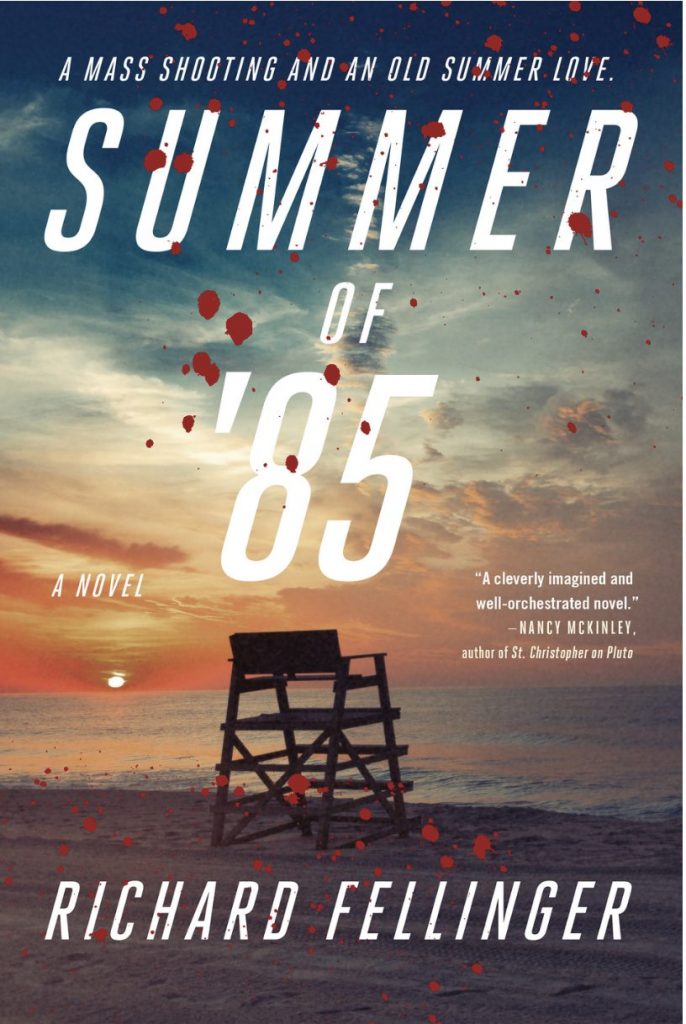
Romance & Reflection: A new novel by Harrisburg-area writer Richard Fellinger explores a love, a life

In the summer of 1985, Ronald Reagan was just settling into his second term as president. Few people had heard of the internet. Americans were crowding theaters to watch Michael J. Fox in “Back to the Future” and listening to Phil Collins’s “Sussudio.”

Harrisburg writer Richard Fellinger revisits that time in his emotionally charged second novel, “Summer of ‘85,” the story of a teenage romance at the Jersey Shore that reverberates in the life of a middle-aged man more than three decades later.

Fellinger teaches English and is director of the “Writing Wing” at Elizabethtown College, where he has worked since 2010, after being downsized from the job he says he deeply enjoyed and still misses as a Capitol reporter for a newspaper group.

A native of Altoona and a 1991 graduate of the University of Pittsburgh, Fellinger’s western Pennsylvania roots are evident in the Pirates decal and Steelers pennant on the wall of his college office, where he spoke recently via Zoom.

He and his wife have lived in the Harrisburg area for two decades, and central Pennsylvania readers will recognize some well-known local landmarks in “Summer of ‘85.”

In the novel, a shooting that takes the lives of 11 people in a Philadelphia hoagie shop sparks Harrisburg newspaper editorial page editor Dan Fehr’s memories of his brief relationship with Cara Cassaday, one of the victims, and quickly sets the novel in motion.

In the titular summer, Dan, who’s finished his first year at Penn State and is working as a night clerk at a Wildwood, N.J., boardwalk motel, meets Cara, a student at Millersville University who’s spending the summer waitressing at a nearby restaurant. Their mutual attraction, perhaps a little more ardent on Dan’s side, is clear.

In alternating chapters, a structure Fellinger says emerged naturally in the writing process, the novel shifts between a realistic account of the highs and lows of their relationship, one that ends abruptly just before the arrival of Labor Day and is never rekindled, and Dan’s life just on the far side of 50.

Early in the novel he learns that his wife, a Republican political consultant (Dan’s a “conflict avoidant” person whose political views are “center-left”) has been having an affair and plans to file for divorce. That news, coupled with the story of Cara’s sudden, violent death, plunges Dan into waves of introspection about the choices he’s made in his life and career.

He’s a flawed, but sympathetic, protagonist who’s struggling to reconcile the time when “anything in my life was possible” with all the ways his “promise went unfulfilled.”

Superficially, Dan’s angst might look like a garden-variety mid-life crisis, mingled with nostalgia about an idealized love, but the shocking end to Cara’s life adds a twist that casts his struggles in a fresh light.

Fellinger isn’t focused only on the emotional component of his story. He notes that he likes to write stories that touch on contemporary problems, pointing to the writer T. C. Boyle as something of a role model. He acknowledges that the issue of gun violence is one he’s “always been concerned about.”

In the late 1990s, he won a statewide award for his journalism on the issue for Philadelphia Weekly.

“I realize I brought some politics to this novel, and I’m OK with that,” he said. “I think certain social issues deserve to be written about, even in fiction. I know some people have a hard time swallowing that.”

But he admits to a certain frustration that his frank engagement with this issue may have cost him the opportunity to place his novel with a major publisher. An editor informed his agent at the time, “I really like the story, but I just can’t move forward with a book about a mass shooting.”

The newsroom scenes in “Summer of ‘85” also benefit from the 15 years that Fellinger spent as a working reporter. Acknowledging the challenges facing the newspaper business, he expressed his own frustration about getting meaningful local news.

“I’m concerned about how they’re able to cover the important developments in our communities for us—everything from school board meetings to the activities of our state senators and congress people,” he said.

Asked about his process, Fellinger responded that he tries to write most days, but isn’t rigorous about adhering to a strict schedule or word count. The words of the writer Isak Dinesen—“Write a little every day, without hope, with despair”—visible near his computer, are a source of inspiration. When it comes to advice to aspiring writers, he emphasized the importance of having a good editor and credits his publisher for helpful feedback on this ending of his novel.

“Summer of ‘85” has already attracted favorable attention in the literary world, including winning the 2018 Novel Excerpt Contest at Seven Hills Review. Fellinger’s no stranger to literary prizes. His short story collection, “They Hover Over Us,” won the Serena McDonald Kennedy Award, and he’s been a nominee for the prestigious Pushcart Prize.

Regardless of its critical reception, Fellinger is satisfied with having this work reach a mass audience.

“I started with a story and let it go where it went,” he said. “And I’m really happy with where it ended up.”

“Summer of ‘85” by Richard Fellinger is available at most online and major bookstores.

If you like what we do, please support our work. Become a Friend of TheBurg!

Continue Reading