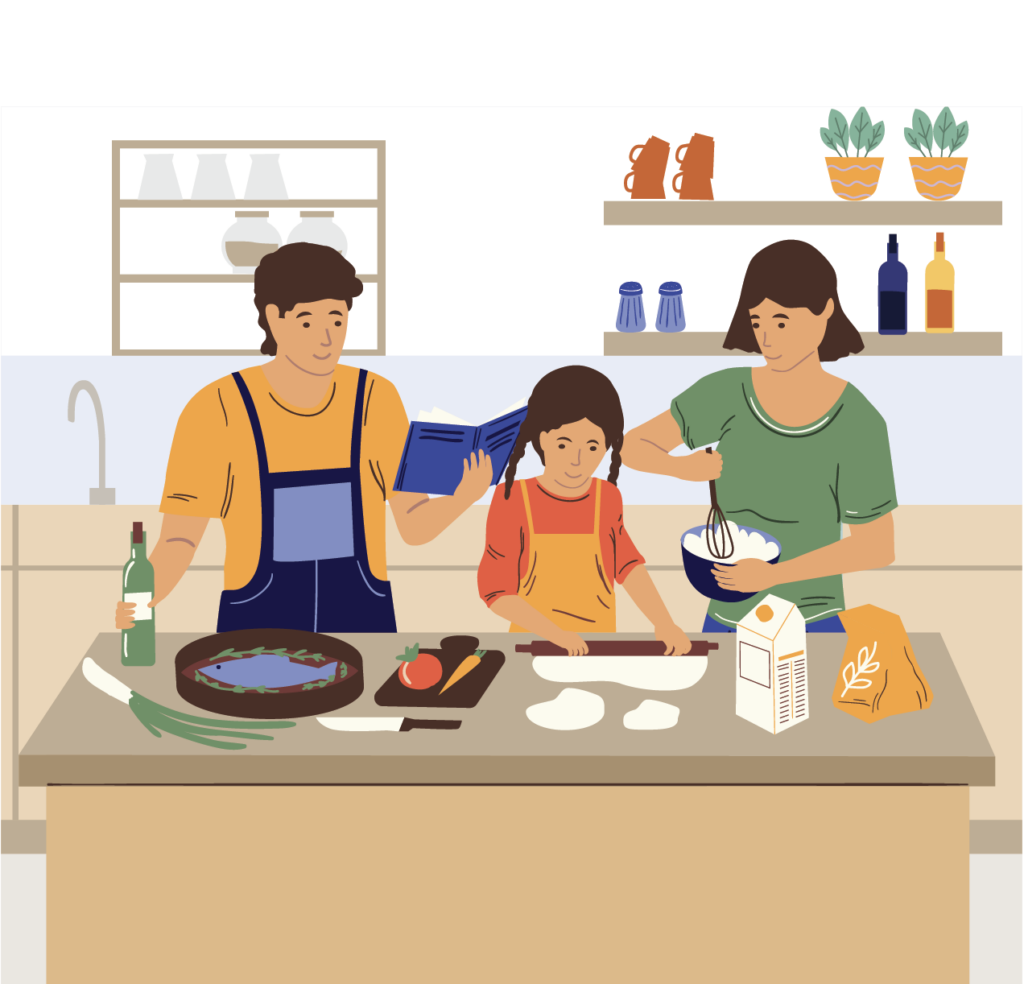
 Growing up, I often spent time in the kitchen with my mom and watched her clean, stuff, slather with butter and roast a turkey. When it was eventually my turn to host a turkey dinner, I felt well prepared.
Fortunately, there are many ways to include children in the Thanksgiving dinner preparations for a fun and engaging, memory-making experience.
My twin sister and I were the stuffing makers. We pulled apart the loaves of bread that my mom left out to dry, then cut up the onions and celery, sprinkled in the obligatory celery salt, and poured on the melted butter.
Kids today can tear up the bread, too, or open the box of Stove Top, read the directions and make the filling. Simple things like opening the cranberry sauce and dumping it in a bowl or putting the frozen corn in the microwave can involve children in the process. “Perfect is the enemy of good,” to quote Voltaire. There is no need to make the experience too complicated.
Engaging children in everyday meal-making has many benefits.
“It [cooking] teaches you a life skill,” said Mackenna Caruso, a registered dietician in Gettysburg. “We need food to live. So, as kids get older […] they’re going to have to learn some type of cooking skill.”
Cooking Confidence
Children can glean nutritional, food safety and math skills from assisting parents in the kitchen, according to Caruso. Cooking also boosts kids’ literacy skills—and not just by reading the recipe.
“Sequencing is a very important thing that helps with reading readiness,” said Jennifer Graf, executive director of Hope Academy Pennsylvania, a STEAM preschool in Middletown. “So, first we’re going to mix the milk and sugar and then we’re going to add the flour.”
Depending on their age, children can pour ingredients, read through a recipe with an adult, open the oven, or take cookies off a cookie sheet. I included my three sons in the holiday baking. They cracked eggs, plunked flour and sugar, and sprinkled in the chocolate chips.
“Things as simple as stirring are good for gross motor skills and hand eye coordination,” Graf said.
Children who participate in the kitchen tend to appreciate the meal more—an added benefit.
“It’s called the IKEA effect. It’s basically when you’re involved in the creation you are more likely to hold it at a higher value,” Caruso said. “So, if a kid is involved in cooking, they’re more likely to appreciate the food […] or be proud of the meal that they made because they were involved in the process.”
Allowing kids to help is, well, messy. My kids cracked eggs on the counter (paper towels are a great way to clean this up), sent flour flying, and missed their aim at the bowl many times. So, let’s include them in the cleanup, too.
“They love water play—give them some way that they can be of help,” Graf said. “Children love having jobs, and that’s a way that they can really increase their self-confidence.”
We also have an opportunity to teach our children food safety while sharing the kitchen with them. My boys regularly heard me yell “chicken-y hands” as I crossed the kitchen, like I was heading into surgery, after handling poultry. I’d chat with them about the need to wash my hands and counters after preparing meat, especially chicken.
“We want to avoid foodborne illnesses and getting sick, and we want to make sure that we’re teaching our kids that as well,” Caruso said.
Relational Recipe
Maybe the best part of cooking with our children is the relationship building. So much vies for our attention, but cooking allows us to focus on the kids, doing an activity that we need to do anyway.
“If you’re working parents, you haven’t had time with them,” Graf said. “It’s another kind of chunk of time […] to connect with your child.”
Some of my fondest memories of my boys’ childhood were made spending time in the kitchen with them. They would flank me, standing on chairs and take turns with each task. It wasn’t all unicorns and rainbows. Once the bickering began, as it almost always did, one child at a time was banished to the living room while the others participated.
Time spent preparing meals and baking with our children can influence future habits.
“Kids who were involved in the cooking experience, in the process, were more likely to try more vegetables and like them, and, in turn, had an overall greater intake of vegetables,” Caruso said, quoting a 2014 study.
When my middle son was in high school, he baked Christmas cookies one holiday when I was a full-time college student. He was able to continue a tradition for our family that I just didn’t have time for that year. My kids could handle starting dinner for me, browning meat, or even making dinner when the need arose.
My sons have become competent cooks. The two older ones attack complicated recipes, like homemade pastrami, rolls made with lard, and enchiladas with tomatillo sauce—all of which I’ve benefited from. My youngest makes himself healthy meals, not needing to rely on costly fast food.
When we gather all together this year for Thanksgiving, my sons will undoubtedly be in the kitchen—making my mom heart happy.
To learn ways to include children and youth in cooking, visit www.eatright.org.
If you like what we do, please support our work. Become a Friend of TheBurg!