




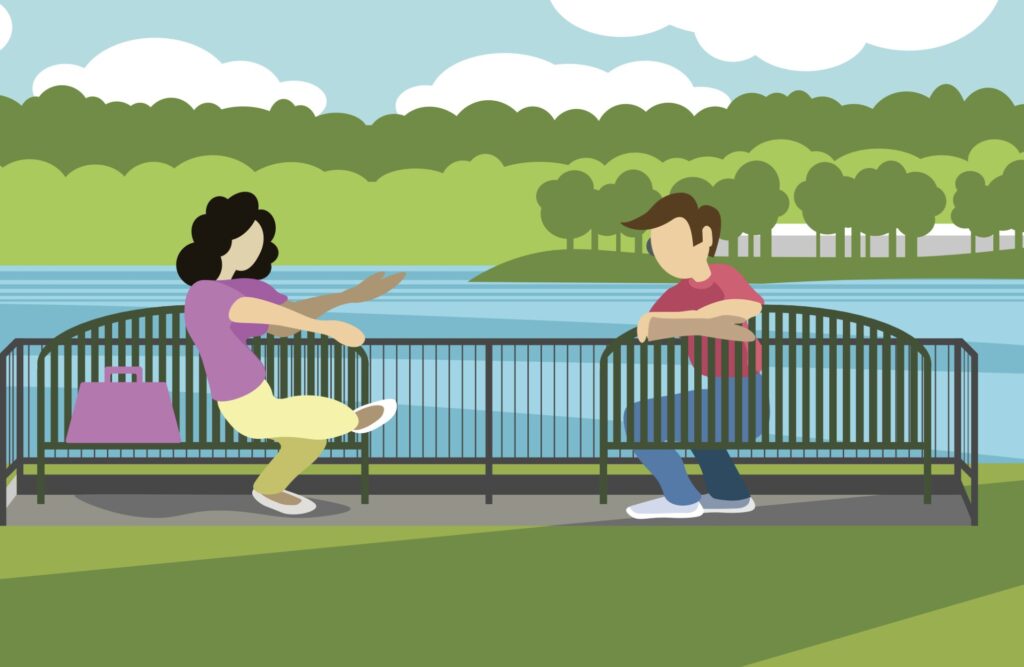
Illustration by Rich Hauck
In early May, I gave a short presentation to Strong Towns Harrisburg, the local affiliate of the national urbanist group.
At first, I chatted about TheBurg and our community-building endeavors then took audience questions, which ranged widely from infrastructure to city government to the tough local news biz.
Someone raised their hand and asked what the average resident could do to help the city. My response: shop locally, join a board or commission, volunteer with a nonprofit—heck, run for office if you’re so inclined.
An excellent, easy place to start, I said, was to join a local community group, which exist in neighborhoods throughout the city.
As volunteer organizations, some groups are more active than others. Over my time in Harrisburg, I’ve seen groups flourish then die out then sprout up again, depending on factors like leadership, issues and energy.
But, when they have their act together, these groups can make a big difference in the community. I’ve seen it happen in my own neighborhood.
For over a year, Capitol Area Neighbors had been sounding the alarm on the decrepit state of two buildings on the 500-block of N. 2nd Street.
These two small, attached buildings, over a century old, had a rough life over the past 30 or so years. A suburban attorney owned them for decades, letting them deteriorate to the point that they were boarded up and left to rot. In 2020, his family sold them to a west shore developer, who said he planned to raze them and construct a new, modern-style apartment building.
But that never happened. Instead, the buildings continued to fall apart, to the extent that I purposely walked on the other side of the street for fear that they might tumble onto my head as I passed by. They were a public danger and their condition—façade flaking off, interiors collapsed—blighted the neighborhood.
Over several meetings, the group discussed what to do, and our president arranged to meet with Mayor Wanda Williams. He found out that the city, after years of trying to get the owner to demolish the buildings, planned to raze them itself. During the meeting, the mayor—to her credit—said she’d fast-track the demo and, two weeks later, they were gone, this longstanding, dangerous problem finally disappeared.
Similarly, the group has been active addressing other pressing neighborhood issues, such as streetlight outages (a big problem downtown), parking and encampments. Then there’s the social aspect, which includes a yard sale and an annual block party.
Across Forster Street, Friends of Midtown volunteers regularly perform cleanups, graffiti removal and tree plantings. Since last year, the revived business committee has organized monthly meetings of Midtown’s small businesses to discuss shared problems and goals. They even created a map of neighborhood businesses, which attendees identified as a number one priority.
Down in Shipoke, their association is famous for its annual riverfront flea market and its social events, which includes the weekly “Wine on Wednesdays” happy hour.
Despite these successes, I’ve also seen the opposite—once-vibrant groups that go dormant for extended periods or even fall apart. The most successful groups seem to have several traits in common:
They meet regularly.
Regular meetings are a must. These meetings should have a written agenda, stay focused and be as short as possible (keeping it to one hour is a great goal). Many groups fail to meet even this basic condition, with meetings that get constantly cancelled or, when they are held, quickly spin out of control.
They have good communication.
Group leaders need to find a reliable way to communicate with members outside of meetings—and this communication should be two-way.
They’re targeted.
Many neighborhoods have one or two truly pressing issues, which should be the focus of the group’s time and attention. Groups shouldn’t let themselves get distracted by the inevitable laundry list of lesser problems. If a group is large enough, members may want to form subcommittees that can focus on second-tier issues and concerns.
They’re social.
Neighborhood groups shouldn’t take themselves too seriously. Successful ones wrap lots of fun around all the grim discussion of litter, crime and parking. Social events also help turn neighbors into friends.
They’re selfless.
Too often, neighborhood groups devolve into personality clashes or petty power grabs. This is deadly for effective action, as the group itself becomes a problem. The most successful groups have members who can put their egos aside and cooperate for the common good.
They have a deep(ish) bench.
Neighborhood groups can be tough to sustain. Folks come and go, and, since volunteers aren’t paid, commitment to the cause can be spotty. A group, then, should seek to have more than one or two active members in case someone moves or stops contributing.
Neighborhood groups face many potential obstacles to effective, sustainable action. Despite this, some Harrisburg groups have proven adept at setting goals, getting important work done and having fun in the process. They can be an excellent way of making a difference right in your community, without needing to launch a second career as a local politician.
Lawrance Binda is publisher and editor of TheBurg.
If you like what we do, please support our work. Become a Friend of TheBurg!