Author Archives: Maddie Conley

February Publisher’s Note

Over the recent holidays, I did some traveling.

First, I flew to Florida to spend Christmas with my sister. A few days after, I packed my bags again and headed to Washington, D.C., for New Year’s Eve.

Each time, I brought along recent copies of TheBurg, as I often do when I visit friends and family. They say they like to see what I’m up to, and I choose to believe them.

On both trips, I met a few people who were looking to relocate. So, naturally, I shoved a magazine in their faces.

“Move here,” I told them, showing off our November and December issues.

They had never considered moving to the Harrisburg area, and, in fact, knew nothing about it. This came as no surprise to me as, two decades ago, when I was weighing a move, Harrisburg was not on my short list either.

They were intrigued.

Flipping through TheBurg, they liked our stories on local businesses, the arts, events, and the whole community vibe. They all remarked on our listing of recent home sales, specifically the prices, which are far lower than where they live now.

“These aren’t real, right?” one person asked me.

I assured him that the prices were real indeed and even fired up my Realtor.com app to prove it.

In the end, I don’t know if I convinced anyone to move here, but at least the area now is on their radar. I told them to stay in touch and, if they came for a visit, I’d be happy to show them around.

This anecdote will serve as the welcome mat for our February issue, which, as always, has a focus on our area’s Black history and culture. We invite you to enjoy all our content as we continue to celebrate this community in all its diversity, variety and complexity.

Lawrance Binda
Publisher/Editor

If you like what we do, please support our work. Become a Friend of TheBurg!  

Continue Reading

Park Place: Harrisburg has some magnificent parks. Could they be even better?

Illustration by Rich Hauck.

About 20 years ago, I first laid eyes on Harrisburg, driving from Washington, D.C., over the South Bridge and into the city.

Taking in the long strip of green of Riverfront Park, my first impression was, in a word, “Wow.”

“D.C. would kill for this riverfront,” I told a friend at the time.

Washington, of course, was built along its own magnificent river (actually, two), but access long has been difficult, cut off by roads, development and bridge ramps. Contrast that with Harrisburg, where the magnificent Susquehanna is framed by over four miles of nearly uninterrupted parkland.

So, after I moved here, I became a heavy user of Harrisburg’s parks.

On any given day, you might find me running along the river, taking in a ballgame or just out for a stroll. Count me in for every waterfront festival and outdoor concert.

Seriously, we’re so lucky. Harrisburg is a small, densely built city but has a bounty of lovely green spaces, thanks to the visionaries who brought us the City Beautiful movement, the Capital Area Greenbelt, Peace Park and others.

So, I was delighted to see a survey, “Shape the Future of Harrisburg Parks,” conducted recently by the city’s Parks & Rec Department. Residents were asked to vote for their favorite park and then list the types of improvements they’d like to see, therefore helping the department “prioritize their work.”

Will anything firm come from the survey? I don’t know, but I eagerly shared my thoughts on Harrisburg’s parks, which I’ll also do here.

The survey takes a broad definition of “park,” listing 26 different recreational spaces, including playgrounds, a basketball court and a pool. I can’t address them all, so I’ll stick to a few that I know best.

I’ll start with the park that drew me to Harrisburg, today located just two blocks from my house: Riverfront Park.

There’s so much good about Riverfront Park that I’m almost reluctant to be critical. The city, though, specifically asked about “improvements,” so here it goes.

At times, Riverfront Park can appear unkempt. Not always, mind you. Mowing is done regularly, but the park does have a continual problem with litter, graffiti and weeds.

For instance, on recent walks, I’ve seen several large bags of garbage tossed onto the hillside, and the area around the Taylor Bridge has looked especially trashy. In the summertime, giant knotweed takes over large parts of the slope, and the river steps become marred with unsightly weeds.

Up above the walk, the grounds are generally kept in good shape, with the clear exception of the area outside the Civic Club, which is a field of hard, dusty dirt when it’s dry, a muddy mess when it’s wet and deeply pitted with tire tracks all the time.

The good news is that these problems are easily fixed.

With more persistent upkeep, the trash and weeds could be eradicated, and the city should ensure that private vehicles do not park in the park. On the upside, I recently was glad to see the many layers of graffiti painted over on the concrete abutment to Kunkel Plaza. Keeping that wall graffiti-free will require vigilance—at least once-a-month checks—as it seems to be an irresistible target for spray painters.

The terrible physical condition of the river steps is a much bigger—and far more expensive—problem. In places, the steps are so neglected and decayed that they will have to be rebuilt. The city should begin planning now for this, as it likely will take years to finance and finish.

Speaking of long-term plans—City Island sure could use one. Back in the 1980s, the city redesigned the circular park with a sort of campy western theme, which has not aged well. A new plan is needed, one focused on bringing more people to this underused gem.

There’s some low-hanging fruit—how about reopening the arcade, which has been shuttered for years? And whatever happened to rebuilding the batting cages? Meanwhile, both the barn and the pavilion are large, dormant buildings that could be repurposed for—a brewery, a restaurant, art space, etc. The city could and should offer incentives to make this happen. Also, Harrisburg needs a dog park after losing its only one a few years back. What about the old paddock area, a grassy expanse near the carousel?

I also urge the city to ban vehicles from the loop. On nice days, cars, trucks and SUVs—many of the drivers just out cruising—crowd the narrow path alongside children running, babies in strollers, joggers, bicyclists, skateboarders, walkers, wheelchair users, dogs, etc. This is clearly unsafe, a disaster waiting to happen. Vehicles should be left in the vast parking area, just a short stroll away, with the island reserved for people, fun and recreation.

Up on Allison Hill, Reservoir Park doesn’t need a master plan—it already has one. In June 2023, the first phase, the Chutes & Ladders Playground, opened to great acclaim. However, that didn’t solve the 87-acre park’s No. 1 issue—underutilization. The 2017 master plan contains many other ideas, most unimplemented, that offers a wealth of possibilities to improve the park and increase usage.

There are many other parks and many other problems. Can anything be done about the carpet of goose poop in Italian Lake Park? Will the Capital Area Greenbelt ever be able to reconnect its path in south Harrisburg? If you have ideas, the city is waiting to hear from you.

Back in 2018, National Geographic named Harrisburg one of America’s “top 10” greenest cities. The city’s parks take much of the credit for this honor. They are an amazing asset, one that attracted me here and, without doubt, one that will continue drawing people to Harrisburg. Kudos to the parks department for wanting to make them even better.

Lawrance Binda is publisher and editor of TheBurg.

You can share your thoughts online here or in person on March 1 at the city’s Ice & Fire Festival, where the Parks & Recreation Department is slated to have a booth.

If you like what we do, please support our work. Become a Friend of TheBurg!    

Continue Reading

February News Digest

Harrisburg Budget Changes Vetoed

Harrisburg Mayor Wanda Williams has reversed many of City Council’s changes to the city’s 2025 budget, amendments that she said were “targeting the administration.”

In late December, Williams announced that she had vetoed most of council’s budget amendments, most of which would have eliminated or lowered raises for employees.

“These vetoes are not decisions I made lightly,” Williams said. “They are rooted in the principles of operational efficiency, sound policy and fairness to the hardworking individuals who serve our city every day. Unfortunately, the amendments made by City Council fail to uphold these principles and I cannot in good judgment allow them to stand that way.”

According to city Communications Director Mischelle Moyer, Williams signed off on much of the $142 million budget, but line-item vetoed most of the amendments that council had approved, following extensive budget hearings.

Williams said that the amendments council made “undermine the values and the functionality of our city government.”

The amendments council had made included denying raises to several positions in the office of the mayor, saying that responsibilities didn’t justify raises. They also eliminated a raise for the deputy director of treasury, expressing frustration that the office hours were limited.

Williams vetoed both of those changes, restoring previously proposed raises.

Additionally, council had made changes that lowered numerous other proposed raises for city employees. They also eliminated about 10% of the salary for the interim director of building and housing development, the portion that is funded by the city, the rest of which is funded by the U.S. Department of Housing and Urban Development. Council also cut all funding for the director of community relations and engagement position in the police bureau, saying the position had been vacant and was not needed.

Williams also vetoed those changes.

“Denying them fair and measured raises, especially during a time of inflation, sends a demoralizing message to the public servants who dedicate their careers to this city,” Williams said.

Lastly, Williams vetoed a budget amendment made by council to allocate $10,000 to fund the hiring of two part-time advisors to council’s youth commission. Williams said that she believed that was a misallocation of city funds that could be used elsewhere.

Council President Danielle Bowers issued a statement shortly after that opposed Williams’ vetoes and re-enforced council rationale for amendments.

“You have no interest in working together with Harrisburg City Council,” Bowers said in the statement, addressing Williams. “If you were interested, you would understand our rationale behind the thoughtful amendments that were voted on to amend Bill 7-2024, the ‘2025 Annual Budget for the City of Harrisburg.’”

 
Downtown Project Approved

An office-to-residential conversion in downtown Harrisburg can proceed, following a final city approval.

Last month, City Council approved the land development plan for Front Street Lofts, an eight-unit apartment project at 315 N. Front St., a circa-1850 building that long housed a law firm.

The project calls for six one-bedroom and two two-bedroom units. According to developer Vernon Jones, six of the units would be market-rate and two would be deemed affordable.

The project also includes 10 parking spaces—four on site and six more off site, which would be leased.

Home Sales, Prices Rise

Harrisburg-area home sales and prices both climbed higher in December, according to the latest report on previously owned houses.

For the three-county area, 560 houses sold compared to 492 in December 2023, while the median sales price rose to $280,000 from $259,275, according to the Greater Harrisburg Association of Realtors (GHAR).

In Dauphin County, 257 homes sold in December versus 245 in the year-ago period, as the median price increased to $254,900 from $243,500, GHAR said.

Cumberland County tallied 263 sales, a jump from 210 the previous December, while the median sales price rose to $310,000 from $284,950, GHAR stated.

In Perry County, 43 houses sold compared to 30 in December 2023, as the median price rose to $255,000 from $220,000, according to GHAR.

Despite the increases, the pace of sales slowed in December, as the “average days on market” increased to 29 days versus 23 days a year ago, according to the report.


So Noted

Angela Moyer and Matthew Healey last month were named as partners of RSR Realtors, a Lemoyne-based real estate brokerage. Moyer has been with RSR since 2006 and Healey since 2012, according to the company.

Elementary Coffee Co. plans to return to the Broad Street Market, 1½ years after being displaced by a devastating fire. The company expects to open a stand this spring in the stone building, reviving their second Harrisburg location, in addition to their North Street shop.

Harrisburg last month was named the top market in the nation for first-time homebuyers for 2025, according to a new report from Realtor.com, the website of the National Association of Realtors. In ranking first nationally, Harrisburg was cited for its affordable sales listings, short commute times, strong local economy and abundant amenities.

Honey Bear Ice Cream has debuted its first scoop shop inside the Broad Street Market. Honey Bear serves dairy-free, gluten-free scoops and treats from a newly built stand within the market’s stone building.

William M. Reed last month was named the new board chair for Veteran’s Outreach of Pennsylvania, replacing co-founder Tom Zimmerman, who will remain active, according to the organization.  The locally run nonprofit operates the tiny home village located by the PennDOT building in south Harrisburg.


Changing Hands

Benton St., 626: W. Stoddart to AJ Fine Properties LLC, $80,000

Berryhill St., 2130: V. Griffin to Seimos Collective LLC, $78,000

Boas St., 229: JVC Investments LLC to V. Kaldawi, $180,000

Briggs St., 259, 261, 263, 265: R. E. & M. Kane to SJL Rentals LLC, $246,000

Camp St., 548: M. Baltozer to A. McCain, $50,000

Capital St., 1228: M. Whipple to K. Landers, $185,000

Chestnut St., 1919: C. & I. Ridgeway to K. Brown, $60,000

Crescent St., 253: I. Colon to S. Atelefack, $75,000

Crescent St., 304: J. & D. Negron to R. Hernandez & A. Soberanis, $50,000

Crescent St., 327: D. & G. Tuzzato to M. & K. Gonzalez, $70,000

Croyden Rd., 2975: B. Pierce to J. Lewis, $160,000

Derry St., 1433: Aum Investments LP to F. Ashenafi, $110,000

Duke St., 2450: K. Nguyen to T. Tran & T. Vu, $86,500

Forster St., 1936: M. Ricci to Dreamland Properties Associates LLC, $74,000

Green St., 914: C. Williams to KC Corner, $250,000

Green St., 1516: W. & T. Williams to J. Evans, $250,000

Green St., 3218: J. & K. Faust to C. Matthews, $200,000

Herr St., 419: G. Grasty to E. Wickens, $264,900

Holly St., 1850: Cas Management LLC to M. Lara, $175,000

Holly St., 1901: T Wy Enterprise LLC to A. Mercedes, $155,000

Hunter St., 1623: RC Realty & Investments LLC to M3 6 Realty LLC, $52,000

Kelker St., 217, L2: T. Smith to DJSV LLC, $190,000

Kent Lane, 199: S. & J. Fanus to CG Painting LLC, $150,380

Lexington St., 2602: G. Neff to MAT Holdings LLC, $110,000

Locust St., 122: Pennsylvania Legal Aid Network Inc. to V. Nesbitt, $245,000

Logan St., 2222: L. Murrell to Turner Associates Inc., $124,000

Logan St., 2350: Y. Griffiths to First Choice Home Buyers LLC, $75,000

Market St., 1650: A. Sinchi to F. Vasquez, A. Guillermo & B. Tello, $125,000

Meadowlark Pl., 3008: J. Selvey to J. Spangler, $140,000

Miller St., 1716: RC Realty & Investments LLC to M3 6 Realty LLC, $52,000

Miller St., 1718: RC Realty & Investments LLC to M3 6 Realty LLC, $52,000

Muench St., 227: A. Schwarzl & N. Foote to J. Barnett, $181,000

North St., 1720: S. Warfel to M. Lara, $150,000

North St., 1945: RC Realty & Investments LLC to M3 6 Realty LLC, $52,000

N. 2nd St., 1726: J. & K. Morgret to SJL Rentals LLC, $255,000

N. 2nd St., 2841: M. Barrett Market Street LLC to W. McClendon, $665,000

N. 2nd St., 3126: F. Szlamowitz to S. Updike & M. Muniz, $152,000

N. 3rd St., 1827: T. Perla to N. & S. Ruhland, $307,000

N. 3rd St., 2201 & 2205: 22015N3HBG LLC to FMDRE12 LLC, $525,000

N. 3rd St., 2534: 2534 RNR Properties LLC to H. & J. Nguyen, $215,000

N. 4th St., 2436: Normans Realty Services Inc. to C. Done, $148,500

N. 5th St., 1948: B. & K. Feidt to S. Ruiz, $125,000

N. 5th St., 2443: Santander Bank NA to G. Astree, $95,000

N. 5th St., 3135: Turner Associates Inc. to G&W Rentals LLC, $145,000

N. 6th St., 1001: EJM Investments LLC to MYE Harrisburg Owner LLC & 53BCD LLC, $6,775,000

N. 6th St., 1612: Timely Investments LLC to Diverse Investment Group LLC, $140,000

N. 6th St., 2122: C. James to G. Astree & M. Oxceva, $95,000

N. 6th St., 2346: M. McCullough to A. Comas, $130,000

N. 6th St., 2600: K. Evans to D&F Realty Holdings LP, $135,000

N. 6th St., 2705: R. Noss to Turner Associates Inc., $119,900

N. 7th St., 945: Capitol Commercial Corporation to AB3 Buyers LLC, $74,091

N. 7th St., 1827: D&F Realty Holdings LP to Raziel Properties LLC, $130,000

N. 12th St., 47: Wright Restoration Properties LLC to 27 N 12th St LLC, $100,000

N. 17th St., 701: PI Capitol LLC to YR Holdings LLC, $112,000

N. 17th St., 1011: J. Mosley to L. Richelieu & D. St. Cilien, $123,800

N. 20th St., 20: DKH Homes LLC to Rimax Investment Properties LLC, $109,000

N. 20th St., 22: DKH Homes LLC to Rimax Investment Properties LLC, $109,000

N. Front St., 1525, Unit 303: R. & S. Cuyjet to T. Smith, $177,000

N. Front St., 1525, Unit 609: D. Lucas & S. Stinson to A. Caro & C. Cruz, $225,000

N. Linden St., 29: E. Jones to Biyaki Enterprises LLC, $104,900

Park St., 1625: RC Realty & Investments LLC to M3 6 Realty LLC, $52,000

Park St., 1632: RC Realty & Investments LLC to M3 6 Realty LLC, $52,000

Park St., 1633: RC Realty & Investments LLC to M3 6 Realty LLC, $52,000

Park St., 1854: B. Debeljak to ADR Properties LLC, $95,000

Park St., 1915: T. Sangrey & A. Nurkisheva to A Ventura Construction LLC, $94,000

Penn St., 2144: E. Jameson to T. Walker, $211,000

Penn St., 2312: Sunnyside RE Enterprise LLC to E. & N. Stoltzfus, $195,000

Pine St., 215: 215 Pine St. LLC & Pine St Properties LLC to East to West Properties LLC, $650,000

Race St., 608: M. Parsley to L. Stiffler, $228,000

Regina St., 1839: D&F Realty Holdings LP to R. De Florentino, M. De Lourdes & M. Diaz, $170,000

Revere St., 1622: Harrisburg Homes Investment LLC to K. & A. Atayee, $166,500

Royal Terr., 109: M. Pichardo to E Camones, $50,000

Rudy Rd., 2406: J. Cruz & C. Proctor to S. Schadle & S. Pacetti, $330,000

Sassafras St., 203: J. Feaster to H. Holmes, $133,000

S. 13th St., 1510: W. Powell to C. & W. Barnes, $105,000

S. 15th St., 15: J. Gonzalez to Padmini Estate LLC, $185,000

S. 15th St., 225: ANNN Investment LLC to Bah Equities LLC, $85,000

S. 15th St., 554: N&R Group LLC to Captain Cutinos Garages LLC, $70,000

S. 16th St., 525: RC Realty & Investments LLC to M3 6 Realty LLC, $52,000

S. 16th St., 529: K. Gray & J. Hiepler to Stein Equities LLC, $82,000

S. 18th St., 159: Val de Vie Estate Investment LLC to C. & J. Berlus, $175,000

S. 20th St., 209: J. & B. Readinger to G. Amador, $120,000

S. 20th St., 225: Lone Pine Real Estate LLC to Y. Garcia, $154,900

S. 21st St., 1000: Golden Brick Road LLC to 1000 S 21st LLC, $1,650,000

S. 26th St., 612: R. Brown to I. Myron, $84,000

S. Front St., 631: Shelan 2011 Family Trust to D. Valdes & G. Luna, $280,000

State St., 132: Cowden & Strokoff to M. Kenz, $370,000

State St., 1340: Kermon Home Solutions LLC to G. Rivette, $185,000

State St., 1410: SNB Real Estate Solutions LLC to Z. Mammadov, $185,000

Susquehanna St., 2114: R. & G. Kessler to MAT Holdings LLC, $80,250

Swatara St., 2243: D. Williams to M. & M. Kamel, $140,000

Verbeke St., 204 & 206: 204 Verbeke Lodging LLC to Burke Shade LLC, $320,000

Verbeke St., 214: Shelan 2011 Family Trust to D. Dhimal, $285,000

Woodbine St., 340: Normans Realty Services Inc. to Mau Properties LLC, $85,000

Woodbine St., 504: L. Yoder to 10 N Progress Avenue LLC, $100,000

Harrisburg property sales, December 2024, greater than $50,000. Source: Dauphin County. Data is assumed to be accurate.

If you like what we do, please support our work. Become a Friend of TheBurg!  

Continue Reading

Safe and Sound: Thrive Housing Services offers support for homeless young adults and youth, continues to grow

Dee Allen

Dee Allen knows the pain of growing up with the realities of domestic violence and housing instability.

As a child, she, her mother and siblings faced homelessness, needing to live with her grandmother. However, she felt lucky to have that familial support, as she knows many young people in similar situations do not.

“If it wasn’t for the fact that my grandmom helped us, we would’ve been in a really bad position,” she said. “I think kids should have the opportunity to find a place and a space where they can enjoy being a kid.”

That’s why Allen founded Thrive Housing Services in 2014, to fill a gap that she saw in services for Dauphin County youth. Over the past decade, Thrive has provided housing for young adults who have experienced homelessness, whether that’s due to challenging or unsafe family dynamics, aging out of foster care, single parenthood or not being able to afford rent.

Recently, Thrive has begun expanding as the organization has opened a new affordable housing apartment building for 18-to-24-year-olds in Allison Hill and has plans to serve even younger clients at a new group home on Front Street in Harrisburg.

The growth comes at a time when Allen said that demand for services has reached a peak. Last year, Thrive had over 200 referrals to its program. Five years ago, that number would’ve been closer to 70, Allen said.

She sees inflation and high rent rates as contributing factors in the increase in young adult homelessness. In Dauphin County, thousands of youth experience homelessness, Allen said.

Often, young adults who end up at Thrive have dealt with housing instability for a good part of their lives, many having fallen through the cracks and, for one reason or another, haven’t received much support from local agencies.

“They are in this survival mode where they feel like every meal is their last meal,” Allen said. “They don’t get to enjoy the things that other kids with stable homes would be able to enjoy.”


Positive Future

This is where Thrive steps in, providing transitional and permanent housing for young adults, as well as offering case management, education and other supports.

Often, Thrive serves as an advocate and go-between for young adults and landlords and agencies, helping place them in apartments. Thrive assists clients in getting financial support to help pay rent, as well as offering job training and mentorship. In total, the organization has around 80 units for youth and families, a combination of apartments offered in partnership with landlords and Thrive-owned units. Some clients stay in Thrive housing for only a few months; others live in the housing for years, depending on their needs.

“This program, although it’s not perfect, provides stability and provides a safe environment for youth and young adults that are in this community,” she said.

Allen has seen the impact of stable housing on so many of the young people who have come through Thrive. One LGBTQ youth was kicked out of his home by his parents, came to Thrive and later moved out after being accepted into college. Another high school girl had been homeless for several years, was failing classes at school and was working a job at night. Once Thrive supplied housing, her grades improved, she graduated and was promoted to a manager position at a restaurant.

“All of the stories don’t turn out like that, but the ones that do, it’s cool to see,” Allen said.

Harrisburg resident Brenda Sandoval began volunteering with Thrive several months ago, inspired by their mission. She helps organize donations in Thrive’s warehouse and translates for Spanish-speaking clients, among other tasks.

“I find it so amazing, everything they do for the kids,” she said. “I really like being able to help them. They’re our future, these kids.”

In November, Allen and Thrive supporters cut the ribbon on the nonprofit’s first building that it owns completely. The building, on S. 13th Street, offers 16 furnished units for individuals and single parents.

At the event, a 19-year-old Thrive resident, Bianca, shared that, before coming to Thrive, she and her 1-year-old daughter were homeless. Thrive, she said, “welcomed me like family.”

Allen also shared plans for a group home for teenagers, ages 12 to 17, that Thrive aims to open in Harrisburg in the spring, saying that it would be the first of its kind in the county. It’s important to Allen to give kids the chance to remain in their community, rather than uprooting them for an out-of-county program.

Beyond those two projects, Allen has even more growth in mind because she knows how many young people are in need.

“I just feel like every kid deserves a chance to have a stable home,” she said. “So, if I can provide that opportunity, no matter how many successful stories you have, just the ability to provide that keeps me going.”

For more information on Thrive Housing Services, visit www.thrivehousingservices.org.

If you like what we do, please support our work. Become a Friend of TheBurg!   

Continue Reading

New Chapter: Palmyra turns the page with Book Bar

Brittany Haynes

Walk past the charming signs outside of Palmyra’s The Nerd Place and The Oldies Laundromat, and you’ll find a newer sign that reads Book Bar.

The bookstore-café is a recent venture by local Brittany Haynes, who opened it in late October, taking over the space from the former K&G Hardware.

Step inside the space, and remnants of the hardware store remain, though disguised. The same pegboard is on the wall, painted a dark, moody green to evoke the “dark academia” vibe that Haynes was going for. Surrounded by antique furniture, a fireplace and a cherry wood bar, it’s easy to see that Haynes achieved her aesthetic goal.

Beyond just surface level, Book Bar offers the community a third space, or a place to go outside of home and work or school.

“I’m really glad to be a meeting place for people to come and share ideas and talk about books,” Haynes said.

Haynes formerly worked for the academic publishing industry, making her way here from her home state of Missouri through a circuitous route that included Spain and Ohio. Her husband Nicholas Frank, Spanish teacher for Hershey High School, came with her on the journey.

“He’s always wanted to be a teacher, and now I’m following this dream,” Haynes said.

The two, it seems, have found their callings. Frank even helps out behind the café bar on the weekends, getting to see his students and their families outside of the school atmosphere.

With a bar that offers coffee and mocktails, plus treats from Quentin Confections, Haynes’ two-part establishment is more than just a place to buy books. It’s a place to gather through groups like Kids’ Hot Cocoa Story Time or Recommendations Book Club, the latter of which is a book club where you give and get recommendations (and it doesn’t require any advance reading).

Since the opening, Haynes feels like her shop fits right in.

“People are excited,” she said. “They want something local, and I can tell they want to support independent stores, us and others. I get that probably once a day so far.”

To prove her point, a woman knocked on the door during our interview, when the shop was closed, to donate a barely used book for Haynes’ high-quality used book section.

“I love to support people who are trying to do good,” the woman said on her way out.

“We do take limited donations,” Haynes explained. “I hope to do some kind of program at some point, maybe giving a discount.”

She is picky, though, to make sure used books are in good condition, without water damage or other faults that could jeopardize her existing inventory with mold or bugs.

At large, Haynes’ new book collection is primarily fiction with a smattering of nonfiction. Fiction is her bread and butter, her two favorite books being “Mexican Gothic” by Silvia Moreno-Garcia and “Pride and Prejudice” by Jane Austen. Her favorite part of the job is recommending books to others based on their reading preferences.

“I can jump out from behind the counter and be like, ‘Let me give you a couple,’” she said.

Haynes did just this for me, asking me my favorite genres or authors. Among other writers, I noted a soft spot for Kristin Hannah. Then she asked if I’m more of an adventure or romance person. “Adventure,” I responded. I ended up with recommendations like “If The Tide Turns” by Rachel Rueckert, “Saving Krakow” by K R Kiehl and “The Warm Hands of Ghosts” by Katherine Arden.

With a collection of titles on the smaller side (at least compared to larger bookstores), Haynes is still building up her inventory, but the books are adeptly hand-curated based on her own experience as a reader and general book lover. Popular titles like “James” by Percival Everett and “The Secret Lives of Booksellers and Librarians,” a nonfiction title from James Patterson, are available, along with titles from both renowned and up-and-coming local authors like Lucy Score and K. Iwancio.

All of the titles sit on sustainably secondhand bookshelves that came from Cupboard Maker Books of Enola. This is a solid example of the supportive community among booksellers in the area and beyond. When planning her business, Haynes shadowed bookstore owners around the country and touched base with local owners, joining a community that helps each other out.

The number of independent bookstores doubled from 2016–2023, bucking the force of big-time institutions like Barnes & Noble and Amazon. Haynes is just one of many people deepening the plot for the industry and local communities. Still, for Palmyra, Book Bar is special, and Haynes feels the love.

“We moved here just a few months before the pandemic. We were fresh out of our grad program, and we didn’t know anyone,” she said. “We had no money. We were a little forlorn, because everything closed down.”

With those days behind her and a third space for the community up and running, she couldn’t be more satisfied with the denouement.

Book Bar is located at 50 N. Railroad St., Suite 1, Palmyra. For more information, visit  www.bookbarus.com or @BookBarUS on Facebook and Instagram.

If you like what we do, please support our work. Become a Friend of TheBurg!   

Continue Reading

A Better World: Harrisburg’s W. Justin Carter spent a lifetime fighting racial injustice

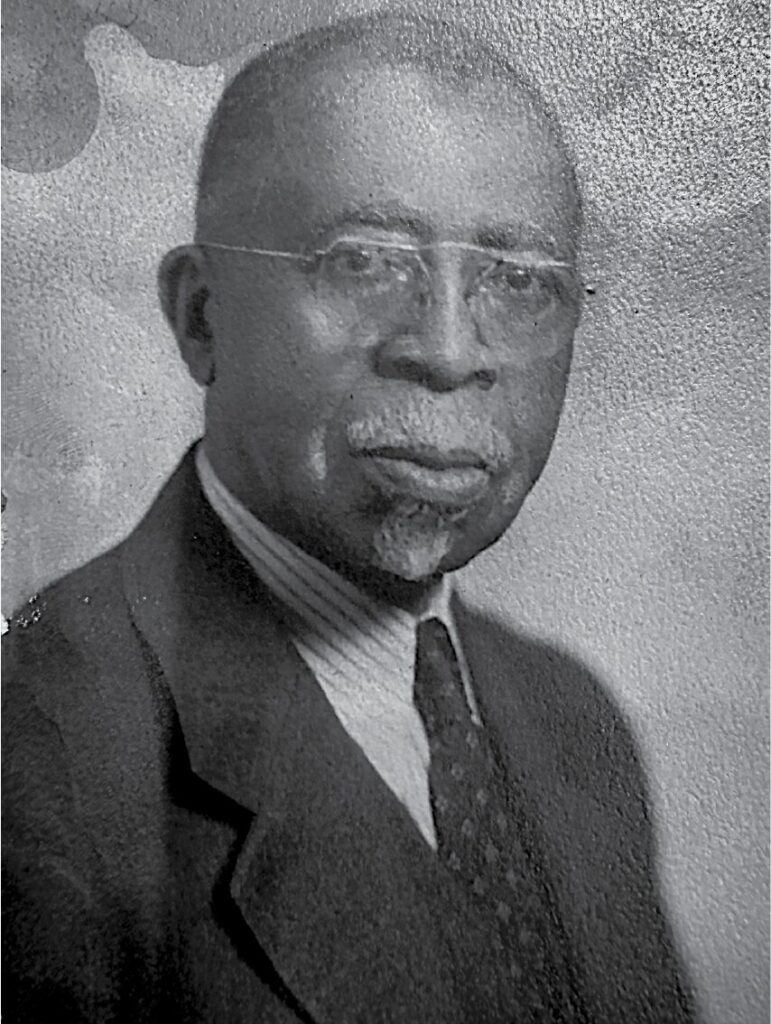
W. Justin Carter. Photo courtesy of Patricia Howard-Chittams.

On a sunny September day in 1897, Harrisburg’s African American leaders led a crowd to a forested spot north of Harrisburg to dedicate two headstones.

One stone memorialized a beloved fugitive slave who built a cabin there. The other capped the grave of an unknown fugitive who took his own life there as his enslaver’s slave catchers neared.

One speaker, W. Justin Carter, focused on the theme of his life’s work—the oppression of the powerful that would, ultimately, yield to the defiance of those leading a “barren life.”

“It is the scorn of sacrilege that has destroyed despotic thrones, encompassed the fall of tyrannic princes, created states and through the countless aggression of power, preserved the privilege of the weak from the rapacities of the strong,” Carter orated.

This is Harrisburg’s W. Justin Carter. Respected but quietly excluded African American attorney. Early leader of the NAACP and fighter against injustice. Secretary to the lieutenant governor and reformer of workers’ compensation. Presidential appointee to the 1911 Universal Races Congress in London.

Even near his death in 1947 at age 80, the indefatigable Carter chaired a rally demanding that the Pennsylvania governor open the Pennsylvania National Guard to Black soldiers.

“His legacy is showing the possibilities that existed in this world in which there didn’t seem to be a lot of possibility,” said Kenneth Mack, Harrisburg native and Harvard University School of Law professor who has researched Carter’s life. “He clearly, from the moment he showed up in Harrisburg, wanted to inspire Black people and wanted to inspire white people to believe that change was possible and that we could be in a better world.”


Starting a Practice

William Justin Carter was born in 1866 in Richmond, Va., to formerly enslaved parents. He graduated from Virginia Normal and Collegiate Institute but, after starting in the prestigious profession of education, switched careers and graduated from Howard University School of Law.

In those days, Southern courtroom etiquette still recognized Black attorneys as “esteemed colleagues,” but the growing clamor by whites to codify the Black race as inferior—somewhat silenced during Carter’s Reconstruction-era childhood—was worming back into society and courthouses, Mack said.

That could explain Carter’s decampment to Harrisburg in 1892. Or maybe someone told him that he could make a living in town. Whatever the reason, he set up practice as the city’s second Black lawyer.

Carter found a more level playing field in Harrisburg—to an extent. In 1904, the Dauphin County Bar Association took a secret membership vote via balls dropped in a box: white for yes, black for no. The five black balls needed to reject Carter’s application, no reason necessary, carried the day.

It took 98 years, after member Francis B. Haas uncovered the incident, for the bar association to reverse the only rejection without cause in its history. The posthumous membership, correcting an “egregious mistake,” attracted national attention.

Here was a man who spoke up in 1922 for a congressional anti-lynching bill, declaring that the nation “has no right to protest against the atrocities committed against other races in foreign countries so long as lynching is permitted within the borders of the United States.”

That courage impressed Patricia Howard-Chittams of Washington, D.C., when she stumbled across her accomplished great-grandfather in “Who’s Who in Black America.”

“He was a civil rights advocate when it wasn’t sexy, when you had very real consequences of not following the status quo, unlike a lot of social-justice warriors today who can stand in front of a video and say whatever they feel without fear of repercussion,” said Howard-Chittams, a nurse practitioner and member of the District of Columbia Board of Nursing. “What he was doing at the turn of the 20th century, it could cost you your life.”


The Fighter

In photos, Carter’s demeanor says “professional,” but in news stories, he gets scrappy. Even with a schedule loaded with orations and travel, he remained a working attorney, taking on the hard, attention-grabbing cases.

He sought new trials for aldermen convicted of conspiracy. Managed to “win” a second-degree murder conviction, as opposed to first-degree, for a Black man charged with shooting a white police officer. Won acquittal of a young girl charged with poisoning her baby. Received a bouquet of flowers from a jury impressed with his successful defense of an Italian man accused of murder.

“He must have been a person with a lot of grit,” Mack said. “You’ve got to be really scrappy and enterprising and self-confident.”

Carter was no fan of saloons, but it didn’t stop him from representing a hotelier, evicted from Harrisburg’s demolished 8th Ward, seeking a liquor license for a new hotel and bar.

“The law has sanctioned this business,” Carter told the judge, “and this client asks his rights under its provisions.”

That establishment would serve Blacks and whites together, relieving Black patrons from closed doors at hotels and the vile, cologne-based concoction of “jigger whiskey” they were usually served in bars. In a contentious hearing, Carter challenged an opponent to defend why, if whites could have their million-dollar Penn-Harris Hotel planned for downtown Harrisburg, “the colored people (shouldn’t) have one costing $3,000.”

Carter’s civil-rights advocacy didn’t pull punches while managing to frame messages in terms that white Americans would understand. Speaking on “The Duty and Responsibility of the Anglo-Saxon Idea of Citizenship” to the white Eureka Literary Society in Penbrook, Carter lauded the Anglo-Saxons’ thousand-year stewardship of freedom and its ideals.

But he didn’t stop there.

“No race has been so domineering, none stronger and with more exclusive spirit of caste,” he continued, and “none more violent in prejudice once formed.” The Anglo-Saxon need for racial hierarchies excluded Blacks and immigrants from the liberty prized by whites, but he still saw the “pearl in the Anglo-Saxon mollusk.”

“If the Republic is true to the great principles of liberty and justice which it proclaims, if you have learned the lesson of your own history, . . . then will Anglo-Saxon genius and achievement glow like a mighty flame to light the path of struggling men,” he said.


Civil Rights Pioneer

In 1905, Atlanta professor W.E.B. DuBois and Boston publisher William Monroe Trotter called for Black men to gather in favor of the radical idea of escaping oppression through political and legal action.

Carter heeded the call, traveling to Ontario, Canada, and joining the 29 co-founders of the Niagara Movement.  “We refuse to allow the impression to remain that the Negro-American assents to inferiority, is submissive under oppression and apologetic before insults,” they declared.

“He must have really felt strongly about it to go,” Mack said. “We understand this is history being made, but it’s not obvious to the people at the time.”

The Niagara Movement morphed into an organization driving for social and political change—today’s NAACP, founded as the National Association for the Advancement of Colored People. In its second year, Carter joined its Committee of One Hundred national governing body.

Howard-Chittams believes that Carter would “roll over in his grave” to see that the NAACP that her great-grandfather helped create no longer “holds a mirror to the Black community.” She sees her ancestor “as one who liked to fight the good fight—not fighting for the sake of fighting, but the good fight.”

Few of W. Justin Carter’s orations were transcribed, but we can close with one that was—his words over the graves of two men whose humble lives made powerful statements.

“Take a glowing truth, compress it into the fiber of a fearless heart and let it touch the thrilled nerves of a sensitive soul and the man, thus created, is a daring foe to crime, a maker of epochs and the harbinger of reform,” Carter said. “Eloquence, poetry, drama is potential in every turn of his mighty brow.”

 If you like what we do, please support our work. Become a Friend of TheBurg!   

Continue Reading

A Walk to Freedom: Underground Railroad history comes alive with Boiling Springs walking tour

Home of Daniel Kaufman

Boiling Springs is a charming, scenic village that often flies under the radar—unless you’re a hiker, drawn to its location along the Appalachian Trail, or an angler lured by the trout-filled waters of Children’s Lake.

Named for the natural springs that appear to “boil” to the surface, the village holds a significant place in history as a stop on the Underground Railroad. Located along a key escape route from Maryland to Pennsylvania, Boiling Springs provided a haven for freedom seekers, thanks to the efforts of Daniel Kaufman, a local farmer and dedicated abolitionist.

Finding Freedom

In the 19th century, Boiling Springs was home to an iron-making complex, where free Black employees helped shelter freedom seekers.

Kaufman, who lived on a farm near the ironworks, operated an Underground Railroad station at his home and in a dense, wooded area known at the time as Island Grove—that is, until a Maryland slave owner sued him for assisting 13 enslaved people in escaping.

According to historian Matthew March, the significance of the area can’t be understated.

“Stories of the Underground Railroad are often passed down as oral traditions, but the Boiling Springs area is one of the few fully documented sites, partially due to the press coverage surrounding Kaufman’s lawsuit,” he explained.

Because of the unique documentation, the site is recognized by the National Park Service as part of the “National Underground Railroad Network to Freedom.”

“The Underground Railroad was an important network that helped many people escape enslavement and find freedom,” said Dr. Ka’mal McClarin, Network to Freedom program coordinator.

McClarin explained that the historical sites in Boiling Springs and nearby areas are key parts of this chapter in our nation’s history.

To educate visitors about the area’s significance, the Cumberland County Historical Society created a companion brochure in 2013. It takes people on a walking tour of 17 sites located in and around the village.


Trail Stops

March touched upon some of the sites located in the brochure, starting with the Iron Furnace, located across from Children’s Lake.

“This cold-blast furnace was used on the iron plantation, which was one of Cumberland County’s first industrial sites,” he said.

Nearby is the Ironmaster’s Mansion, a stately structure that sits high atop a hill, complete with a “widow’s walk” that allowed the ironmaster to oversee operations. The mansion was built by Michael Ege, ironmaster of the ironworks. Enslaved people labored at both the mansion and the ironworks, and some are said to be buried on the terraces by the lake.

The Kaufman House and Barn is another highlight, although the area is now private property. According to the brochure, Kaufman sheltered freedom seekers at the secluded millrace on his land and the nearby Island Grove.

“Kaufman claimed to have aided at least 60 freedom seekers through his station during the 12 years it was in operation,” March said.

Kaufman’s efforts were eventually discovered by a slave owner from Maryland who hired trackers, men who sought to capture escaped slaves.

“They came right up the Cumberland Valley and to his front door,” said March, adding that people had spotted enslaved people on his property.

In 1847, Kaufman was hauled into court.

“Cumberland County was a Southern-leaning region at the time, and Kaufman was found guilty,” March said. “It was then sent to a federal court, and, two years later, he was fined $5,000, which was a fortune back then.”

Randy Harris of the Lancaster County Historical Society, whose job is in research and community outreach for the future Thaddeus Stevens and Lydia Hamilton Smith Center for History and Democracy, said that the famous abolitionist Thaddeus Stevens, who represented Kaufman in court, left his mark on the entire southeast Pennsylvania region.

“Stevens, who also represented those accused in the uprising in Christiana in 1851, is rarely elevated to the stature of a great American political hero, but he certainly deserves to be,” Harris said.

Today, tourists can see the home at 301 Front St., which ultimately became Daniel Kaufman’s retirement home.

“He built the large, Federal-style house in 1880 where he lived until his death in 1902 at the age of 84,” March said.

March speculated that donations from abolitionists across the country likely made their way to Kaufman to help him recover financially.

“This was one of the first instances of a ‘go fund me’ campaign, with abolitionist newspapers encouraging readers who could spare $5 to send it to the Abolition Society in Philadelphia,” March said.

Today, the 17 stops along the walking tour pay homage to the courage of those who sought freedom and those who helped others achieve it.

“These sites honor those who bravely sought liberty, and they give us a chance to learn from the past,” McClarin said. “The Network to Freedom program supports preserving these sites so future generations can understand and appreciate this shared history.”

For more information on the Boiling Springs Walking Tour, visit the Cumberland County Historical Society, 211 N. Pitt St., Carlisle, or online at www.historicalsociety.com.

If you like what we do, please support our work. Become a Friend of TheBurg!   

Continue Reading

Expanding the Market: Realtor Erica Rawls has a passion for helping underserved, first-time homebuyers

Erica Rawls

When La-Nysa Ravenel decided she was ready to buy a house, she had no idea what she was looking for.

But that was no problem for realtor Erica Rawls. Helping clients like Ravenel is Rawls’ bread and butter.

“She was really good because, as a first-time homebuyer, I hadn’t looked at anything,” Ravenel said. “It was all kind of new to me.”

Rawls started her own real estate team at Keller Williams of Central PA over a decade ago, following years of working in the industry. However, the past year has proved pivotal for her, as Rawls said she’s really started to cast a clearer vision for her business—that includes strengthening her mission, while widening her reach.

Still, her underlying passion has remained the same for years—helping first-time homebuyers and clients from underserved communities.

“Where I am is where I’m supposed to be. Me helping people, that’s what gives me passion,” Rawls said.


An Advocate

Even though her calling seems so clear now, Rawls didn’t begin her professional life in real estate, but as an accountant. However, she realized that the typical 9-to-5 job wasn’t for her, and she saw real estate as a chance to work for herself.

“I’m a huge risk taker. I’ll jump into something and figure it out once I’m in there,” she said. “That’s just the way I am.”

Rawls admitted that her initial motivation in the new industry was tied to financial gain, but that it quickly became much more.

“Once I figured out that my true purpose was to help people who may otherwise not be able to purchase a home, I was able to communicate that and build that message so I could attract those type of people—first-time home buyers, first-time home sellers, first-time investors,” she said.

When Rawls got into real estate, she entered a field that hasn’t proven to be especially diverse.

According to a 2024 report by the National Association of Realtors, 79% of realtors are white, while only 6% are Black.

On the home-buyer side, the most recent data from the U.S. Census Bureau, in 2020, showed that Black homeowners made up only about 8% of total U.S. homeowners.

“We know that the Black and brown communities are the most underserved when it comes to purchasing a home, financial wellbeing. Those are facts,” Rawls said. “There are some unspoken biases in our industry that we have to overcome. I think part of our responsibility as people of color in the real estate industry is to make people aware.”

Rawls also explained how her presence in the field offers representation to often underrepresented homebuyers, often making the purchasing process more comfortable for them. On the other hand, that can add pressure on Rawls.

“The responsibility is even greater. The expectation is that much higher,” she said. “They’re looking for an advocate. They’re looking for someone who’s going to be able to lead the way for them, to give them a better understanding without being judged.”


Changing the Narrative

Currently, Rawls’ team consists of two agents—herself and her son, Aris Scott, who was inspired to enter the field by his mom.

Like Rawls, Scott favored the idea of working in a field that allowed him the chance to hustle and “get out of it what you put in.” He quickly realized that not only was he in the field’s minority by being Black, but also by being a man, as realtors are majority female.

“Being a Black man in real estate is scarce,” he said. “It motivated me even more to pursue it and be good at it.”

Scott also sees his Harrisburg roots and younger age as ways to reach more people in the area, especially younger first-time buyers

Scott and Rawls both make a point to educate and inform their clients during the home-buying process, and their community, through educational workshops, podcasting and social media outreach.

“Our heart, and the narrative we are trying to change, is that anyone can purchase a home,” Scott said.

Ravenel not only received that kind of guidance as she purchased her first home with Rawls, but Rawls inspired her to begin investing in properties as well. Ravenel now rents apartments and short-term rentals.

“I talk to Erica now all the time,” she said. “She’s a really valuable resource.”

Looking ahead, Rawls plans to continue helping clients like Ravenel purchase homes and build wealth, and she’s encouraged by the increasing diversity both of realtors and homebuyers. She hopes to continue to grow her team and expand their reach. And most importantly, she aims to make the buying or selling process a quality experience no matter the client’s budget.

“Whether you’re looking for a condo or a $3 million house, we are here to service you,” she said. “I think we all deserve the opportunity to be homeowners, if we choose to.”

For more information about The Erica Rawls Team, visit ericarawls.com.

If you like what we do, please support our work. Become a Friend of TheBurg!   

Continue Reading

A Sauce for All Seasons: Quality ingredients enhance this simple tomato sauce

I have been making spaghetti sauce all my adult life. It is somewhat different than my mother’s and has evolved over many years of married life.

Both of our versions are cooked with meat, usually pork, and served with meatballs, sausage and the pork itself, which becomes very tender after hours of cooking. I always add lots of chopped, fresh basil, sweet onion and Italian parsley, but never carrot or celery. And as a matter of full disclosure, I do make my sauce with a little sugar to take the sour edge off the sometimes not-too-sweet, canned tomatoes.  Rosemary’s sauce has been the star of many of our family meals (usually Sundays) and the subject of several cooking columns in TheBurg (beginning in 2009!).

But upon reading an Italian cookbook by Giuliano Hazan, I was struck by a recipe he attributed to his late mother, Marcella Hazan. Now, Marcella has been described by some as the “Mother of Italian cooking in America.” Apparently, when Marcella arrived from Italy (Bologna, in northern Italy), she was not impressed by what passed for Italian cooking in restaurants in the United States. She also disliked Parmesan cheese sold in cardboard green containers and bottled sauces loaded with salt and preservatives stocked on grocery store shelves.

Marcella prized authentic cooking ingredients from Italy and, above all, fresh ones when available.  While her cookbooks contain recipes for many varieties of pasta sauces (including her famous Bolognese sauce), a simple tomato butter sauce is her family’s favorite. It is especially good with filled pastas like tortellini or ravioli and rich dishes like lasagna with layers of egg-whipped ricotta cheese.

Does it matter the type of ingredients that are used for this simple sauce? Yes! Marcella used San Marzano tomatoes, a variety of plum tomato known for their quality and flavor. San Marzano tomatoes originate in a small town near Naples and are the classic ingredient in Neapolitan pizza. Italian cooks might use fresh ones, but here, canned ones can be found on your grocery store shelf. You might pass them by because they are much more expensive than the generic store brand but buy them if you can. They are worth it!

Next, use good, sweet cream butter. No margarine here (or ever, for me). And don’t skip the onion. You don’t even have to chop it. Kosher salt is best, but only use salt if your canned tomatoes are unsalted. Taste the tomatoes first. This sauce is so easy. Simmer “softly” and don’t allow the mixture to scorch.

Marcella’s Simple Tomato Sauce

Ingredients

  • 1 28 oz. can whole peeled, San Marzano tomatoes with their juice
  • 6 tablespoons sweet cream (unsalted butter)
  • Kosher salt to taste
  • 1 medium sweet onion (like Vidalia) peeled and cut in half

Directions

  • Put the tomatoes in a bowl and coarsely chop them with 2 knives or crush them with a fork. Place them in a small, heavy pot (an enameled cast iron one, like a Le Creuset, works well).
  • Taste for salt and add a little if you wish.
  • Peel the onion, trim the root end, and cut it in half.
  • Place the onion in the saucepan along with the butter.
  • Place the pan over medium heat. When the mixture begins to bubble, lower the heat. Simmer until it is no longer watery and the sauce is reduced and thickened. When it’s done, you won’t see any more liquid in the pan (about 45 minutes).
  • Toss it with traditional pasta or, as mentioned above, tortellini or ravioli. It is wonderful with sauteed shrimp, scallops and calamari. My mother would toss cooked green beans and little white potatoes with the sauce. It is surprisingly good.

An interesting note: Another well-known Italian chef and cookbook author, Giada De Laurentiis, has her own version of a “simple tomato sauce.” She adds some fresh basil and Parmesan cheese rinds (good idea to try). But the main difference is her use of canned, skinless cherry tomatoes, which she is selling on her new website, Giadzy. At $8.50 for each (relatively small) can, I decided to wait and think about it. Maybe down the road!

I think you will like these simple sauces—even on a weeknight. The beautiful taste of tomato, just tomato, will flavor many of your dishes. They are sauces for all seasons.

If you like what we do, please support our work. Become a Friend of TheBurg!   

Continue Reading

Dinner and a Show: Our writer reminisces on her family’s attempt to brighten dark winter evenings with “theme nights”

One winter weekend over two decades ago, while slogging through our usual winter slump, my husband George pitched a tent in the living room and fired up John Wayne movies for our two young boys.

Together, they cooked baked beans and hotdogs and made decaf coffee on a portable stove. They wore long johns and cowboy hats, and I don’t remember anyone bathing. The main attraction: Jiffy Pop popcorn with its steamed aluminum foil dome. It was only supposed to be for one night, but it lasted all weekend. They asked to repeat it for weekends to come, building on activities, to include constructing a Lego cowboy ranch and watching “Toy Story.”

What once were freezing stretches of winter boredom turned into the thrilling beginning of a new family tradition—“theme nights”—with every weekend a party. While the main goal was to creatively engage the kids, George and I confess we felt more motivated to amuse ourselves.

Building our activities around themes felt satisfying, much like listening to a concept album with a unifying thread running through the tracks, as opposed to a collection of unrelated songs. The anticipation of our theme nights added excitement, with elaborate planning giving us something to bond over.

To get your creative juices flowing, here is a sampling of our family’s top favorite theme nights.

Circus: Come one, come all to see my daughter decorate the living room with her elephant collection, rearrange the furniture into seating, and charge her older brothers for tickets. From a makeshift concession stand, she sold Pennywise ghost pepper chicken (bites back), popcorn, soft pretzels and brightly colored candy.

Mysteries: We worked on a puzzle and watched “Clue.” Menu: chili with mystery meats, vegetable surprise, European Kinder Eggs with toys in the centers, and cookies from the international aisle that looked mysterious.

Popeye: We watched the movie and cartoon shorts, serving spinach, Wimpy burgers, sweet peas, onions fried in olive oil, I-yam-what-I-yams, and single-serving chicken pot pies. (Get it?)

Beatles: We watched “A Hard Day’s Night” and “Yellow Submarine,” building a fort to symbolize the Cavern Club. Menu: “Sgt. Pepper’s Lonely Hearts Club” sandwiches with “Mean Mr. Mustard” and “Cold Turkey,” “fish and finger pies” with “Peas Peas Me,” Montélimar nougat, Coca-Cola, spinal crackers with marmalade, and glass-onion flavored peas, which we gave a chance. I would claim I’m only here for the wordplay, but…

I’m truly here for the feats of strength.

Seinfeld: We invited friends to play our “Seinfeld” trivia game, complete with social media trash-talking as a prelude. Menu: Atomic sub on marble rye with spicy mustard and cured deli meat sliced thinly enough to slide under a door, so many shrimp that the ocean called, a big salad with fusilli pasta and Yankee beans, chicken salad on rye with coleslaw, poppyseed bagels basted with butter, SAL-SA with chips (no double-dipping), pretzels salty enough to make us thirsty, Mackinaw peaches, muffin tops, Jujyfruits, Junior Mints, Twix and Snickers with a knife and fork.

Quarantine: Our final family theme night was March 27, 2020. To celebrate the “two-week” lockdown, we watched “Castaway.” We ate quarantine submarine sandwiches with a side of creamed quarantine Florentine cooked from a bag of spinach that was about to spoil. Someone brought the volleyball net set into the house for ambience. We had just moved, and Wilson had escaped from the box. As of this writing, Wilson is still missing. It holds true that we don’t know when we will do something for the last time.

Don’t feel too sad for us, though. George and I may be empty nesters, but we now have grandchildren to entertain. We might find enough spark to revive what has become, oddly, not our weirdest family tradition.

Instituting your own family theme nights wouldn’t be difficult, even if you think your family isn’t creative. Start with a show you want to watch or food you’d like to eat. As your family adds on more details, listen to the avalanche of ideas spin into a theme. Or use a simple theme to start. Order pizza and stream an Italian movie, like “Pinocchio” or “Luca.” Toast the weekend with fancy bottles of S.Pellegrino. If your kids are older, find your “Godfather” trilogy on DVD and play a drinking game every time a character mentions food. (“Take the gun. Leave the cannoli.”)

Perhaps, theme nights will become a well-loved and, with time, well-remembered family tradition, like ours is today.

If you like what we do, please support our work. Become a Friend of TheBurg!   

Continue Reading